Upgrade to Pro — share decks privately, control downloads, hide ads and more …

Scaling a culture of performance

Avatar for Malek Hakim Malek Hakim
January 29, 2019

Scaling a culture of performance

In a consistently moving organization, prioritizing performance can sometimes be a challenge.

There is always something to do, that new feature that needs to be released by the end of the month, that bug that needs to be fixed before the end of the day, or that production issue that needs to be addressed right away.

How do we fit in performance related work in all of this?

Over the past year, Priceline has worked to create a renewed culture of performance. We will be exploring how we approached implementing a performance mindset within our teams introducing key learnings, challenges and takeaways.

We will also be talking about our journey using modern web performance tools and metrics and how they are helping us improve not only the site speed but also the business and the user experience.

Avatar for Malek Hakim

Malek Hakim

January 29, 2019
Tweet

More Decks by Malek Hakim

Other Decks in Technology

Transcript

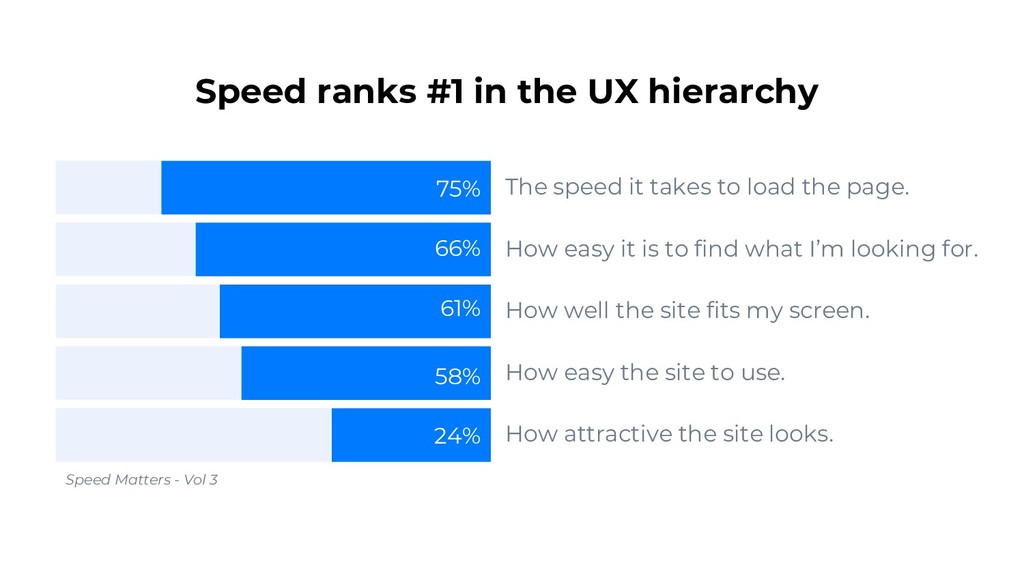
  1. Speed ranks #1 in the UX hierarchy Speed Matters -

    Vol 3 The speed it takes to load the page. 75% 66% 61% 58% 24% How easy it is to find what I’m looking for. How well the site fits my screen. How easy the site to use. How attractive the site looks.
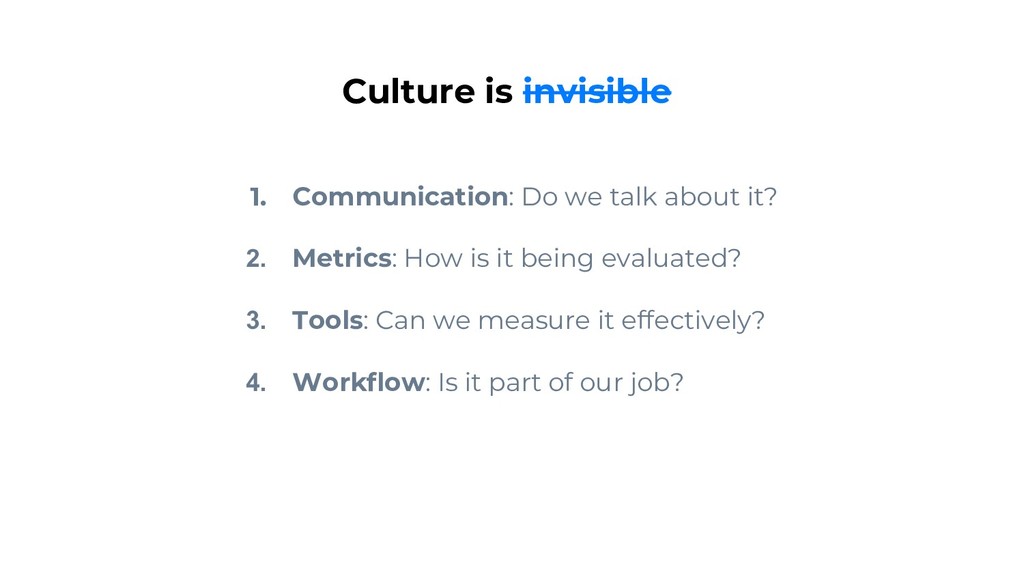
  2. 1. Communication: Do we talk about it? 2. Metrics: How

    is it being evaluated? 3. Tools: Can we measure it effectively? 4. Workflow: Is it part of our job? Culture is invisible
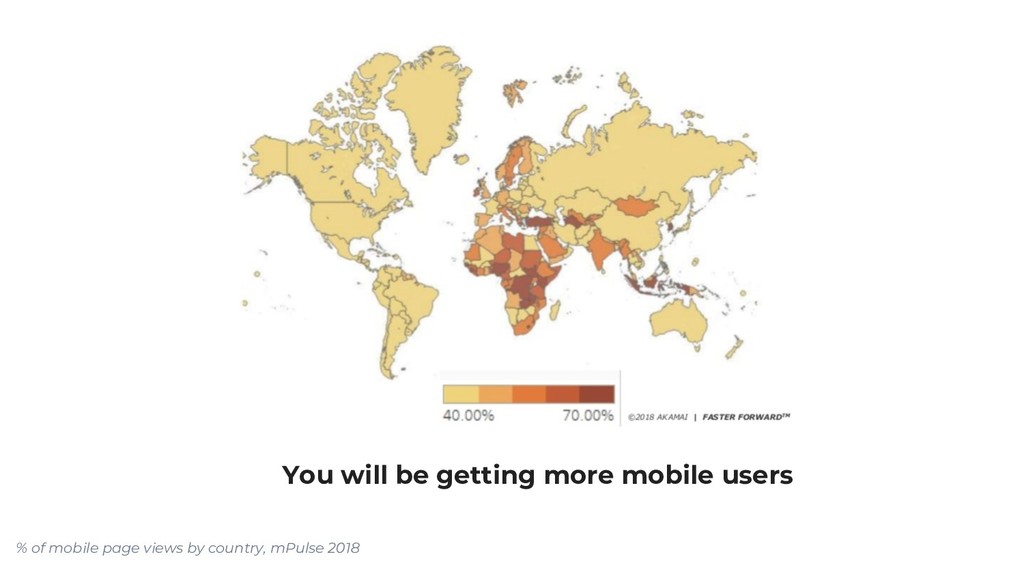
  3. You will be getting more mobile users % of mobile

    page views by country, mPulse 2018
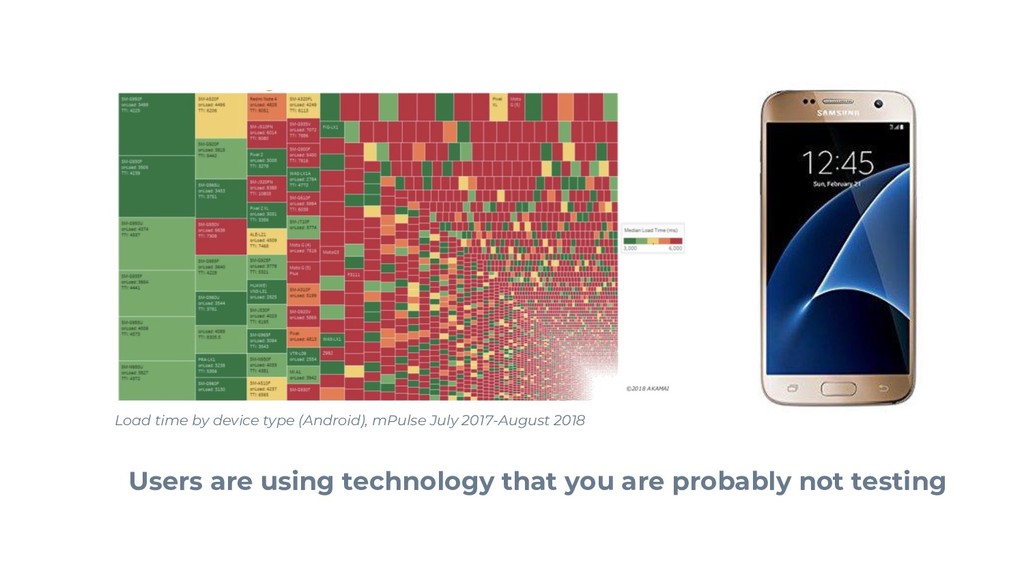
  4. Users are using technology that you are probably not testing

    Load time by device type (Android), mPulse July 2017-August 2018
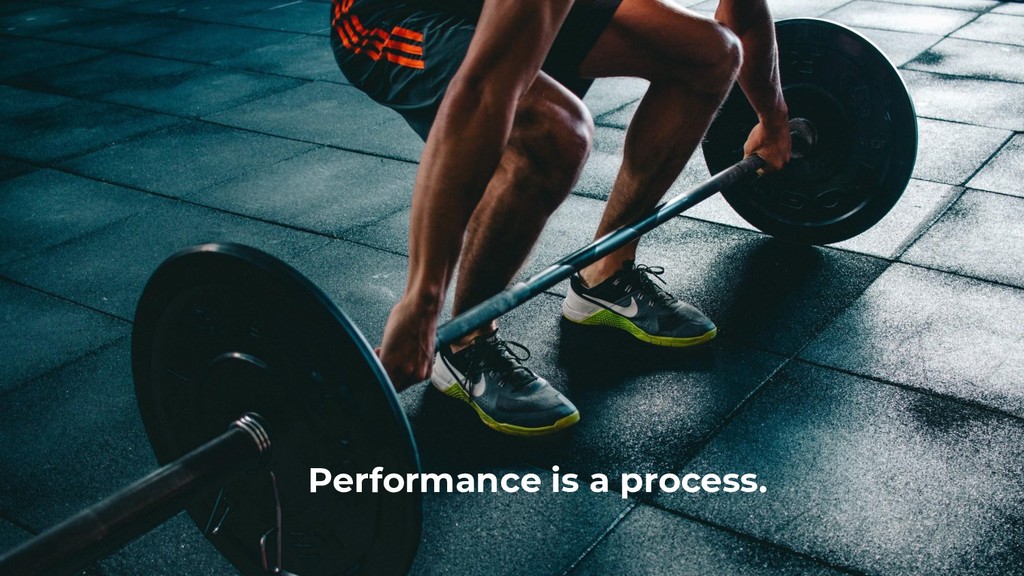
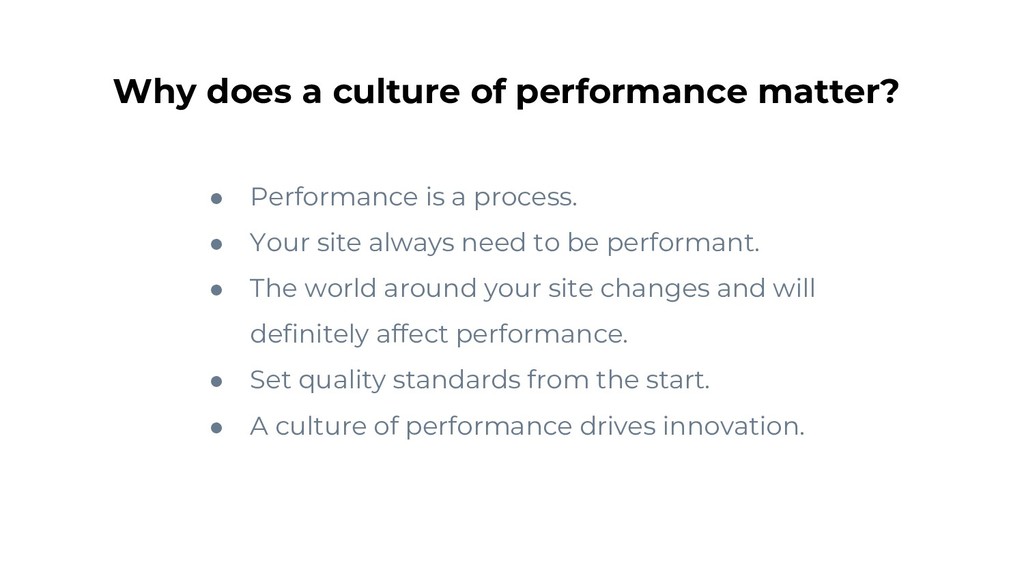
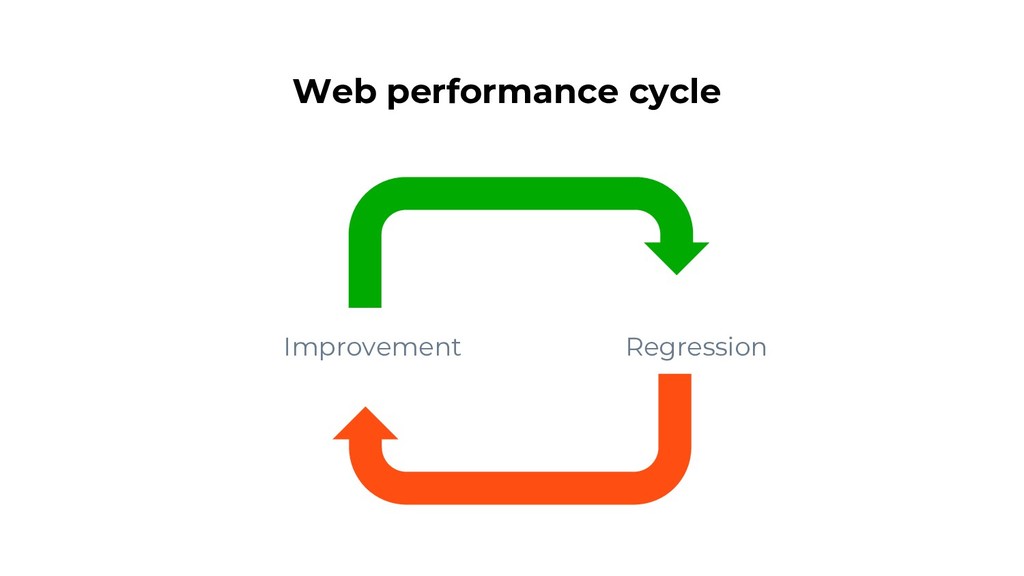
  5. • Performance is a process. • Your site always need

    to be performant. • The world around your site changes and will definitely affect performance. • Set quality standards from the start. • A culture of performance drives innovation. Why does a culture of performance matter?
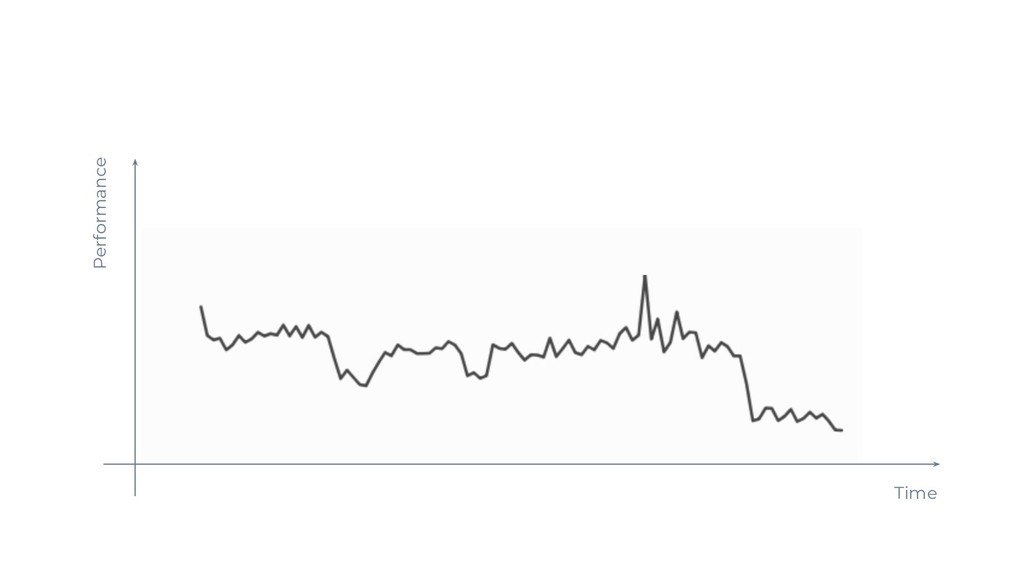
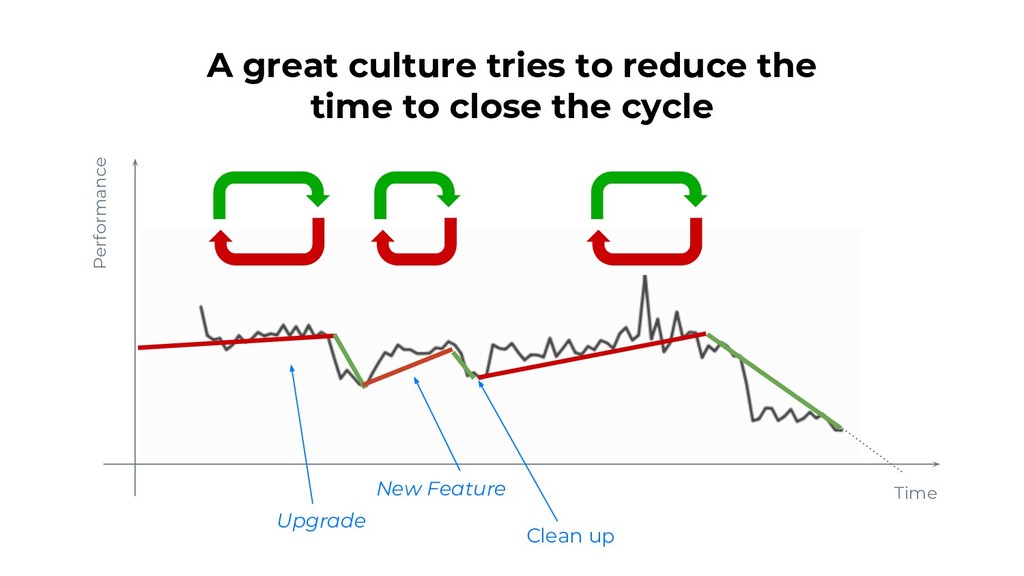
  6. New Feature Clean up Upgrade Performance Time A great culture

    tries to reduce the time to close the cycle
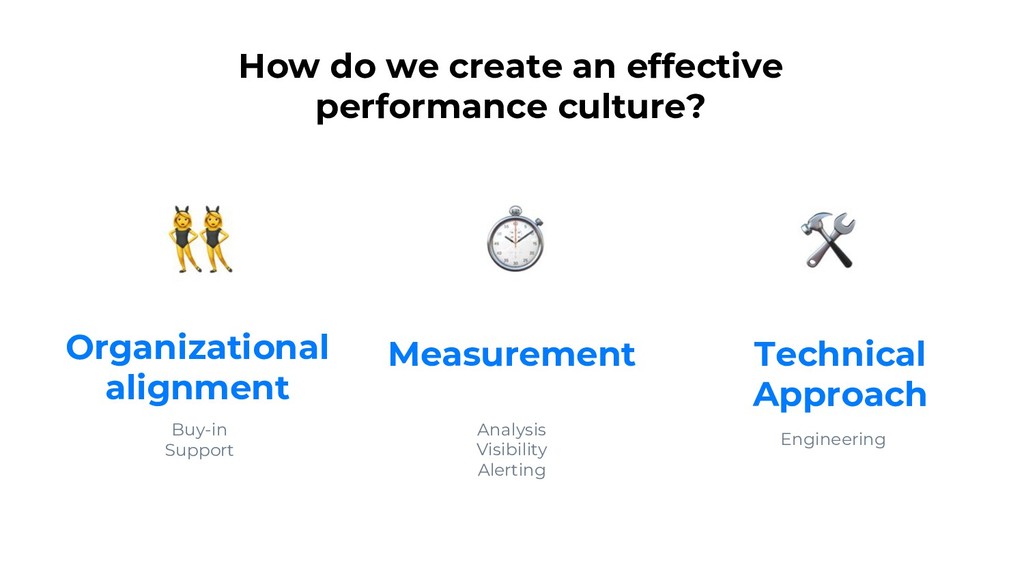
  7. Organizational alignment Measurement Technical Approach How do we create an

    effective performance culture? Buy-in Support Analysis Visibility Alerting Engineering
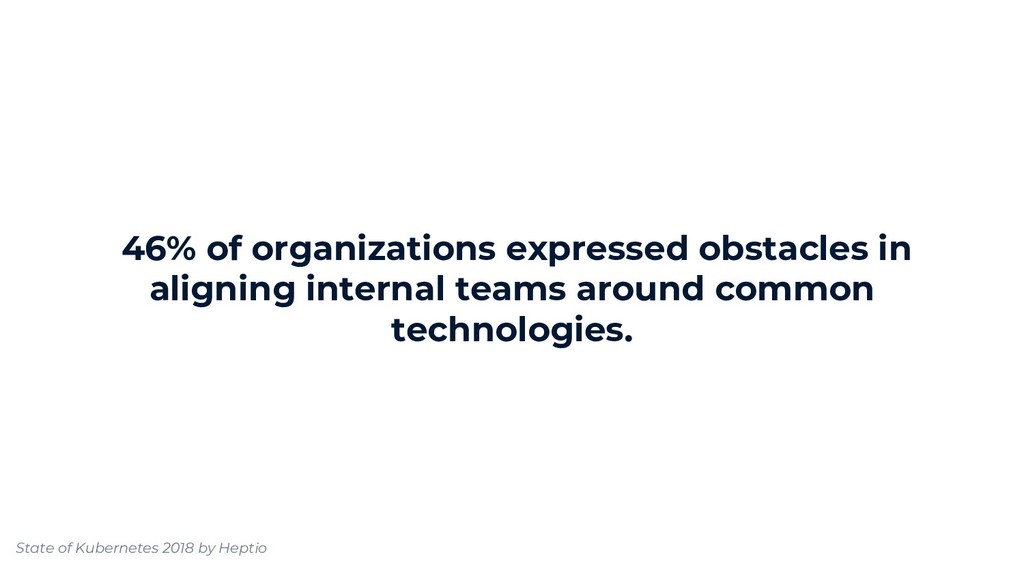
  8. 46% of organizations expressed obstacles in aligning internal teams around

    common technologies. State of Kubernetes 2018 by Heptio
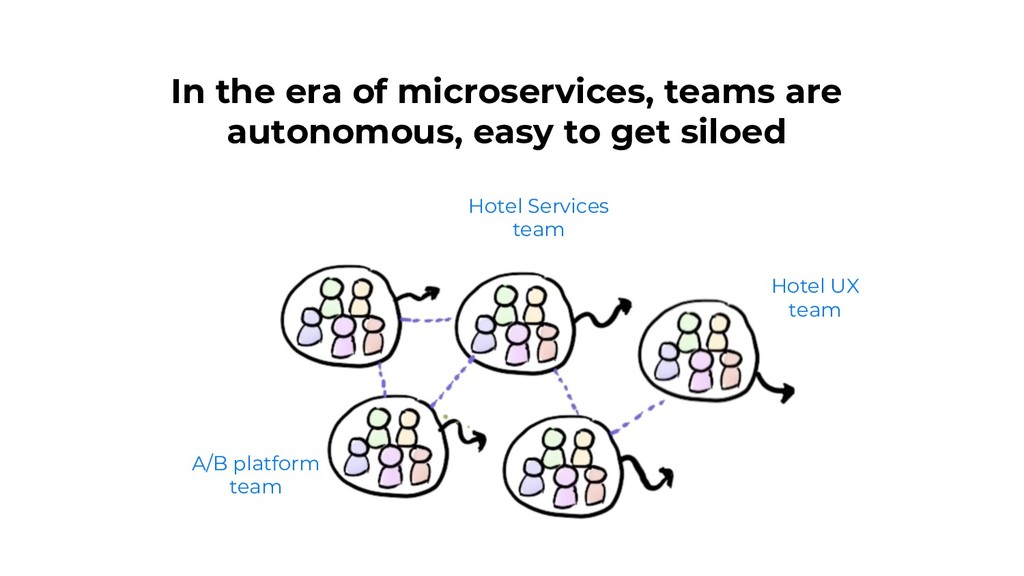
  9. In the era of microservices, teams are autonomous, easy to

    get siloed Hotel UX team Hotel Services team A/B platform team
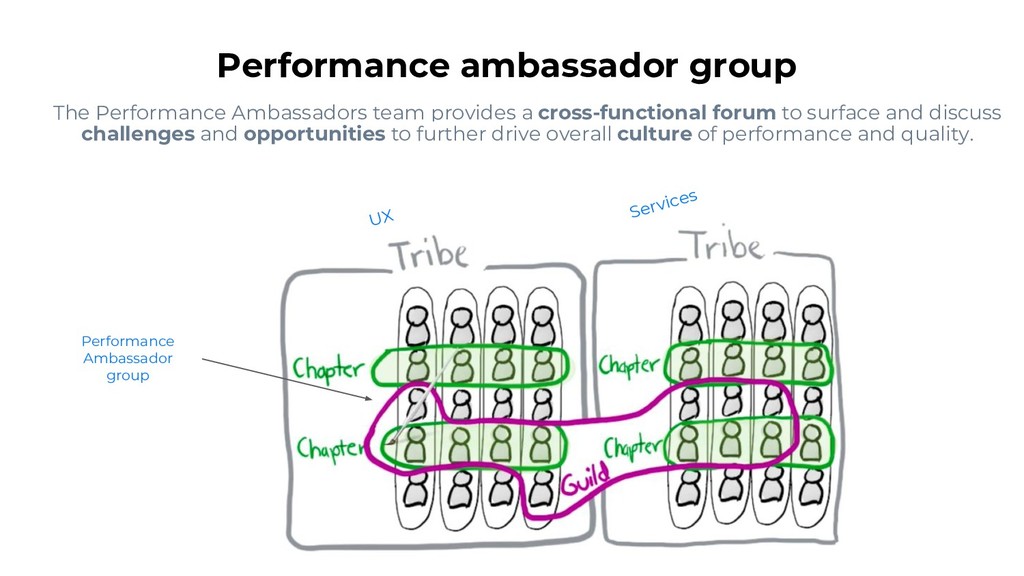
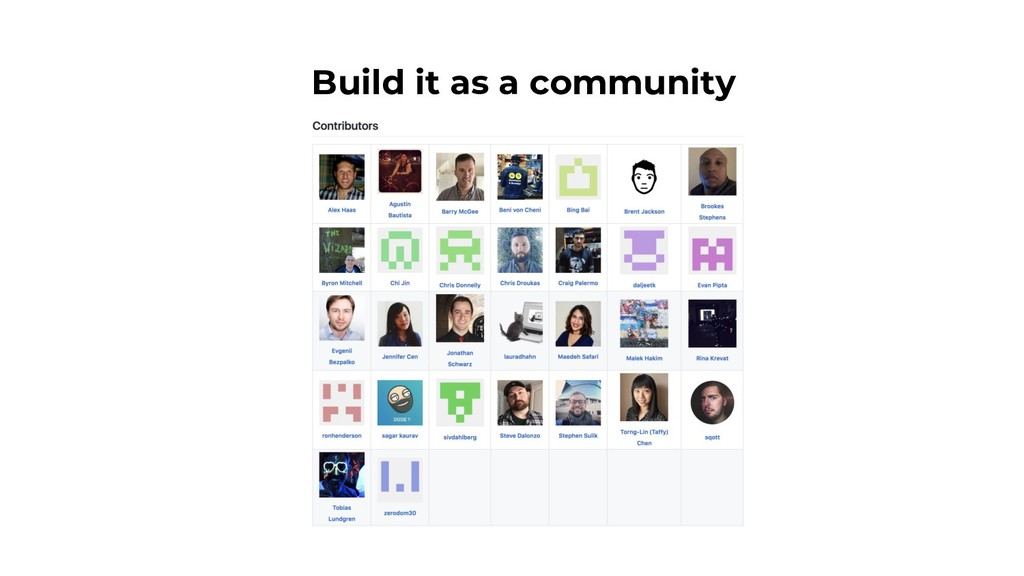
  10. The Performance Ambassadors team provides a cross-functional forum to surface

    and discuss challenges and opportunities to further drive overall culture of performance and quality. Performance Ambassador group UX Services Performance ambassador group
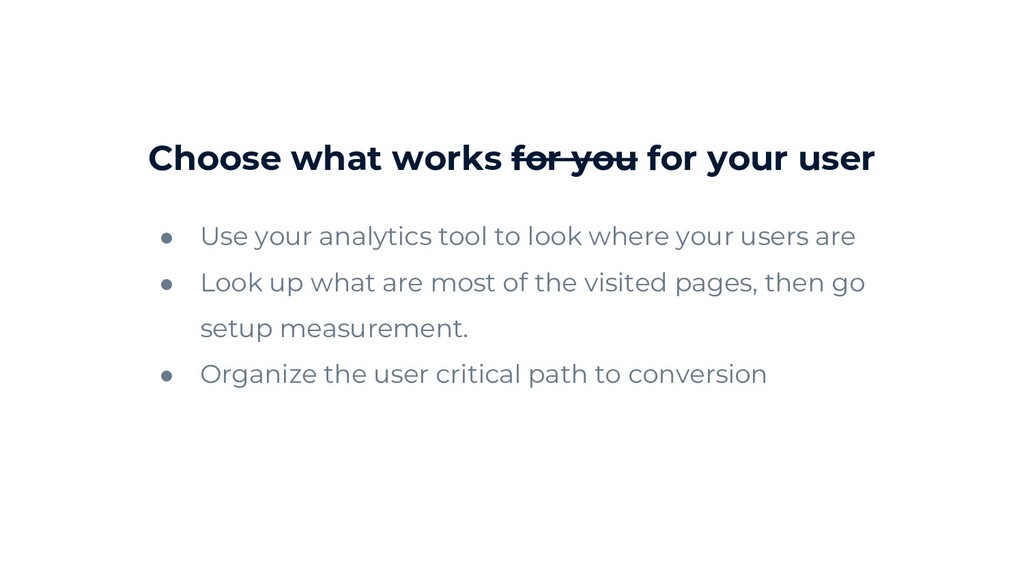
  11. Choose what works for you for your user • Use

    your analytics tool to look where your users are • Look up what are most of the visited pages, then go setup measurement. • Organize the user critical path to conversion
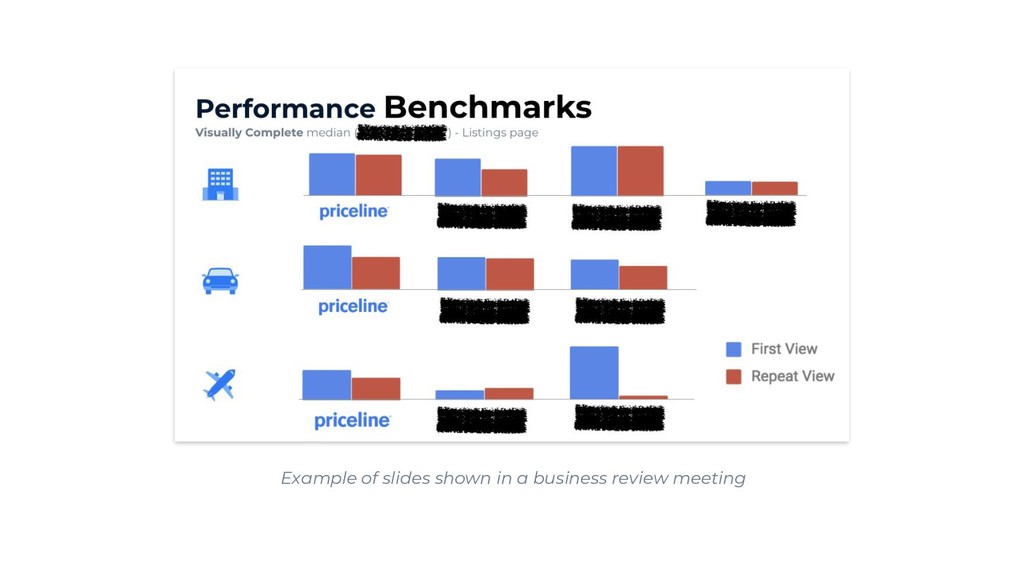
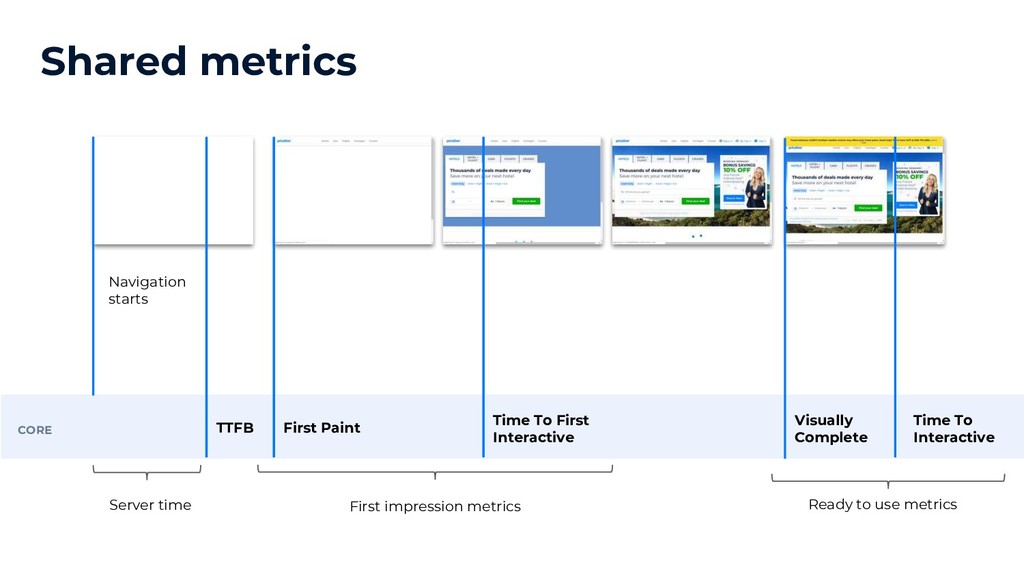
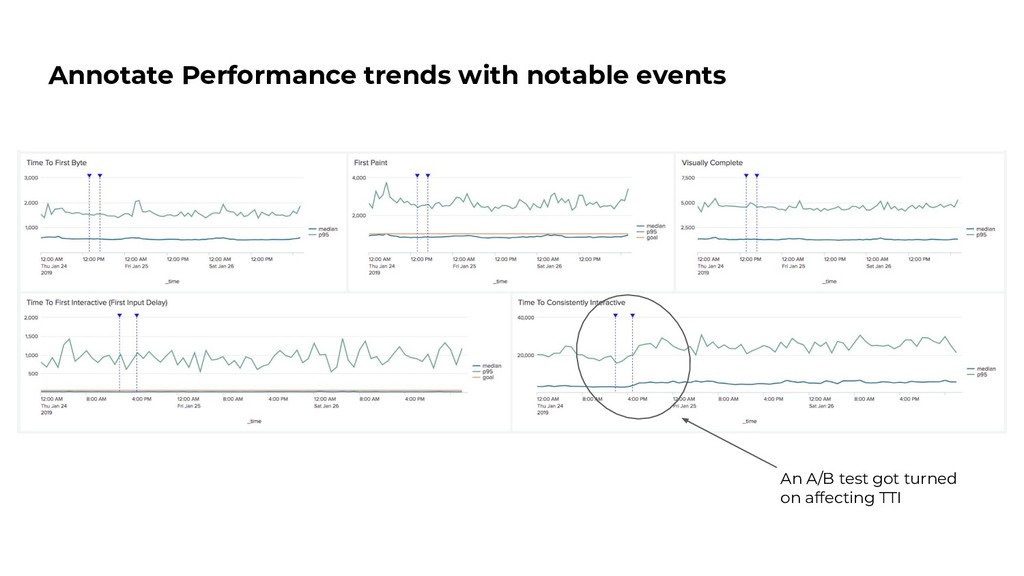
  12. Shared metrics Navigation starts TTFB First Paint Time To First

    Interactive Visually Complete Time To Interactive Ready to use metrics First impression metrics CORE Server time
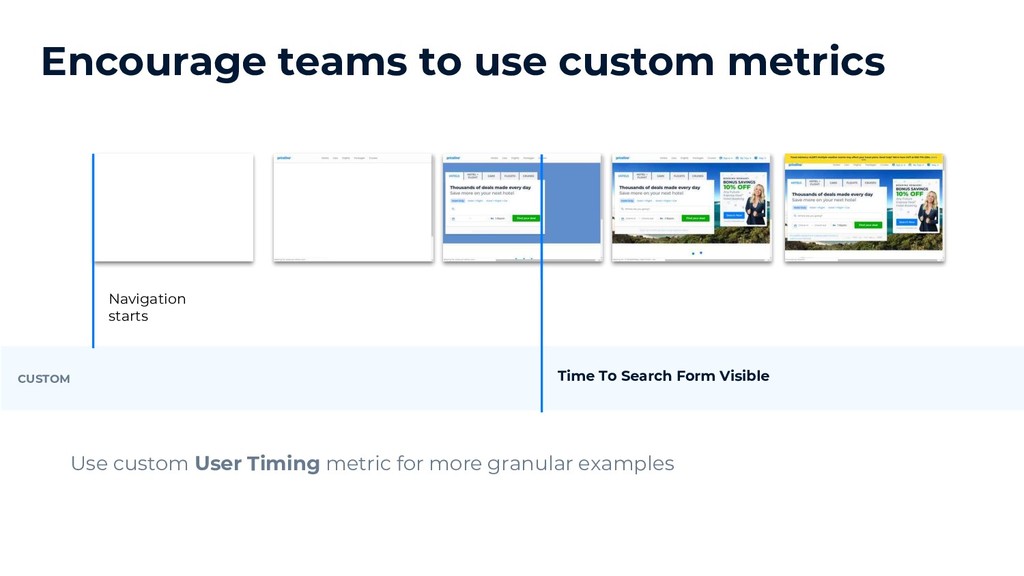
  13. Encourage teams to use custom metrics Navigation starts Time To

    Search Form Visible CUSTOM Use custom User Timing metric for more granular examples
  14. RUM or Synthetic? RUM Synthetic What it does Gather metrics

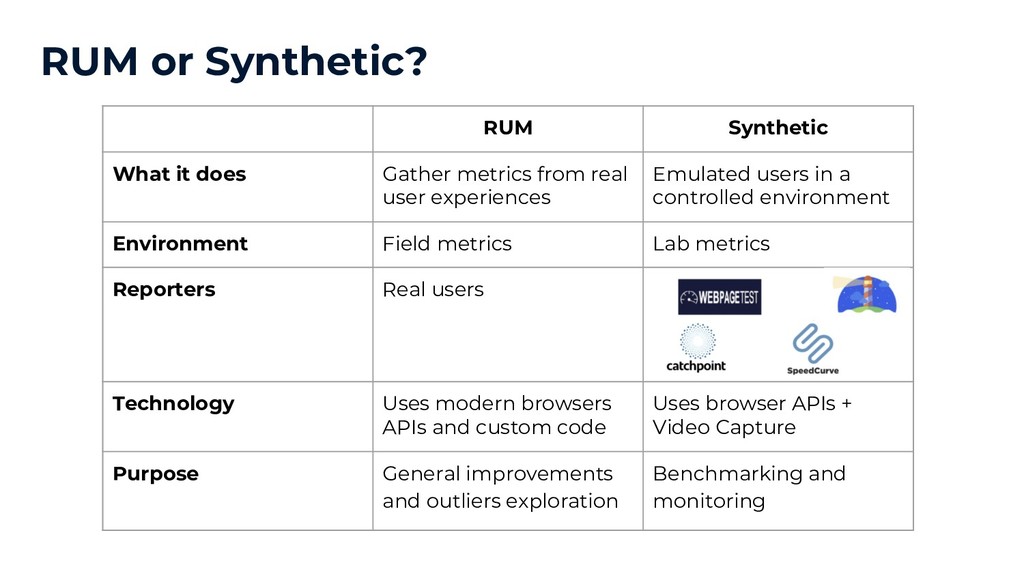
    from real user experiences Emulated users in a controlled environment Environment Field metrics Lab metrics Reporters Real users Technology Uses modern browsers APIs and custom code Uses browser APIs + Video Capture Purpose General improvements and outliers exploration Benchmarking and monitoring
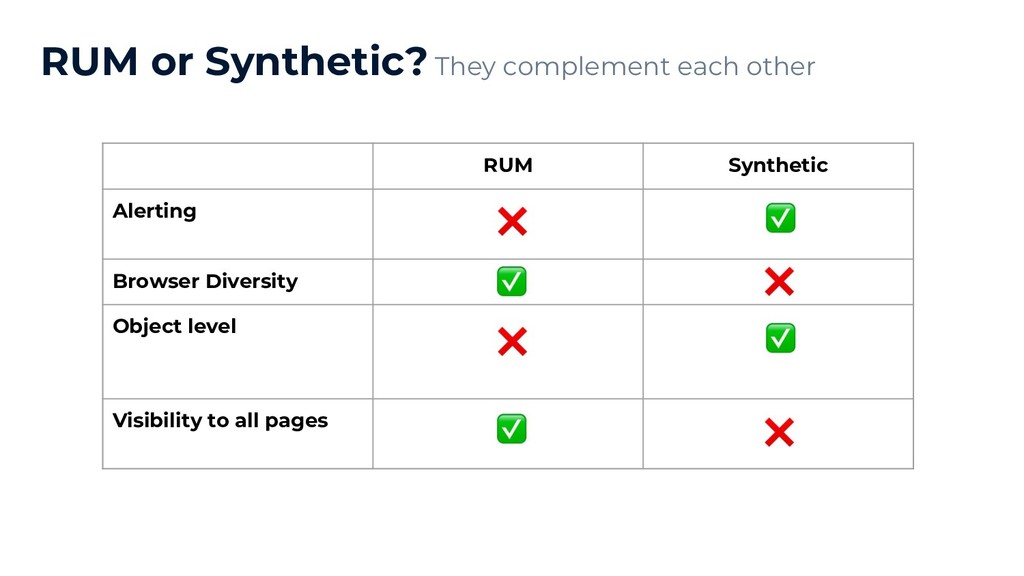
  15. RUM or Synthetic? They complement each other RUM Synthetic Alerting

    Browser Diversity Object level Visibility to all pages
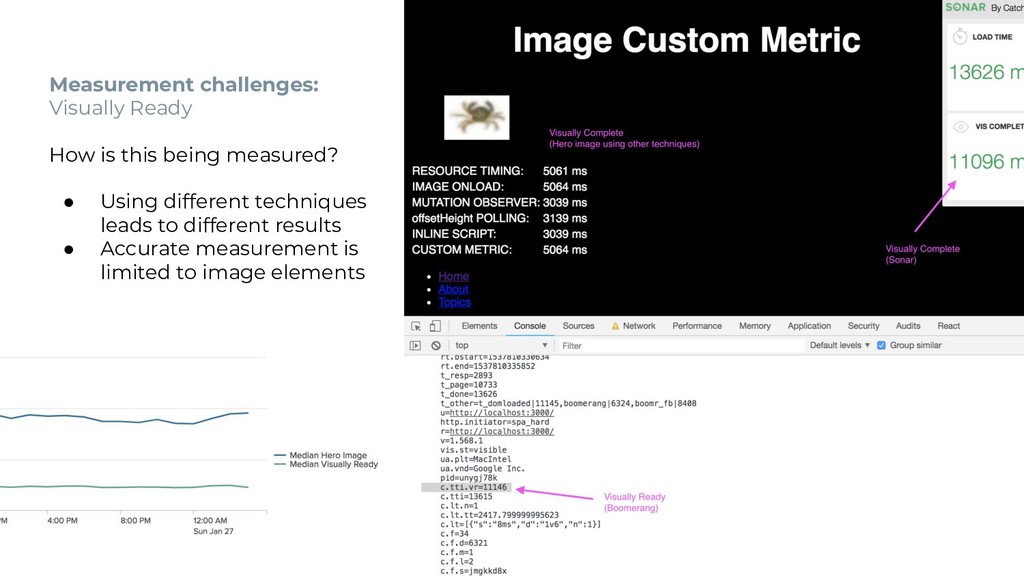
  16. Measurement challenges: Visually Ready How is this being measured? •

    Using different techniques leads to different results • Accurate measurement is limited to image elements
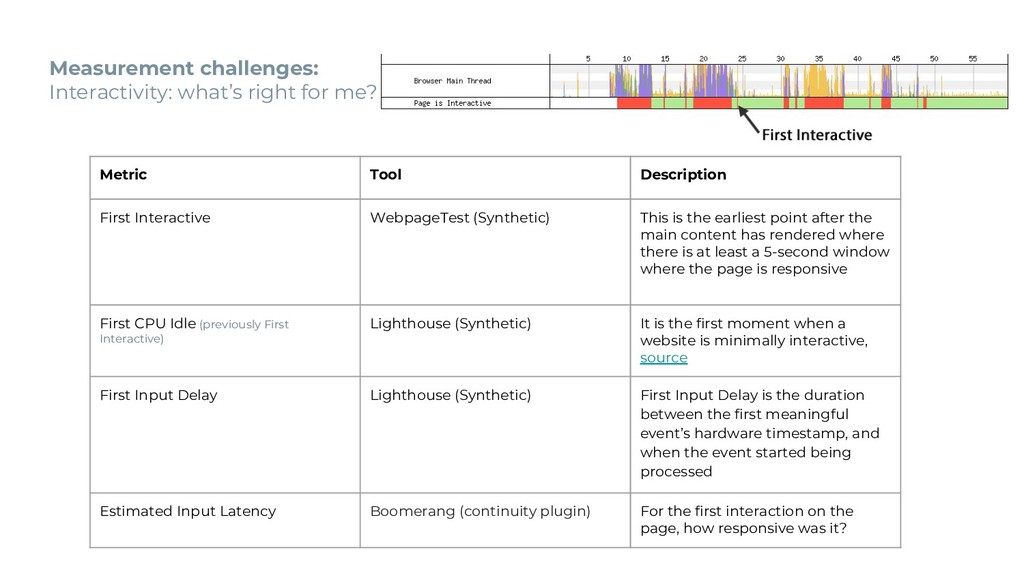
  17. Measurement challenges: Interactivity: what’s right for me? Metric Tool Description

    First Interactive WebpageTest (Synthetic) This is the earliest point after the main content has rendered where there is at least a 5-second window where the page is responsive First CPU Idle (previously First Interactive) Lighthouse (Synthetic) It is the first moment when a website is minimally interactive, source First Input Delay Lighthouse (Synthetic) First Input Delay is the duration between the first meaningful event’s hardware timestamp, and when the event started being processed Estimated Input Latency Boomerang (continuity plugin) For the first interaction on the page, how responsive was it?
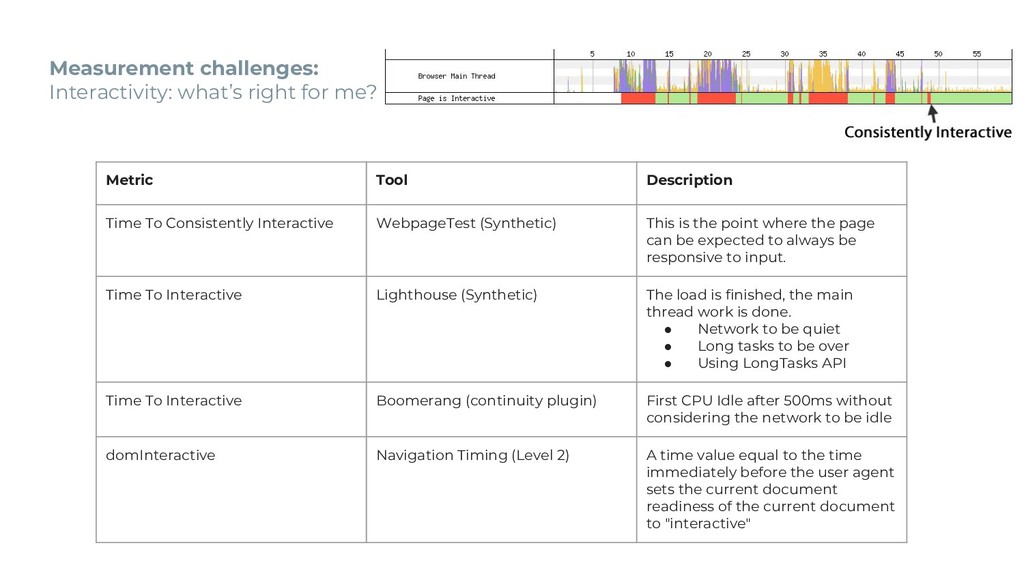
  18. Measurement challenges: Interactivity: what’s right for me? Metric Tool Description

    Time To Consistently Interactive WebpageTest (Synthetic) This is the point where the page can be expected to always be responsive to input. Time To Interactive Lighthouse (Synthetic) The load is finished, the main thread work is done. • Network to be quiet • Long tasks to be over • Using LongTasks API Time To Interactive Boomerang (continuity plugin) First CPU Idle after 500ms without considering the network to be idle domInteractive Navigation Timing (Level 2) A time value equal to the time immediately before the user agent sets the current document readiness of the current document to "interactive"
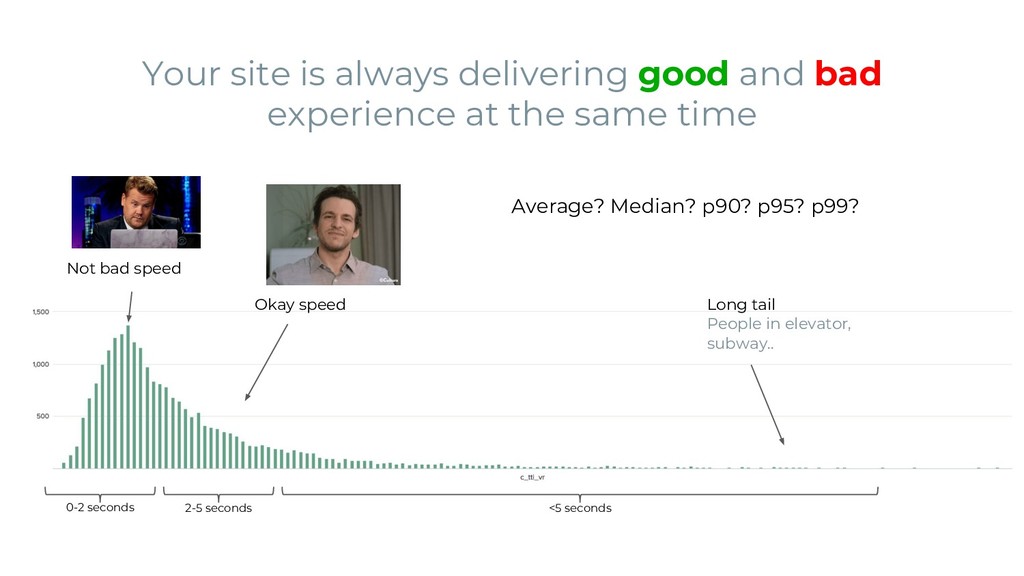
  19. Your site is always delivering good and bad experience at

    the same time Long tail People in elevator, subway.. Okay speed 0-2 seconds 2-5 seconds <5 seconds Not bad speed Average? Median? p90? p95? p99?
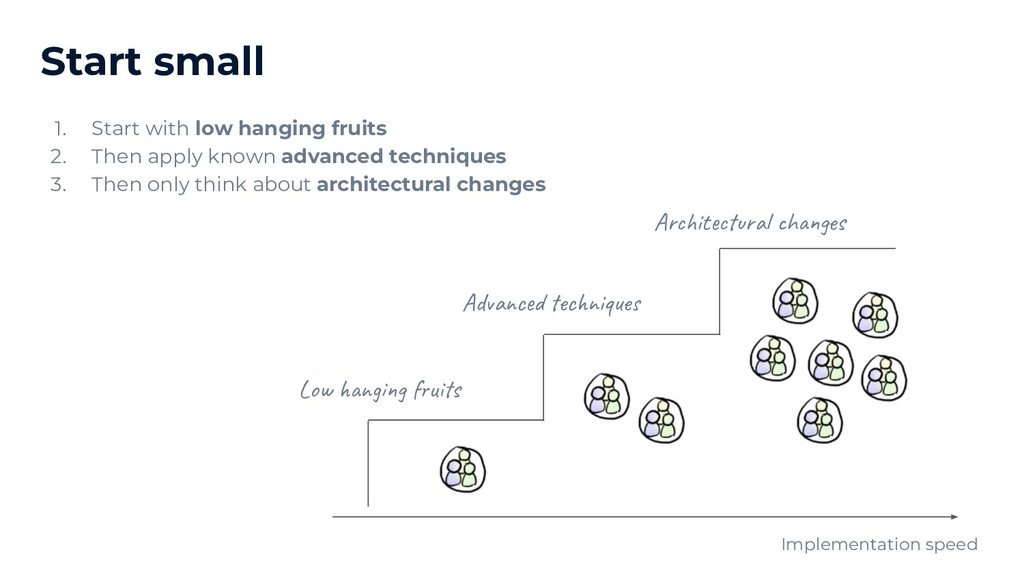
  20. Start small 1. Start with low hanging fruits 2. Then

    apply known advanced techniques 3. Then only think about architectural changes Low g f u s Ad a c c iq Ar it ra h s Implementation speed
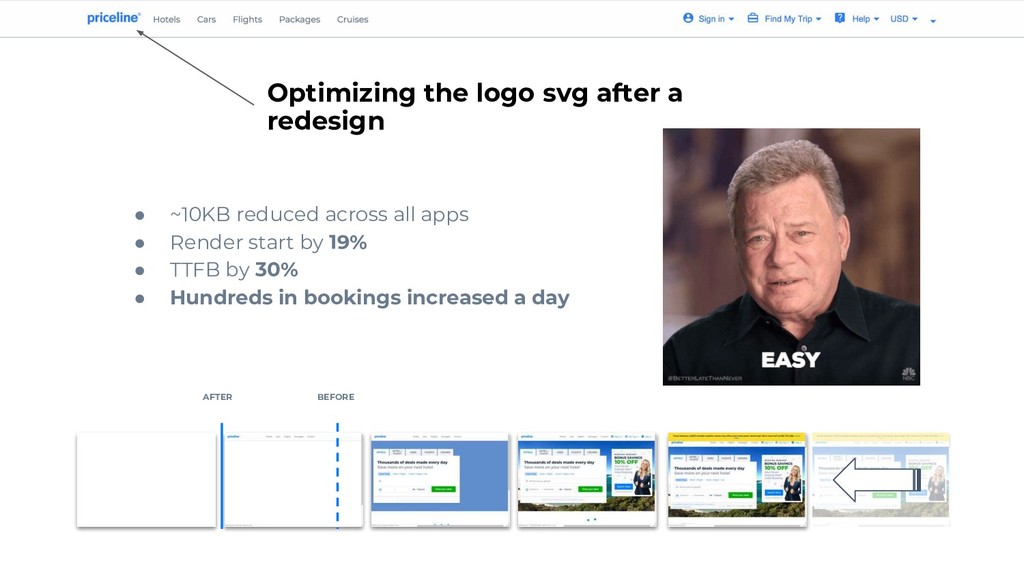
  21. Optimizing the logo svg after a redesign • ~10KB reduced

    across all apps • Render start by 19% • TTFB by 30% • Hundreds in bookings increased a day AFTER BEFORE
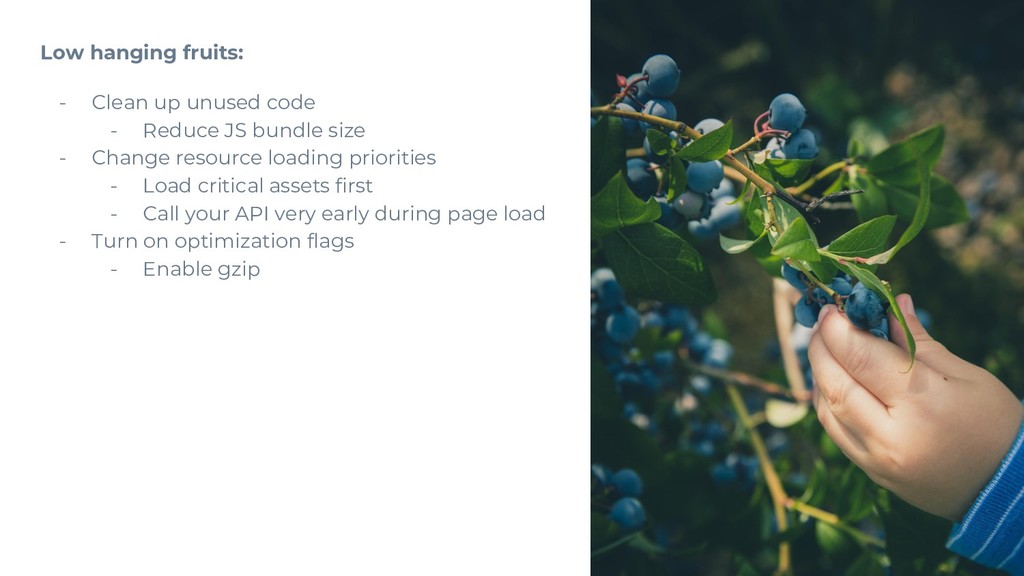
  22. Low hanging fruits: - Clean up unused code - Reduce

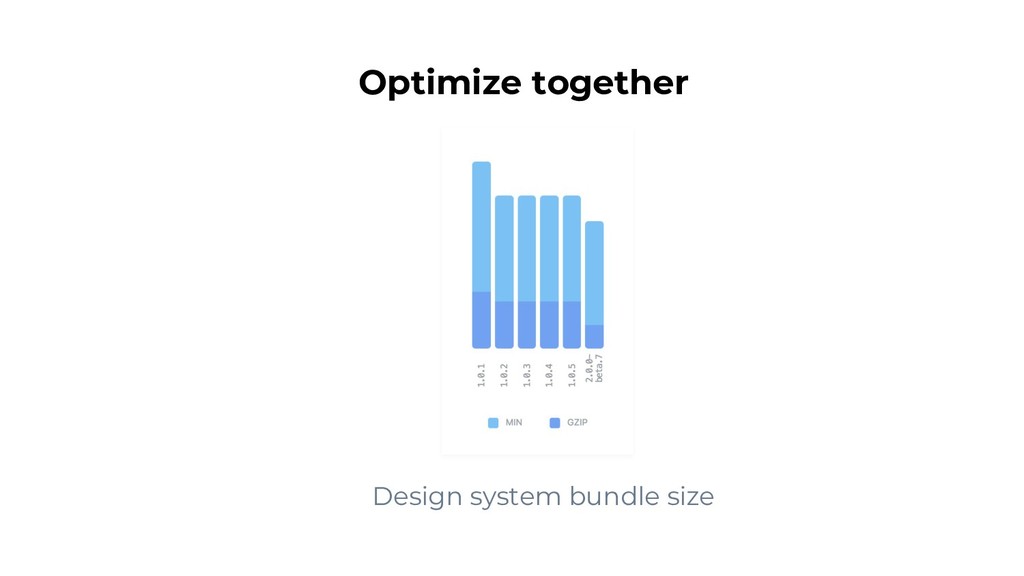
    JS bundle size - Change resource loading priorities - Load critical assets first - Call your API very early during page load - Turn on optimization flags - Enable gzip
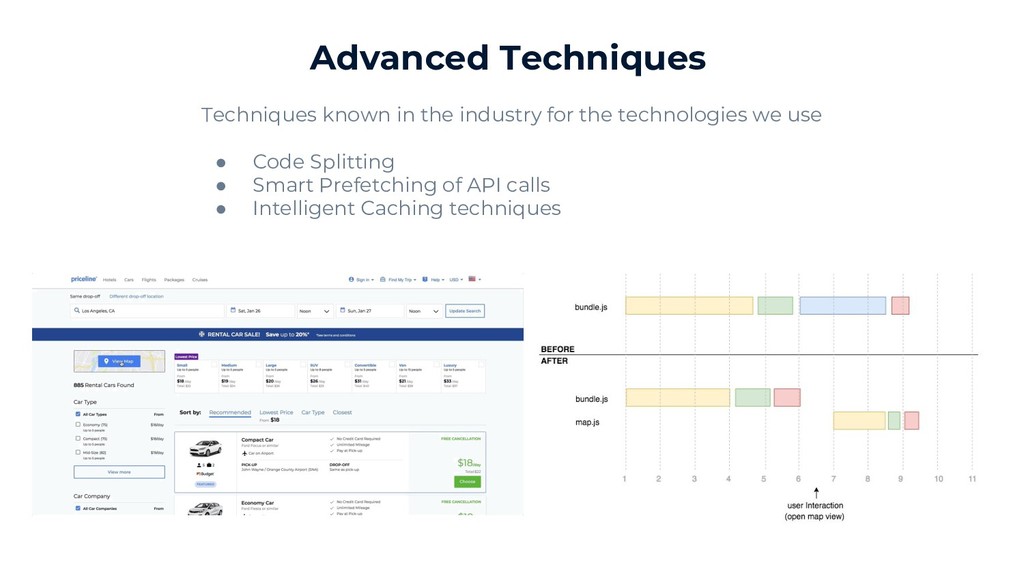
  23. Advanced Techniques Techniques known in the industry for the technologies

    we use • Code Splitting • Smart Prefetching of API calls • Intelligent Caching techniques
  24. Some examples of what’s next for us? • Better integration

    of performance data with business data. • Make performance budgets part of the developer workflow (CI/CD, deployment gates..) • Improve our internal A/B testing platform to support canary releases.
  25. References • Speed Matters Vol 3 - Mustafa Kurtuldu &

    Lionel Mora • WPO Stats - Tammy Everts, Tim Kadlec • Real User Measurement Insights - Paul Calvano • Building a performance engineering team - Kwame Thomison • Effective Performance Engineering - Todd DeCapua, Shane Evans • Time To Interactive – Measuring more of the user experience - Pat Meenan • Image Custom Metric - Steve Souders • Spotify Squad framework - Henrik Kniberg • RUM & Synthetic - Tom Gerhard