Upgrade to Pro — share decks privately, control downloads, hide ads and more …

Few thoughts about Future of Blockchain

Few thoughts about Future of Blockchain

From the analysis above, we have made five assertions.
1. Blockchain's potential impact is real. If successful, blockchain technologies can transform the way we live our day-to-day lives.
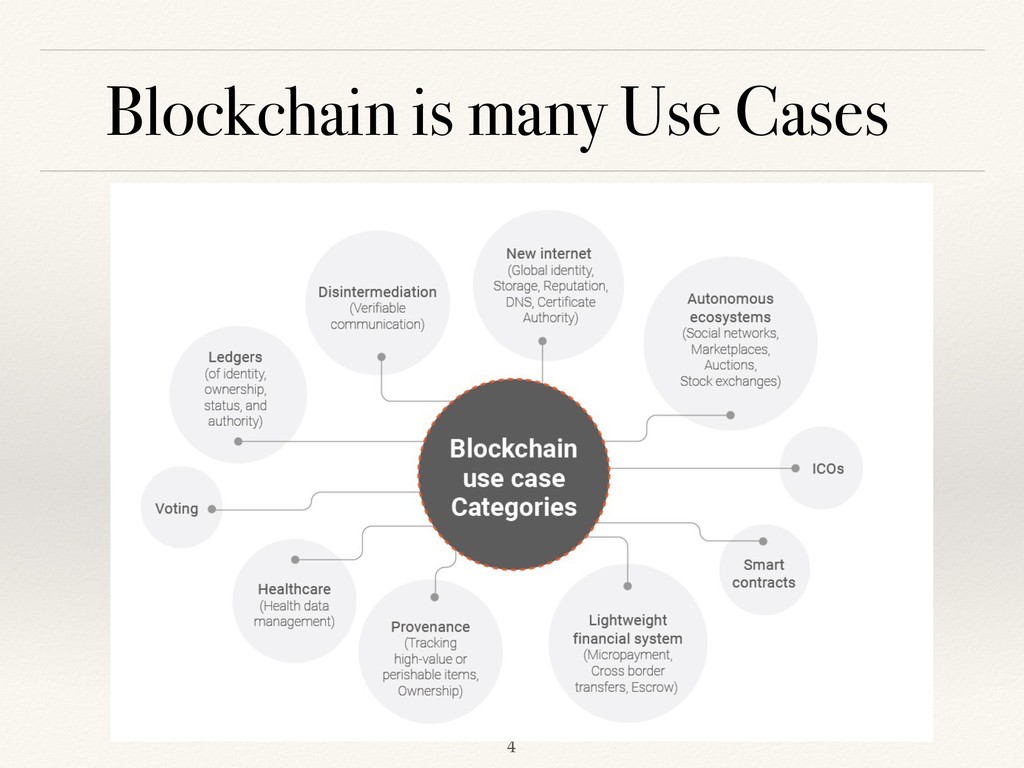
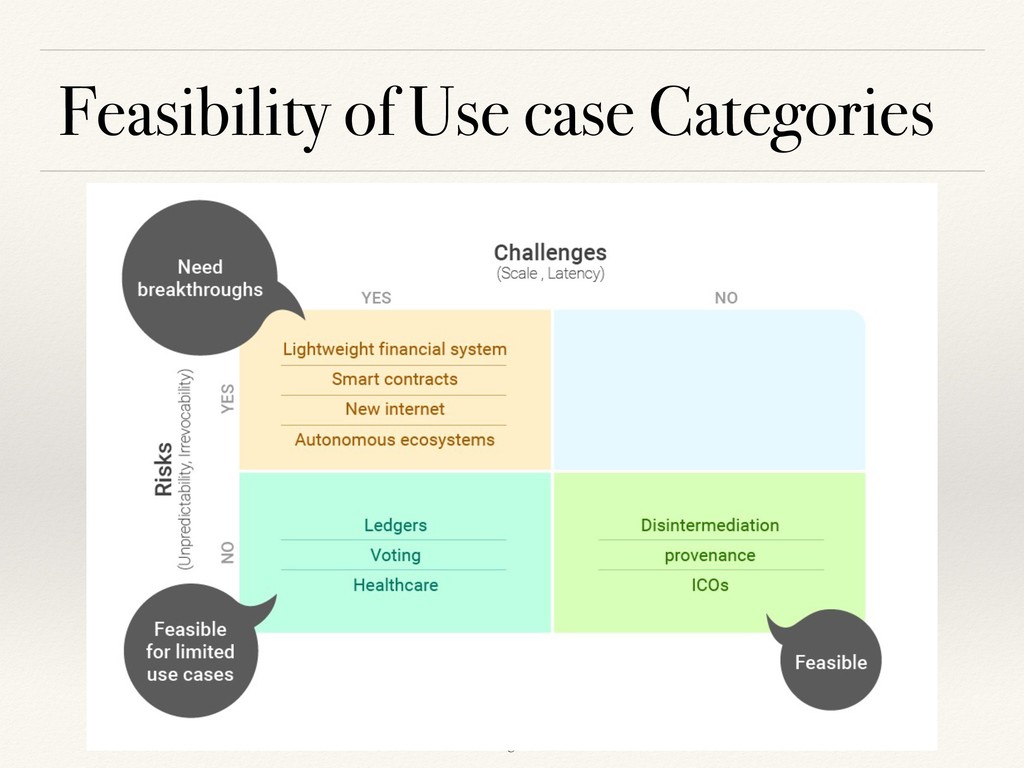
2. We believe the technology is ready for limited applications in digital currency, lightweight financial systems, ledgers (of identity, ownership, status, and authority), provenance (e.g. supply chains and other B2B scenarios) and disintermediation, which we believe will happen in next three years.
3. With other use cases, blockchain faces significant challenges, such as performance, irrevocability, the need for regulation, and the lack of census mechanisms. These are hard problems, and it could take at least 5 to 0 years to find answers to those problems.
4. It is unclear whether blockchain can sustain the current level of effort for an extended period of 5-plus years. There are many startups, and they run the risk of running out of money before markets are ready. The failure of startups can inhibit further funding and investments.
5. Value and need for decentralization provided with blockchain compared to centralized and semi-centralized alternatives are not clear.

Avatar for Srinath Perera

Srinath Perera

March 26, 2019

More Decks by Srinath Perera

Other Decks in Programming

Transcript

  1. Srinath Perera, Ph.D. VP Research WSO2, Apache Member, ( [email protected])

    @srinath_perera Few thoughts about Future of Blockchain
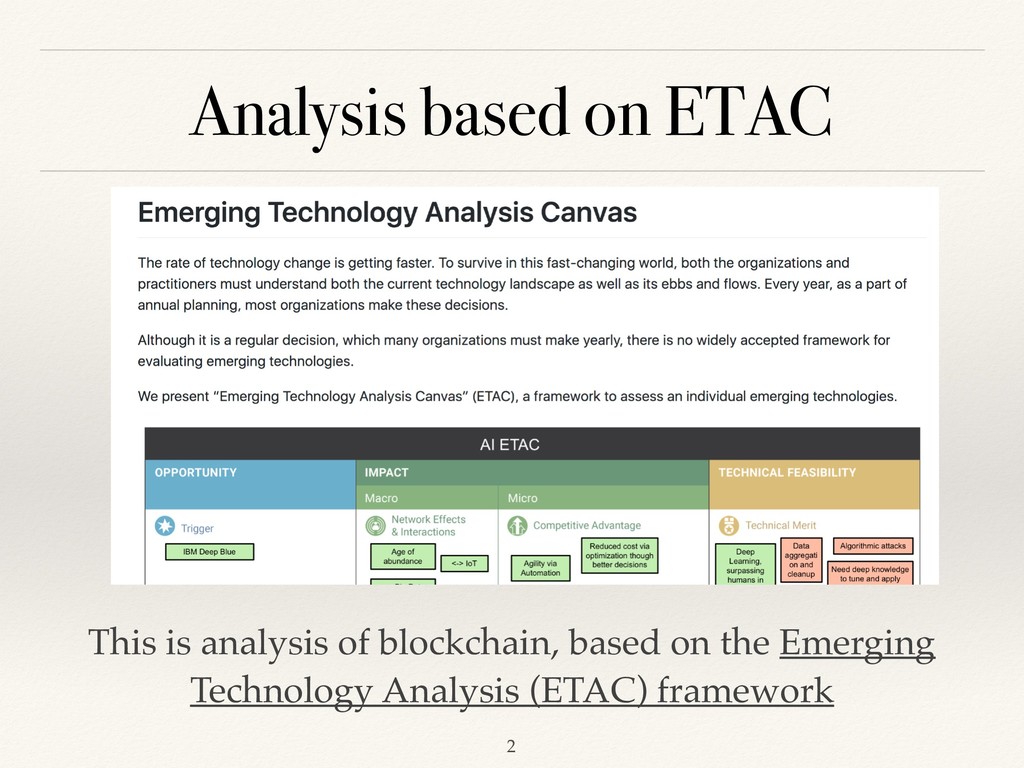
  2. Analysis based on ETAC !2 This is analysis of blockchain,

    based on the Emerging Technology Analysis (ETAC) framework
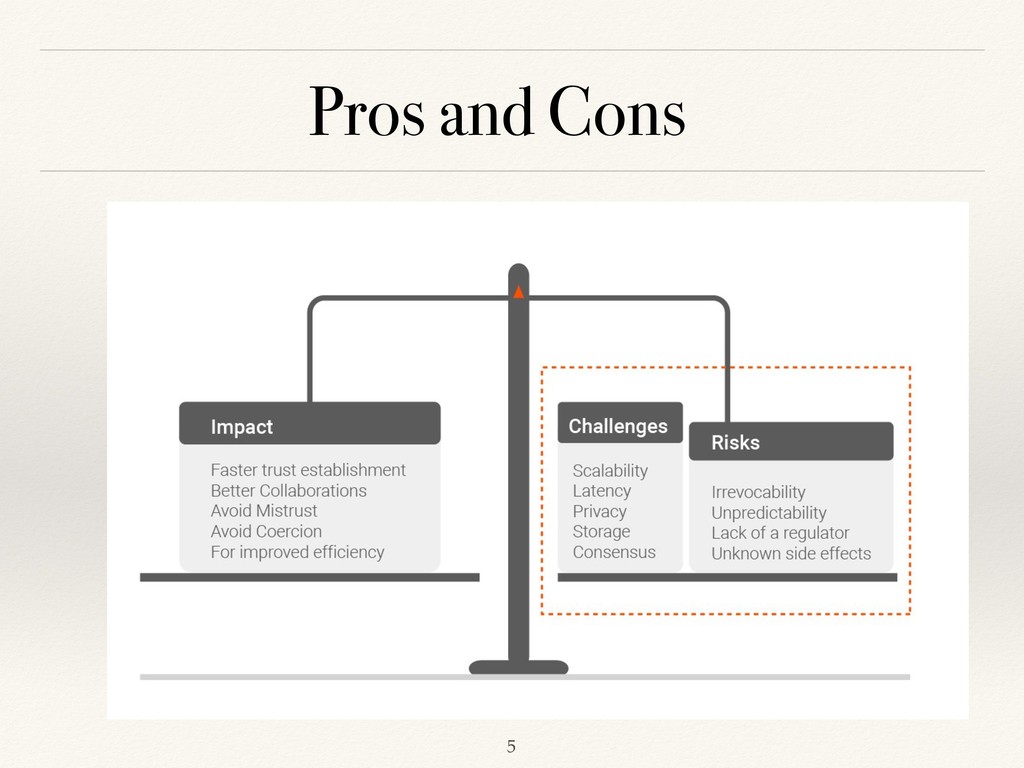
  3. Impact? • Replace current alternatives to trust that are time-consuming,

    expensive, and weaker (e.g. intermediaries and government inspections.) • It is faster, often establishing trust within a second. • It is much more secure, guarded by cryptography algorithms and census data. • The resulting system is cheaper and more agile. !3
  4. Challenges • Limited scalability and latency • about 8 minutes

    and about 2 to 3 transactions per second. • Most use cases are not feasible under these limits. • Private blockchain have faster algorithms although they provide lesser guarantees. • Limited privacy. • Blockchain only provides pseudo anonymizations. • However, by analyzing the transaction graph and other related information, it is often possible to link users to transactions. • Once one transaction is linked to a user, all his transactions become known. • Storage constraints. • each node must store the full history of the blockchain. This forestalls lightweight nodes, such as IoT devices • As time passes, the history becomes larger aggravating the problem. !6
  5. Risks •Irrevocability. • appeal is not possible • Some use

    cases, this can be handled with undo transaction, but some others (e.g. land registry) mistake is not reversible without the current owner complying •Regulator Absence. • A regulator plays a key role in some use cases. • Although not popular, regulators play a crucial role in many systems (e.g. avoid fraud and periamid schemes. • With Blockchain-based systems it is impossible or expensive to fill the missing regulator’s role. •Misunderstood Side Effects. • impact beyond CS •Unclear Regulatory Responses. !7
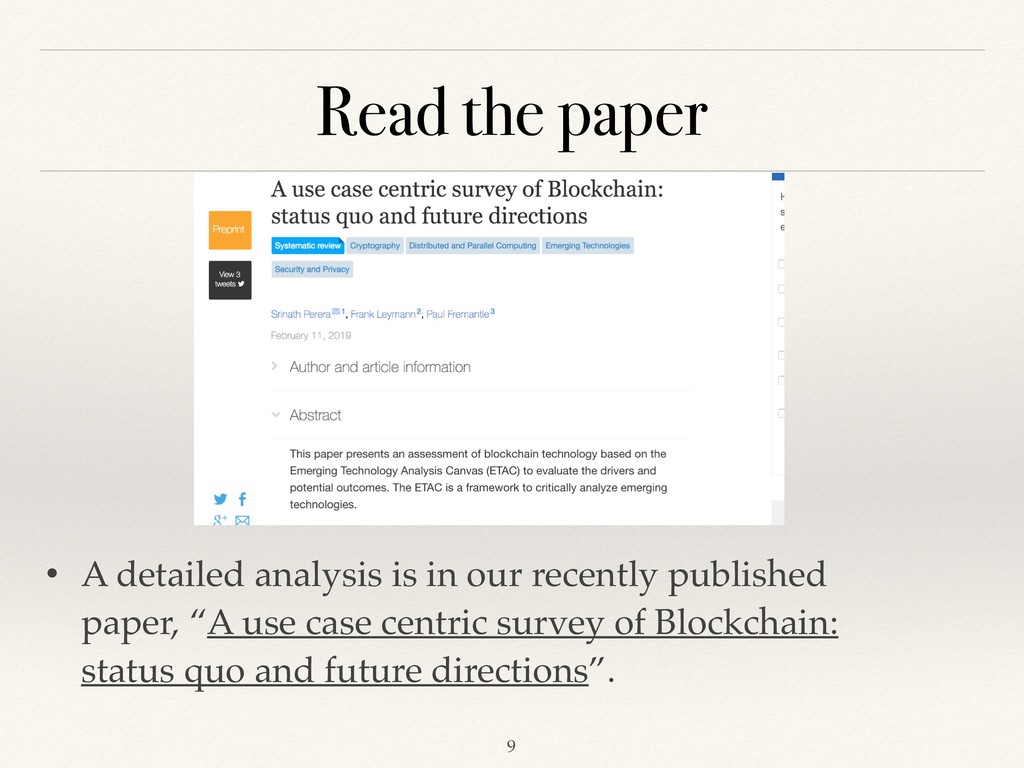
  6. Read the paper • A detailed analysis is in our

    recently published paper, “A use case centric survey of Blockchain: status quo and future directions”. !9
  7. To receive updates to ETAC and ETAC-based emerging technology analysis,

    subscribe to our Newsletter. Thanks for reading!!