Upgrade to Pro — share decks privately, control downloads, hide ads and more …

固有振動数と入力振動数に着目した飽和盛土造成斜面の1G場振動台実験

 固有振動数と入力振動数に着目した飽和盛土造成斜面の1G場振動台実験

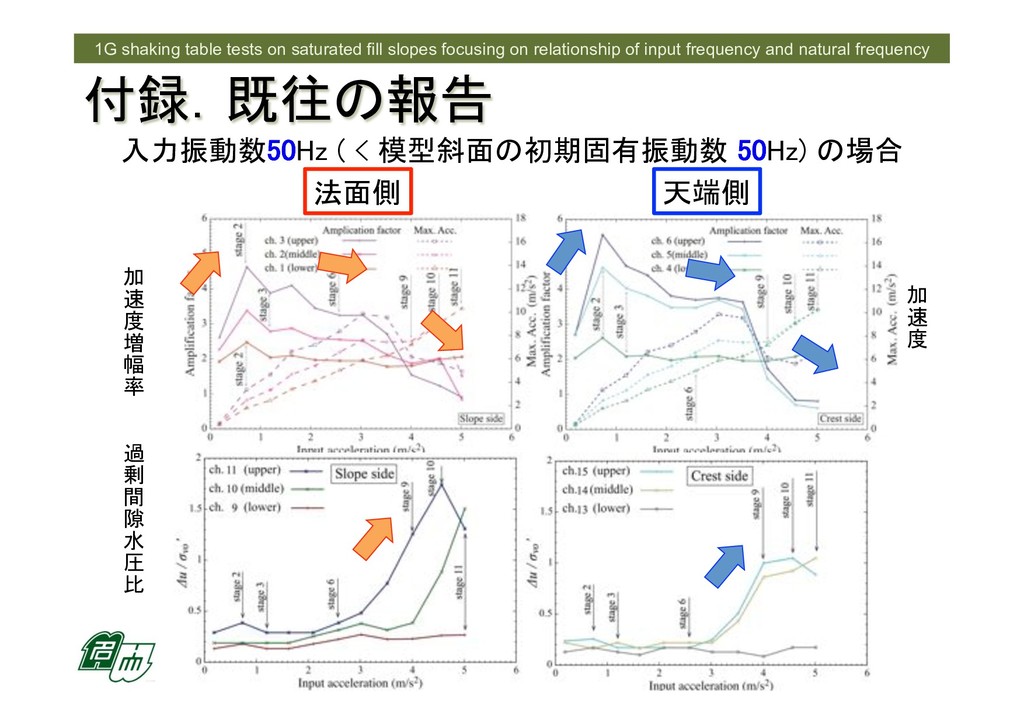
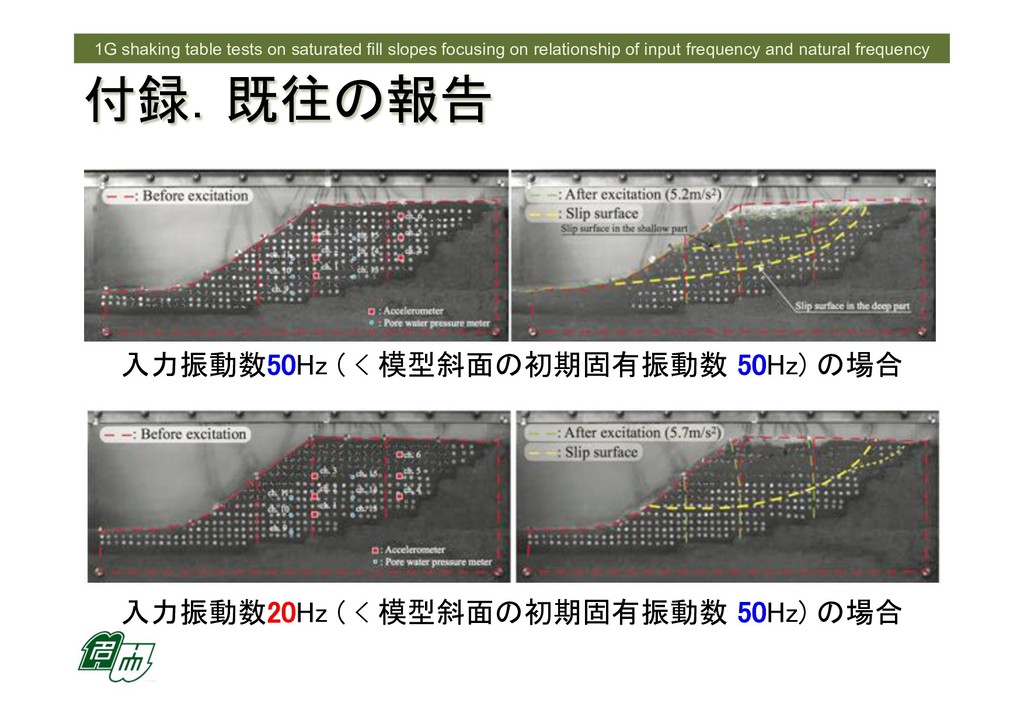
地下水状態による変状形態に着目して不飽和状態の模型斜面の1G場振動台実験を行った結果,以下の4つの事柄が明らかとなった.
1) 模型斜面が不飽和状態にある場合は,法面に沿うようなすべり面が形成され,その後浸潤面付近を先端とするすべり面が後退的に形成される.
2) 不飽和状態と飽和状態共に,すべり面が形成される破壊メカニズムは,剛性低下が原因であることは共通だが,破壊に至る入力加速度,破壊モード,およびすべり面形状が異なる.
3) 破壊が生じた後に明瞭なすべり面が形成される入力加速度は不飽和地盤の方が大きく,変形も小さい.
4) 不飽和状態と飽和状態では,拘束が大きい箇所の水圧挙動に差異が生じる可能性がある.

Avatar for Hidehiko MURAO

Hidehiko MURAO

August 05, 2018

Other Decks in Technology

Transcript

  1. 1G shaking table tests on saturated fill slopes focusing on

    relationship of input frequency and natural frequency 1G
  2. 1G shaking table tests on saturated fill slopes focusing on

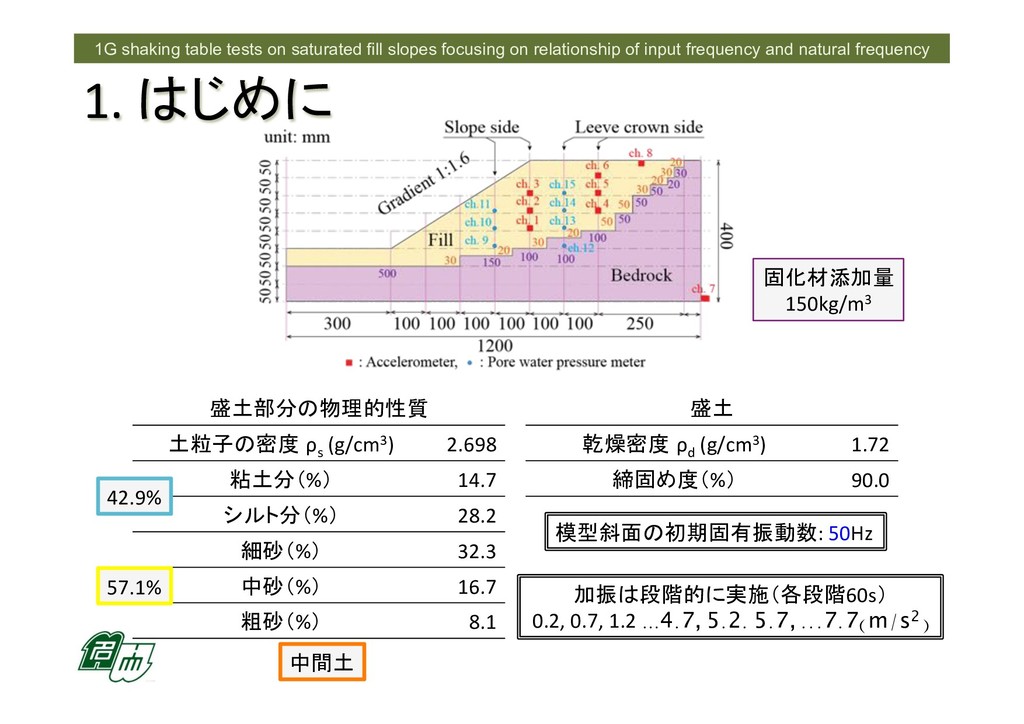
    relationship of input frequency and natural frequency 1. ρ s (g/cm3) 2.698 % 14.7 % 28.2 % 32.3 % 16.7 % 8.1 42.9% 57.1% ρ d (g/cm3) 1.72 % 90.0 : 50Hz 150kg/m3 60s 0.2, 0.7, 1.2 …4.7, 5.2. 5.7, ...7.7(m/s2)
  3. 1G shaking table tests on saturated fill slopes focusing on

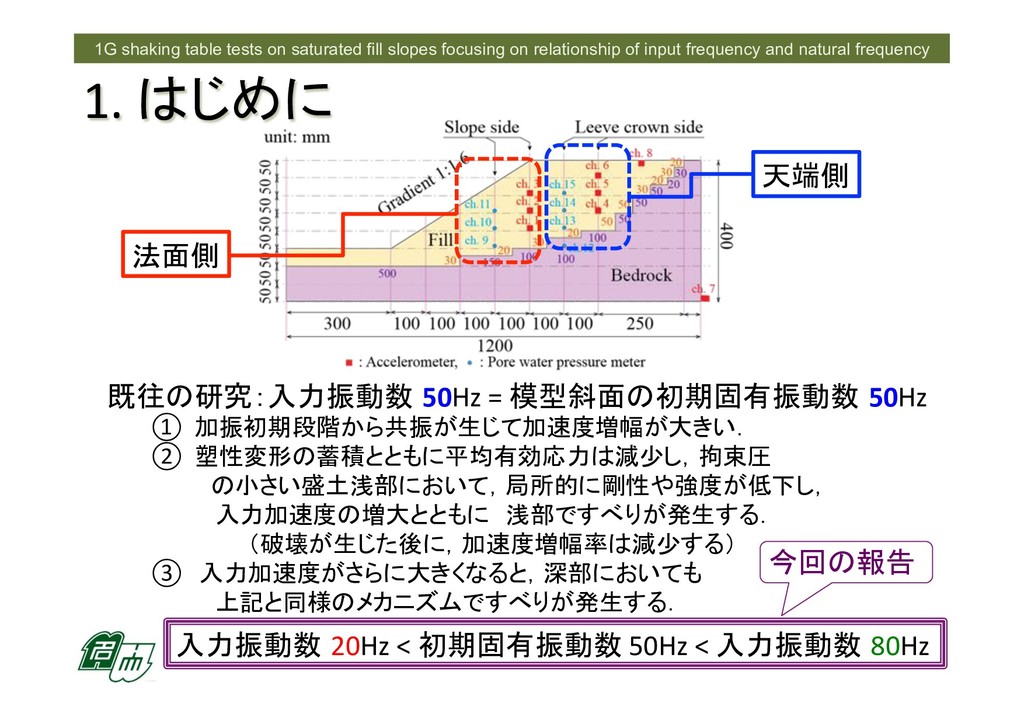
    relationship of input frequency and natural frequency 1. 50Hz = 50Hz ①  ②  ③ 20Hz < 50Hz < 80Hz
  4. 1G shaking table tests on saturated fill slopes focusing on

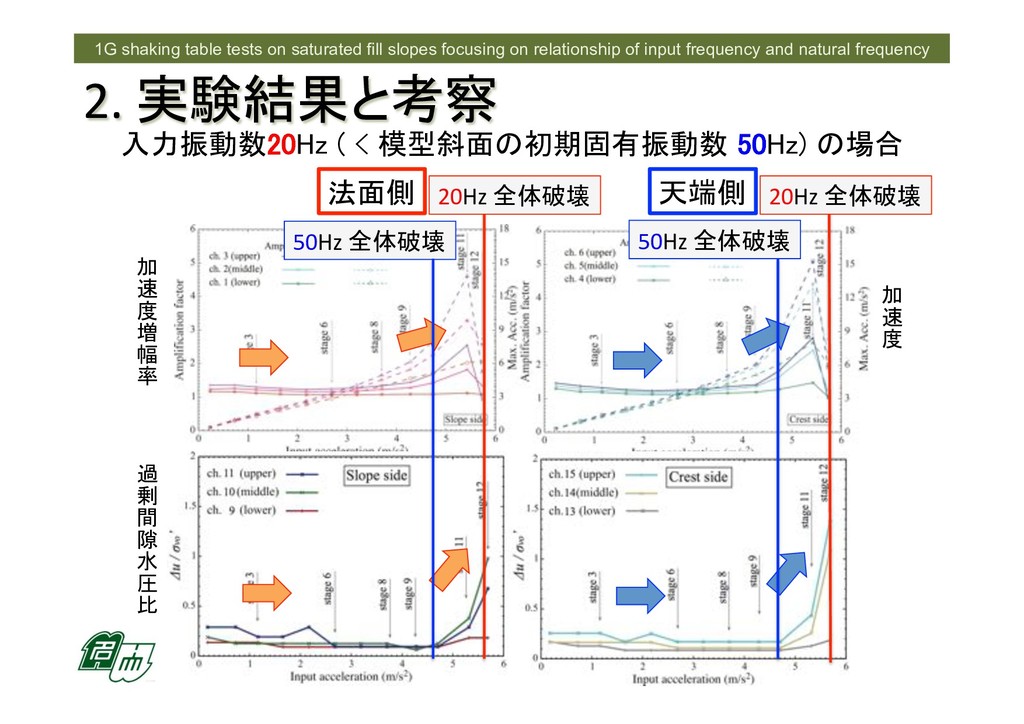
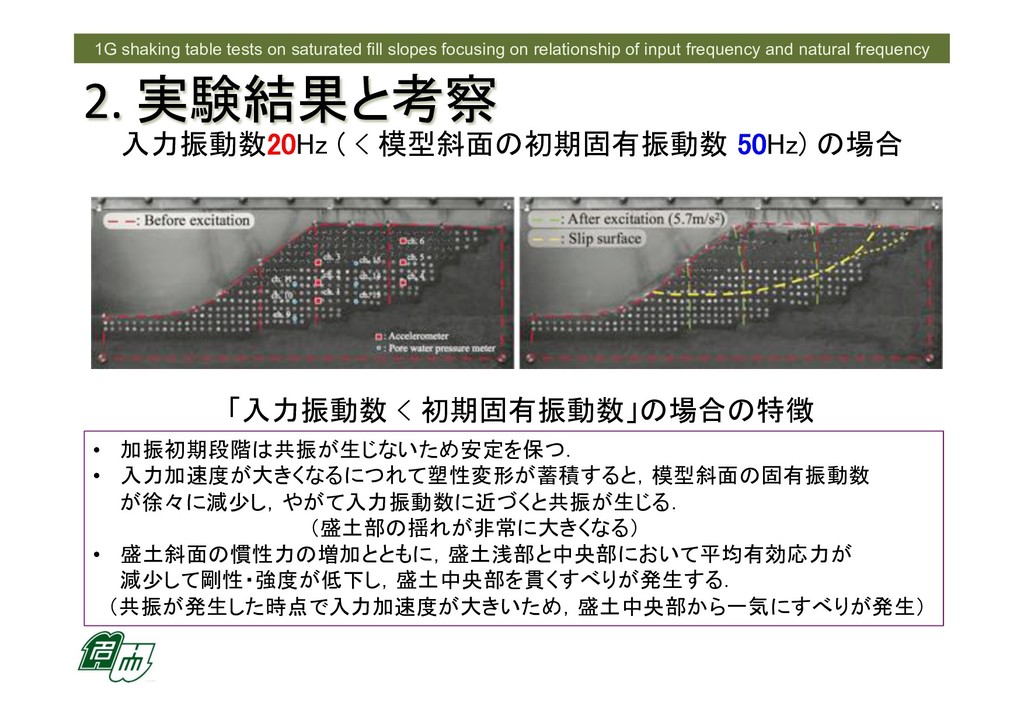
    relationship of input frequency and natural frequency 2.           50Hz 50Hz 20Hz 20Hz
  5. 1G shaking table tests on saturated fill slopes focusing on

    relationship of input frequency and natural frequency 2. •  •  • 
  6. 1G shaking table tests on saturated fill slopes focusing on

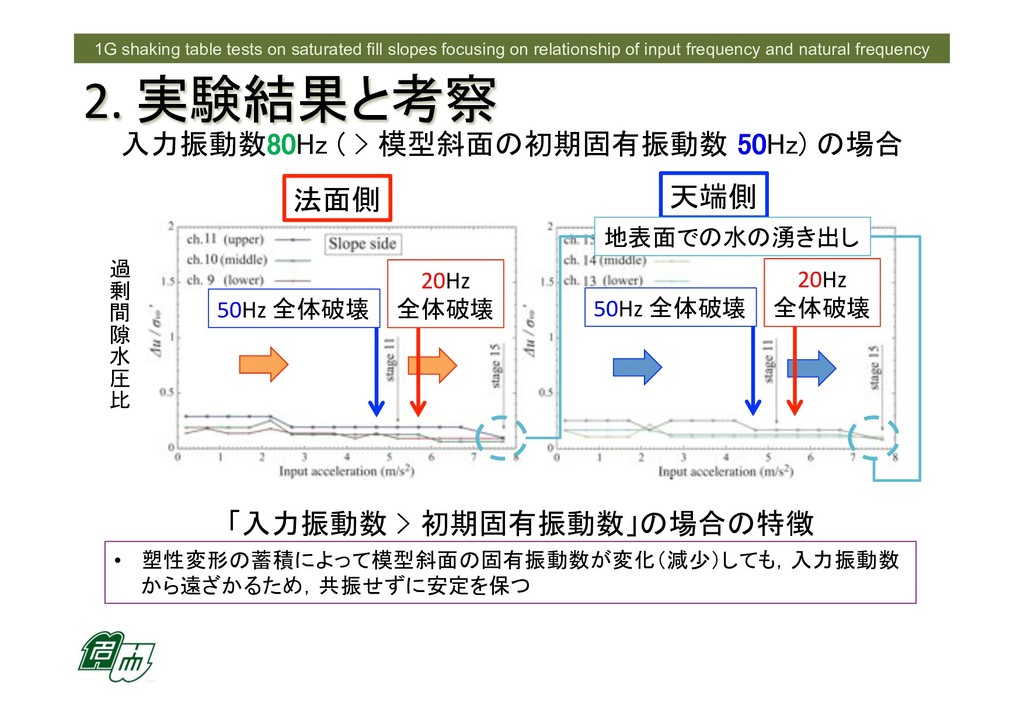
    relationship of input frequency and natural frequency 2.     •  50Hz 20Hz 50Hz 20Hz
  7. 1G shaking table tests on saturated fill slopes focusing on

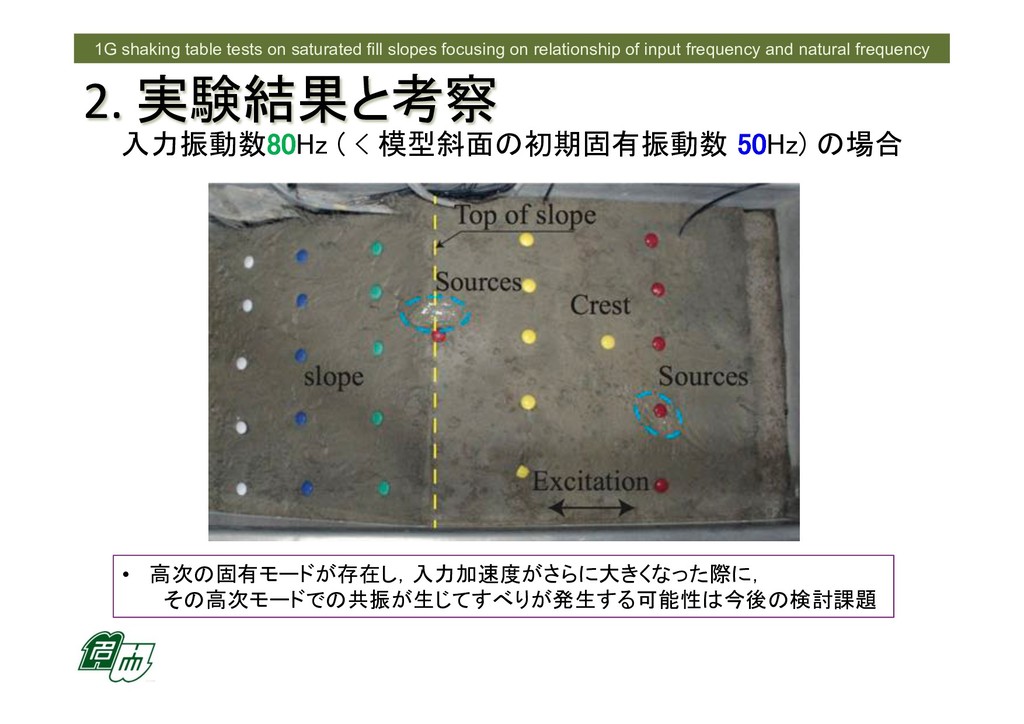
    relationship of input frequency and natural frequency 2. • 
  8. 1G shaking table tests on saturated fill slopes focusing on

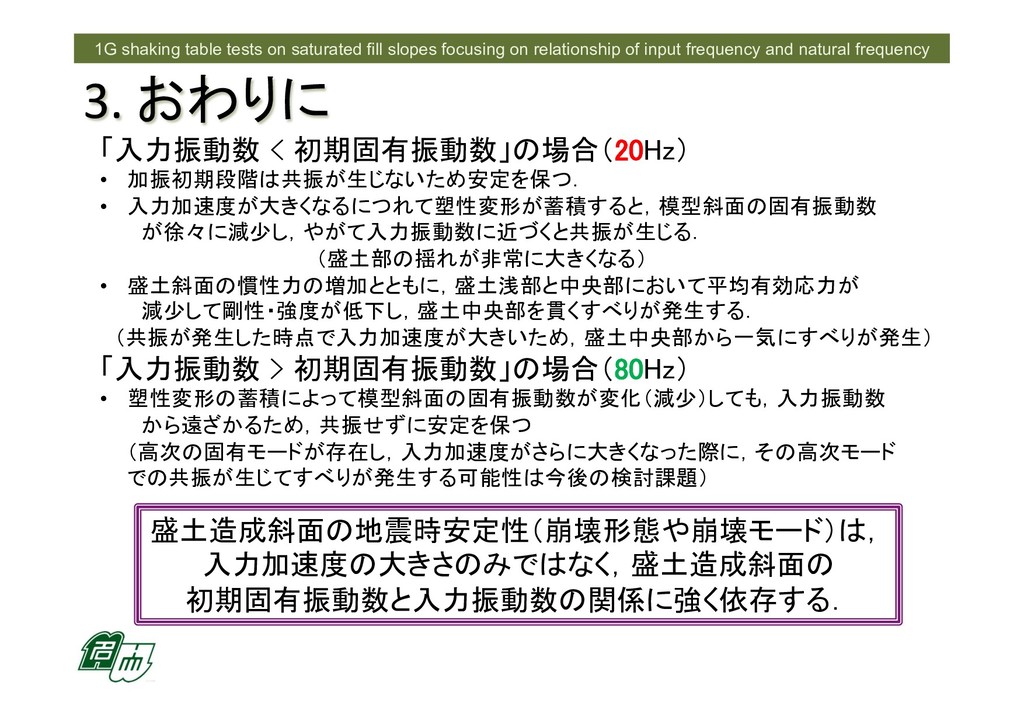
    relationship of input frequency and natural frequency 3. •  •  •  • 
  9. 1G shaking table tests on saturated fill slopes focusing on

    relationship of input frequency and natural frequency          
  10. 1G shaking table tests on saturated fill slopes focusing on

    relationship of input frequency and natural frequency