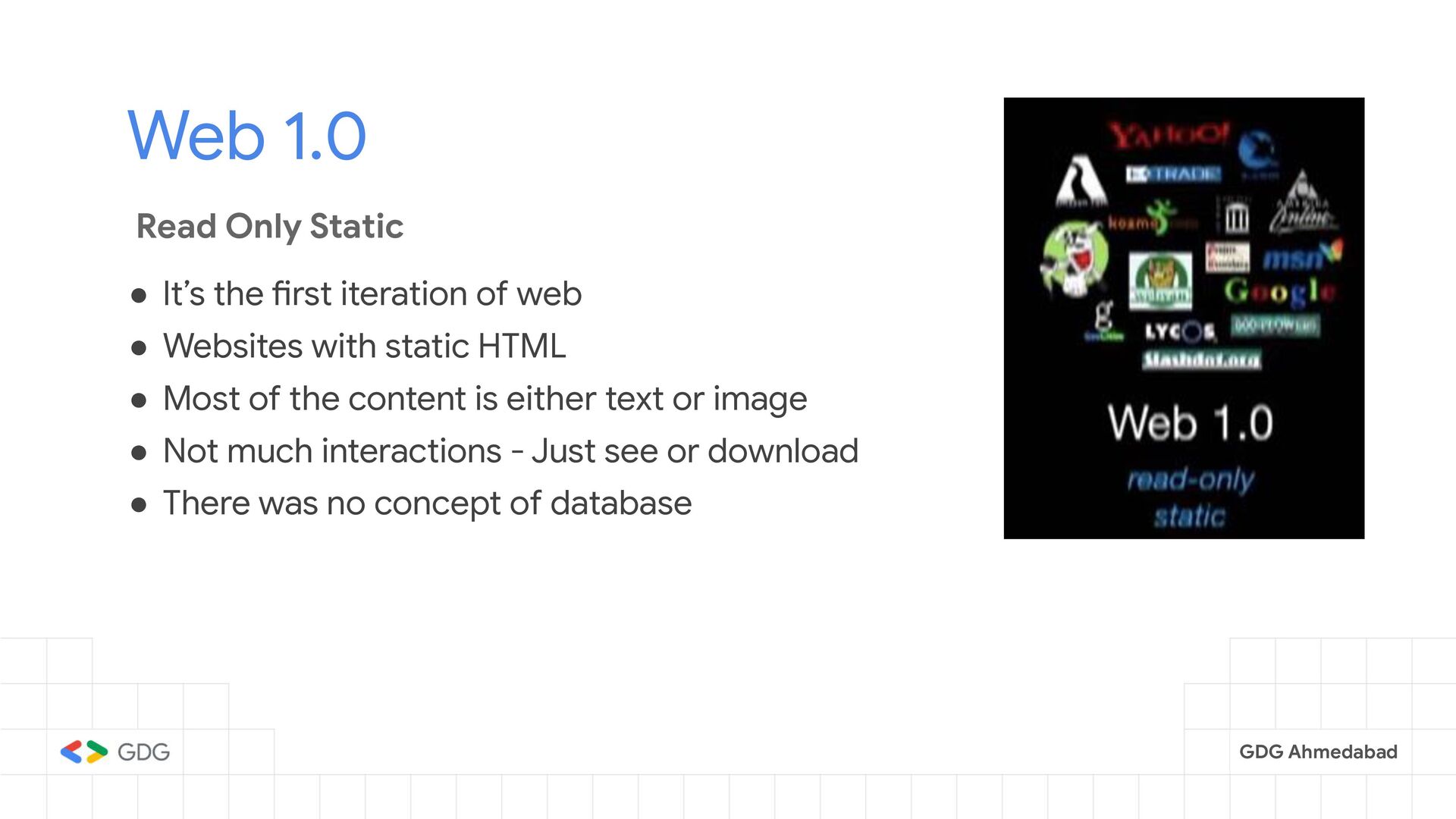
first iteration of web • Websites with static HTML • Most of the content is either text or image • Not much interactions - Just see or download • There was no concept of database
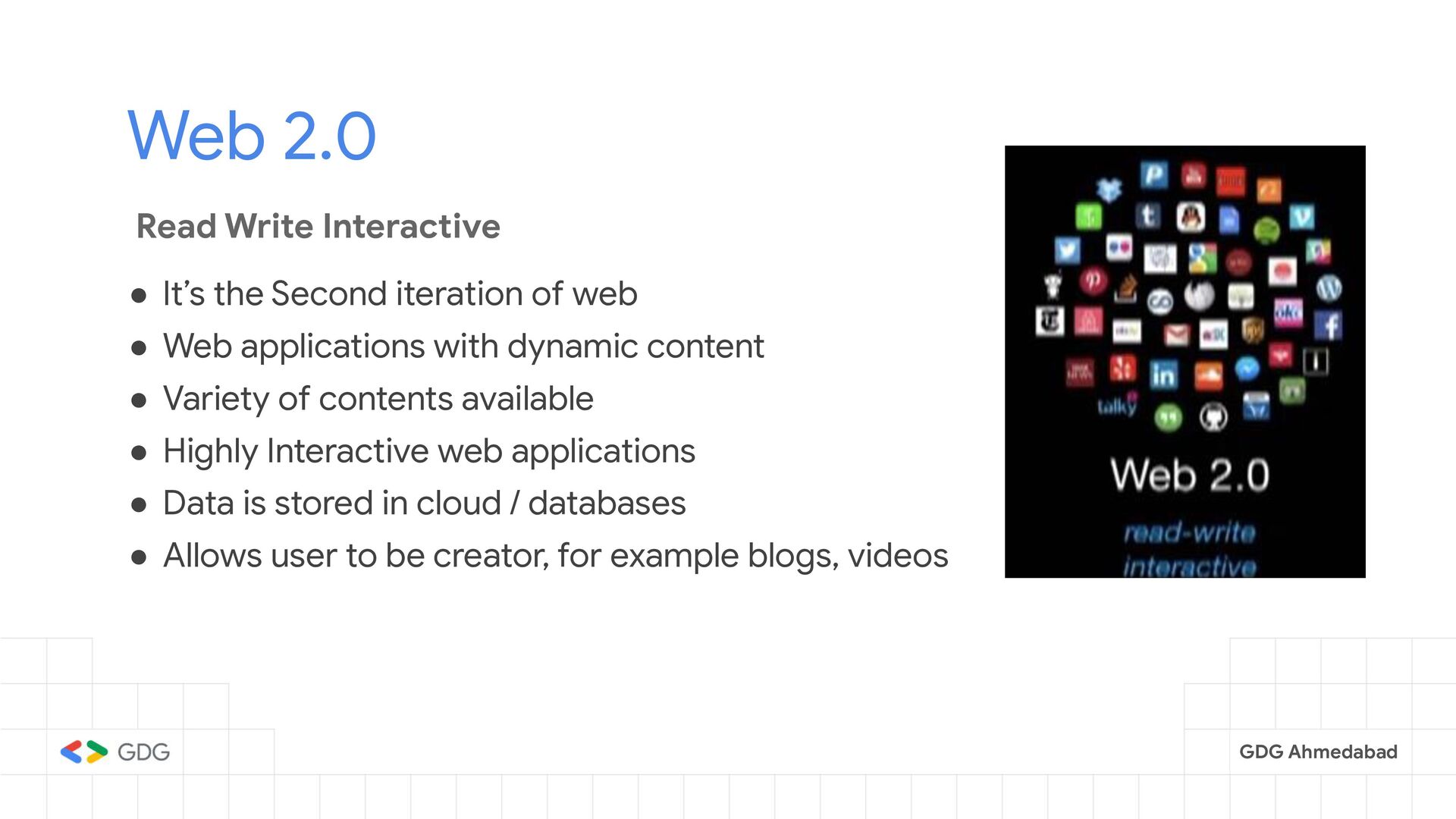
Second iteration of web • Web applications with dynamic content • Variety of contents available • Highly Interactive web applications • Data is stored in cloud / databases • Allows user to be creator, for example blogs, videos
Decentralized means that not one single entity has control over all the processing. Consumers accessing the internet through services mediated by companies Big Techs, contributors, themselves, own and govern sections of the internet.
usage of cryptocurrency for spending and sending money online instead of relying on the outdated payment systems like bank or third party payment gateways. Tokens are considered as financial incentives for anyone who is contributing or governing in Web3.0.
Web3 gives you ownership of your digital assets by way of token. For example, you created nice graphics and uploaded it to some web applications through the account. If the owner delete your account you lost your graphics. Web3 allows for direct ownership through non-fungible tokens (NFTs). No one, has the power to take away your ownership. You can trade in Web3 by way of NFTs.
are creating specific type of contents in platforms. The owners has right to put censorship on the platform. If they does you loss your reputation on the platform. On Web3, your data lives on the blockchain. When you decide to leave a platform, you can take your reputation with you and plugin to another platform.
many platforms. To make a change in that you have to do it across the platforms. Web3 solves these problems by allowing you to control your digital identity with an Ethereum address and ENS profile.
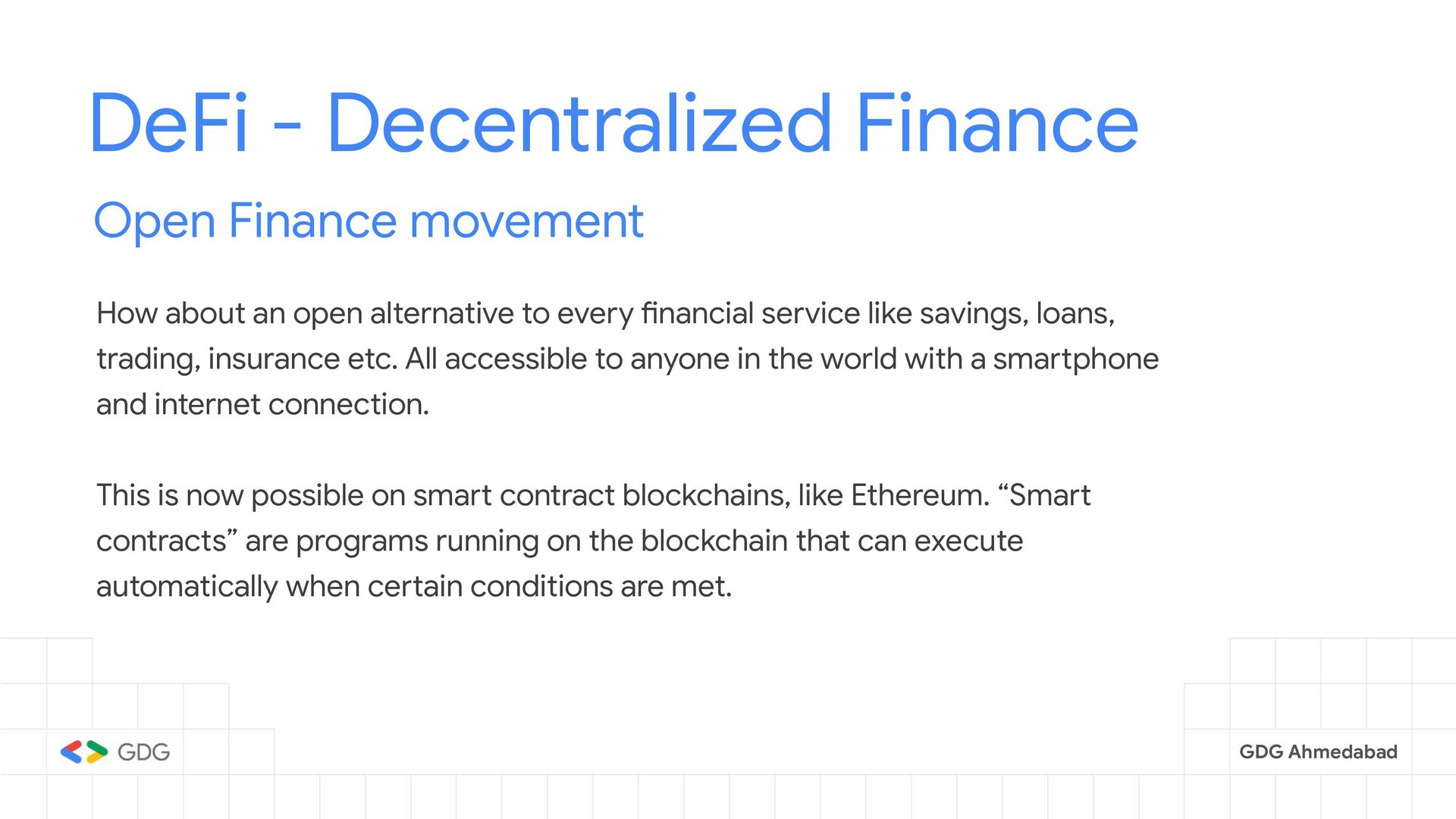
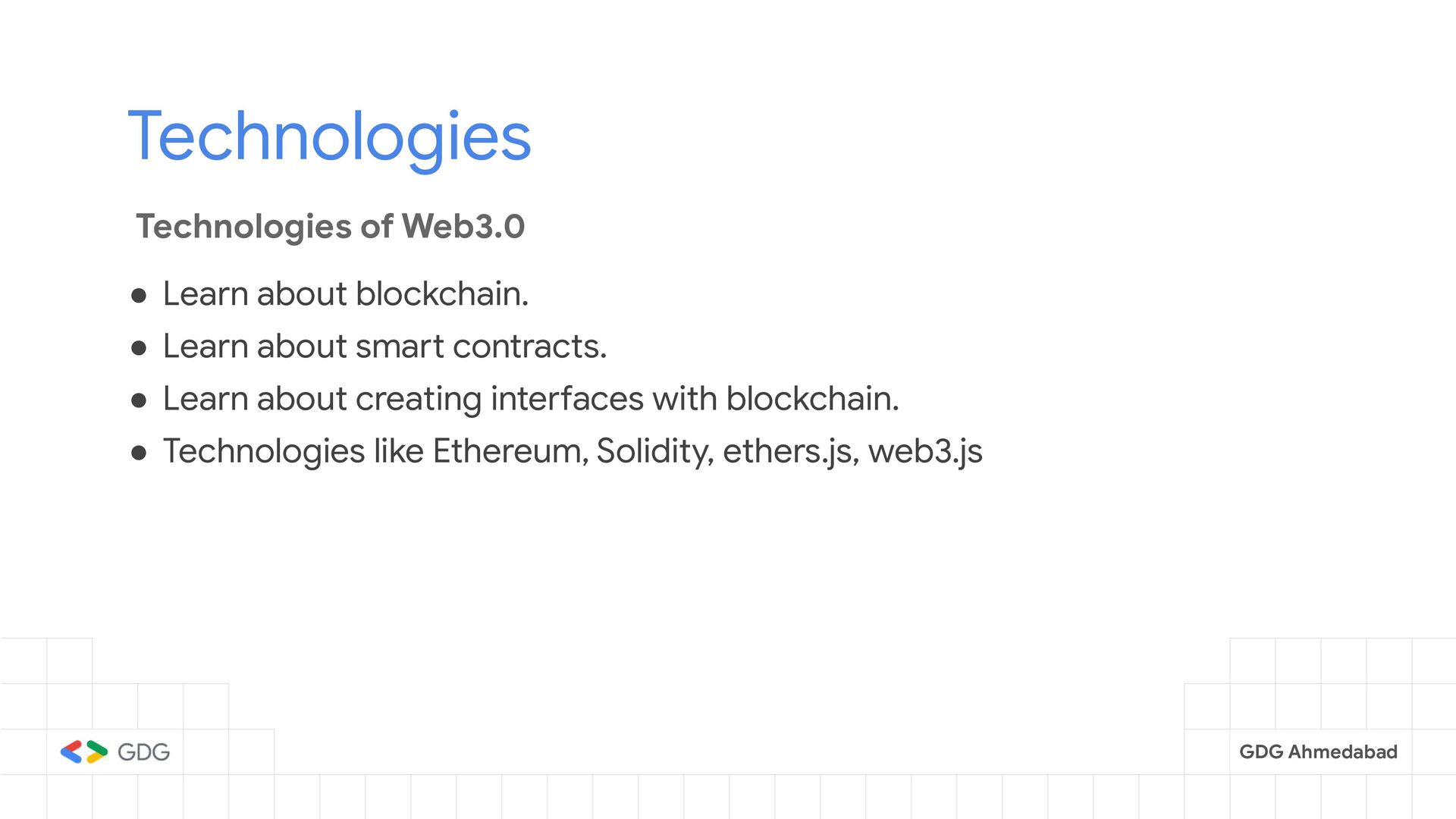
about an open alternative to every financial service like savings, loans, trading, insurance etc. All accessible to anyone in the world with a smartphone and internet connection. This is now possible on smart contract blockchains, like Ethereum. “Smart contracts” are programs running on the blockchain that can execute automatically when certain conditions are met.


 hirendave
 ysuzuki
 kworkdev
 konippi
 takahiromatsui
 mrmtsu
 uya116
 elmodev09
 tsho
tsho
 shisyu_gaku
 kawametho
 mikanichinose
 ennael
 dugsong
 bcantrill
 mraible
 asonas
 thoeni
 lynnandtonic
 kneath
 eileencodes
 swwweet
 lauravandoore
 jcasabona
 coloredviolet