Upgrade to Pro — share decks privately, control downloads, hide ads and more …

Mob Rules, or: how I learned to Stop Worrying a...

Sponsored · Ship Features Fearlessly Turn features on and off without deploys. Used by thousands of Ruby developers.

Mob Rules, or: how I learned to Stop Worrying and Love Technical Debt

(A talk given at GeeCON 2026 in Krakow, Poland)

Love it or hate it (usually the latter), technical debt is inherent in any long-term engineering effort. Not just software: if you think the Boeing 787 doesn't contain decades-old legacy components, you may be an incurable optimist. Good on you! For the rest of us, though, technical debt is a fact of life, and while we all agree 'technical debt is bad' we often end up in a perennial, soul-sucking arguments that seldom lead to actual progress. Why is that? In this whirlwind tour of past mistakes and existential post-mortems we will deconstruct technical debt, break down its negative consequences and analyze why it's so hard to tackle both technically and organizationally. A well-defined problem is one we can actually move the needle on, and with clarity we can arrive at better strategies. Technical debt may not be a curable disease, but it doesn't have to be a terminal one!

Avatar for Tomer Gabel

Tomer Gabel

May 15, 2026

More Decks by Tomer Gabel

Other Decks in Programming

Transcript

  1. Mob Rules or: How I Learned to Stop Worrying and

    Love Technical Debt Tomer Gabel Technical Debt Collector @ Substrate Software “Services” Questions/feedback on sli.do #geecon
  2. I want you to raise your hand (and keep it

    up) if… Your organization has technical debt
  3. I want you to raise your hand (and keep it

    up) if… Deadlines were missed because of tech debt
  4. I want you to raise your hand (and keep it

    up) if… Your technical debt Is out of control
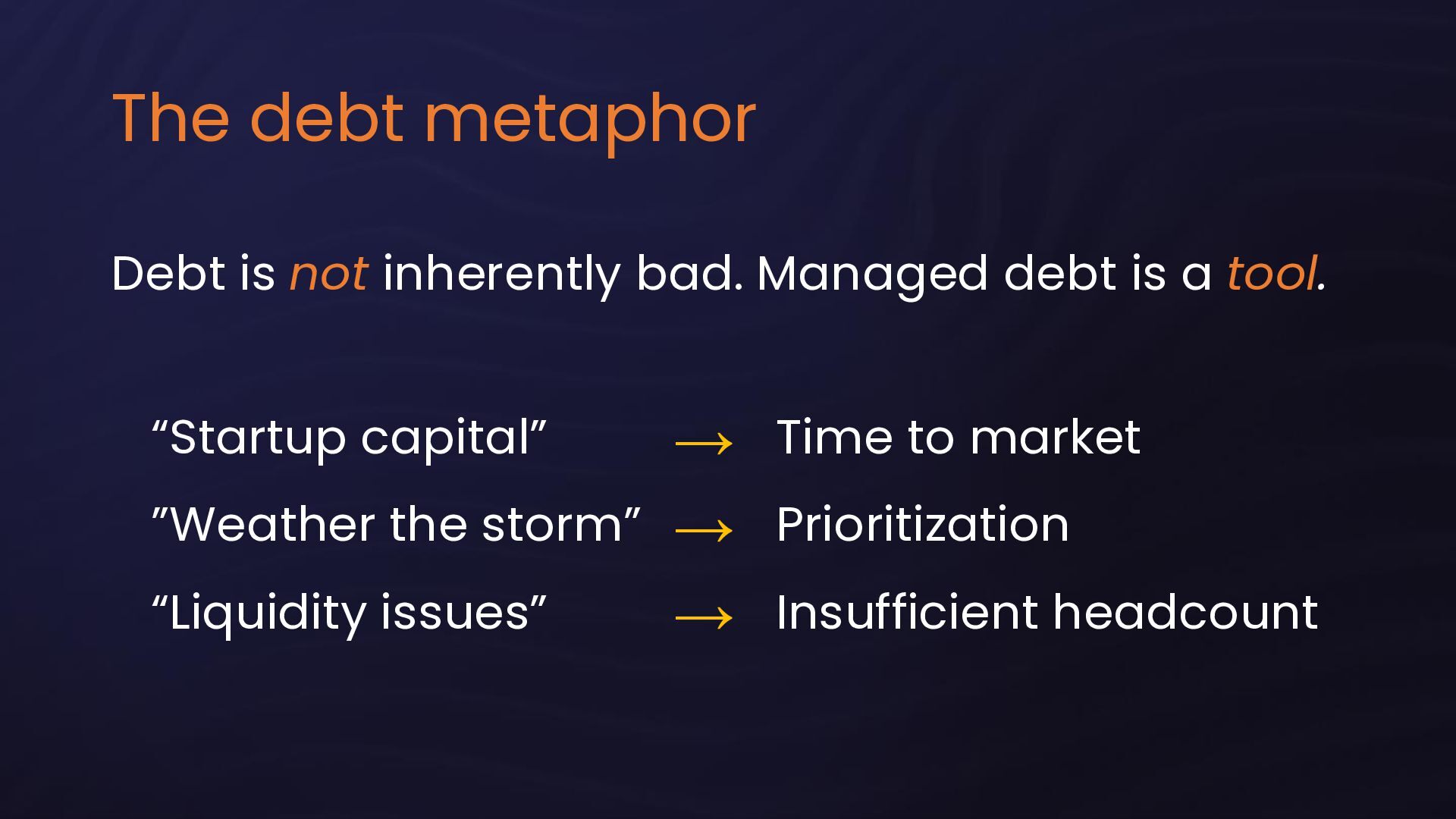
  5. The debt metaphor Debt is not inherently bad. Managed debt

    is a tool. “Startup capital” → Time to market ”Weather the storm” → Prioritization “Liquidity issues” → Insufficient headcount
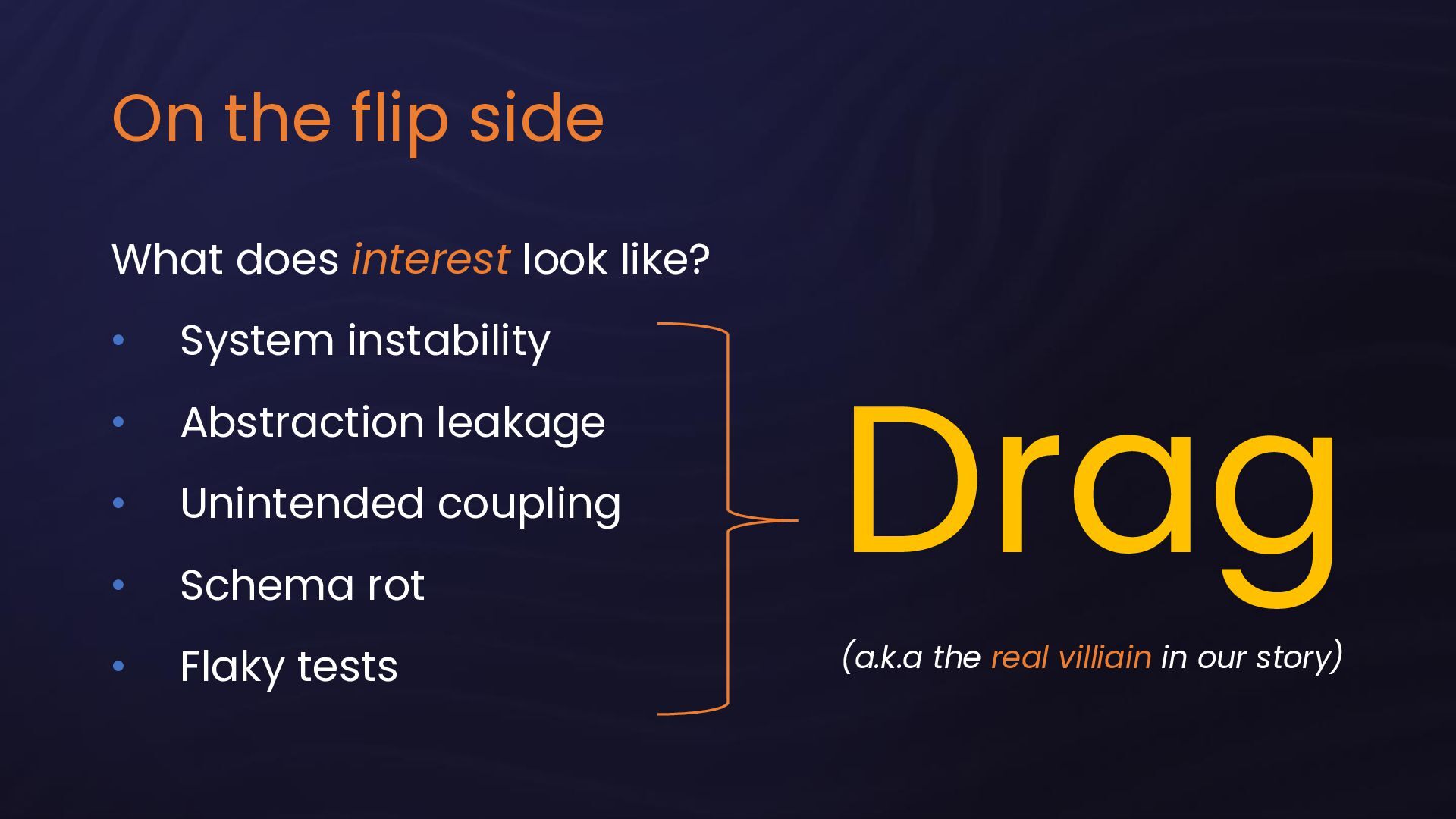
  6. On the flip side What does interest look like? •

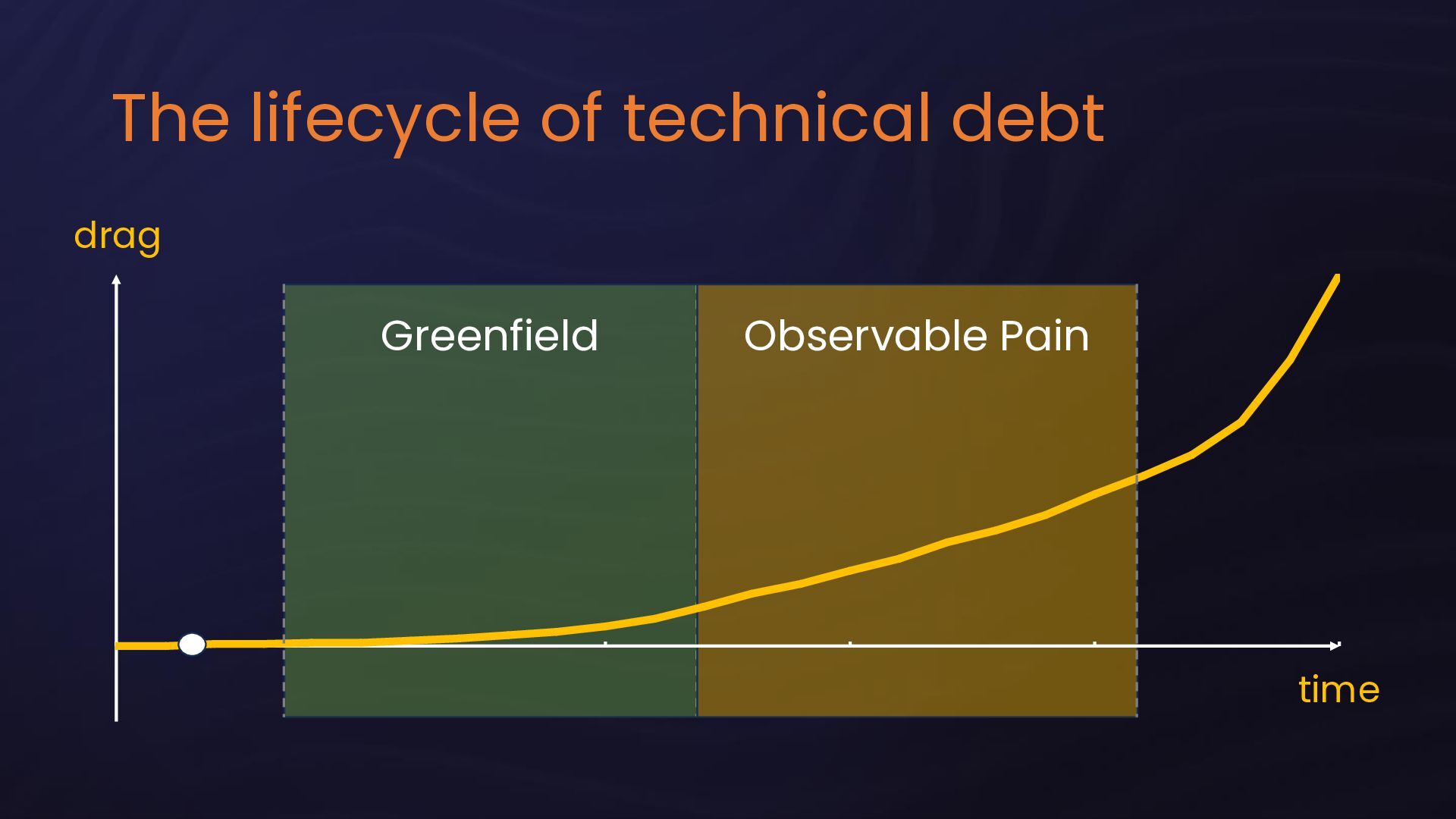
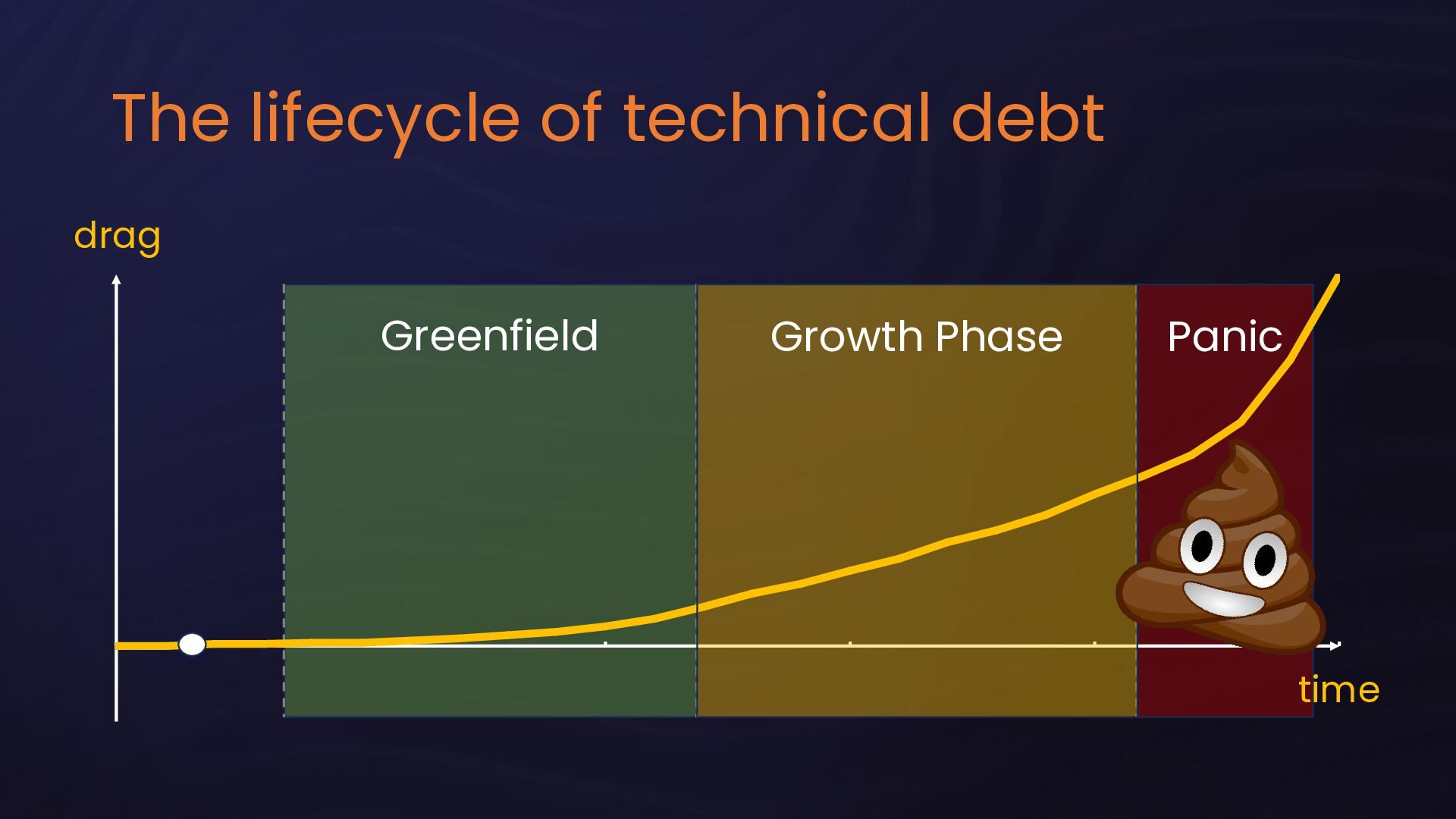
    System instability • Abstraction leakage • Unintended coupling • Schema rot • Flaky tests Drag (a.k.a the real villiain in our story)
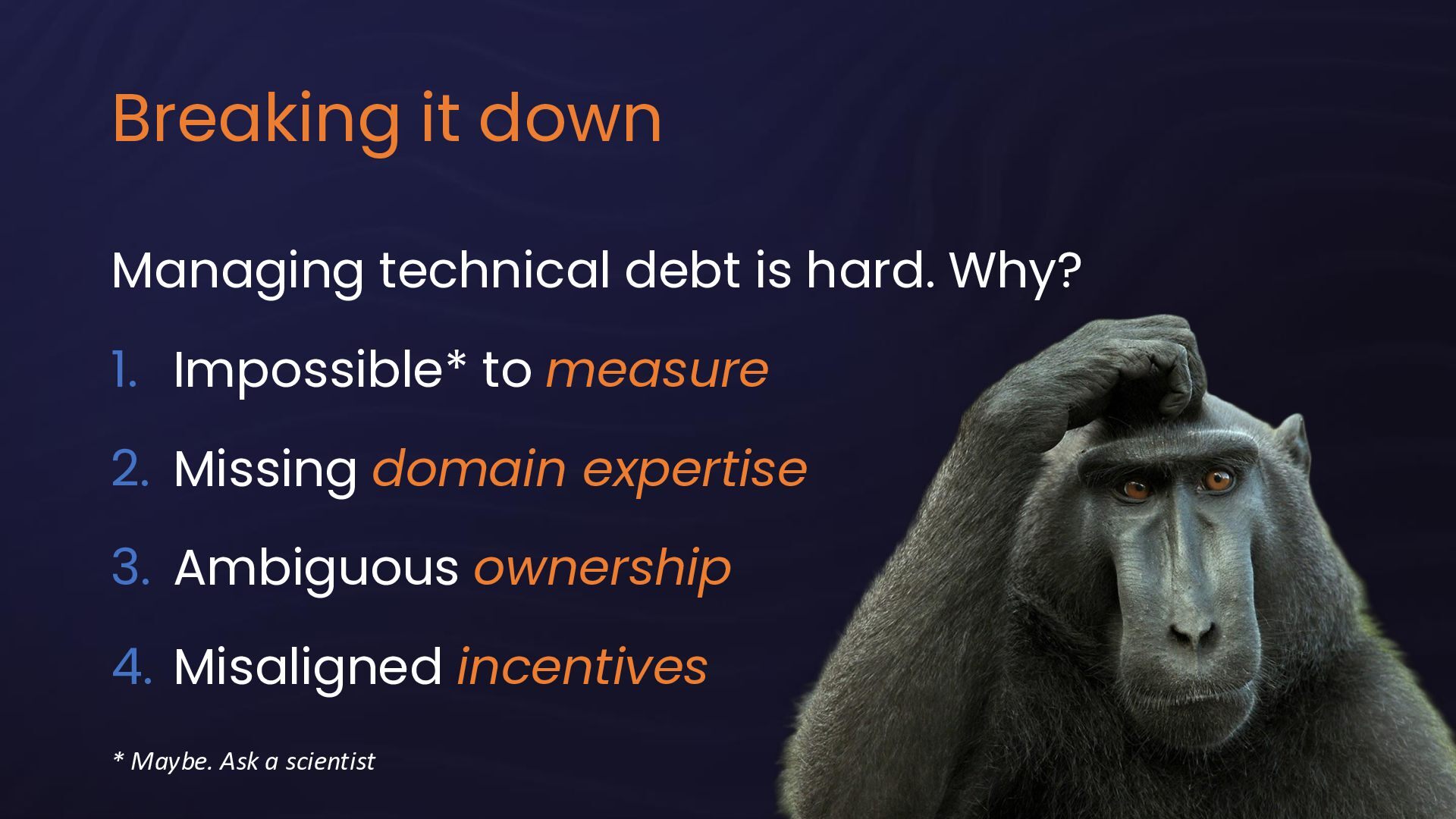
  7. Breaking it down Managing technical debt is hard. Why? 1.

    Impossible* to measure 2. Missing domain expertise 3. Ambiguous ownership 4. Misaligned incentives * Maybe. Ask a scientist
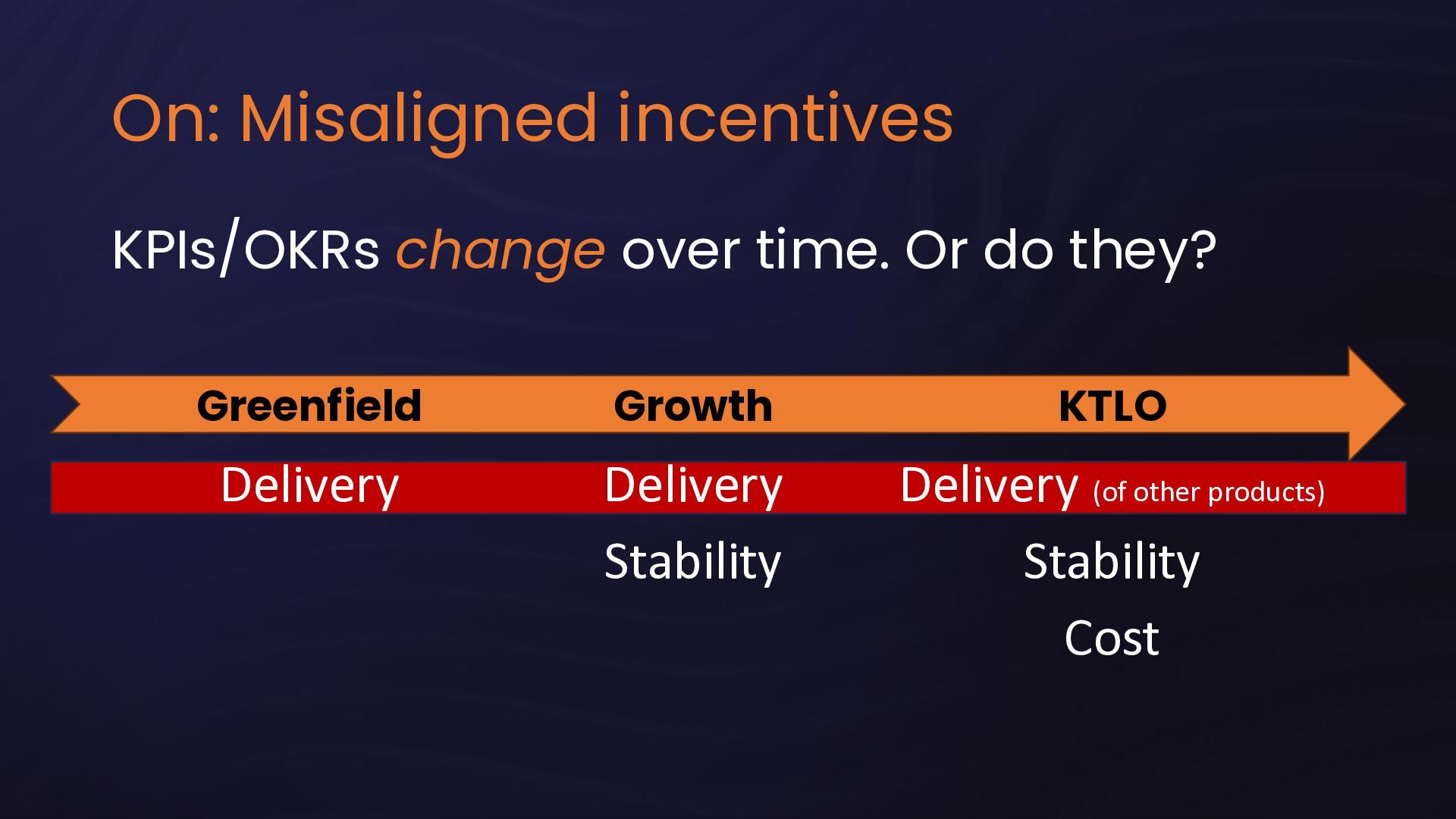
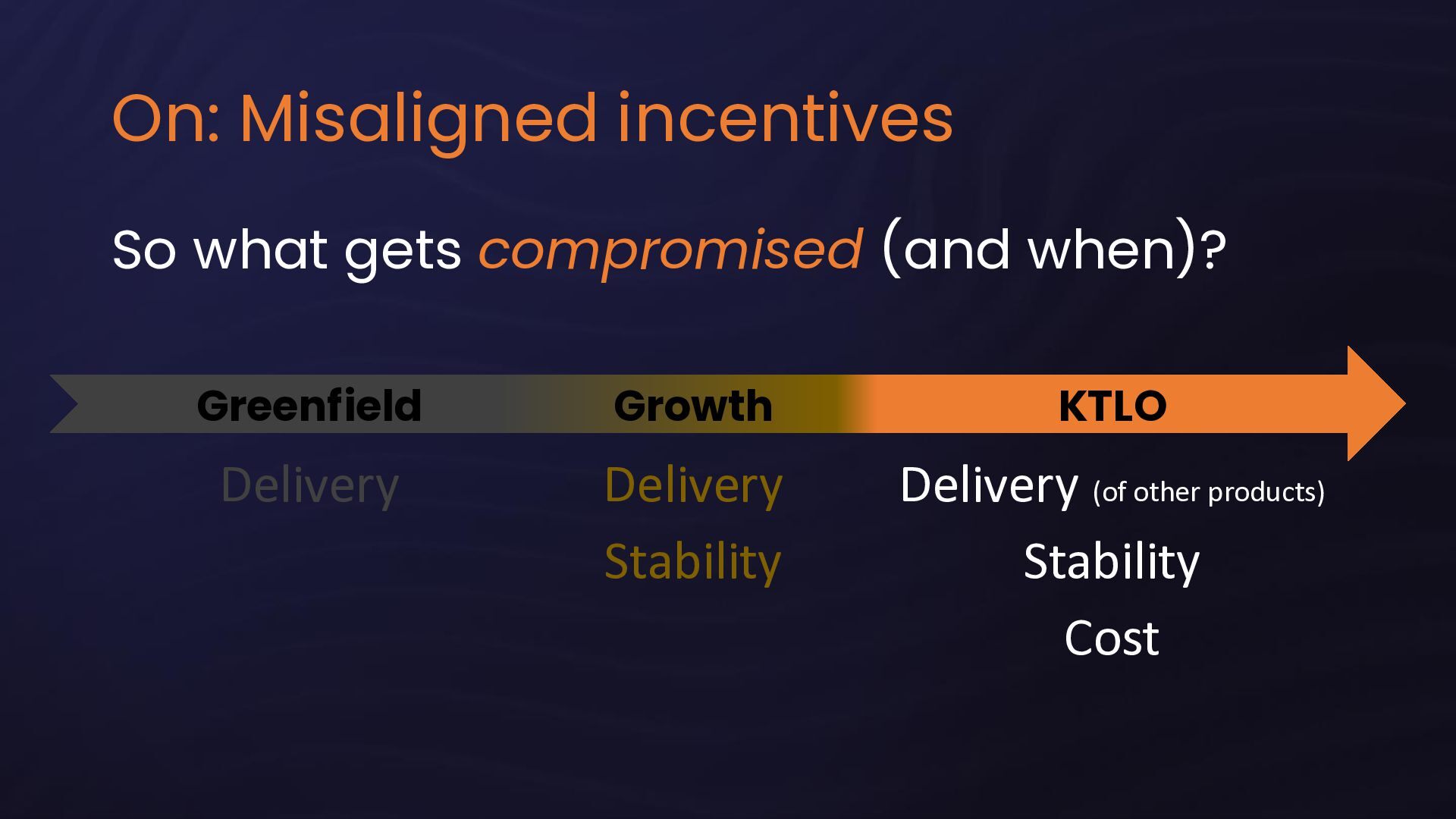
  8. On: Misaligned incentives KPIs/OKRs change over time. Or do they?

    Greenfield Growth KTLO Delivery Delivery Delivery (of other products) Stability Stability Cost
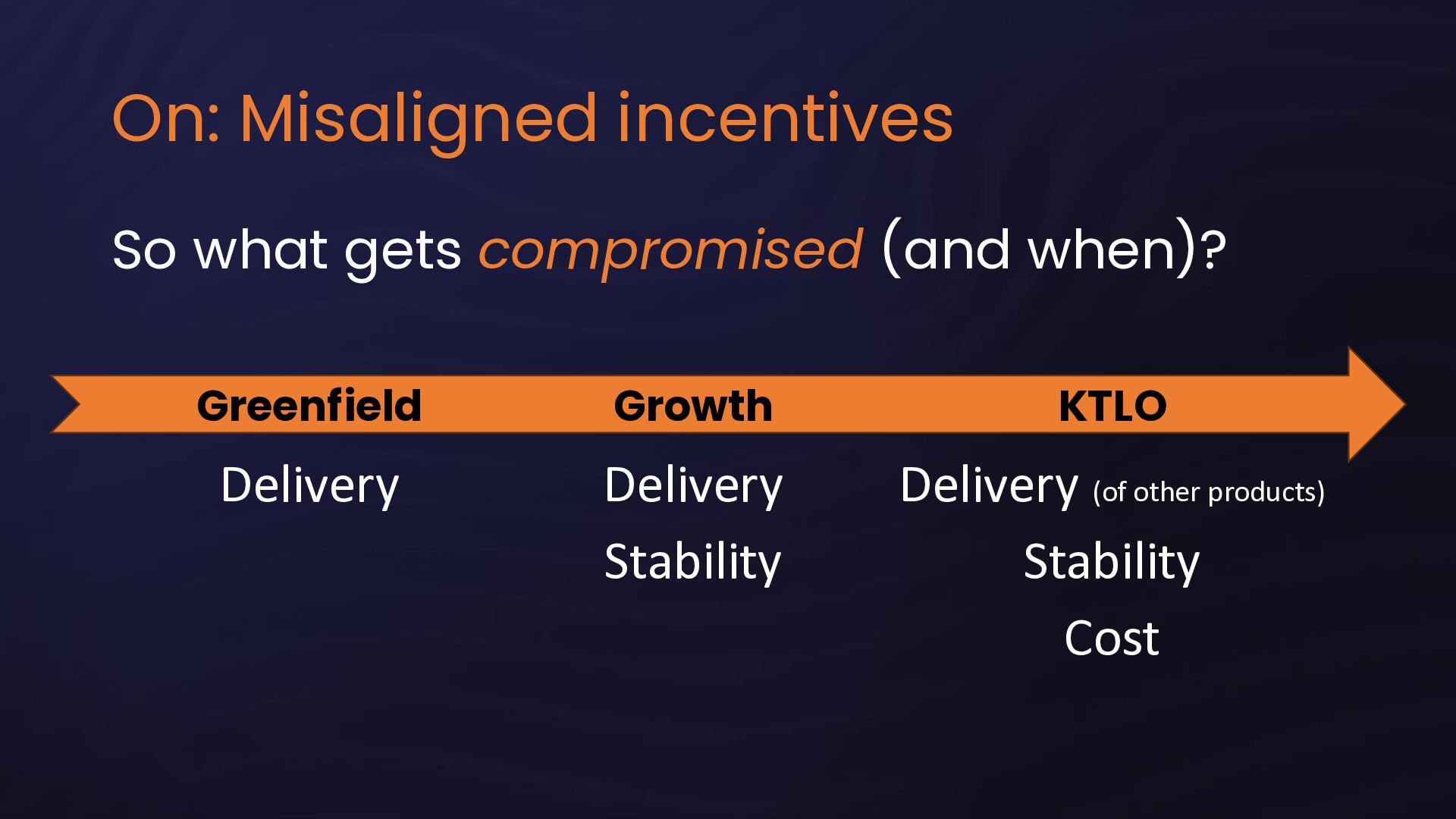
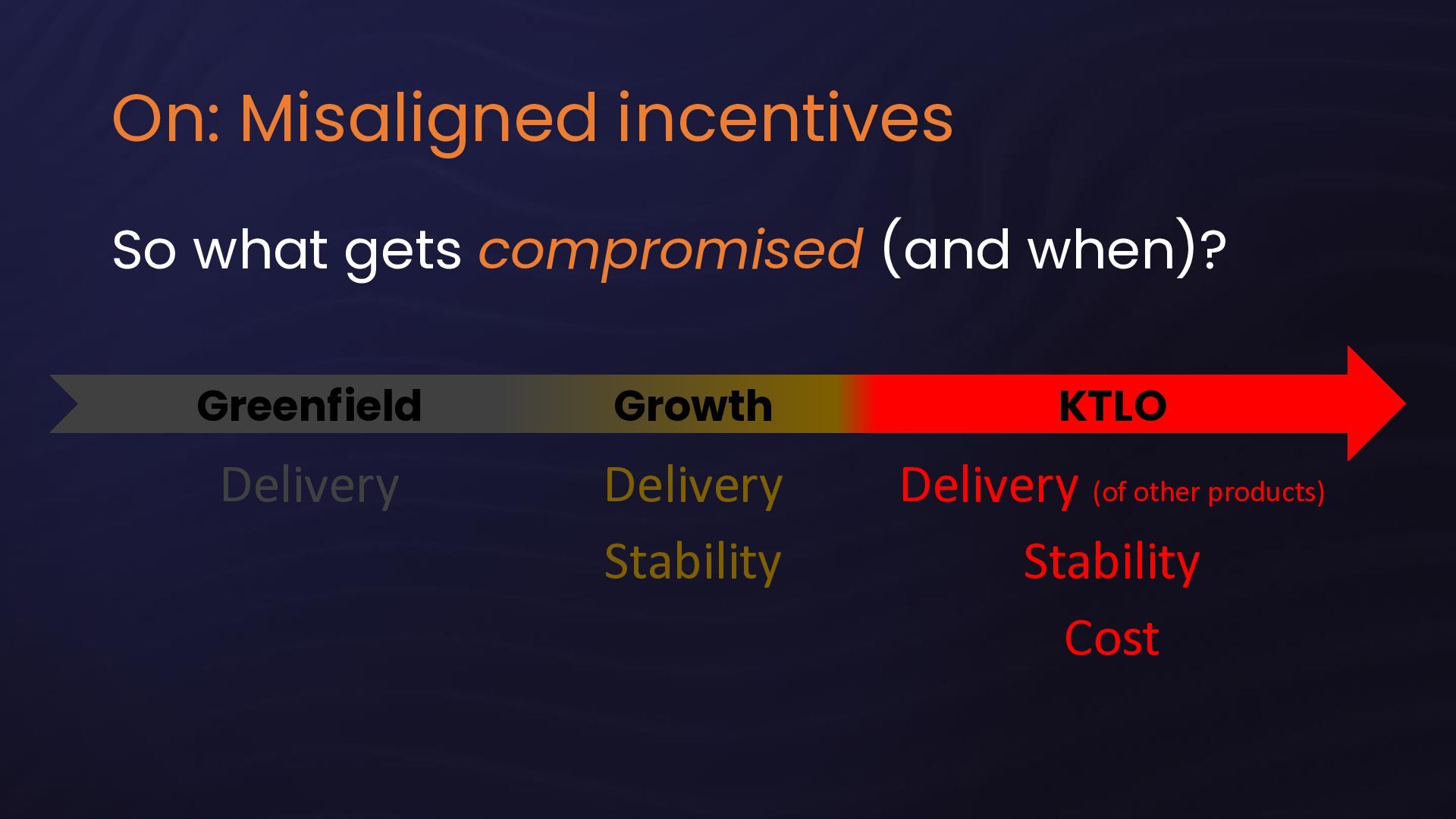
  9. On: Misaligned incentives So what gets compromised (and when)? Greenfield

    Growth KTLO Delivery Delivery Delivery (of other products) Stability Stability Cost
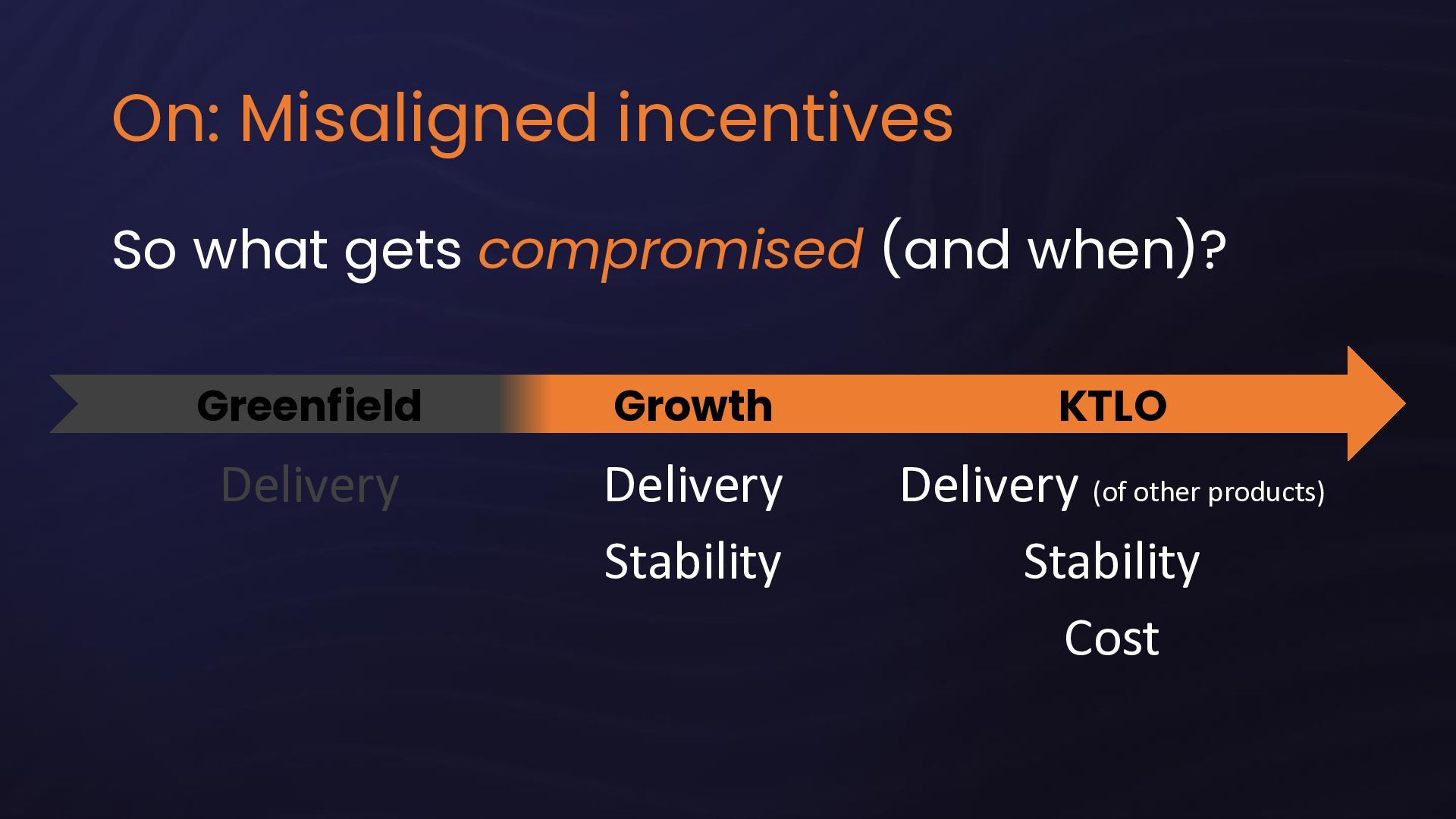
  10. On: Misaligned incentives So what gets compromised (and when)? Greenfield

    Growth KTLO Delivery Delivery Delivery (of other products) Stability Stability Cost
  11. On: Misaligned incentives So what gets compromised (and when)? Greenfield

    Growth KTLO Delivery Delivery Delivery (of other products) Stability Stability Cost
  12. On: Misaligned incentives So what gets compromised (and when)? Greenfield

    Growth KTLO Delivery Delivery Delivery (of other products) Stability Stability Cost
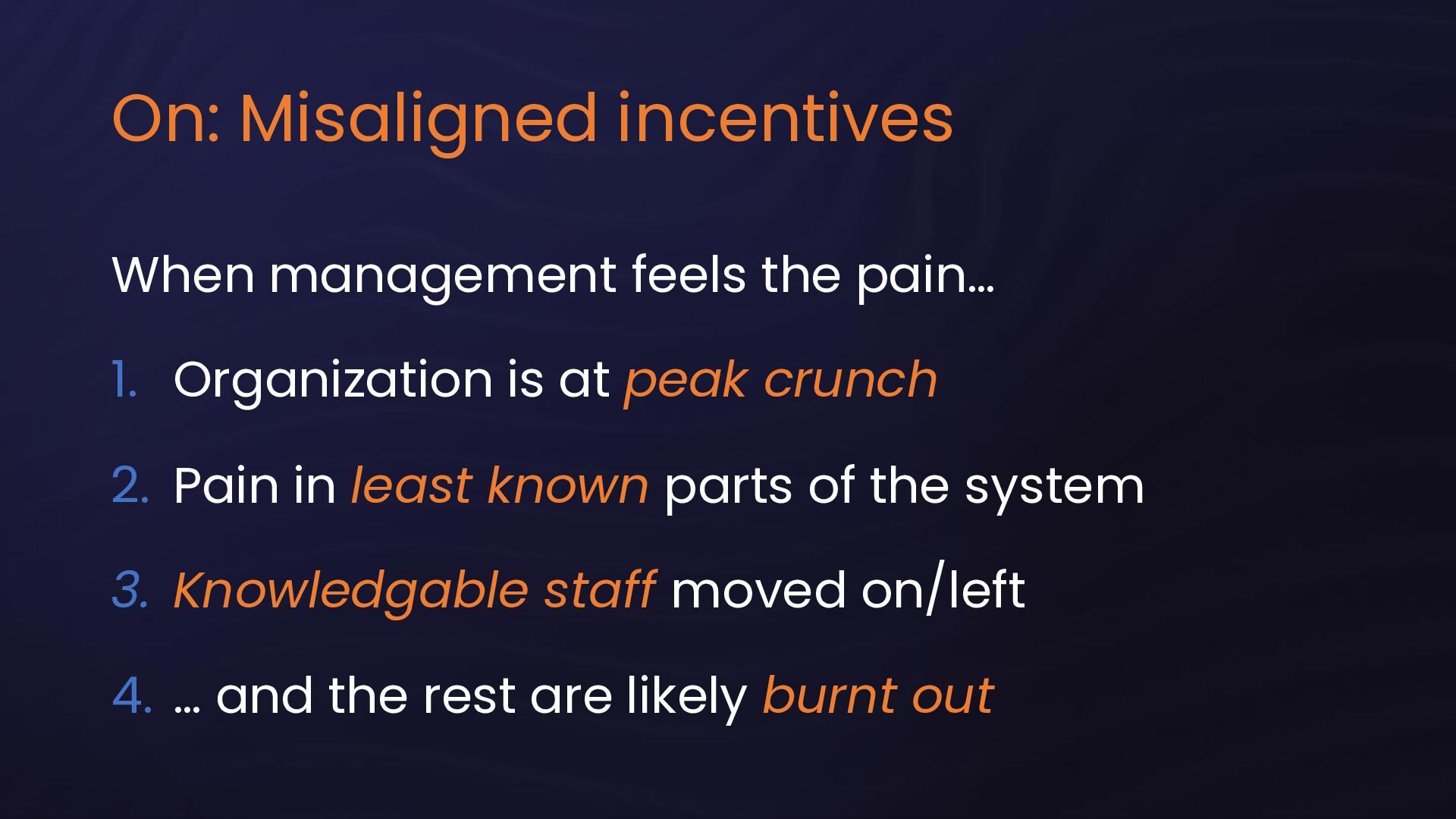
  13. On: Misaligned incentives When management feels the pain… 1. Organization

    is at peak crunch 2. Pain in least known parts of the system 3. Knowledgable staff moved on/left 4. … and the rest are likely burnt out
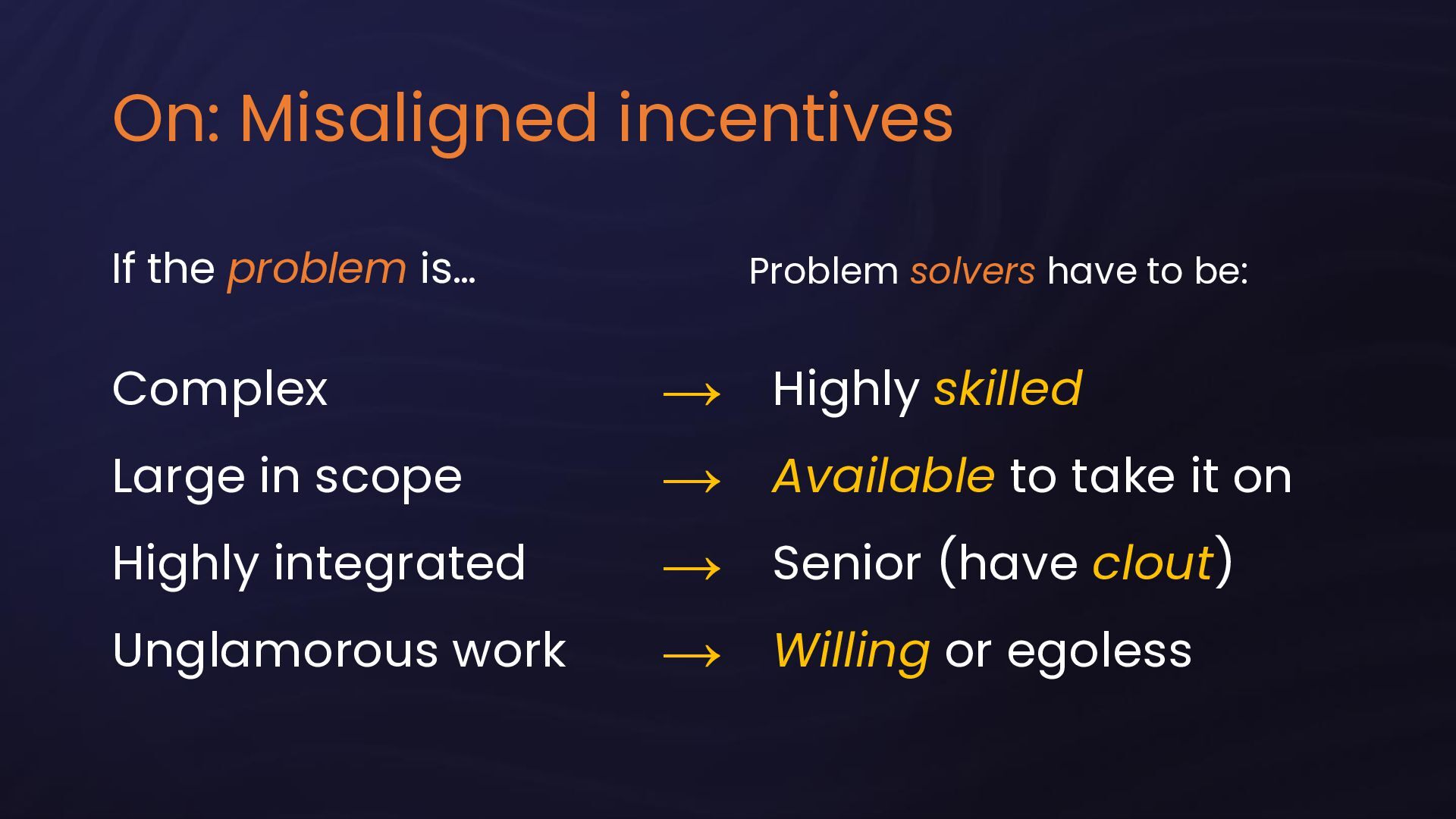
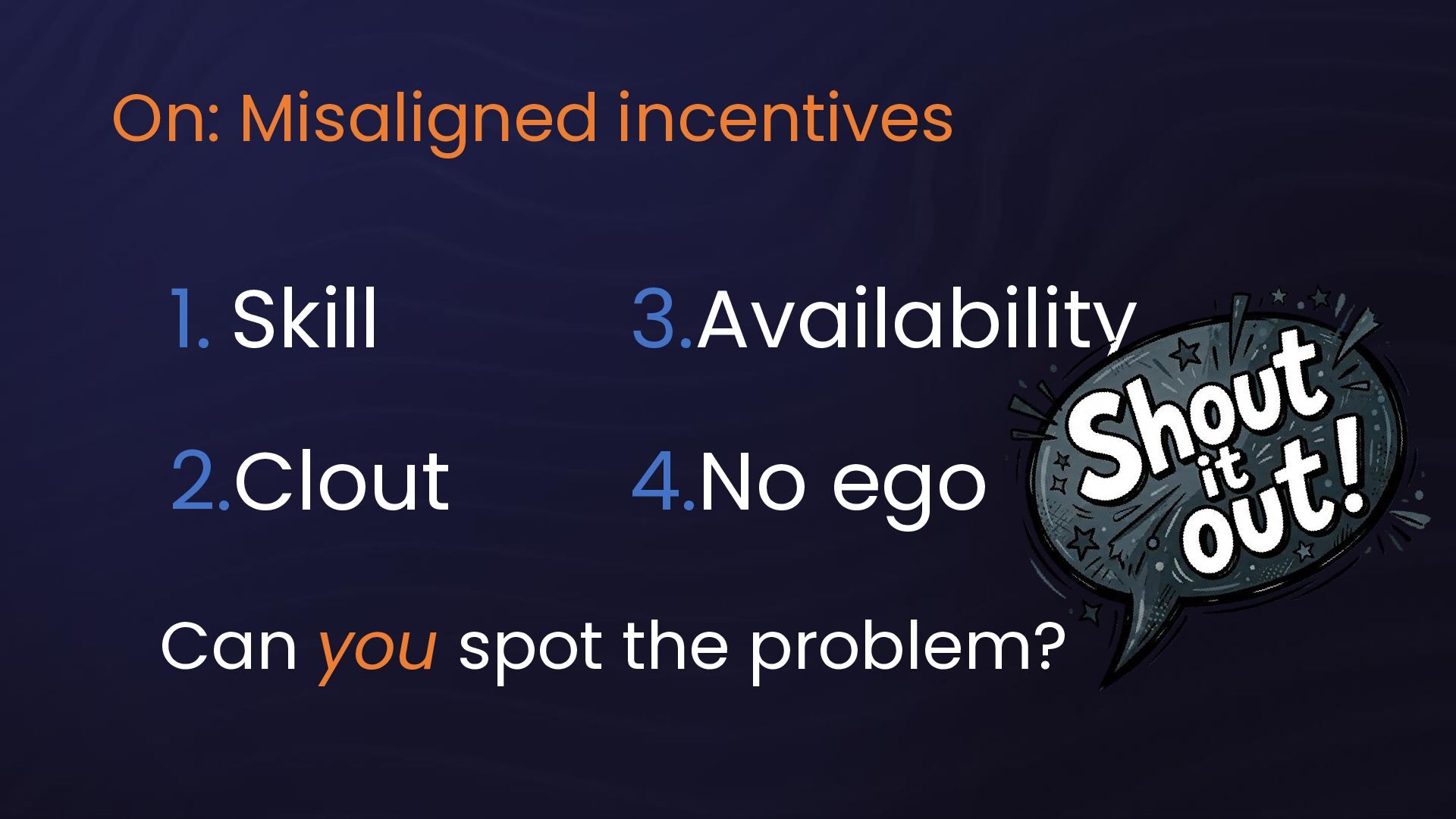
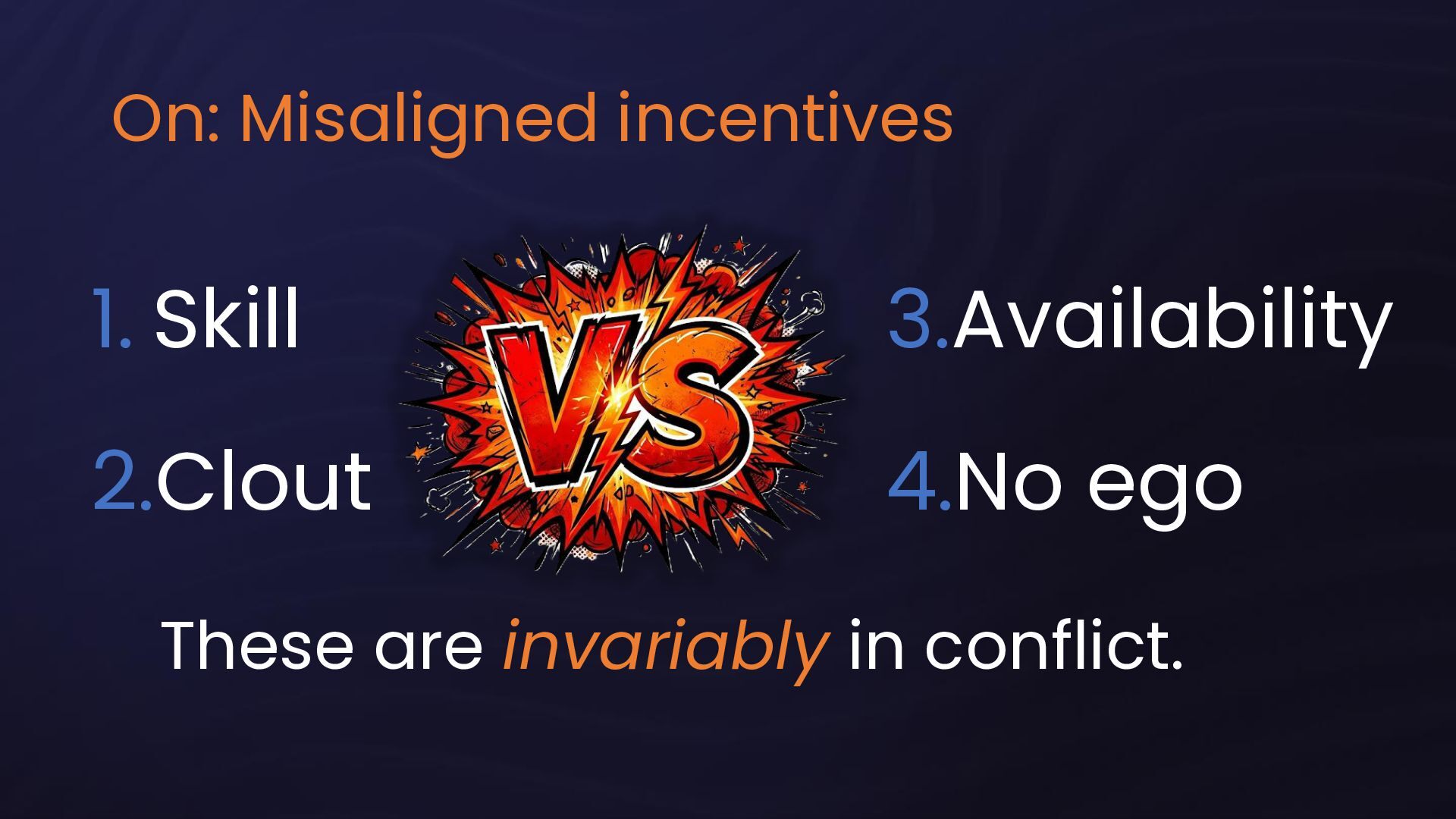
  14. On: Misaligned incentives If the problem is… Problem solvers have

    to be: Complex → Highly skilled Large in scope → Available to take it on Highly integrated → Senior (have clout) Unglamorous work → Willing or egoless
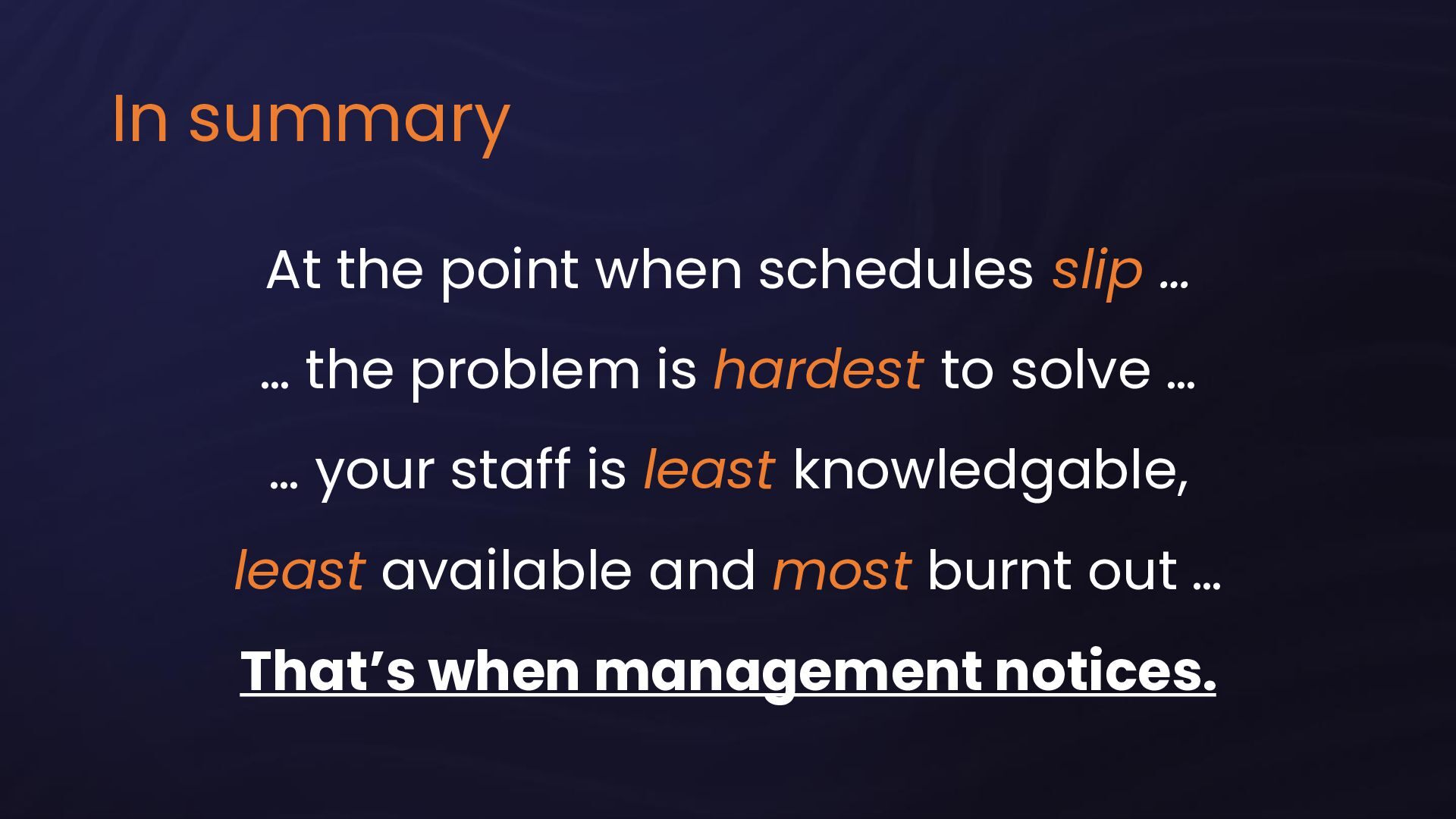
  15. In summary At the point when schedules slip … …

    the problem is hardest to solve … … your staff is least knowledgable, least available and most burnt out … That’s when management notices.
  16. Nice system you’ve got there! Shame if something were to

    happen to it. I’ll make you an offer you can’t refuse. act I act II act III


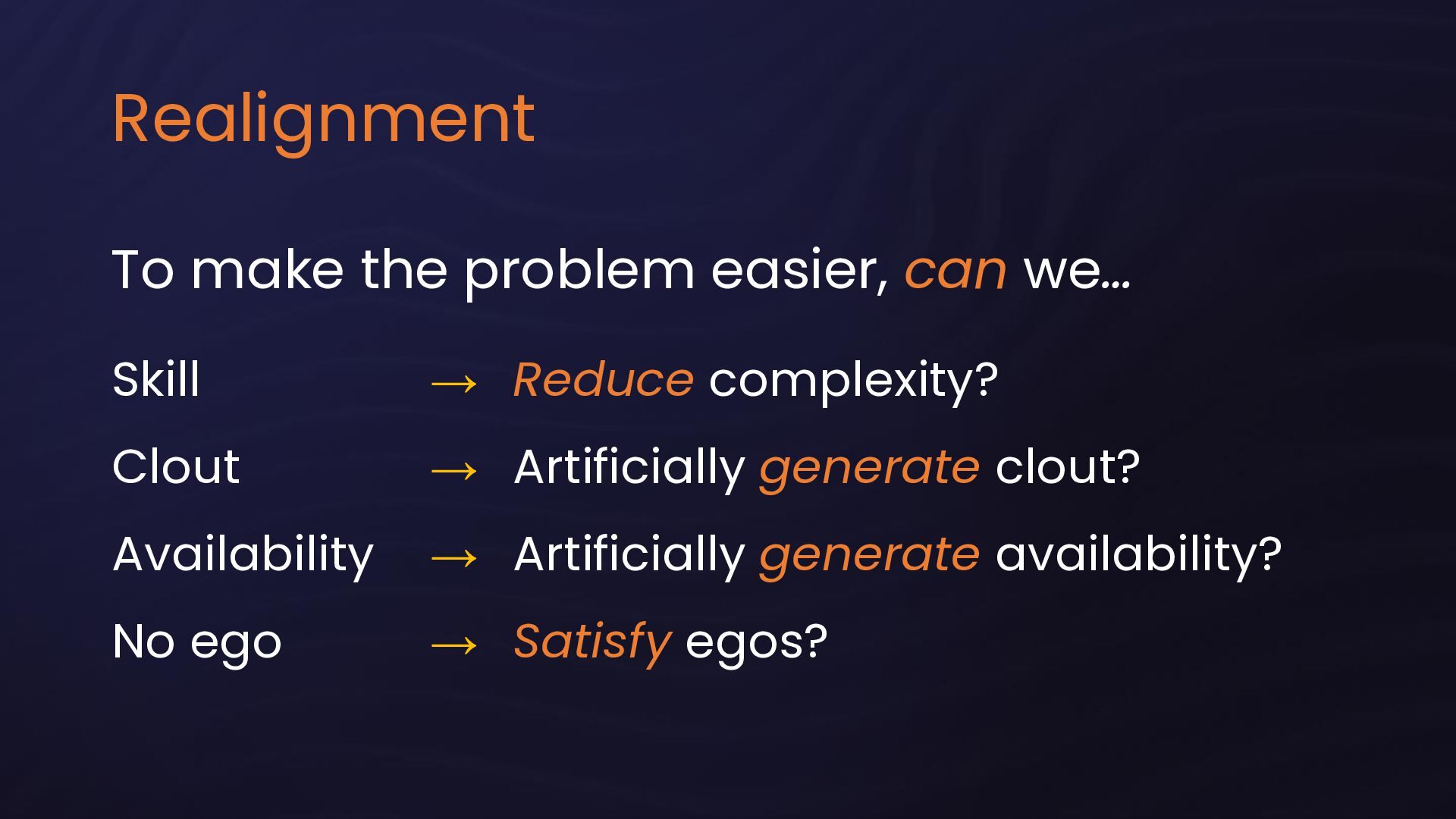
  17. Skill → Reduce complexity? Clout → Artificially generate clout? Availability

    → Artificially generate availability? No ego → Satisfy egos? Realignment To make the problem easier, can we…
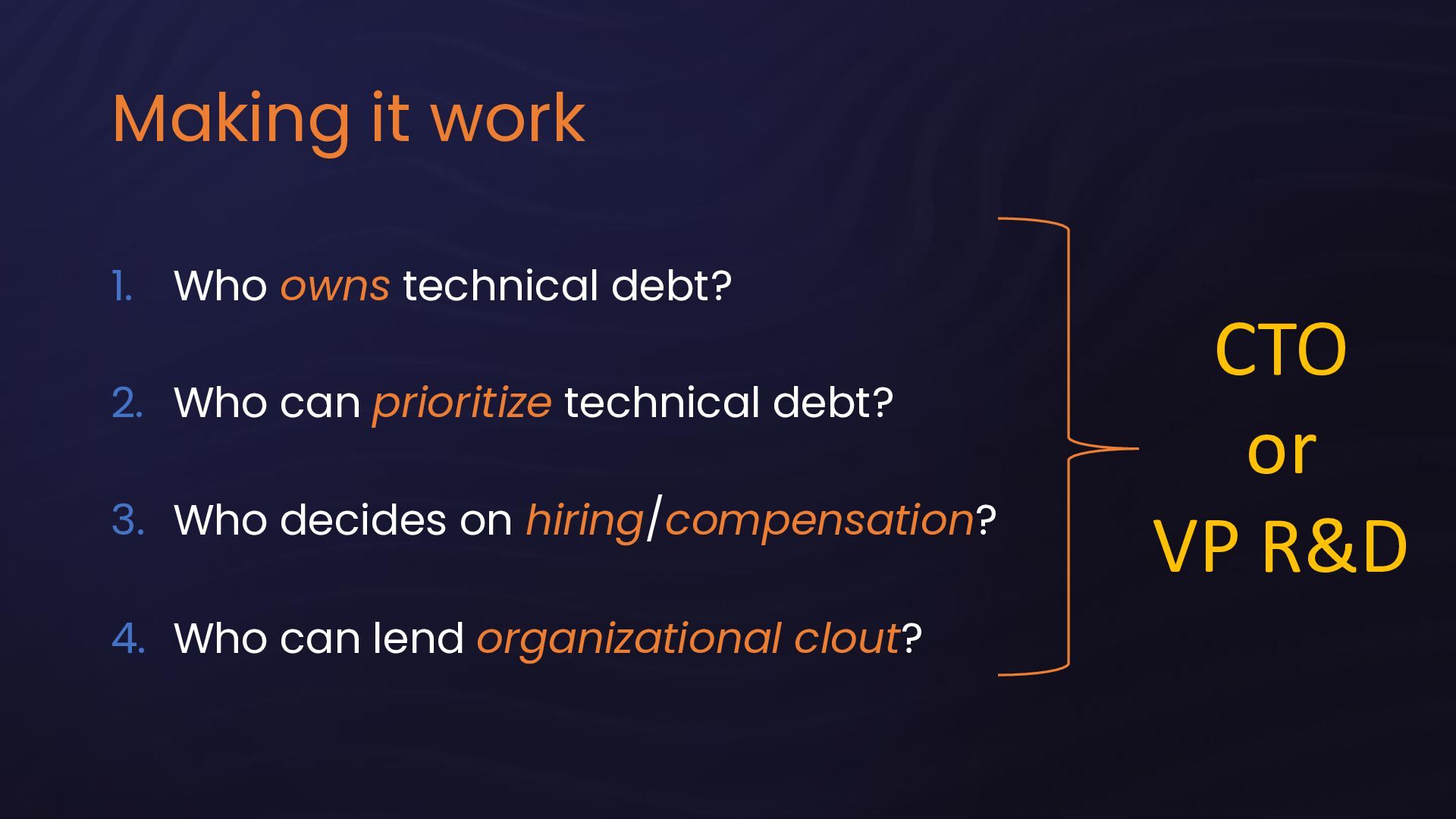
  18. Making it work 1. Who owns technical debt? 2. Who

    can prioritize technical debt? 3. Who decides on hiring/compensation? 4. Who can lend organizational clout? CTO or VP R&D
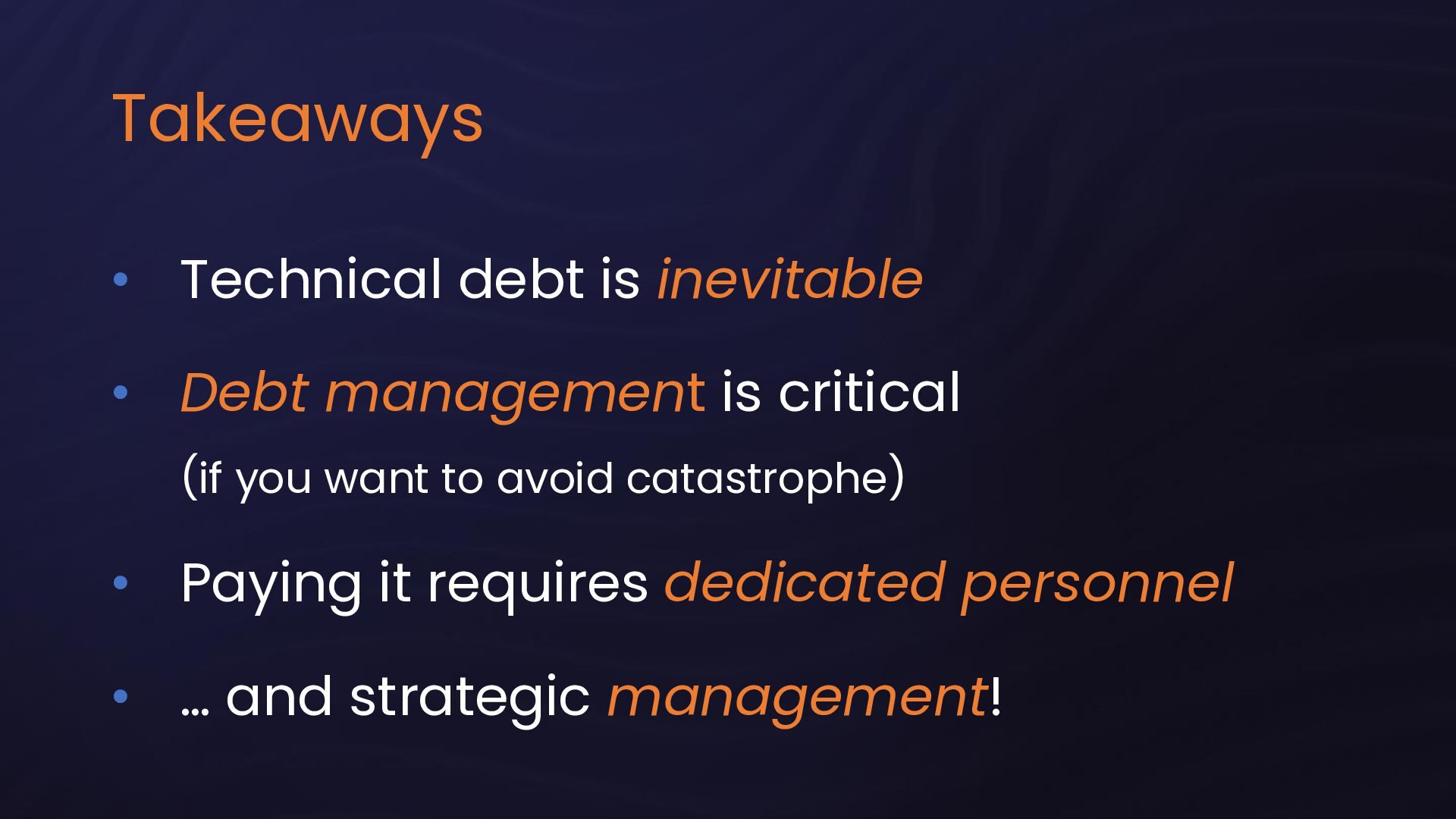
  19. Takeaways • Technical debt is inevitable • Debt management is

    critical (if you want to avoid catastrophe) • Paying it requires dedicated personnel • … and strategic management!
  20. An excellent question! Recap: Requisite skills/attributes • Archaeology • Fearlessness

    • Tenacity • Prefrontal cortex AI can really help here