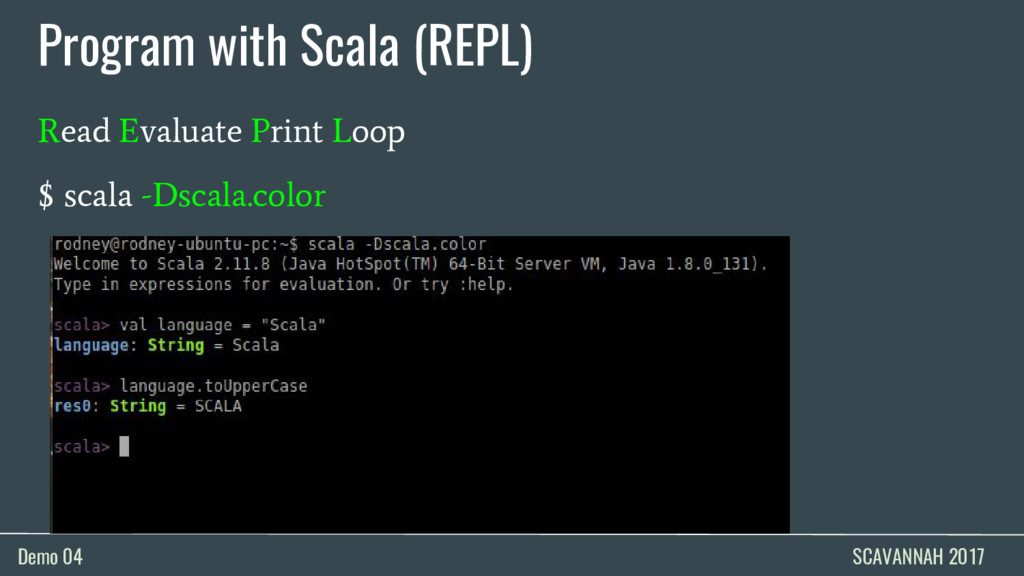
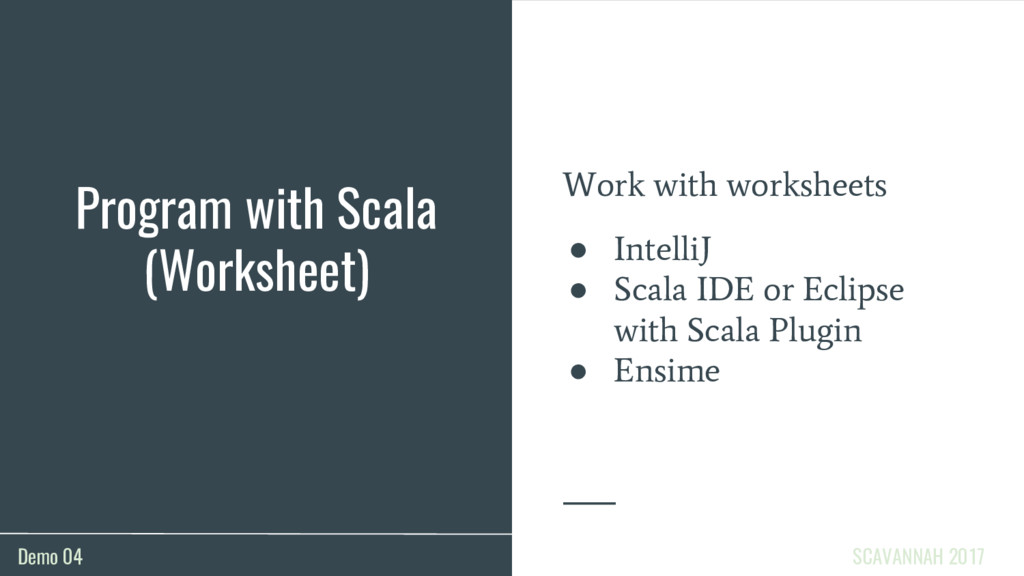
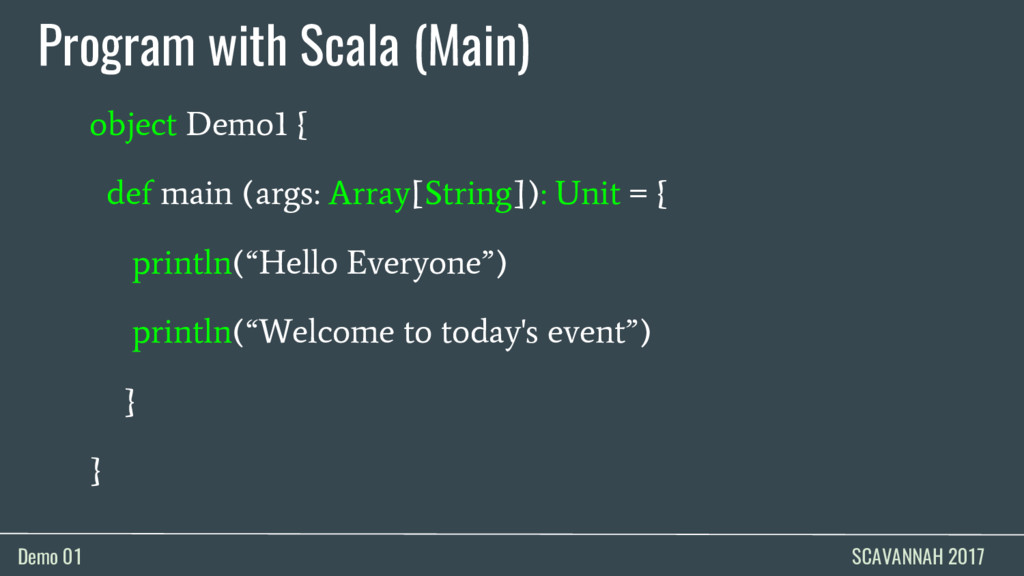
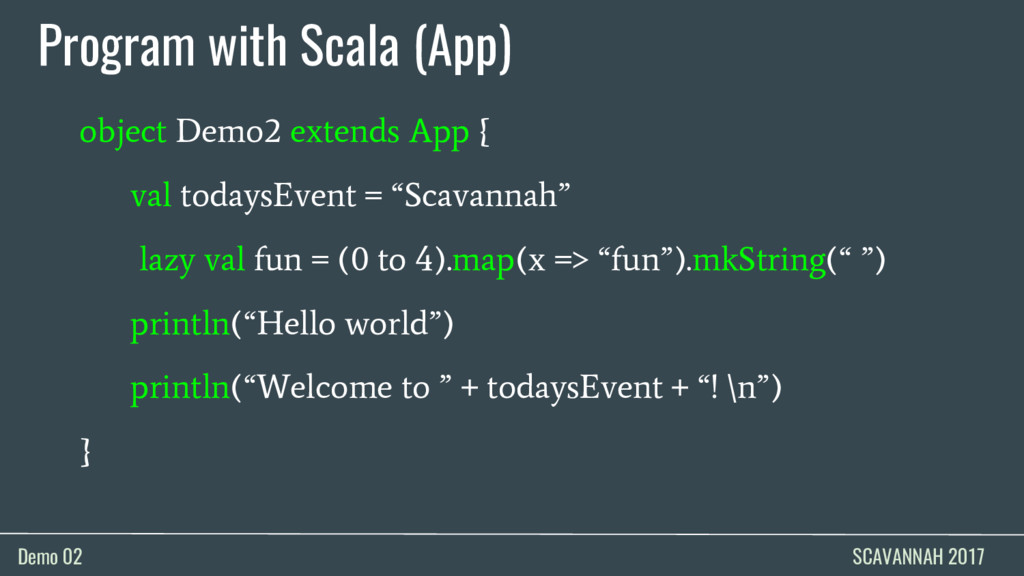
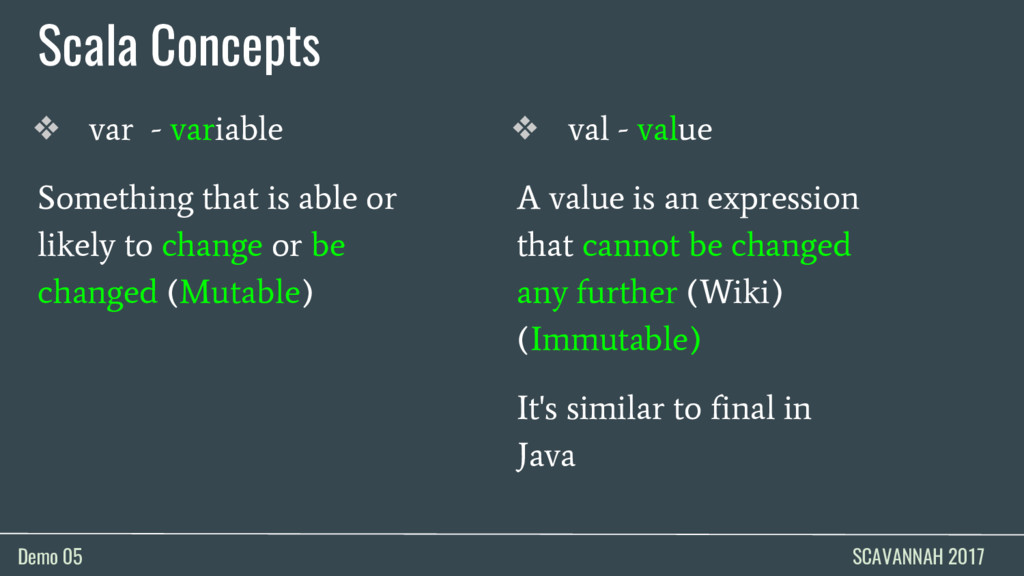
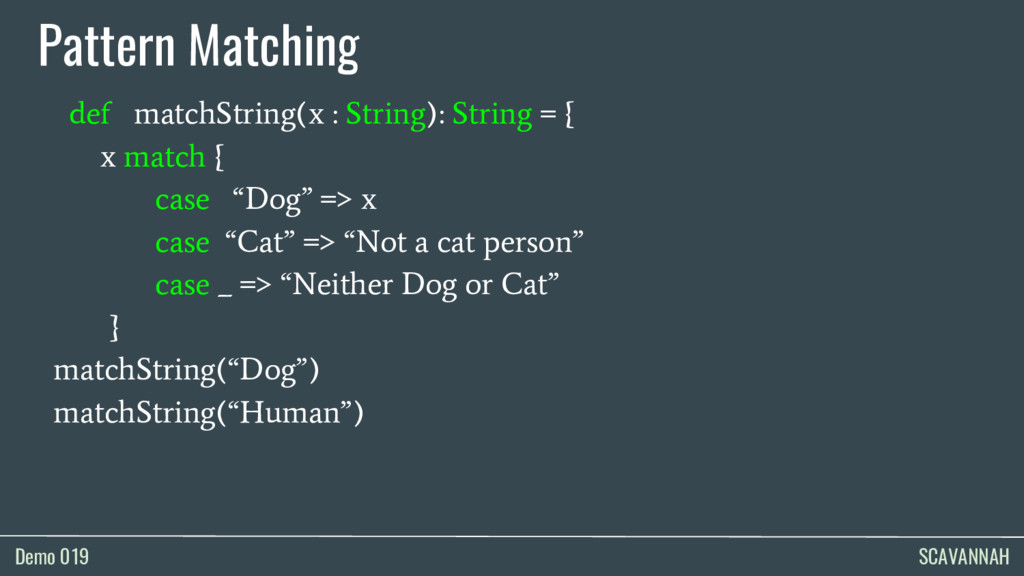
or likely to change or be changed (Mutable) Demo 05 SCAVANNAH 2017 ❖ val - value A value is an expression that cannot be changed any further (Wiki) (Immutable) It's similar to final in Java
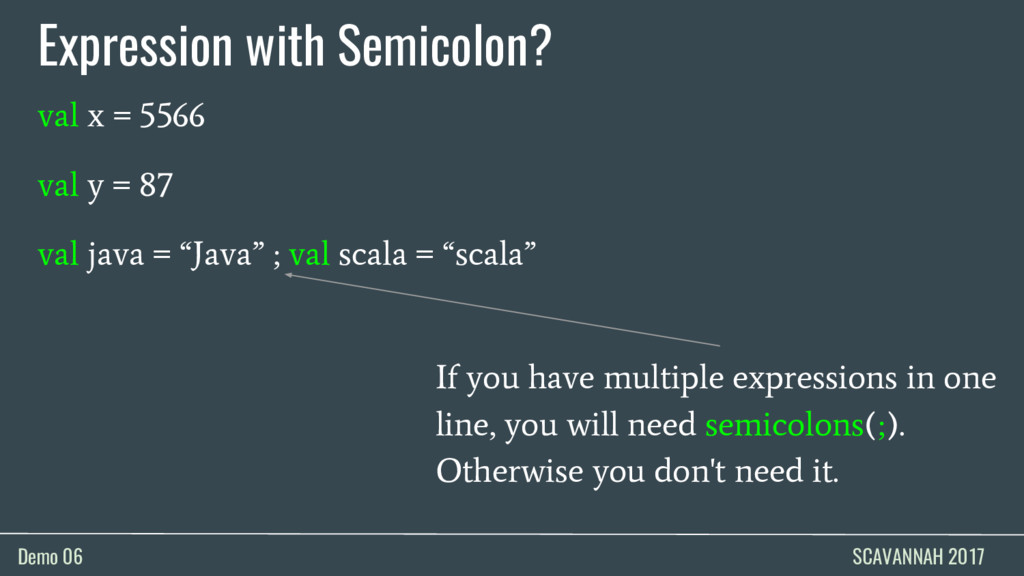
87 val java = “Java” ; val scala = “scala” Demo 06 SCAVANNAH 2017 If you have multiple expressions in one line, you will need semicolons(;). Otherwise you don't need it.
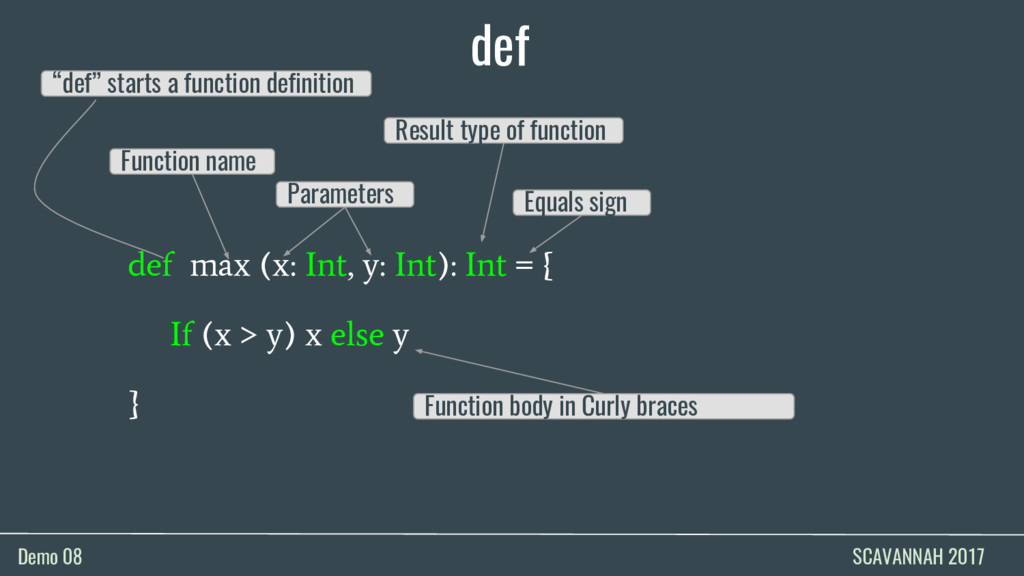
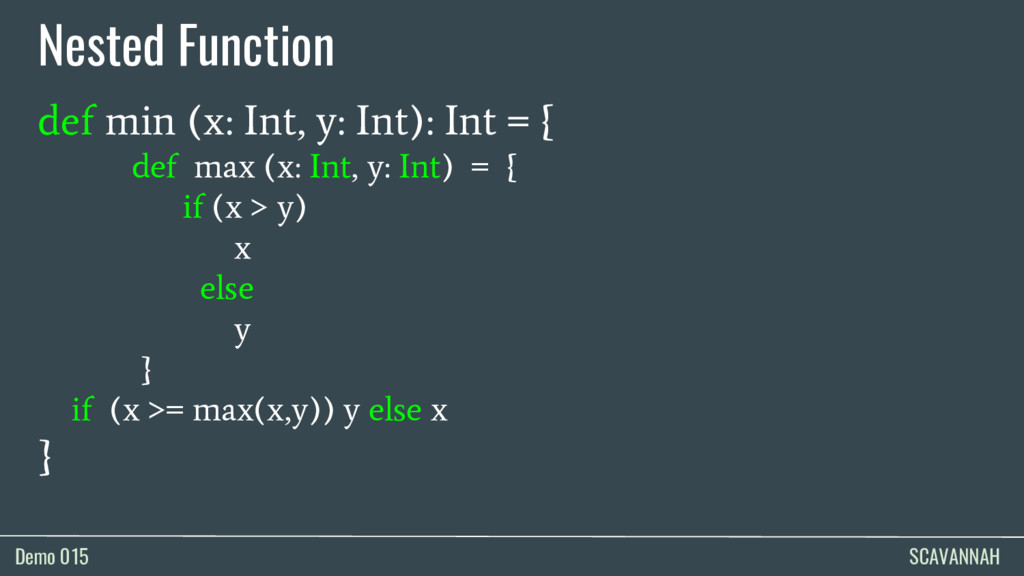
If (x > y) x else y } Demo 08 SCAVANNAH 2017 Function body in Curly braces Equals sign Result type of function Parameters Function name “def” starts a function definition
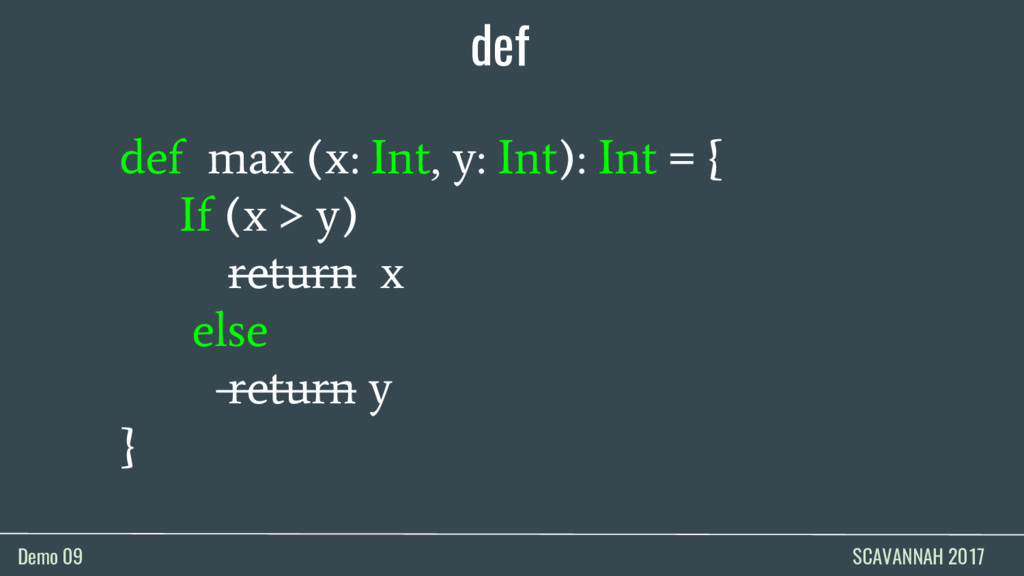
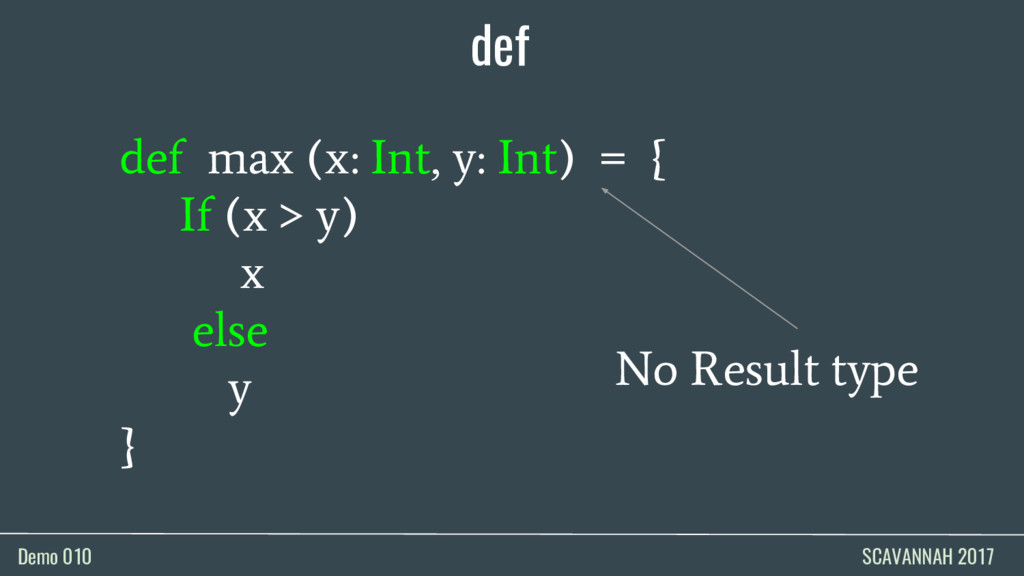
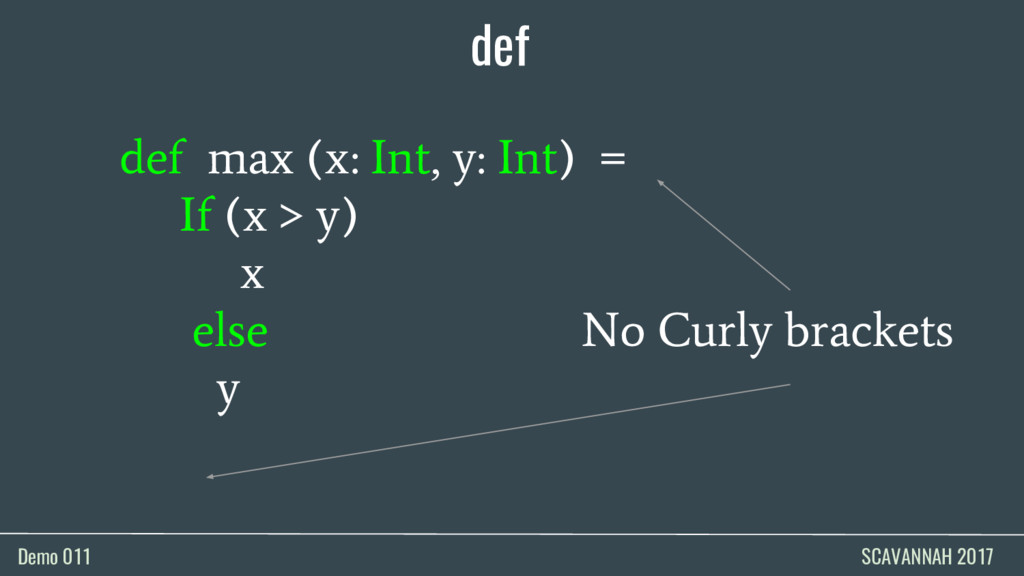
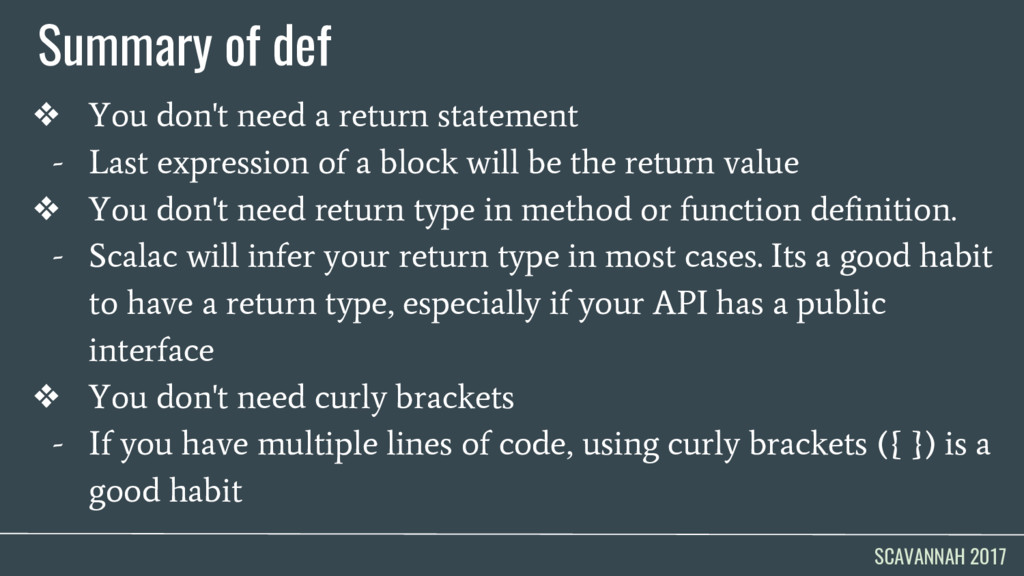
- Last expression of a block will be the return value ❖ You don't need return type in method or function definition. - Scalac will infer your return type in most cases. Its a good habit to have a return type, especially if your API has a public interface ❖ You don't need curly brackets - If you have multiple lines of code, using curly brackets ({ }) is a good habit SCAVANNAH 2017
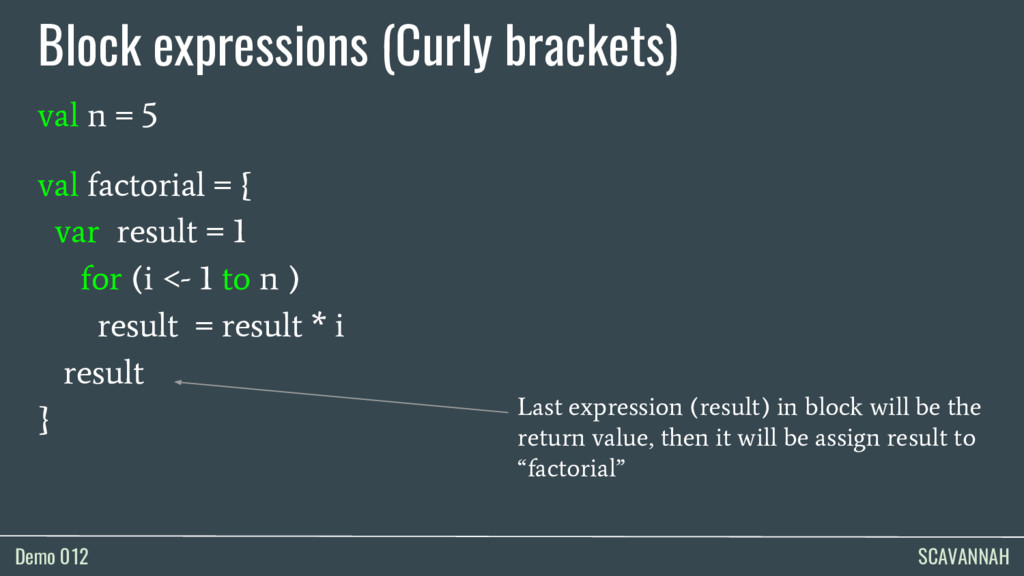
= { var result = 1 for (i <- 1 to n ) result = result * i result } Demo 012 SCAVANNAH Last expression (result) in block will be the return value, then it will be assign result to “factorial”
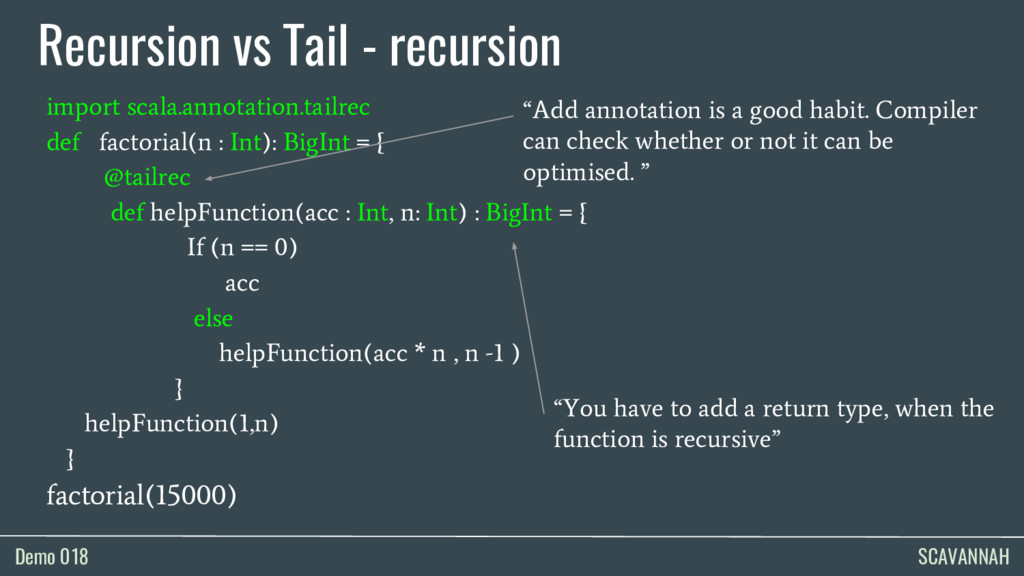
Int): BigInt = { @tailrec def helpFunction(acc : Int, n: Int) : BigInt = { If (n == 0) acc else helpFunction(acc * n , n -1 ) } helpFunction(1,n) } factorial(15000) Demo 018 SCAVANNAH “You have to add a return type, when the function is recursive” “Add annotation is a good habit. Compiler can check whether or not it can be optimised. ”
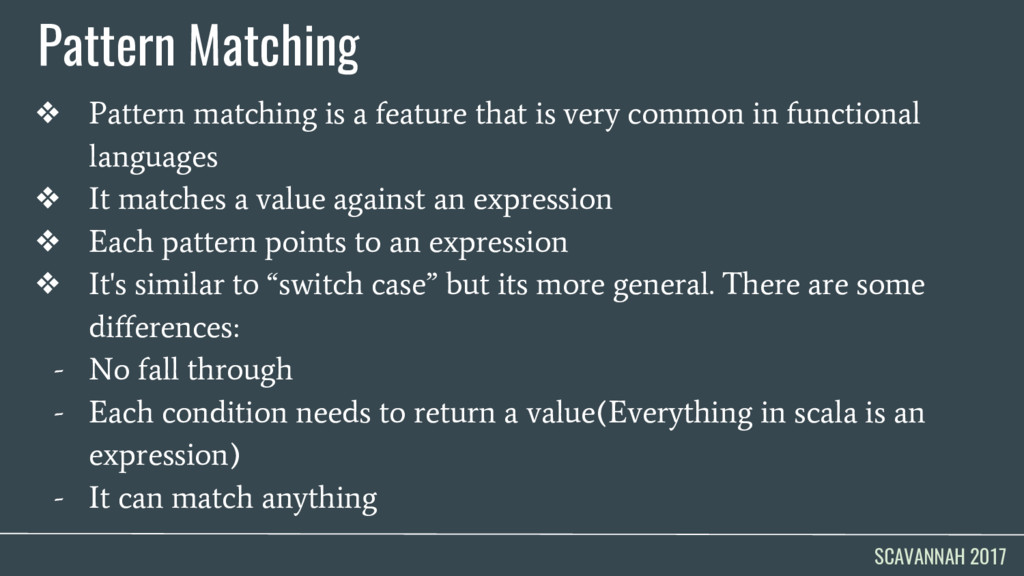
very common in functional languages ❖ It matches a value against an expression ❖ Each pattern points to an expression ❖ It's similar to “switch case” but its more general. There are some differences: - No fall through - Each condition needs to return a value(Everything in scala is an expression) - It can match anything SCAVANNAH 2017
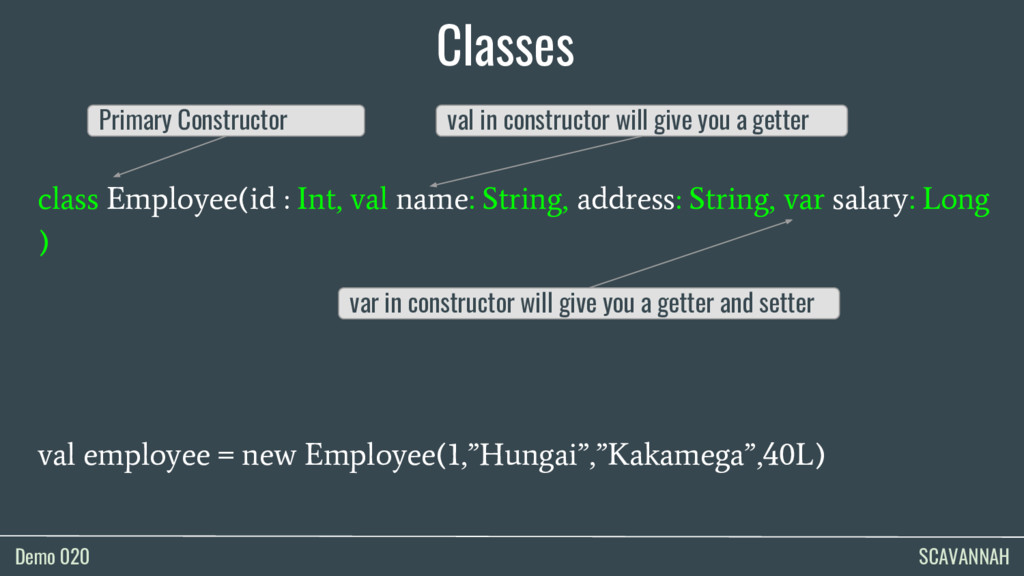
var salary: Long ) val employee = new Employee(1,”Hungai”,”Kakamega”,40L) Demo 020 SCAVANNAH Primary Constructor val in constructor will give you a getter var in constructor will give you a getter and setter
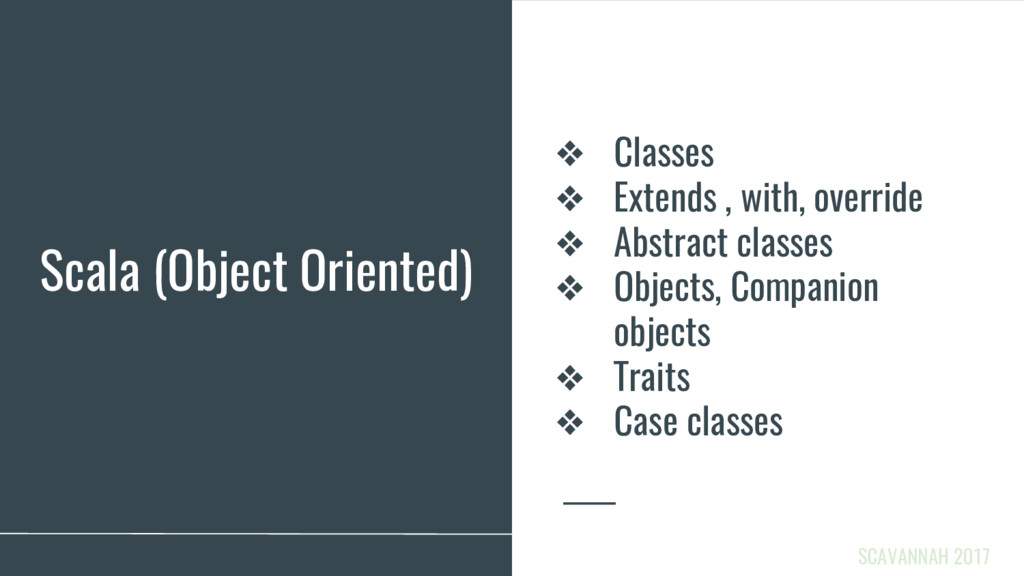
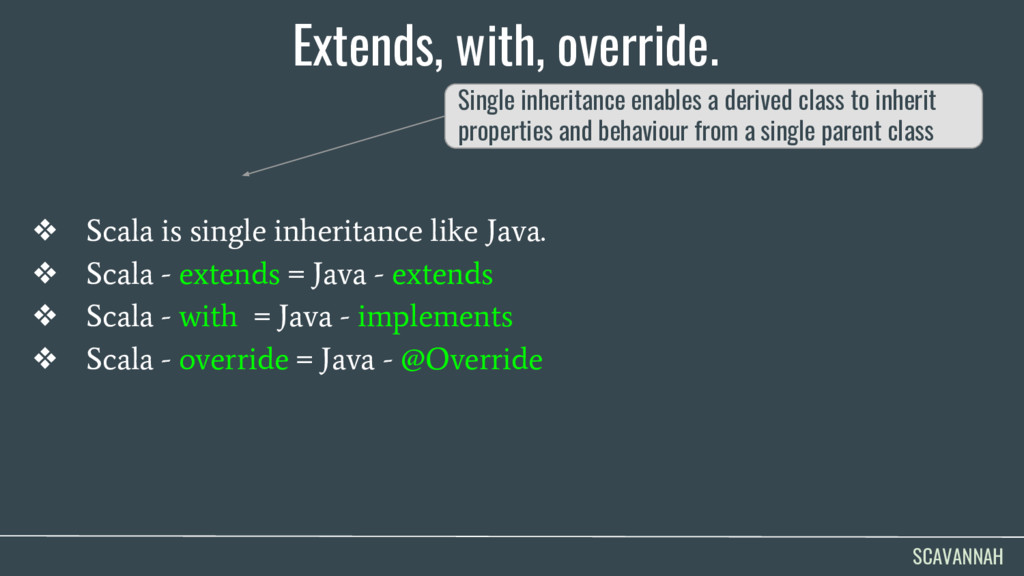
❖ Scala - extends = Java - extends ❖ Scala - with = Java - implements ❖ Scala - override = Java - @Override SCAVANNAH Single inheritance enables a derived class to inherit properties and behaviour from a single parent class
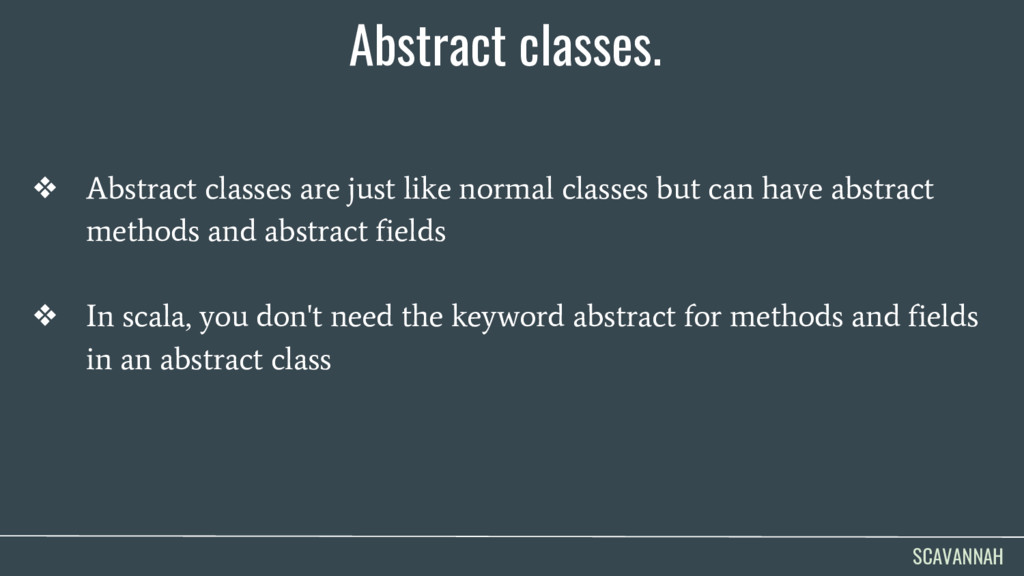
but can have abstract methods and abstract fields ❖ In scala, you don't need the keyword abstract for methods and fields in an abstract class SCAVANNAH
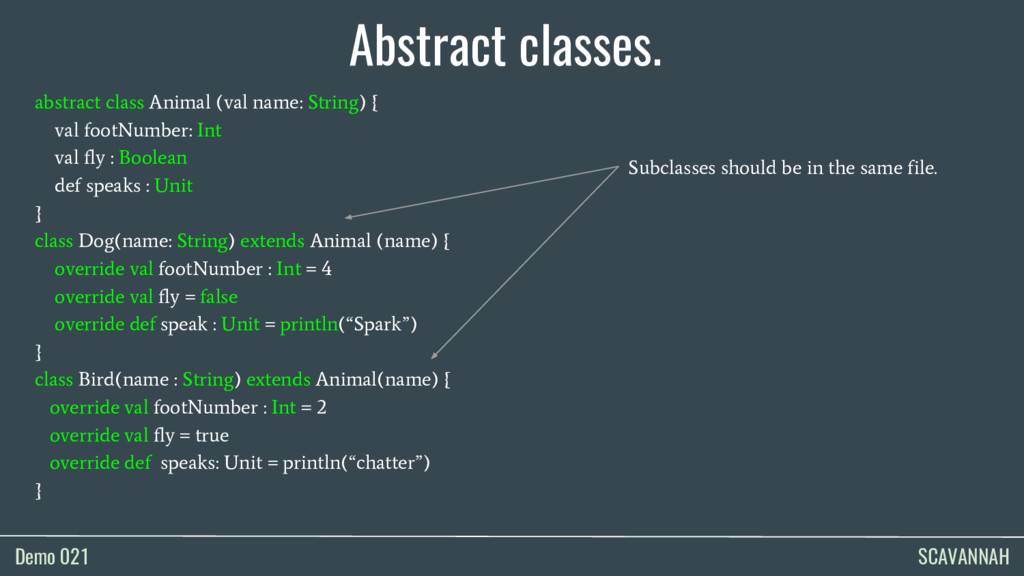
footNumber: Int val fly : Boolean def speaks : Unit } class Dog(name: String) extends Animal (name) { override val footNumber : Int = 4 override val fly = false override def speak : Unit = println(“Spark”) } class Bird(name : String) extends Animal(name) { override val footNumber : Int = 2 override val fly = true override def speaks: Unit = println(“chatter”) } Demo 021 SCAVANNAH Subclasses should be in the same file.
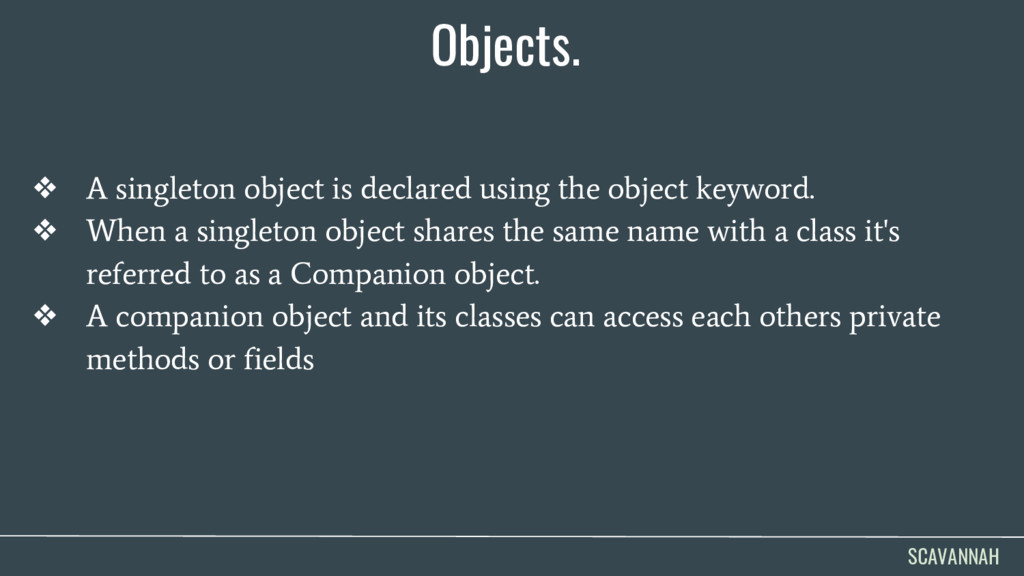
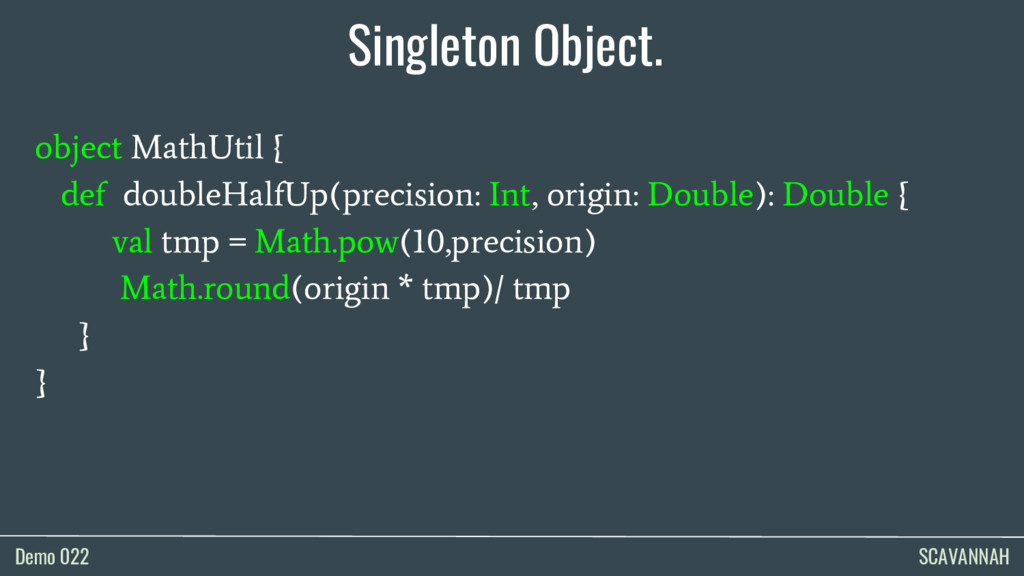
keyword. ❖ When a singleton object shares the same name with a class it's referred to as a Companion object. ❖ A companion object and its classes can access each others private methods or fields SCAVANNAH
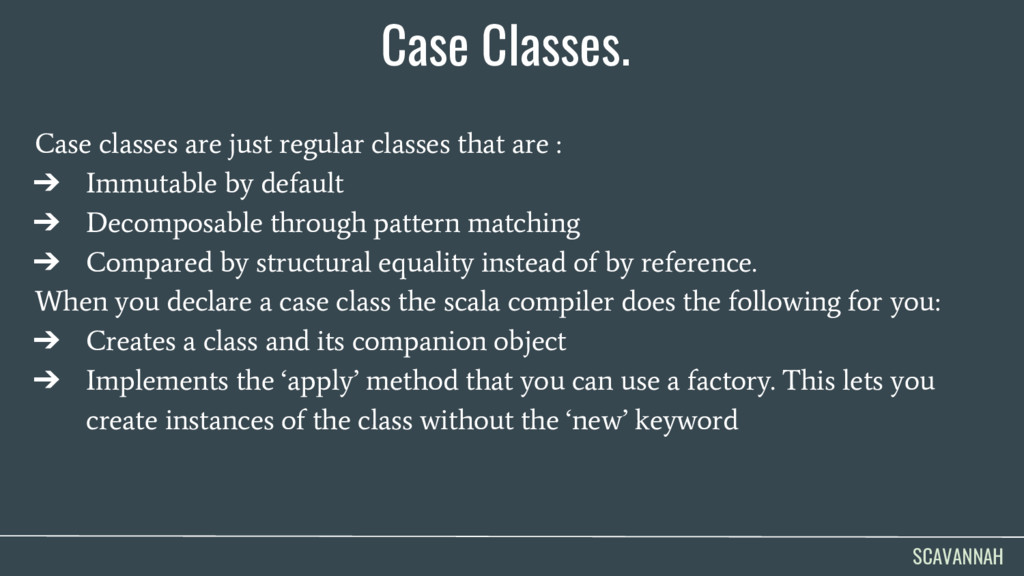
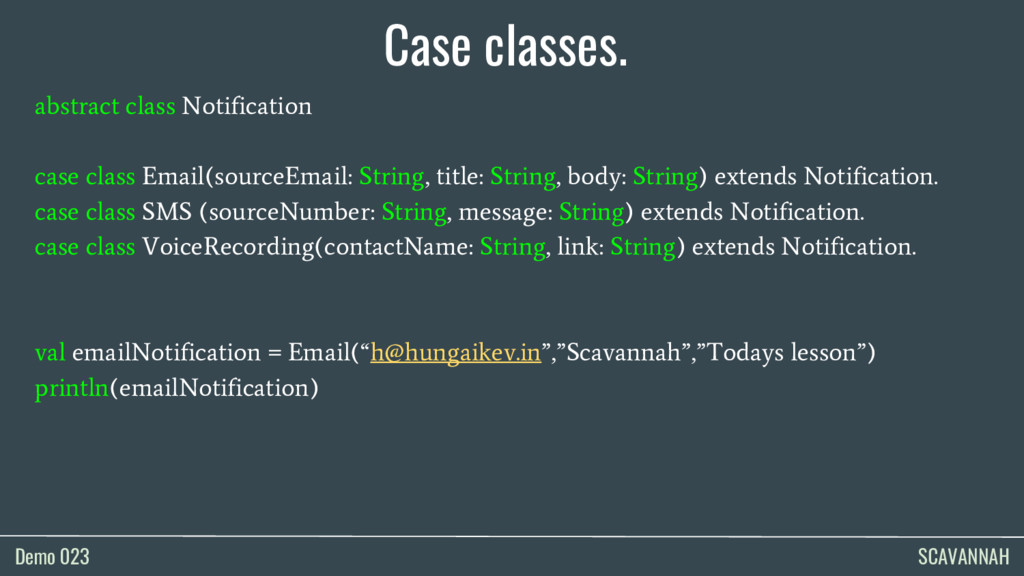
: ➔ Immutable by default ➔ Decomposable through pattern matching ➔ Compared by structural equality instead of by reference. When you declare a case class the scala compiler does the following for you: ➔ Creates a class and its companion object ➔ Implements the ‘apply’ method that you can use a factory. This lets you create instances of the class without the ‘new’ keyword SCAVANNAH
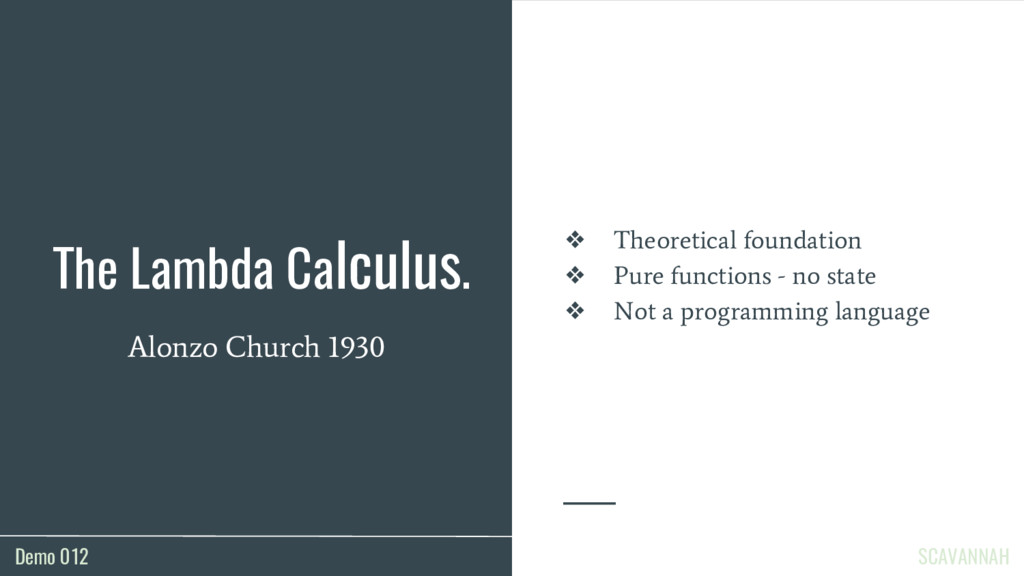
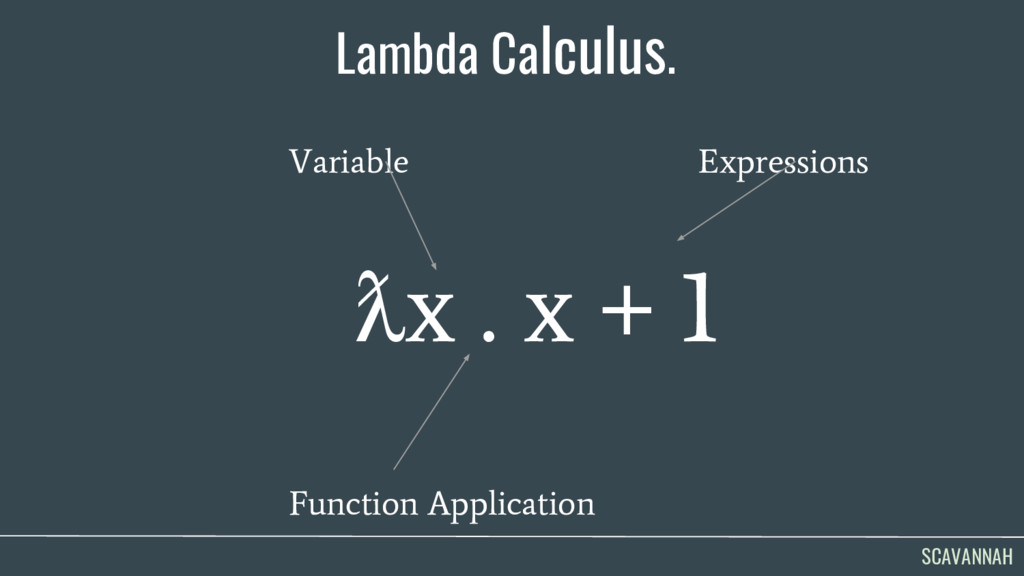
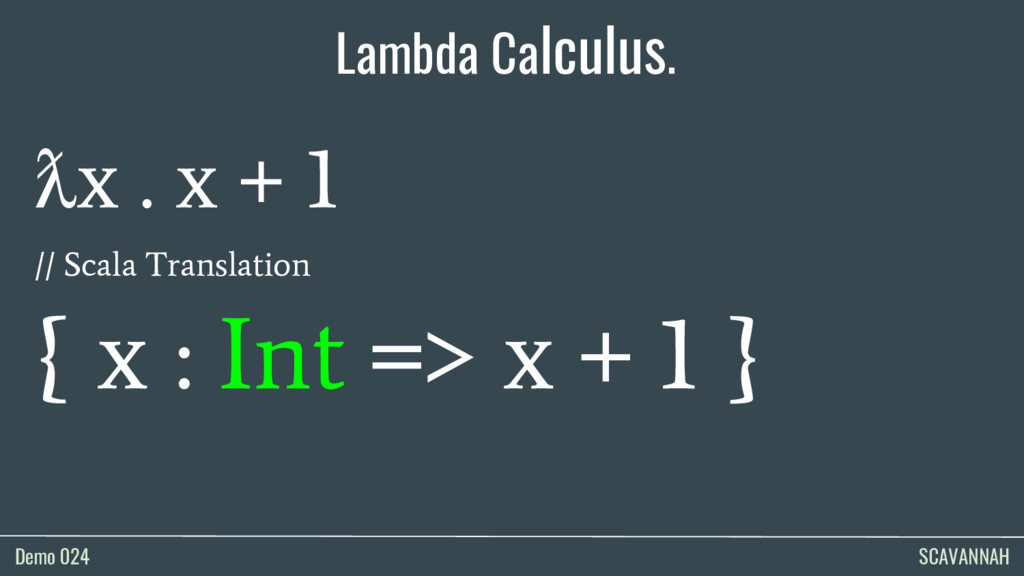
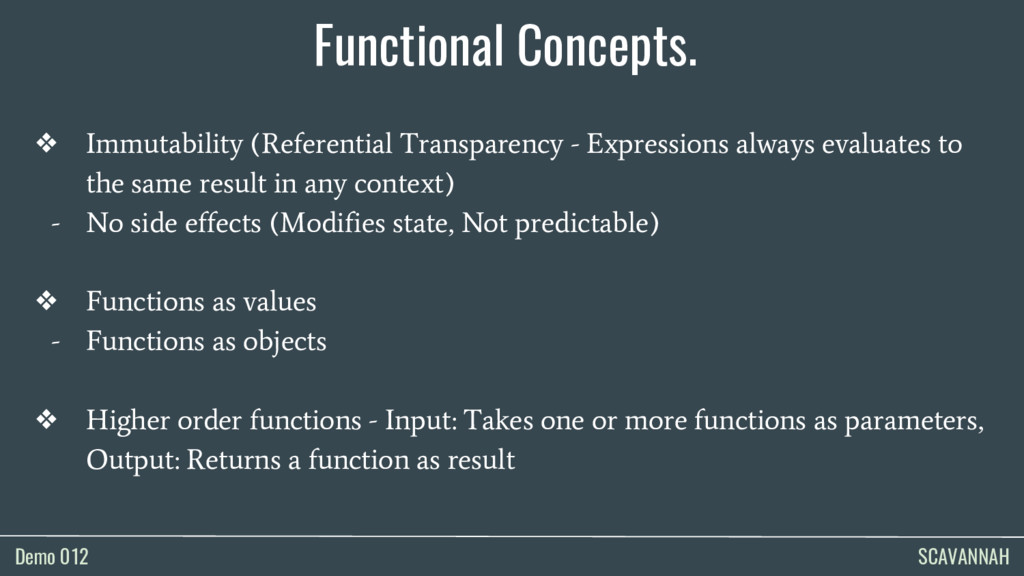
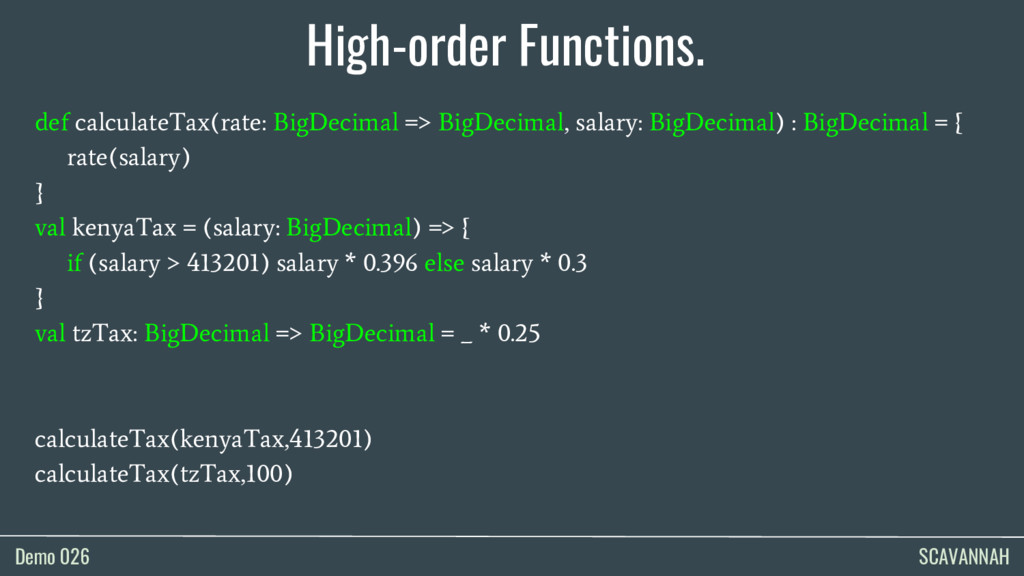
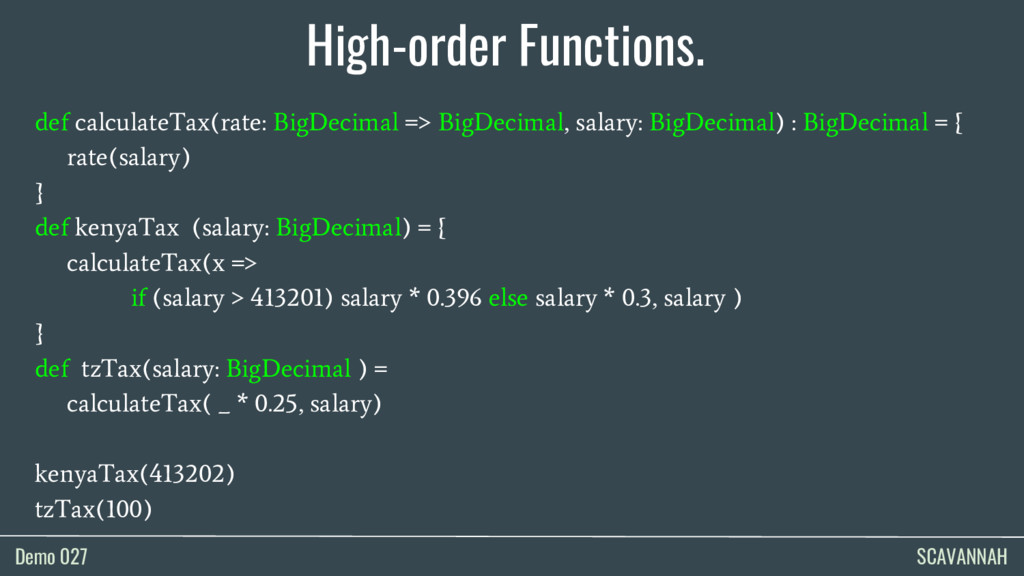
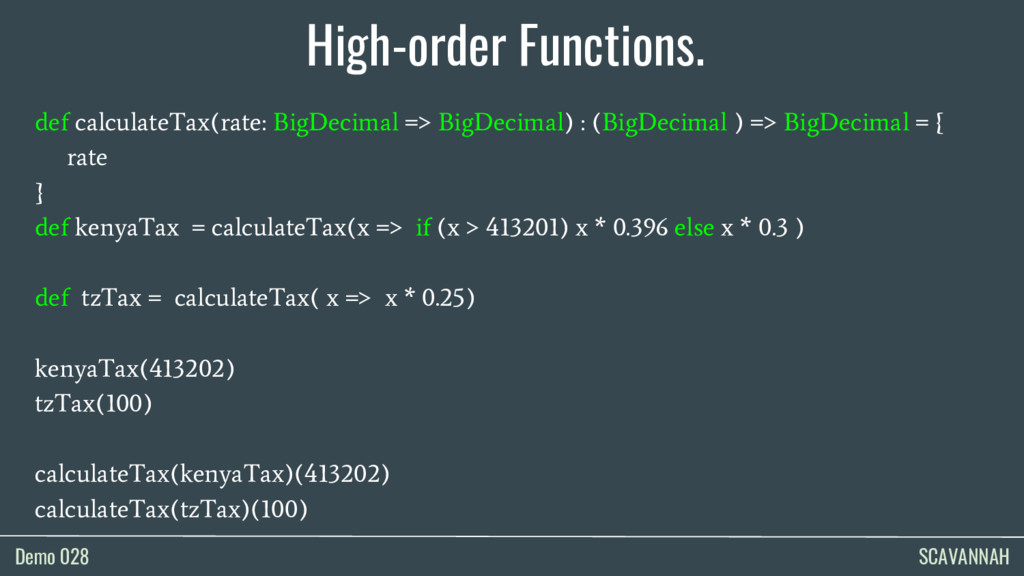
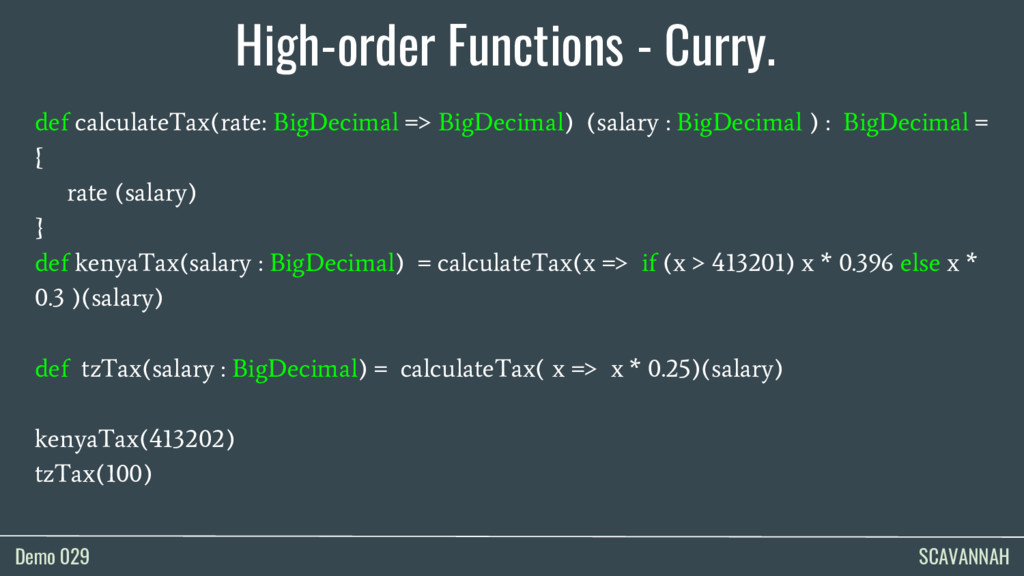
to the same result in any context) - No side effects (Modifies state, Not predictable) ❖ Functions as values - Functions as objects ❖ Higher order functions - Input: Takes one or more functions as parameters, Output: Returns a function as result Demo 012 SCAVANNAH
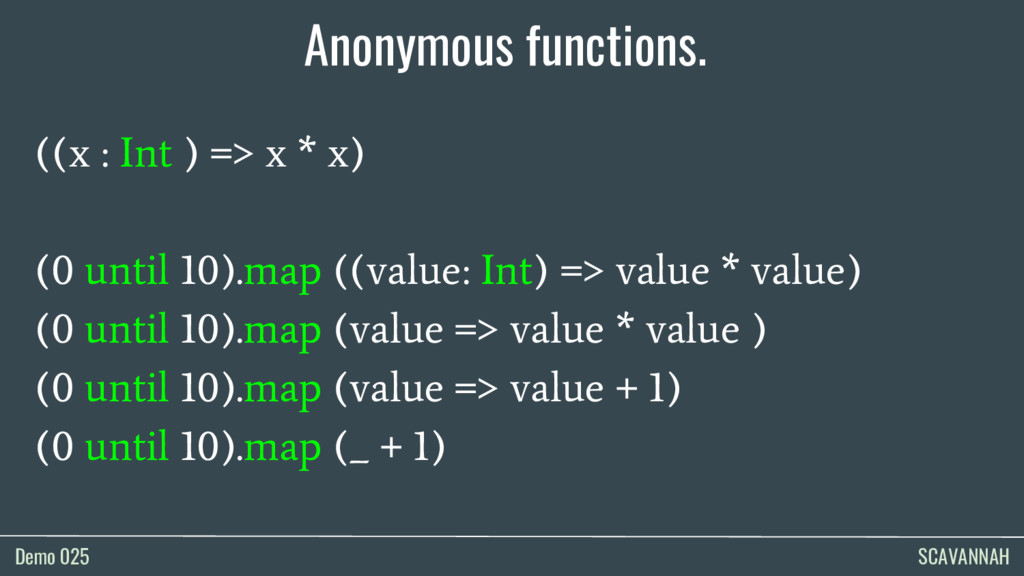
(0 until 10).map ((value: Int) => value * value) (0 until 10).map (value => value * value ) (0 until 10).map (value => value + 1) (0 until 10).map (_ + 1) Demo 025 SCAVANNAH
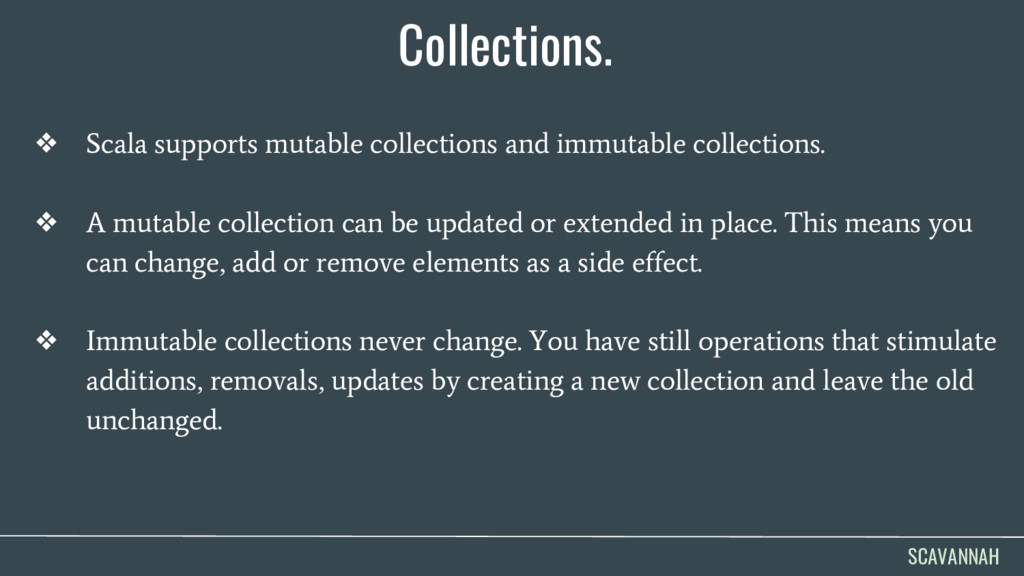
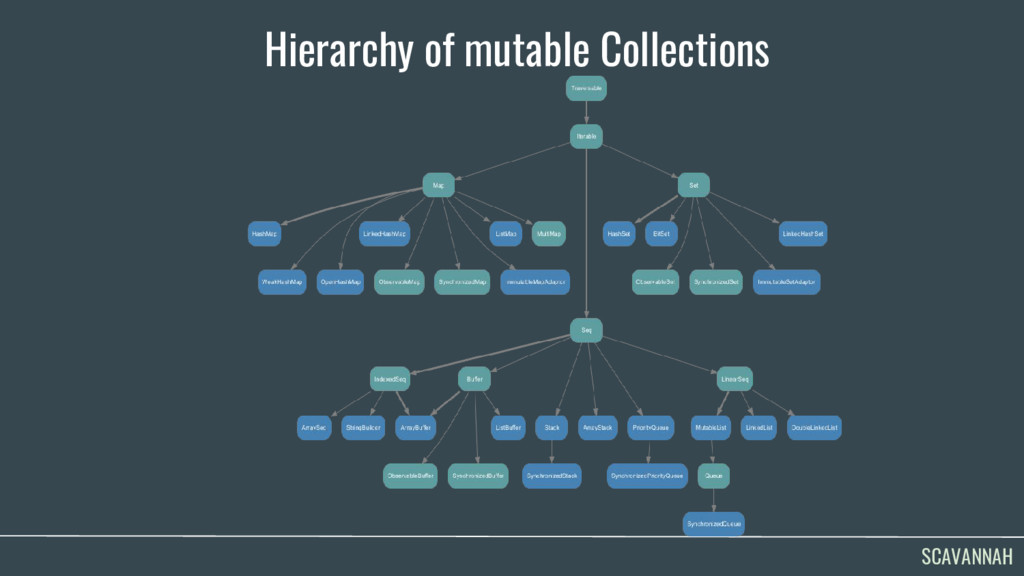
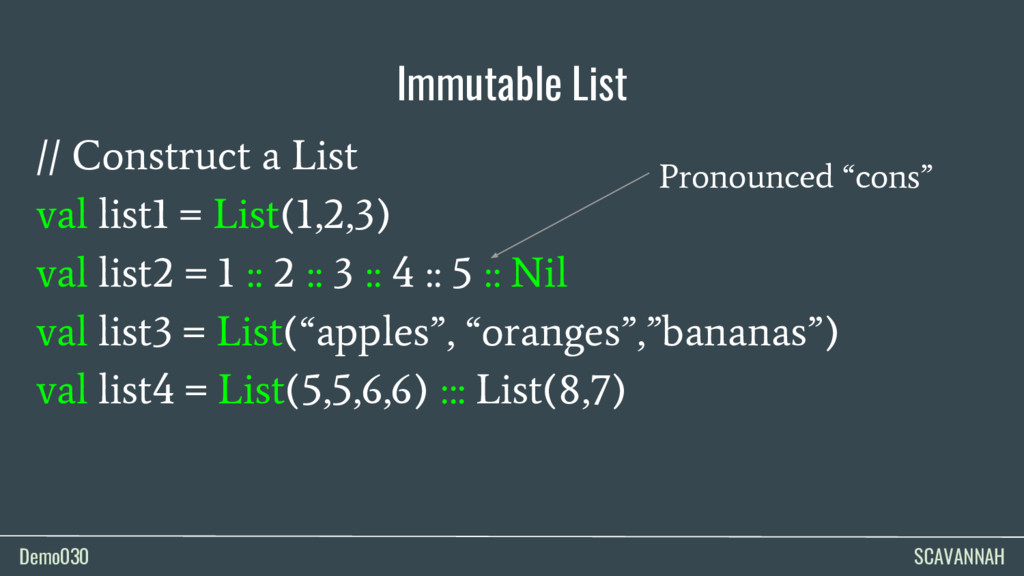
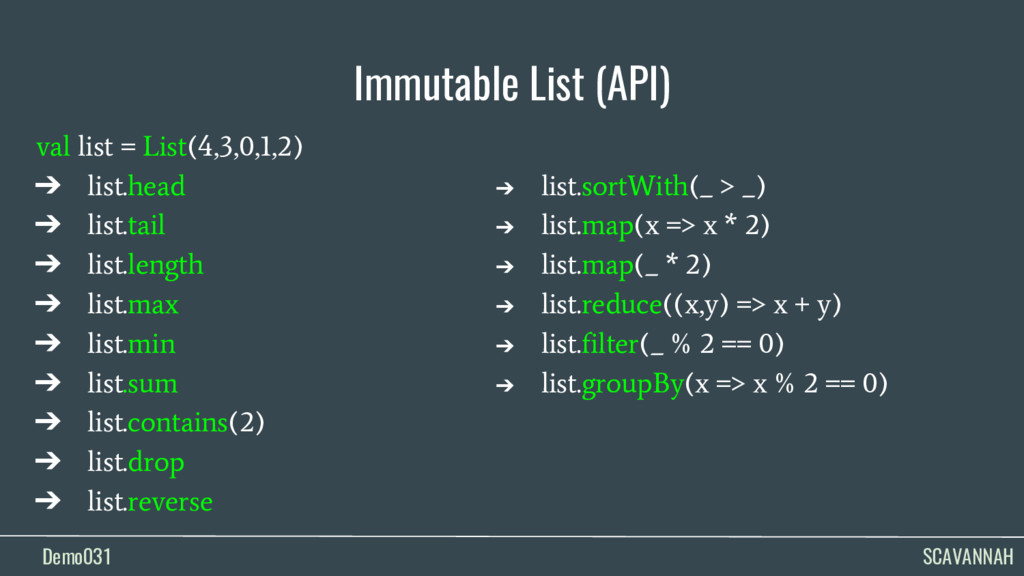
A mutable collection can be updated or extended in place. This means you can change, add or remove elements as a side effect. ❖ Immutable collections never change. You have still operations that stimulate additions, removals, updates by creating a new collection and leave the old unchanged. SCAVANNAH


 gionn
gionn
 carta_engineering
 pfn
pfn
 daidaidai
 satoshi7
 mhrtech
 codmoninc
 shuta13
 sudoakiy
 endonanana
 takonda
 kworkdev
 baasie
 zakiyama
 twada
twada
 raygrieselhuber
 bermonpainter
 danielanewman
 lara
lara
 inesmontani
 denniskardys
 stephenakadiri
 skoyamalab
 codingconduct
![Hungai Amuhinda @hungai hungaikev hungaikev.in [email protected]](https://files.speakerdeck.com/presentations/e41c1be551be42d39069c7a6c28c3793/slide_1.jpg)