Upgrade to Pro — share decks privately, control downloads, hide ads and more …

Technical Overview of Lubricants & Sorbents for...

Technical Overview of Lubricants & Sorbents for Regulated Industries

This presentation explores specialized lubricants, dry-film coatings, spill sorbents, and biodegradable marine lubricants designed for highly regulated industries. It covers product applications, manufacturing processes, quality standards, regulatory compliance, and real-world use cases in nuclear, defense, marine, aerospace, and food-grade environments.

Avatar for Huron industries

Huron industries

June 25, 2026

Other Decks in Business

Transcript

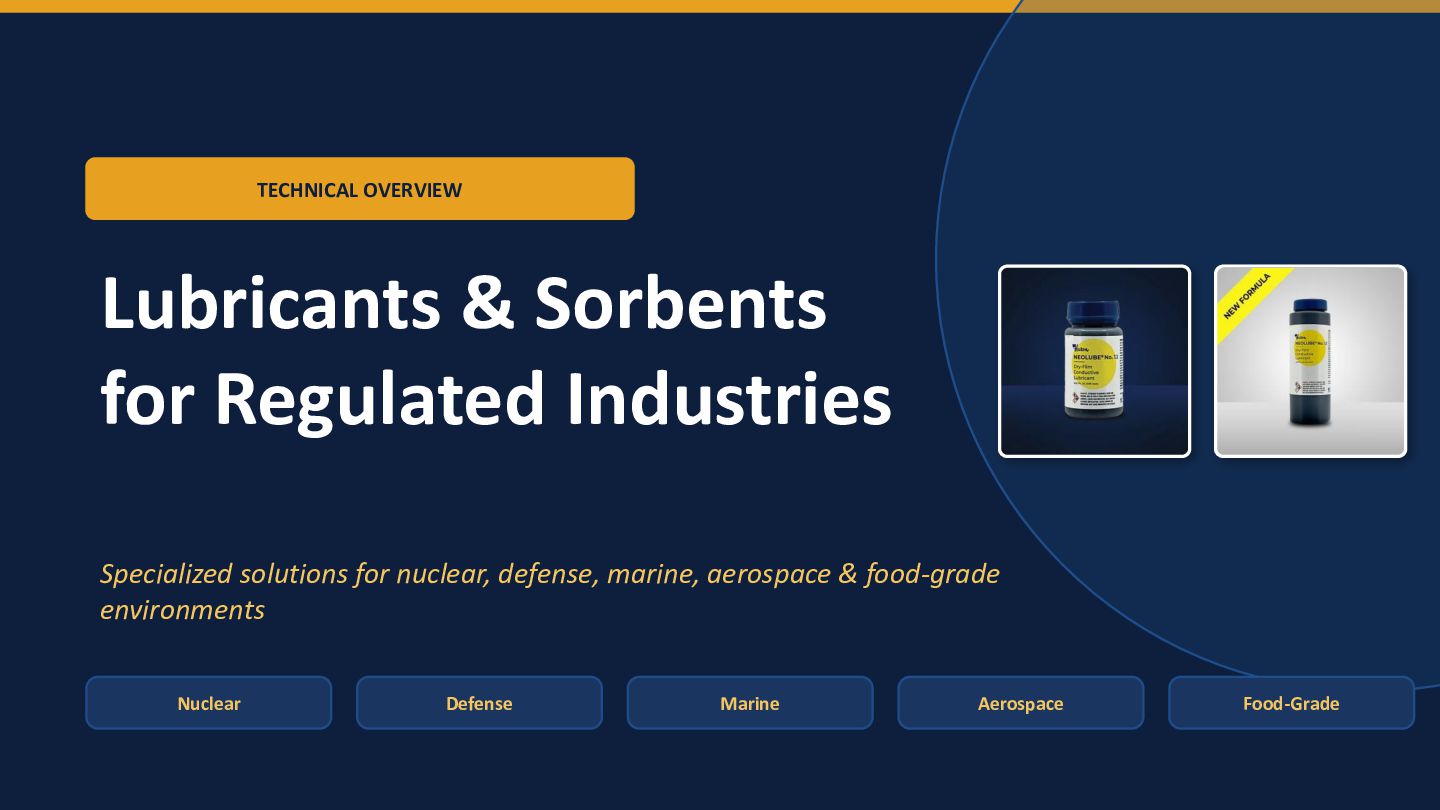
  1. TECHNICAL OVERVIEW Lubricants & Sorbents for Regulated Industries Specialized solutions

    for nuclear, defense, marine, aerospace & food-grade environments Nuclear Defense Marine Aerospace Food-Grade
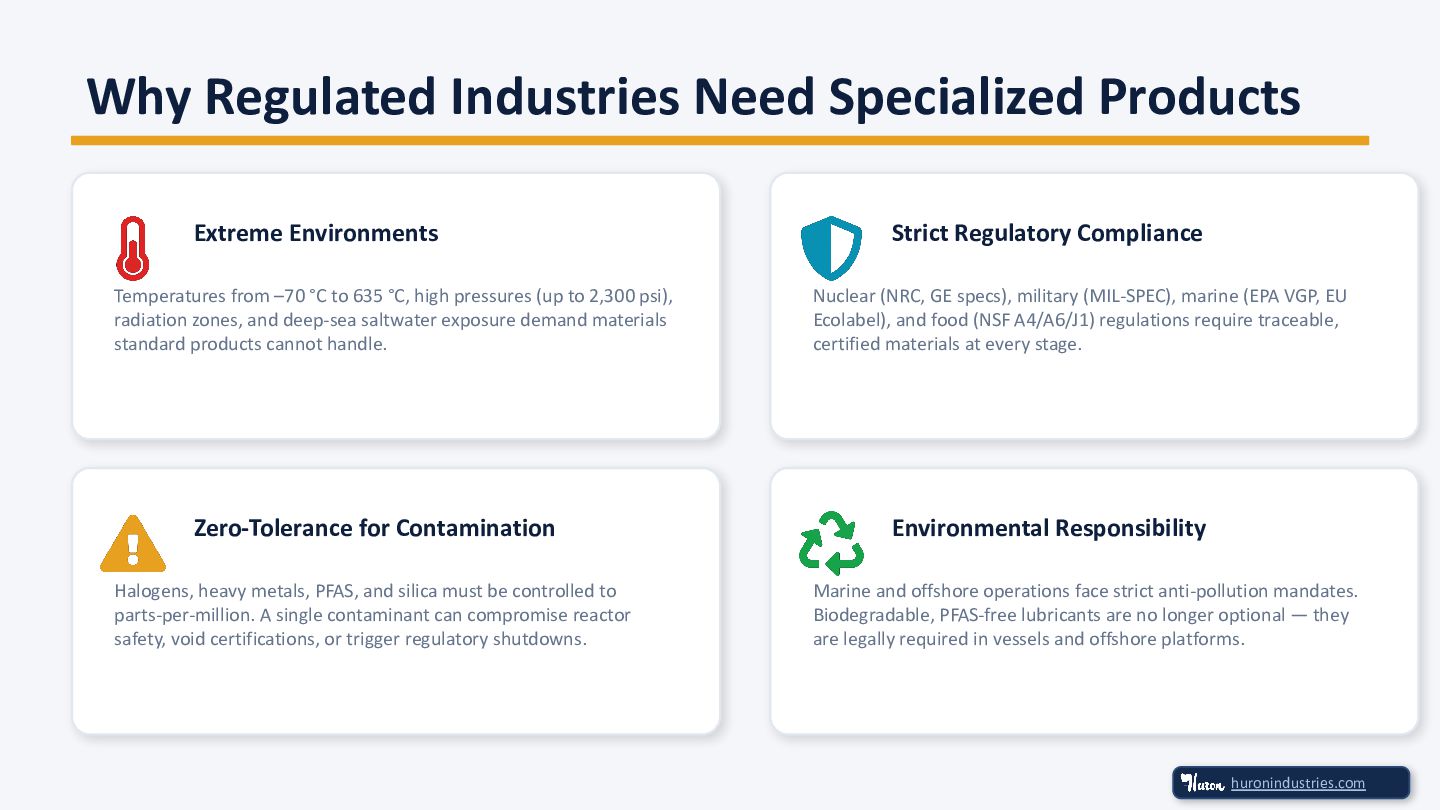
  2. Why Regulated Industries Need Specialized Products Extreme Environments Temperatures from

    –70 °C to 635 °C, high pressures (up to 2,300 psi), radiation zones, and deep-sea saltwater exposure demand materials standard products cannot handle. Strict Regulatory Compliance Nuclear (NRC, GE specs), military (MIL-SPEC), marine (EPA VGP, EU Ecolabel), and food (NSF A4/A6/J1) regulations require traceable, certified materials at every stage. Zero-Tolerance for Contamination Halogens, heavy metals, PFAS, and silica must be controlled to parts-per-million. A single contaminant can compromise reactor safety, void certifications, or trigger regulatory shutdowns. Environmental Responsibility Marine and offshore operations face strict anti-pollution mandates. Biodegradable, PFAS-free lubricants are no longer optional — they are legally required in vessels and offshore platforms. huronindustries.com
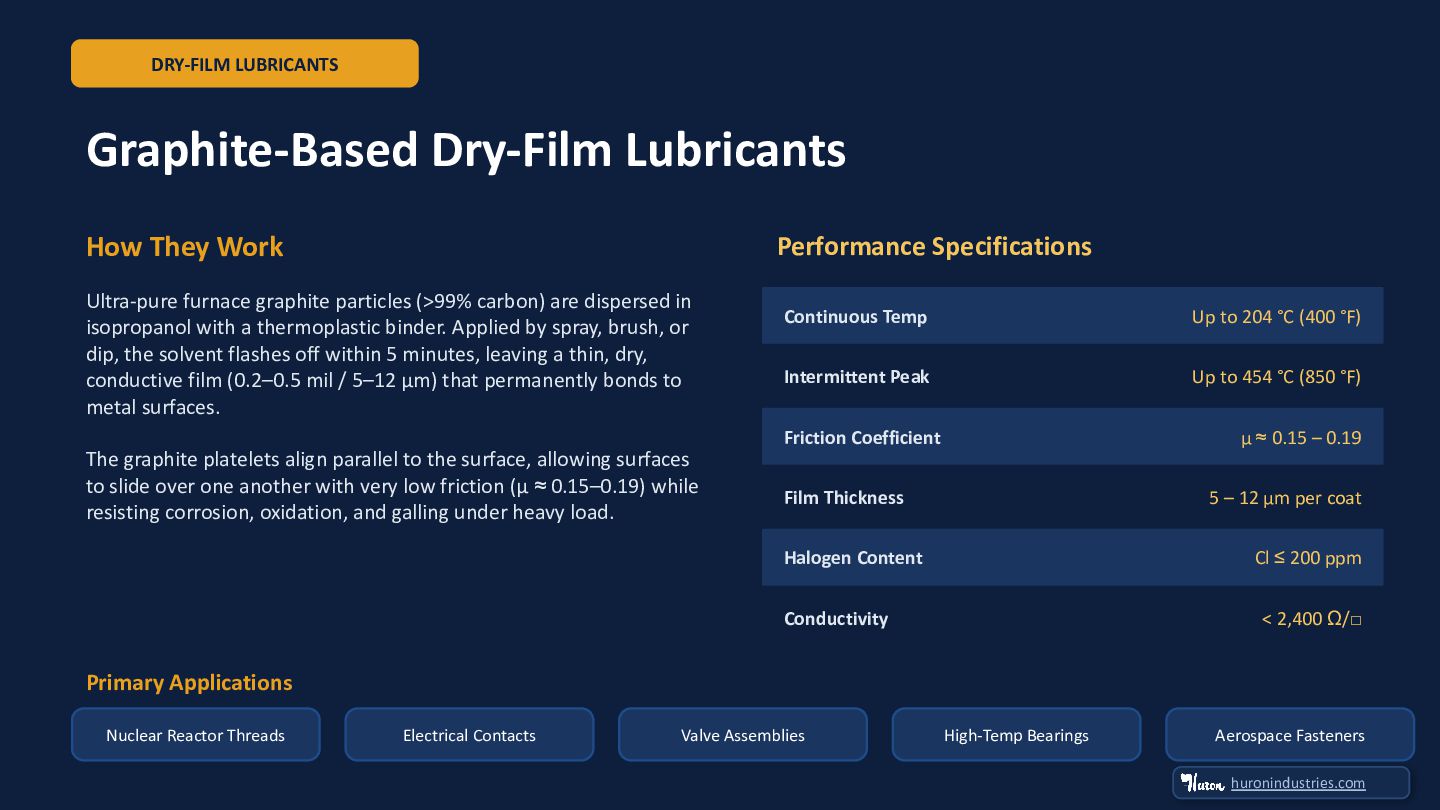
  3. DRY-FILM LUBRICANTS Graphite-Based Dry-Film Lubricants How They Work Ultra-pure furnace

    graphite particles (>99% carbon) are dispersed in isopropanol with a thermoplastic binder. Applied by spray, brush, or dip, the solvent flashes off within 5 minutes, leaving a thin, dry, conductive film (0.2–0.5 mil / 5–12 µm) that permanently bonds to metal surfaces. The graphite platelets align parallel to the surface, allowing surfaces to slide over one another with very low friction (µ ≈ 0.15–0.19) while resisting corrosion, oxidation, and galling under heavy load. Performance Specifications Continuous Temp Up to 204 °C (400 °F) Intermittent Peak Up to 454 °C (850 °F) Friction Coefficient µ ≈ 0.15 – 0.19 Film Thickness 5 – 12 µm per coat Halogen Content Cl ≤ 200 ppm Conductivity < 2,400 Ω/□ Primary Applications Nuclear Reactor Threads Electrical Contacts Valve Assemblies High-Temp Bearings Aerospace Fasteners huronindustries.com
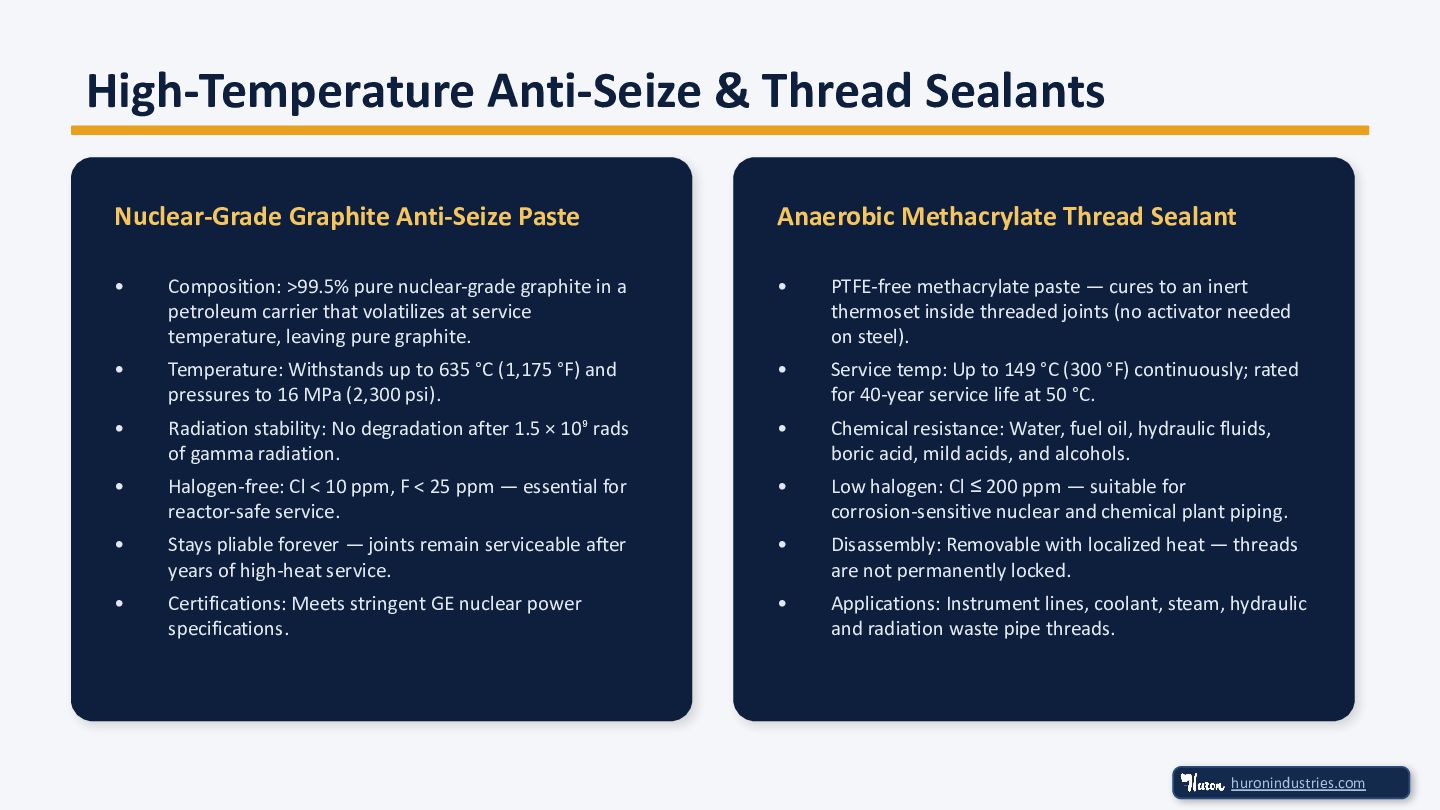
  4. High-Temperature Anti-Seize & Thread Sealants Nuclear-Grade Graphite Anti-Seize Paste •

    Composition: >99.5% pure nuclear-grade graphite in a petroleum carrier that volatilizes at service temperature, leaving pure graphite. • Temperature: Withstands up to 635 °C (1,175 °F) and pressures to 16 MPa (2,300 psi). • Radiation stability: No degradation after 1.5 × 10⁹ rads of gamma radiation. • Halogen-free: Cl < 10 ppm, F < 25 ppm — essential for reactor-safe service. • Stays pliable forever — joints remain serviceable after years of high-heat service. • Certifications: Meets stringent GE nuclear power specifications. Anaerobic Methacrylate Thread Sealant • PTFE-free methacrylate paste — cures to an inert thermoset inside threaded joints (no activator needed on steel). • Service temp: Up to 149 °C (300 °F) continuously; rated for 40-year service life at 50 °C. • Chemical resistance: Water, fuel oil, hydraulic fluids, boric acid, mild acids, and alcohols. • Low halogen: Cl ≤ 200 ppm — suitable for corrosion-sensitive nuclear and chemical plant piping. • Disassembly: Removable with localized heat — threads are not permanently locked. • Applications: Instrument lines, coolant, steam, hydraulic and radiation waste pipe threads. huronindustries.com
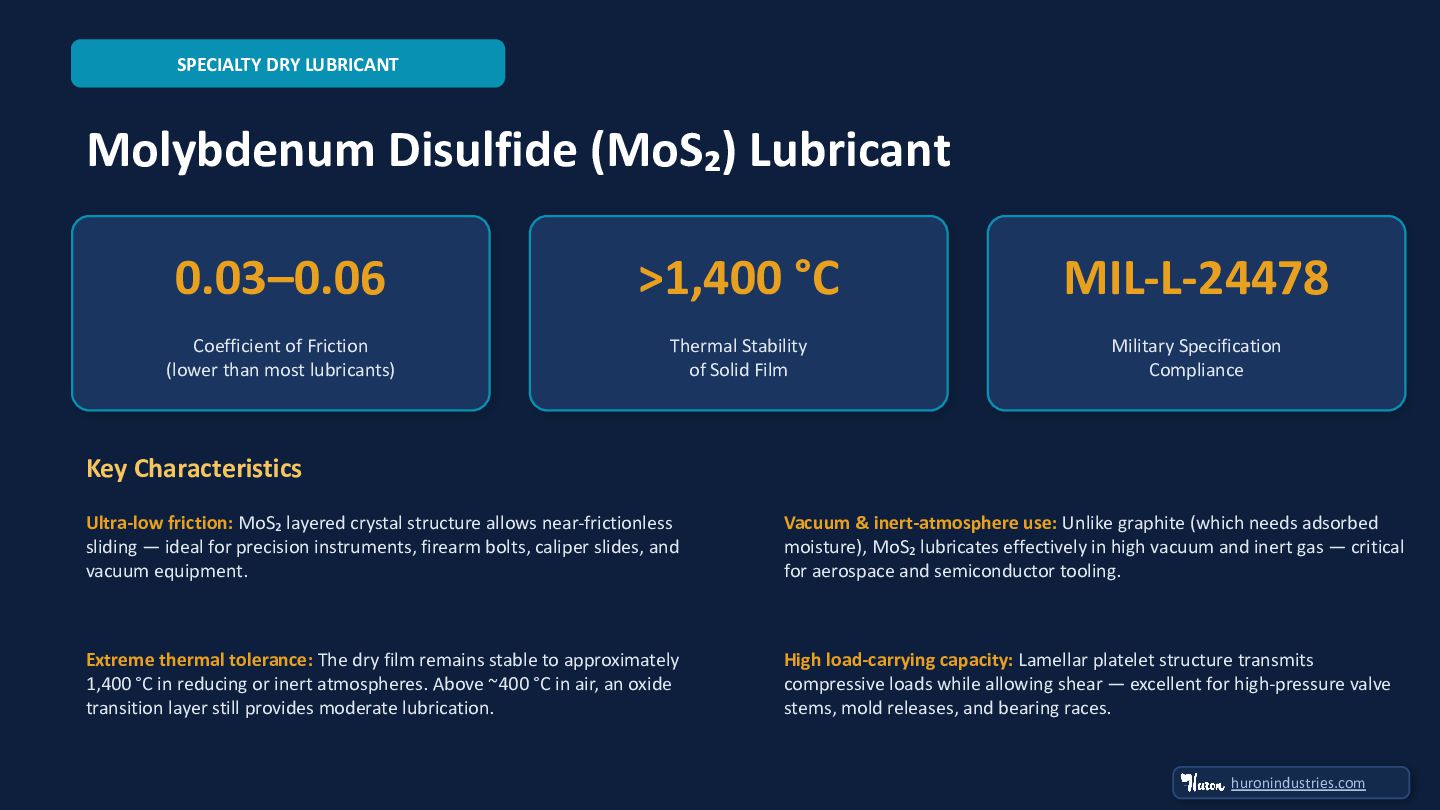
  5. SPECIALTY DRY LUBRICANT Molybdenum Disulfide (MoS₂) Lubricant 0.03–0.06 Coefficient of

    Friction (lower than most lubricants) >1,400 °C Thermal Stability of Solid Film MIL-L-24478 Military Specification Compliance Key Characteristics Ultra-low friction: MoS₂ layered crystal structure allows near-frictionless sliding — ideal for precision instruments, firearm bolts, caliper slides, and vacuum equipment. Vacuum & inert-atmosphere use: Unlike graphite (which needs adsorbed moisture), MoS₂ lubricates effectively in high vacuum and inert gas — critical for aerospace and semiconductor tooling. Extreme thermal tolerance: The dry film remains stable to approximately 1,400 °C in reducing or inert atmospheres. Above ~400 °C in air, an oxide transition layer still provides moderate lubrication. High load-carrying capacity: Lamellar platelet structure transmits compressive loads while allowing shear — excellent for high-pressure valve stems, mold releases, and bearing races. huronindustries.com
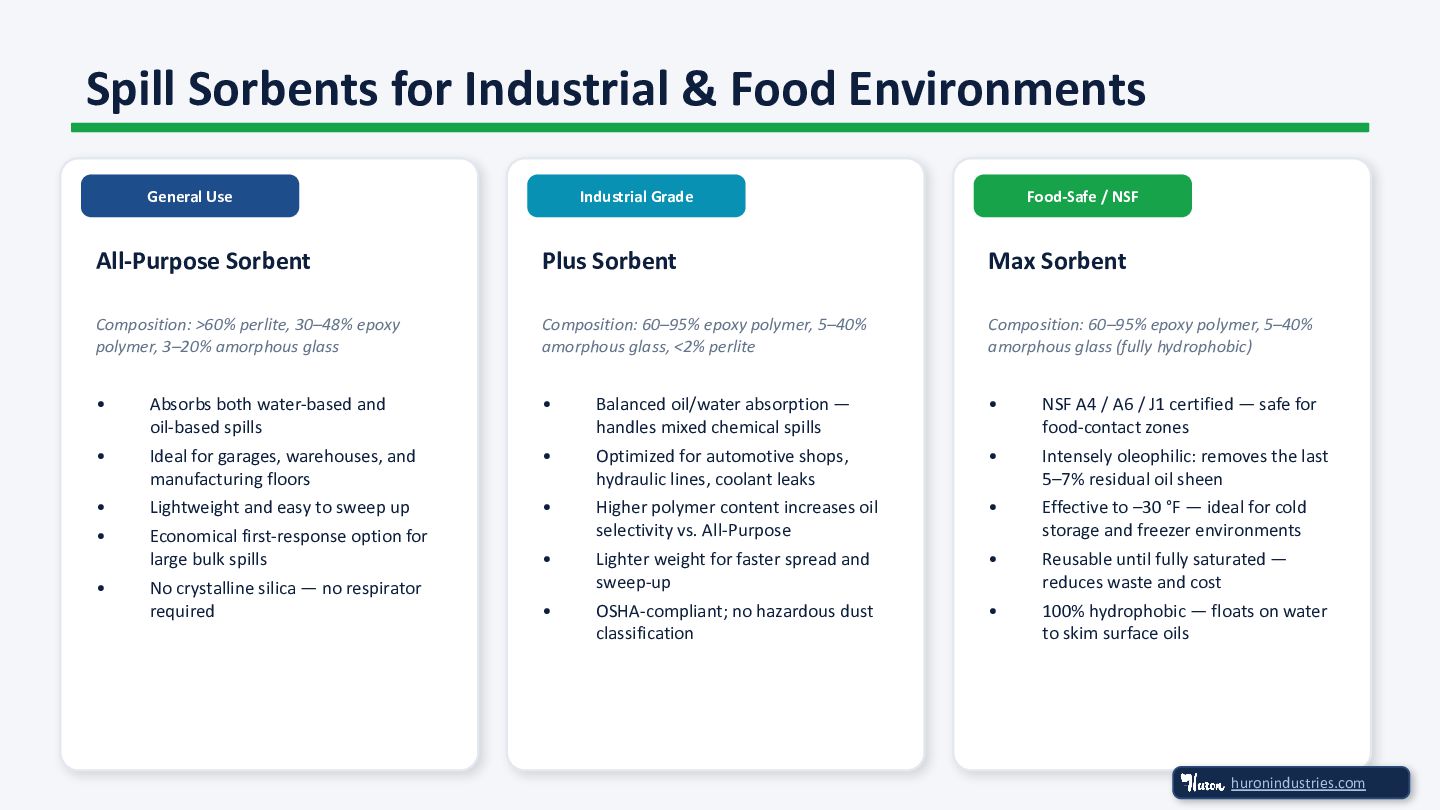
  6. Spill Sorbents for Industrial & Food Environments General Use All-Purpose

    Sorbent Composition: >60% perlite, 30–48% epoxy polymer, 3–20% amorphous glass • Absorbs both water-based and oil-based spills • Ideal for garages, warehouses, and manufacturing floors • Lightweight and easy to sweep up • Economical first-response option for large bulk spills • No crystalline silica — no respirator required Industrial Grade Plus Sorbent Composition: 60–95% epoxy polymer, 5–40% amorphous glass, <2% perlite • Balanced oil/water absorption — handles mixed chemical spills • Optimized for automotive shops, hydraulic lines, coolant leaks • Higher polymer content increases oil selectivity vs. All-Purpose • Lighter weight for faster spread and sweep-up • OSHA-compliant; no hazardous dust classification Food-Safe / NSF Max Sorbent Composition: 60–95% epoxy polymer, 5–40% amorphous glass (fully hydrophobic) • NSF A4 / A6 / J1 certified — safe for food-contact zones • Intensely oleophilic: removes the last 5–7% residual oil sheen • Effective to –30 °F — ideal for cold storage and freezer environments • Reusable until fully saturated — reduces waste and cost • 100% hydrophobic — floats on water to skim surface oils huronindustries.com
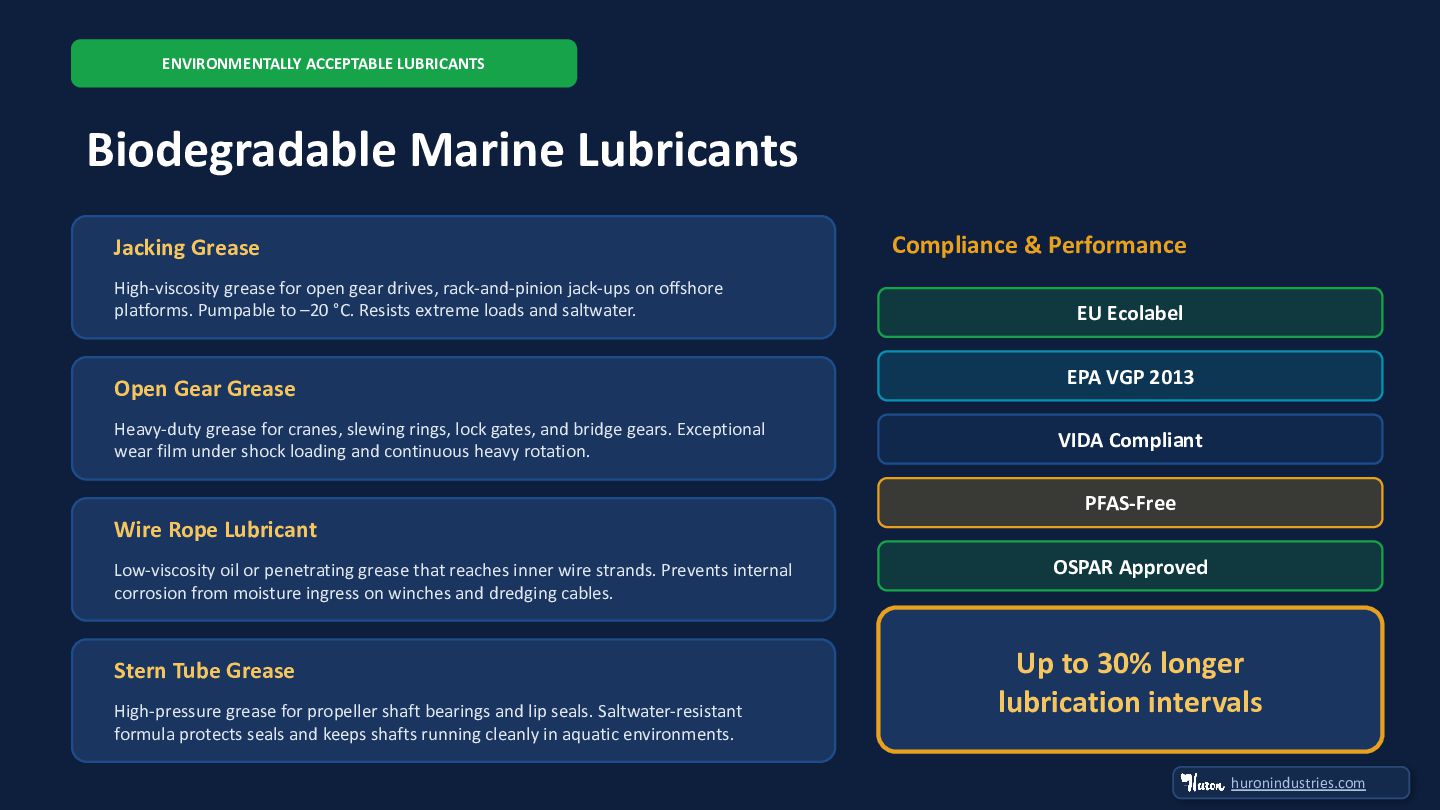
  7. ENVIRONMENTALLY ACCEPTABLE LUBRICANTS Biodegradable Marine Lubricants Jacking Grease High-viscosity grease

    for open gear drives, rack-and-pinion jack-ups on offshore platforms. Pumpable to –20 °C. Resists extreme loads and saltwater. Open Gear Grease Heavy-duty grease for cranes, slewing rings, lock gates, and bridge gears. Exceptional wear film under shock loading and continuous heavy rotation. Wire Rope Lubricant Low-viscosity oil or penetrating grease that reaches inner wire strands. Prevents internal corrosion from moisture ingress on winches and dredging cables. Stern Tube Grease High-pressure grease for propeller shaft bearings and lip seals. Saltwater-resistant formula protects seals and keeps shafts running cleanly in aquatic environments. Compliance & Performance EU Ecolabel EPA VGP 2013 VIDA Compliant PFAS-Free OSPAR Approved Up to 30% longer lubrication intervals huronindustries.com
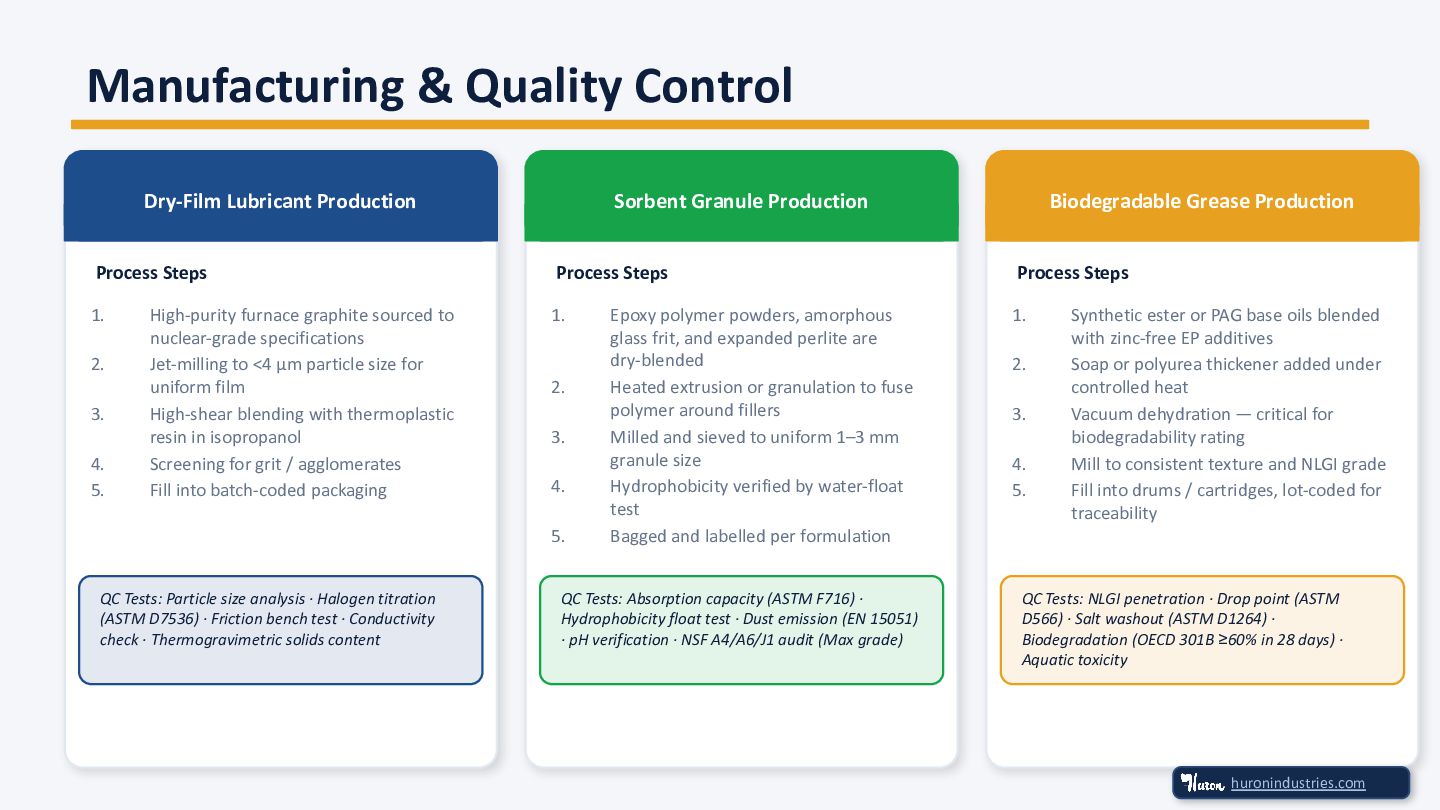
  8. Manufacturing & Quality Control Dry-Film Lubricant Production Process Steps 1.

    High-purity furnace graphite sourced to nuclear-grade specifications 2. Jet-milling to <4 µm particle size for uniform film 3. High-shear blending with thermoplastic resin in isopropanol 4. Screening for grit / agglomerates 5. Fill into batch-coded packaging QC Tests: Particle size analysis · Halogen titration (ASTM D7536) · Friction bench test · Conductivity check · Thermogravimetric solids content Sorbent Granule Production Process Steps 1. Epoxy polymer powders, amorphous glass frit, and expanded perlite are dry-blended 2. Heated extrusion or granulation to fuse polymer around fillers 3. Milled and sieved to uniform 1–3 mm granule size 4. Hydrophobicity verified by water-float test 5. Bagged and labelled per formulation QC Tests: Absorption capacity (ASTM F716) · Hydrophobicity float test · Dust emission (EN 15051) · pH verification · NSF A4/A6/J1 audit (Max grade) Biodegradable Grease Production Process Steps 1. Synthetic ester or PAG base oils blended with zinc-free EP additives 2. Soap or polyurea thickener added under controlled heat 3. Vacuum dehydration — critical for biodegradability rating 4. Mill to consistent texture and NLGI grade 5. Fill into drums / cartridges, lot-coded for traceability QC Tests: NLGI penetration · Drop point (ASTM D566) · Salt washout (ASTM D1264) · Biodegradation (OECD 301B ≥60% in 28 days) · Aquatic toxicity huronindustries.com
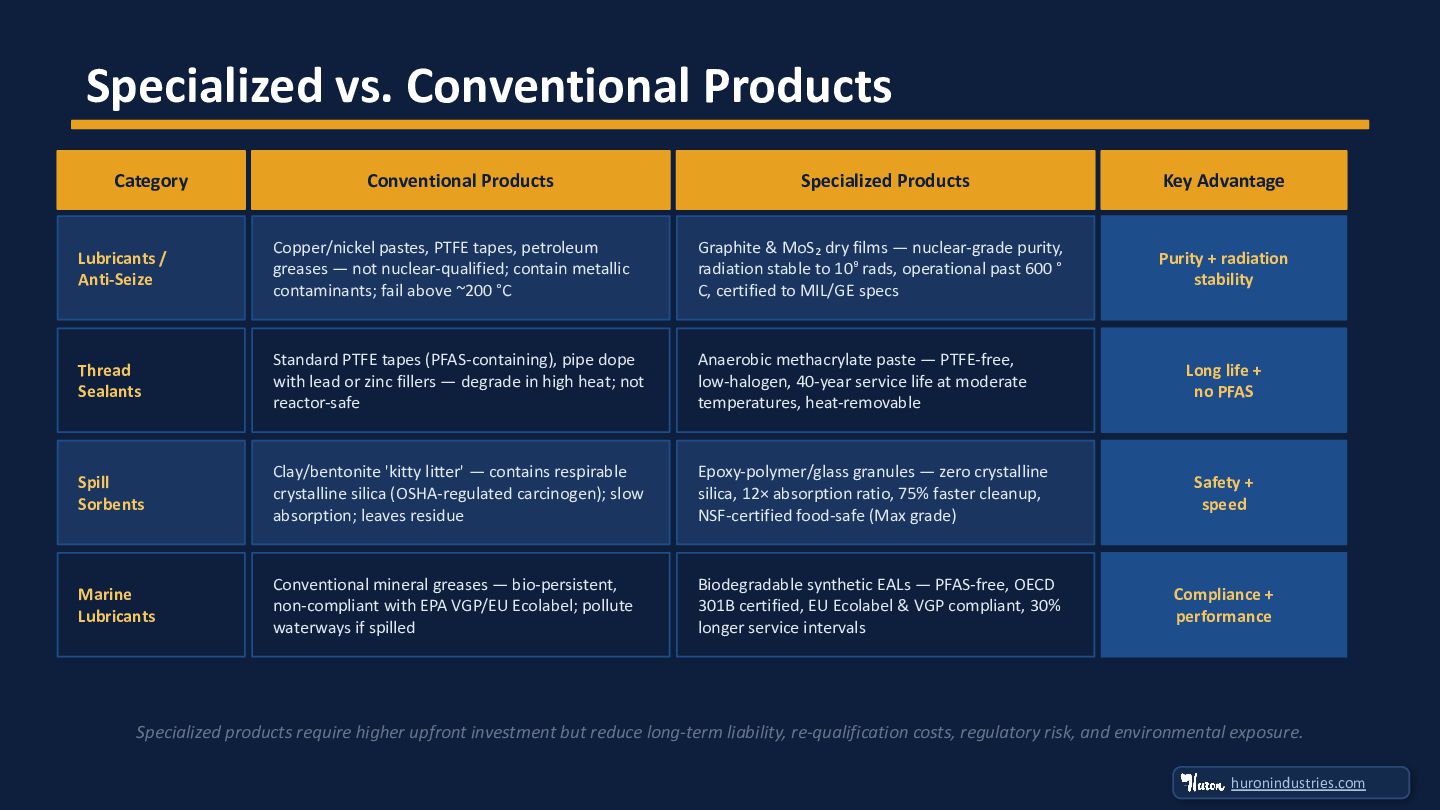
  9. Specialized vs. Conventional Products Category Conventional Products Specialized Products Key

    Advantage Lubricants / Anti-Seize Copper/nickel pastes, PTFE tapes, petroleum greases — not nuclear-qualified; contain metallic contaminants; fail above ~200 °C Graphite & MoS₂ dry films — nuclear-grade purity, radiation stable to 10⁹ rads, operational past 600 ° C, certified to MIL/GE specs Purity + radiation stability Thread Sealants Standard PTFE tapes (PFAS-containing), pipe dope with lead or zinc fillers — degrade in high heat; not reactor-safe Anaerobic methacrylate paste — PTFE-free, low-halogen, 40-year service life at moderate temperatures, heat-removable Long life + no PFAS Spill Sorbents Clay/bentonite 'kitty litter' — contains respirable crystalline silica (OSHA-regulated carcinogen); slow absorption; leaves residue Epoxy-polymer/glass granules — zero crystalline silica, 12× absorption ratio, 75% faster cleanup, NSF-certified food-safe (Max grade) Safety + speed Marine Lubricants Conventional mineral greases — bio-persistent, non-compliant with EPA VGP/EU Ecolabel; pollute waterways if spilled Biodegradable synthetic EALs — PFAS-free, OECD 301B certified, EU Ecolabel & VGP compliant, 30% longer service intervals Compliance + performance Specialized products require higher upfront investment but reduce long-term liability, re-qualification costs, regulatory risk, and environmental exposure. huronindustries.com
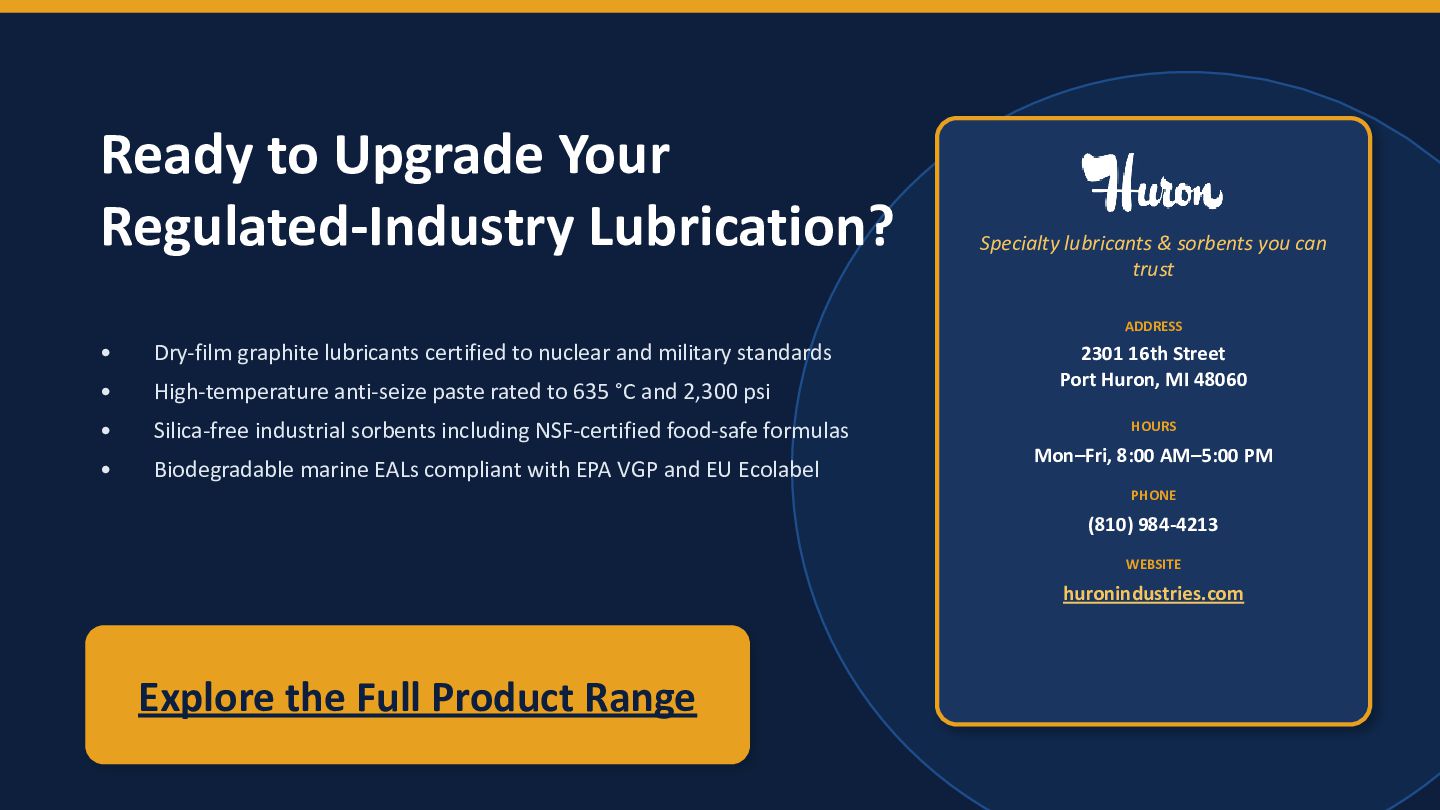
  10. Ready to Upgrade Your Regulated-Industry Lubrication? • Dry-film graphite lubricants

    certified to nuclear and military standards • High-temperature anti-seize paste rated to 635 °C and 2,300 psi • Silica-free industrial sorbents including NSF-certified food-safe formulas • Biodegradable marine EALs compliant with EPA VGP and EU Ecolabel Explore the Full Product Range Specialty lubricants & sorbents you can trust ADDRESS 2301 16th Street Port Huron, MI 48060 HOURS Mon–Fri, 8:00 AM–5:00 PM PHONE (810) 984-4213 WEBSITE huronindustries.com