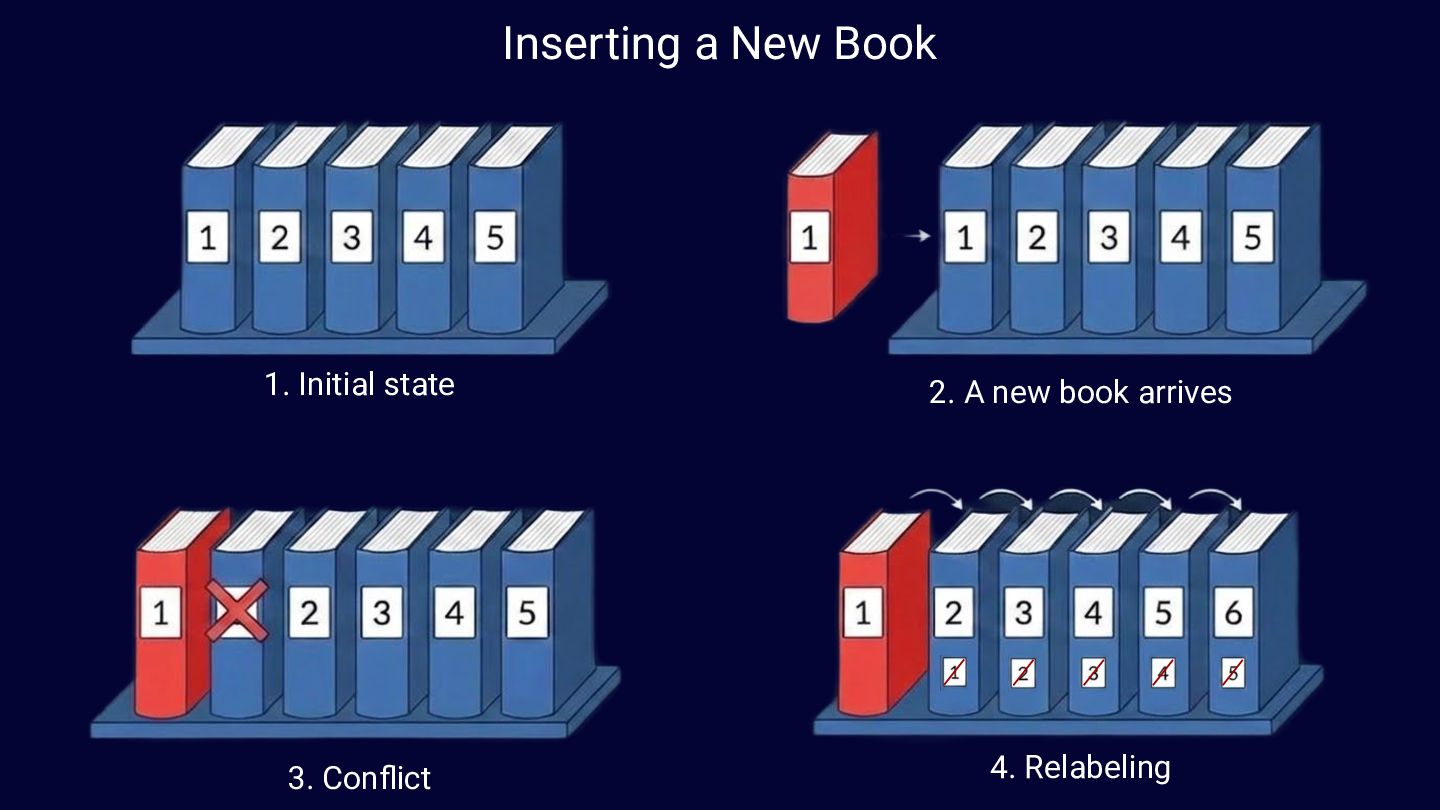
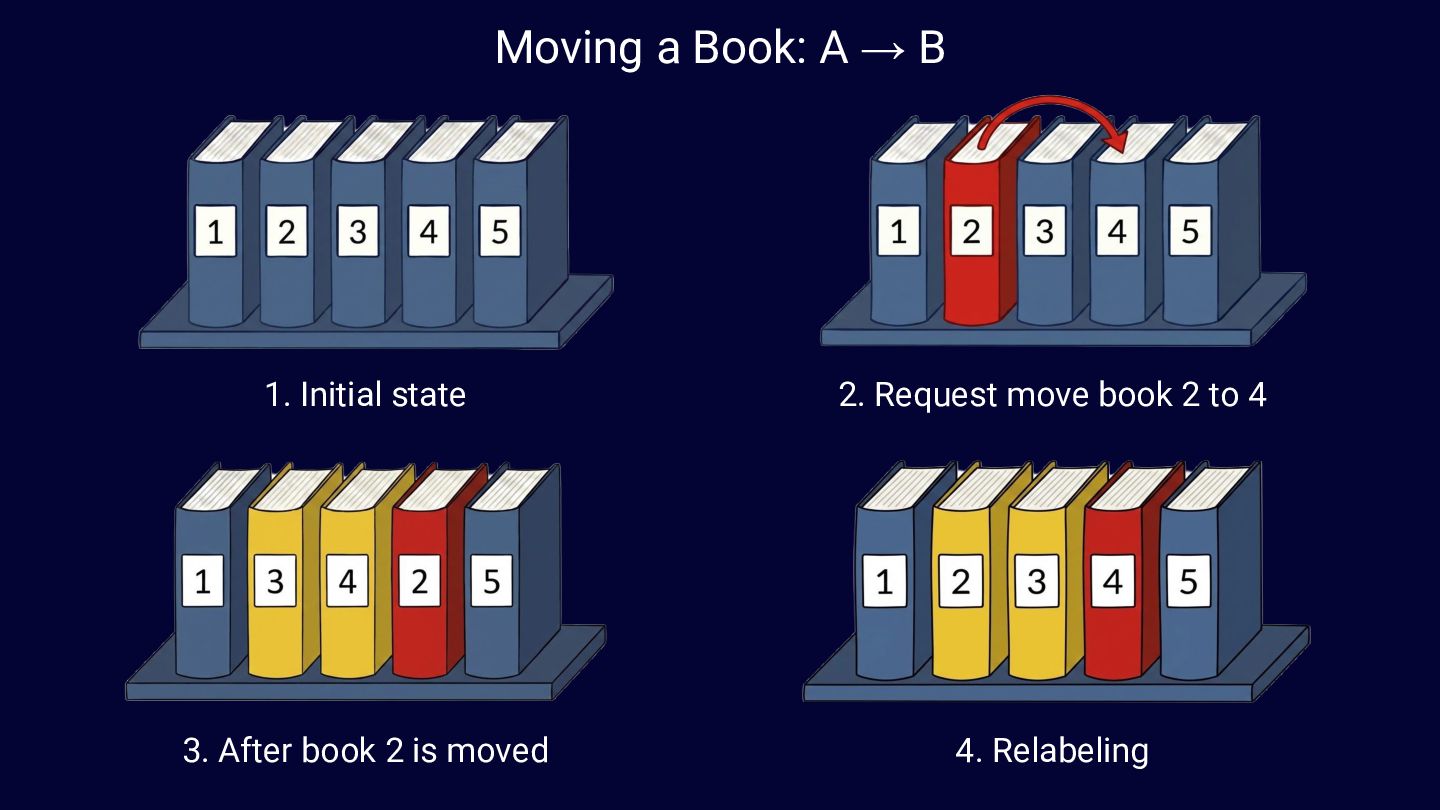
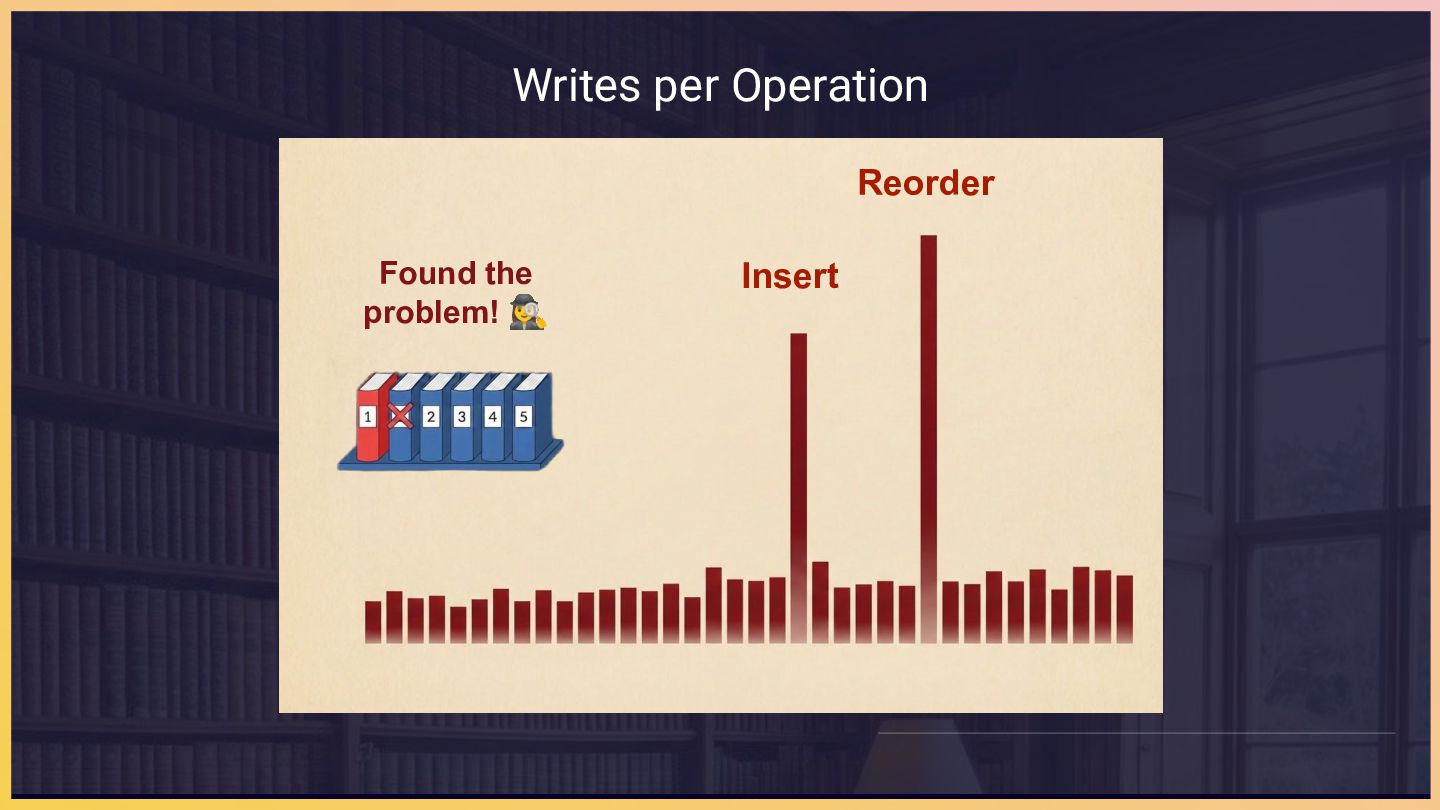
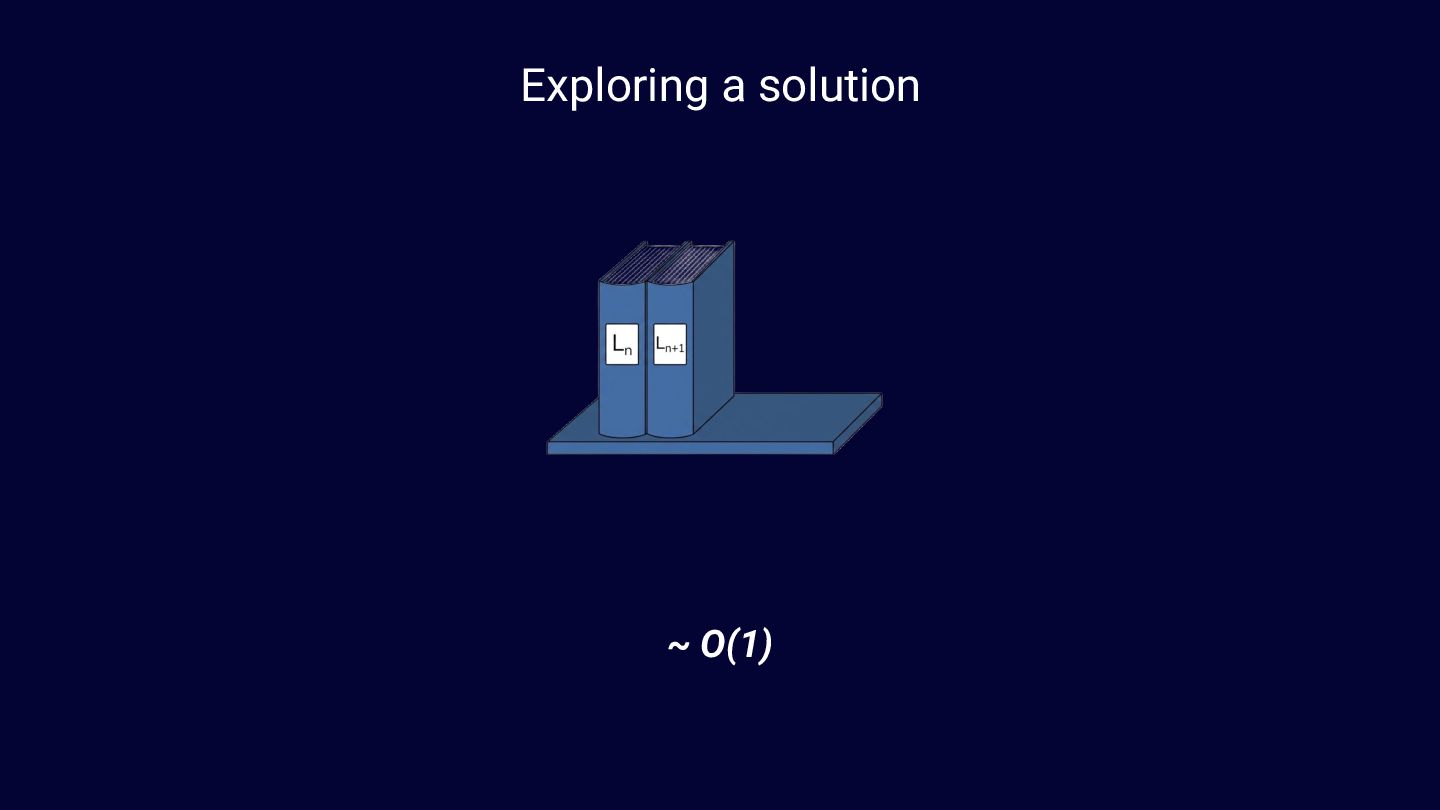
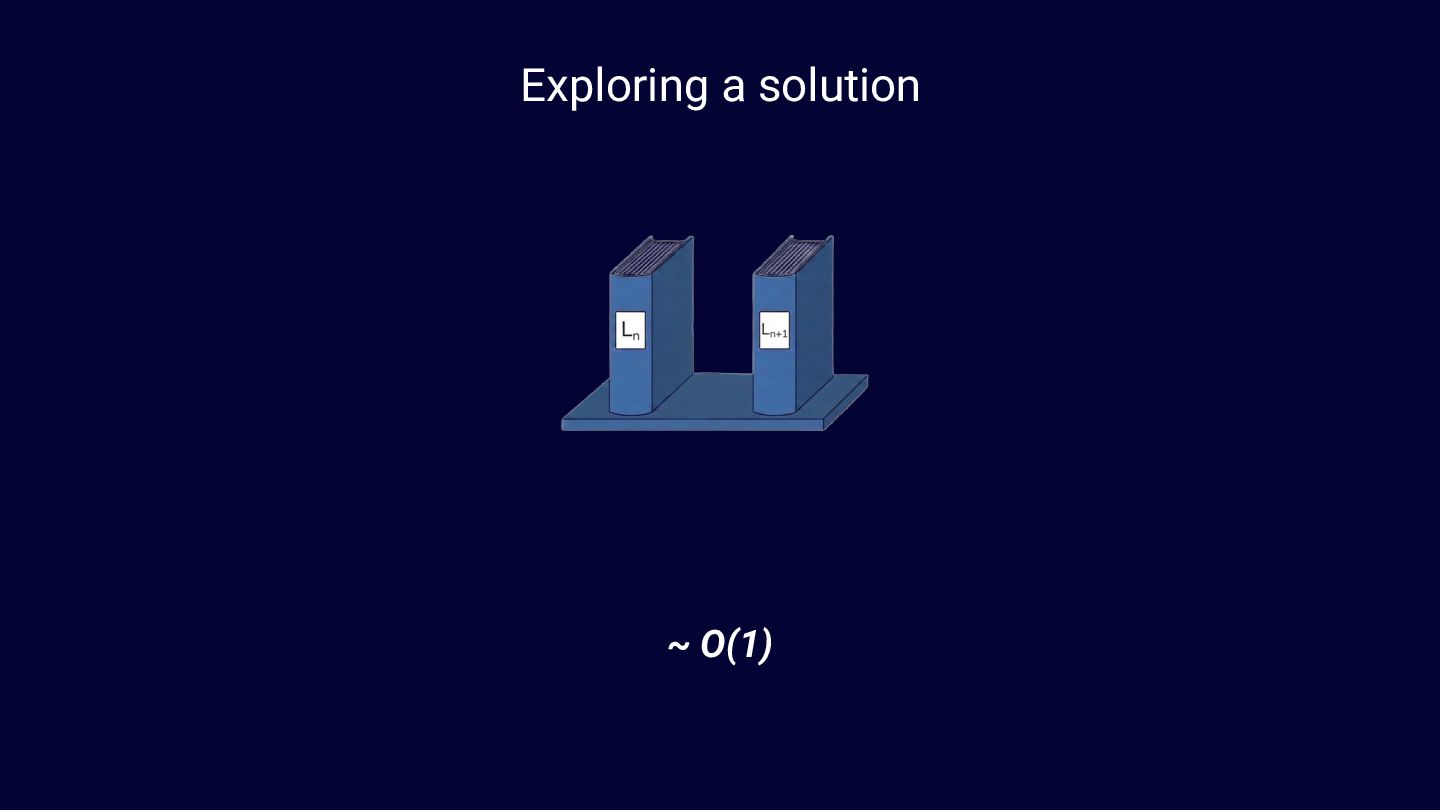
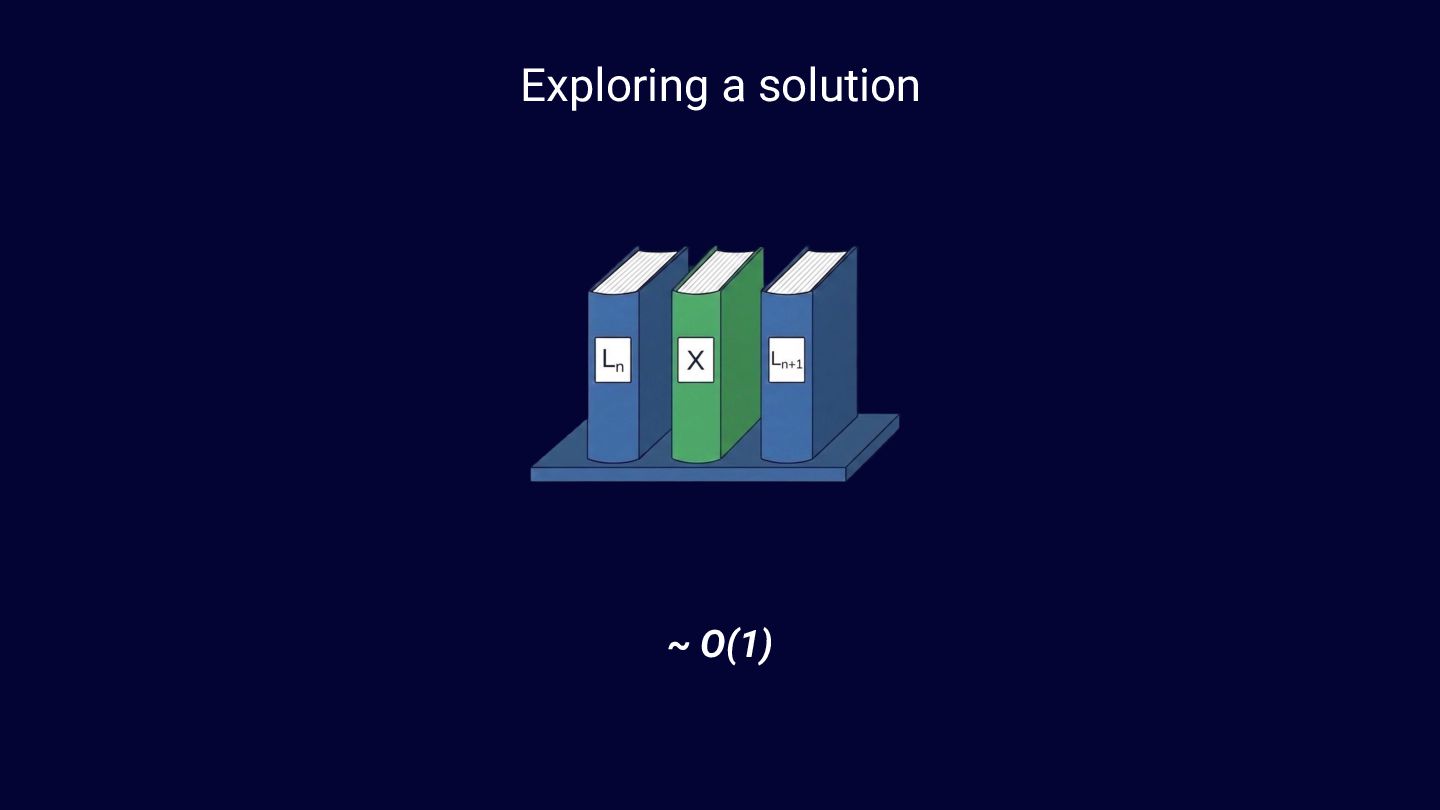
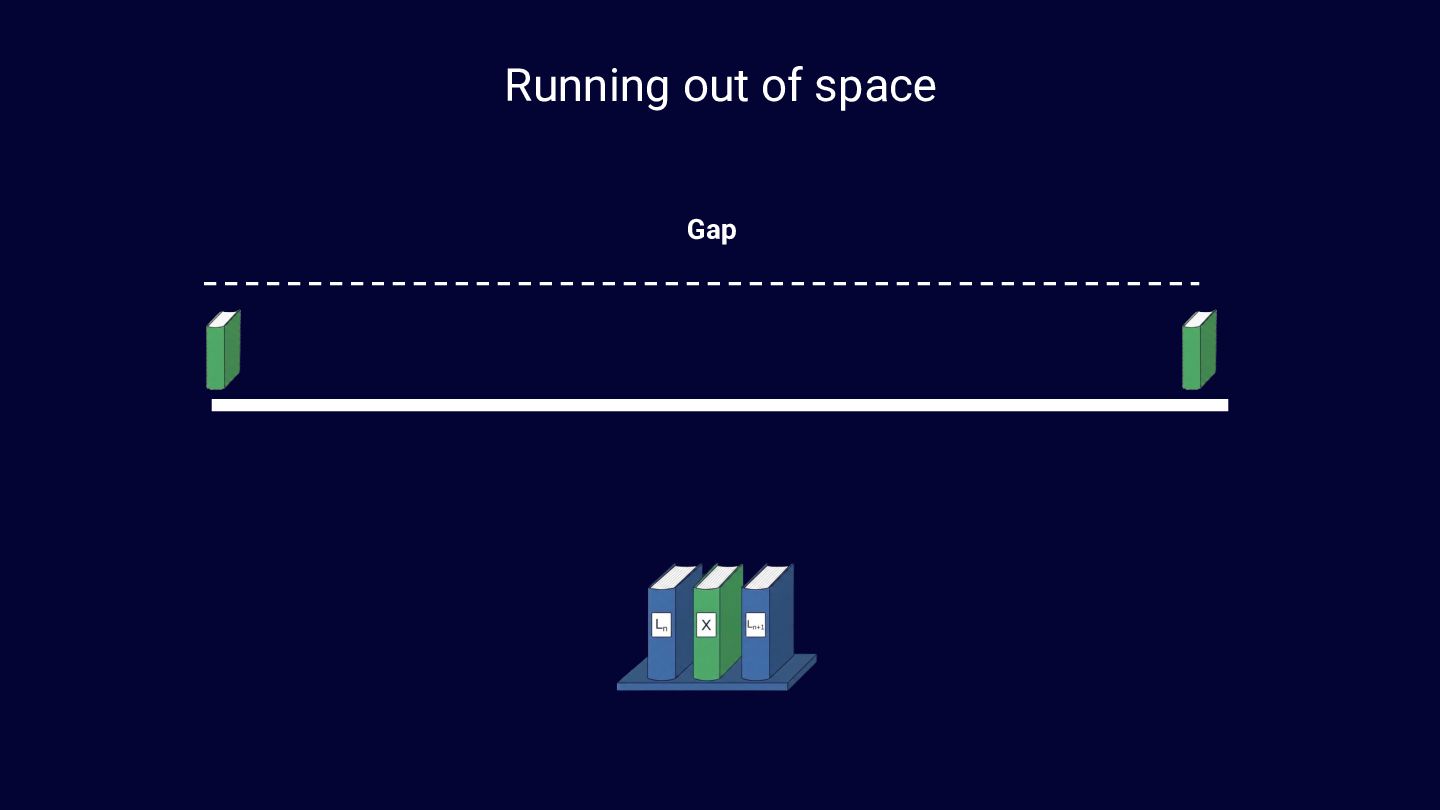
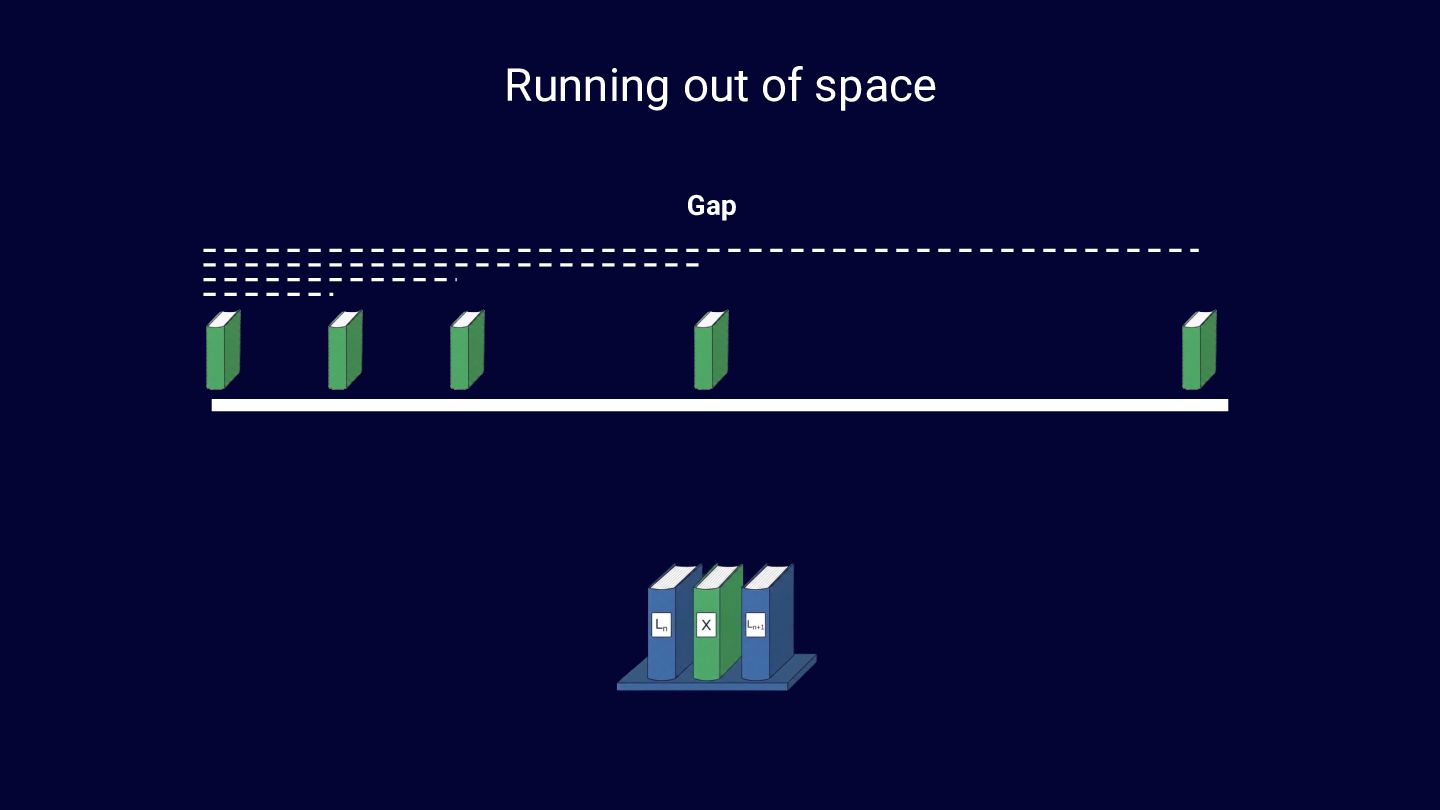
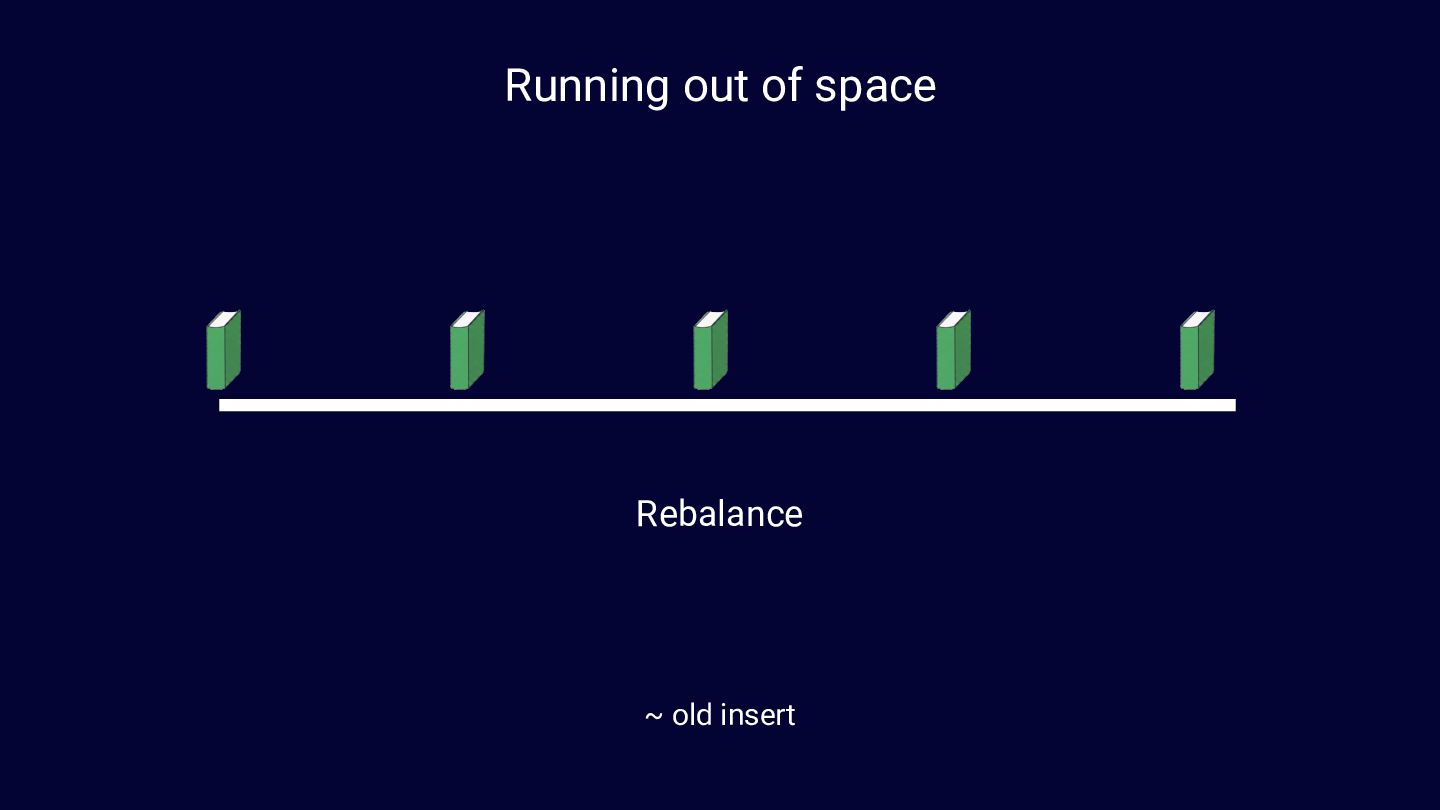
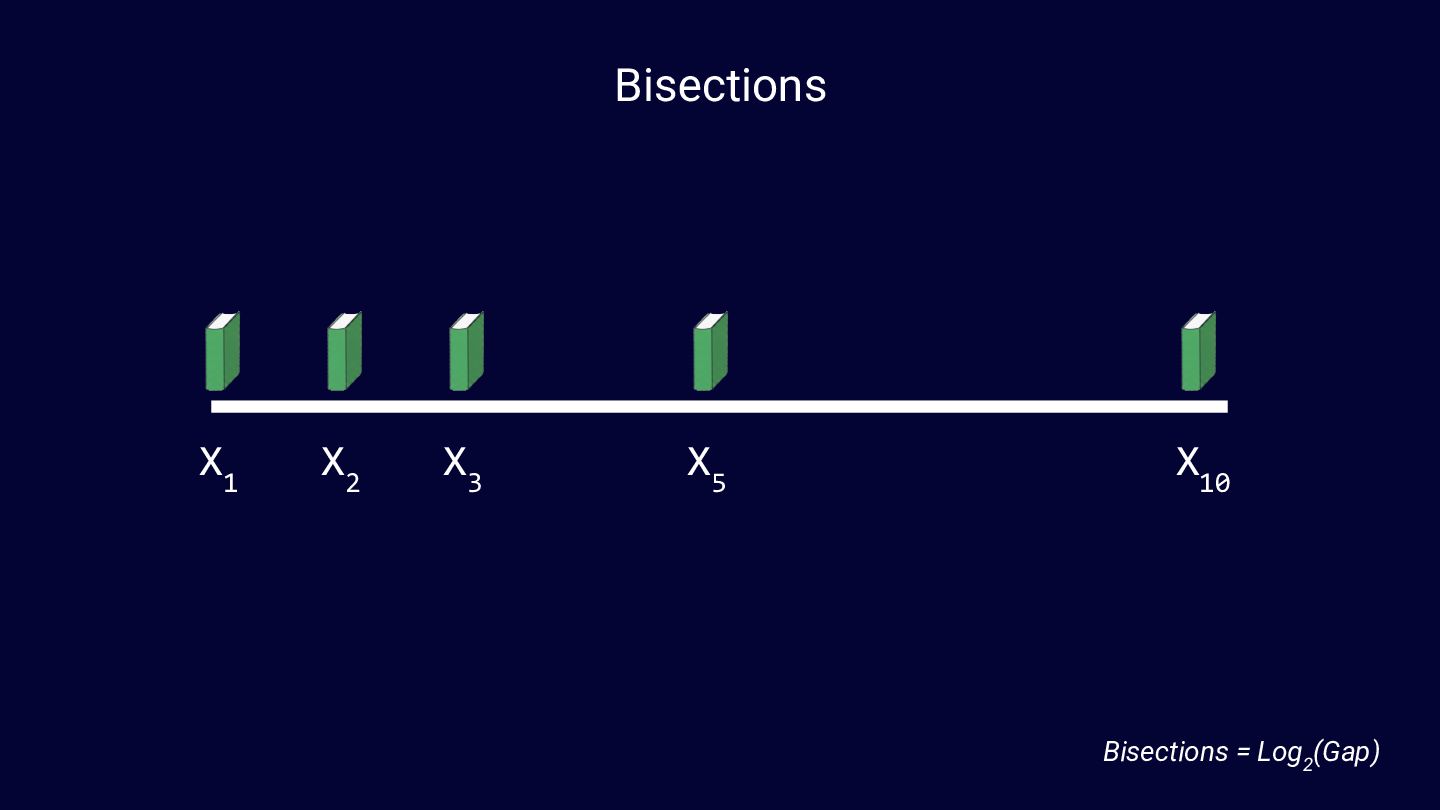
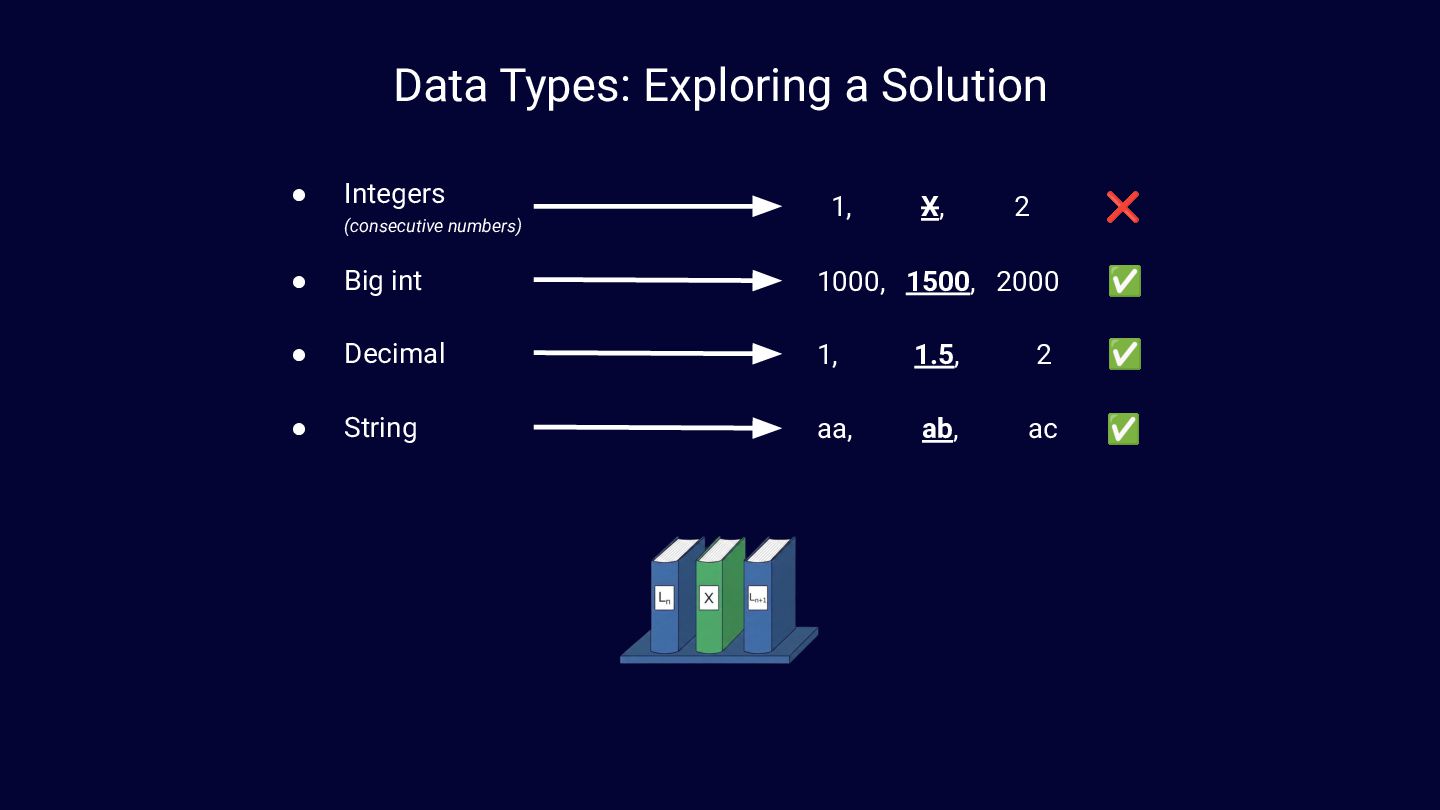
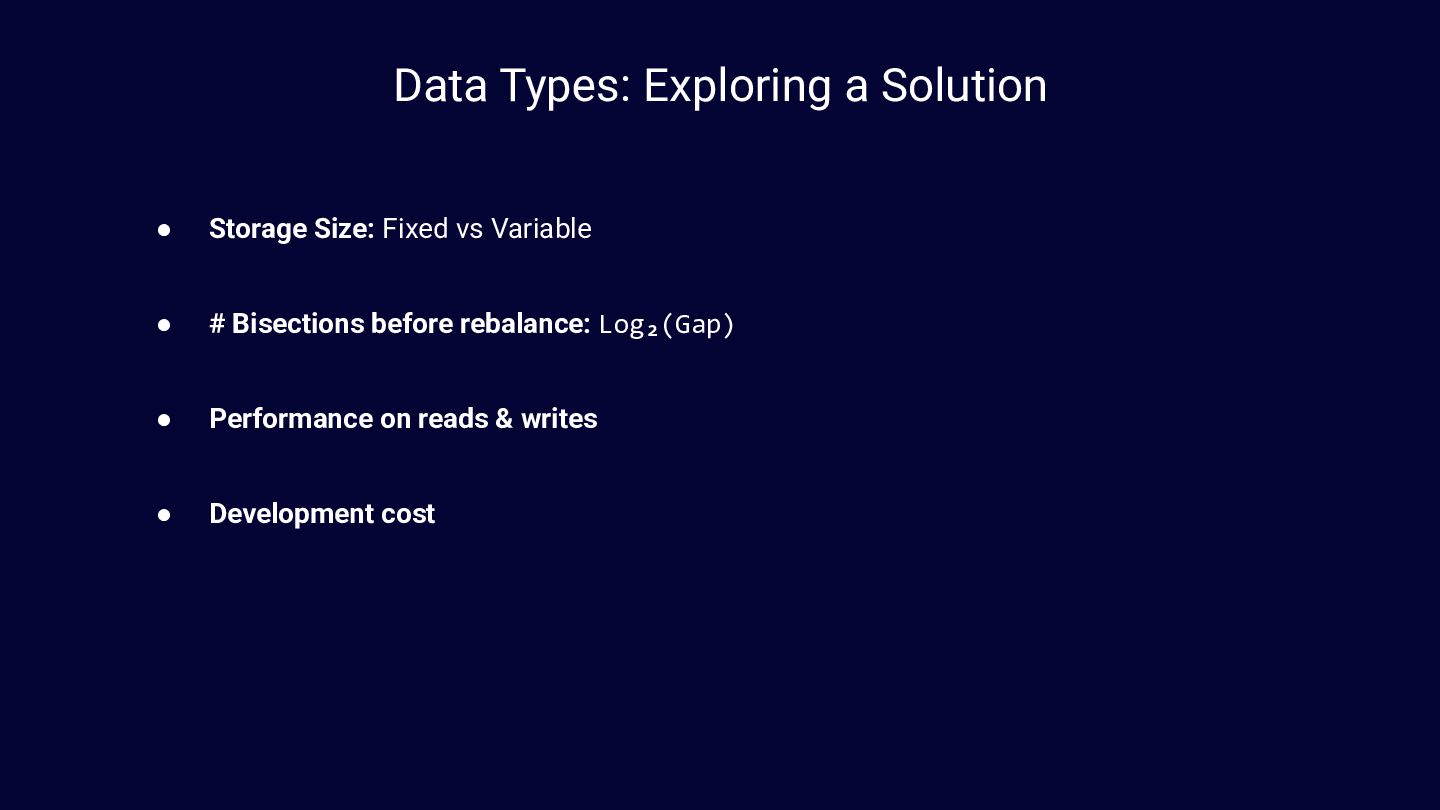
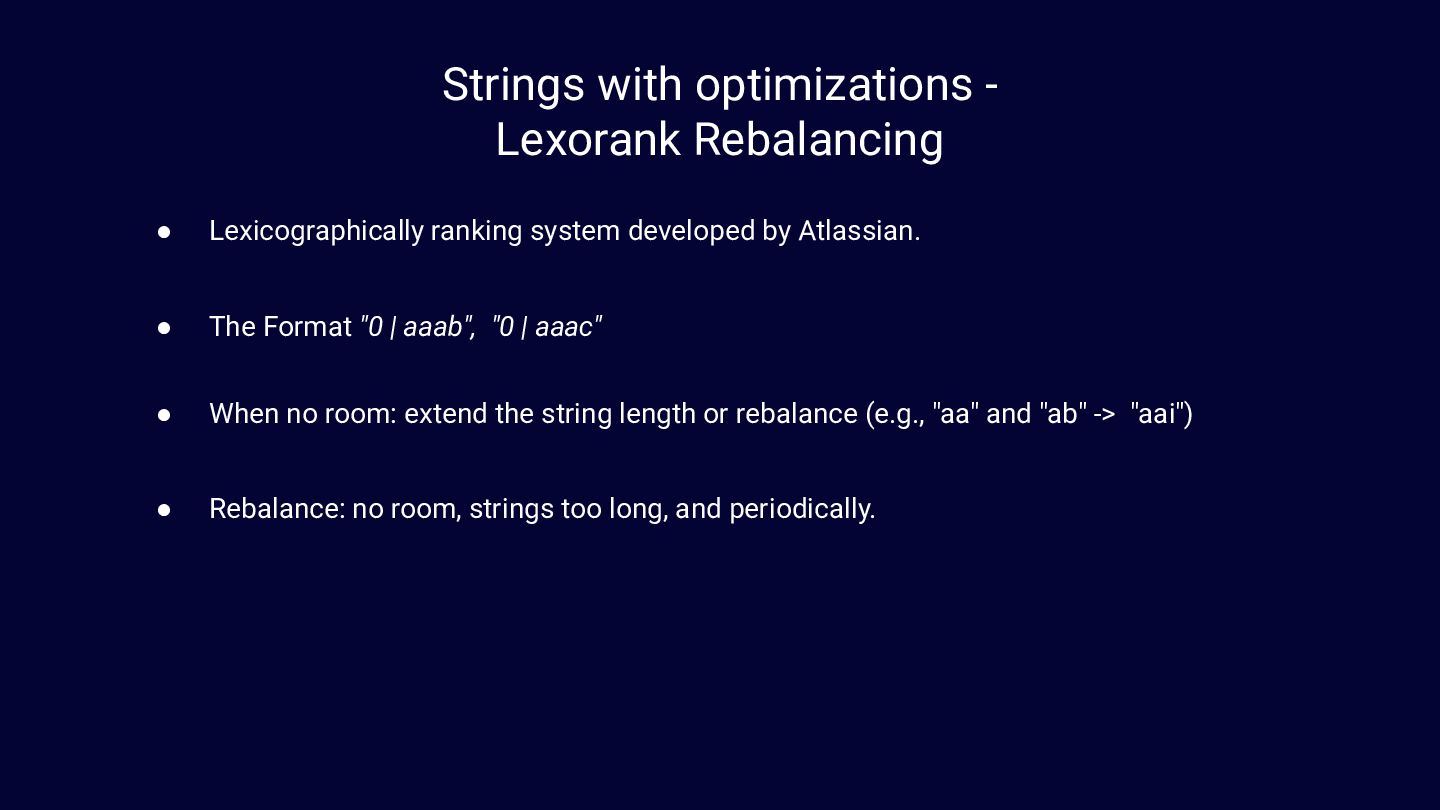
"0 | aaab", "0 | aaac" • When no room: extend the string length or rebalance (e.g., "aa" and "ab" -> "aai") • Rebalance: no room, strings too long, and periodically. Strings with optimizations - Lexorank Rebalancing
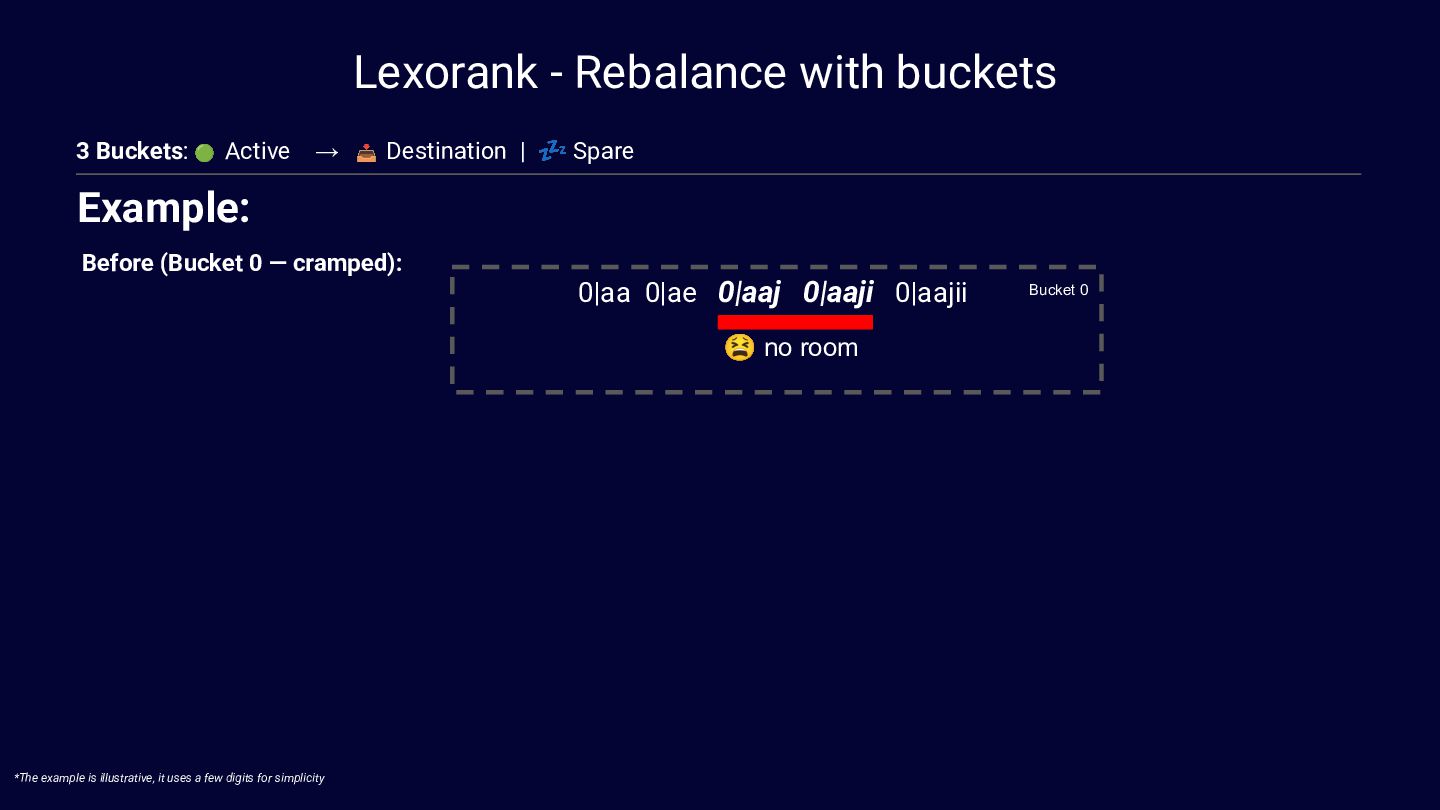
Spare Lexorank - Rebalance with buckets *The example is illustrative, it uses a few digits for simplicity Before (Bucket 0 — cramped): 😫 no room 0|aa 0|ae 0|aaj 0|aaji 0|aajii Bucket 0
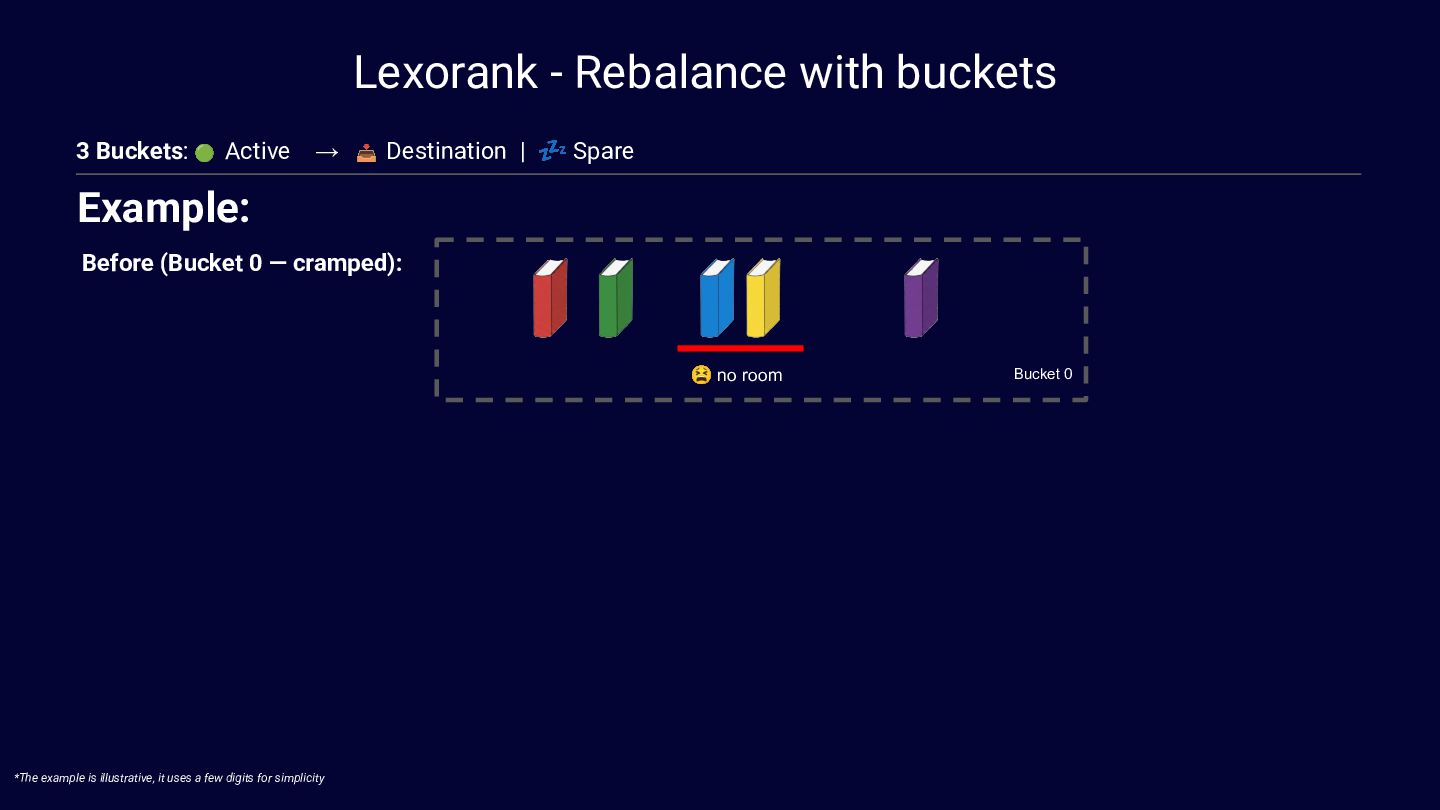
Spare Lexorank - Rebalance with buckets *The example is illustrative, it uses a few digits for simplicity Before (Bucket 0 — cramped): Bucket 0 😫 no room
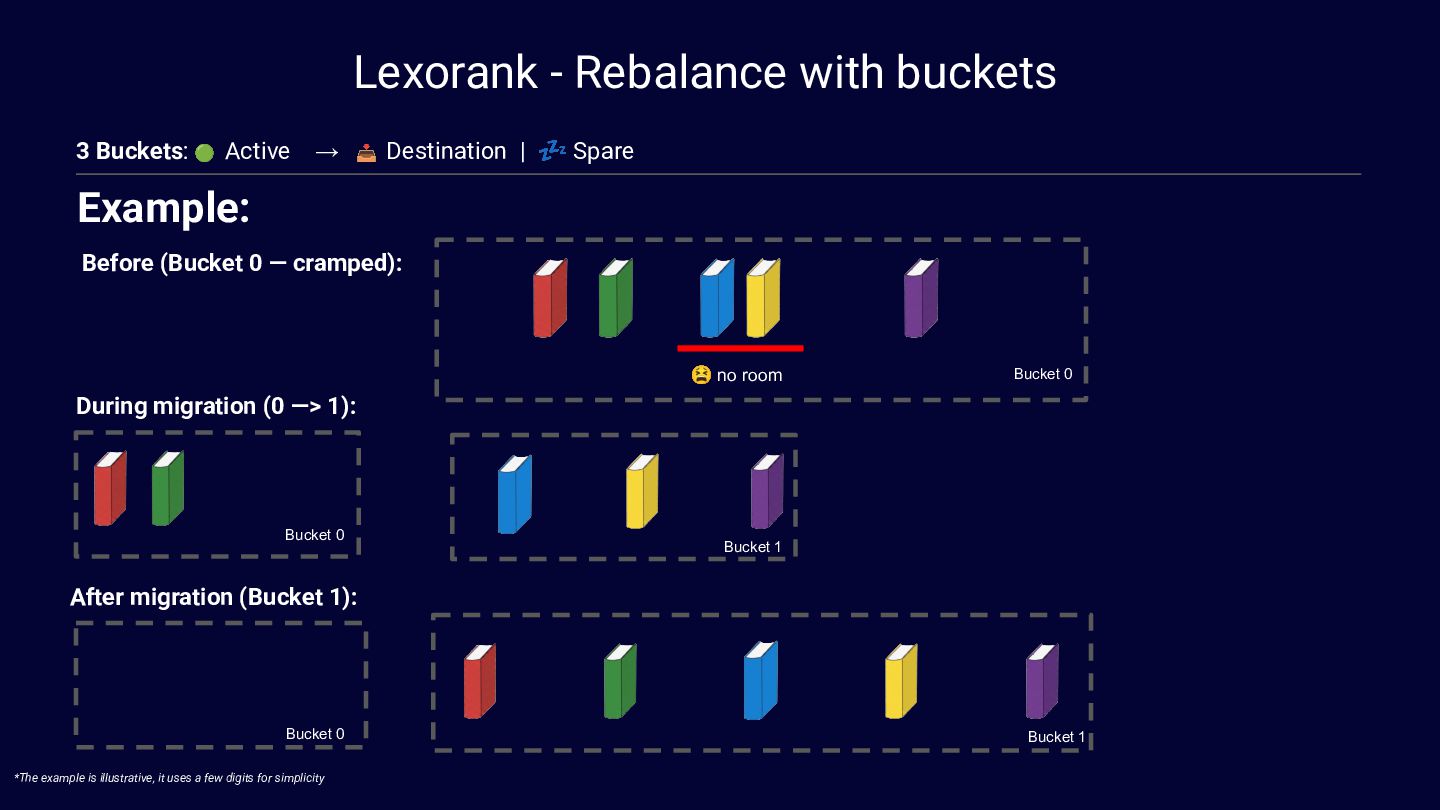
Spare Lexorank - Rebalance with buckets *The example is illustrative, it uses a few digits for simplicity Before (Bucket 0 — cramped): During migration (0 —> 1): Bucket 0 Bucket 1 After migration (Bucket 1): Bucket 1 Bucket 0 Bucket 0 😫 no room
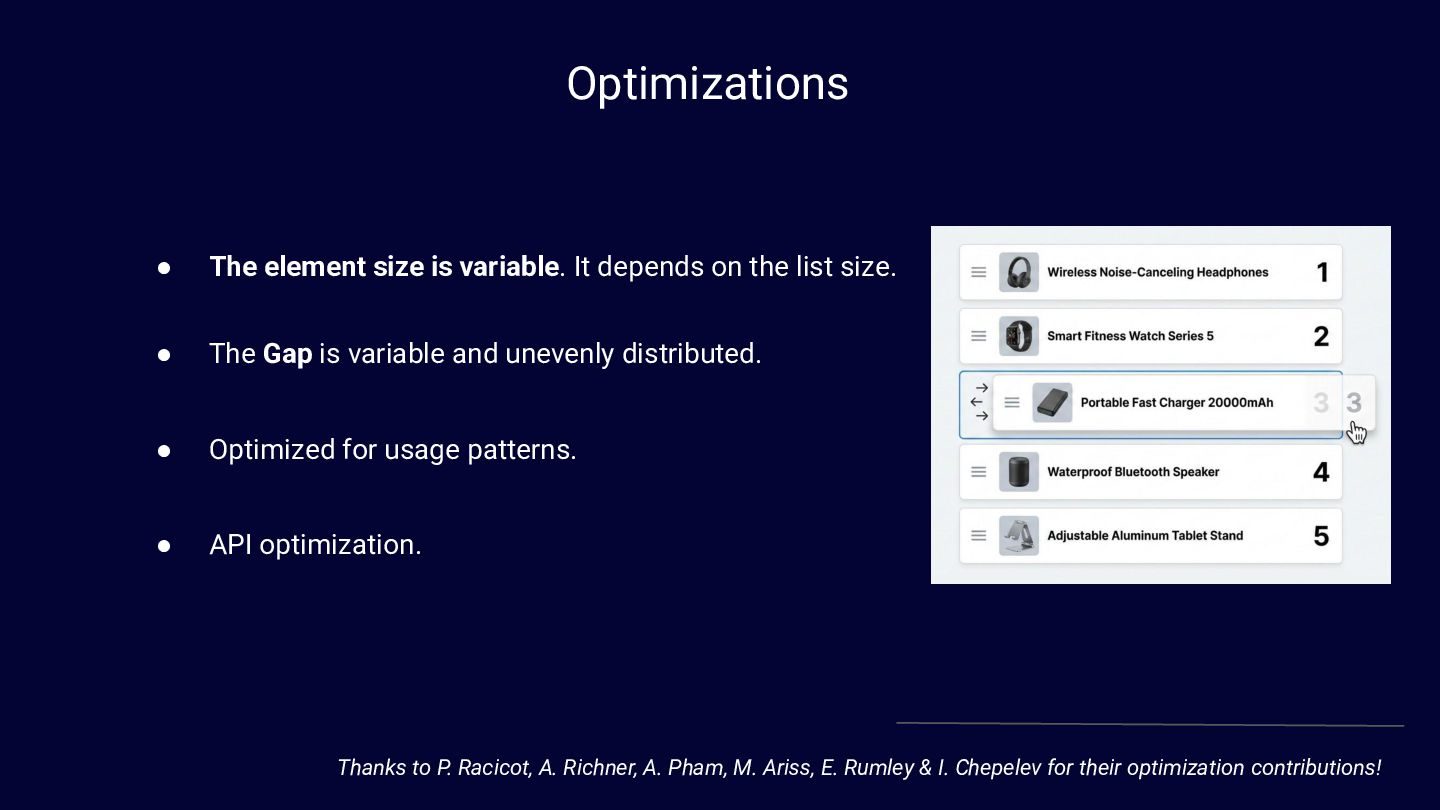
the list size. • The Gap is variable and unevenly distributed. • Optimized for usage patterns. • API optimization. Thanks to P. Racicot, A. Richner, A. Pham, M. Ariss, E. Rumley & I. Chepelev for their optimization contributions!
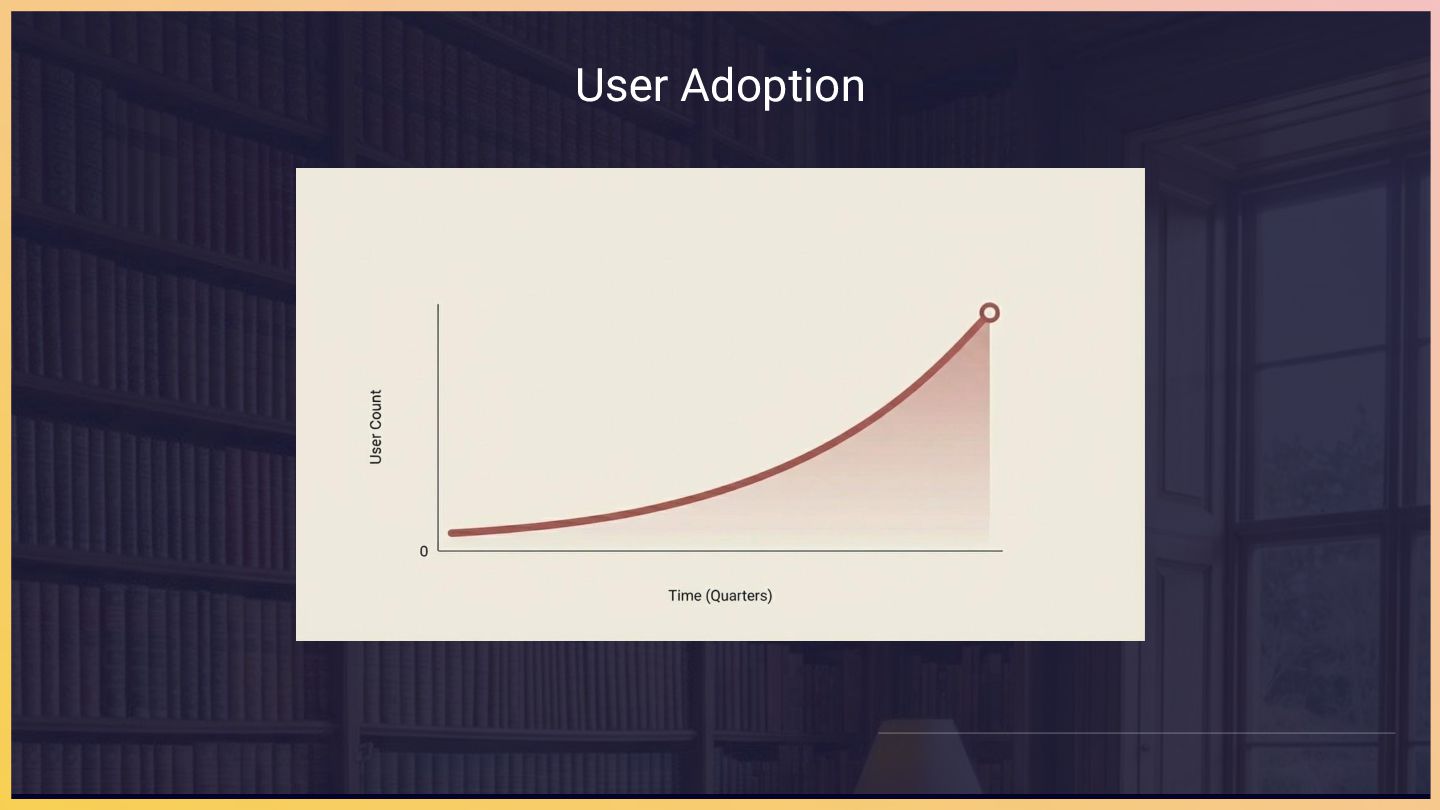
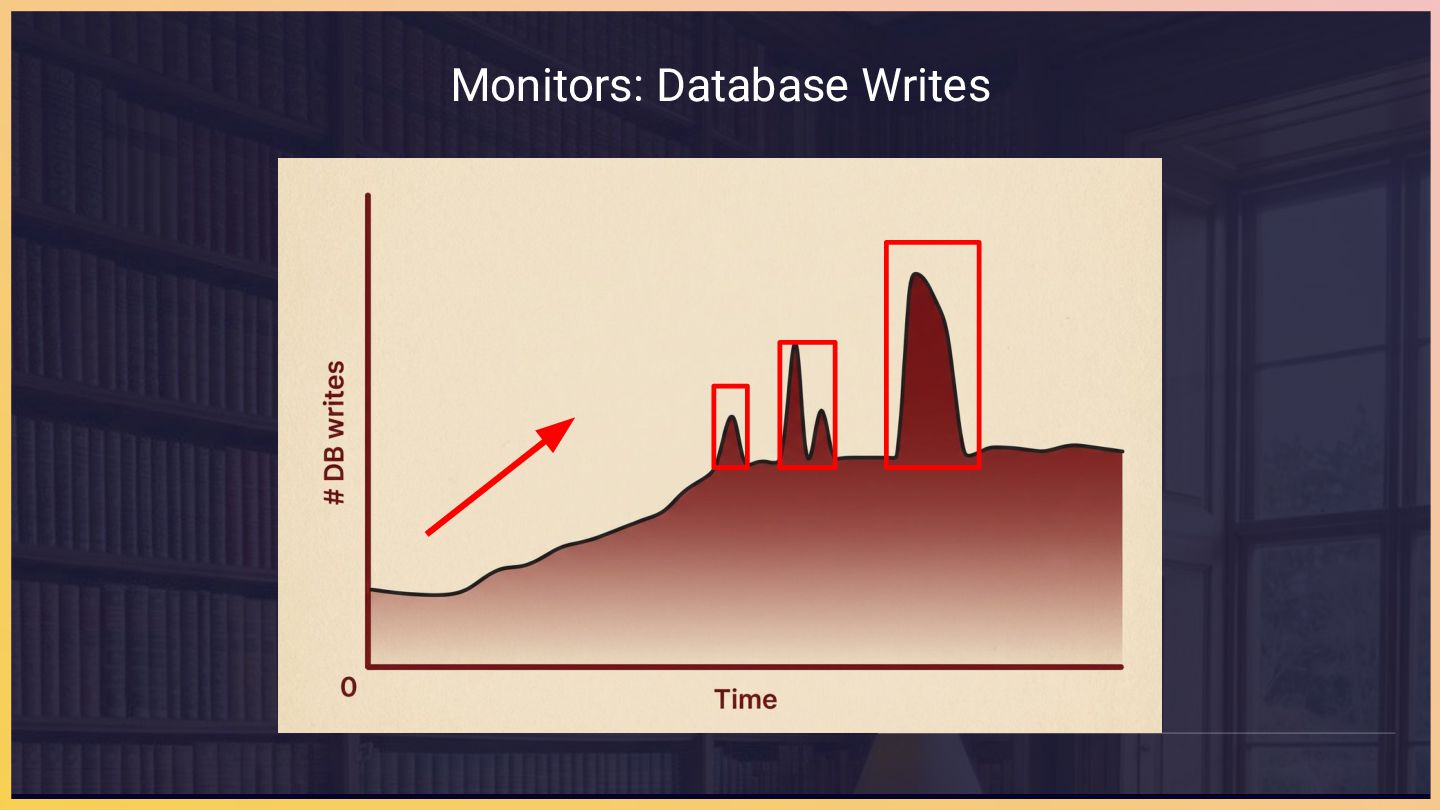
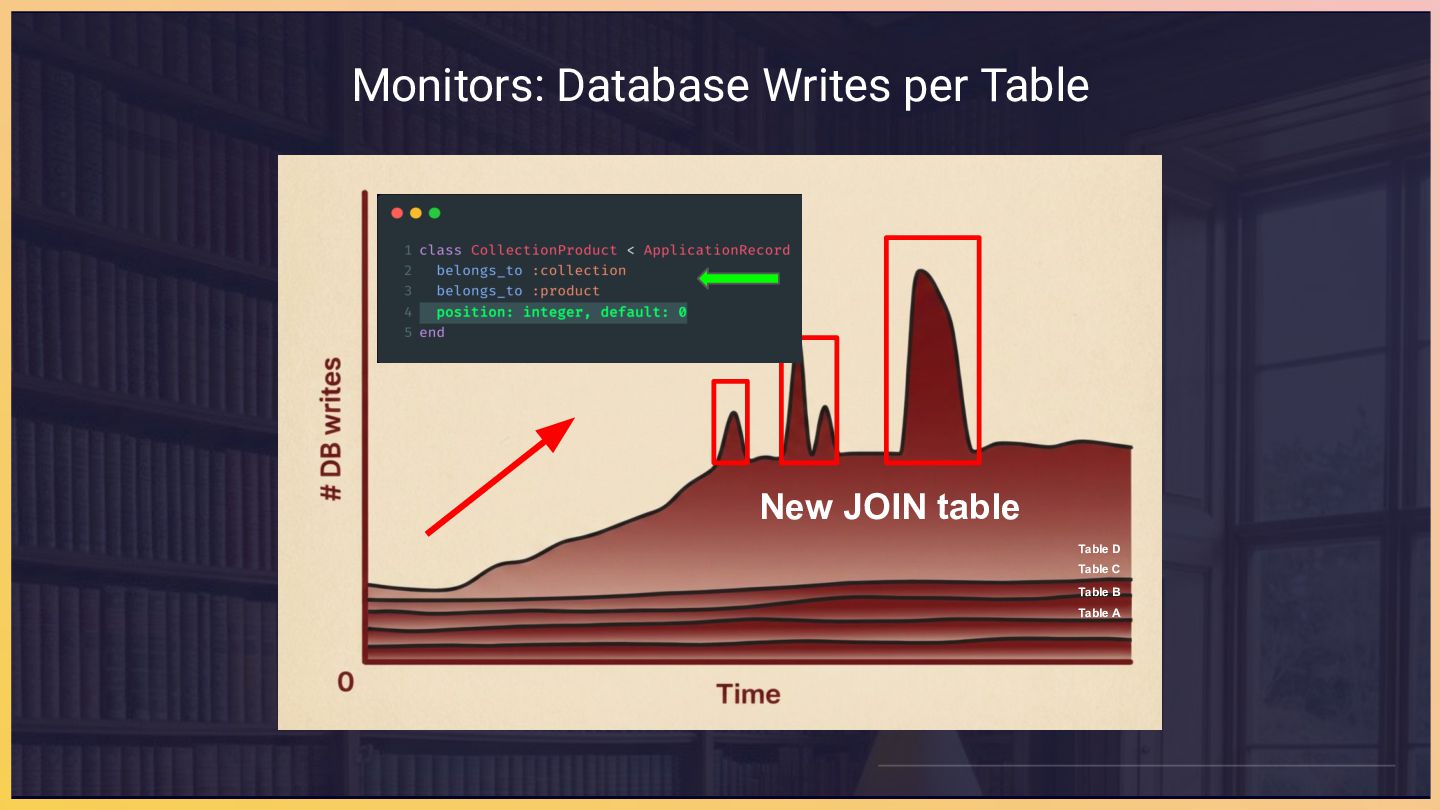
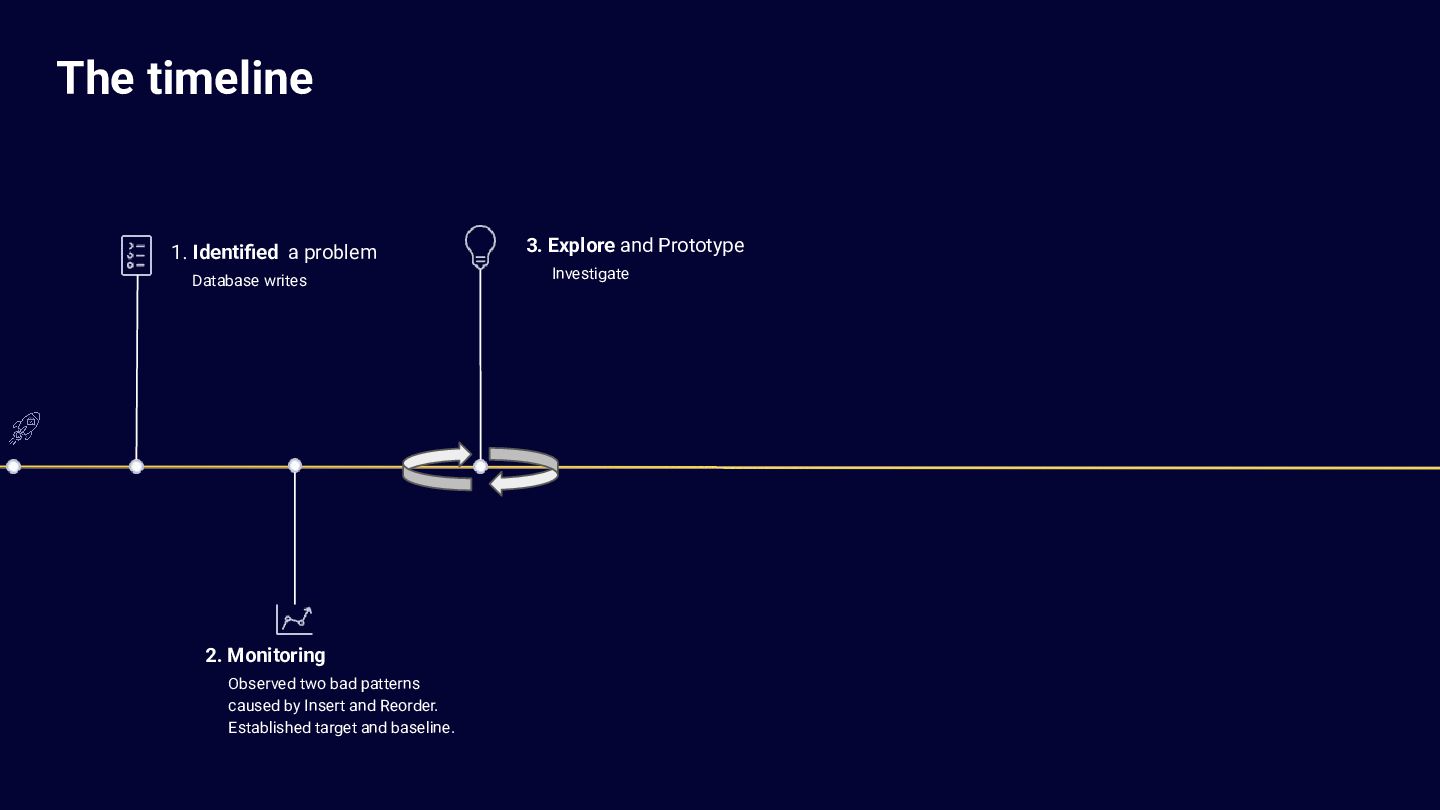
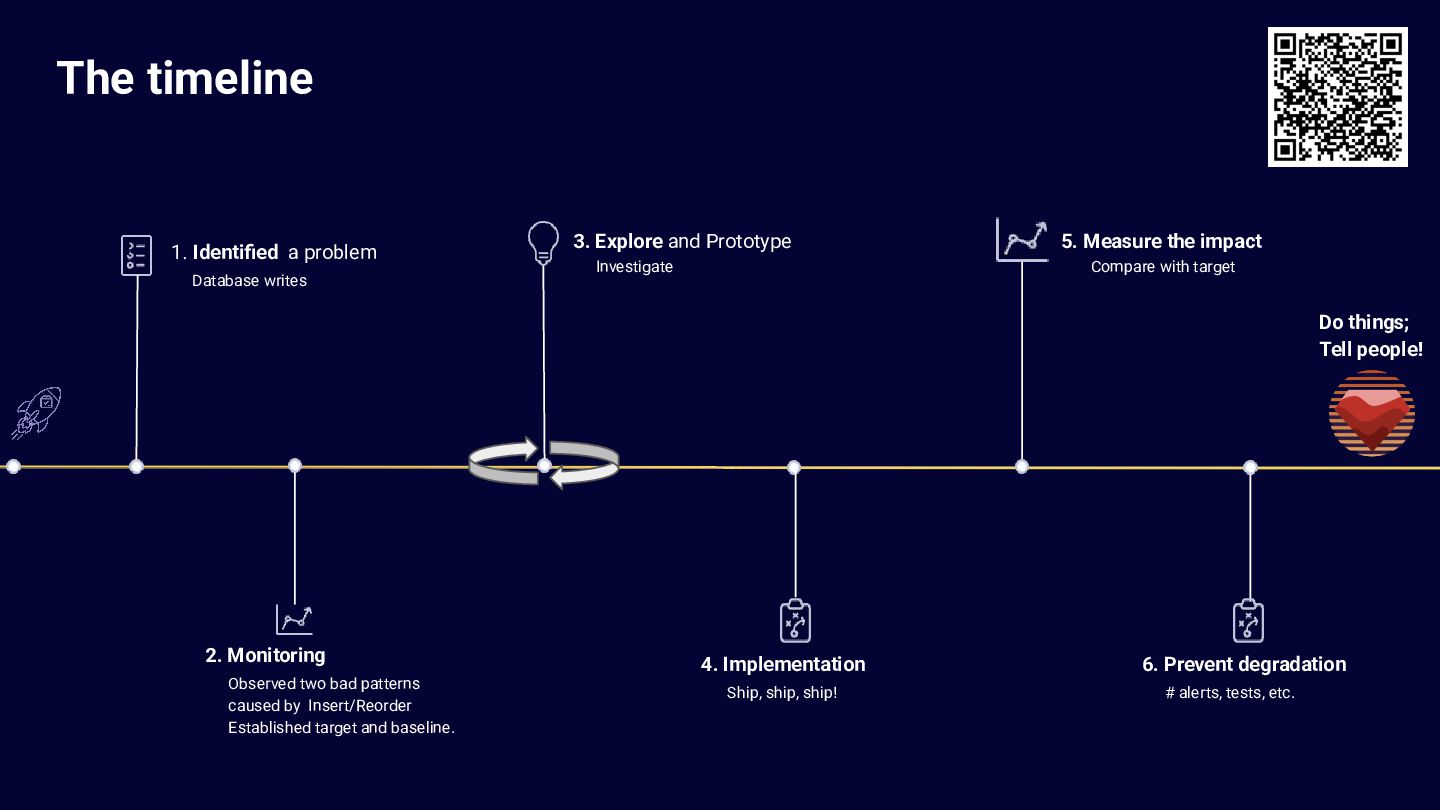
baseline. The timeline 1. Identified a problem 2. Monitoring Database writes 5. Measure the impact Compare with target 3. Explore and Prototype Investigate Do things; Tell people! 4. Implementation Ship, ship, ship! # alerts, tests, etc. 6. Prevent degradation
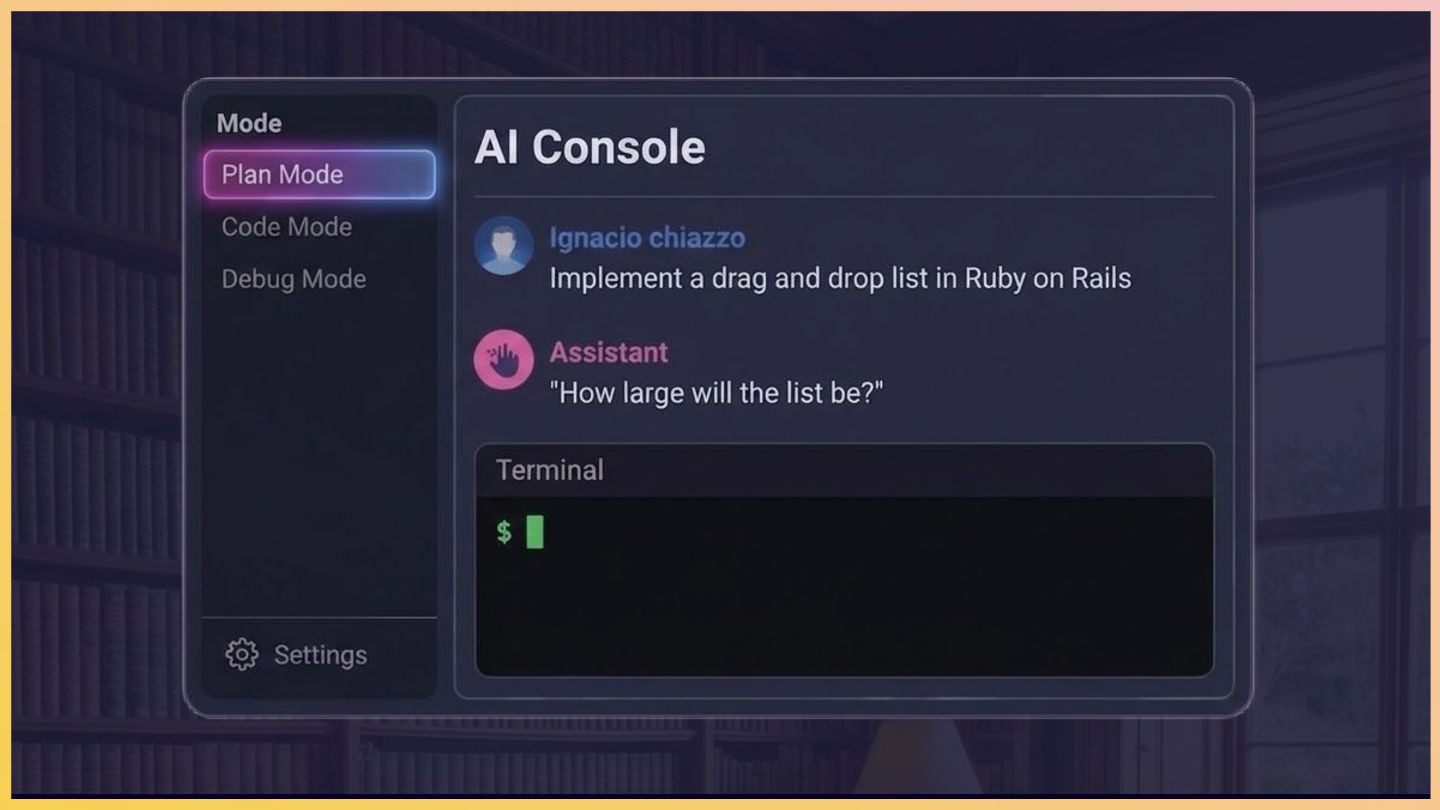
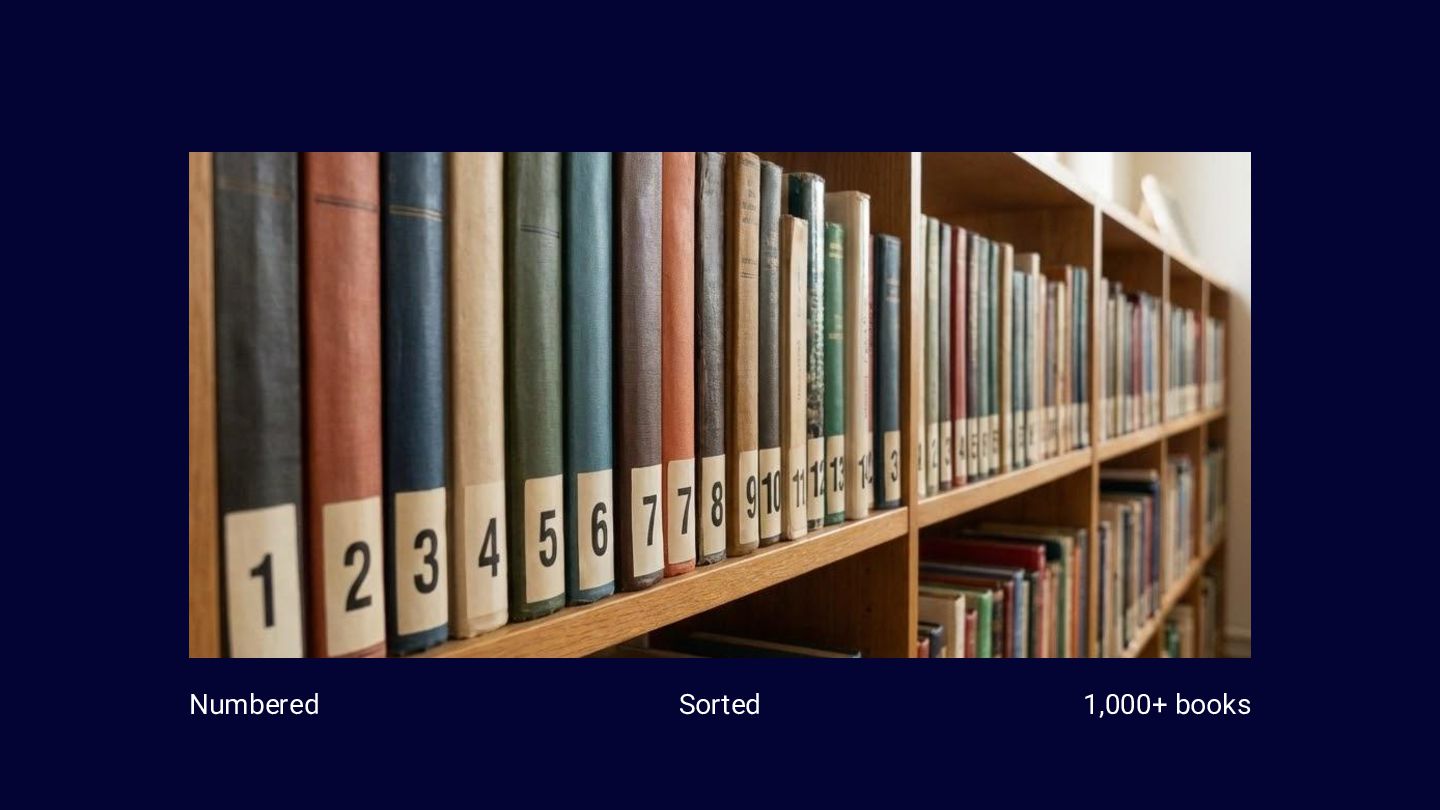
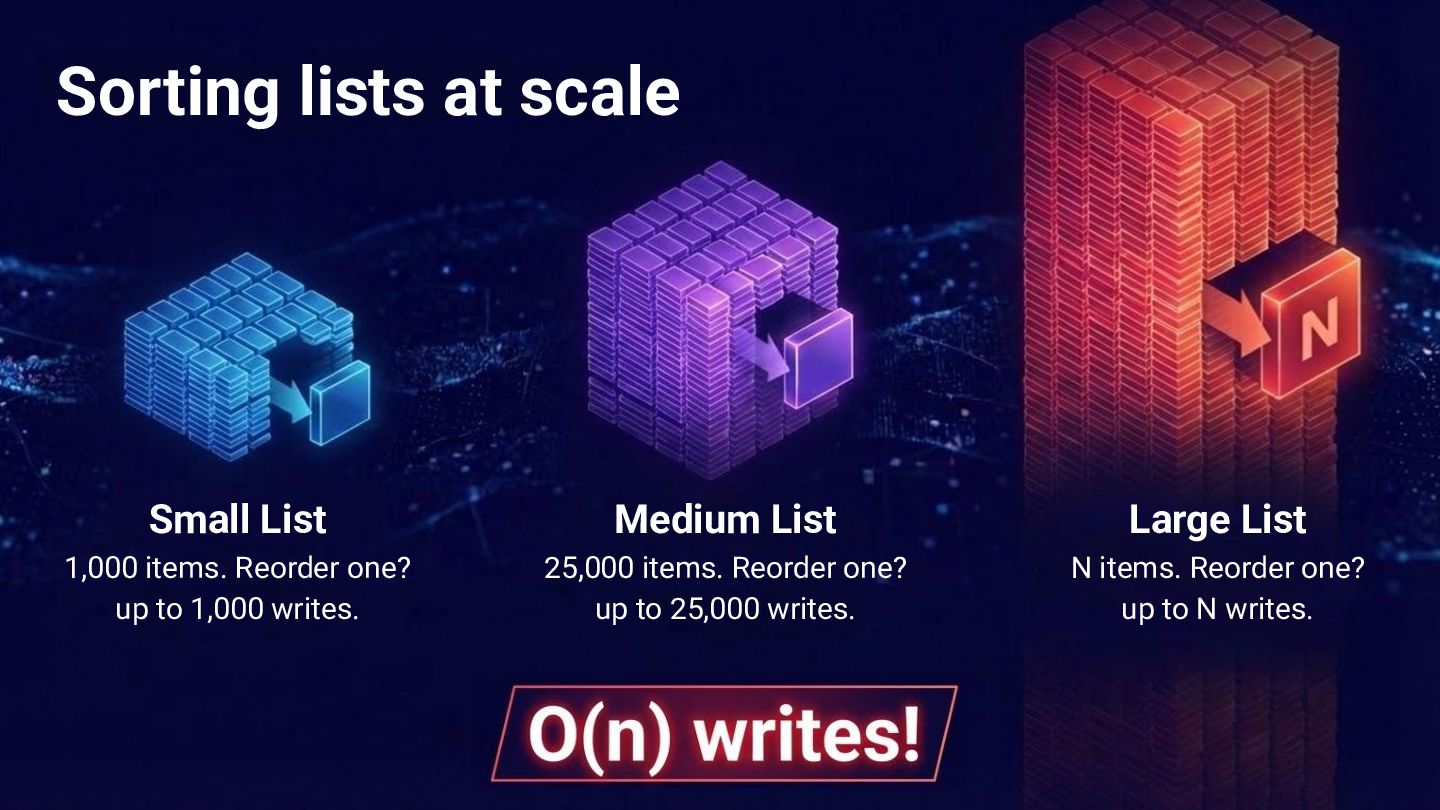
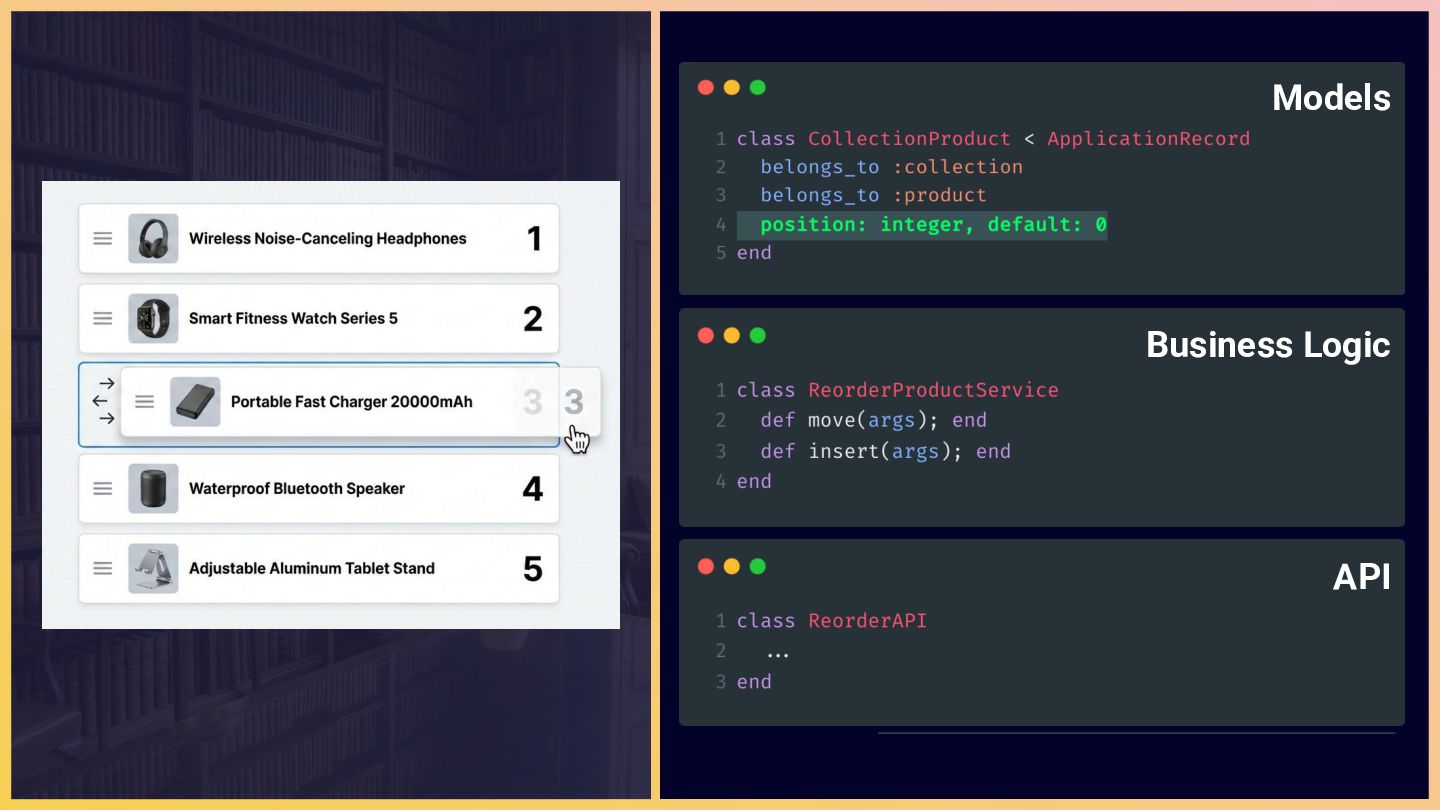
problems at scale. • Using Integers works well for small lists, but they don't scale. • The six-step framework applies to any performance problem. • And now you know why the AI asked for the list size.


 rshindo
 falcon8823
 optim
 ivargrimstad
 florets1
 chobishiba
 utakaha
 tanahiro2010
 prota
 panda728
 akase244
 akit37
 jeffersonlam
 smashingmag
 reverentgeek
 pauljervisheath
 nonsquared
 marketingsoph
 bkeepers
 joshbly
 nikkihalliwell
 thoeni
 gr2m
 lauravandoore