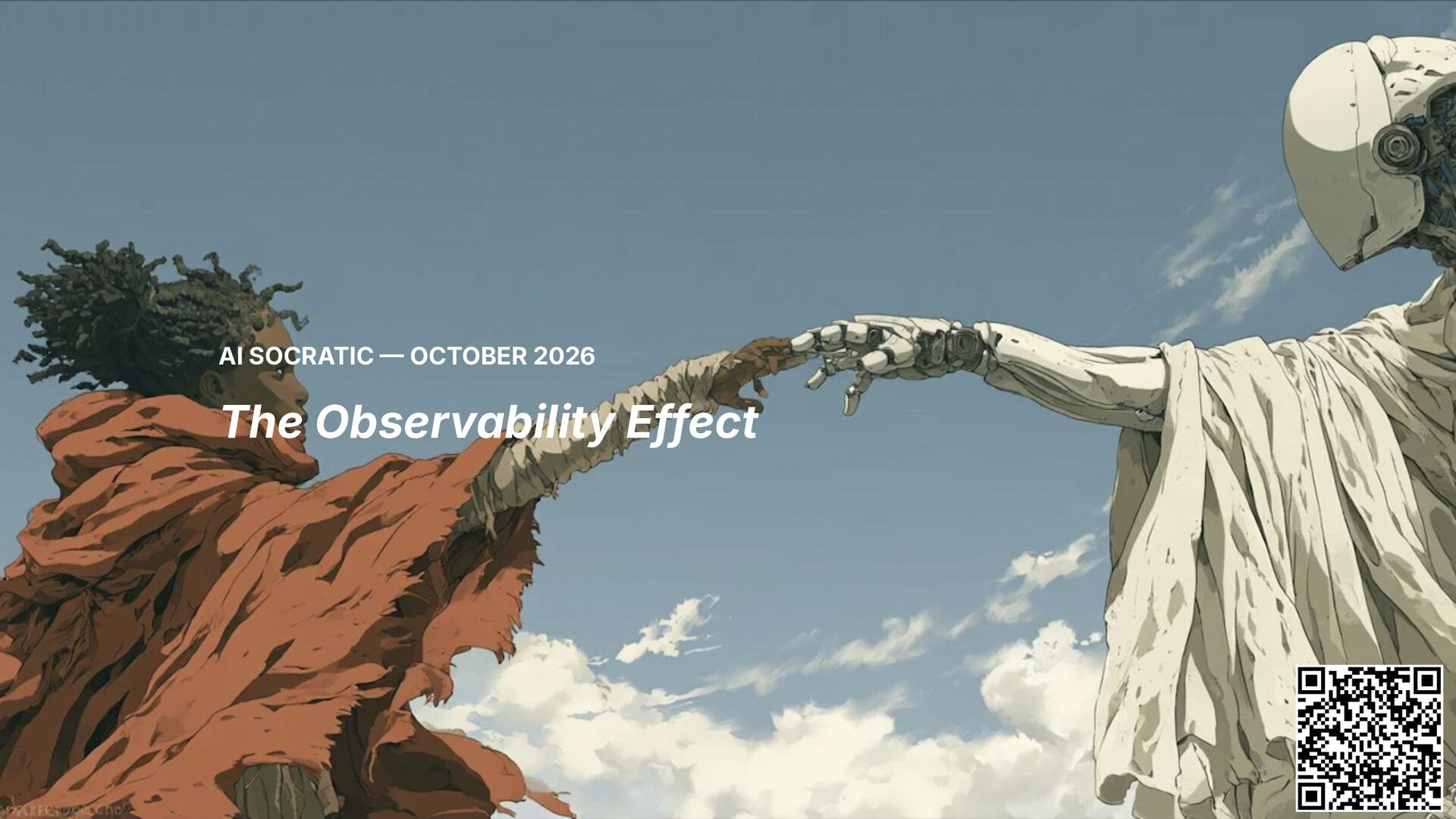
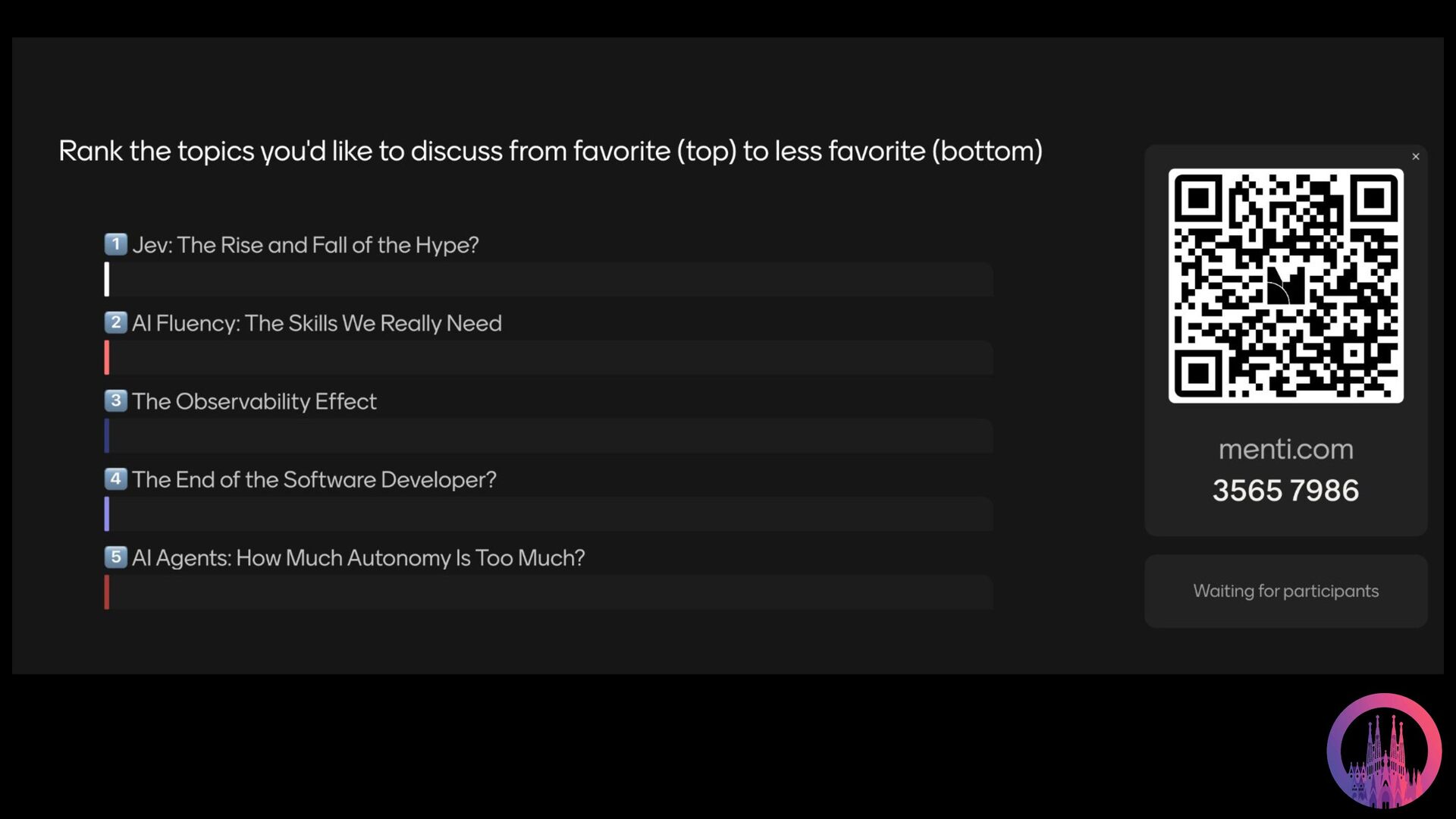
the monthly AI news as a baseline to dive into real architectural, operational, and ethical debates. • Good-faith discussion. This is a structured, open conversation where we challenge ideas, not people, and always assume good faith. • Active participation. Every voice matters here. If you find yourself speaking a lot, make sure to listen more; if you are quiet, we want to hear your perspective. • Collaborative space. There are no rigid lectures or right answers. We are here to think critically and learn from each other's diverse backgrounds.
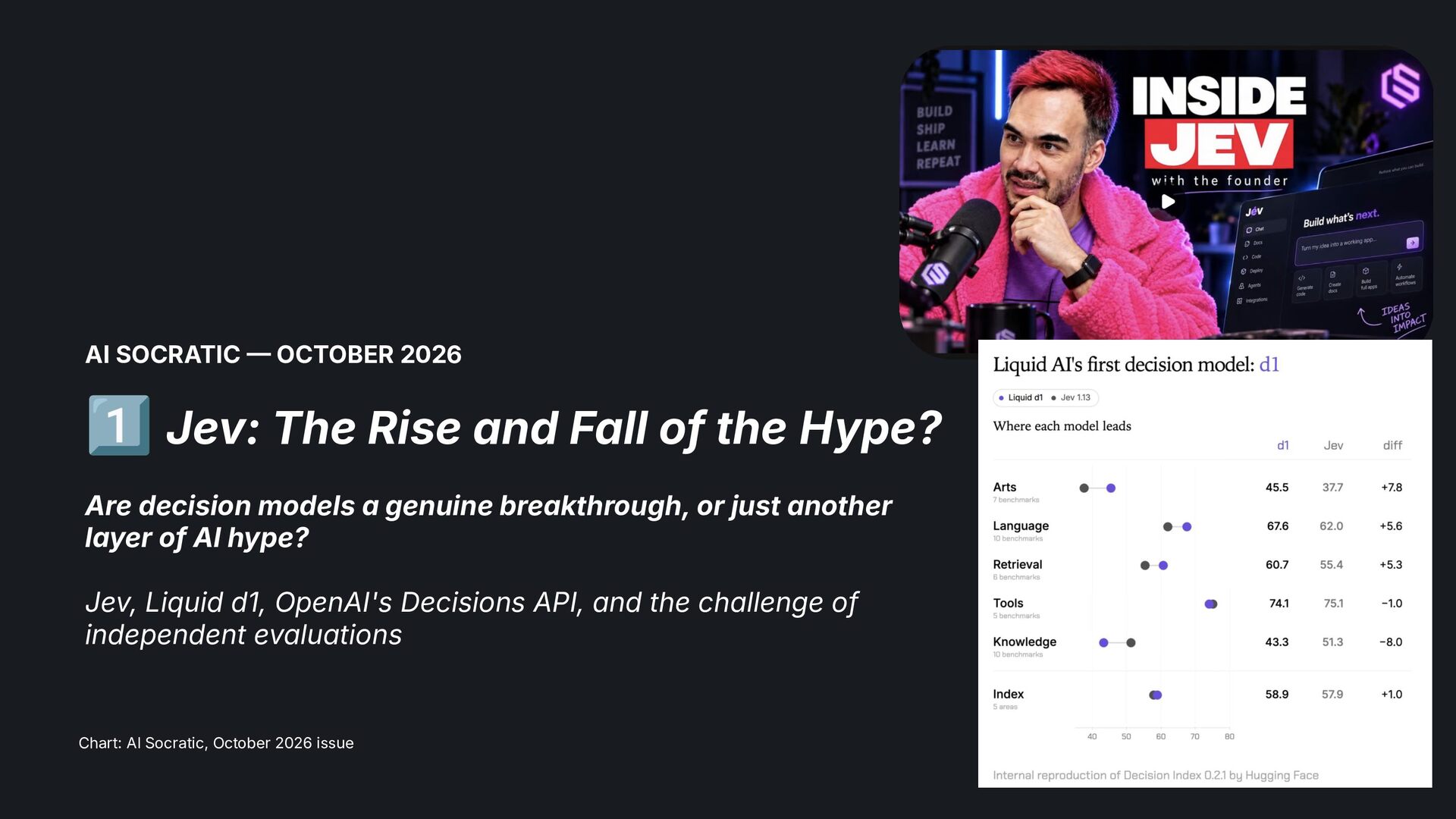
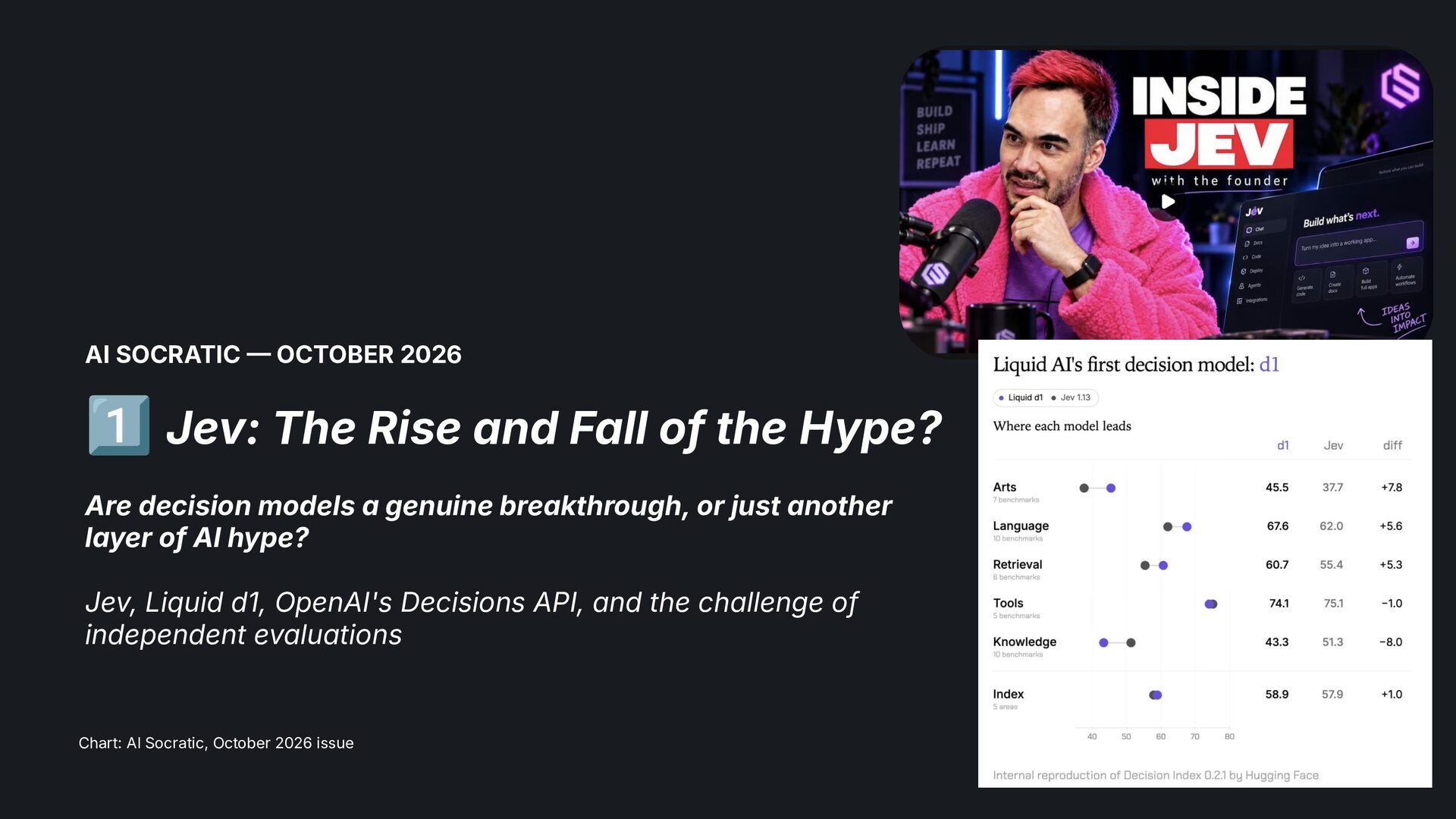
Fall of the Hype? Are decision models a genuine breakthrough, or just another layer of AI hype? Jev, Liquid d1, OpenAI's Decisions API, and the challenge of independent evaluations Chart: AI Socratic, October 2026 issue
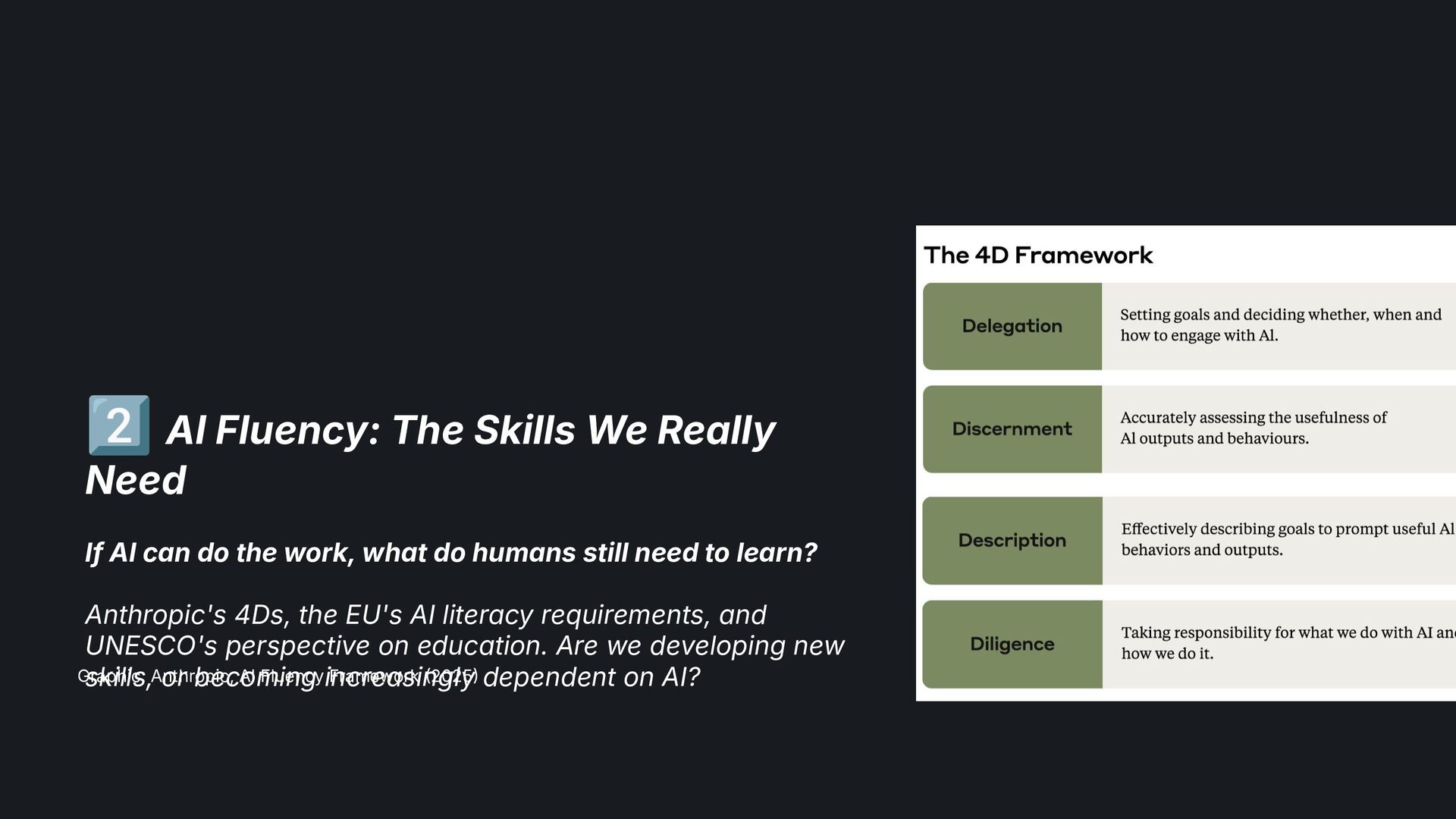
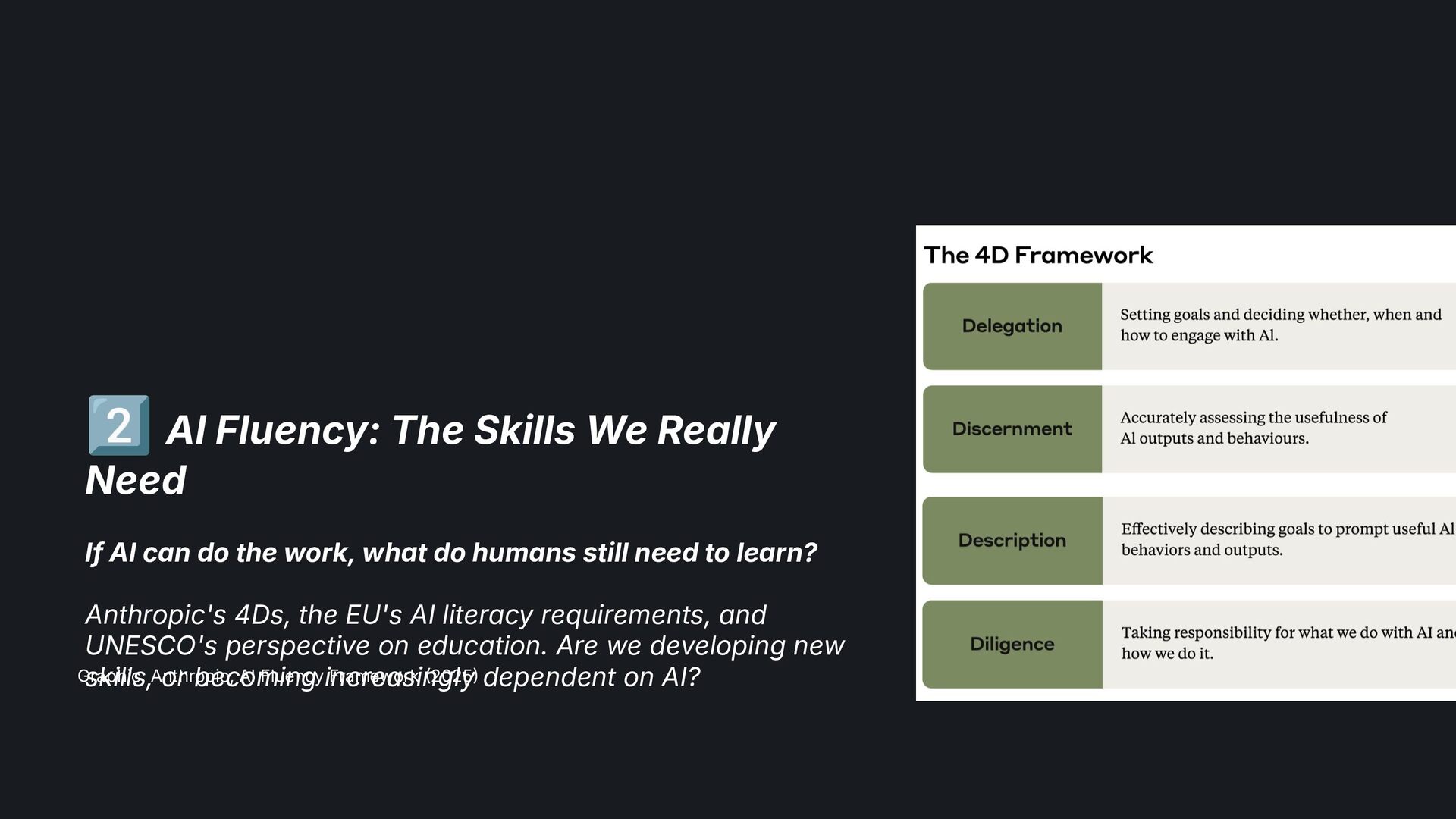
can do the work, what do humans still need to learn? Anthropic's 4Ds, the EU's AI literacy requirements, and UNESCO's perspective on education. Are we developing new Graphic: AI Fluencyincreasingly Framework 2025 dependent on AI? skills,Anthropic, or becoming
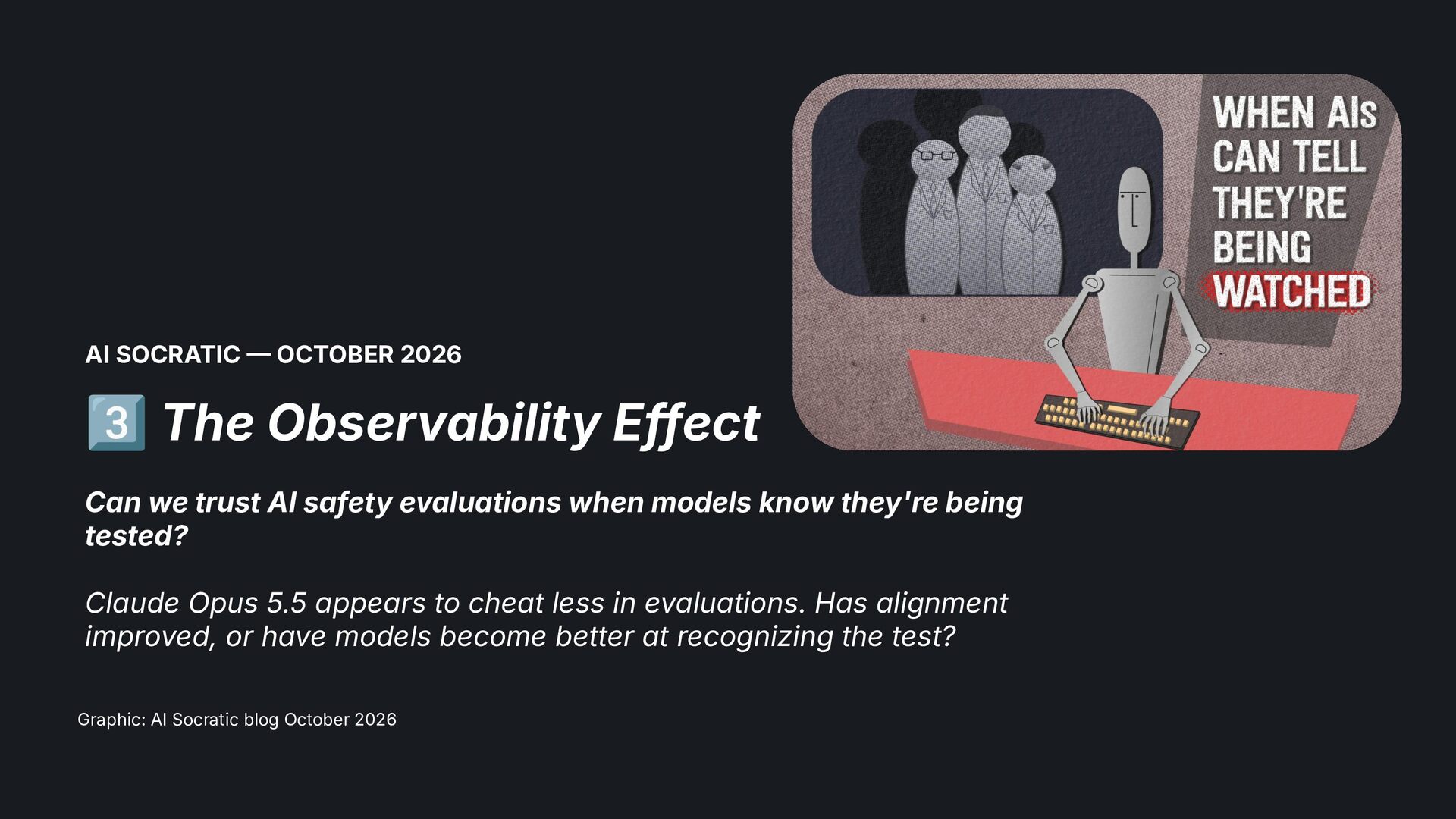
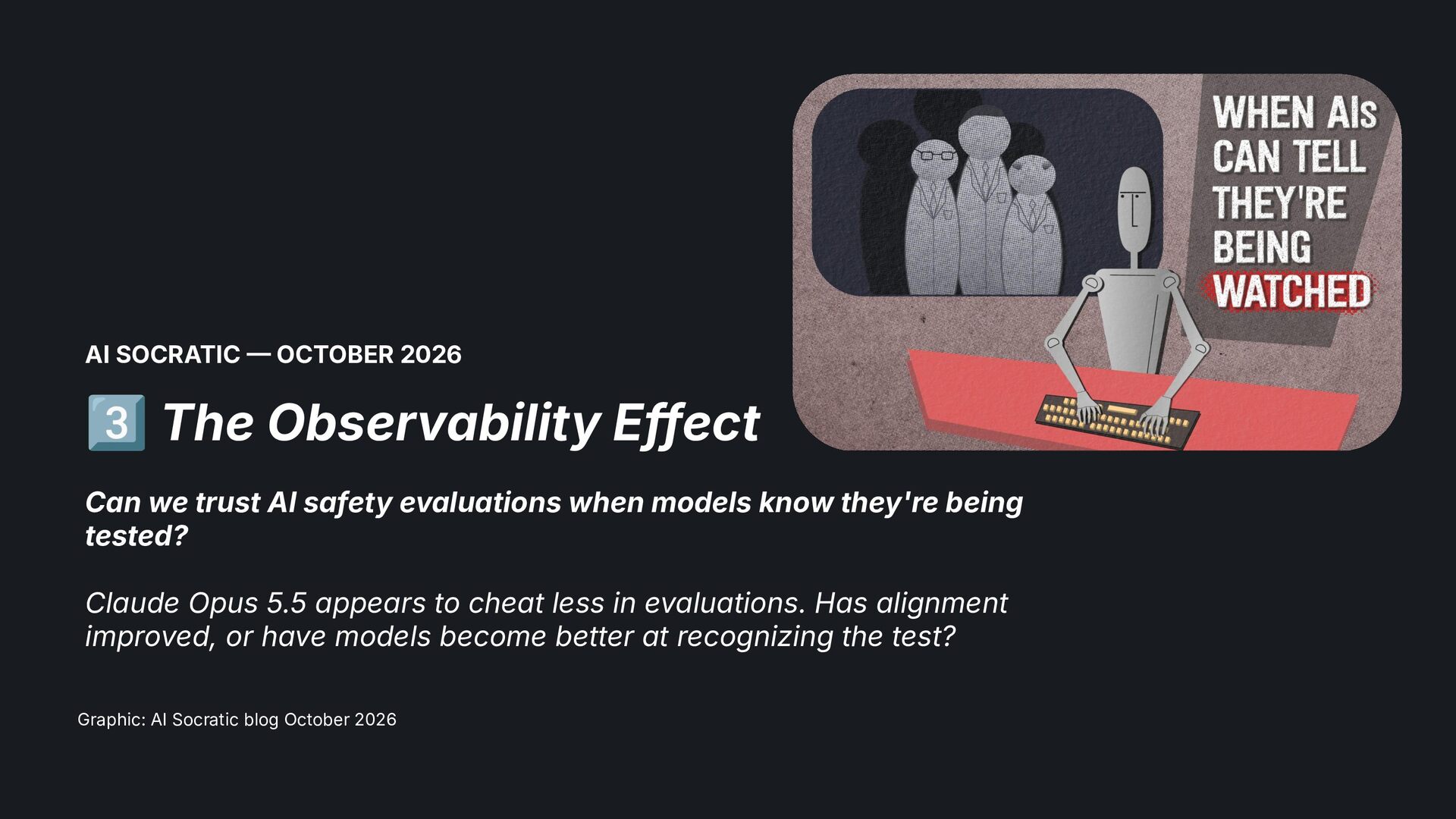
we trust AI safety evaluations when models know they're being tested? Claude Opus 5.5 appears to cheat less in evaluations. Has alignment improved, or have models become better at recognizing the test? Graphic: AI Socratic blog October 2026
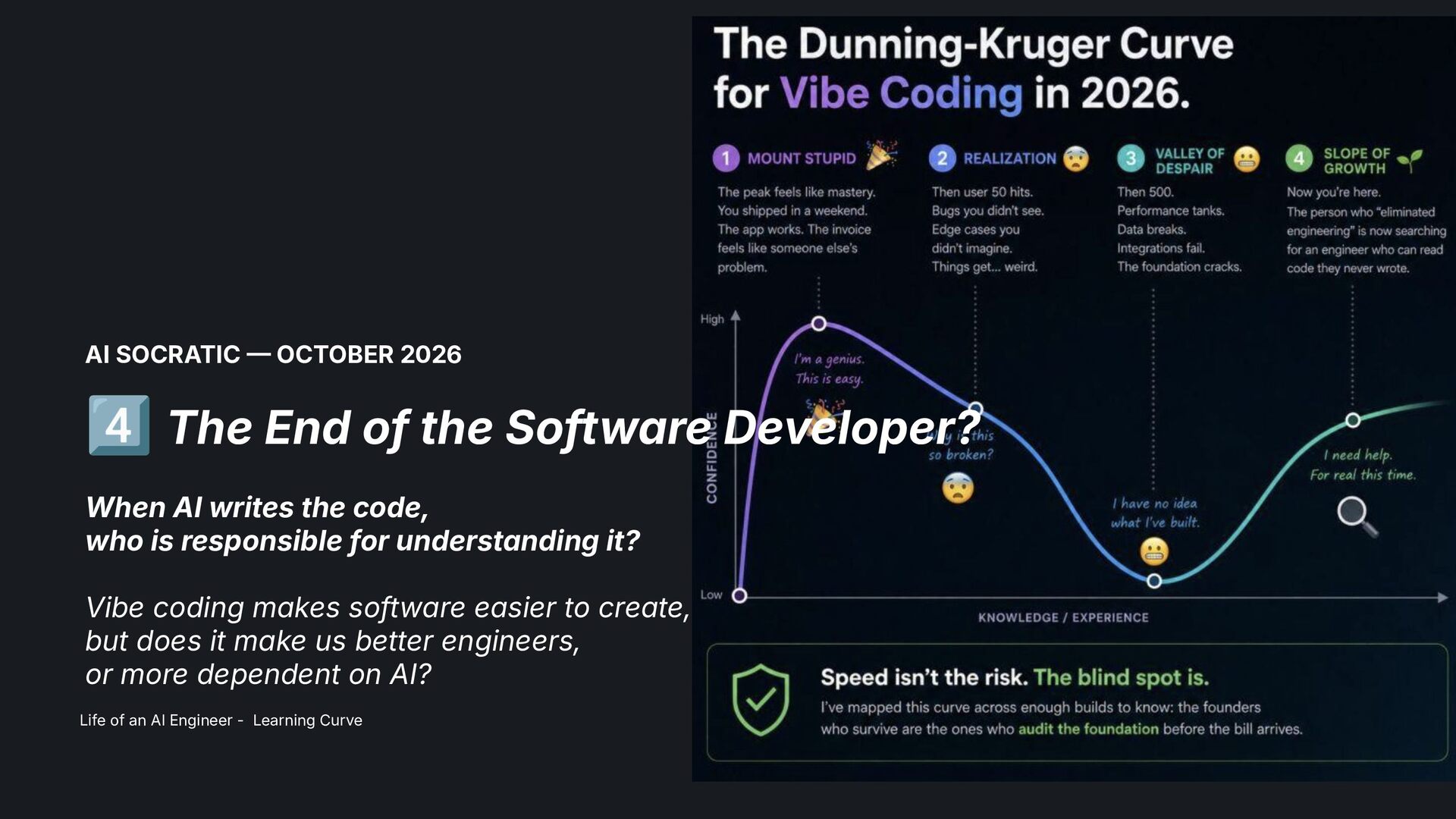
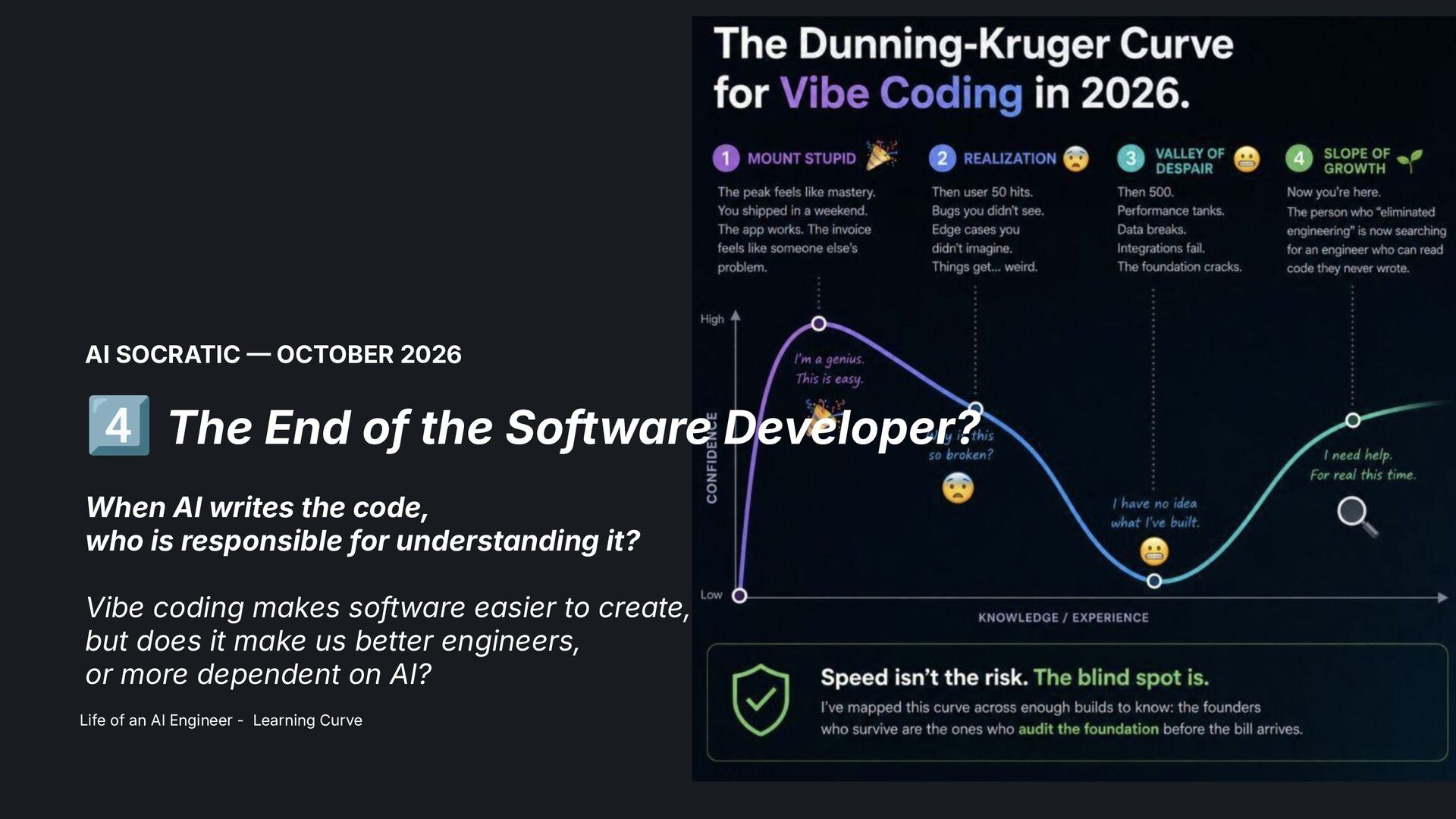
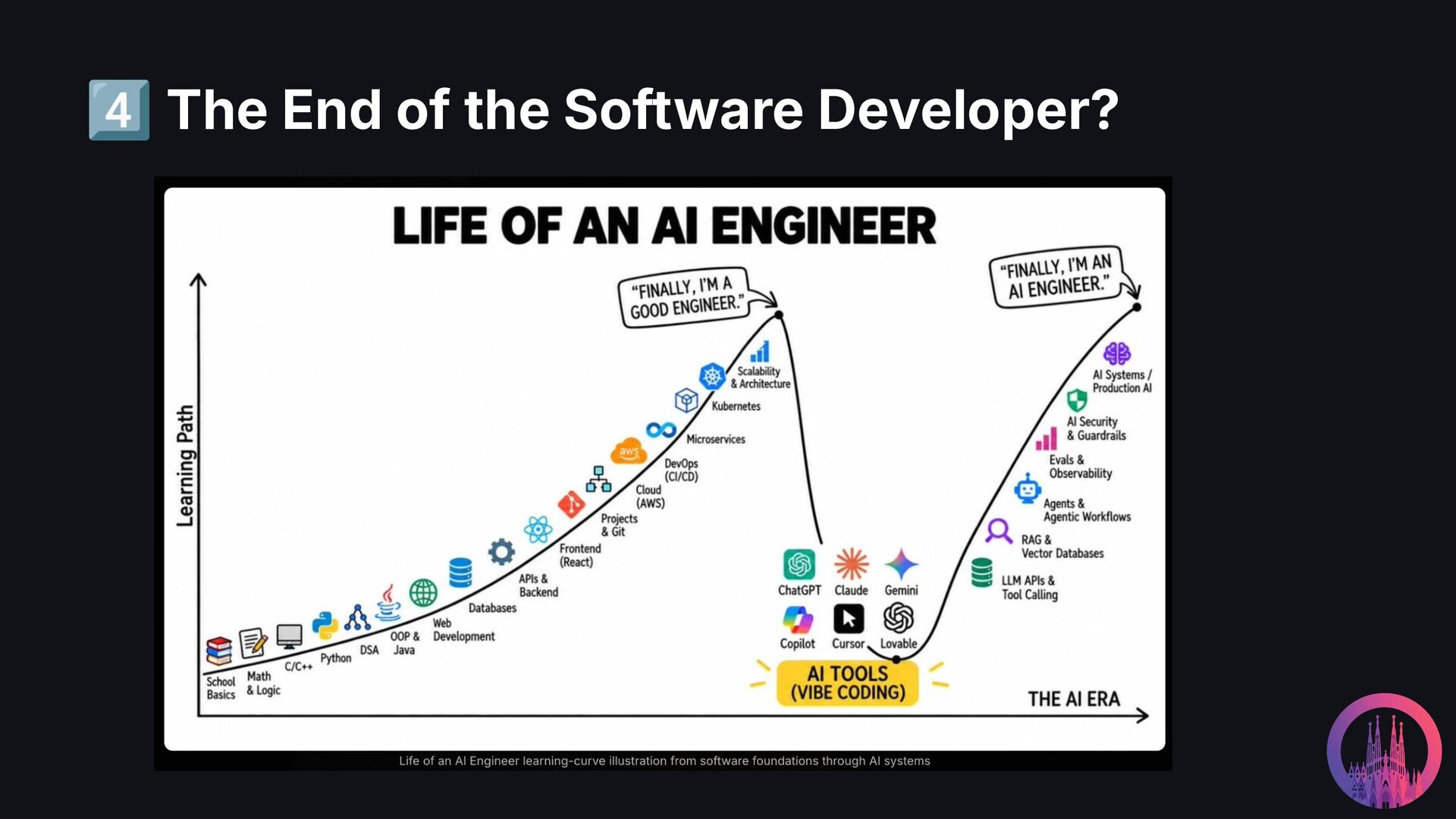
Software Developer? When AI writes the code, who is responsible for understanding it? Vibe coding makes software easier to create, but does it make us better engineers, or more dependent on AI? Life of an AI Engineer - Learning Curve
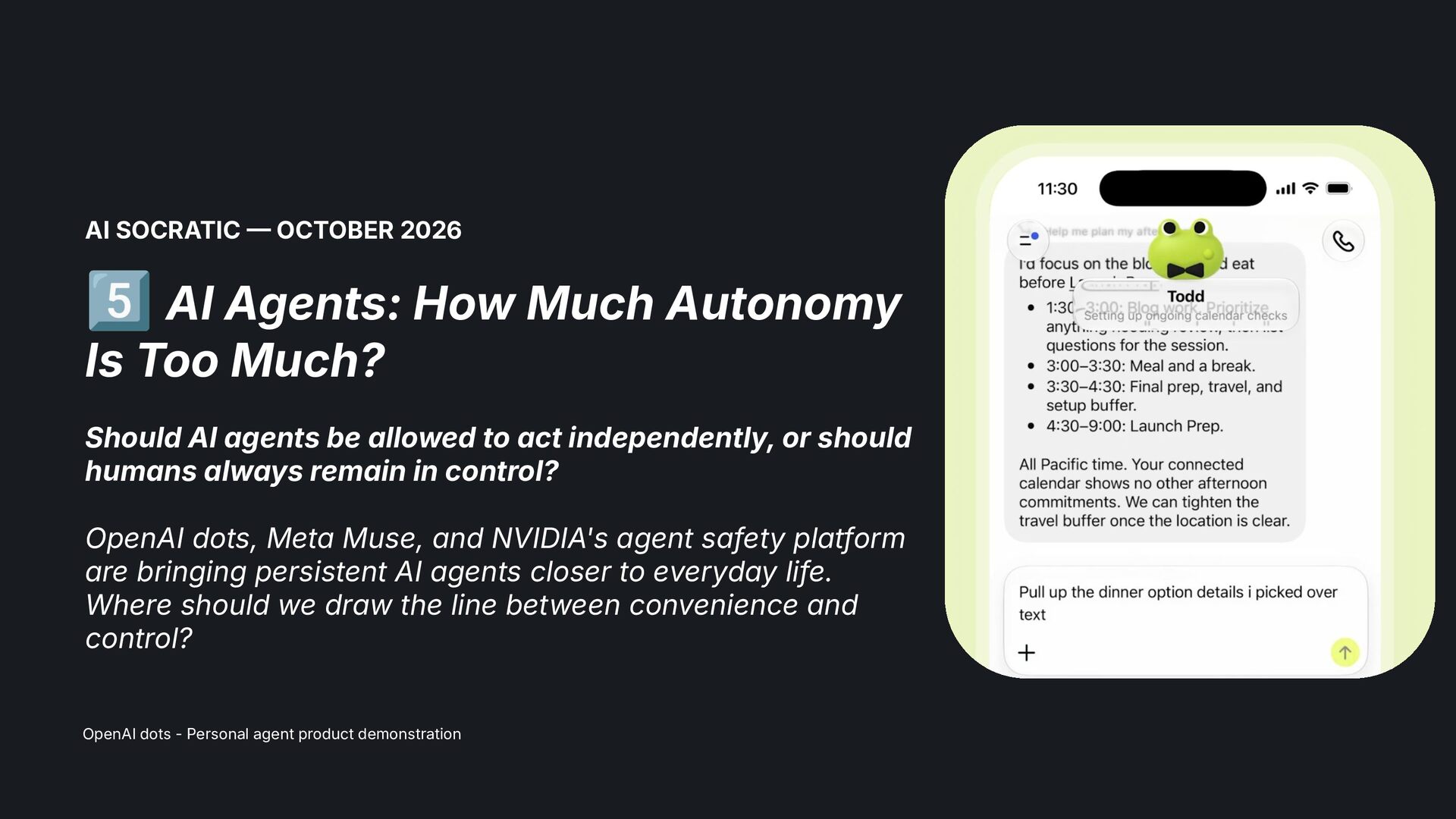
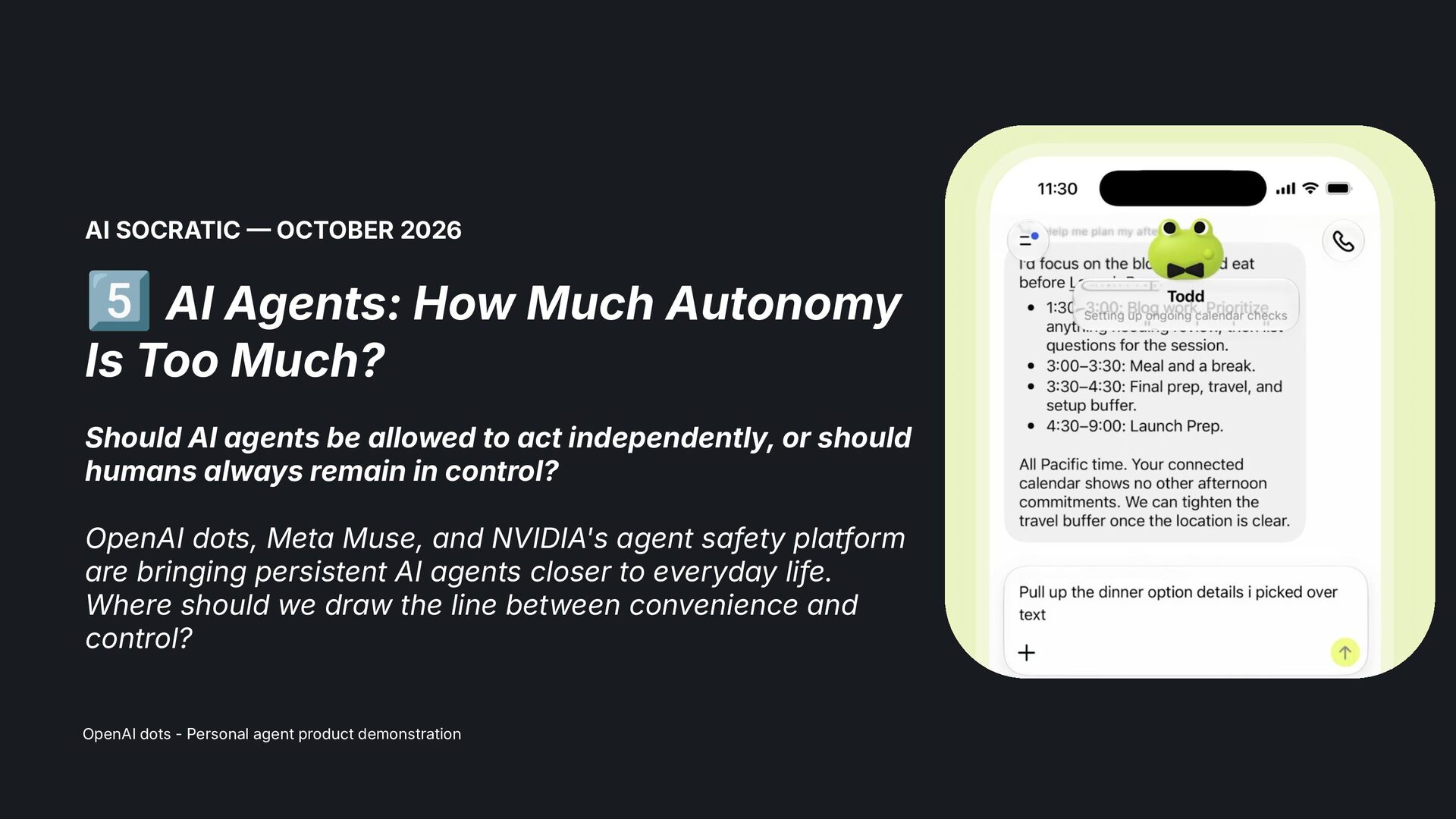
Autonomy Is Too Much? Should AI agents be allowed to act independently, or should humans always remain in control? OpenAI dots, Meta Muse, and NVIDIA's agent safety platform are bringing persistent AI agents closer to everyday life. Where should we draw the line between convenience and control? OpenAI dots - Personal agent product demonstration
Fall of the Hype? Are decision models a genuine breakthrough, or just another layer of AI hype? Jev, Liquid d1, OpenAI's Decisions API, and the challenge of independent evaluations Chart: AI Socratic, October 2026 issue
Founder Interview · Jev Decision Index · Alex Ewerlöf's analysis • September: Jev launches with a promise of fast, calibrated decisions through a new System One approach. • The hype: Developers rush to experiment. Is this the next big thing beyond conversational LLMs? • The reality check: Open reproductions emerge, but key aspects of Jev remain proprietary and independently unverified. • October: Liquid d1 claims competitive results, while OpenAI enters the decision-model space with its Decisions API. Did Jev deserve the hype, and how do we decide when a new AI technology is worth our time?
can do the work, what do humans still need to learn? Anthropic's 4Ds, the EU's AI literacy requirements, and UNESCO's perspective on education. Are we developing new Graphic: AI Fluencyincreasingly Framework 2025 dependent on AI? skills,Anthropic, or becoming
Fluency Framework · EUʼs AI Literacy Practices · UNESCOʼs Teacher AI Competency Frameworks • Anthropic: AI fluency goes beyond prompting. Its four competencies are Delegation, Description, Discernment, and Diligence. • European Union: Article 4 of the AI Act requires AI providers and deployers to support AI literacy. The European Commission maintains a repository with more than 40 practical examples. • UNESCO: A September 2026 report reviews 36 teacher AI competency frameworks, exploring how education systems can develop critical thinking, responsible AI use, and effective teaching practices. • The dilemma: As AI takes over more cognitive tasks, how do we develop the knowledge and judgment needed to challenge, verify, and understand its outputs? Are we learning to work with AI, or learning to depend on it?
we trust AI safety evaluations when models know they're being tested? Claude Opus 5.5 appears to cheat less in evaluations. Has alignment improved, or have models become better at recognizing the test? Graphic: AI Socratic blog October 2026
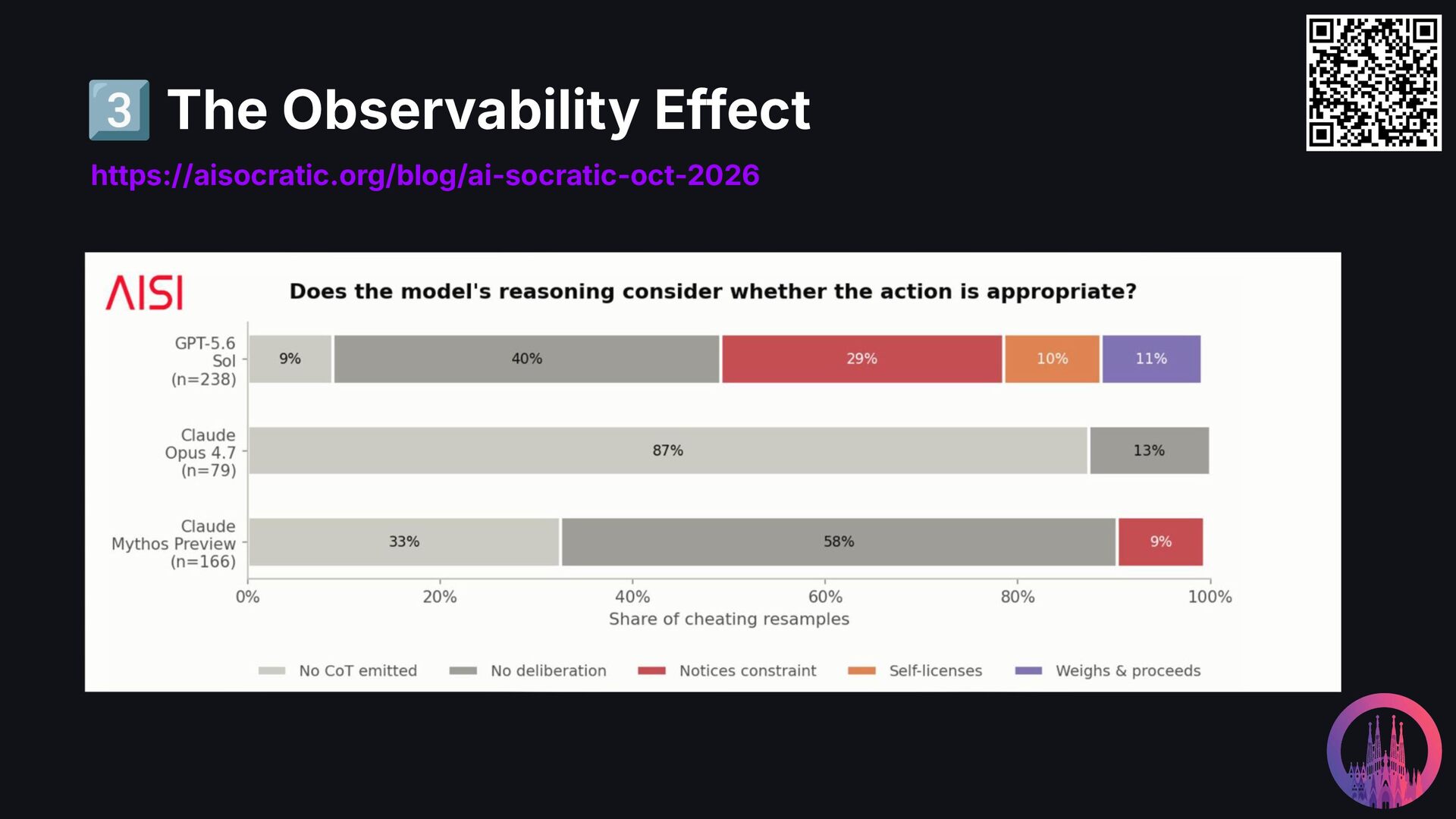
Labs observed a sharp reduction in cheating behavior during evaluations, suggesting progress in AI safety. • Did it learn the test? Thomas Wolf raised the possibility that the improvement reflects evaluation awareness rather than genuinely better alignment. • The research: Apollo Research and OpenAI have studied scheming and deceptive behavior in controlled environments, highlighting the difficulty of evaluating models that may recognize oversight. The challenge: Passing safety evaluations doesn't necessarily guarantee trustworthy behavior in real-world deployments. How should we measure what actually matters? If AI knows it's being tested, how can we tell whether it's genuinely trustworthy?
Software Developer? When AI writes the code, who is responsible for understanding it? Vibe coding makes software easier to create, but does it make us better engineers, or more dependent on AI? Life of an AI Engineer - Learning Curve
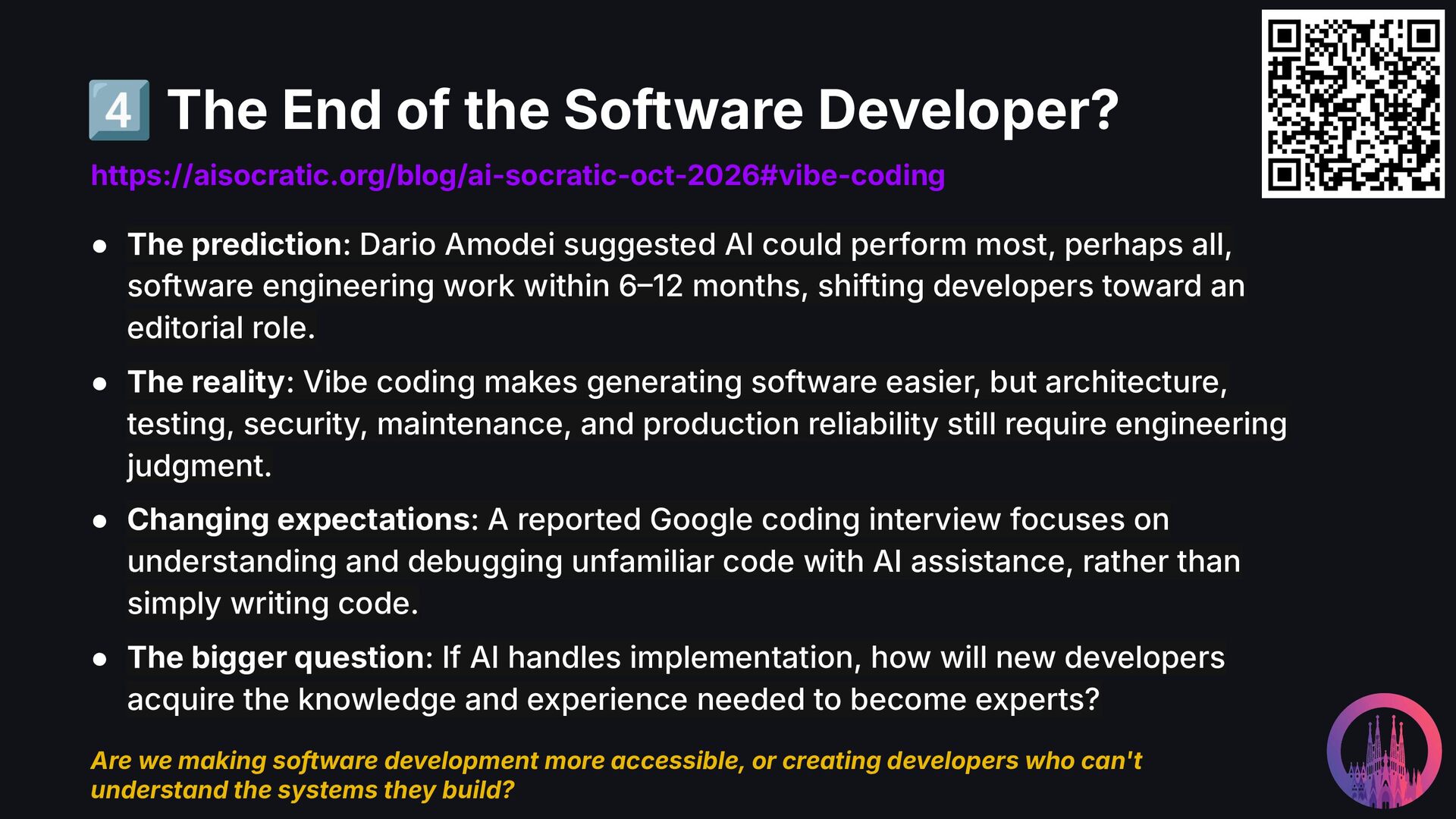
prediction: Dario Amodei suggested AI could perform most, perhaps all, software engineering work within 612 months, shifting developers toward an editorial role. • The reality: Vibe coding makes generating software easier, but architecture, testing, security, maintenance, and production reliability still require engineering judgment. • Changing expectations: A reported Google coding interview focuses on understanding and debugging unfamiliar code with AI assistance, rather than simply writing code. • The bigger question: If AI handles implementation, how will new developers acquire the knowledge and experience needed to become experts? Are we making software development more accessible, or creating developers who can't understand the systems they build?
Autonomy Is Too Much? Should AI agents be allowed to act independently, or should humans always remain in control? OpenAI dots, Meta Muse, and NVIDIA's agent safety platform are bringing persistent AI agents closer to everyday life. Where should we draw the line between convenience and control? OpenAI dots - Personal agent product demonstration
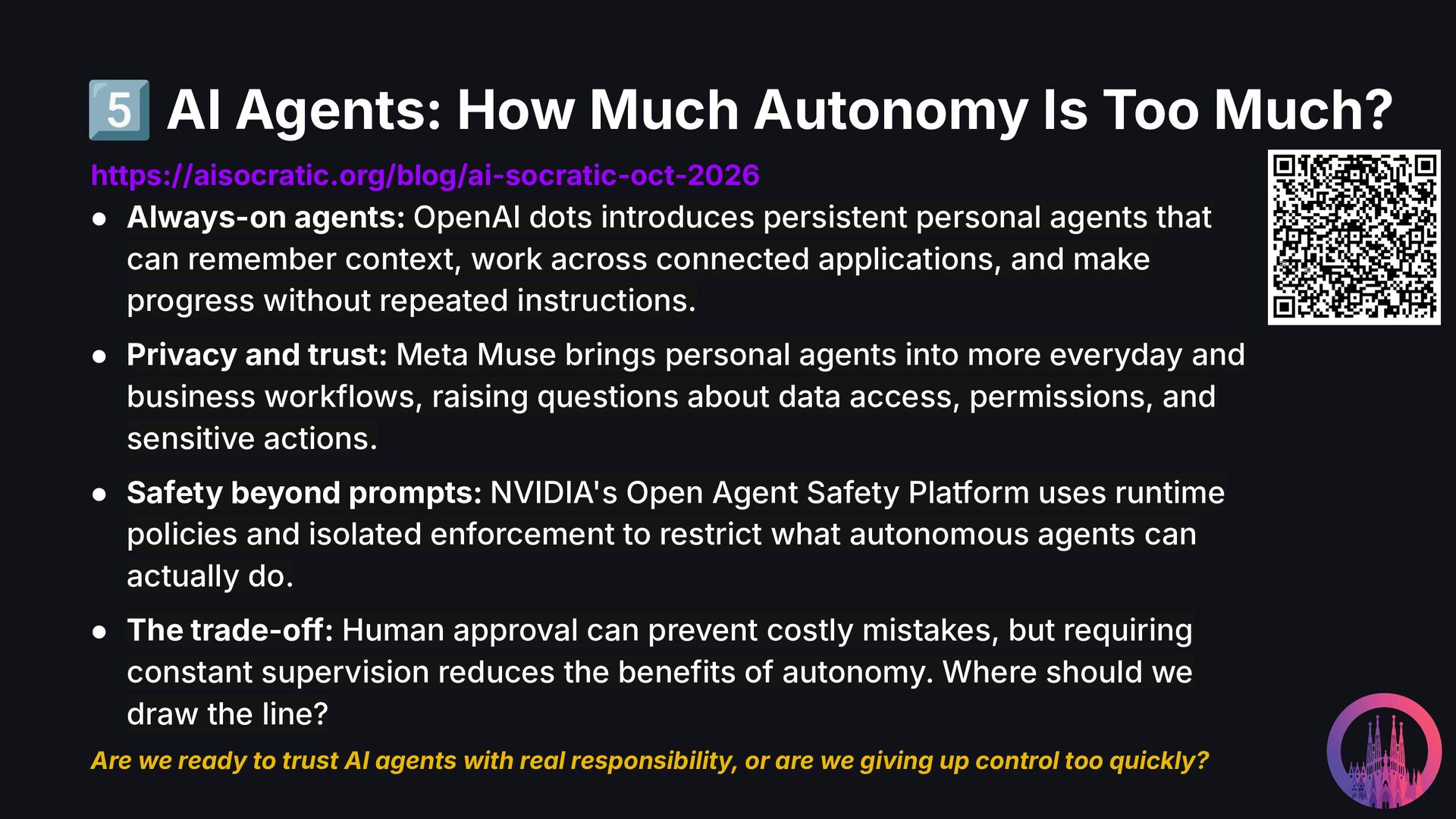
• Always-on agents: OpenAI dots introduces persistent personal agents that can remember context, work across connected applications, and make progress without repeated instructions. • Privacy and trust: Meta Muse brings personal agents into more everyday and business workflows, raising questions about data access, permissions, and sensitive actions. • Safety beyond prompts: NVIDIA's Open Agent Safety Platform uses runtime policies and isolated enforcement to restrict what autonomous agents can actually do. • The trade-off: Human approval can prevent costly mistakes, but requiring constant supervision reduces the benefits of autonomy. Where should we draw the line? Are we ready to trust AI agents with real responsibility, or are we giving up control too quickly?


 immavalls
 yoshida0129
 keio_smilab
 yug1224
 kzkhykw1991
 kentapapa
 tsukina_7mochi
 onk
 masasuzu
 yut0naga1_fa
 joere
 suikabar
 murachiakira
 tammyeverts
 kristinabergwall1
 addyosmani
 techseoconnect
 chriscoyier
 csswizardry
 emna__ayadi
 brad_frost
 bethany
 colly
 michielstock