Upgrade to Pro — share decks privately, control downloads, hide ads and more …

JuiceFS - IT Press Tour #68 June 2026

Sponsored · Your Podcast. Everywhere. Effortlessly. Share. Educate. Inspire. Entertain. You do you. We'll handle the rest.
Avatar for The IT Press Tour The IT Press Tour PRO
June 10, 2026
16

JuiceFS - IT Press Tour #68 June 2026

Avatar for The IT Press Tour

The IT Press Tour PRO

June 10, 2026

Transcript

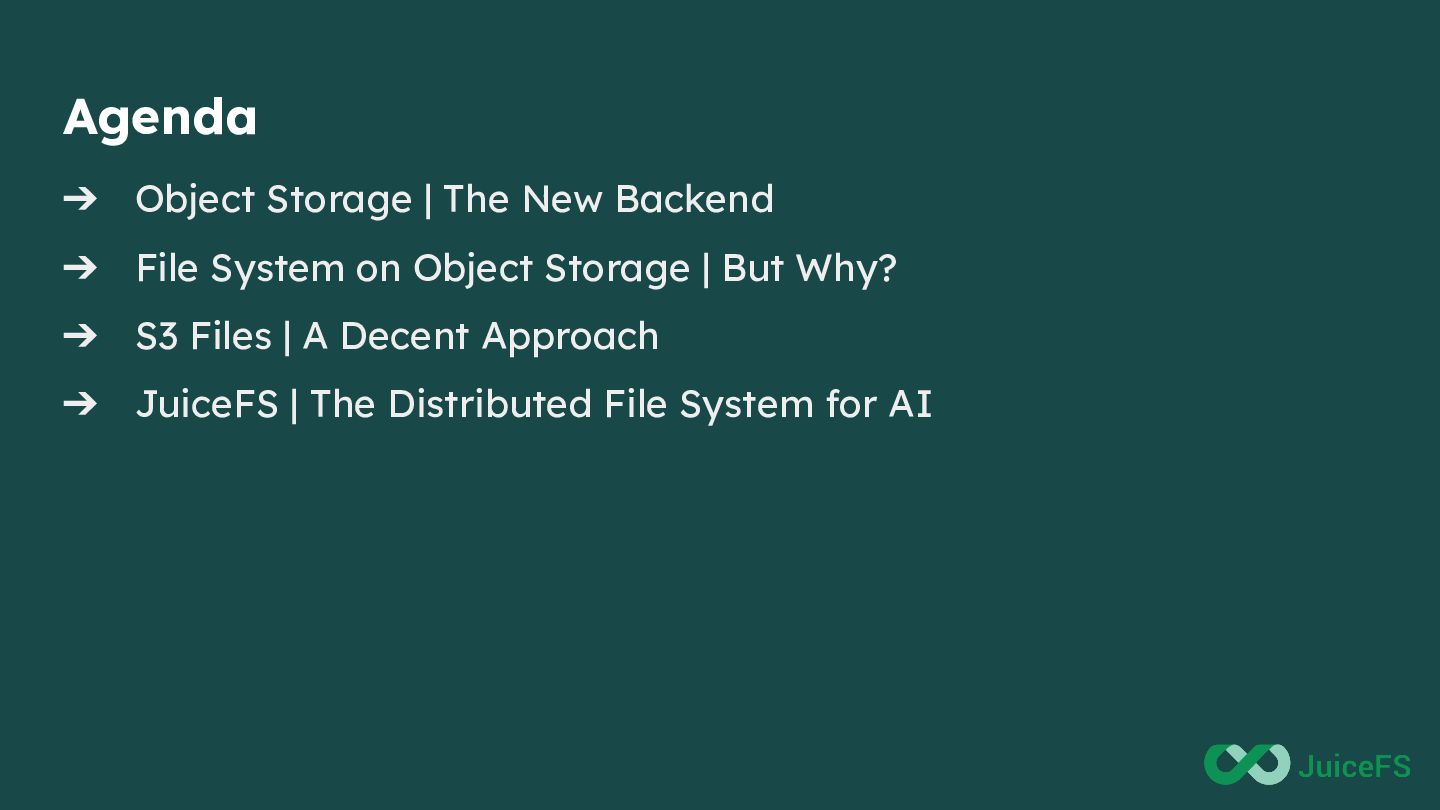
  1. Agenda ➔ Object Storage | The New Backend ➔ File

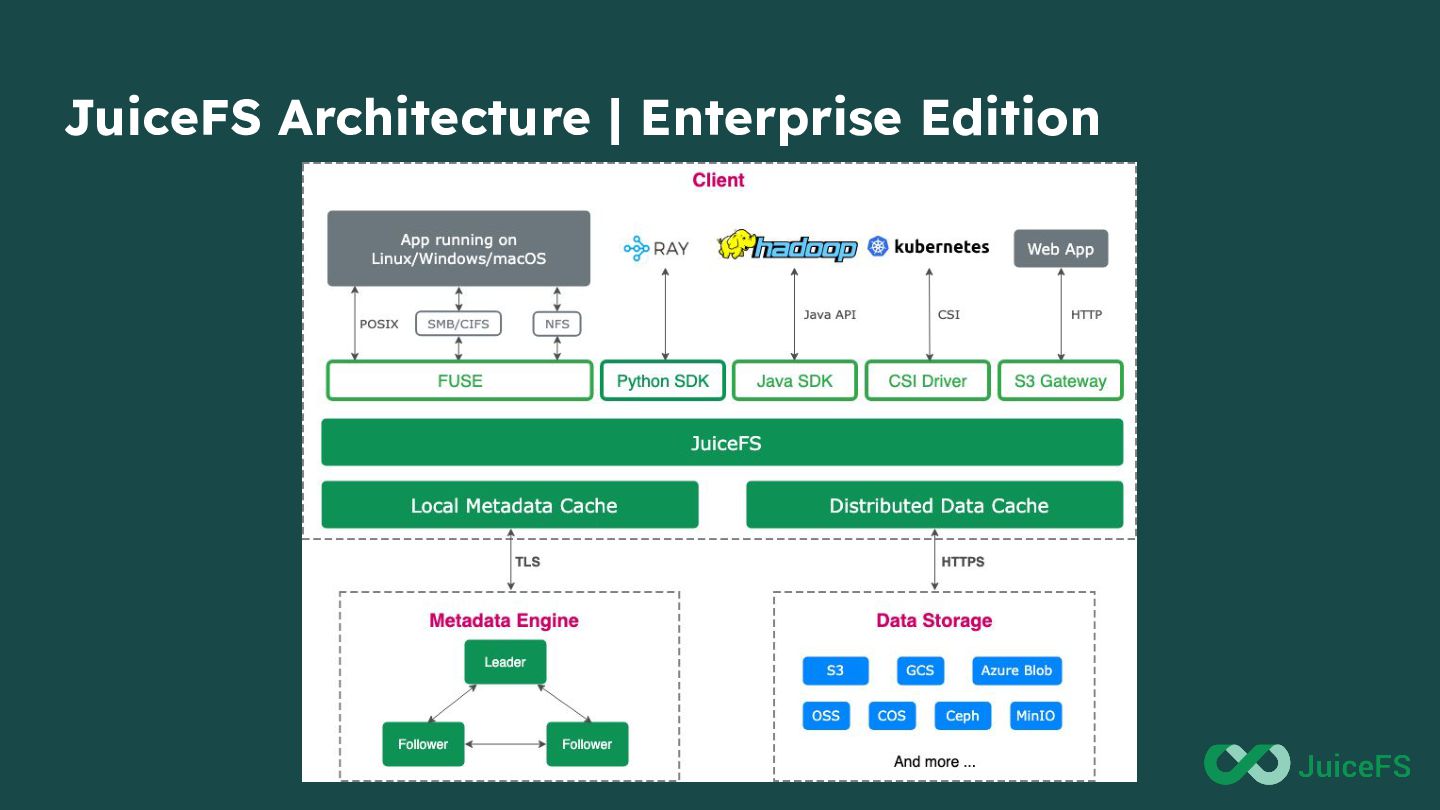
    System on Object Storage | But Why? ➔ S3 Files | A Decent Approach ➔ JuiceFS | The Distributed File System for AI
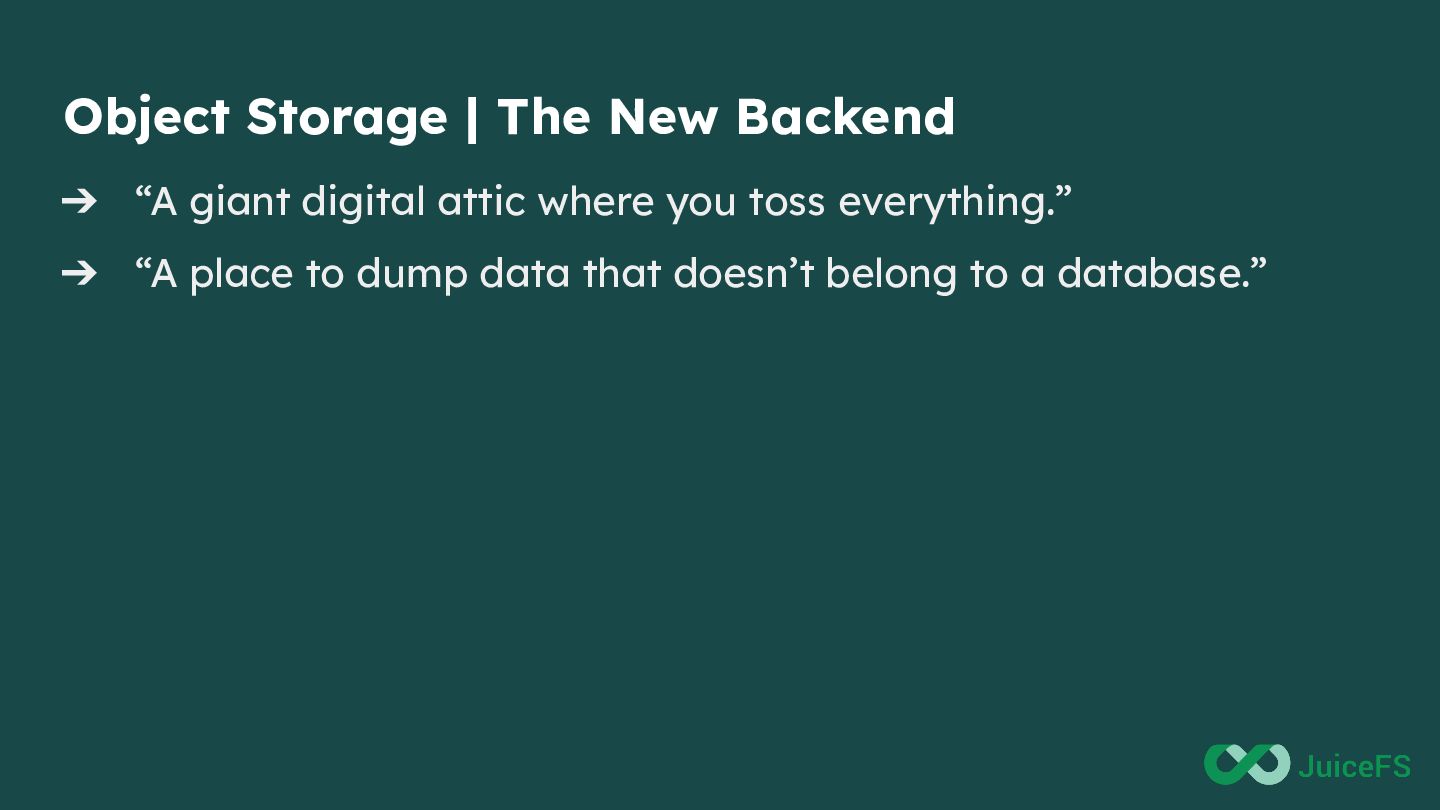
  2. Object Storage | The New Backend ➔ “A giant digital

    attic where you toss everything.” ➔ “A place to dump data that doesn’t belong to a database.”
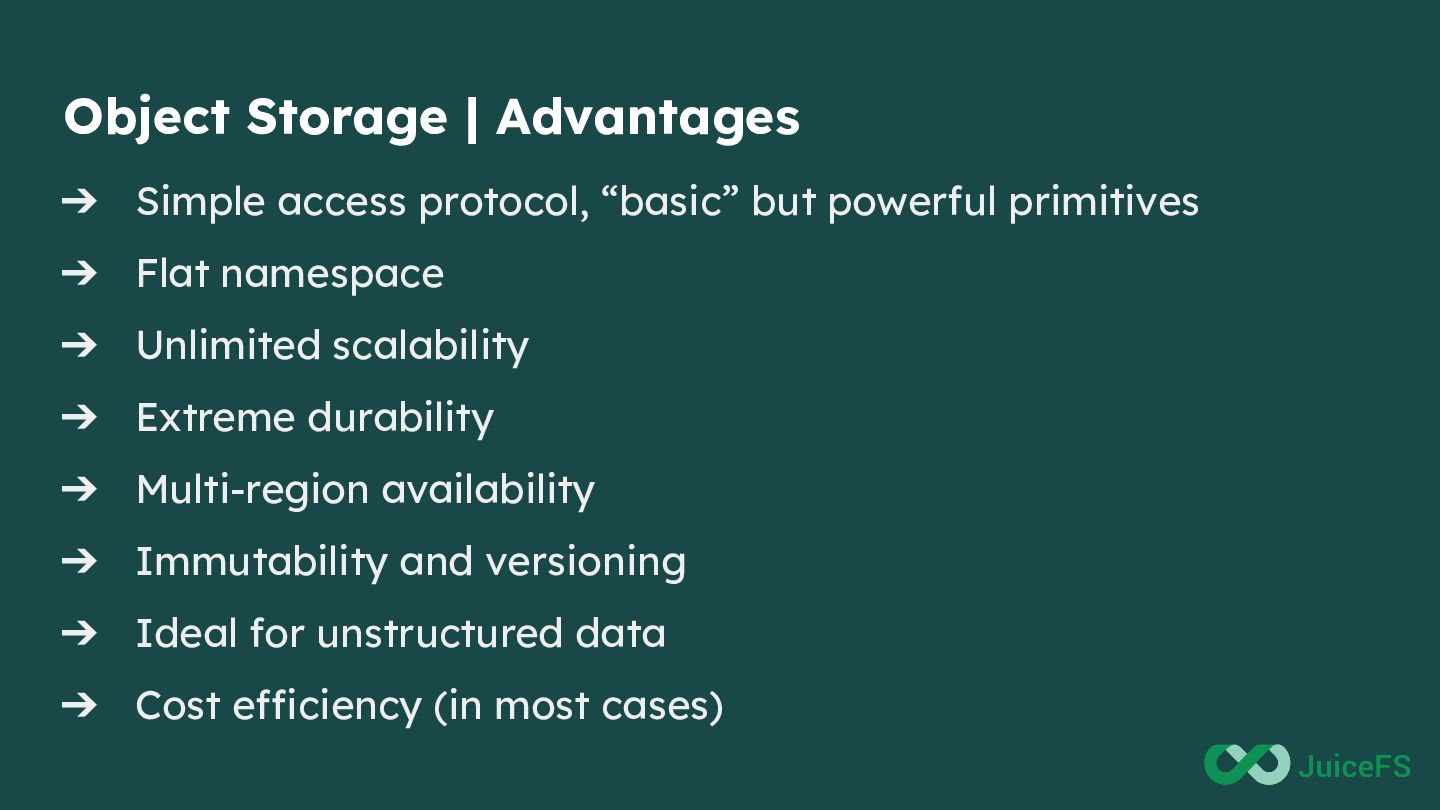
  3. Object Storage | Advantages ➔ Simple access protocol, “basic” but

    powerful primitives ➔ Flat namespace ➔ Unlimited scalability ➔ Extreme durability ➔ Multi-region availability ➔ Immutability and versioning ➔ Ideal for unstructured data ➔ Cost efficiency (in most cases)
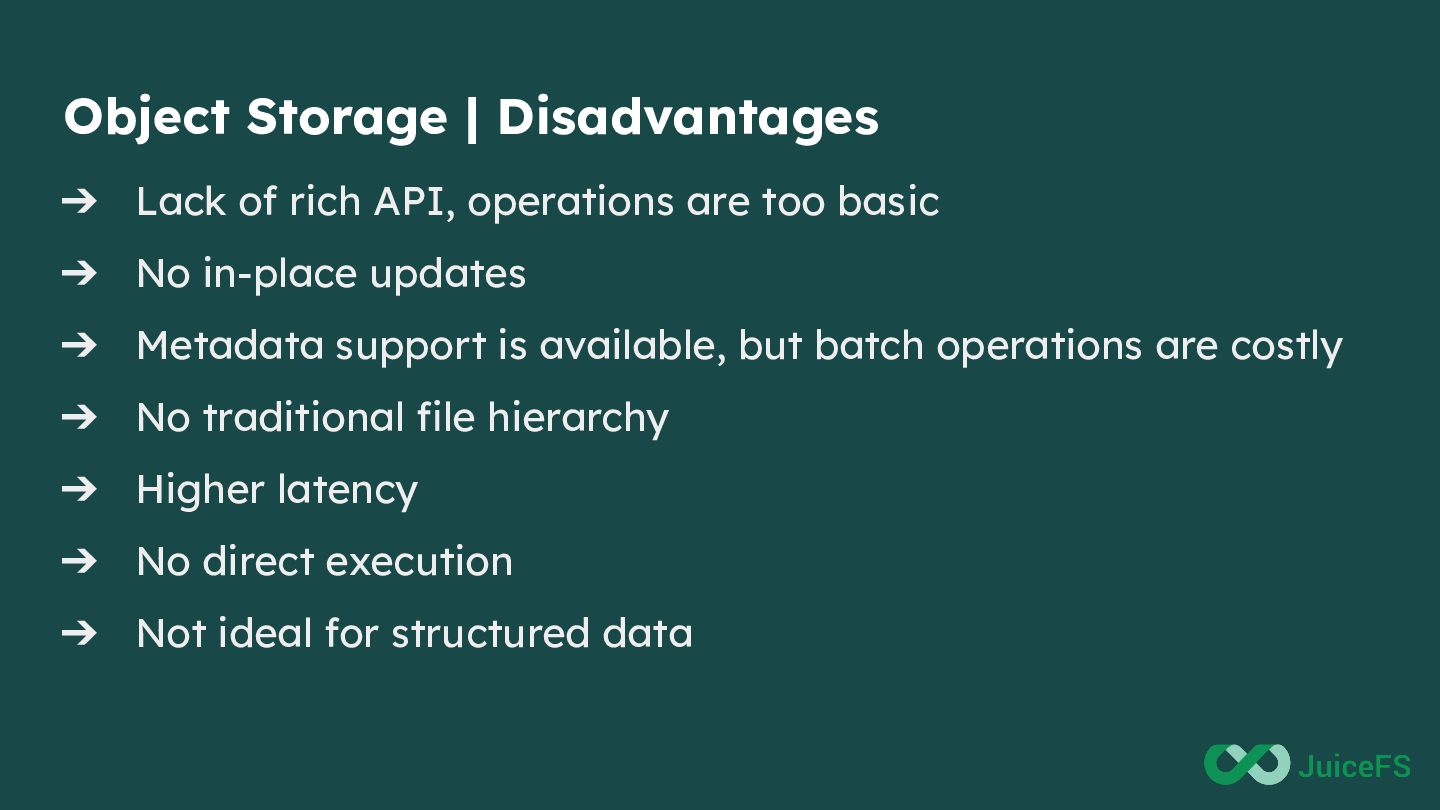
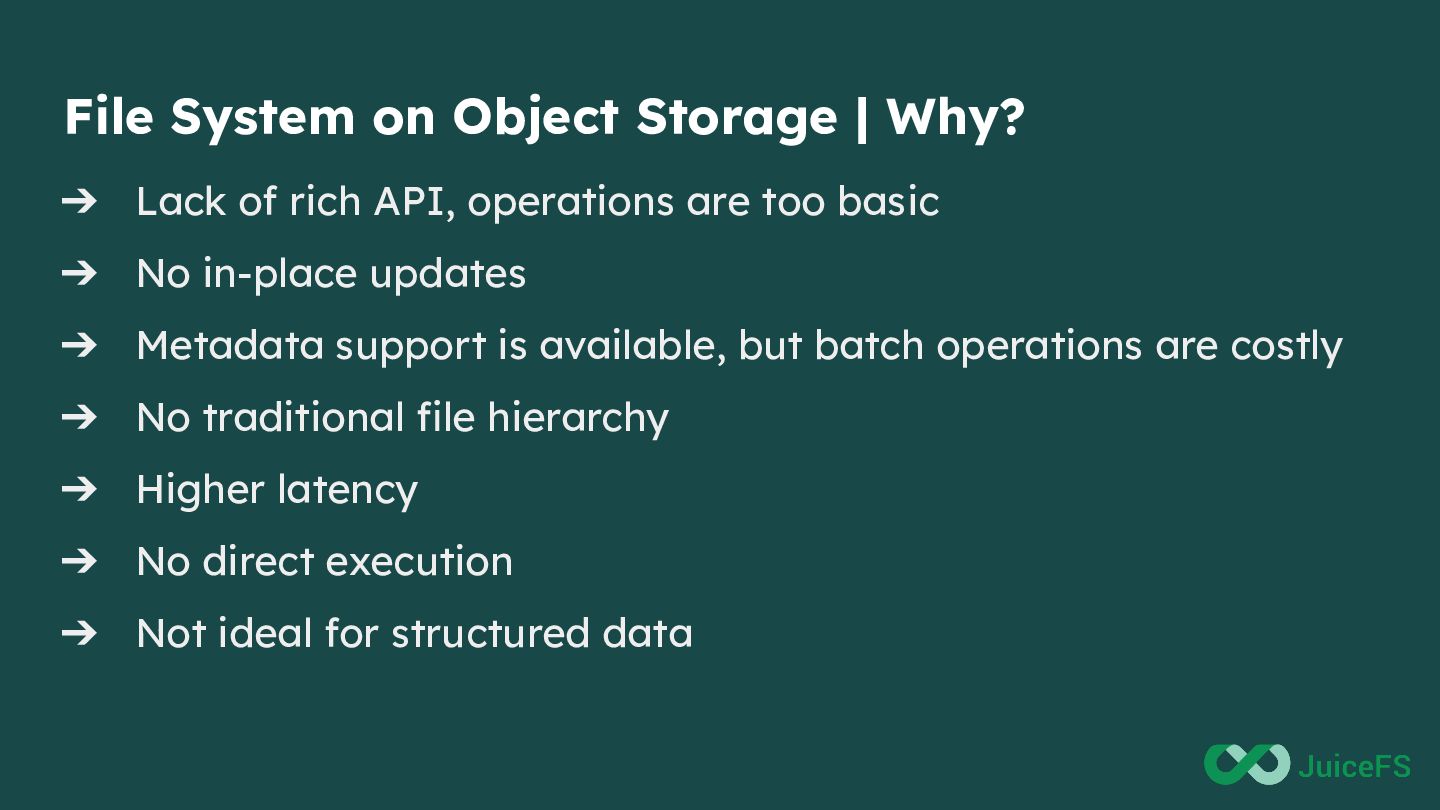
  4. Object Storage | Disadvantages ➔ Lack of rich API, operations

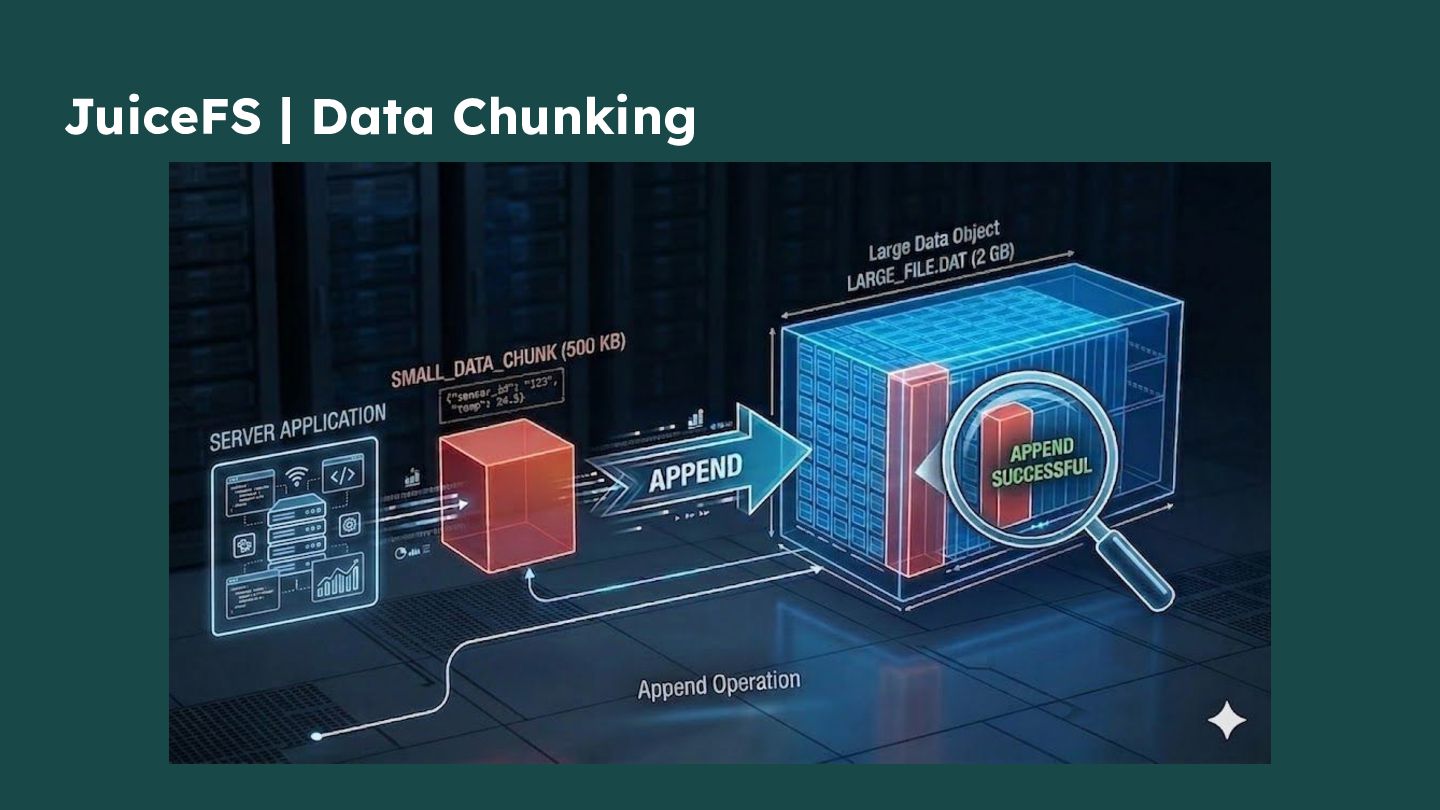
    are too basic ➔ No in-place updates ➔ Metadata support is available, but batch operations are costly ➔ No traditional file hierarchy ➔ Higher latency ➔ No direct execution ➔ Not ideal for structured data
  5. File System on Object Storage | Why? ➔ Lack of

    rich API, operations are too basic ➔ No in-place updates ➔ Metadata support is available, but batch operations are costly ➔ No traditional file hierarchy ➔ Higher latency ➔ No direct execution ➔ Not ideal for structured data
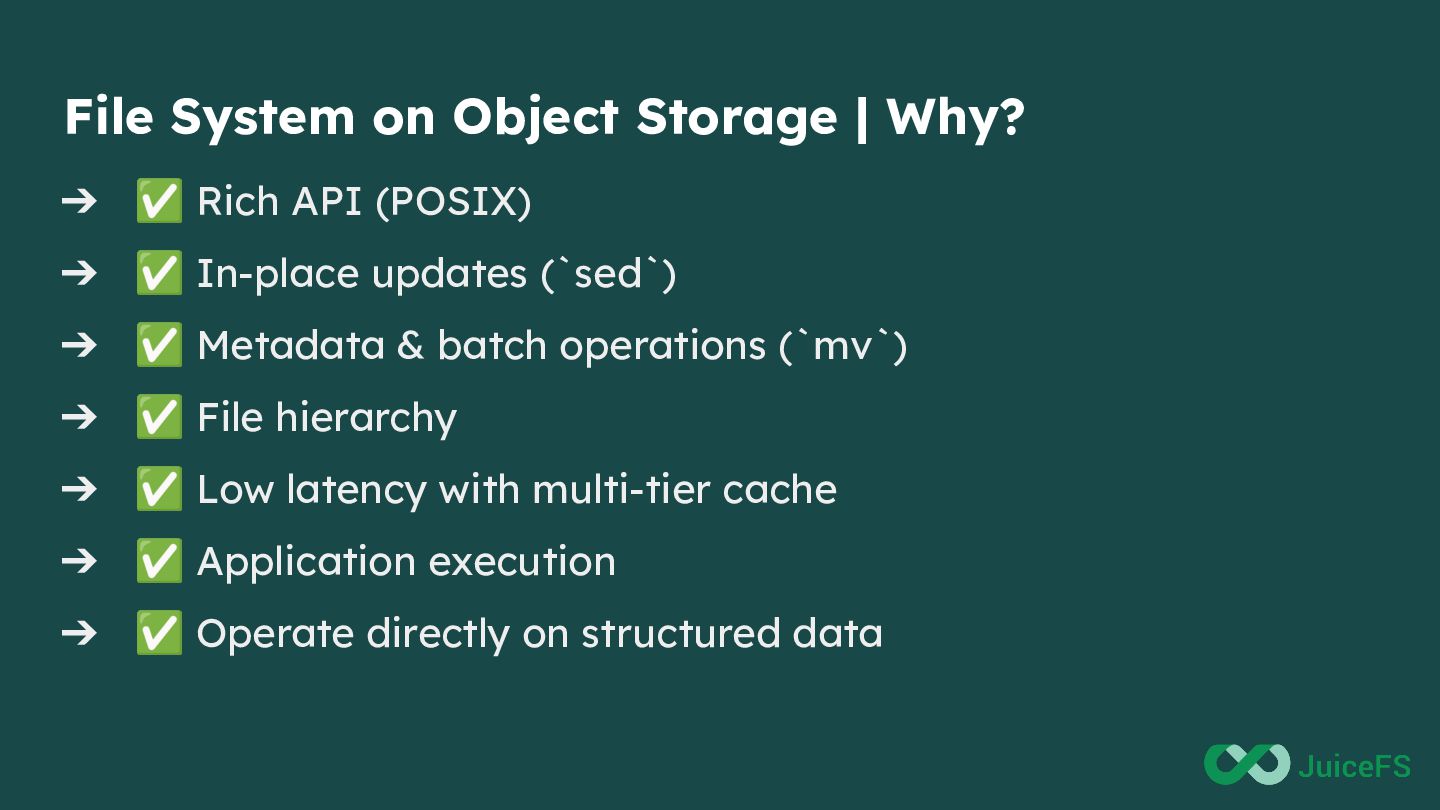
  6. File System on Object Storage | Why? ➔ ✅ Rich

    API (POSIX) ➔ ✅ In-place updates (`sed`) ➔ ✅ Metadata & batch operations (`mv`) ➔ ✅ File hierarchy ➔ ✅ Low latency with multi-tier cache ➔ ✅ Application execution ➔ ✅ Operate directly on structured data
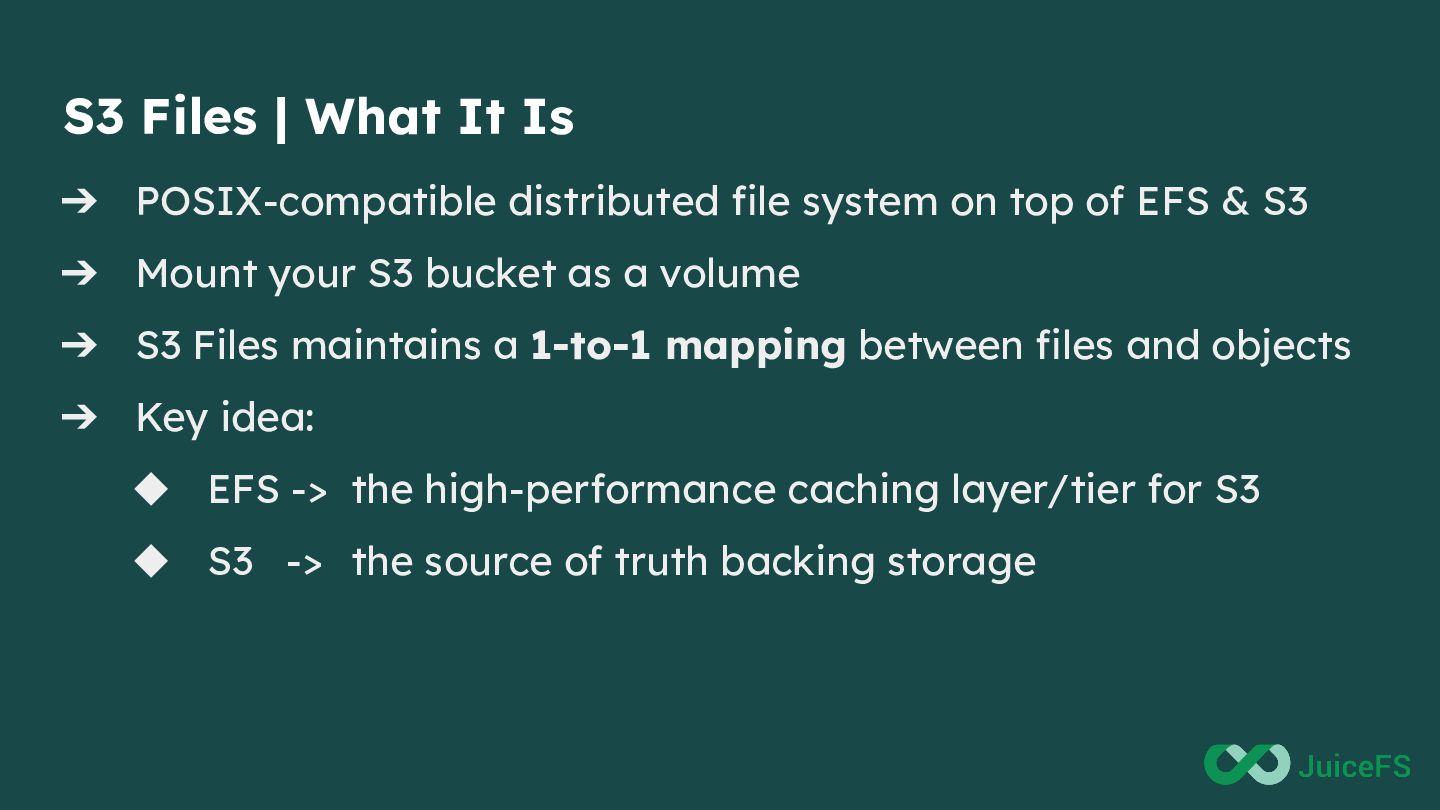
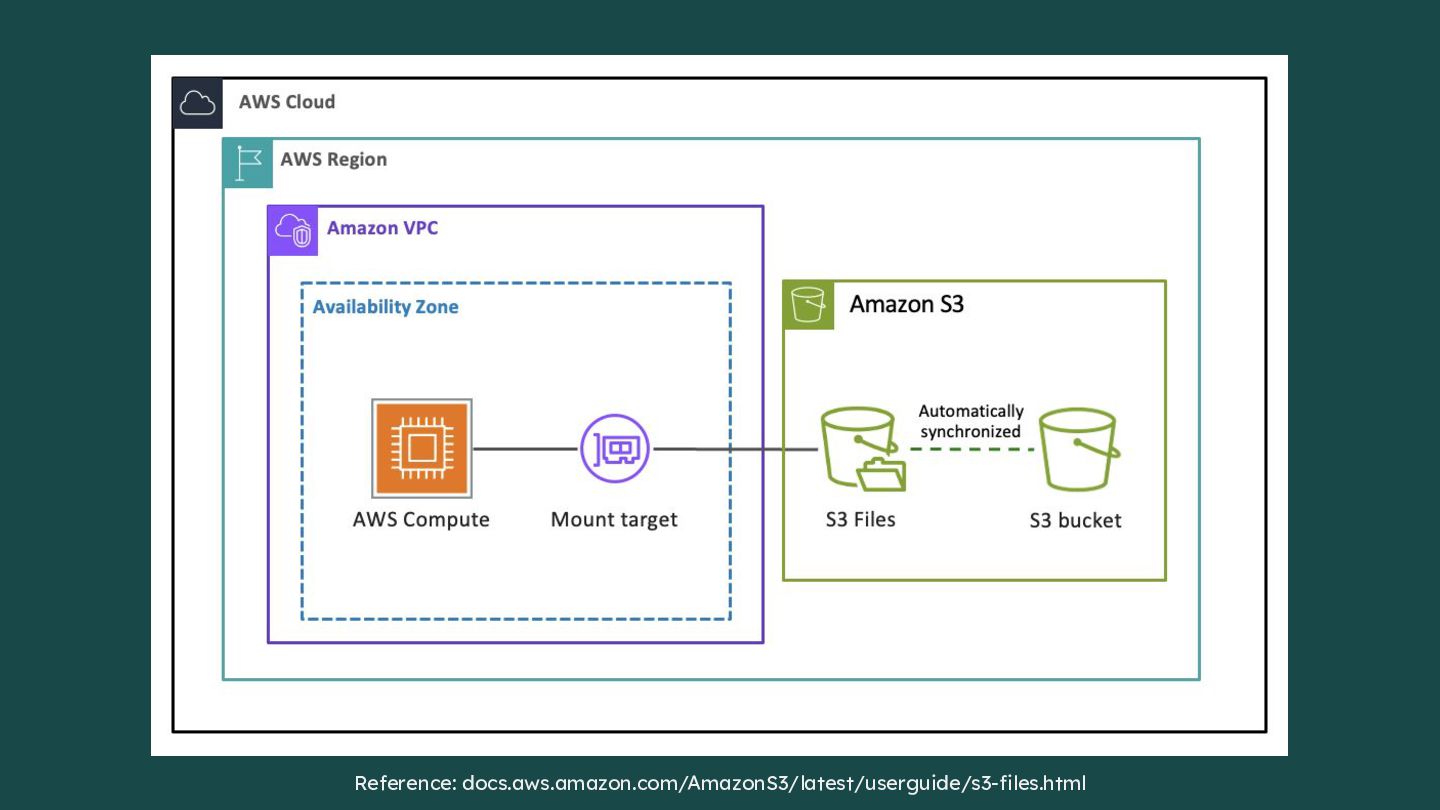
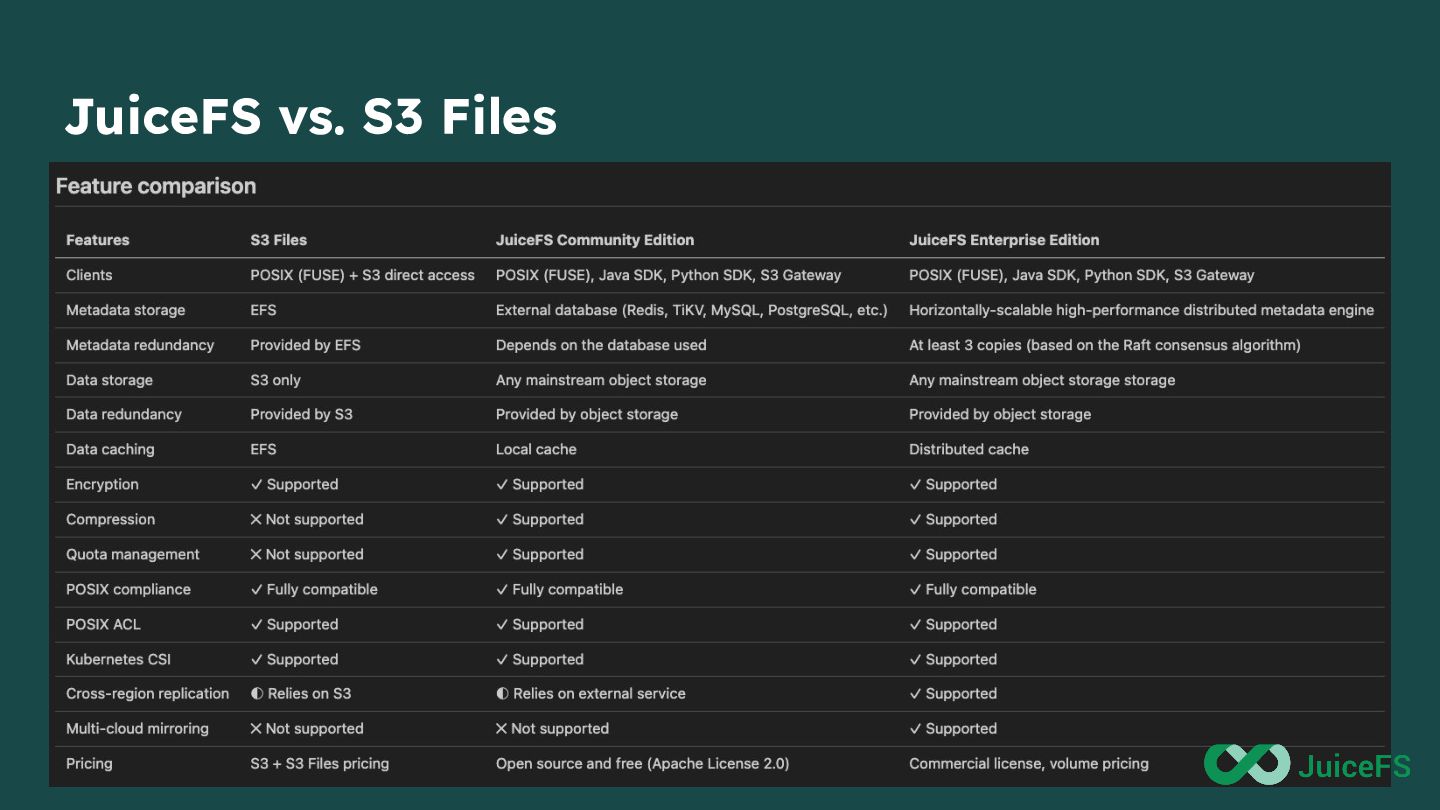
  7. S3 Files | What It Is ➔ POSIX-compatible distributed file

    system on top of EFS & S3 ➔ Mount your S3 bucket as a volume ➔ S3 Files maintains a 1-to-1 mapping between files and objects ➔ Key idea: ◆ EFS -> the high-performance caching layer/tier for S3 ◆ S3 -> the source of truth backing storage
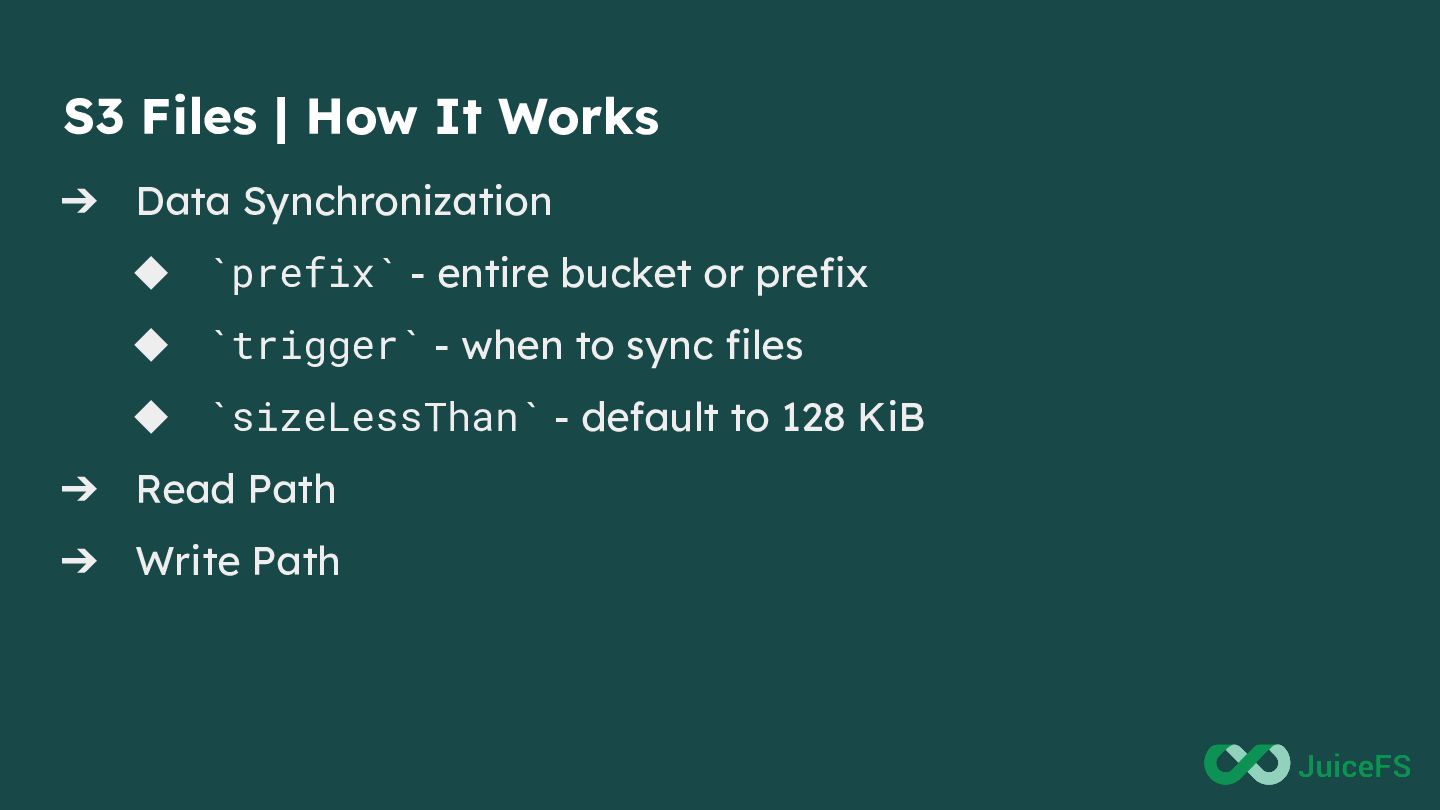
  8. S3 Files | How It Works ➔ Data Synchronization ◆

    `prefix` - entire bucket or prefix ◆ `trigger` - when to sync files ◆ `sizeLessThan` - default to 128 KiB ➔ Read Path ➔ Write Path
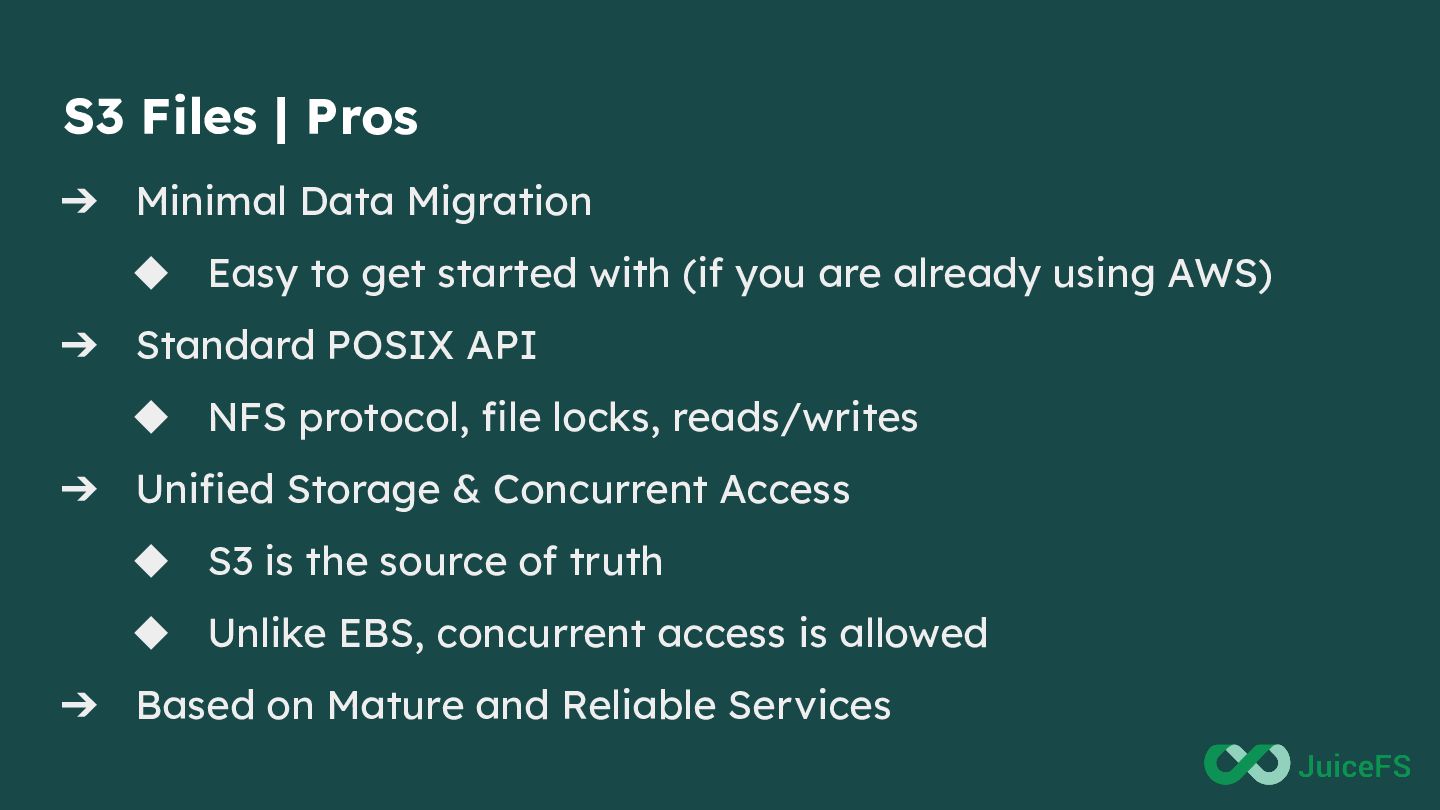
  9. S3 Files | Pros ➔ Minimal Data Migration ◆ Easy

    to get started with (if you are already using AWS) ➔ Standard POSIX API ◆ NFS protocol, file locks, reads/writes ➔ Unified Storage & Concurrent Access ◆ S3 is the source of truth ◆ Unlike EBS, concurrent access is allowed ➔ Based on Mature and Reliable Services
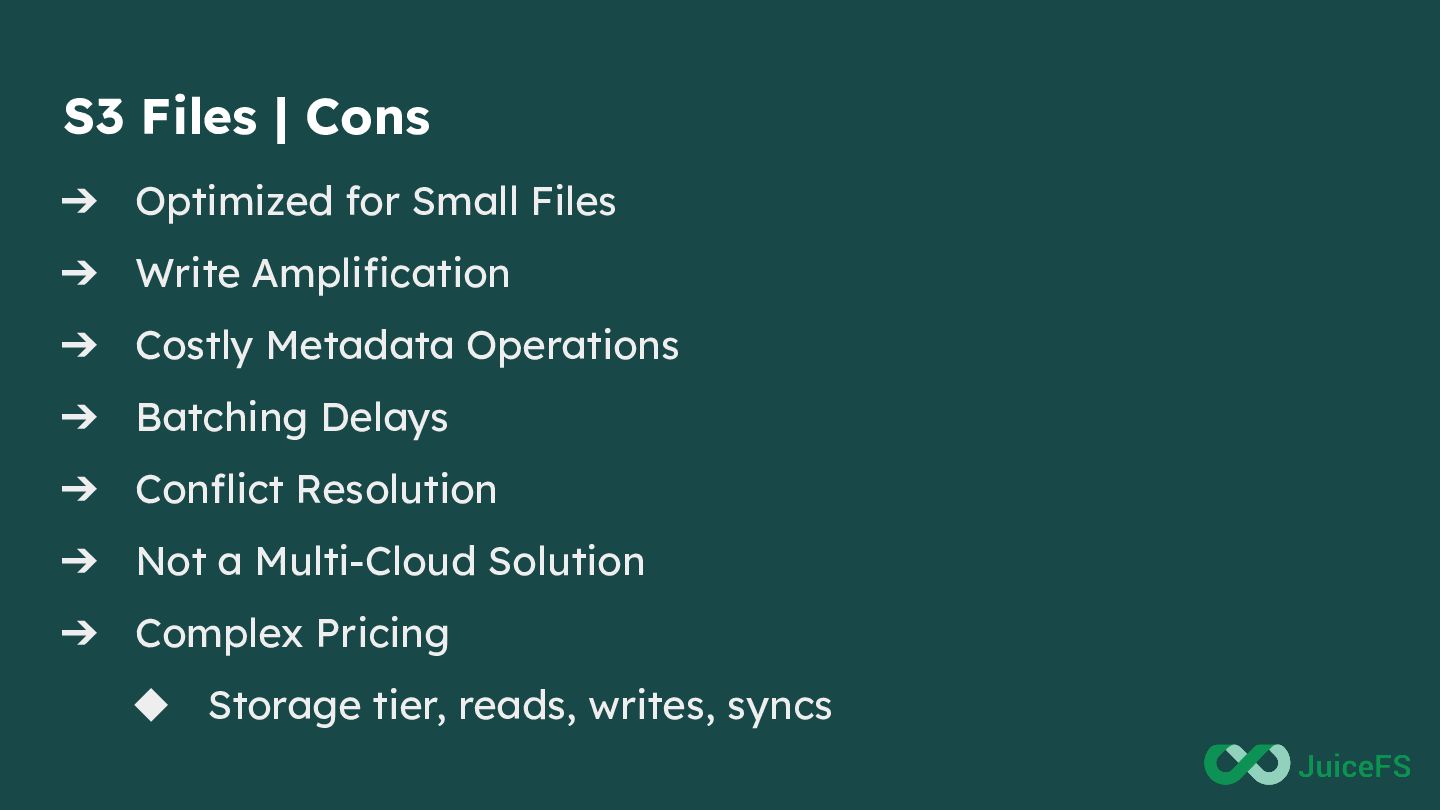
  10. S3 Files | Cons ➔ Optimized for Small Files ➔

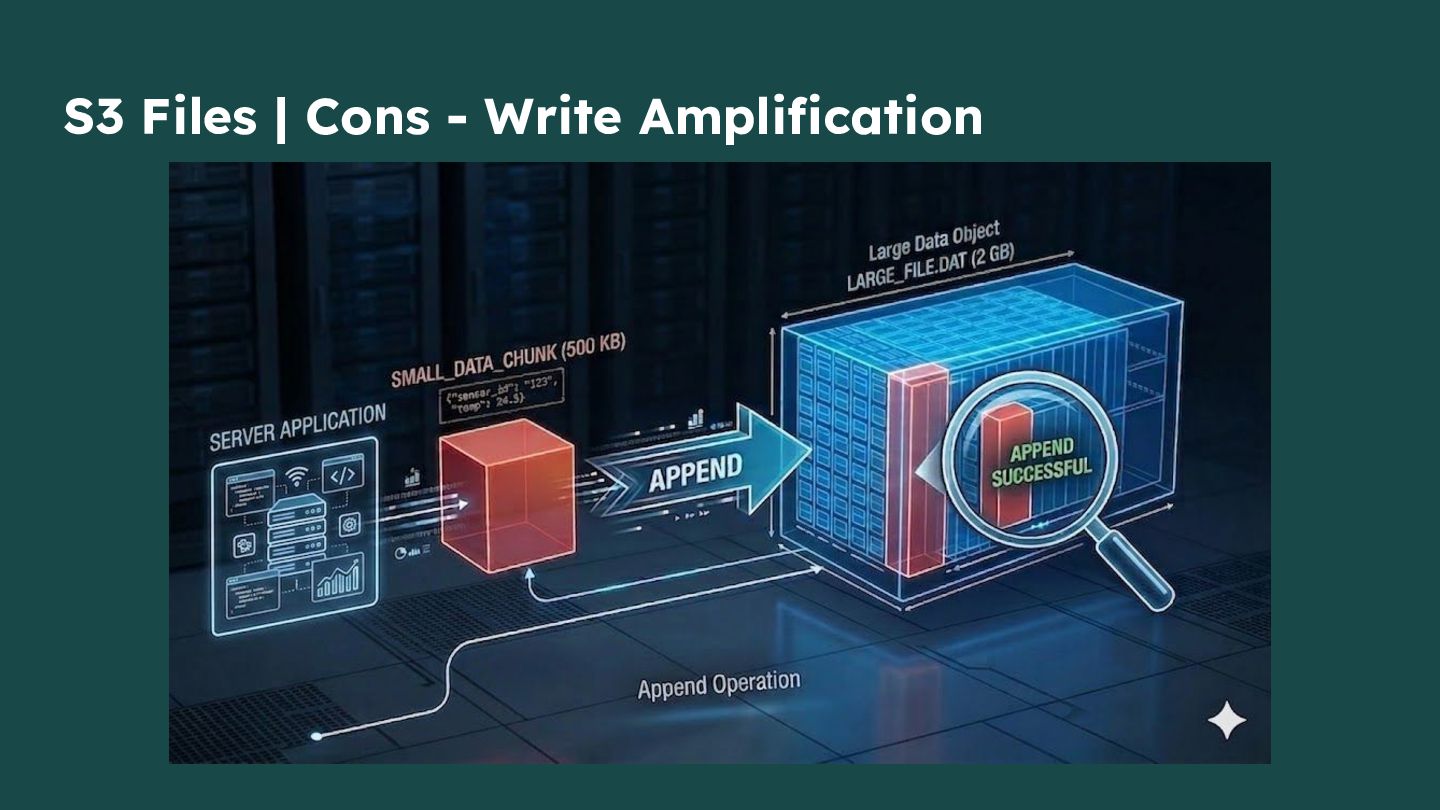
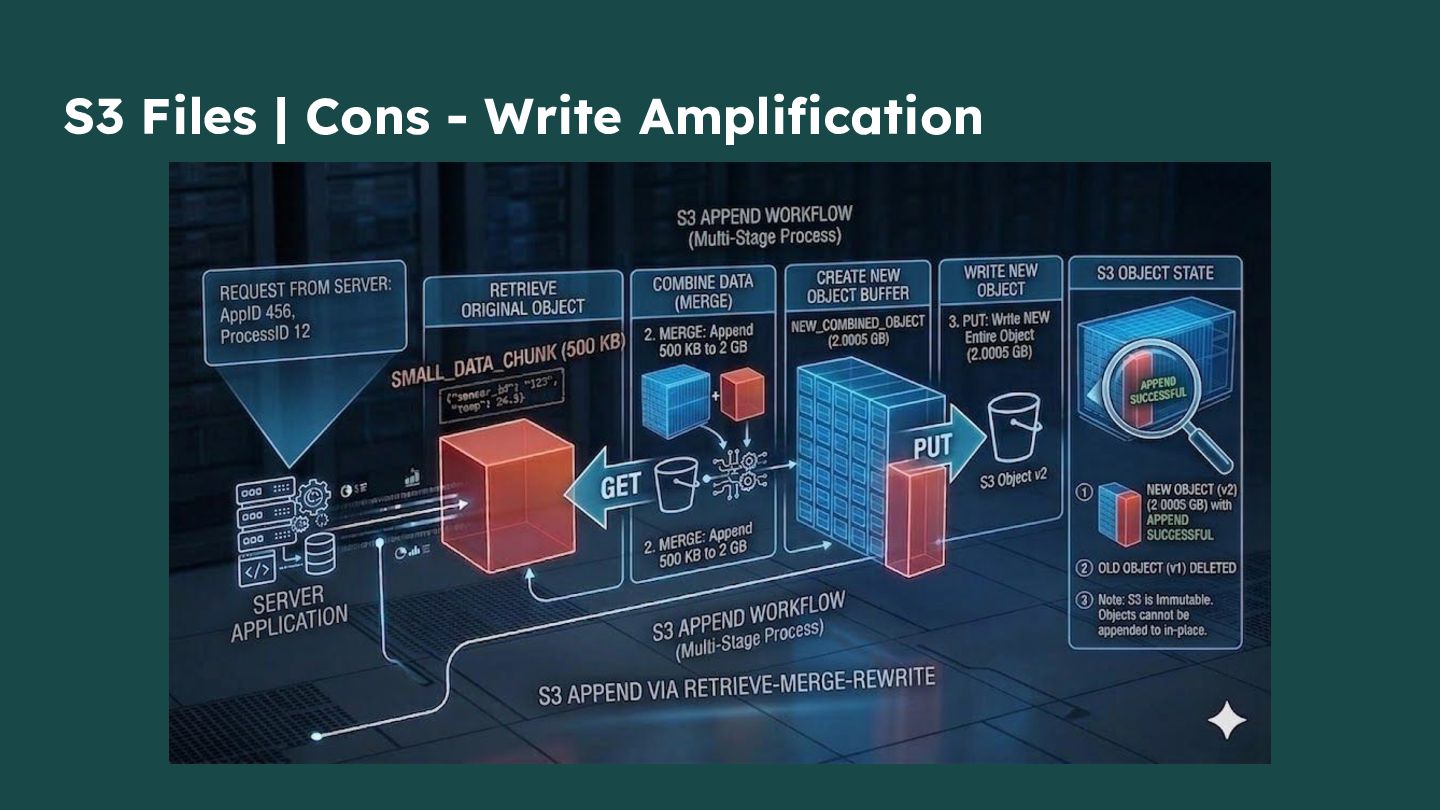
    Write Amplification ➔ Costly Metadata Operations ➔ Batching Delays ➔ Conflict Resolution ➔ Not a Multi-Cloud Solution ➔ Complex Pricing ◆ Storage tier, reads, writes, syncs
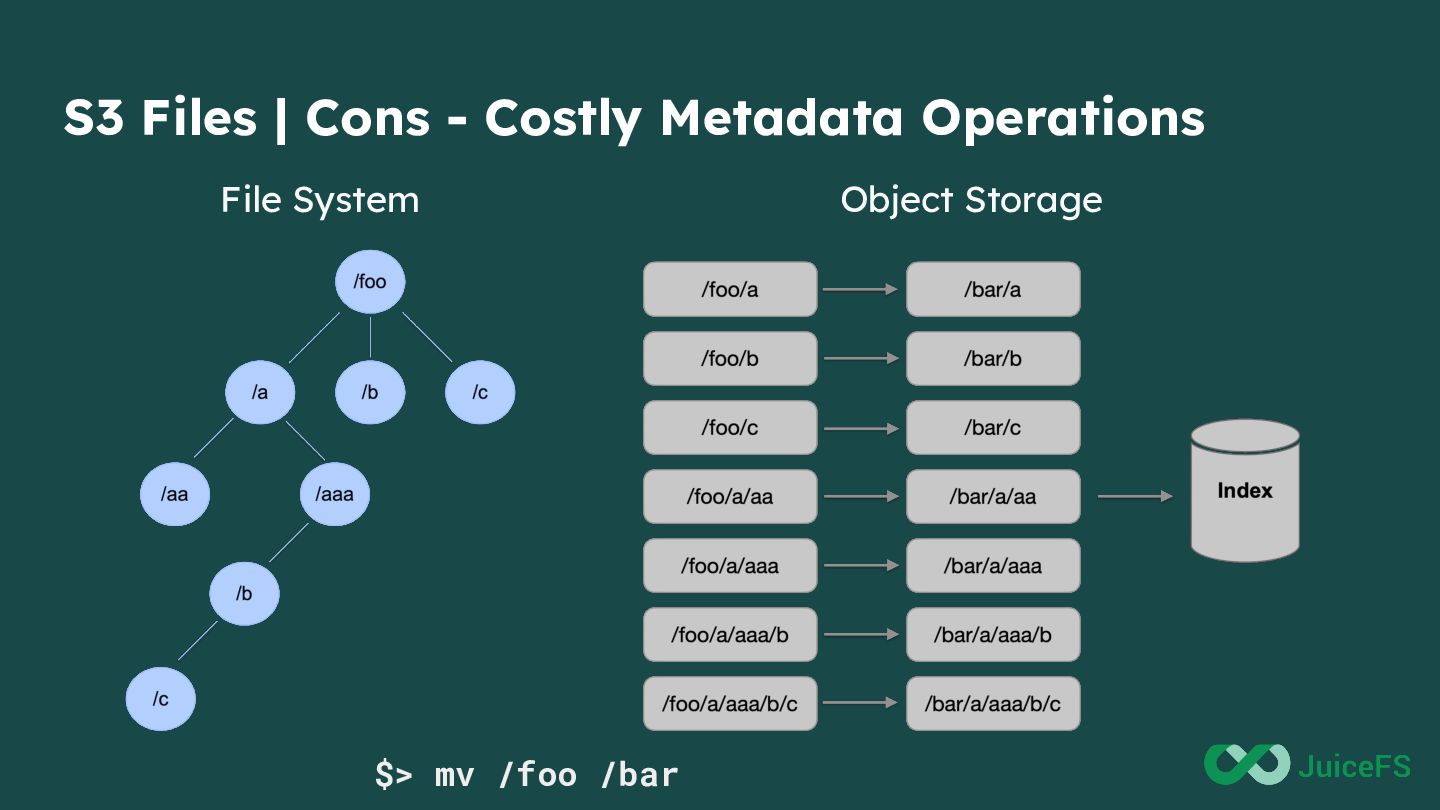
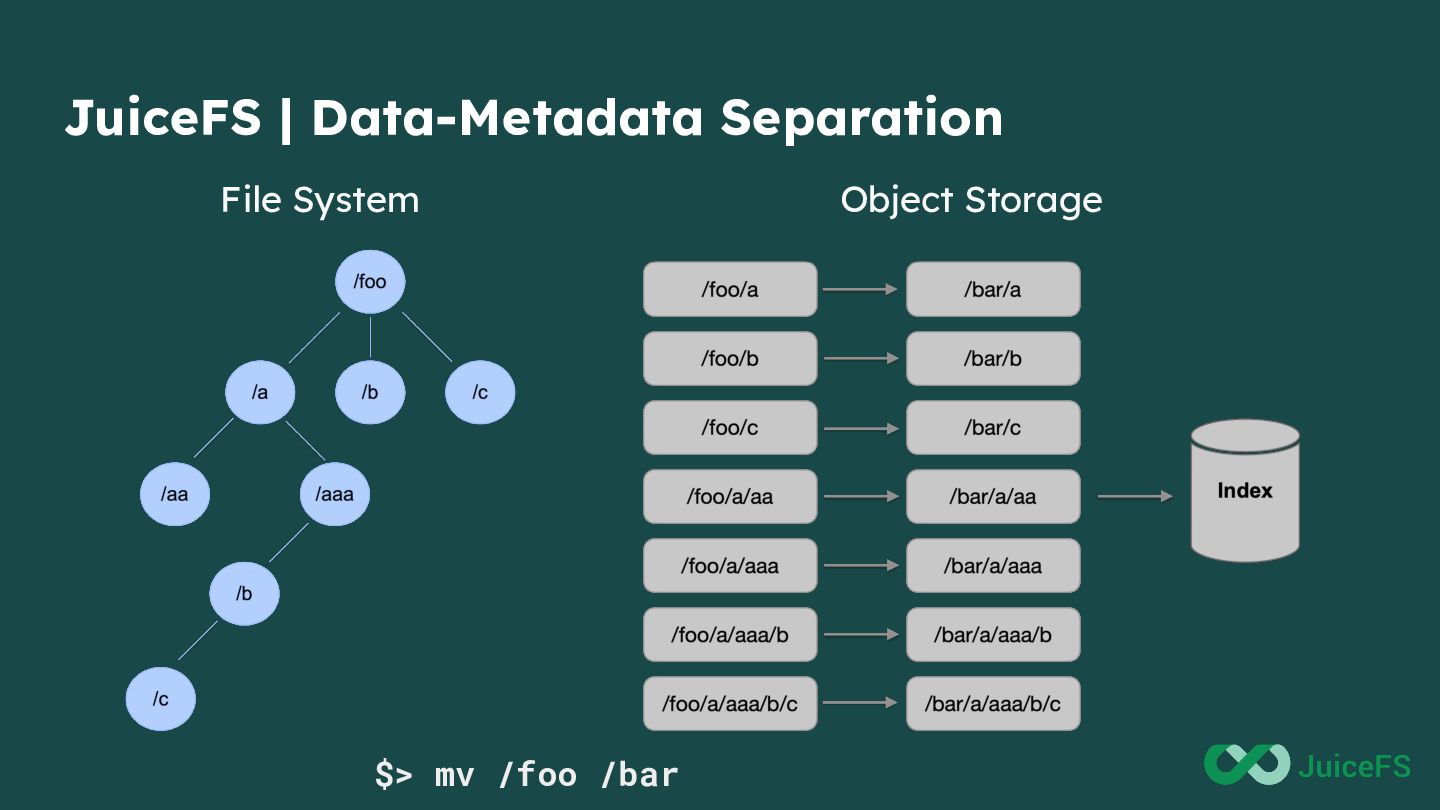
  11. S3 Files | Cons - Costly Metadata Operations $> mv

    /foo /bar File System Object Storage
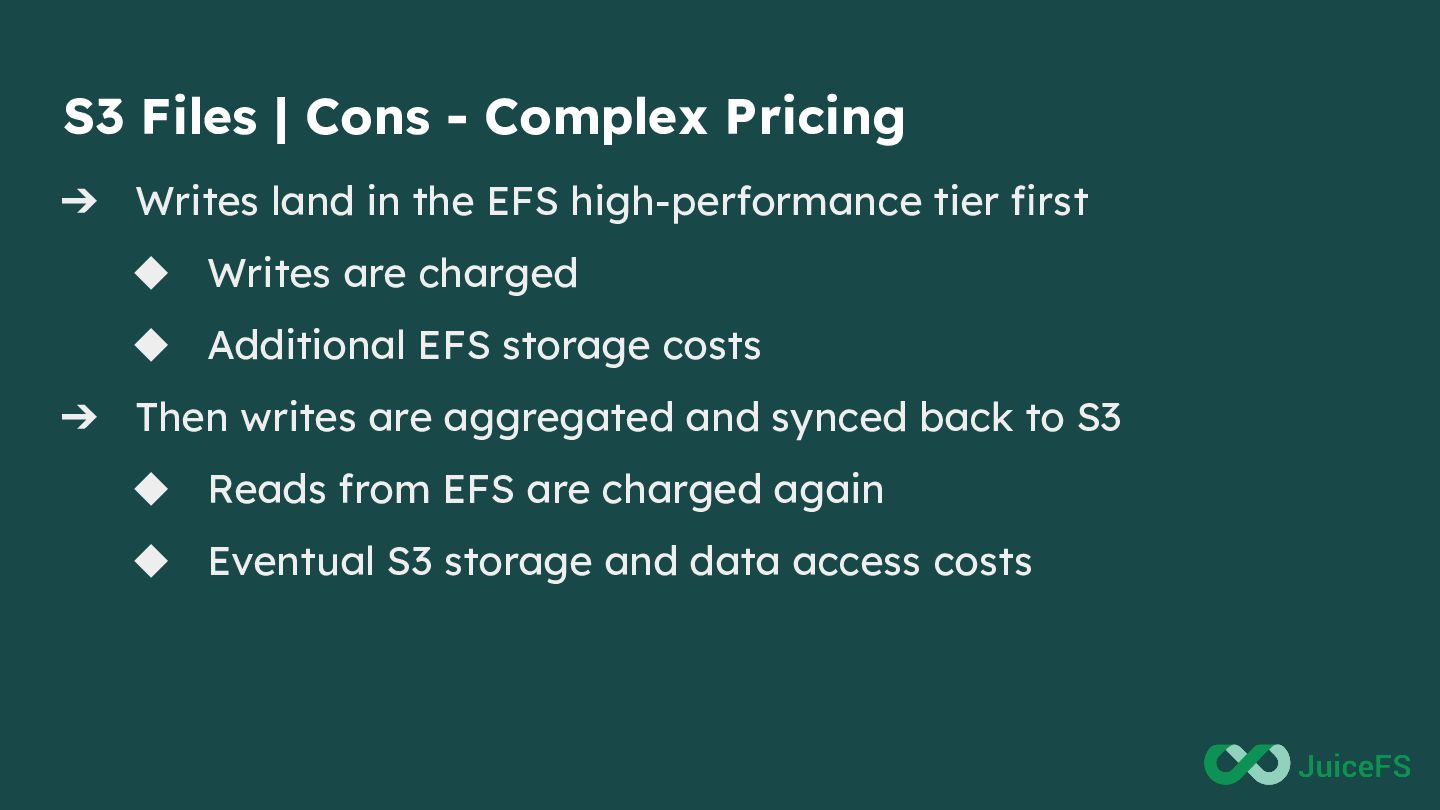
  12. S3 Files | Cons - Complex Pricing ➔ Writes land

    in the EFS high-performance tier first ◆ Writes are charged ◆ Additional EFS storage costs ➔ Then writes are aggregated and synced back to S3 ◆ Reads from EFS are charged again ◆ Eventual S3 storage and data access costs
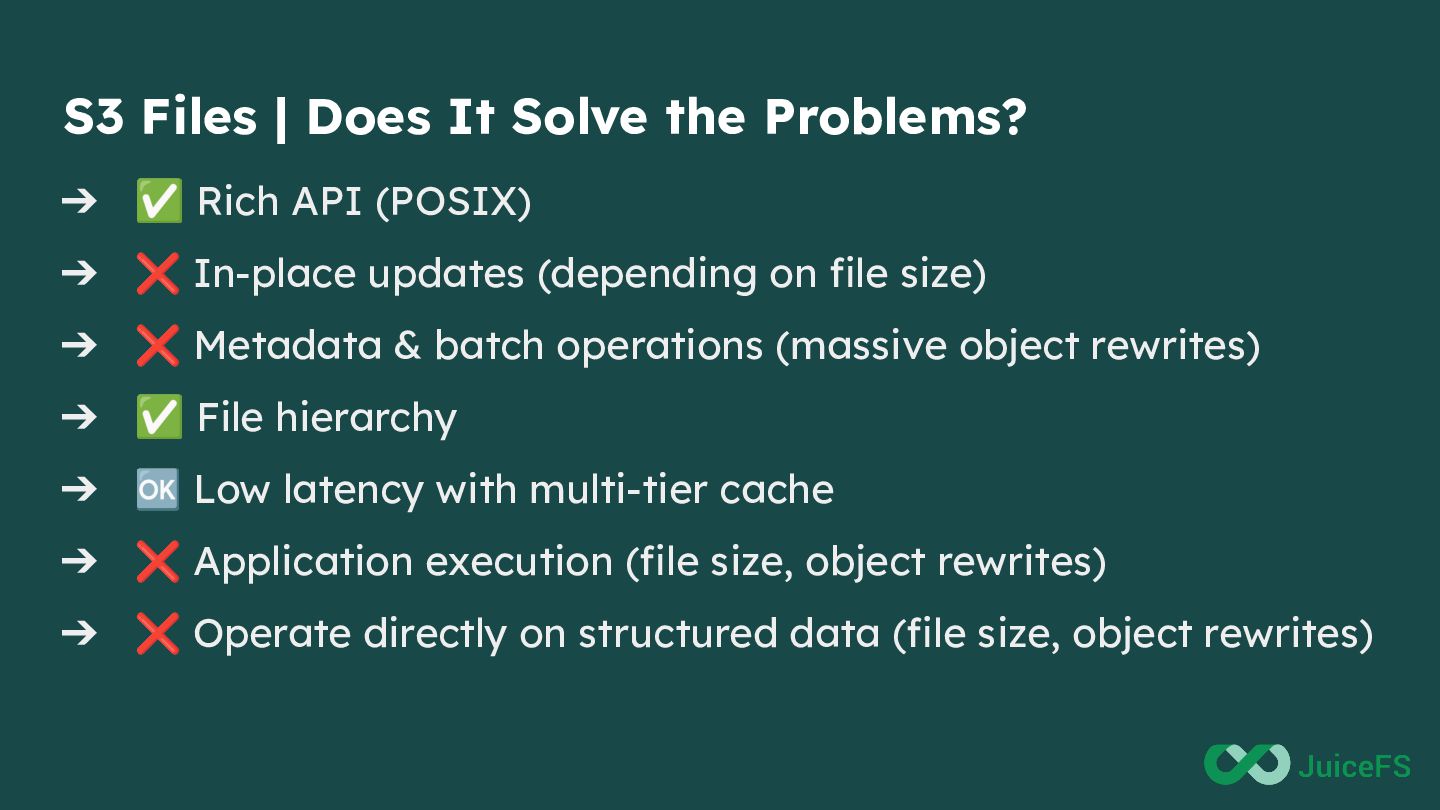
  13. S3 Files | Does It Solve the Problems? ➔ ✅

    Rich API (POSIX) ➔ ❌ In-place updates (depending on file size) ➔ ❌ Metadata & batch operations (massive object rewrites) ➔ ✅ File hierarchy ➔ 🆗 Low latency with multi-tier cache ➔ ❌ Application execution (file size, object rewrites) ➔ ❌ Operate directly on structured data (file size, object rewrites)
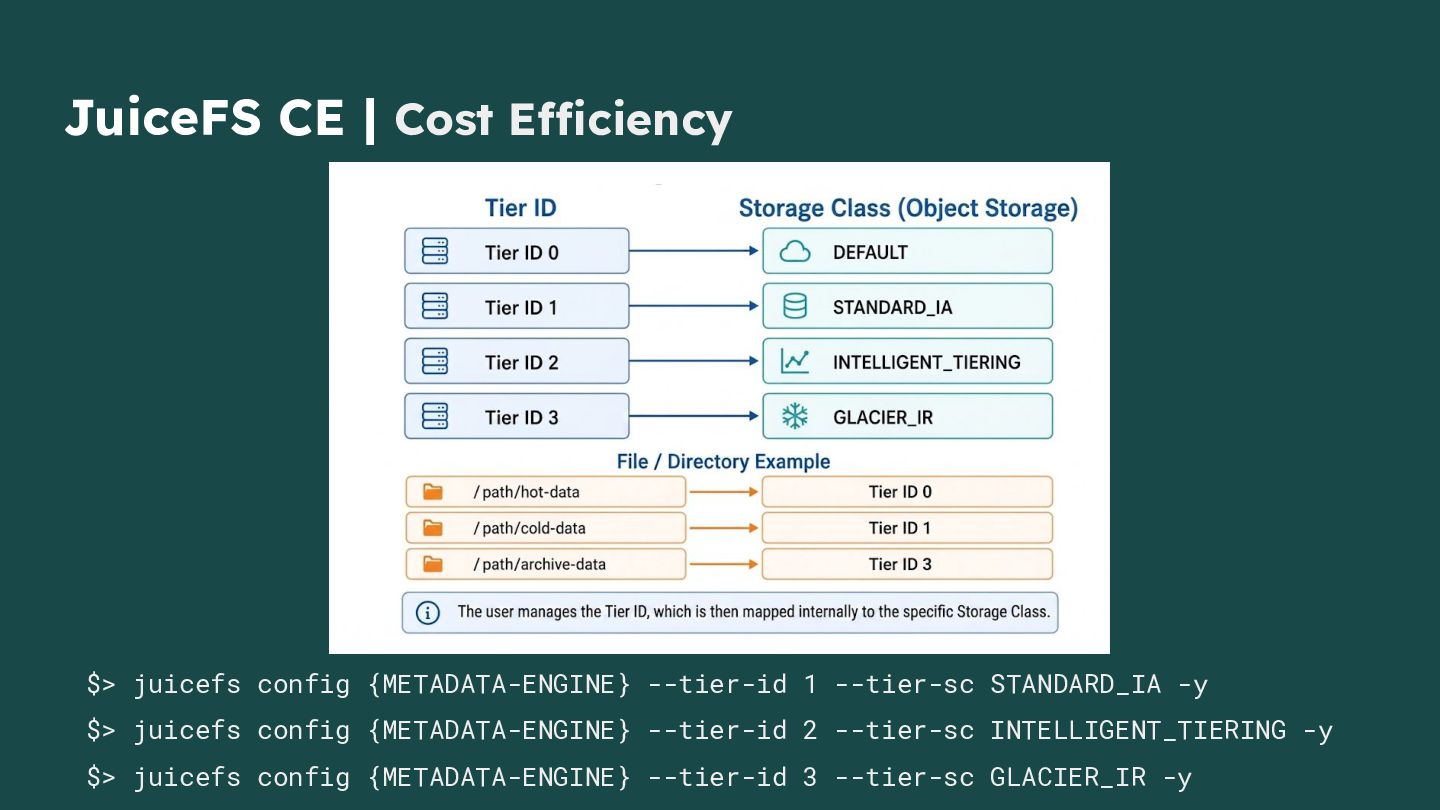
  14. JuiceFS CE | Cost Efficiency $> juicefs config {METADATA-ENGINE} --tier-id

    1 --tier-sc STANDARD_IA -y $> juicefs config {METADATA-ENGINE} --tier-id 2 --tier-sc INTELLIGENT_TIERING -y $> juicefs config {METADATA-ENGINE} --tier-id 3 --tier-sc GLACIER_IR -y
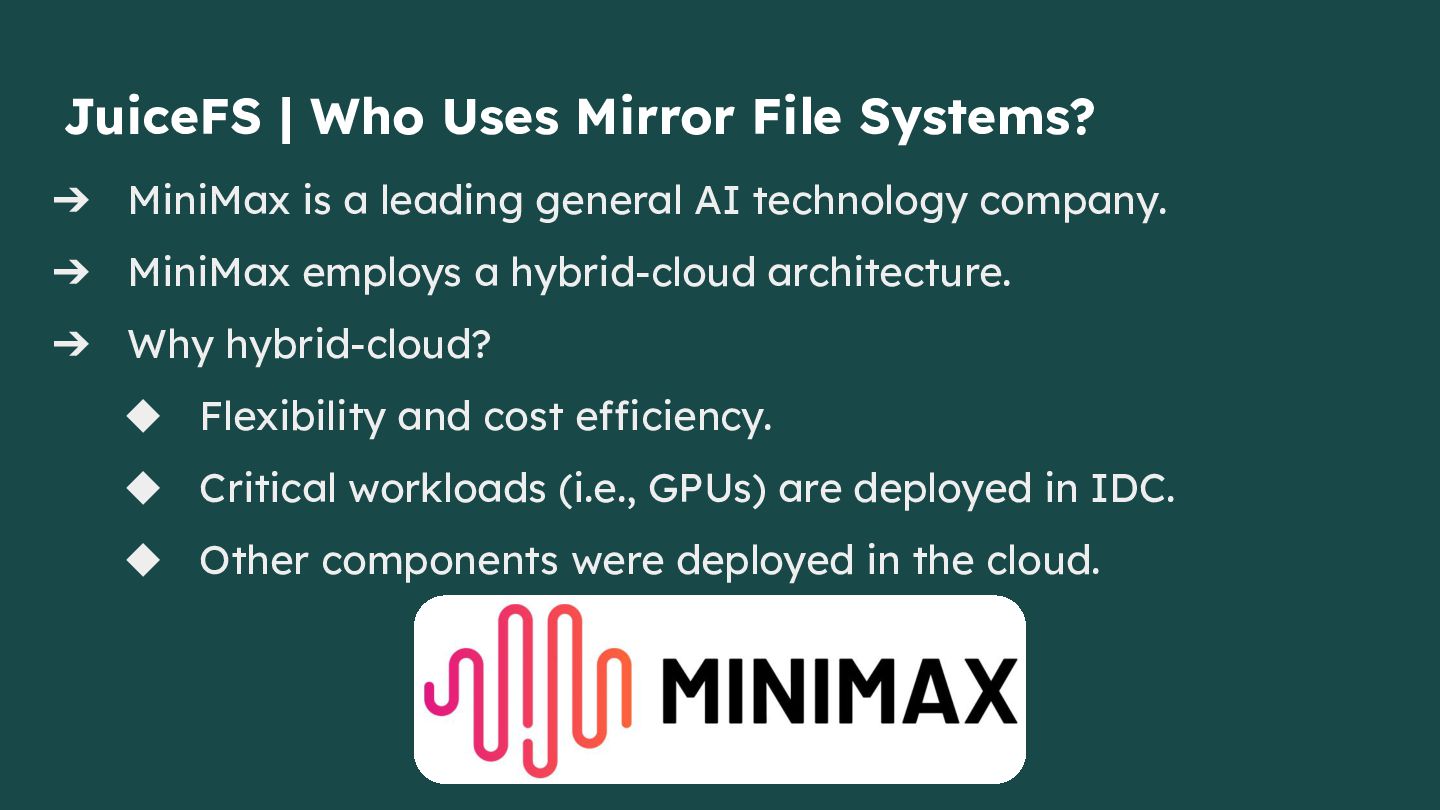
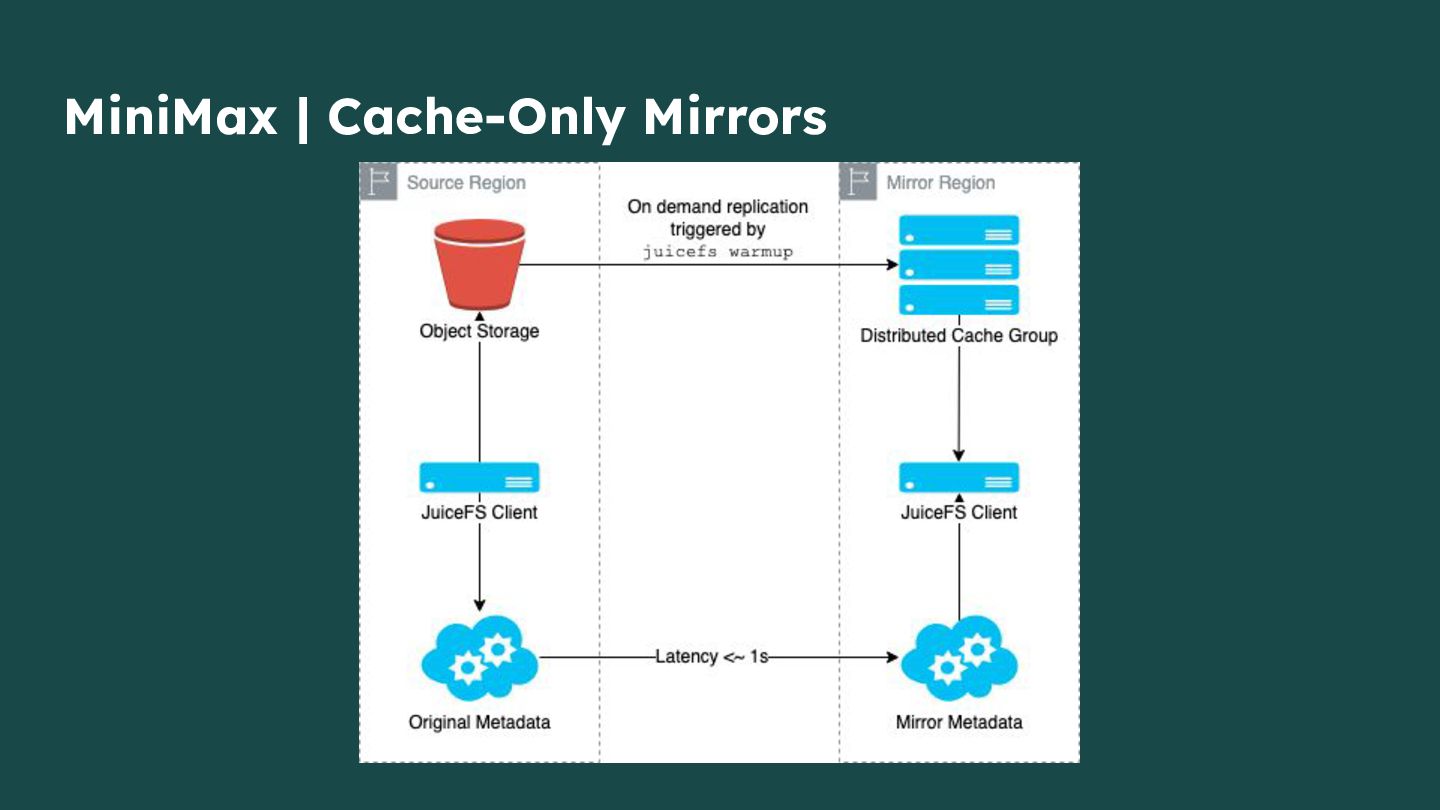
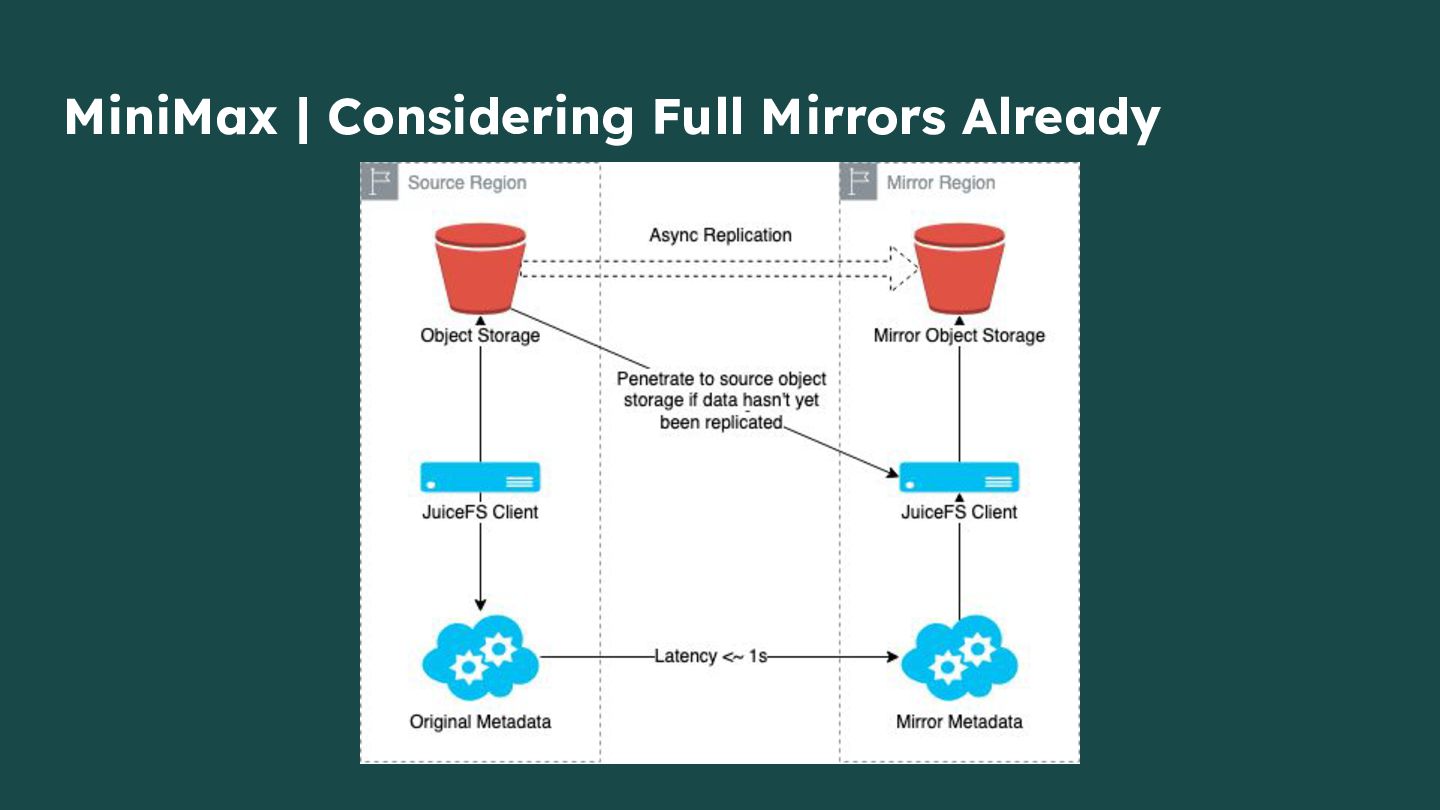
  15. ➔ MiniMax is a leading general AI technology company. ➔

    MiniMax employs a hybrid-cloud architecture. ➔ Why hybrid-cloud? ◆ Flexibility and cost efficiency. ◆ Critical workloads (i.e., GPUs) are deployed in IDC. ◆ Other components were deployed in the cloud. JuiceFS | Who Uses Mirror File Systems?
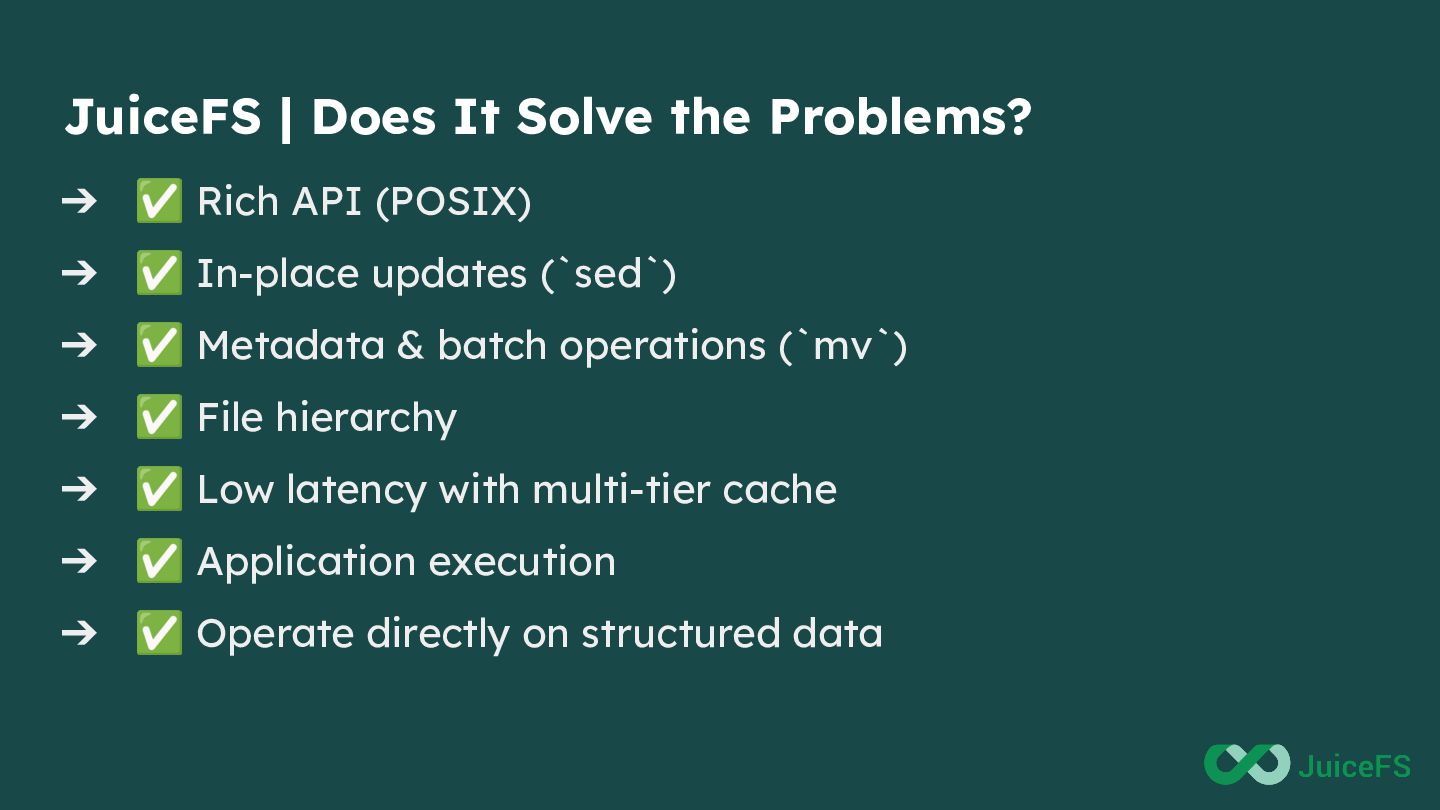
  16. JuiceFS | Does It Solve the Problems? ➔ ✅ Rich

    API (POSIX) ➔ ✅ In-place updates (`sed`) ➔ ✅ Metadata & batch operations (`mv`) ➔ ✅ File hierarchy ➔ ✅ Low latency with multi-tier cache ➔ ✅ Application execution ➔ ✅ Operate directly on structured data