datasets are the new standard. Large tech and cybersecurity companies already need to manage petabytes of logs. Splunk, Elastic, and other solutions eventually hurt companies' innovation: retention is limited, query time is too long, high TCO. 3
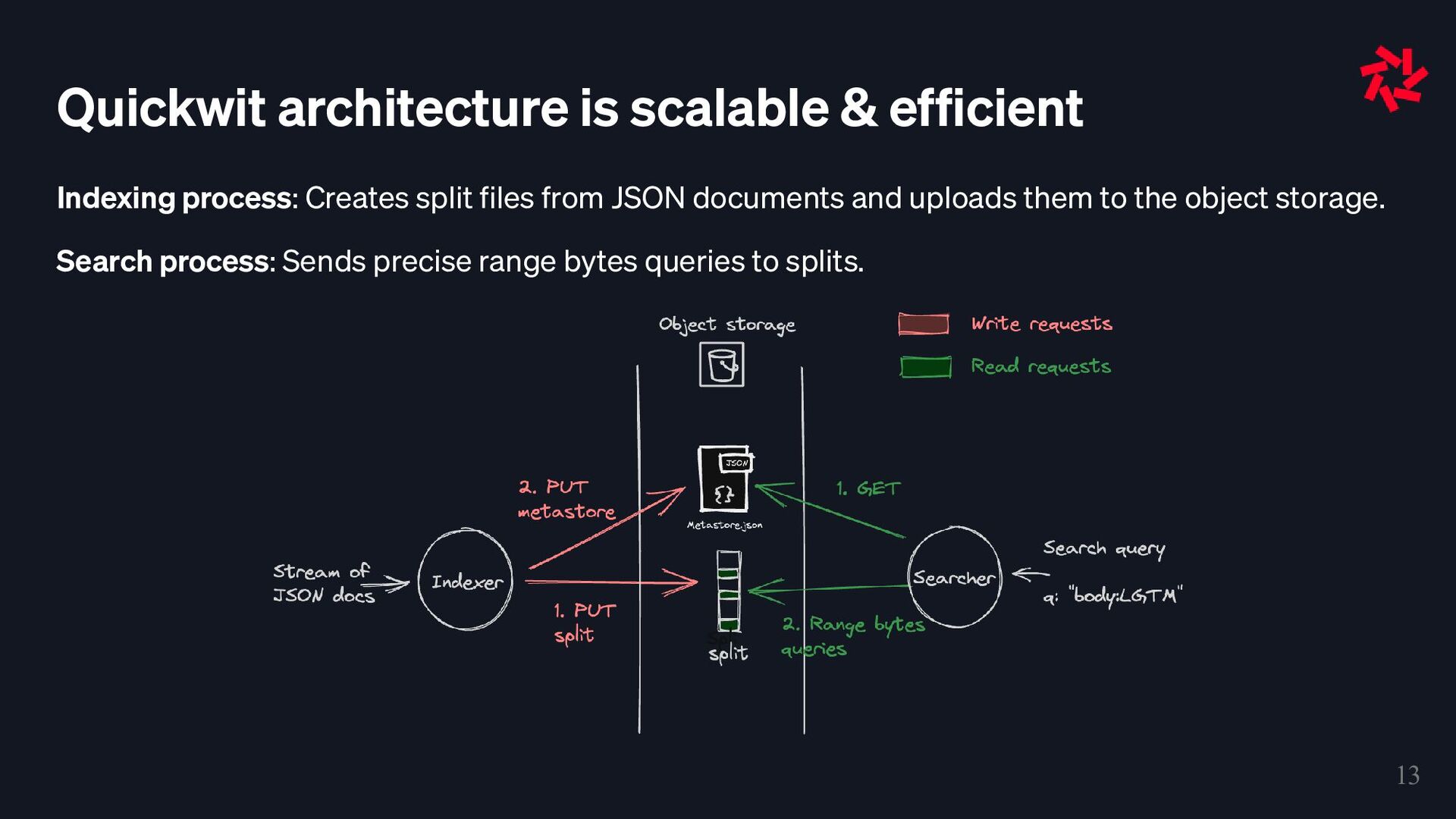
be fast, scalable, and reliable at petabyte-scale for a fraction of the costs: Built in Rust, and powered by Tantivy, a leading search engine library maintained by Quickwit. With decoupled compute and storage (all data on object storage) Stateless Schemaless Quickwit is at least 10x more cost-efficient than existing solutions and you don't need a whole team to manage petabytes. 4
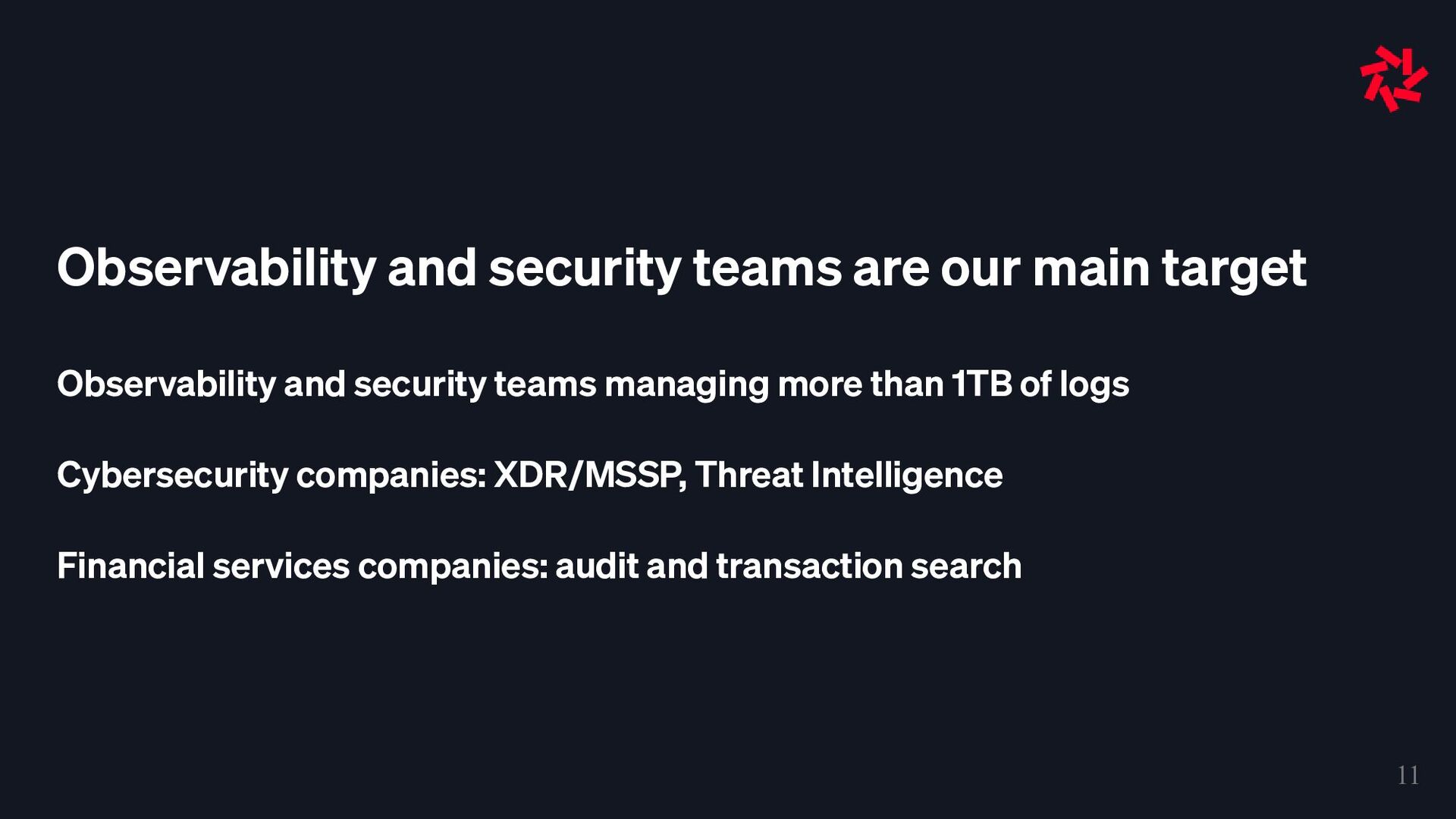
security teams managing more than 1TB of logs Cybersecurity companies: XDR/MSSP, Threat Intelligence Financial services companies: audit and transaction search 11
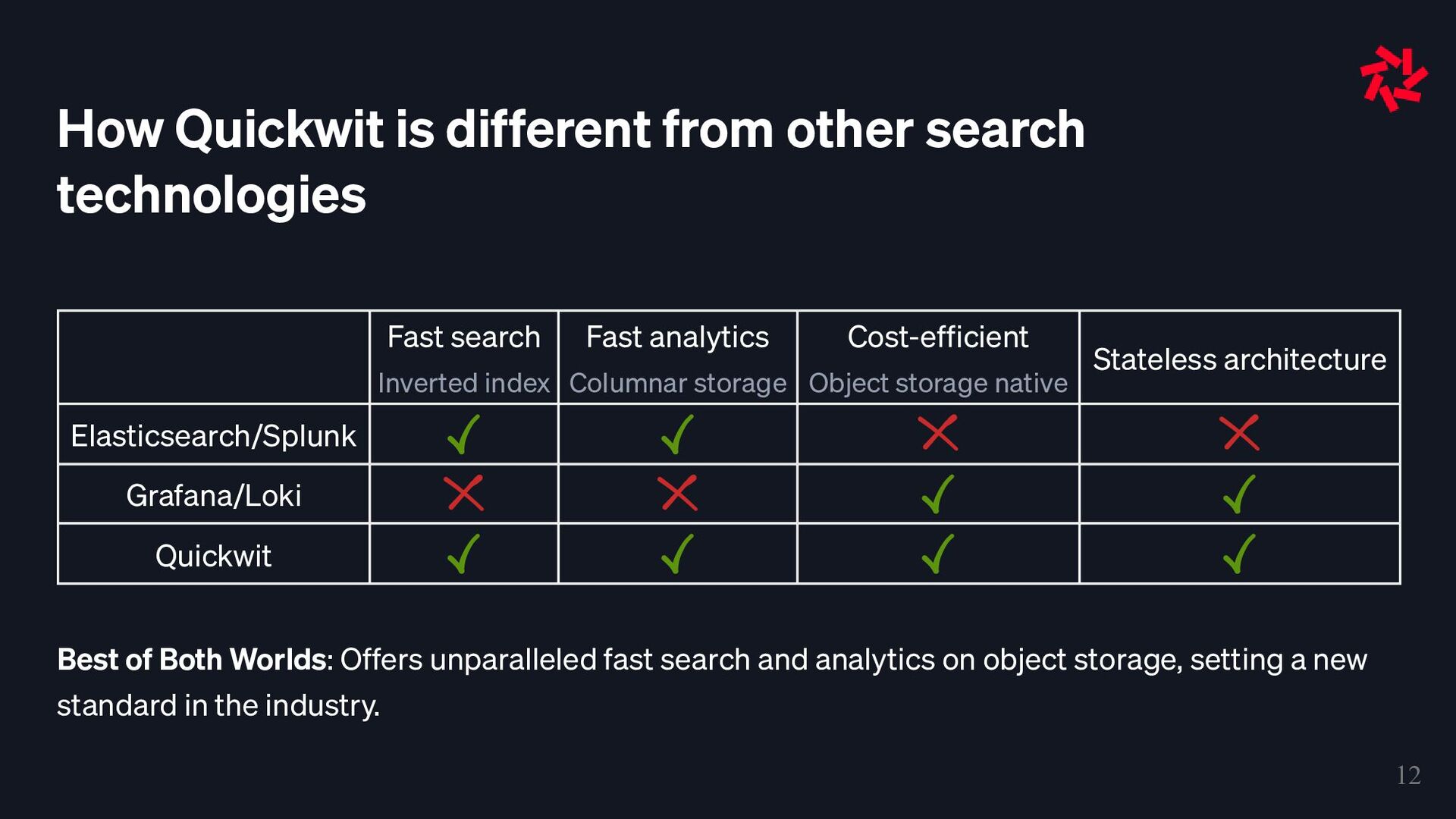
Inverted index Fast analytics Columnar storage Cost-efficient Object storage native Stateless architecture Elasticsearch/Splunk Grafana/Loki Quickwit Best of Both Worlds: Offers unparalleled fast search and analytics on object storage, setting a new standard in the industry. 12
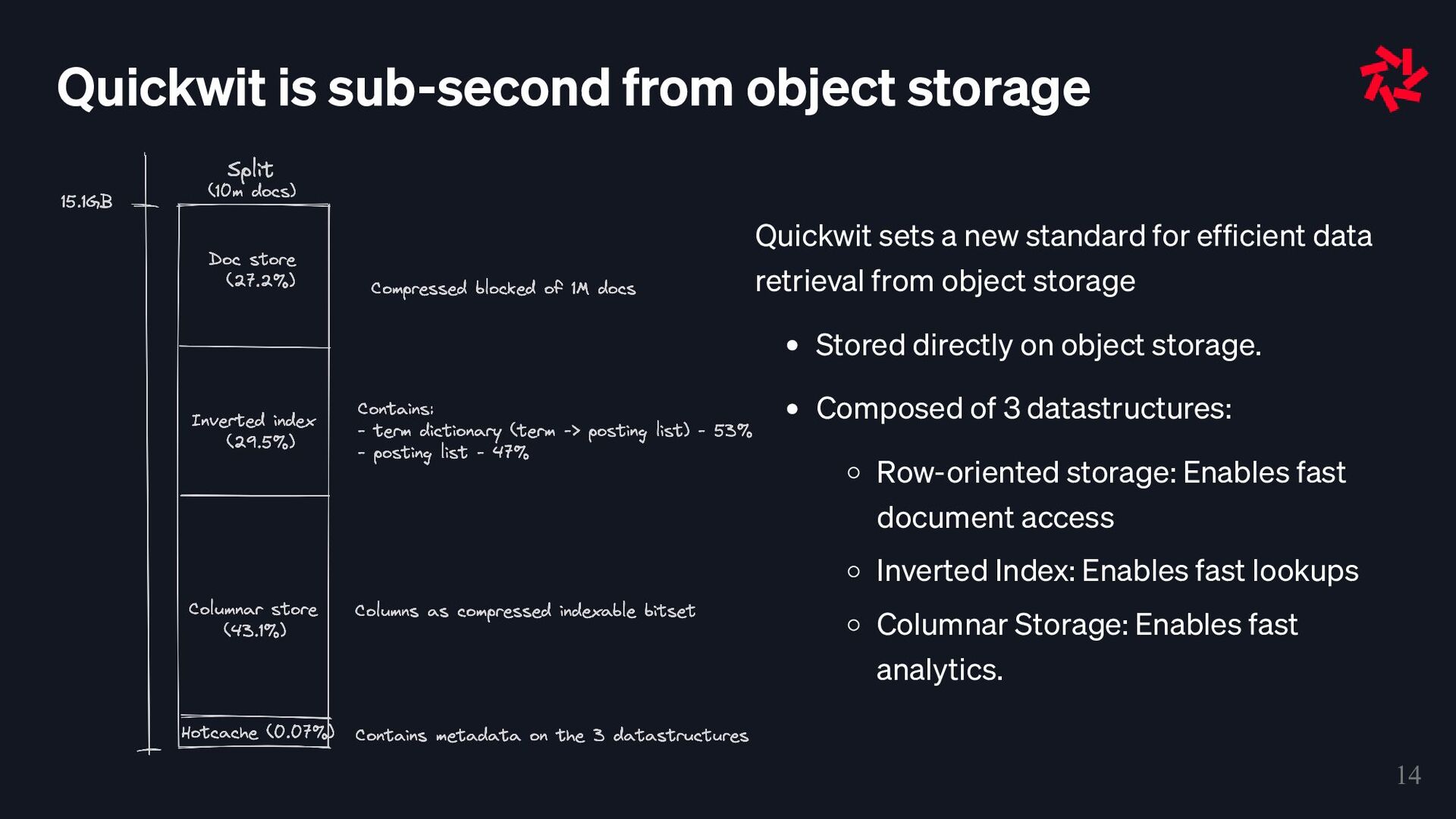
standard for efficient data retrieval from object storage Stored directly on object storage. Composed of 3 datastructures: Row-oriented storage: Enables fast document access Inverted Index: Enables fast lookups Columnar Storage: Enables fast analytics. 14
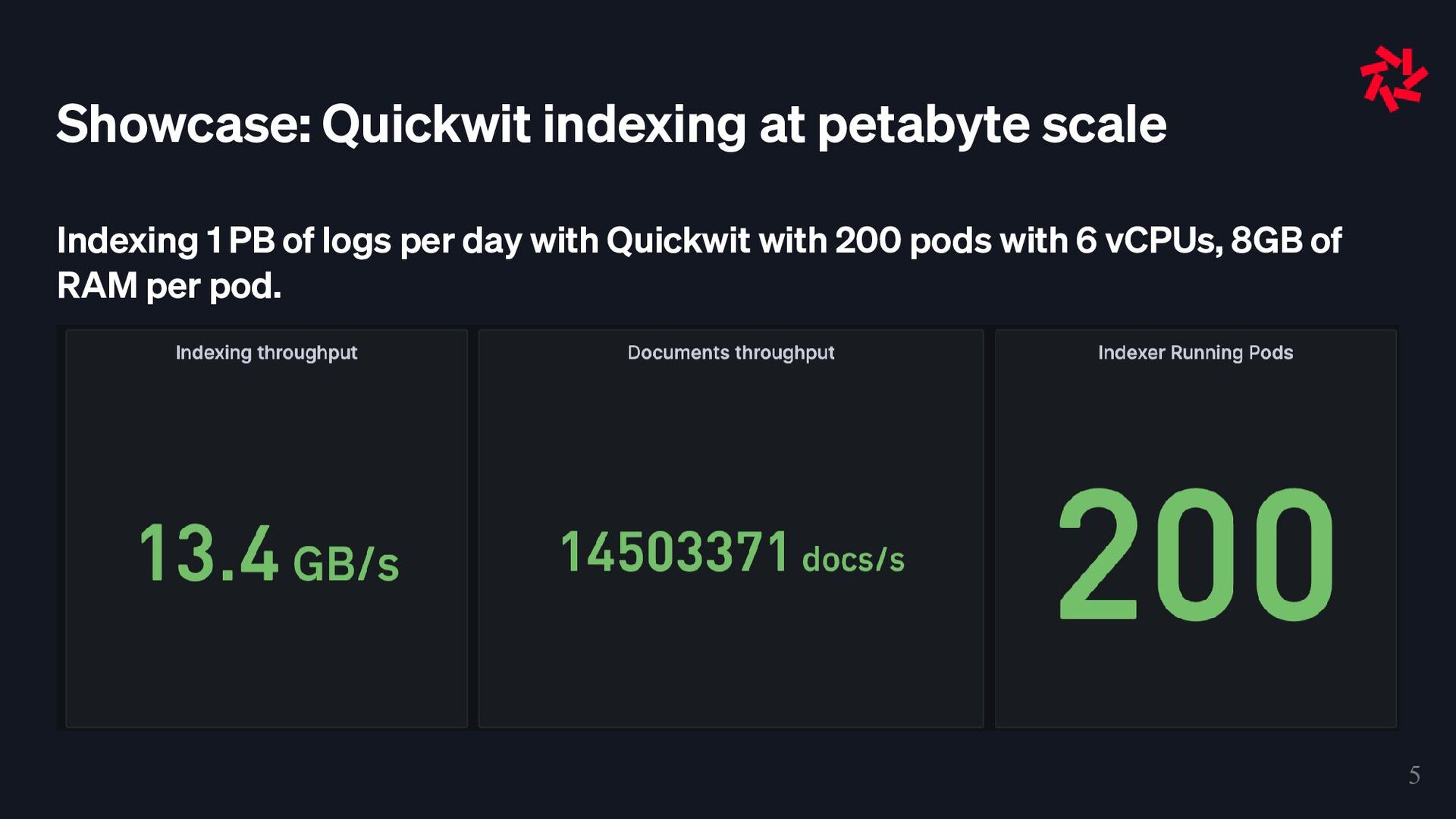
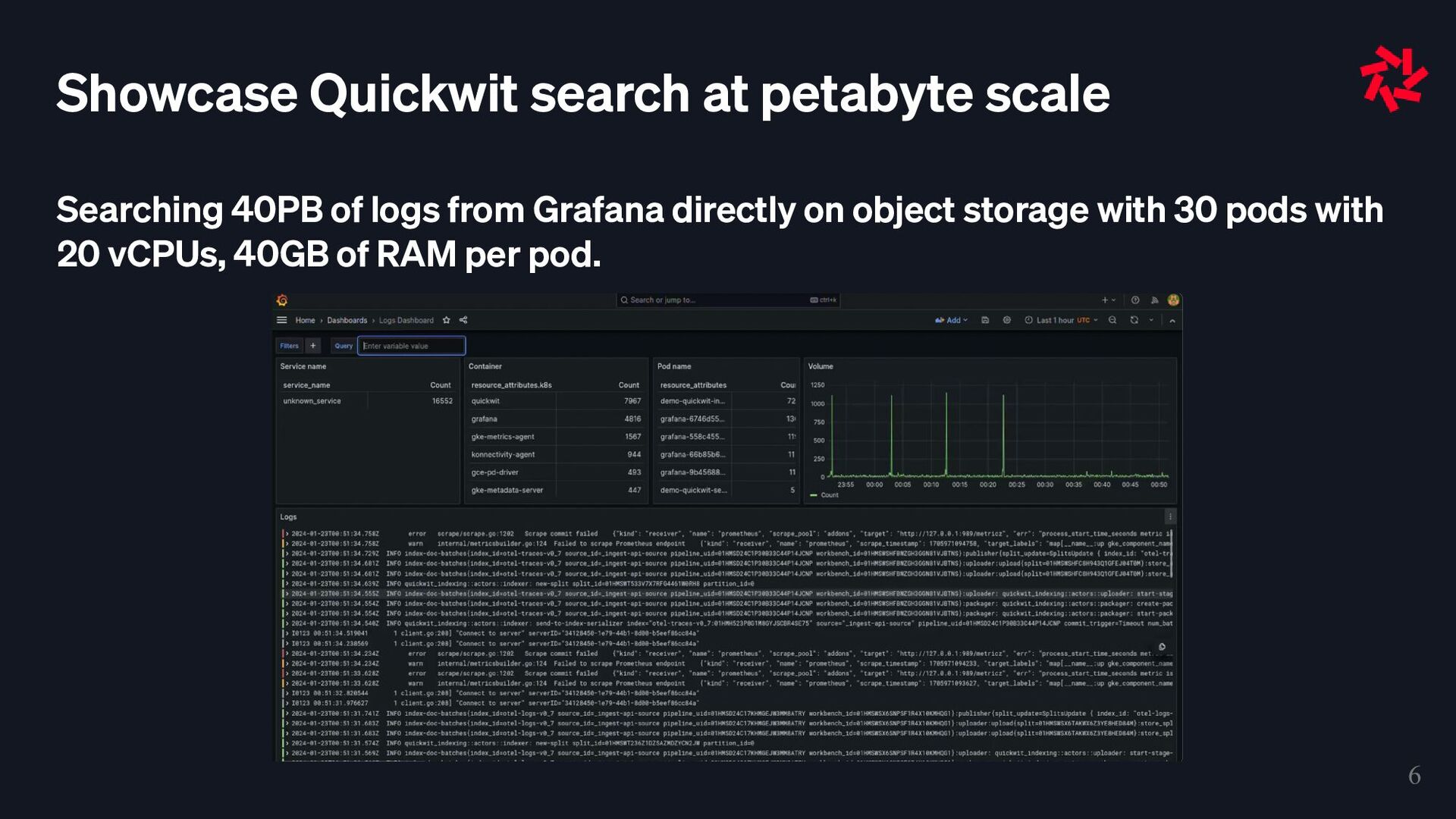
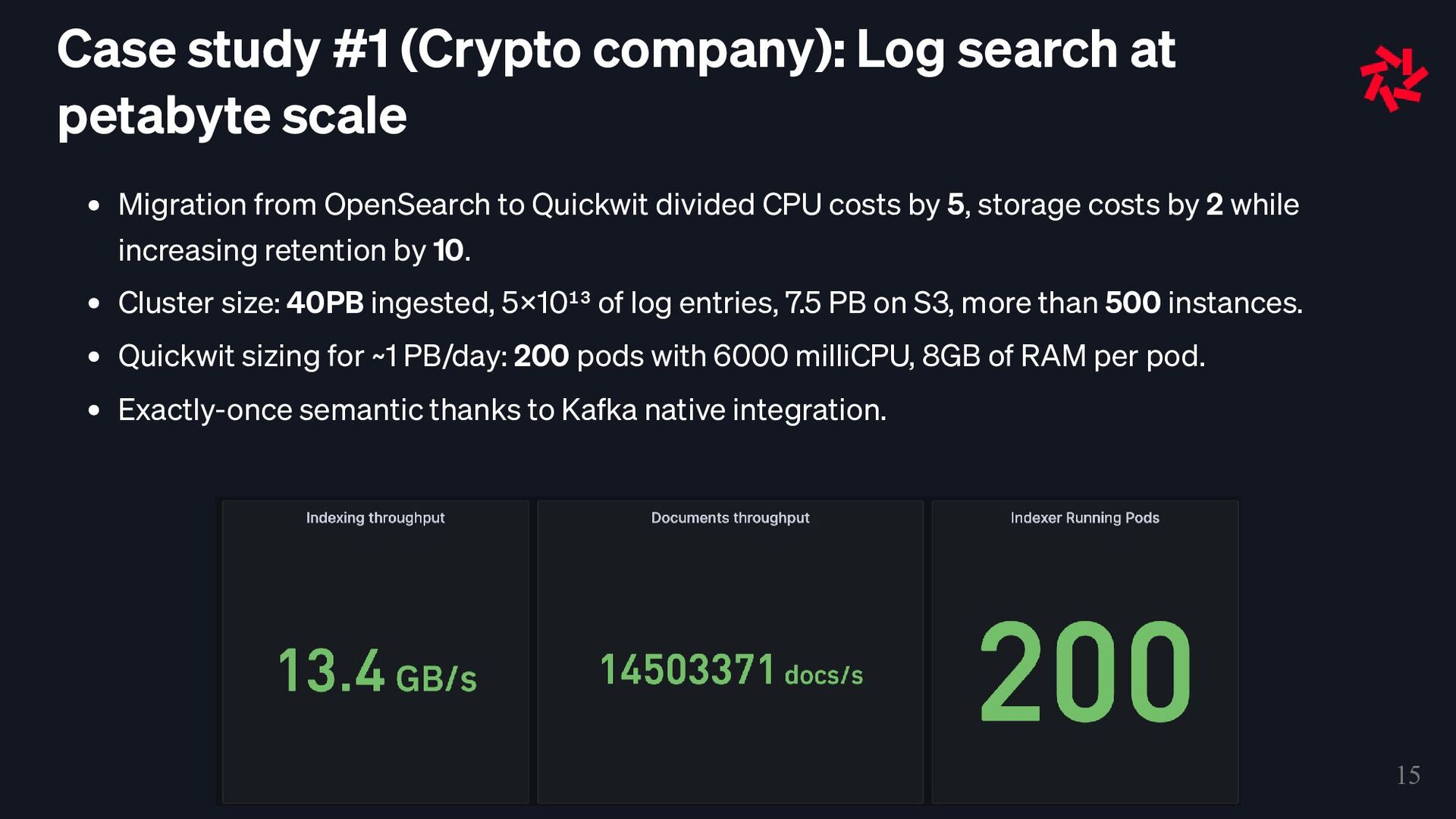
Migration from OpenSearch to Quickwit divided CPU costs by 5, storage costs by 2 while increasing retention by 10. Cluster size: 40PB ingested, 5x10¹³ of log entries, 7.5 PB on S3, more than 500 instances. Quickwit sizing for ~1 PB/day: 200 pods with 6000 milliCPU, 8GB of RAM per pod. Exactly-once semantic thanks to Kafka native integration. 15
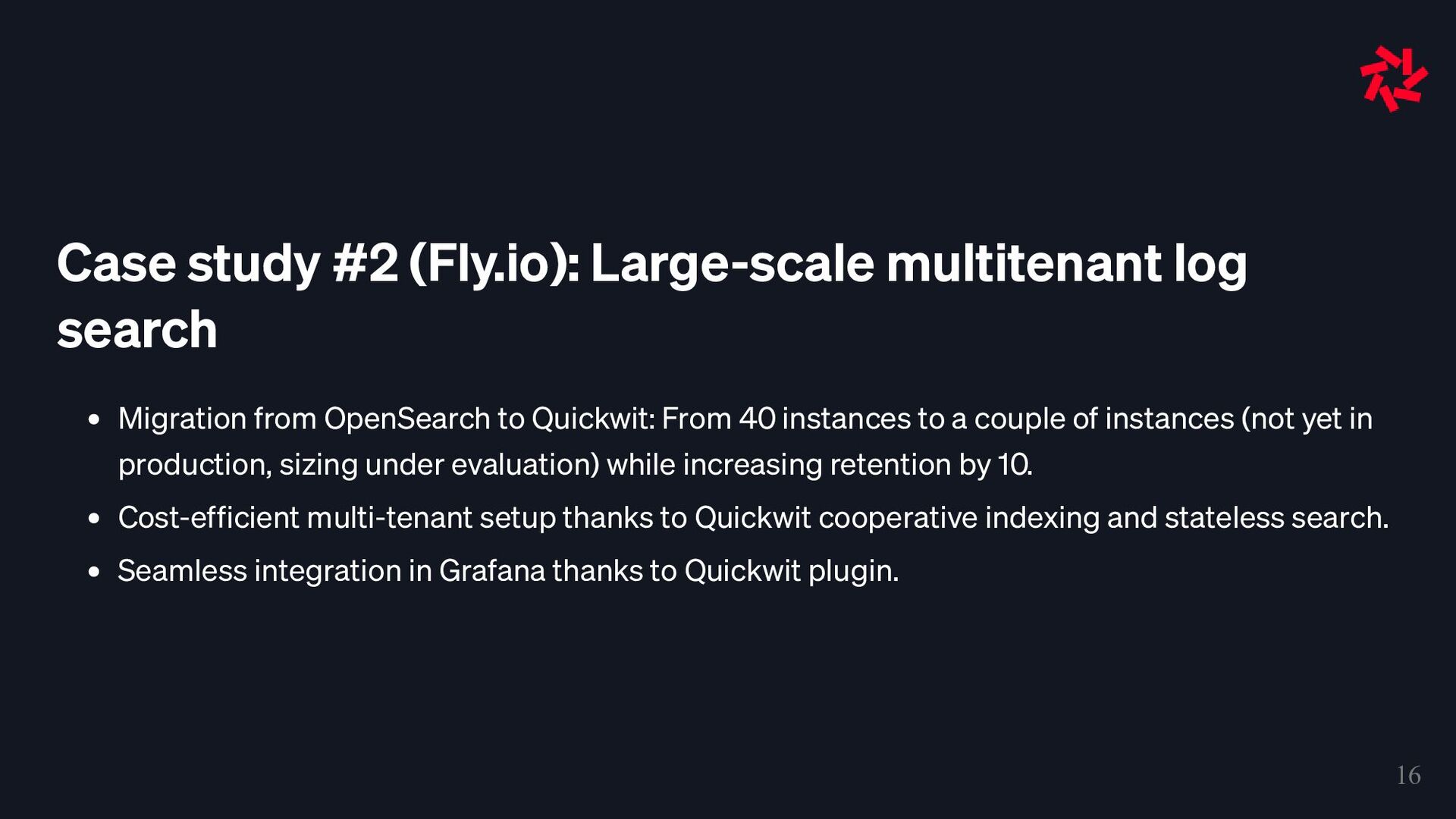
OpenSearch to Quickwit: From 40 instances to a couple of instances (not yet in production, sizing under evaluation) while increasing retention by 10. Cost-efficient multi-tenant setup thanks to Quickwit cooperative indexing and stateless search. Seamless integration in Grafana thanks to Quickwit plugin. 16
Privacy matters in log search. 2024: Double license AGPL / Commercial license to remove AGPL restrictions and provide enterprise support services. 2025: Open-Core with commercial license for enterprise features. Example: Encryption per tenant/bucket. 18
with large log datasets. Partnerships: With cloud providers, large tech companies and consulting companies who recommend Quickwit to their clients. Community: Open-source version to build a community around Quickwit. 19
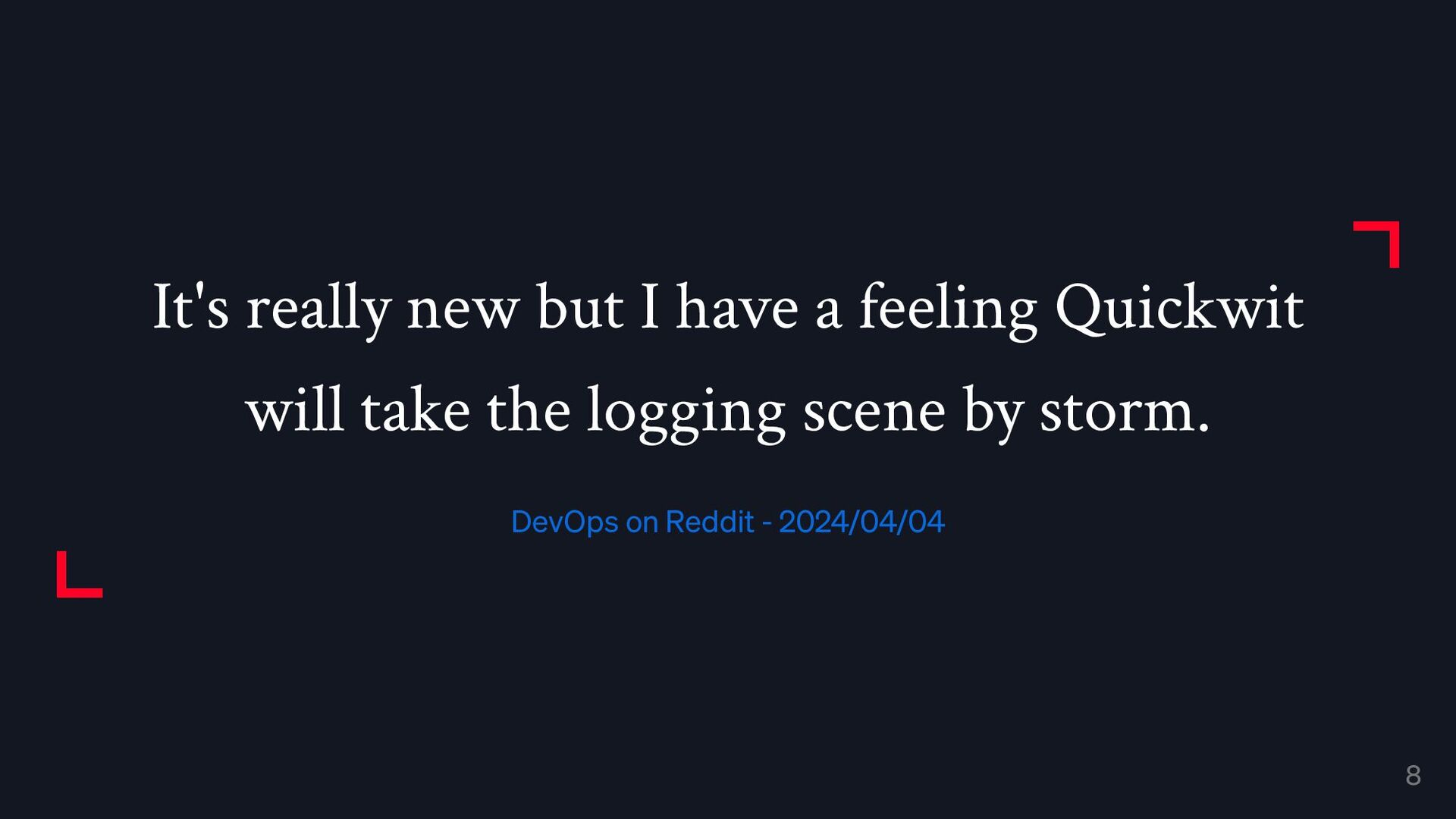
Started 3 years ago; built on top of Tantivy library with over 6 years of development. Adoption: Used by > 200 companies (OSS version). Trusted by leading tech companies: Crypto company: Manages over 40 petabytes of logs across more than 500 instances. Fly.io: Supports over 100,000 tenants. YC Log SaaS Company: Manages over 1 petabyte. 20
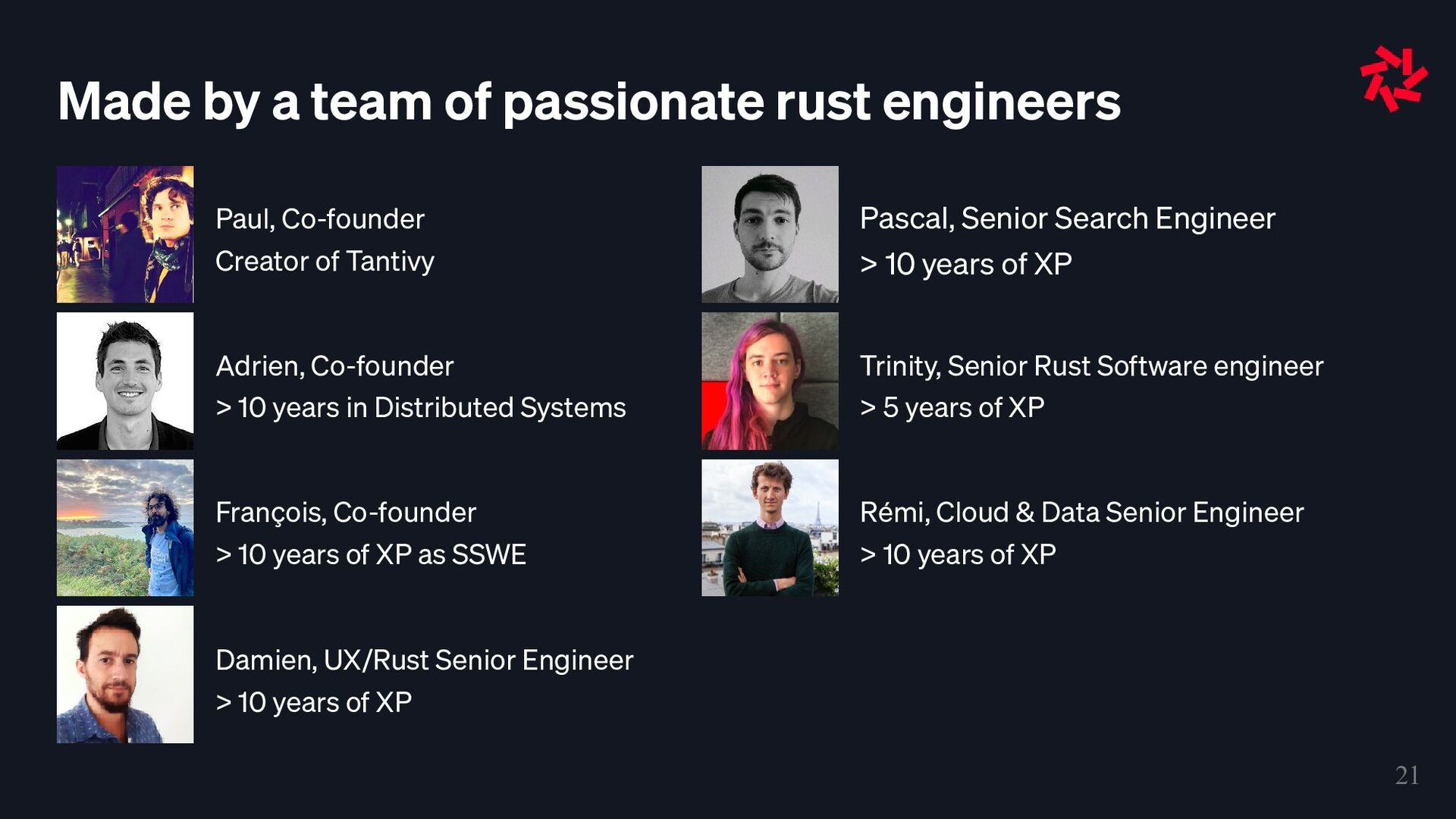
Creator of Tantivy Pascal, Senior Search Engineer > 10 years of XP Adrien, Co-founder > 10 years in Distributed Systems Trinity, Senior Rust Software engineer > 5 years of XP François, Co-founder > 10 years of XP as SSWE Rémi, Cloud & Data Senior Engineer > 10 years of XP Damien, UX/Rust Senior Engineer > 10 years of XP 21
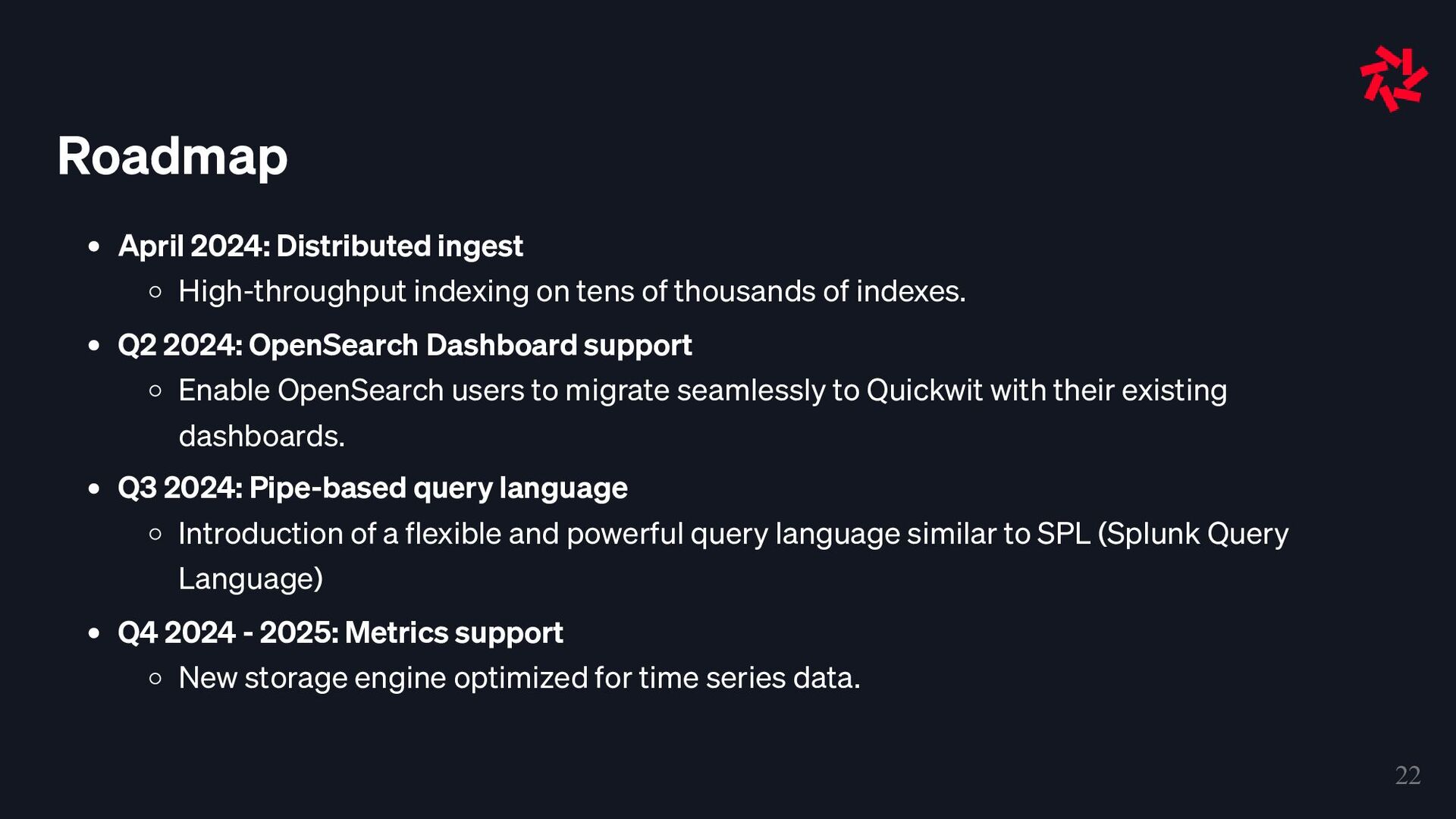
thousands of indexes. Q2 2024: OpenSearch Dashboard support Enable OpenSearch users to migrate seamlessly to Quickwit with their existing dashboards. Q3 2024: Pipe-based query language Introduction of a flexible and powerful query language similar to SPL (Splunk Query Language) Q4 2024 - 2025: Metrics support New storage engine optimized for time series data. 22
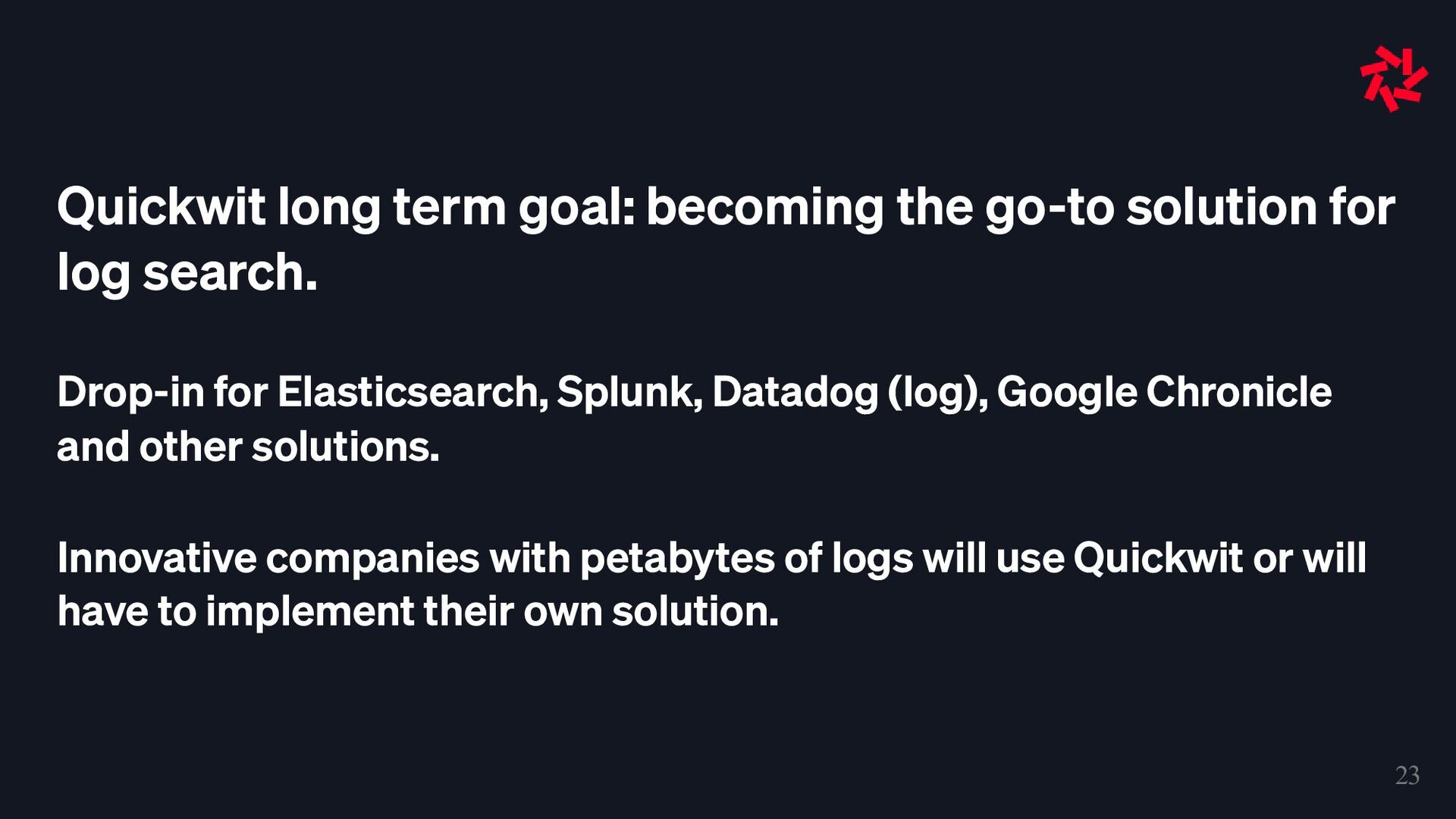
search. Drop-in for Elasticsearch, Splunk, Datadog (log), Google Chronicle and other solutions. Innovative companies with petabytes of logs will use Quickwit or will have to implement their own solution. 23


 itpresstour
 yut0naga1_fa
 iotengineer22
 mot_techtalk
 bcantrill
 philipz
 raspython3
 kakehashi
 ymotongpoo
 mewuto
 persolserverworks
 oikon48
 grimoh
 lauravandoore
 dougneiner
 jct
jct
 chriscoyier
 rabernat
 lara
lara
 aleyda
 baasie
 leimatthew05
 katarinadahlin
 codingconduct
 mfonobong
![Thank you! Contact [email protected] 24](https://files.speakerdeck.com/presentations/46a86a024f2c46d282733d4e7ba1a028/slide_23.jpg)