Upgrade to Pro
— share decks privately, control downloads, hide ads and more …
Speaker Deck
Sign up for free
Menu
Search
Features
All features
Private URLs
Password Protection
Custom URLS
Scheduled publishing
Remove Branding
Restrict embedding
Deck Collections
Notes
Features
All features
Private URLs
Password Protection
Custom URLS
Scheduled publishing
Remove Branding
Restrict embedding
Deck Collections
Notes
Explore
Featured decks
Featured speakers
Programming
Technology
Storyboards
Explore
Featured decks
Featured speakers
Programming
Technology
Storyboards
Pricing
Search
Sign in
Sign up for free
strace(1) all the things!
Search
Dan Miller
November 13, 2014
Programming
670
3
Share
Embed
Copy iframe code
Copy JS code
Copy link
Start on current slide
strace(1) all the things!
Presented at the Marist College Computer Society meeting, 11/12/14
Dan Miller
November 13, 2014
More Decks by Dan Miller
See All by Dan Miller
Oh Snap!
jazzdan
0
310
HHVM at Etsy
jazzdan
22
7k
"API First" Development
jazzdan
7
1.2k
Other Decks in Programming
See All in Programming
sbt 2.0: takeoff
eed3si9n
0
160
Apple Intelligence を用いた個人情報誤送信防止、及びユーザーリクエスト体験の改善について
yukiny
0
350
残高管理から台帳サービスへの進化
artoy
1
200
AI時代のコードレビューは人に向けるな、仕組みに向けろ
texmeijin
5
3.7k
Agents on Rails - Rails at Scale 2026
irinanazarova
0
550
作って学ぶSpring BootのAuto Configuration / JJUG Night Seminar 2026-10-19
rshindo
0
140
ソニーのクラウド共通基盤の変遷と AI時代の開発スタイルに合わせた進化 / The Journey of Sony’s Common Cloud Platform and Its Evolution for AI-Native Development
kenjiyoneyama
0
270
Simple Storage Service(S3) is not simple
iwatsukayura
0
290
機械に任せるテスト、人が見るテスト ⽣成AIで引き直した、運⽤保守フェーズの線引き
dske104
0
190
[Rails World 2026] Durable orchestration on Rails: from continuation to workflow
palkan
1
750
npm との違いを手がかりにGo の依存管理を理解したい
optim
0
250
AWS CDKのカスタムリソースでContinuum(旧Security Agent)を実装した話 | Implementing Continuum (formerly Security Agent) via AWS CDK Custom Resource
akihisaikeda
2
150
Featured
See All Featured
From Legacy to Launchpad: Building Startup-Ready Communities
dugsong
0
360
コードの90%をAIが書く世界で何が待っているのか / What awaits us in a world where 90% of the code is written by AI
rkaga
63
46k
Learning to Love Humans: Emotional Interface Design
aarron
275
41k
The SEO Collaboration Effect
kristinabergwall1
1
590
A better future with KSS
kneath
240
18k
Music & Morning Musume
bryan
48
7.4k
How to Get Subject Matter Experts Bought In and Actively Contributing to SEO & PR Initiatives.
livdayseo
0
220
Pawsitive SEO: Lessons from My Dog (and Many Mistakes) on Thriving as a Consultant in the Age of AI
davidcarrasco
0
260
The Power of CSS Pseudo Elements
geoffreycrofte
82
6.6k
Building Experiences: Design Systems, User Experience, and Full Site Editing
marktimemedia
1
630
First, design no harm
axbom
PRO
2
1.3k
[RailsConf 2023 Opening Keynote] The Magic of Rails
eileencodes
31
10k
Transcript
strace(1) all the things Dan Miller Software Engineer Etsy
etsy.com/careers
@jazzdan strace(1) all the things What is strace(1)? How to
see what a program does without the source A quick aside about man(1) pages How does ls(1) work?
What is strace?
@jazzdan strace(1) is a unix utility for observing system calls
How do we see what a program does without reading
the source?
@jazzdan $ls
@jazzdan $strace ls
None
@jazzdan strace ls • execve(2) • open(2) • close(2) •
getdents(2) • write(2)
A quick aside on Unix man pages
@jazzdan $man man
None
None
None
How does ls work?
execve("/bin/ls", ["ls"], [/* 23 vars */]) = 0
None
execve() executes the program pointed to by filename. filename must
be either a binary executable, or a script starting with a line of the form: ! #! interpreter [optional-arg]
int execve(const char *filename, char *const argv[], char *const envp[]);
open( “/lib/x86_64-linux-gnu/libc.so.6", O_RDONLY|O_CLOEXEC ) = 3
None
Given a pathname for a file, open() returns a file
descriptor, a small, nonnegative integer for use in subsequent system calls (read(2), write(2), lseek(2), fcntl(2), etc.).
int open(const char *pathname, int flags)
open( “/lib/x86_64-linux-gnu/libc.so.6", O_RDONLY|O_CLOEXEC ) = 3
@jazzdan Wait… what is libc?
@jazzdan $man libc
None
open( “.", O_RDONLY|O_NONBLOCK|O_DIRECTORY|O_CLOEXEC ) = 3
getdents( 3, /* 4 entries */, 32768 ) = 712
None
int getdents(unsigned int fd, struct linux_dirent *dirp, unsigned int count);
getdents( 3, /* 23 entries */, 32768 )= 712
open( “.", O_RDONLY|O_NONBLOCK|O_DIRECTORY|O_CLOEXEC ) = 3
close(3)
None
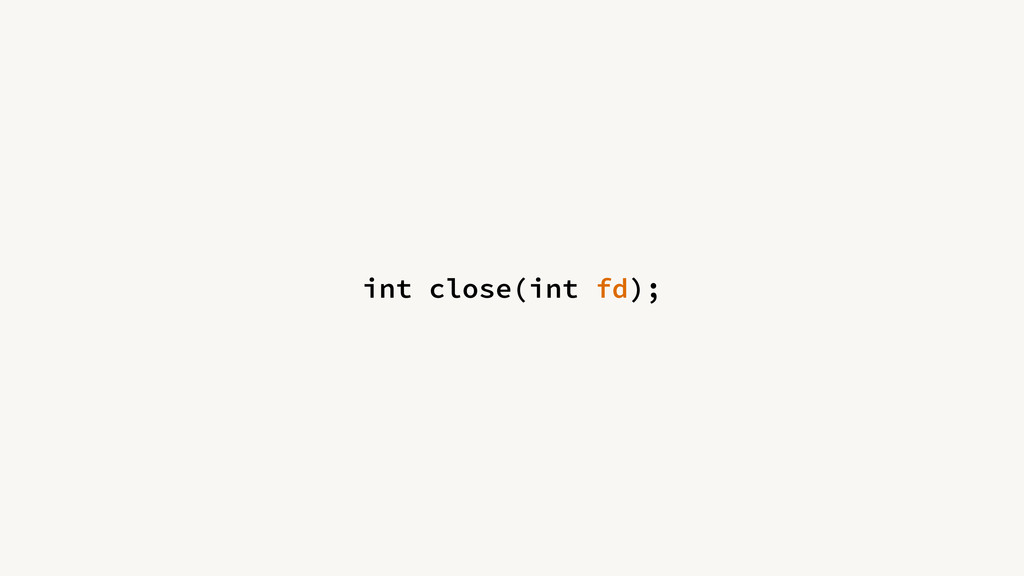
int close(int fd);
close(3)
write( 1, “hello_world\n", hello_world ) = 23
None
exit_group(0) = ?
None
This system call is equivalent to exit(2) except that it
terminates not only the calling thread, but all threads in the calling process's thread group.
void exit_group(int status);
@jazzdan When is strace(1) useful? • Anything involving files or
sockets • Path issues • See what is being sent over a network interface
@jazzdan When is strace(1) not useful? • In production (performance
is terrible) • When no syscalls are being executed
One Cool Trick for Performance Analysis (perf folks hate ‘em)
@jazzdan $strace -c ls
None
Questions?


 jazzdan
 eed3si9n
 yukiny
 artoy
 texmeijin
 irinanazarova
 rshindo
 kenjiyoneyama
 iwatsukayura
 dske104
 palkan
 optim
 akihisaikeda
 dugsong
 rkaga
 aarron
 kristinabergwall1
 kneath
 bryan
 livdayseo
 davidcarrasco
 geoffreycrofte
 marktimemedia
 axbom
 eileencodes