Share
Embed
Kubernetes and OpenShift: Same, same, different
Red Hat Accelerators and Convergence Communities: June, August, and October 2018
Josh Wood
October 30, 2018
Transcript
26 slides
-
Formerly: DocOps, CoreOS Josh Wood Developer Advocate, Kubernetes and OpenShift
• [email protected] • @joshixisjosh9 • github.com/joshix • speakerdeck.com/joshix -
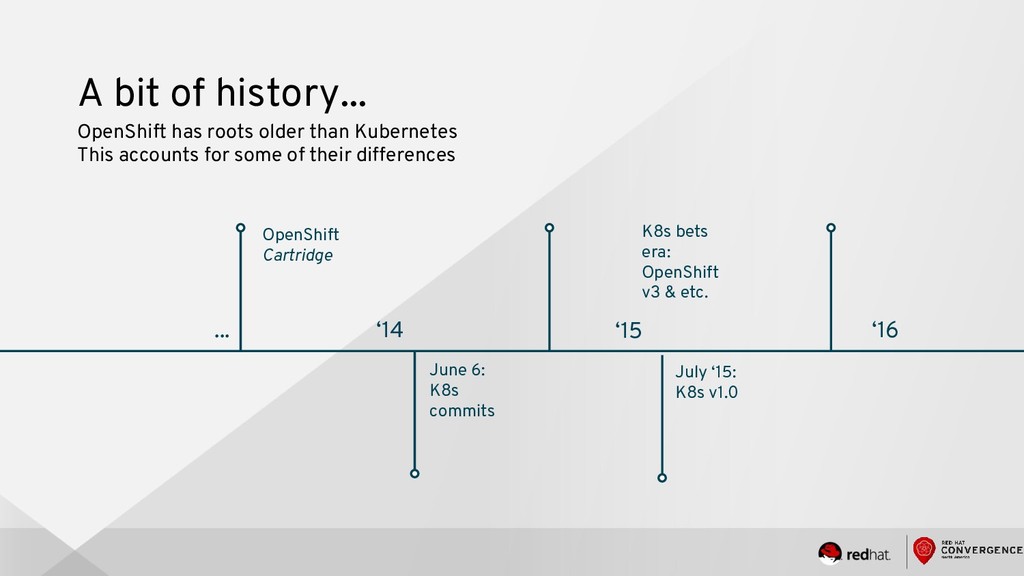
K8s bets era: OpenShift v3 & etc. OpenShift Cartridge A
bit of history... ... ‘14 June 6: K8s commits OpenShift has roots older than Kubernetes This accounts for some of their differences ‘15 July ‘15: K8s v1.0 ‘16 -
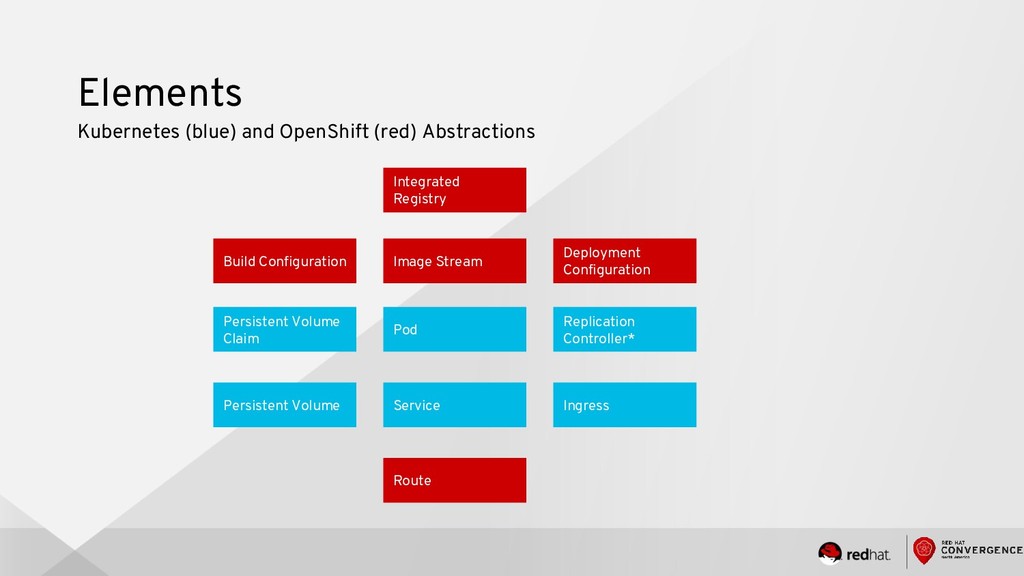
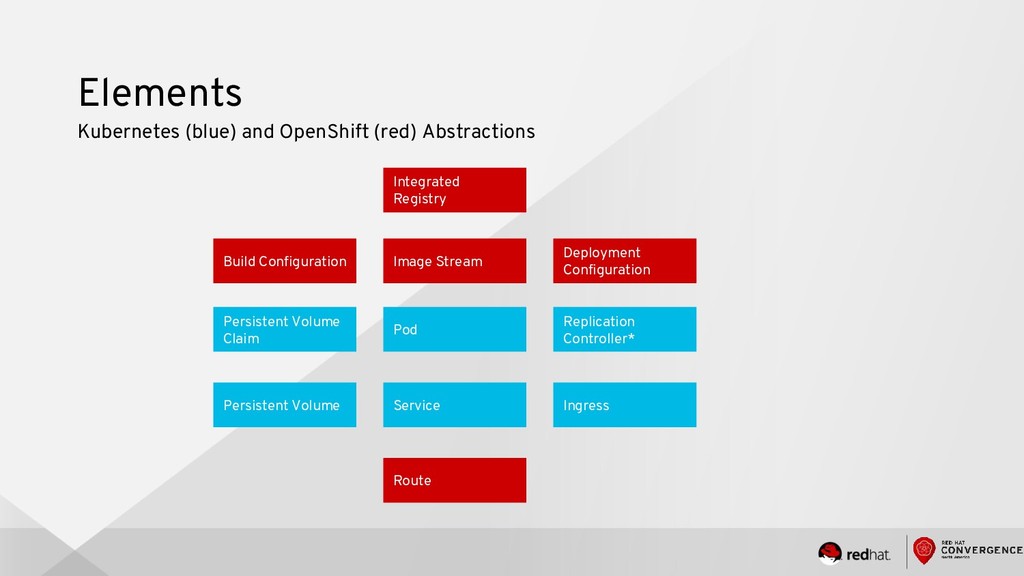
Elements Kubernetes (blue) and OpenShift (red) Abstractions Route Deployment Configuration
Build Configuration Image Stream Integrated Registry Pod Replication Controller* Service Ingress Persistent Volume Claim Persistent Volume -
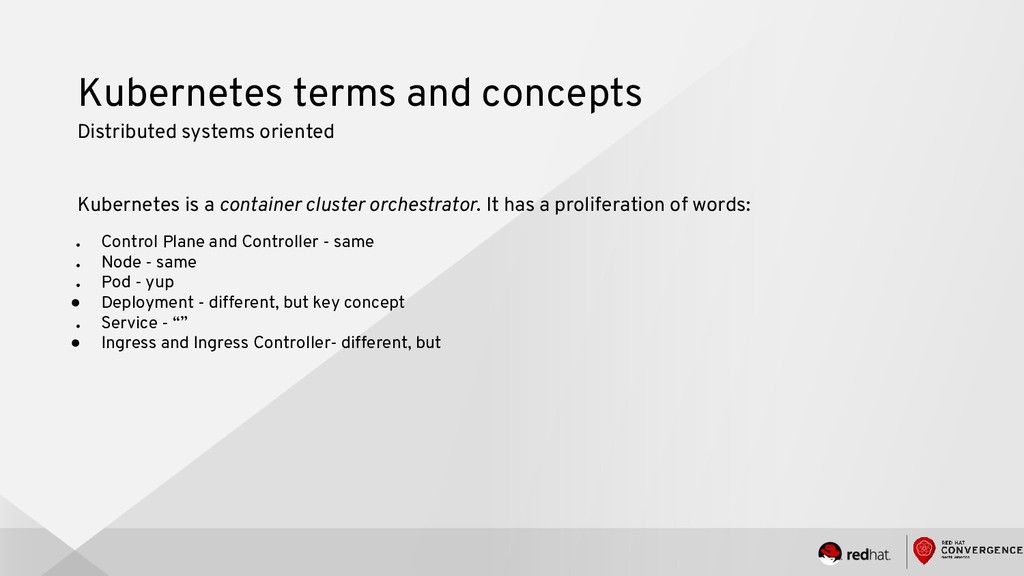
Kubernetes terms and concepts Distributed systems oriented Kubernetes is a
container cluster orchestrator. It has a proliferation of words: • Control Plane and Controller - same • Node - same • Pod - yup • Deployment - different, but key concept • Service - “” • Ingress and Ingress Controller- different, but -
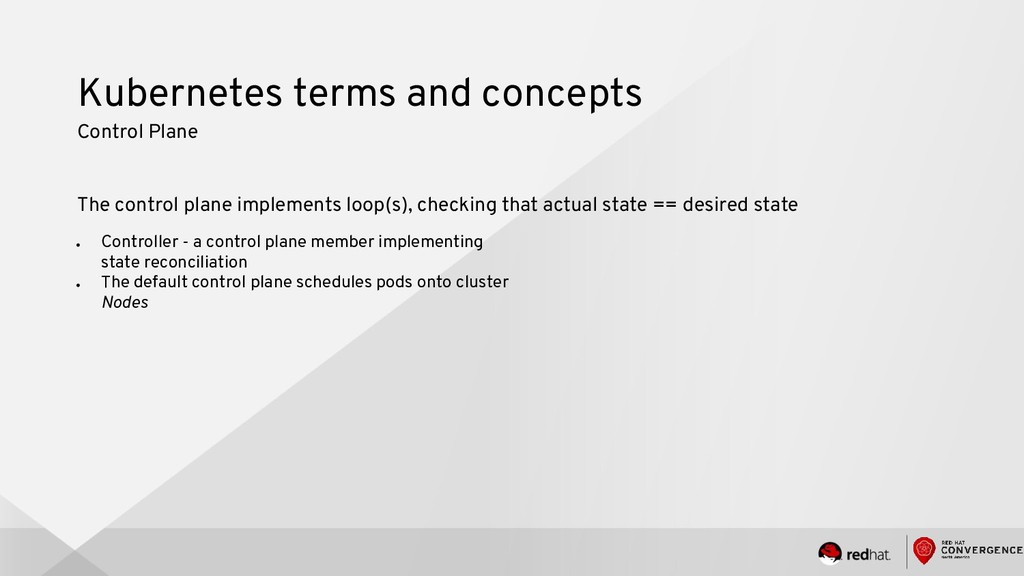
Kubernetes terms and concepts Control Plane The control plane implements
loop(s), checking that actual state == desired state • Controller - a control plane member implementing state reconciliation • The default control plane schedules pods onto cluster Nodes -
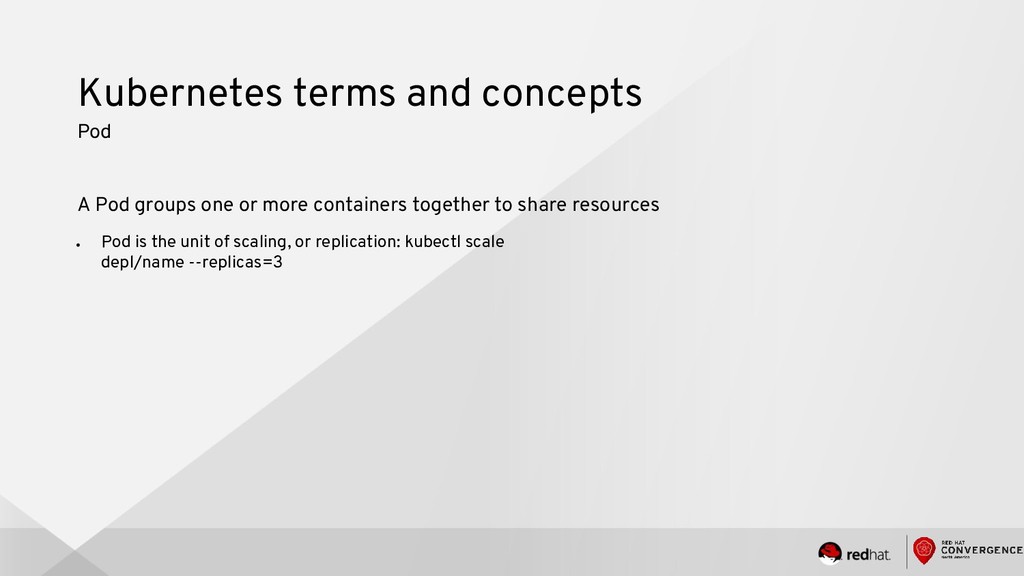
Kubernetes terms and concepts Pod A Pod groups one or
more containers together to share resources • Pod is the unit of scaling, or replication: kubectl scale depl/name --replicas=3 -
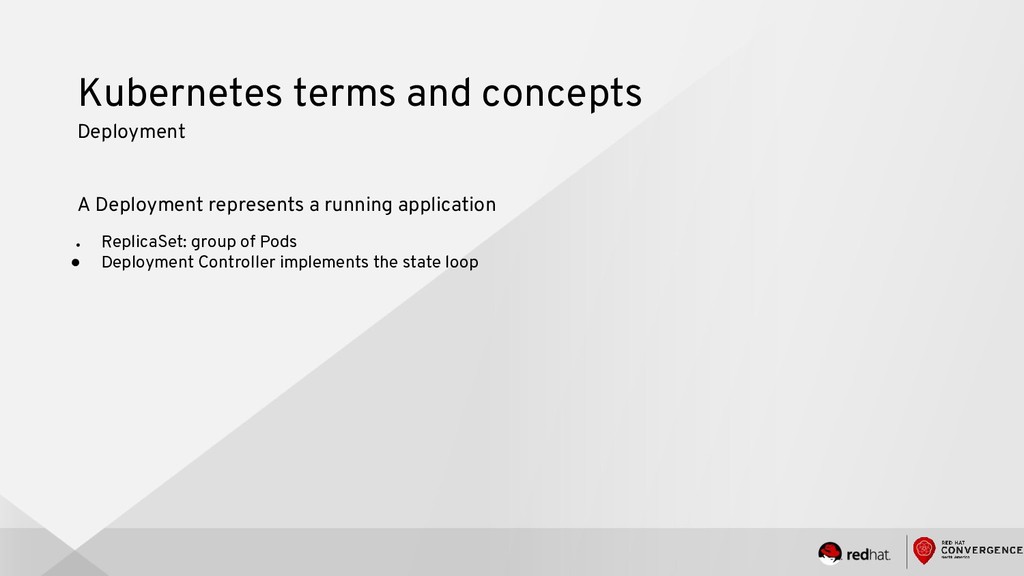
Kubernetes terms and concepts Deployment A Deployment represents a running
application • ReplicaSet: group of Pods • Deployment Controller implements the state loop -
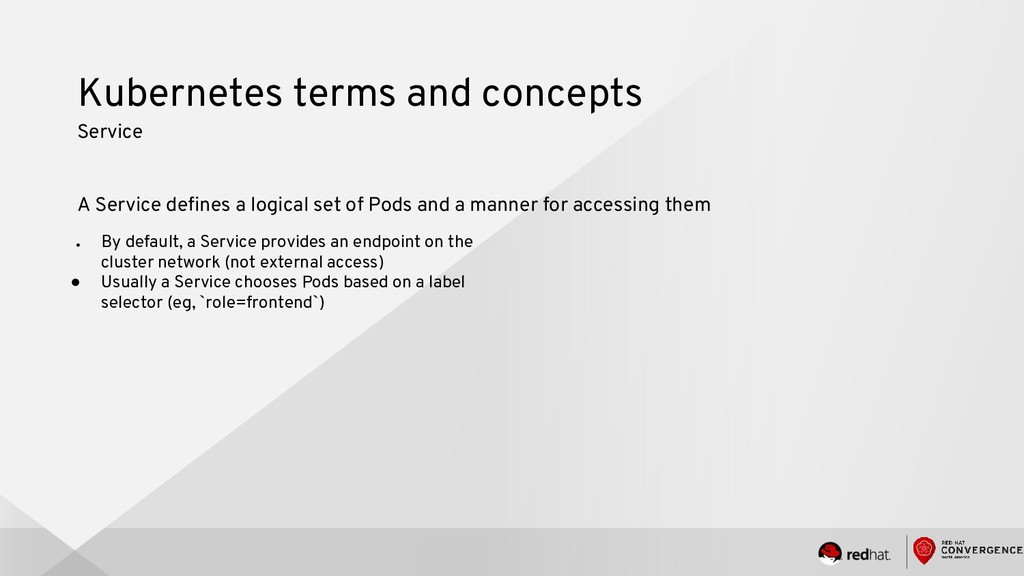
Kubernetes terms and concepts Service A Service defines a logical
set of Pods and a manner for accessing them • By default, a Service provides an endpoint on the cluster network (not external access) • Usually a Service chooses Pods based on a label selector (eg, `role=frontend`) -
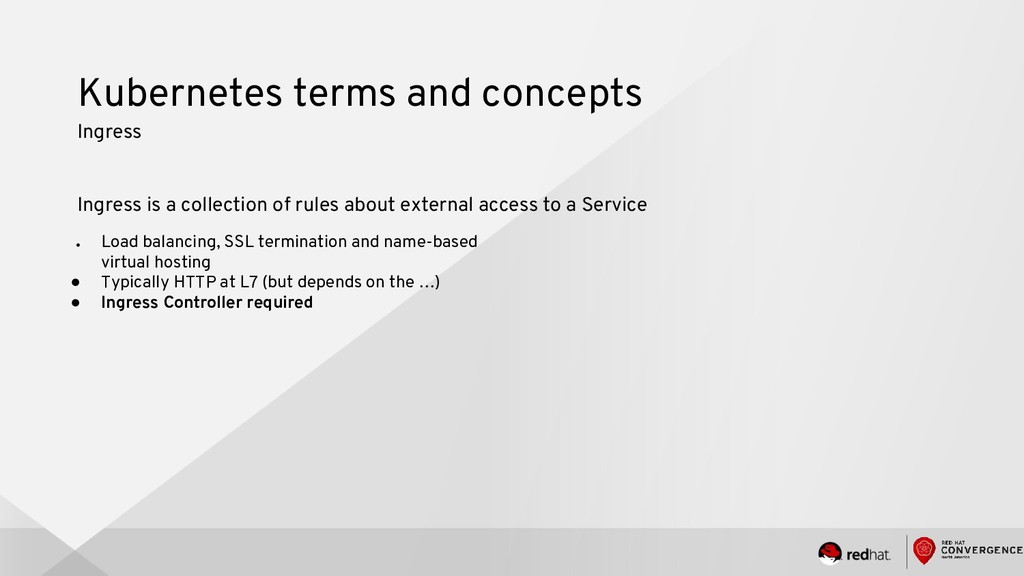
Kubernetes terms and concepts Ingress Ingress is a collection of
rules about external access to a Service • Load balancing, SSL termination and name-based virtual hosting • Typically HTTP at L7 (but depends on the …) • Ingress Controller required -
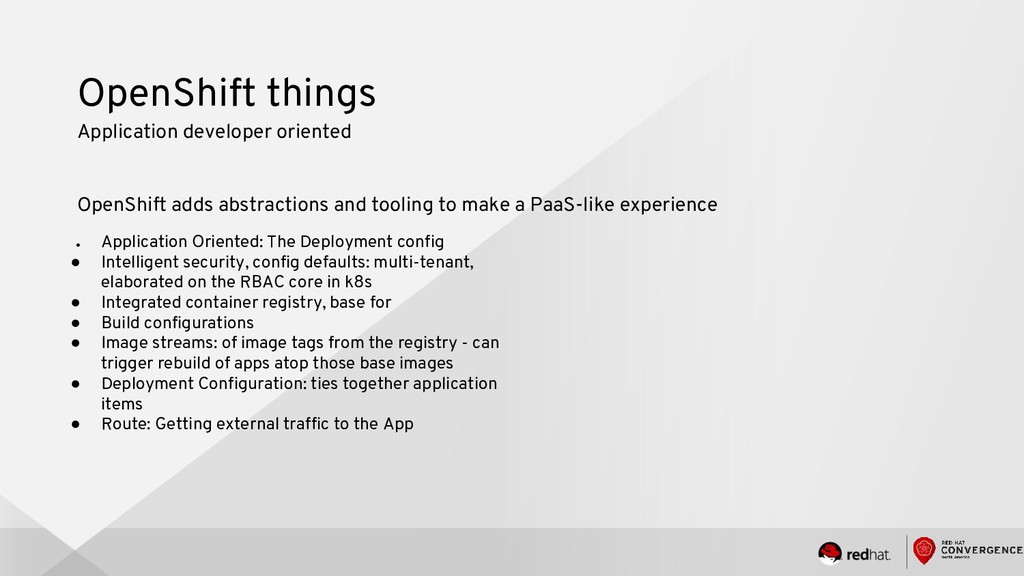
OpenShift things Application developer oriented OpenShift adds abstractions and tooling
to make a PaaS-like experience • Application Oriented: The Deployment config • Intelligent security, config defaults: multi-tenant, elaborated on the RBAC core in k8s • Integrated container registry, base for • Build configurations • Image streams: of image tags from the registry - can trigger rebuild of apps atop those base images • Deployment Configuration: ties together application items • Route: Getting external traffic to the App -
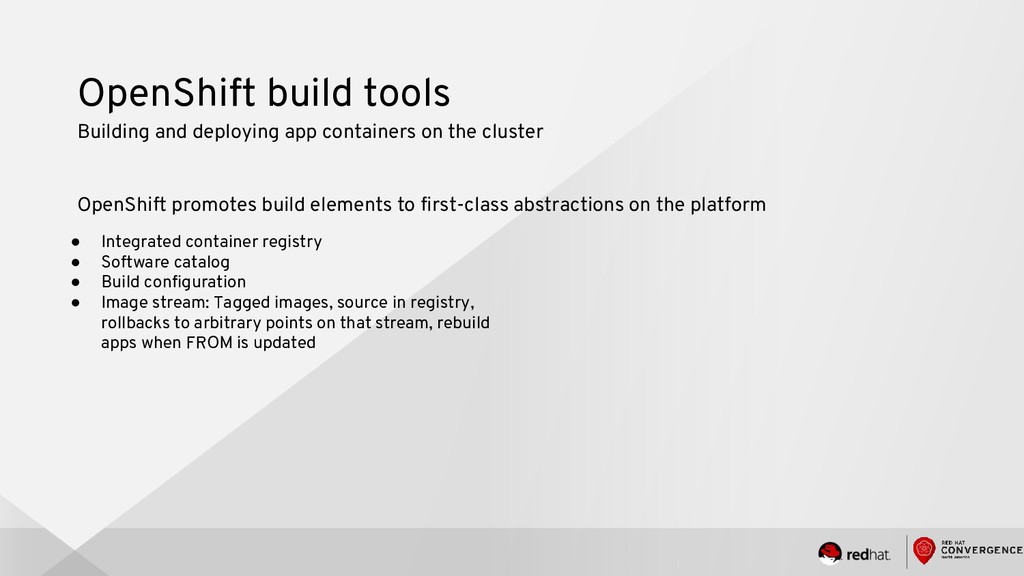
OpenShift build tools Building and deploying app containers on the
cluster OpenShift promotes build elements to first-class abstractions on the platform • Integrated container registry • Software catalog • Build configuration • Image stream: Tagged images, source in registry, rollbacks to arbitrary points on that stream, rebuild apps when FROM is updated -
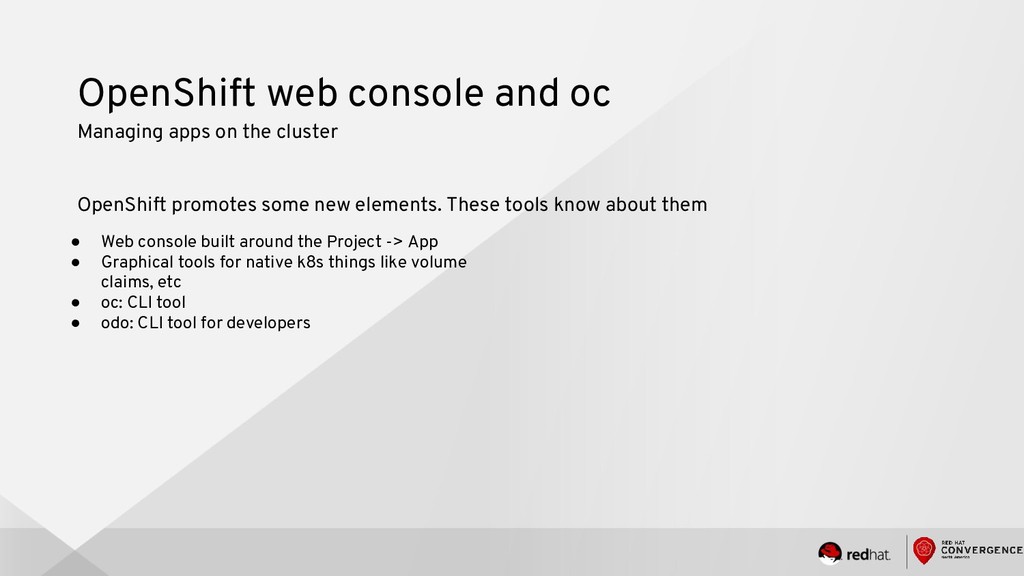
OpenShift web console and oc Managing apps on the cluster
OpenShift promotes some new elements. These tools know about them • Web console built around the Project -> App • Graphical tools for native k8s things like volume claims, etc • oc: CLI tool • odo: CLI tool for developers -
Elements Kubernetes (blue) and OpenShift (red) Abstractions Route Deployment Configuration
Build Configuration Image Stream Integrated Registry Pod Replication Controller* Service Ingress Persistent Volume Claim Persistent Volume -
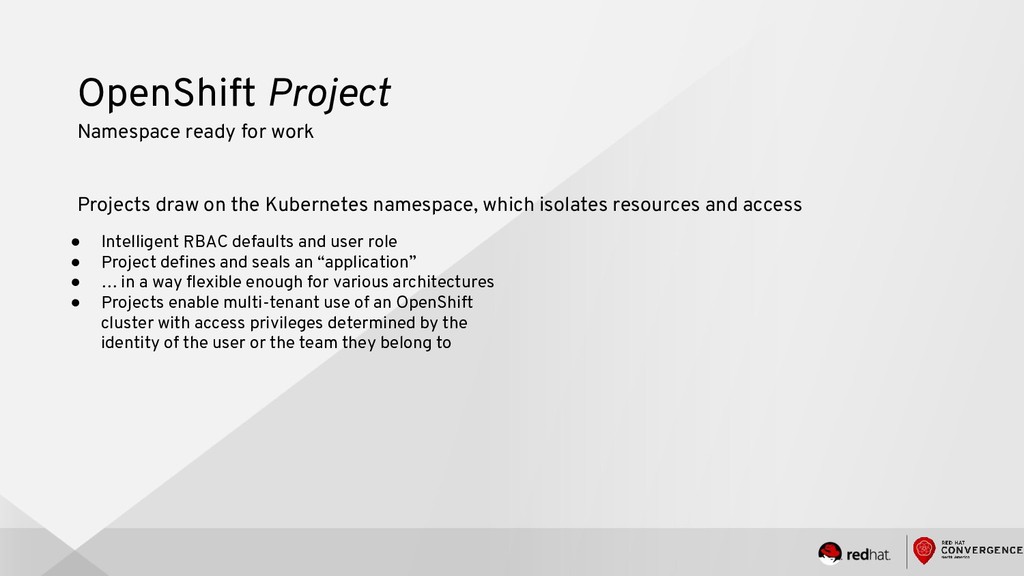
OpenShift Project Namespace ready for work Projects draw on the
Kubernetes namespace, which isolates resources and access • Intelligent RBAC defaults and user role • Project defines and seals an “application” • … in a way flexible enough for various architectures • Projects enable multi-tenant use of an OpenShift cluster with access privileges determined by the identity of the user or the team they belong to -
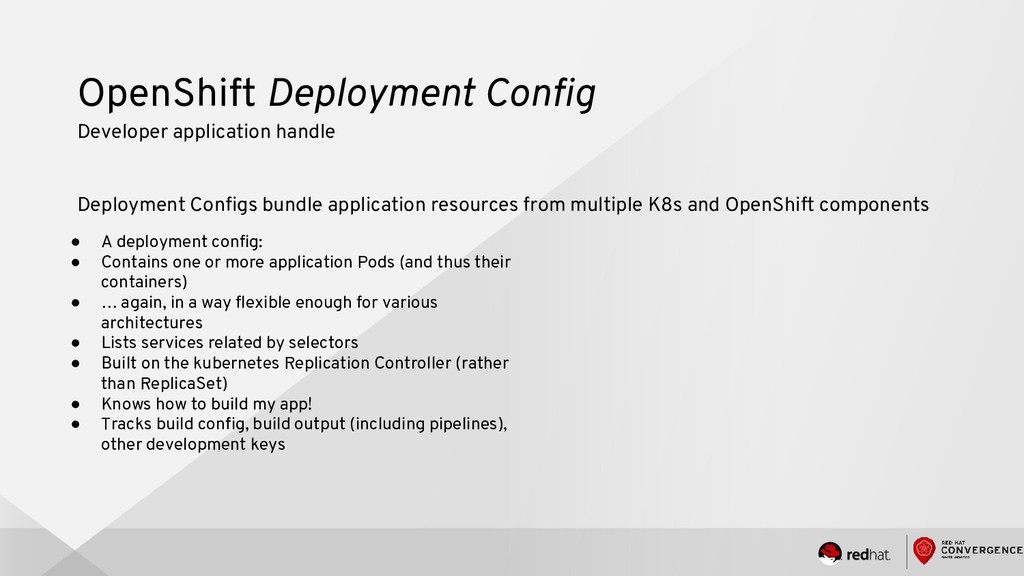
OpenShift Deployment Config Developer application handle Deployment Configs bundle application
resources from multiple K8s and OpenShift components • A deployment config: • Contains one or more application Pods (and thus their containers) • … again, in a way flexible enough for various architectures • Lists services related by selectors • Built on the kubernetes Replication Controller (rather than ReplicaSet) • Knows how to build my app! • Tracks build config, build output (including pipelines), other development keys -
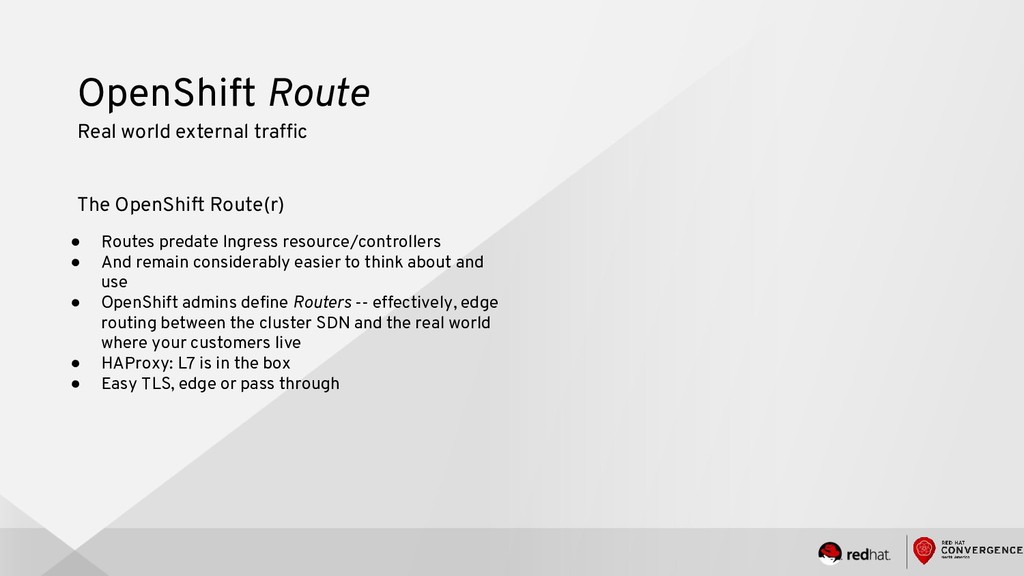
OpenShift Route Real world external traffic The OpenShift Route(r) •
Routes predate Ingress resource/controllers • And remain considerably easier to think about and use • OpenShift admins define Routers -- effectively, edge routing between the cluster SDN and the real world where your customers live • HAProxy: L7 is in the box • Easy TLS, edge or pass through -
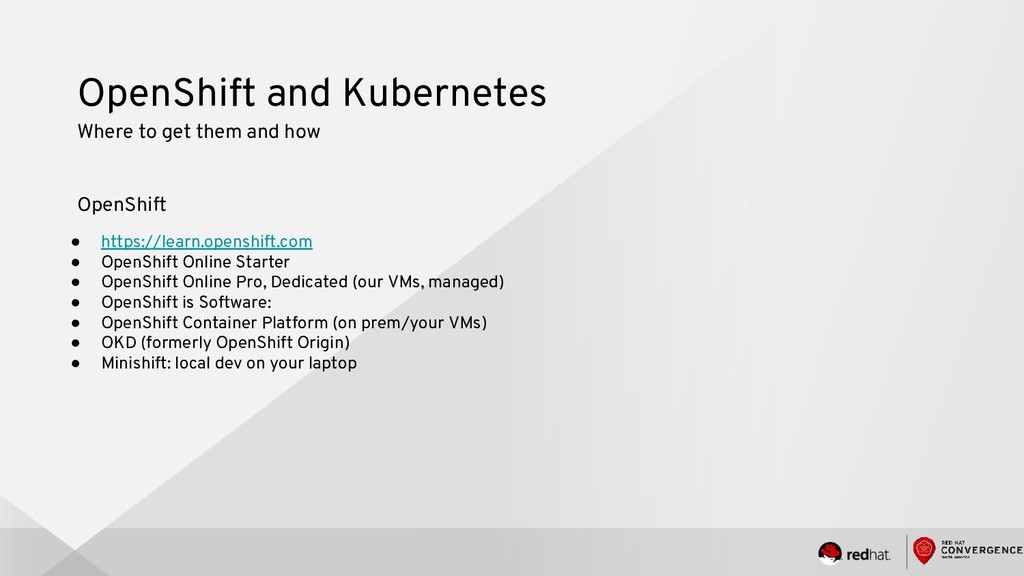
OpenShift and Kubernetes Where to get them and how OpenShift
• https://learn.openshift.com • OpenShift Online Starter • OpenShift Online Pro, Dedicated (our VMs, managed) • OpenShift is Software: • OpenShift Container Platform (on prem/your VMs) • OKD (formerly OpenShift Origin) • Minishift: local dev on your laptop -
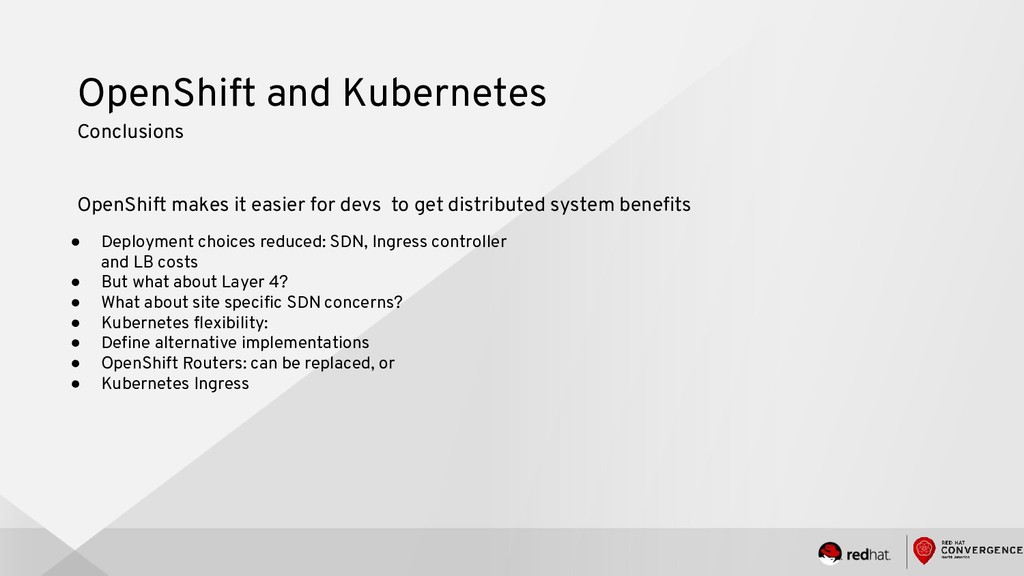
OpenShift and Kubernetes Conclusions OpenShift makes it easier for devs
to get distributed system benefits • Deployment choices reduced: SDN, Ingress controller and LB costs • But what about Layer 4? • What about site specific SDN concerns? • Kubernetes flexibility: • Define alternative implementations • OpenShift Routers: can be replaced, or • Kubernetes Ingress -
Formerly: DocOps, CoreOS Josh Wood Developer Advocate, Kubernetes and OpenShift
• [email protected] • @joshixisjosh9 • github.com/joshix • speakerdeck.com/joshix