Upgrade to Pro — share decks privately, control downloads, hide ads and more …

Ensuring the system integrity of ALMA 2030: man...

Ensuring the system integrity of ALMA 2030: managing the distributed systems engineering effort for delivering the wideband sensitivity upgrade

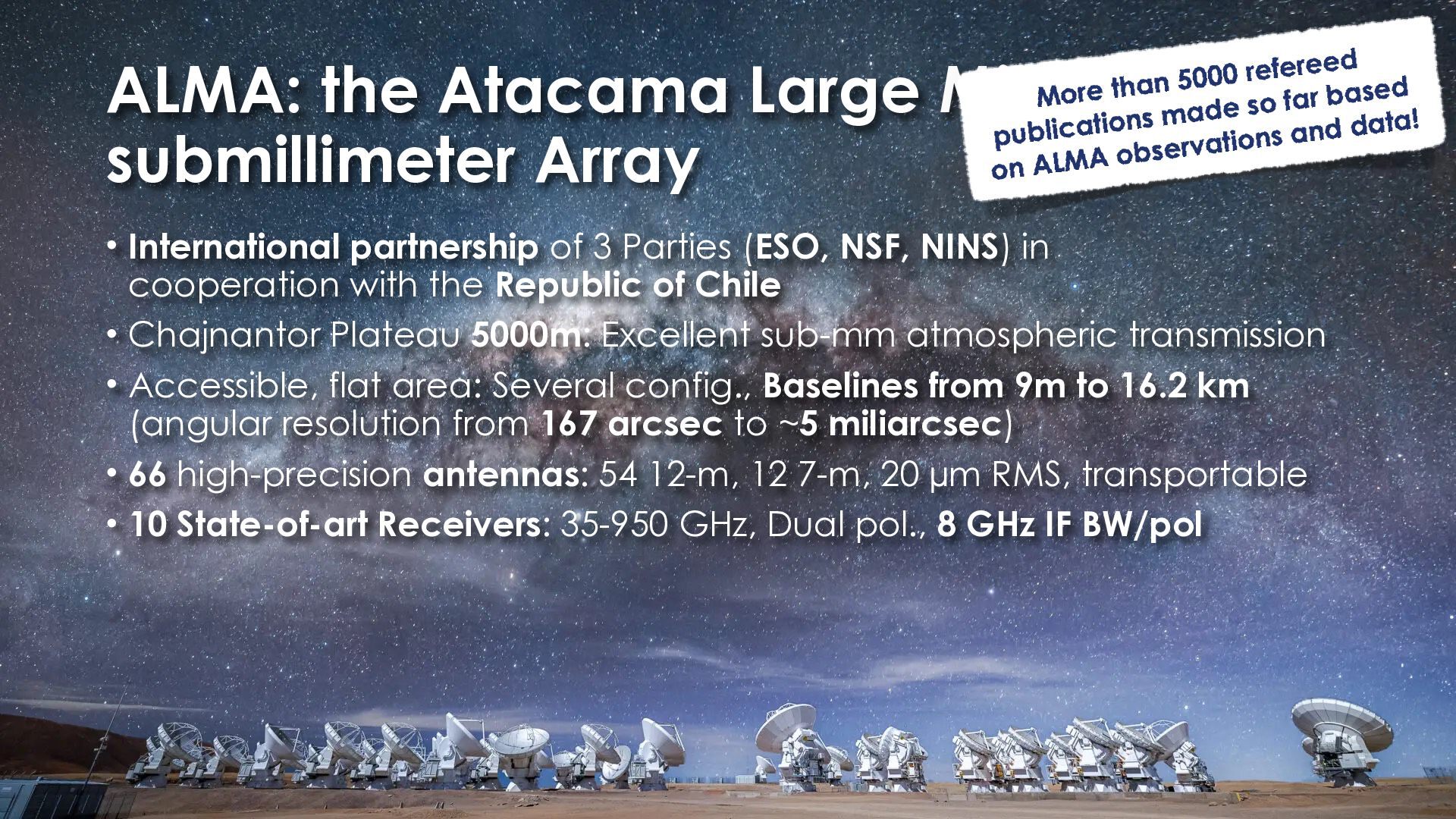
The Atacama Large Millimeter/submillimeter Array (ALMA) has operated successfully for more than a decade, remaining the world’s premier facility for high-resolution observations at millimeter/submillimeter wavelengths, with more than 5000 refereed publications to date. The next stage for ALMA is the Wideband Sensitivity Upgrade (WSU), which will increase the instantaneous bandwidth by 4× (initially delivered as 2×), improving its sensitivity and digital efficiency, while keeping the existing system in operation. This complex program requires dedicated systems engineering (SE) to maintain system integrity while scientific observations continue. We describe the complementary SE efforts at project and program levels, based on collaboration between the WSU Program Management Office, the Integrated Development Team, the JAO Systems Engineering Group, and regional development projects. We summarize the progress made towards System PDR and reflect on the SE and program management interplay.

Avatar for Juande Santander-Vela

Juande Santander-Vela

July 07, 2026

More Decks by Juande Santander-Vela

Other Decks in Science
Transcript

  1. Ensuring the System Integrity of ALMA 2030: Managing the Distributed

    Systems Engineering Effort for Delivering the Wideband Sensitivity Upgrade Dr. Juande Santander-Vela JAO Development Systems Engineer Modeling, Systems Engineering, and Project Management for Astronomy XII SPIE Astronomical Telescopes + Instrumentation 2026
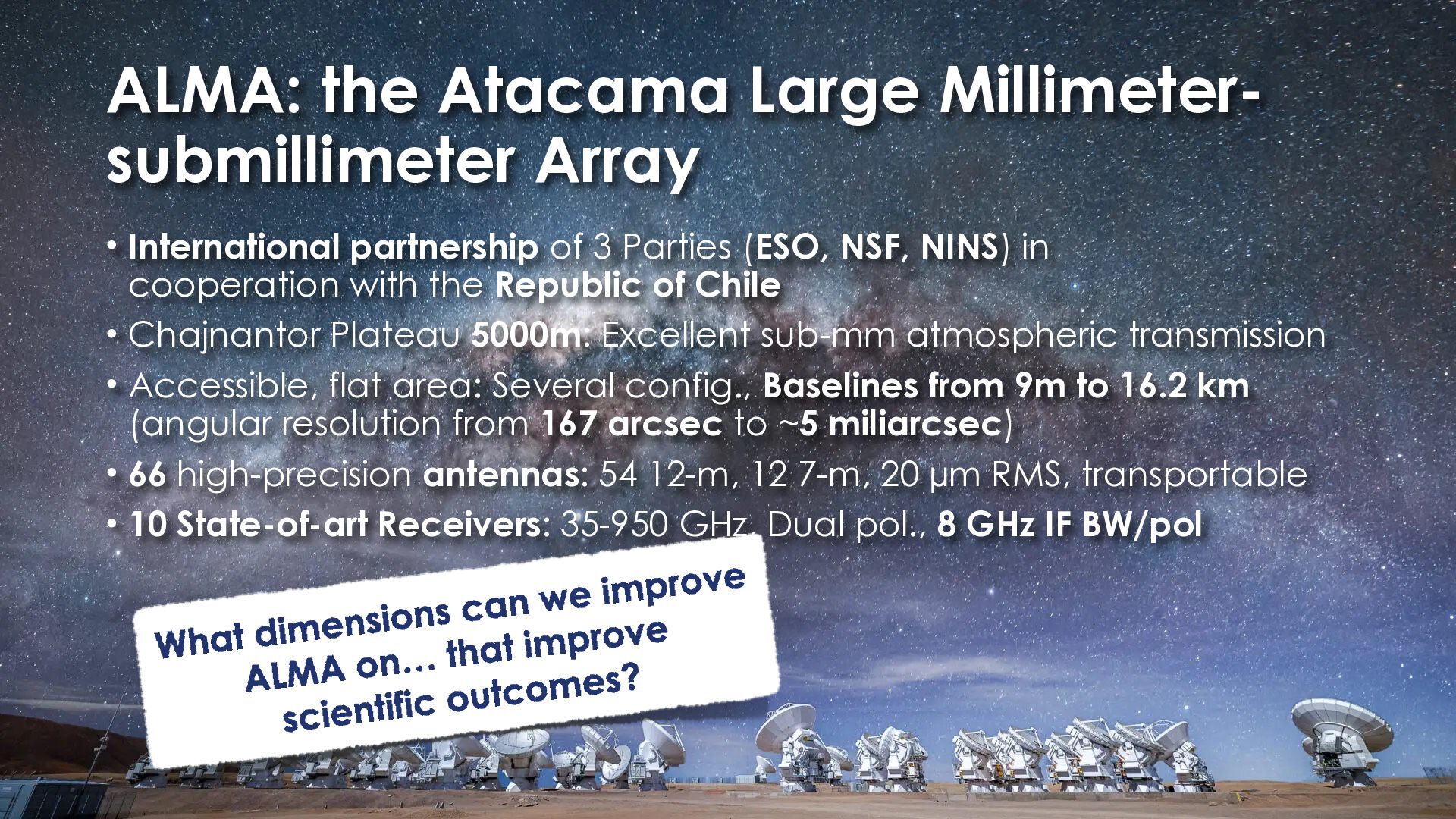
  2. ALMA: the Atacama Large Millimetersubmillimeter Array • International partnership of

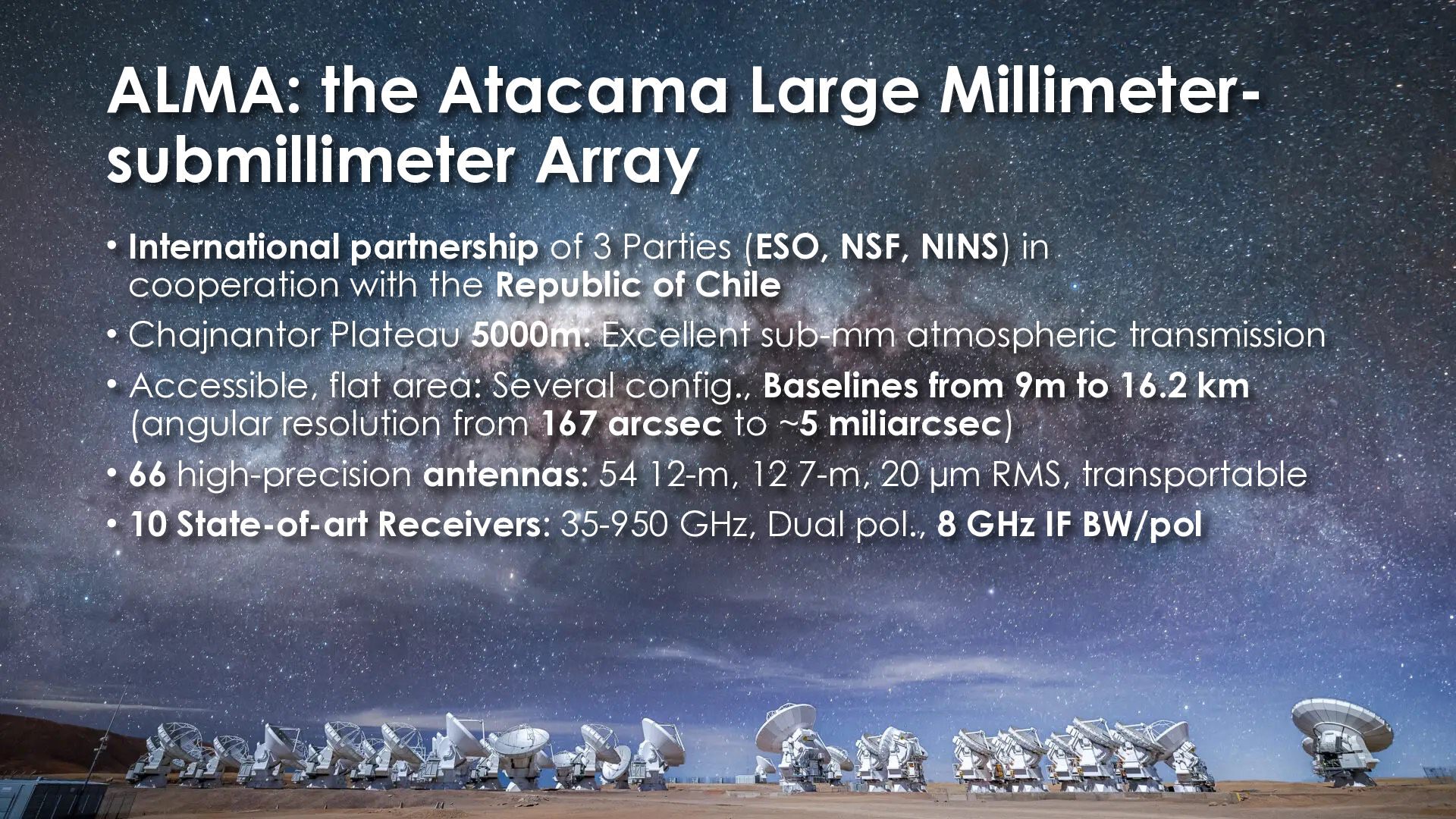
    3 Parties (ESO, NSF, NINS) in cooperation with the Republic of Chile • Chajnantor Plateau 5000m: Excellent sub-mm atmospheric transmission • Accessible, flat area: Several config., Baselines from 9m to 16.2 km (angular resolution from 167 arcsec to ~5 miliarcsec) • 66 high-precision antennas: 54 12-m, 12 7-m, 20 µm RMS, transportable • 10 State-of-art Receivers: 35-950 GHz, Dual pol., 8 GHz IF BW/pol
  3. ALMA: the Atacama Large Millimetersubmillimeter Array • International partnership of

    3 Parties (ESO, NSF, NINS) in cooperation with the Republic of Chile • Chajnantor Plateau 5000m: Excellent sub-mm atmospheric transmission • Accessible, flat area: Several config., Baselines from 9m to 16.2 km (angular resolution from 167 arcsec to ~5 miliarcsec) • 66 high-precision antennas: 54 12-m, 12 7-m, 20 µm RMS, transportable • 10 State-of-art Receivers: 35-950 GHz, Dual pol., 8 GHz IF BW/pol
  4. ALMA: the Atacama Large Millimetersubmillimeter Array • International partnership of

    3 Parties (ESO, NSF, NINS) in cooperation with the Republic of Chile • Chajnantor Plateau 5000m: Excellent sub-mm atmospheric transmission • Accessible, flat area: Several config., Baselines from 9m to 16.2 km (angular resolution from 167 arcsec to ~5 miliarcsec) • 66 high-precision antennas: 54 12-m, 12 7-m, 20 µm RMS, transportable • 10 State-of-art Receivers: 35-950 GHz, Dual pol., 8 GHz IF BW/pol
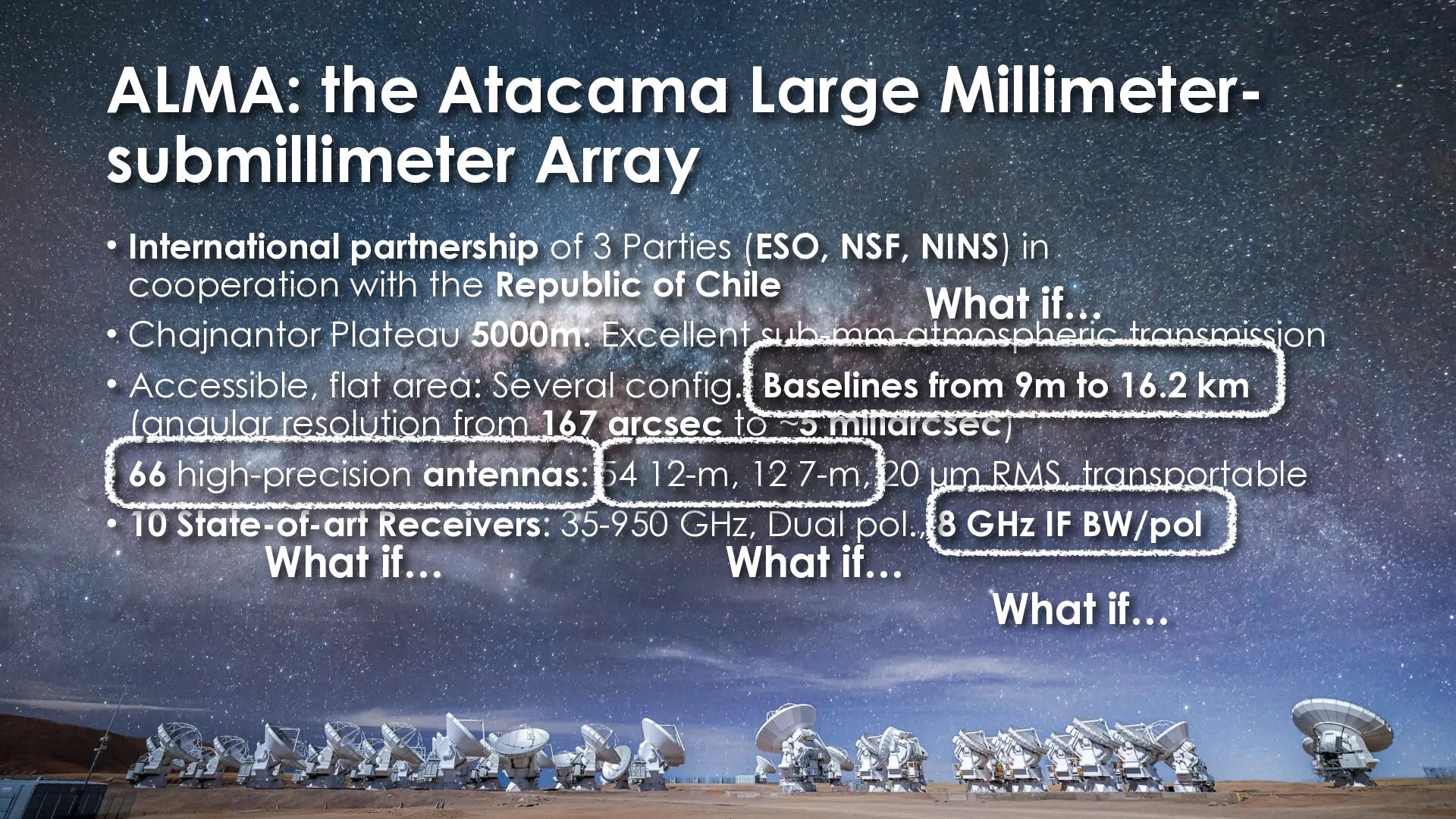
  5. ALMA: the Atacama Large Millimetersubmillimeter Array • International partnership of

    3 Parties (ESO, NSF, NINS) in cooperation with the Republic of Chile What if… • Chajnantor Plateau 5000m: Excellent sub-mm atmospheric transmission • Accessible, flat area: Several config., Baselines from 9m to 16.2 km (angular resolution from 167 arcsec to ~5 miliarcsec) • 66 high-precision antennas: 54 12-m, 12 7-m, 20 µm RMS, transportable • 10 State-of-art Receivers: 35-950 GHz, Dual pol., 8 GHz IF BW/pol What if… What if… What if…
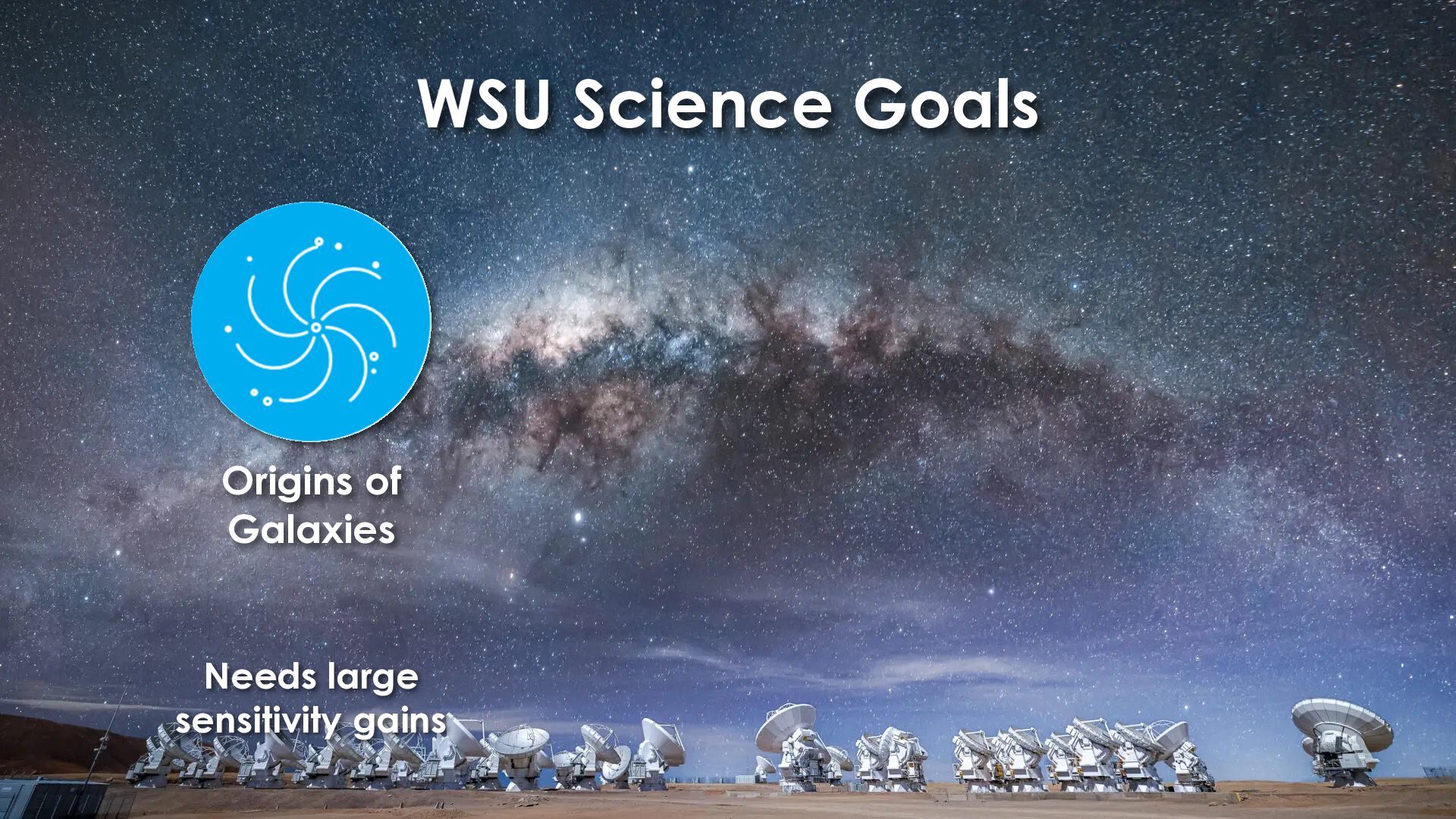
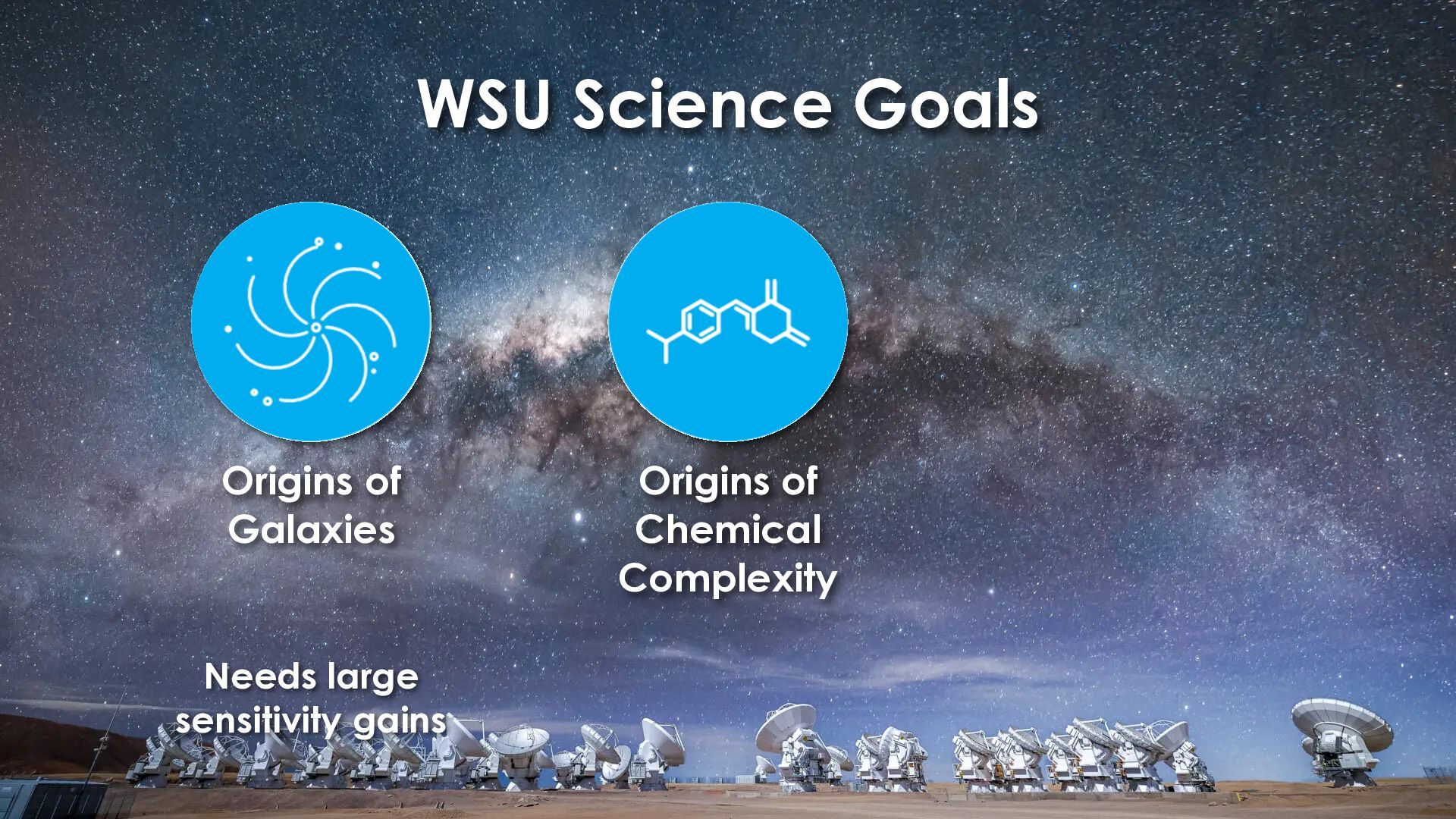
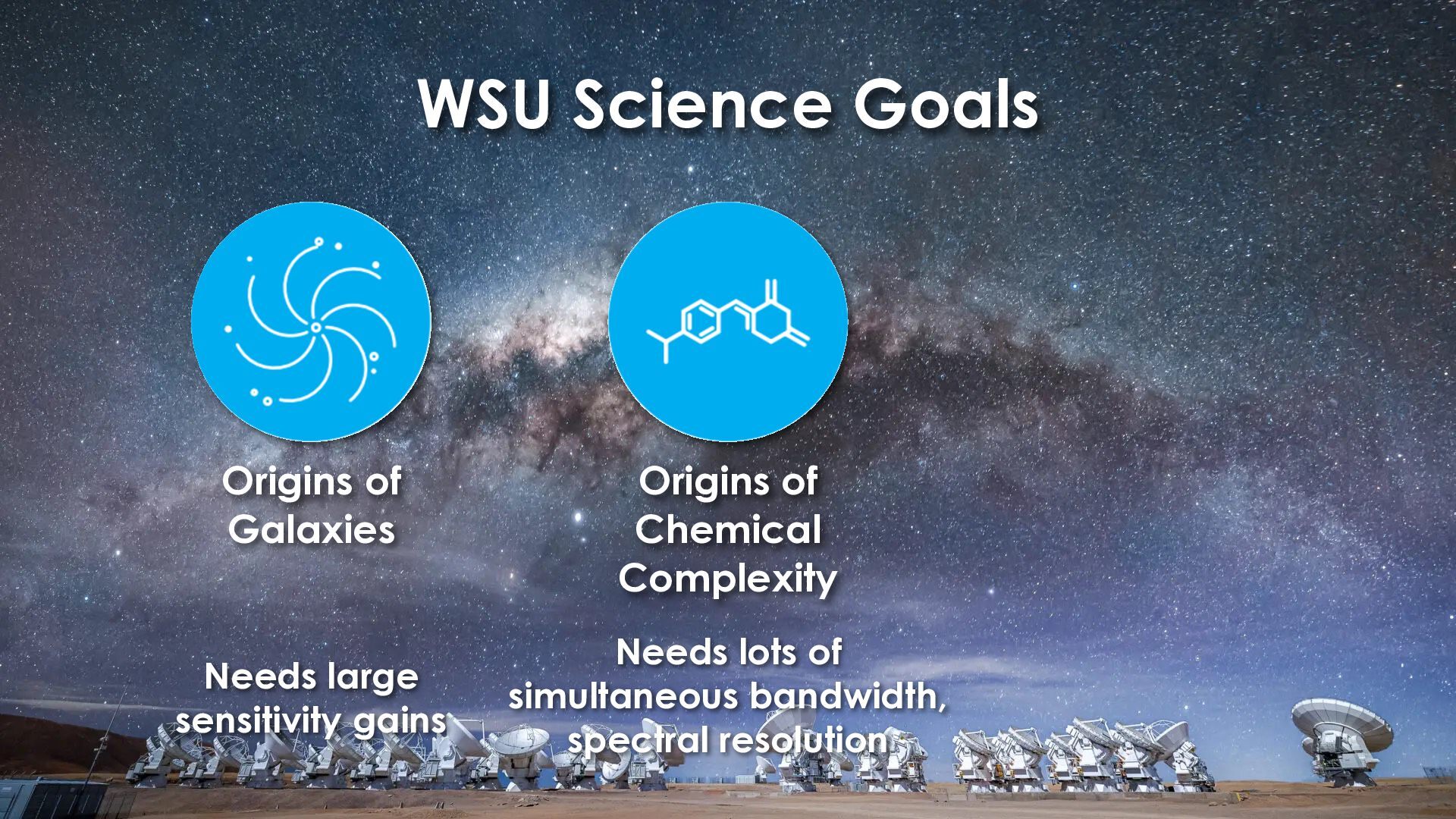
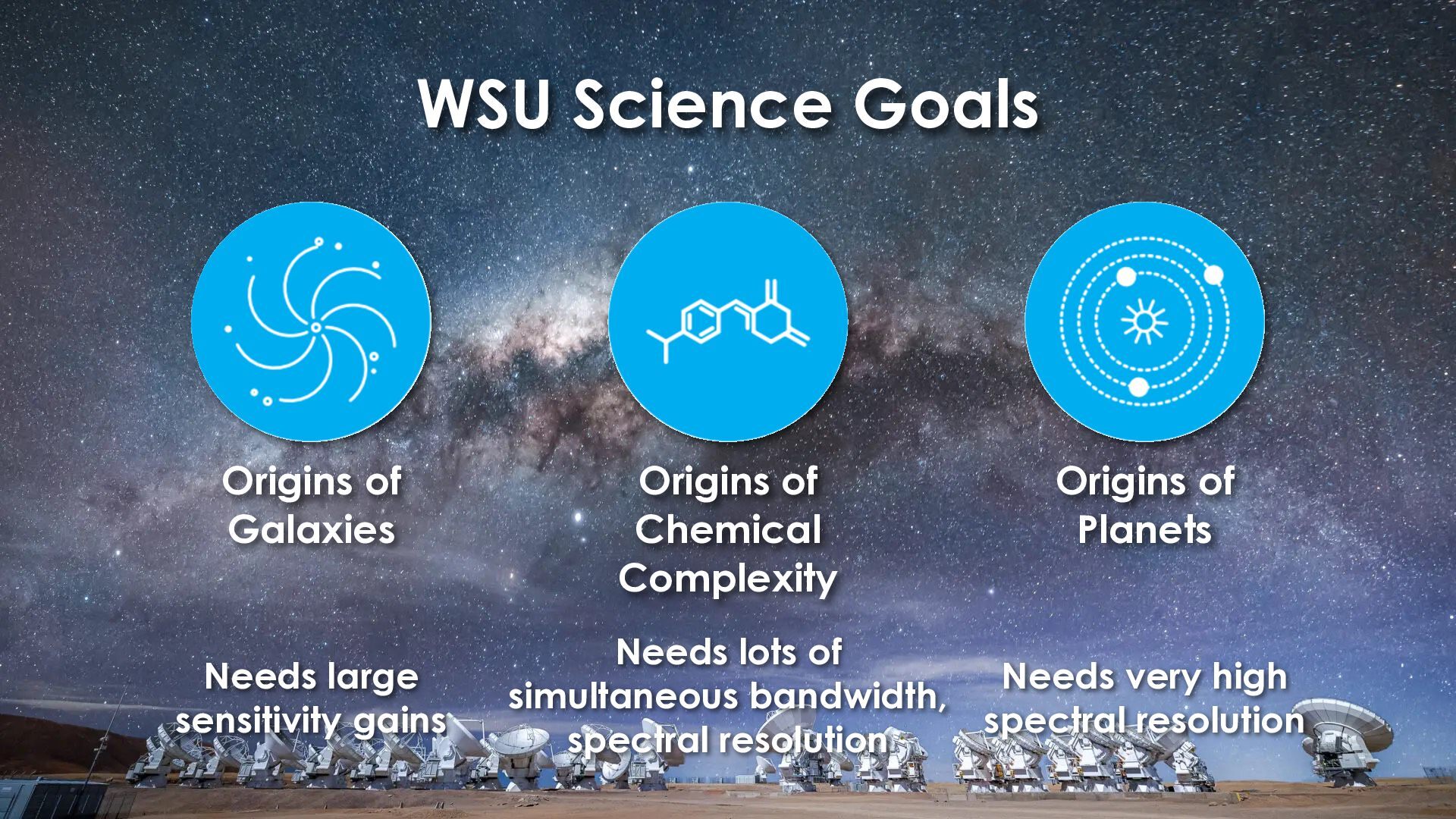
  6. WSU Science Goals Origins of Galaxies Needs large sensitivity gains

    Origins of Chemical Complexity Needs lots of simultaneous bandwidth, spectral resolution
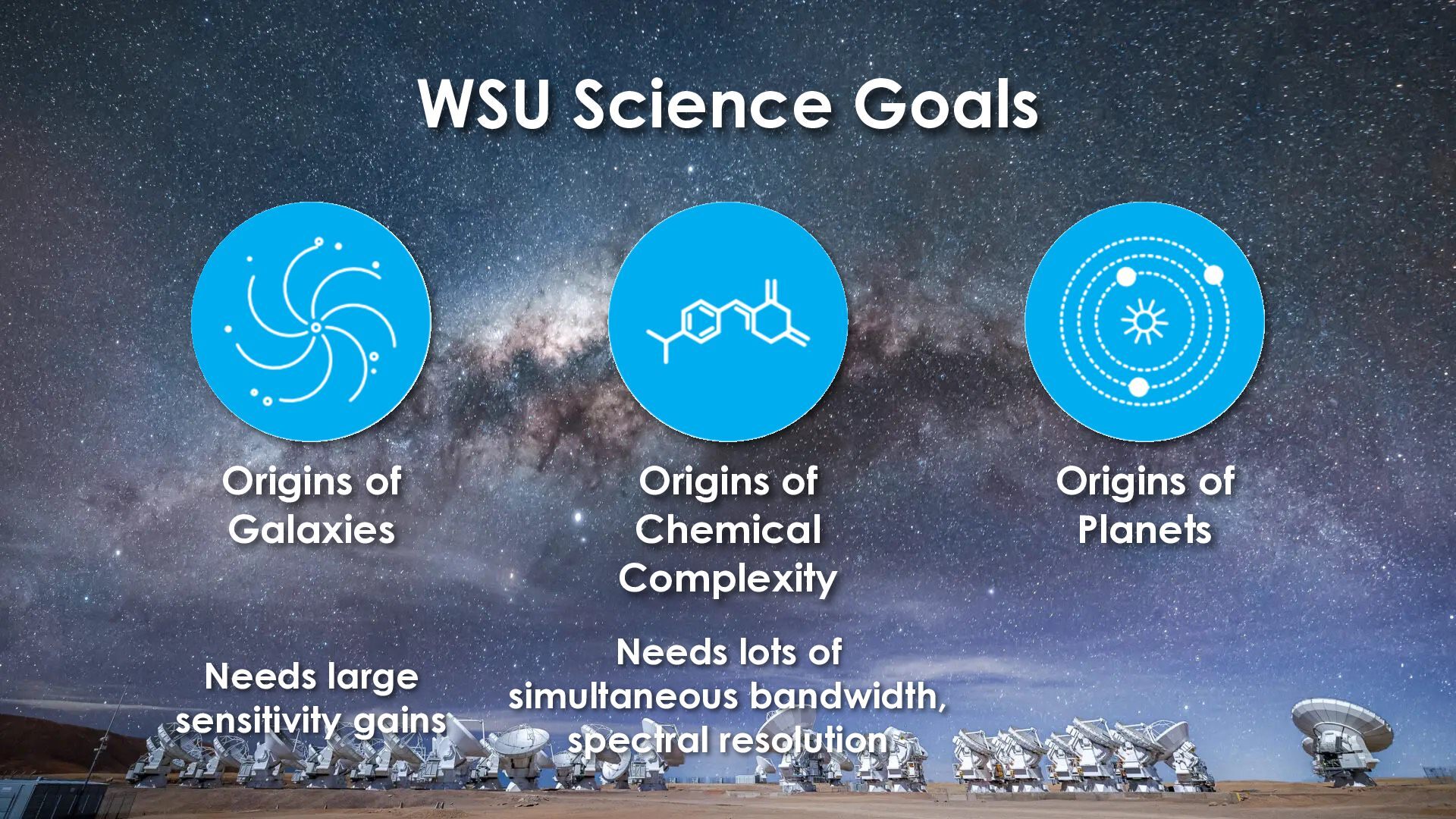
  7. WSU Science Goals Origins of Galaxies Needs large sensitivity gains

    Origins of Chemical Complexity Needs lots of simultaneous bandwidth, spectral resolution Origins of Planets
  8. WSU Science Goals Origins of Galaxies Needs large sensitivity gains

    Origins of Chemical Complexity Origins of Planets Needs lots of Needs very high simultaneous bandwidth, spectral resolution spectral resolution
  9. WSU Technical Goals 4× IF BW with fully correlated bandwidth

    Increased sensitivity and digital efficiency
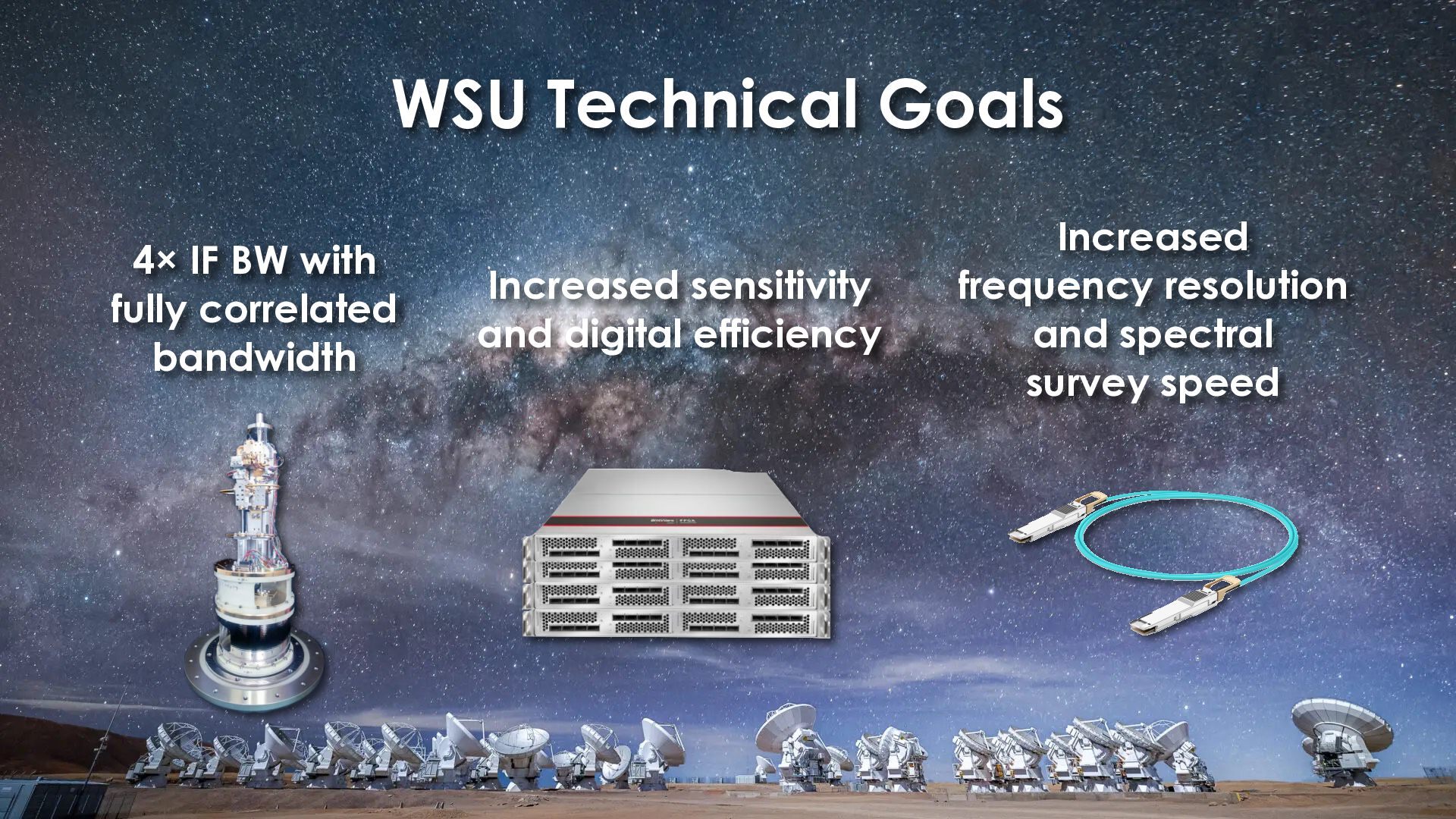
  10. WSU Technical Goals 4× IF BW with fully correlated bandwidth

    Increased sensitivity and digital efficiency Increased frequency resolution and spectral survey speed
  11. WSU Technical Goals 4× IF BW with fully correlated bandwidth

    Increased sensitivity and digital efficiency Increased frequency resolution and spectral survey speed
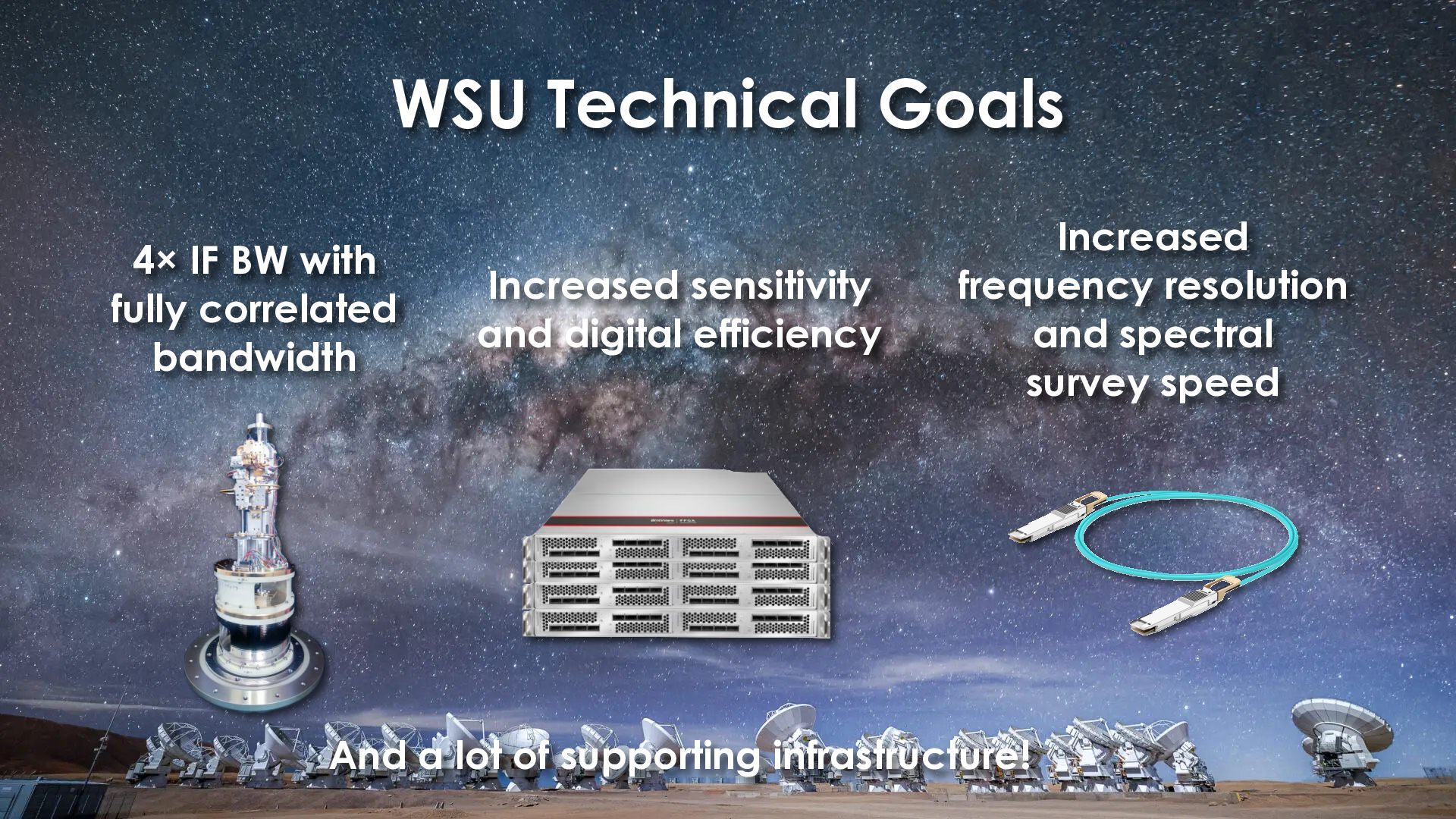
  12. WSU Technical Goals 4× IF BW with fully correlated bandwidth

    Increased sensitivity and digital efficiency Increased frequency resolution and spectral survey speed And a lot of supporting infrastructure!
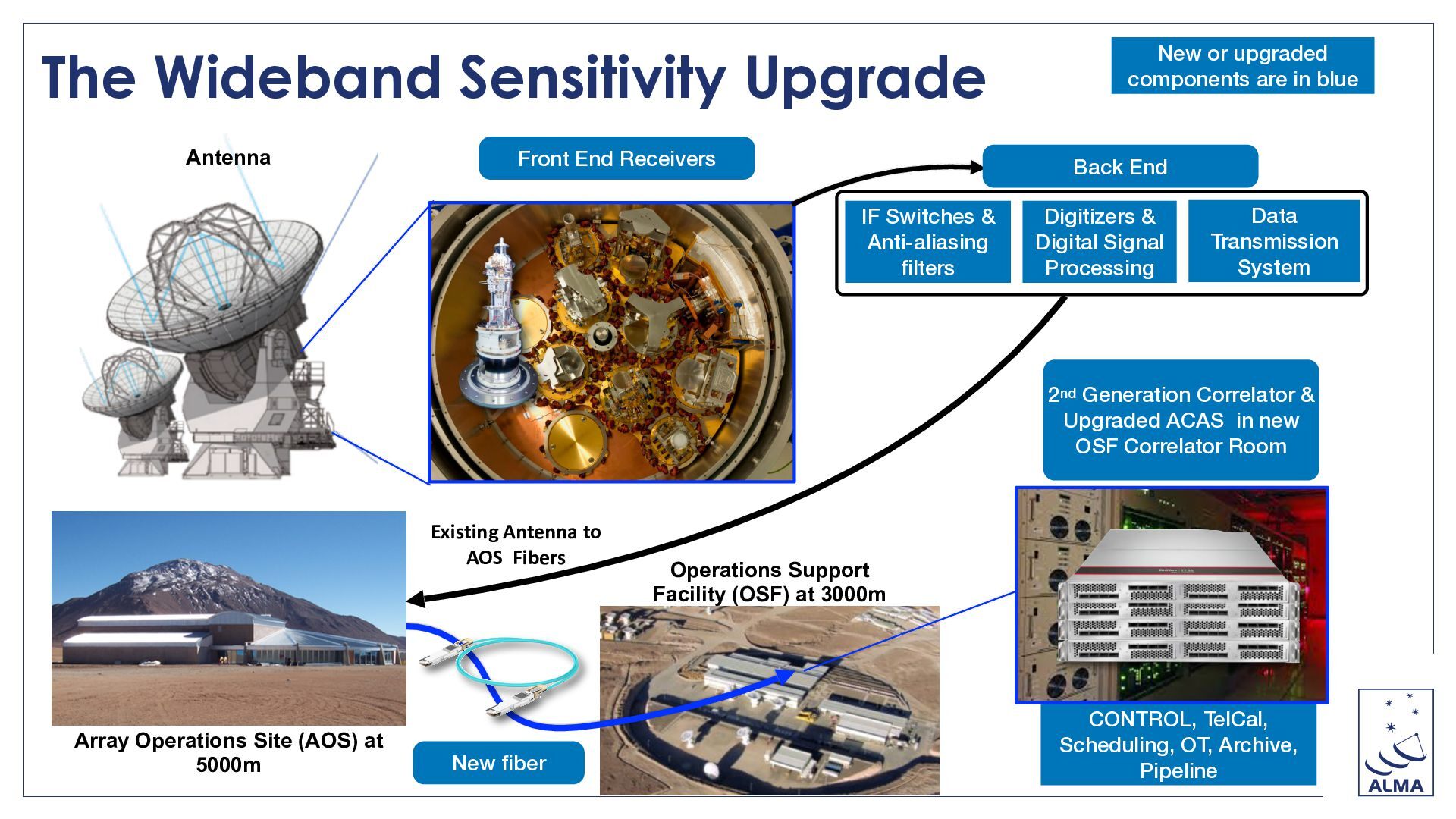
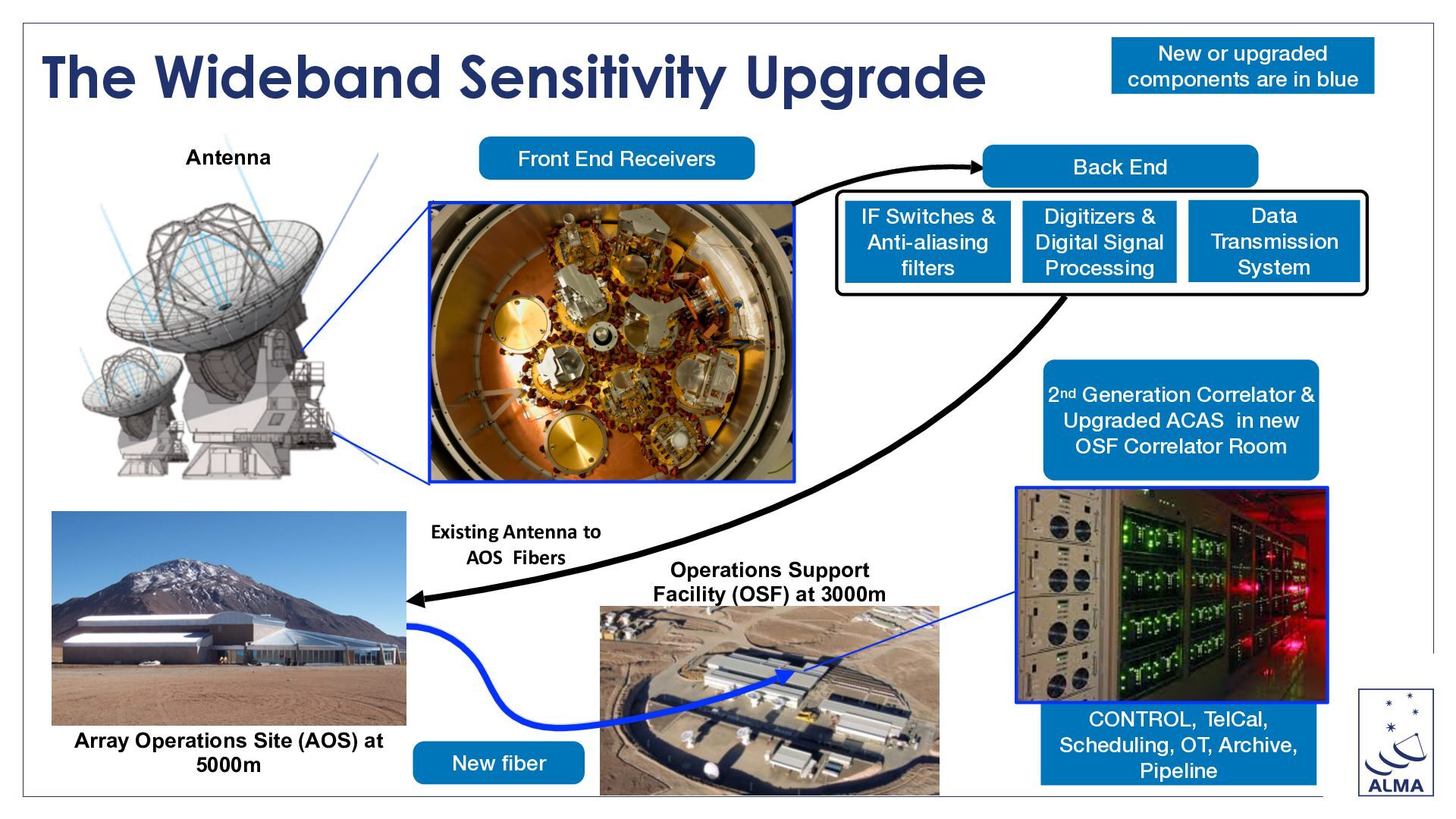
  13. The Wideband Sensitivity Upgrade Antenna Front End Receivers New or

    upgraded components are in blue Back End IF Switches & Anti-aliasing filters Digitizers & Digital Signal Processing Data Transmission System 2nd Generation Correlator & Upgraded ACAS in new OSF Correlator Room Existing Antenna to AOS Fibers Array Operations Site (AOS) at 5000m New fiber Operations Support Facility (OSF) at 3000m CONTROL, TelCal, Scheduling, OT, Archive, Pipeline
  14. The Wideband Sensitivity Upgrade Antenna Front End Receivers New or

    upgraded components are in blue Back End IF Switches & Anti-aliasing filters Digitizers & Digital Signal Processing Data Transmission System 2nd Generation Correlator & Upgraded ACAS in new OSF Correlator Room Existing Antenna to AOS Fibers Array Operations Site (AOS) at 5000m New fiber Operations Support Facility (OSF) at 3000m CONTROL, TelCal, Scheduling, OT, Archive, Pipeline
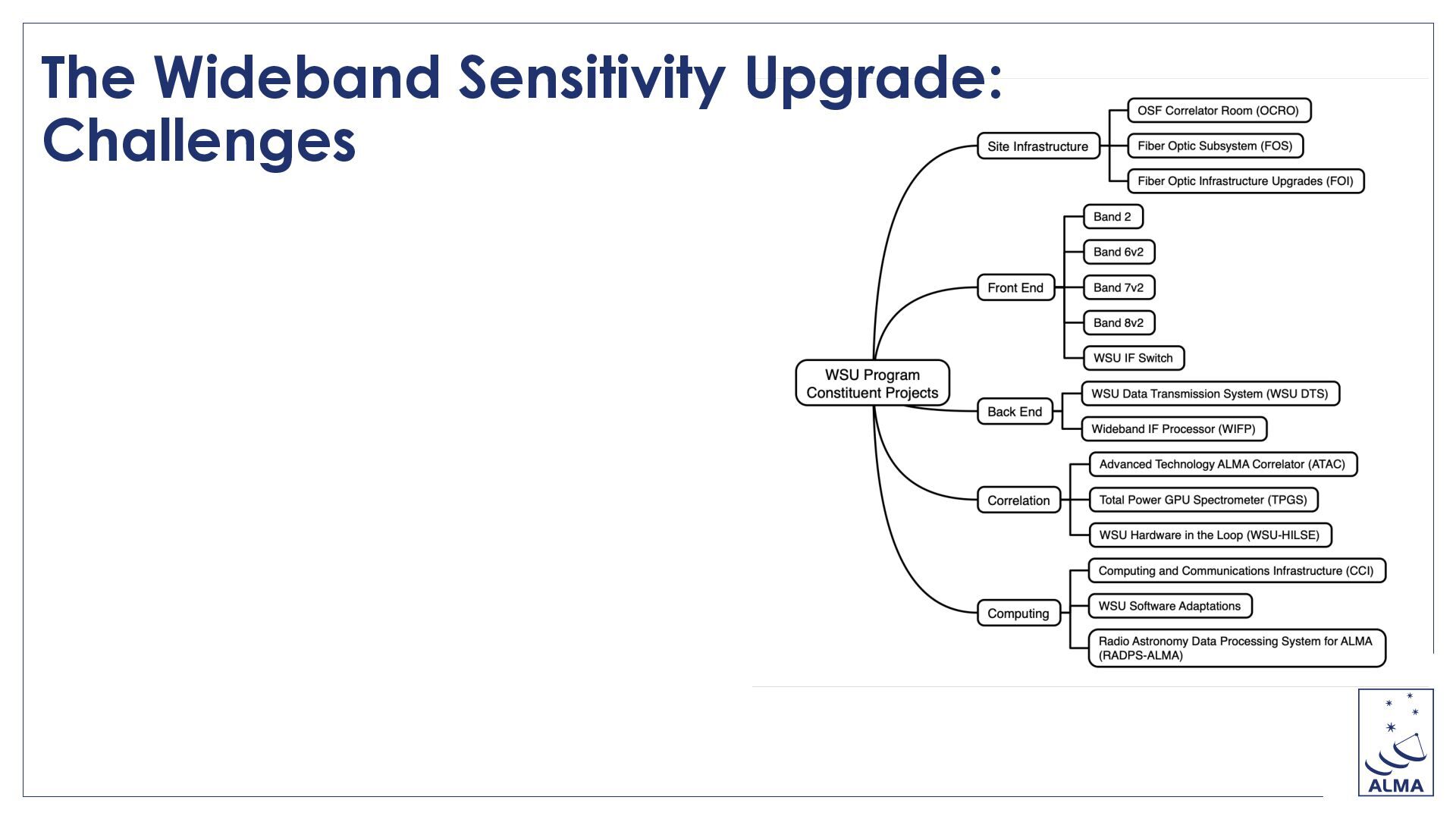
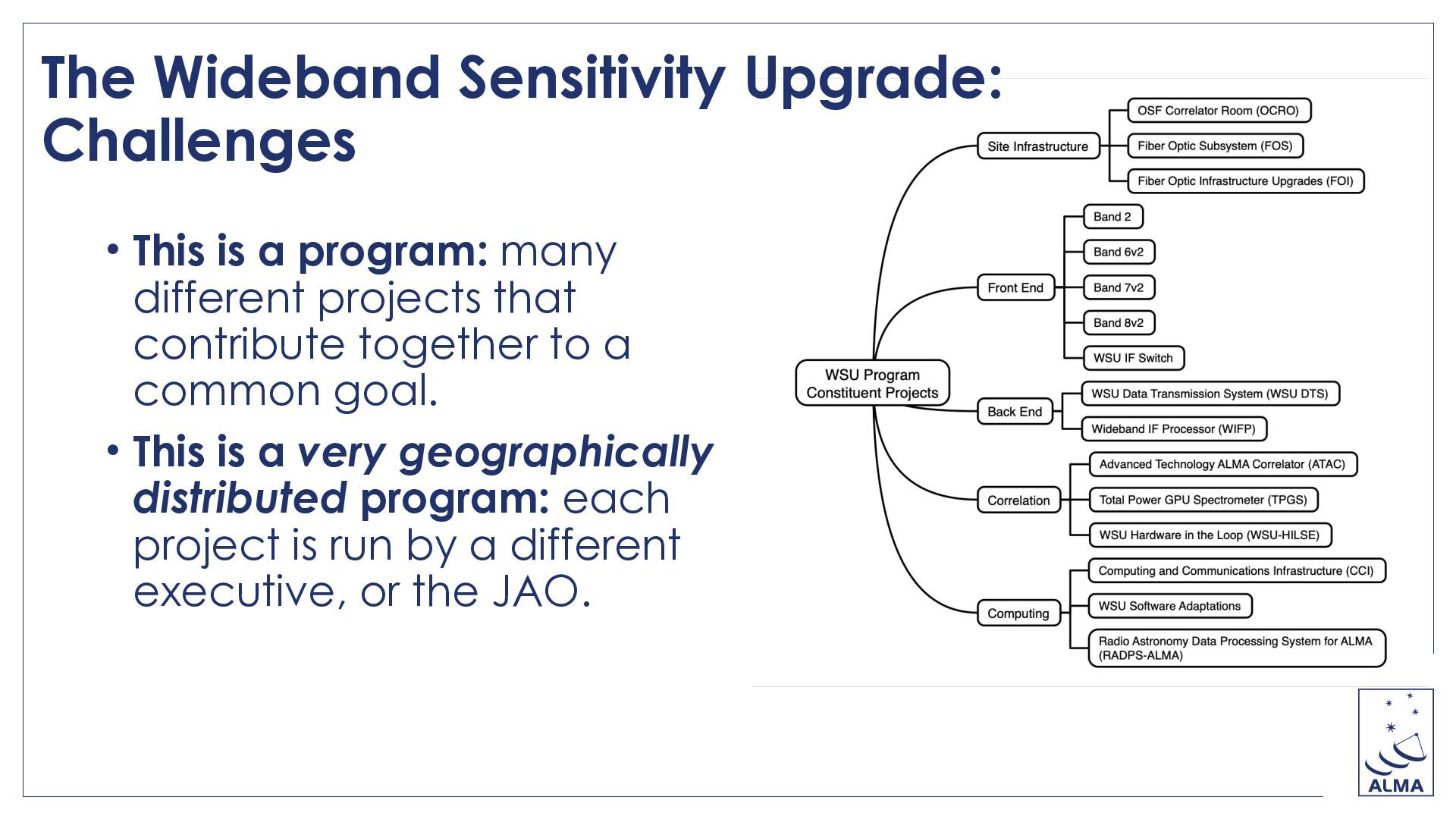
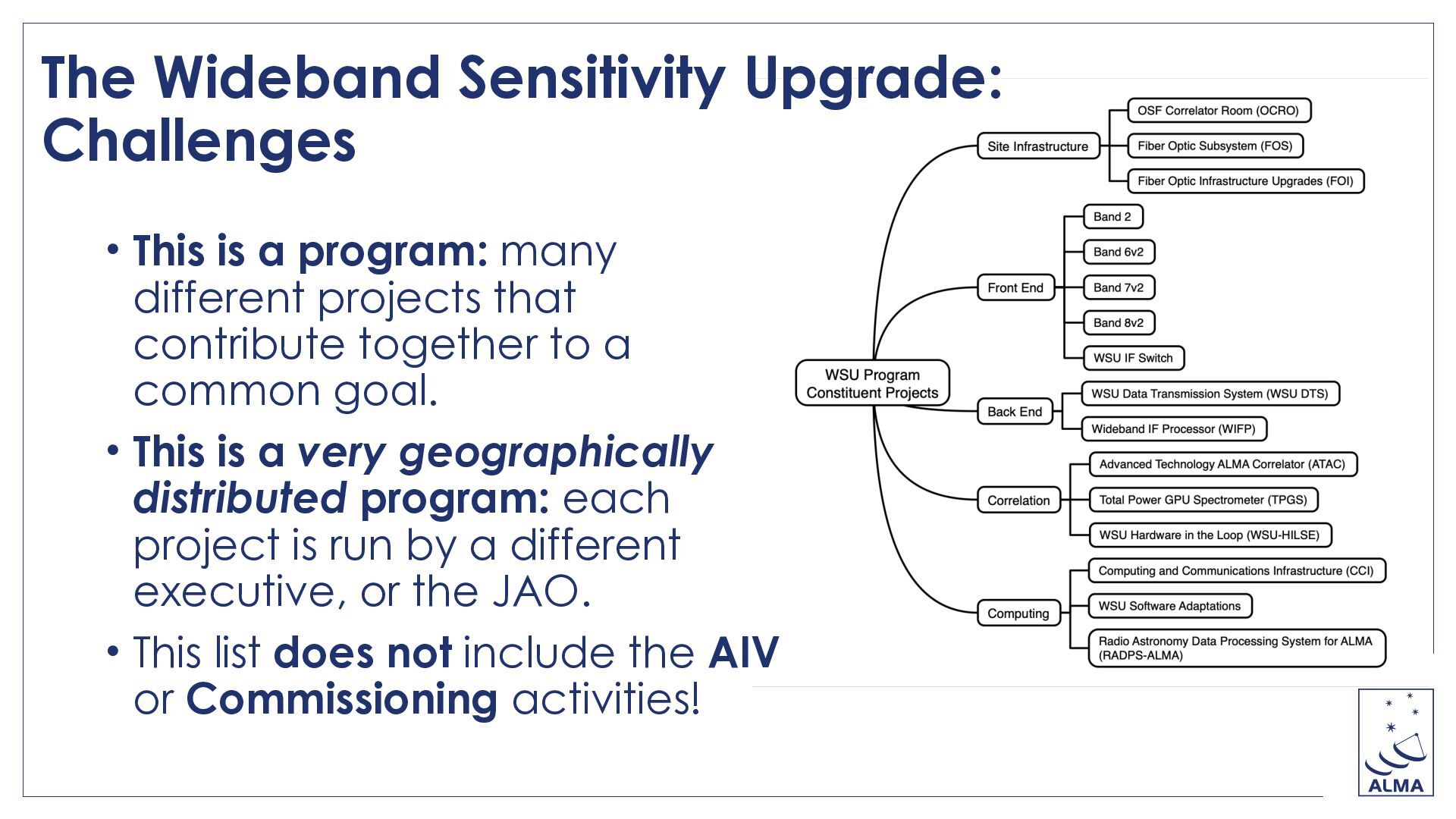
  15. The Wideband Sensitivity Upgrade: Challenges • This is a program:

    many different projects that contribute together to a common goal. • This is a very geographically distributed program: each project is run by a different executive, or the JAO.
  16. The Wideband Sensitivity Upgrade: Challenges • This is a program:

    many different projects that contribute together to a common goal. • This is a very geographically distributed program: each project is run by a different executive, or the JAO.
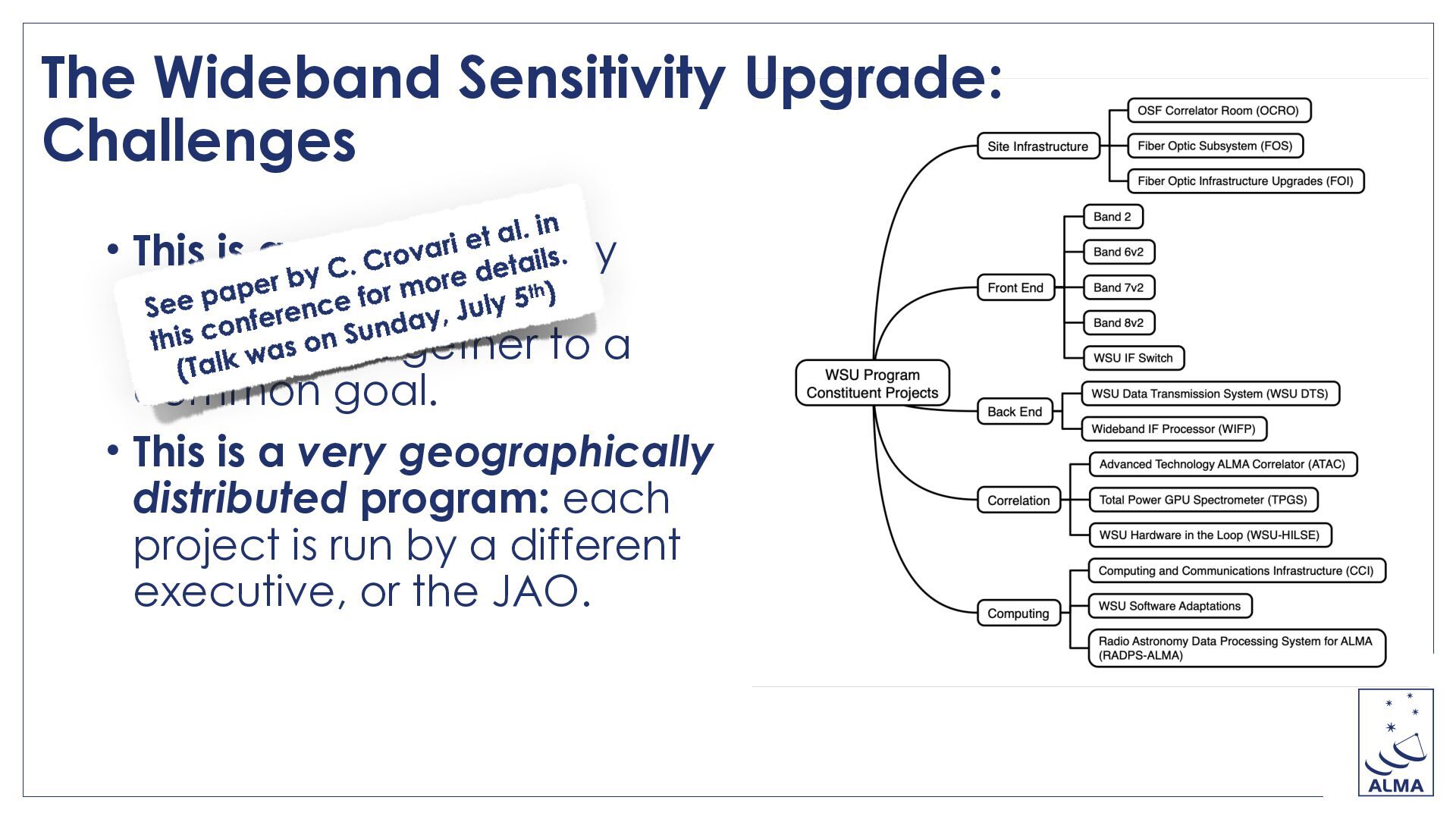
  17. The Wideband Sensitivity Upgrade: Challenges • This is a program:

    many different projects that contribute together to a common goal. • This is a very geographically distributed program: each project is run by a different executive, or the JAO. • This list does not include the AIV or Commissioning activities!
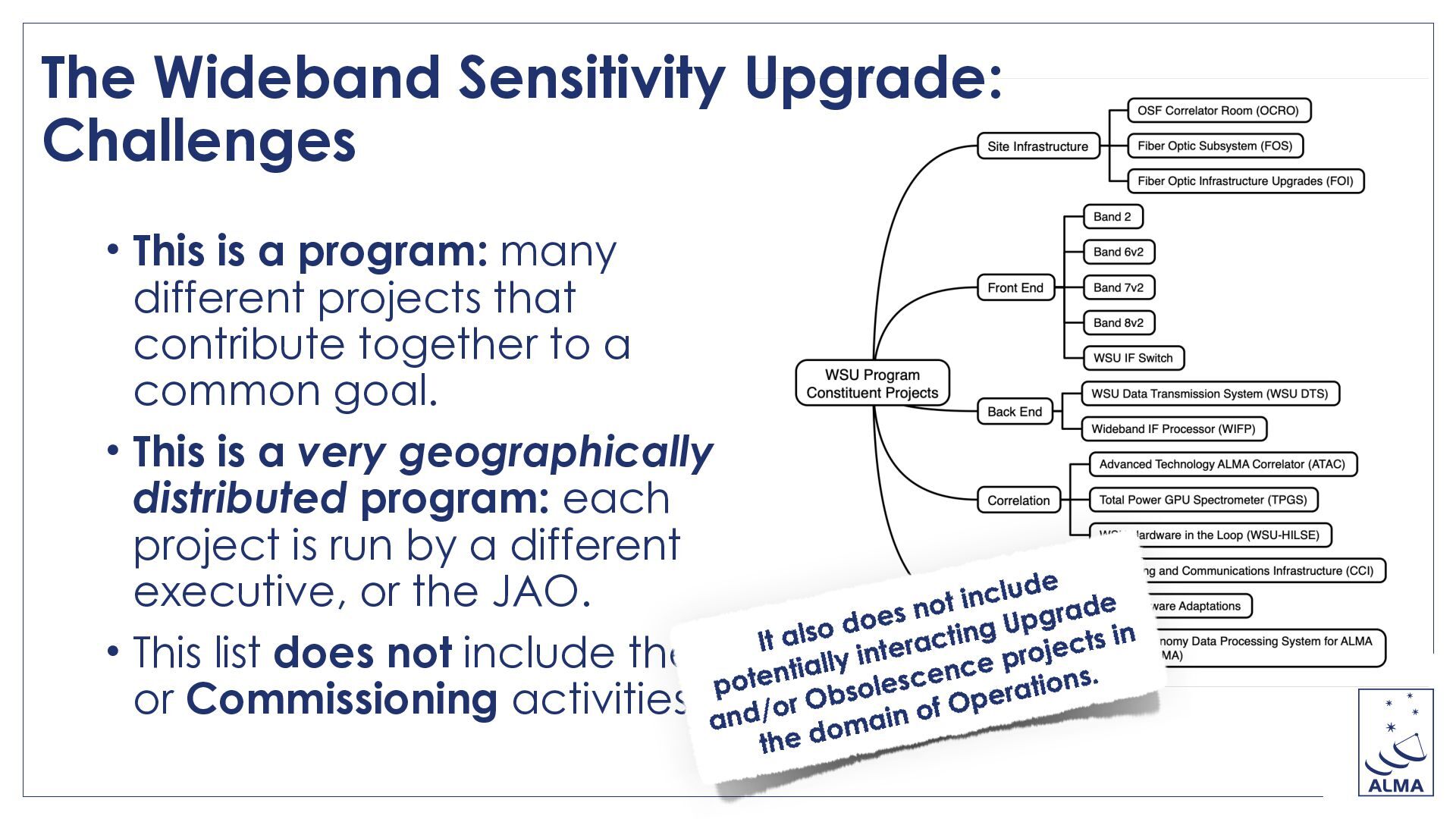
  18. The Wideband Sensitivity Upgrade: Challenges • This is a program:

    many different projects that contribute together to a common goal. • This is a very geographically distributed program: each project is run by a different executive, or the JAO. • This list does not include the AIV or Commissioning activities!
  19. How do we manage this complexity? • Through technical processes:

    Better Systems Engineering • Represents both the projects, program, and overall system level needs and stakeholders and trade-offs.
  20. How do we manage this complexity? • Through technical processes:

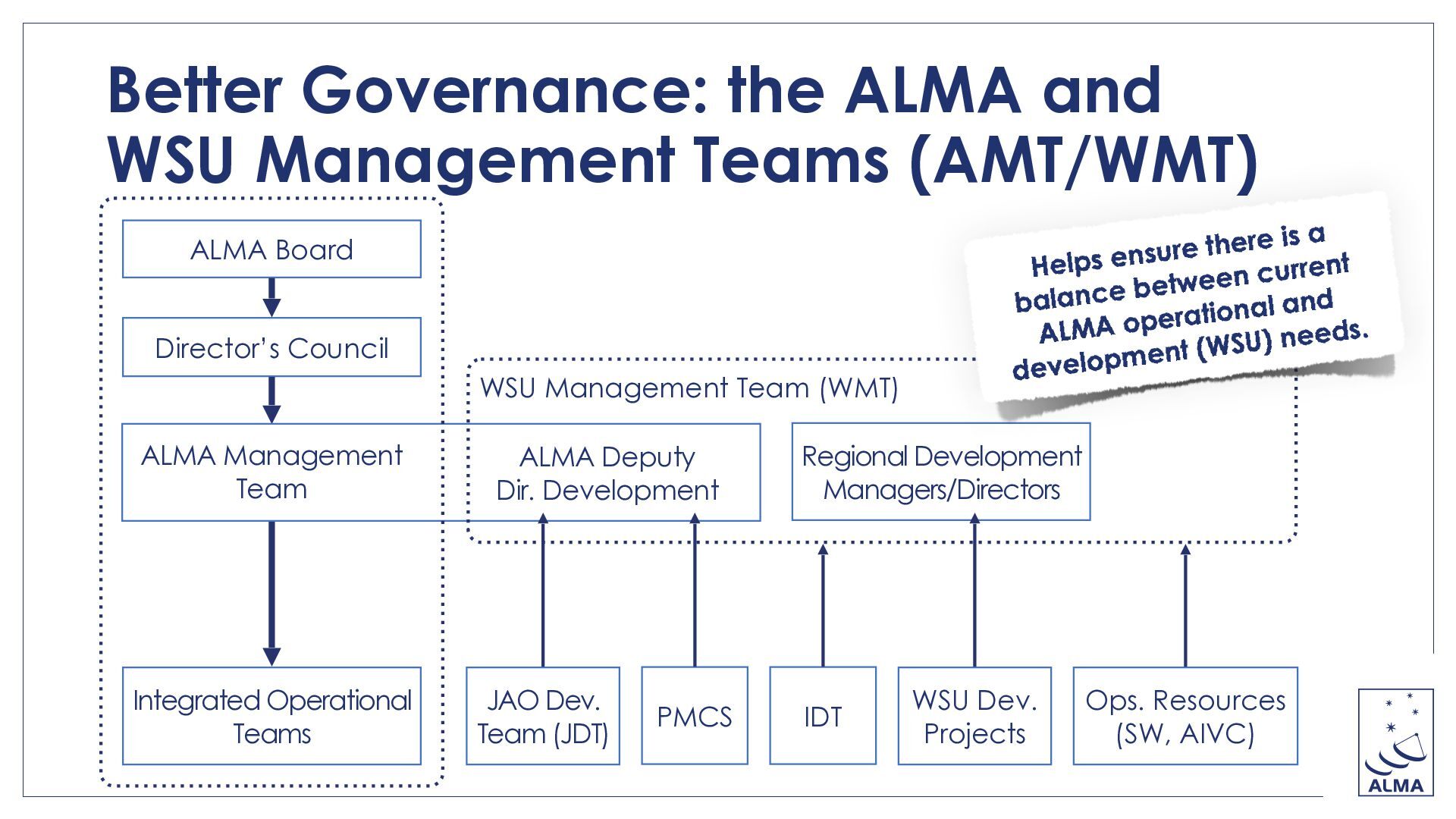
    Better Systems Engineering • Represents both the projects, program, and overall system level needs and stakeholders and trade-offs. • Through management processes: Better Governance
  21. How do we manage this complexity? • Through technical processes:

    Better Systems Engineering • Represents both the projects, program, and overall system level needs and stakeholders and trade-offs. • Through management processes: Better Governance • Represent the need to balance the mandates from the operational management with those of development (WSU) management.
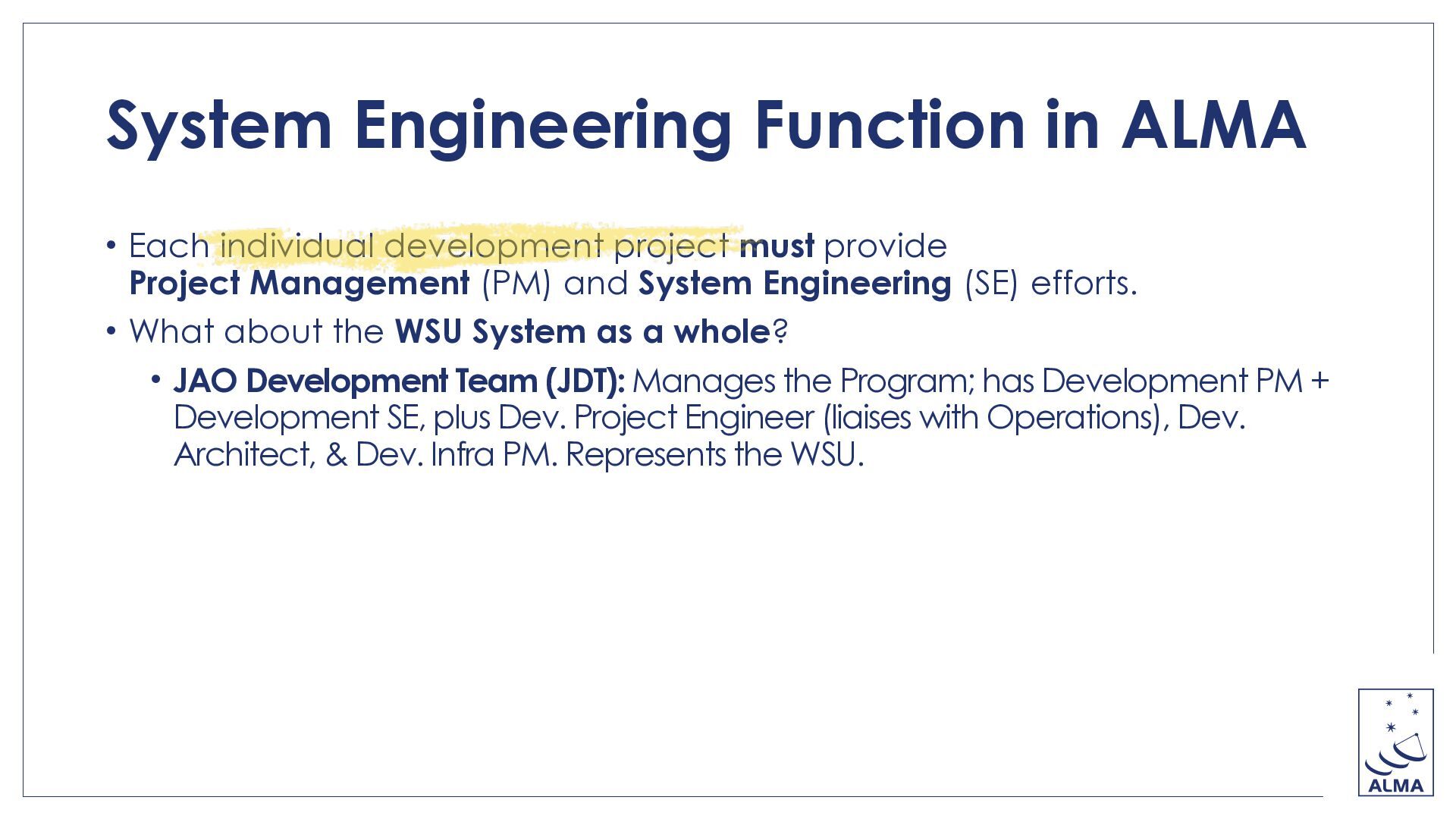
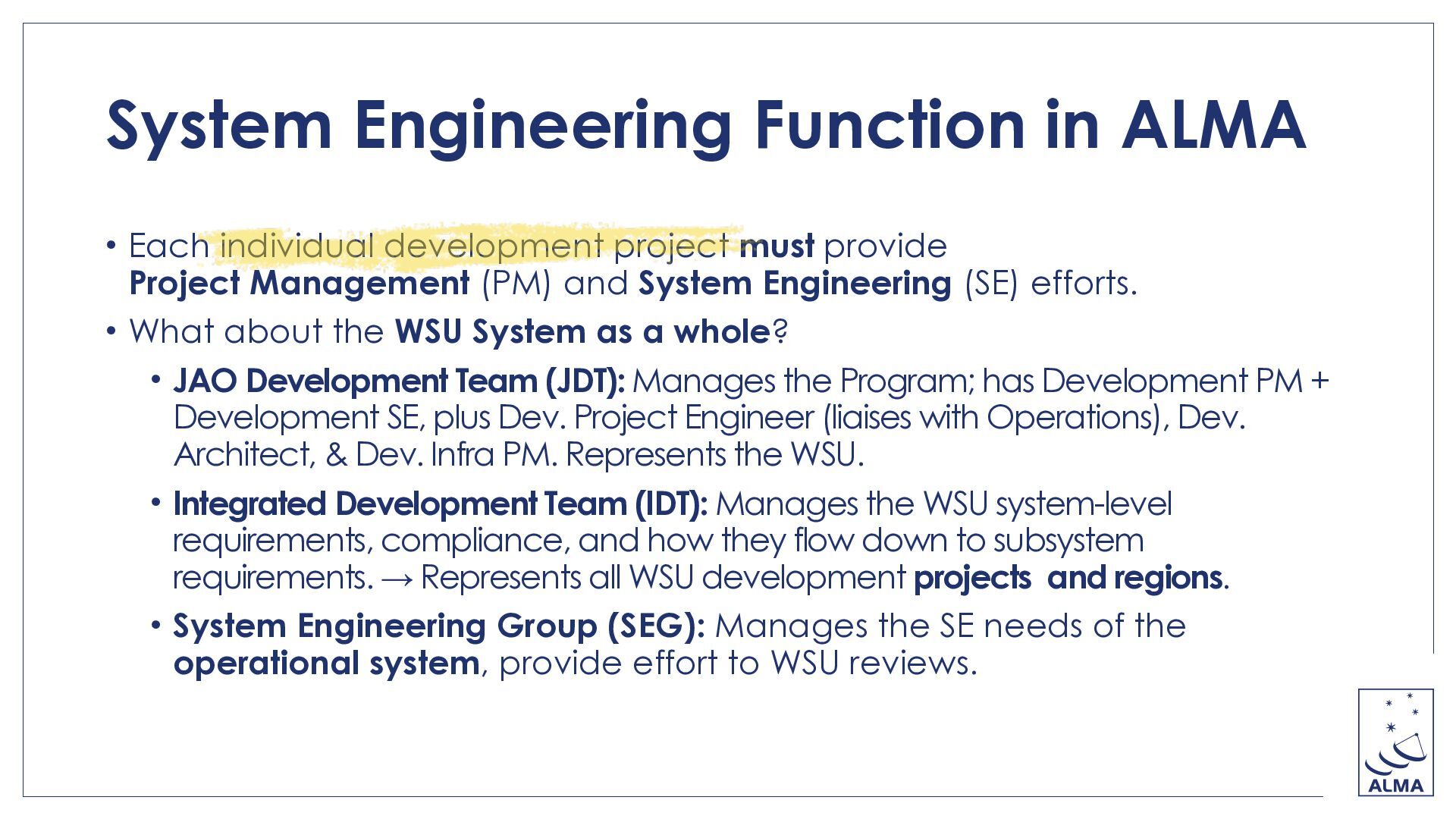
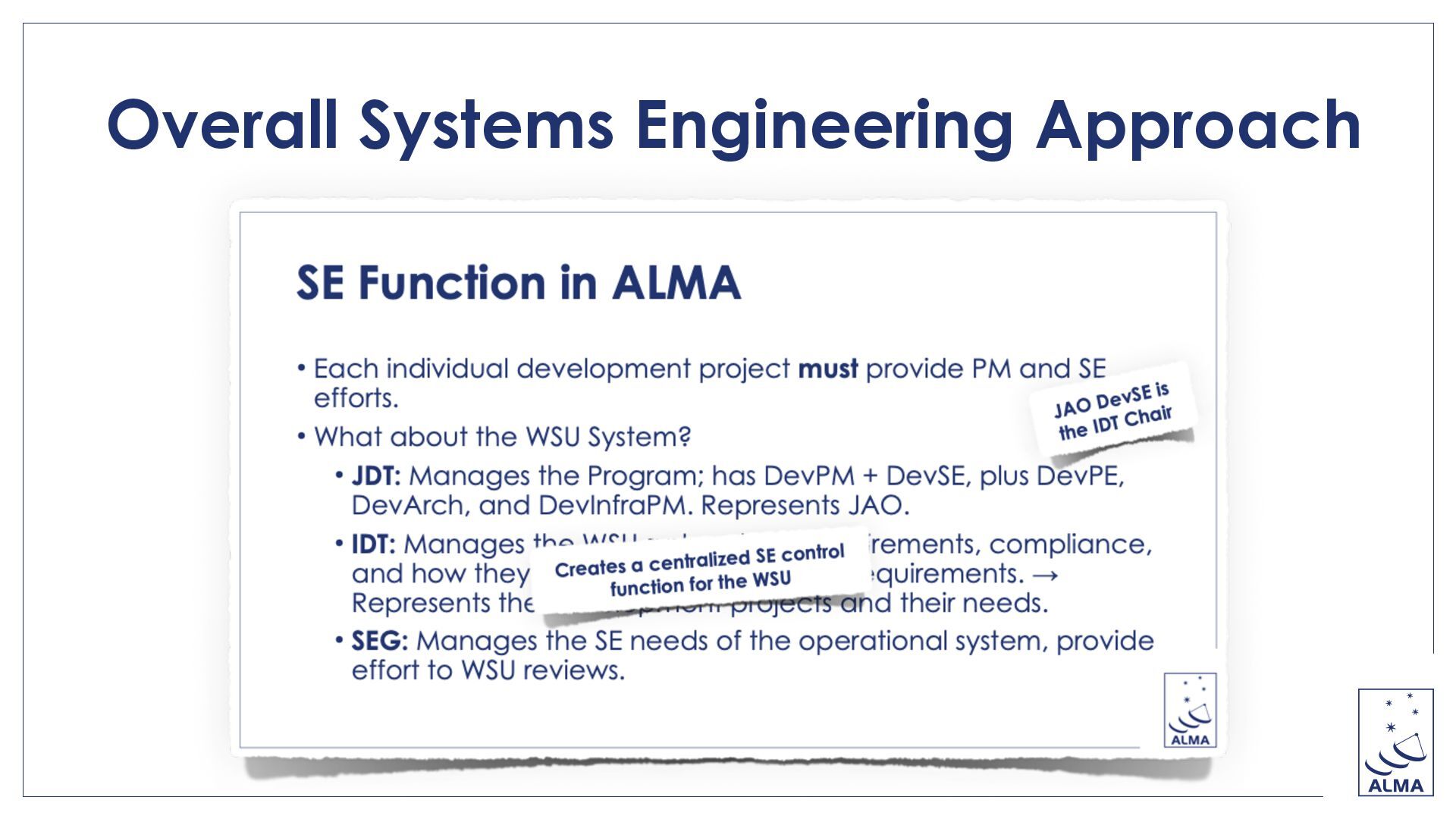
  22. System Engineering Function in ALMA • Each individual development project

    must provide Project Management (PM) and System Engineering (SE) efforts. • What about the WSU System as a whole?
  23. System Engineering Function in ALMA • Each individual development project

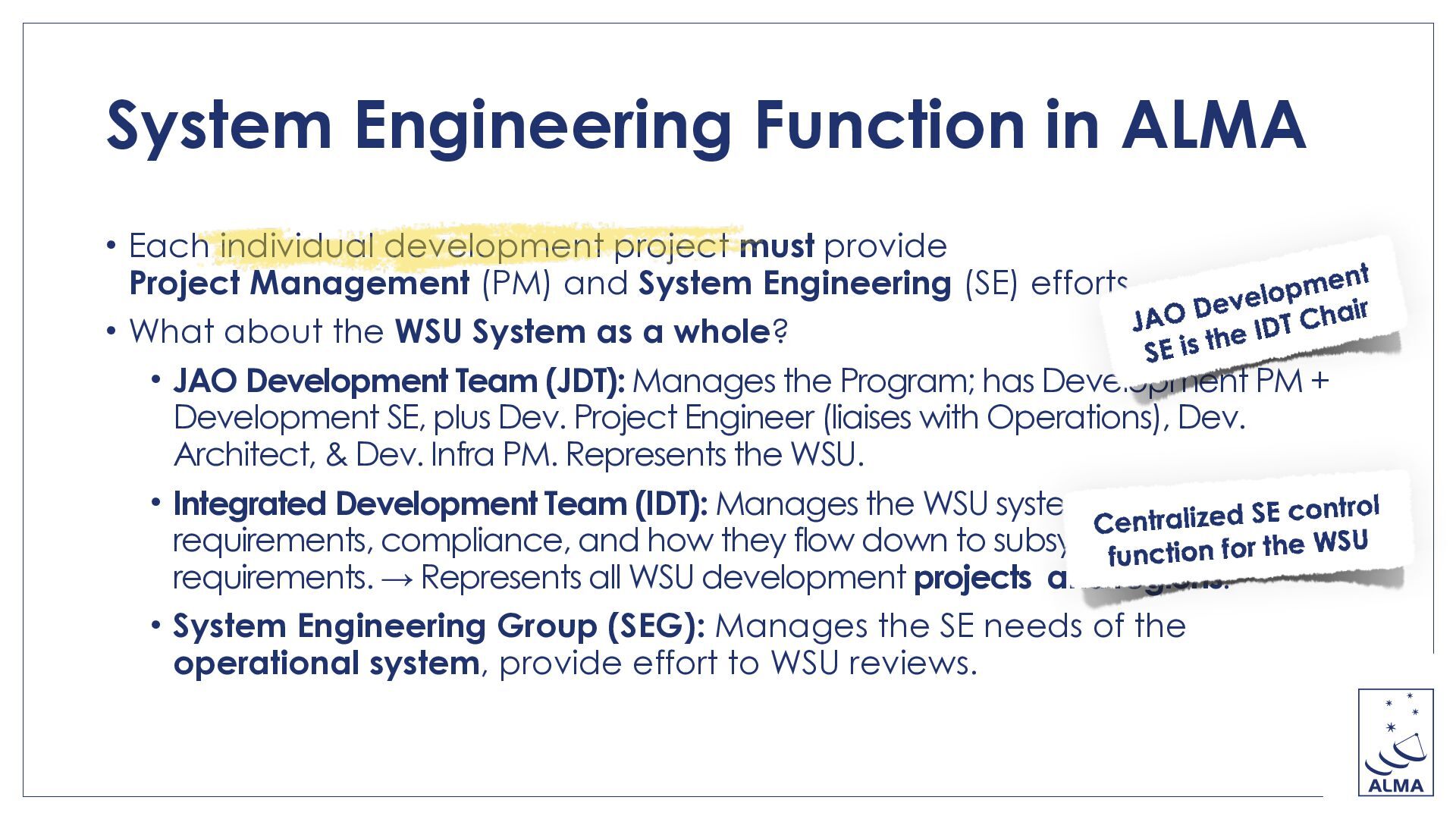
    must provide Project Management (PM) and System Engineering (SE) efforts. • What about the WSU System as a whole? • JAO Development Team (JDT): Manages the Program; has Development PM + Development SE, plus Dev. Project Engineer (liaises with Operations), Dev. Architect, & Dev. Infra PM. Represents the WSU.
  24. System Engineering Function in ALMA • Each individual development project

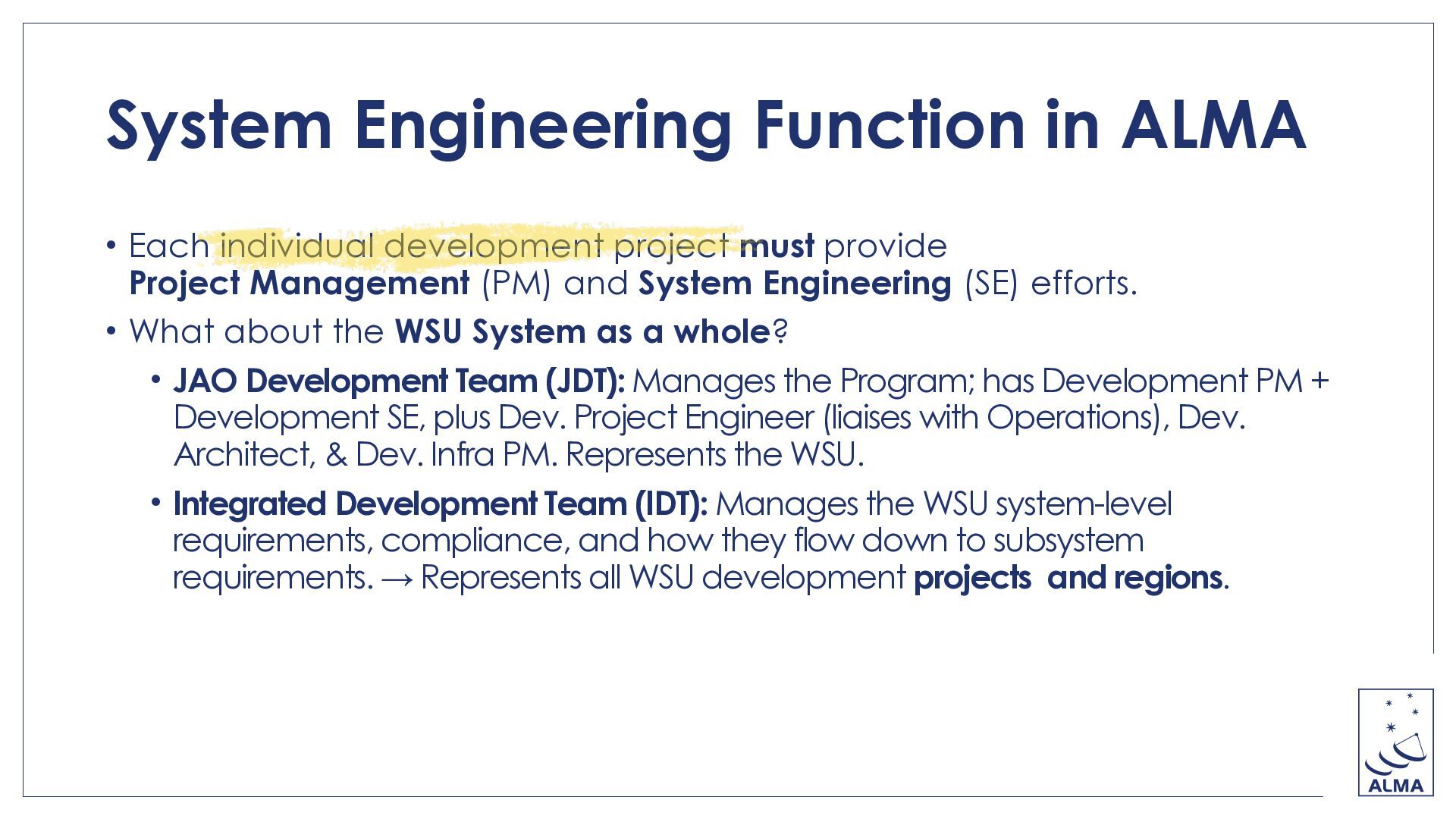
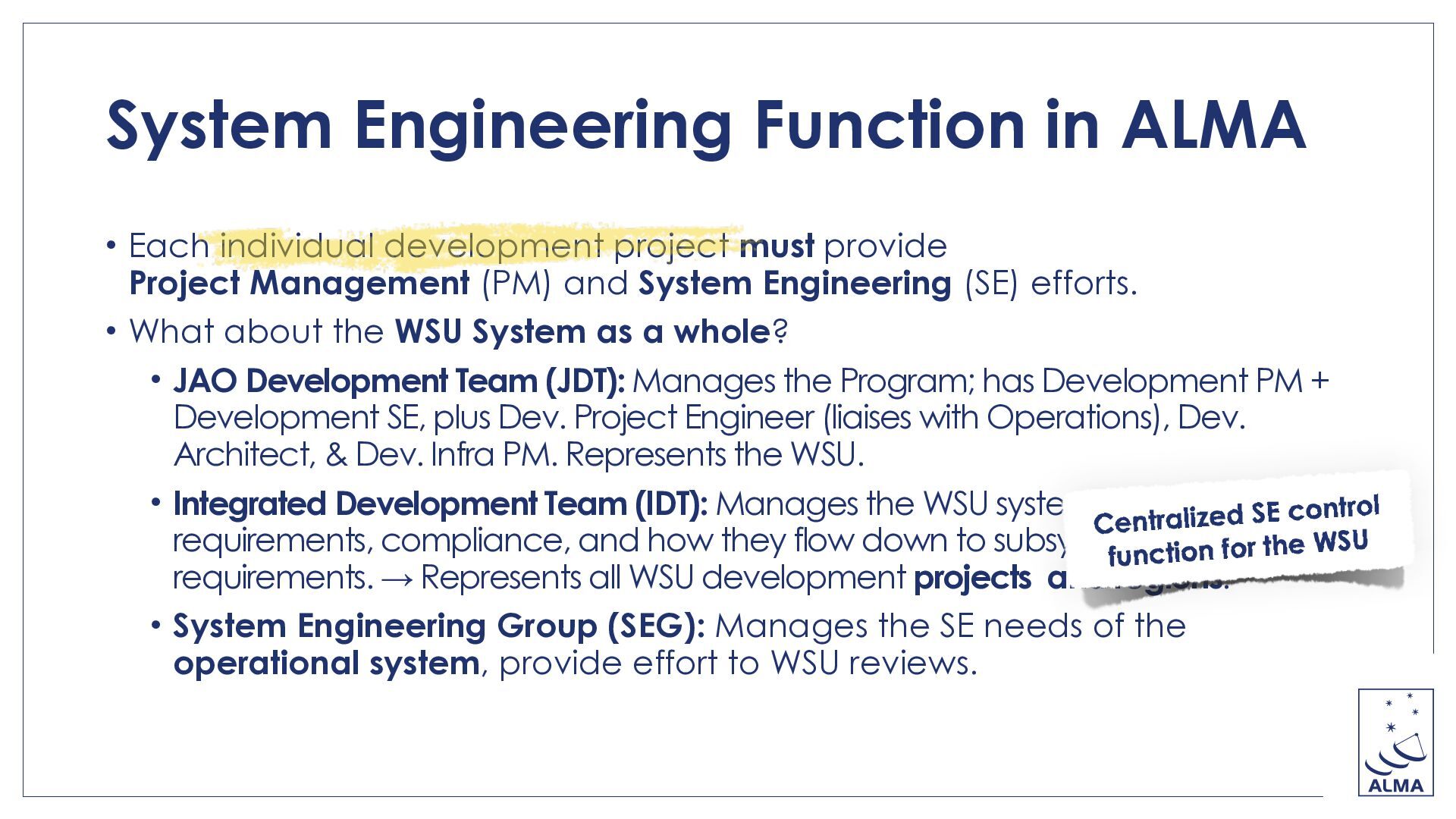
    must provide Project Management (PM) and System Engineering (SE) efforts. • What about the WSU System as a whole? • JAO Development Team (JDT): Manages the Program; has Development PM + Development SE, plus Dev. Project Engineer (liaises with Operations), Dev. Architect, & Dev. Infra PM. Represents the WSU. • Integrated Development Team (IDT): Manages the WSU system-level requirements, compliance, and how they flow down to subsystem requirements. → Represents all WSU development projects and regions.
  25. System Engineering Function in ALMA • Each individual development project

    must provide Project Management (PM) and System Engineering (SE) efforts. • What about the WSU System as a whole? • JAO Development Team (JDT): Manages the Program; has Development PM + Development SE, plus Dev. Project Engineer (liaises with Operations), Dev. Architect, & Dev. Infra PM. Represents the WSU. • Integrated Development Team (IDT): Manages the WSU system-level requirements, compliance, and how they flow down to subsystem requirements. → Represents all WSU development projects and regions. • System Engineering Group (SEG): Manages the SE needs of the operational system, provide effort to WSU reviews.
  26. System Engineering Function in ALMA • Each individual development project

    must provide Project Management (PM) and System Engineering (SE) efforts. • What about the WSU System as a whole? • JAO Development Team (JDT): Manages the Program; has Development PM + Development SE, plus Dev. Project Engineer (liaises with Operations), Dev. Architect, & Dev. Infra PM. Represents the WSU. • Integrated Development Team (IDT): Manages the WSU system-level requirements, compliance, and how they flow down to subsystem requirements. → Represents all WSU development projects and regions. • System Engineering Group (SEG): Manages the SE needs of the operational system, provide effort to WSU reviews.
  27. System Engineering Function in ALMA • Each individual development project

    must provide Project Management (PM) and System Engineering (SE) efforts. • What about the WSU System as a whole? • JAO Development Team (JDT): Manages the Program; has Development PM + Development SE, plus Dev. Project Engineer (liaises with Operations), Dev. Architect, & Dev. Infra PM. Represents the WSU. • Integrated Development Team (IDT): Manages the WSU system-level requirements, compliance, and how they flow down to subsystem requirements. → Represents all WSU development projects and regions. • System Engineering Group (SEG): Manages the SE needs of the operational system, provide effort to WSU reviews.
  28. How do we manage this complexity? • Through technical processes:

    Better Systems Engineering • Represents both the project, program, and overall system level. • Through management processes: Better Governance • Represent the need to balance the mandates from the operational management with those of development (WSU) management.
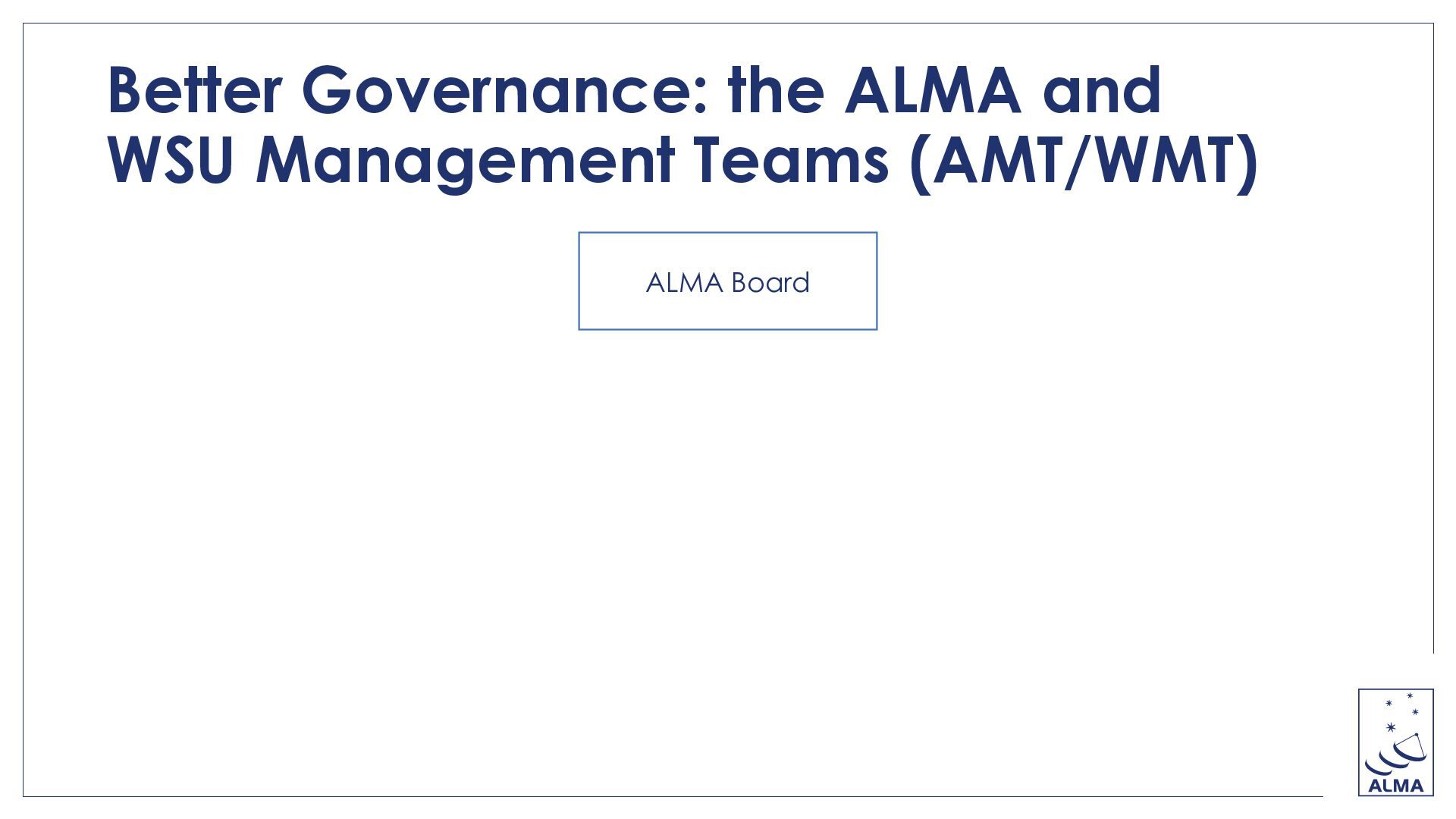
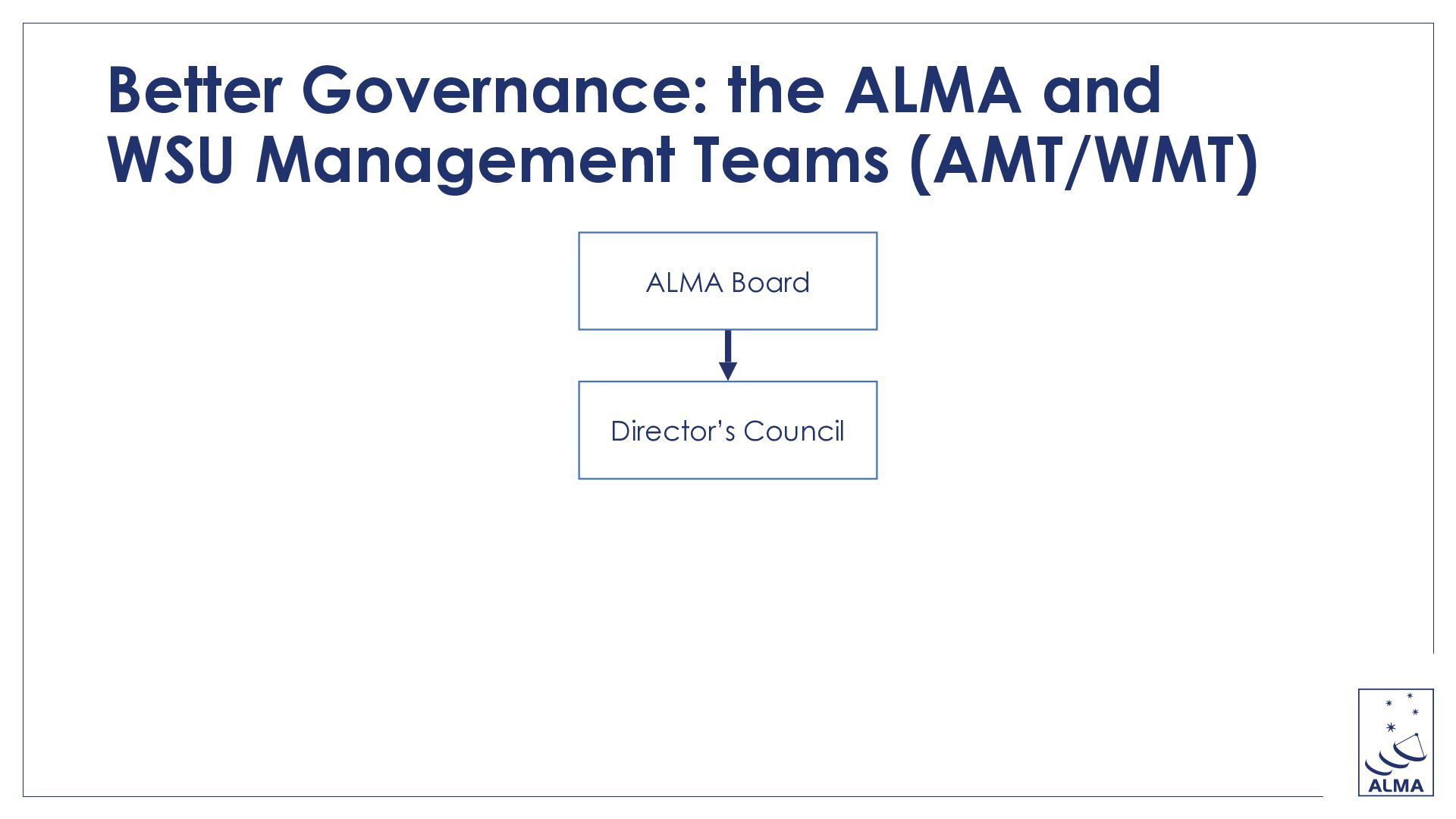
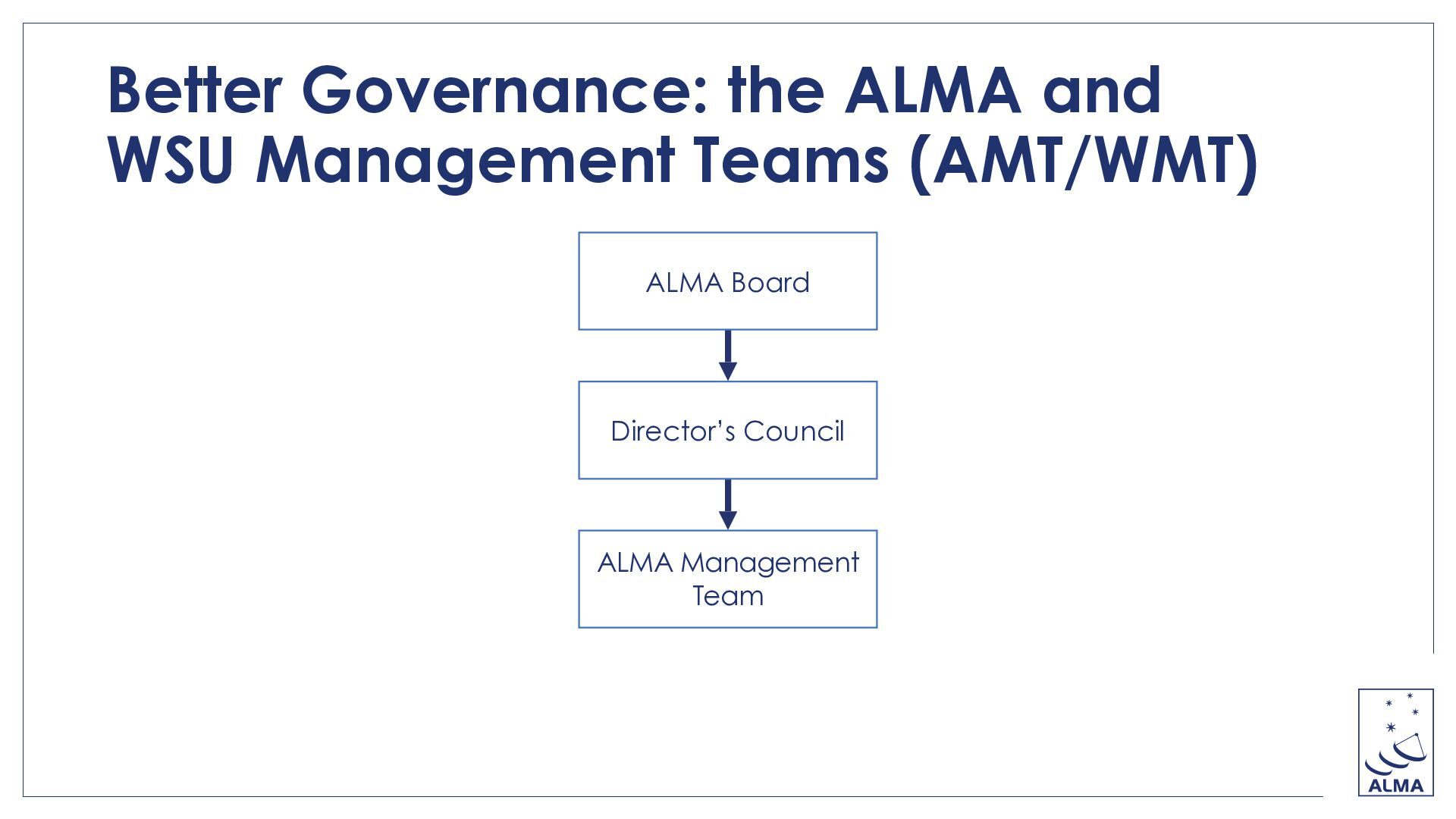
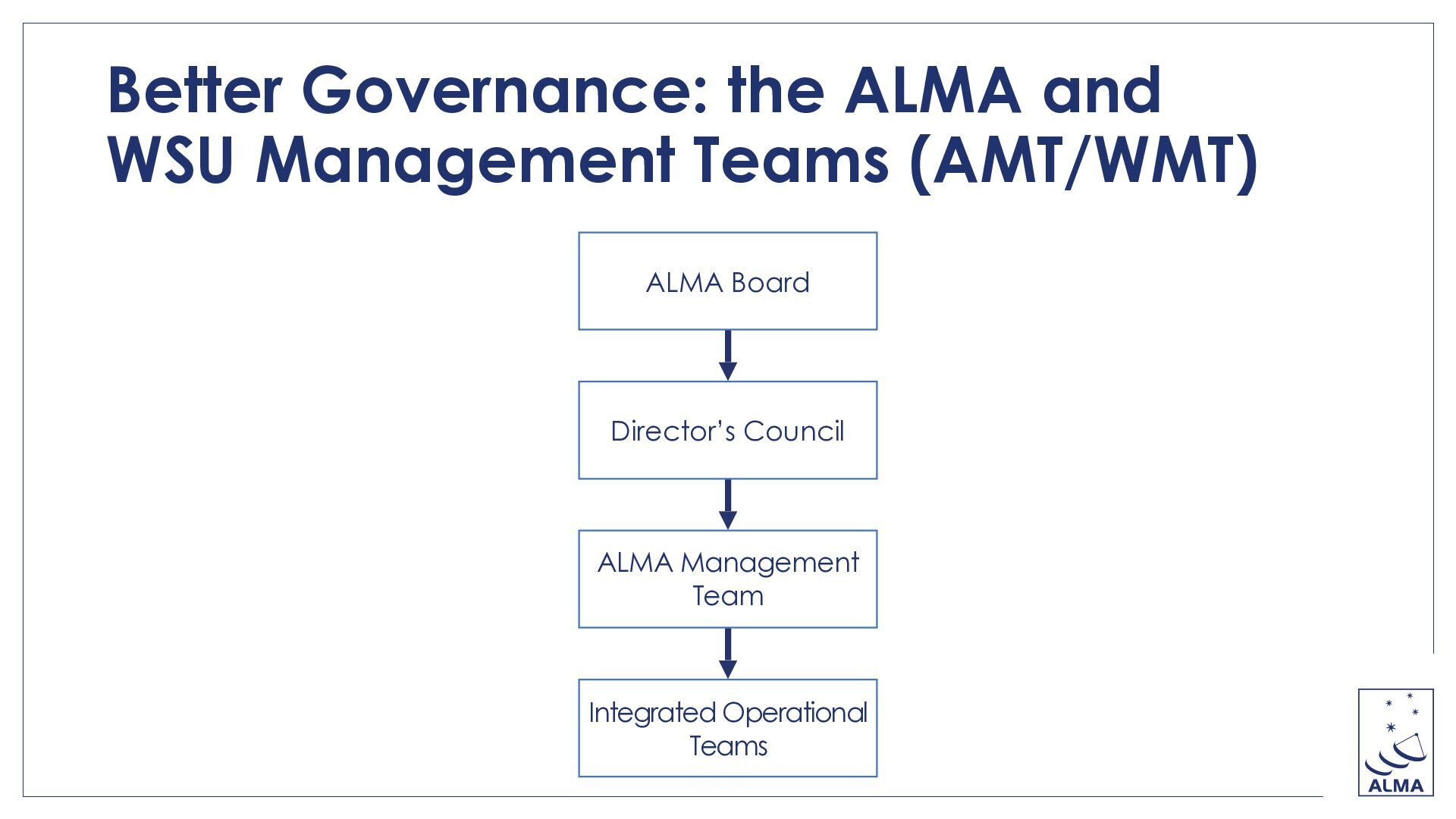
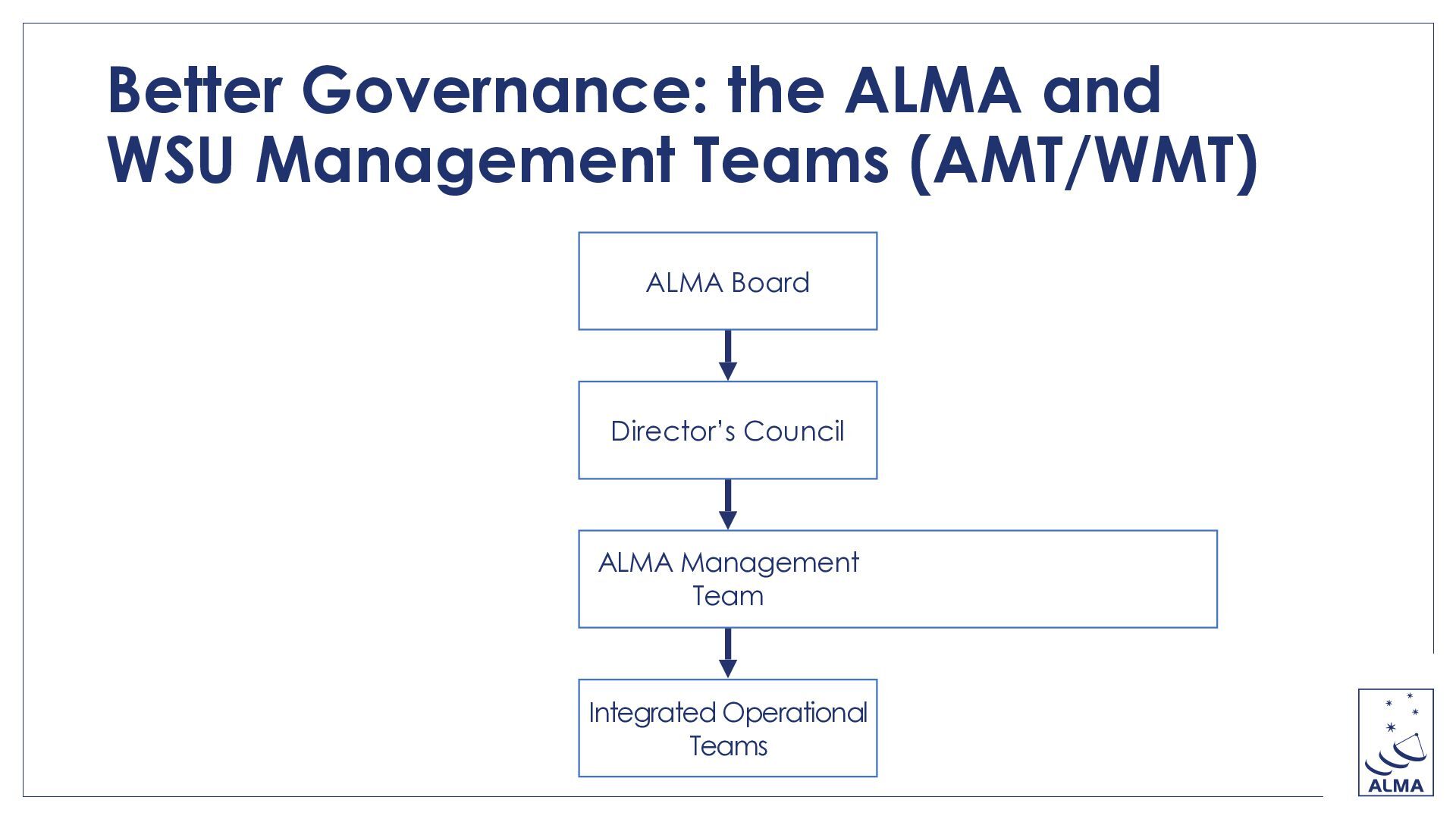
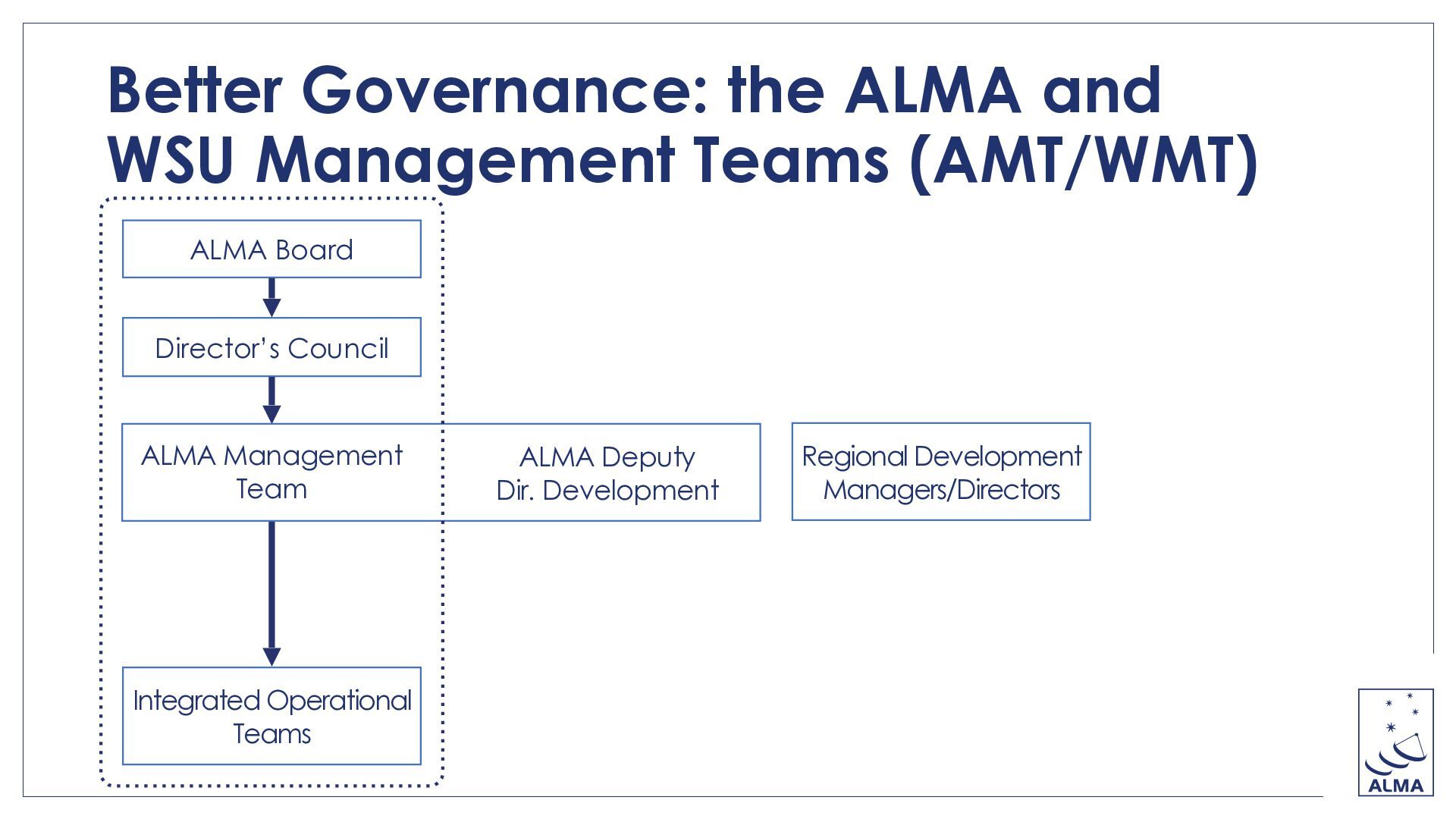
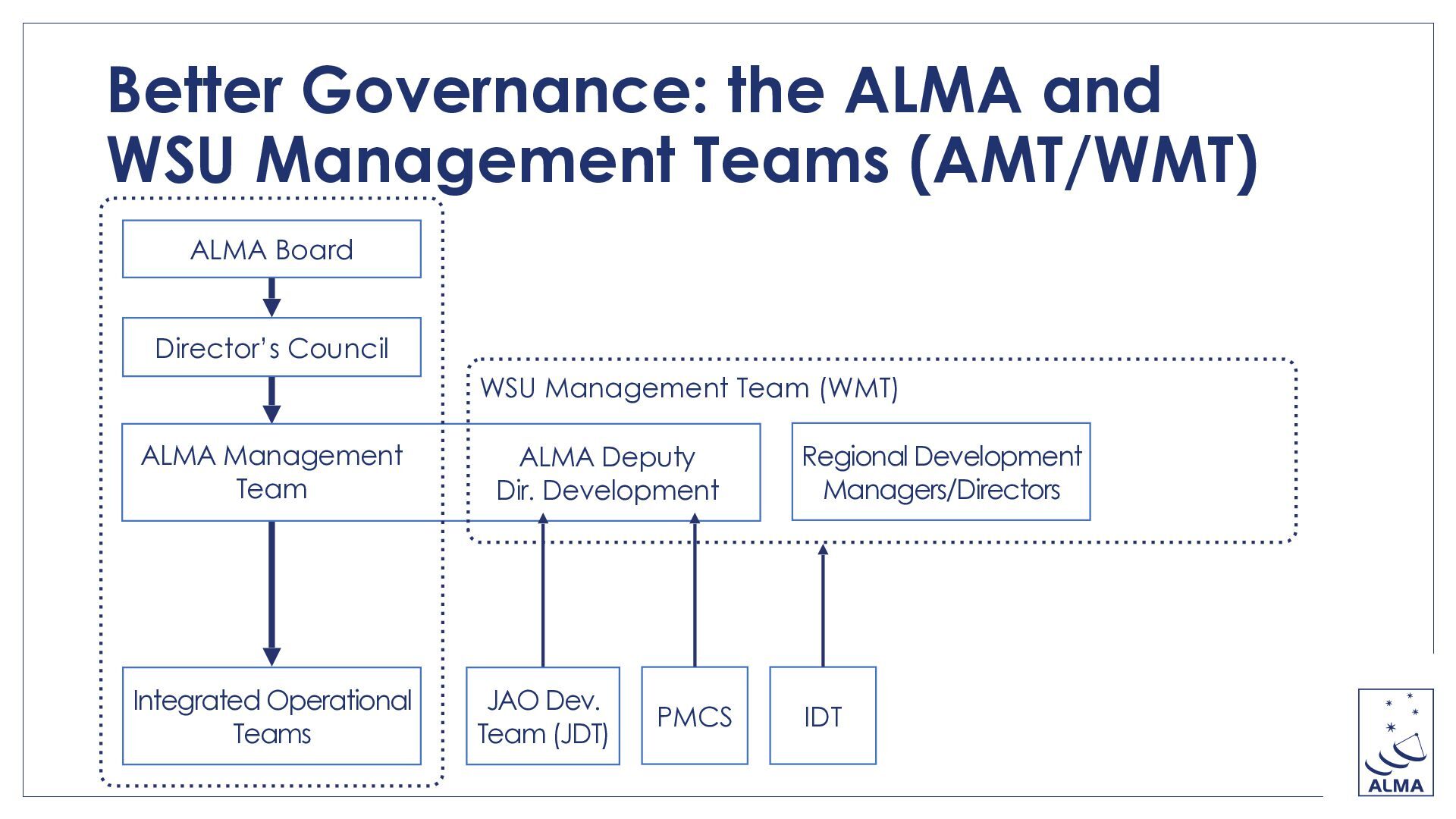
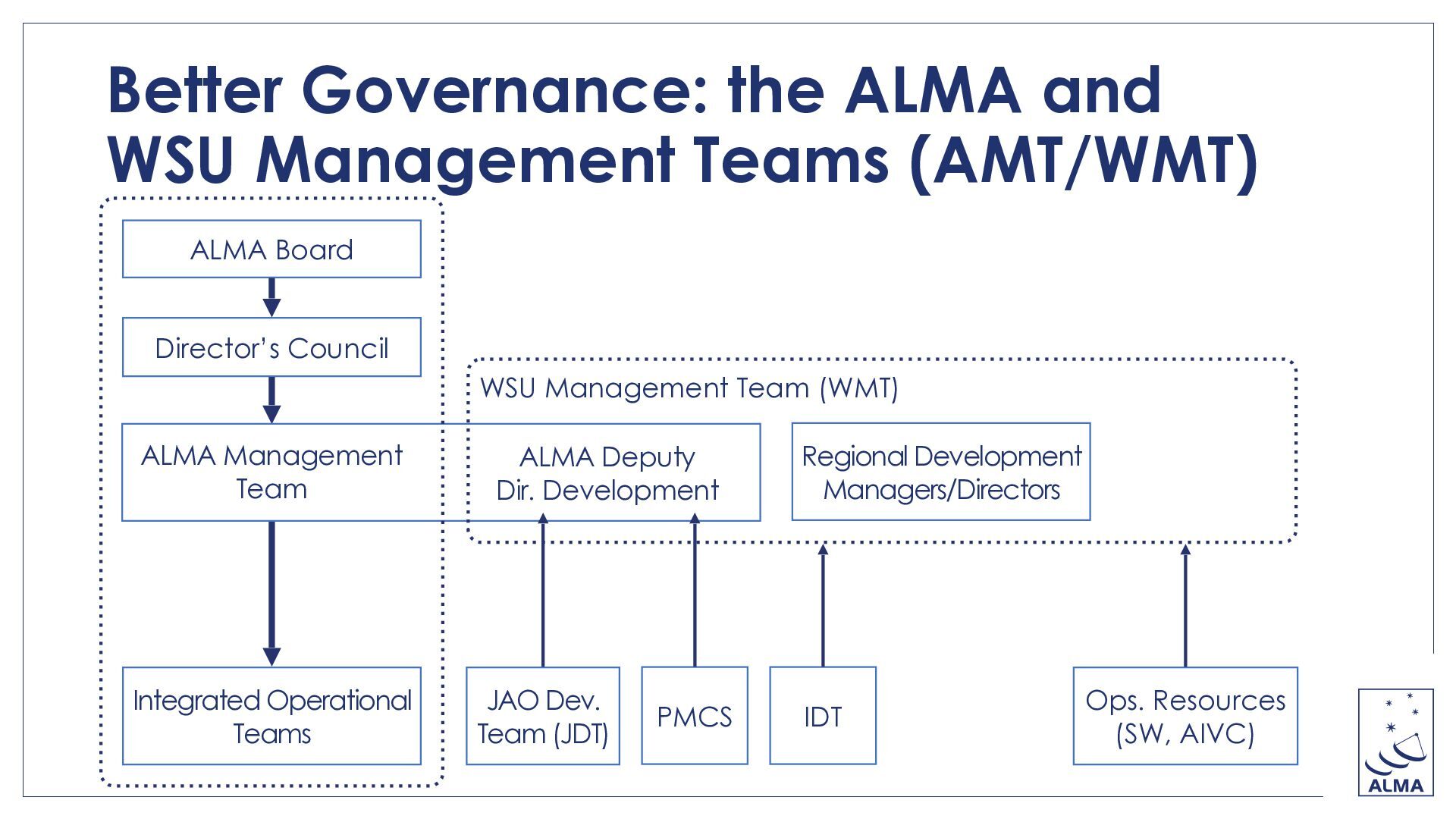
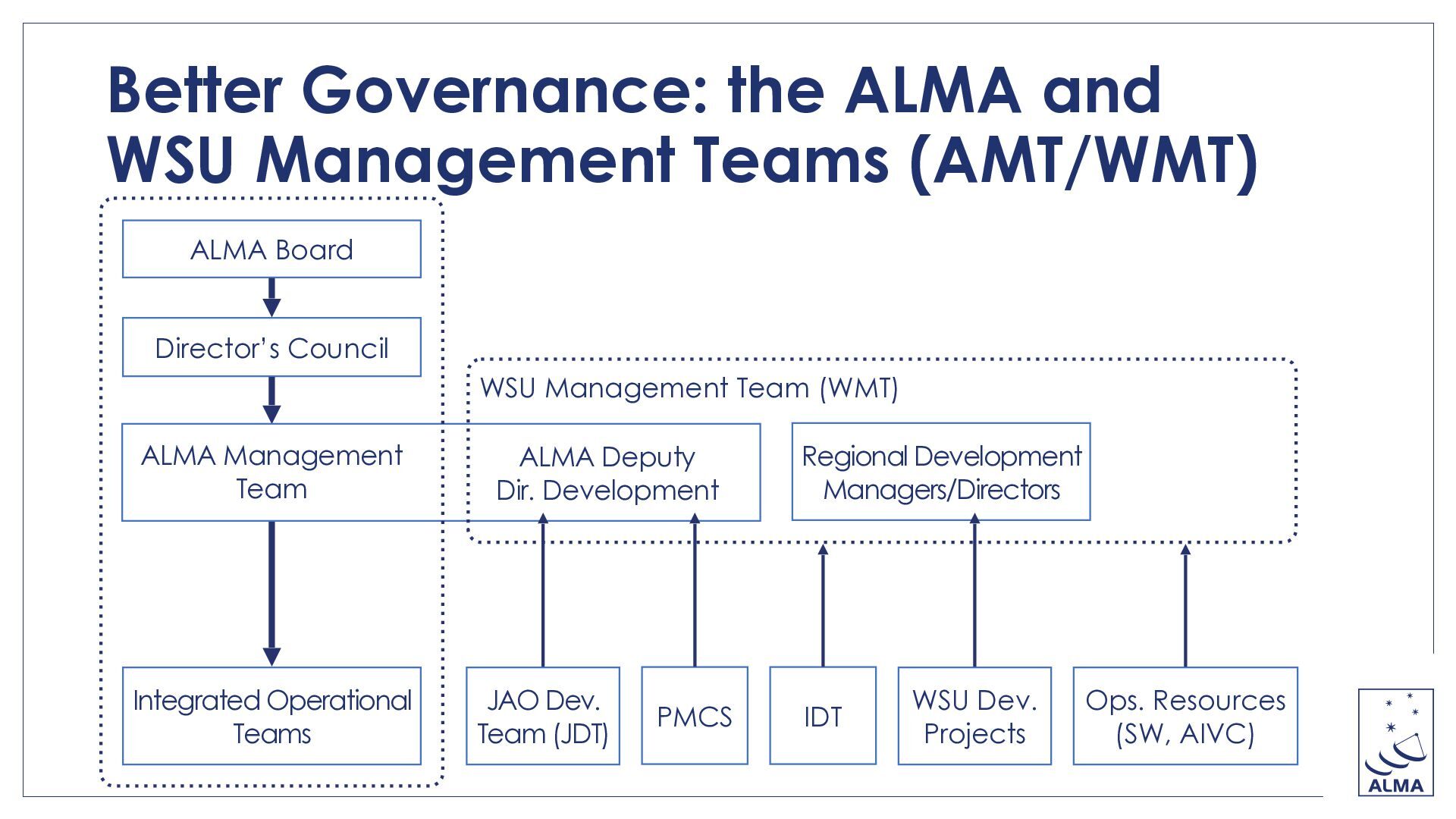
  29. Better Governance: the ALMA and WSU Management Teams (AMT/WMT) ALMA

    Board Director’s Council ALMA Management Team
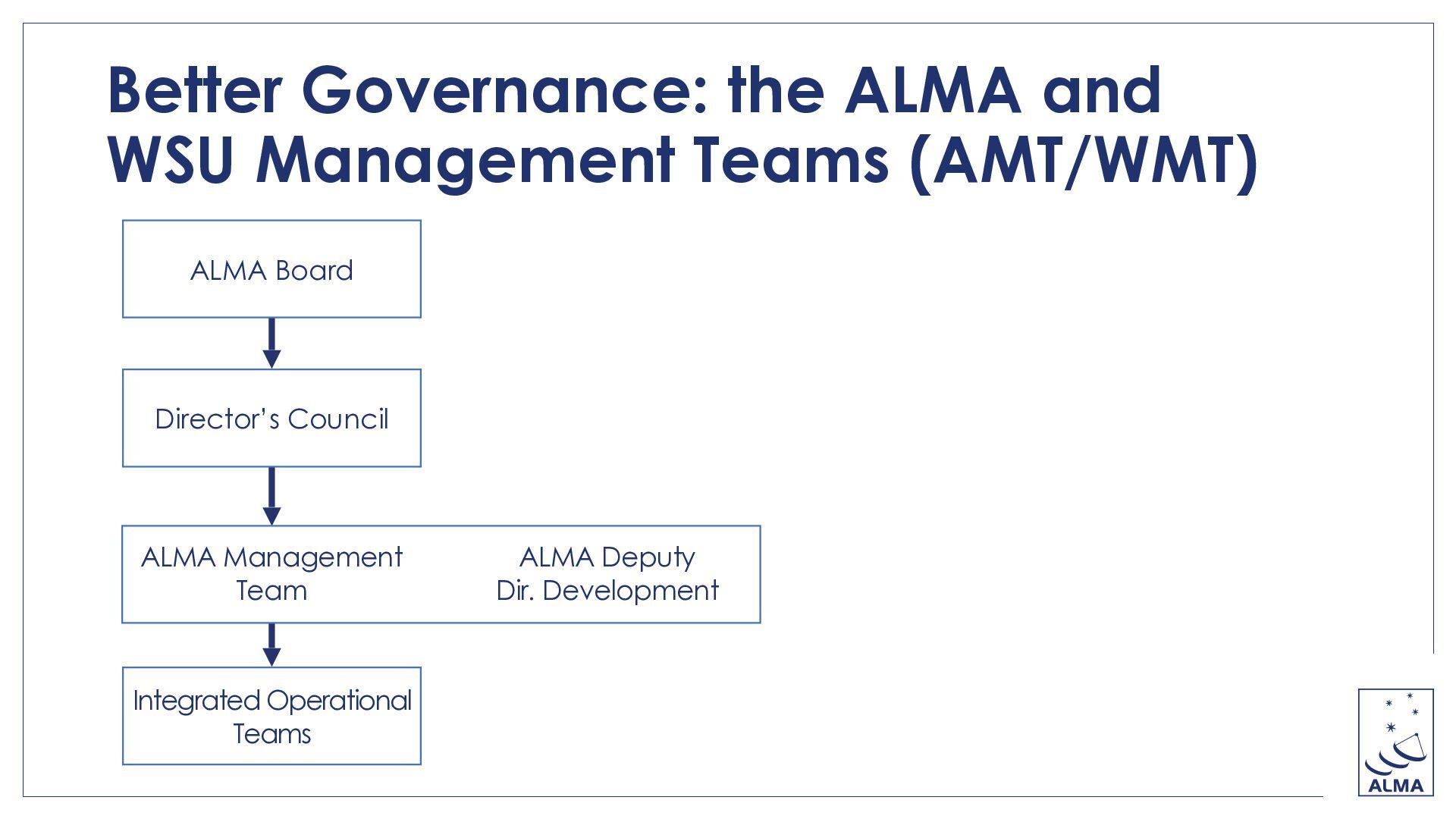
  30. Better Governance: the ALMA and WSU Management Teams (AMT/WMT) ALMA

    Board Director’s Council ALMA Management Team Integrated Operational Teams
  31. Better Governance: the ALMA and WSU Management Teams (AMT/WMT) ALMA

    Board Director’s Council ALMA Management Team Integrated Operational Teams
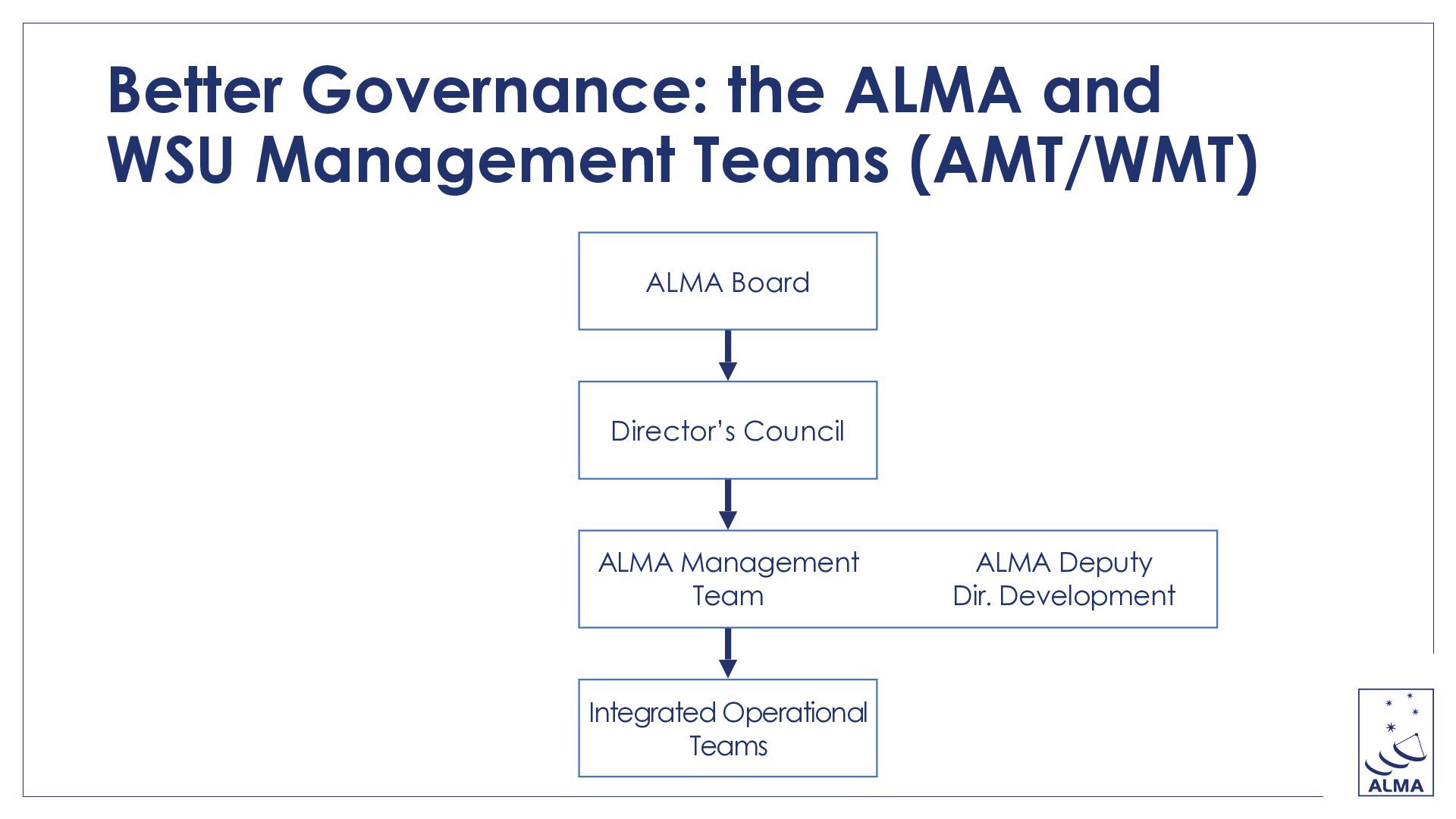
  32. Better Governance: the ALMA and WSU Management Teams (AMT/WMT) ALMA

    Board Director’s Council ALMA Management Team Integrated Operational Teams ALMA Deputy Dir. Development
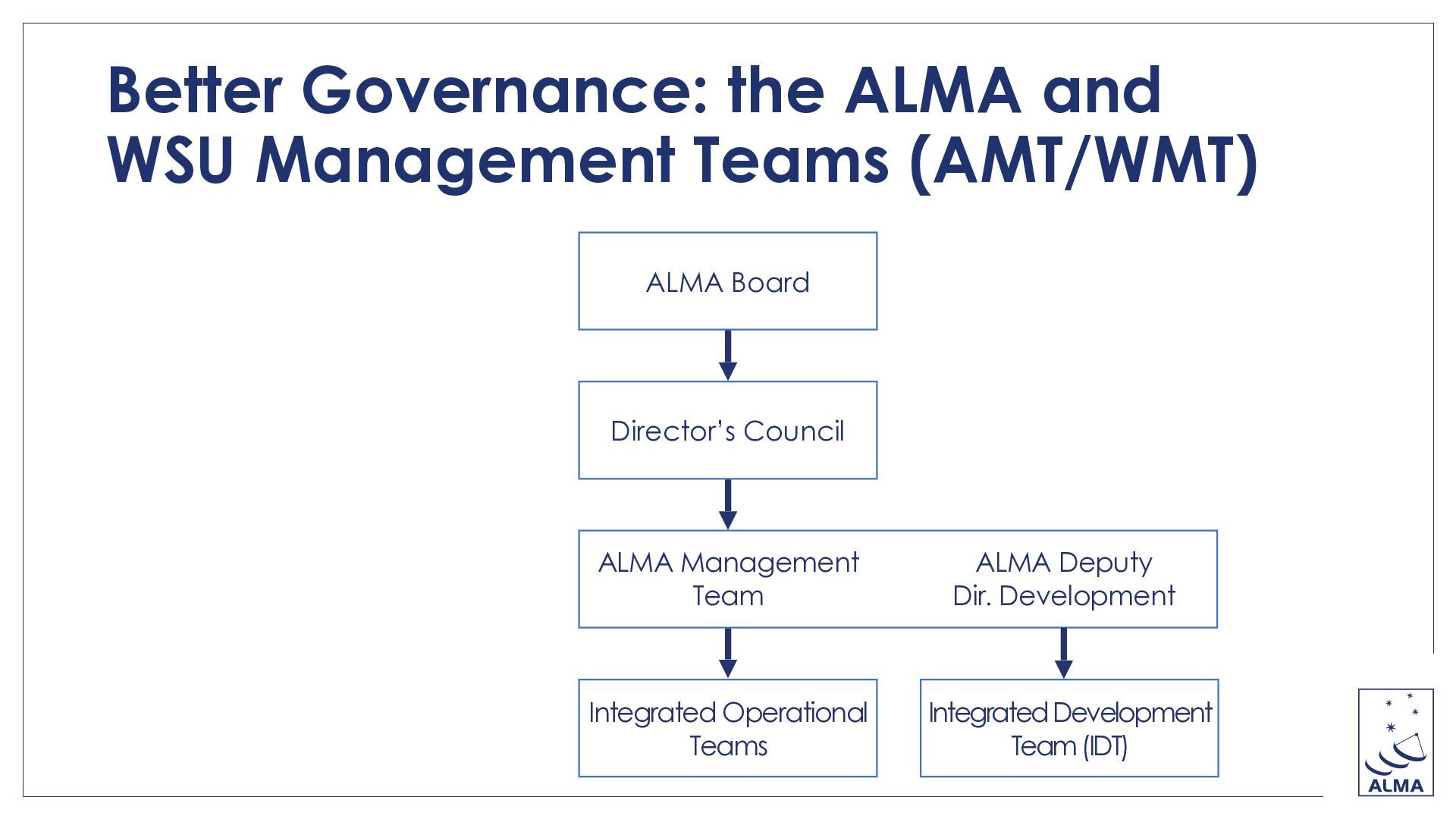
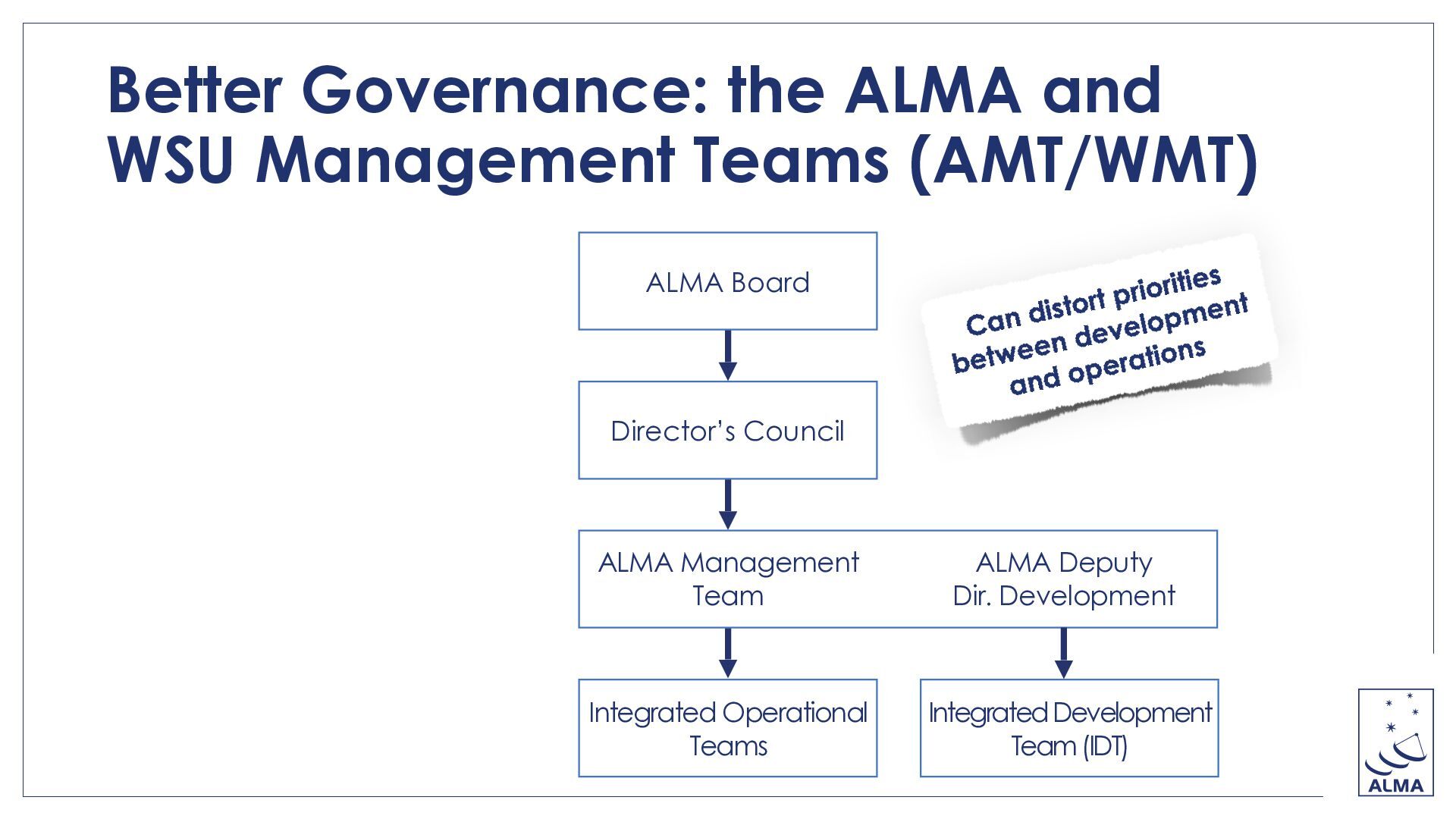
  33. Better Governance: the ALMA and WSU Management Teams (AMT/WMT) ALMA

    Board Director’s Council ALMA Management Team ALMA Deputy Dir. Development Integrated Operational Teams Integrated Development Team (IDT)
  34. Better Governance: the ALMA and WSU Management Teams (AMT/WMT) ALMA

    Board Director’s Council ALMA Management Team ALMA Deputy Dir. Development Integrated Operational Teams Integrated Development Team (IDT)
  35. Better Governance: the ALMA and WSU Management Teams (AMT/WMT) ALMA

    Board Director’s Council ALMA Management Team Integrated Operational Teams ALMA Deputy Dir. Development
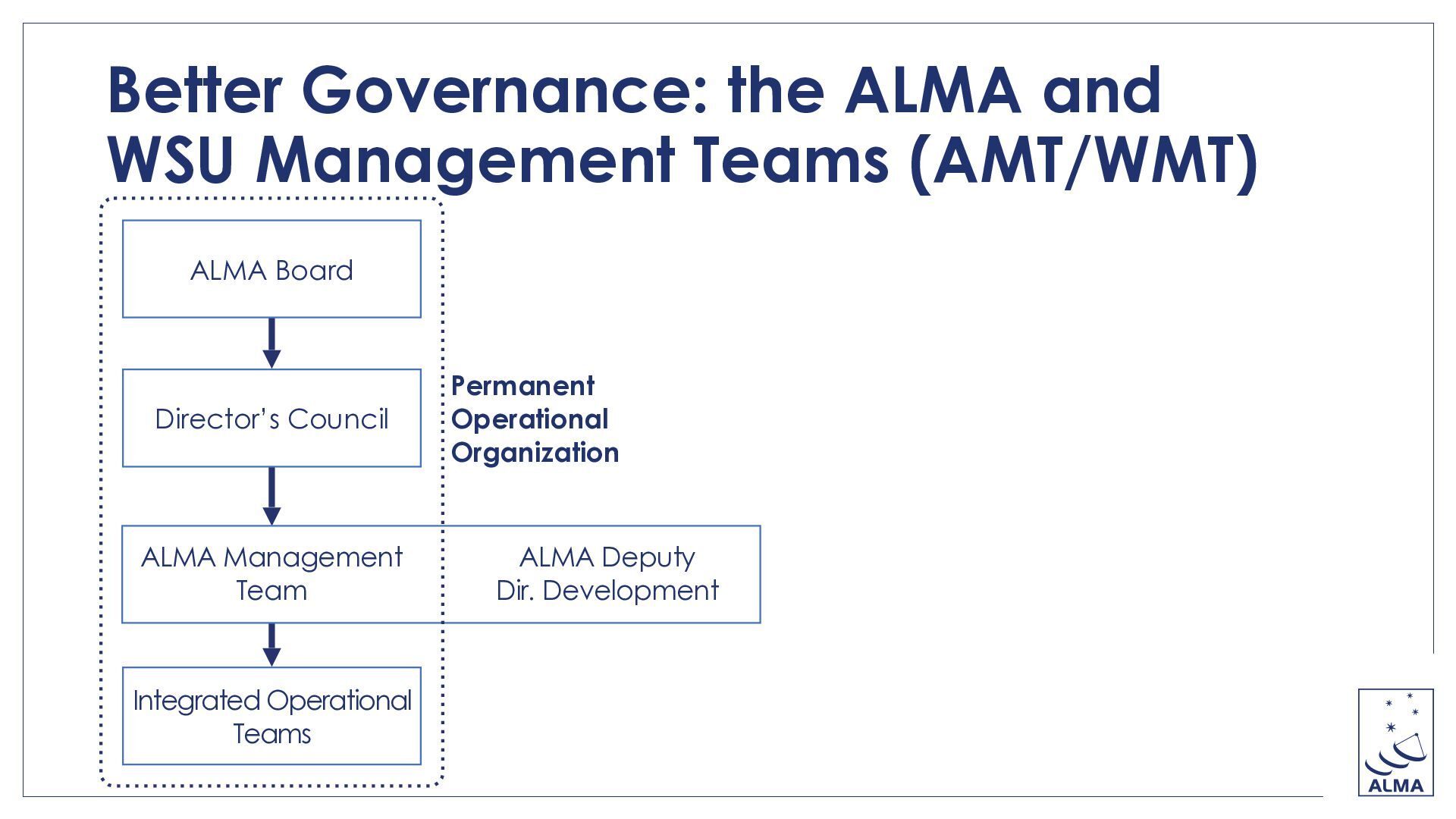
  36. Better Governance: the ALMA and WSU Management Teams (AMT/WMT) ALMA

    Board Director’s Council ALMA Management Team Integrated Operational Teams Permanent Operational Organization ALMA Deputy Dir. Development
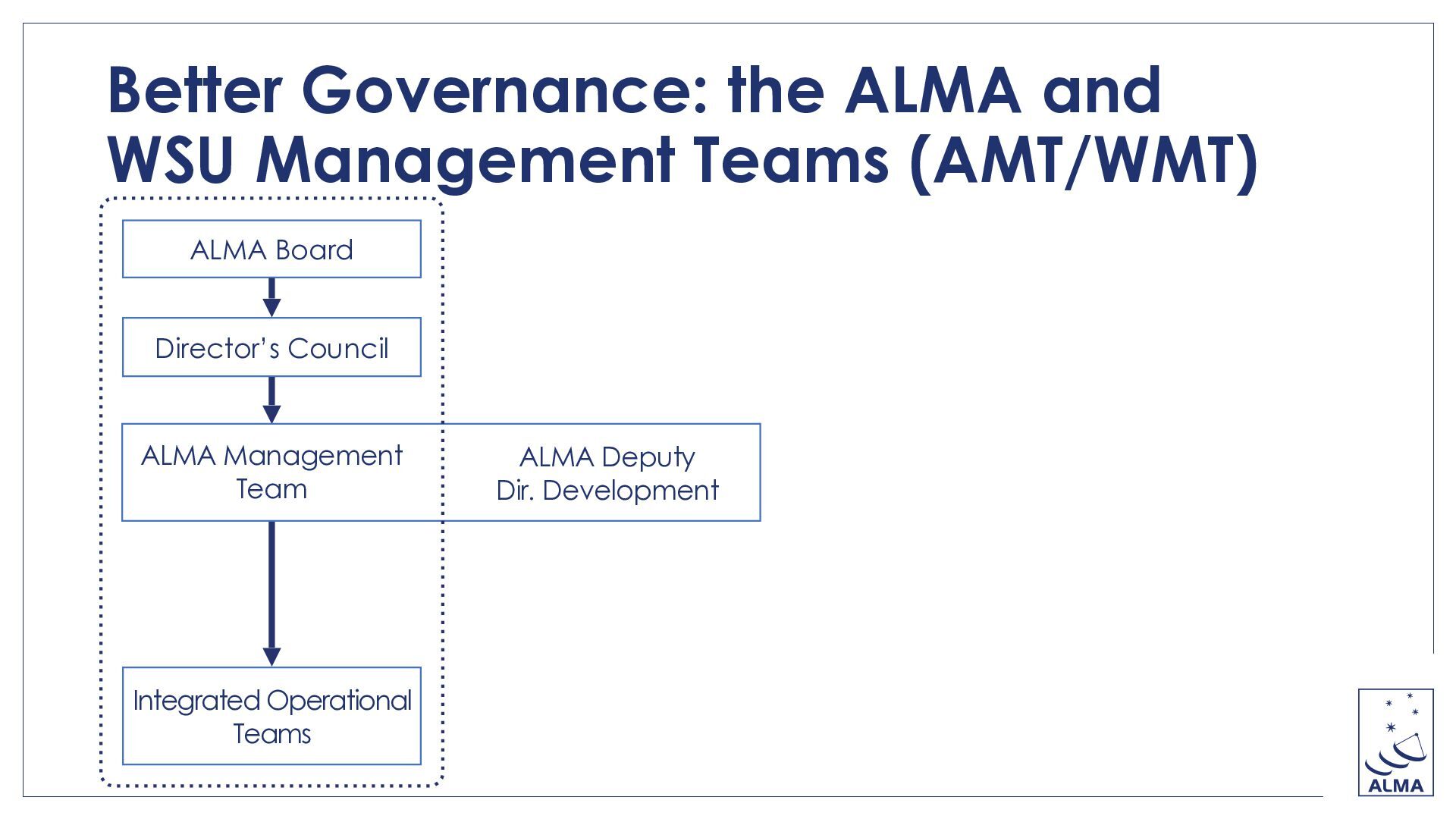
  37. Better Governance: the ALMA and WSU Management Teams (AMT/WMT) ALMA

    Board Director’s Council ALMA Management Team Integrated Operational Teams ALMA Deputy Dir. Development
  38. Better Governance: the ALMA and WSU Management Teams (AMT/WMT) ALMA

    Board Director’s Council ALMA Management Team Integrated Operational Teams ALMA Deputy Dir. Development Regional Development Managers/Directors
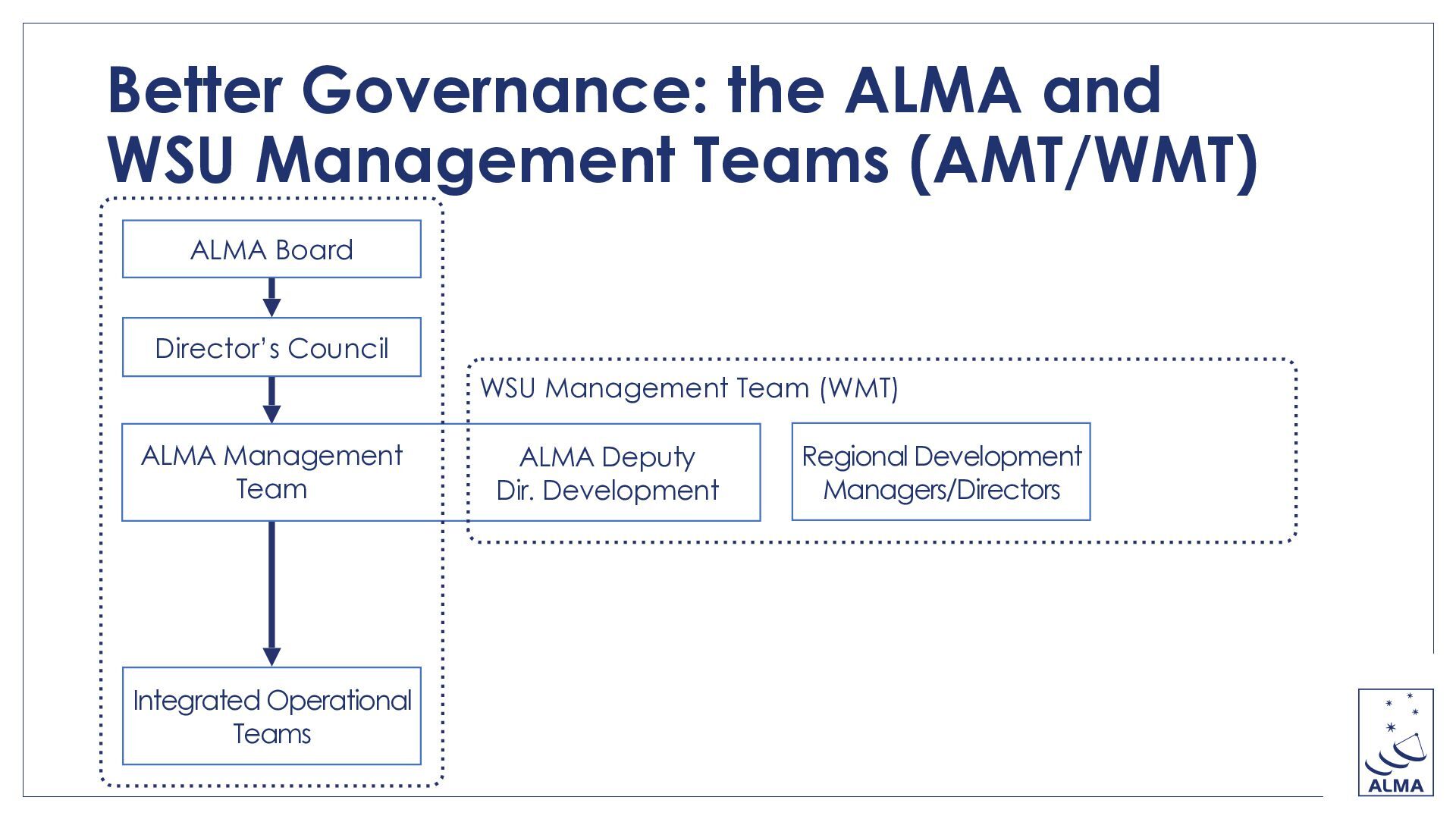
  39. Better Governance: the ALMA and WSU Management Teams (AMT/WMT) ALMA

    Board Director’s Council WSU Management Team (WMT) ALMA Management Team Integrated Operational Teams ALMA Deputy Dir. Development Regional Development Managers/Directors
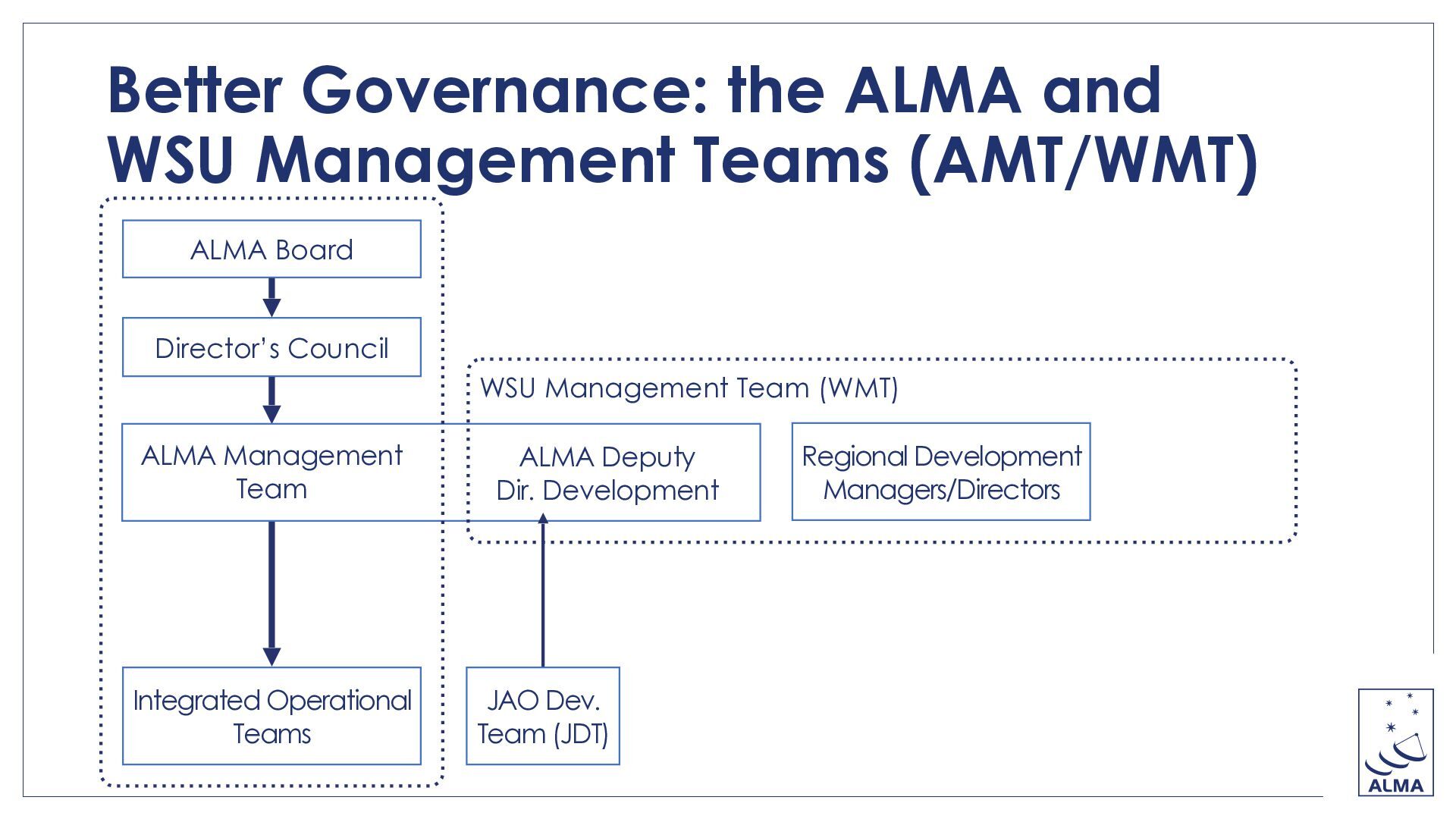
  40. Better Governance: the ALMA and WSU Management Teams (AMT/WMT) ALMA

    Board Director’s Council WSU Management Team (WMT) ALMA Management Team ALMA Deputy Dir. Development Integrated Operational Teams JAO Dev. Team (JDT) Regional Development Managers/Directors
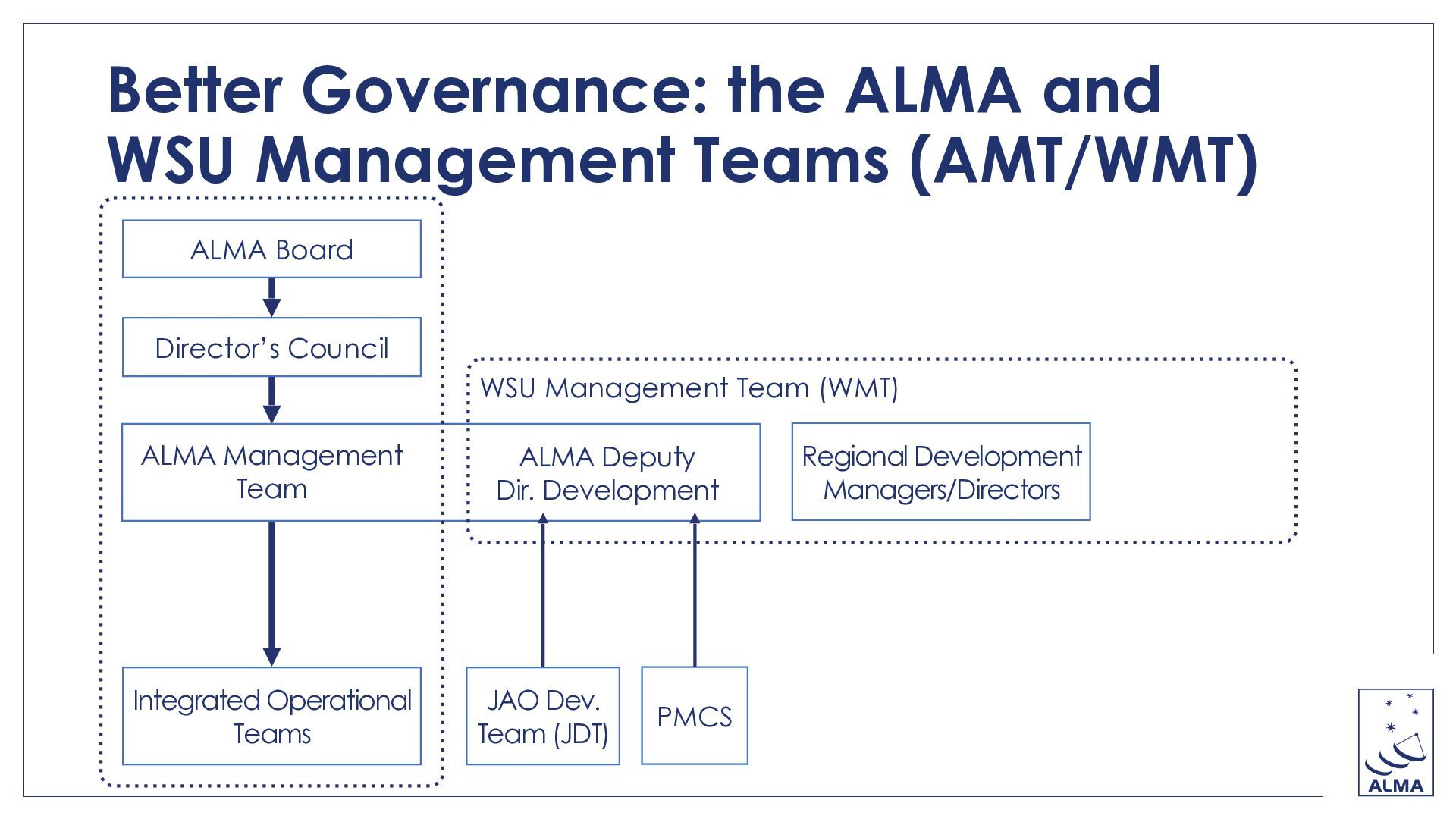
  41. Better Governance: the ALMA and WSU Management Teams (AMT/WMT) ALMA

    Board Director’s Council WSU Management Team (WMT) ALMA Management Team ALMA Deputy Dir. Development Integrated Operational Teams JAO Dev. Team (JDT) PMCS Regional Development Managers/Directors
  42. Better Governance: the ALMA and WSU Management Teams (AMT/WMT) ALMA

    Board Director’s Council WSU Management Team (WMT) ALMA Management Team ALMA Deputy Dir. Development Regional Development Managers/Directors Integrated Operational Teams JAO Dev. Team (JDT) IDT PMCS
  43. Better Governance: the ALMA and WSU Management Teams (AMT/WMT) ALMA

    Board Director’s Council WSU Management Team (WMT) ALMA Management Team ALMA Deputy Dir. Development Regional Development Managers/Directors Integrated Operational Teams JAO Dev. Team (JDT) IDT PMCS Ops. Resources (SW, AIVC)
  44. Better Governance: the ALMA and WSU Management Teams (AMT/WMT) ALMA

    Board Director’s Council WSU Management Team (WMT) ALMA Management Team ALMA Deputy Dir. Development Regional Development Managers/Directors Integrated Operational Teams JAO Dev. Team (JDT) IDT PMCS WSU Dev. Projects Ops. Resources (SW, AIVC)
  45. Better Governance: the ALMA and WSU Management Teams (AMT/WMT) ALMA

    Board Director’s Council WSU Management Team (WMT) ALMA Management Team ALMA Deputy Dir. Development Regional Development Managers/Directors Integrated Operational Teams JAO Dev. Team (JDT) IDT PMCS WSU Dev. Projects Ops. Resources (SW, AIVC)
  46. How do we ensure we have the right processes for

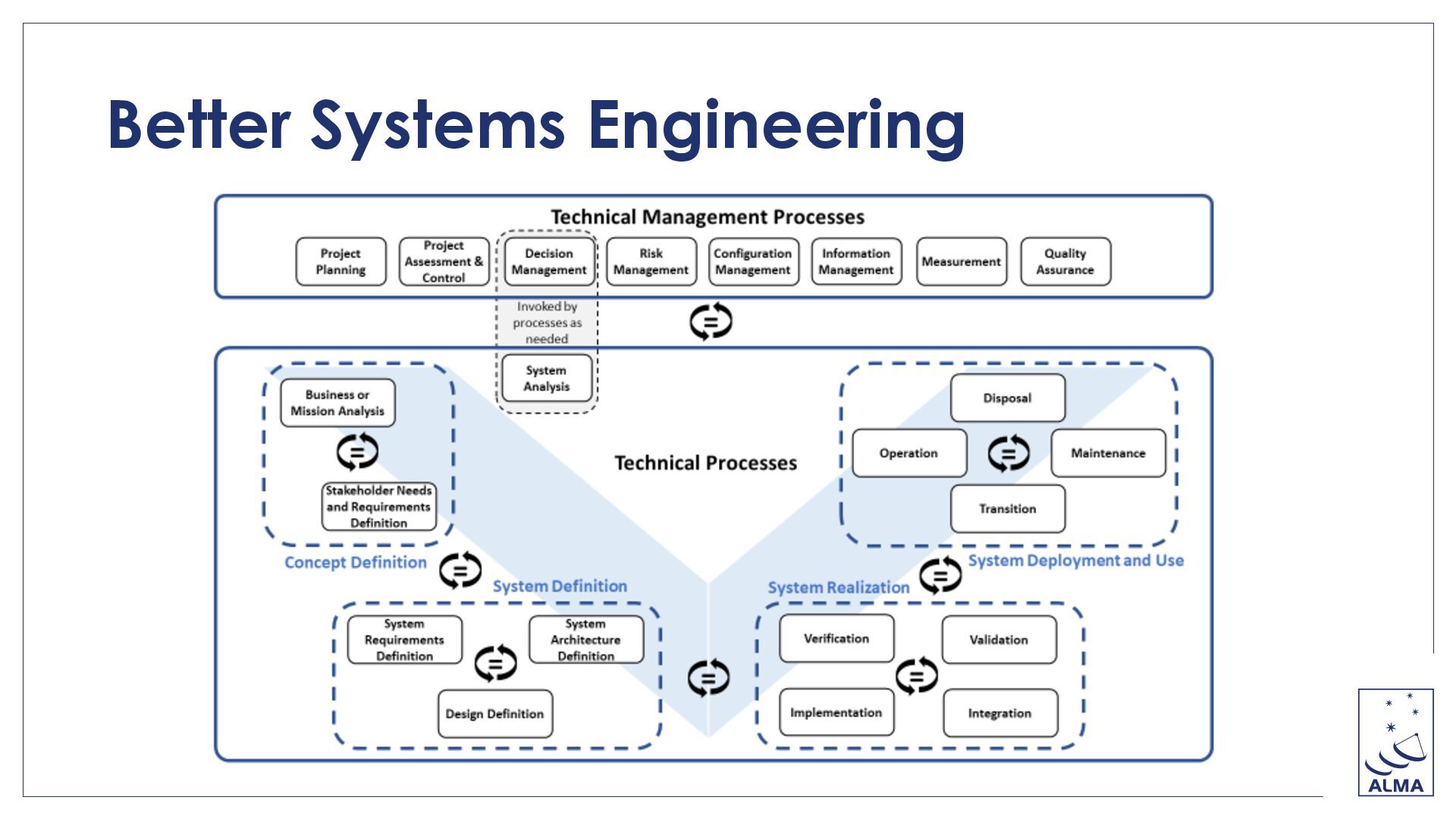
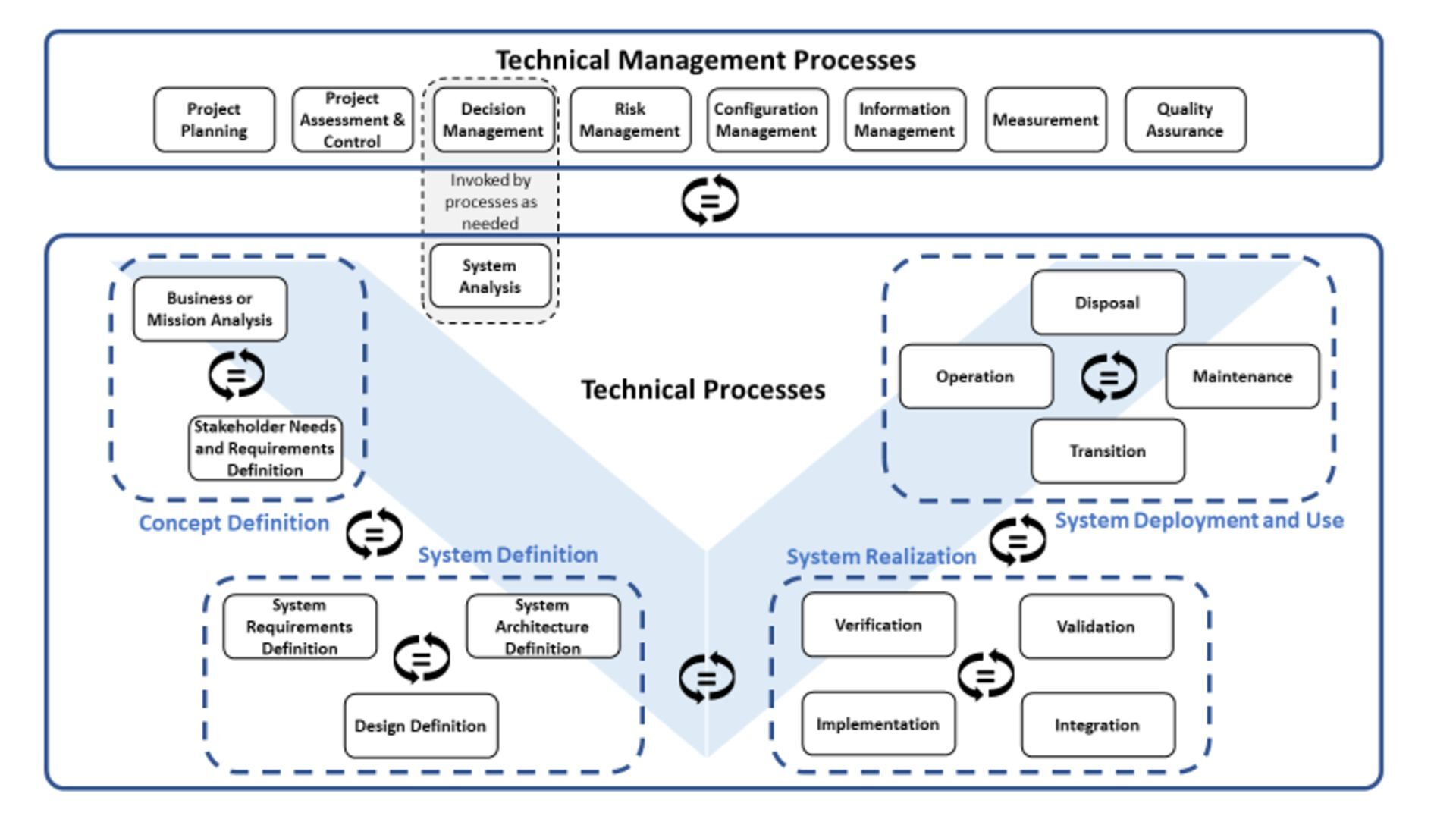
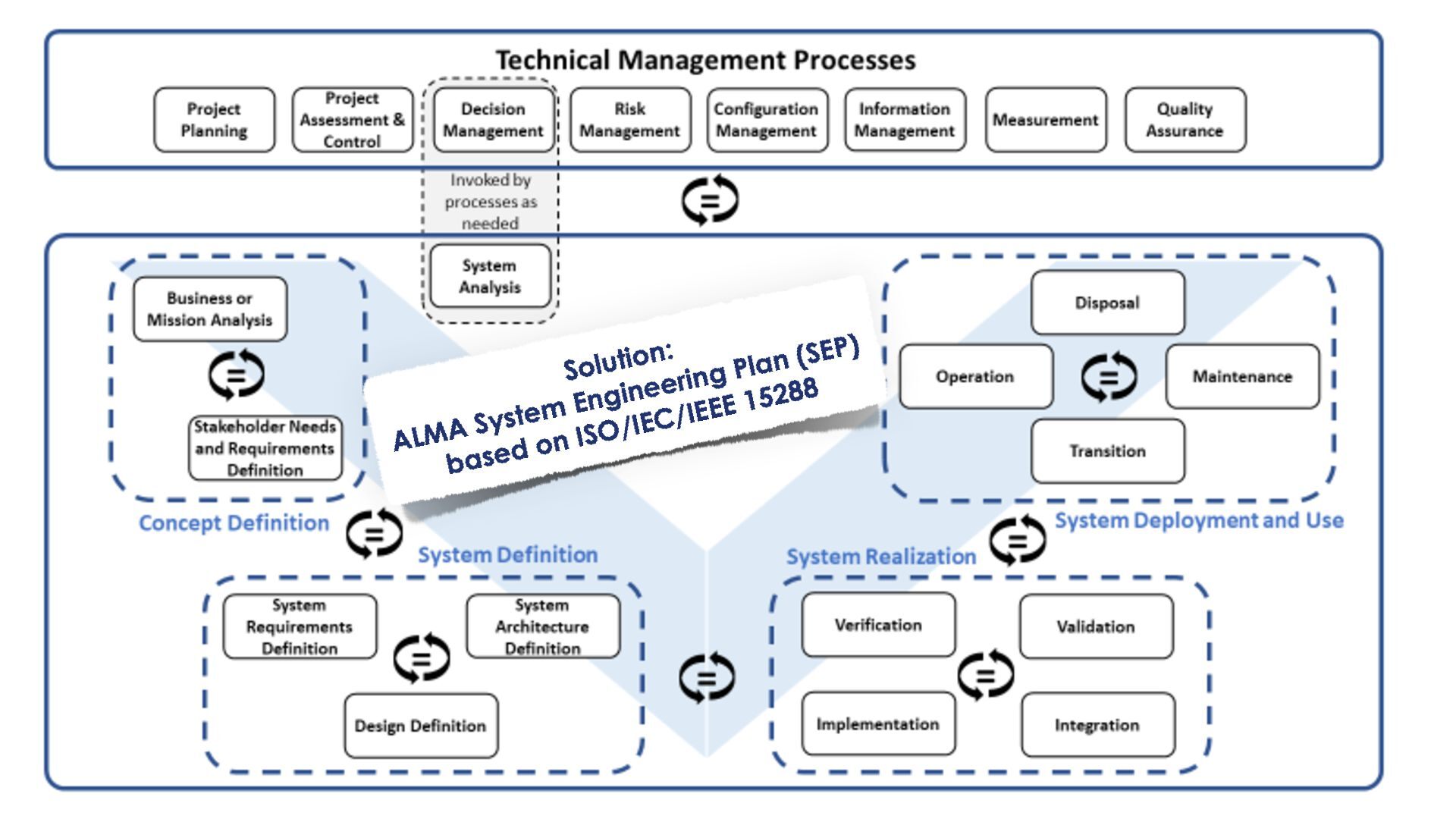
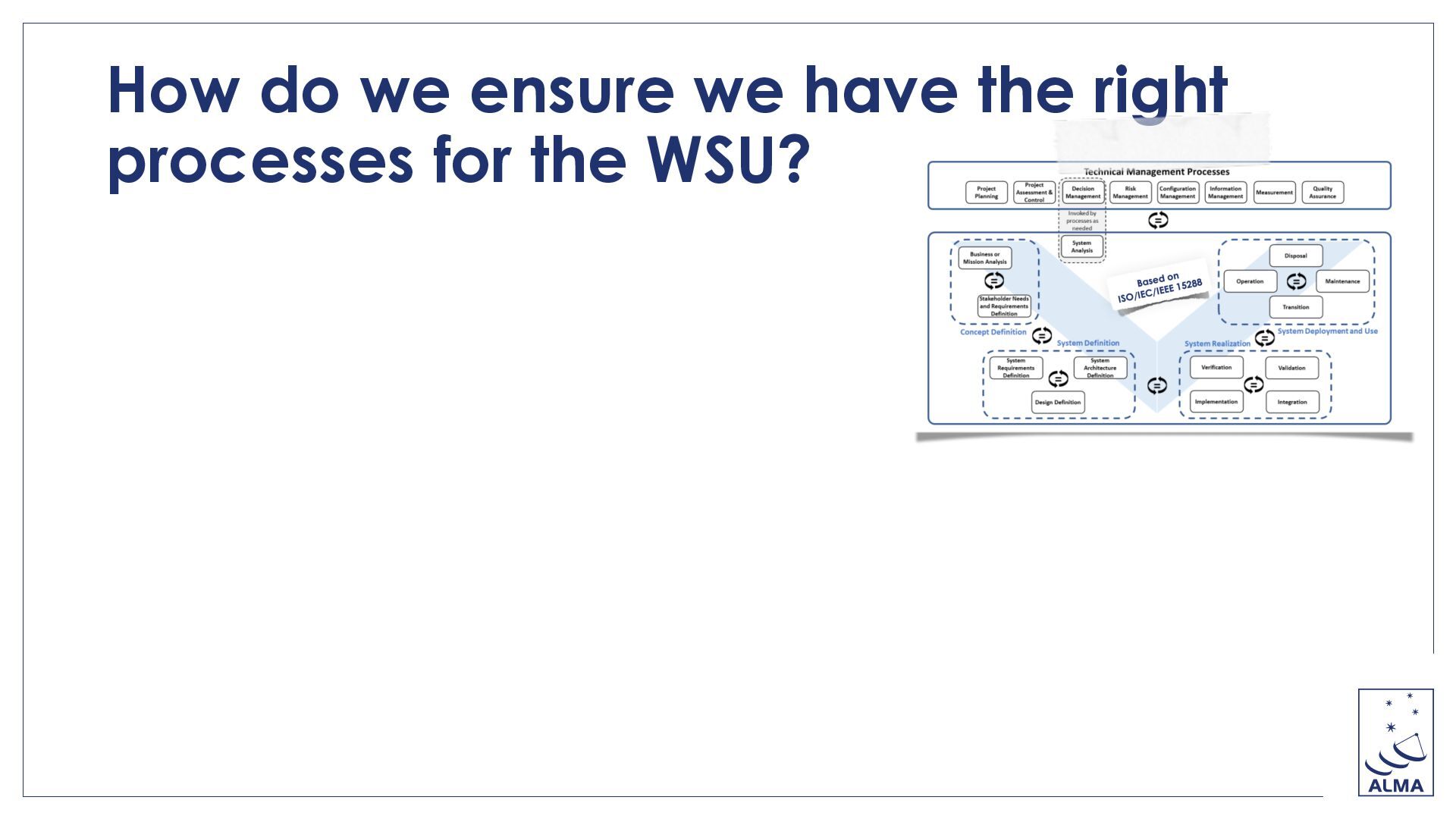
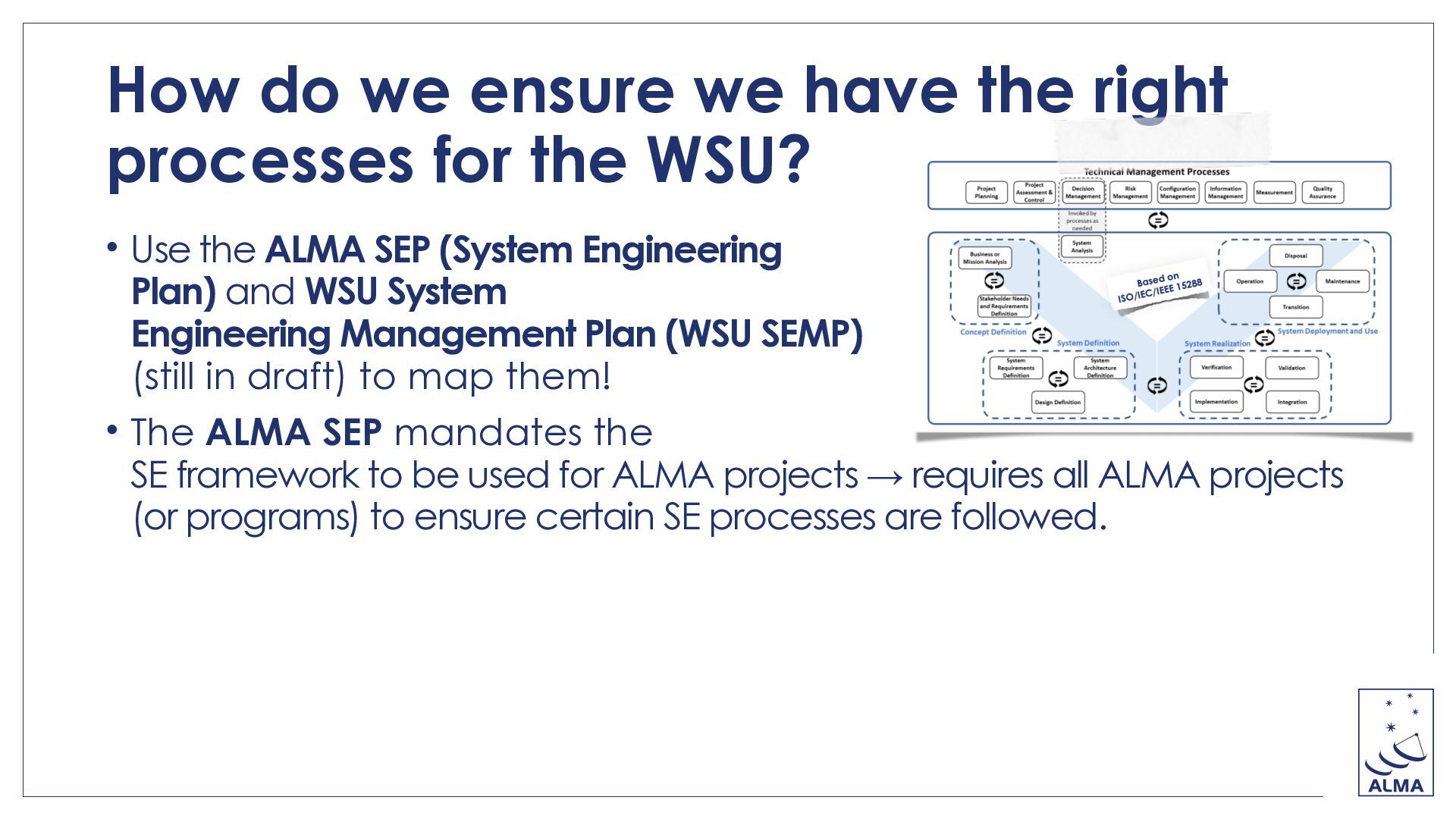
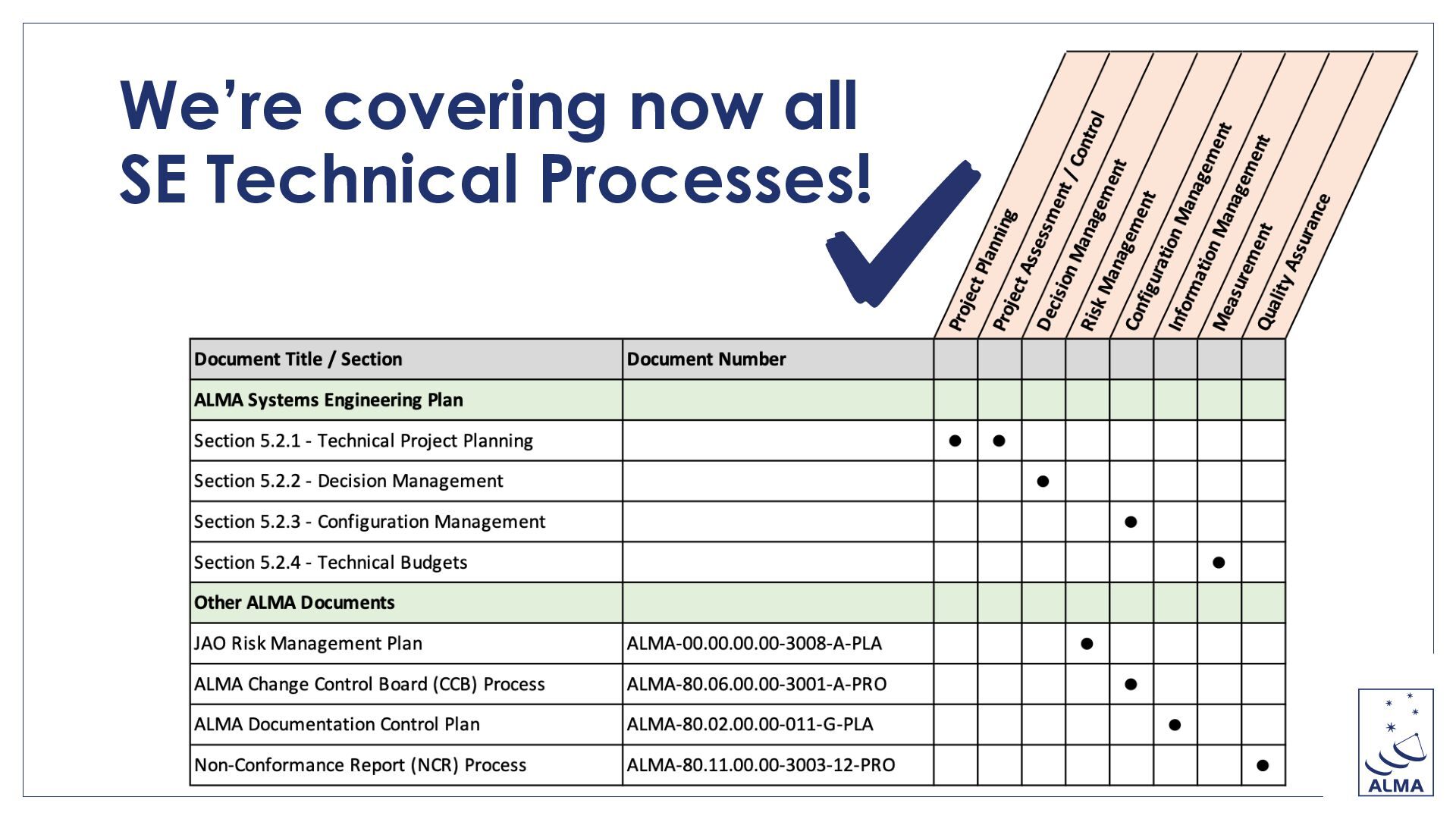
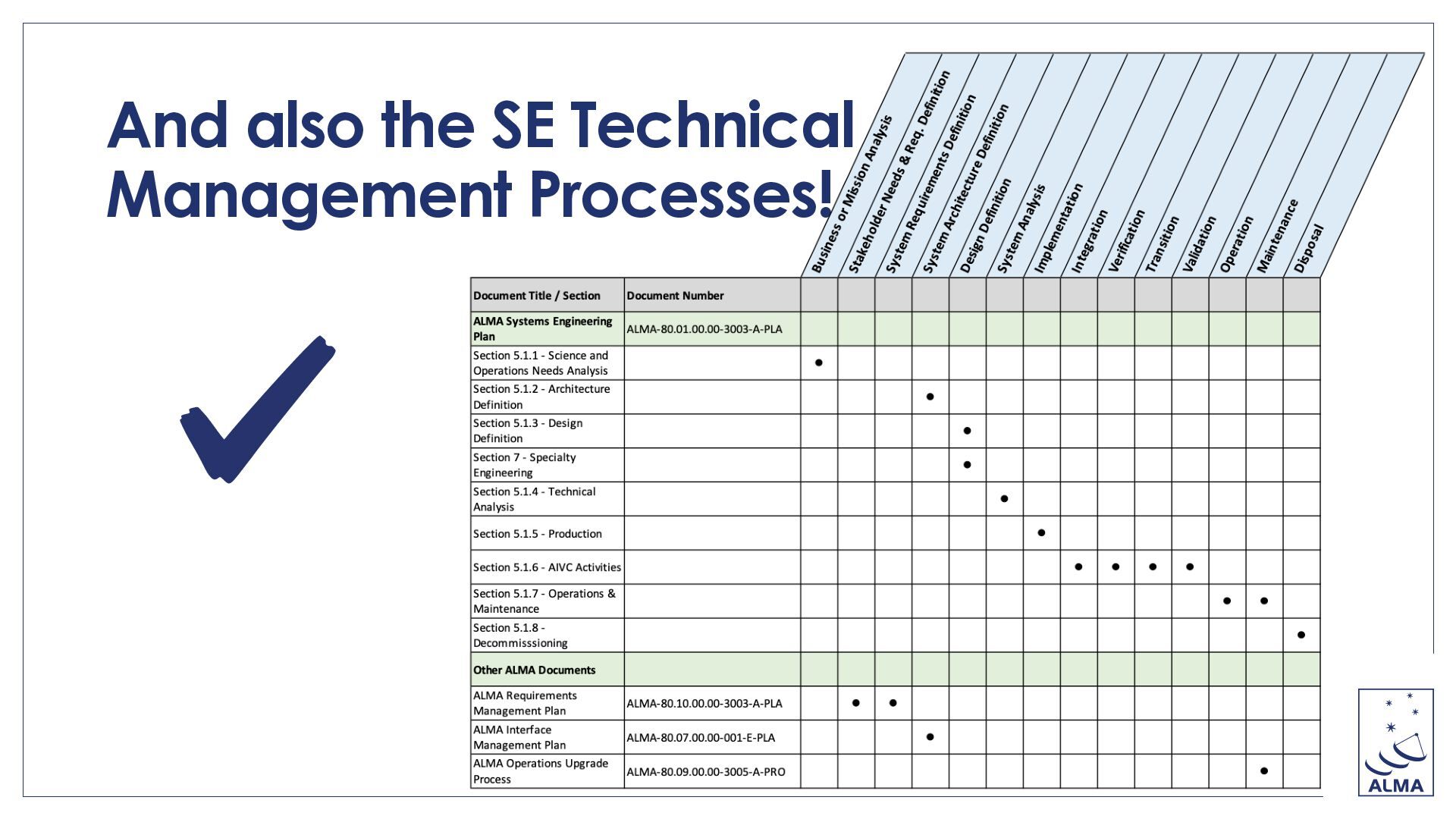
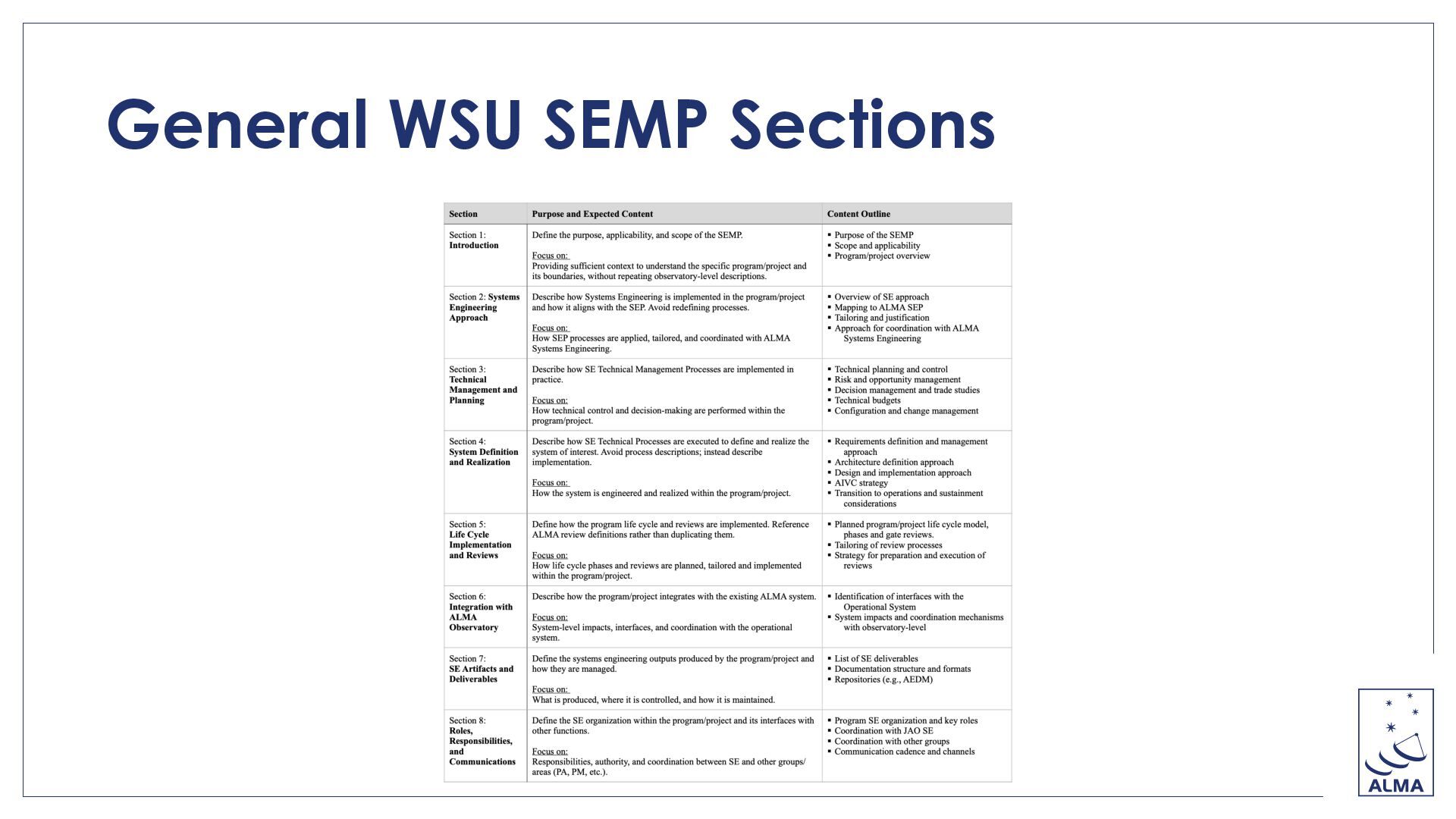
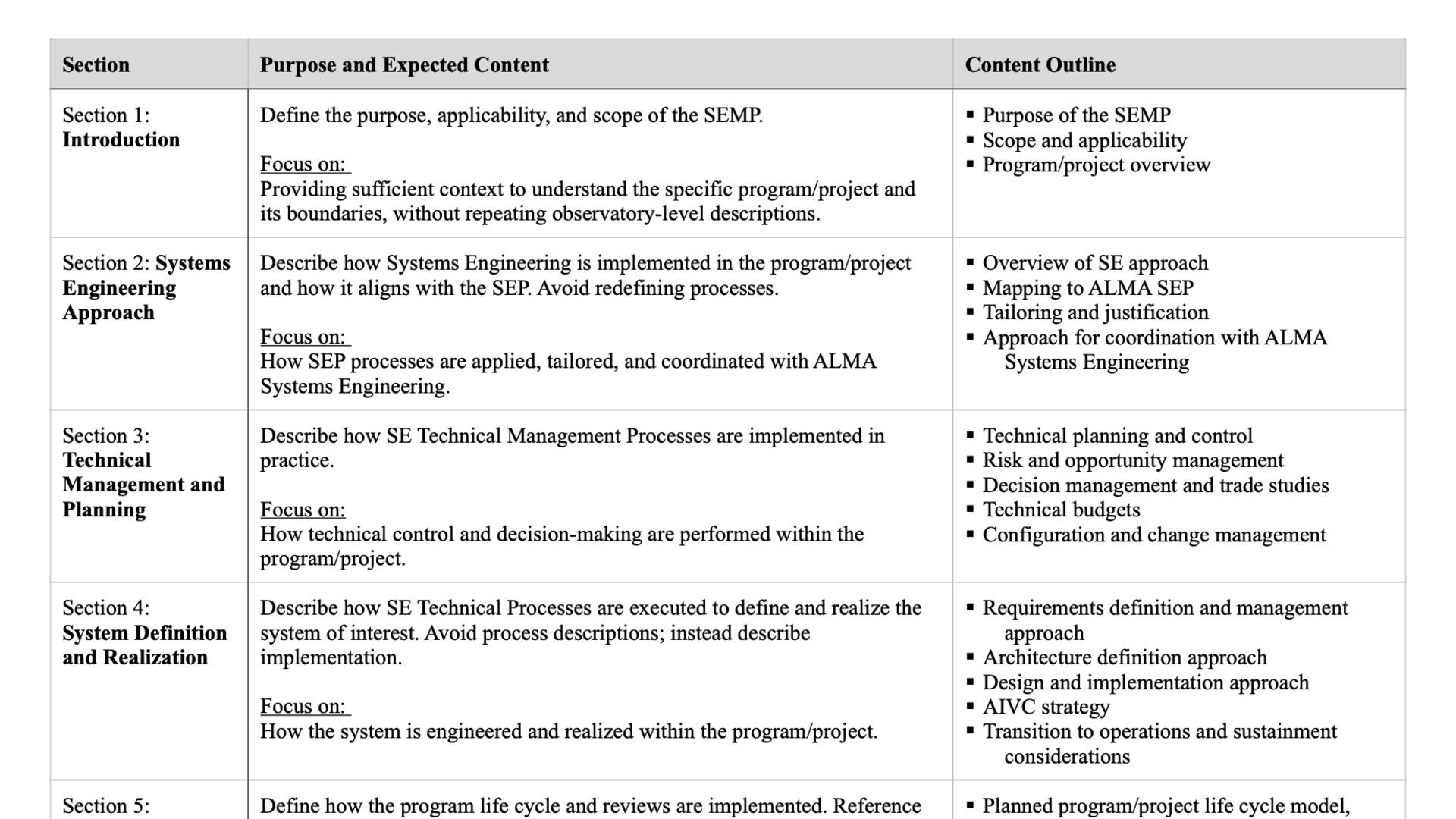
    the WSU? • Use the ALMA SEP (System Engineering Plan) and WSU System Engineering Management Plan (WSU SEMP) (still in draft) to map them! • The ALMA SEP mandates the SE framework to be used for ALMA projects → requires all ALMA projects (or programs) to ensure certain SE processes are followed.
  47. How do we ensure we have the right processes for

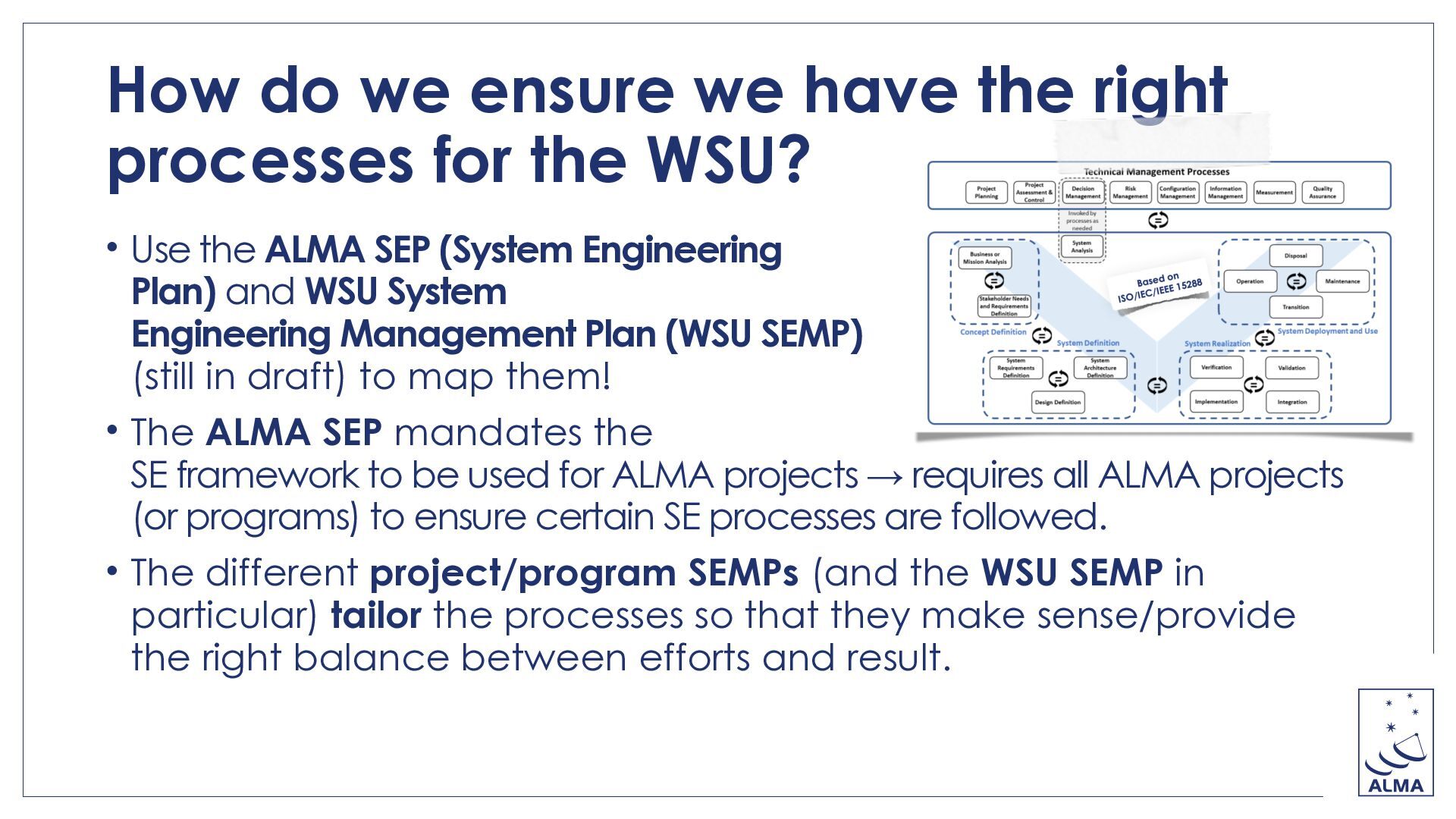
    the WSU? • Use the ALMA SEP (System Engineering Plan) and WSU System Engineering Management Plan (WSU SEMP) (still in draft) to map them! • The ALMA SEP mandates the SE framework to be used for ALMA projects → requires all ALMA projects (or programs) to ensure certain SE processes are followed. • The different project/program SEMPs (and the WSU SEMP in particular) tailor the processes so that they make sense/provide the right balance between efforts and result.
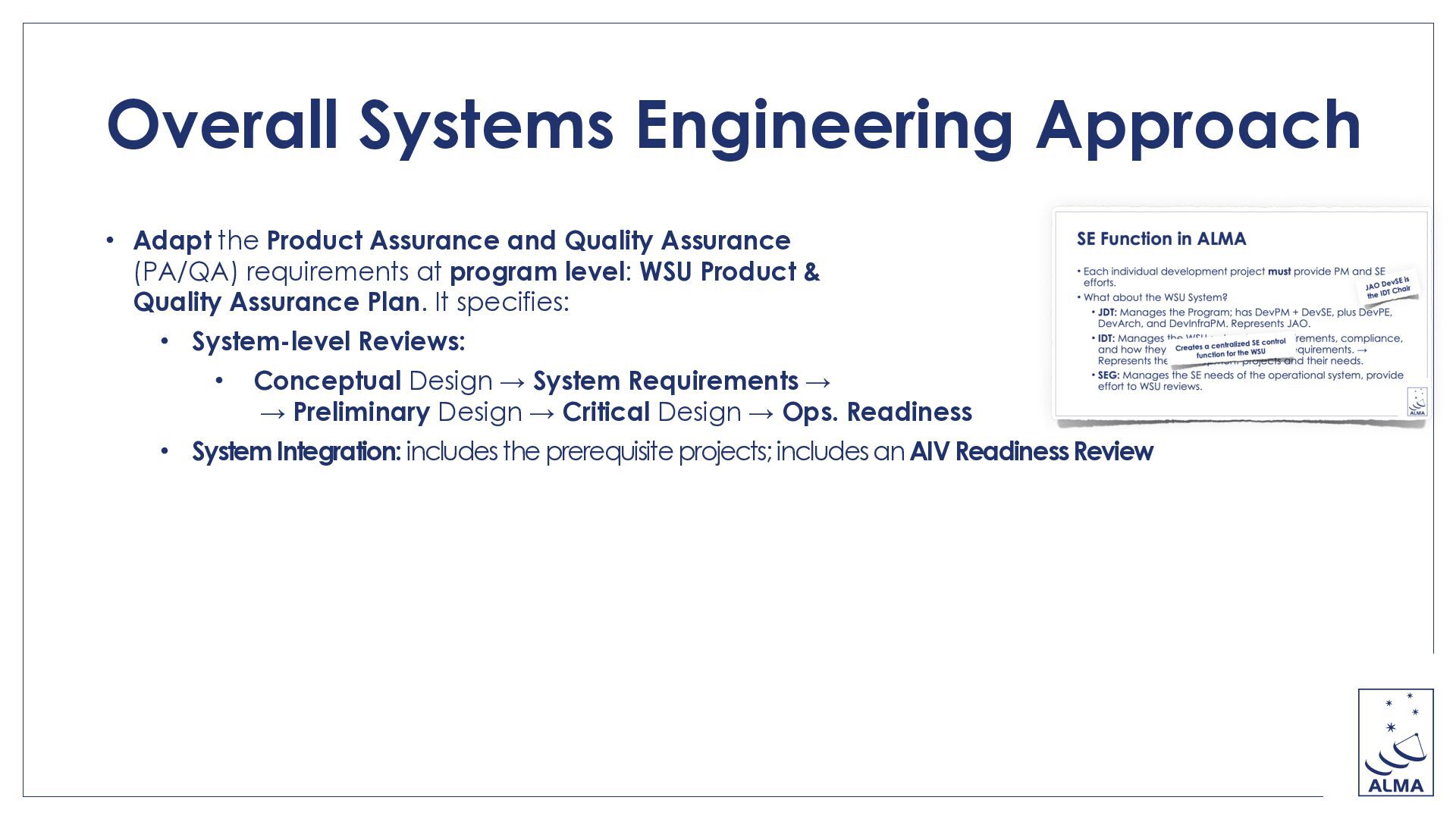
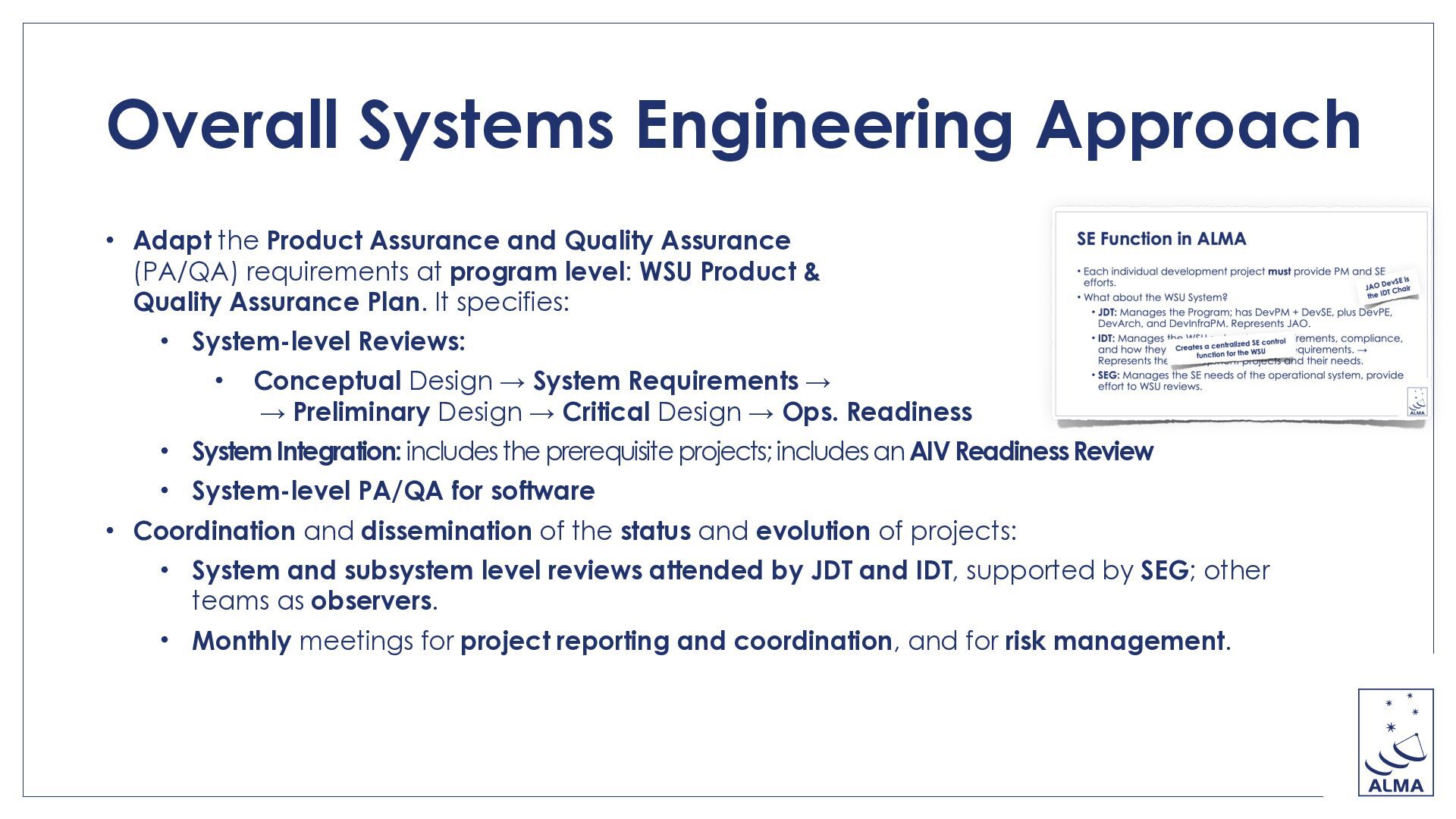
  48. Overall Systems Engineering Approach • Adapt the Product Assurance and

    Quality Assurance (PA/QA) requirements at program level: WSU Product & Quality Assurance Plan. It specifies:
  49. Overall Systems Engineering Approach • Adapt the Product Assurance and

    Quality Assurance (PA/QA) requirements at program level: WSU Product & Quality Assurance Plan. It specifies: • System-level Reviews:
  50. Overall Systems Engineering Approach • Adapt the Product Assurance and

    Quality Assurance (PA/QA) requirements at program level: WSU Product & Quality Assurance Plan. It specifies: • System-level Reviews: • Conceptual Design → System Requirements → → Preliminary Design → Critical Design → Ops. Readiness
  51. Overall Systems Engineering Approach • Adapt the Product Assurance and

    Quality Assurance (PA/QA) requirements at program level: WSU Product & Quality Assurance Plan. It specifies: • System-level Reviews: • Conceptual Design → System Requirements → → Preliminary Design → Critical Design → Ops. Readiness • System Integration: includes the prerequisite projects; includes an AIV Readiness Review
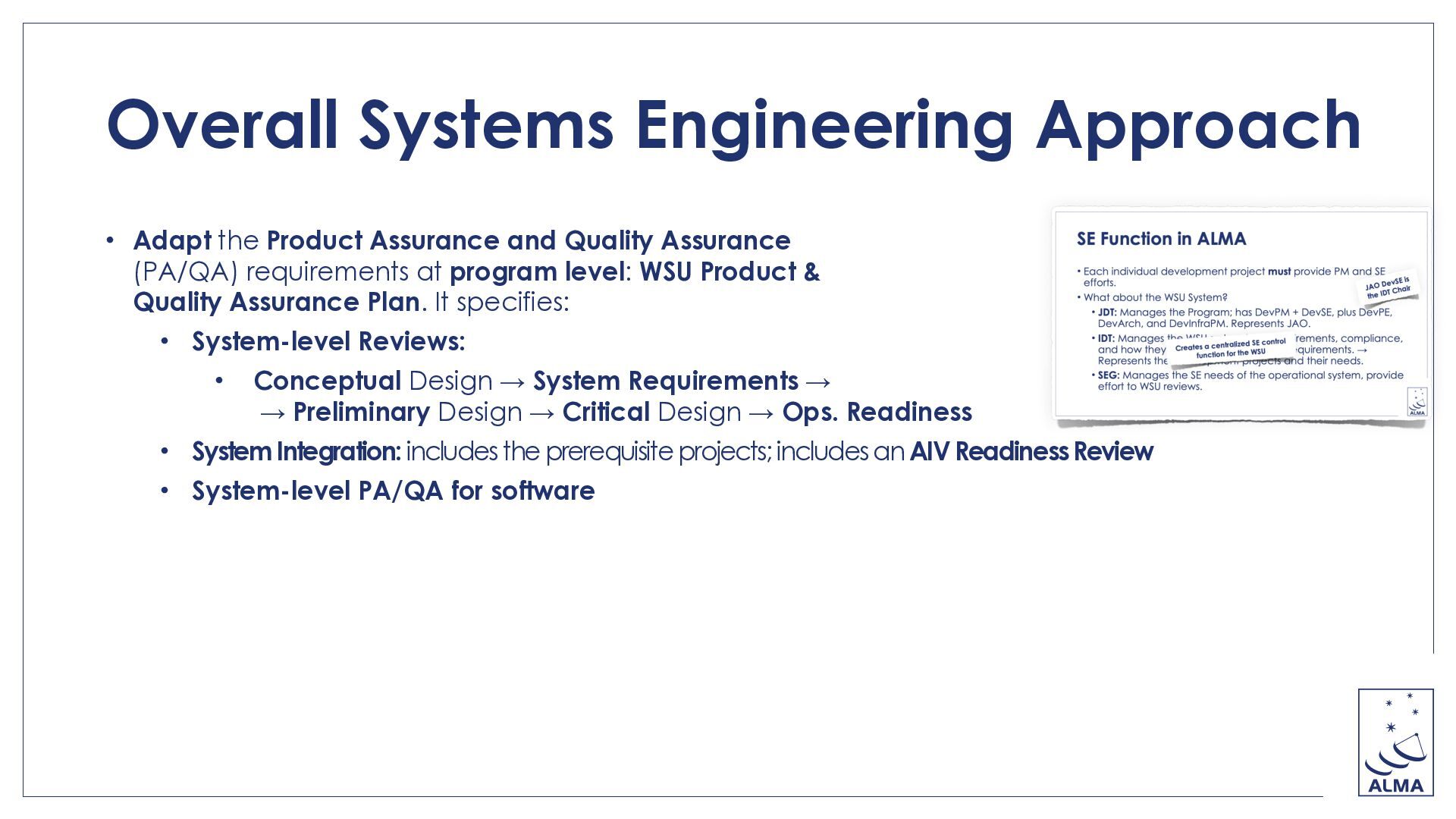
  52. Overall Systems Engineering Approach • Adapt the Product Assurance and

    Quality Assurance (PA/QA) requirements at program level: WSU Product & Quality Assurance Plan. It specifies: • System-level Reviews: • Conceptual Design → System Requirements → → Preliminary Design → Critical Design → Ops. Readiness • System Integration: includes the prerequisite projects; includes an AIV Readiness Review • System-level PA/QA for software
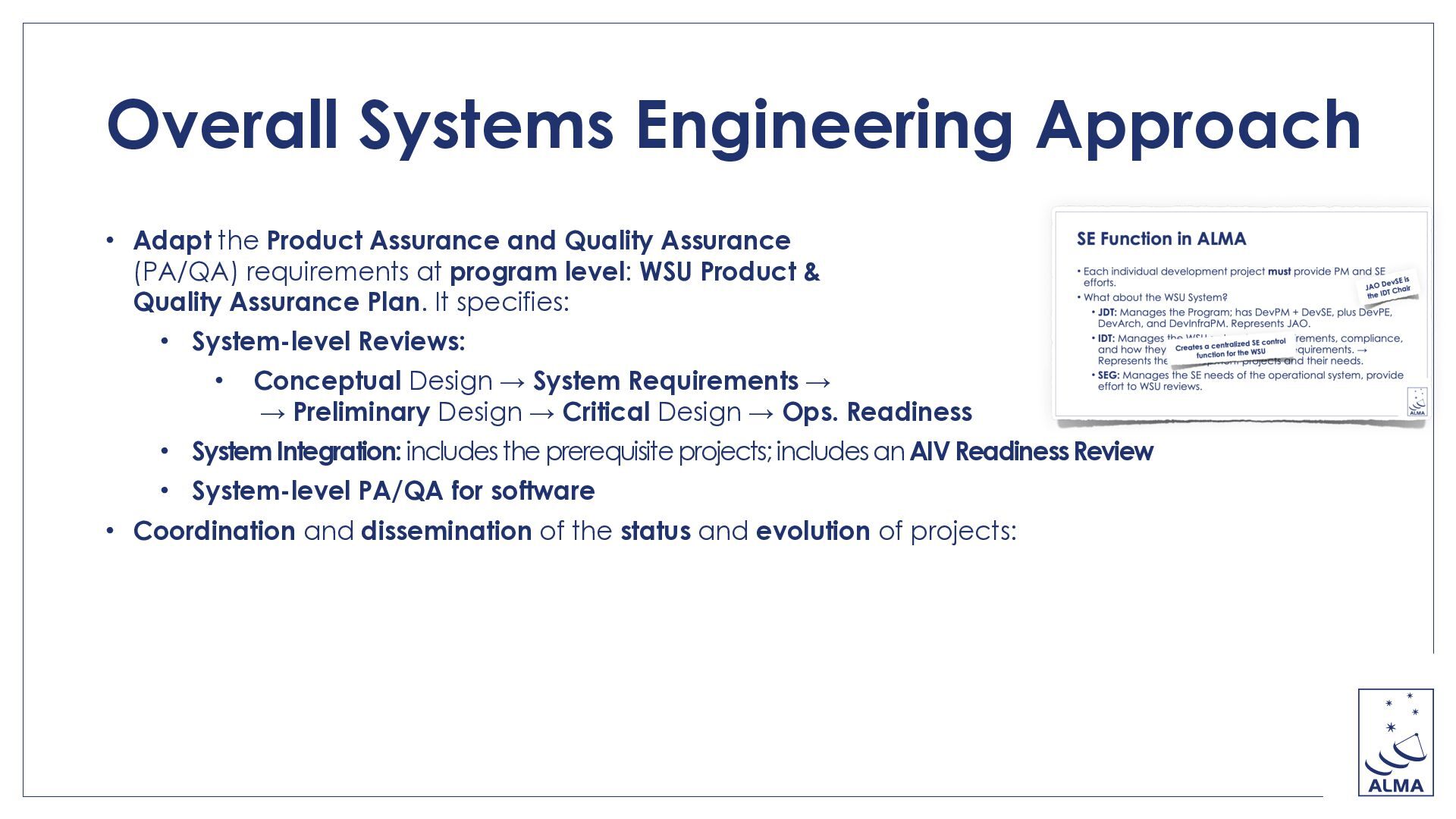
  53. Overall Systems Engineering Approach • Adapt the Product Assurance and

    Quality Assurance (PA/QA) requirements at program level: WSU Product & Quality Assurance Plan. It specifies: • System-level Reviews: • Conceptual Design → System Requirements → → Preliminary Design → Critical Design → Ops. Readiness • System Integration: includes the prerequisite projects; includes an AIV Readiness Review • System-level PA/QA for software • Coordination and dissemination of the status and evolution of projects:
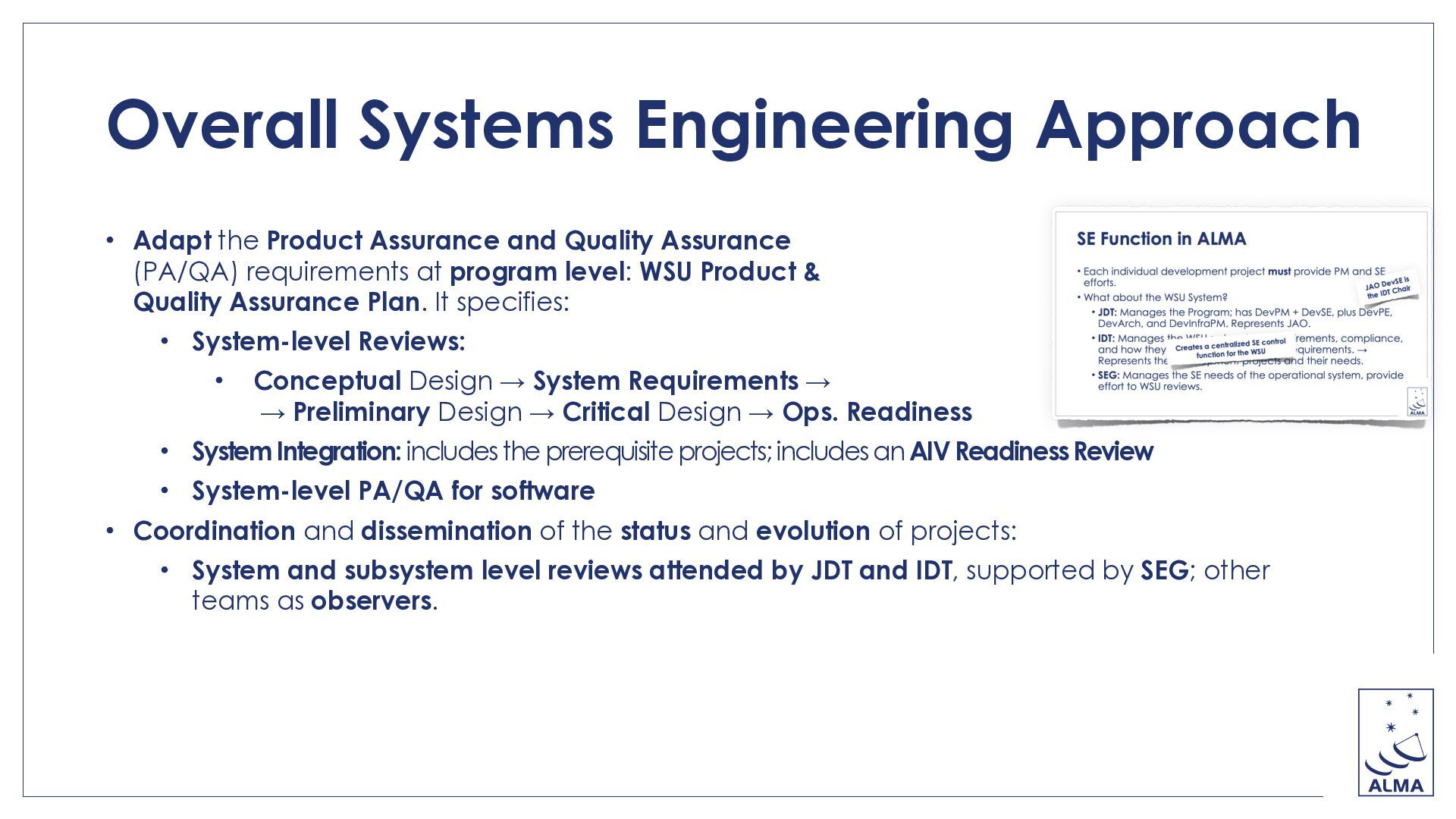
  54. Overall Systems Engineering Approach • Adapt the Product Assurance and

    Quality Assurance (PA/QA) requirements at program level: WSU Product & Quality Assurance Plan. It specifies: • System-level Reviews: • Conceptual Design → System Requirements → → Preliminary Design → Critical Design → Ops. Readiness • System Integration: includes the prerequisite projects; includes an AIV Readiness Review • System-level PA/QA for software • Coordination and dissemination of the status and evolution of projects: • System and subsystem level reviews attended by JDT and IDT, supported by SEG; other teams as observers.
  55. Overall Systems Engineering Approach • Adapt the Product Assurance and

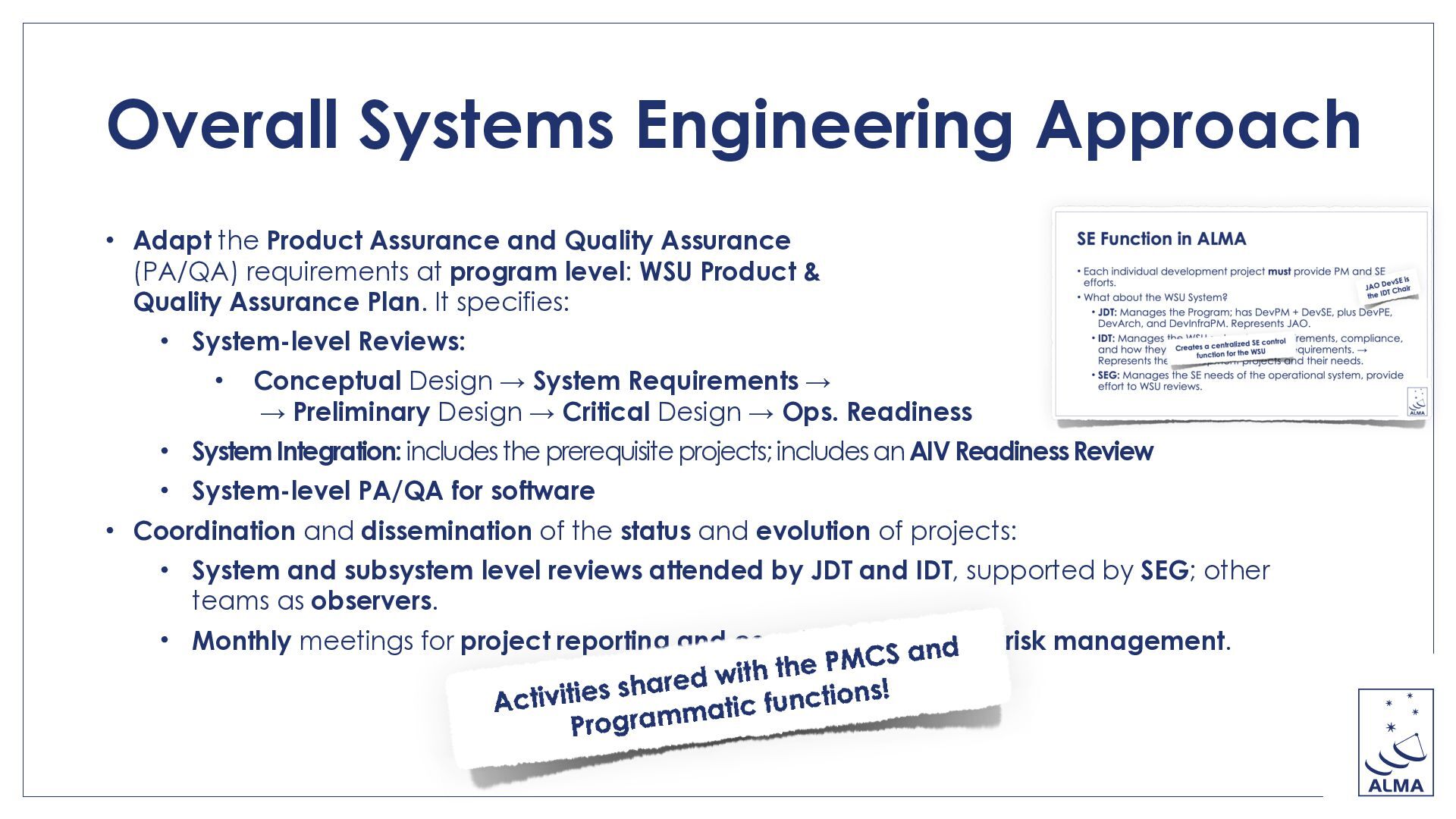
    Quality Assurance (PA/QA) requirements at program level: WSU Product & Quality Assurance Plan. It specifies: • System-level Reviews: • Conceptual Design → System Requirements → → Preliminary Design → Critical Design → Ops. Readiness • System Integration: includes the prerequisite projects; includes an AIV Readiness Review • System-level PA/QA for software • Coordination and dissemination of the status and evolution of projects: • System and subsystem level reviews attended by JDT and IDT, supported by SEG; other teams as observers. • Monthly meetings for project reporting and coordination, and for risk management.
  56. Overall Systems Engineering Approach • Adapt the Product Assurance and

    Quality Assurance (PA/QA) requirements at program level: WSU Product & Quality Assurance Plan. It specifies: • System-level Reviews: • Conceptual Design → System Requirements → → Preliminary Design → Critical Design → Ops. Readiness • System Integration: includes the prerequisite projects; includes an AIV Readiness Review • System-level PA/QA for software • Coordination and dissemination of the status and evolution of projects: • System and subsystem level reviews attended by JDT and IDT, supported by SEG; other teams as observers. • Monthly meetings for project reporting and coordination, and for risk management.
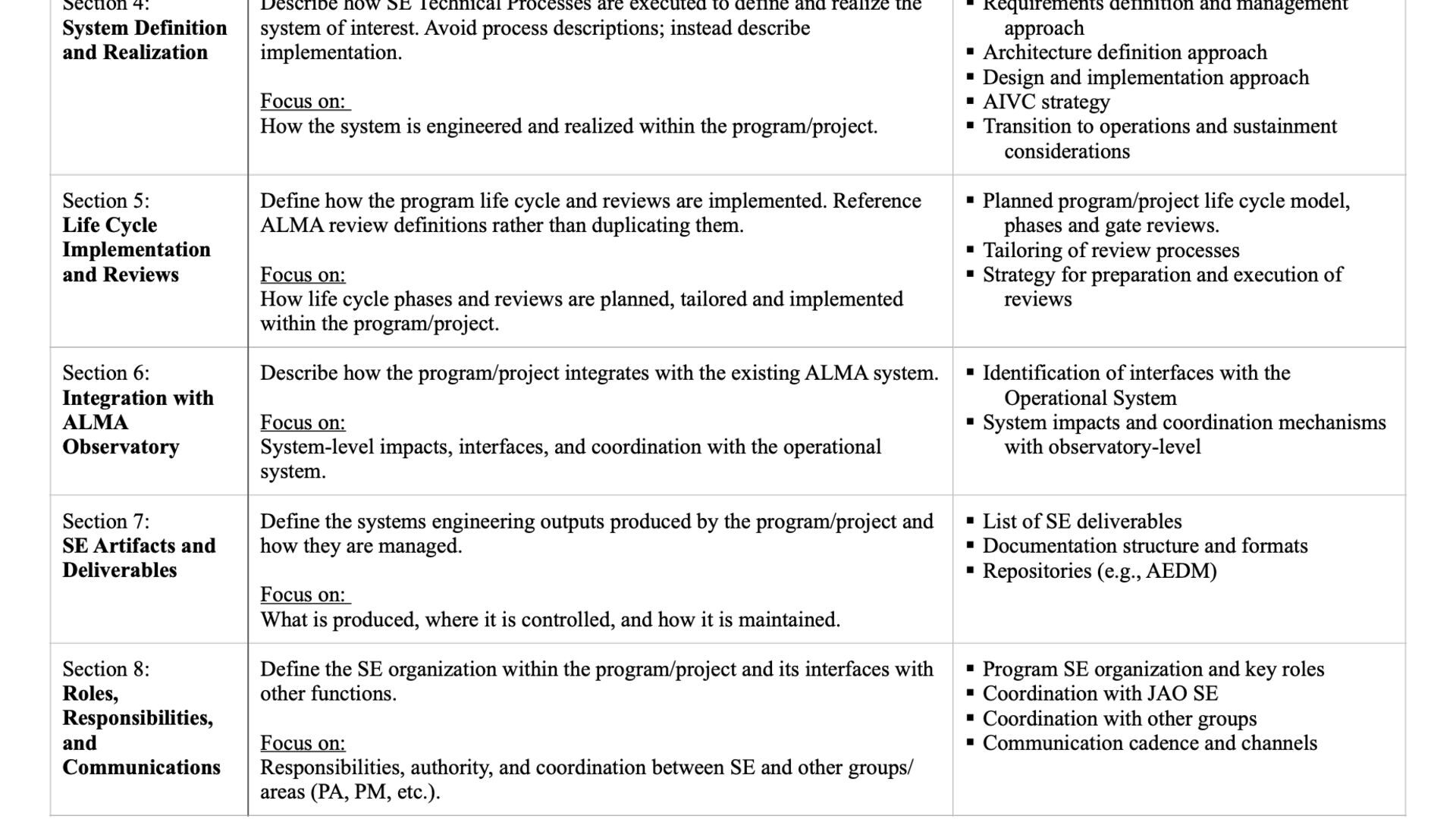
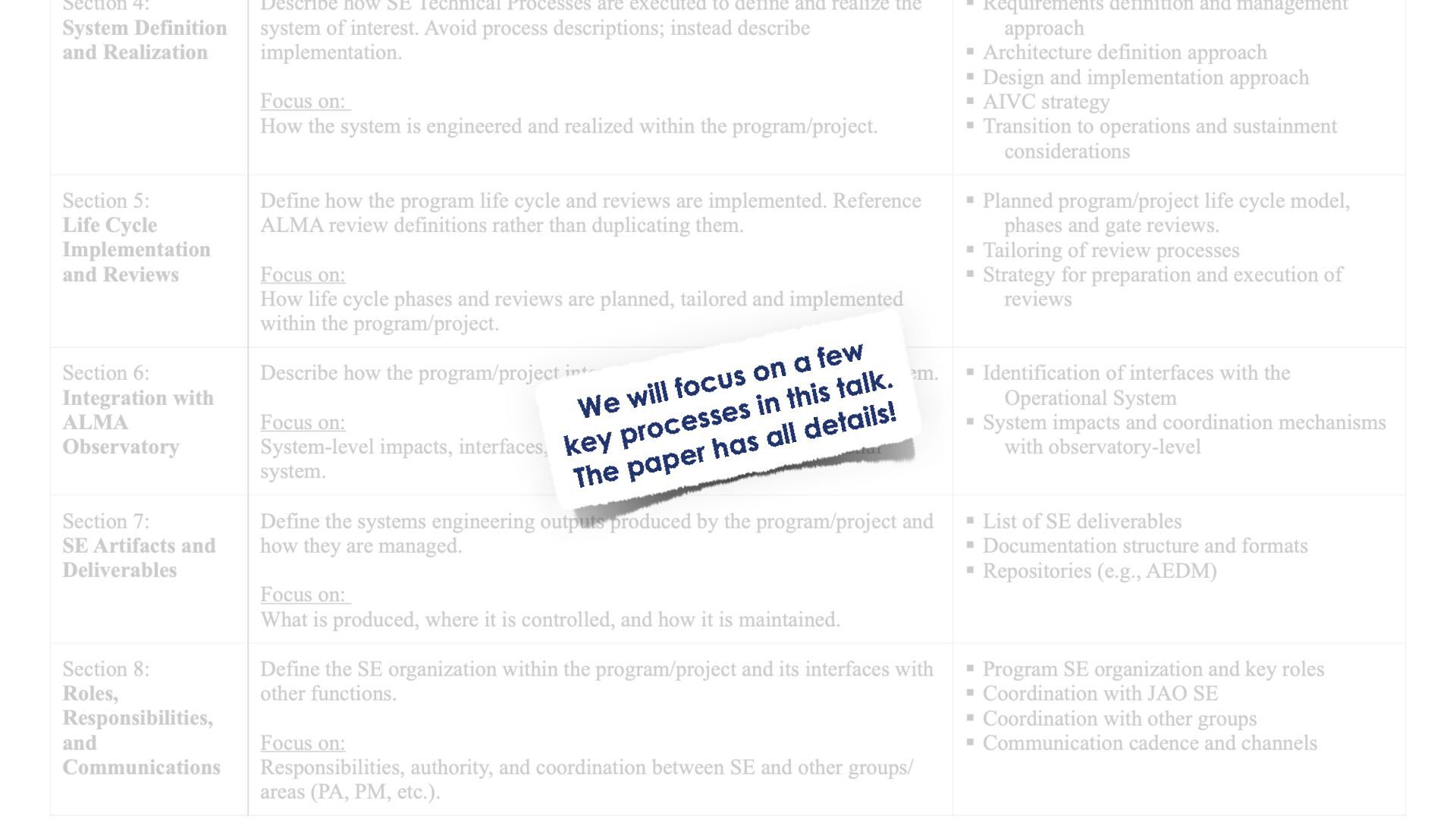
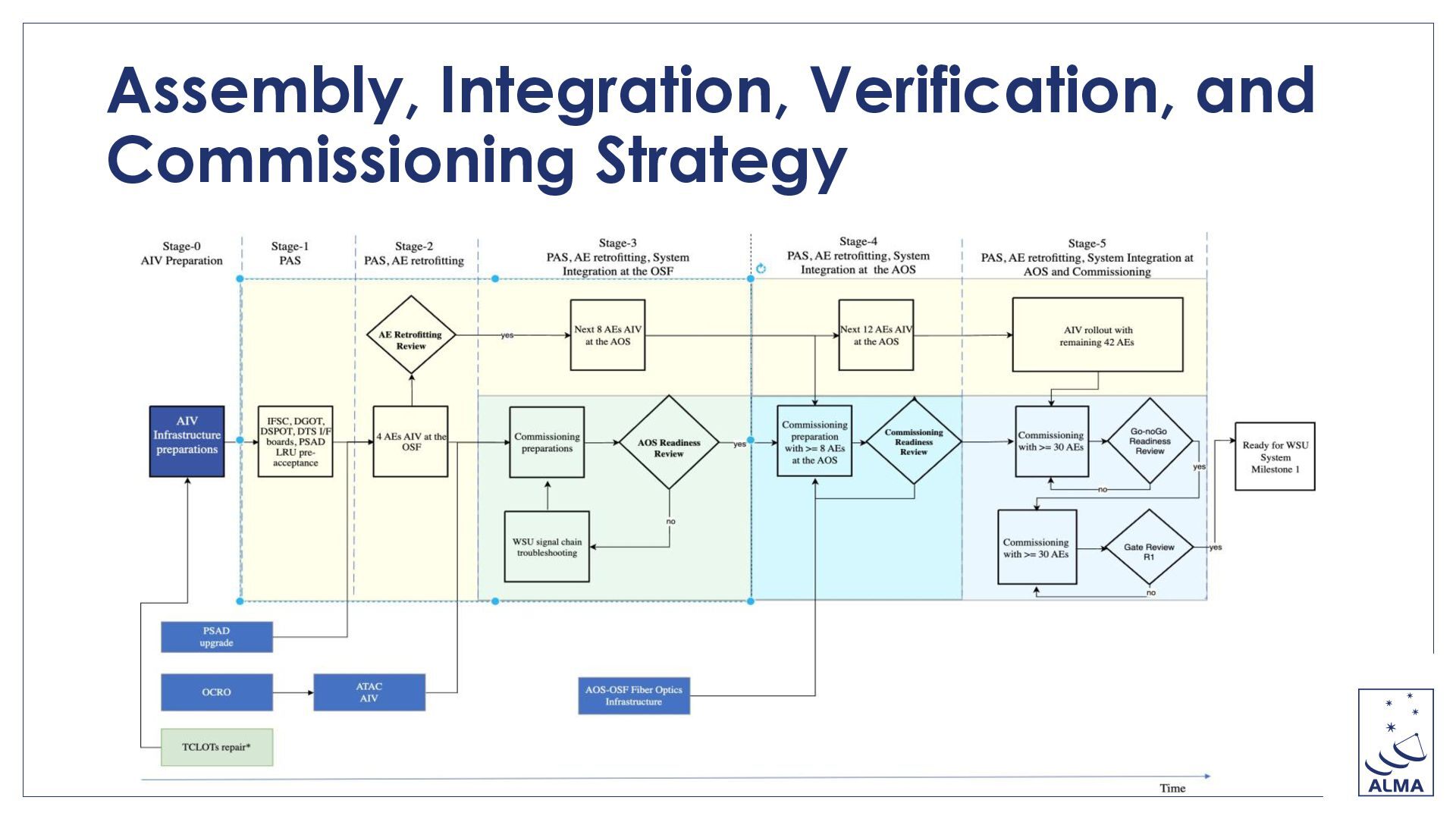
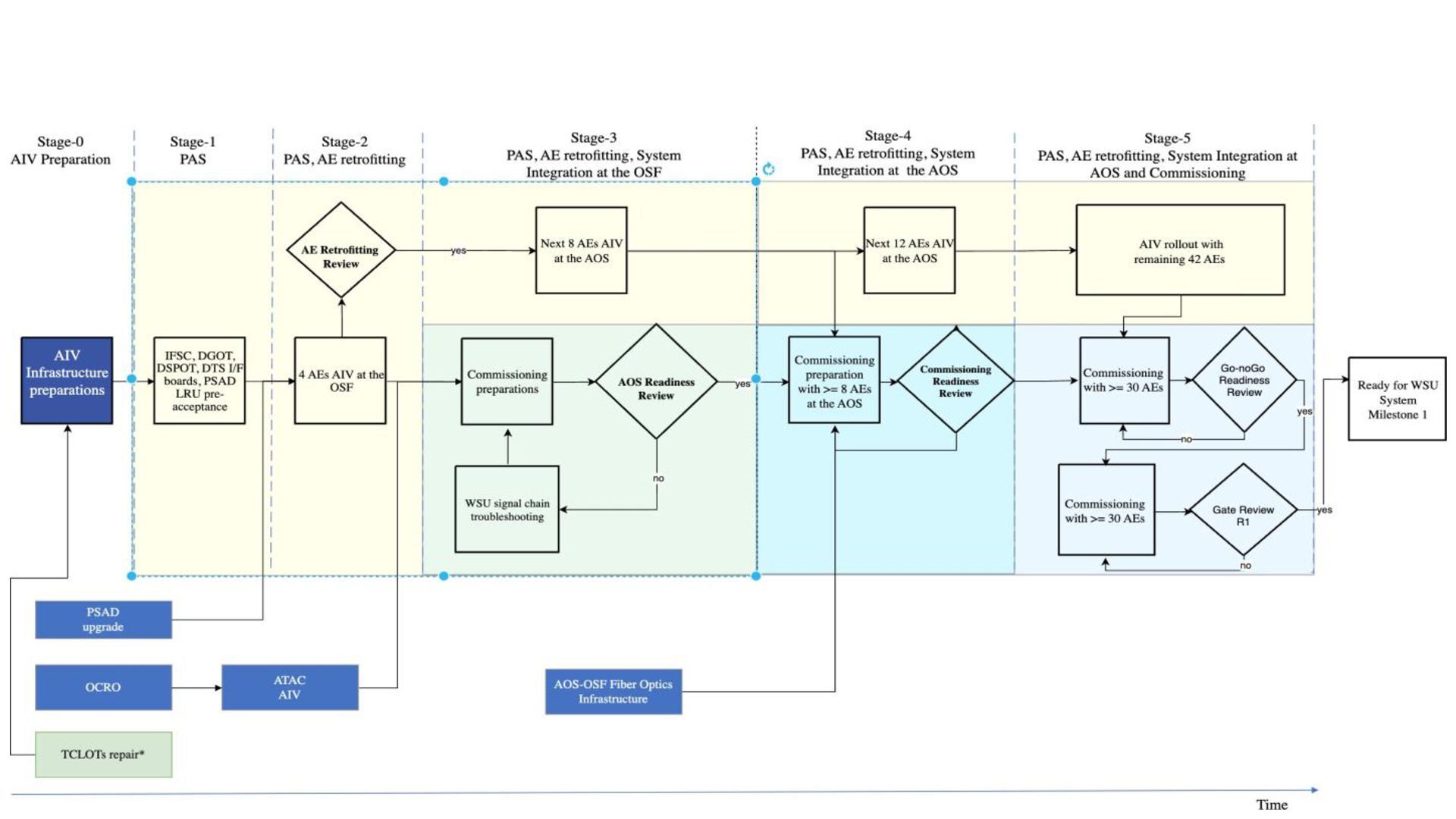
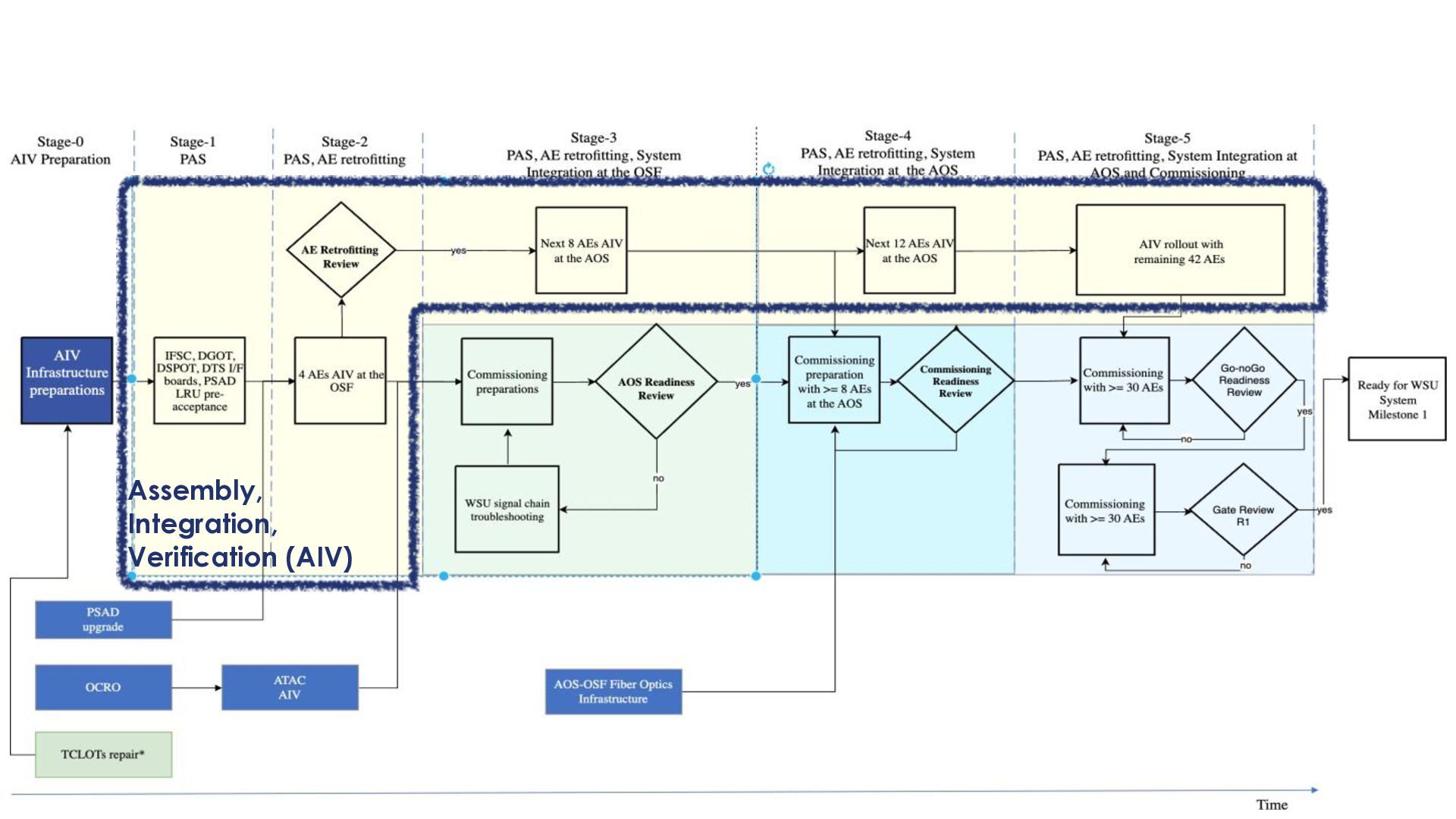
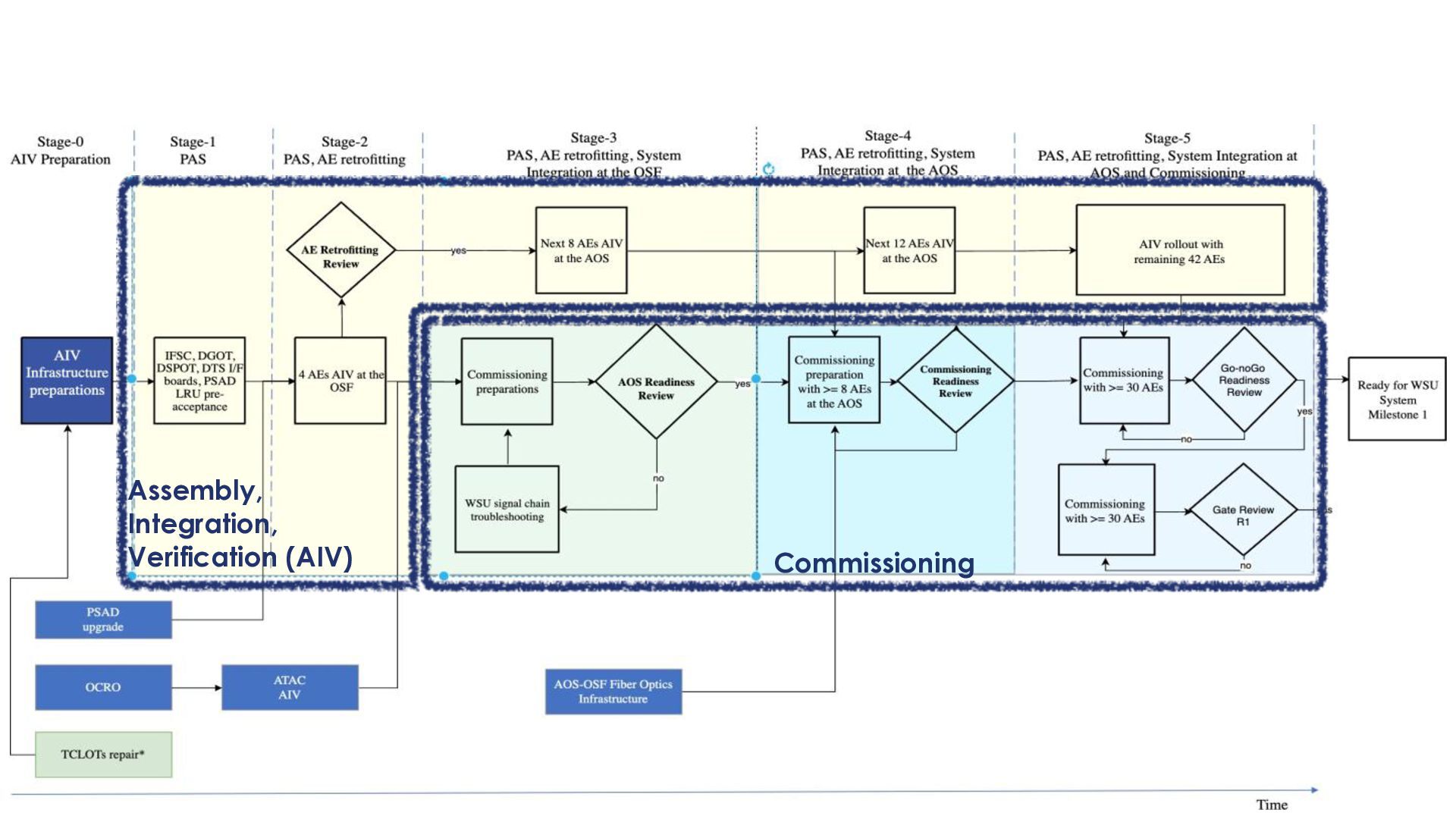
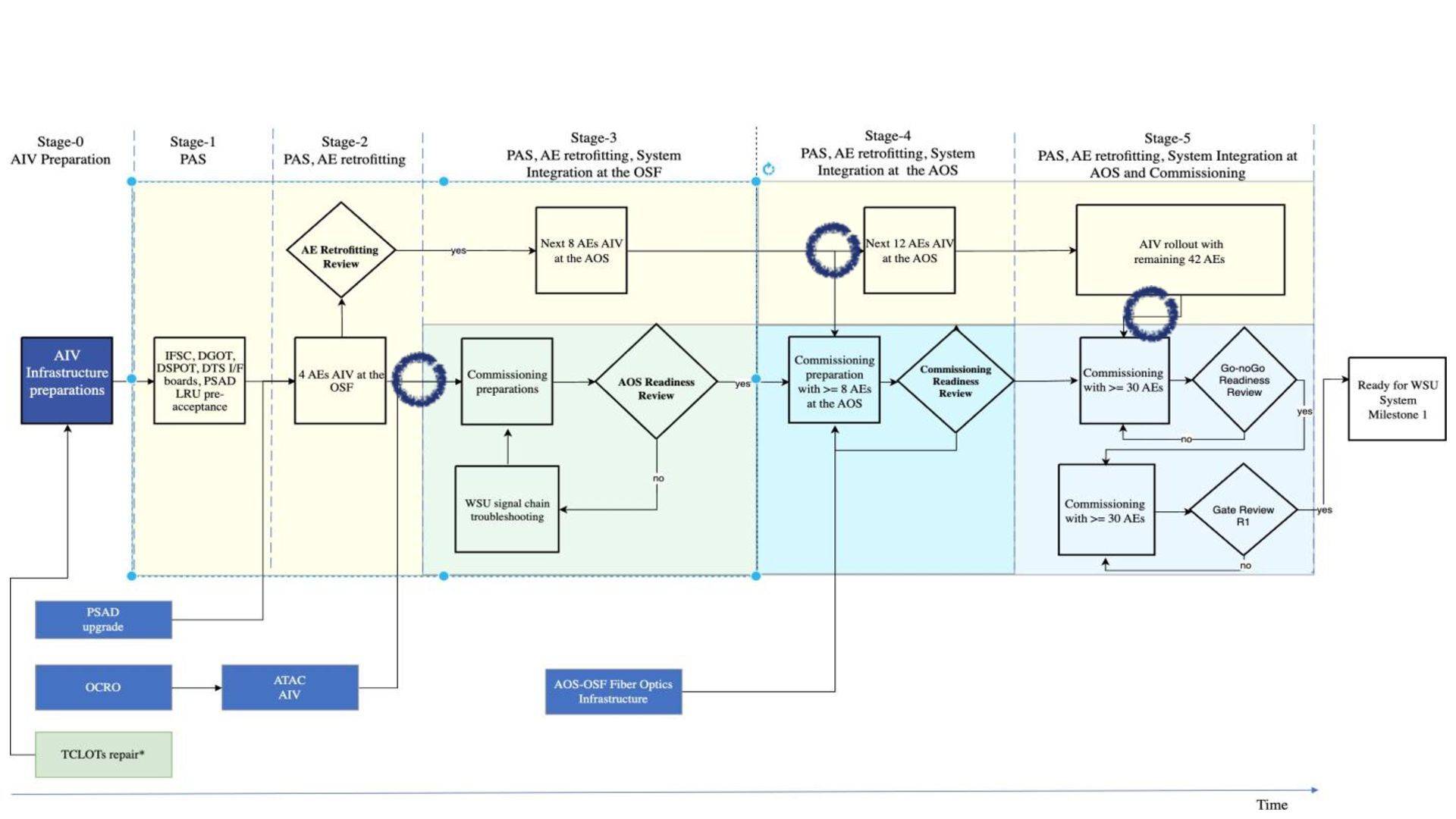
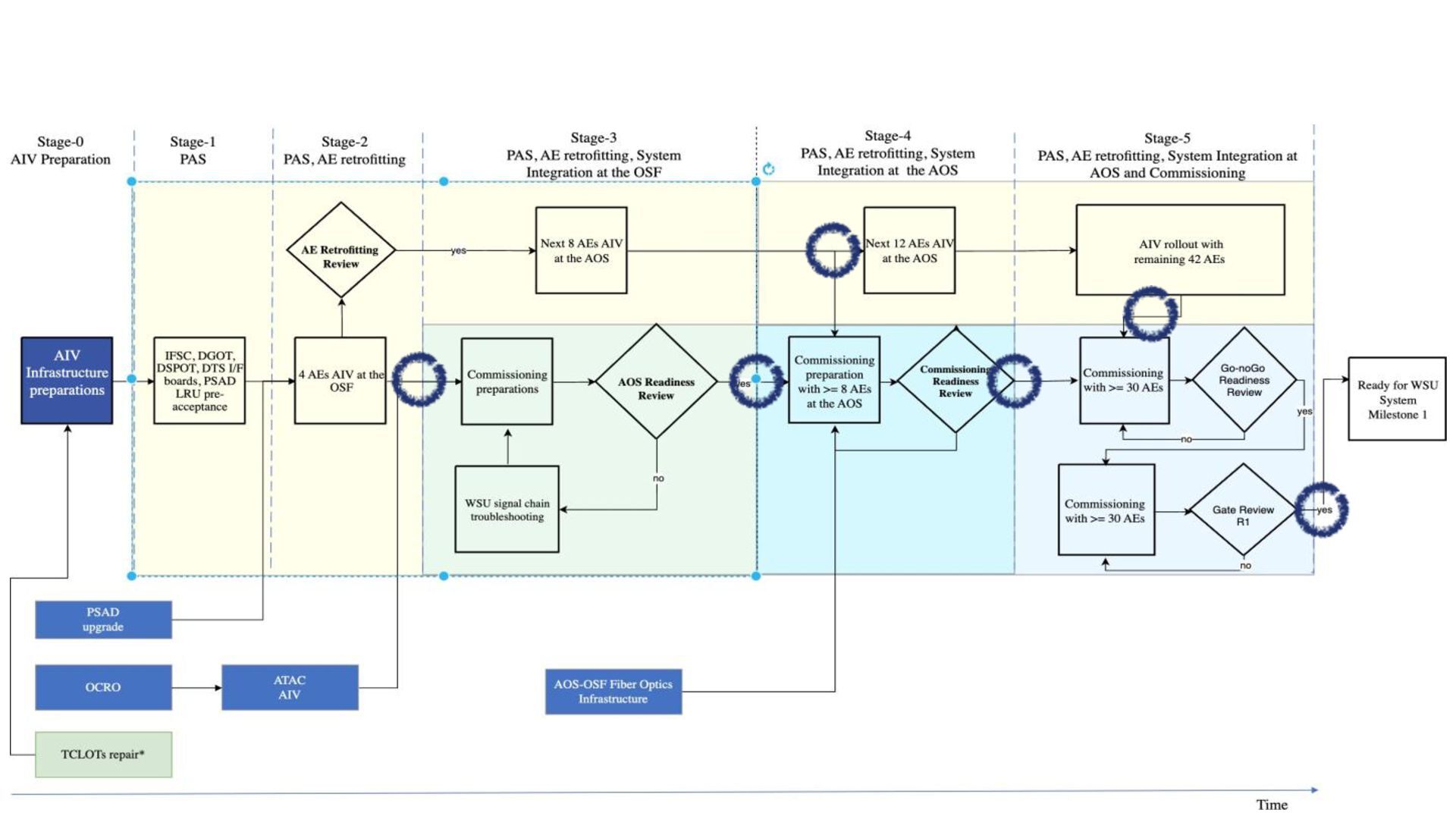
  57. System Definition and Realization • Requirements Definition and Management •

    Assembly, Integration, Verification, and Commissioning Strategy
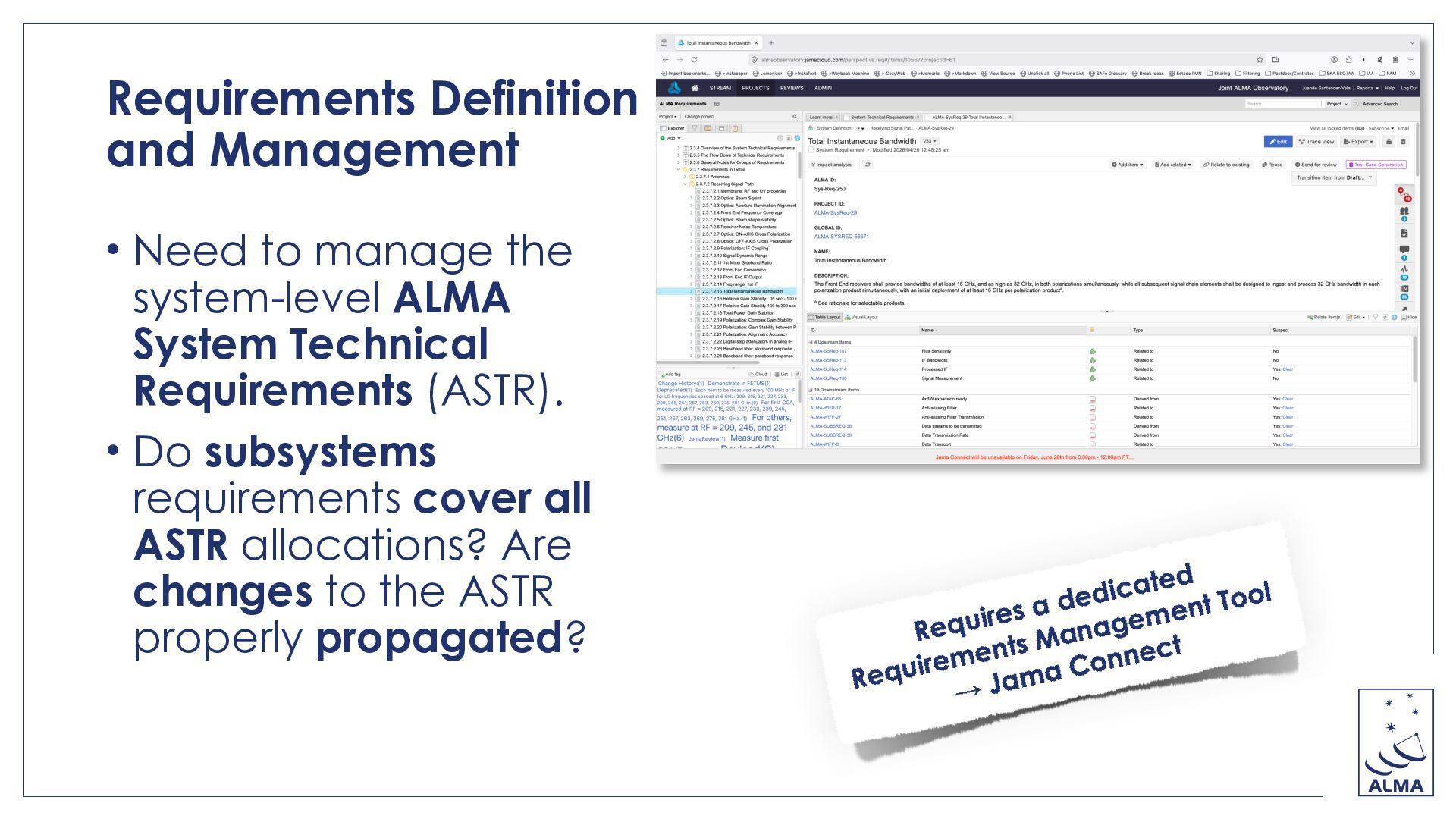
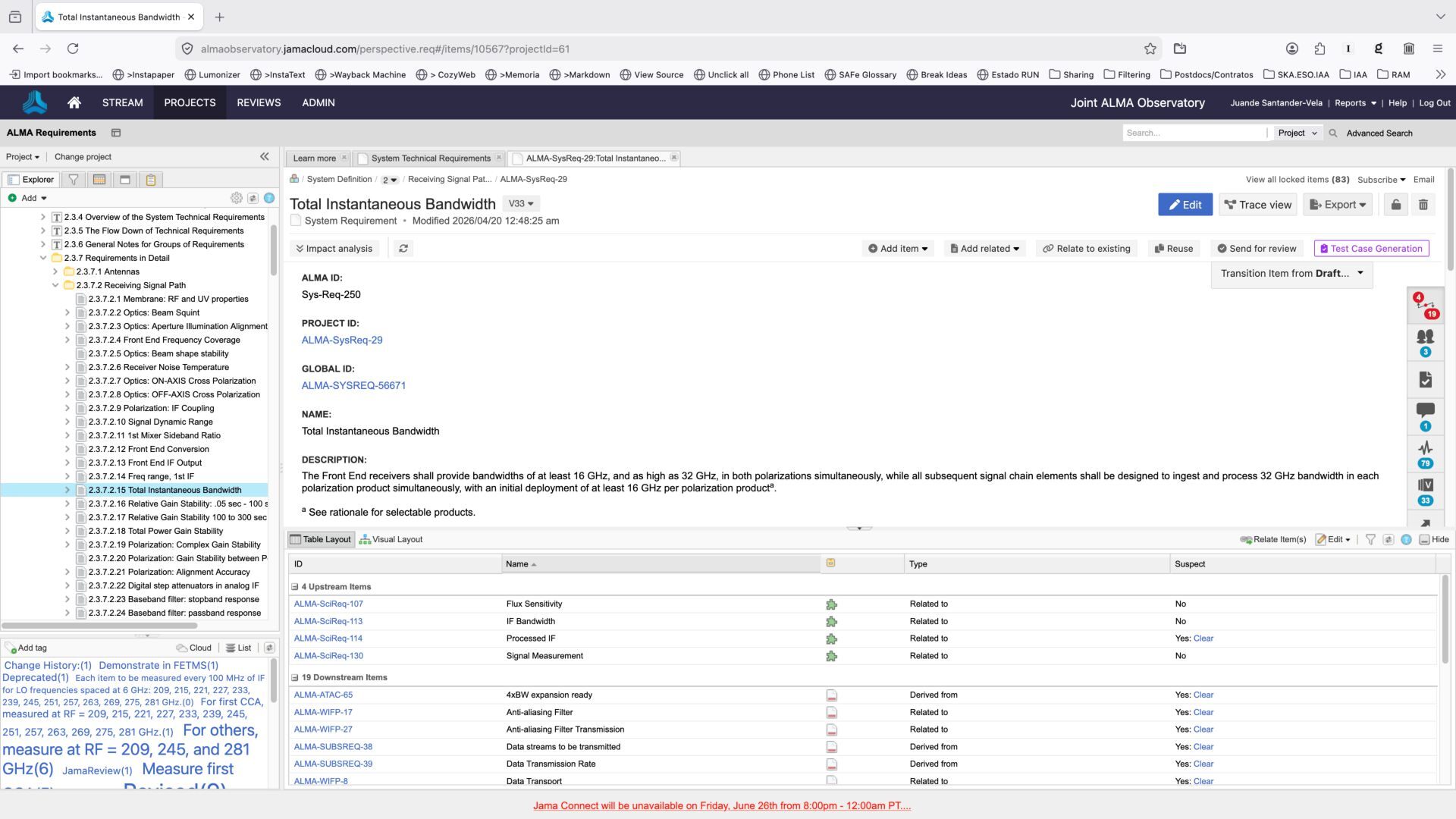
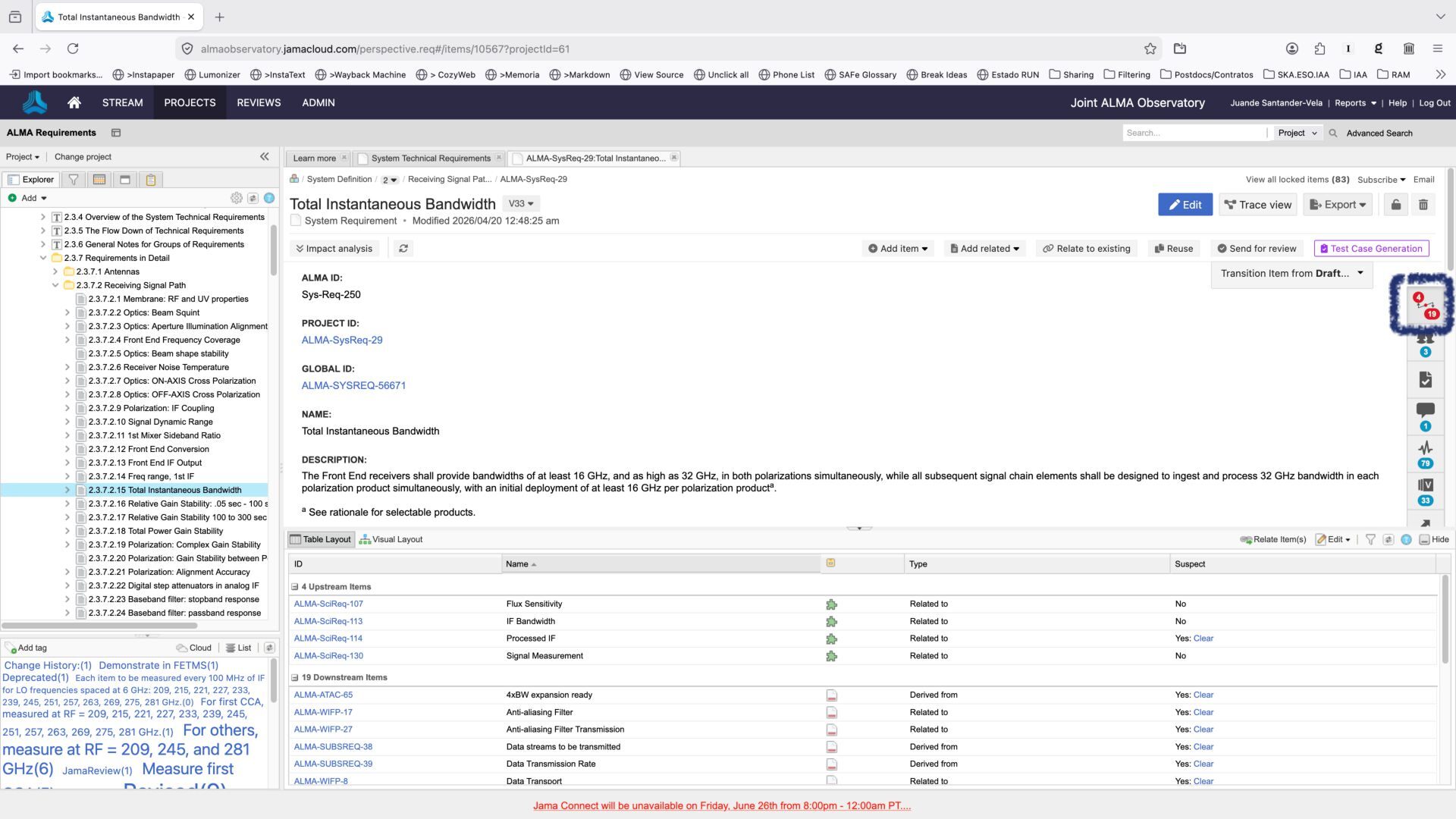
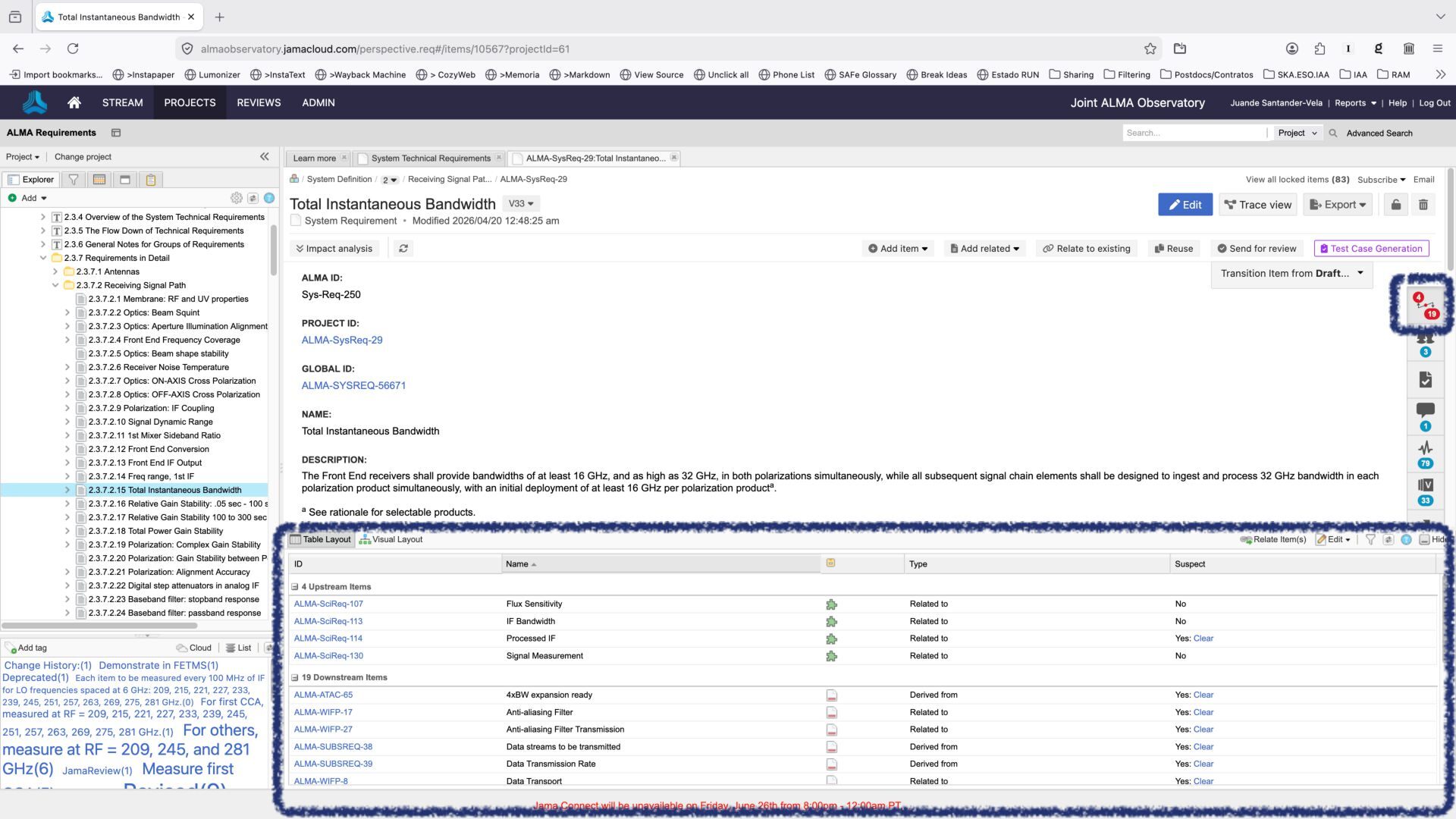
  58. Requirements Definition and Management • Need to manage the system-level

    ALMA System Technical Requirements (ASTR). • Do subsystems requirements cover all ASTR allocations? Are changes to the ASTR properly propagated?
  59. Requirements Definition and Management • Need to manage the system-level

    ALMA System Technical Requirements (ASTR). • Do subsystems requirements cover all ASTR allocations? Are changes to the ASTR properly propagated?
  60. System Definition and Realization • Requirements Definition and Management •

    Assembly, Integration, Verification, and Commissioning Strategy
  61. Remaining Challenges • Technical Performance: WSU equipment is COTS based,

    but still performing at the high-end of what is commercially available.
  62. Remaining Challenges • Technical Performance: WSU equipment is COTS based,

    but still performing at the high-end of what is commercially available. ➡ SE needs to ensure performance is achieved, and that a systemic view is maintained if tradeoffs need to be made.
  63. Remaining Challenges • Technical Performance: WSU equipment is COTS based,

    but still performing at the high-end of what is commercially available. ➡ SE needs to ensure performance is achieved, and that a systemic view is maintained if tradeoffs need to be made. • Adapting WSU Software: assumes current operational update processes are used, even when SW components are delivered by different executives. SW PDR panel made recommendation for central SE and PM, and assessing how SW management will accommodate both Operations and WSU needs.
  64. Remaining Challenges • Technical Performance: WSU equipment is COTS based,

    but still performing at the high-end of what is commercially available. ➡ SE needs to ensure performance is achieved, and that a systemic view is maintained if tradeoffs need to be made. • Adapting WSU Software: assumes current operational update processes are used, even when SW components are delivered by different executives. SW PDR panel made recommendation for central SE and PM, and assessing how SW management will accommodate both Operations and WSU needs. ➡ SEG now providing dedicated, matrixed SE effort to software.
  65. Remaining Challenges • Technical Performance: WSU equipment is COTS based,

    but still performing at the high-end of what is commercially available. ➡ SE needs to ensure performance is achieved, and that a systemic view is maintained if tradeoffs need to be made. • Adapting WSU Software: assumes current operational update processes are used, even when SW components are delivered by different executives. SW PDR panel made recommendation for central SE and PM, and assessing how SW management will accommodate both Operations and WSU needs. ➡ SEG now providing dedicated, matrixed SE effort to software. • Shared view of the program scope and status: not having a shared understanding across all stakeholders risks other ALMA projects/systems.
  66. Remaining Challenges • Technical Performance: WSU equipment is COTS based,

    but still performing at the high-end of what is commercially available. ➡ SE needs to ensure performance is achieved, and that a systemic view is maintained if tradeoffs need to be made. • Adapting WSU Software: assumes current operational update processes are used, even when SW components are delivered by different executives. SW PDR panel made recommendation for central SE and PM, and assessing how SW management will accommodate both Operations and WSU needs. ➡ SEG now providing dedicated, matrixed SE effort to software. • Shared view of the program scope and status: not having a shared understanding across all stakeholders risks other ALMA projects/systems. ➡ Individual WSU projects local optimizations can affect the overall system.
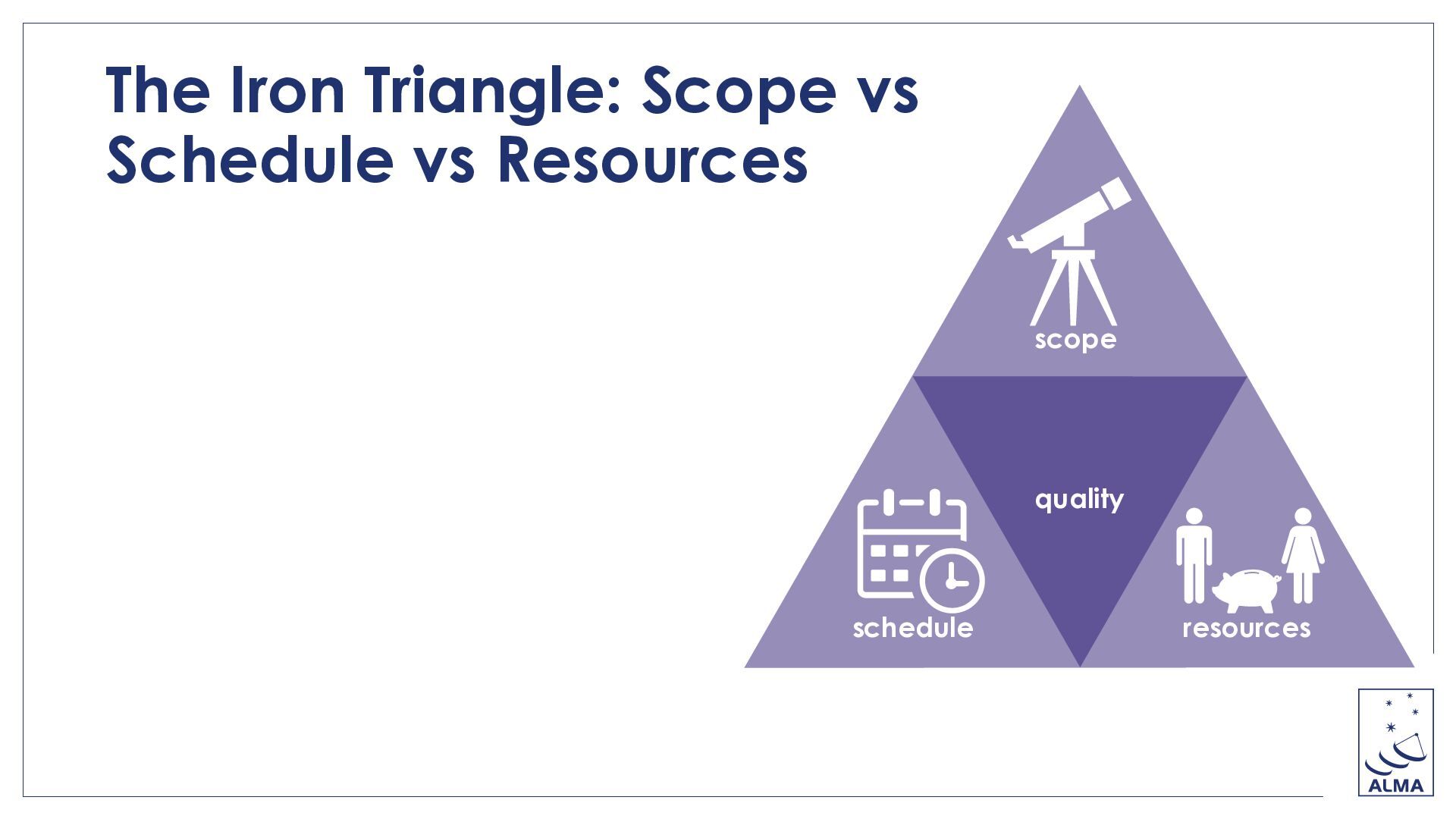
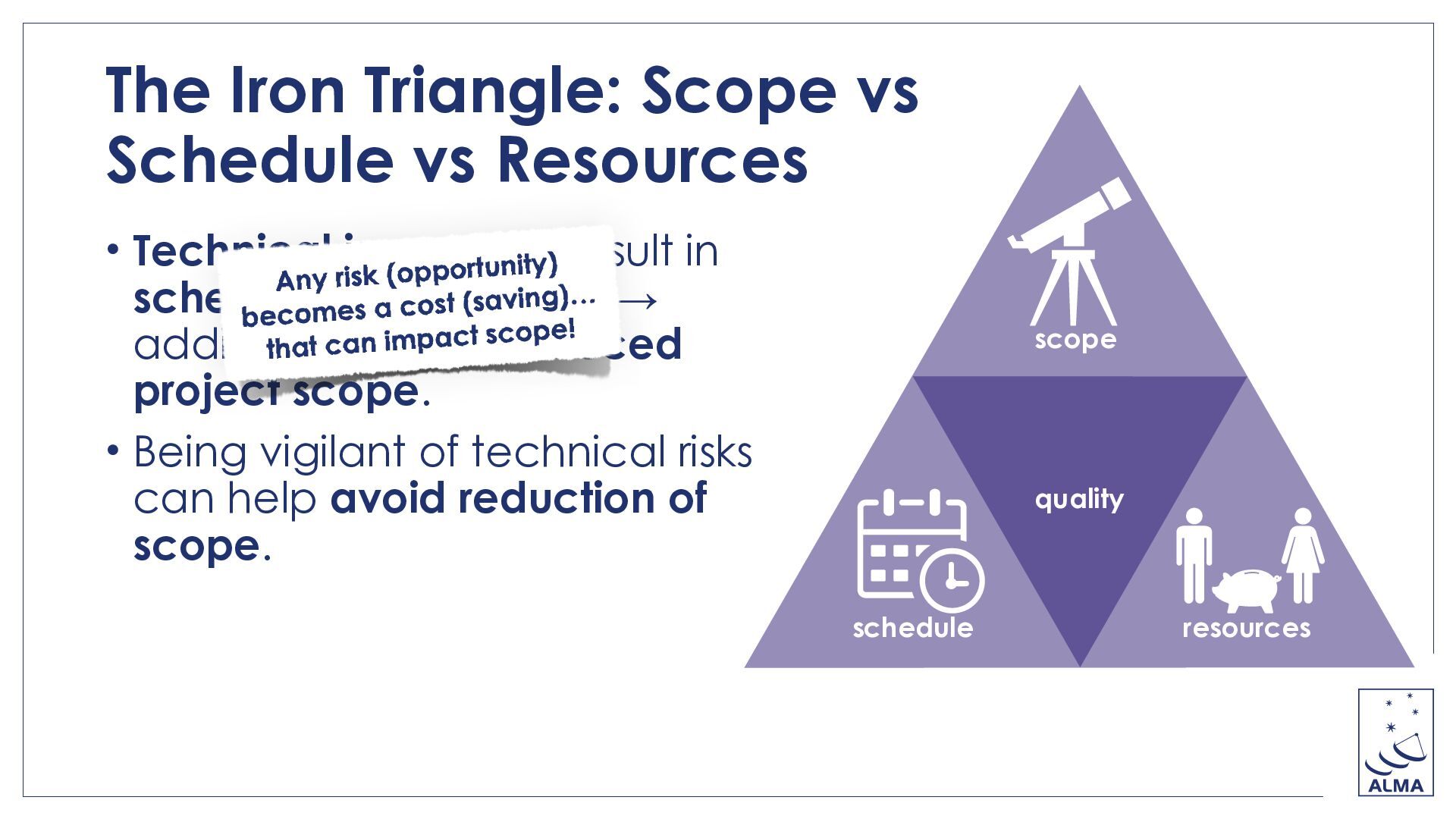
  67. The Iron Triangle: Scope vs Schedule vs Resources • Technical

    issues can result in schedule risk → delays → additional cost → reduced project scope. • Being vigilant of technical risks can help avoid reduction of scope. scope quality schedule resources
  68. The Iron Triangle: Scope vs Schedule vs Resources • Technical

    issues can result in schedule risk → delays → additional cost → reduced project scope. • Being vigilant of technical risks can help avoid reduction of scope. scope quality schedule resources
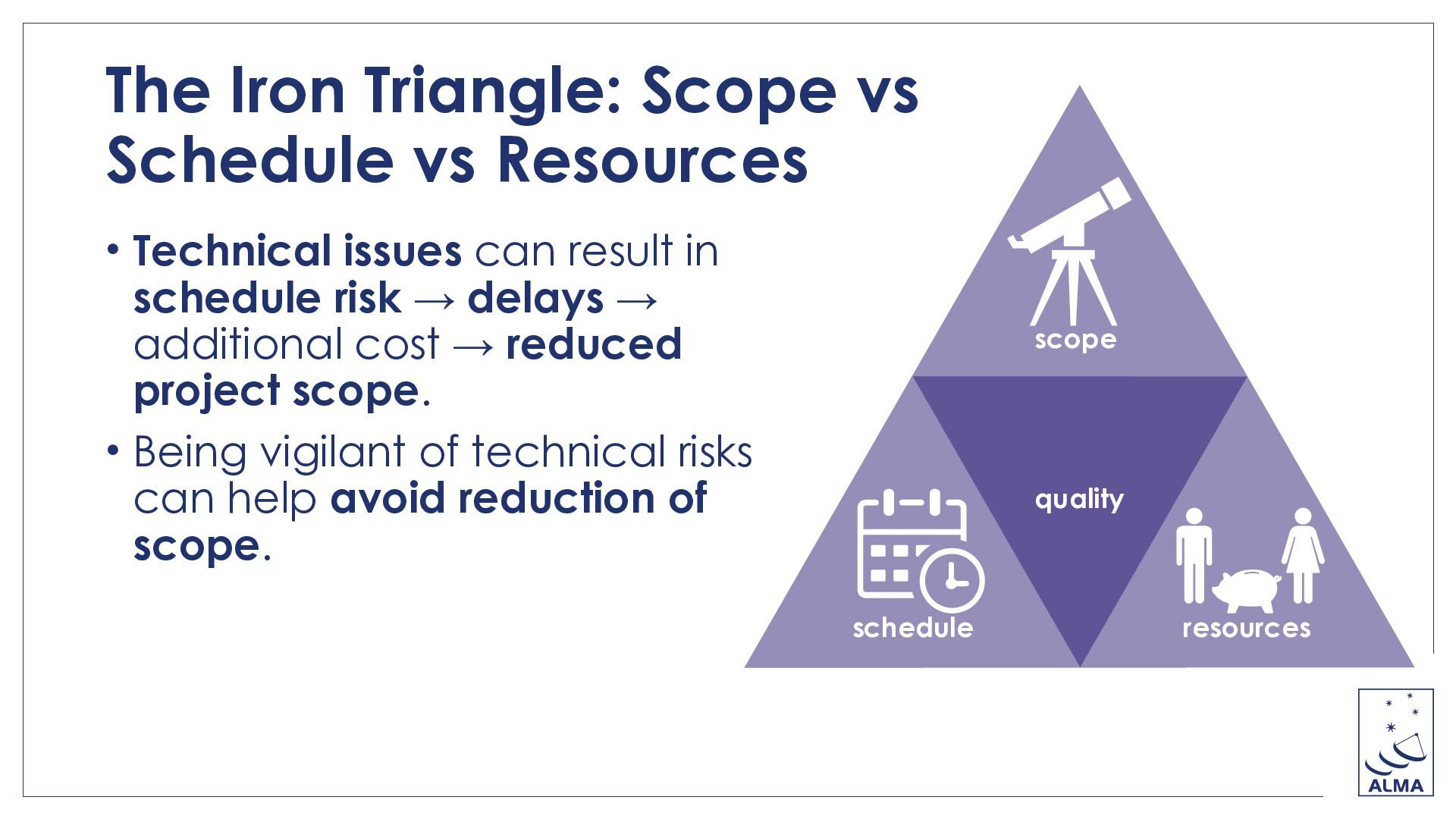
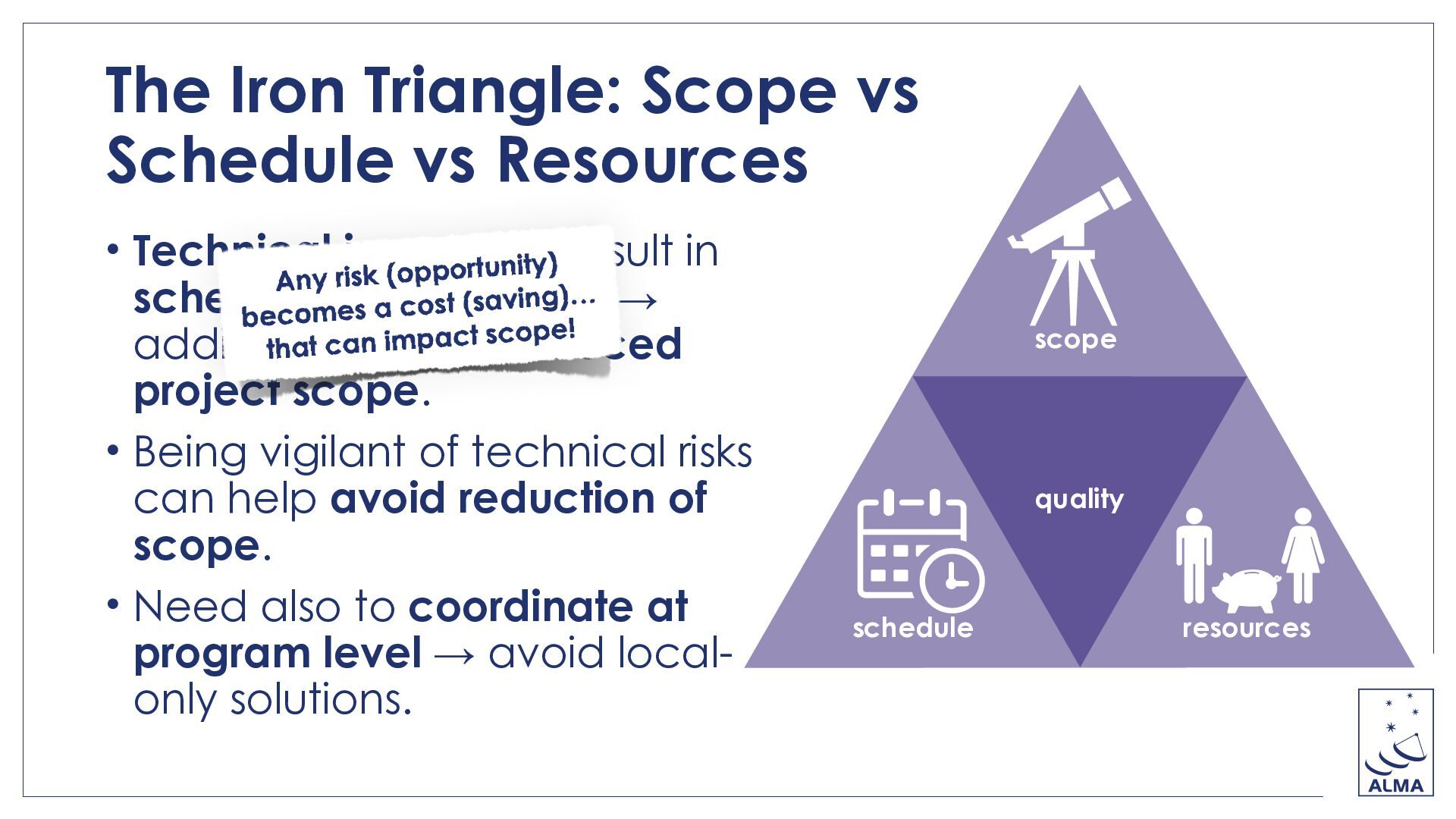
  69. The Iron Triangle: Scope vs Schedule vs Resources • Technical

    issues can result in schedule risk → delays → additional cost → reduced project scope. • Being vigilant of technical risks can help avoid reduction of scope. • Need also to coordinate at program level → avoid localonly solutions. scope quality schedule resources
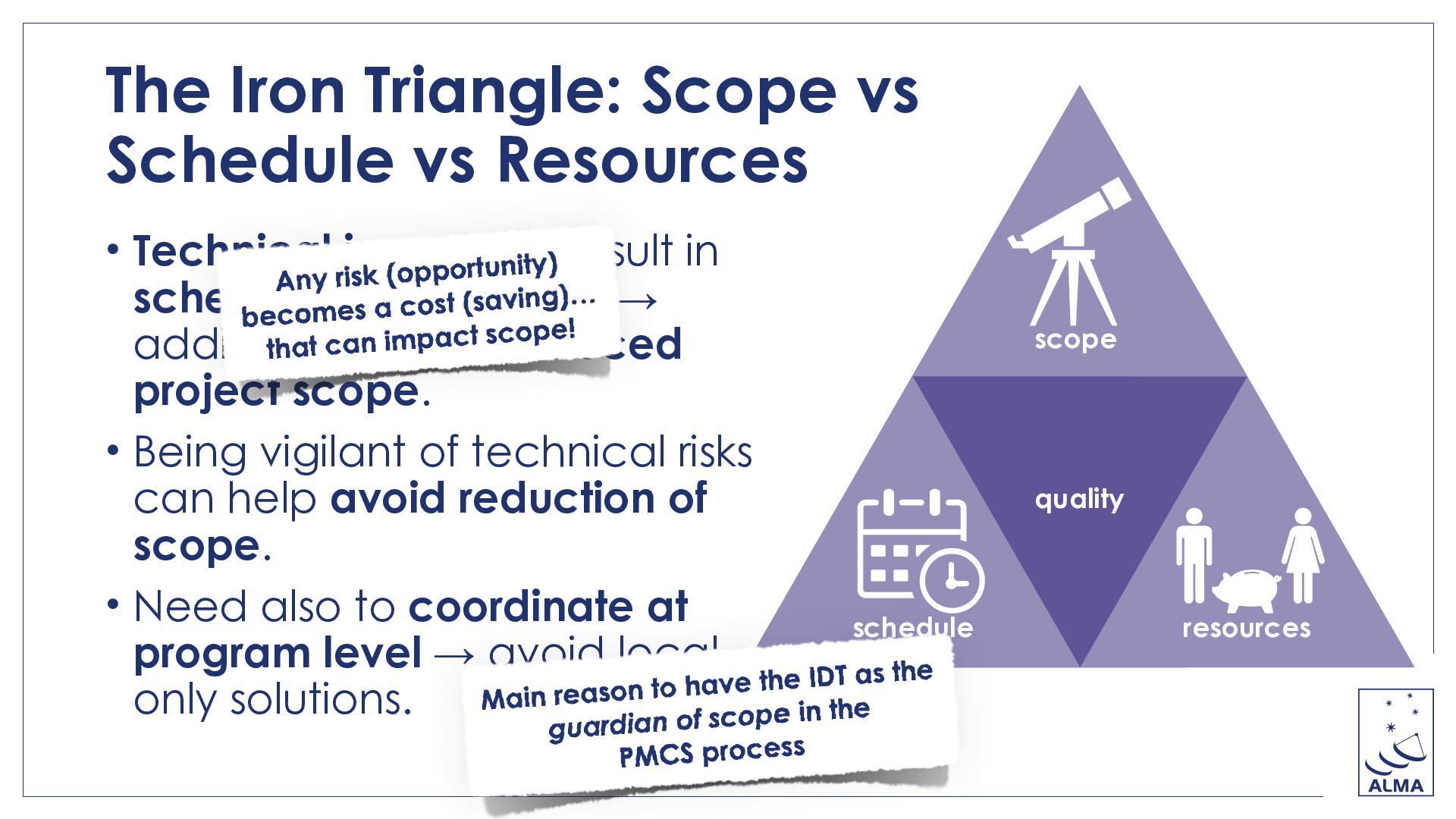
  70. The Iron Triangle: Scope vs Schedule vs Resources • Technical

    issues can result in schedule risk → delays → additional cost → reduced project scope. • Being vigilant of technical risks can help avoid reduction of scope. • Need also to coordinate at program level → avoid localonly solutions. scope quality schedule resources
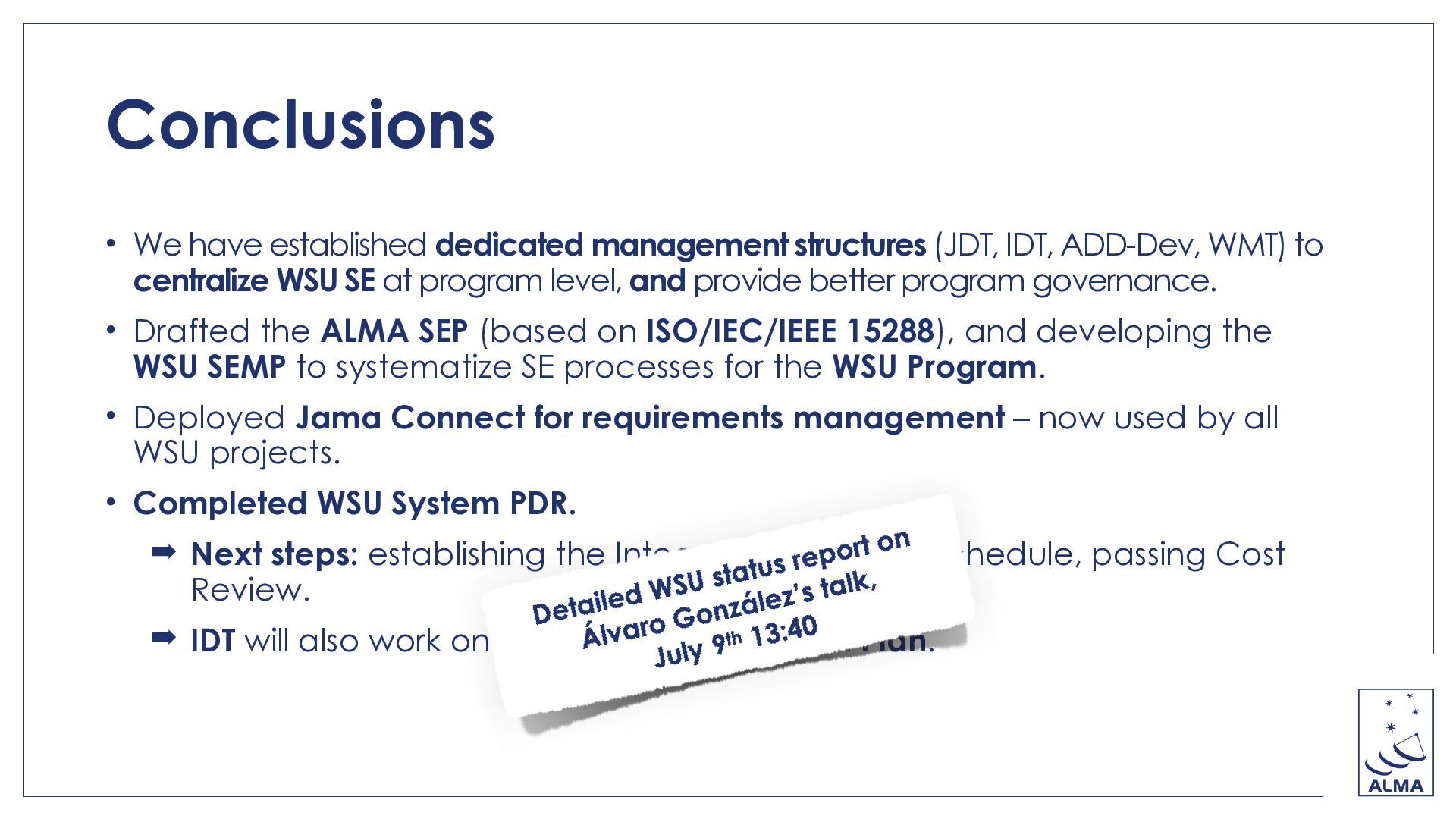
  71. Conclusions • We have established dedicated management structures (JDT, IDT,

    ADD-Dev, WMT) to centralize WSU SE at program level, and provide better program governance. • Drafted the ALMA SEP (based on ISO/IEC/IEEE 15288), and developing the WSU SEMP to systematize SE processes for the WSU Program.
  72. Conclusions • We have established dedicated management structures (JDT, IDT,

    ADD-Dev, WMT) to centralize WSU SE at program level, and provide better program governance. • Drafted the ALMA SEP (based on ISO/IEC/IEEE 15288), and developing the WSU SEMP to systematize SE processes for the WSU Program. • Deployed Jama Connect for requirements management – now used by all WSU projects.
  73. Conclusions • We have established dedicated management structures (JDT, IDT,

    ADD-Dev, WMT) to centralize WSU SE at program level, and provide better program governance. • Drafted the ALMA SEP (based on ISO/IEC/IEEE 15288), and developing the WSU SEMP to systematize SE processes for the WSU Program. • Deployed Jama Connect for requirements management – now used by all WSU projects. • Completed WSU System PDR.
  74. Conclusions • We have established dedicated management structures (JDT, IDT,

    ADD-Dev, WMT) to centralize WSU SE at program level, and provide better program governance. • Drafted the ALMA SEP (based on ISO/IEC/IEEE 15288), and developing the WSU SEMP to systematize SE processes for the WSU Program. • Deployed Jama Connect for requirements management – now used by all WSU projects. • Completed WSU System PDR. ➡ Next steps: establishing the Integrated Program Schedule, passing Cost Review.
  75. Conclusions • We have established dedicated management structures (JDT, IDT,

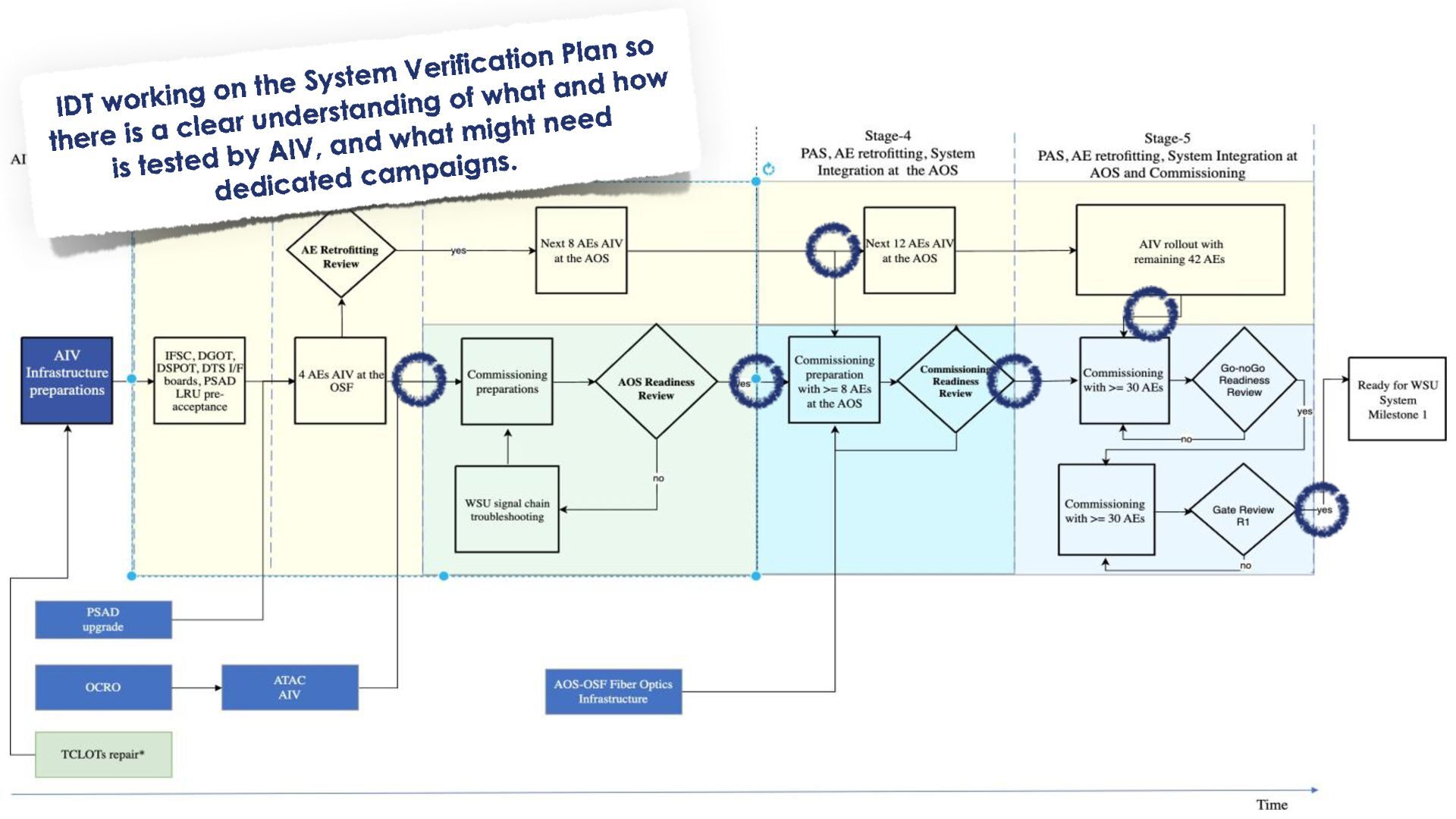
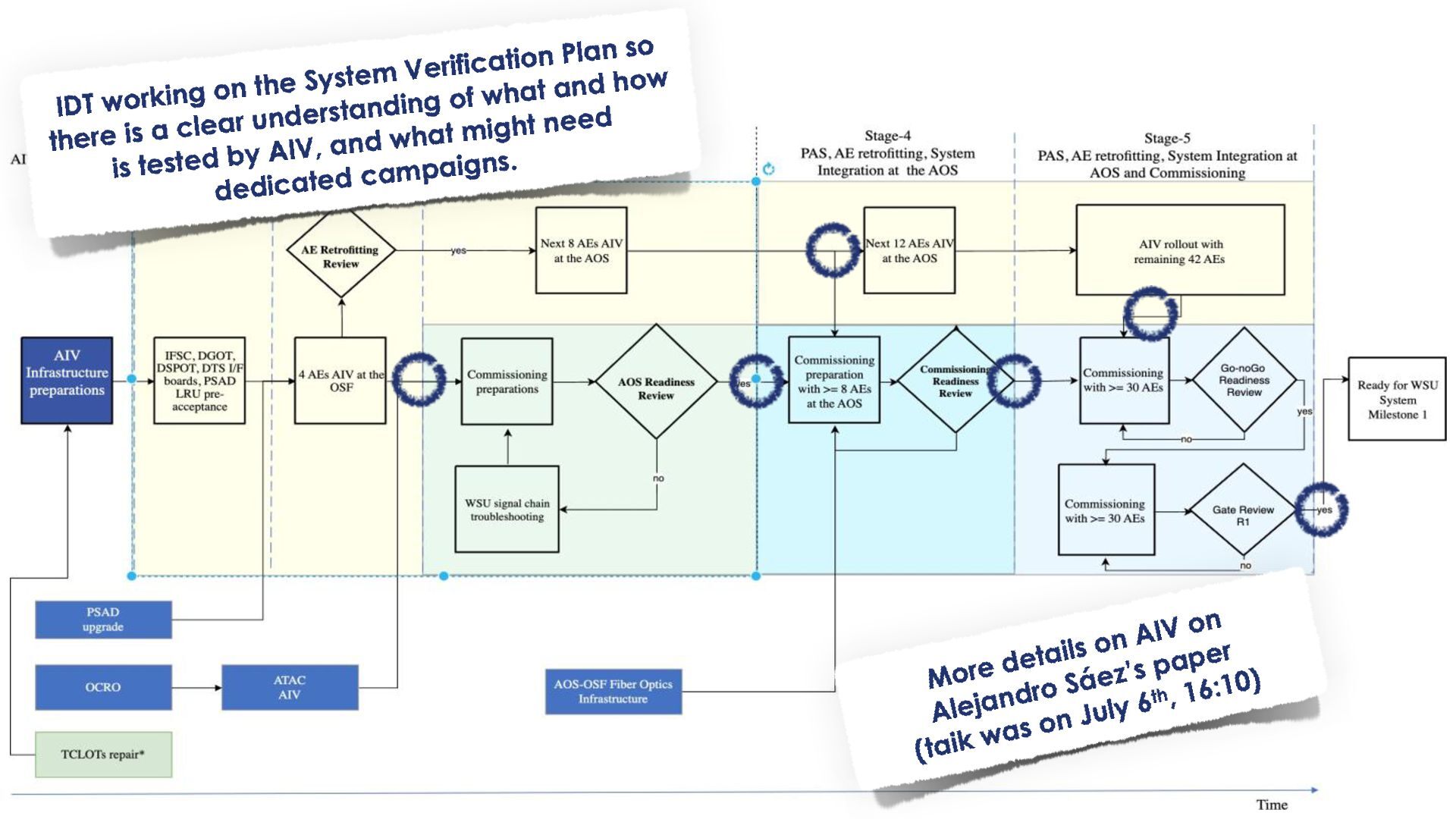
    ADD-Dev, WMT) to centralize WSU SE at program level, and provide better program governance. • Drafted the ALMA SEP (based on ISO/IEC/IEEE 15288), and developing the WSU SEMP to systematize SE processes for the WSU Program. • Deployed Jama Connect for requirements management – now used by all WSU projects. • Completed WSU System PDR. ➡ Next steps: establishing the Integrated Program Schedule, passing Cost Review. ➡ IDT will also work on the System Verification Plan.
  76. Conclusions • We have established dedicated management structures (JDT, IDT,

    ADD-Dev, WMT) to centralize WSU SE at program level, and provide better program governance. • Drafted the ALMA SEP (based on ISO/IEC/IEEE 15288), and developing the WSU SEMP to systematize SE processes for the WSU Program. • Deployed Jama Connect for requirements management – now used by all WSU projects. • Completed WSU System PDR. ➡ Next steps: establishing the Integrated Program Schedule, passing Cost Review. ➡ IDT will also work on the System Verification Plan.
  77. Other ALMA-JAO Presentations at SPIE • 5th July, 14:40: Carla

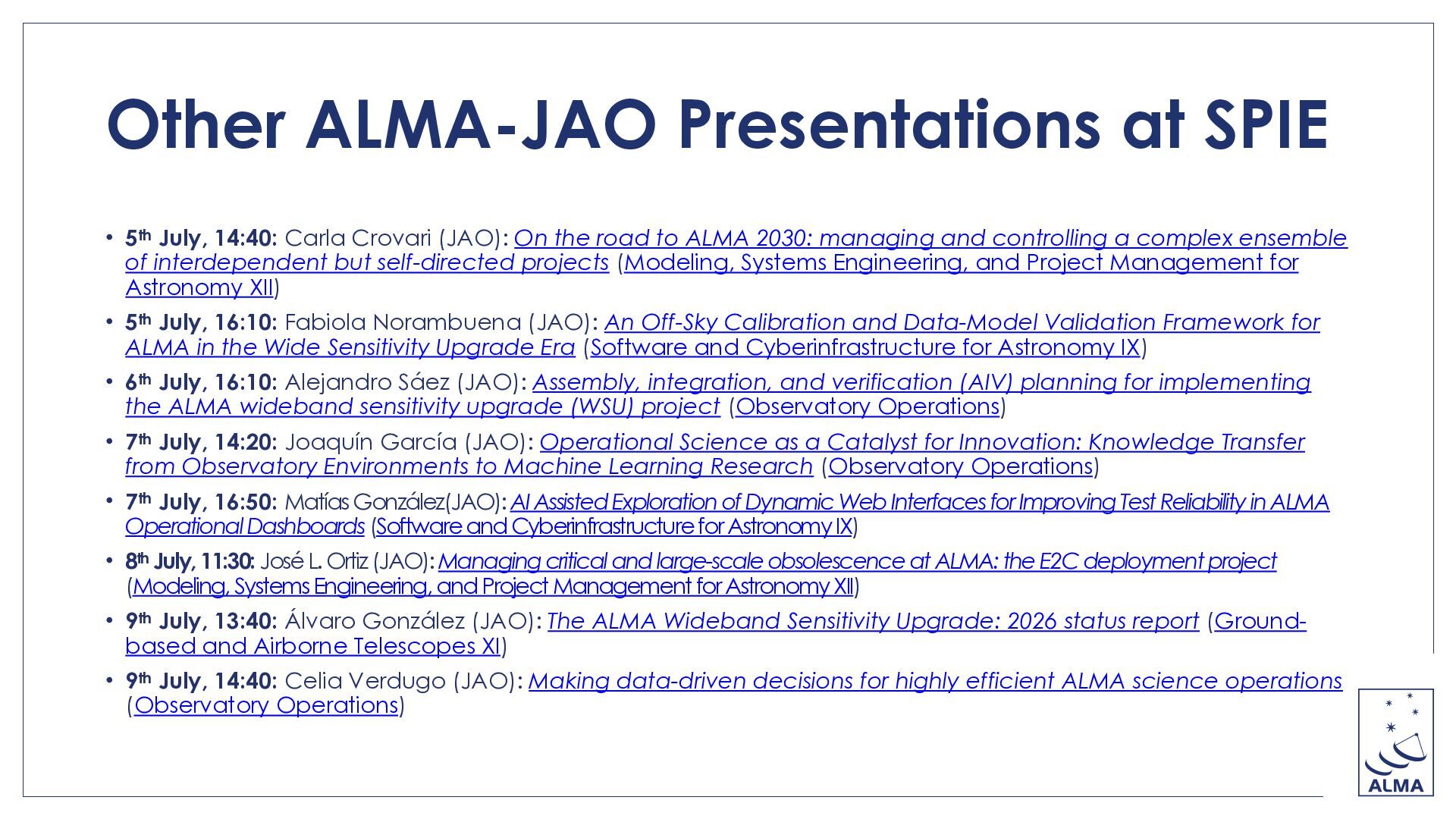
    Crovari (JAO): On the road to ALMA 2030: managing and controlling a complex ensemble of interdependent but self-directed projects (Modeling, Systems Engineering, and Project Management for Astronomy XII) • 5th July, 16:10: Fabiola Norambuena (JAO): An Off-Sky Calibration and Data-Model Validation Framework for ALMA in the Wide Sensitivity Upgrade Era (Software and Cyberinfrastructure for Astronomy IX) • 6th July, 16:10: Alejandro Sáez (JAO): Assembly, integration, and verification (AIV) planning for implementing the ALMA wideband sensitivity upgrade (WSU) project (Observatory Operations) • 7th July, 14:20: Joaquín García (JAO): Operational Science as a Catalyst for Innovation: Knowledge Transfer from Observatory Environments to Machine Learning Research (Observatory Operations) • 7th July, 16:50: Matías González(JAO): AI Assisted Exploration of Dynamic Web Interfaces for Improving Test Reliability in ALMA Operational Dashboards (Software and Cyberinfrastructure for Astronomy IX) • 8th July, 11:30: José L. Ortiz (JAO): Managing critical and large-scale obsolescence at ALMA: the E2C deployment project (Modeling, Systems Engineering, and Project Management for Astronomy XII) • 9th July, 13:40: Álvaro González (JAO): The ALMA Wideband Sensitivity Upgrade: 2026 status report (Groundbased and Airborne Telescopes XI) • 9th July, 14:40: Celia Verdugo (JAO): Making data-driven decisions for highly efficient ALMA science operations (Observatory Operations)