Design/Engineering and Information Architecture, across devices •Worked on projects for Apple, Exxon/Esso, Procter & Gamble, Honda, and more •Featured author for Forbes, O’Reilly Media, UX Magazine, Adobe Developer Connection, and Medium •Presented at SXSW, SmashingConf, FITC, Adobe MAX, OSCON, RIA Unleashed, and more •Named an Adobe Community Professional •Over a decade's worth of product design experience kevinsuttle.com
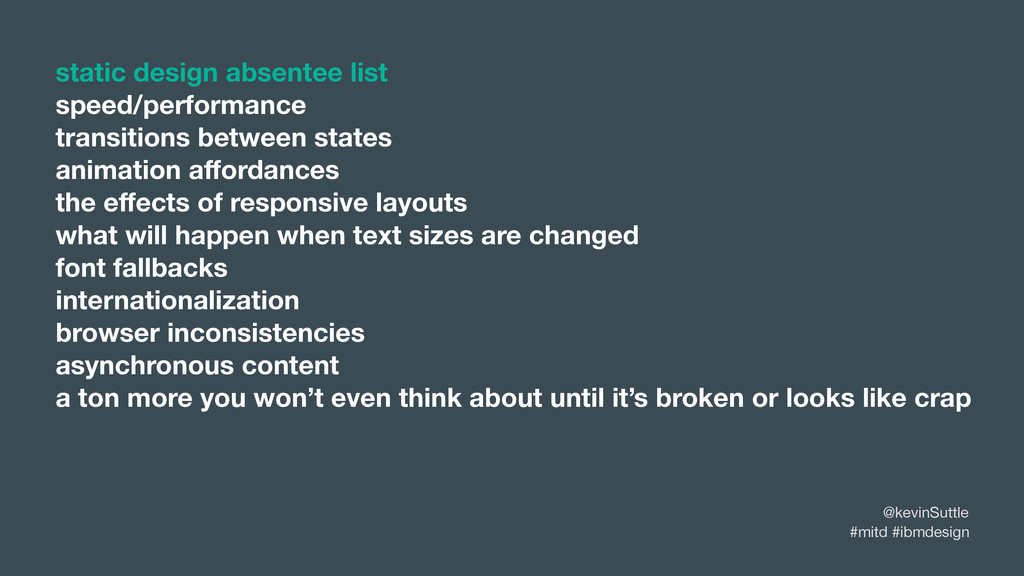
states animation affordances the effects of responsive layouts what will happen when text sizes are changed font fallbacks internationalization browser inconsistencies asynchronous content a ton more you won’t even think about until it’s broken or looks like crap
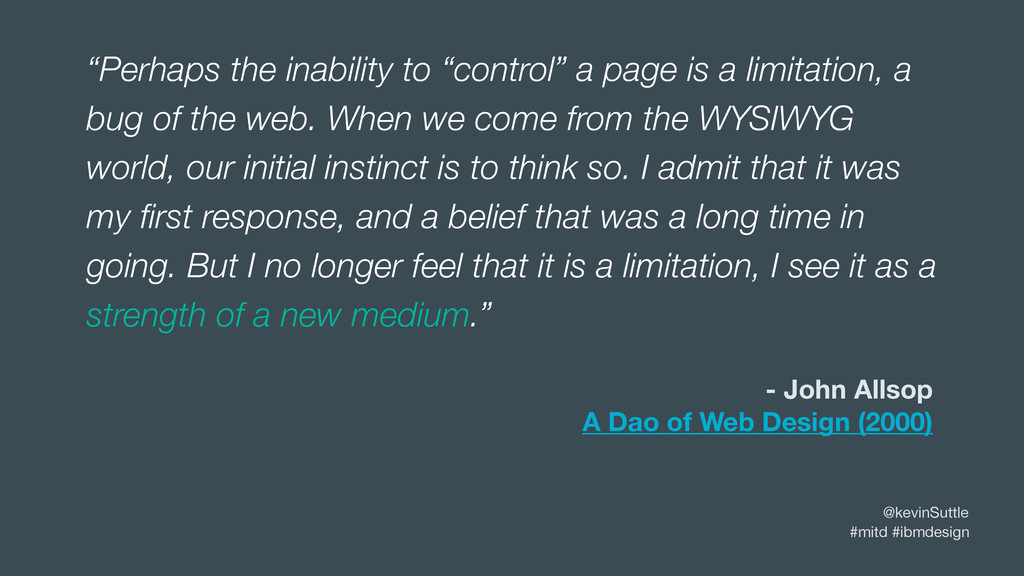
is a limitation, a bug of the web. When we come from the WYSIWYG world, our initial instinct is to think so. I admit that it was my first response, and a belief that was a long time in going. But I no longer feel that it is a limitation, I see it as a strength of a new medium.” - John Allsop A Dao of Web Design (2000)
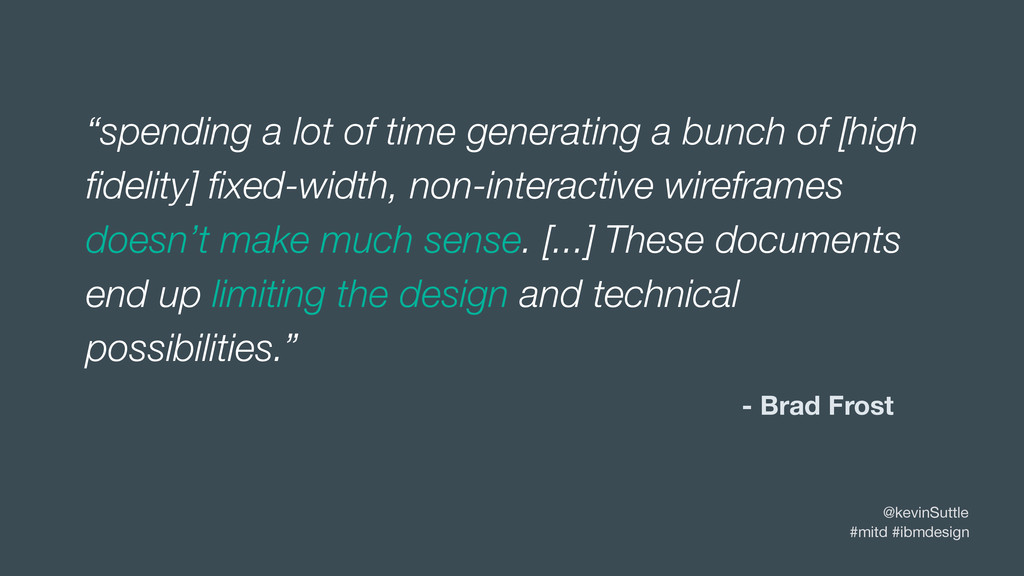
bunch of [high fidelity] fixed-width, non-interactive wireframes doesn’t make much sense. [...] These documents end up limiting the design and technical possibilities.” - Brad Frost
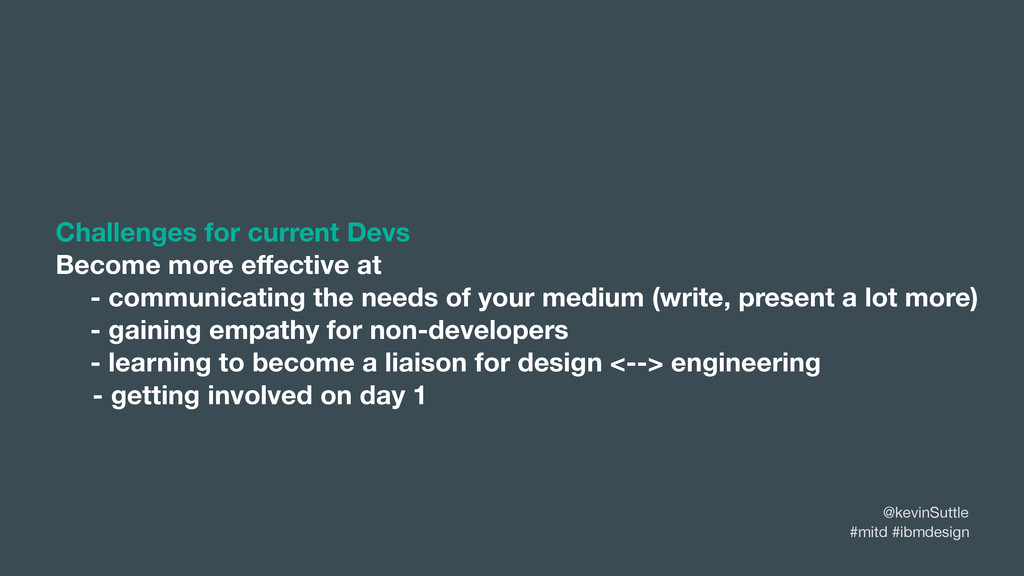
at - communicating the needs of your medium (write, present a lot more) - gaining empathy for non-developers - learning to become a liaison for design <--> engineering - getting involved on day 1
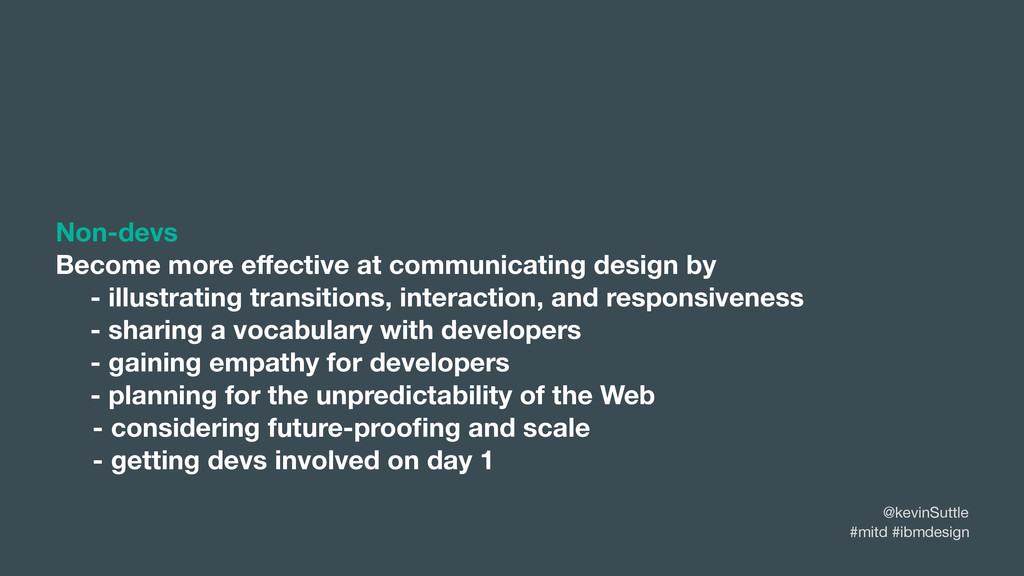
by - illustrating transitions, interaction, and responsiveness - sharing a vocabulary with developers - gaining empathy for developers - planning for the unpredictability of the Web - considering future-proofing and scale - getting devs involved on day 1
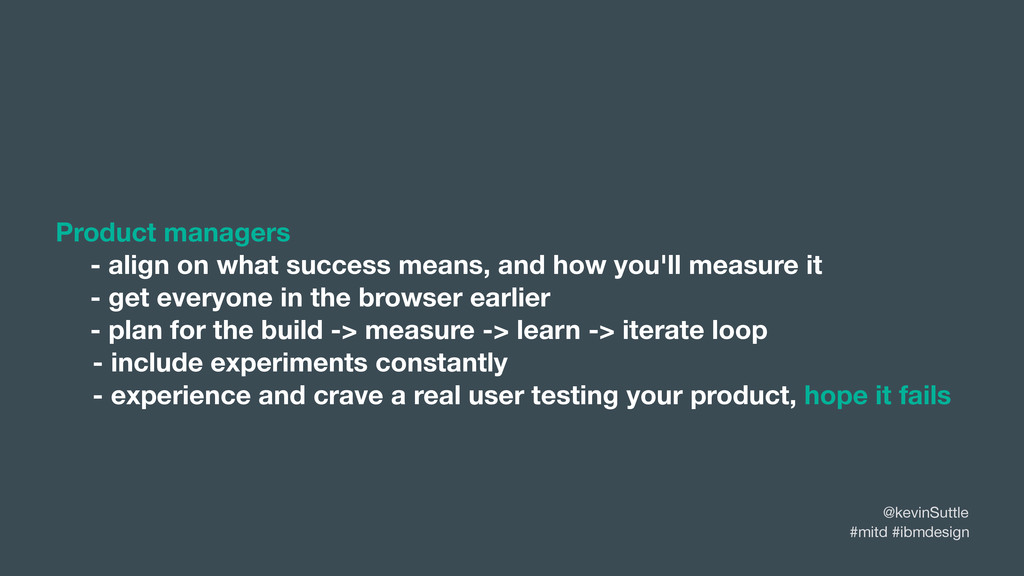
means, and how you'll measure it - get everyone in the browser earlier - plan for the build -> measure -> learn -> iterate loop - include experiments constantly - experience and crave a real user testing your product, hope it fails


 kevinsuttle
 seanvraj_arts
 littlebusters
 cygames
 ajstarks
 uto
uto
 mukai_takeru
 goetter
 isaikaori
 hiromimaeo
 yusukeiyoda
 nishame
 quoitworks999
 kastner
 swwweet
 cassininazir
 jonoalderson
 brad_frost
 jonyablonski
 chikuwait
 codingconduct
 gurzu
gurzu
 aleyda
 bkeepers






![#mitd #ibmdesign @kevinSuttle “No one would do [x] on their](https://files.speakerdeck.com/presentations/b642e9173d7e4c308456cfb696ab9fef/slide_17.jpg)

![#mitd #ibmdesign @kevinSuttle - Brad Frost “[hi-fis] are a crutch](https://files.speakerdeck.com/presentations/b642e9173d7e4c308456cfb696ab9fef/slide_41.jpg)