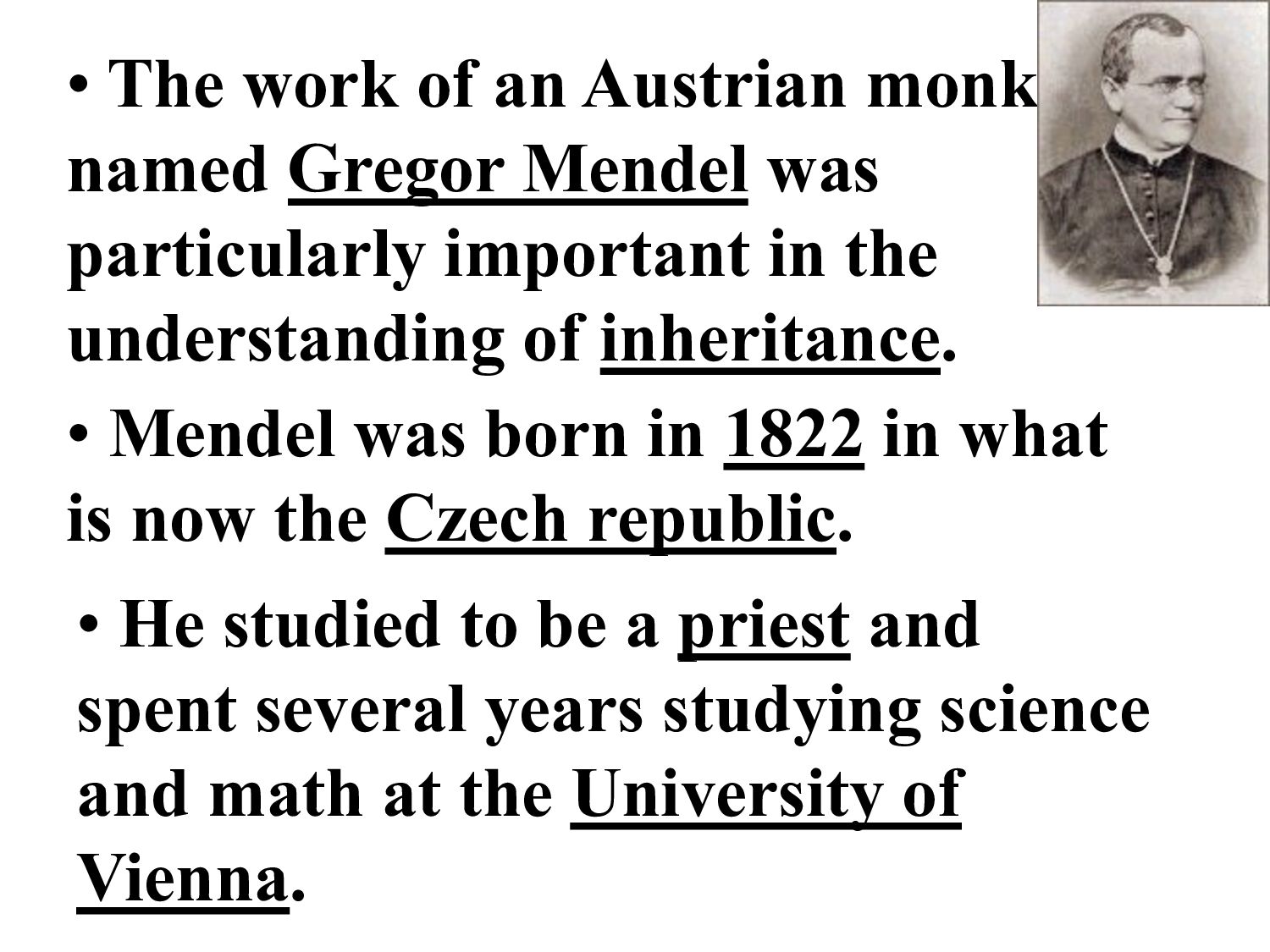
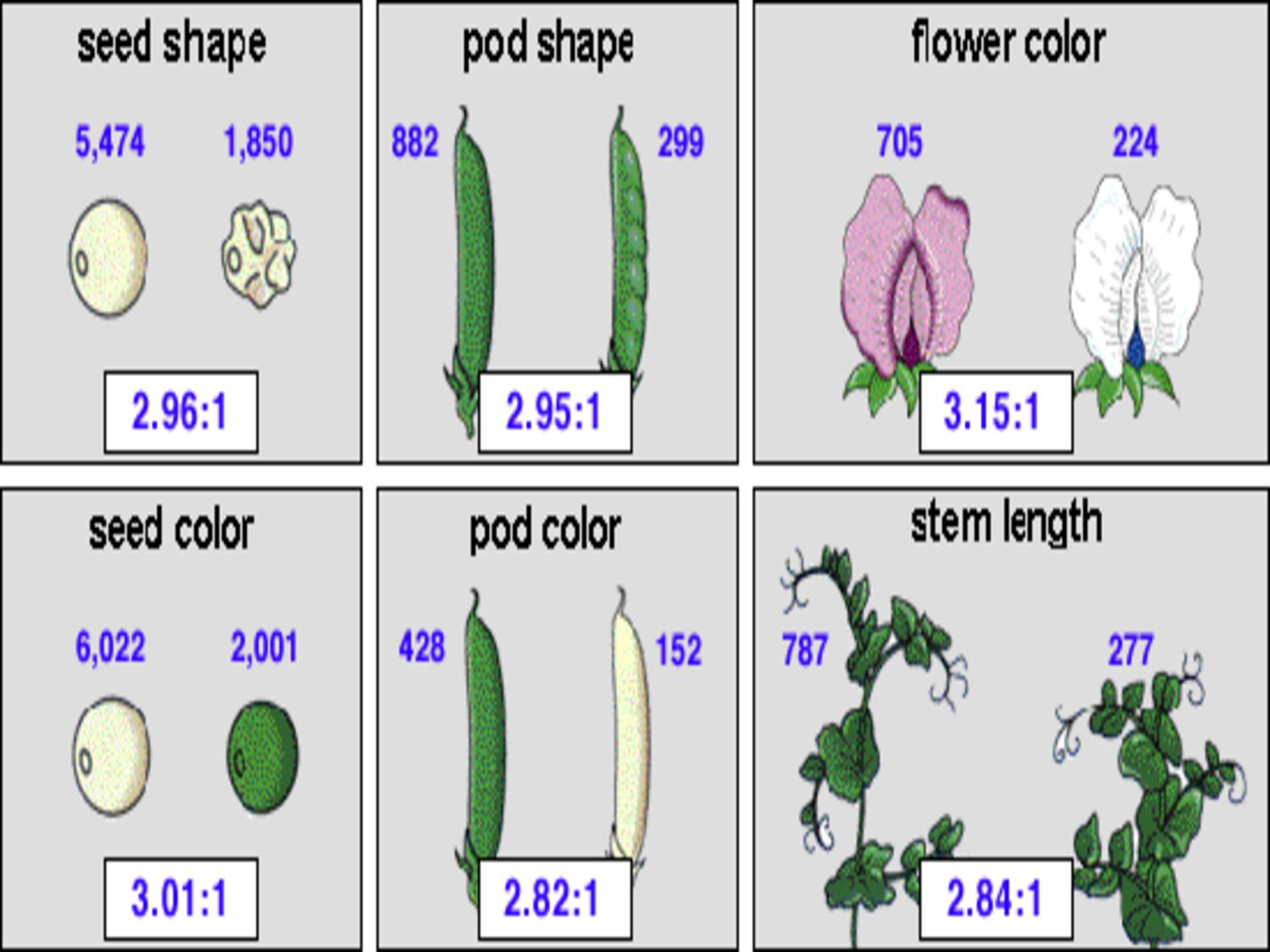
was particularly important in the understanding of inheritance. • Mendel was born in 1822 in what is now the Czech republic. • He studied to be a priest and spent several years studying science and math at the University of Vienna.
working in the local monastery and teaching high school. • At the monastery, Mendel was in charge of gardening and spent most of his time tending to and studying the plants around him.
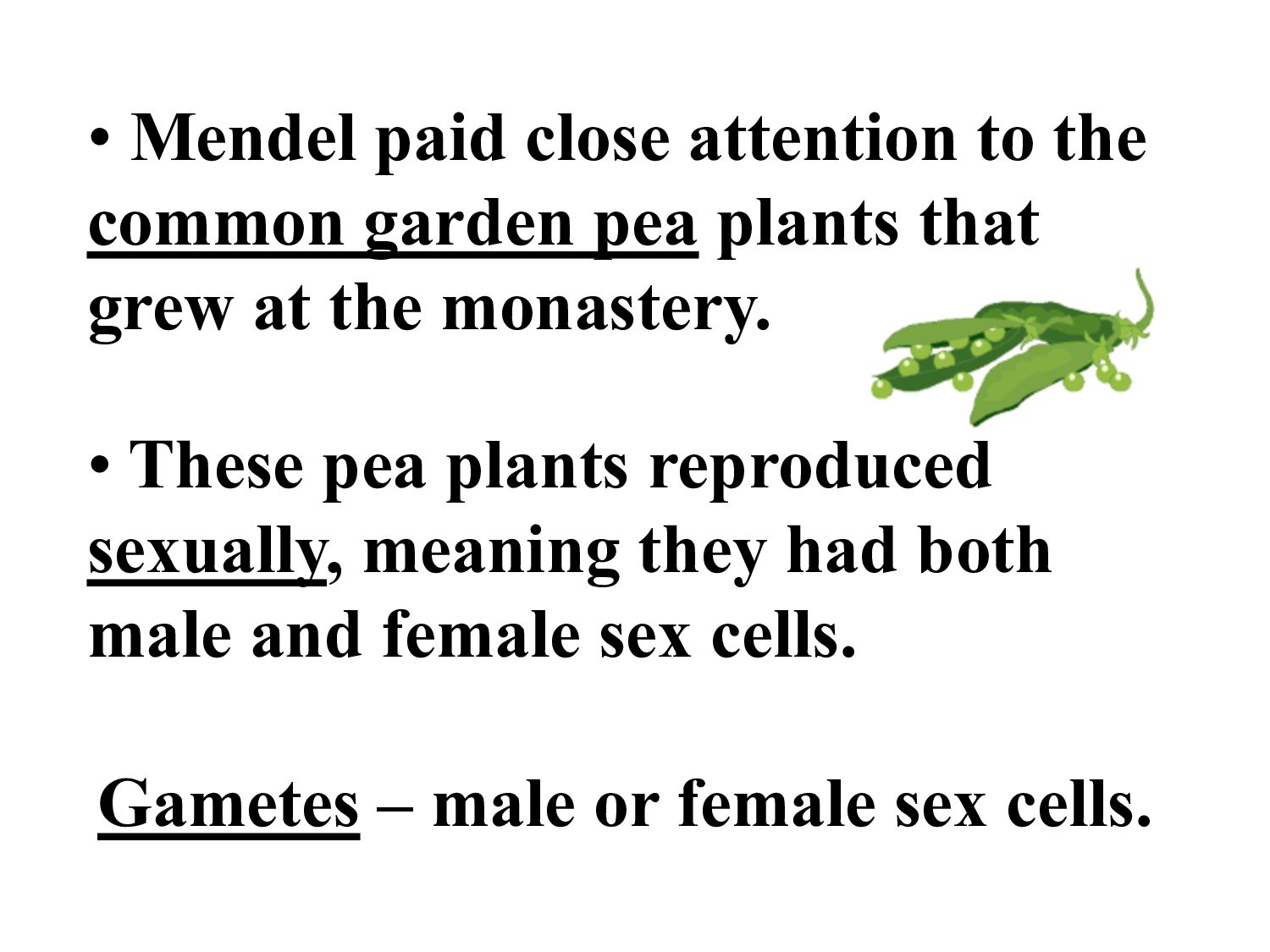
plants that grew at the monastery. • These pea plants reproduced sexually, meaning they had both male and female sex cells. Gametes – male or female sex cells.
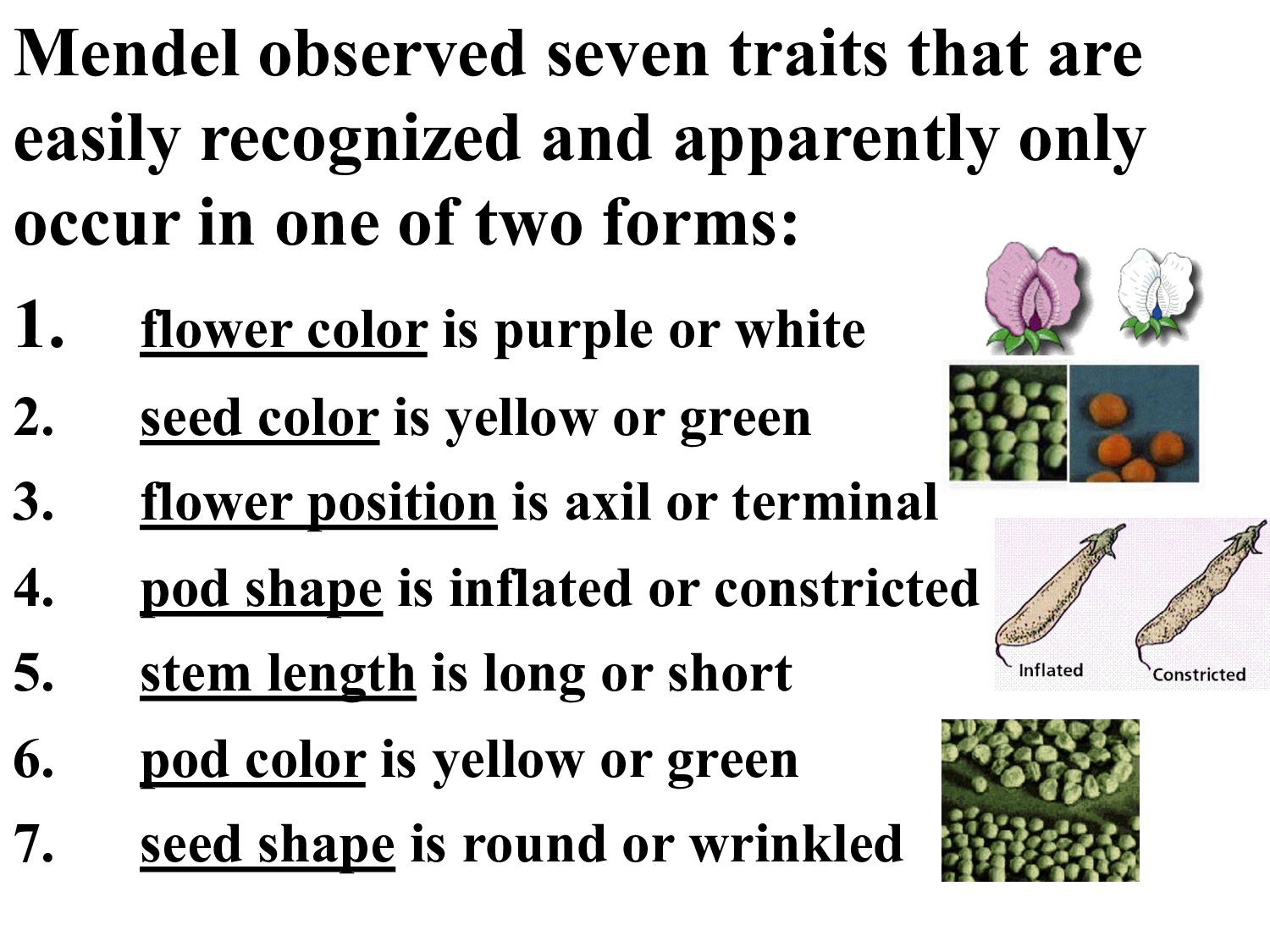
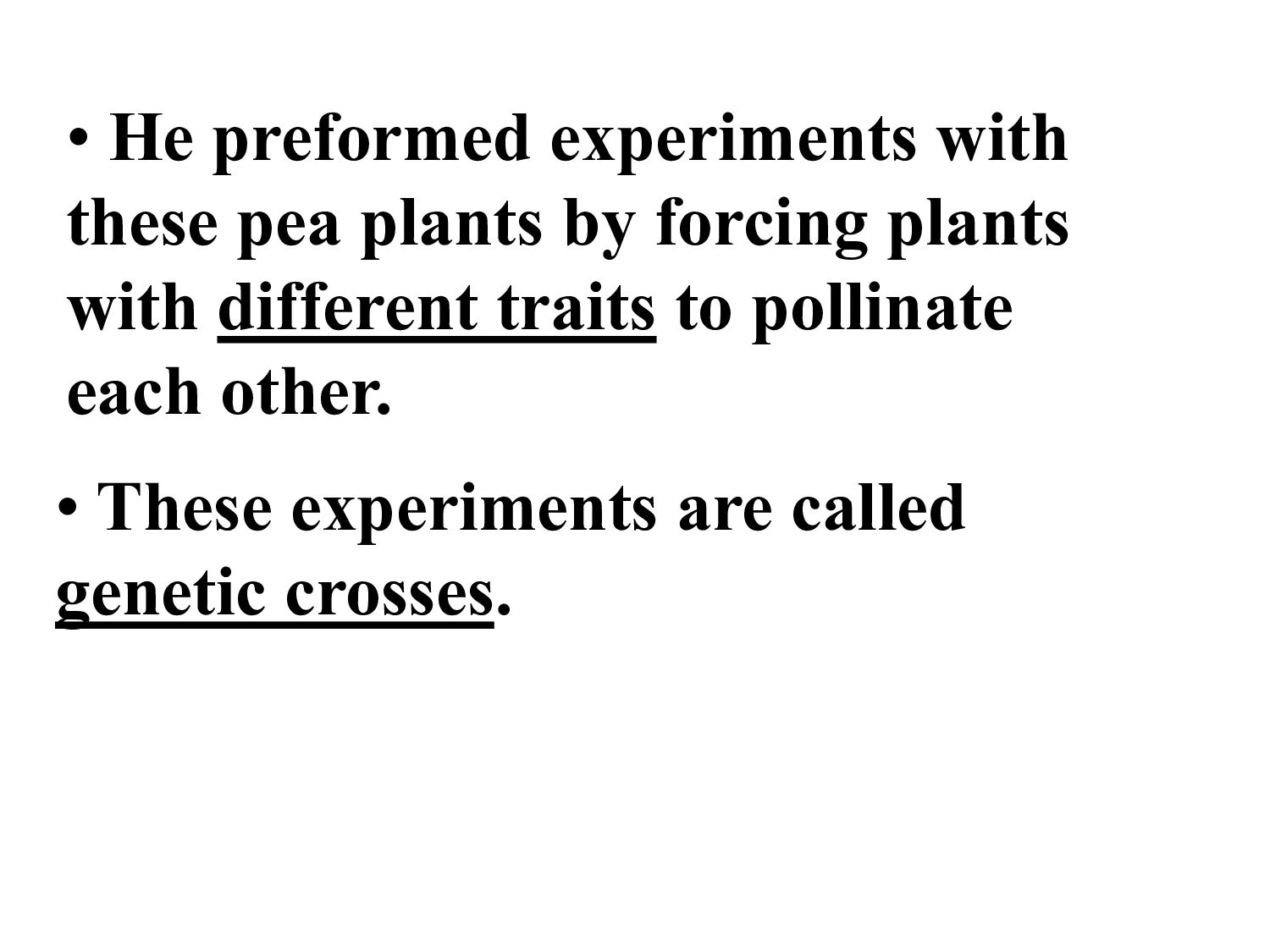
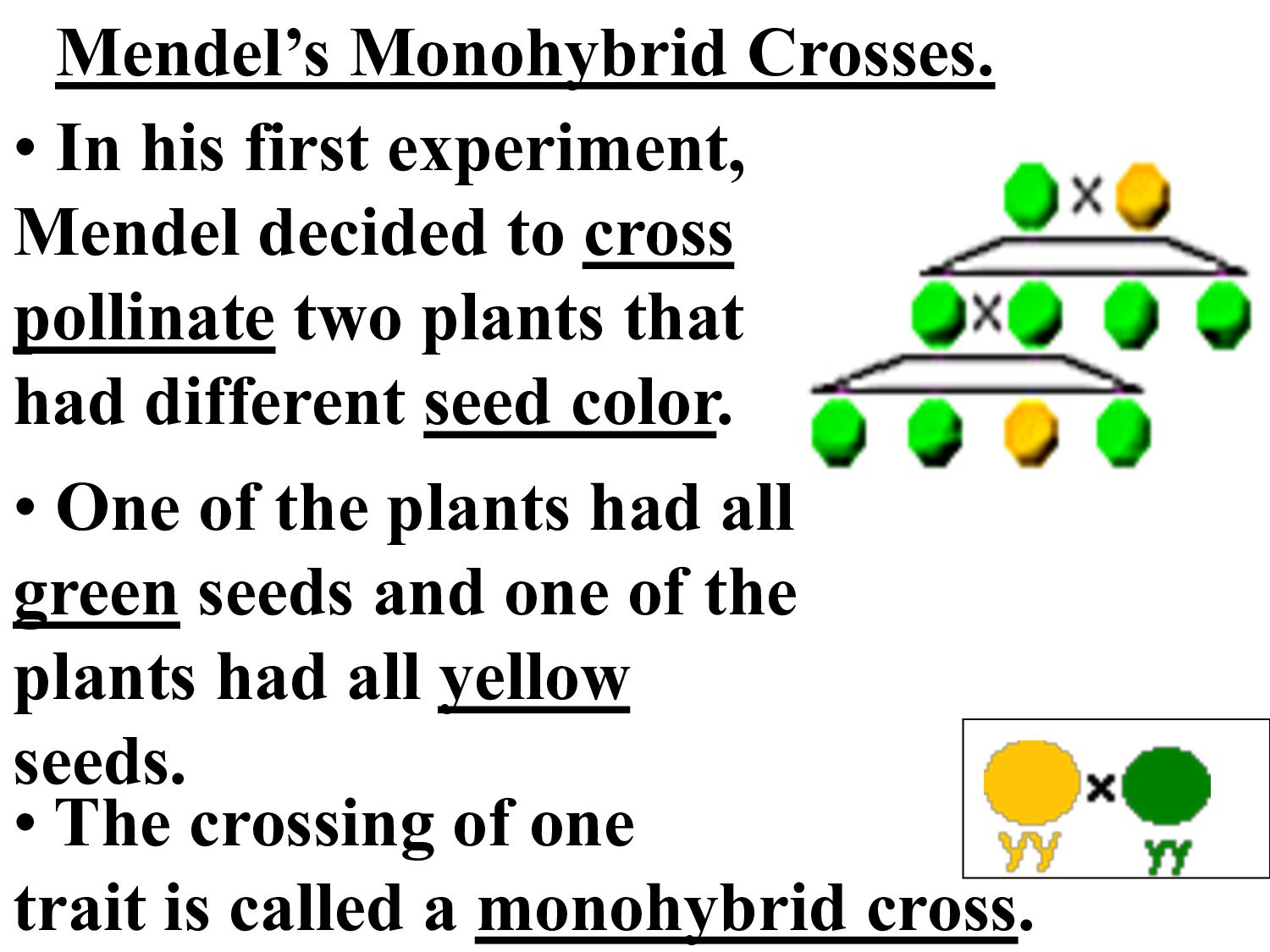
only occur in one of two forms: 1. flower color is purple or white 2. seed color is yellow or green 3. flower position is axil or terminal 4. pod shape is inflated or constricted 5. stem length is long or short 6. pod color is yellow or green 7. seed shape is round or wrinkled
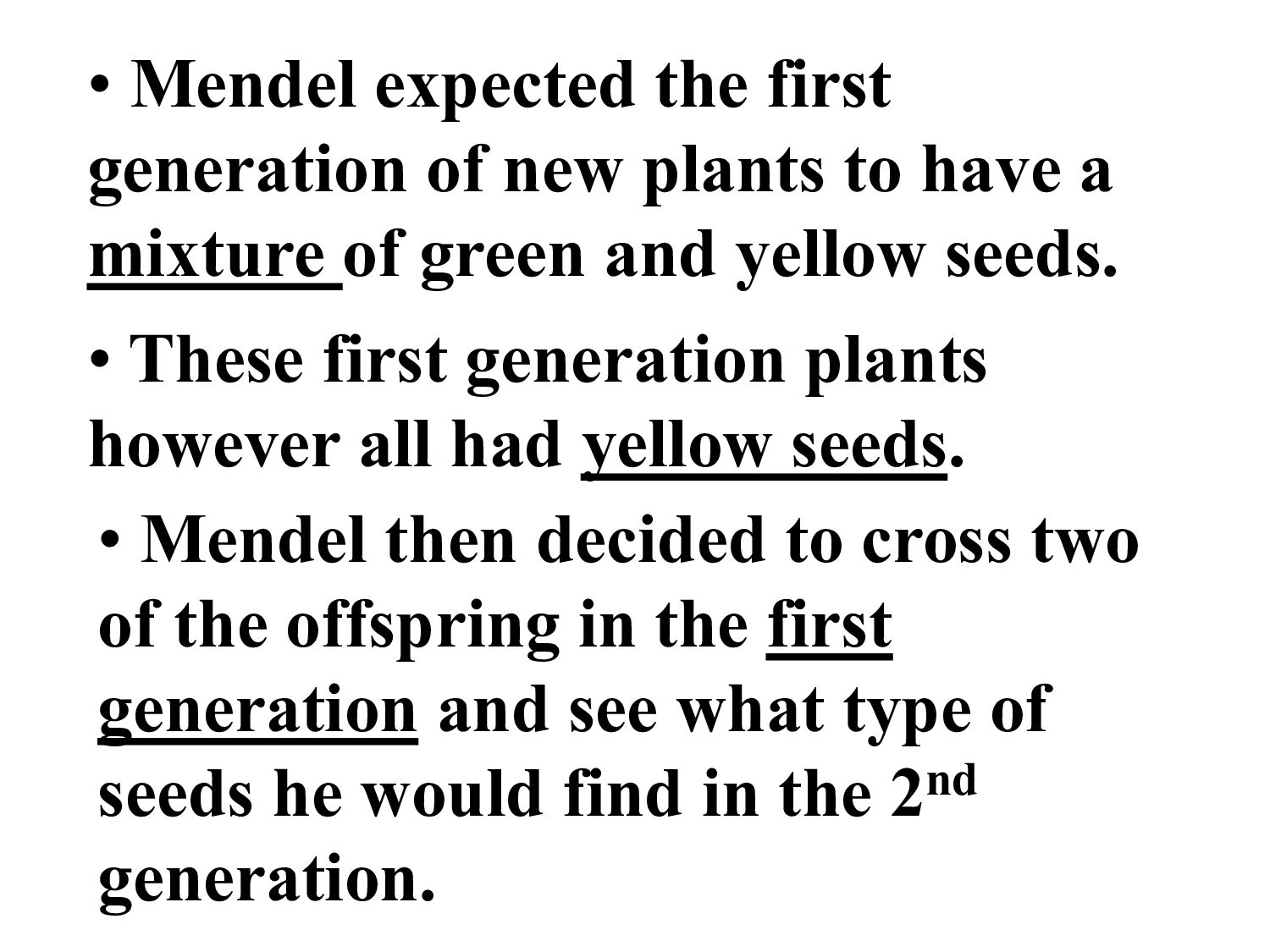
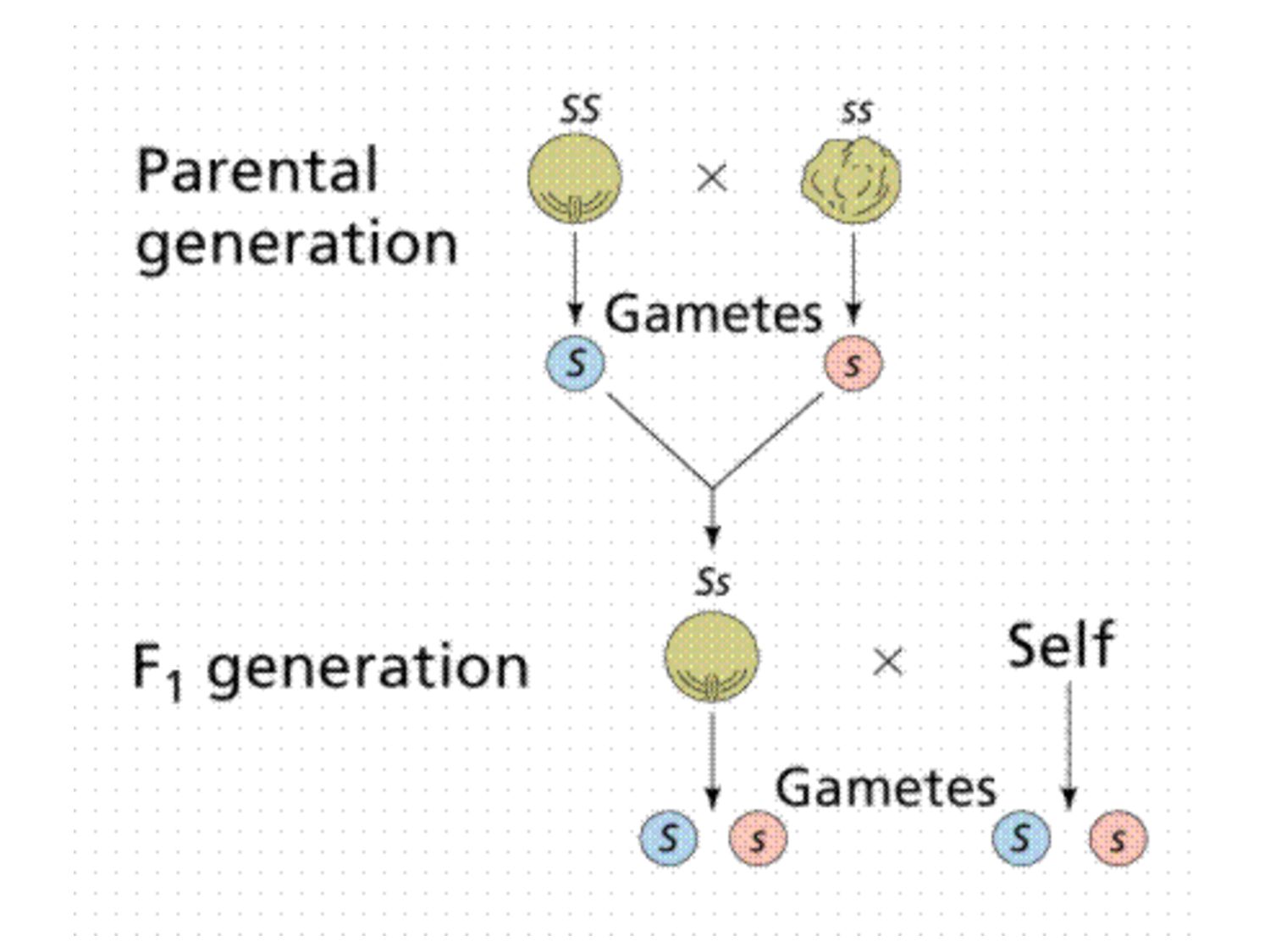
to cross pollinate two plants that had different seed color. • One of the plants had all green seeds and one of the plants had all yellow seeds. • The crossing of one trait is called a monohybrid cross.
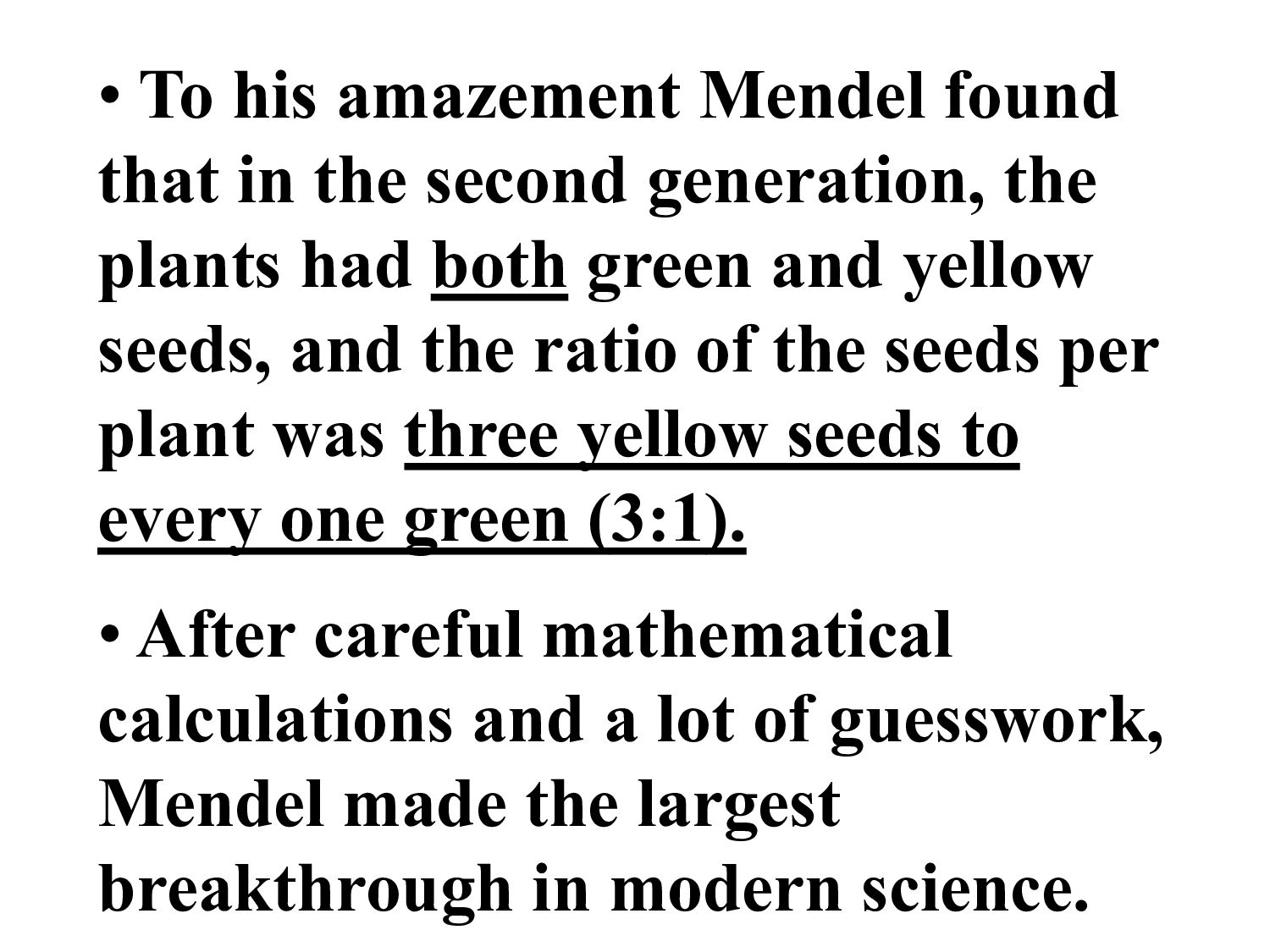
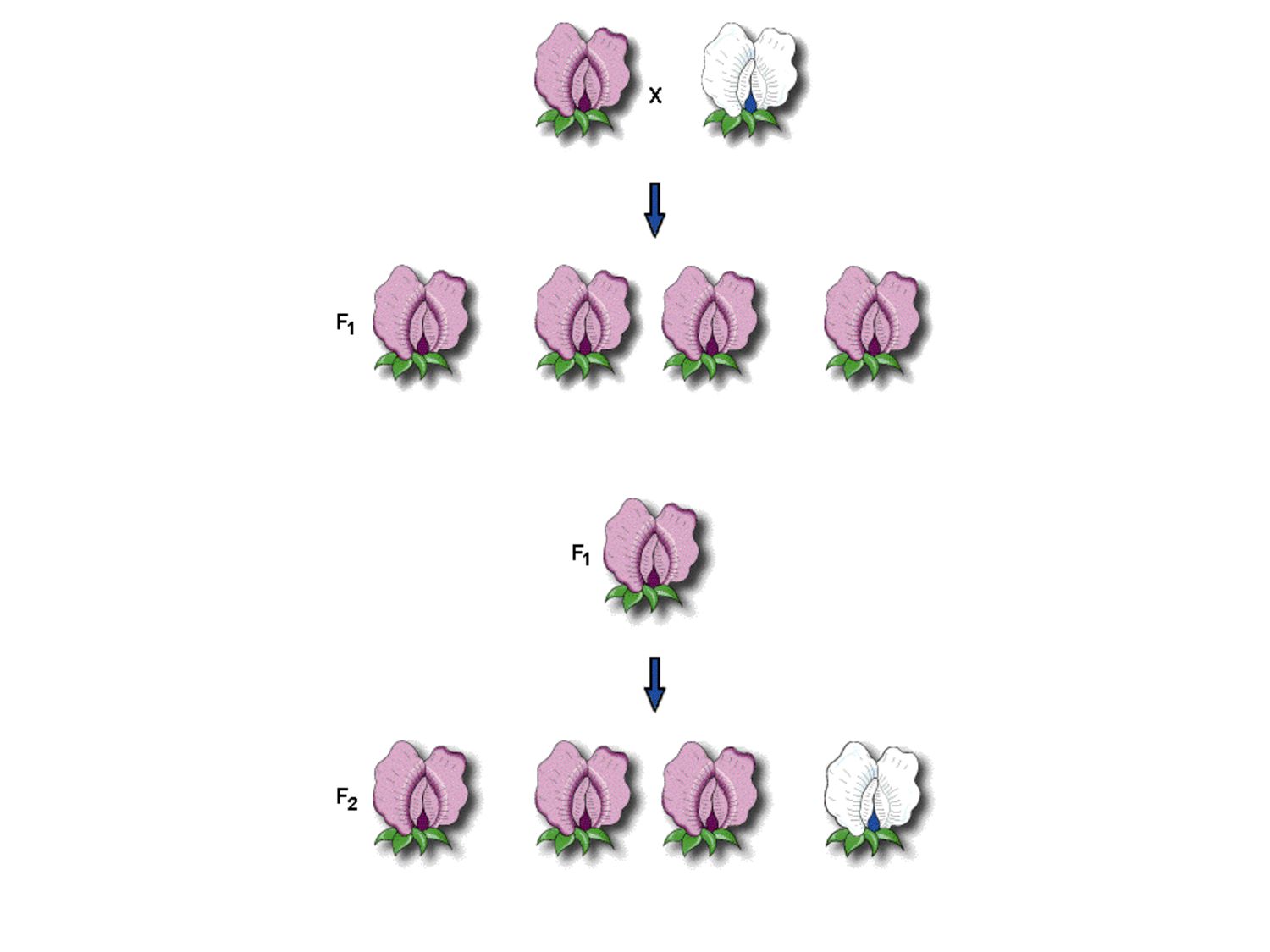
have a mixture of green and yellow seeds. • These first generation plants however all had yellow seeds. • Mendel then decided to cross two of the offspring in the first generation and see what type of seeds he would find in the 2nd generation.
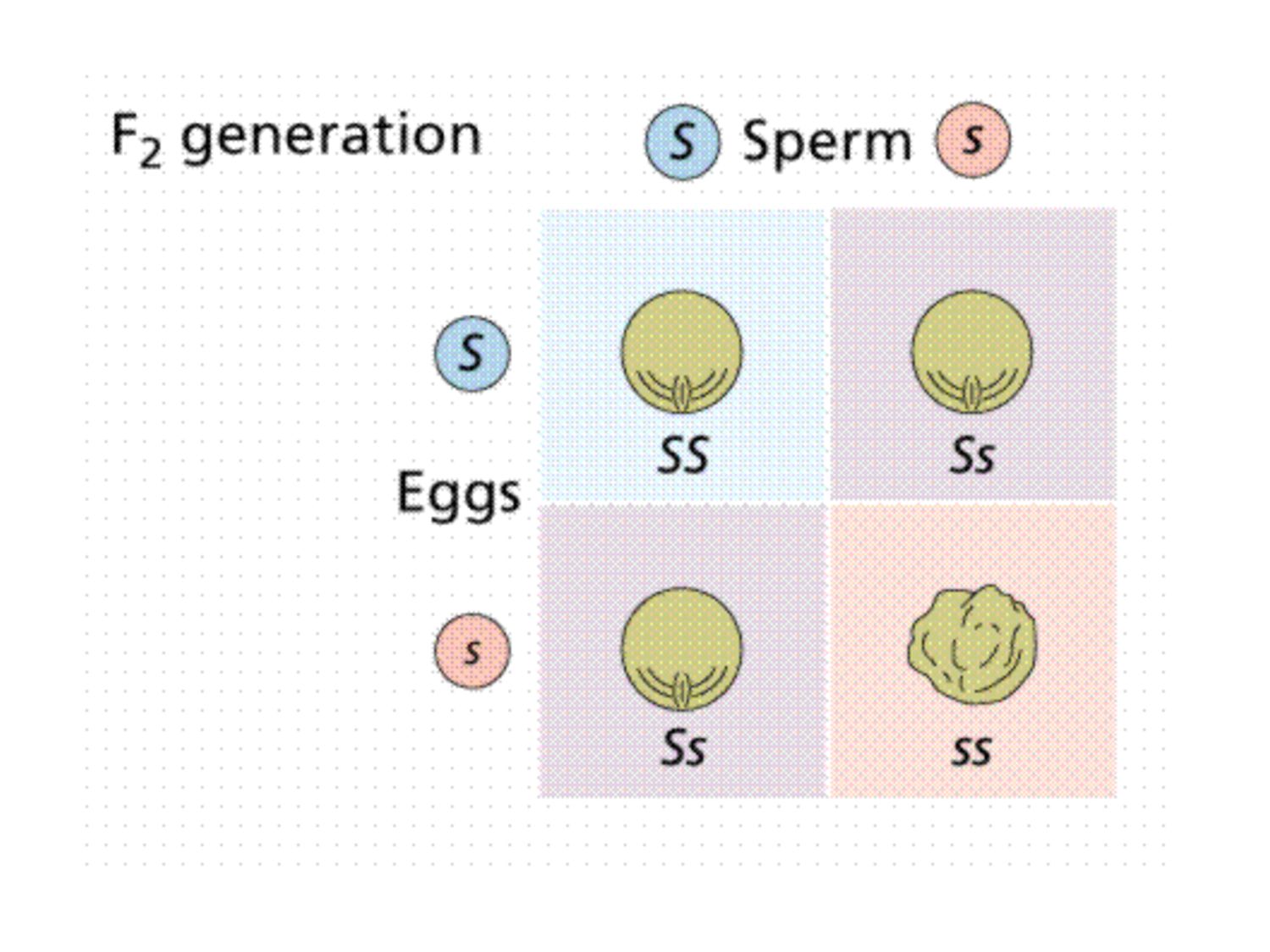
generation, the plants had both green and yellow seeds, and the ratio of the seeds per plant was three yellow seeds to every one green (3:1). • After careful mathematical calculations and a lot of guesswork, Mendel made the largest breakthrough in modern science.
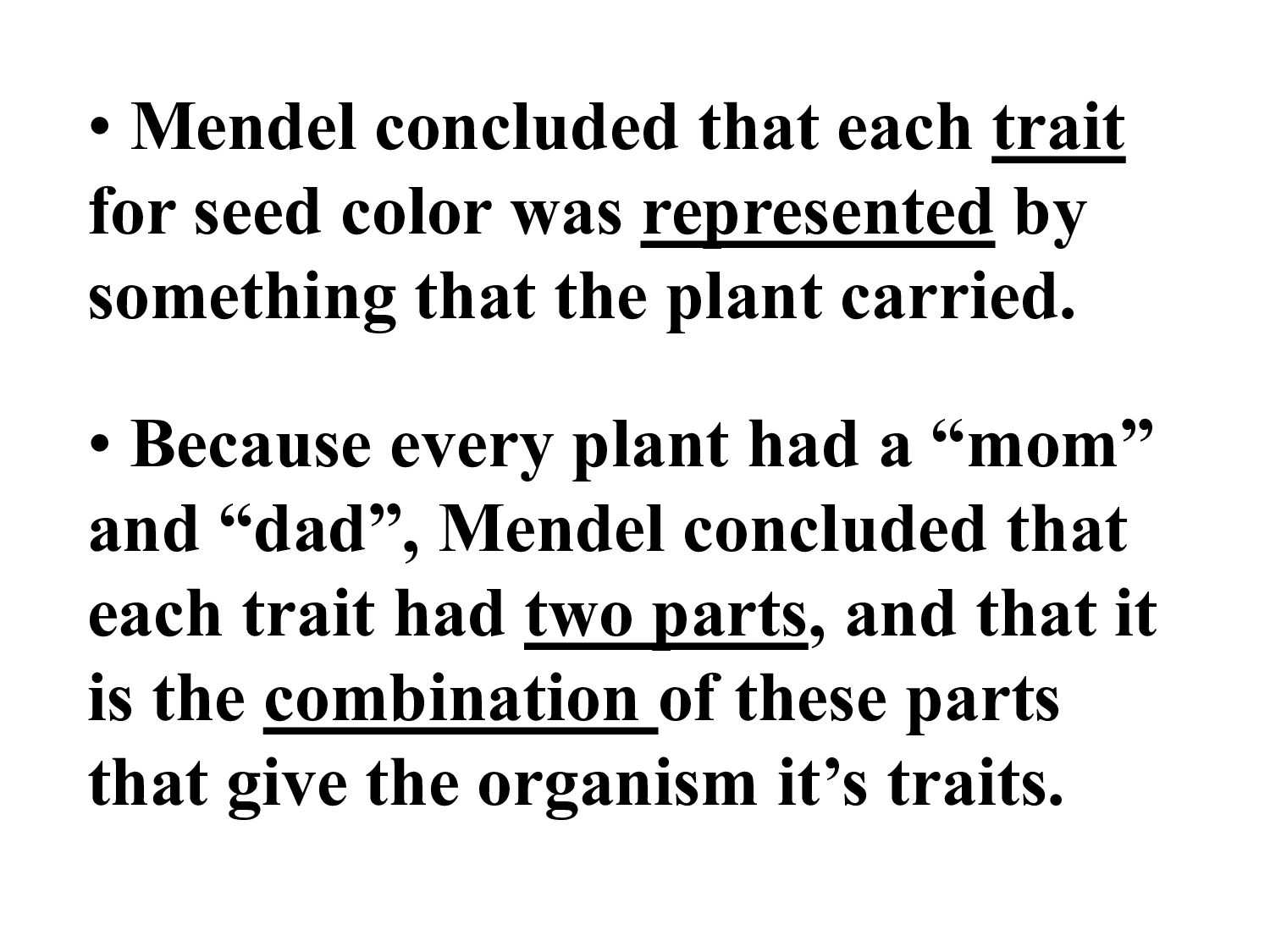
represented by something that the plant carried. • Because every plant had a “mom” and “dad”, Mendel concluded that each trait had two parts, and that it is the combination of these parts that give the organism it’s traits.
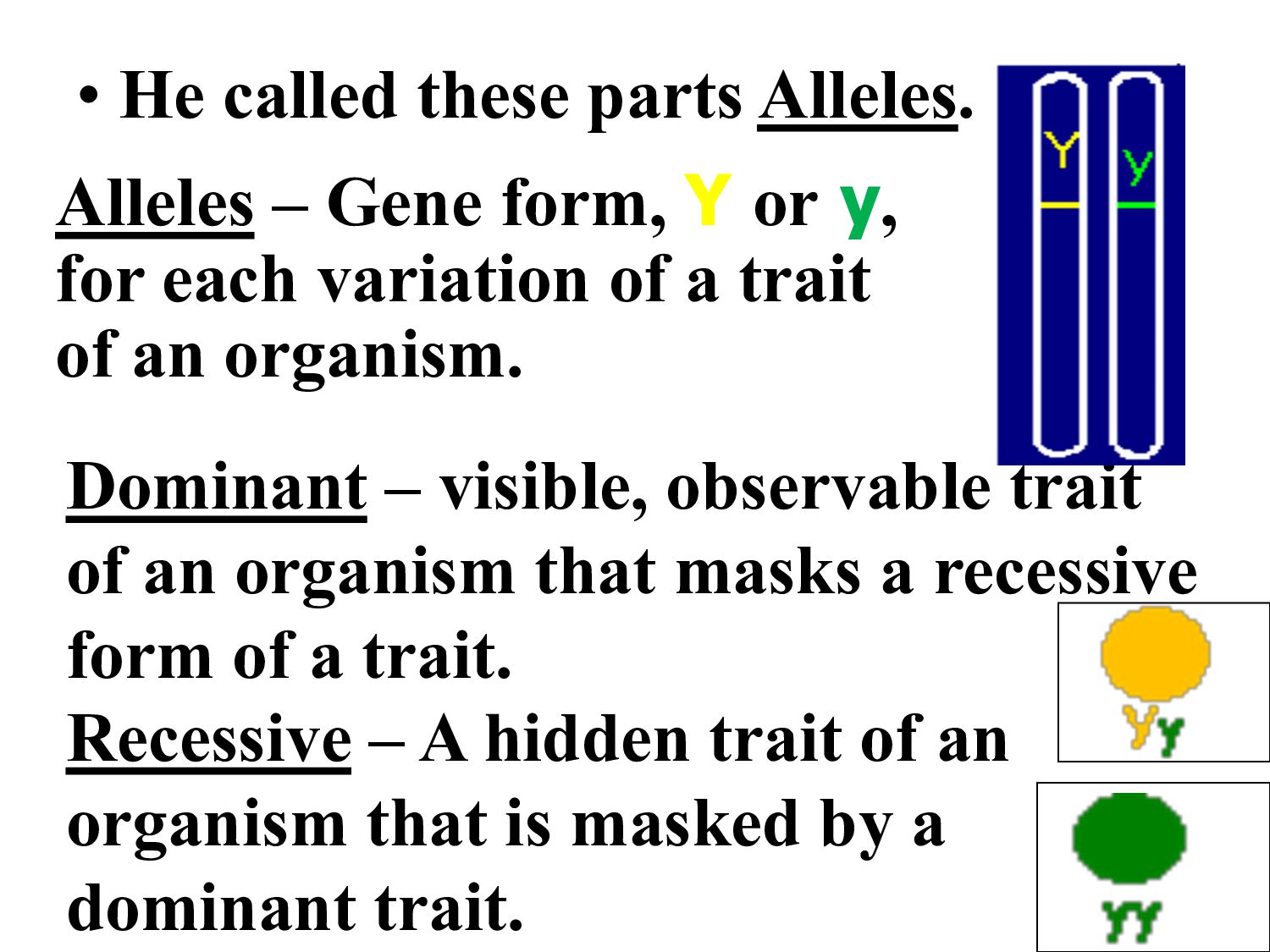
of a trait of an organism. Dominant – visible, observable trait of an organism that masks a recessive form of a trait. Recessive – A hidden trait of an organism that is masked by a dominant trait. • He called these parts Alleles.
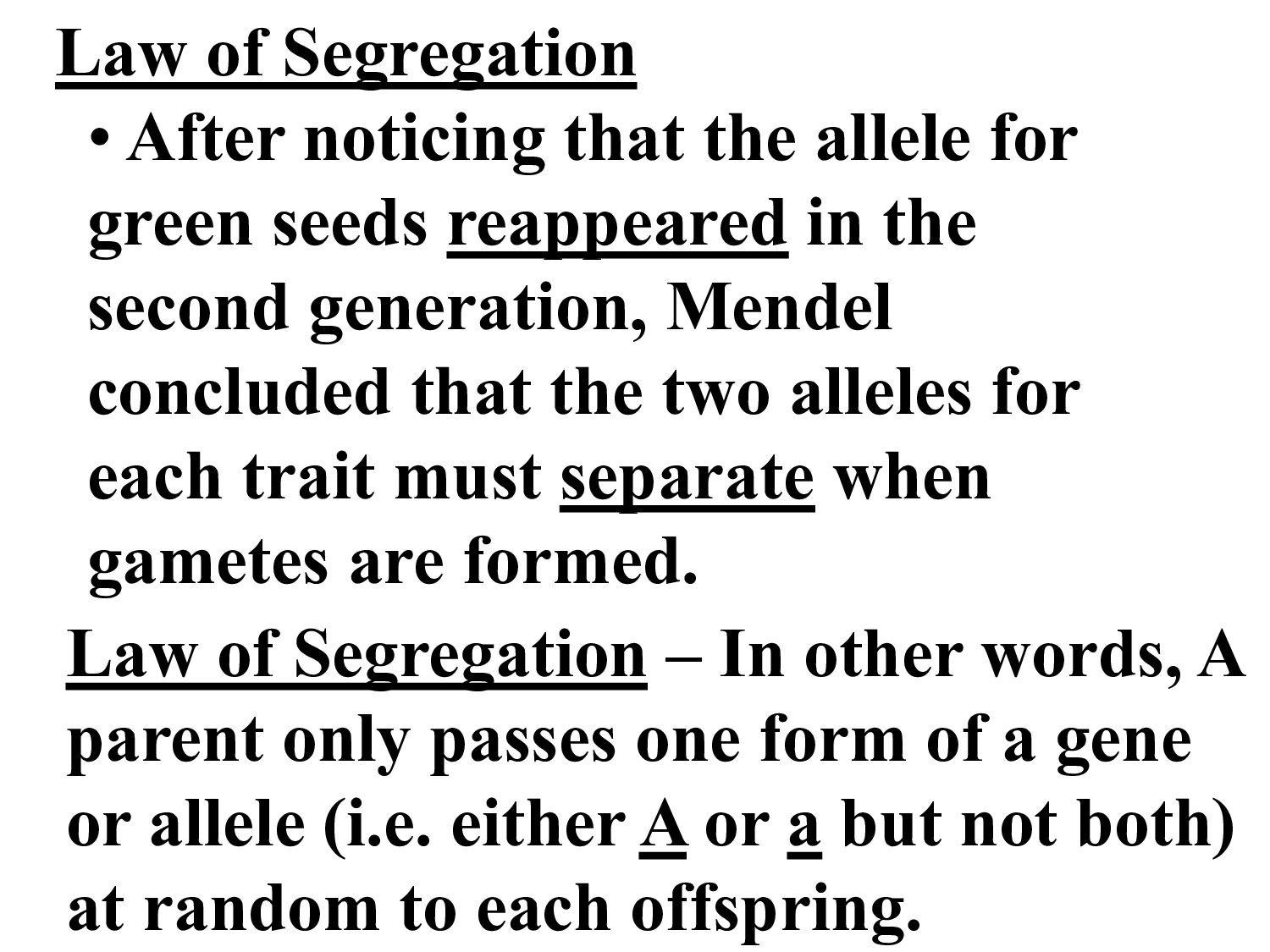
green seeds reappeared in the second generation, Mendel concluded that the two alleles for each trait must separate when gametes are formed. Law of Segregation – In other words, A parent only passes one form of a gene or allele (i.e. either A or a but not both) at random to each offspring.
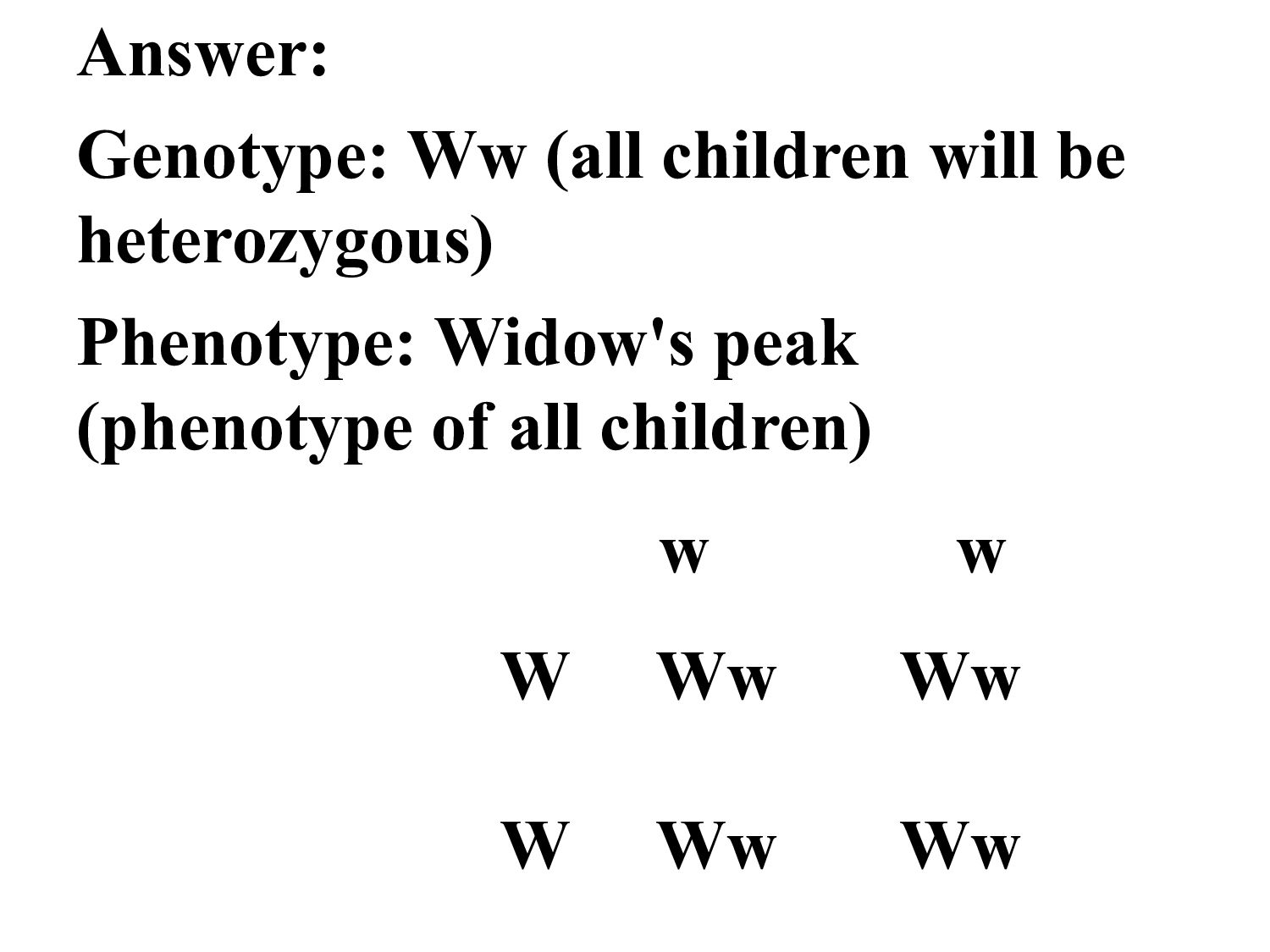
(a) A man with a widow's peak (WW) marries a woman with a continuous hairline (ww). A widow's peak is dominant over a continuous hairline. What kind of hairline will their children have?
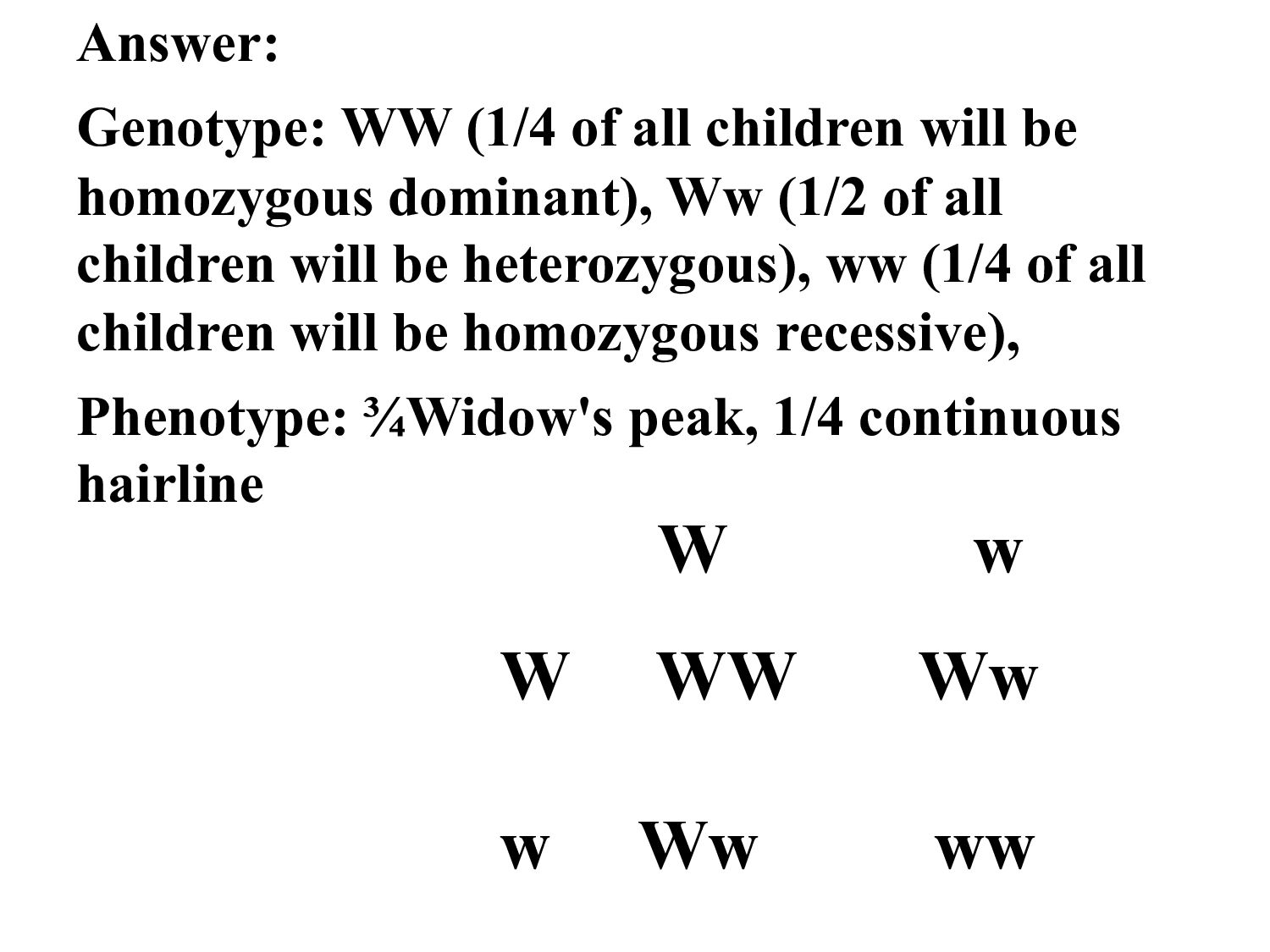
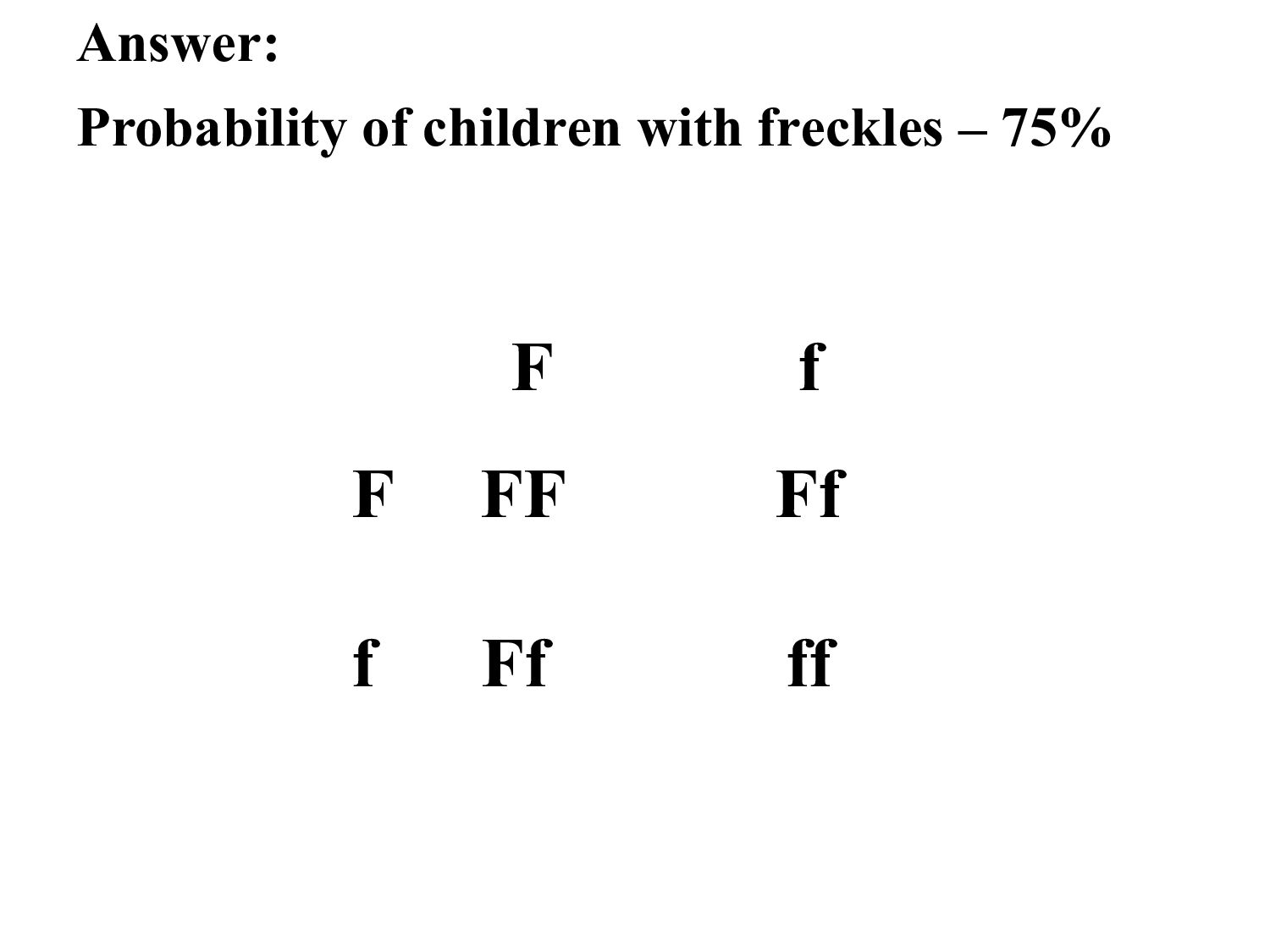
dominant), Ww (1/2 of all children will be heterozygous), ww (1/4 of all children will be homozygous recessive), Phenotype: ¾Widow's peak, 1/4 continuous hairline W w W WW Ww w Ww ww
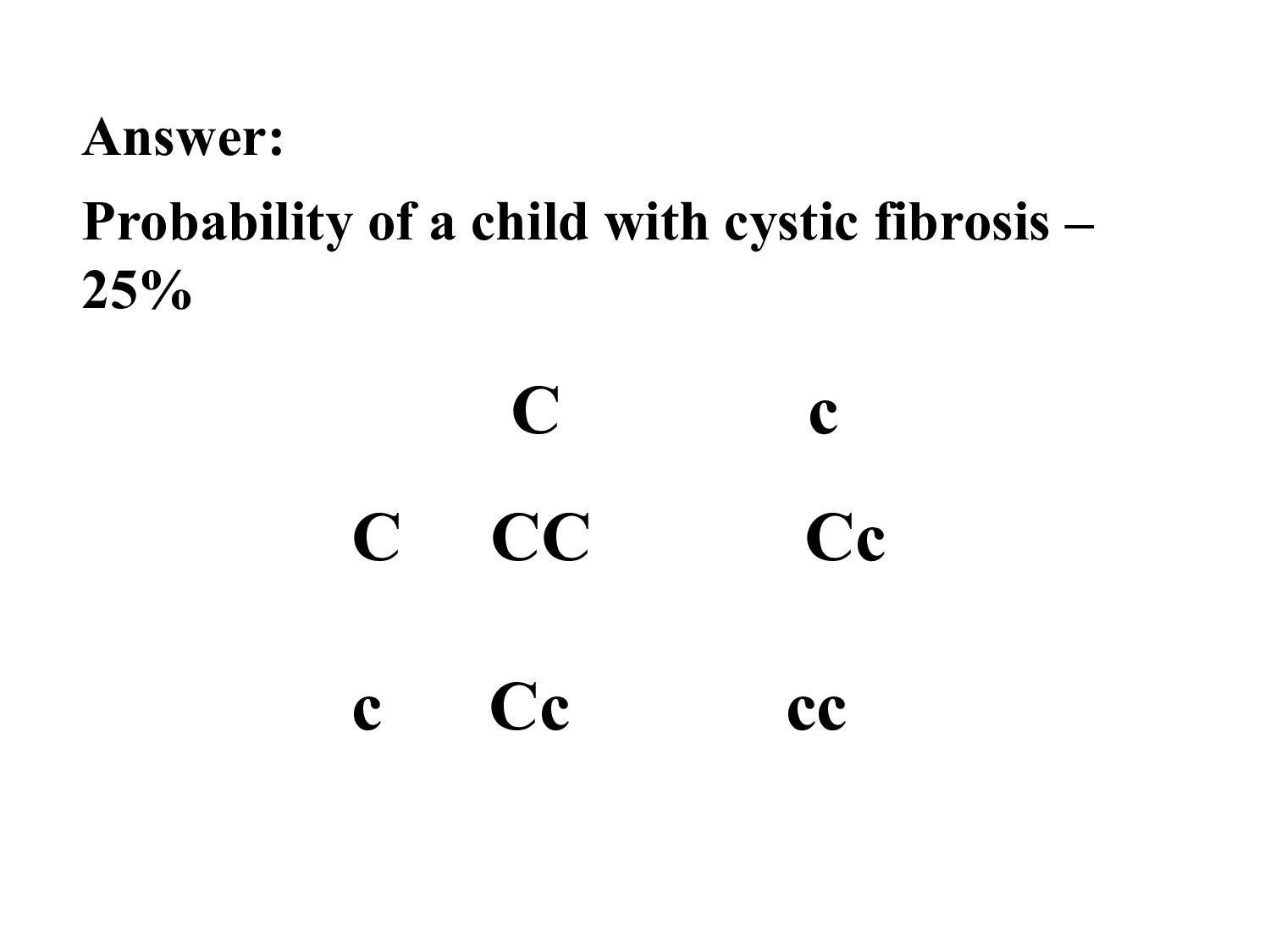
know that they are both carriers (ie heterozygous) of cystic fibrosis (Cc). What is the probability that their child will have cystic fibrosis (cc)? What is the probability that their child will be a carrier of cystic fibrosis?

 Your Podcast. Everywhere. Effortlessly.


 kezipar
 yasslab
 naochim2026
 ainischool
 signer
 kentaroy47
 hiola
hiola
 cbtlibrary
 kaityo256
 matleenalaakso
 juanmartin2026
 mariooc
 speakerdeck
 ipullrank
 baasie
 honzajavorek
 jnunemaker
 mfonobong
 mojombo
 szymonslowik
 wayneb77
 lemiorhan
 iamctodd