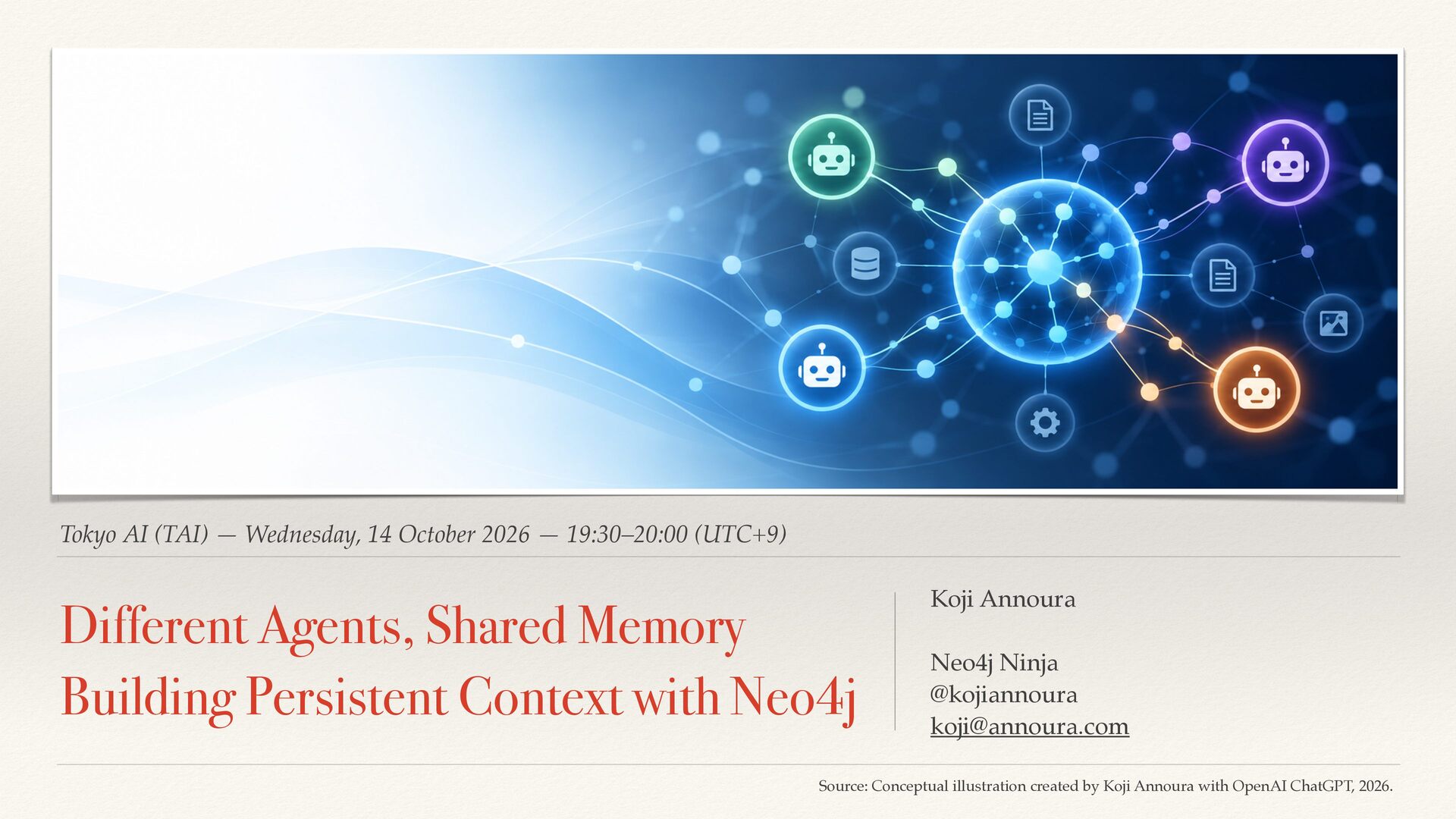
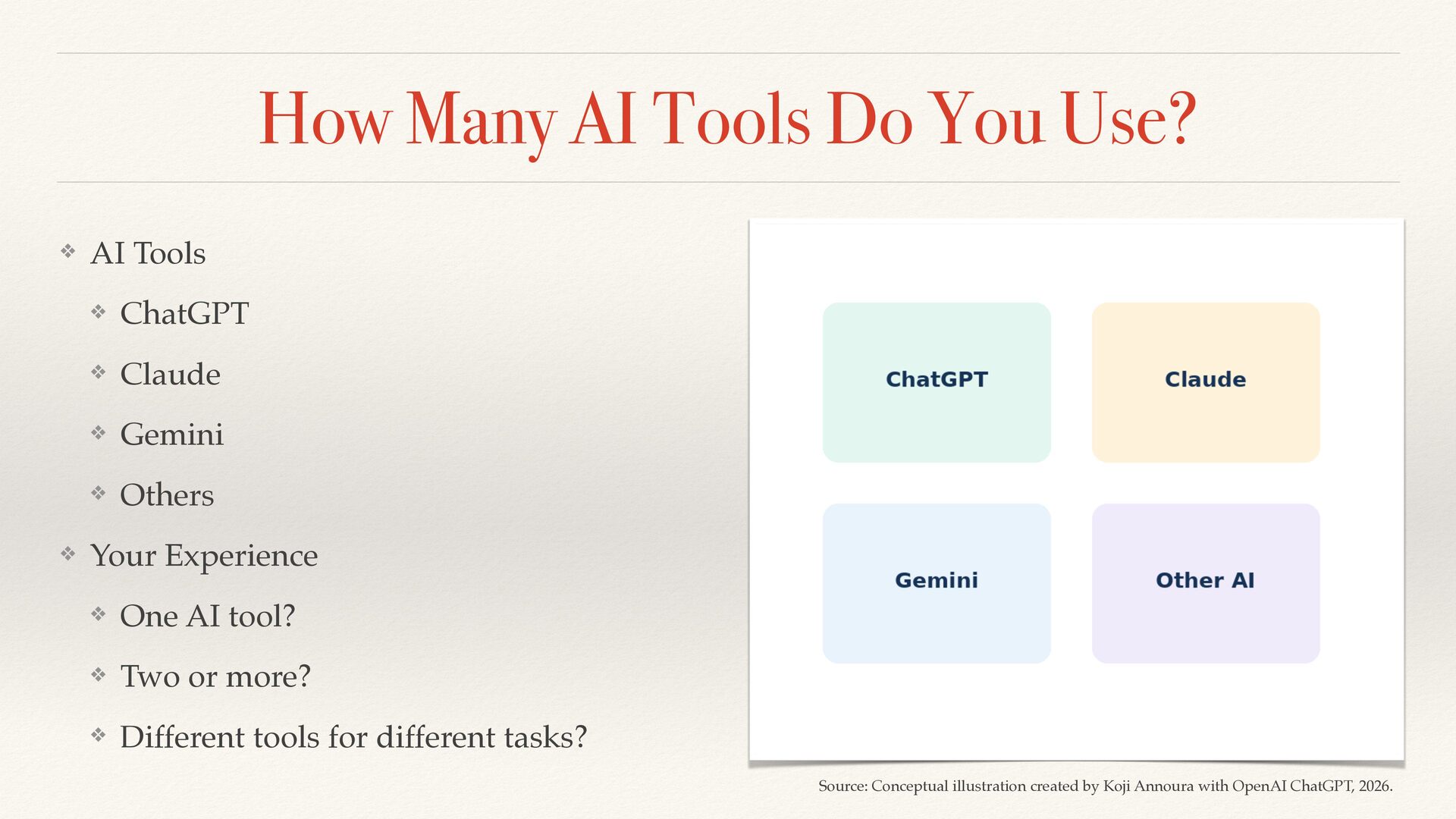
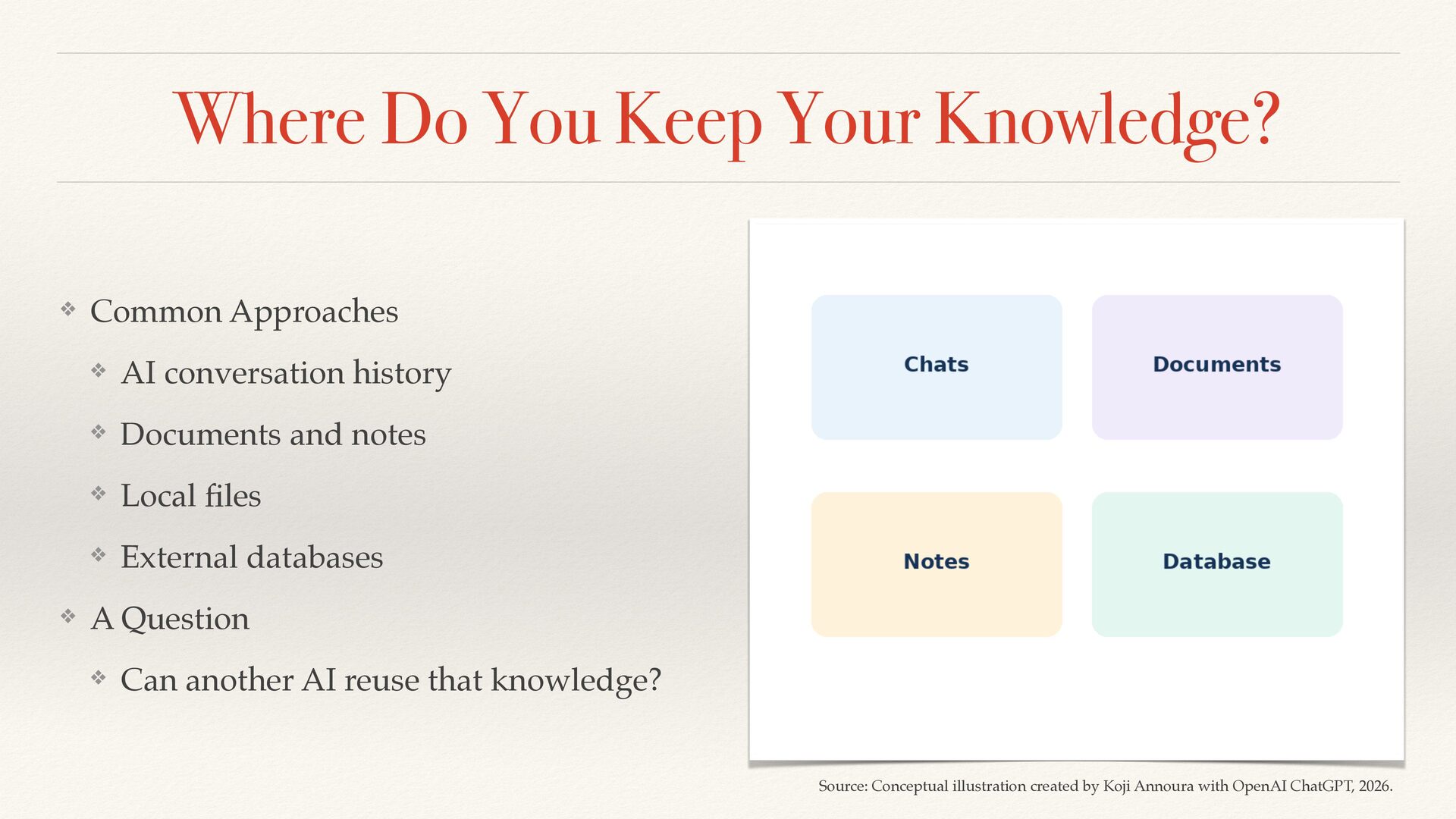
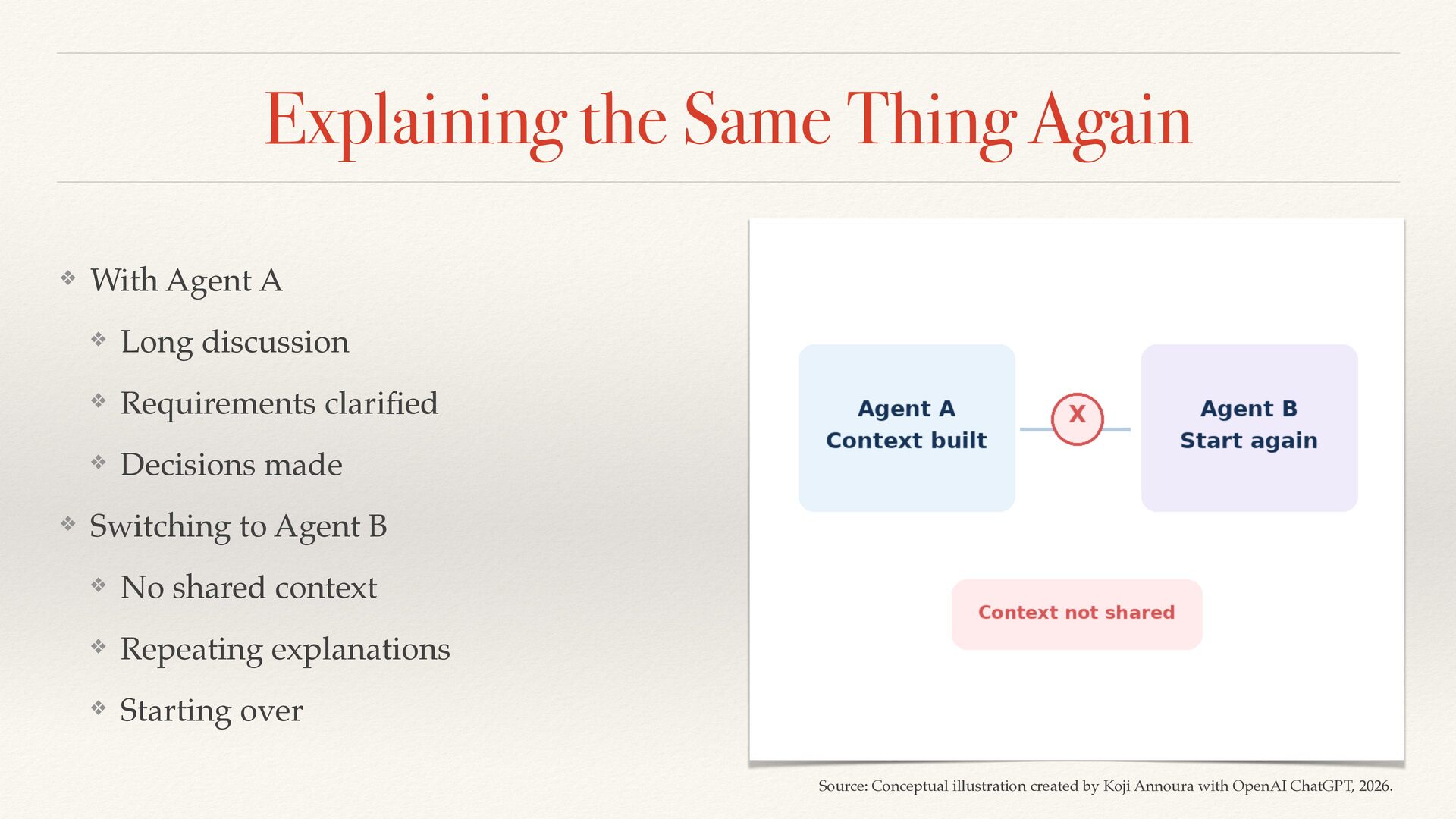
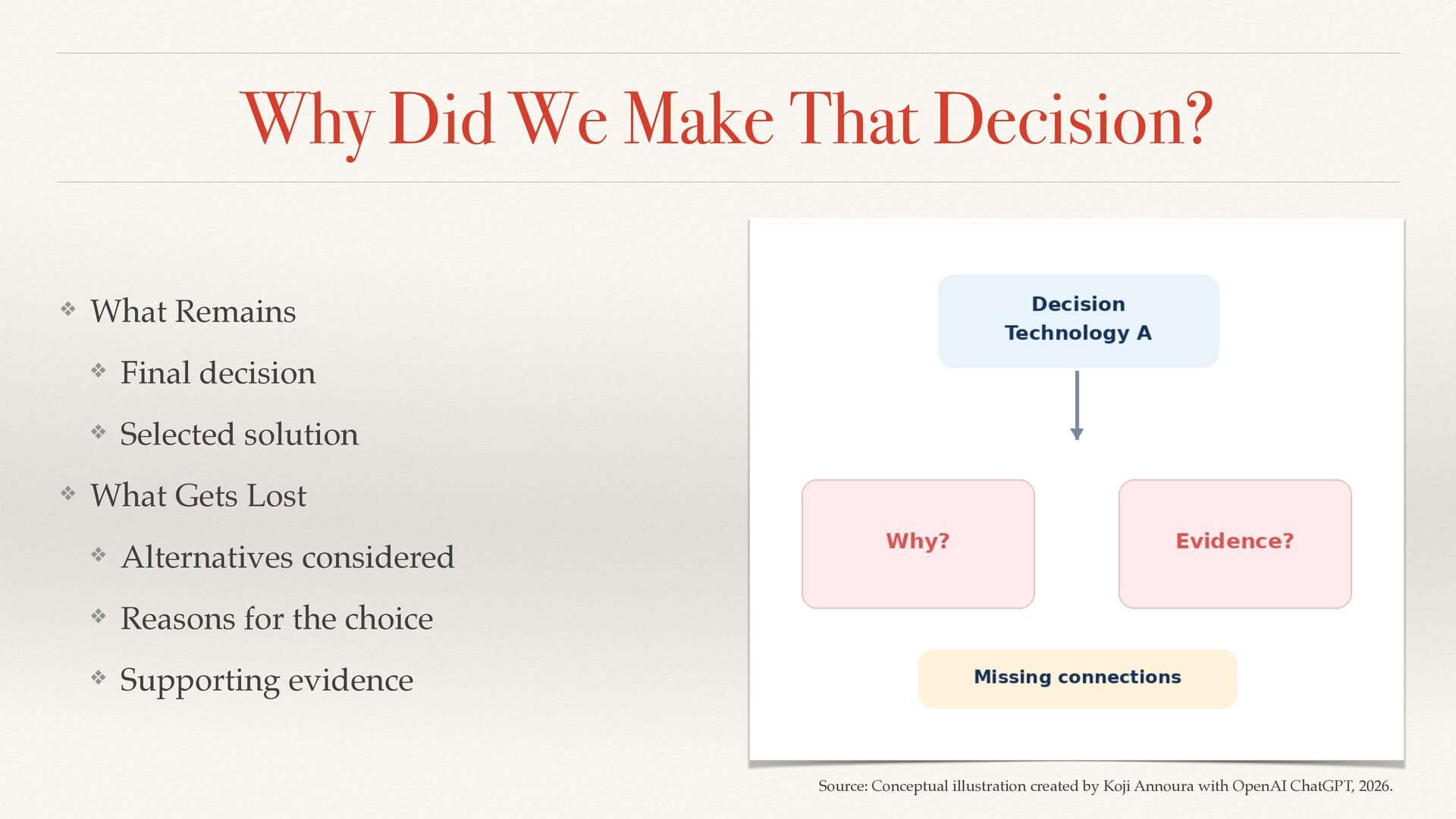
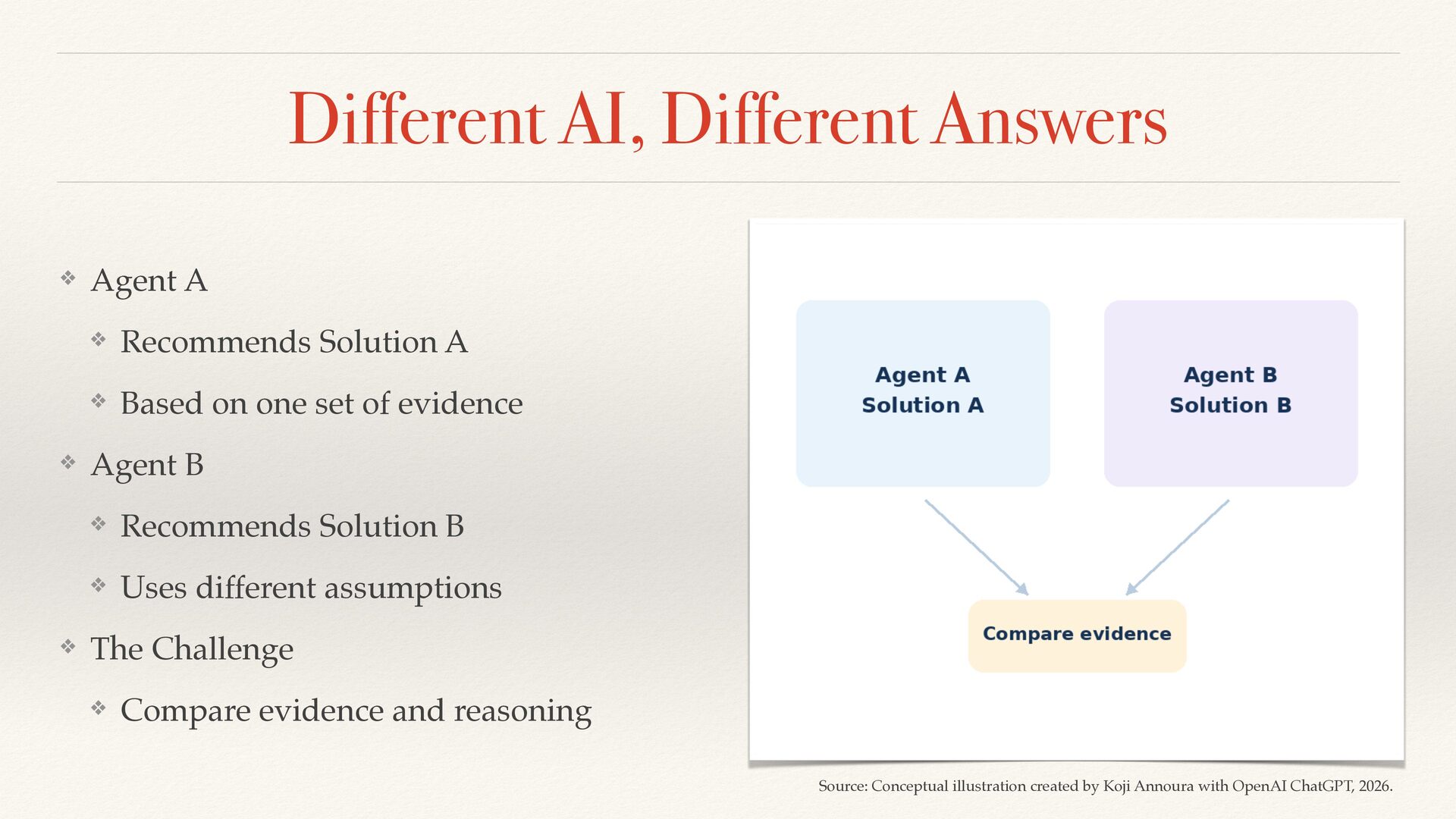
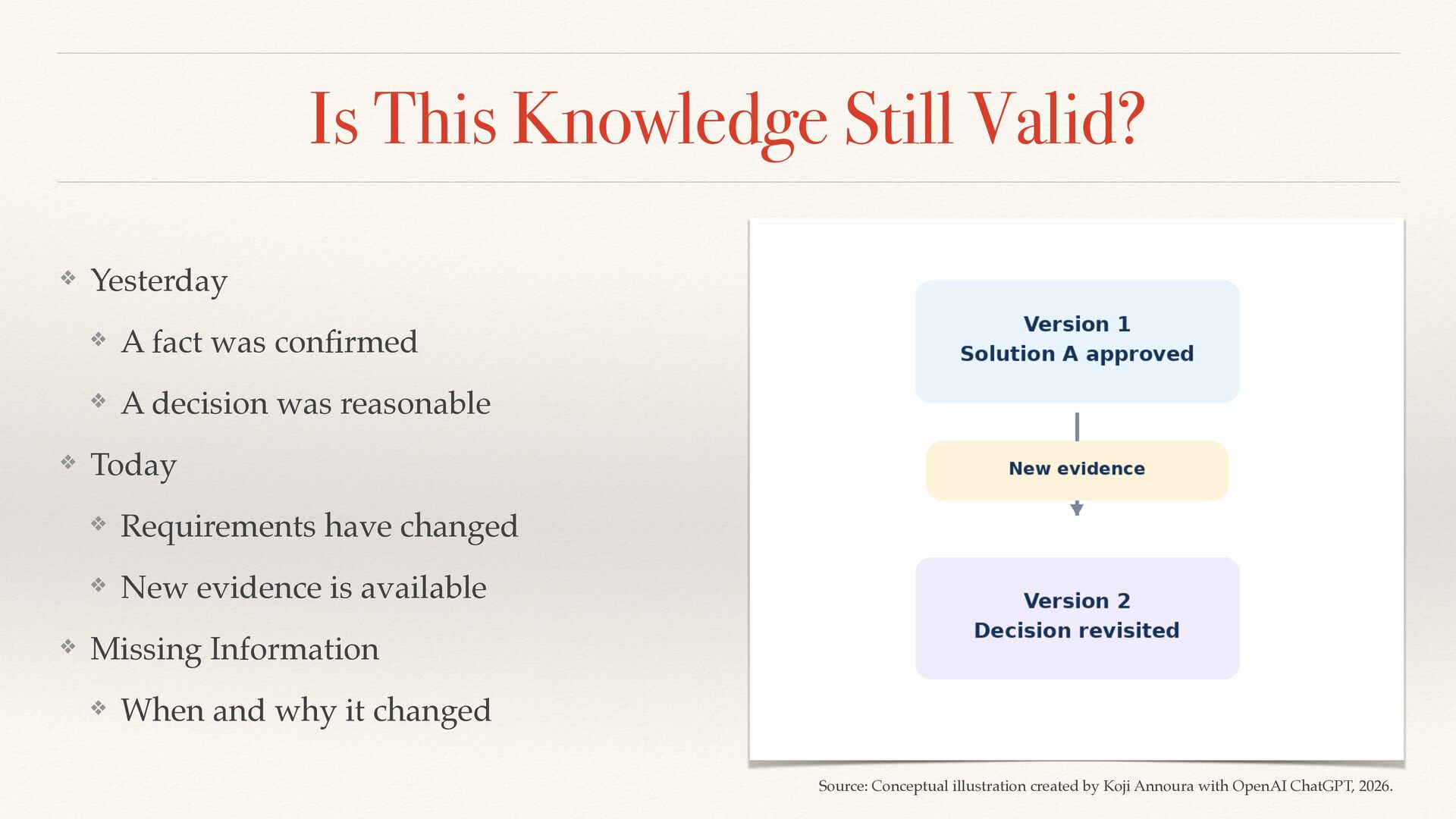
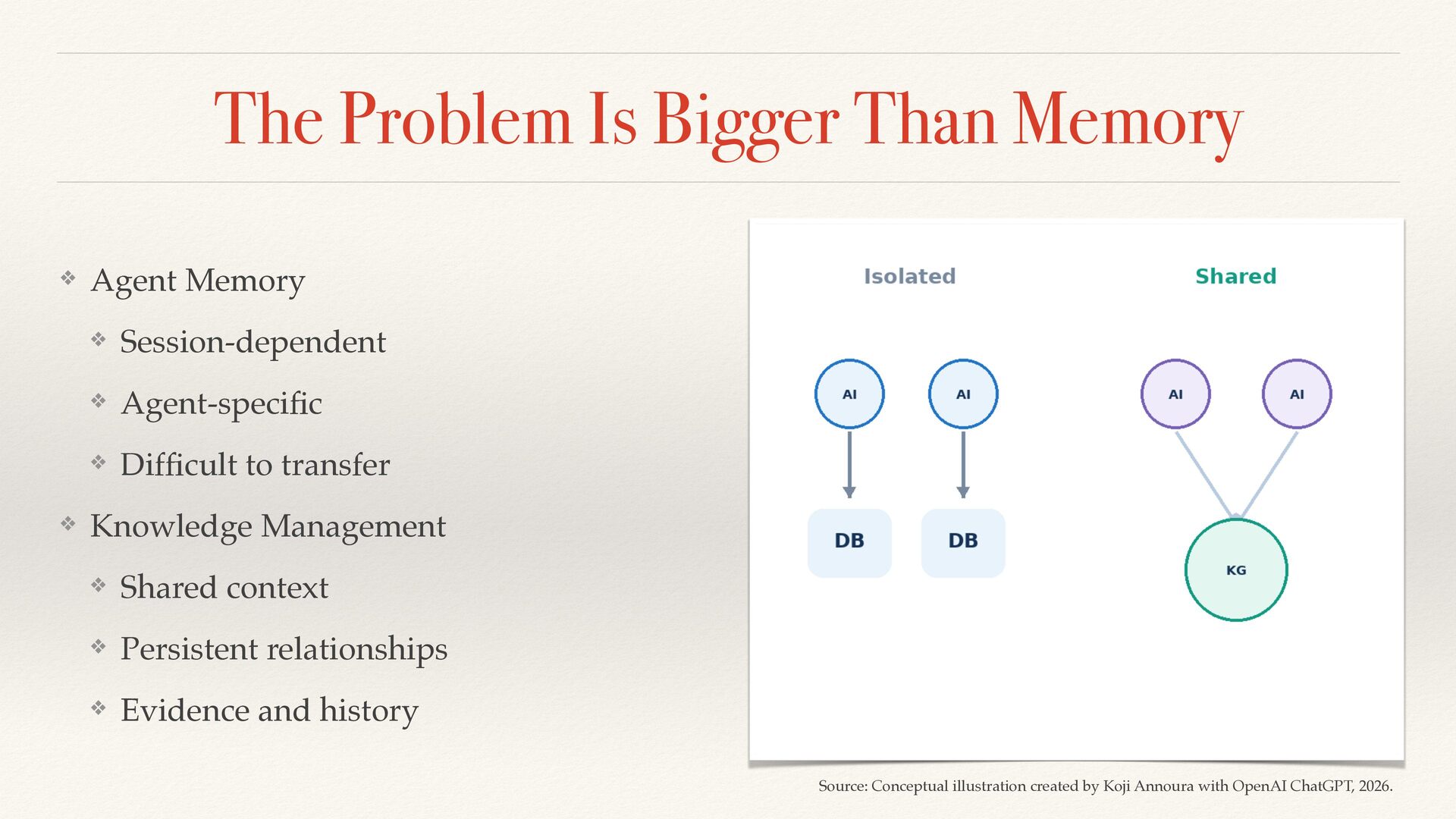
AI agents can remember conversations and tasks, but their context is often tied to a particular agent, model, or session. When we switch to another AI tool, we may need to explain the same things again. Decisions, supporting evidence, and the reasons behind them can also be lost.
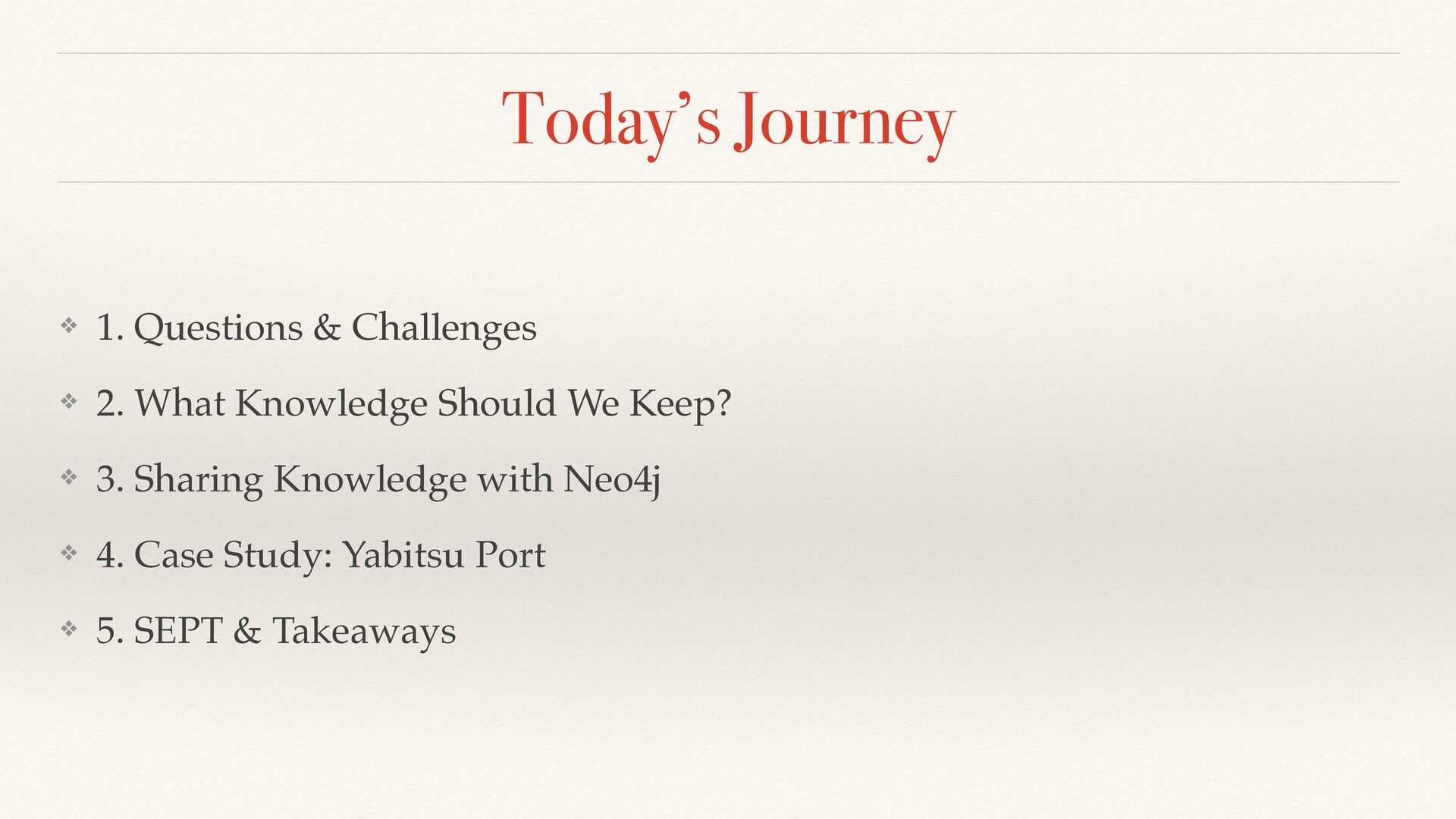
This talk explores a broader question: What knowledge should we preserve, and how can we share it across different AI agents?
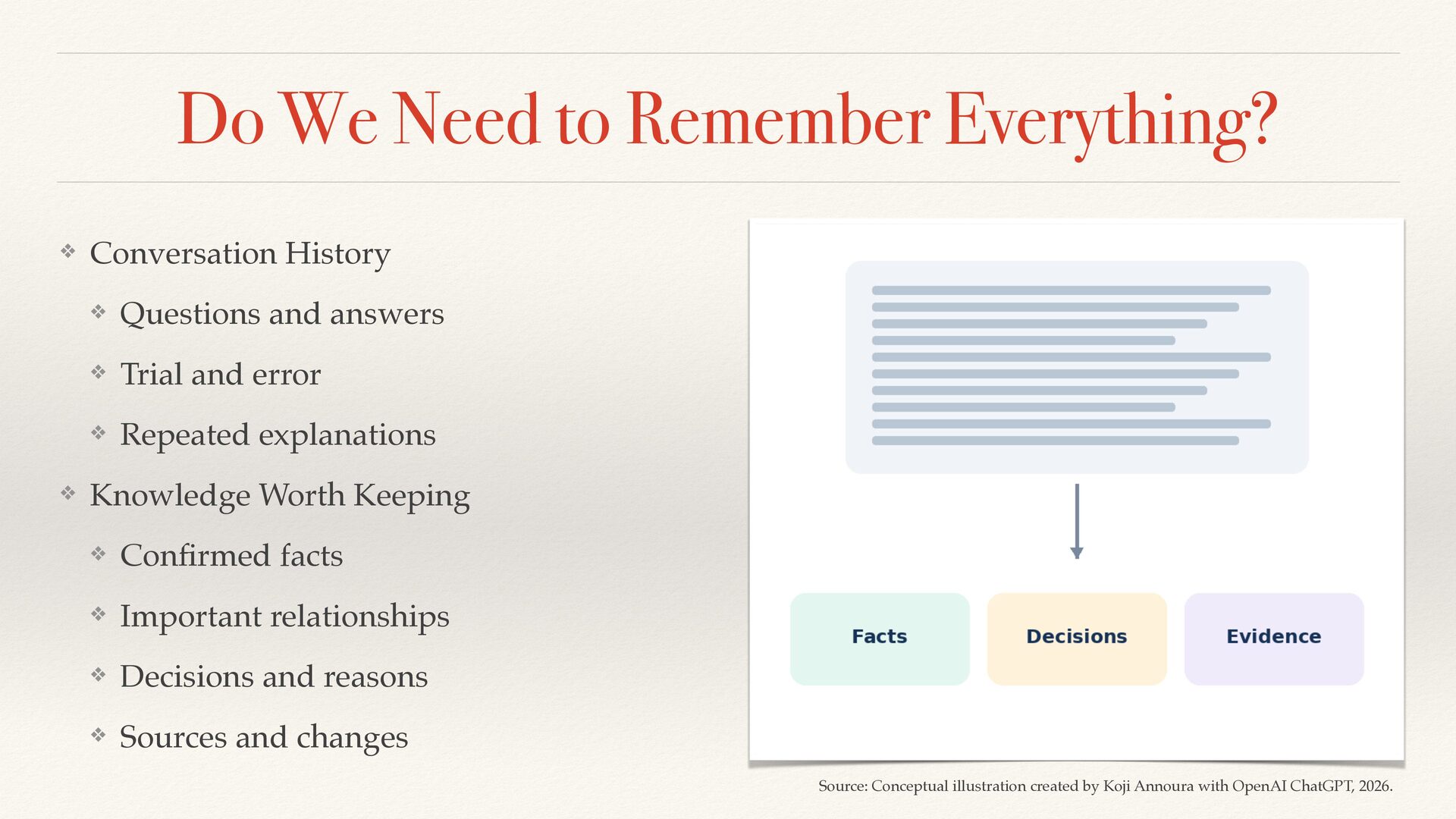
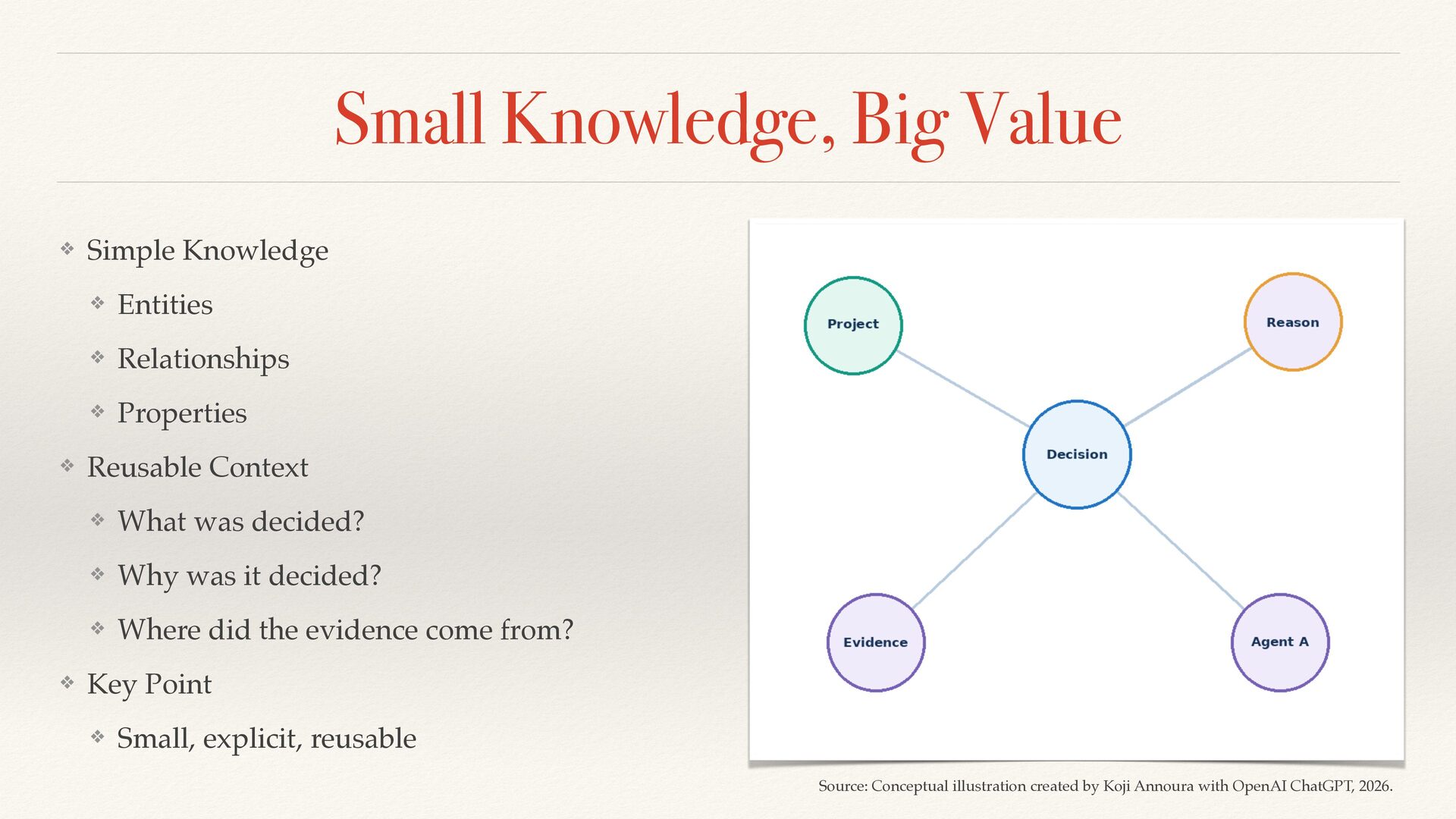
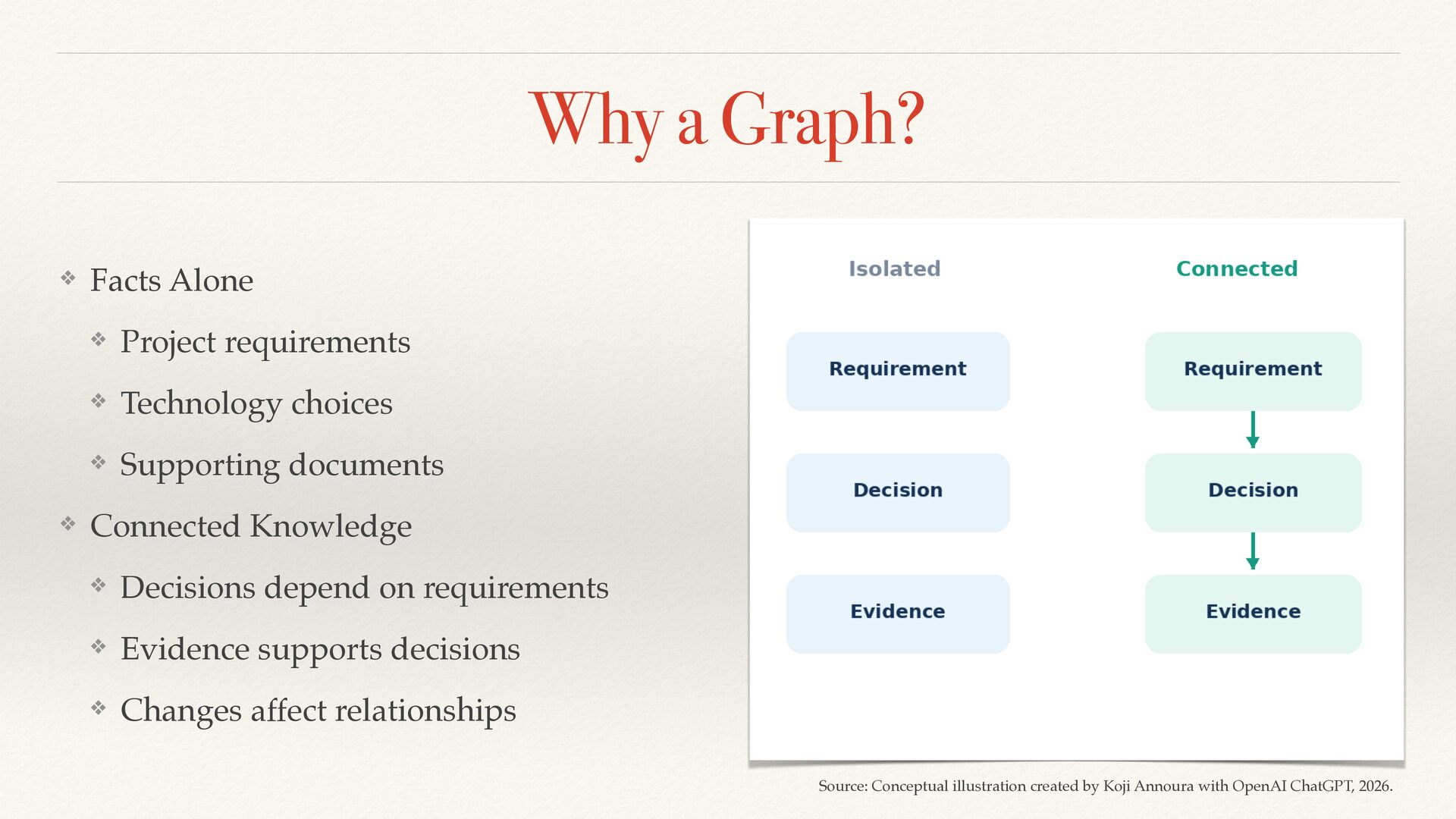
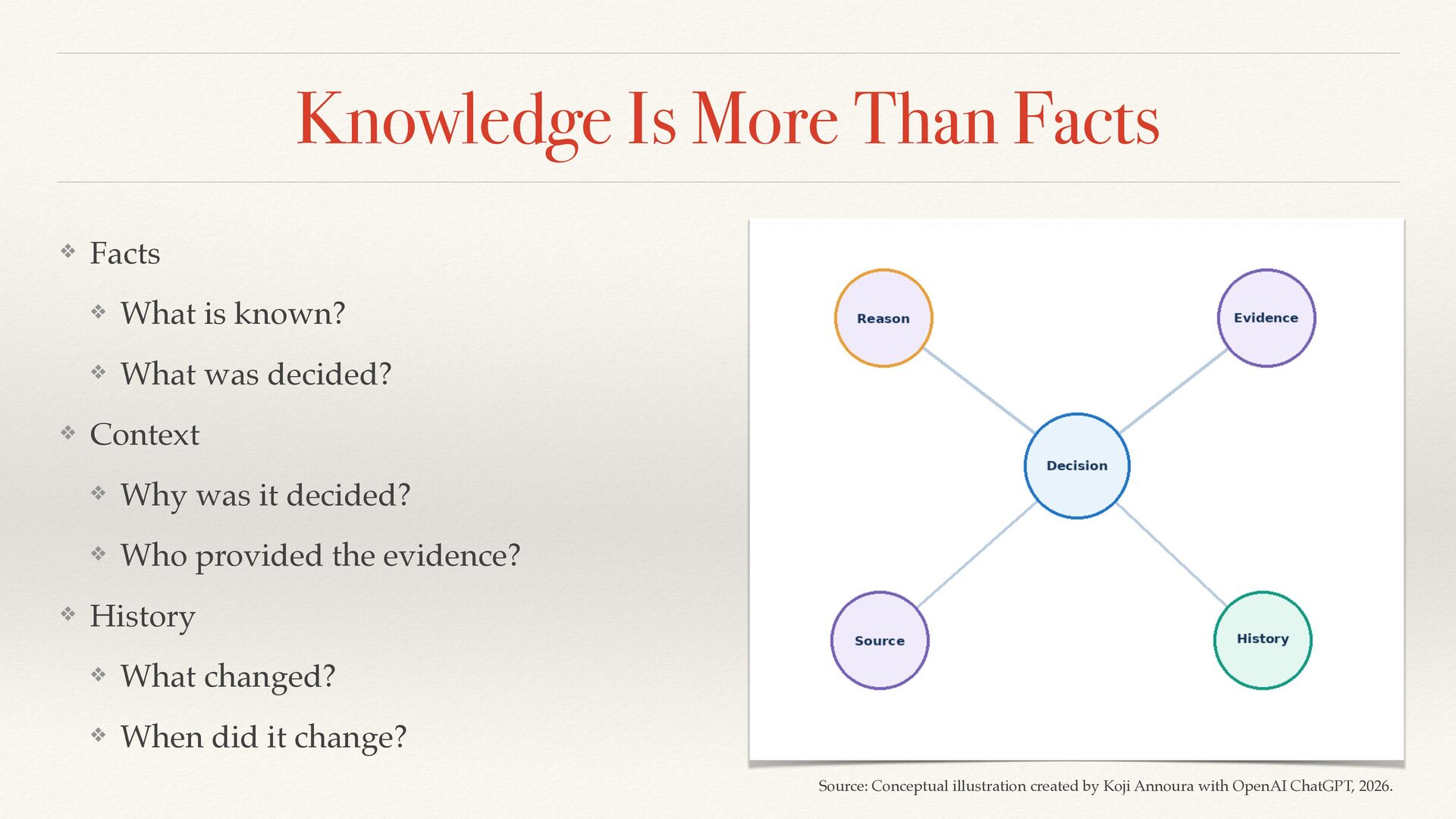
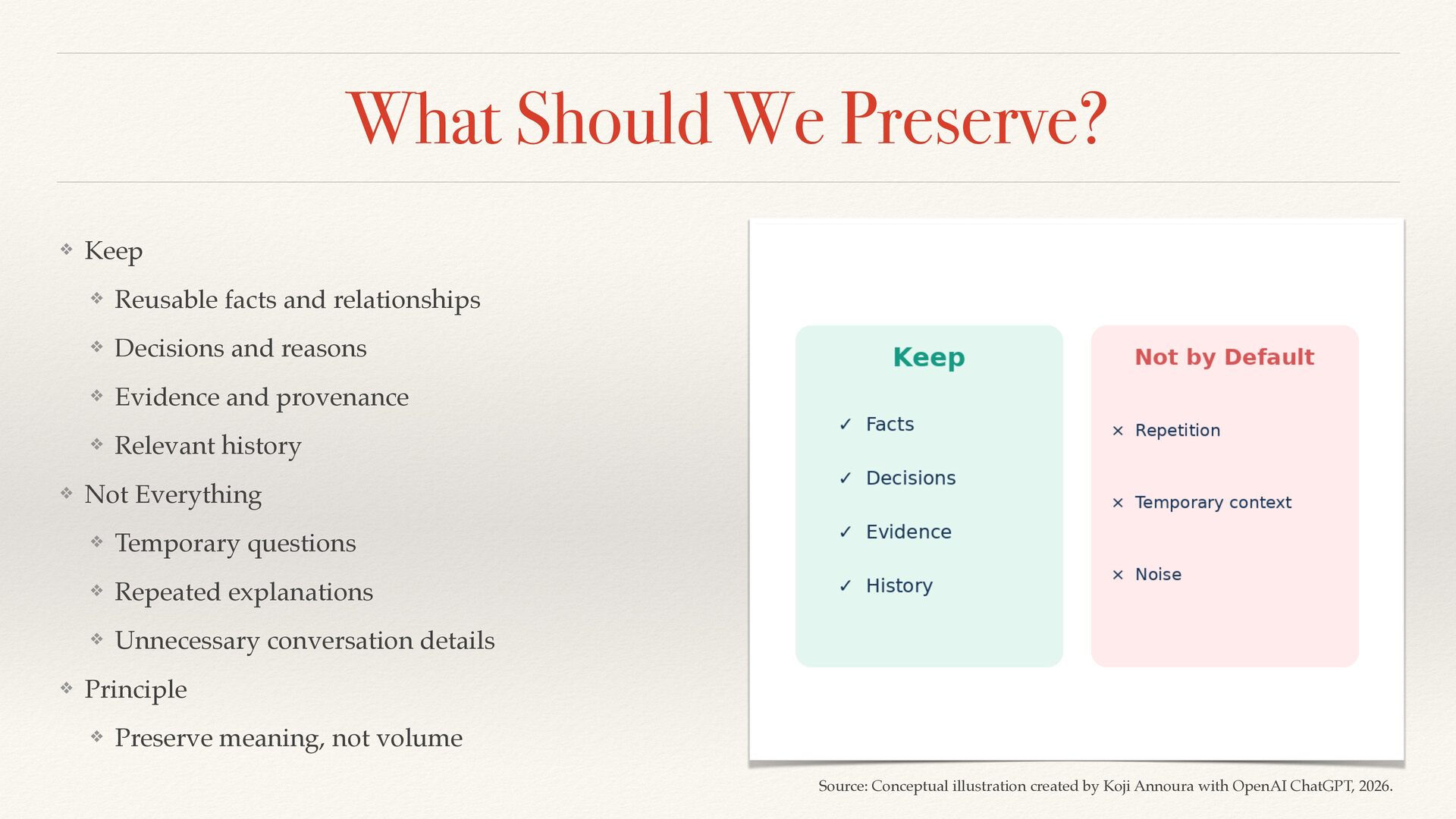
Rather than storing entire conversation histories, the focus is on preserving useful knowledge: facts, relationships, decisions, evidence, and relevant changes over time. Knowledge graphs provide a way to connect this information while keeping its context and sources visible.
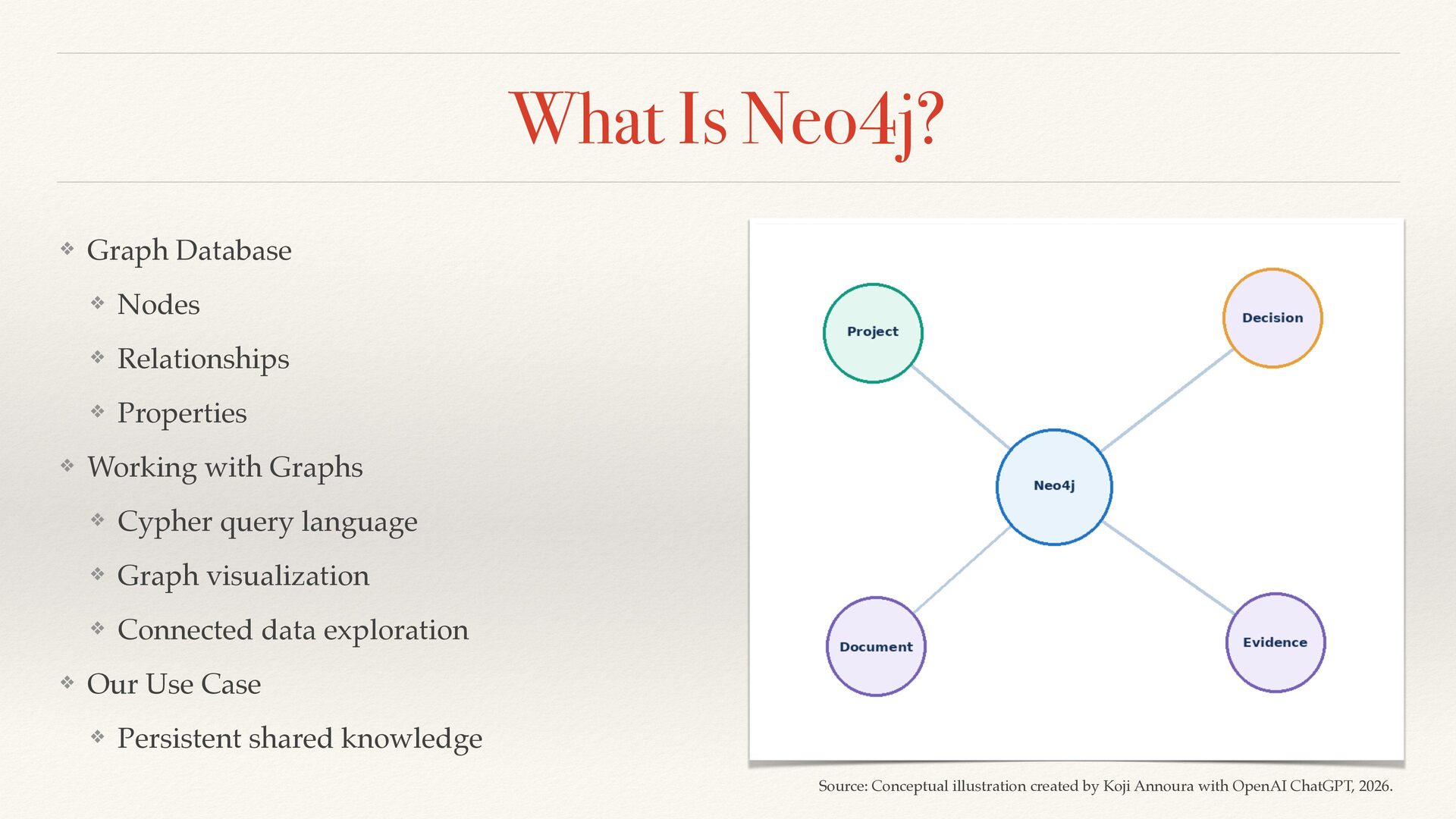
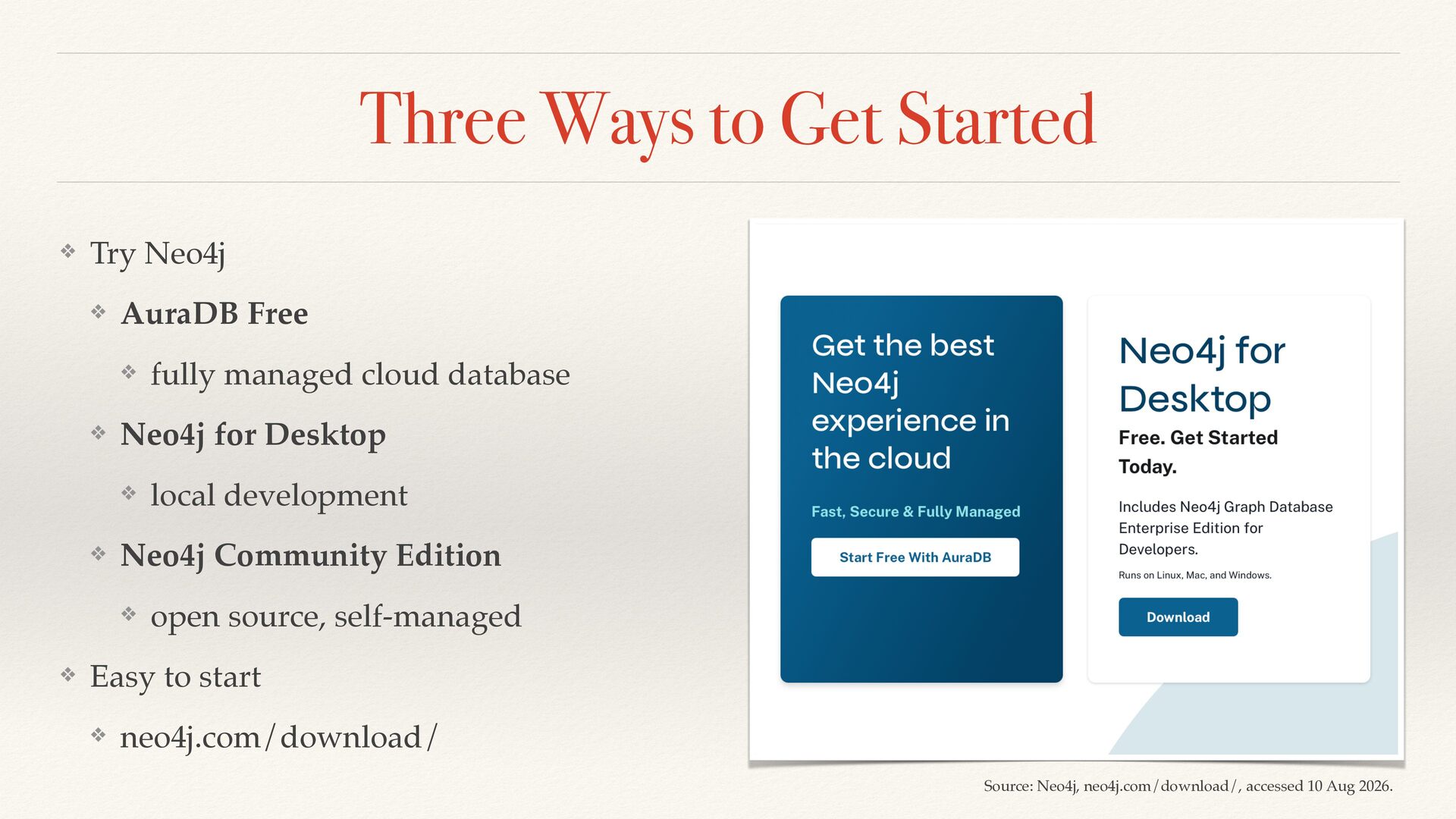
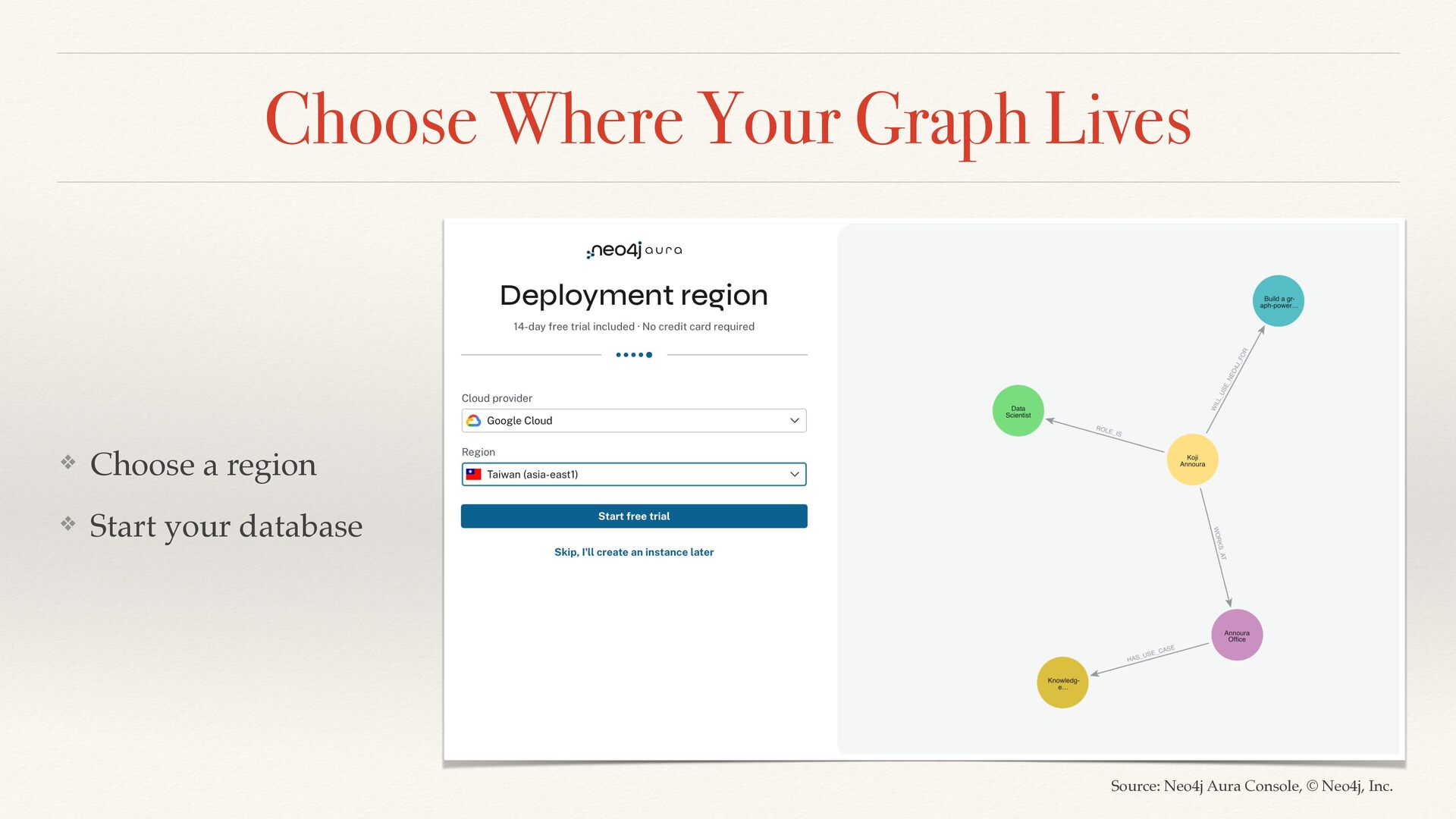
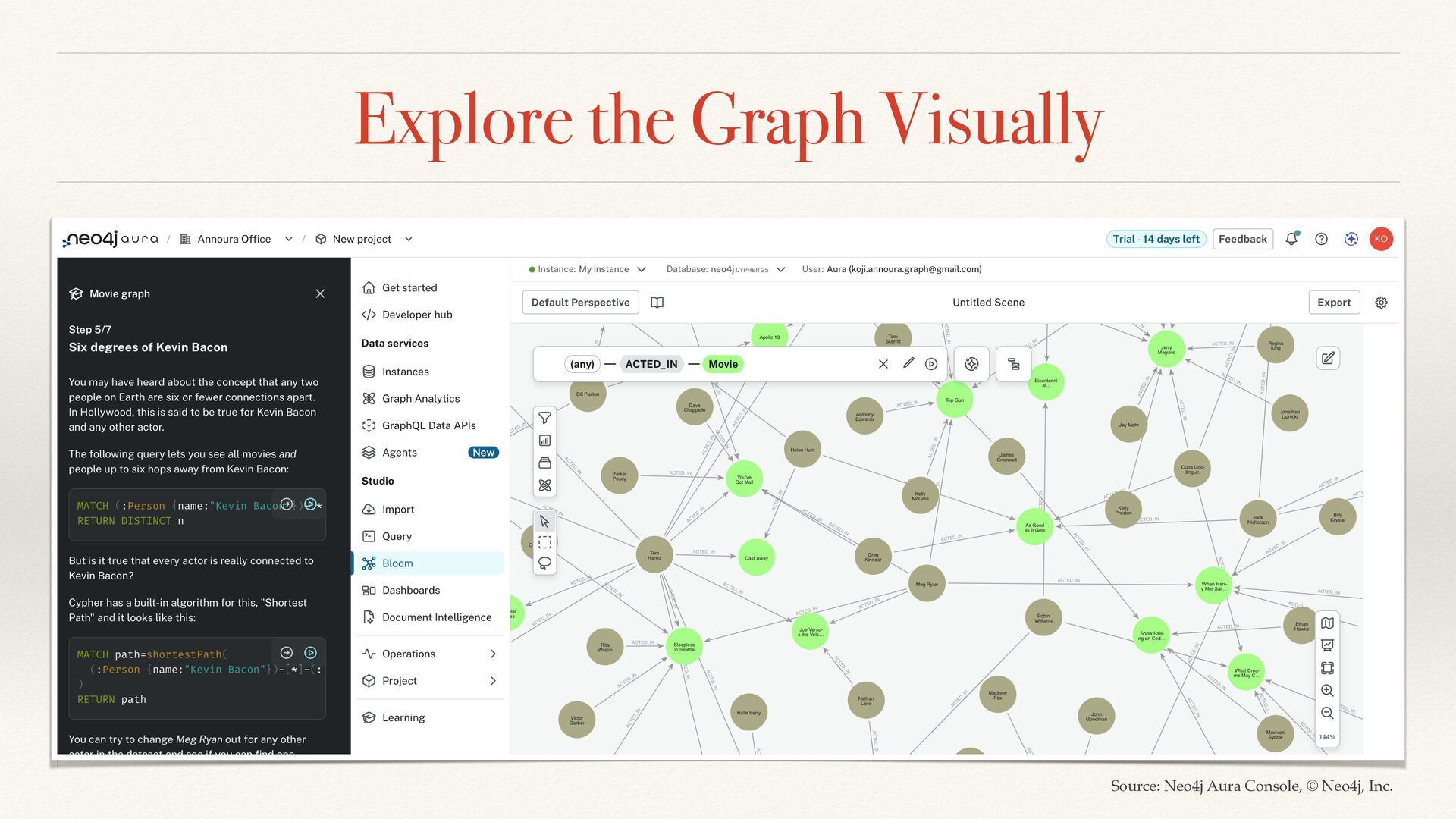
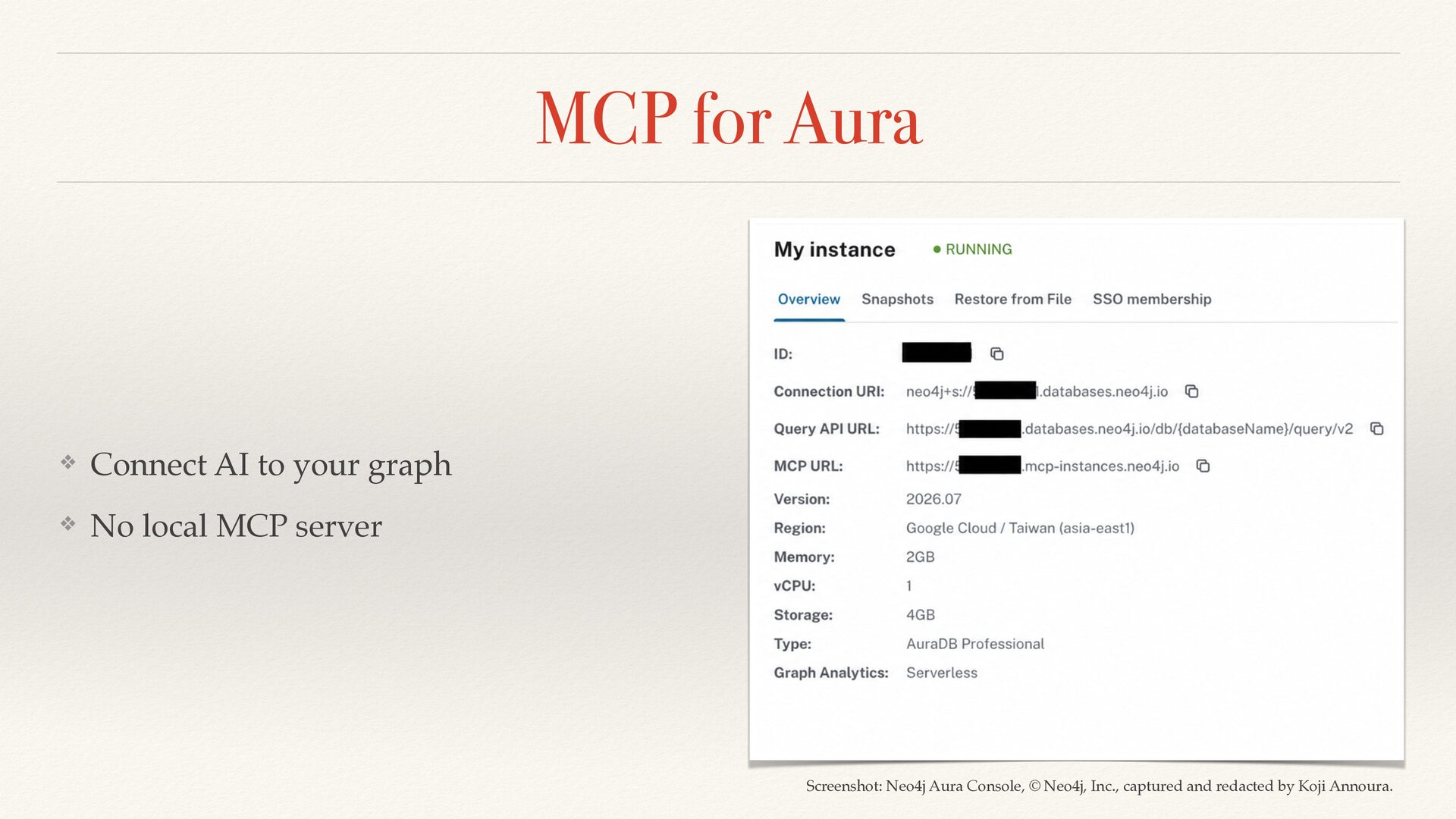
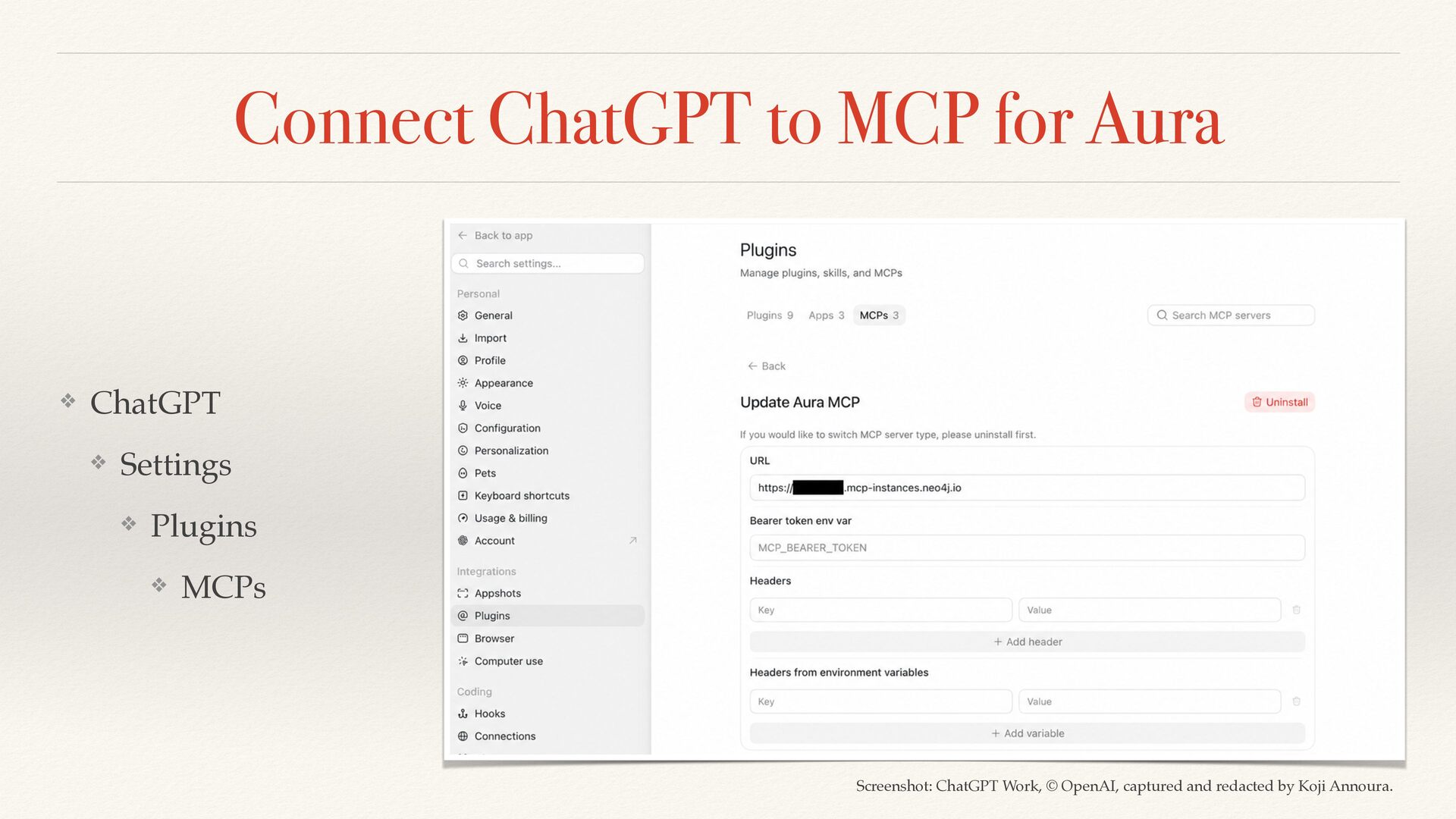
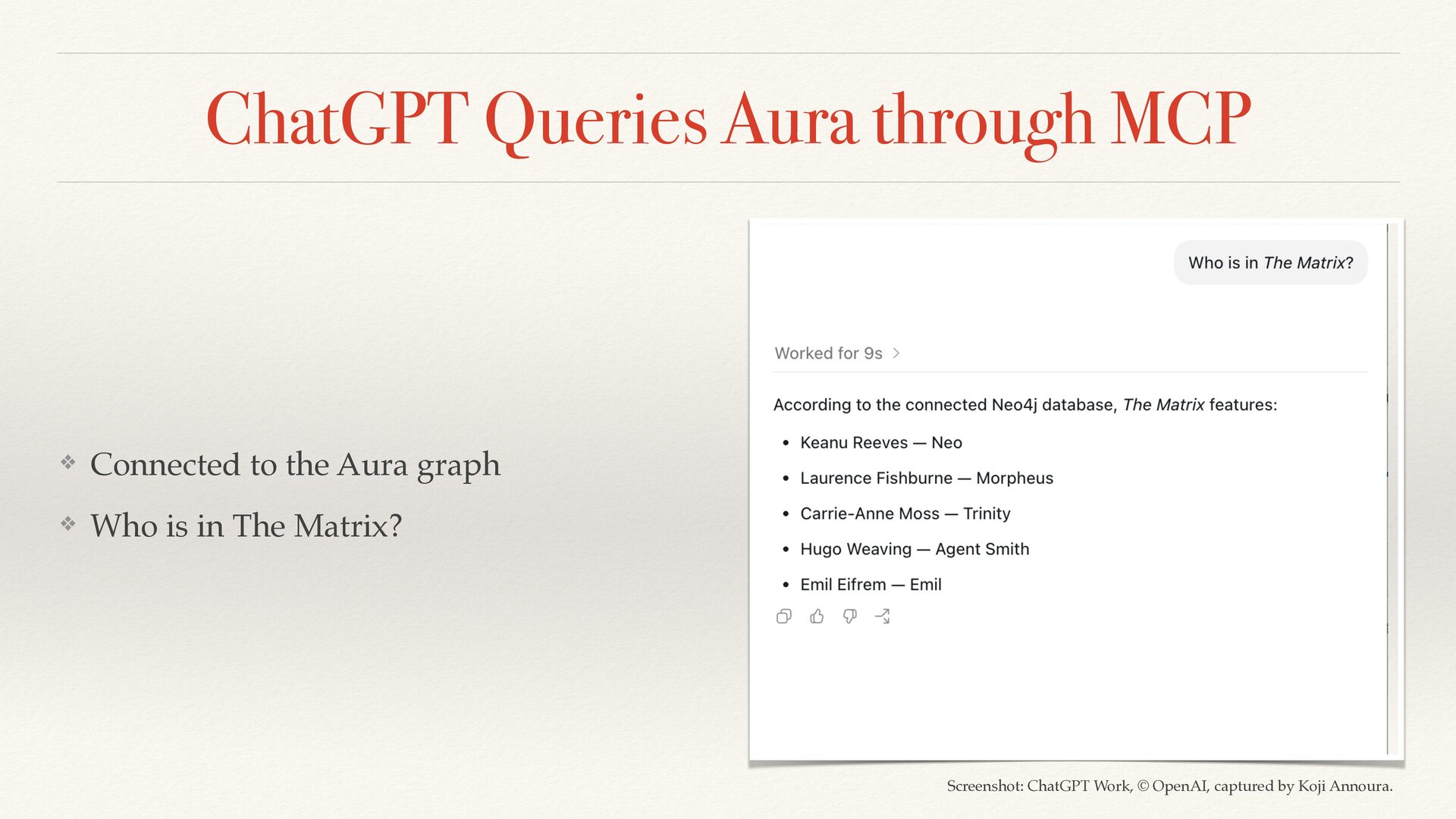
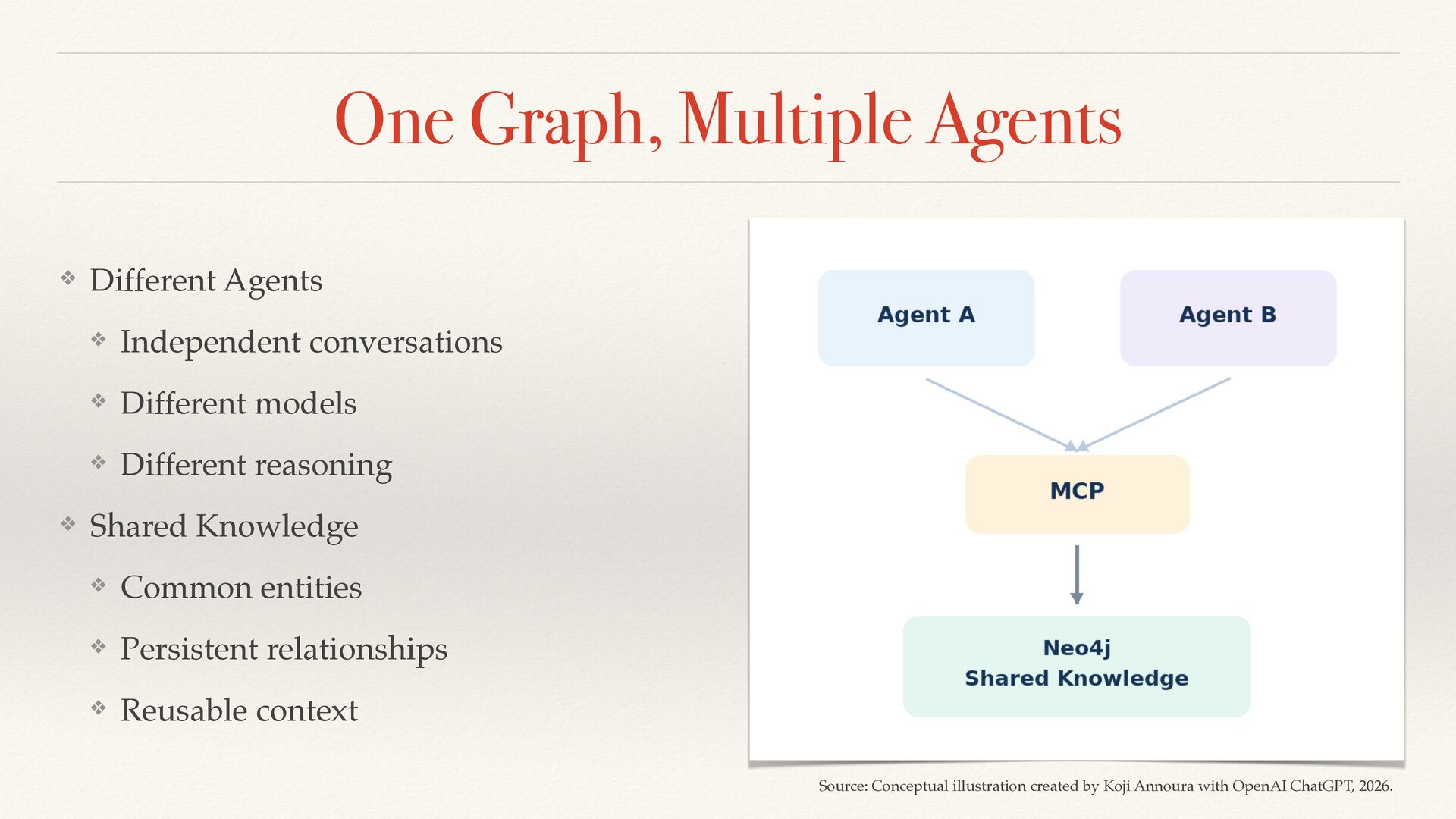
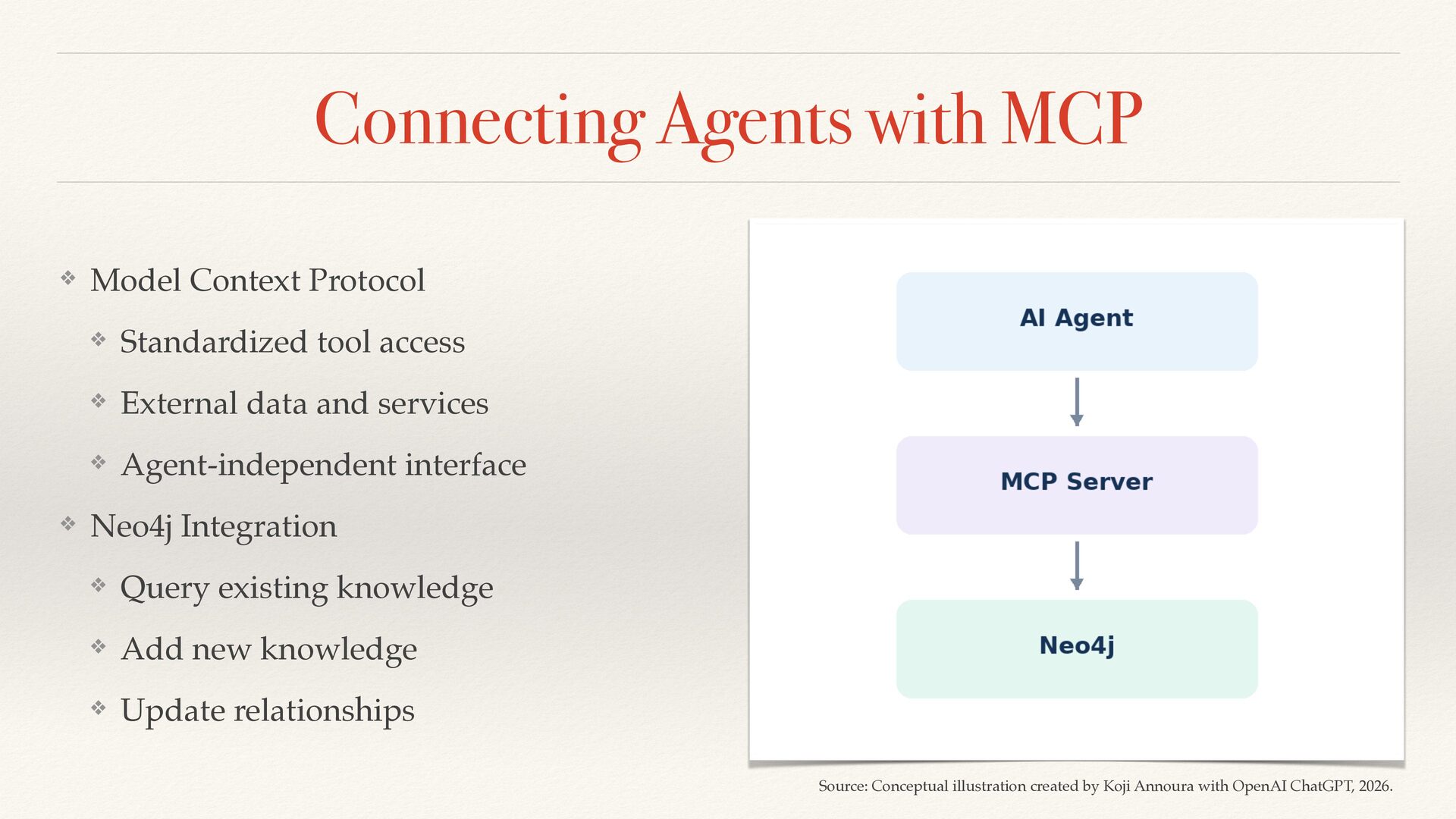
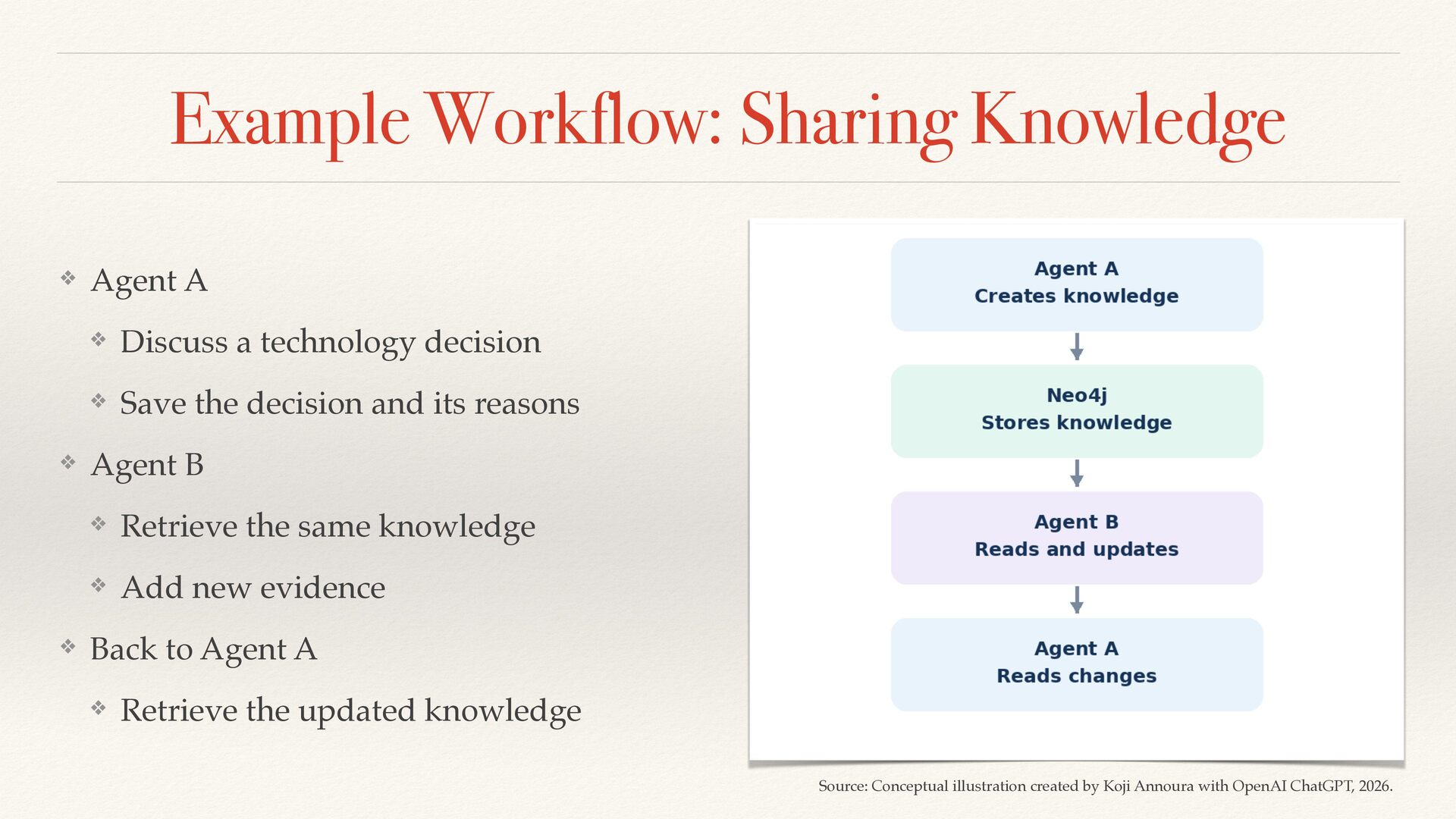
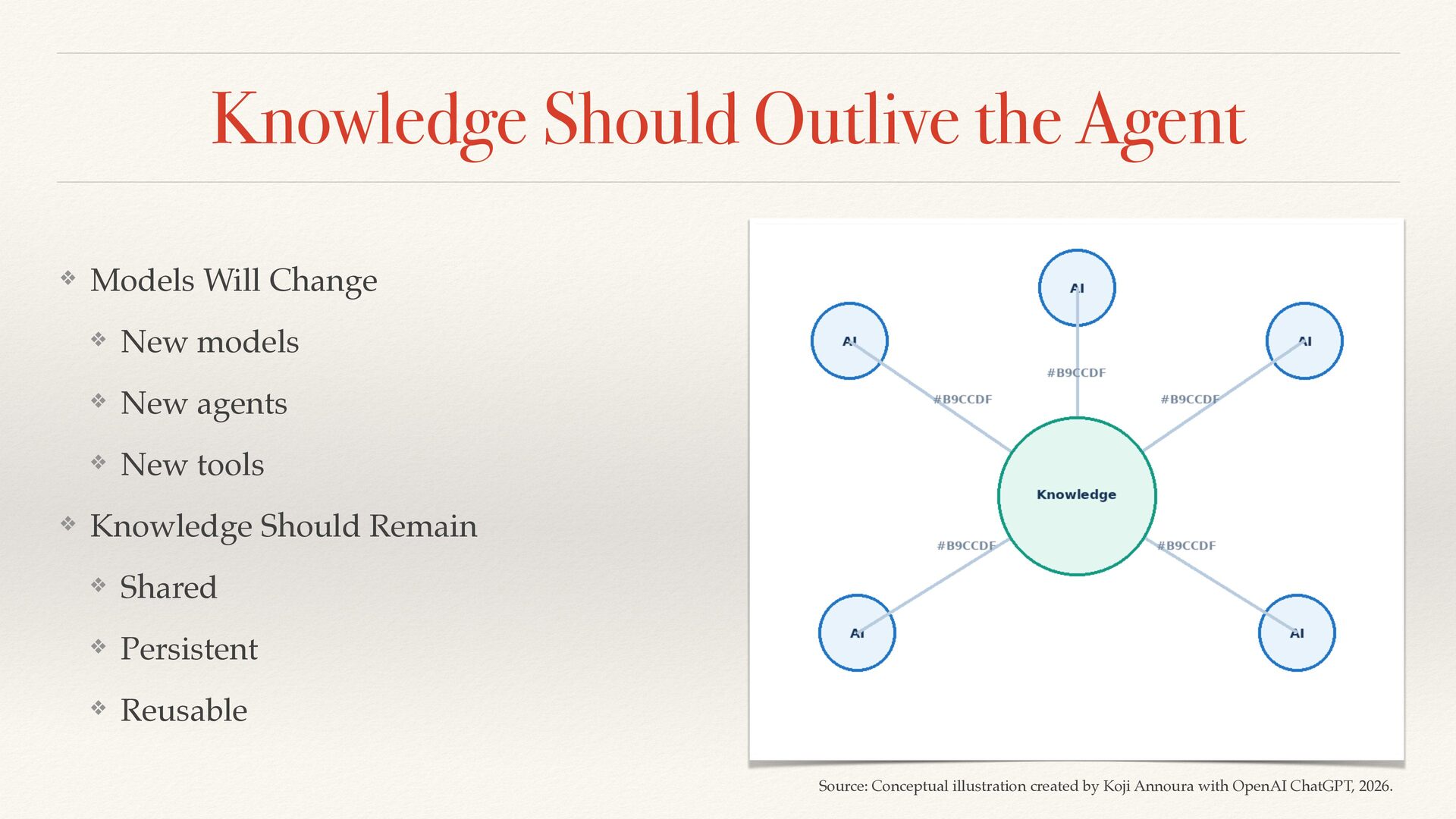
The presentation introduces Neo4j as a shared knowledge store and shows how ChatGPT can access a Neo4j Aura database through MCP (Model Context Protocol). It also explores how multiple agents can work with the same persistent knowledge while maintaining independent conversations and reasoning.
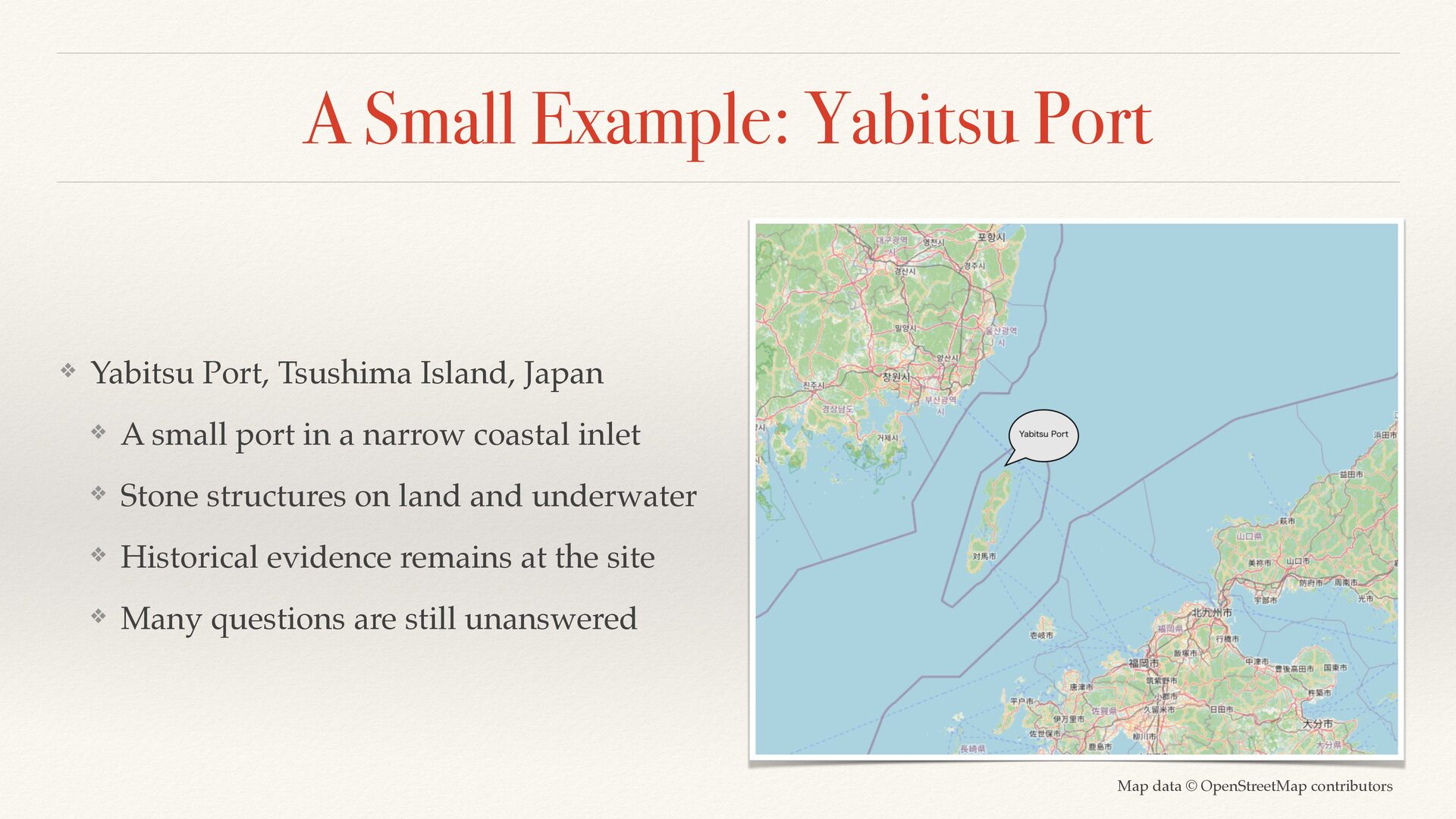
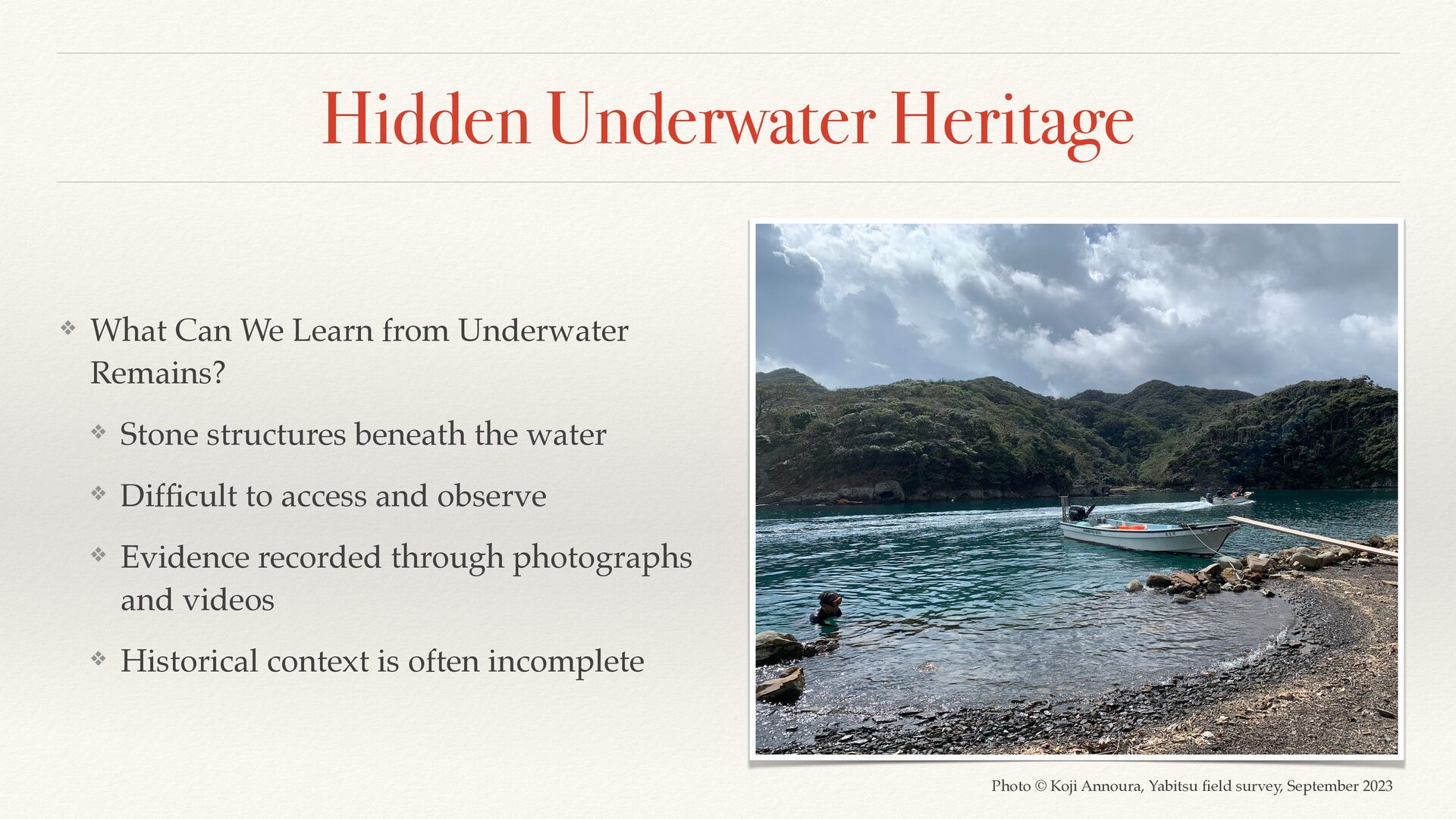
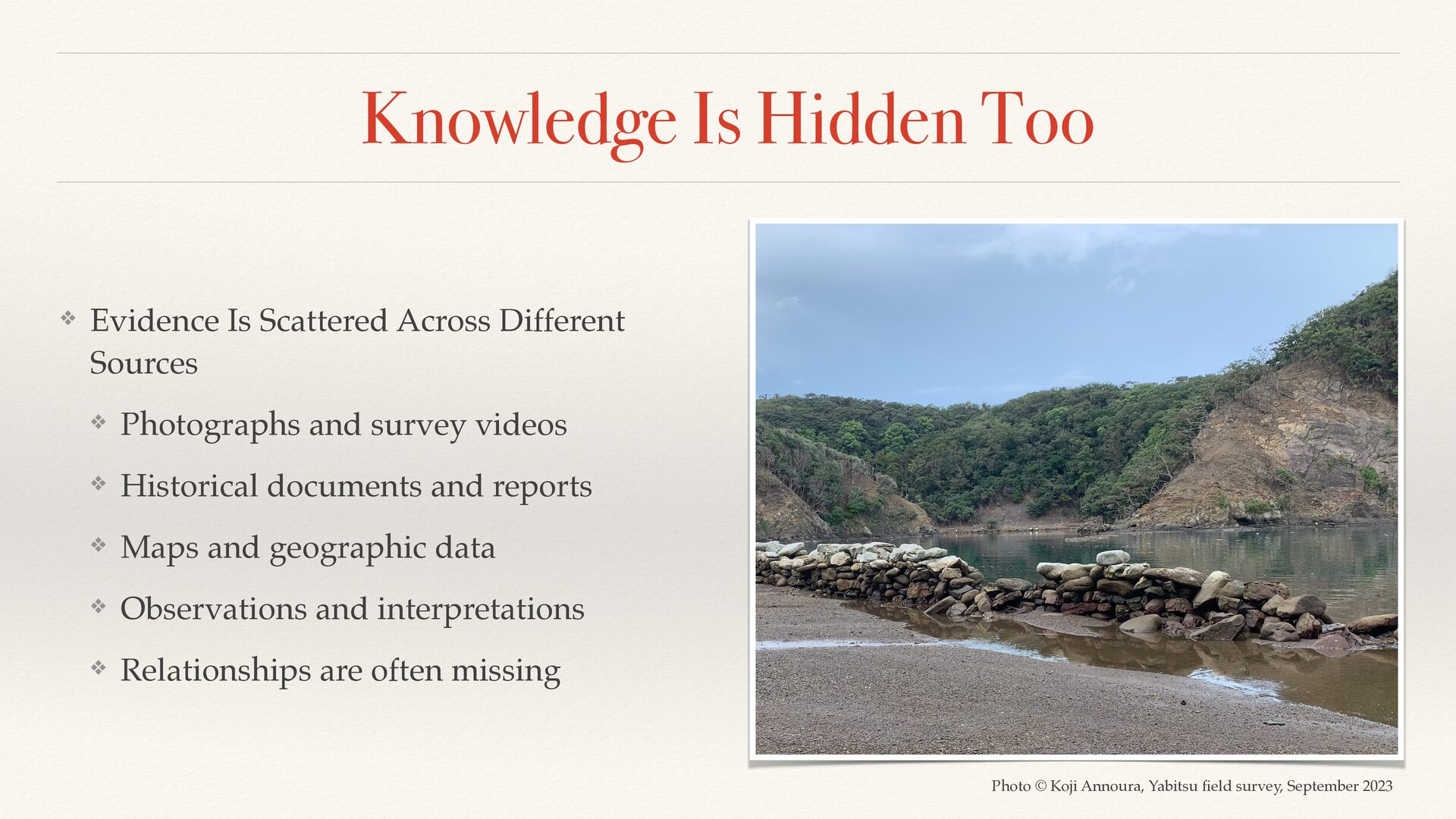
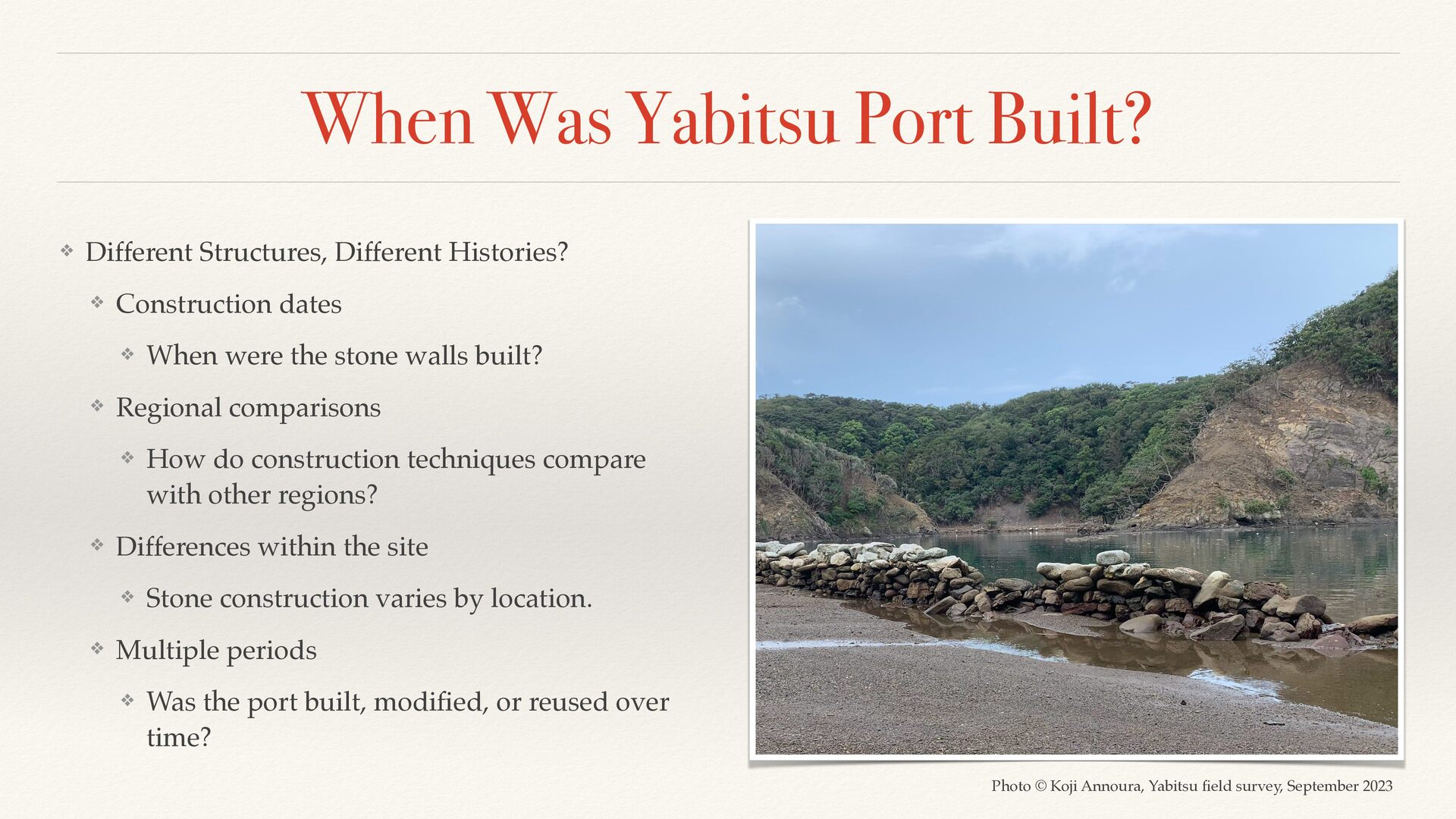
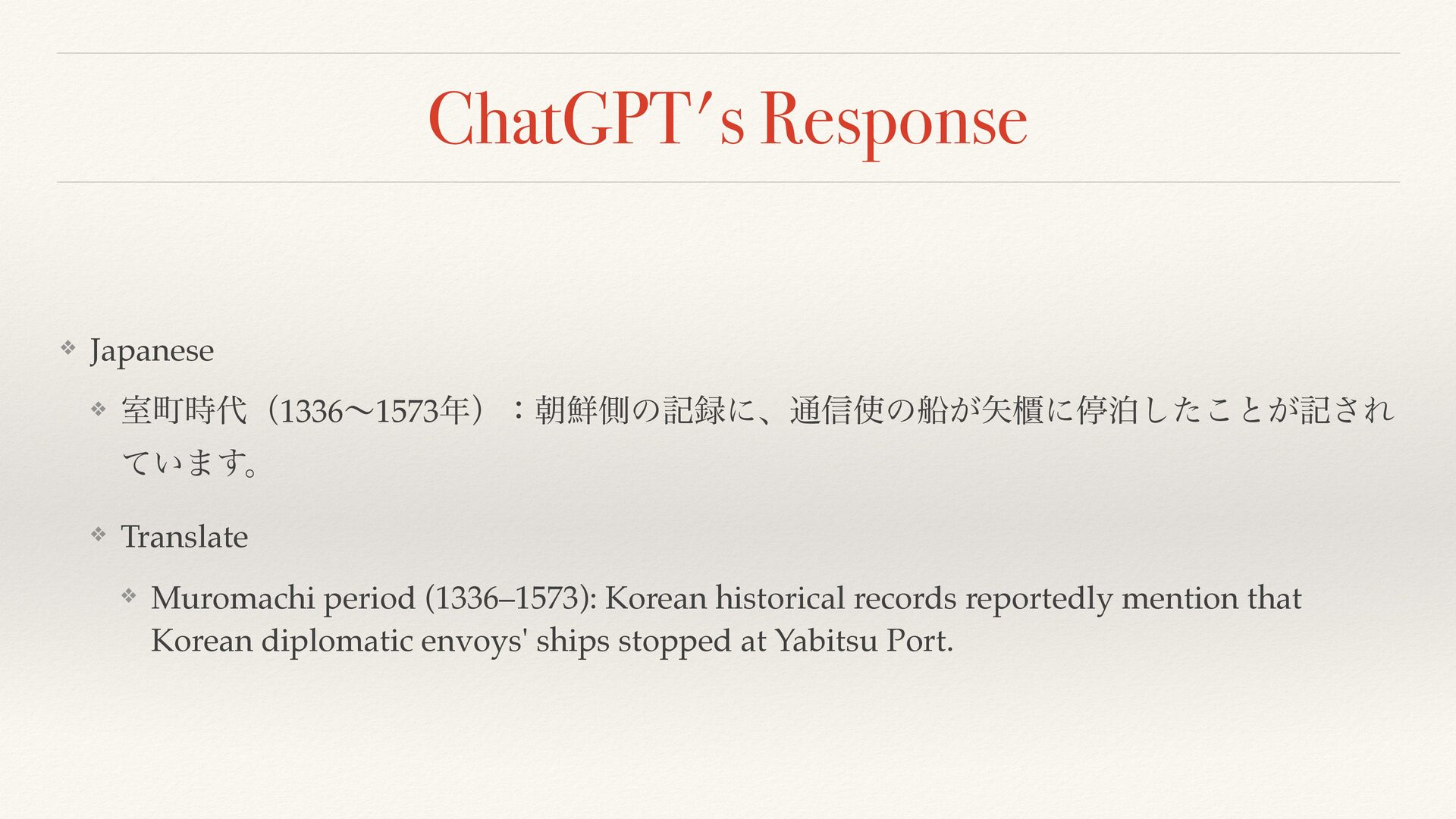
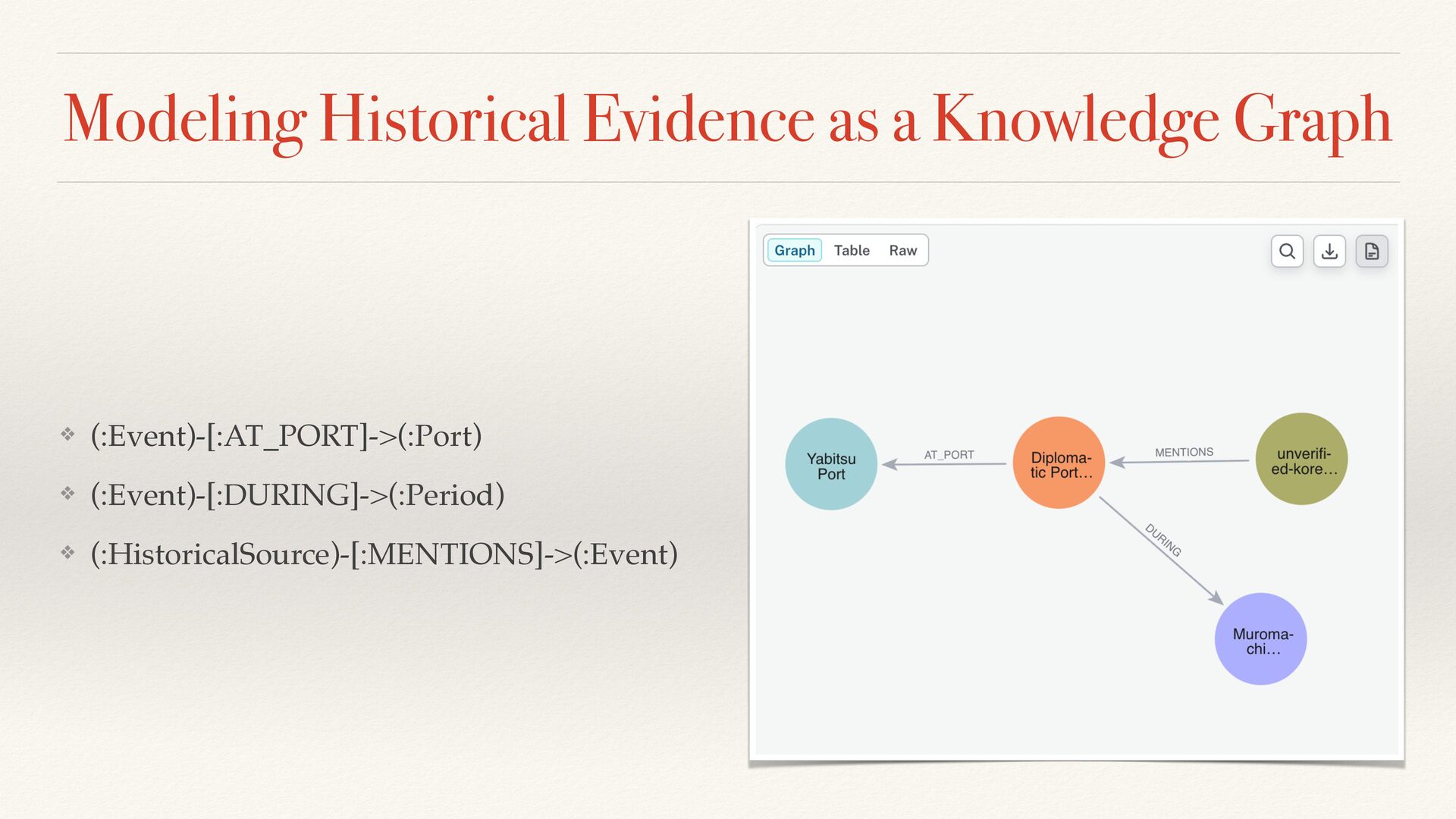
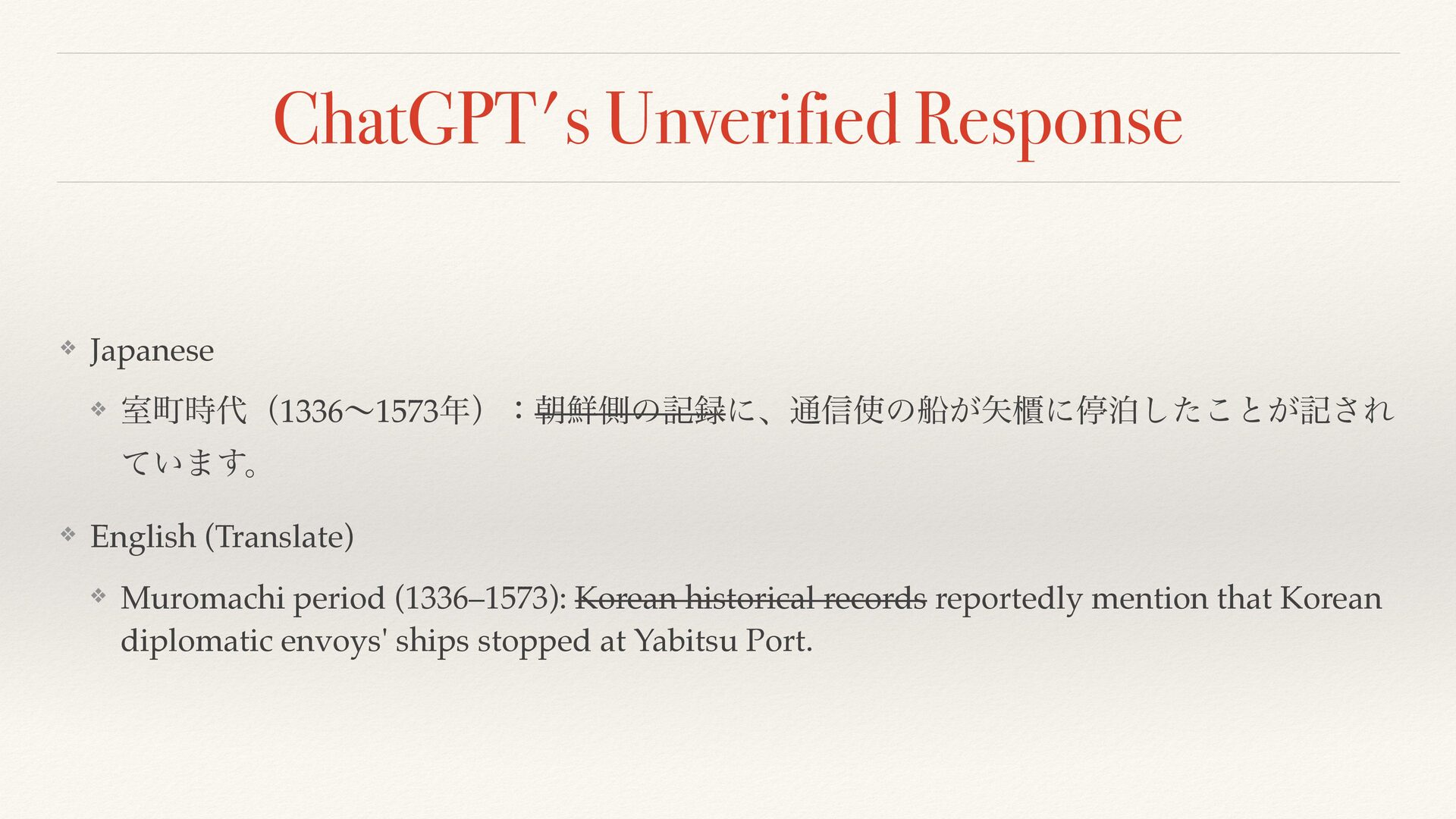
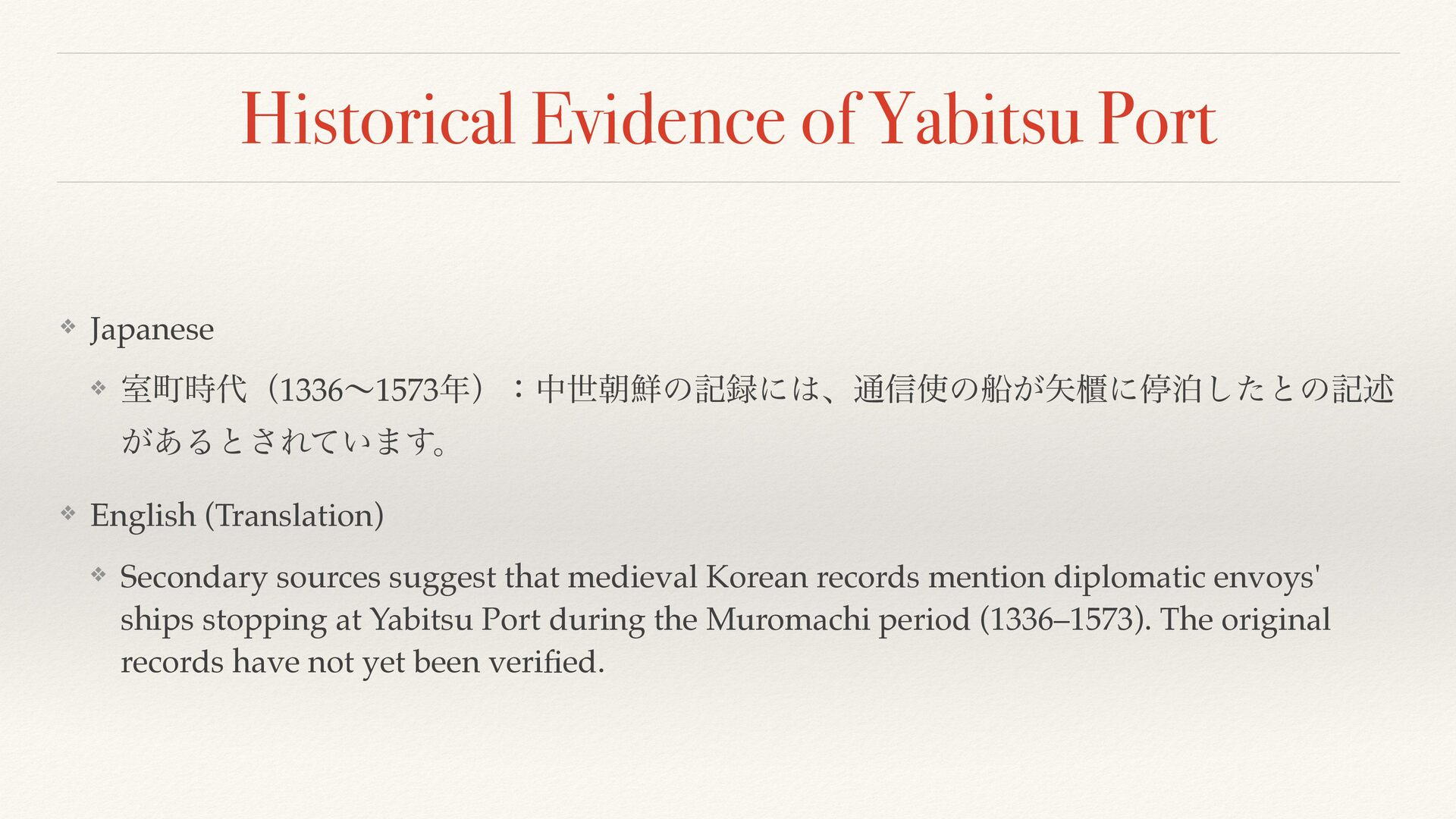
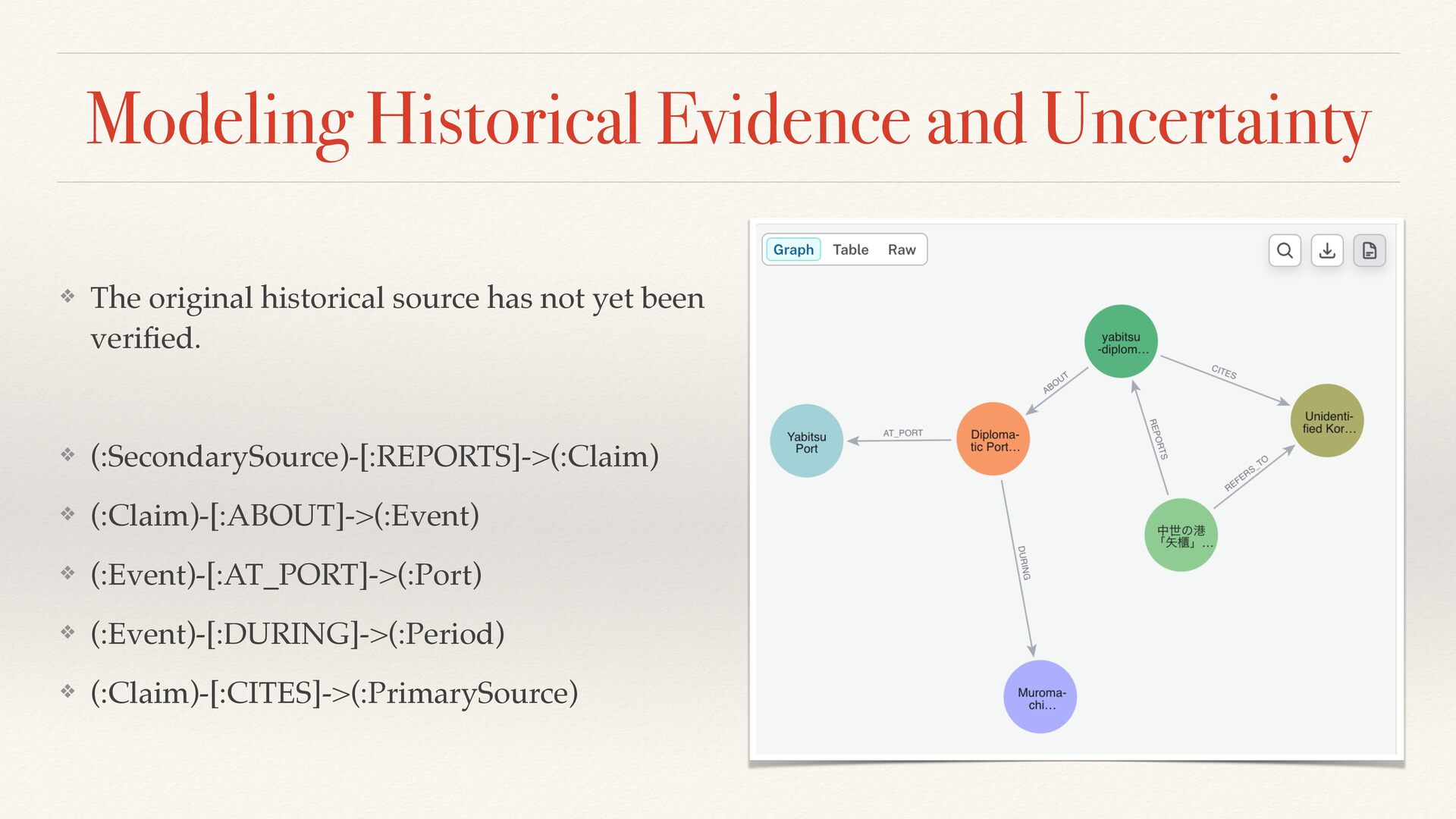
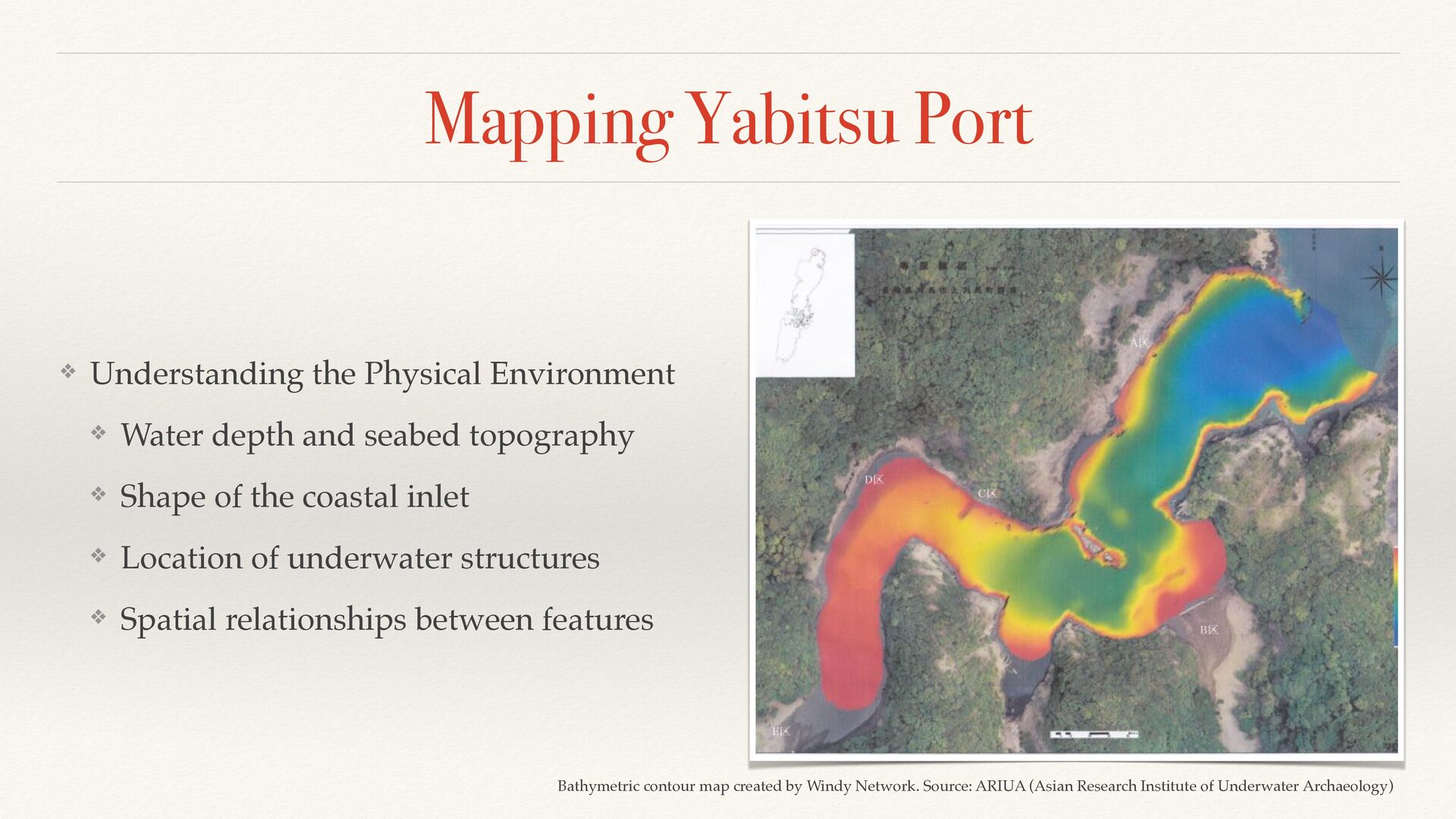
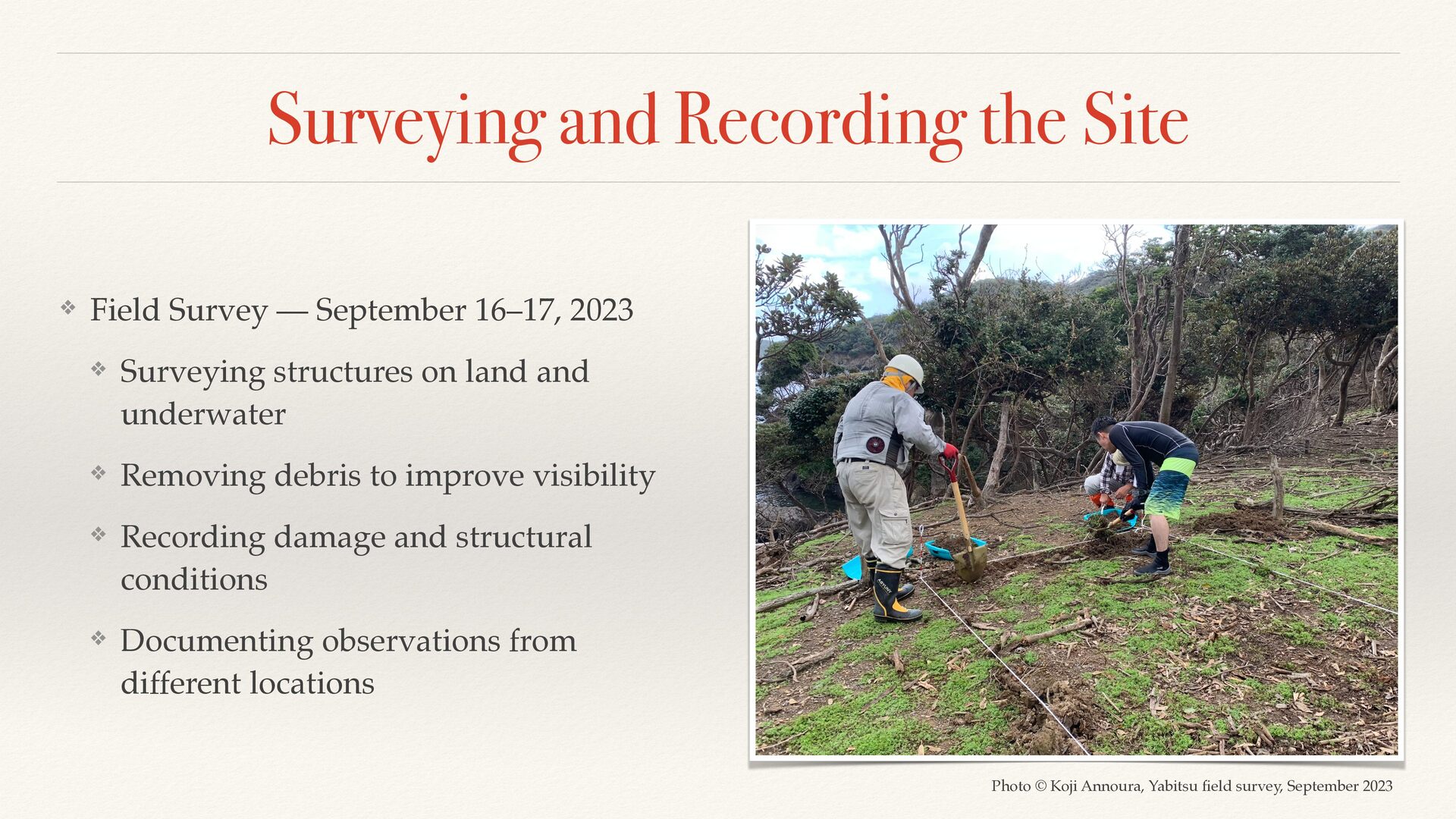
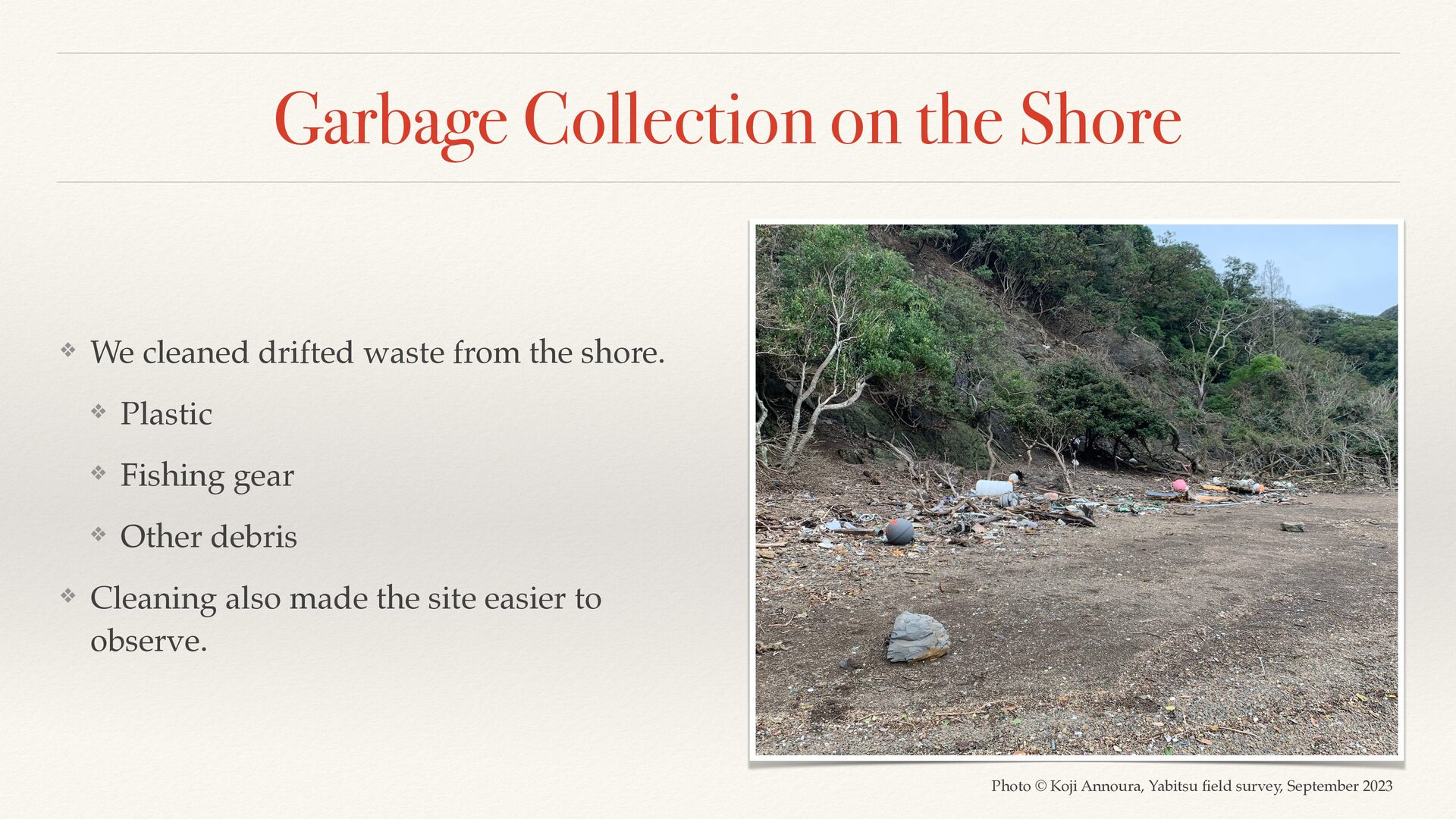
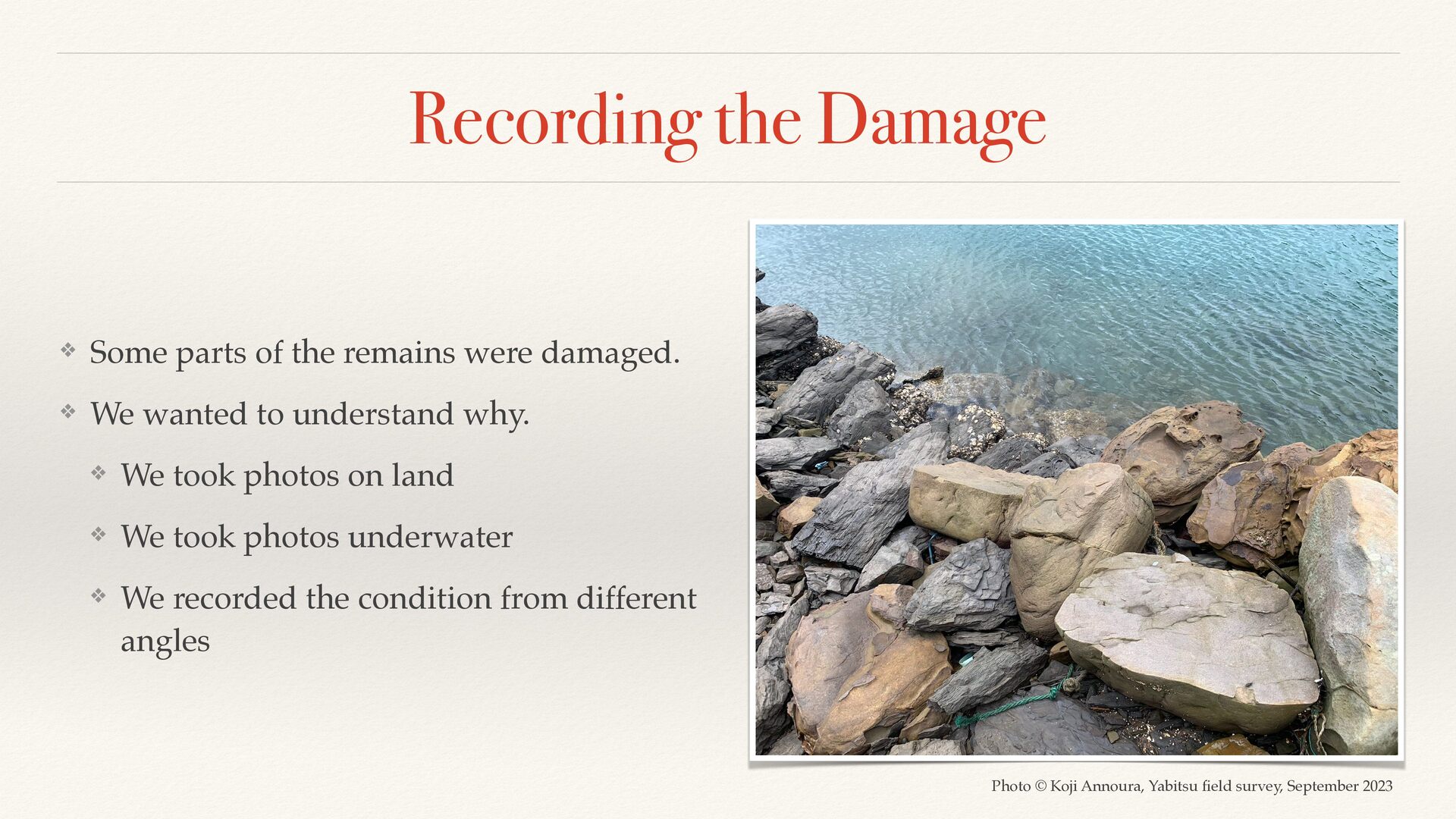
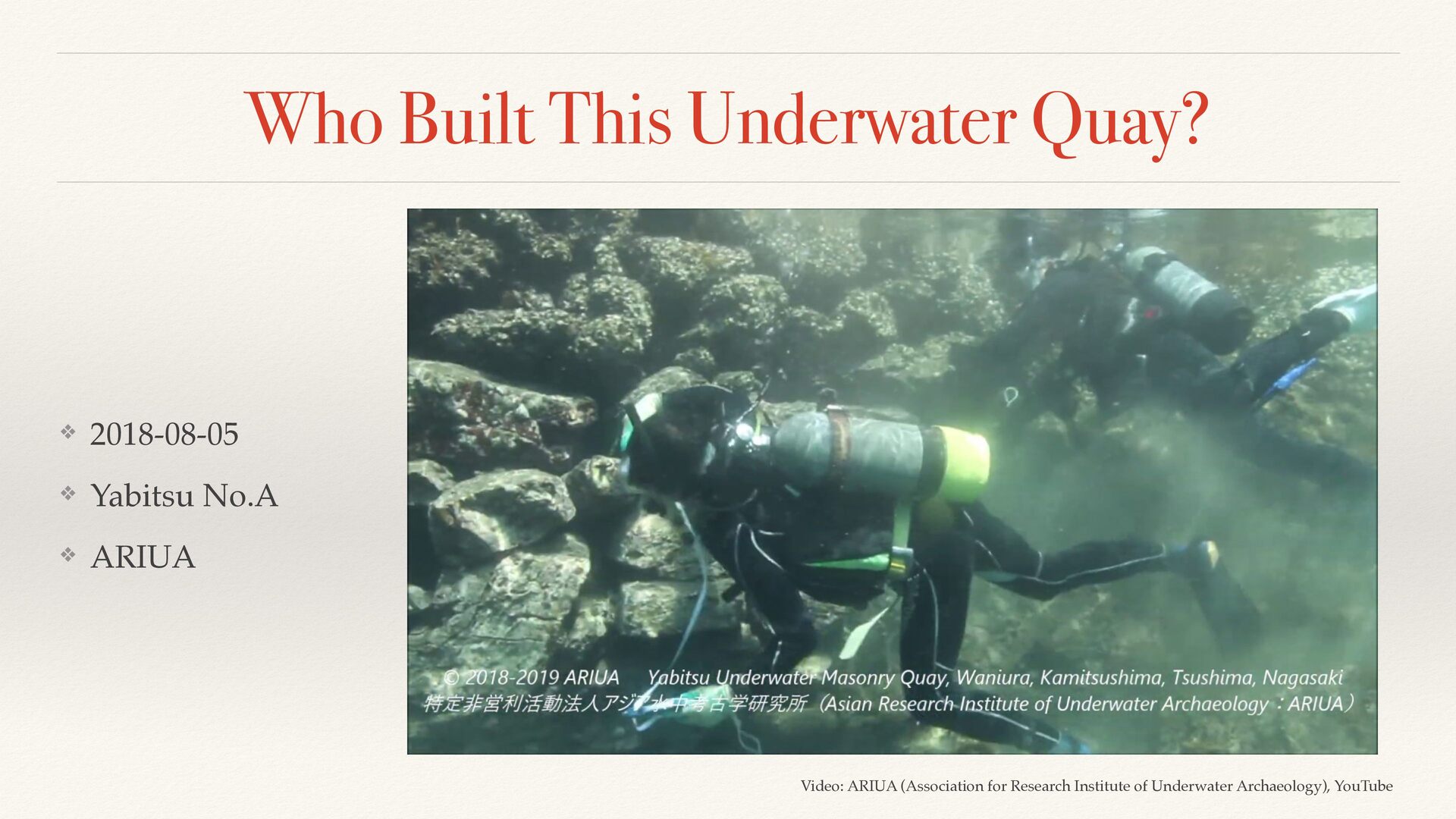
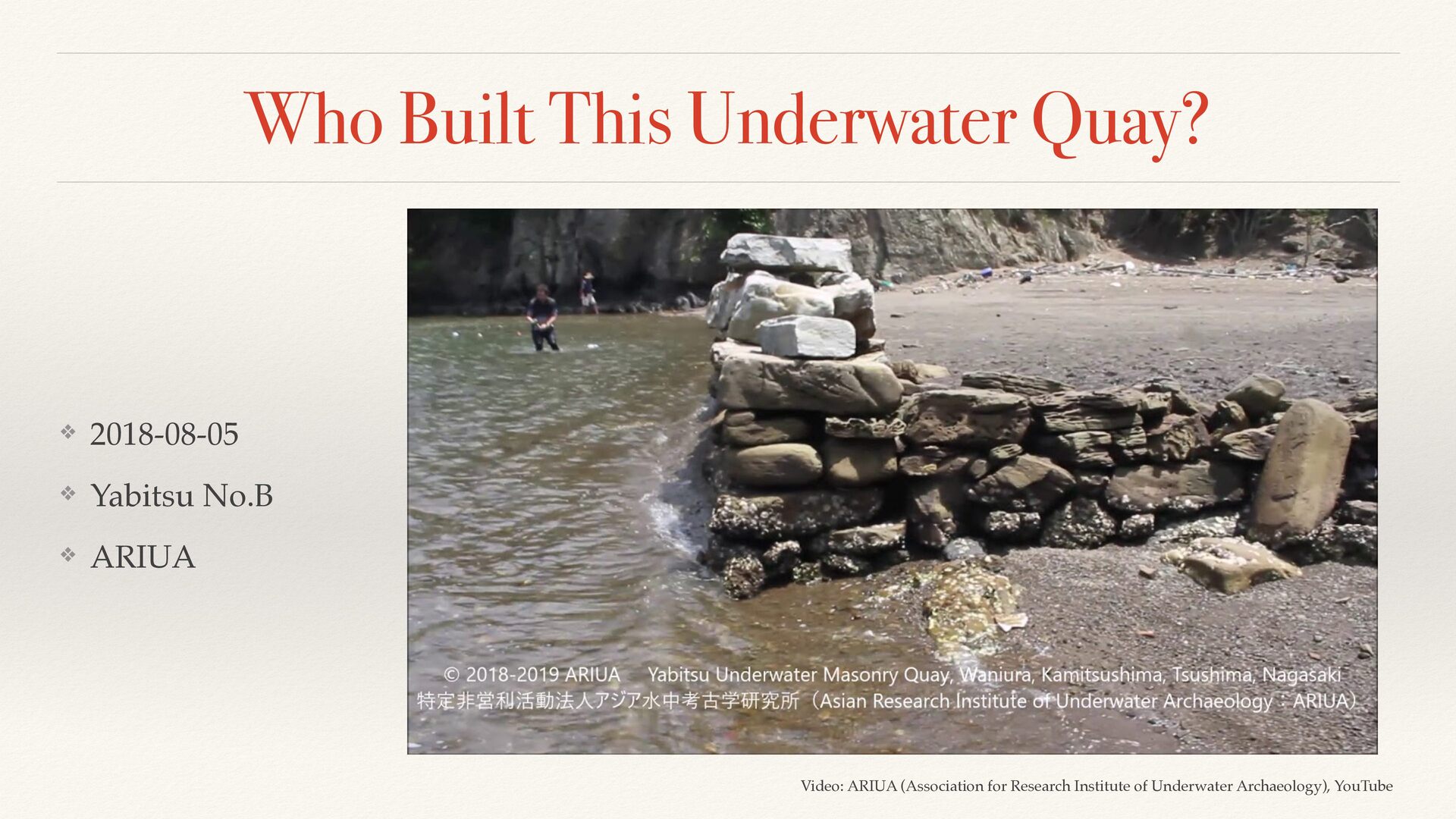
A case study of Yabitsu Port, an underwater cultural heritage site on Tsushima Island, Japan, illustrates another important challenge: distinguishing verified facts from unverified claims and preserving the sources and uncertainty behind historical information.
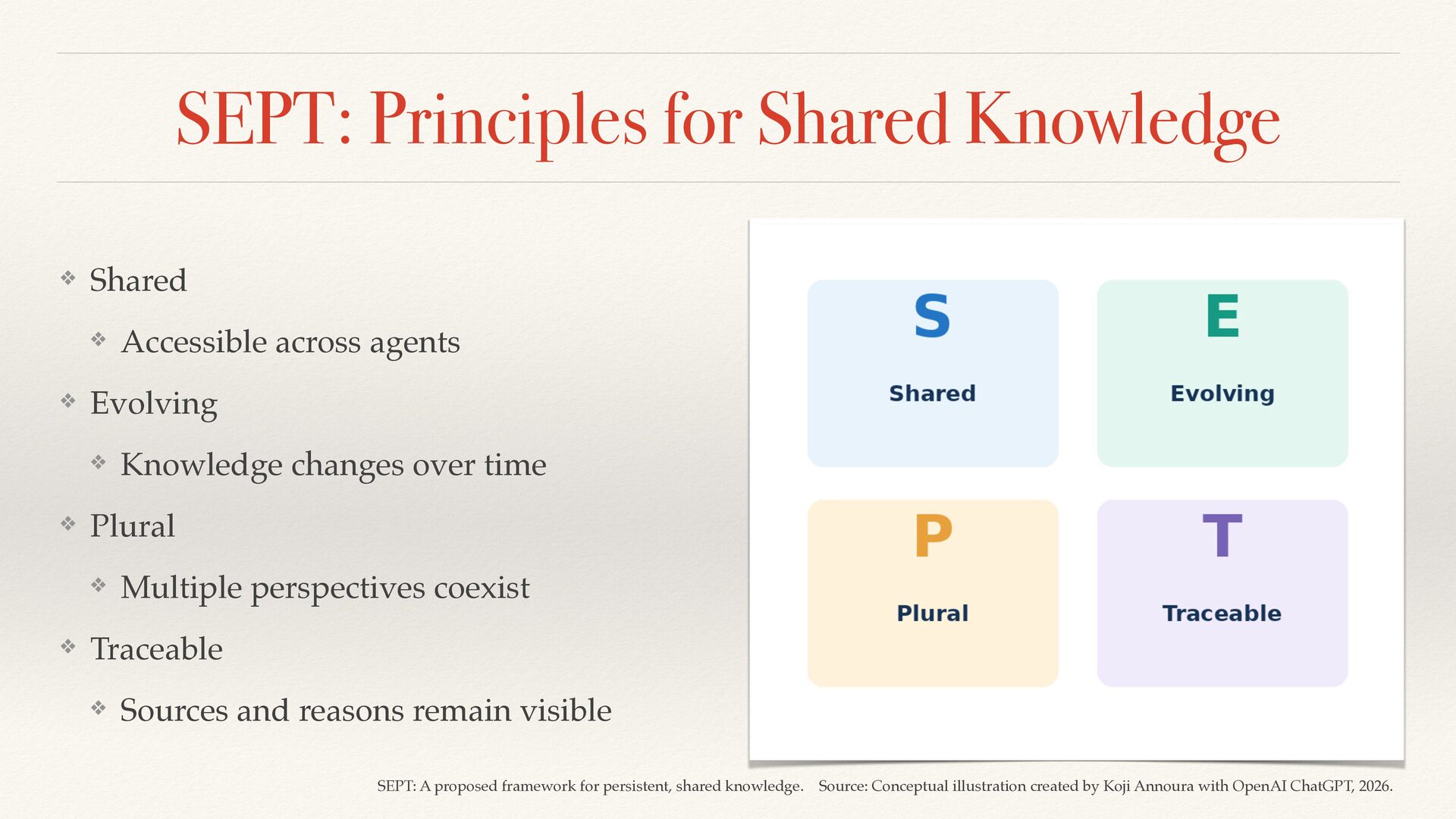
Finally, the talk introduces SEPT, a proposed set of principles for shared knowledge:
Shared: Accessible across agents
Evolving: Knowledge changes over time
Plural: Multiple perspectives coexist
Traceable: Sources and reasons remain visible
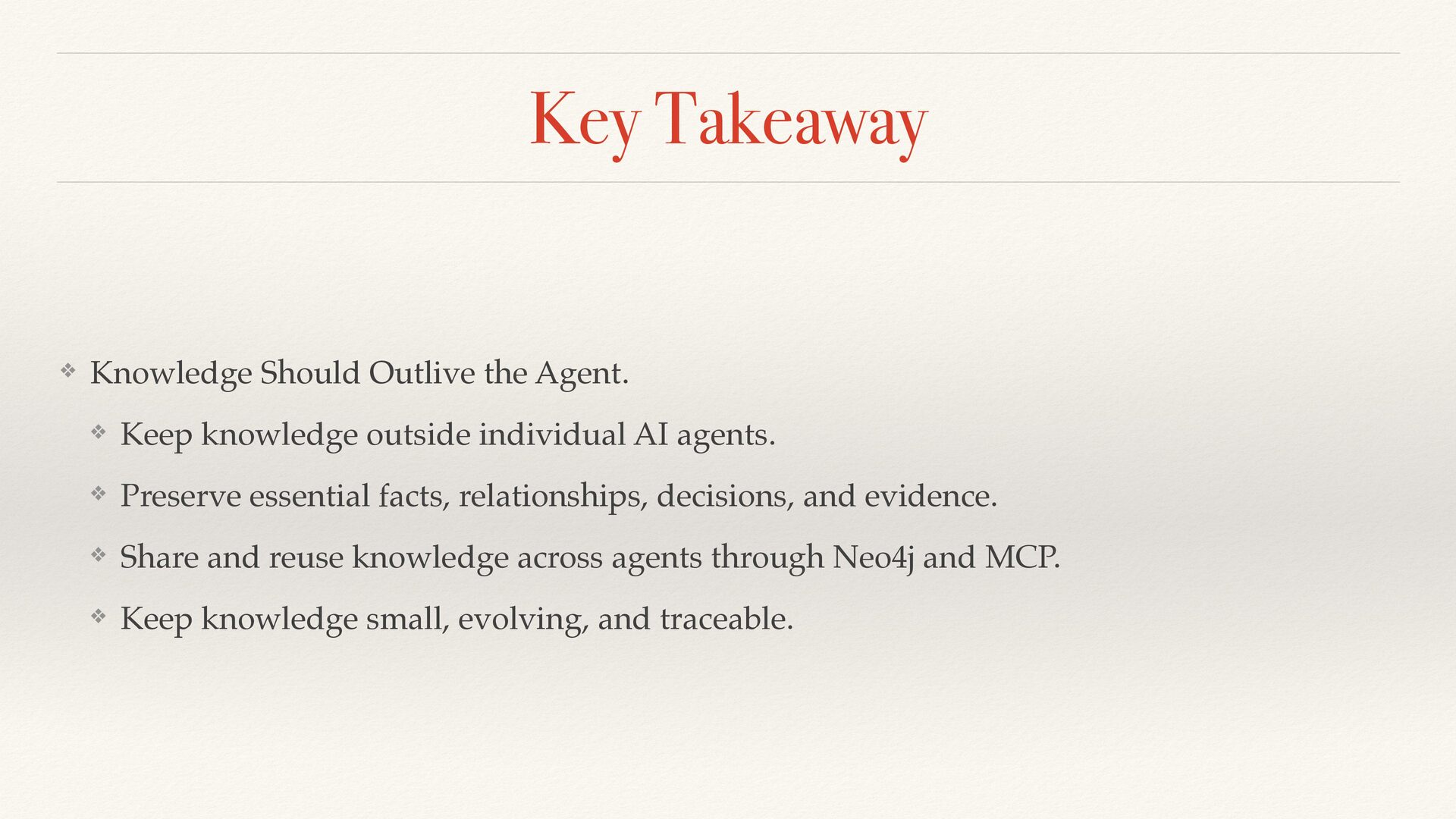
The central message is simple: Knowledge should outlive the agent.
Note: The slides have been slightly revised after the presentation to clarify a few points and avoid potential misunderstandings.


 kojiannoura
 takuroabe
 usanchuu
 occhi
 puhitaku
 shuta13
 syuchimu
 yuuuuuuu168
 tetsuya28
 pfn
 kentapapa
 ivry_presentationmaterials
 willnet
 joshbly
 honzajavorek
 katiecoart
 addyosmani
 lcolladotor
 caitiem20
 sergeychernyshev
 tammyeverts
 jacobian
 madoxten
 shpigford
 panda_program