Upgrade to Pro — share decks privately, control downloads, hide ads and more …

Sample and stages of sampling

Sample and stages of sampling

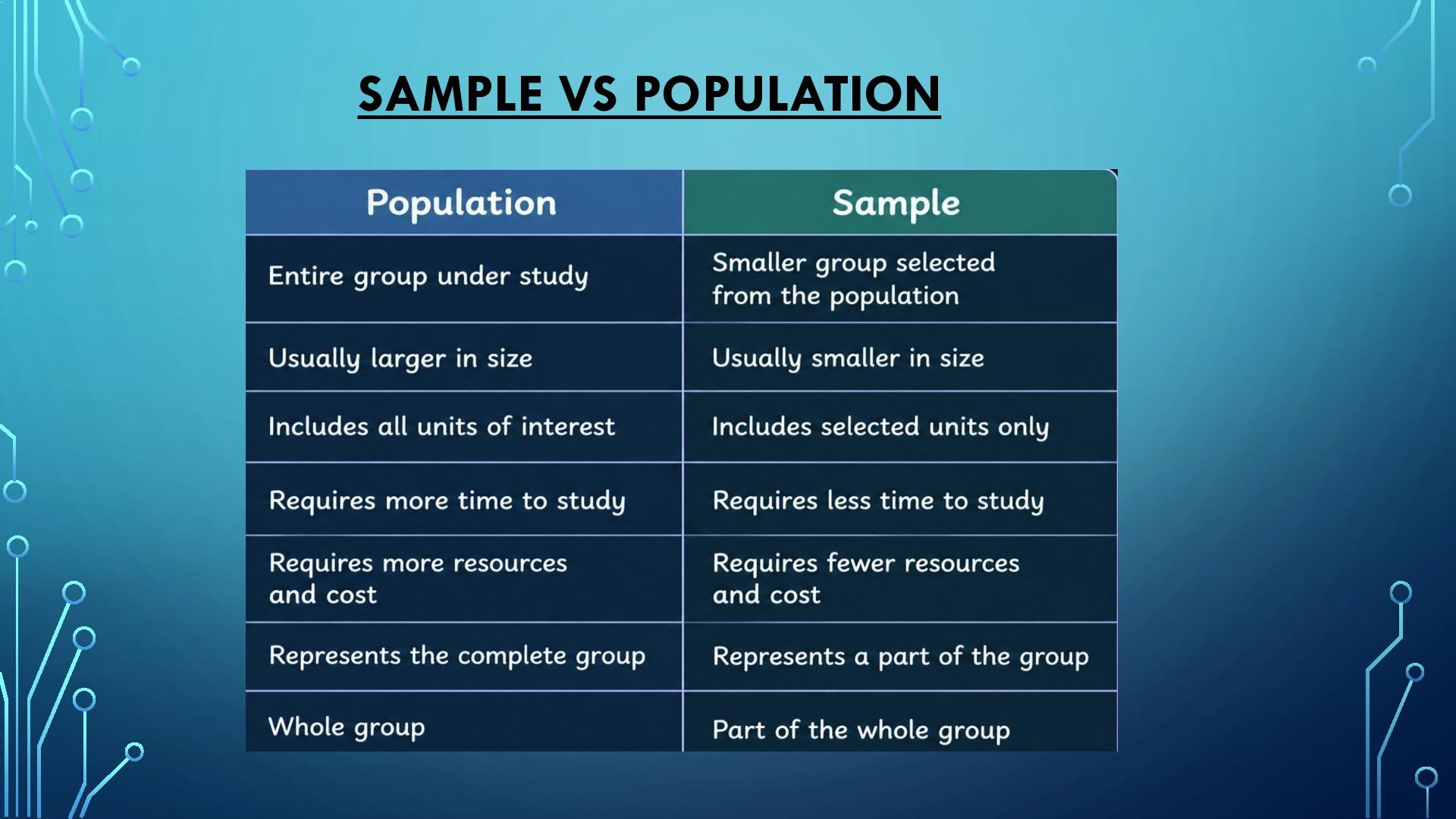
A sample is a small group selected from a larger population for research.
Sampling involves identifying the population, deciding the sample size, and choosing the sample.
Finally, data is collected from the sample and analysed to draw conclusions.

Avatar for KRISHNAPRIYA N R

KRISHNAPRIYA N R

October 05, 2026

Other Decks in Education

Transcript

  1. MEANING OF SAMPLE A sample is a relatively small group

    of individuals, objects, or units selected from a larger population for the purpose of conducting research.
  2. DEFINITION OF SAMPLE Sample is a representative part of a

    population selected for the purpose of research.
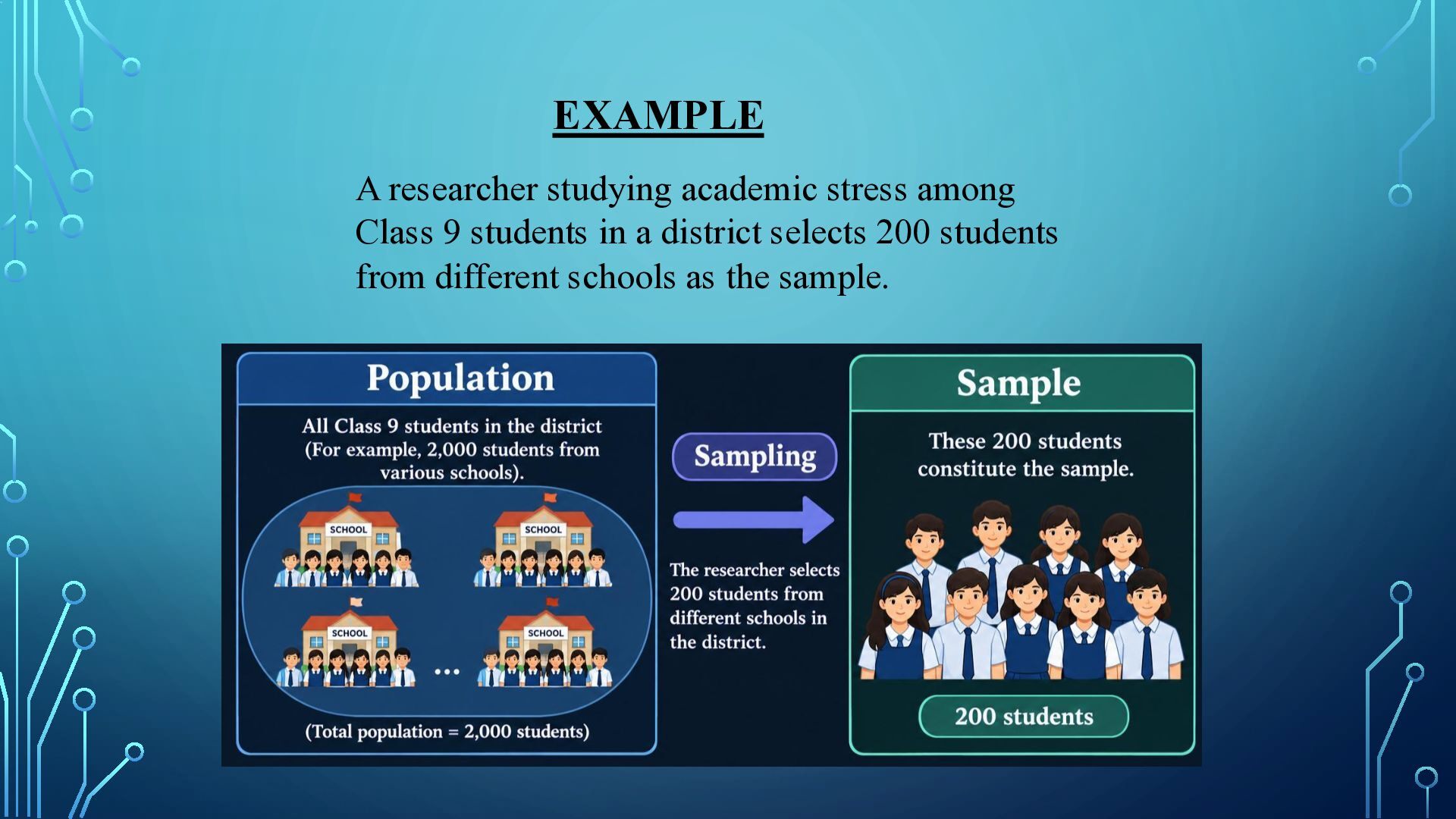
  3. EXAMPLE A researcher studying academic stress among Class 9 students

    in a district selects 200 students from different schools as the sample.
  4. CHARACTERISTICS OF GOOD SAMPLE • Representative • Adequate in size

    • Unbiased • Appropriate • Clearly defined • Practical
  5. IMPORTANCE OF SAMPLE IN RESEARCH • It reduces the time

    required for data collection. • It reduces the cost of conducting research. • It makes research manageable and practical. • It allows researchers to study large populations efficiently. • Proper sampling can provide reliable and generalizable findings. • It helps researchers conduct studies when studying the entire population is impractical.
  6. STAGES OF SAMPLING Sampling is a systematic process of selecting

    a representative group from a larger population for conducting research. A researcher generally follows a series of steps to obtain an appropriate sample.
  7. • Identification of the population The first stage is to

    clearly define the population to which the research findings are intended to apply. The researcher specifies the characteristics and boundaries of the population.
  8. • Identification of the Sampling unit The researcher identifies the

    basic unit that will be selected during sampling. It may be an individual, group, institution, or other unit relevant to the study.
  9. • Preparation of the Sampling Frame A sampling frame is

    a list or source that identifies the units from which the sample will be selected. It should adequately cover the target population.
  10. • Determination of Sample Size The researcher decides the number

    of units to be included in the sample. Sample size may depend on the population size, research design, objectives, available resources, and required level of precision.
  11. • Selection of Sampling Technique An appropriate sampling technique is

    selected according to the nature and objectives of the research. Techniques may be probability or non-probability methods.
  12. • Selection of the Sample The researcher applies the selected

    sampling technique and identifies the actual participants or units that will form the sample.
  13. • Data Collection After selecting the sample, the researcher collects

    the required data using appropriate tools such as questionnaires, interviews, tests, observations, or schedules.
  14. • Analysis and Interpretation Finally, the collected data are organised,

    analysed, and interpreted. Where appropriate, the findings are used to draw conclusions about the wider population.
  15. CONCLUSION A sample is a smaller group selected from a

    population, while sampling is the systematic process used to select that group. Proper sampling helps researchers obtain reliable and representative data for drawing meaningful conclusions.