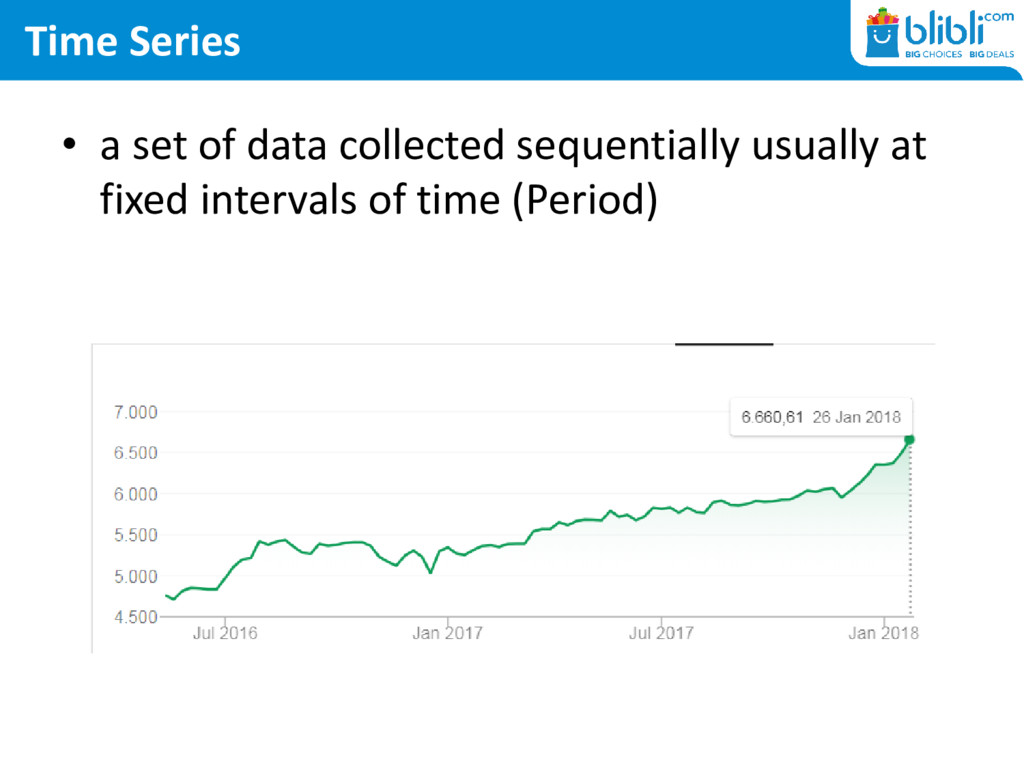
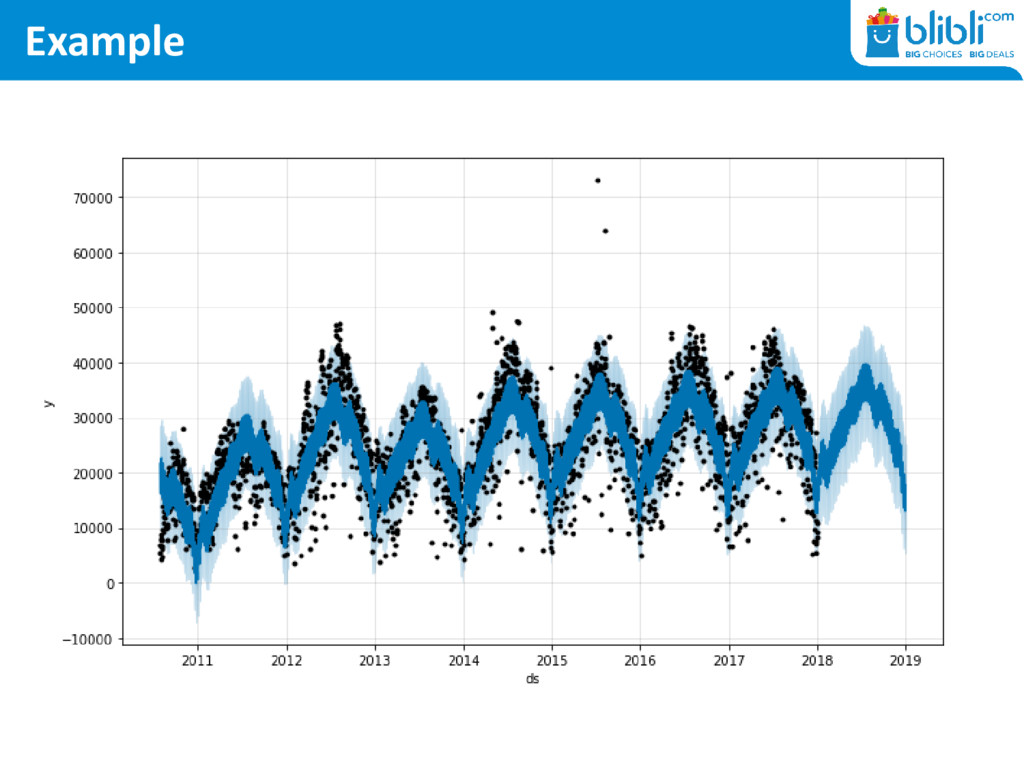
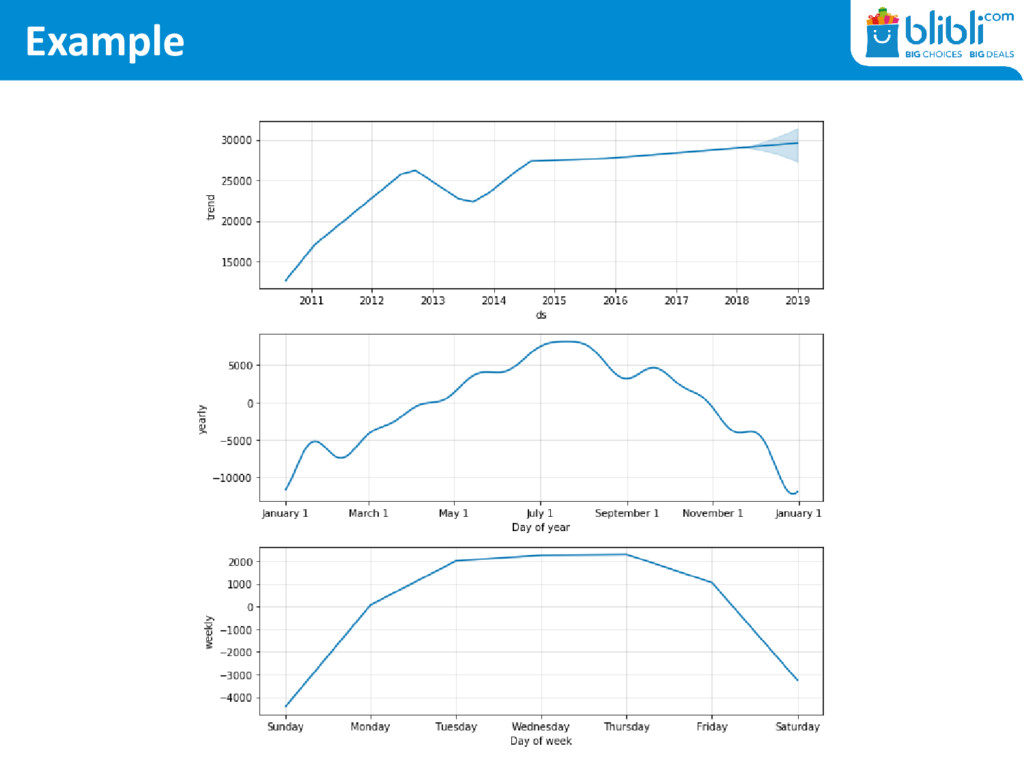
for forecasting the future data or trends – 1 Year ago – 1 Month ago – 1 Day ago – 1 Second ago Read more: http://www.businessdictionary.com/definition/his torical-data.html
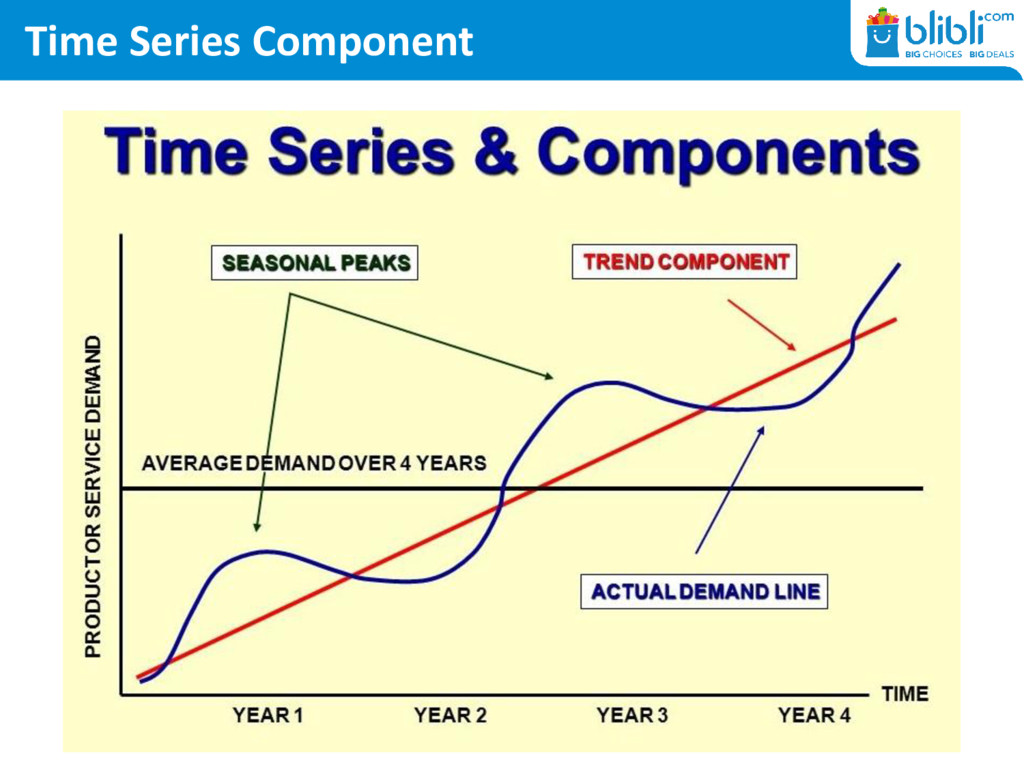
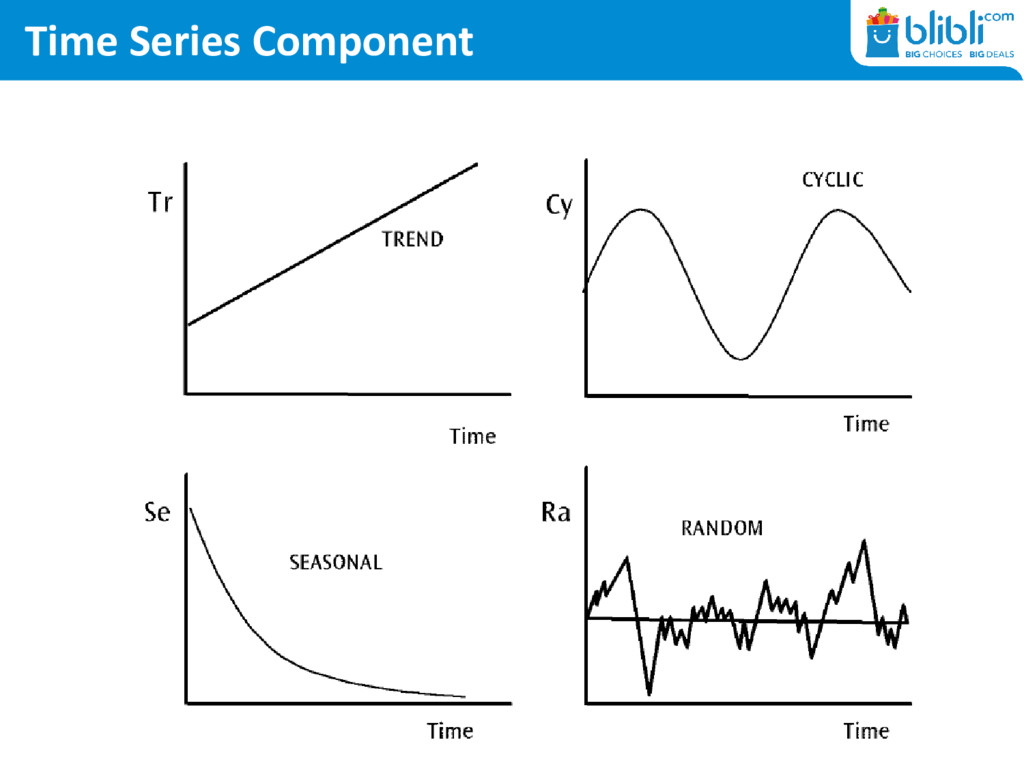
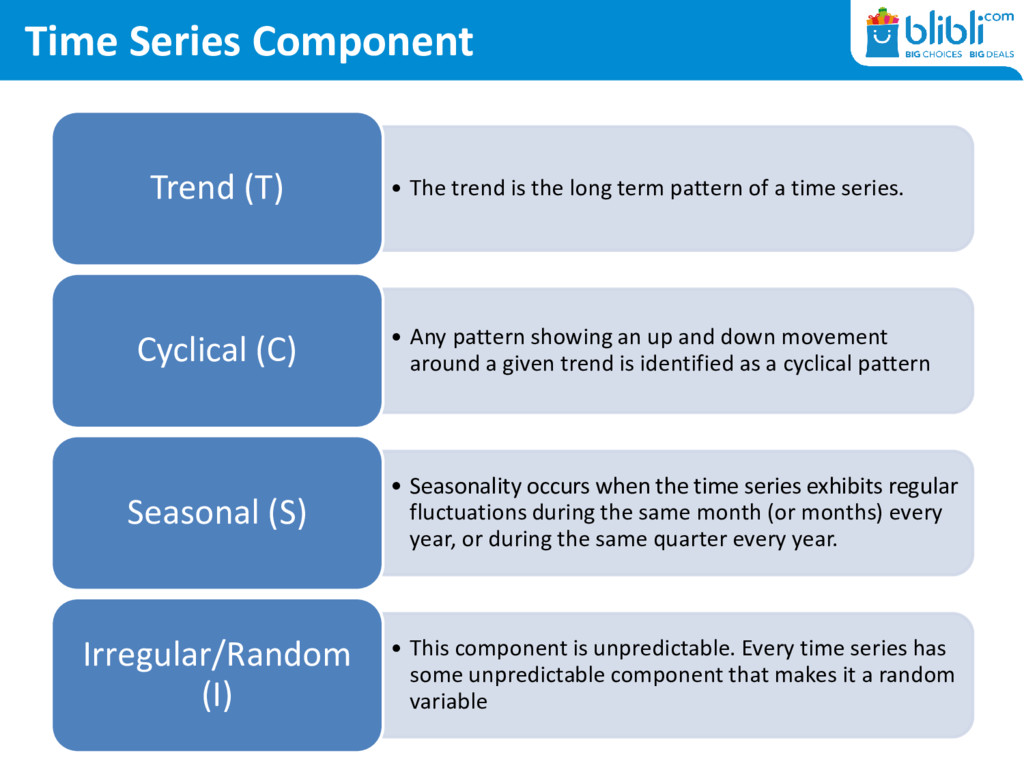
pattern of a time series. Trend (T) • Any pattern showing an up and down movement around a given trend is identified as a cyclical pattern Cyclical (C) • Seasonality occurs when the time series exhibits regular fluctuations during the same month (or months) every year, or during the same quarter every year. Seasonal (S) • This component is unpredictable. Every time series has some unpredictable component that makes it a random variable Irregular/Random (I)
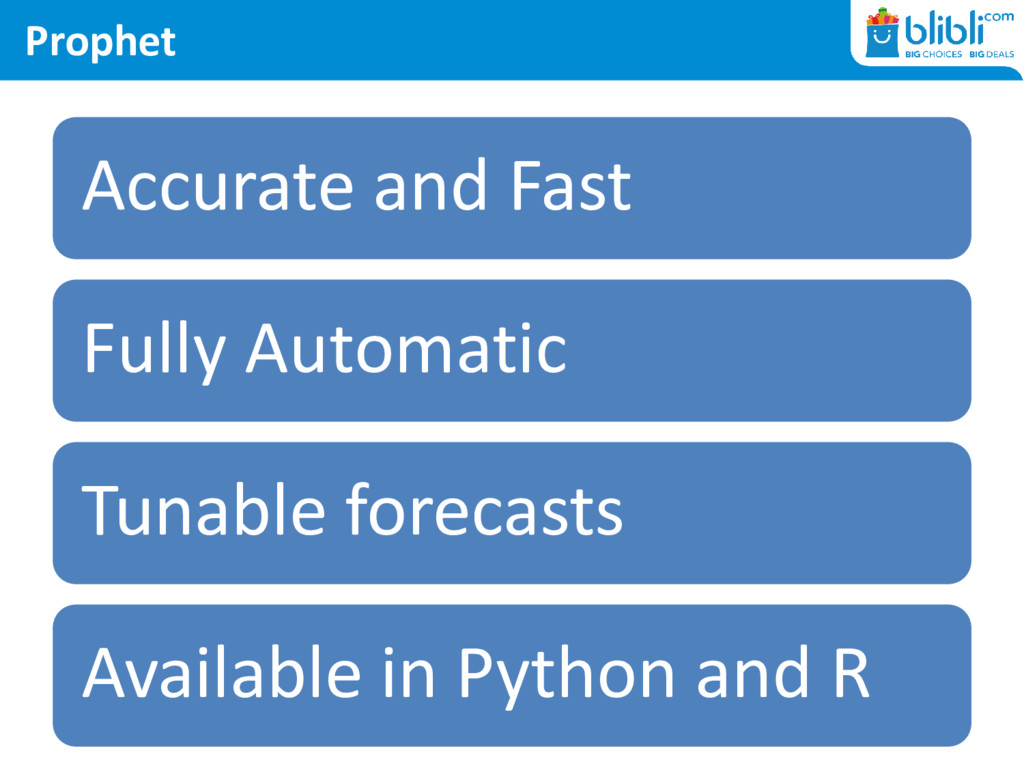
source software released by Facebook’s Core Data Science team • Implemented in Python and R. • Provides completely automated forecasts that tunable • https://facebook.github.io/prophet
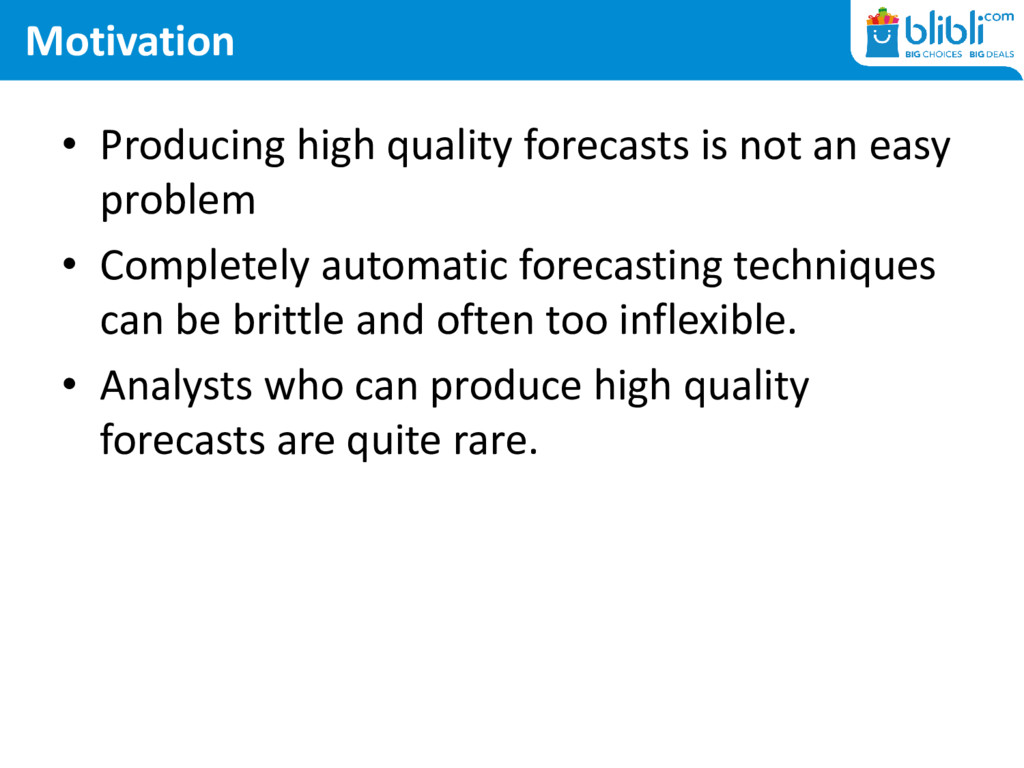
problem • Completely automatic forecasting techniques can be brittle and often too inflexible. • Analysts who can produce high quality forecasts are quite rare.
at least a few months (preferably a year) of history • Strong multiple “human-scale” seasonalities: day of week and time of year • Important holidays that occur at irregular intervals that are known in advance (e.g. Harbolnas) • Missing observations or Large outliers • Shift in the trend • Trends that are non-linear growth curves, where a trend hits a natural limit or saturates
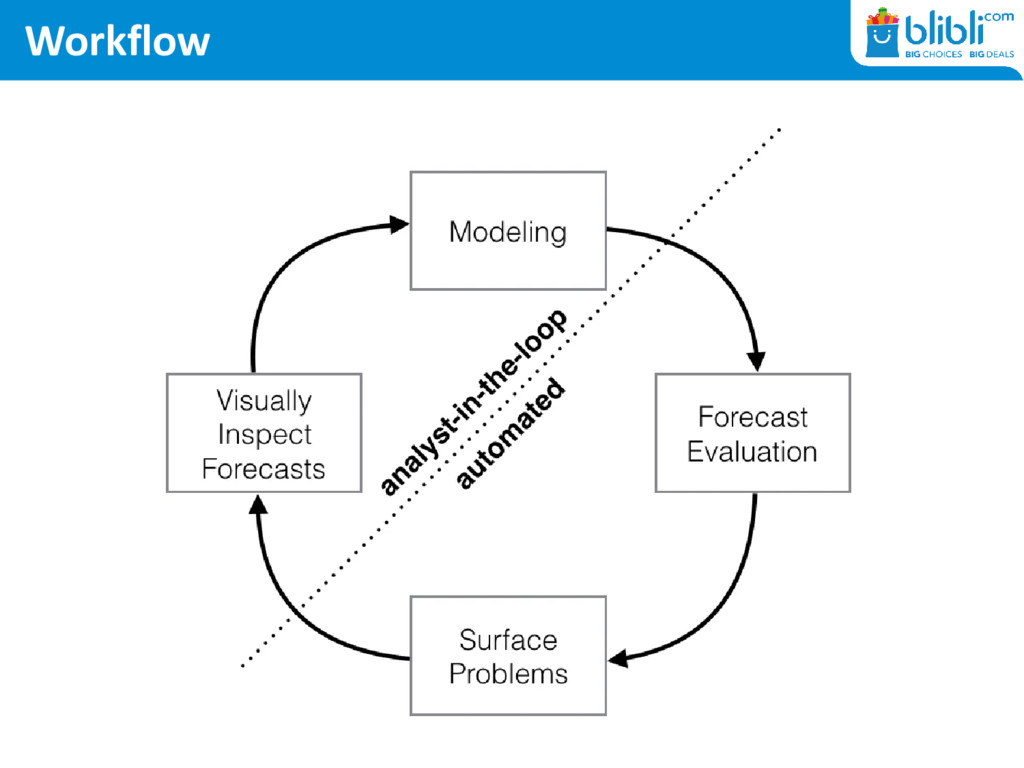
to produce forecasts that are often accurate as those produced by skilled forecasters, with much less effort.” • “With Prophet, you are not stuck with the results of a completely automatic procedure if the forecast is not satisfactory — an analyst with no training in time series methods can improve or tweak forecasts using a variety of easily-interpretable parameters.”
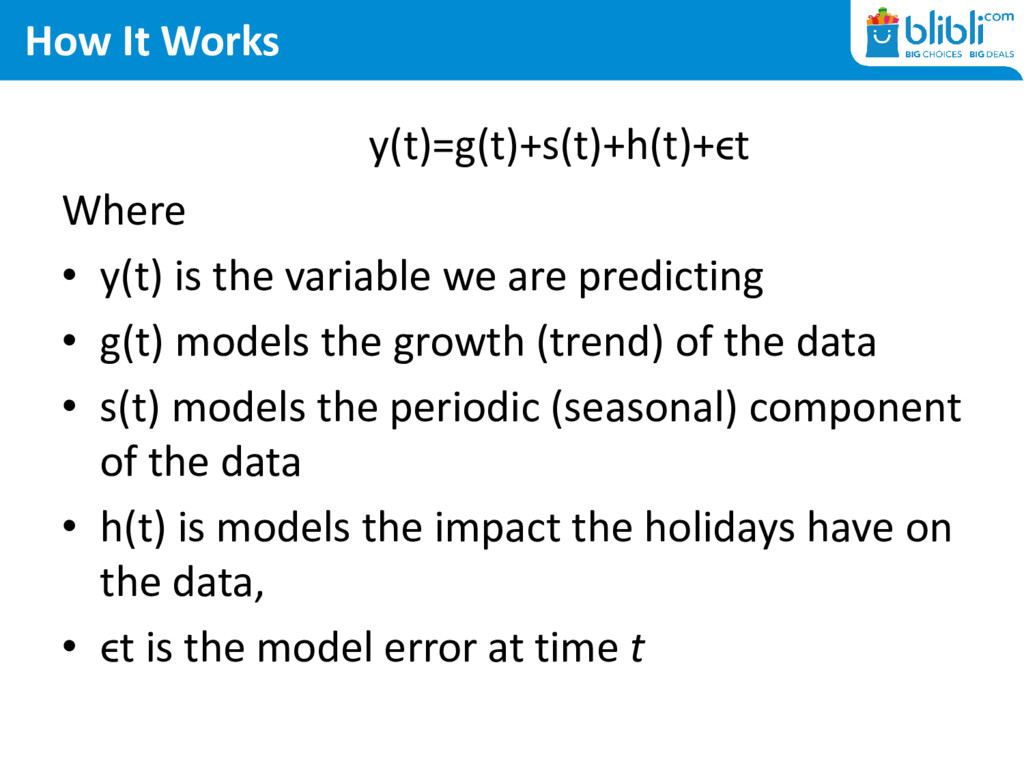
we are predicting • g(t) models the growth (trend) of the data • s(t) models the periodic (seasonal) component of the data • h(t) is models the impact the holidays have on the data, • ϵt is the model error at time t
certain limit based on business understanding, it can be fixed by setting up a forecasting cap and modelling using logarithmic growth instead of linear growth. • Outliers can be handled well by model itself without any requirement for imputation.


 satoshi7
 ezaki
ezaki
 teamlab
 recruitengineers
 mohab1
 yahonda
 makocchi
 keeg
keeg
 genda
genda
.png) codatum
codatum
 riyaamemiya
 carta_engineering
 iamctodd
 eileencodes
 inesmontani
 mfonobong
 aleyda
 watany
 jnunemaker
 nikkihalliwell
 holman
 philnash
.png) helenjbeal
helenjbeal
 tonyrice