Upgrade to PRO for Only $50/Year—Limited-Time Offer! 🔥

Free ESL Lesson Plan: Talking About Hobbies & I...

Free ESL Lesson Plan: Talking About Hobbies & Interests – English Conversation Practice

Talking about hobbies is one of the easiest ways to connect with people in English. This free ESL/TEFL lesson plan gives you ready-to-use conversation starters, hobby vocabulary, and cultural tips so you can share your interests and ask meaningful questions. Learn how to express enthusiasm, find common ground, and join group activities while practicing natural English phrases. Perfect for English learners who want to improve fluency and TEFL teachers looking for ready-made speaking materials. Use this resource to build confidence, connect with others, and enjoy smoother conversations about hobbies and interests.

Find my blog, about me, and lesson plans at my website - https://englishwithscott.netlify.app/

Avatar for LearnEnglishwithScott

LearnEnglishwithScott

September 12, 2025
Tweet

More Decks by LearnEnglishwithScott

Other Decks in Education

Transcript

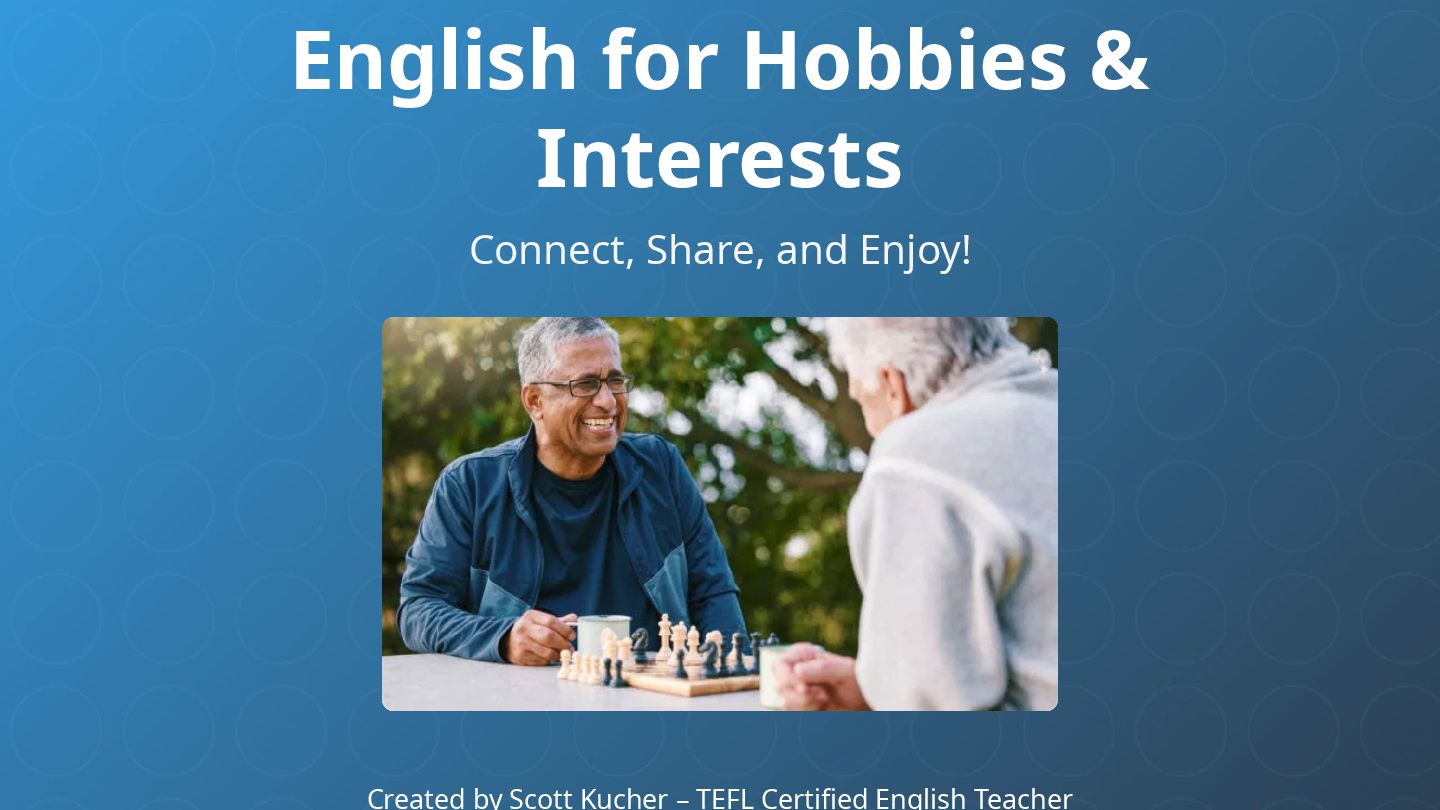
  1. English for Hobbies & Interests Connect, Share, and Enjoy! Created

    by Scott Kucher – TEFL Certified English Teacher
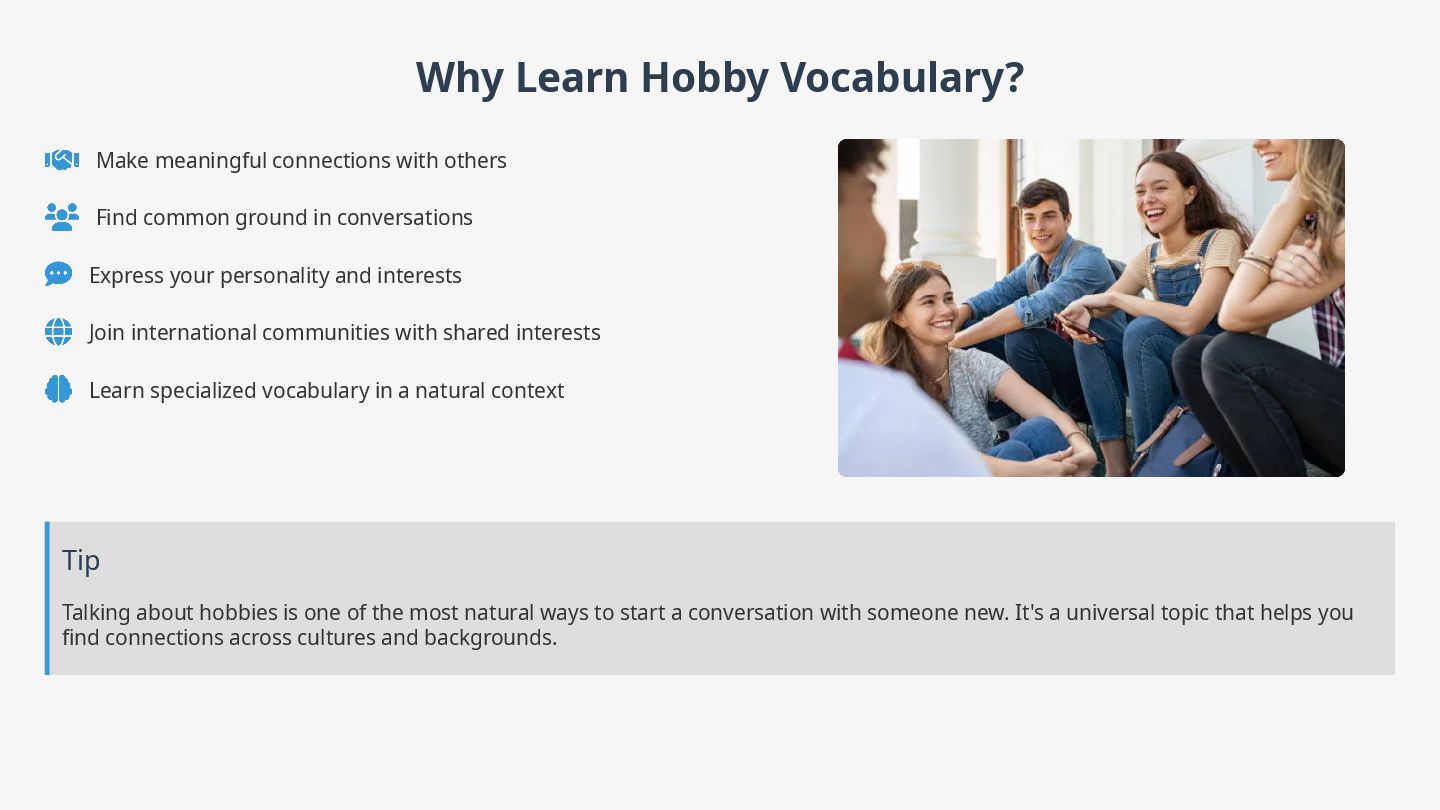
  2. Why Learn Hobby Vocabulary? Make meaningful connections with others Find

    common ground in conversations Express your personality and interests Join international communities with shared interests Learn specialized vocabulary in a natural context Tip Talking about hobbies is one of the most natural ways to start a conversation with someone new. It's a universal topic that helps you find connections across cultures and backgrounds.
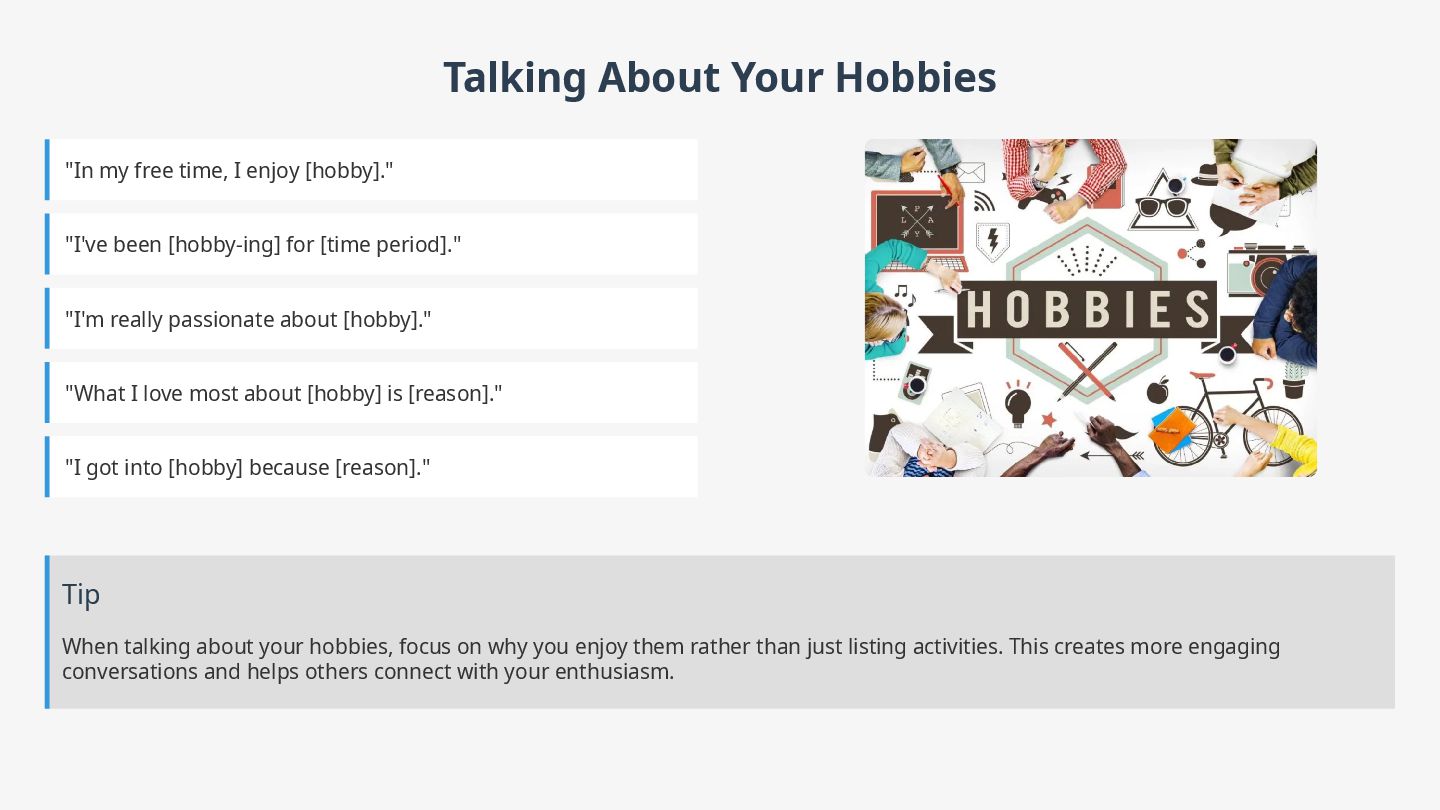
  3. Talking About Your Hobbies "In my free time, I enjoy

    [hobby]." "I've been [hobby-ing] for [time period]." "I'm really passionate about [hobby]." "What I love most about [hobby] is [reason]." "I got into [hobby] because [reason]." Tip When talking about your hobbies, focus on why you enjoy them rather than just listing activities. This creates more engaging conversations and helps others connect with your enthusiasm.
  4. Asking About Others' Interests "What do you like to do

    in your free time?" "Do you have any hobbies or interests?" "Have you been [hobby-ing] for long?" "What got you interested in [hobby]?" "How did you learn to [hobby]?" Tip When asking about someone's hobbies, show genuine interest by maintaining eye contact and asking follow-up questions. This encourages them to share more and creates a more meaningful conversation.
  5. Expressing Interest & Enthusiasm "That sounds fascinating! How did you

    get started?" "I've always wanted to try that! Is it difficult to learn?" "What's your favorite thing about [hobby]?" "That's really impressive! How long have you been doing it?" "Would you recommend it to someone like me?" Tip Showing genuine interest in someone's hobby can create a stronger connection than talking about your own. Use follow-up questions and maintain eye contact to demonstrate that you're actively listening.
  6. Finding Common Ground "Do you also enjoy [hobby]?" "We both

    seem to like [hobby/interest]!" "Have you ever tried [related hobby]?" "I'd love to hear more about your experience with [hobby]." "Maybe we could [do hobby] together sometime." Tip Finding shared interests creates an instant connection. When you discover a common hobby, use it as a bridge to deeper conversation by asking specific questions about their experiences.
  7. Joining Group Activities "Can I join you?" "I'd love to

    be part of this group." "How often do you meet up?" "What do I need to bring to participate?" "Is this suitable for beginners?" Tip When joining a new group activity, it's perfectly acceptable to mention that you're a beginner. Most hobby groups welcome newcomers and are happy to help you learn and improve.
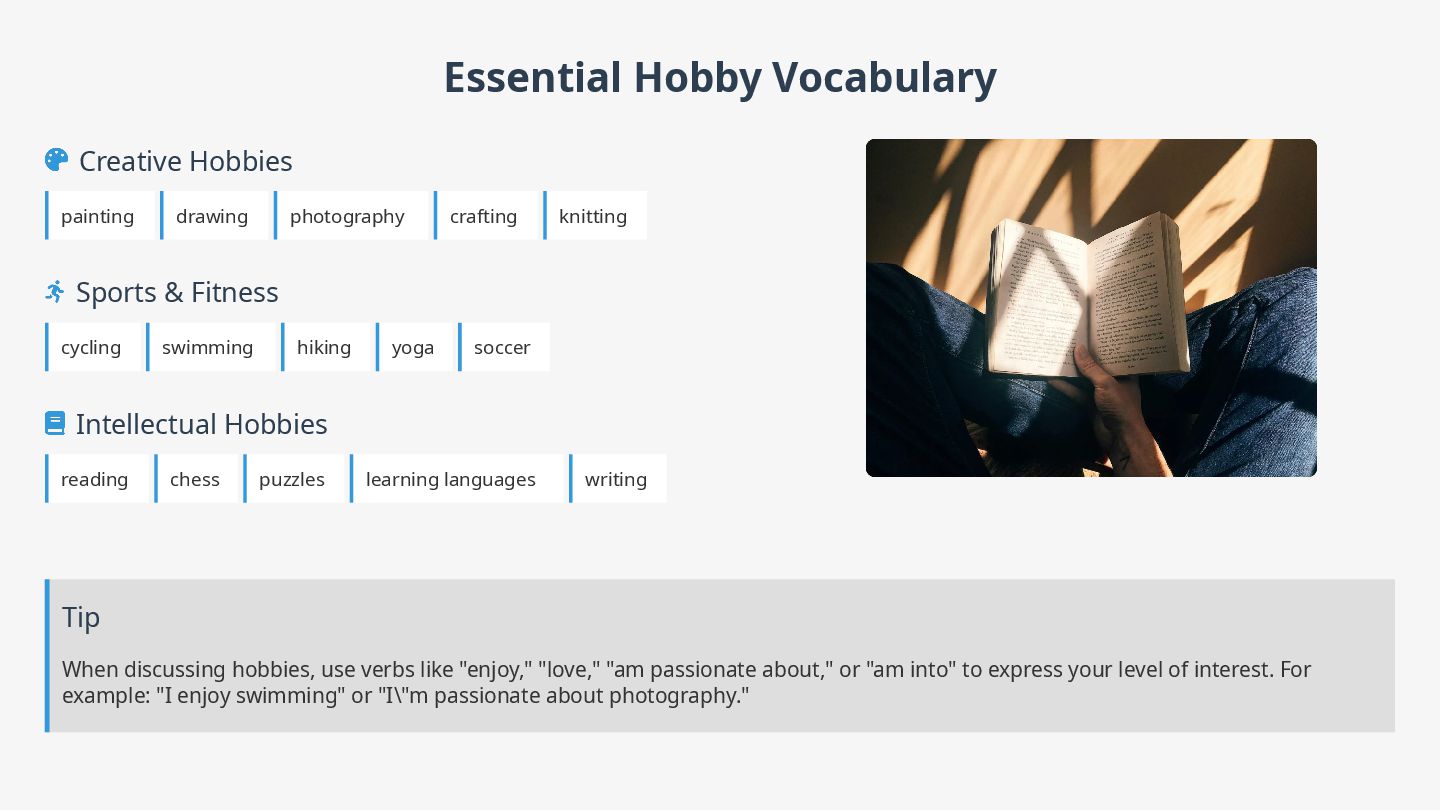
  8. Essential Hobby Vocabulary Creative Hobbies painting drawing photography crafting knitting

    Sports & Fitness cycling swimming hiking yoga soccer Intellectual Hobbies reading chess puzzles learning languages writing Tip When discussing hobbies, use verbs like "enjoy," "love," "am passionate about," or "am into" to express your level of interest. For example: "I enjoy swimming" or "I\"m passionate about photography."
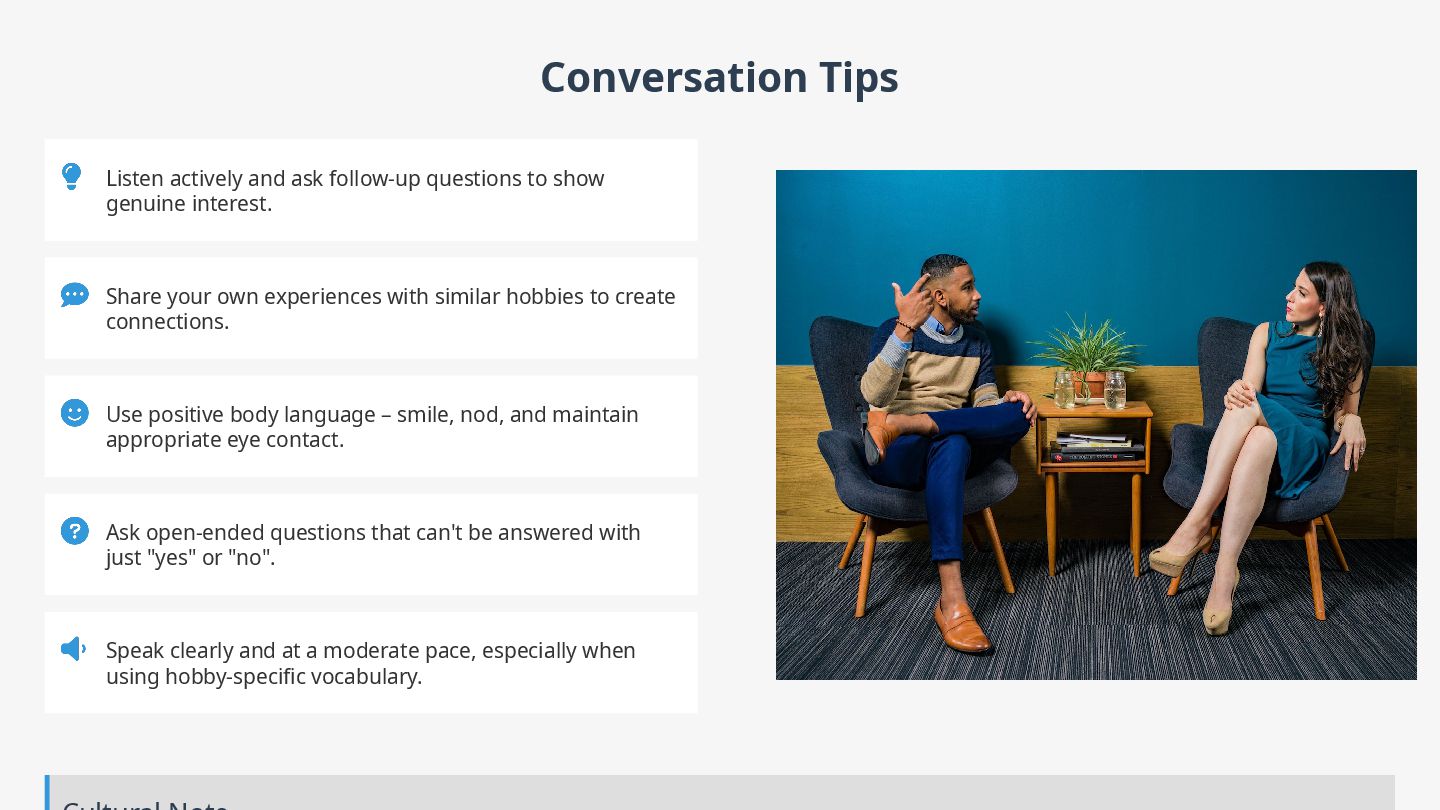
  9. Conversation Tips Listen actively and ask follow-up questions to show

    genuine interest. Share your own experiences with similar hobbies to create connections. Use positive body language – smile, nod, and maintain appropriate eye contact. Ask open-ended questions that can't be answered with just "yes" or "no". Speak clearly and at a moderate pace, especially when using hobby-specific vocabulary.
  10. Practice Time! Master hobby vocabulary with personalized lessons Practice conversations

    with expert guidance Access exclusive materials and resources Receive feedback on your pronunciation and fluency Build confidence through regular practice sessions Ready to Improve Your English? Take your English skills to the next level with professional instruction! Start Taking Lessons Now! Scan Me