Lock in $30 Savings on PRO—Offer Ends Soon! ⏳

Free ESL Lesson Plan: Daily Life & Routines – E...

Free ESL Lesson Plan: Daily Life & Routines – English Conversation Practice

Talking about your daily life and routines is one of the easiest ways to connect with people in English. This free ESL/TEFL lesson plan gives you ready-to-use conversation starters, hobby vocabulary, and cultural tips so you can share your interests and ask meaningful questions. Learn how to express enthusiasm, find common ground, and join group activities while practicing natural English phrases. Perfect for English learners who want to improve fluency and TEFL teachers looking for ready-made speaking materials. Use this resource to build confidence, connect with others, and enjoy smoother conversations about hobbies and interests.

Find my blog, about me, and lesson plans at my website - https://englishwithscott.netlify.app/

Avatar for LearnEnglishwithScott

LearnEnglishwithScott

October 01, 2025
Tweet

More Decks by LearnEnglishwithScott

Other Decks in Education

Transcript

  1. English for Daily Life & Routines Connect, Communicate, and Thrive!

    Created by Scott Kucher – TEFL Certified English Teacher
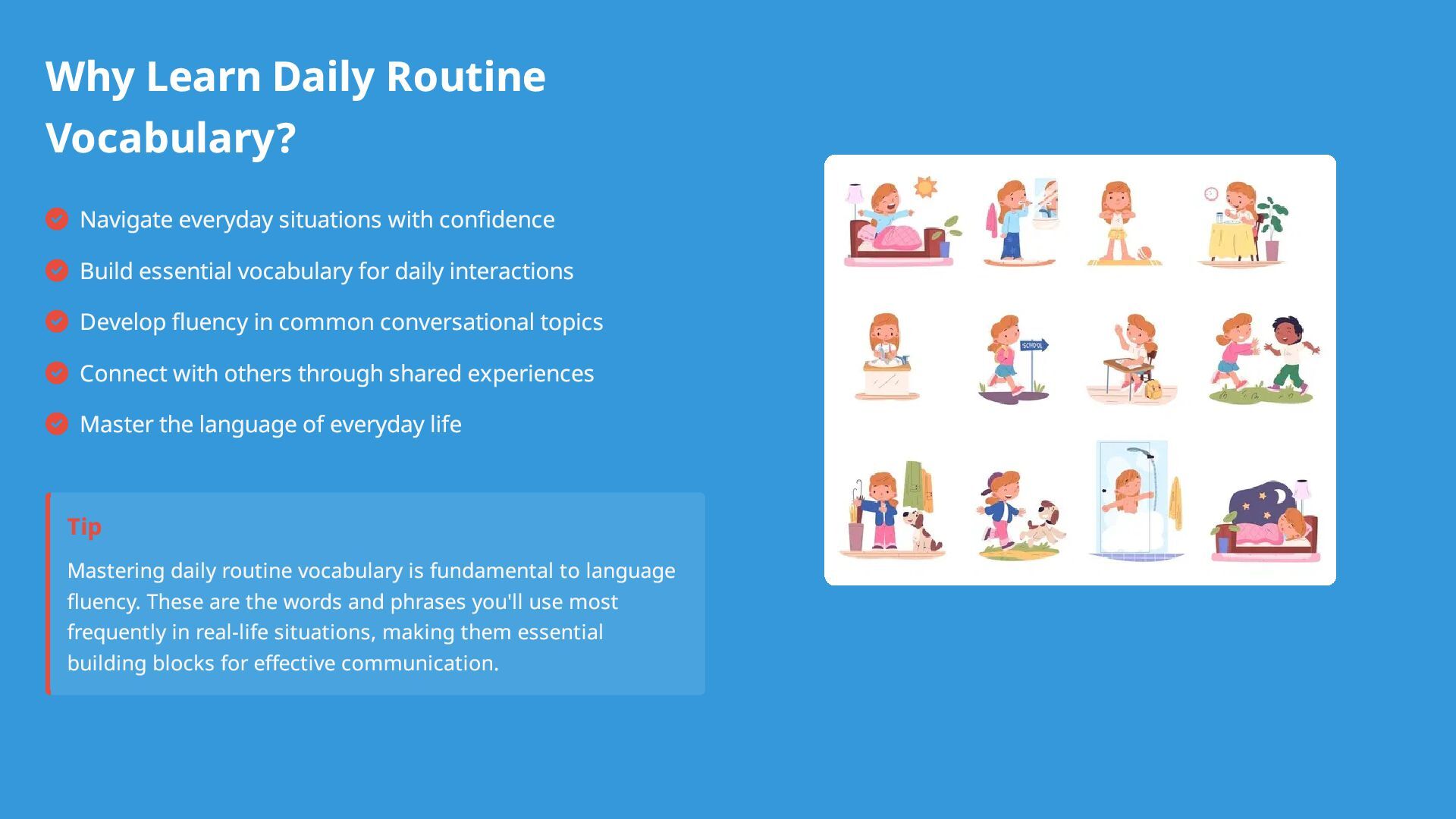
  2. Why Learn Daily Routine Vocabulary?  Navigate everyday situations with

    confidence  Build essential vocabulary for daily interactions  Develop fluency in common conversational topics  Connect with others through shared experiences  Master the language of everyday life Tip Mastering daily routine vocabulary is fundamental to language fluency. These are the words and phrases you'll use most frequently in real-life situations, making them essential building blocks for effective communication.
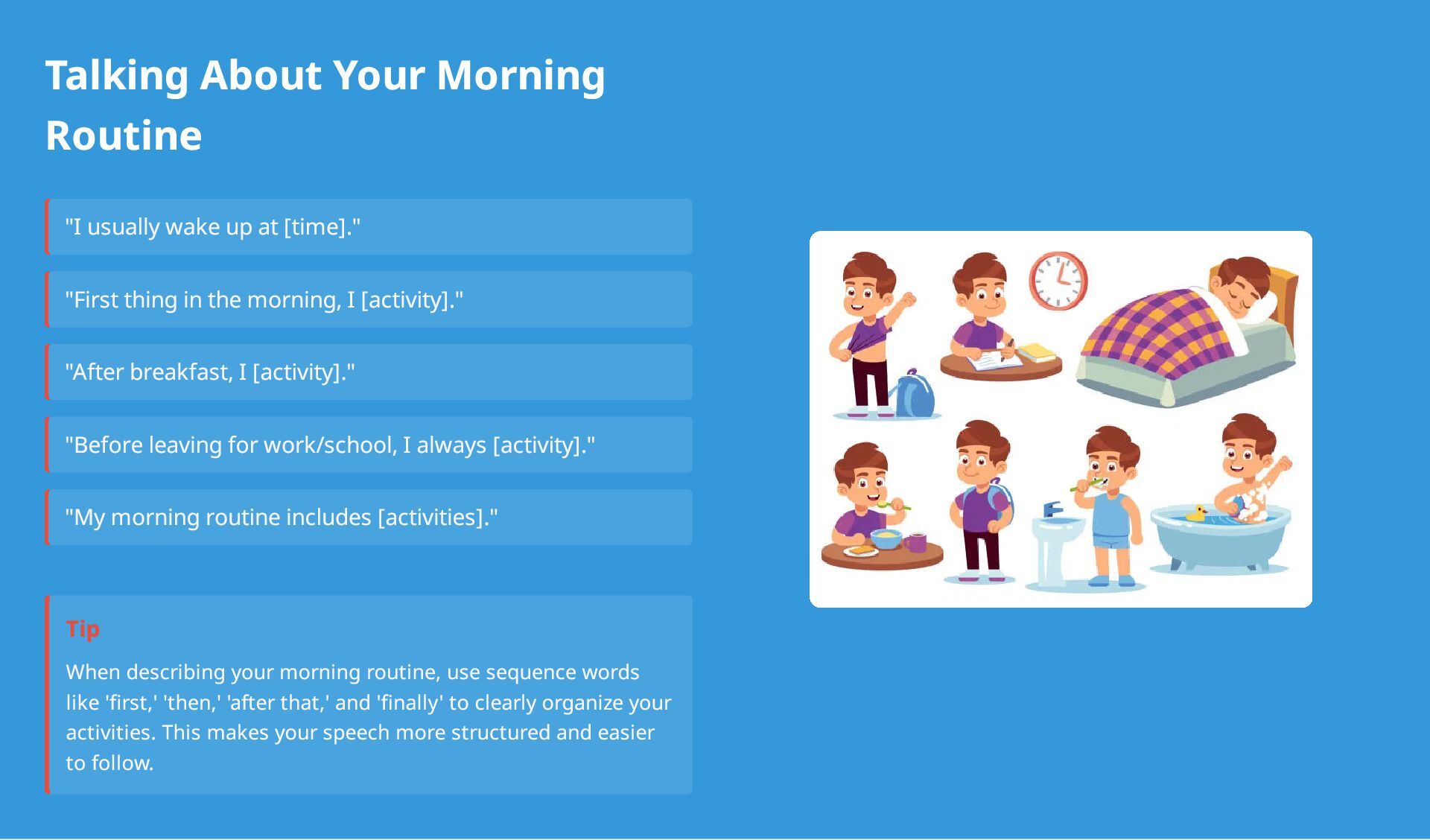
  3. Talking About Your Morning Routine "I usually wake up at

    [time]." "First thing in the morning, I [activity]." "After breakfast, I [activity]." "Before leaving for work/school, I always [activity]." "My morning routine includes [activities]." Tip When describing your morning routine, use sequence words like 'first,' 'then,' 'after that,' and 'finally' to clearly organize your activities. This makes your speech more structured and easier to follow.
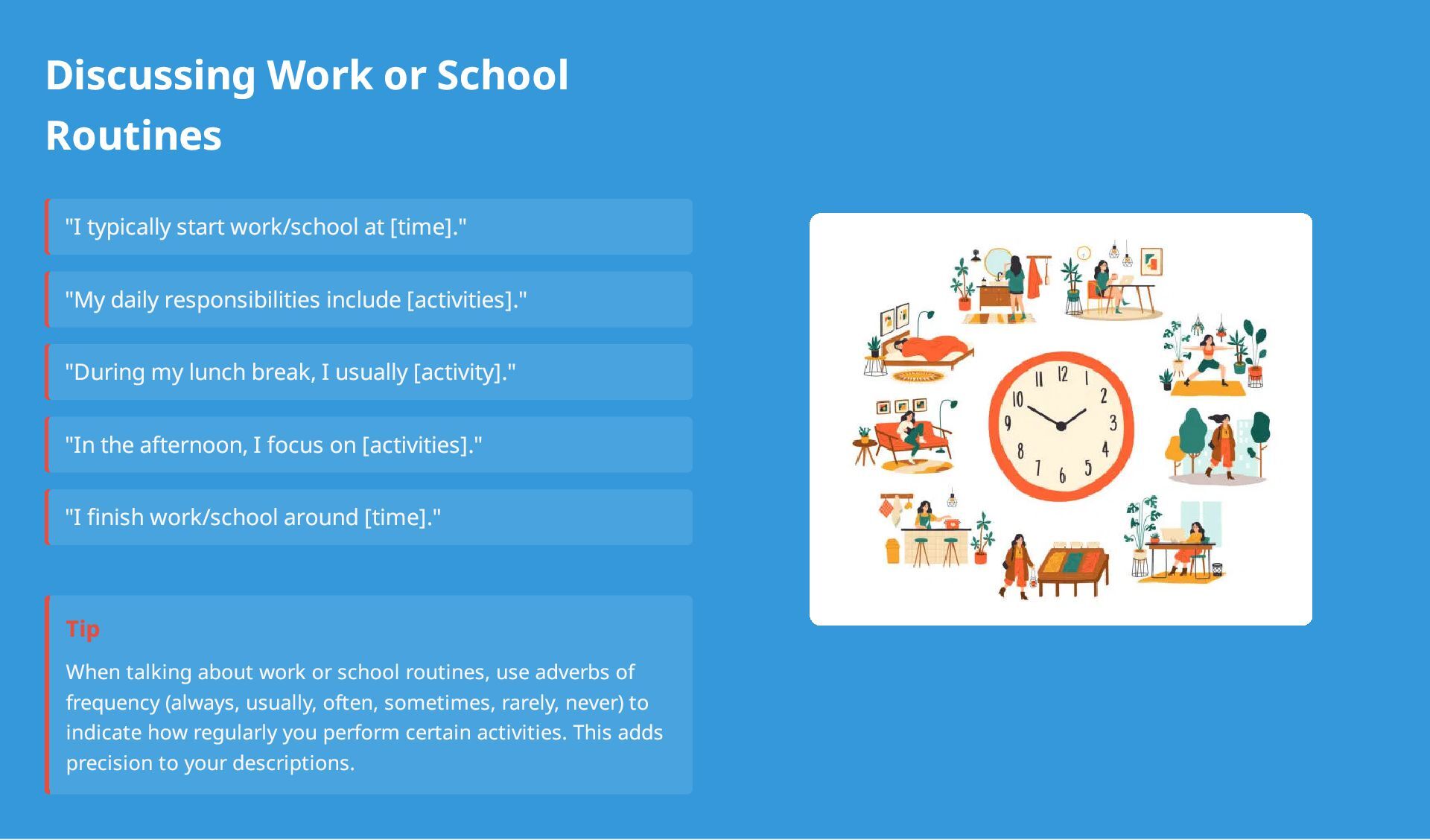
  4. Discussing Work or School Routines "I typically start work/school at

    [time]." "My daily responsibilities include [activities]." "During my lunch break, I usually [activity]." "In the afternoon, I focus on [activities]." "I finish work/school around [time]." Tip When talking about work or school routines, use adverbs of frequency (always, usually, often, sometimes, rarely, never) to indicate how regularly you perform certain activities. This adds precision to your descriptions.
  5. Describing Evening Activities "After work/school, I like to [activity]." "In

    the evening, I usually [activity]." "Before bed, I always [activity]." "I try to go to sleep by [time]." "My evening routine helps me [benefit]." Tip Sharing details about your evening routine can reveal a lot about your personality and priorities. Focus on activities that are meaningful to you, as these create more engaging conversation points and help others connect with you.
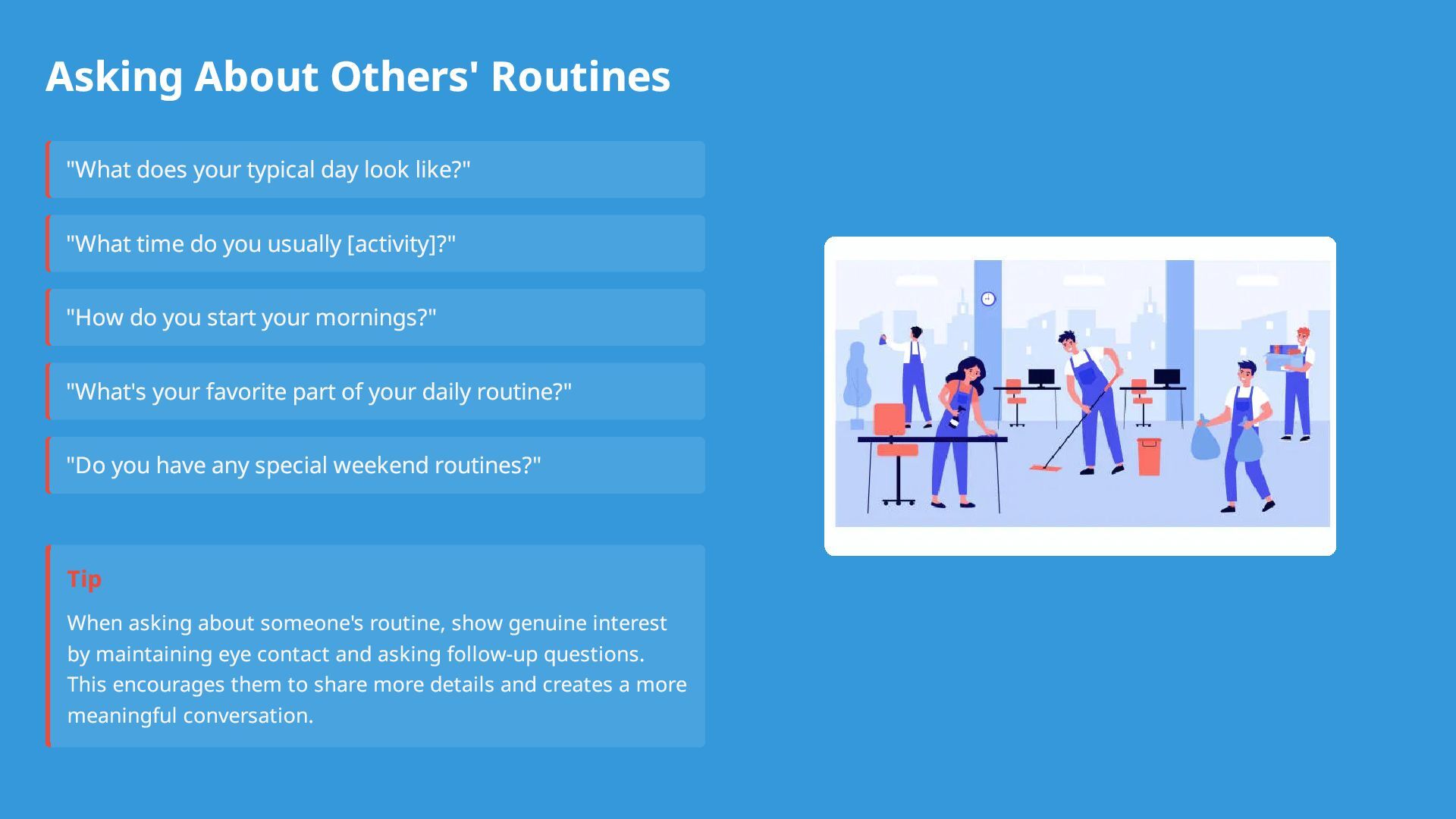
  6. Asking About Others' Routines "What does your typical day look

    like?" "What time do you usually [activity]?" "How do you start your mornings?" "What's your favorite part of your daily routine?" "Do you have any special weekend routines?" Tip When asking about someone's routine, show genuine interest by maintaining eye contact and asking follow-up questions. This encourages them to share more details and creates a more meaningful conversation.
  7. Weekend and Free Time Routines "On weekends, I usually [activity]."

    "I like to spend my free time [activity]." "Saturdays are for [activity], while Sundays are for [activity]." "My weekend routine is different because [reason]." "I look forward to [activity] when I have time off." Tip Weekend routines often reveal what people truly value and enjoy. Sharing these activities can help you find common interests and build stronger connections with others who share similar preferences.
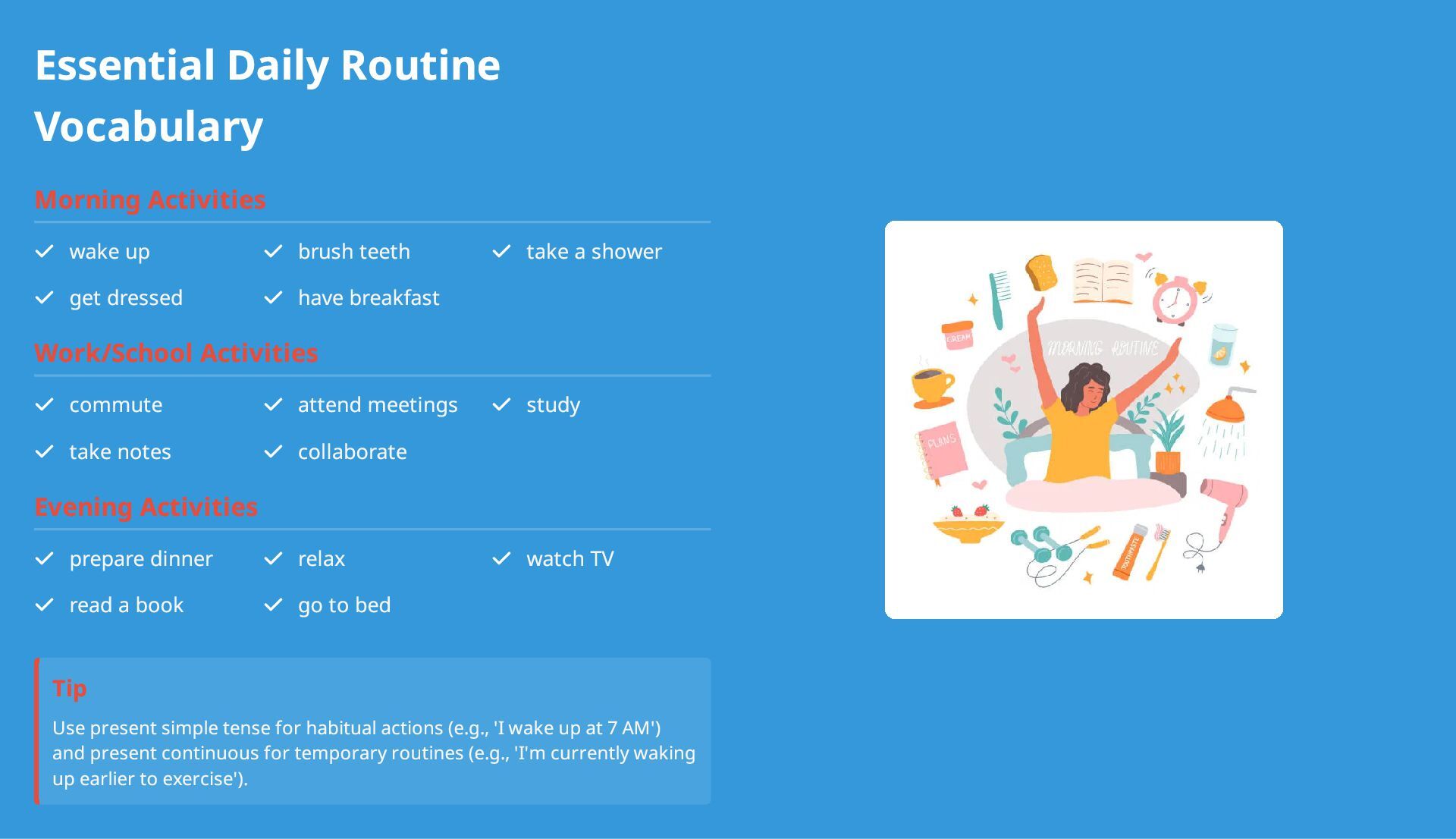
  8. Essential Daily Routine Vocabulary Morning Activities  wake up 

    brush teeth  take a shower  get dressed  have breakfast Work/School Activities  commute  attend meetings  study  take notes  collaborate Evening Activities  prepare dinner  relax  watch TV  read a book  go to bed Tip Use present simple tense for habitual actions (e.g., 'I wake up at 7 AM') and present continuous for temporary routines (e.g., 'I'm currently waking up earlier to exercise').
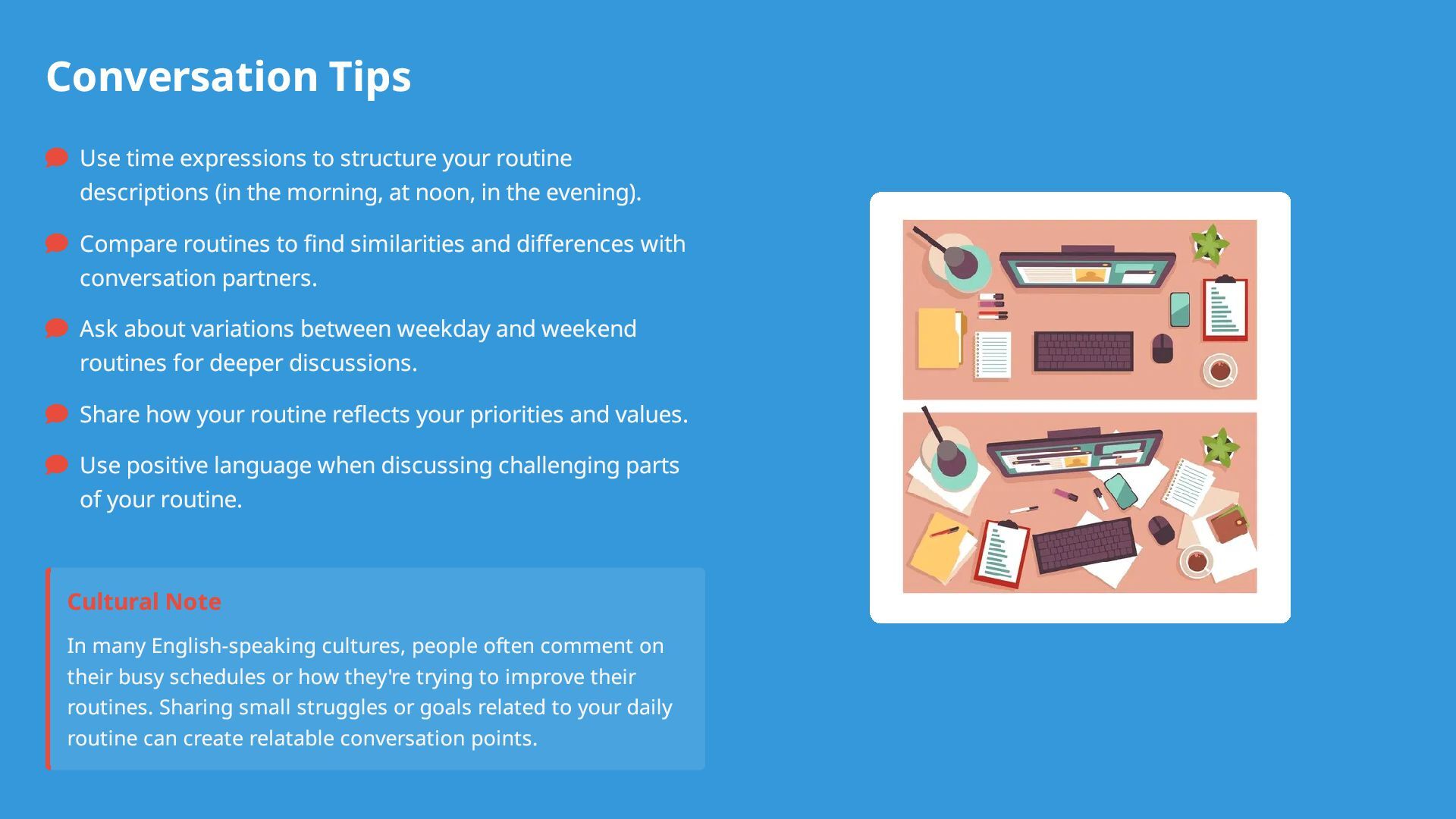
  9. Conversation Tips  Use time expressions to structure your routine

    descriptions (in the morning, at noon, in the evening).  Compare routines to find similarities and differences with conversation partners.  Ask about variations between weekday and weekend routines for deeper discussions.  Share how your routine reflects your priorities and values.  Use positive language when discussing challenging parts of your routine. Cultural Note In many English-speaking cultures, people often comment on their busy schedules or how they're trying to improve their routines. Sharing small struggles or goals related to your daily routine can create relatable conversation points.
  10. Practice Time!  Master daily routine vocabulary with personalized lessons

     Practice real-life conversations with expert guidance  Access exclusive materials and resources  Receive feedback on your pronunciation and fluency  Build confidence through regular practice sessions Ready to Improve Your English? Take your English skills to the next level with professional instruction! Start Taking Lessons Now! Scan Me englishwithscott.netlify.app