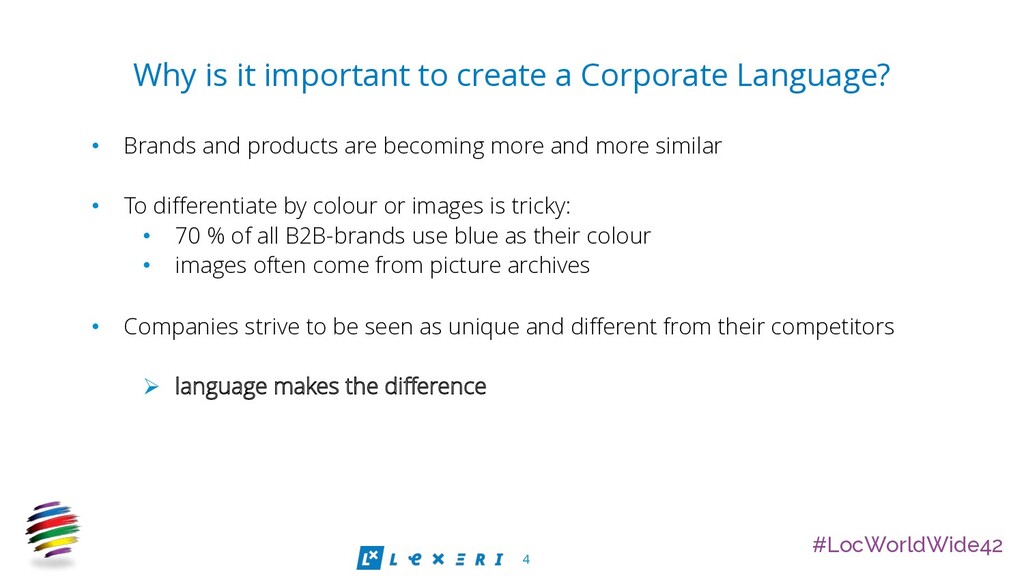
4 • Brands and products are becoming more and more similar • To differentiate by colour or images is tricky: • 70 % of all B2B-brands use blue as their colour • images often come from picture archives • Companies strive to be seen as unique and different from their competitors Ø language makes the difference
is about mood 7 Language department • Tone taps into emotion in ways that character and voice cannot • Adapt tone based on the situation at hand • It’s highly contextual
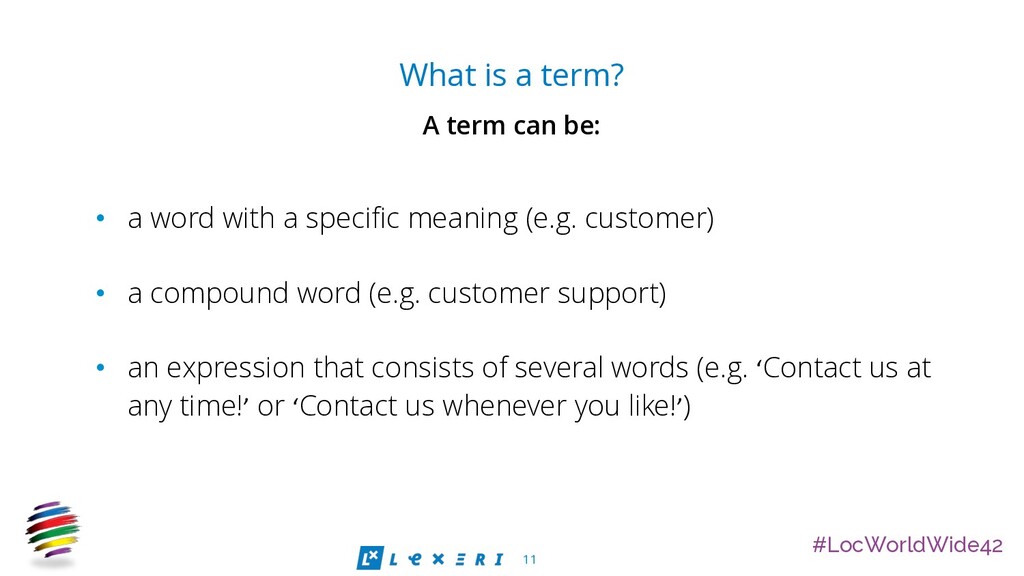
Language department • a word with a specific meaning (e.g. customer) • a compound word (e.g. customer support) • an expression that consists of several words (e.g. ‘Contact us at any time!’ or ‘Contact us whenever you like!’)
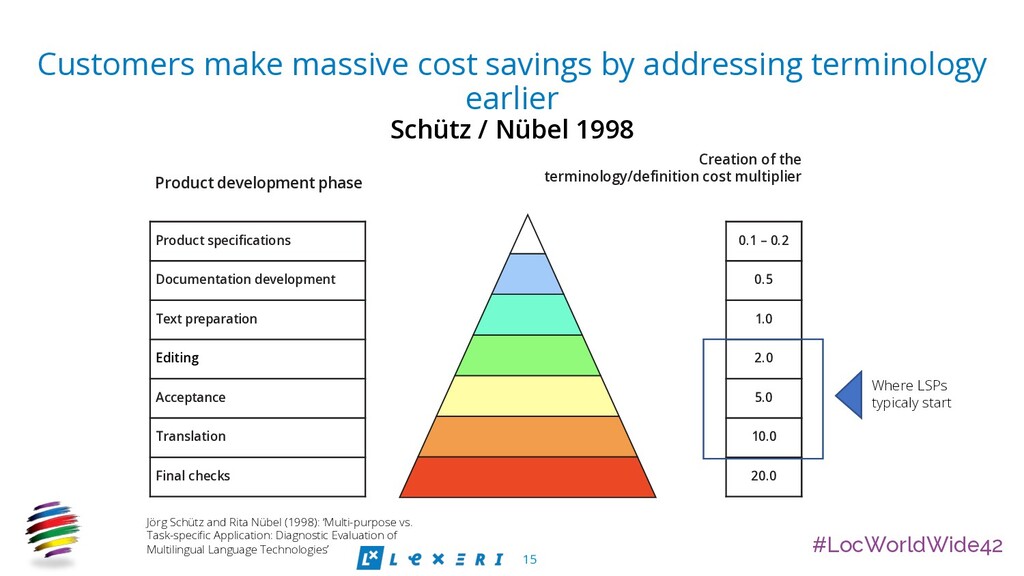
Schütz / Nübel 1998 Product specifications Documentation development Text preparation Editing Acceptance Translation Final checks 0.1 – 0.2 0.5 1.0 2.0 5.0 10.0 20.0 Product development phase Creation of the terminology/definition cost multiplier 15 Jörg Schütz and Rita Nübel (1998): ‘Multi-purpose vs. Task-specific Application: Diagnostic Evaluation of Multilingual Language Technologies’ Where LSPs typicaly start
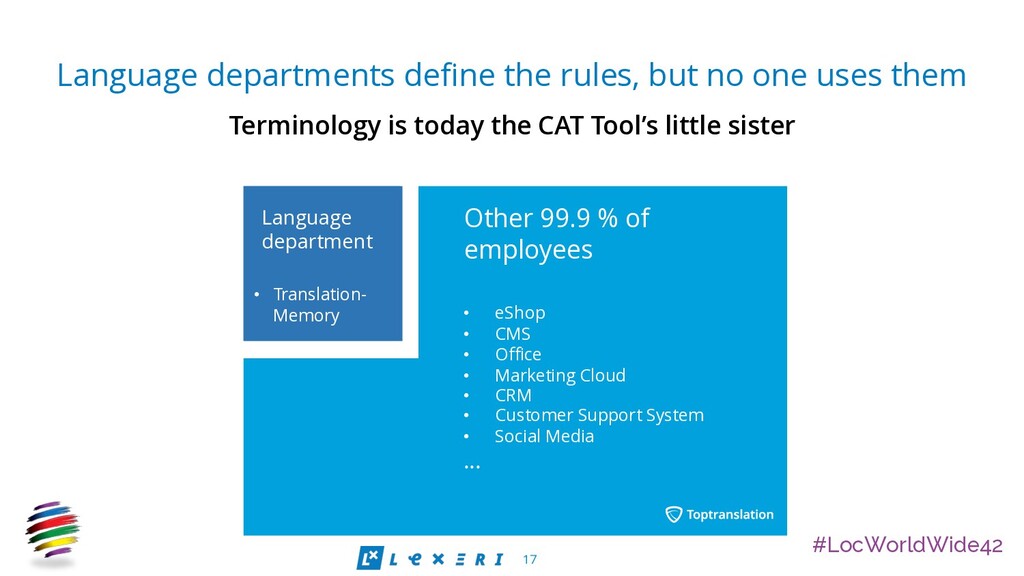
them Terminology is today the CAT Tool’s little sister Other 99.9 % of employees • Translation- Memory • eShop • CMS • Office • Marketing Cloud • CRM • Customer Support System • Social Media ... Language department 17
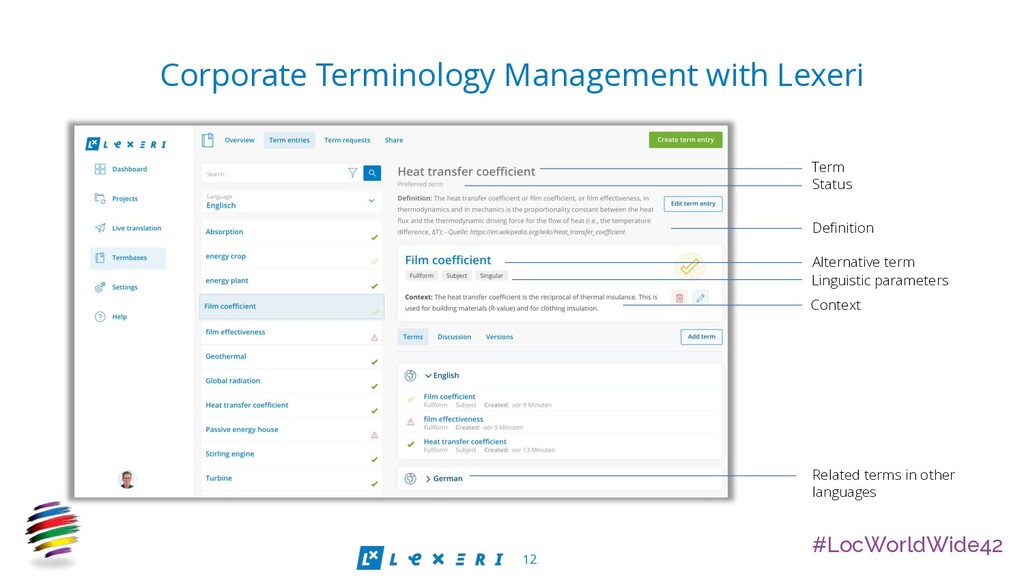
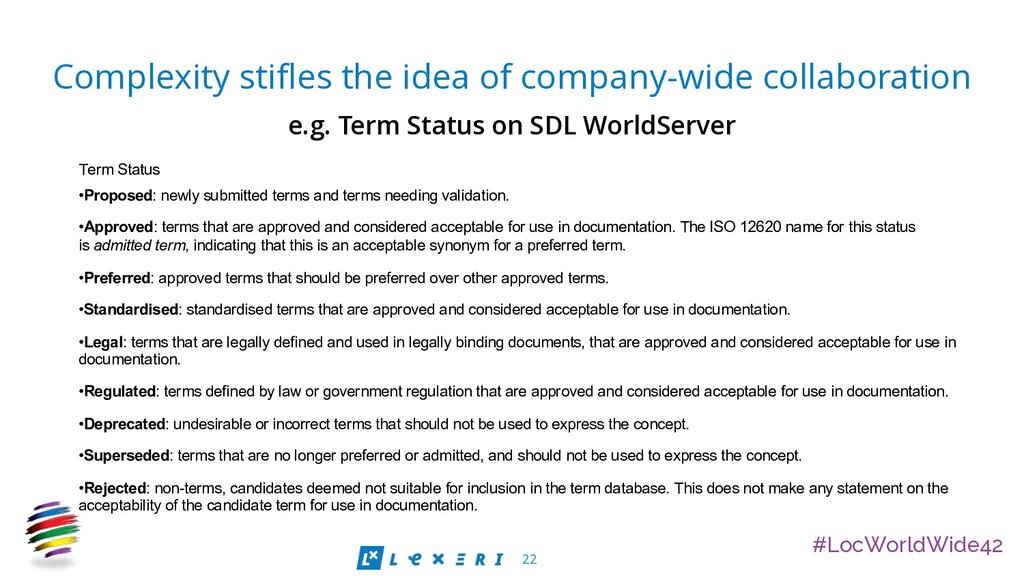
Status on SDL WorldServer 22 Term Status •Proposed: newly submitted terms and terms needing validation. •Approved: terms that are approved and considered acceptable for use in documentation. The ISO 12620 name for this status is admitted term, indicating that this is an acceptable synonym for a preferred term. •Preferred: approved terms that should be preferred over other approved terms. •Standardised: standardised terms that are approved and considered acceptable for use in documentation. •Legal: terms that are legally defined and used in legally binding documents, that are approved and considered acceptable for use in documentation. •Regulated: terms defined by law or government regulation that are approved and considered acceptable for use in documentation. •Deprecated: undesirable or incorrect terms that should not be used to express the concept. •Superseded: terms that are no longer preferred or admitted, and should not be used to express the concept. •Rejected: non-terms, candidates deemed not suitable for inclusion in the term database. This does not make any statement on the acceptability of the candidate term for use in documentation.
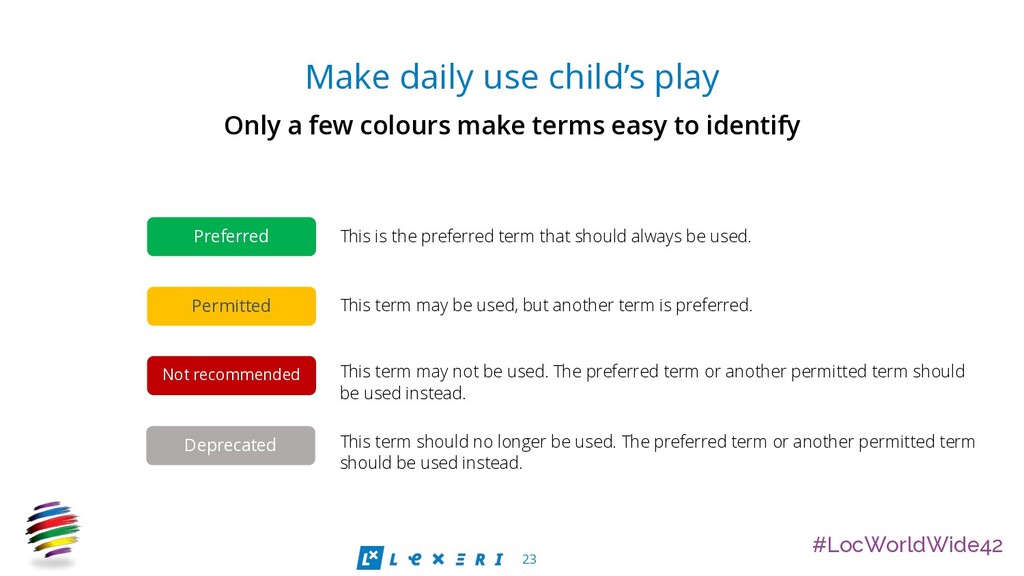
make terms easy to identify Preferred Permitted Deprecated Not recommended This is the preferred term that should always be used. This term may be used, but another term is preferred. This term may not be used. The preferred term or another permitted term should be used instead. This term should no longer be used. The preferred term or another permitted term should be used instead. 23
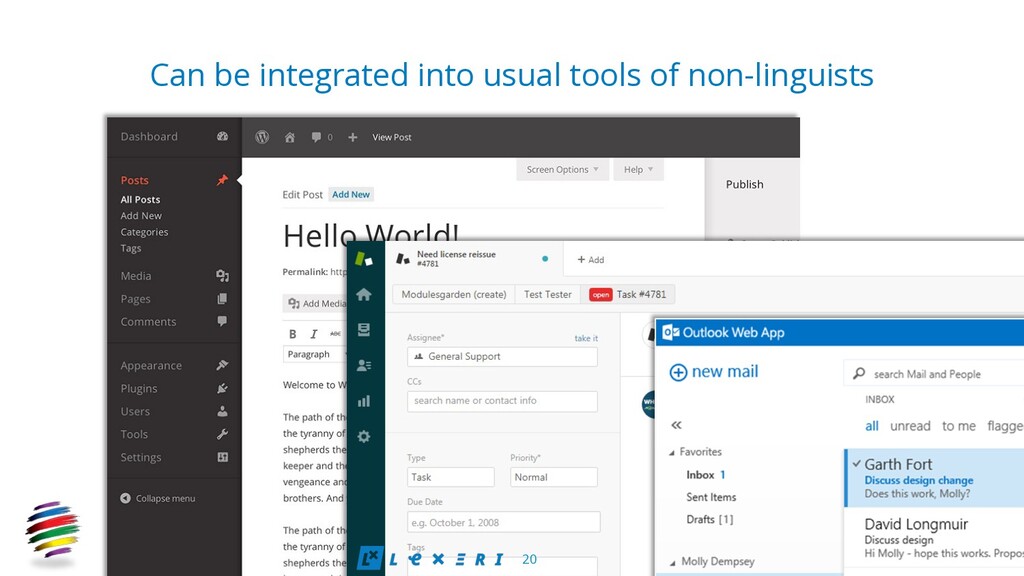
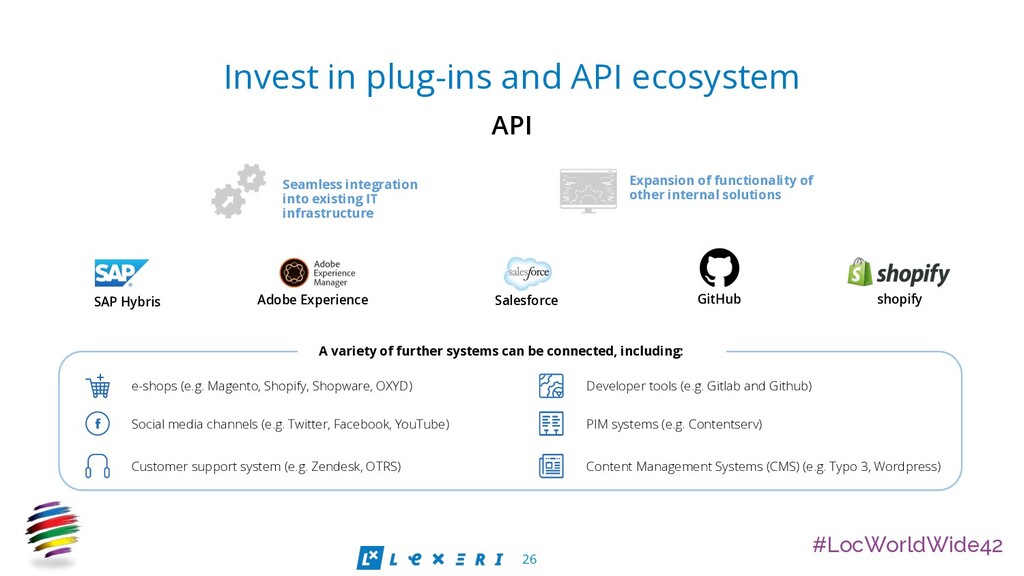
Shopware, OXYD) Social media channels (e.g. Twitter, Facebook, YouTube) Customer support system (e.g. Zendesk, OTRS) Developer tools (e.g. Gitlab and Github) PIM systems (e.g. Contentserv) Content Management Systems (CMS) (e.g. Typo 3, Wordpress) A variety of further systems can be connected, including: GitHub shopify Seamless integration into existing IT infrastructure Expansion of functionality of other internal solutions Invest in plug-ins and API ecosystem API 26
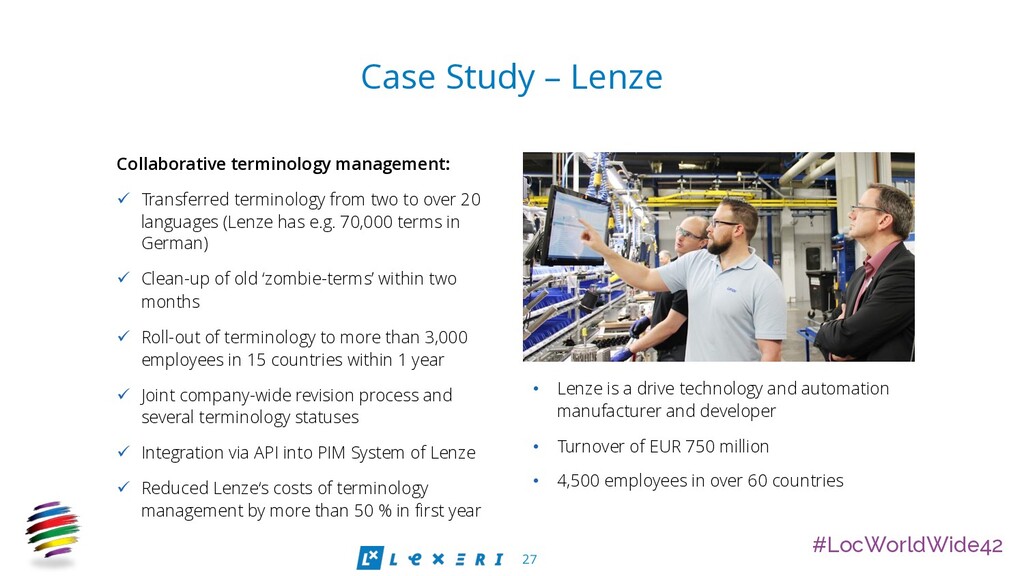
terminology from two to over 20 languages (Lenze has e.g. 70,000 terms in German) ü Clean-up of old ‘zombie-terms’ within two months ü Roll-out of terminology to more than 3,000 employees in 15 countries within 1 year ü Joint company-wide revision process and several terminology statuses ü Integration via API into PIM System of Lenze ü Reduced Lenze‘s costs of terminology management by more than 50 % in first year • Lenze is a drive technology and automation manufacturer and developer • Turnover of EUR 750 million • 4,500 employees in over 60 countries 27
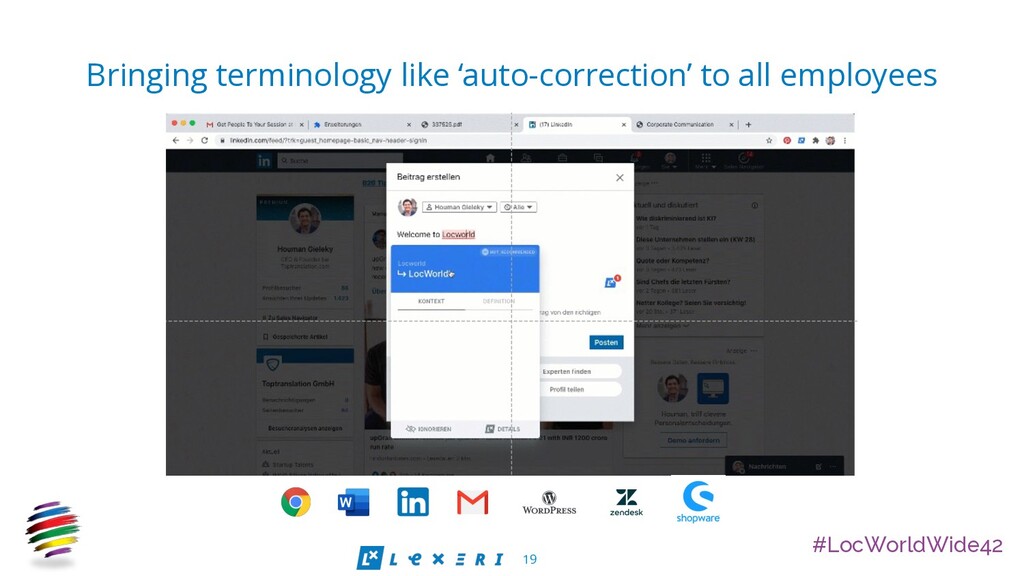
for automatic glossary creation § One-click Terminology check integrated into most content management systems § Voice and tone live check (‘auto-correction’) for written text


 codmoninc
 nealle
 yahonda
 usanchuu
 glaforge
 jtakeda
 hiracky16
 takonda
 terapyon
 bitkey
 prog893
 daidaidai
 addyosmani
 cargoodrich
 nmsamuel
 ks91
 khoart
 kneath
 tammyeverts
 pauljervisheath
 michielstock
 apolaine
 marktimemedia