Spec-Driven Development: Building AI Aligned Software Through Living Specifications
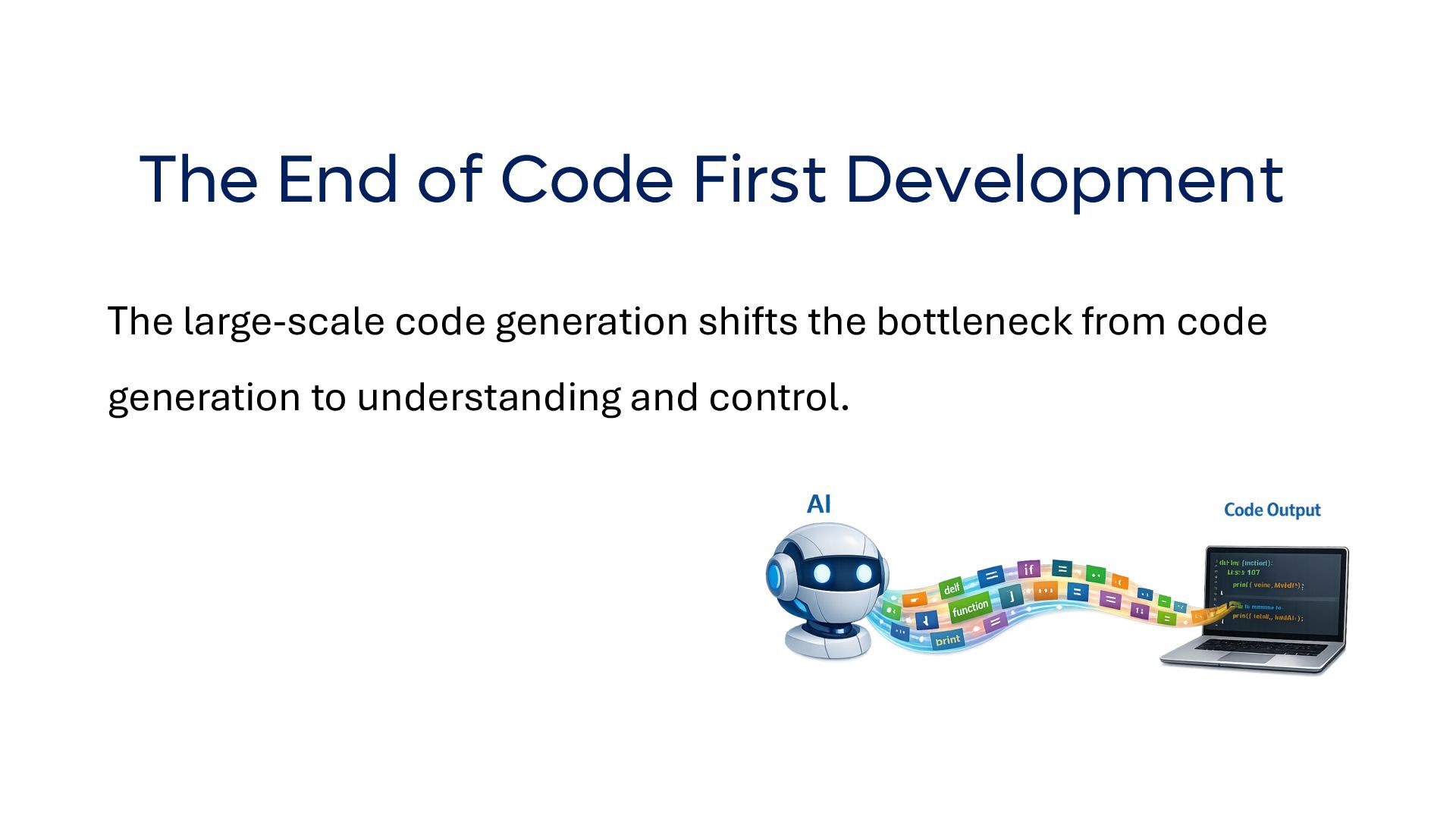
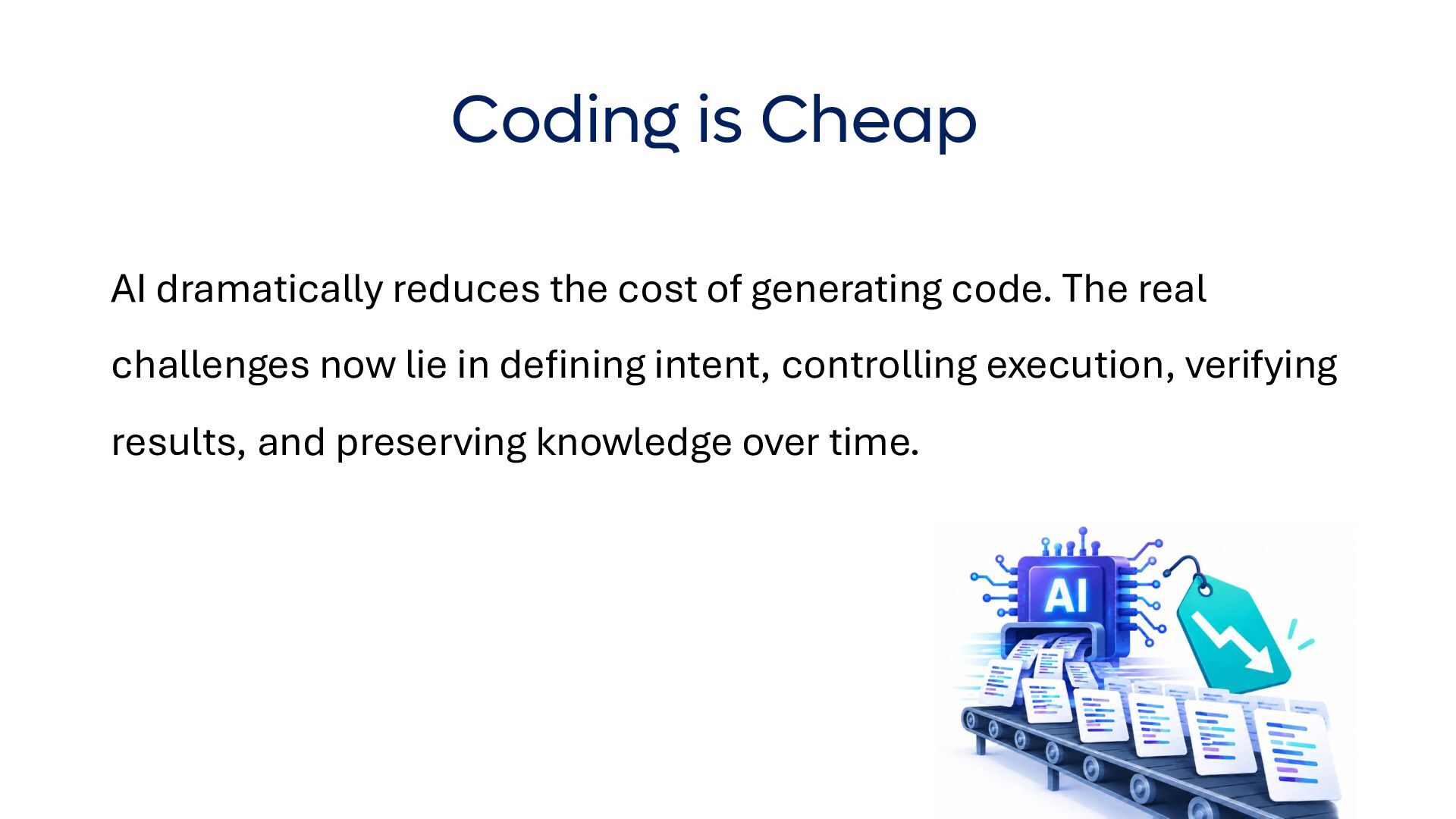
Artificial Intelligence is fundamentally transforming software development. As AI agents become increasingly capable of generating code, implementing features, and executing complex development tasks, the central challenge shifts from writing code to defining intent, controlling execution, verifying results, and preserving knowledge.
This presentation, delivered by Haim Michael at All Day AI 2026 on October 22, 2026, explores Spec-Driven Development (SDD) as an approach to building reliable, maintainable, and AI-aligned software systems.
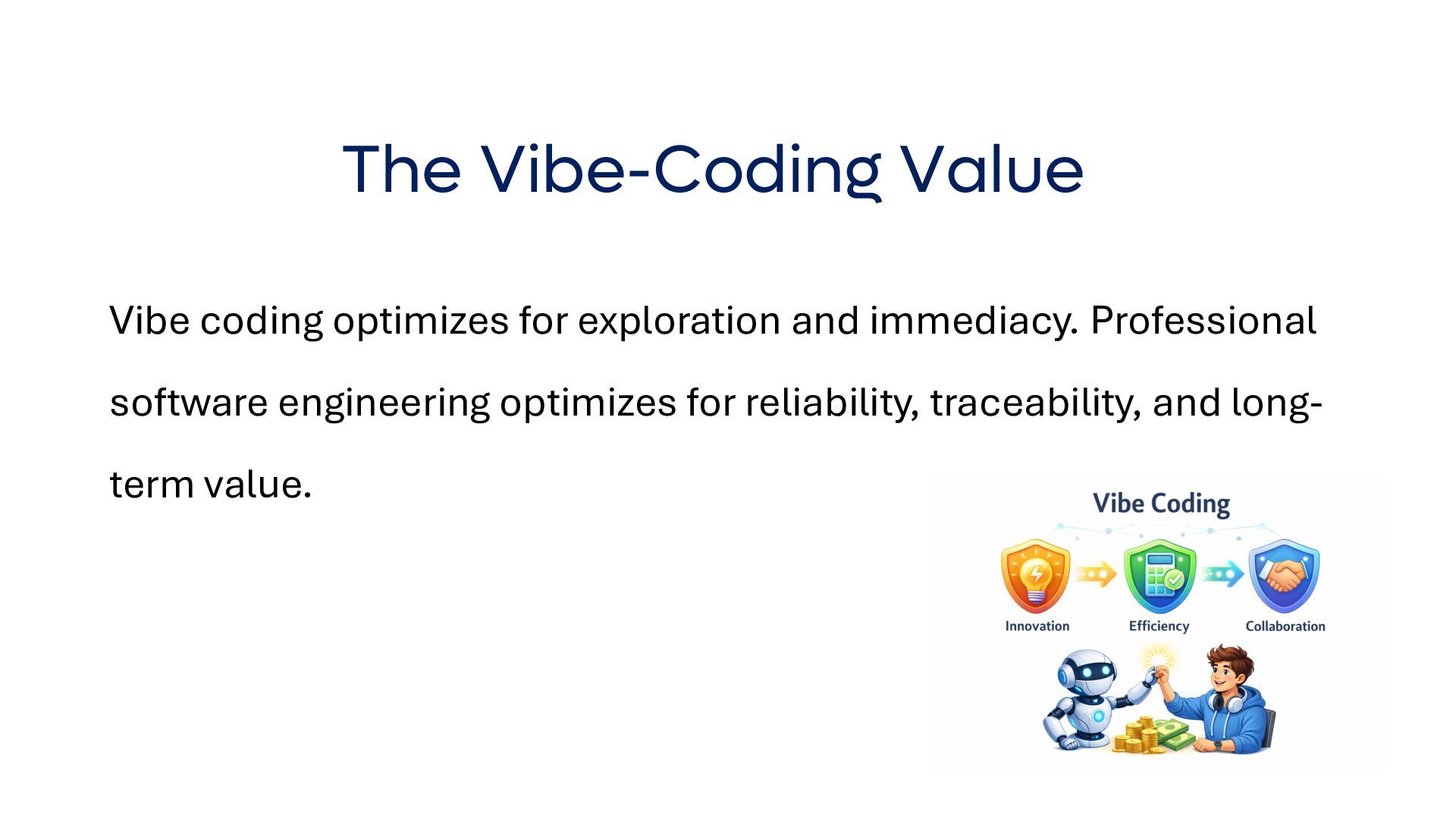
The presentation begins by tracing the evolution beyond traditional code-first development and the limits of relying solely on vibe coding. Although vibe coding provides significant advantages for rapid experimentation and prototyping, professional software engineering requires reliability, traceability, and long-term maintainability.
A key limitation is the lack of durable institutional memory. When architectural decisions and requirements exist primarily within conversations with AI assistants, maintaining and evolving complex systems becomes increasingly challenging.
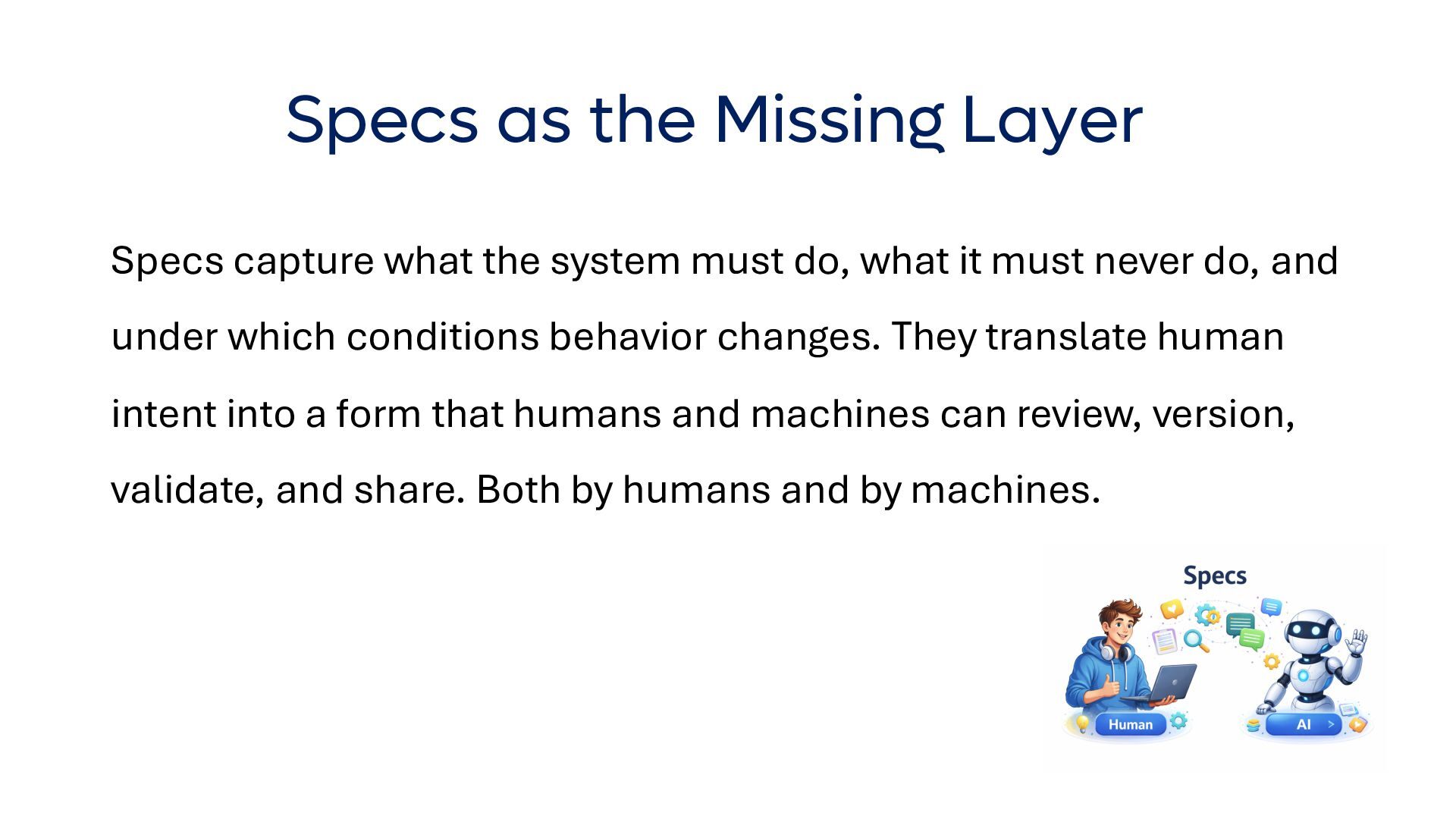
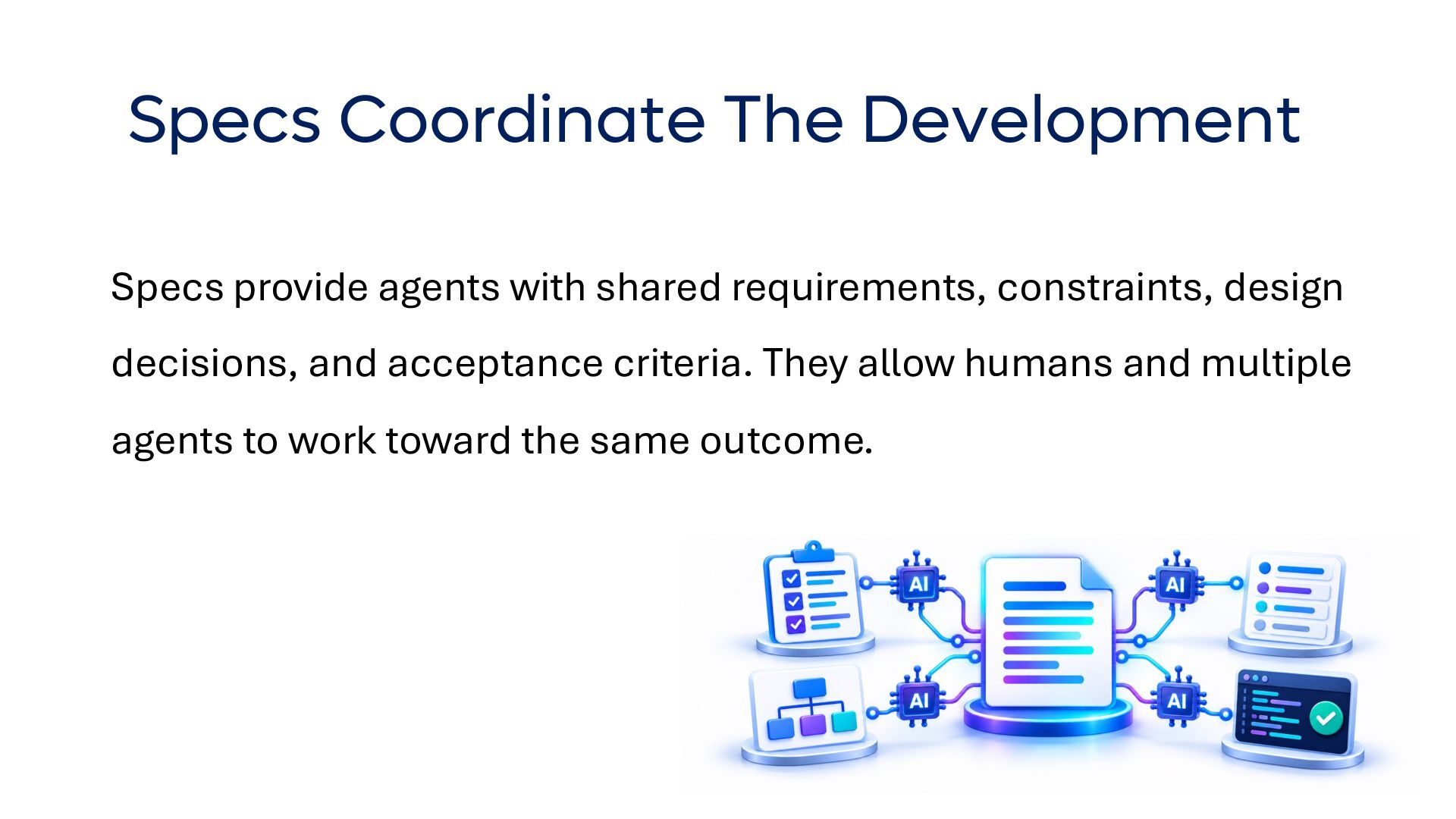
Spec-Driven Development addresses this challenge by introducing specifications as a shared foundation for humans and AI agents. Living specifications capture requirements, constraints, architectural decisions, and acceptance criteria, helping teams coordinate development while staying aligned with human intent.
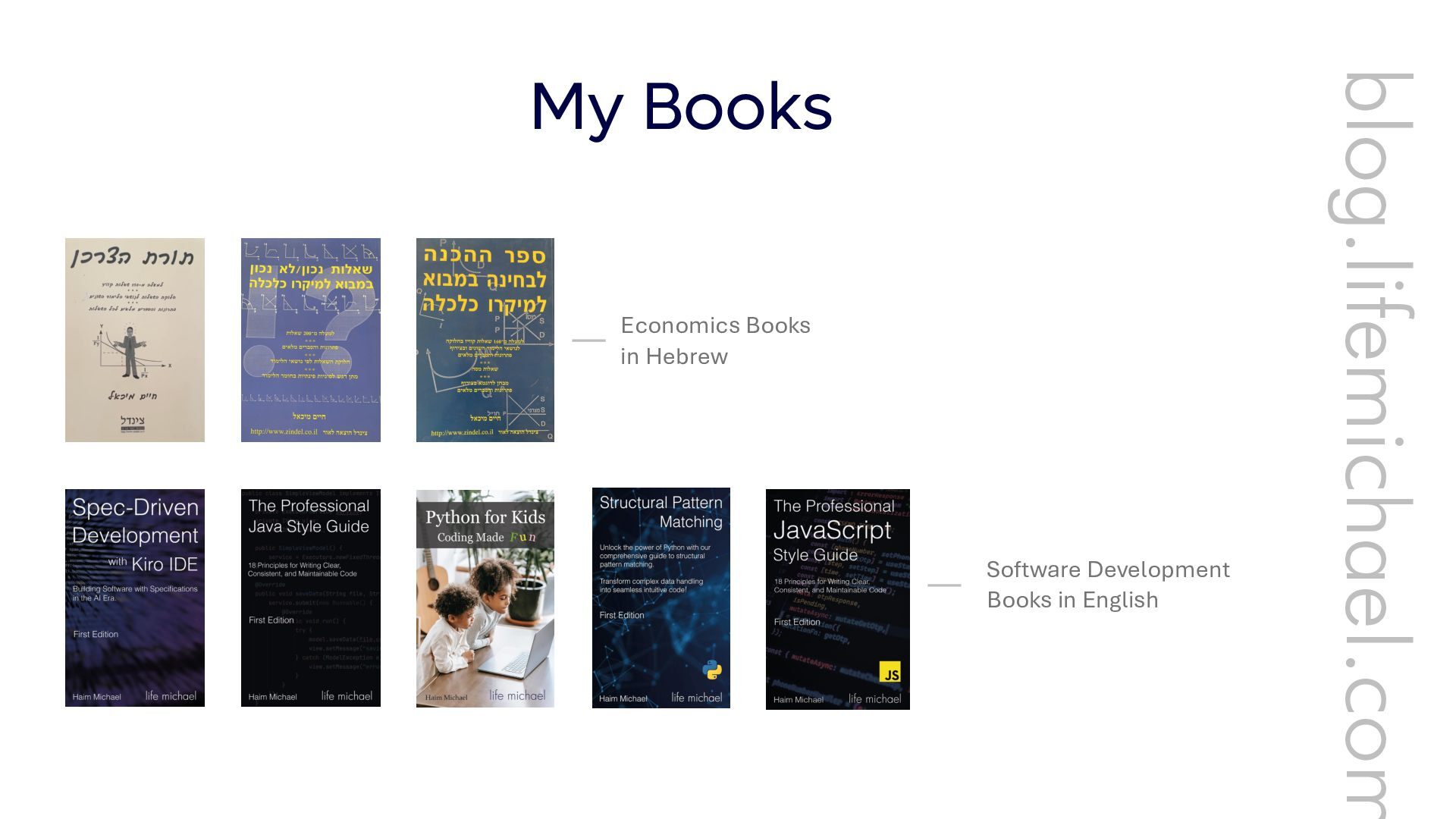
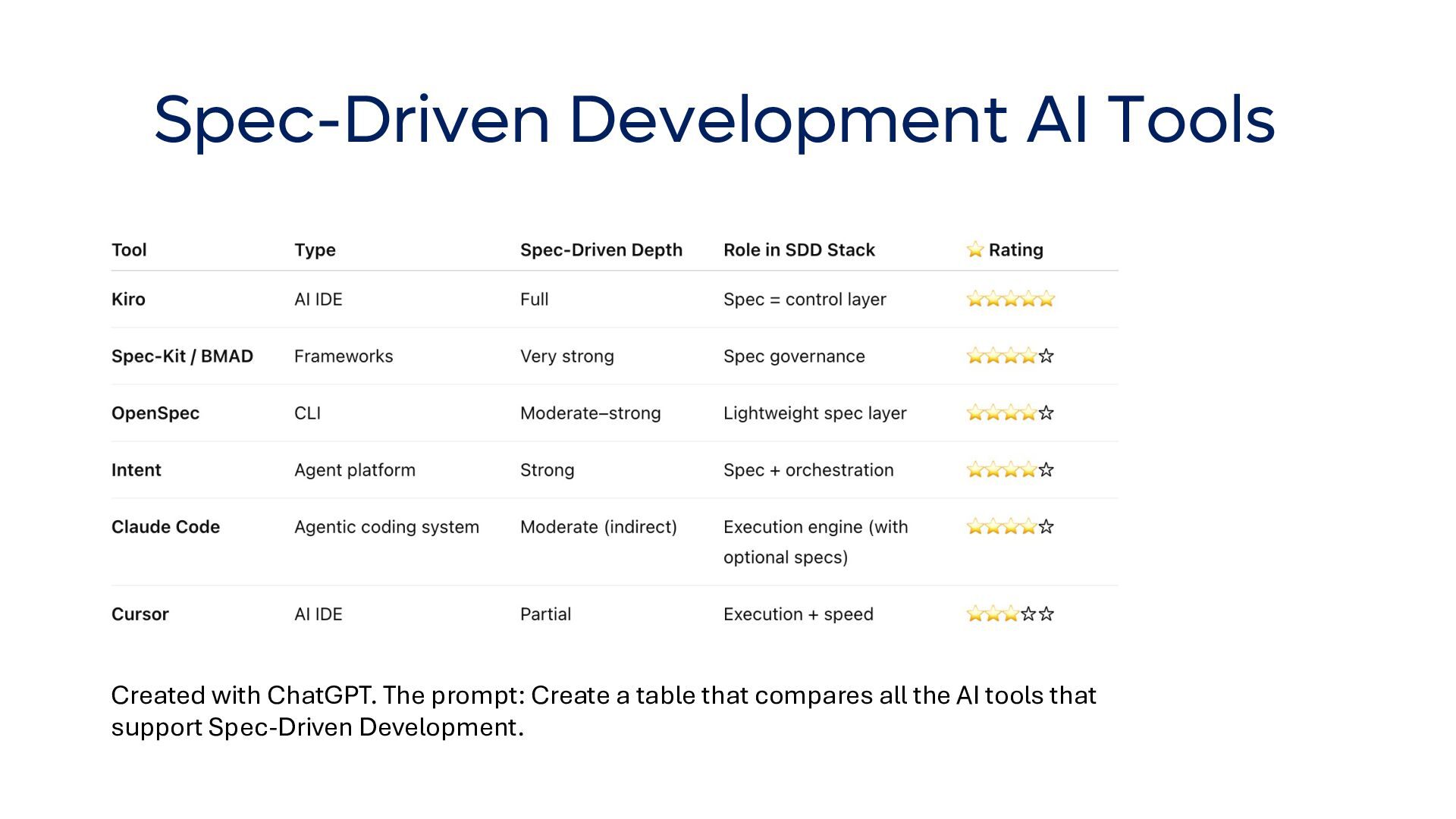
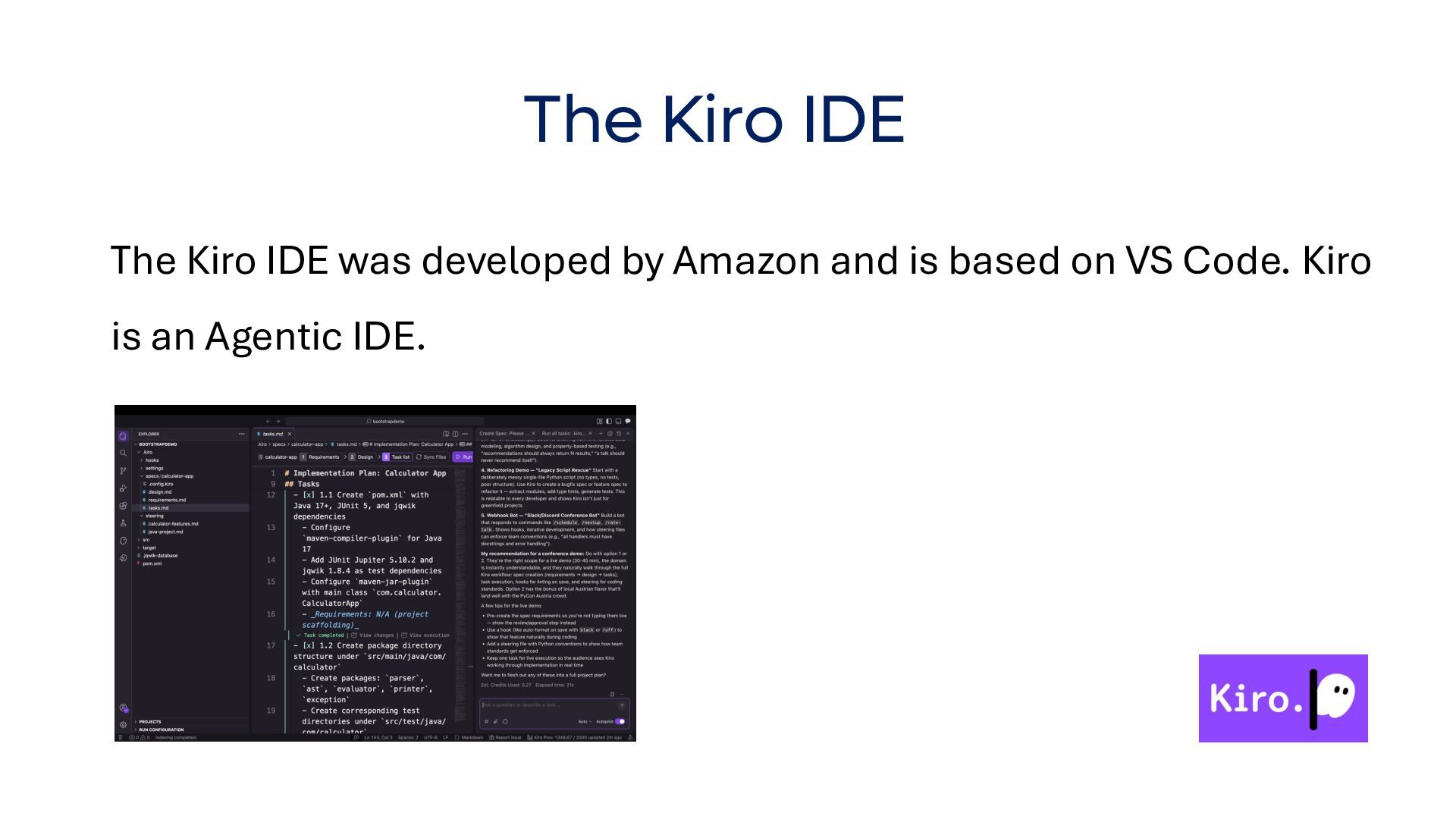
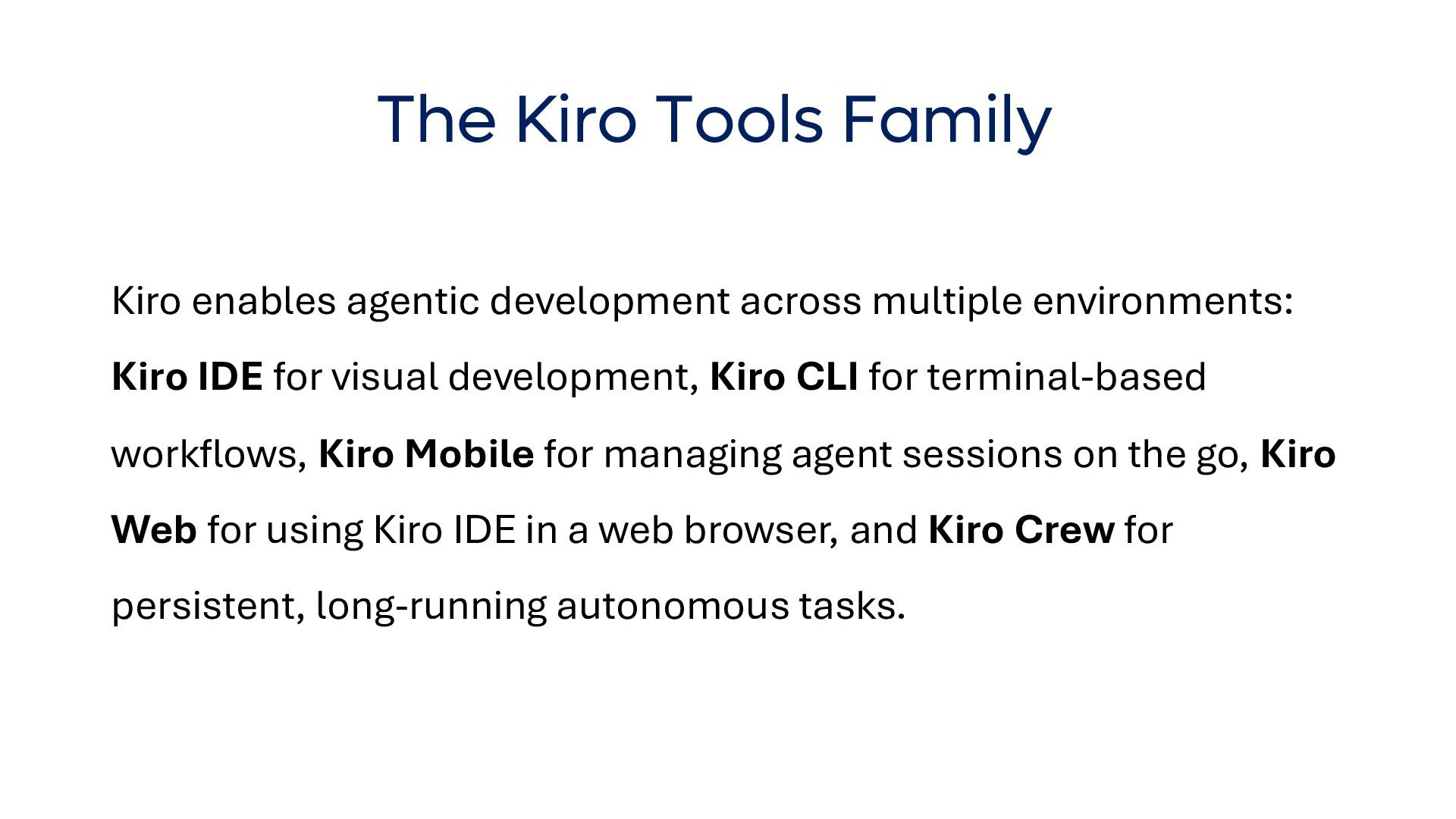
The presentation explores how to implement this approach using Kiro IDE, an agentic development environment designed to support structured, specification-driven workflows.
Topics covered include:
Spec-Driven Development fundamentals: Understanding the role of living specifications in AI-assisted software engineering.
SDD versus vibe coding: Examining the differences between exploratory coding and structured professional development.
Kiro IDE: Exploring an agentic development environment and its specification-driven capabilities.
Steering documents: Providing AI agents with project context, architectural guidelines, and development standards.
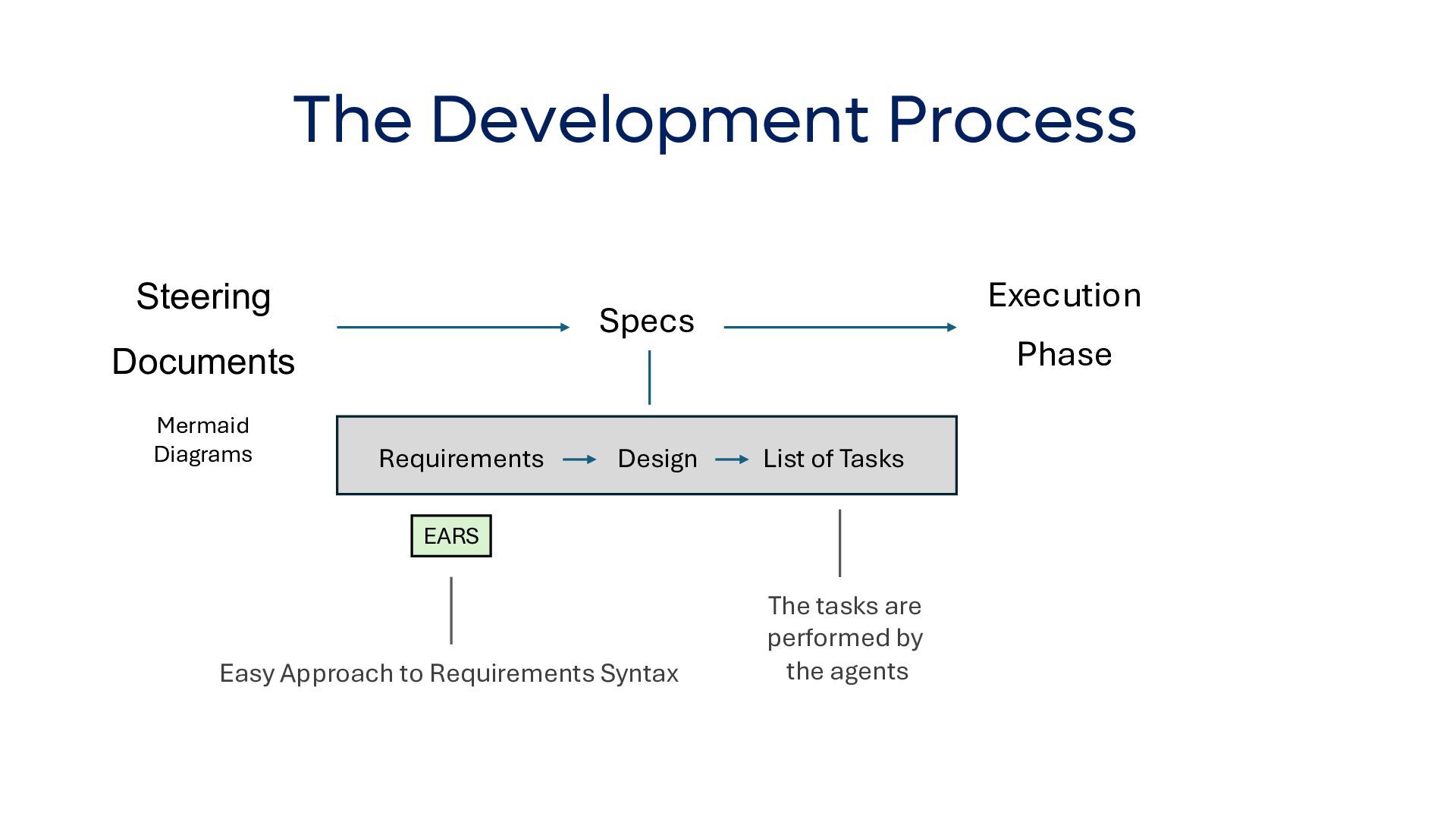
Requirements, design, and tasks: Structuring the development process around explicit specifications, including EARS requirements and Mermaid diagrams.
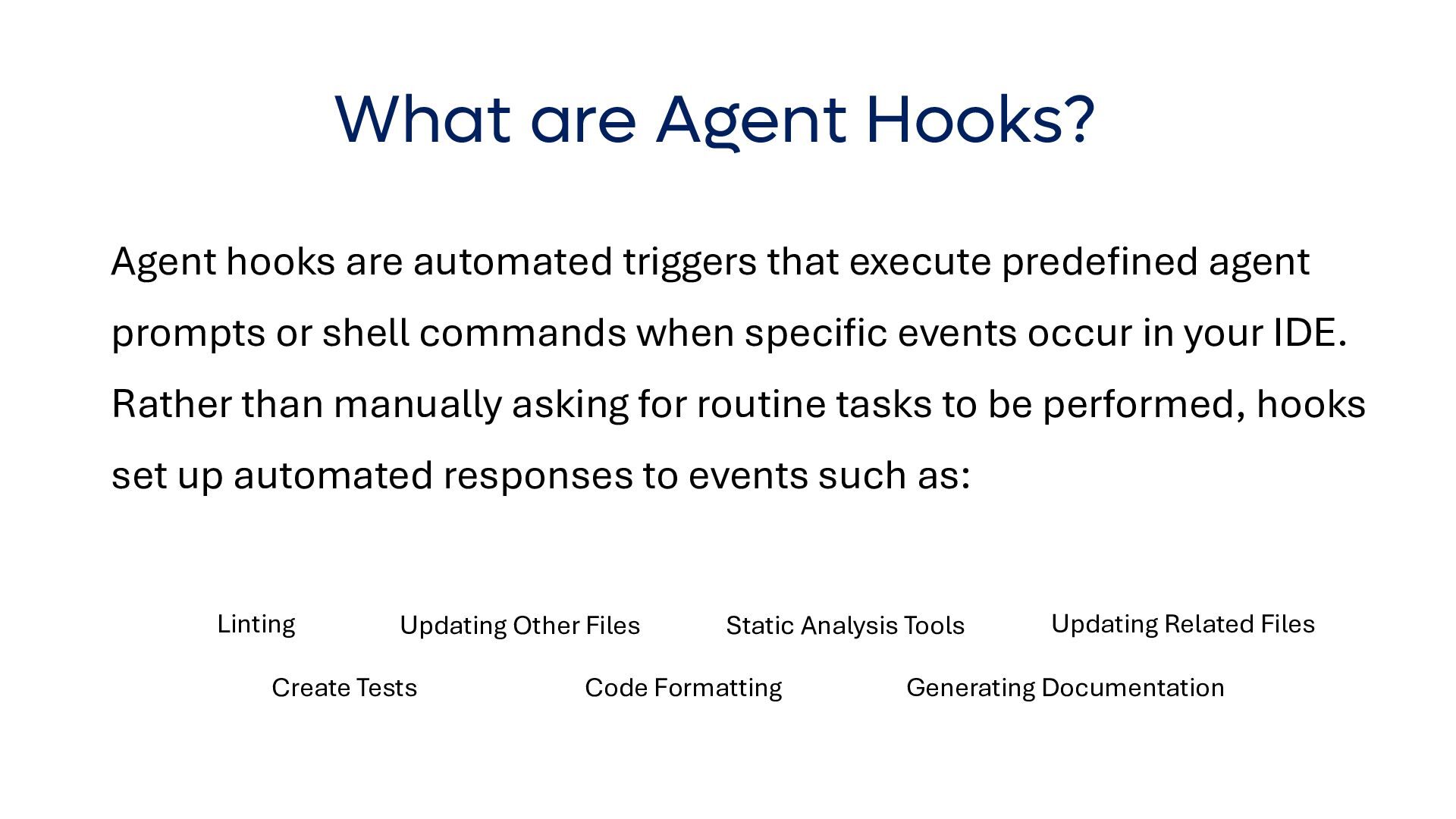
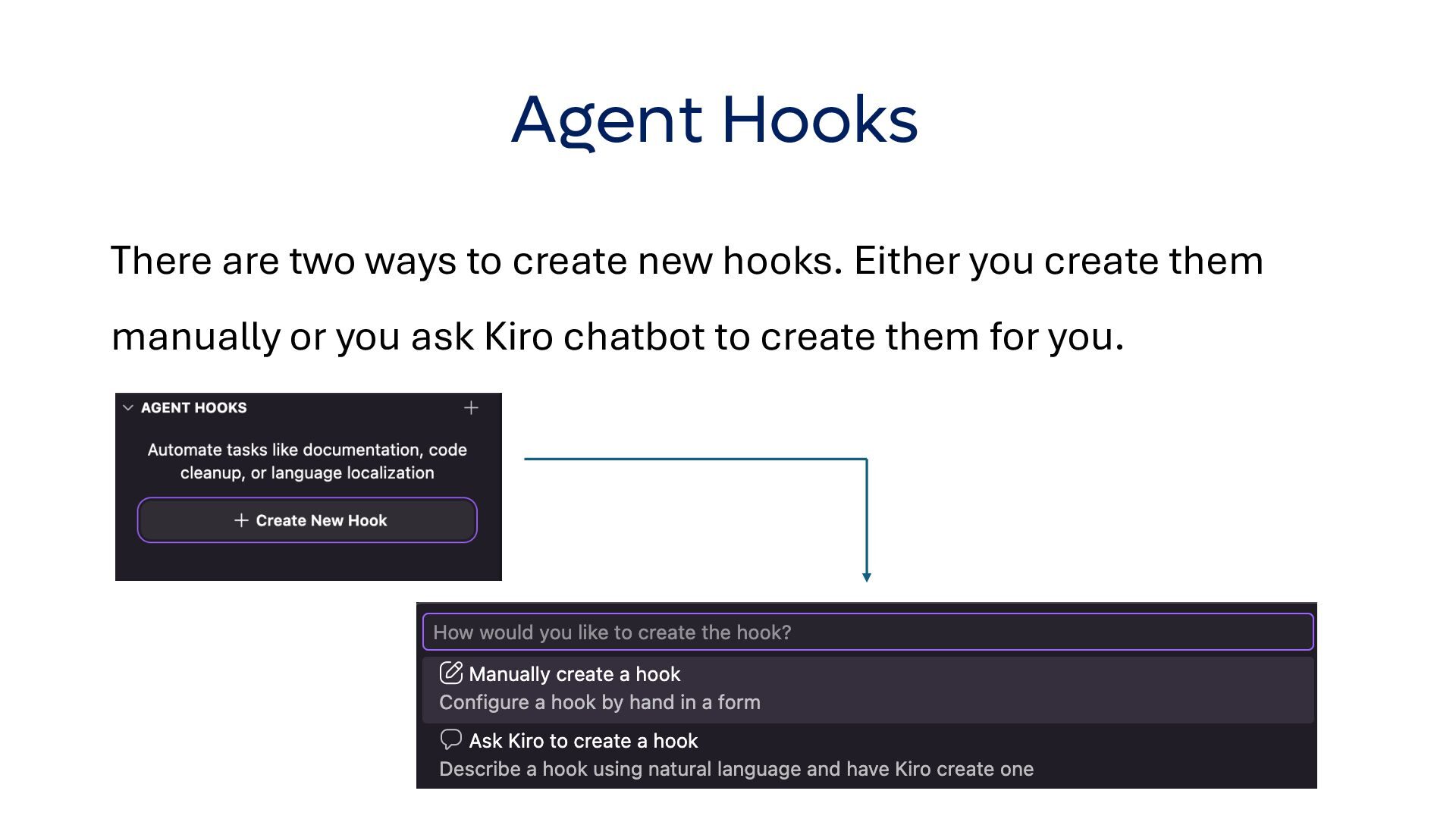
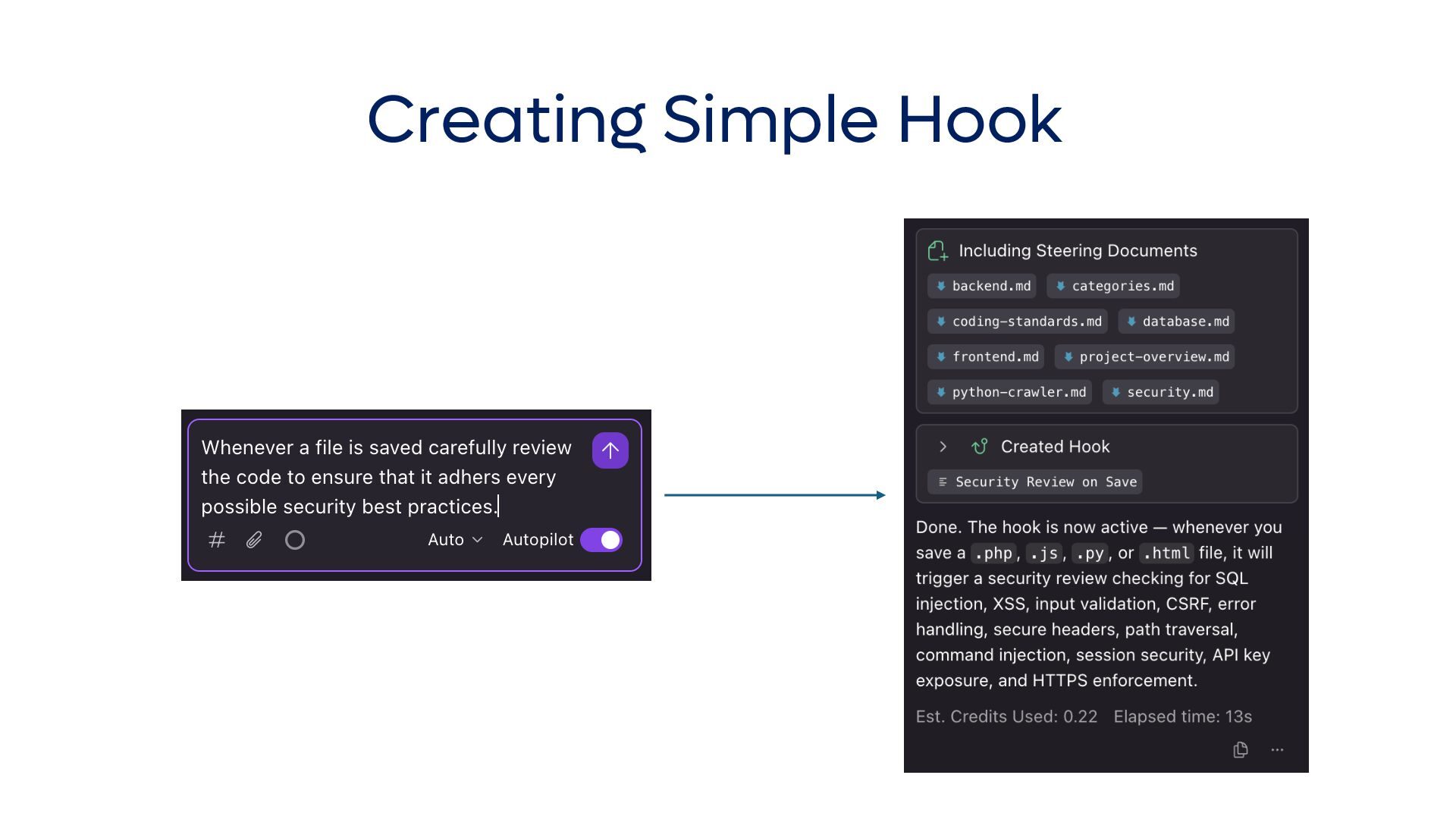
Agent hooks: Automating recurring development activities, including security reviews, testing, code formatting, and documentation.
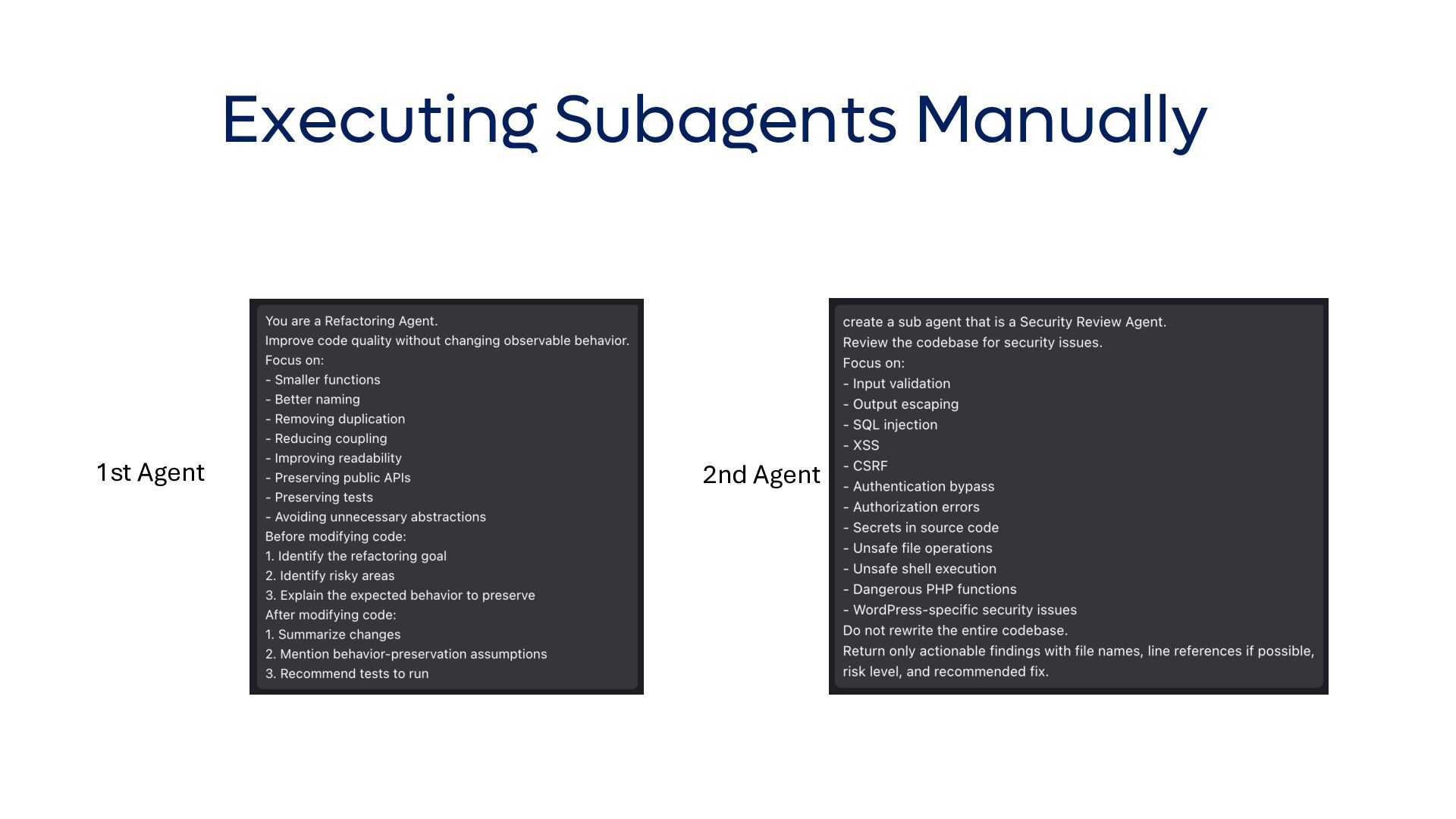
Subagents: Delegating specialized tasks to multiple AI agents.
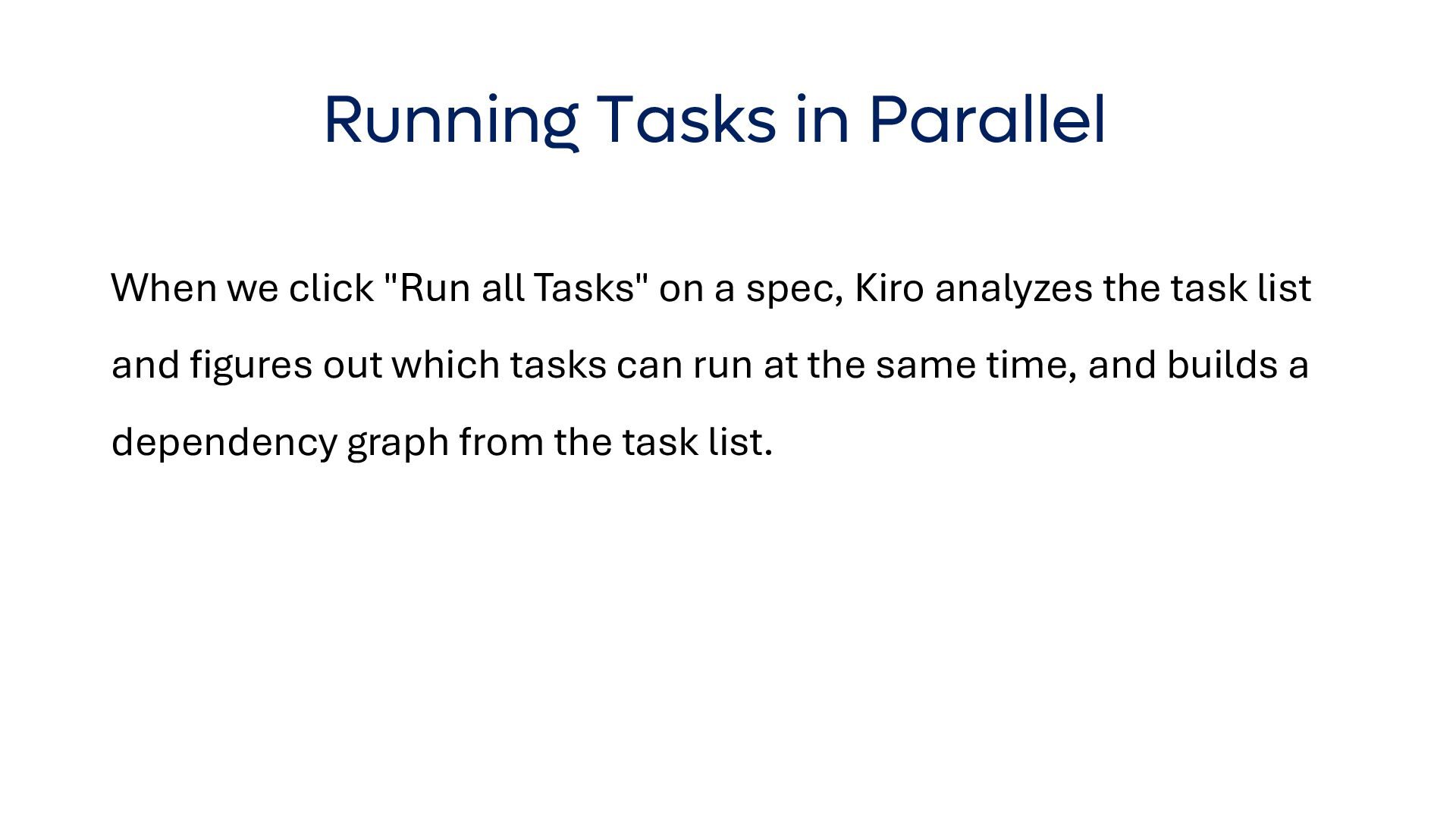
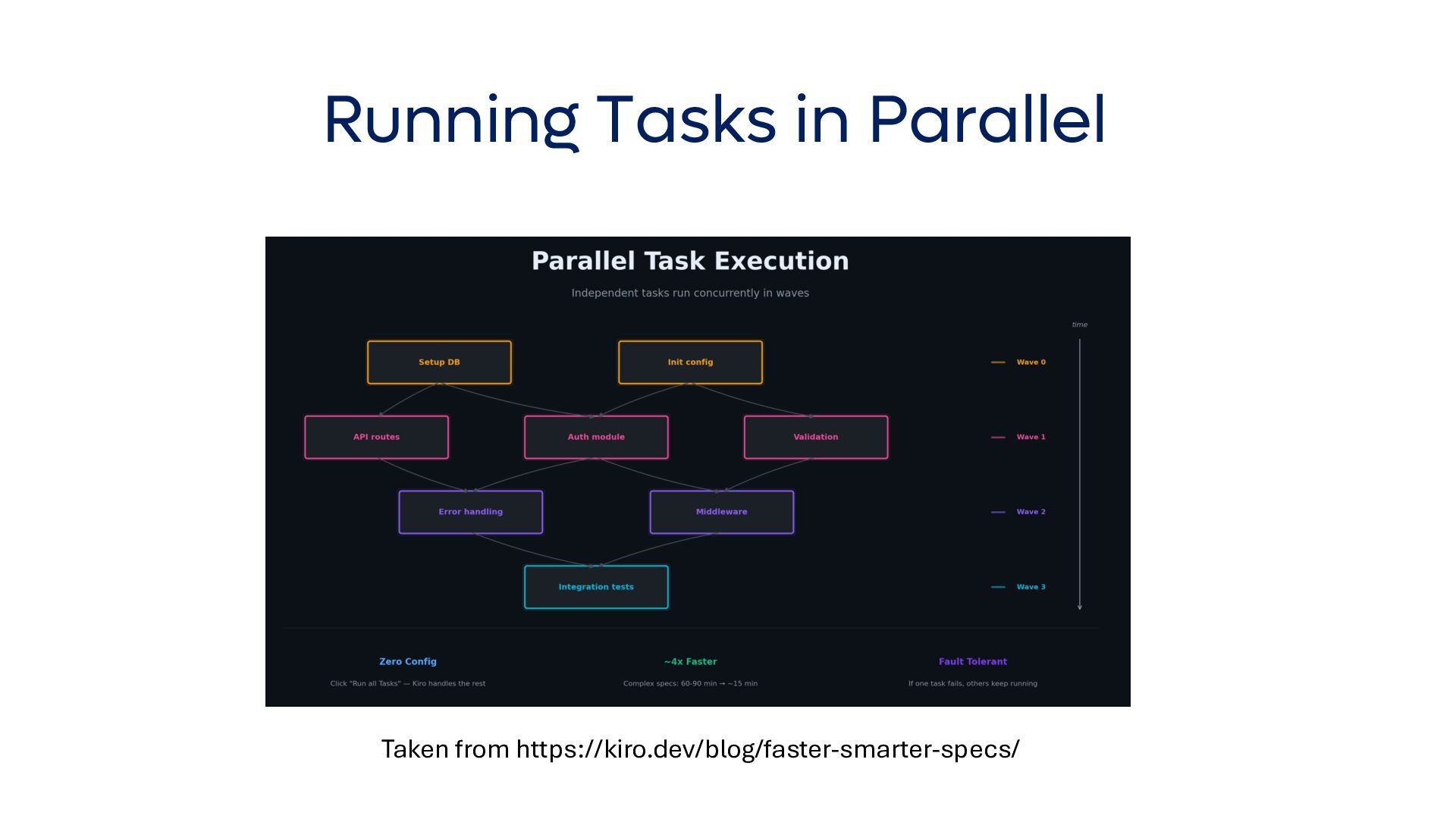
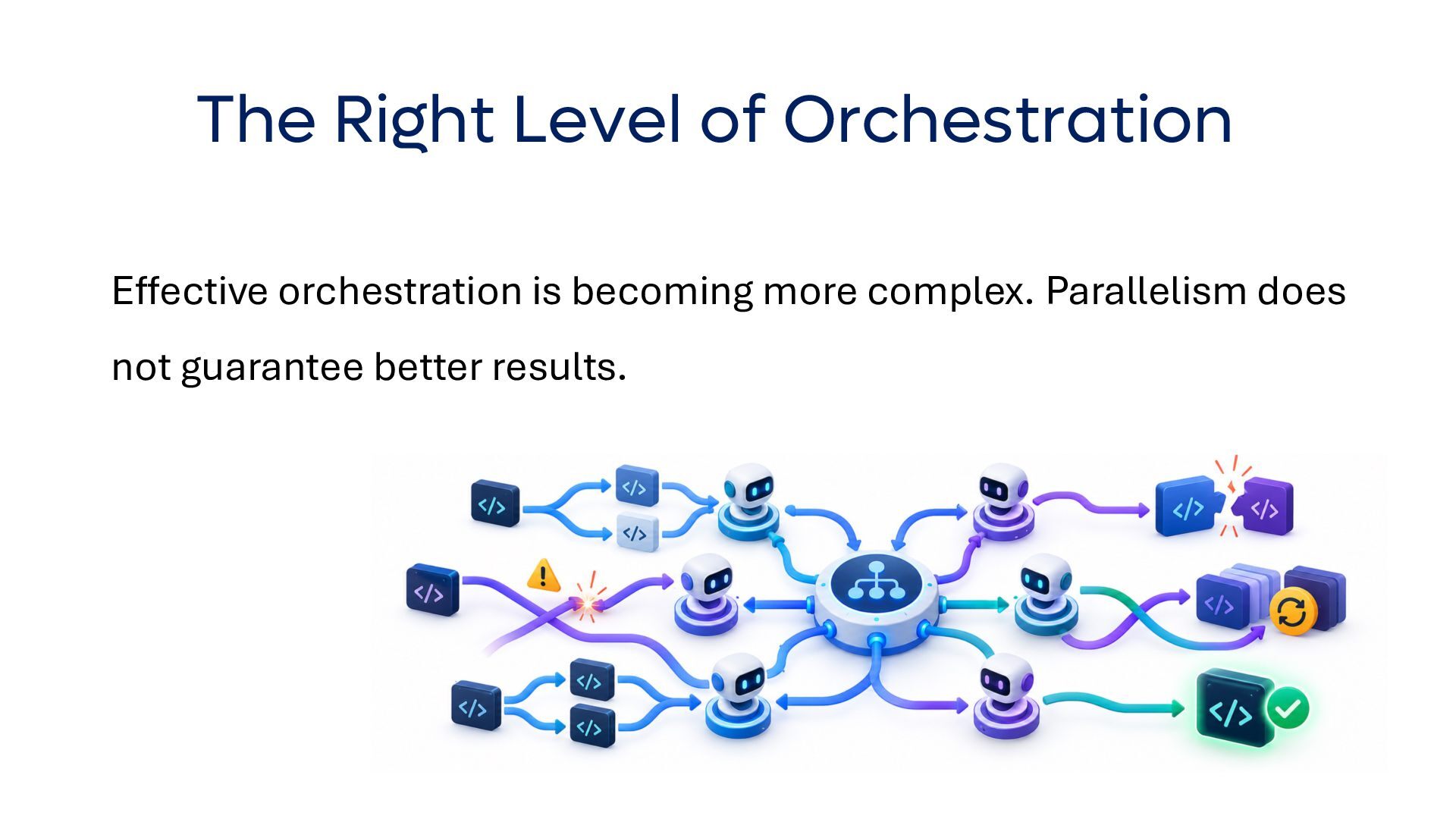
Parallel task execution: Understanding task dependencies and coordinating concurrent execution.
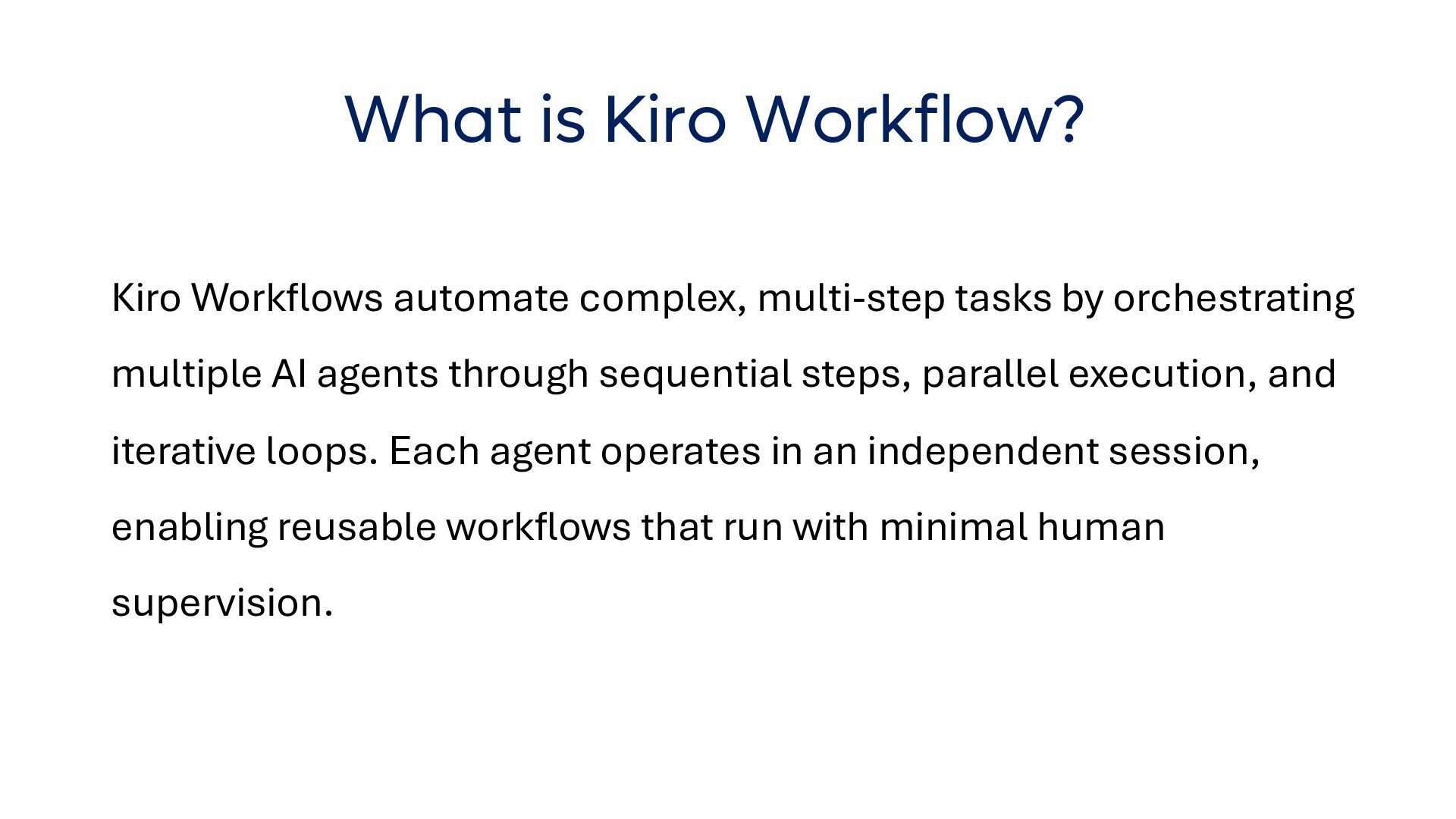
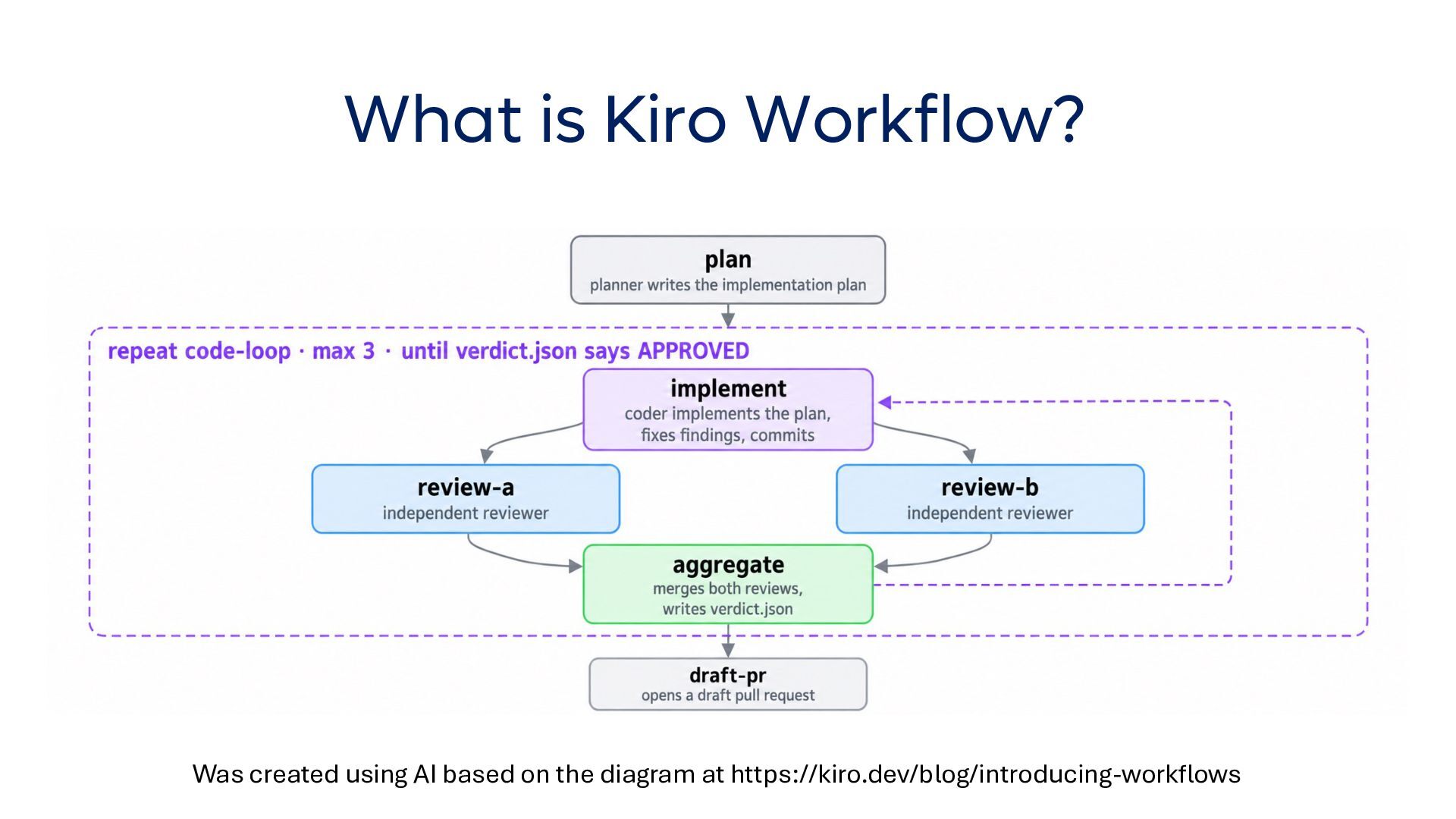
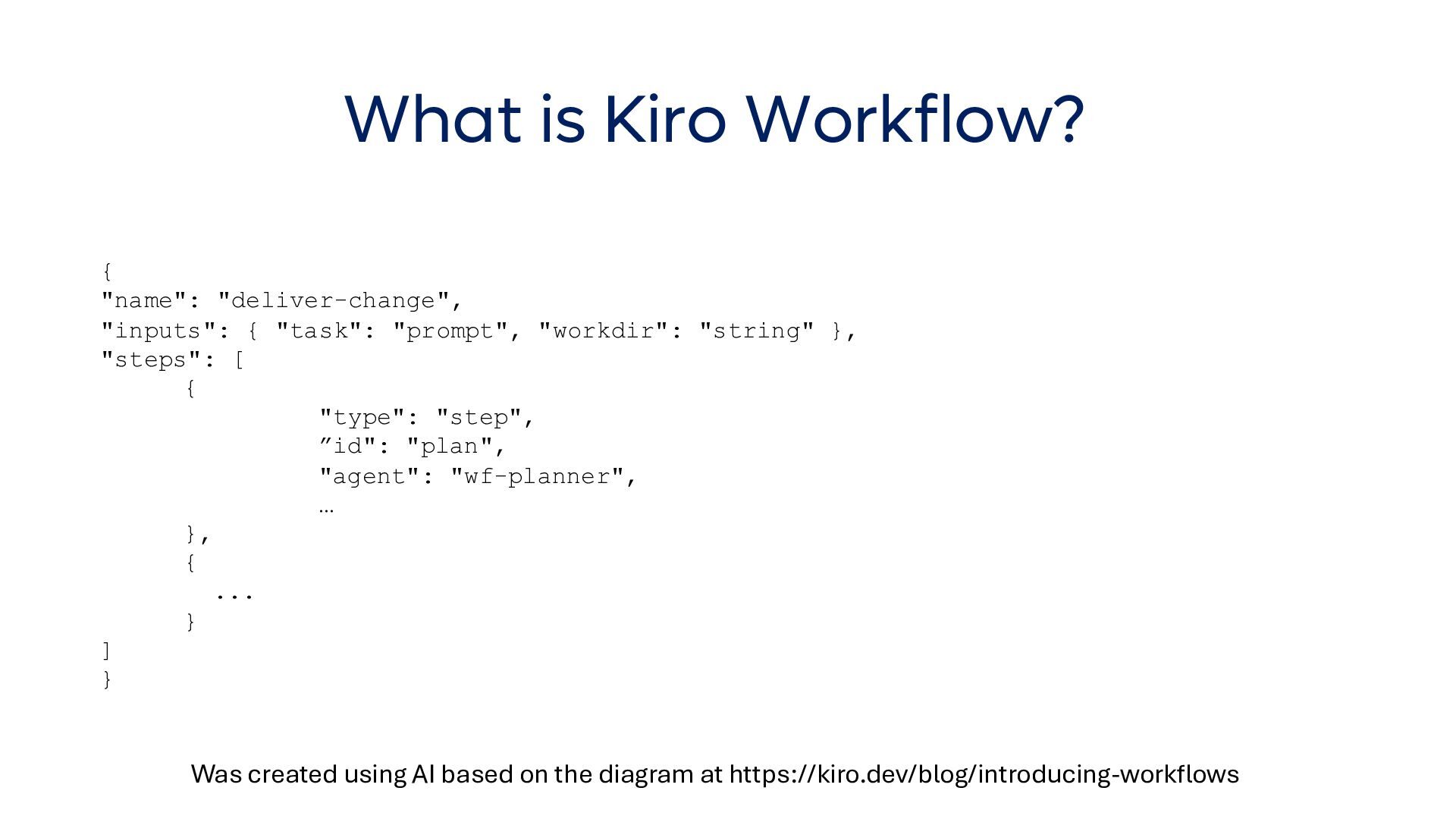
Kiro Workflows: Orchestrating multiple AI agents using sequential steps, parallel execution, and iterative loops.
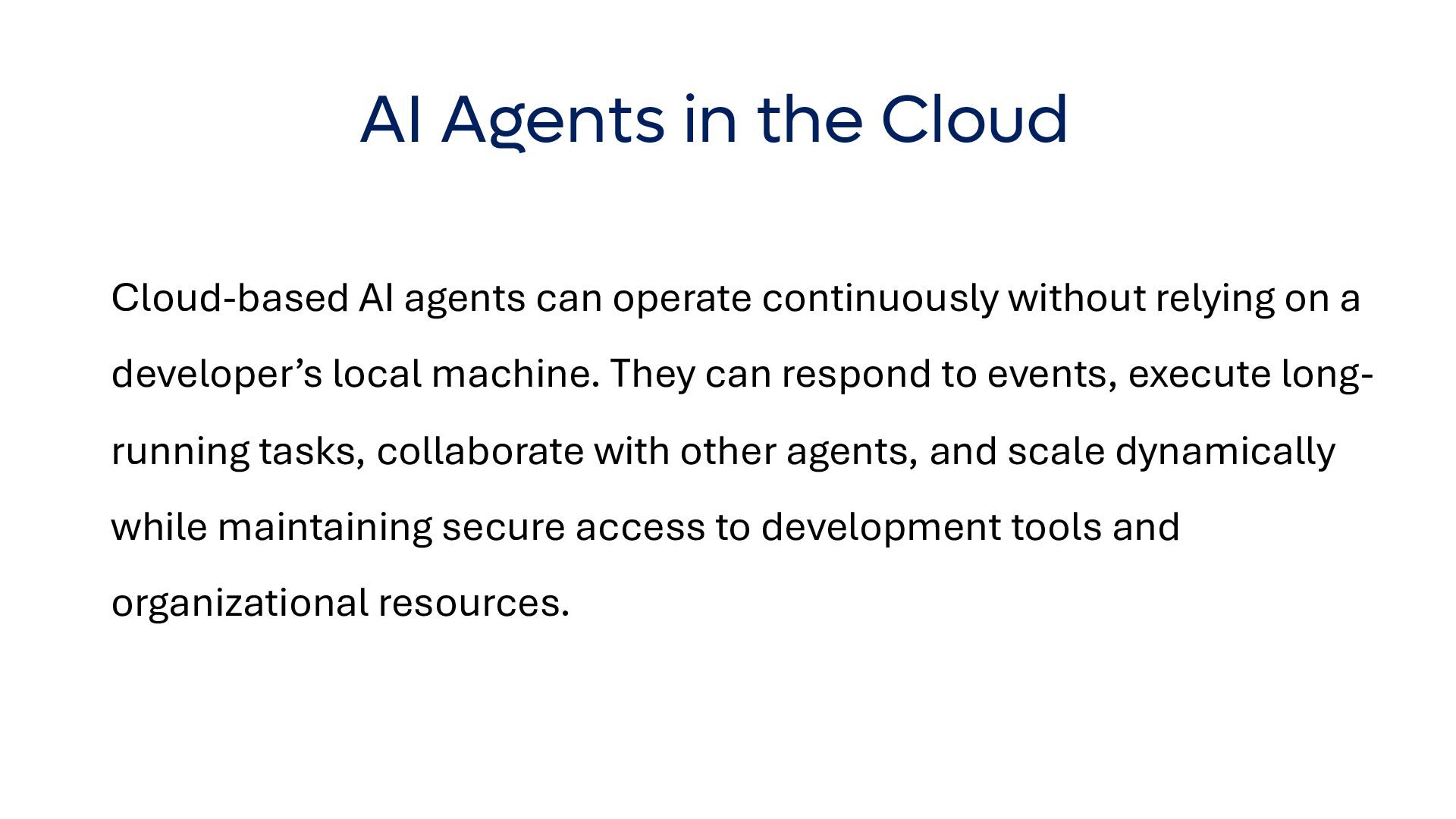
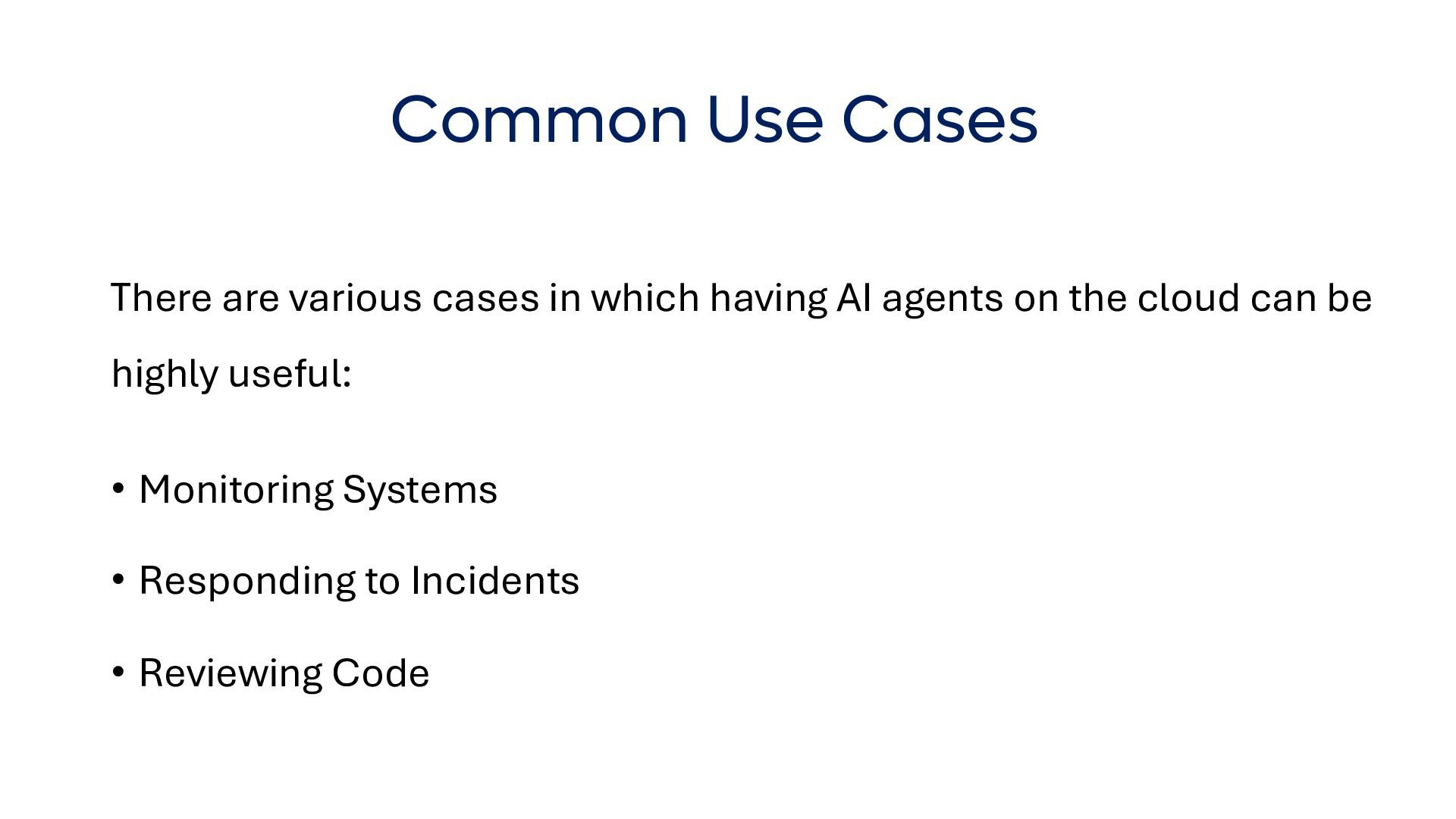
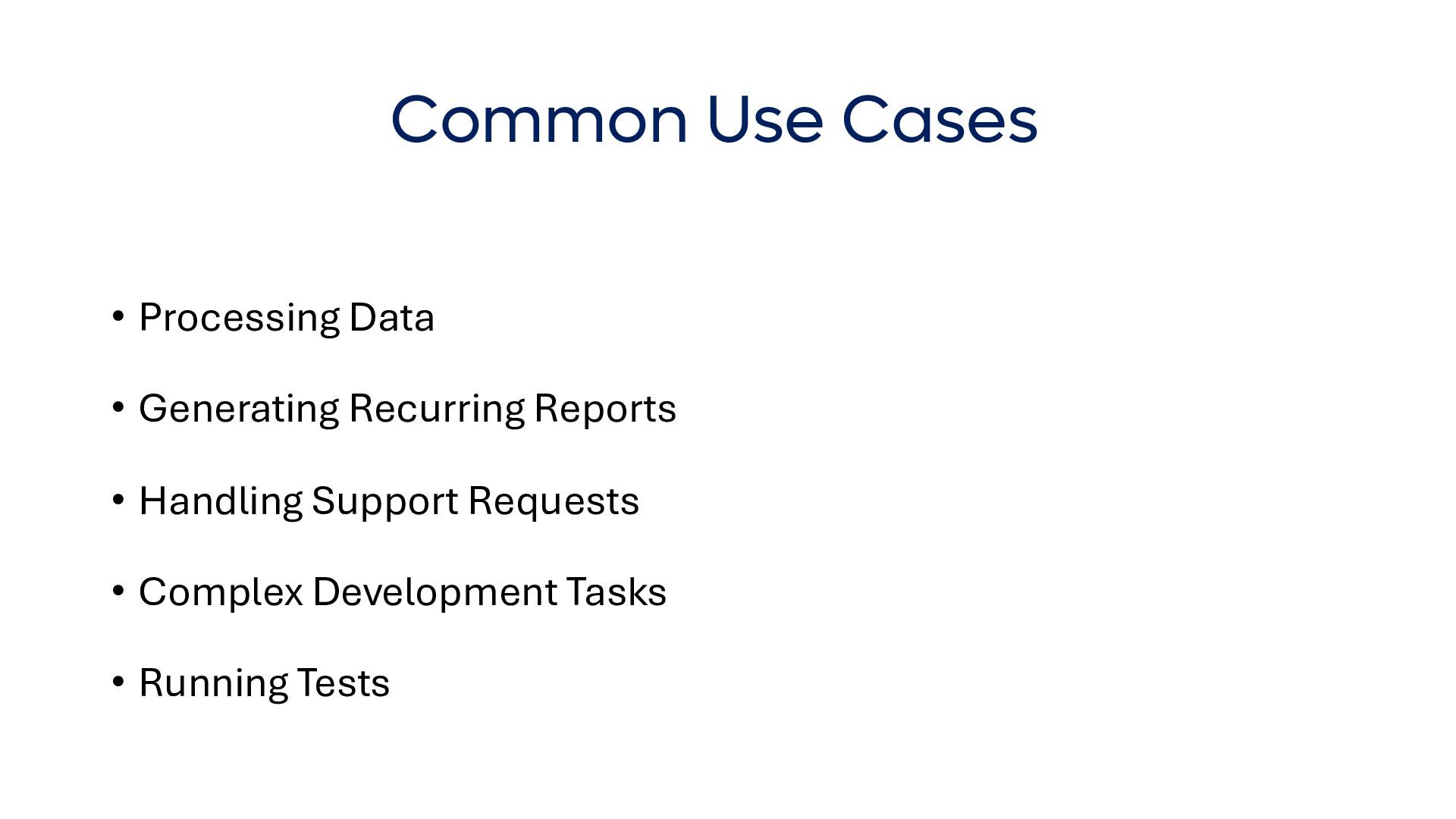
Cloud-based AI agents: Exploring continuously operating agents that support development, testing, monitoring, incident response, and other tasks.
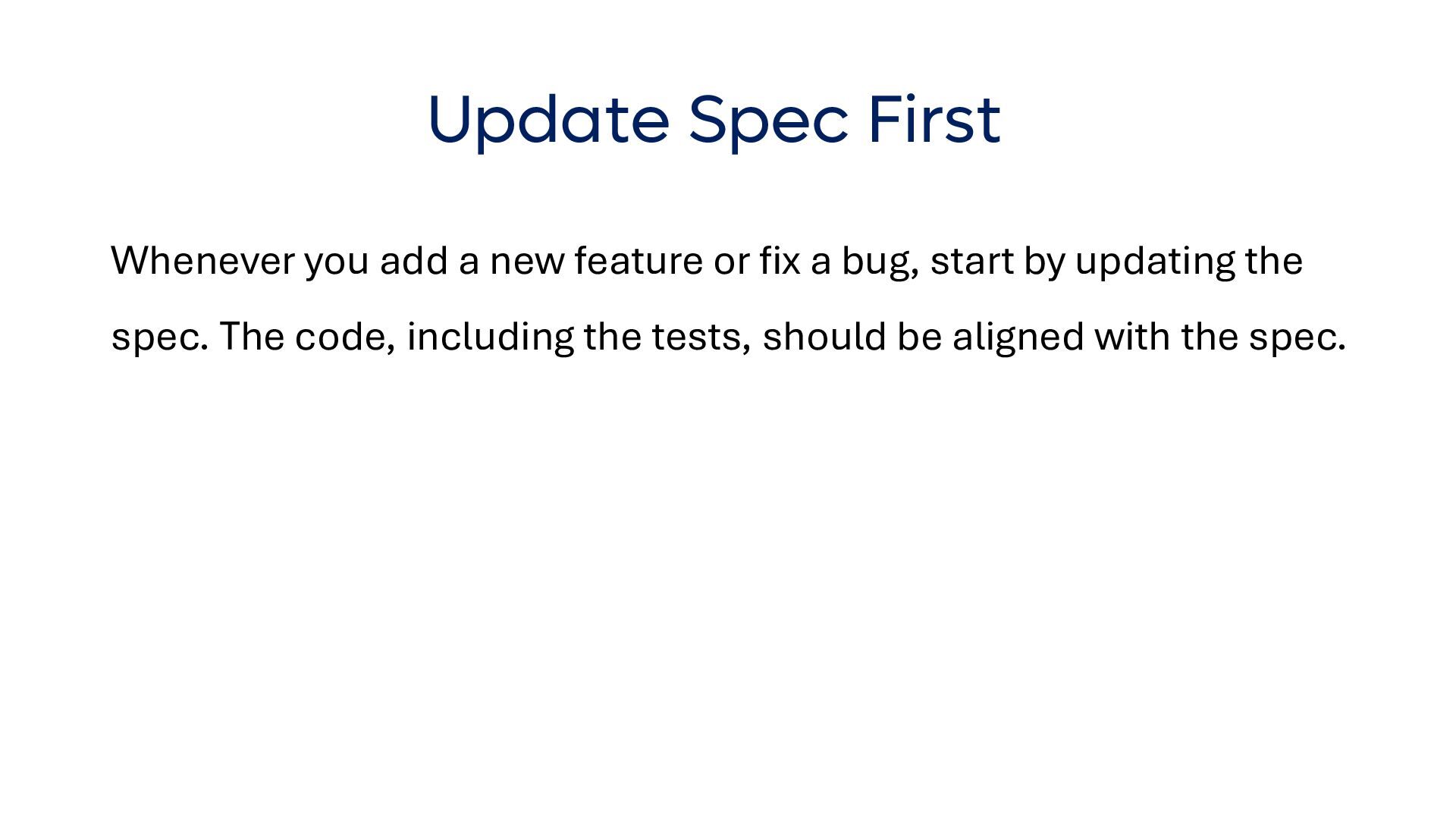
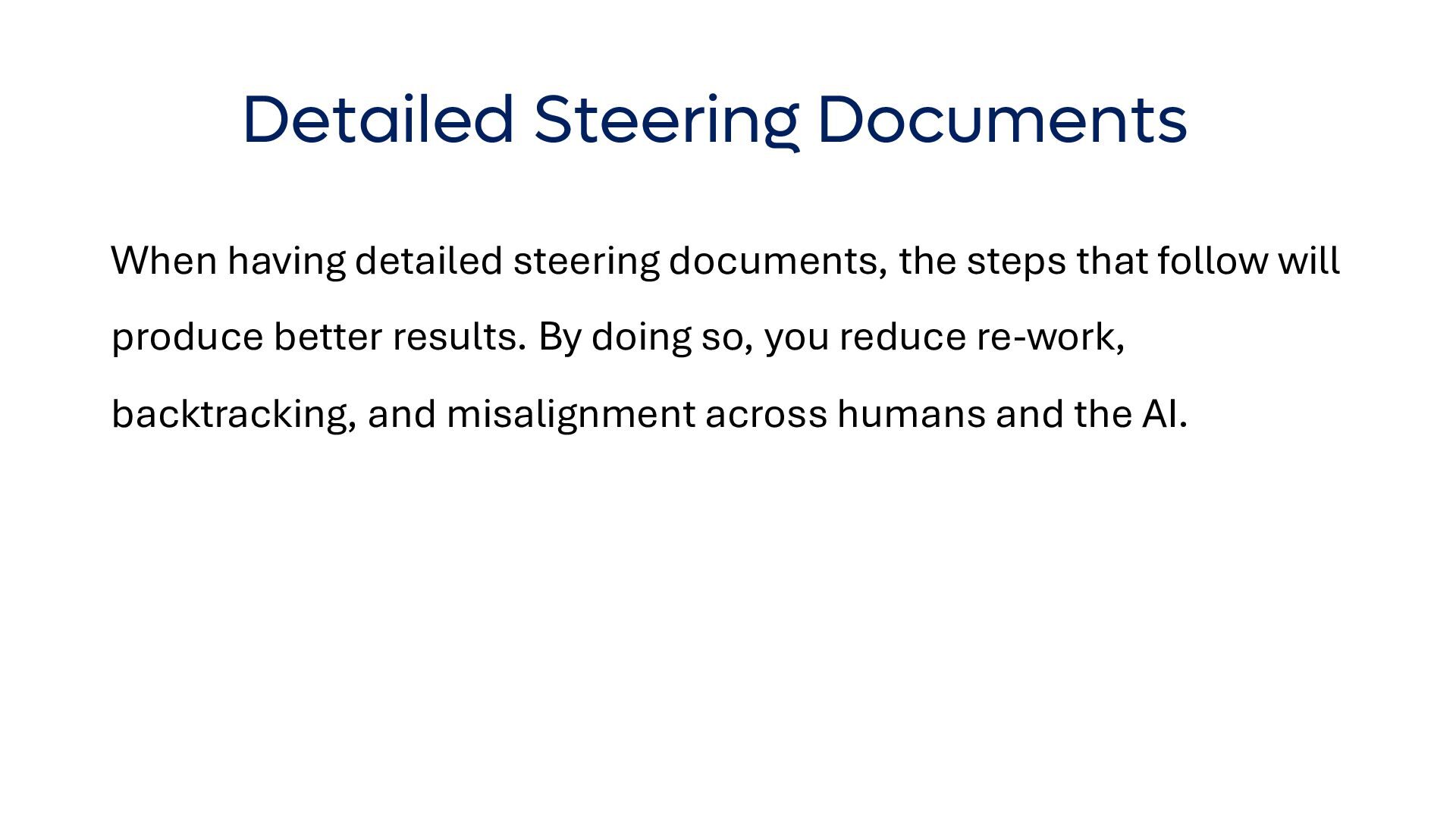
Best practices: Keep specifications synchronized with implementation, maintain detailed steering documents, and choose appropriate orchestration strategies.
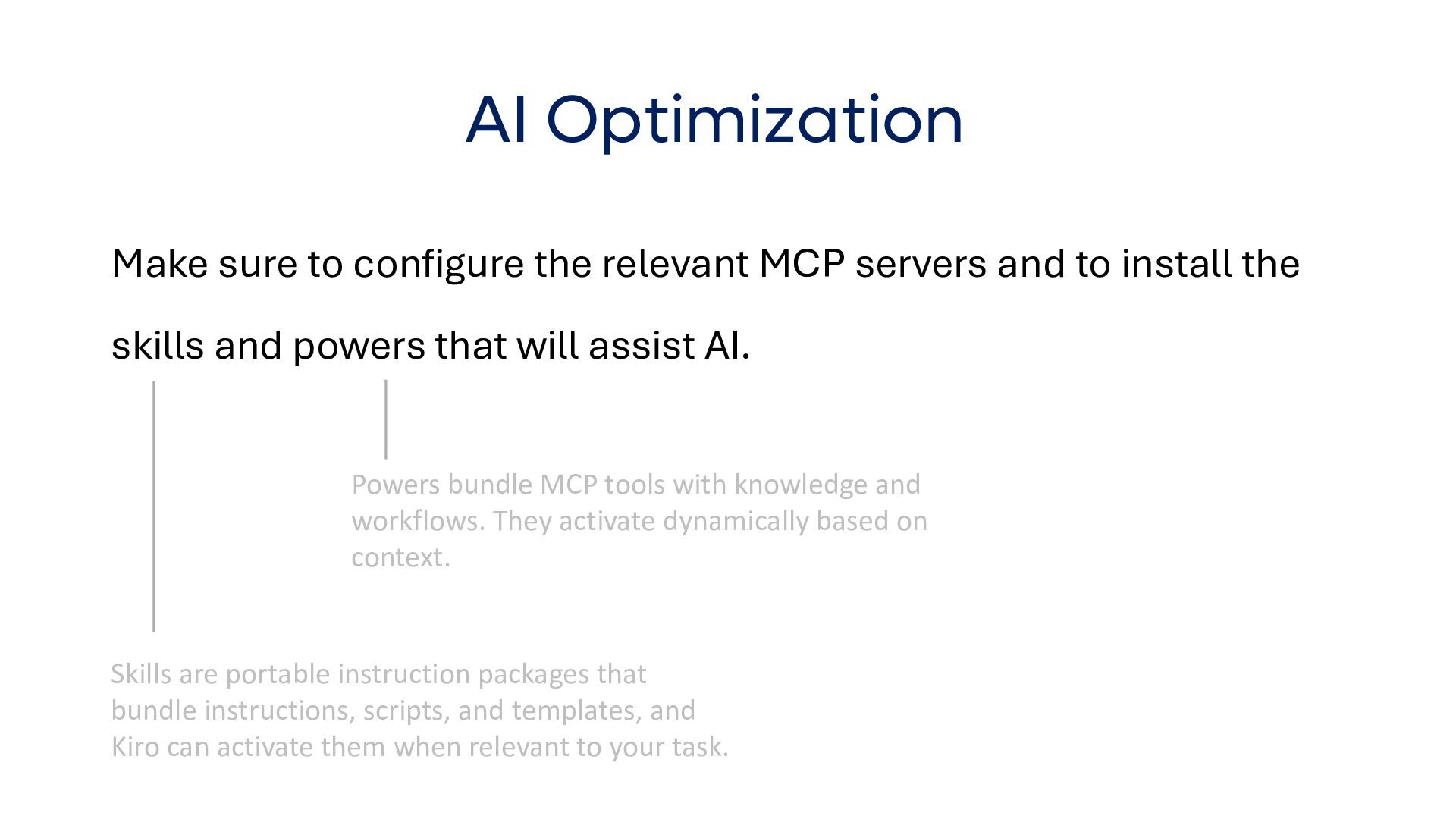
The presentation also discusses the importance of skills, powers, and Model Context Protocol (MCP) servers in extending the capabilities of AI-assisted development environments.
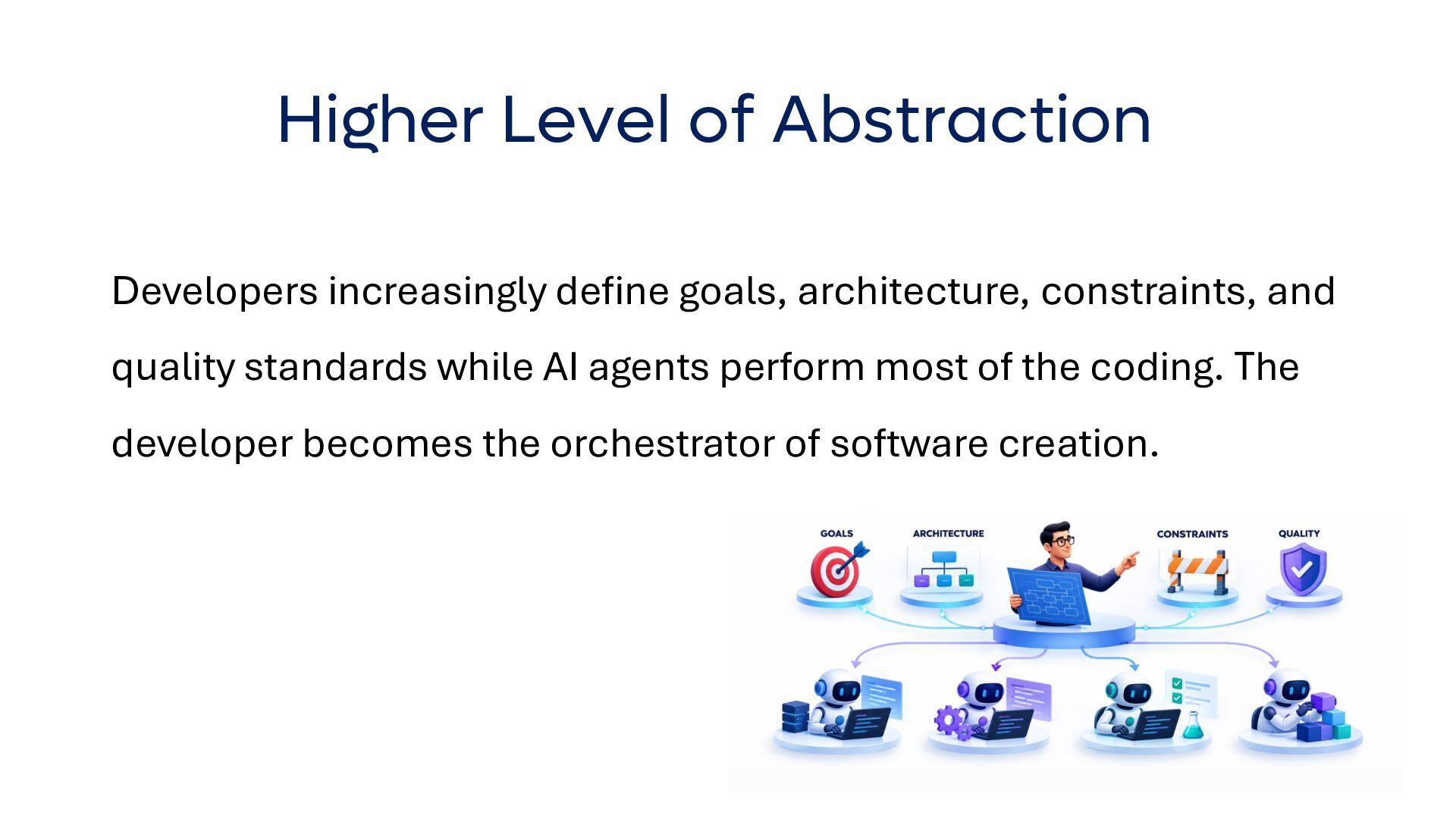
A central theme is the changing role of software developers. As code generation becomes increasingly inexpensive, developers move toward higher levels of abstraction, focusing on goals, architecture, requirements, constraints, and quality standards.
Rather than manually implementing every component, developers increasingly become orchestrators of AI agents, coordinating software creation through clear specifications and structured workflows.
The key message is that the future of professional software development is not simply about generating more code faster. It is about building the right software while maintaining control, traceability, reliability, and alignment with human intent.
These slides are intended for software developers, software architects, engineering managers, technical leaders, and anyone interested in understanding how AI agents and Spec-Driven Development are reshaping software engineering.
Conference: All Day AI 2026
Date: October 22, 2026
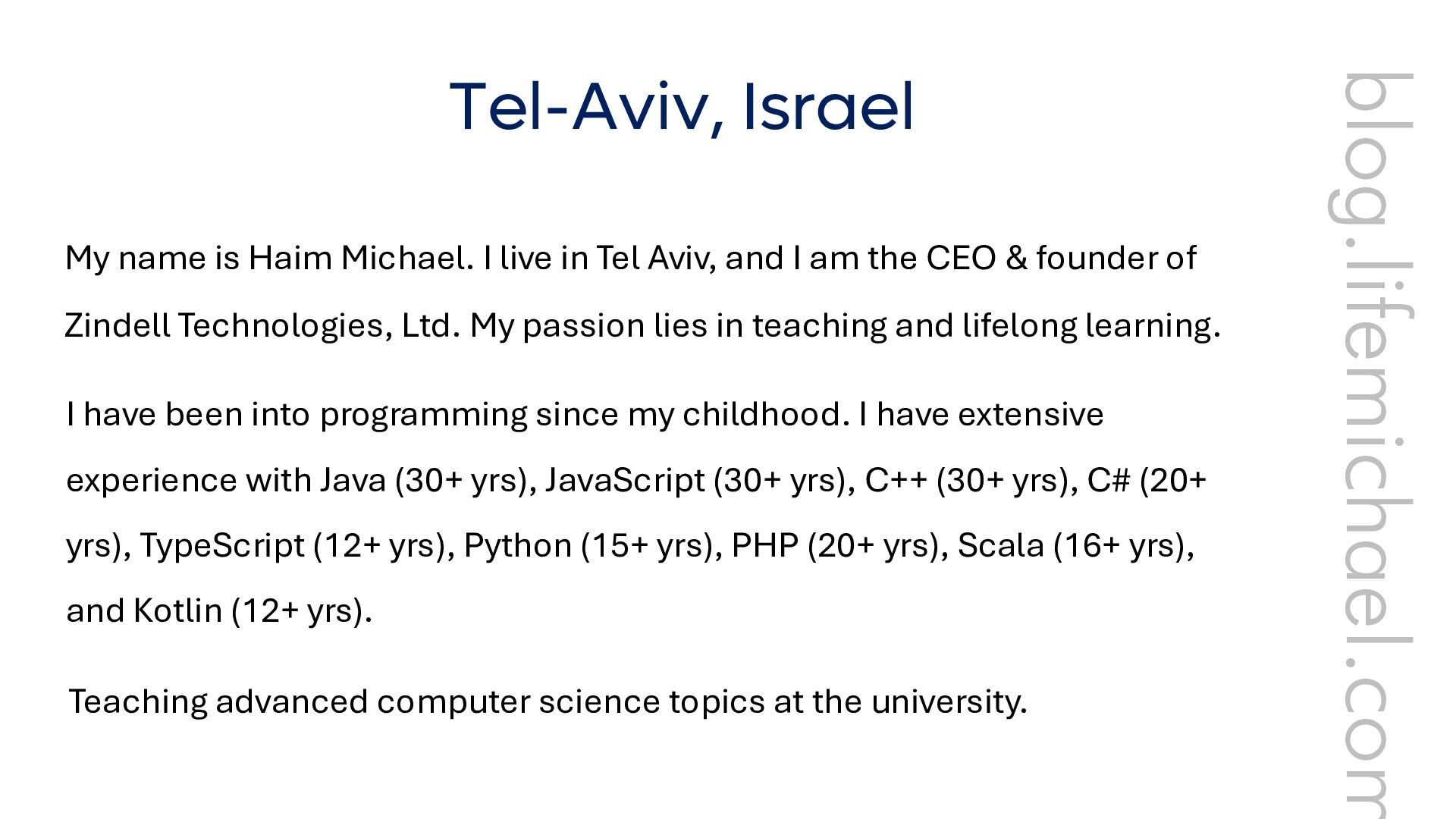
Speaker: Haim Michael
Conference website: https://www.alldayai.com
Speaker's post: https://lifemichael.com/en/sharing-my-experience-at-all-day-ai-2026/

 lifemichael
 rfdnxbro
 bengo4com
 takuyay0ne
 inariku
 yusuke427
 maguroalternative
 shadowhat
 carta_engineering
 amixedcolor
 takano0131
 azukiazusa1
 munakata
 techseoconnect
 addyosmani
 codingconduct
 tammyeverts
 inesmontani
 sabderemane
 raygrieselhuber
 mfonobong
 schroneko
 mkilby