Upgrade to Pro — share decks privately, control downloads, hide ads and more …

AI Integration with Security

Avatar for lilacj4de lilacj4de
June 20, 2025
69

AI Integration with Security

Avatar for lilacj4de

lilacj4de

June 20, 2025

Transcript

  1. Member of Women of FIRST - Special Interest Group GCC

    2025 Participant Malaysia representative for FIRST APAC Fellowship Program in Taipei, Taiwan 2024 MCC 2024 Crew MCC 2023 Alumni, won MVP for Female Student category Interests: AI security (LLMs), DFIR, web, threat intel $WHOAMI
  2. OBLIGATORY FOREWARNING > I am not an AI security expert.

    > For educational and awareness purposes only. > Based on my current understanding & learning, so I may not know everything. > These are my personal views. > Consider this a starting point. > Here’s an AI generated friendly woman hijabi hacker
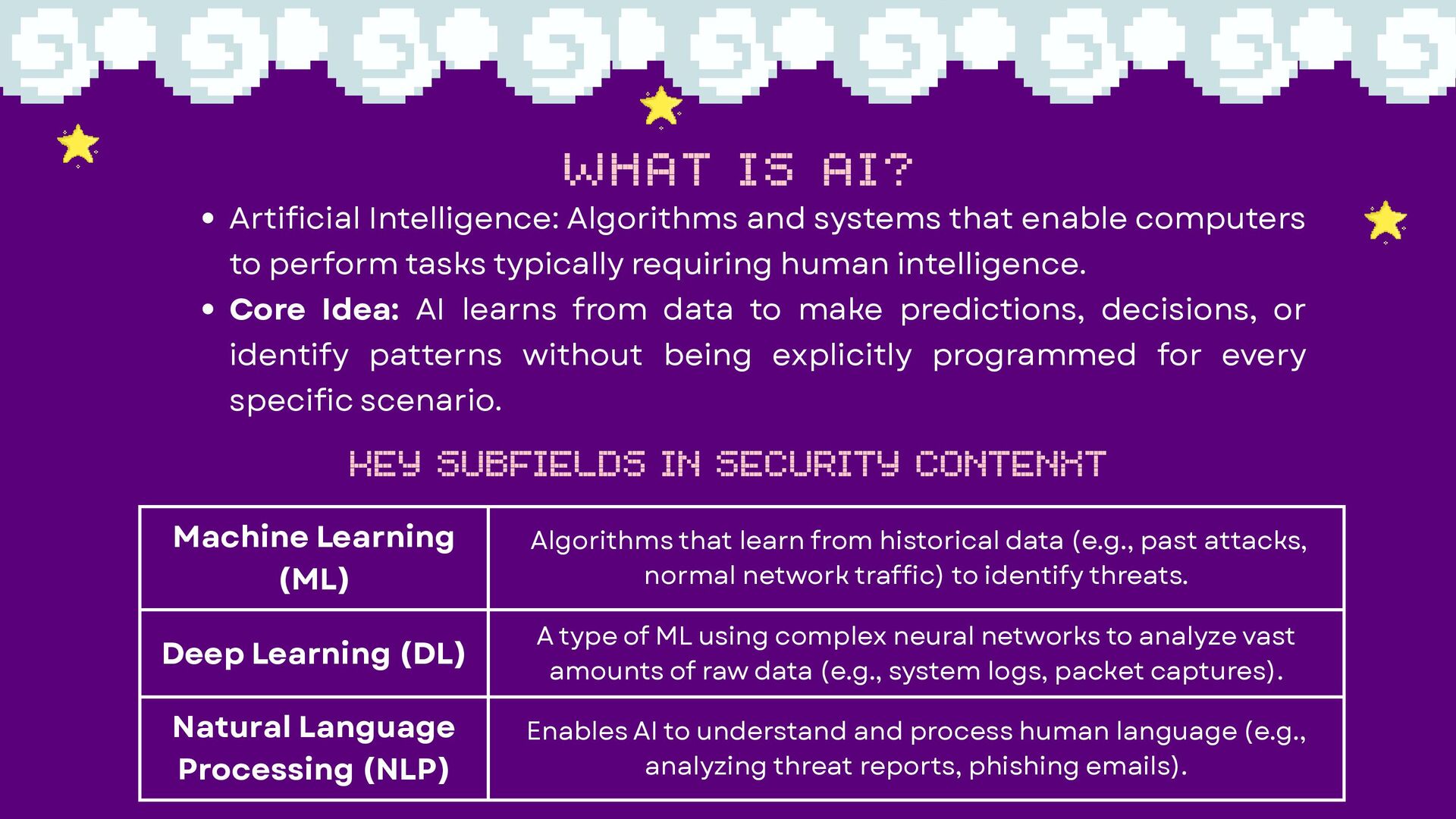
  3. Machine Learning (ML) Algorithms that learn from historical data (e.g.,

    past attacks, normal network traffic) to identify threats. Deep Learning (DL) A type of ML using complex neural networks to analyze vast amounts of raw data (e.g., system logs, packet captures). Natural Language Processing (NLP) Enables AI to understand and process human language (e.g., analyzing threat reports, phishing emails). WHAT IS AI? Artificial Intelligence: Algorithms and systems that enable computers to perform tasks typically requiring human intelligence. Core Idea: AI learns from data to make predictions, decisions, or identify patterns without being explicitly programmed for every specific scenario. KEY SUBFIELDS IN SECURITY CONTENXT
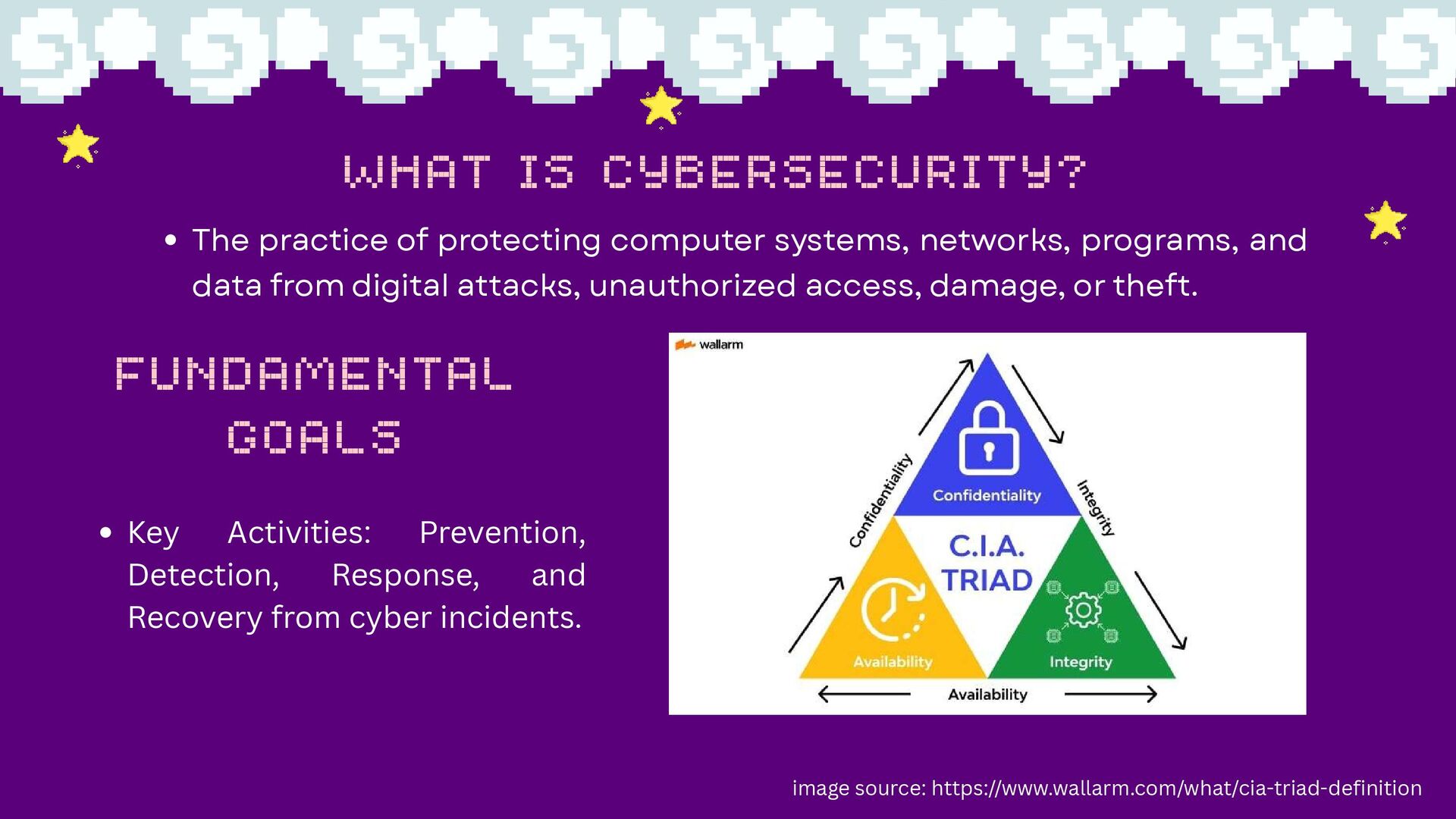
  4. WHAT IS CYBERSECURITY? The practice of protecting computer systems, networks,

    programs, and data from digital attacks, unauthorized access, damage, or theft. image source: https://www.wallarm.com/what/cia-triad-definition FUNDAMENTAL GOALS Key Activities: Prevention, Detection, Response, and Recovery from cyber incidents.
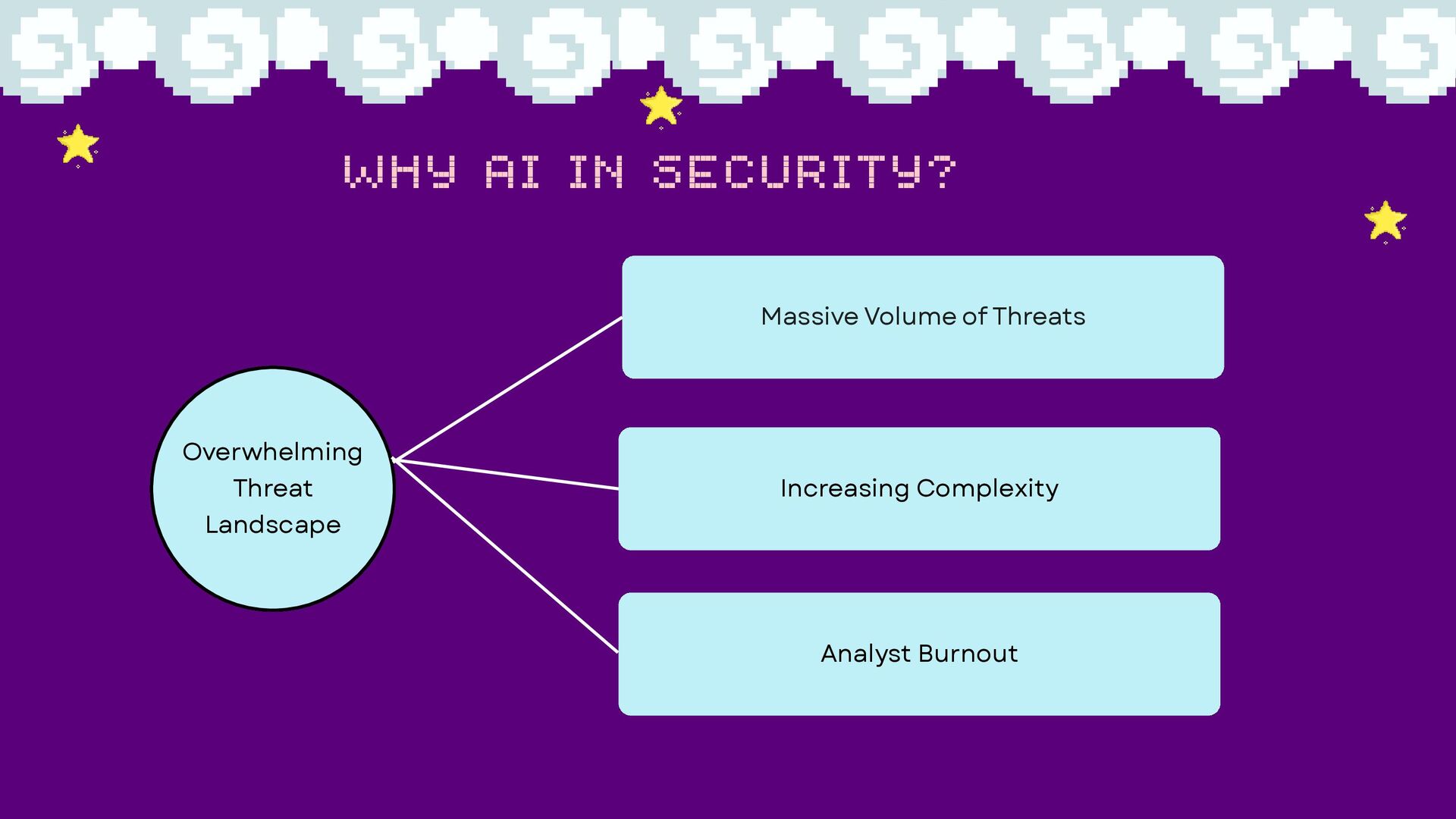
  5. WHY AI IN SECURITY? Overwhelming Threat Landscape Massive Volume of

    Threats Increasing Complexity Analyst Burnout
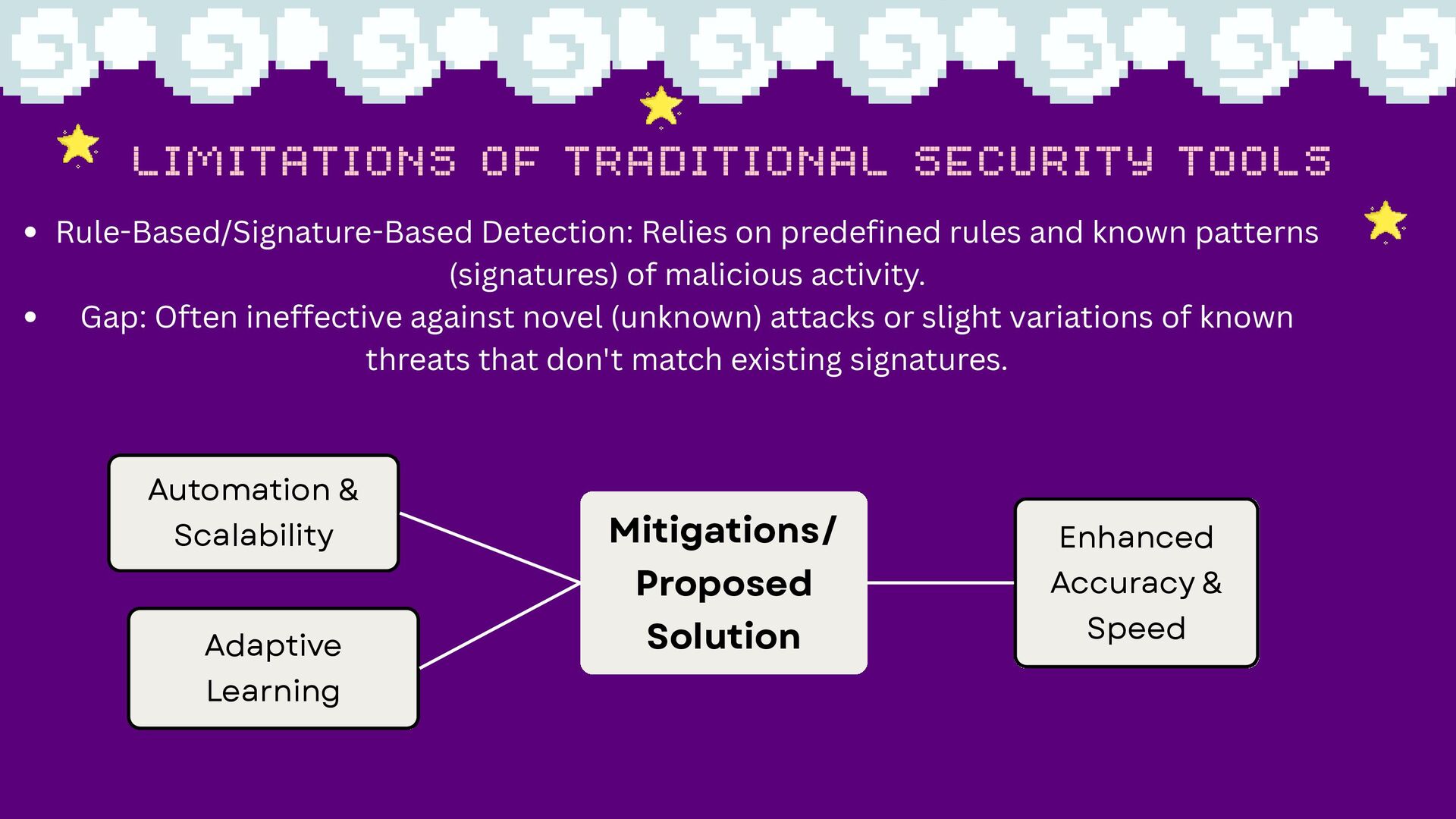
  6. LIMITATIONS OF TRADITIONAL SECURITY TOOLS Rule-Based/Signature-Based Detection: Relies on predefined

    rules and known patterns (signatures) of malicious activity. Gap: Often ineffective against novel (unknown) attacks or slight variations of known threats that don't match existing signatures. Mitigations/ Proposed Solution Enhanced Accuracy & Speed Adaptive Learning Automation & Scalability
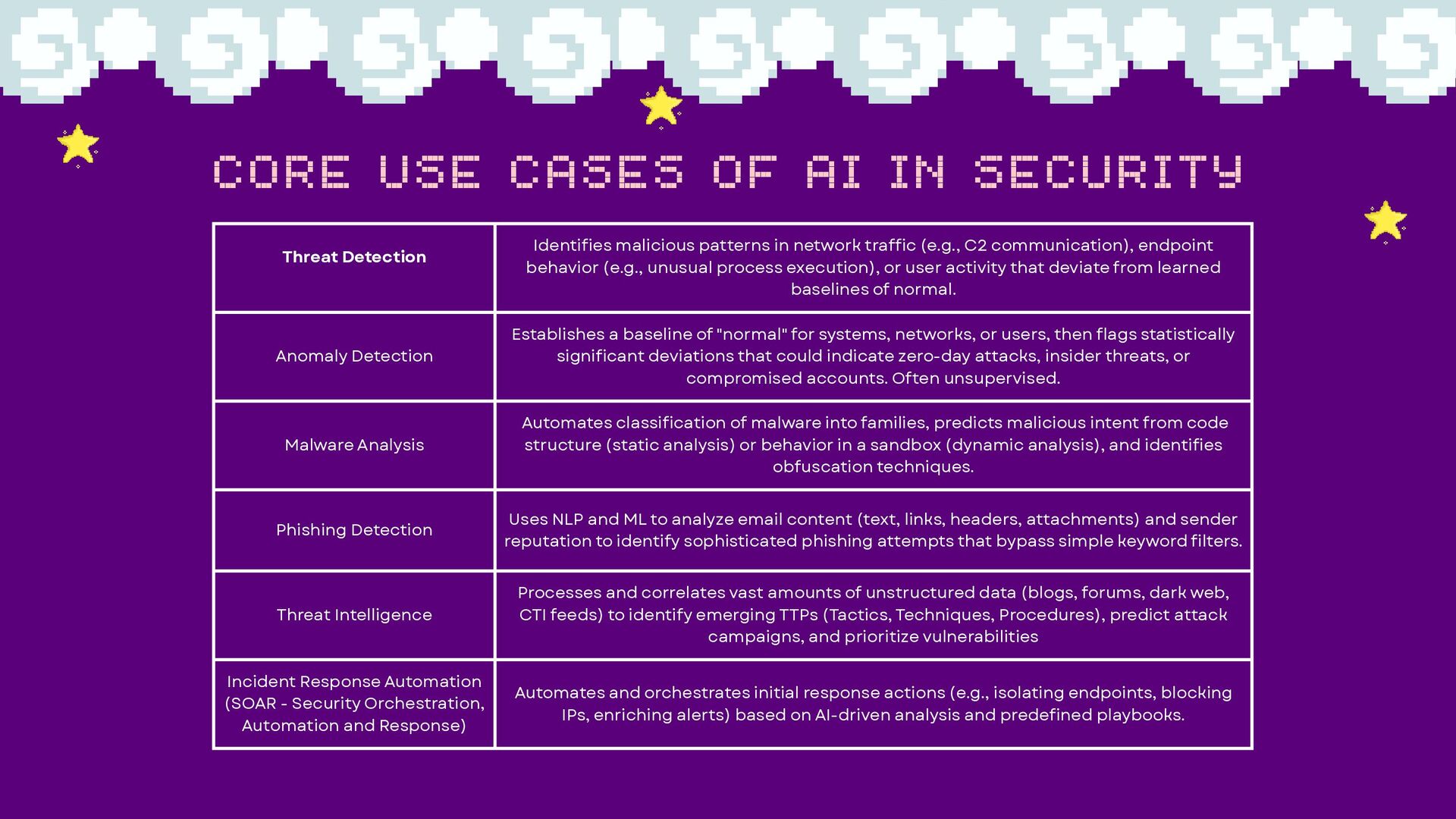
  7. Threat Detection Identifies malicious patterns in network traffic (e.g., C2

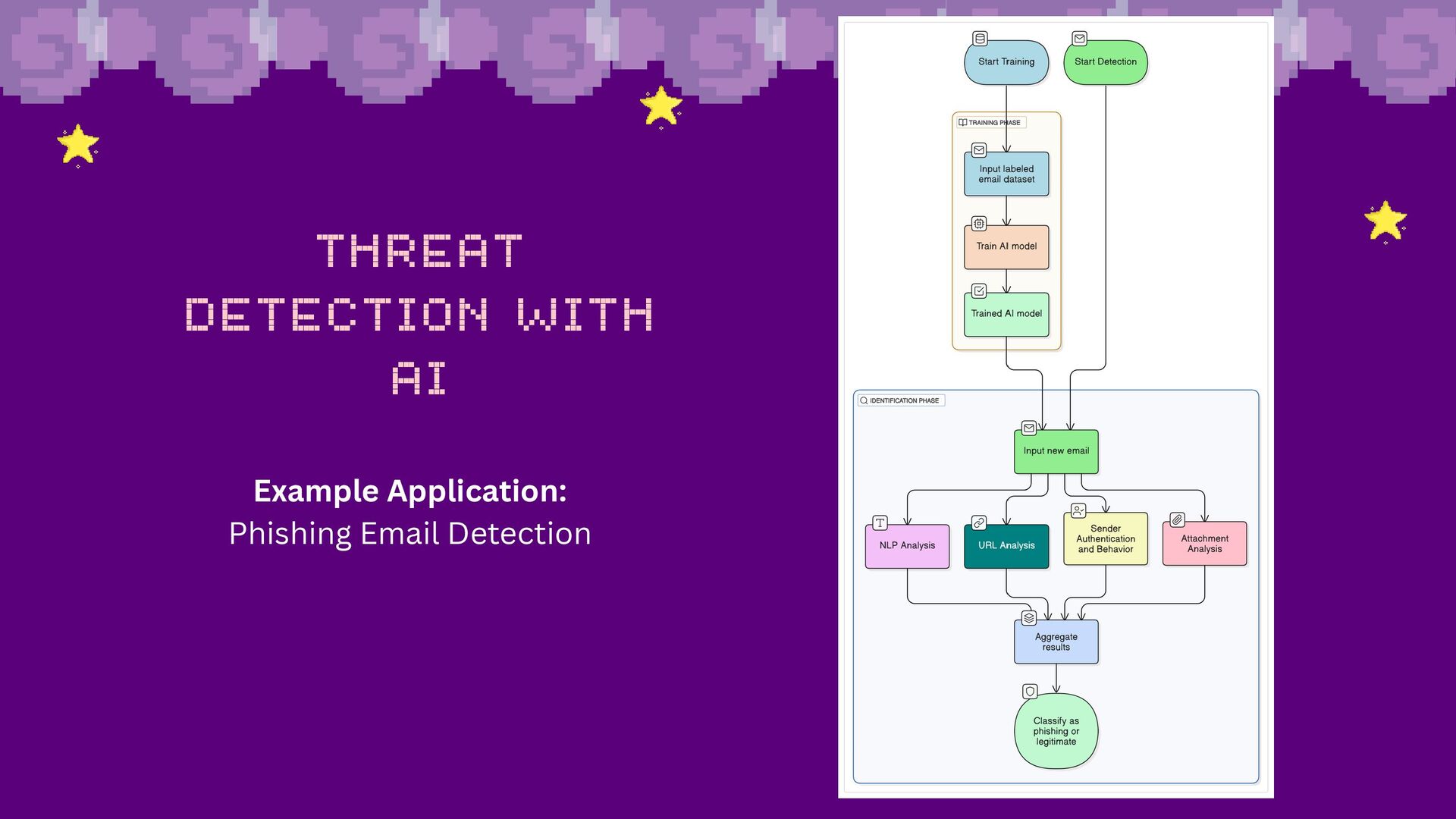
    communication), endpoint behavior (e.g., unusual process execution), or user activity that deviate from learned baselines of normal. Anomaly Detection Establishes a baseline of "normal" for systems, networks, or users, then flags statistically significant deviations that could indicate zero-day attacks, insider threats, or compromised accounts. Often unsupervised. Malware Analysis Automates classification of malware into families, predicts malicious intent from code structure (static analysis) or behavior in a sandbox (dynamic analysis), and identifies obfuscation techniques. Phishing Detection Uses NLP and ML to analyze email content (text, links, headers, attachments) and sender reputation to identify sophisticated phishing attempts that bypass simple keyword filters. Threat Intelligence Processes and correlates vast amounts of unstructured data (blogs, forums, dark web, CTI feeds) to identify emerging TTPs (Tactics, Techniques, Procedures), predict attack campaigns, and prioritize vulnerabilities Incident Response Automation (SOAR - Security Orchestration, Automation and Response) Automates and orchestrates initial response actions (e.g., isolating endpoints, blocking IPs, enriching alerts) based on AI-driven analysis and predefined playbooks. CORE USE CASES OF AI IN SECURITY
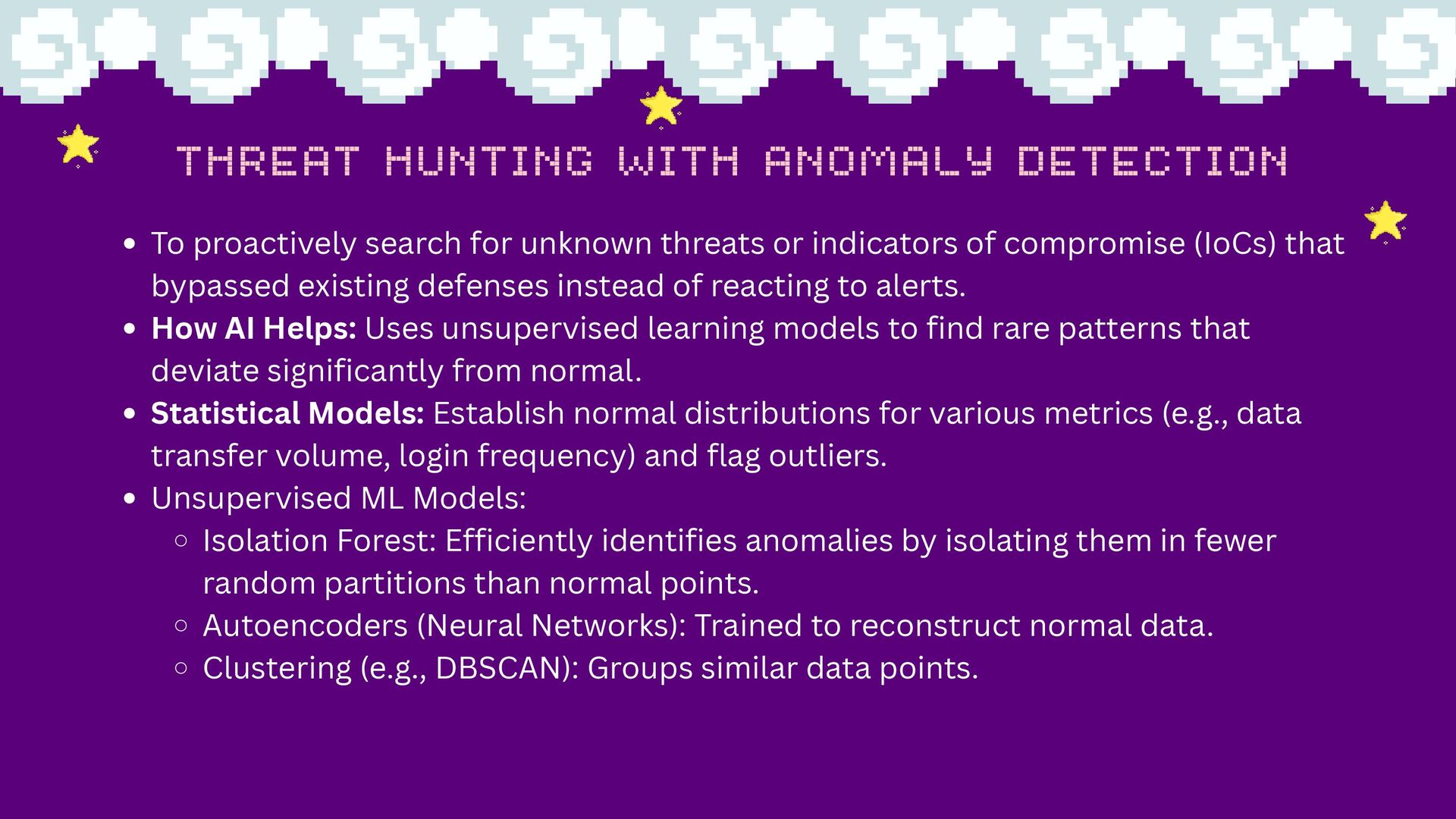
  8. THREAT HUNTING WITH ANOMALY DETECTION To proactively search for unknown

    threats or indicators of compromise (IoCs) that bypassed existing defenses instead of reacting to alerts. How AI Helps: Uses unsupervised learning models to find rare patterns that deviate significantly from normal. Statistical Models: Establish normal distributions for various metrics (e.g., data transfer volume, login frequency) and flag outliers. Unsupervised ML Models: Isolation Forest: Efficiently identifies anomalies by isolating them in fewer random partitions than normal points. Autoencoders (Neural Networks): Trained to reconstruct normal data. Clustering (e.g., DBSCAN): Groups similar data points.
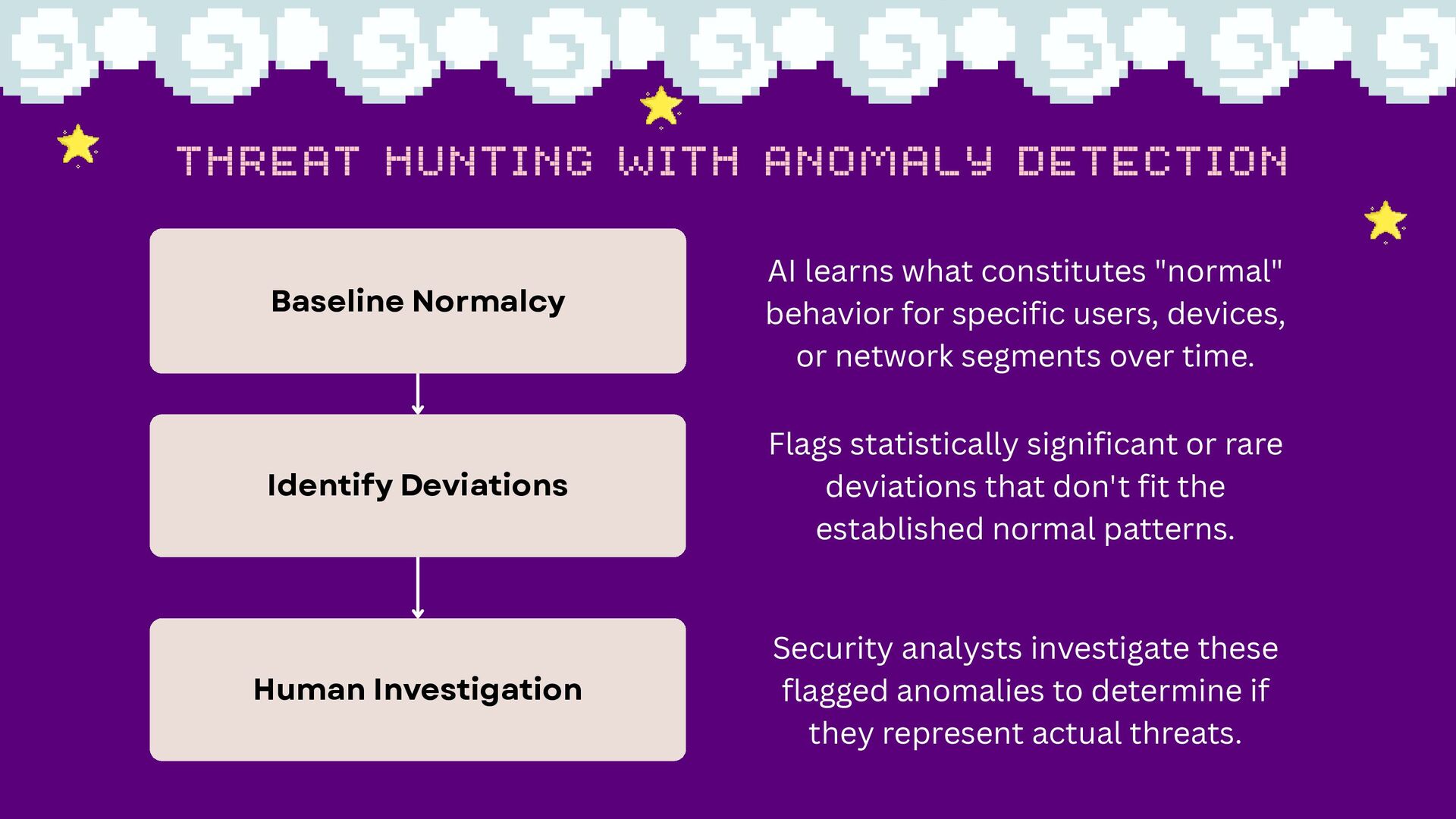
  9. THREAT HUNTING WITH ANOMALY DETECTION Baseline Normalcy Identify Deviations Human

    Investigation AI learns what constitutes "normal" behavior for specific users, devices, or network segments over time. Security analysts investigate these flagged anomalies to determine if they represent actual threats. Flags statistically significant or rare deviations that don't fit the established normal patterns.
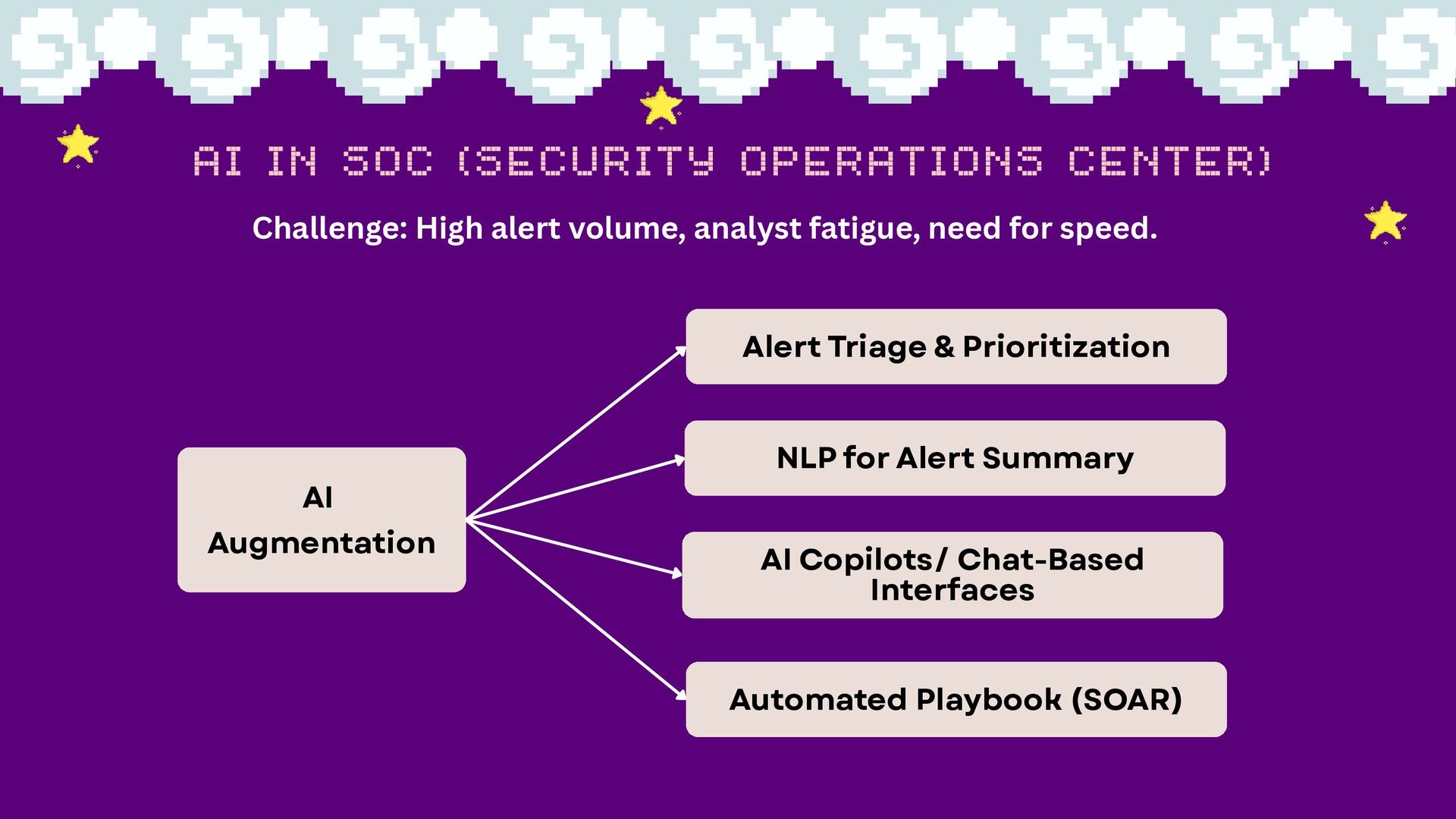
  10. AI IN SOC (SECURITY OPERATIONS CENTER) Challenge: High alert volume,
    analyst fatigue, need for speed. AI Augmentation Alert Triage & Prioritization NLP for Alert Summary AI Copilots/ Chat-Based Interfaces Automated Playbook (SOAR)

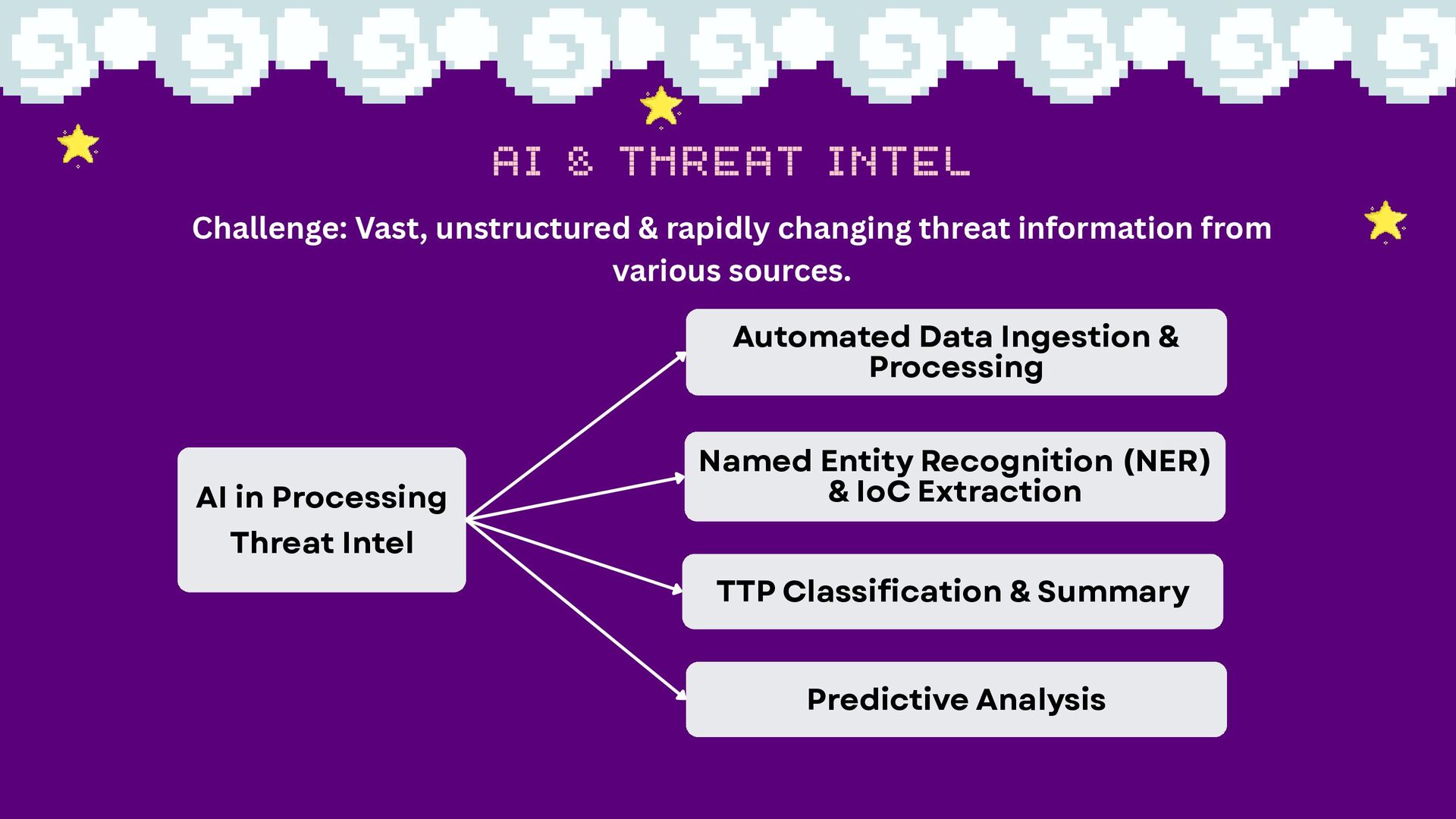
  11. AI & THREAT INTEL Challenge: Vast, unstructured & rapidly changing

    threat information from various sources. AI in Processing Threat Intel Automated Data Ingestion & Processing Named Entity Recognition (NER) & IoC Extraction TTP Classification & Summary Predictive Analysis
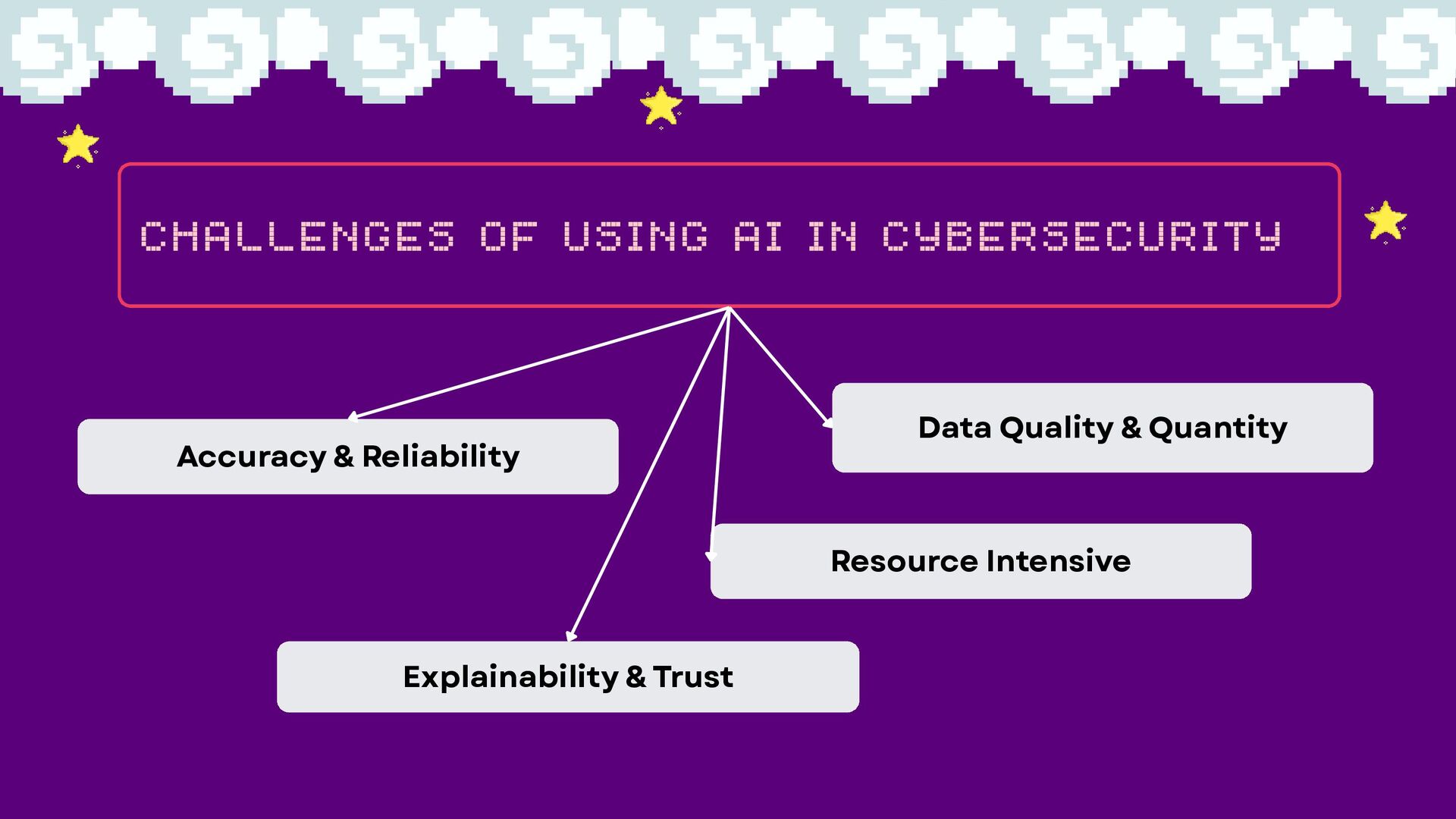
  12. CHALLENGES OF USING AI IN CYBERSECURITY Accuracy & Reliability Data

    Quality & Quantity Resource Intensive Explainability & Trust
  13. LOG ANALYSIS WITH AI: ENHANCING THREAT DETECTION USING LLMS A

    Student Project Perspective, “ParseLogs”
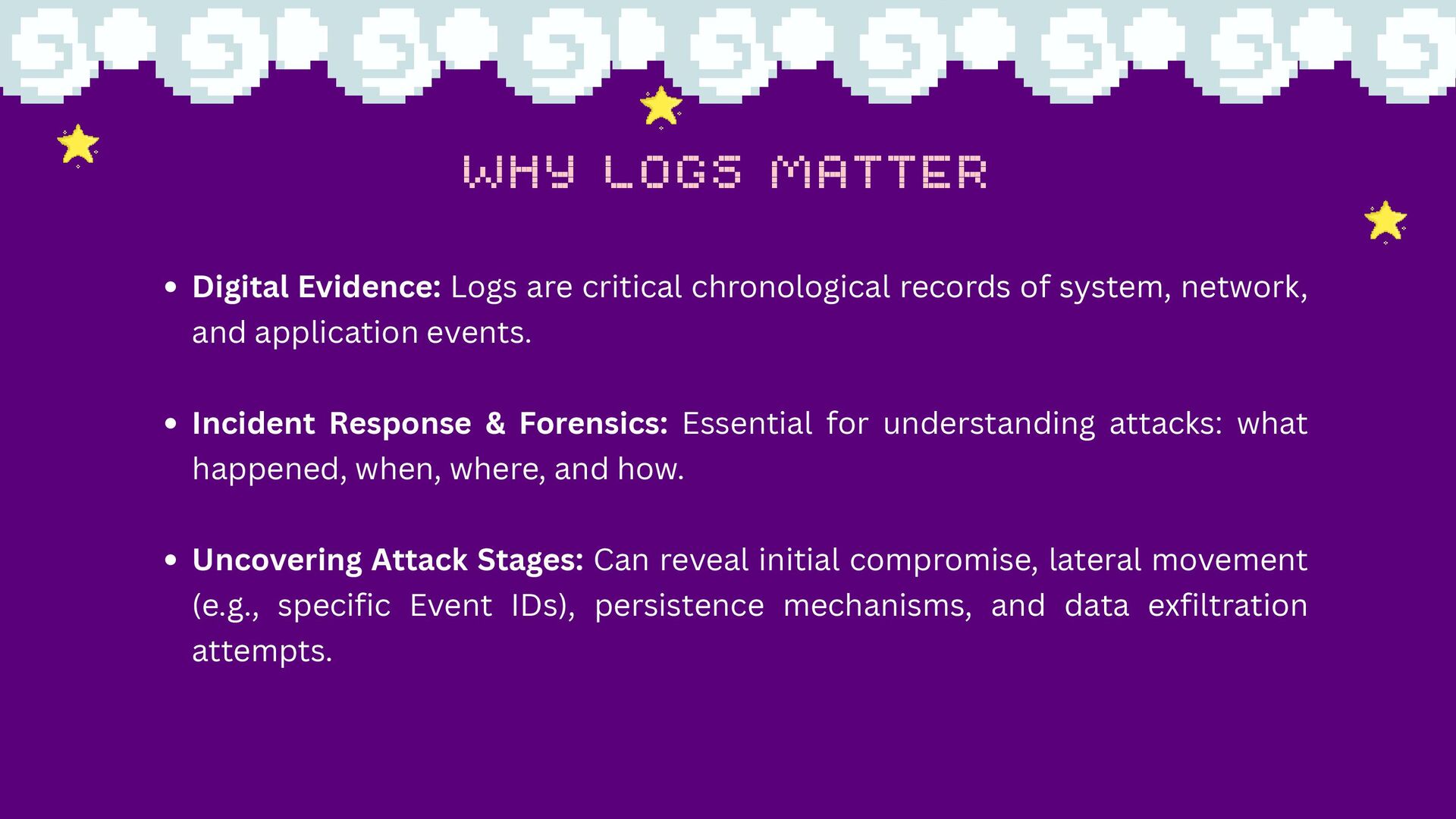
  14. WHY LOGS MATTER Digital Evidence: Logs are critical chronological records

    of system, network, and application events. Incident Response & Forensics: Essential for understanding attacks: what happened, when, where, and how. Uncovering Attack Stages: Can reveal initial compromise, lateral movement (e.g., specific Event IDs), persistence mechanisms, and data exfiltration attempts.
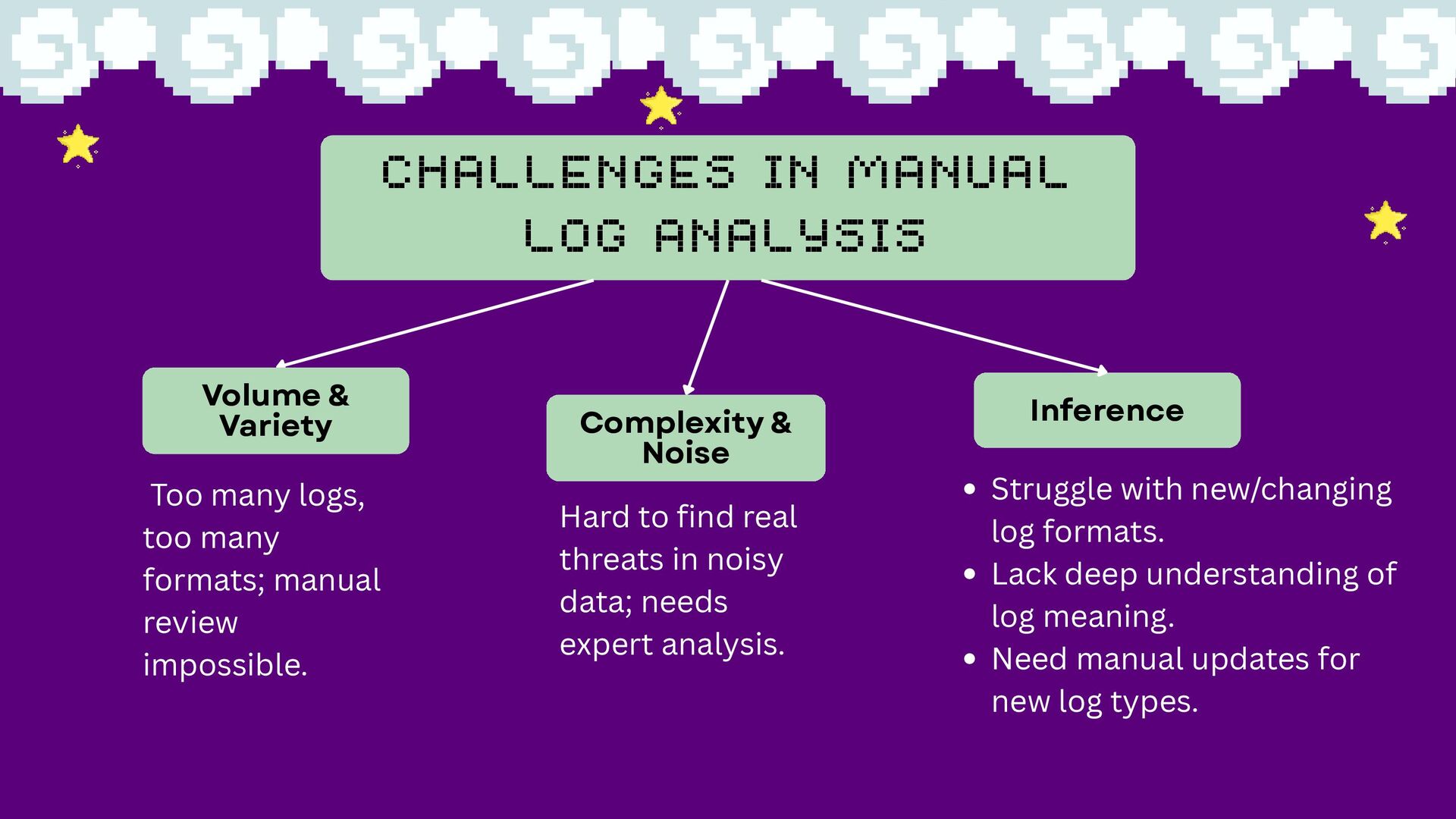
  15. CHALLENGES IN MANUAL LOG ANALYSIS Volume & Variety Too many

    logs, too many formats; manual review impossible. Complexity & Noise Hard to find real threats in noisy data; needs expert analysis. Inference Struggle with new/changing log formats. Lack deep understanding of log meaning. Need manual updates for new log types.
  16. THE FOUNDATION: EVTX LOGS & HAYABUSA EVTX Logs: Standard Windows

    Event Log XML; key for endpoint forensics (Security, System, Application, PowerShell, Sysmon). Hayabusa: Open-source JPCERT/CC tool for fast Windows event log analysis. Parses comprehensively. Supports multiple output formats (.csv & .json). Integrates Sigma rules for threat detection. Provides structured data from raw EVTX. Converts unstructured EVTX to structured CSV for further use WHY HAYABUSA?
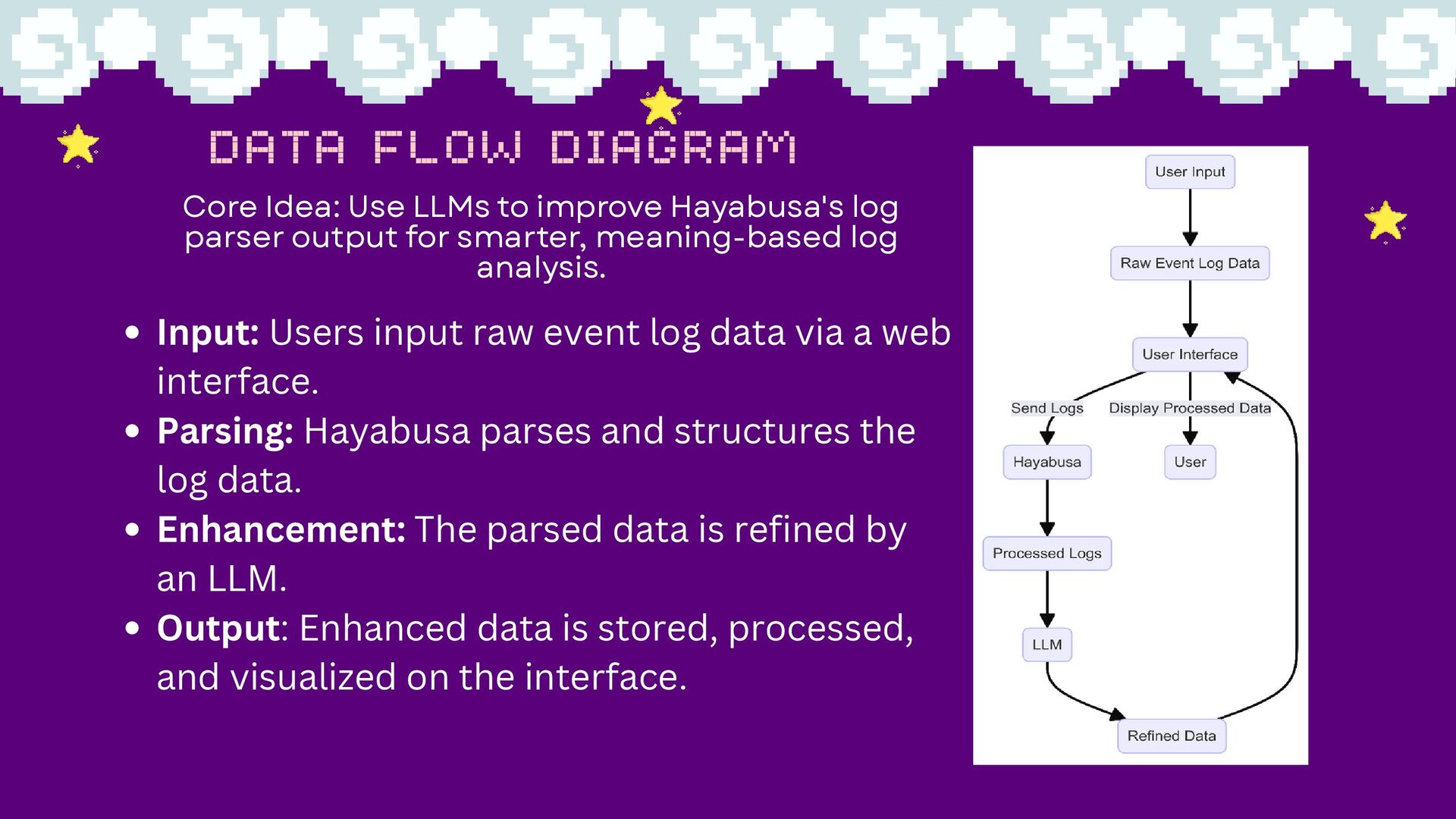
  17. DATA FLOW DIAGRAM Input: Users input raw event log data

    via a web interface. Parsing: Hayabusa parses and structures the log data. Enhancement: The parsed data is refined by an LLM. Output: Enhanced data is stored, processed, and visualized on the interface. Core Idea: Use LLMs to improve Hayabusa's log parser output for smarter, meaning-based log analysis.
  18. ROLE OF LLMS IN PARSELOGS Beyond Keywords: LLMs grasp log

    meaning and context, unlike basic keyword or rule-based methods. IN PARSELOGS, LLMS (OPENAI API & LLAMAINDEX) ALLOW: Semantic Search: Query logs with natural language, asking more intuitive questions. Contextual Understanding: LLM interprets links between logs and queries for relevant answers. Summarization: Users can request summaries of log events. Filtering Data: Helps condense large Hayabusa outputs into focused, user- specific insights.
  19. PROMPT ENGINEERING FOR LOG ANALYSIS Prompt Engineering: Crafting effective natural

    language prompts to guide the LLM to produce accurate and relevant outputs from the indexed log data. Basic Retrieval: "Summarize the given log file." "Show all events from 2019-02-14." "Retrieve all logs with Event ID 4624." Categorical Filtering: "Show all logs with severity level: High."
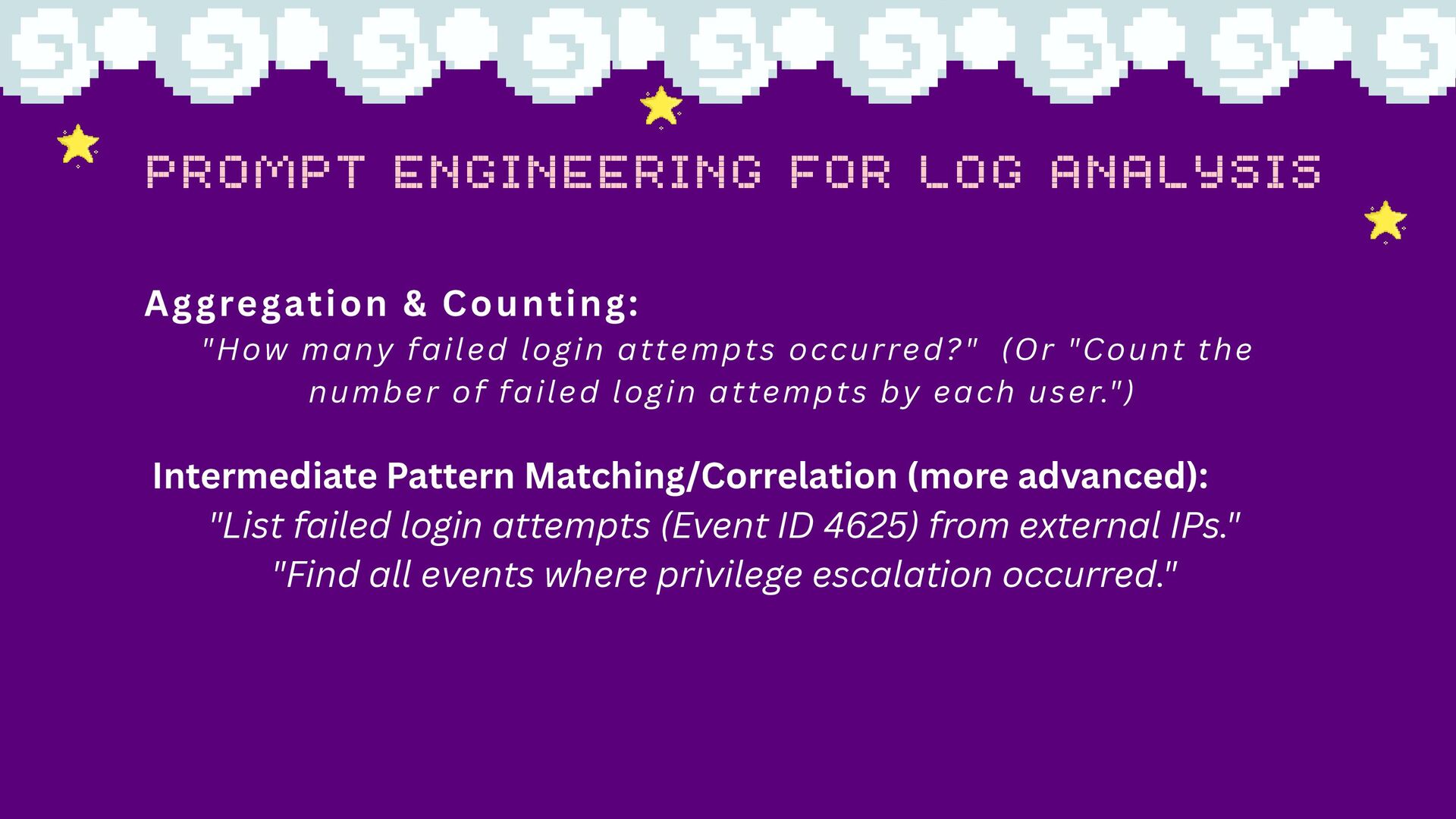
  20. PROMPT ENGINEERING FOR LOG ANALYSIS Aggregation & Counting: "How many

    failed login attempts occurred?" (Or "Count the number of failed login attempts by each user.") Intermediate Pattern Matching/Correlation (more advanced): "List failed login attempts (Event ID 4625) from external IPs." "Find all events where privilege escalation occurred."
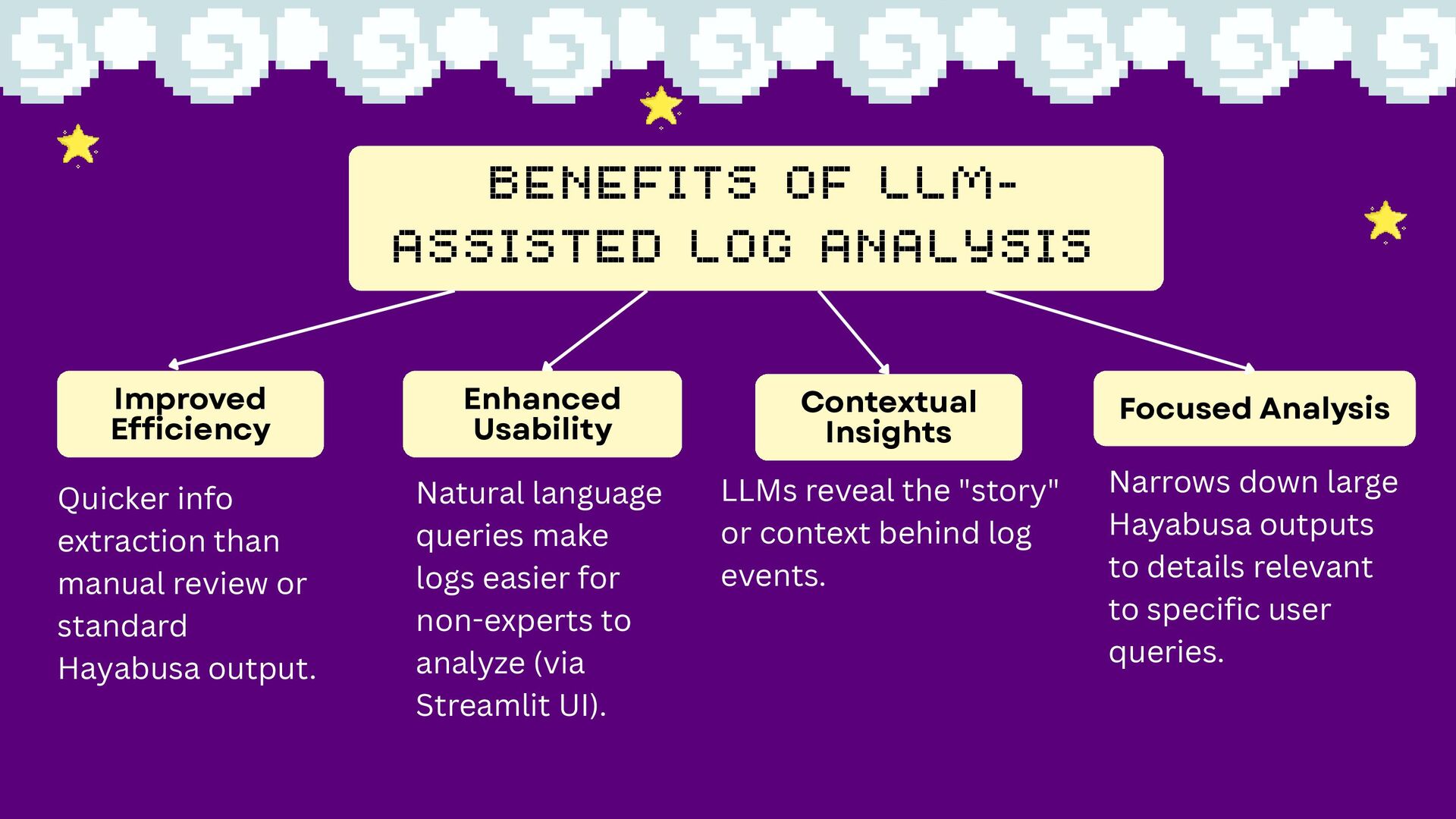
  21. BENEFITS OF LLM- ASSISTED LOG ANALYSIS Improved Efficiency Quicker info

    extraction than manual review or standard Hayabusa output. Enhanced Usability Natural language queries make logs easier for non-experts to analyze (via Streamlit UI). Contextual Insights LLMs reveal the "story" or context behind log events. Focused Analysis Narrows down large Hayabusa outputs to details relevant to specific user queries.
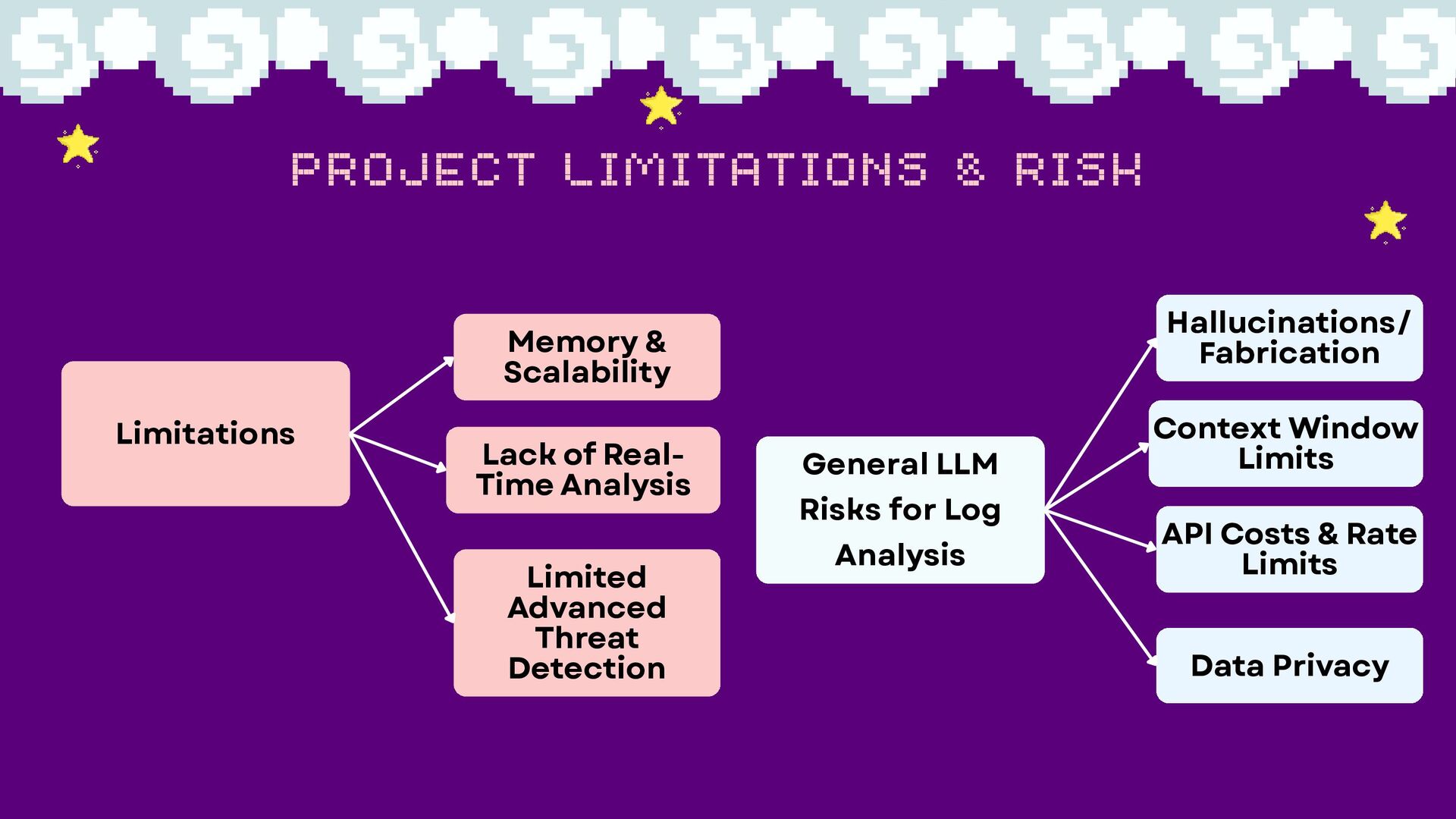
  22. PROJECT LIMITATIONS & RISK Limitations Memory & Scalability Data Privacy

    Lack of Real- Time Analysis Limited Advanced Threat Detection General LLM Risks for Log Analysis Hallucinations/ Fabrication Context Window Limits API Costs & Rate Limits
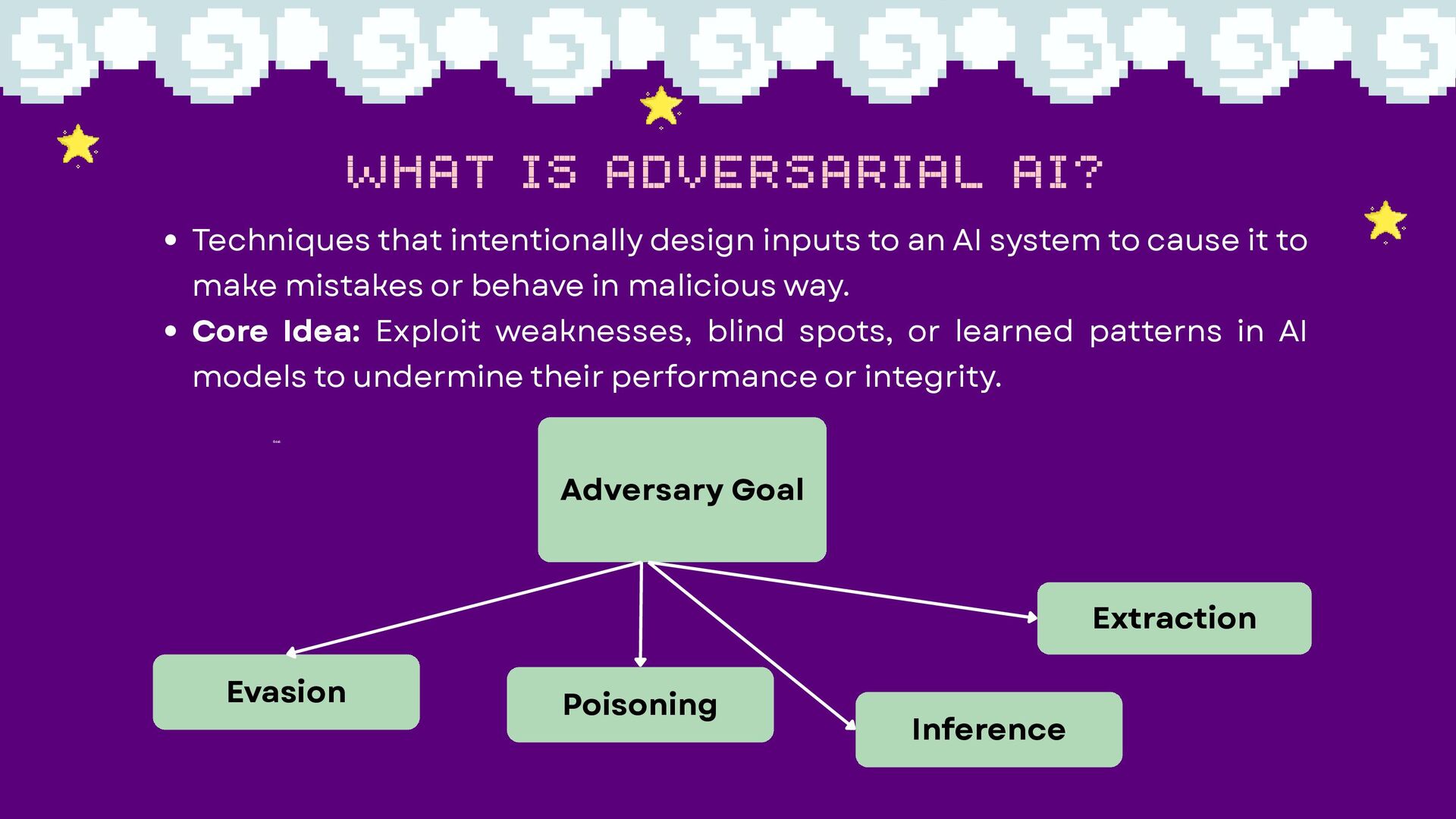
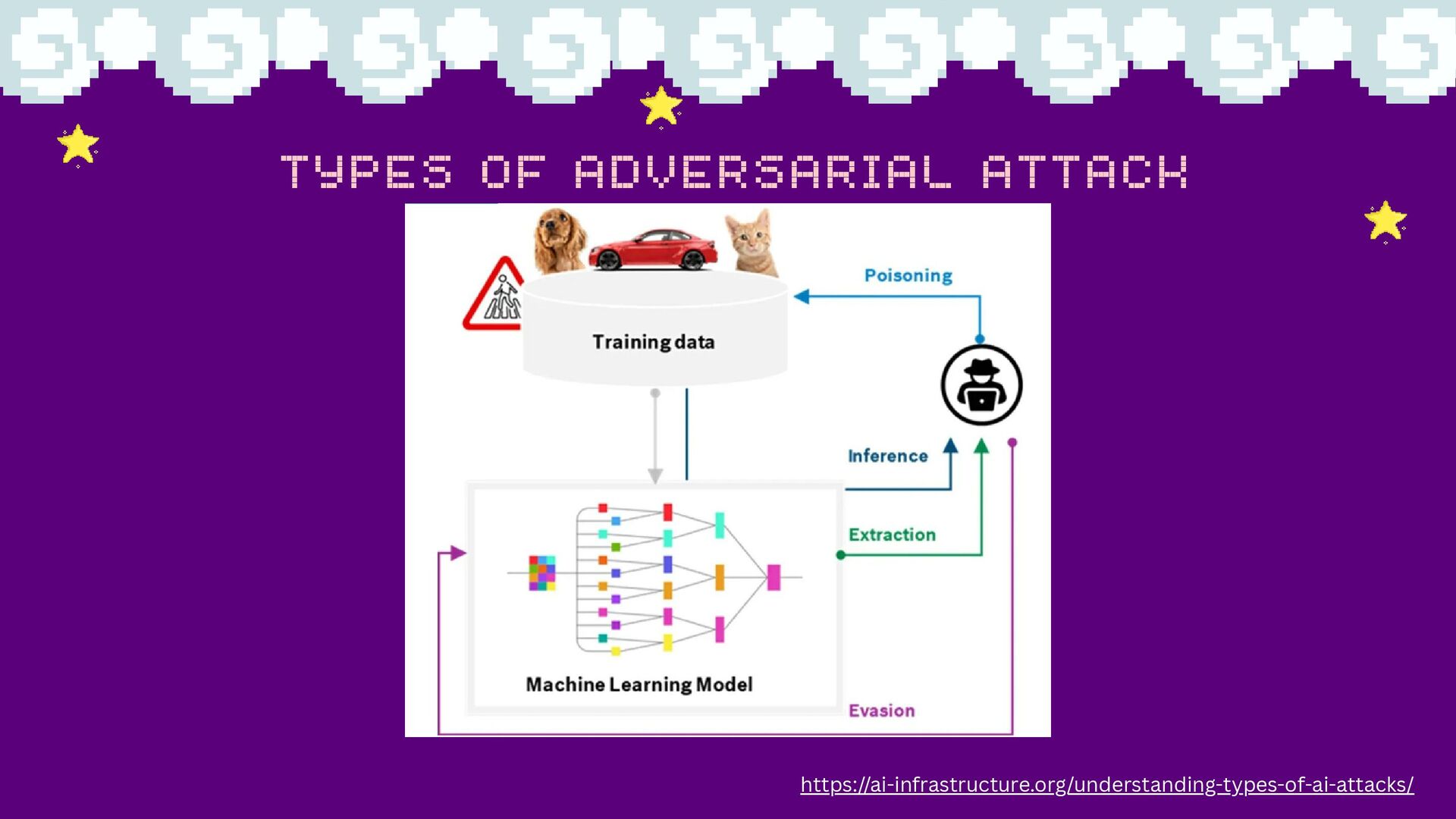
  23. WHAT IS ADVERSARIAL AI? Techniques that intentionally design inputs to

    an AI system to cause it to make mistakes or behave in malicious way. Core Idea: Exploit weaknesses, blind spots, or learned patterns in AI models to undermine their performance or integrity. Goal: Adversary Goal Evasion Poisoning Extraction Inference
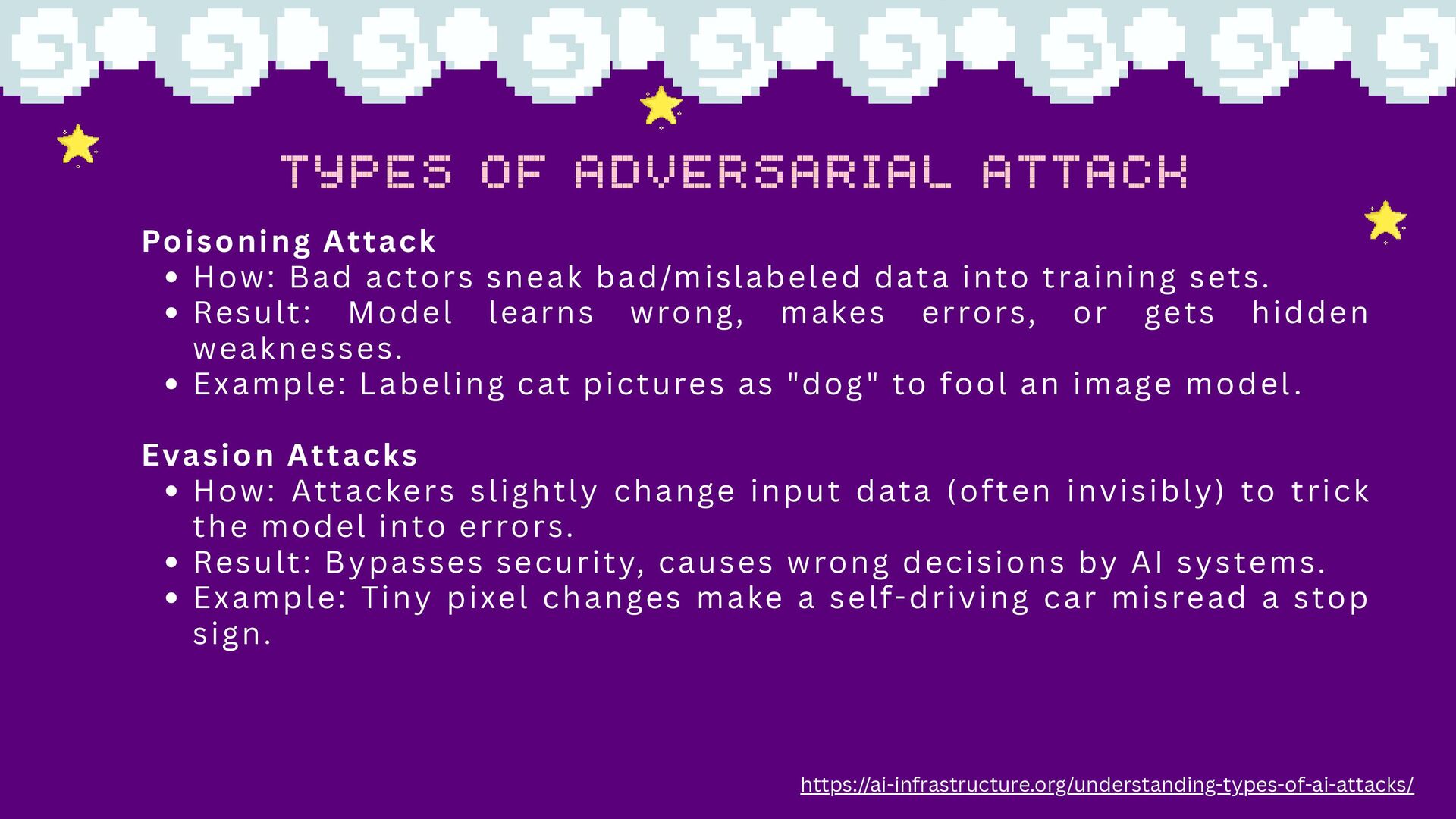
  24. TYPES OF ADVERSARIAL ATTACK https://ai-infrastructure.org/understanding-types-of-ai-attacks/ Poisoning Attack How: Bad actors

    sneak bad/mislabeled data into training sets. Result: Model learns wrong, makes errors, or gets hidden weaknesses. Example: Labeling cat pictures as "dog" to fool an image model. Evasion Attacks How: Attackers slightly change input data (often invisibly) to trick the model into errors. Result: Bypasses security, causes wrong decisions by AI systems. Example: Tiny pixel changes make a self-driving car misread a stop sign.
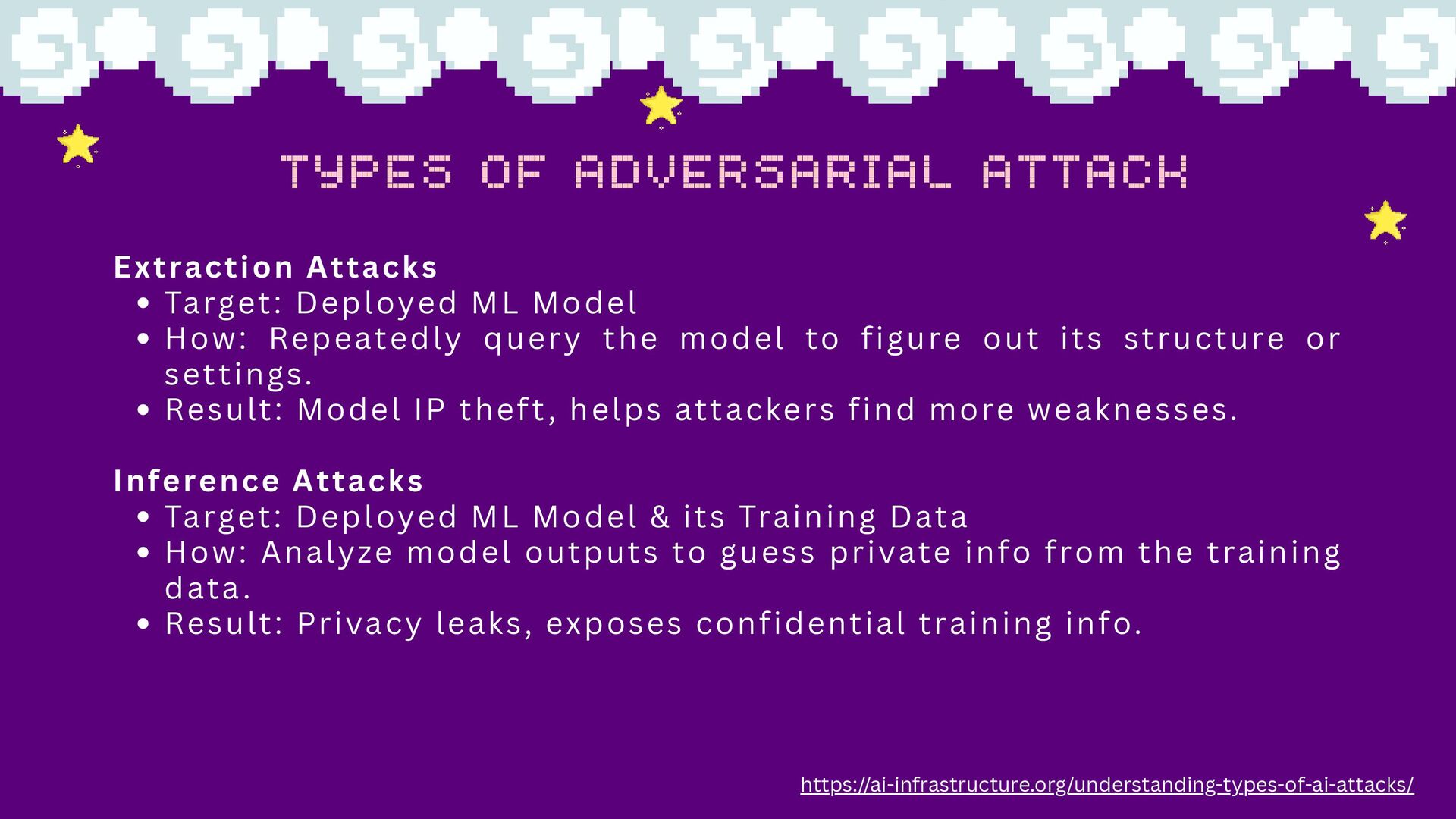
  25. TYPES OF ADVERSARIAL ATTACK https://ai-infrastructure.org/understanding-types-of-ai-attacks/ Extraction Attacks Target: Deployed ML

    Model How: Repeatedly query the model to figure out its structure or settings. Result: Model IP theft, helps attackers find more weaknesses. Inference Attacks Target: Deployed ML Model & its Training Data How: Analyze model outputs to guess private info from the training data. Result: Privacy leaks, exposes confidential training info.
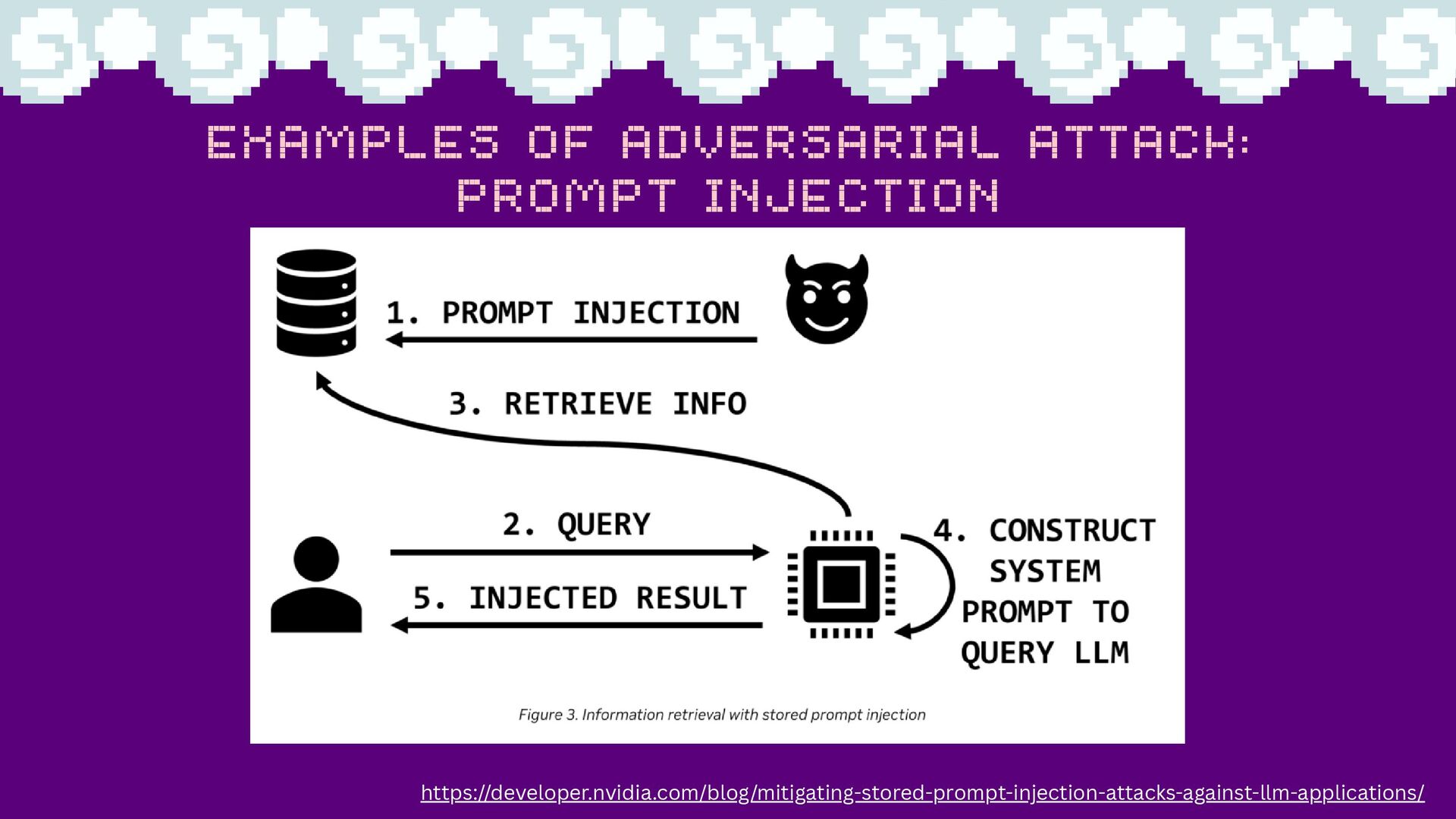
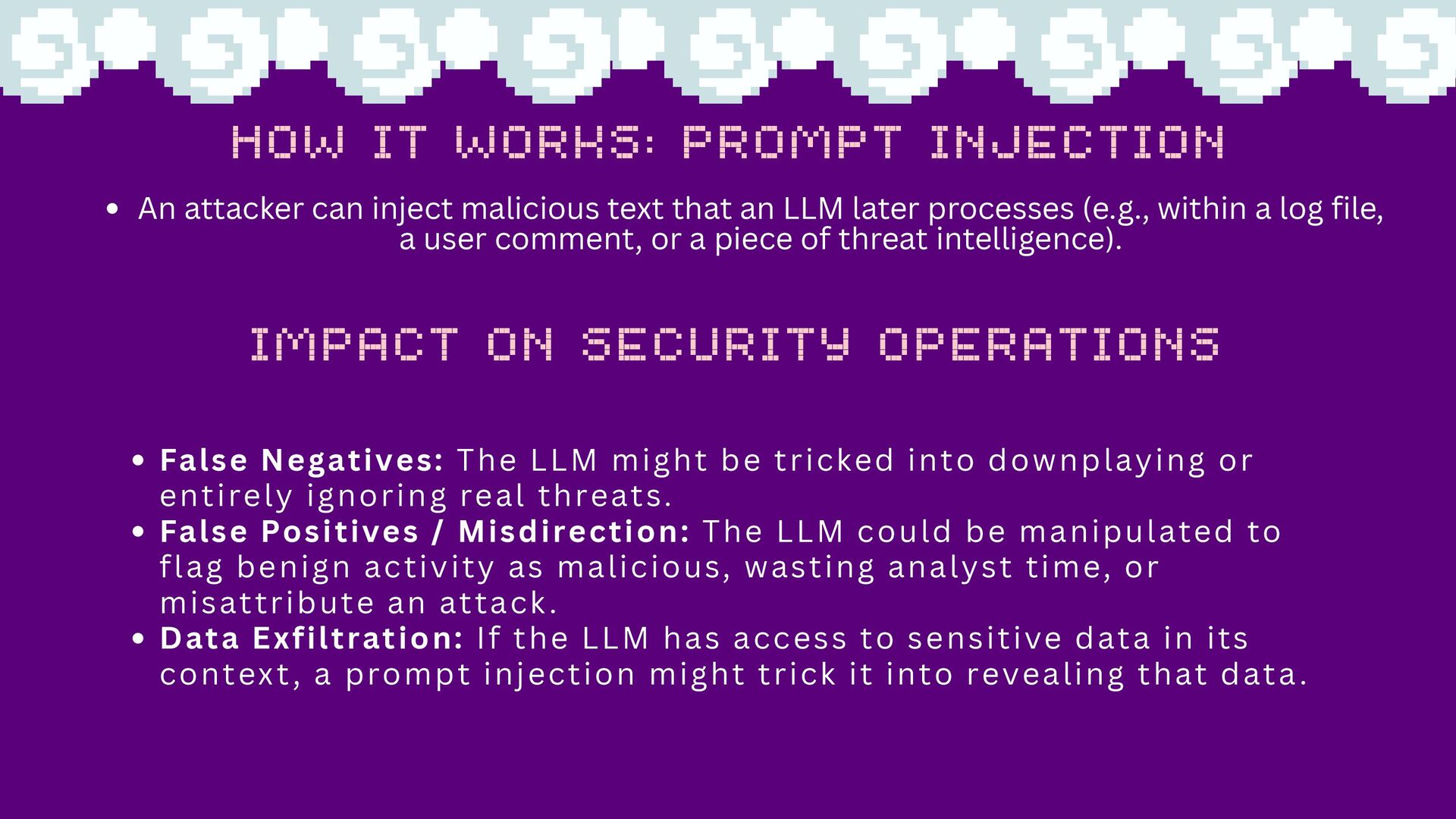
  26. HOW IT WORKS: PROMPT INJECTION An attacker can inject malicious

    text that an LLM later processes (e.g., within a log file, a user comment, or a piece of threat intelligence). False Negatives: The LLM might be tricked into downplaying or entirely ignoring real threats. False Positives / Misdirection: The LLM could be manipulated to flag benign activity as malicious, wasting analyst time, or misattribute an attack. Data Exfiltration: If the LLM has access to sensitive data in its context, a prompt injection might trick it into revealing that data. IMPACT ON SECURITY OPERATIONS
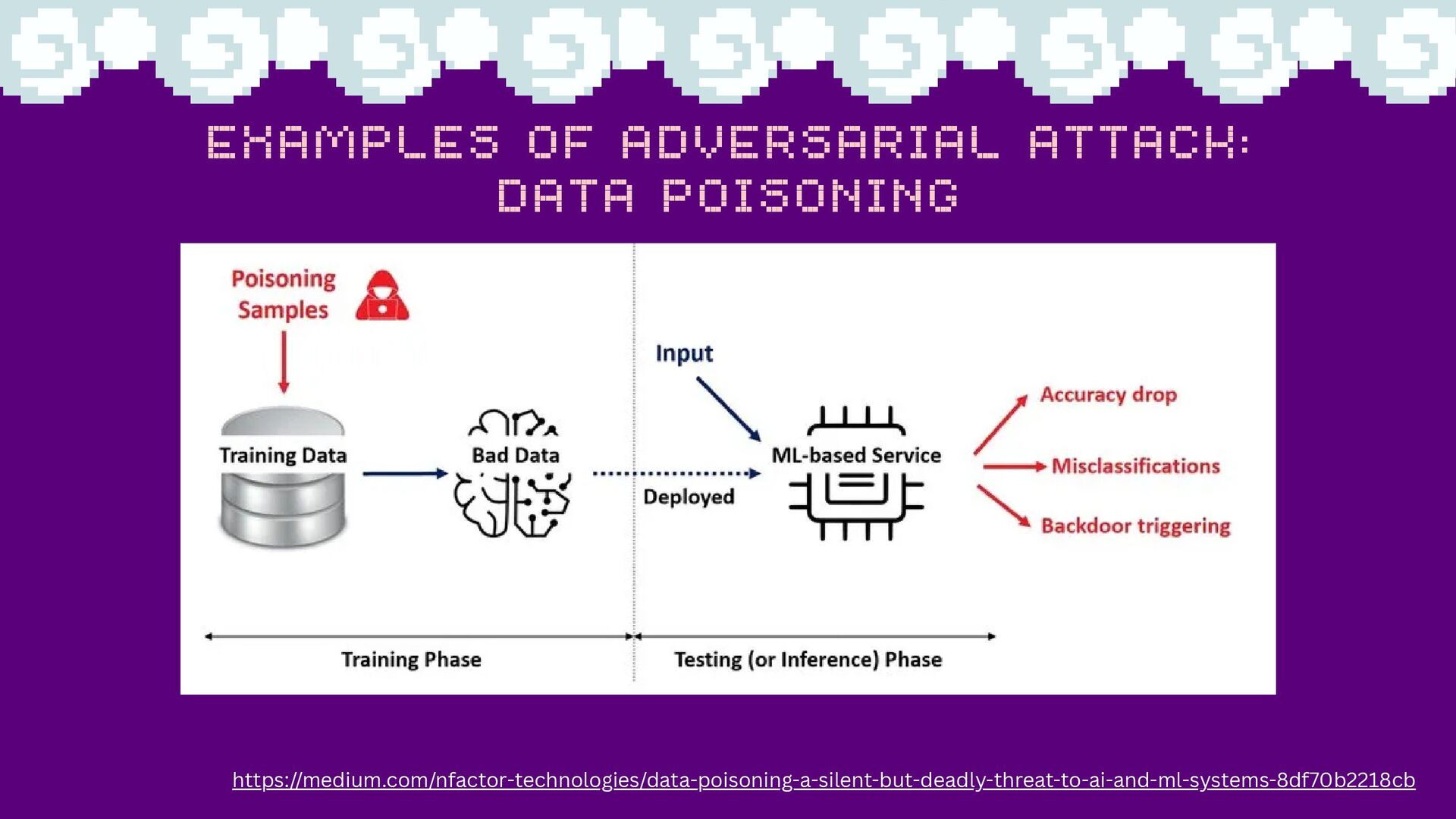
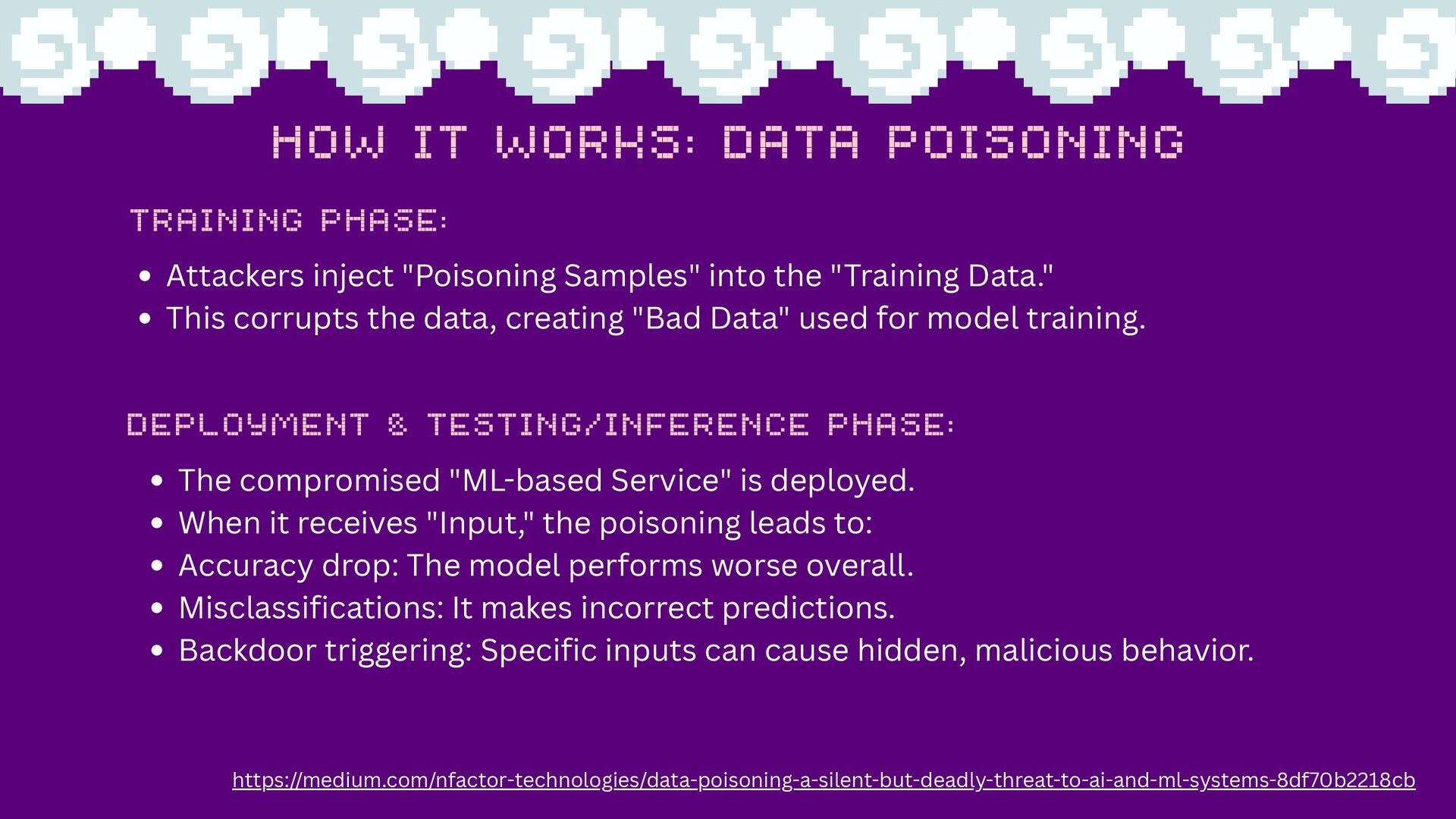
  27. HOW IT WORKS: DATA POISONING https://medium.com/nfactor-technologies/data-poisoning-a-silent-but-deadly-threat-to-ai-and-ml-systems-8df70b2218cb TRAINING PHASE: Attackers inject

    "Poisoning Samples" into the "Training Data." This corrupts the data, creating "Bad Data" used for model training. DEPLOYMENT & TESTING/INFERENCE PHASE: The compromised "ML-based Service" is deployed. When it receives "Input," the poisoning leads to: Accuracy drop: The model performs worse overall. Misclassifications: It makes incorrect predictions. Backdoor triggering: Specific inputs can cause hidden, malicious behavior.
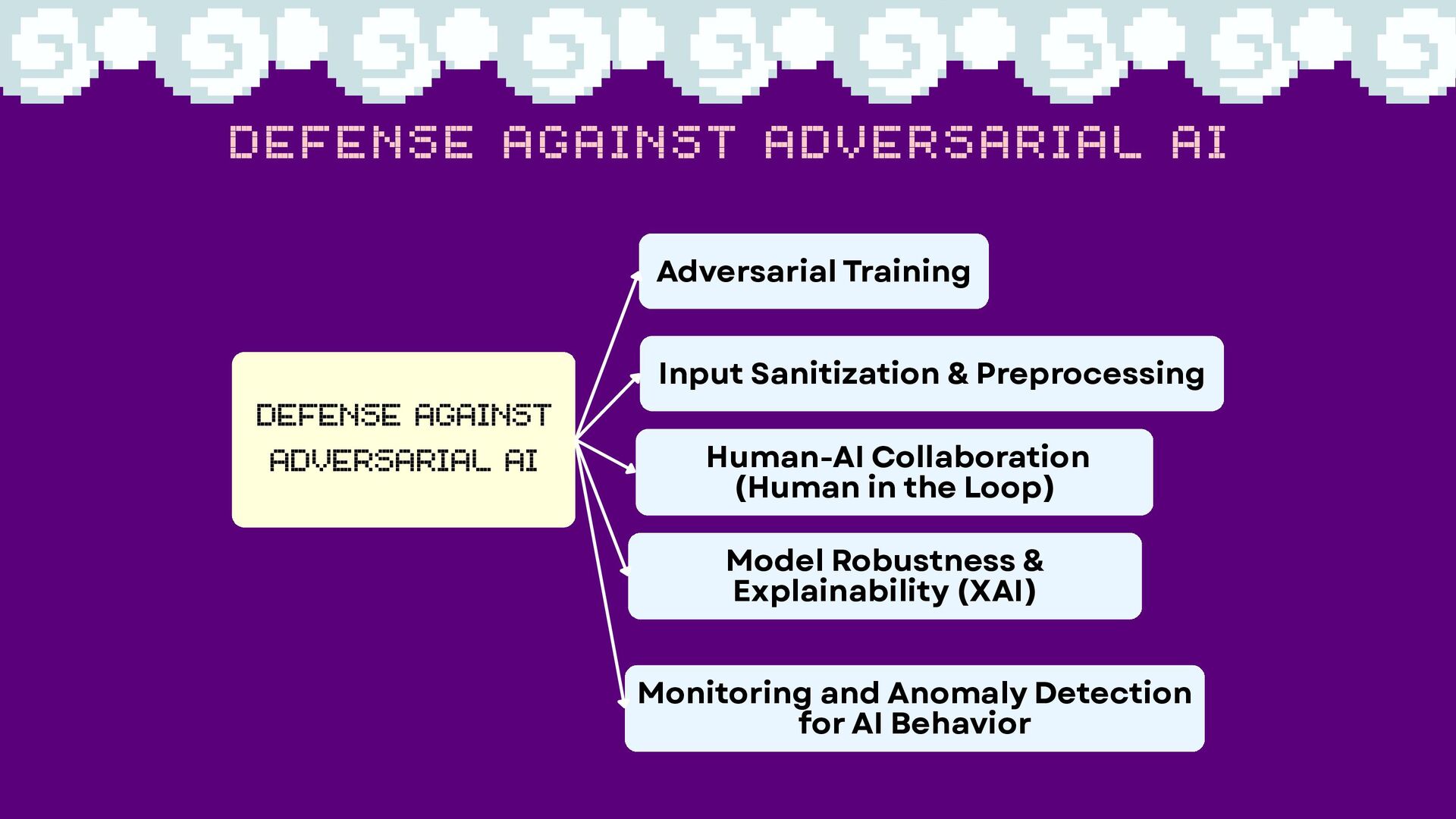
  28. DEFENSE AGAINST ADVERSARIAL AI DEFENSE AGAINST ADVERSARIAL AI Adversarial Training

    Input Sanitization & Preprocessing Human-AI Collaboration (Human in the Loop) Model Robustness & Explainability (XAI) Monitoring and Anomaly Detection for AI Behavior
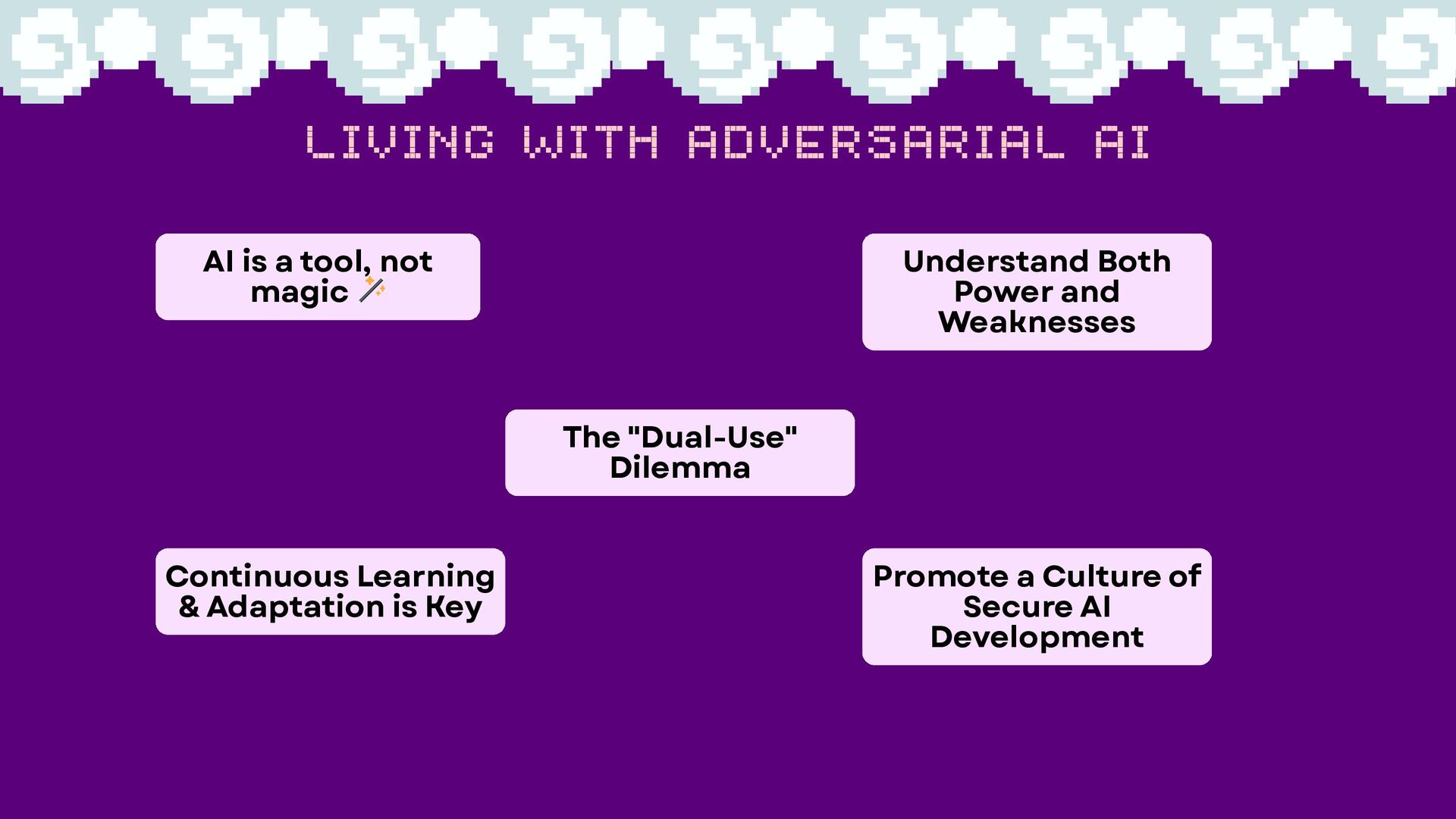
  29. LIVING WITH ADVERSARIAL AI Promote a Culture of Secure AI

    Development Continuous Learning & Adaptation is Key The "Dual-Use" Dilemma Understand Both Power and Weaknesses AI is a tool, not magic 🪄