Share
Embed
How to Design an Effective Distributor Loyalty Program
Learn how to design a successful distributor loyalty program that improves partner engagement, encourages repeat purchases, strengthens distributor relationships, and supports long-term business growth. Explore practical strategies for setting goals, choosing rewards, and building stronger distribution networks.
loyaltytalks
October 21, 2026
Transcript
7 slides
-
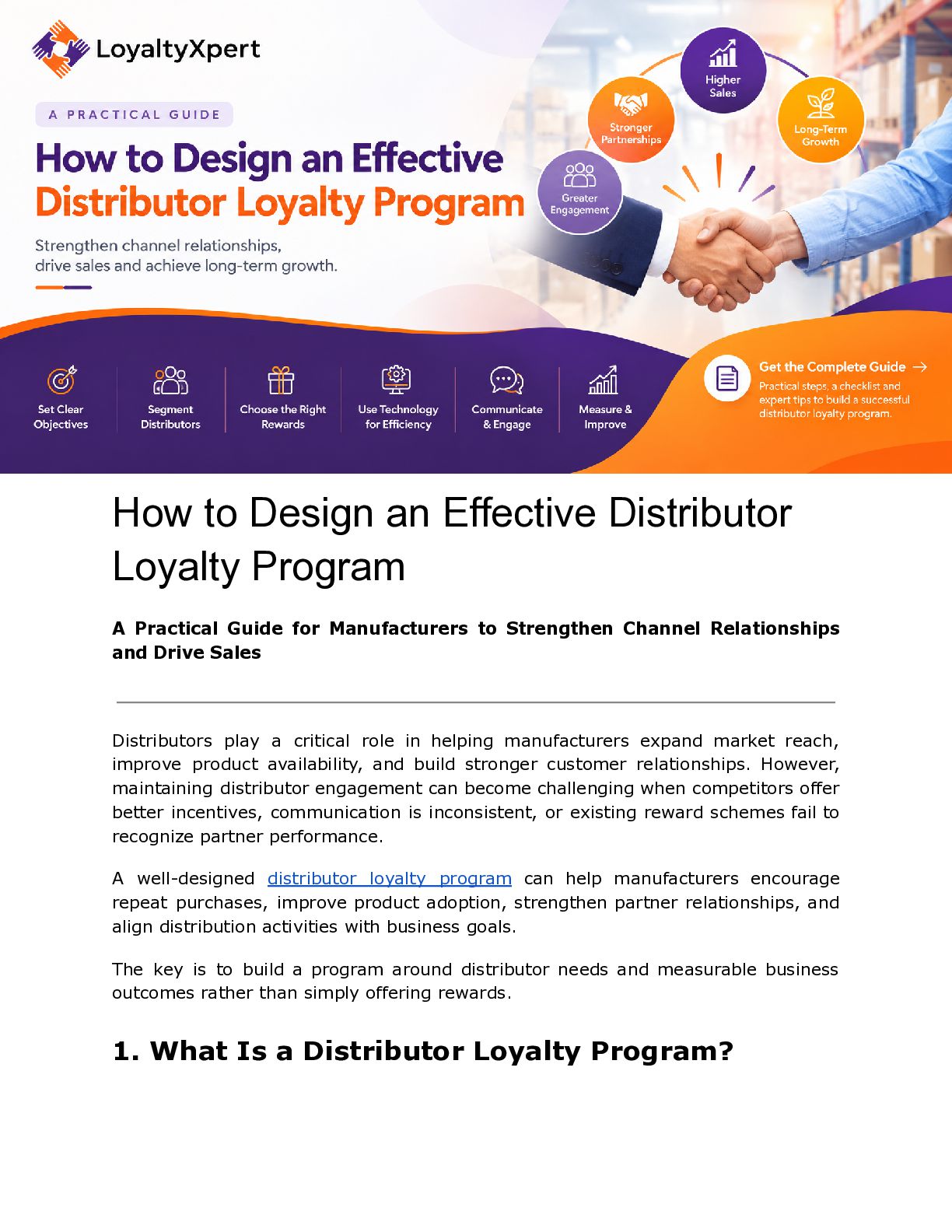
How to Design an Effective Distributor Loyalty Program A Practical
Guide for Manufacturers to Strengthen Channel Relationships and Drive Sales Distributors play a critical role in helping manufacturers expand market reach, improve product availability, and build stronger customer relationships. However, maintaining distributor engagement can become challenging when competitors offer better incentives, communication is inconsistent, or existing reward schemes fail to recognize partner performance. A well-designed distributor loyalty program can help manufacturers encourage repeat purchases, improve product adoption, strengthen partner relationships, and align distribution activities with business goals. The key is to build a program around distributor needs and measurable business outcomes rather than simply offering rewards. 1. What Is a Distributor Loyalty Program? -
A distributor loyalty program is a structured initiative through which
manufacturers reward distributors for purchases, sales performance, business growth, and other activities that support shared objectives. Depending on the distribution model, a program may reward: • • • • • • Consistent purchases and repeat orders Achievement of sales targets Expansion into new product categories Market development and new retailer acquisition Participation in training and promotional campaigns Timely reporting and other approved business activities Unlike a conventional discount scheme, a distributor loyalty program focuses on sustained engagement and long-term business relationships. 2. Define Clear Business Objectives Before selecting rewards or setting up a platform, manufacturers should establish what the program needs to achieve. Common objectives include: Increase repeat purchases: Encourage distributors to maintain consistent ordering patterns. Expand product adoption: Motivate partners to stock and promote a wider product range. Improve channel retention: Build stronger relationships and reduce the likelihood of partners switching to competing brands. Expand market coverage: Encourage distributors to reach new retailers, territories, and customer segments. Improve sales visibility: Use accurate channel data to understand purchasing trends, campaign performance, and partner engagement. Choose one primary objective and define supporting metrics. This makes the program easier to manage and evaluate. 3. Segment Distributors Based on Their Needs -
Not all distributors contribute equally or operate under the same
conditions. A uniform reward structure may fail to motivate smaller partners or adequately recognize high-performing distributors. Manufacturers can segment their distribution network using factors such as: • • • • • Sales contribution and growth potential Geographic market and territory Product categories handled Purchase frequency and order consistency Engagement and participation history For example, a distributor with strong sales but limited product diversity may respond better to product-range incentives. A newer distributor may need achievable onboarding milestones and additional support. Segmentation helps manufacturers create relevant incentives without making the program unnecessarily complicated. 4. Choose the Right Reward Structure Reward mechanisms should reflect the behaviors the manufacturer wants to encourage. Points-Based Rewards Distributors earn points for eligible purchases or predefined business activities. Points can later be redeemed for approved rewards. Target-Based Incentives Rewards are linked to achieving sales milestones, quarterly targets, or specific campaign objectives. Tier-Based Programs Distributors progress through levels based on performance or engagement. Higher tiers may offer additional benefits, recognition, or exclusive incentives. Non-Monetary Recognition Training opportunities, certificates, exclusive events, and business support can complement financial rewards and strengthen partner relationships. -
The best structure depends on the manufacturer's objectives, preferences, operational
requirements, and available budget. distributor 5. Make Rewards Relevant and Achievable Rewards influence participation only when distributors understand their value and believe the targets are attainable. Consider the following practices: • • • • • Offer a suitable mix of monetary and non-monetary rewards. Set transparent eligibility rules and achievement milestones. Provide clear visibility into earned points and redemption options. Communicate reward timelines and program conditions upfront. Review reward preferences and participation regularly. Avoid overly complicated earning rules or targets that only a small number of distributors can realistically achieve. 6. Use Technology to Simplify Program Management Managing distributor incentives through spreadsheets and manual processes can create reporting gaps, delayed reward updates, and avoidable disputes as the network grows. A digital loyalty management platform can help manufacturers streamline program operations through: • • • • • • Distributor enrollment and profile management Automated points calculation and reward tracking Campaign creation and incentive management Performance dashboards and reporting Digital communication and engagement Reward redemption management Where appropriate, integration with existing sales, billing, or distributor management systems can improve data consistency and help manufacturers evaluate program performance. Technology should make the program easier for both administrators and distributors to use. -
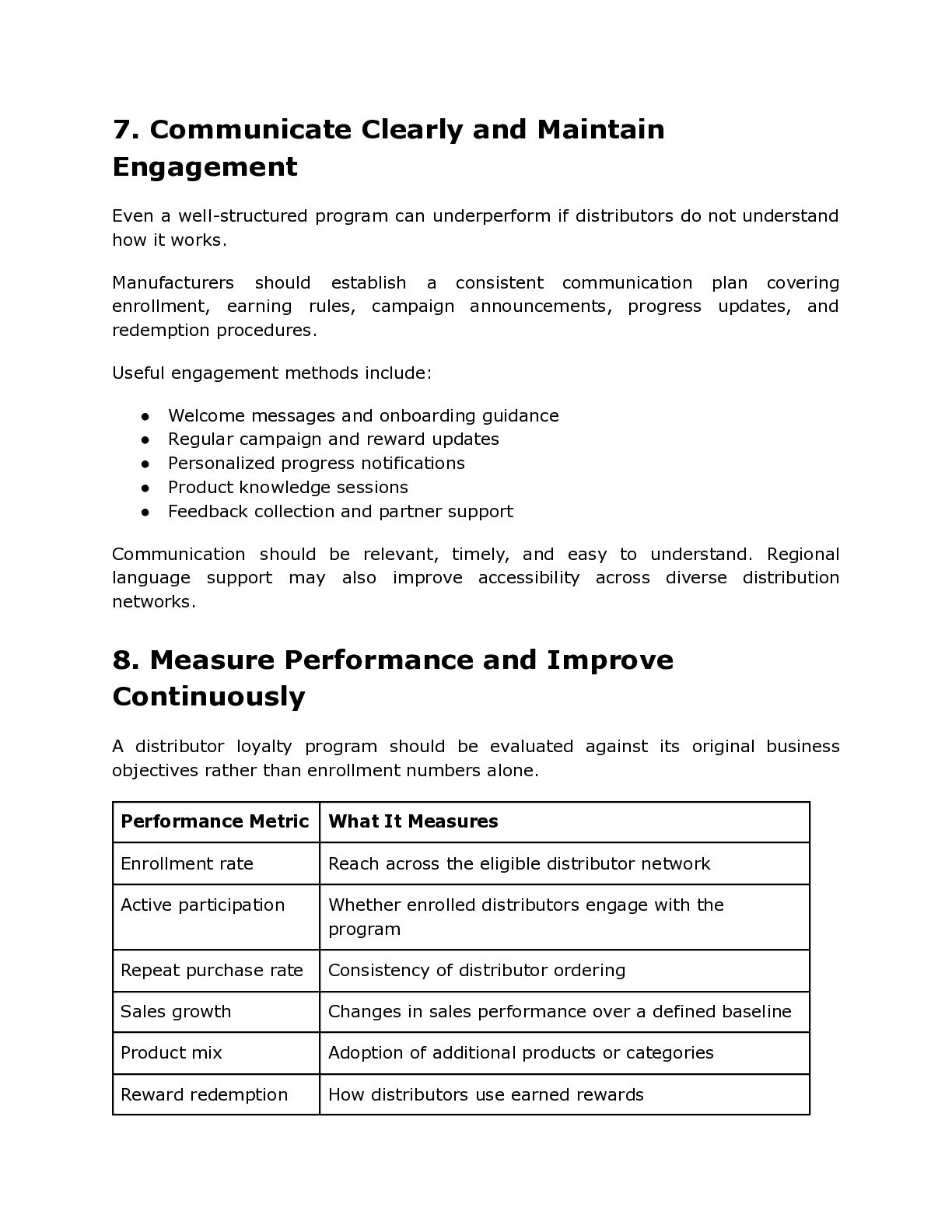
7. Communicate Clearly and Maintain Engagement Even a well-structured program
can underperform if distributors do not understand how it works. Manufacturers should establish a consistent communication plan covering enrollment, earning rules, campaign announcements, progress updates, and redemption procedures. Useful engagement methods include: • • • • • Welcome messages and onboarding guidance Regular campaign and reward updates Personalized progress notifications Product knowledge sessions Feedback collection and partner support Communication should be relevant, timely, and easy to understand. Regional language support may also improve accessibility across diverse distribution networks. 8. Measure Performance and Improve Continuously A distributor loyalty program should be evaluated against its original business objectives rather than enrollment numbers alone. Performance Metric What It Measures Enrollment rate Reach across the eligible distributor network Active participation Whether enrolled distributors engage with the program Repeat purchase rate Consistency of distributor ordering Sales growth Changes in sales performance over a defined baseline Product mix Adoption of additional products or categories Reward redemption How distributors use earned rewards -
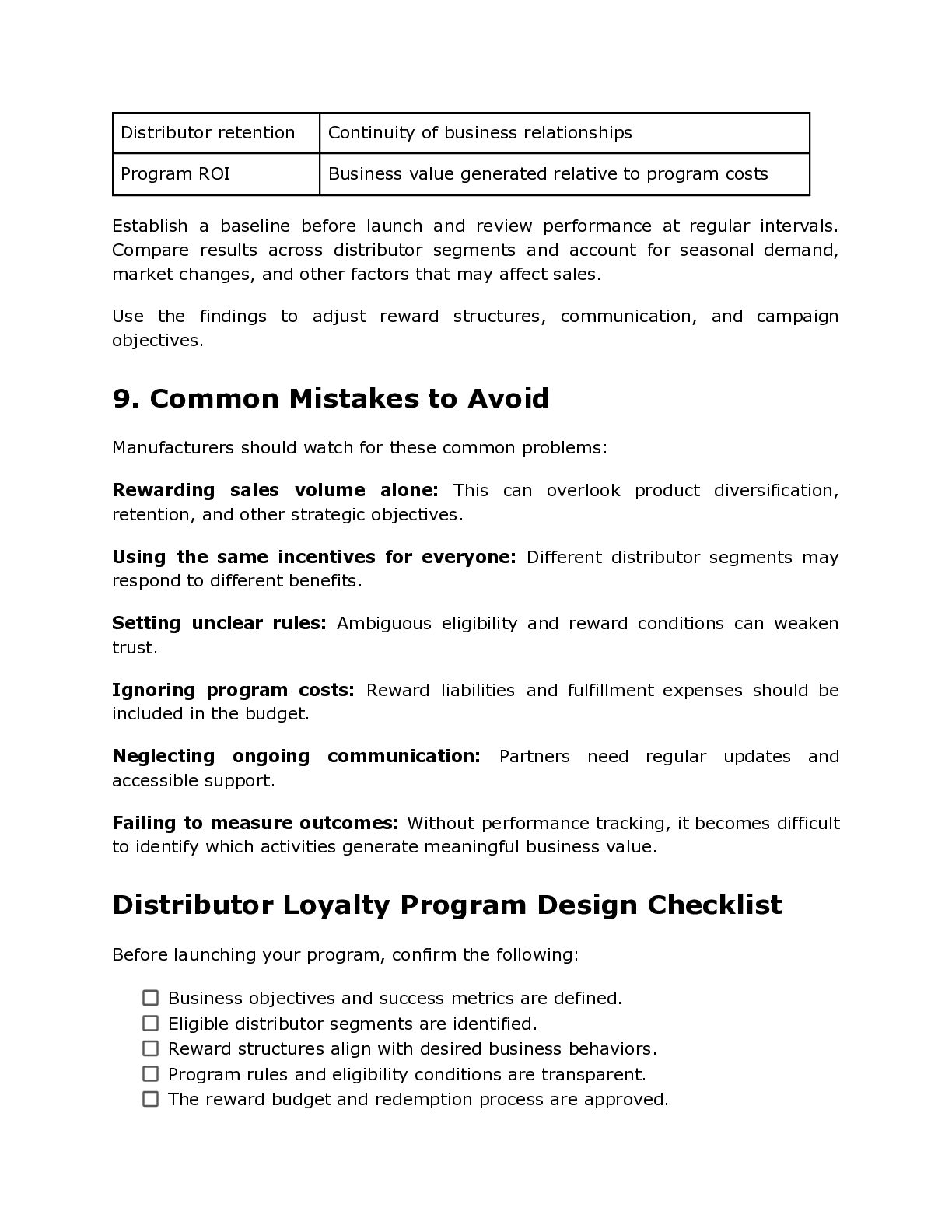
Distributor retention Continuity of business relationships Program ROI Business value
generated relative to program costs Establish a baseline before launch and review performance at regular intervals. Compare results across distributor segments and account for seasonal demand, market changes, and other factors that may affect sales. Use the findings to adjust reward structures, communication, and campaign objectives. 9. Common Mistakes to Avoid Manufacturers should watch for these common problems: Rewarding sales volume alone: This can overlook product diversification, retention, and other strategic objectives. Using the same incentives for everyone: Different distributor segments may respond to different benefits. Setting unclear rules: Ambiguous eligibility and reward conditions can weaken trust. Ignoring program costs: Reward liabilities and fulfillment expenses should be included in the budget. Neglecting ongoing accessible support. communication: Partners need regular updates and Failing to measure outcomes: Without performance tracking, it becomes difficult to identify which activities generate meaningful business value. Distributor Loyalty Program Design Checklist Before launching your program, confirm the following: Business objectives and success metrics are defined. Eligible distributor segments are identified. Reward structures align with desired business behaviors. Program rules and eligibility conditions are transparent. The reward budget and redemption process are approved. -
The technology and reporting requirements are established. Distributor
onboarding and communication plans are ready. A pilot or phased rollout has been considered. Performance reviews and program improvement cycles are scheduled. Conclusion Designing an effective distributor loyalty program requires a clear understanding of business goals, distributor needs, relevant incentives, and measurable outcomes. Manufacturers that combine transparent reward structures with consistent communication and reliable performance tracking can build stronger channel relationships over time. The objective is not simply to distribute rewards. It is to encourage the right behaviors, improve channel engagement, and create a mutually beneficial relationship between manufacturers and distributors. Explore the complete guide: How to Design a Distributor Loyalty Program Discover how a structured channel loyalty ecosystem can help manufacturers manage partner engagement and support long-term business growth.