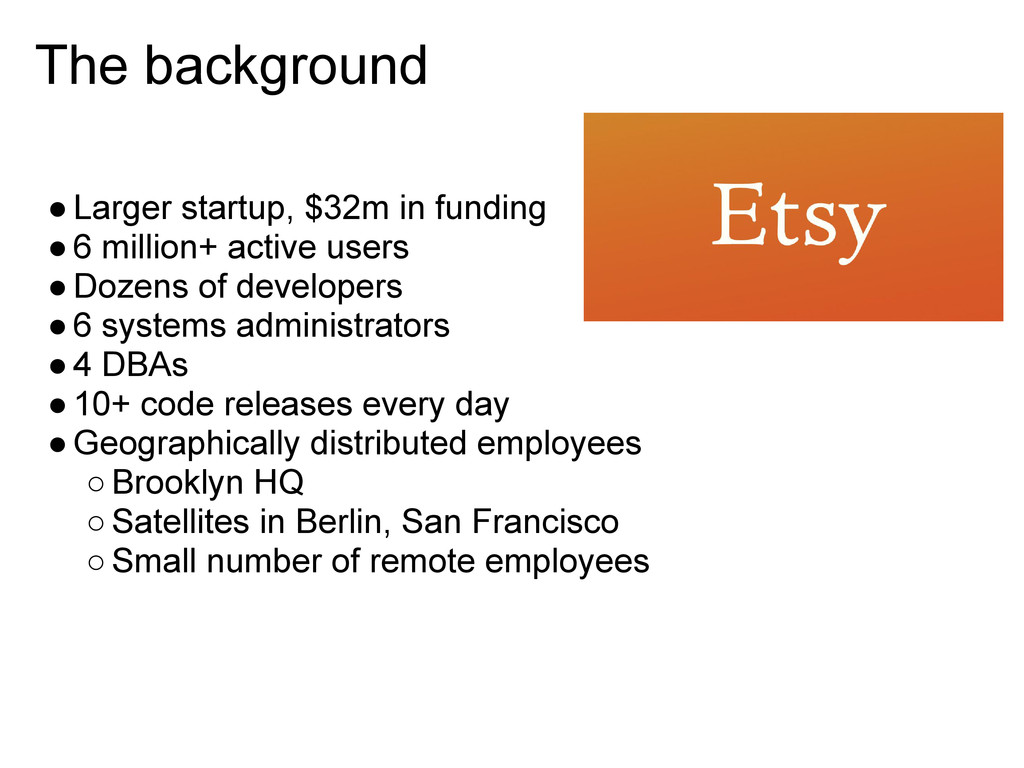
users •Dozens of developers •6 systems administrators •4 DBAs •10+ code releases every day •Geographically distributed employees ◦Brooklyn HQ ◦Satellites in Berlin, San Francisco ◦Small number of remote employees
front end developers •3 systems administrators •1 DBA (moustache included) •Multiple code releases every day •Geographically distributed employees ◦Berlin, Copenhagen, Leeds, London, Los Angeles, Oakland, Paris, Portland, Zagreb
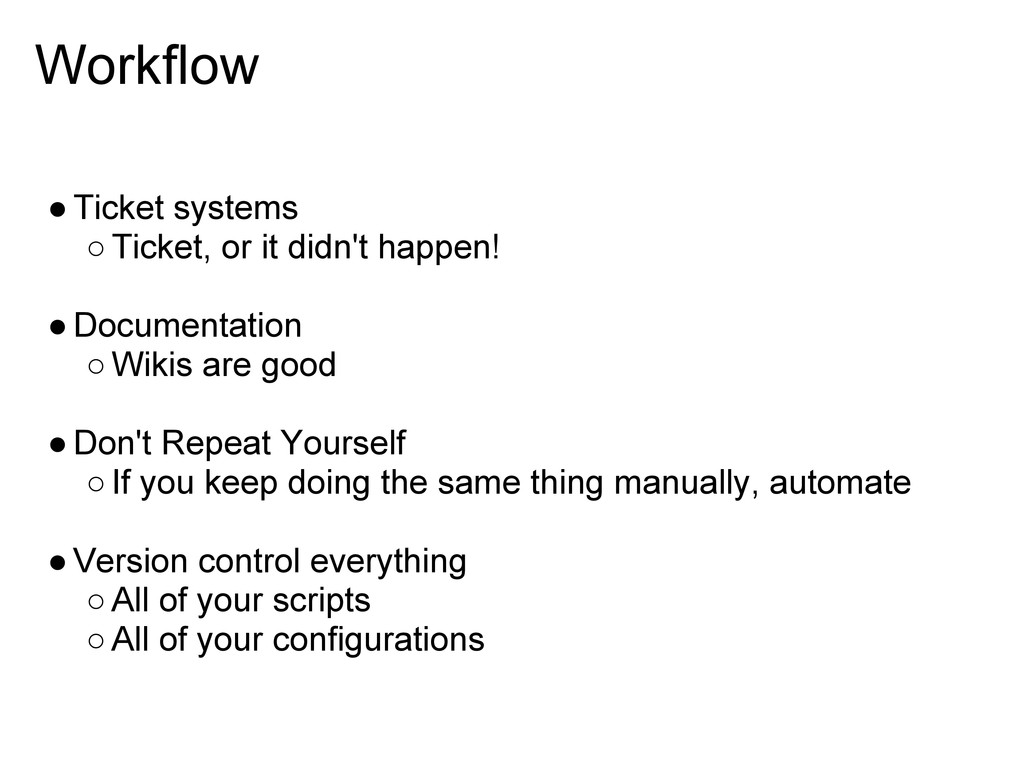
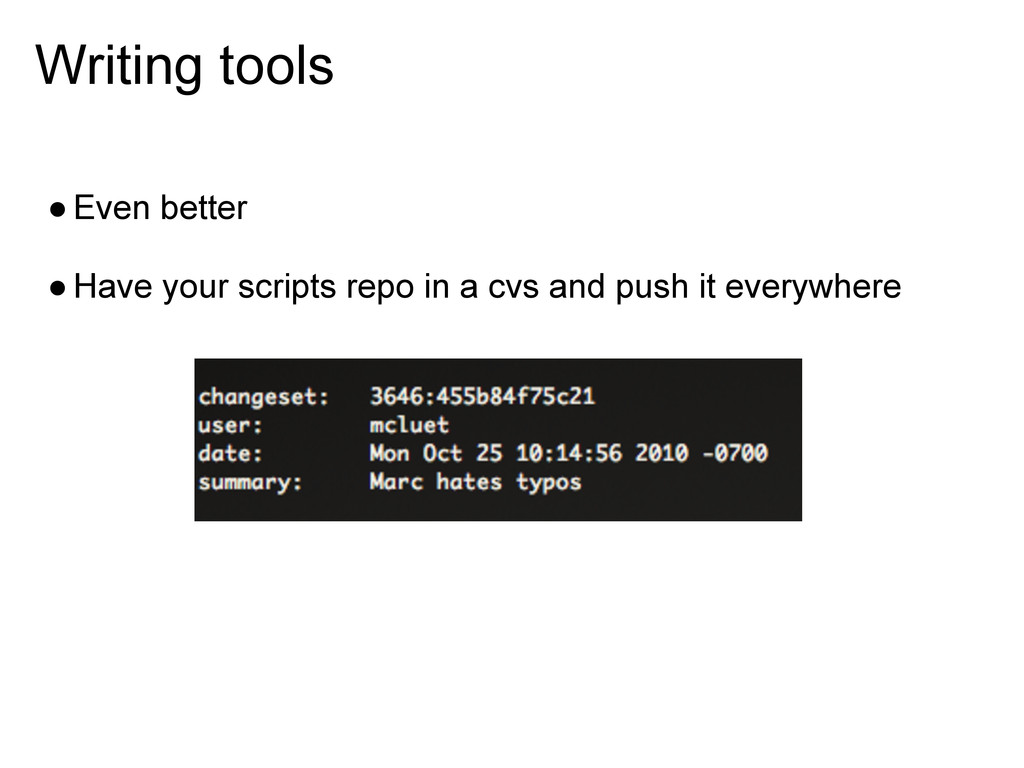
are good •Don't Repeat Yourself ◦If you keep doing the same thing manually, automate •Version control everything ◦All of your scripts ◦All of your configurations
recruitment interview •Encourage speed ◦Release soon and release often •Embrace mistakes as part of your day to day ◦Learn to work with it •Ask for peer reviews for important components ◦Helps sanity checking your logic •Developers, Sysadmins, DBAs, one team
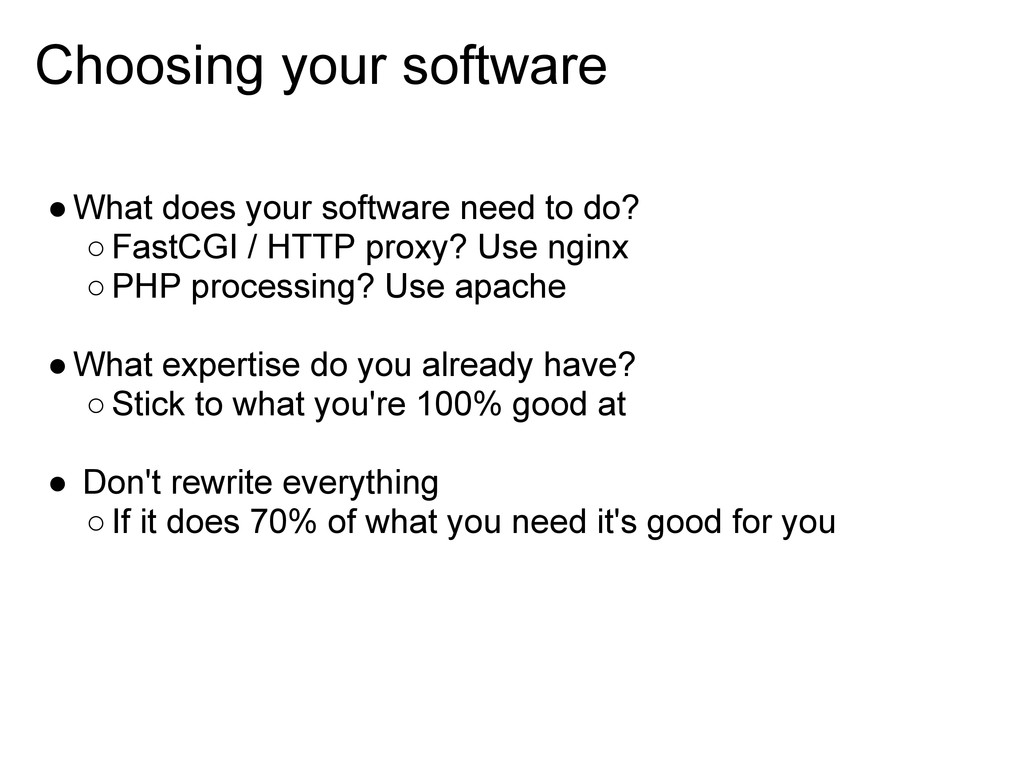
◦FastCGI / HTTP proxy? Use nginx ◦PHP processing? Use apache •What expertise do you already have? ◦Stick to what you're 100% good at • Don't rewrite everything ◦If it does 70% of what you need it's good for you
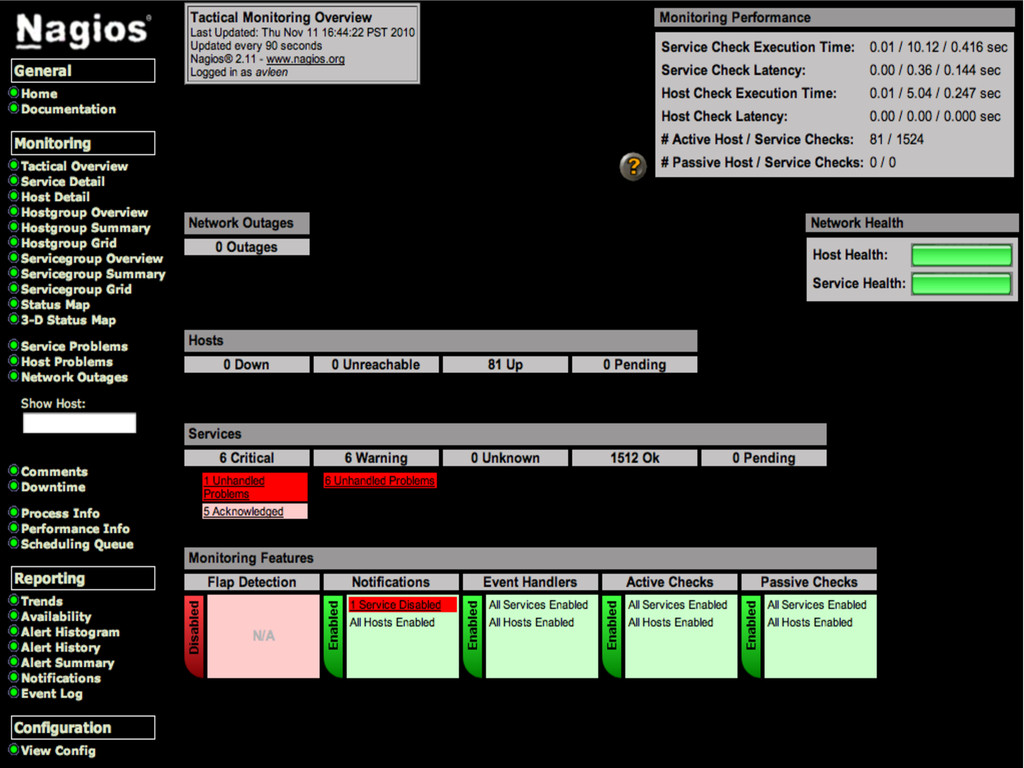
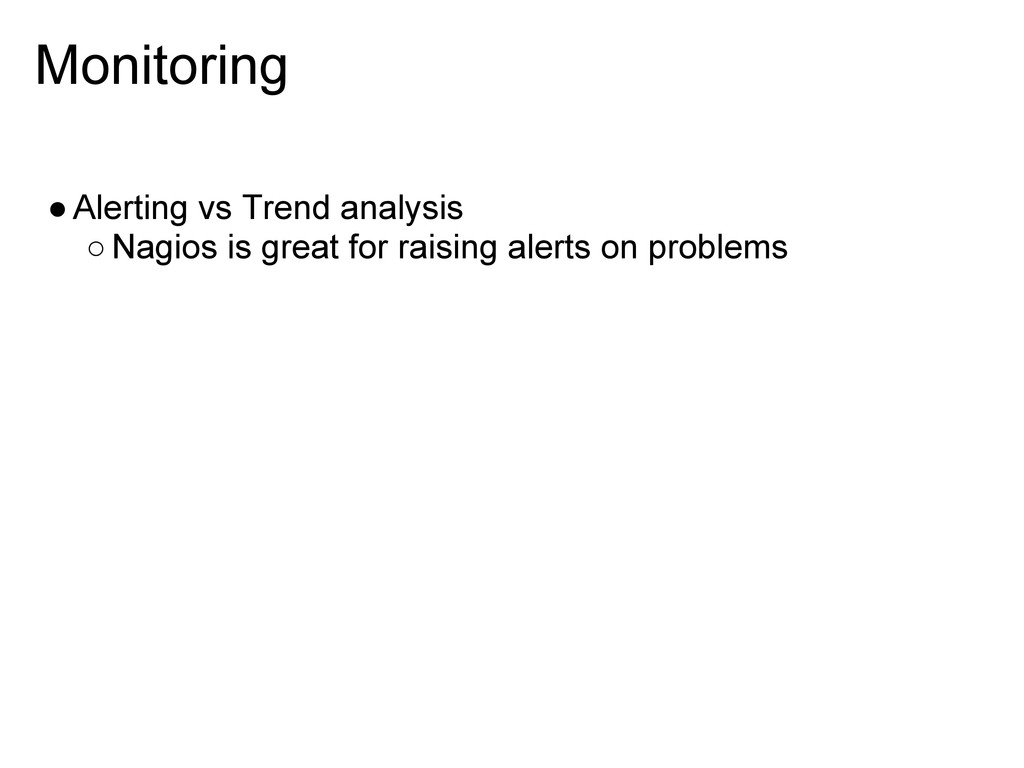
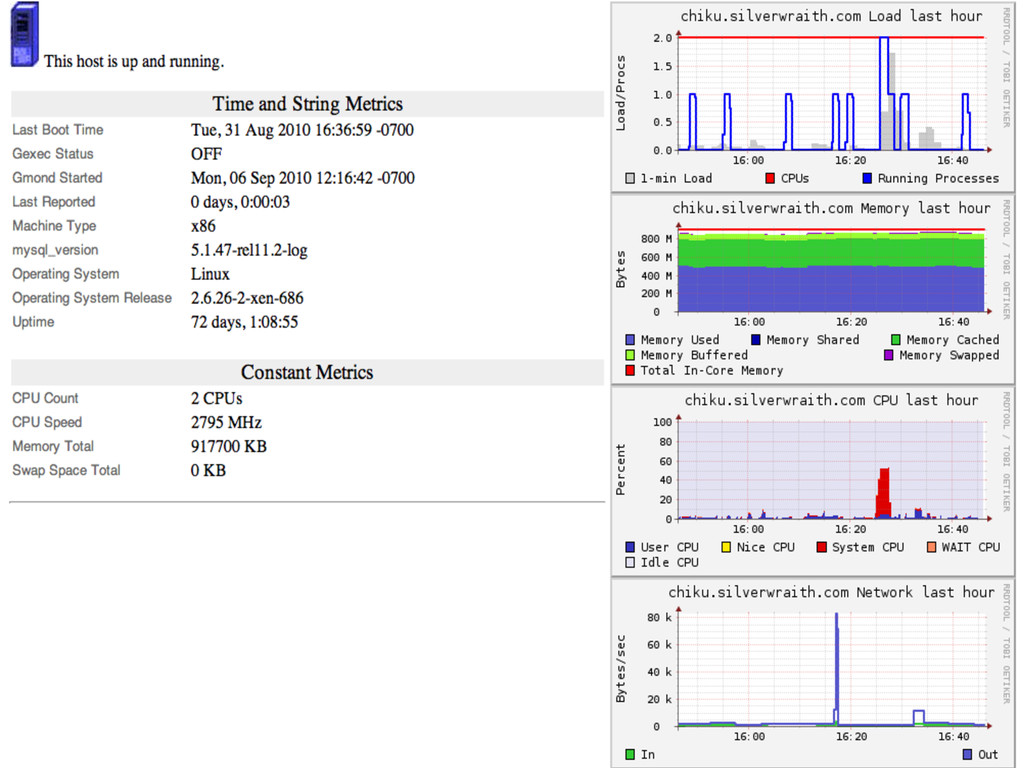
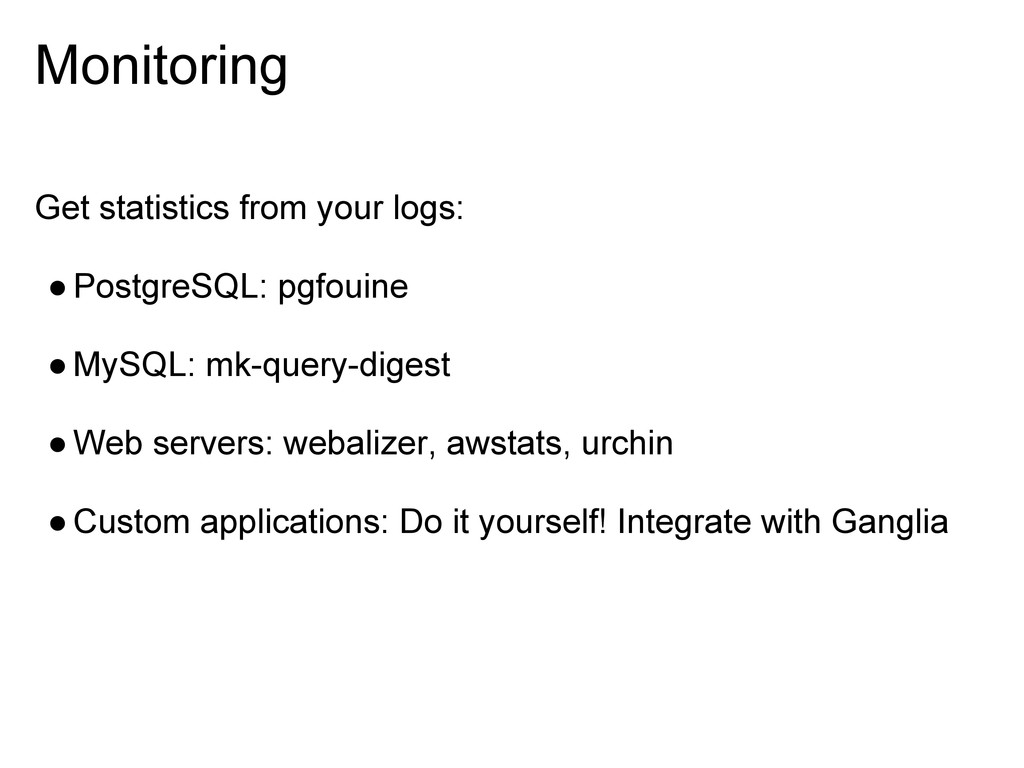
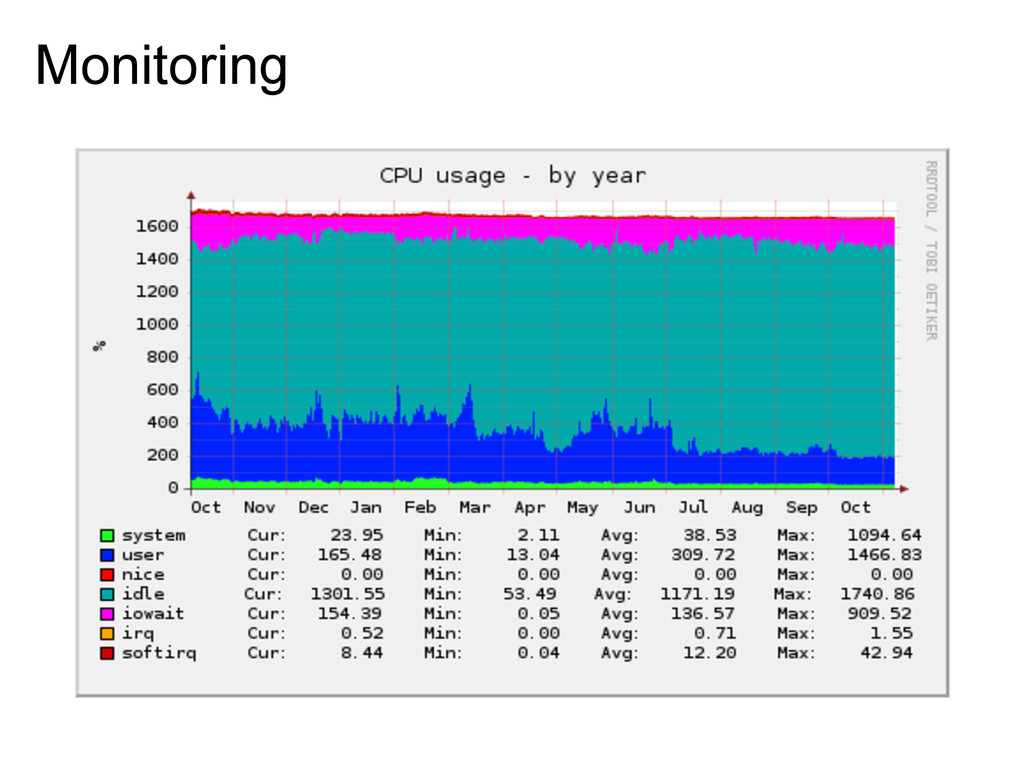
alerts on problems ◦Ganglia is great at long term trend analysis ◦Know when something is out of the "ordinary" •What should you monitor? ◦Anything which breaks once ◦Customer facing services
alerts on problems ◦Ganglia is great at long term trend analysis ◦Know when something is out of the "ordinary" •What should you graph? ◦Everything! If it moves, graph it. ◦Customer facing rates and statistics
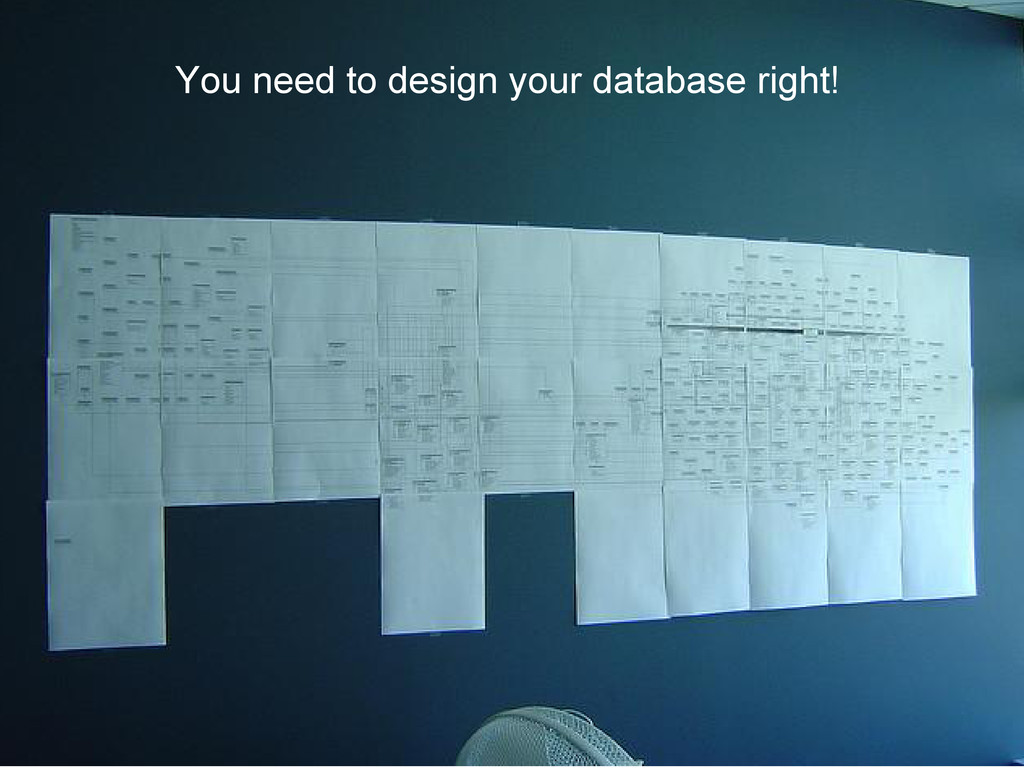
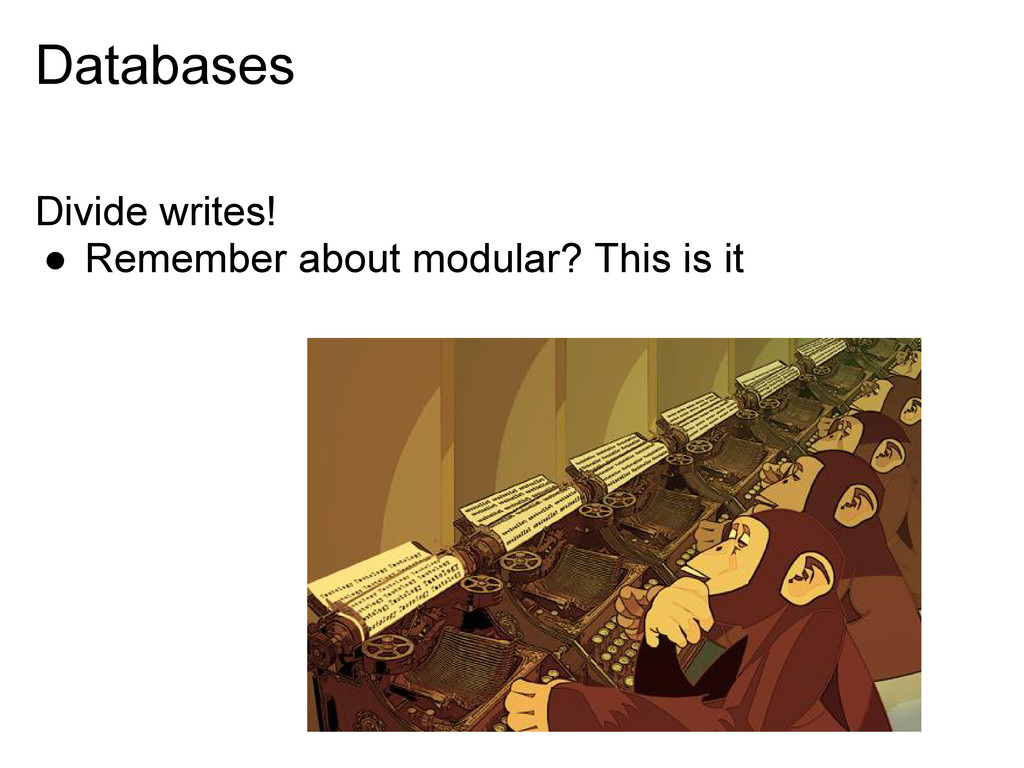
but modular to avoid surprises ◦Don't abuse many-to-many tables, they will just give you hell •YOU WILL GET IT WRONG ◦You'll need to redesign parts of your DB semi-regularly ◦Be prepared for the unexpected
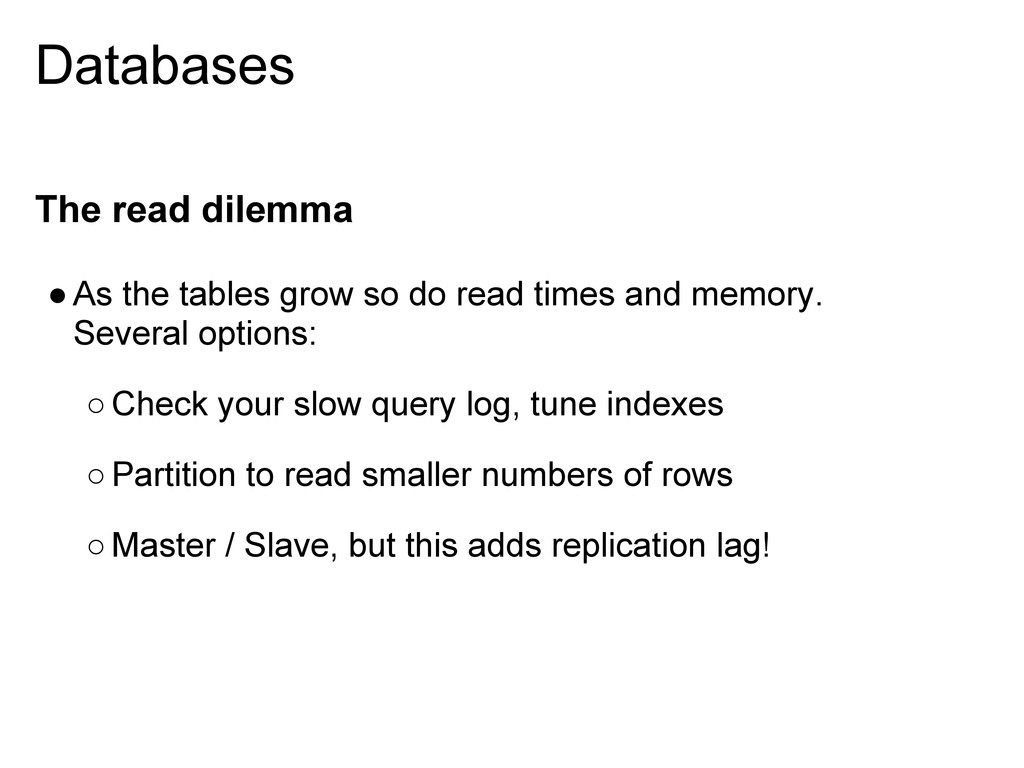
read times and memory. Several options: ◦Check your slow query log, tune indexes ◦Partition to read smaller numbers of rows ◦Master / Slave, but this adds replication lag!
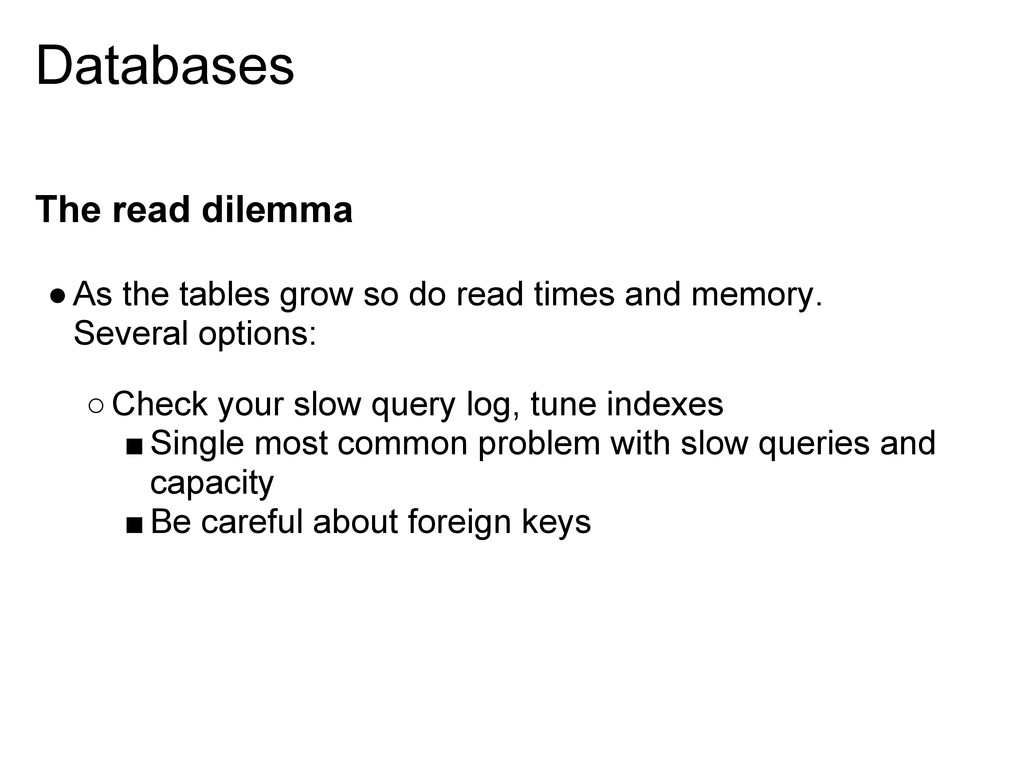
read times and memory. Several options: ◦Check your slow query log, tune indexes ▪Single most common problem with slow queries and capacity ▪Be careful about foreign keys
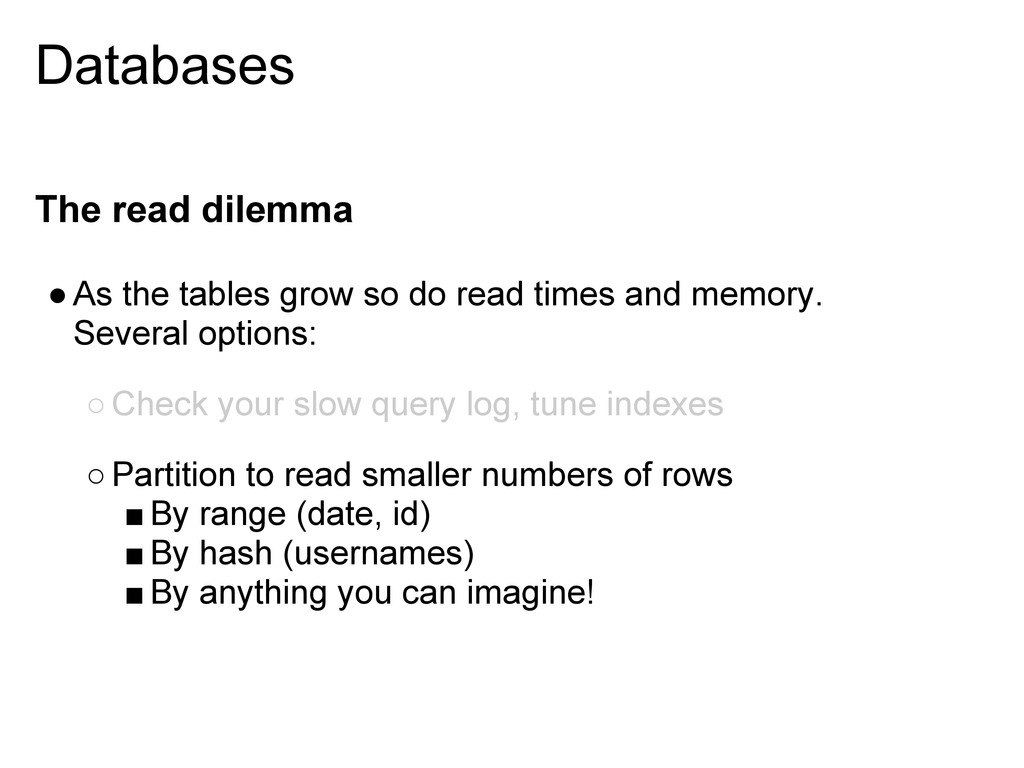
read times and memory. Several options: ◦Check your slow query log, tune indexes ◦Partition to read smaller numbers of rows ▪By range (date, id) ▪By hash (usernames) ▪By anything you can imagine!
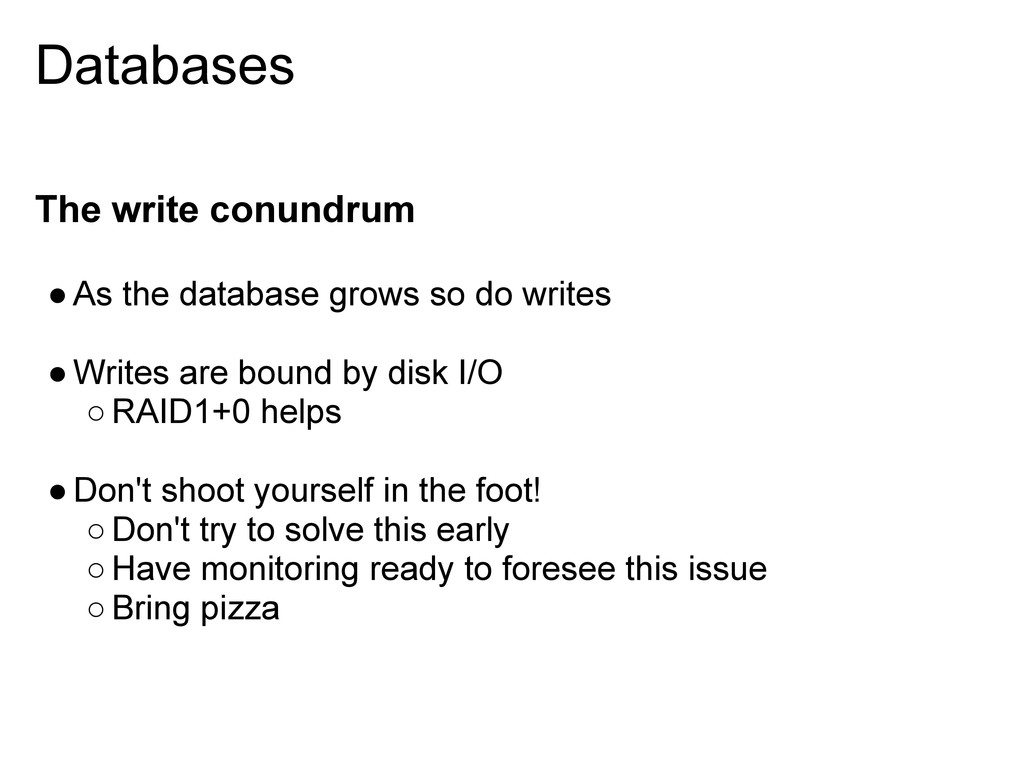
writes •Writes are bound by disk I/O ◦RAID1+0 helps •Don't shoot yourself in the foot! ◦Don't try to solve this early ◦Have monitoring ready to foresee this issue ◦Bring pizza
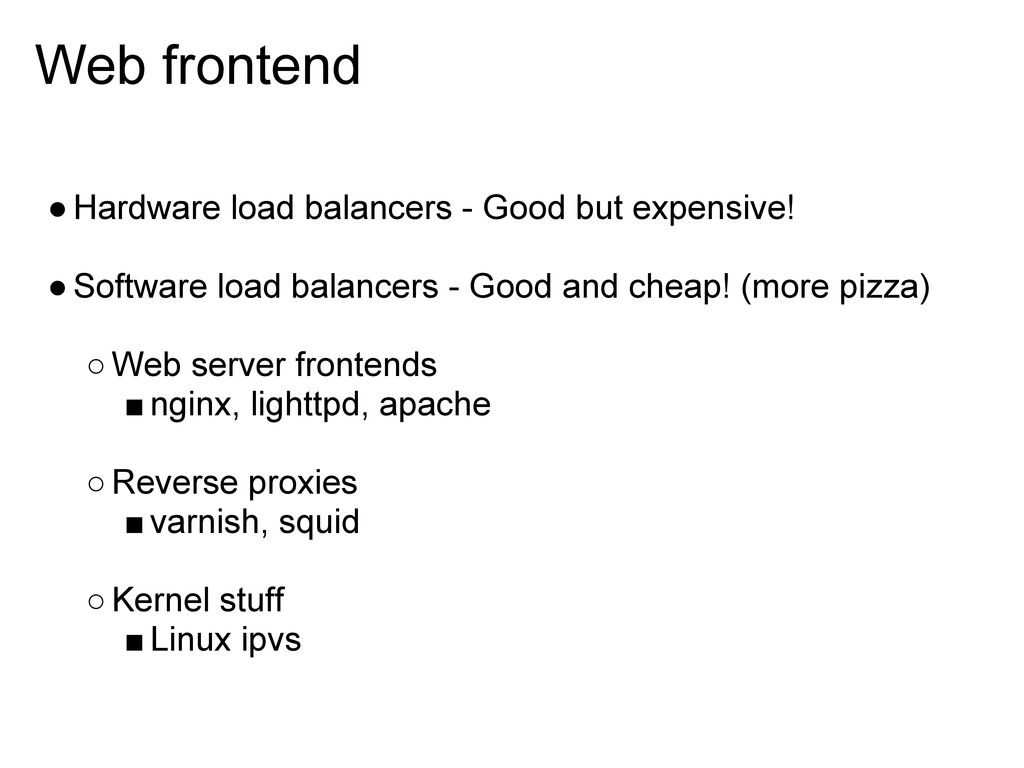
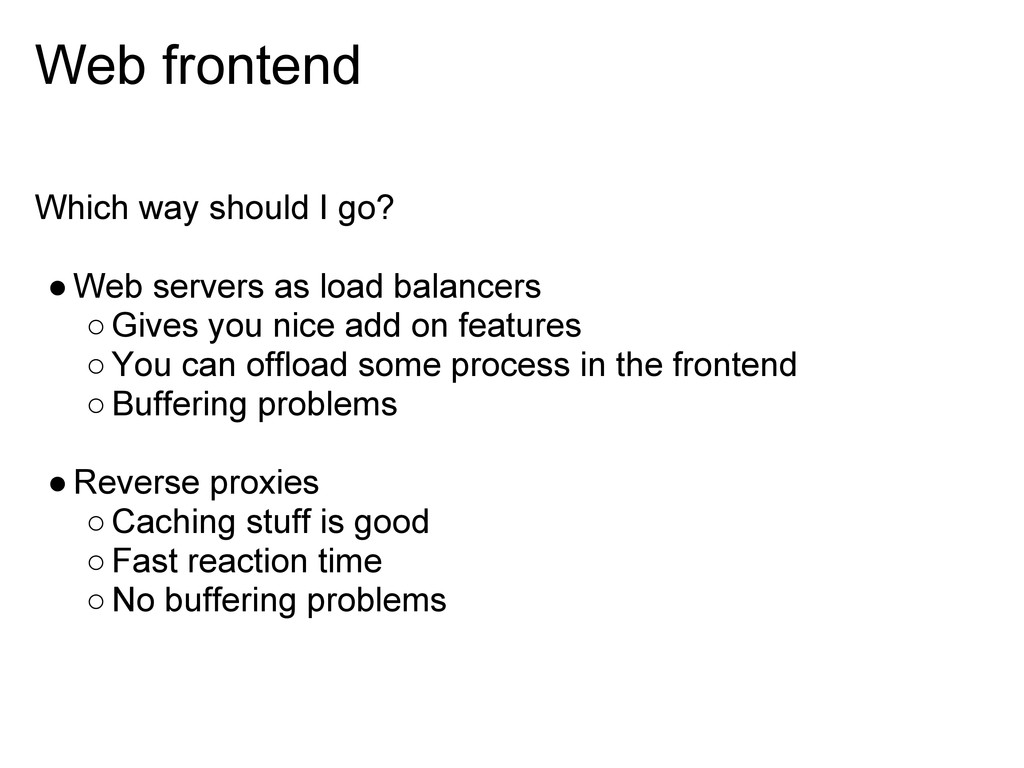
load balancers ◦Gives you nice add on features ◦You can offload some process in the frontend ◦Buffering problems •Reverse proxies ◦Caching stuff is good ◦Fast reaction time ◦No buffering problems
Planning •http://kitchensoap.com High scalability (if you get there) •http://highscalability.com/ If you really fancy databases, explain extended •http://explainextended.com/


 lynxman
 oracle4engineer
 kairim0
 naruoga
 yama3133
 pauli
pauli
.png) codatum
codatum
 toshimaru
 nayuts
 terurou
 mochizuki875
 camiha
 jacobtomlinson
 mraible
 ryanjones
 nikkihalliwell
 chrisshort
 sugarenia
 kimpetersen
 destraynor
 aleyda
 jonoalderson
 lfama
lfama
 schroneko