of Technology, College of Engineering Yadrav(Ichalkaranji) (An Autonomous Institute) • REASEARCH METHODOLOGY • Presented by • Mrs. POOJA YOGESH POWAR • Department- Automation and Robotics • Sharad Institute of Technology, College of Engineering Yadrav- (Ichalkaranji)
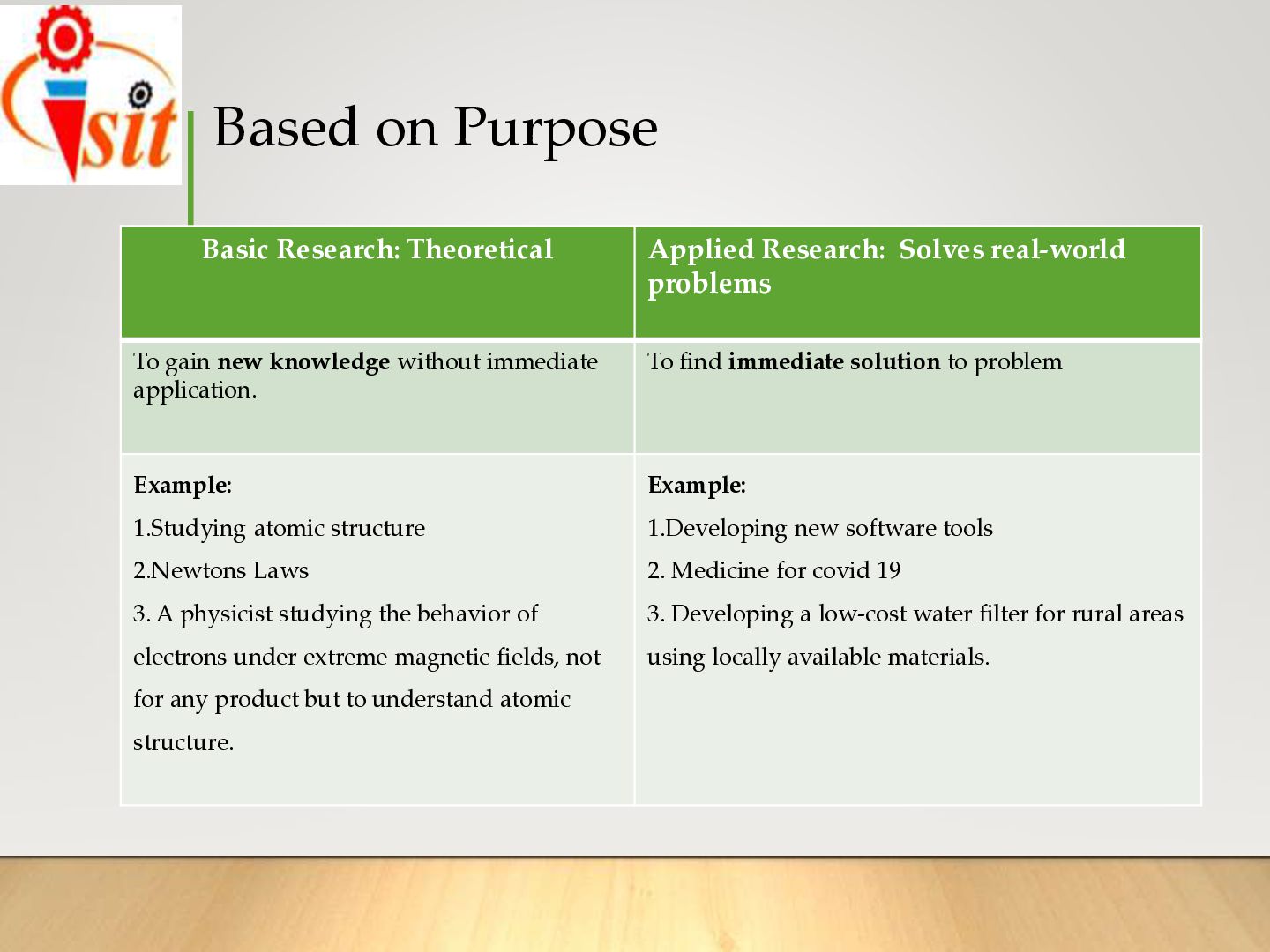
problems To gain new knowledge without immediate application. To find immediate solution to problem Example: Example: 1.Studying atomic structure 1.Developing new software tools 2.Newtons Laws 2. Medicine for covid 19 3. A physicist studying the behavior of 3. Developing a low-cost water filter for rural areas electrons under extreme magnetic fields, not using locally available materials. for any product but to understand atomic structure.
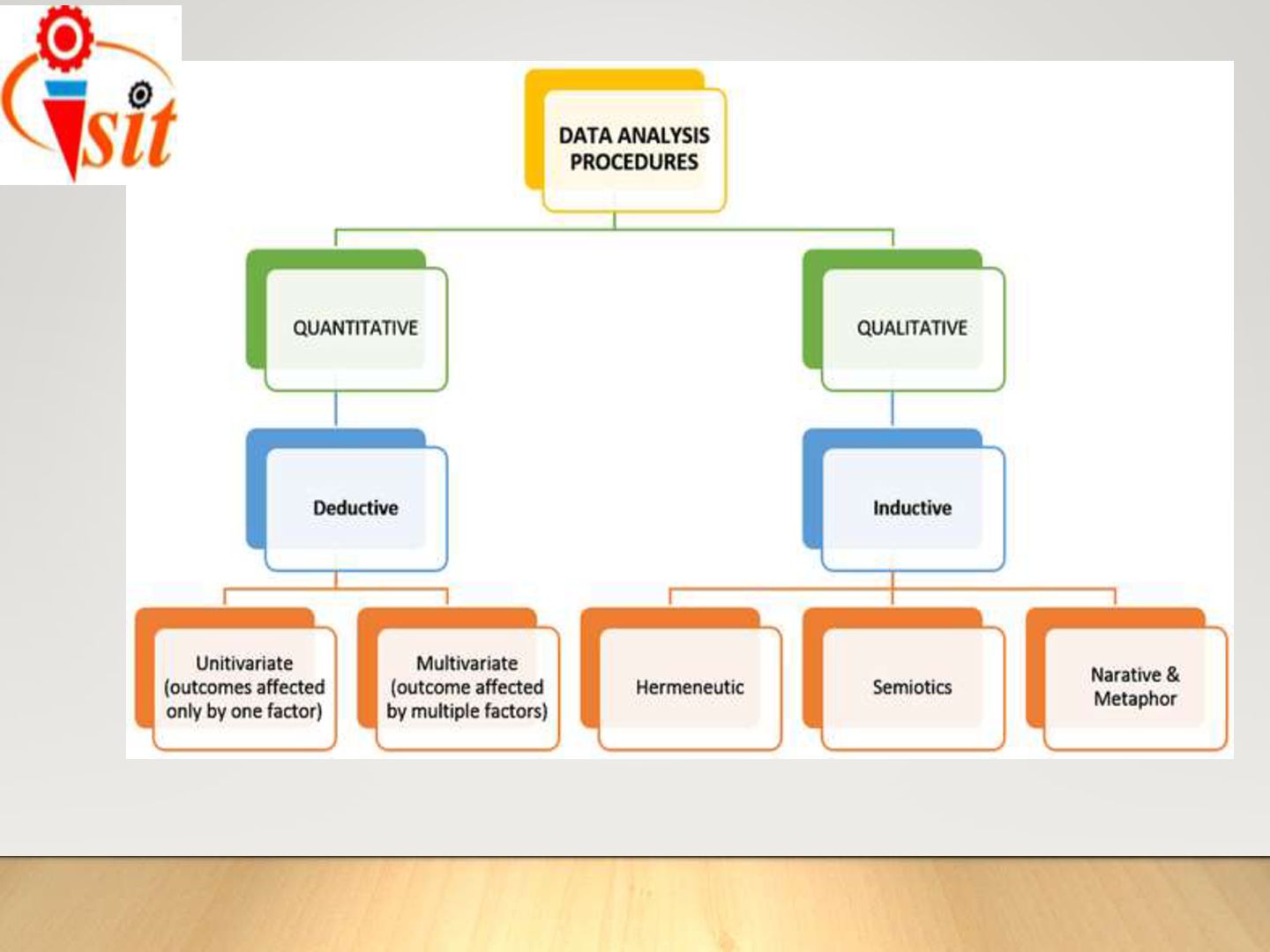
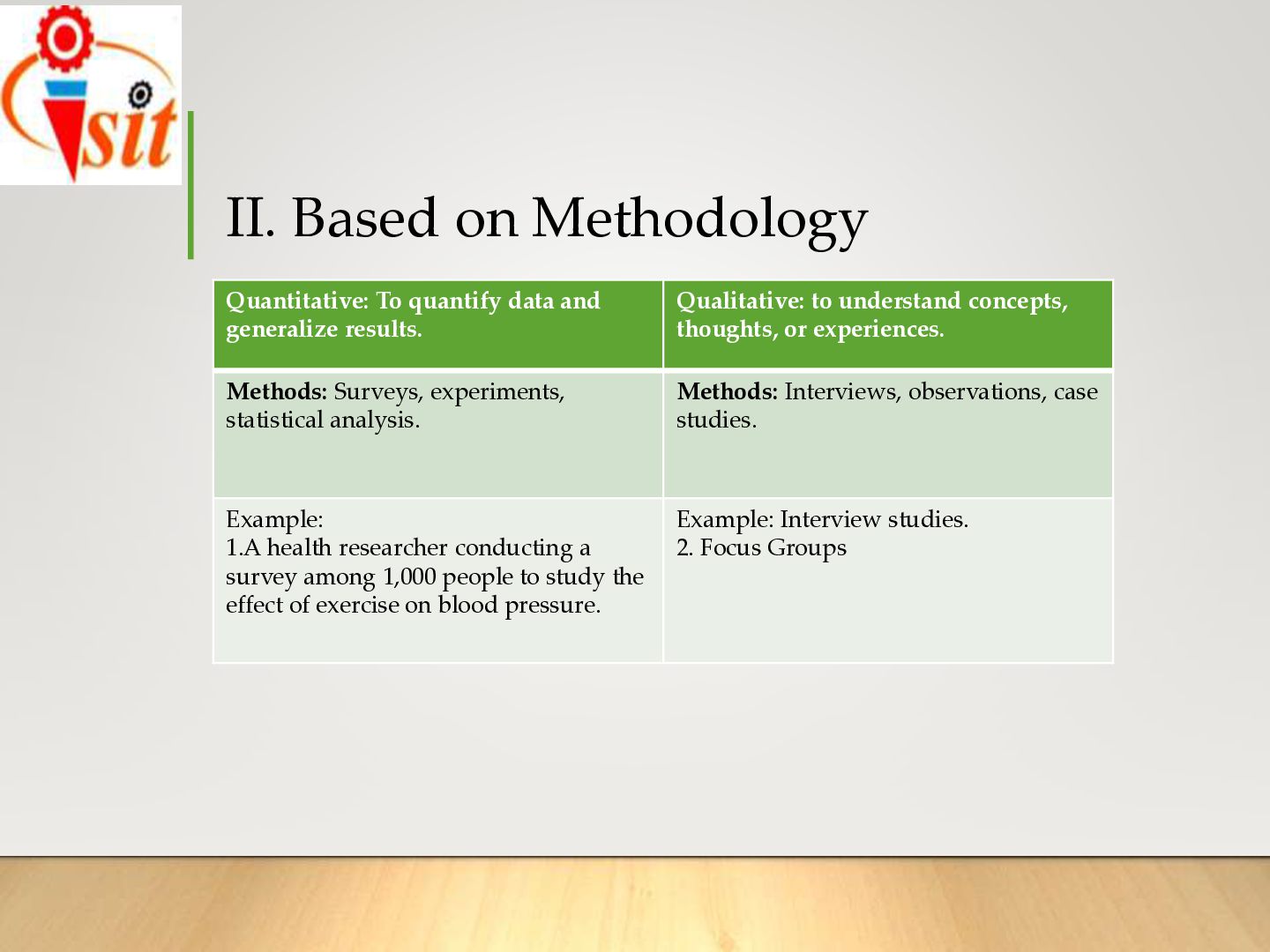
results. Qualitative: to understand concepts, thoughts, or experiences. Methods: Surveys, experiments, statistical analysis. Methods: Interviews, observations, case studies. Example: 1.A health researcher conducting a survey among 1,000 people to study the effect of exercise on blood pressure. Example: Interview studies. 2. Focus Groups
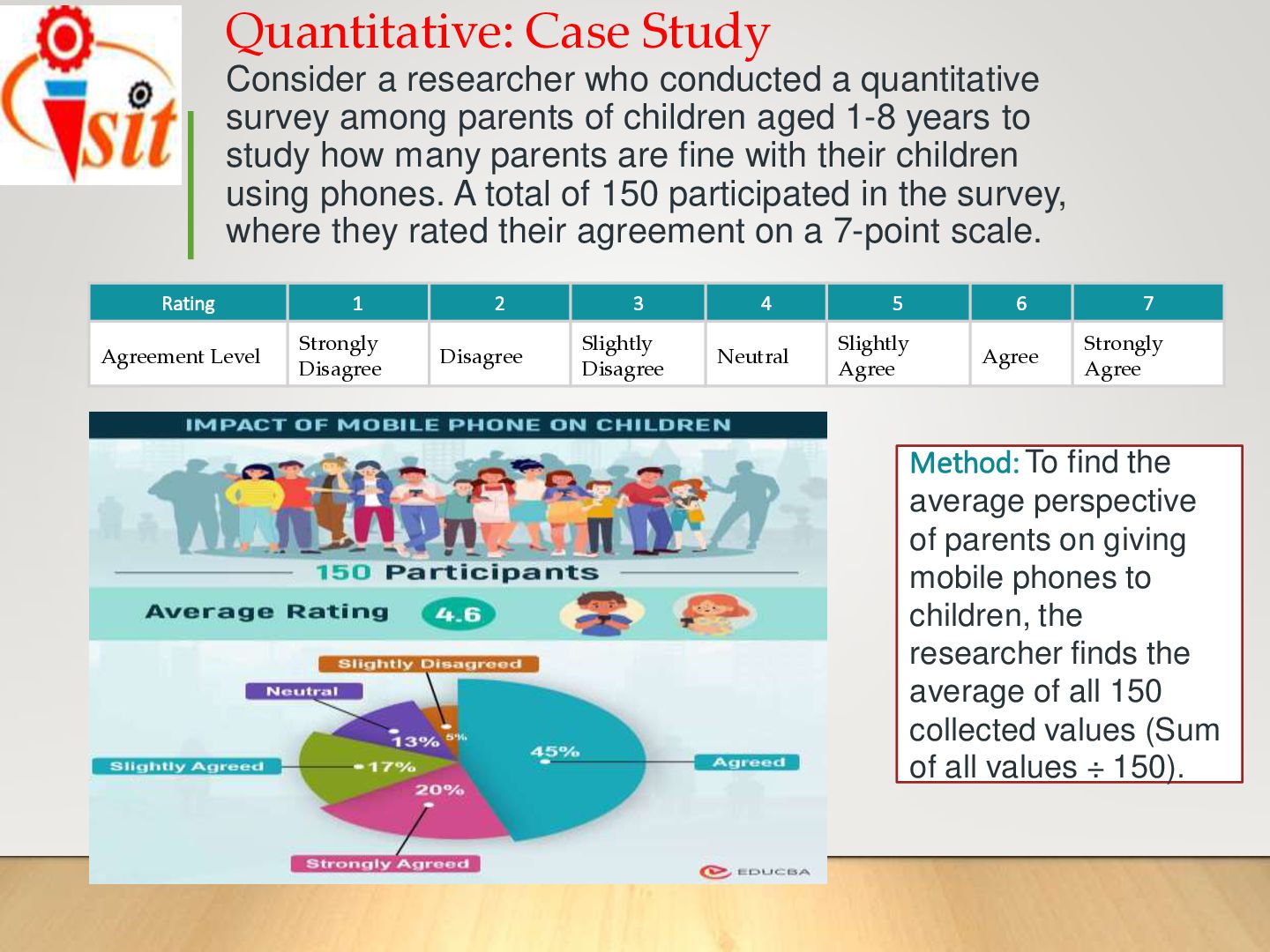
survey among parents of children aged 1-8 years to study how many parents are fine with their children using phones. A total of 150 participated in the survey, where they rated their agreement on a 7-point scale. Rating Agreement Level 1 Strongly Disagree 2 Disagree 3 Slightly Disagree 4 Neutral 5 6 7 Slightly Agree Agree Strongly Agree Method: To find the average perspective of parents on giving mobile phones to children, the researcher finds the average of all 150 collected values (Sum of all values ÷ 150).
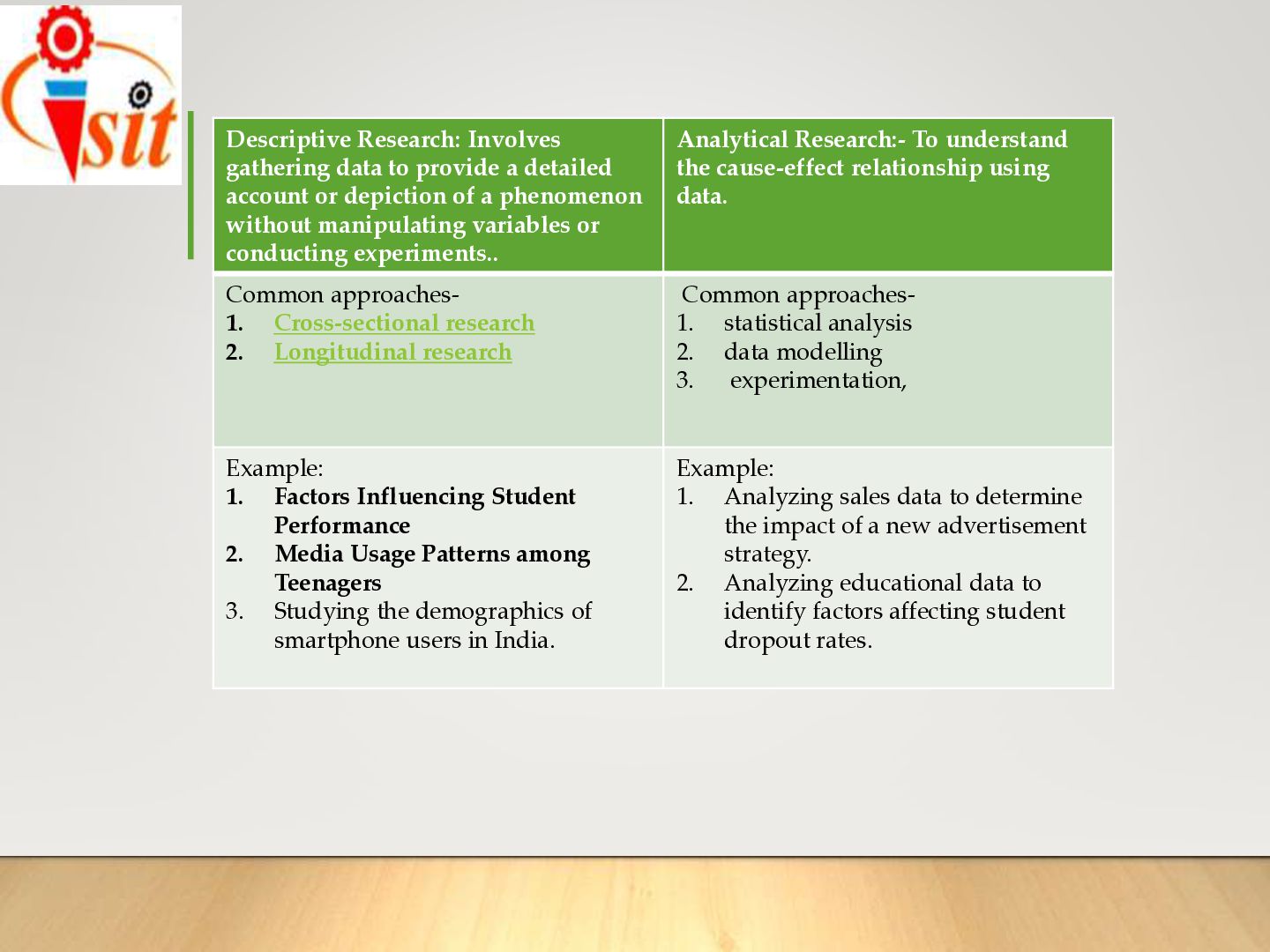
or depiction of a phenomenon without manipulating variables or conducting experiments.. Analytical Research:- To understand the cause-effect relationship using data. Common approaches1. Cross-sectional research 2. Longitudinal research Common approaches1. statistical analysis 2. data modelling 3. experimentation, Example: 1. Factors Influencing Student Performance 2. Media Usage Patterns among Teenagers 3. Studying the demographics of smartphone users in India. Example: 1. Analyzing sales data to determine the impact of a new advertisement strategy. 2. Analyzing educational data to identify factors affecting student dropout rates.
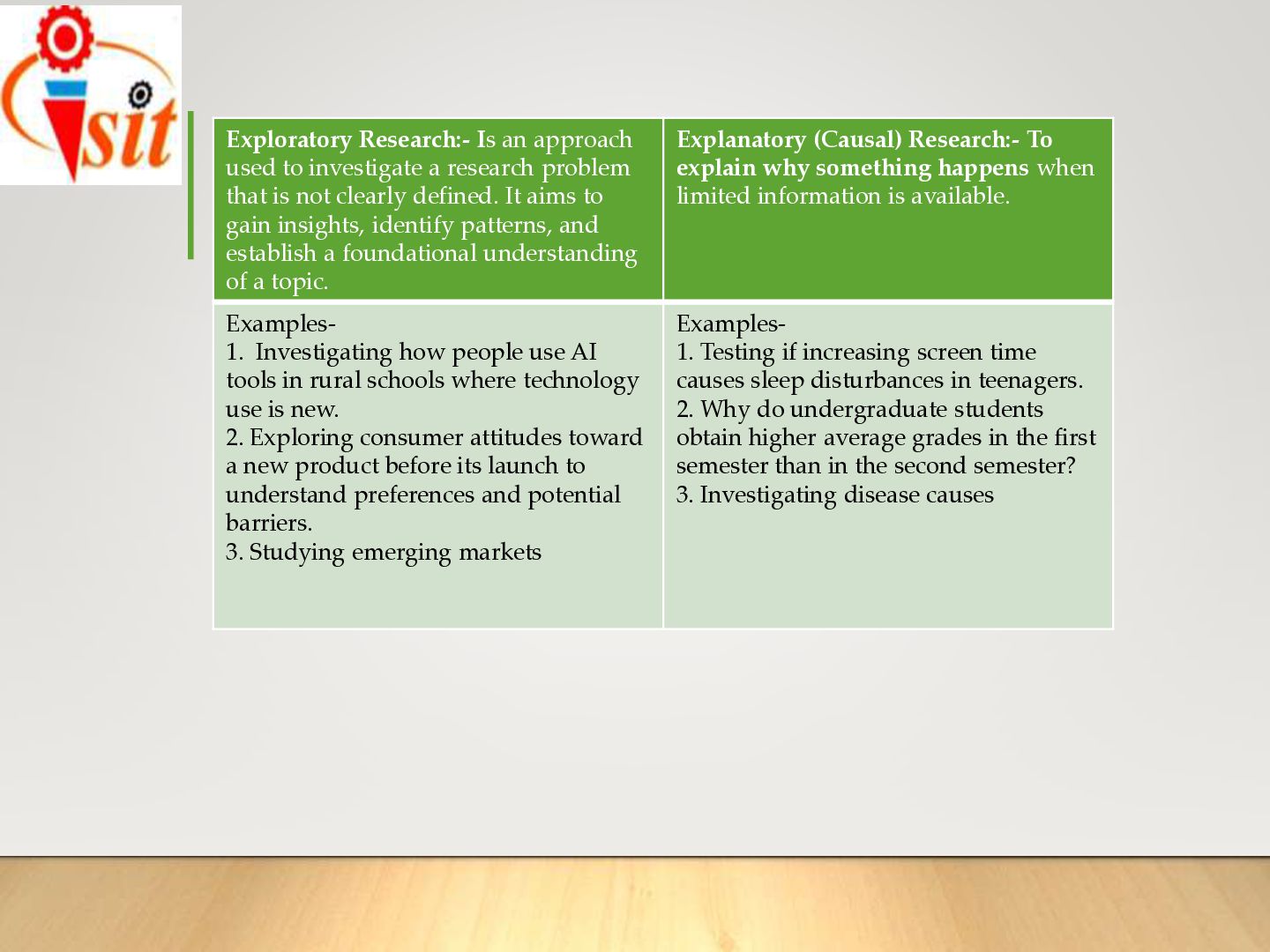
problem that is not clearly defined. It aims to gain insights, identify patterns, and establish a foundational understanding of a topic. Explanatory (Causal) Research:- To explain why something happens when limited information is available. Examples1. Investigating how people use AI tools in rural schools where technology use is new. 2. Exploring consumer attitudes toward a new product before its launch to understand preferences and potential barriers. 3. Studying emerging markets Examples1. Testing if increasing screen time causes sleep disturbances in teenagers. 2. Why do undergraduate students obtain higher average grades in the first semester than in the second semester? 3. Investigating disease causes
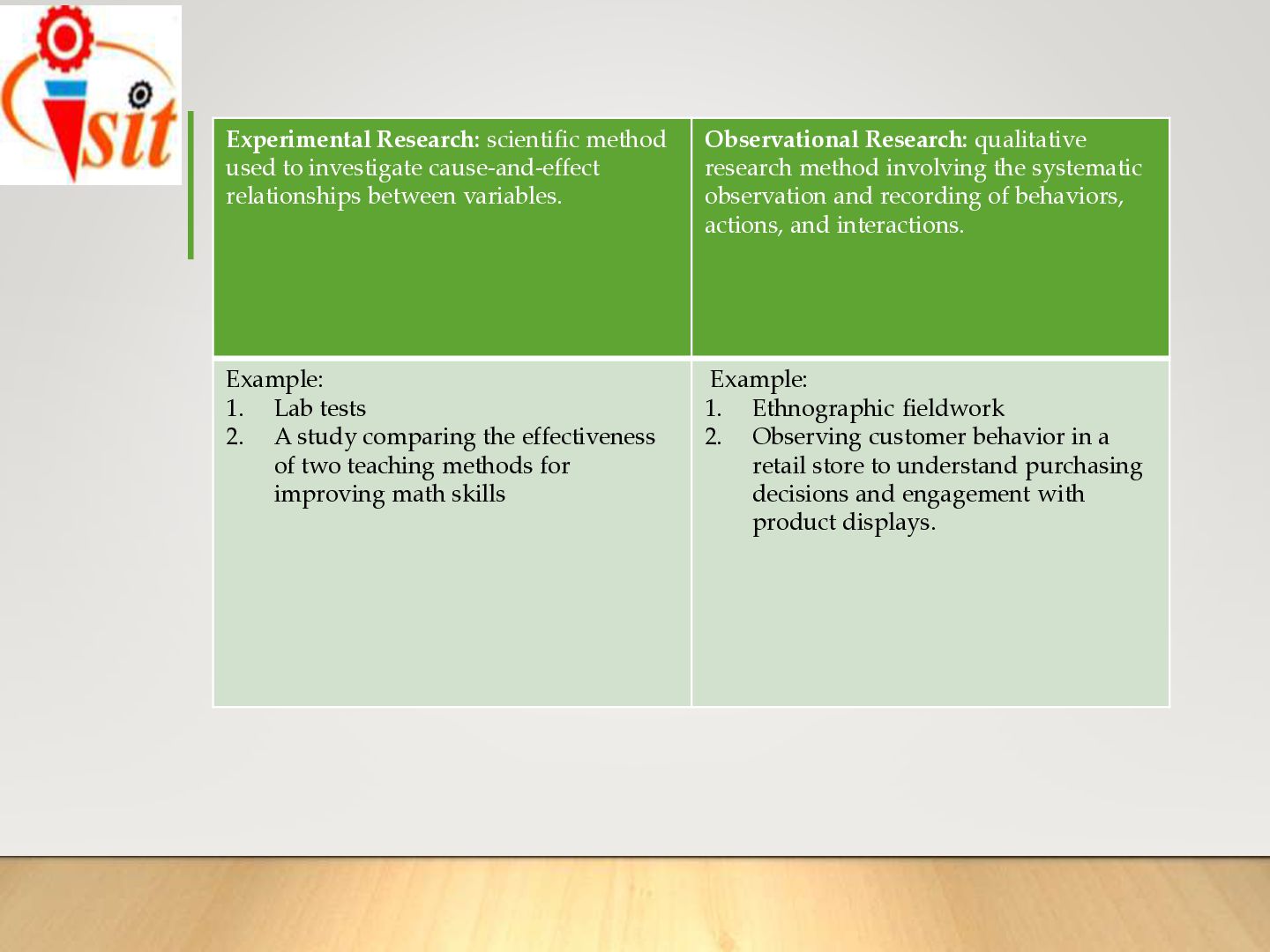
variables. Observational Research: qualitative research method involving the systematic observation and recording of behaviors, actions, and interactions. Example: 1. Lab tests 2. A study comparing the effectiveness of two teaching methods for improving math skills Example: 1. Ethnographic fieldwork 2. Observing customer behavior in a retail store to understand purchasing decisions and engagement with product displays.
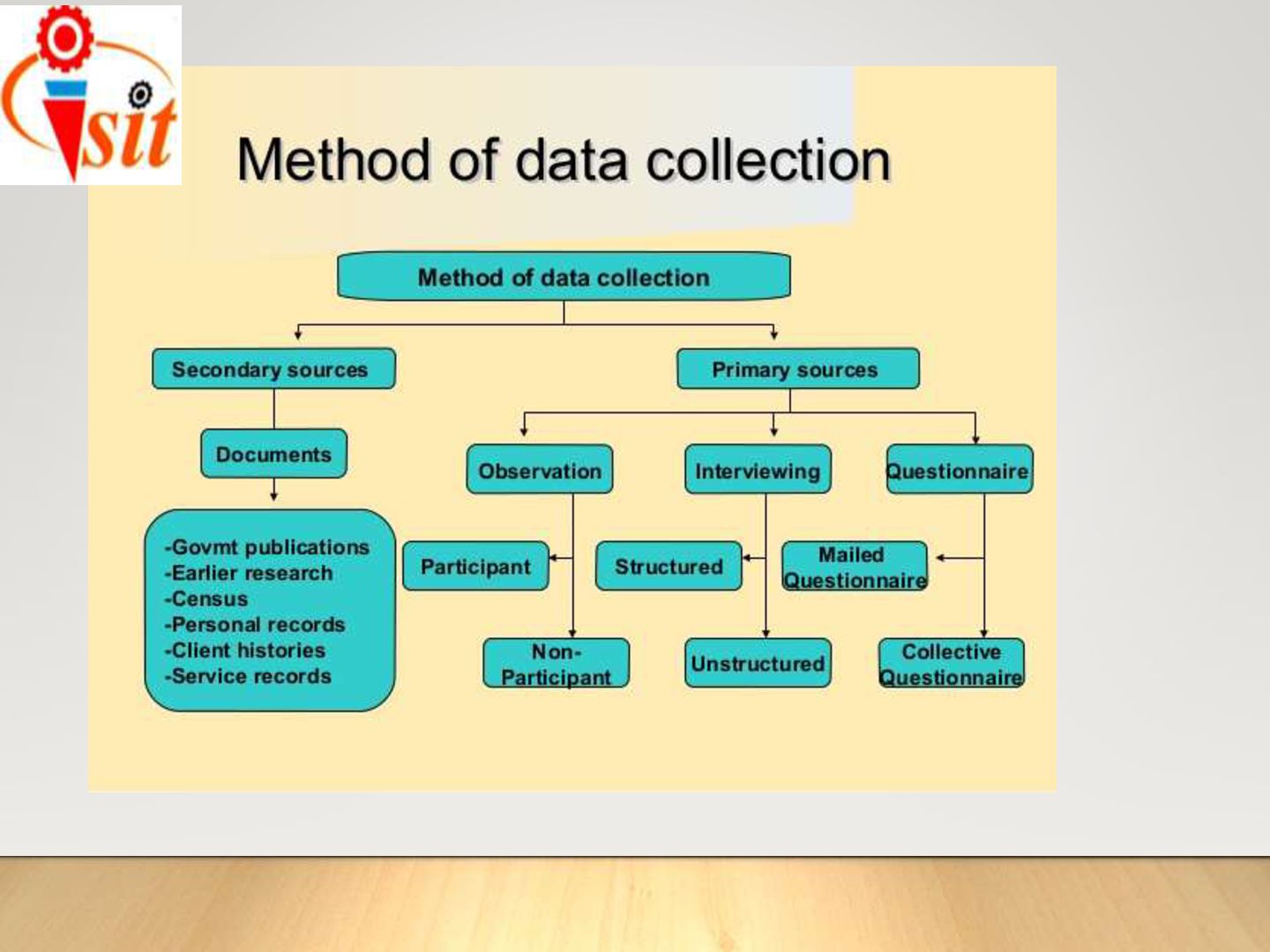
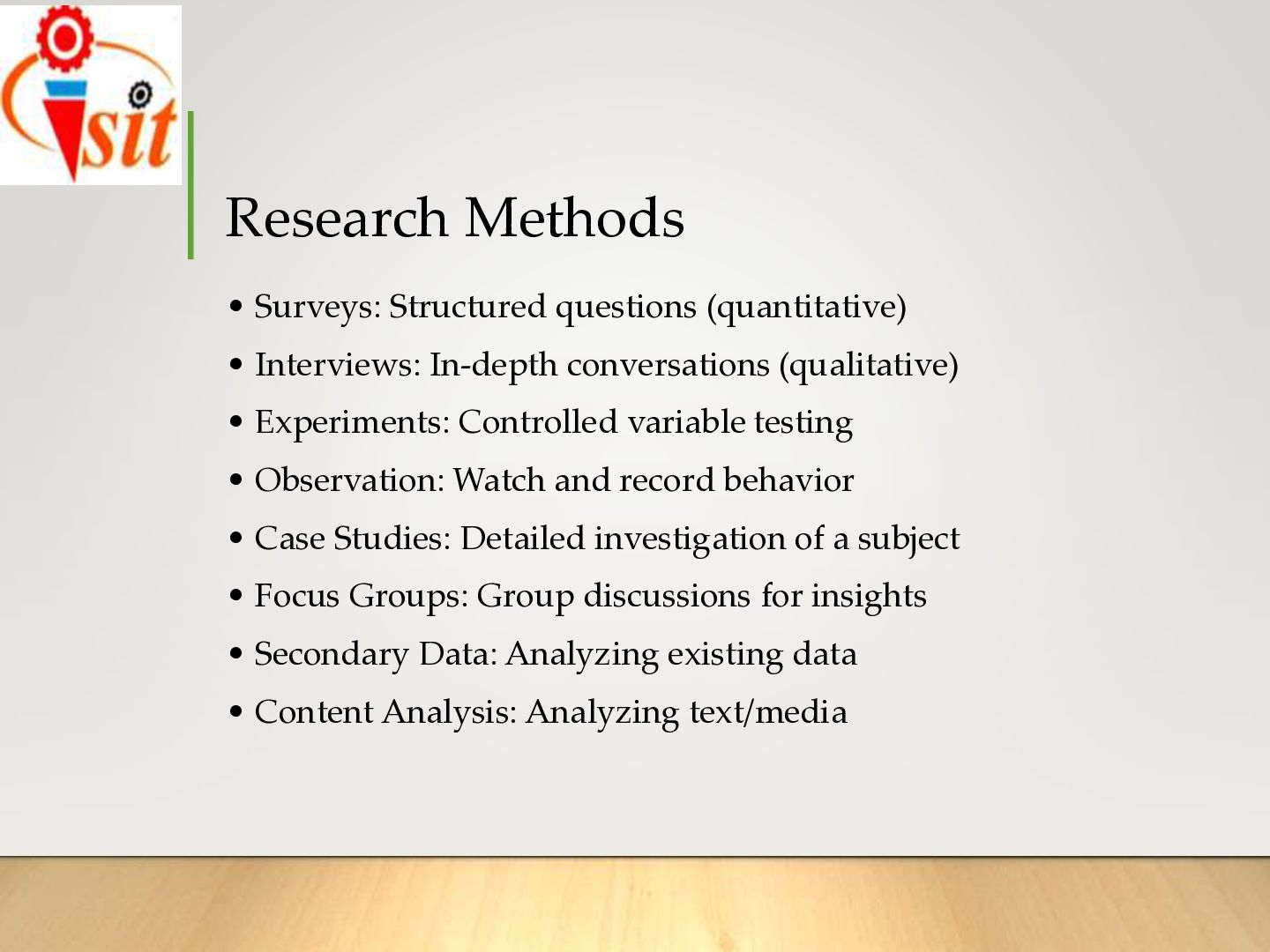
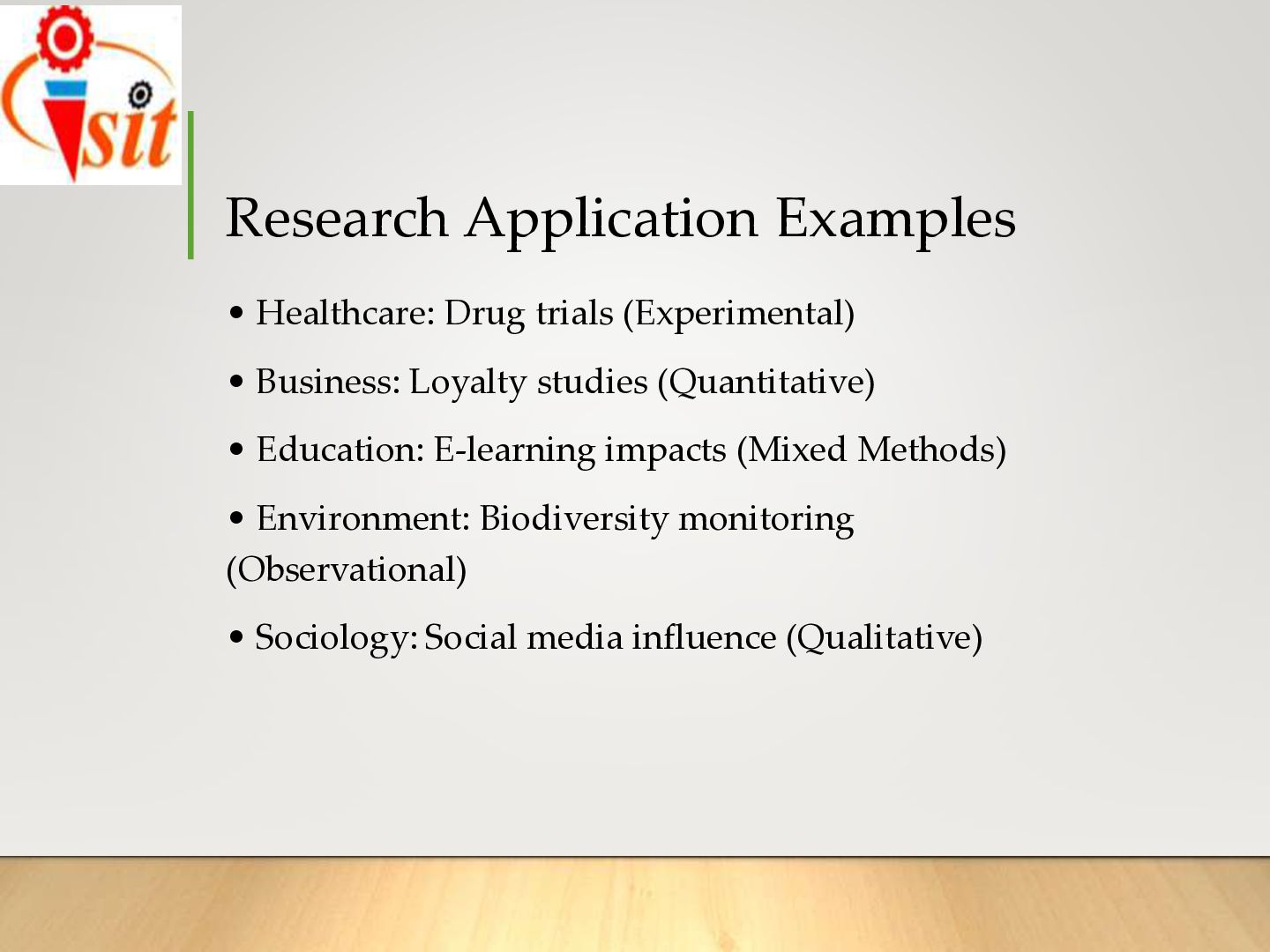
conversations (qualitative) • Experiments: Controlled variable testing • Observation: Watch and record behavior • Case Studies: Detailed investigation of a subject • Focus Groups: Group discussions for insights • Secondary Data: Analyzing existing data • Content Analysis: Analyzing text/media


 manepooja001
 persolserverworks
 kentarofujii
 bgpat
 takanorip
 riyaamemiya
 shumei_ito
 tomokusaba
 masakiokuda
 onk
 bitkey
 camiha
 glaforge
 aleyda
 tonyrice
 eileencodes
 tmiket
 katarinadahlin
 helenjbeal
 sonatard
 chrislema
 colly
 maggiecrowley
 kevinliebholz
 jnunemaker