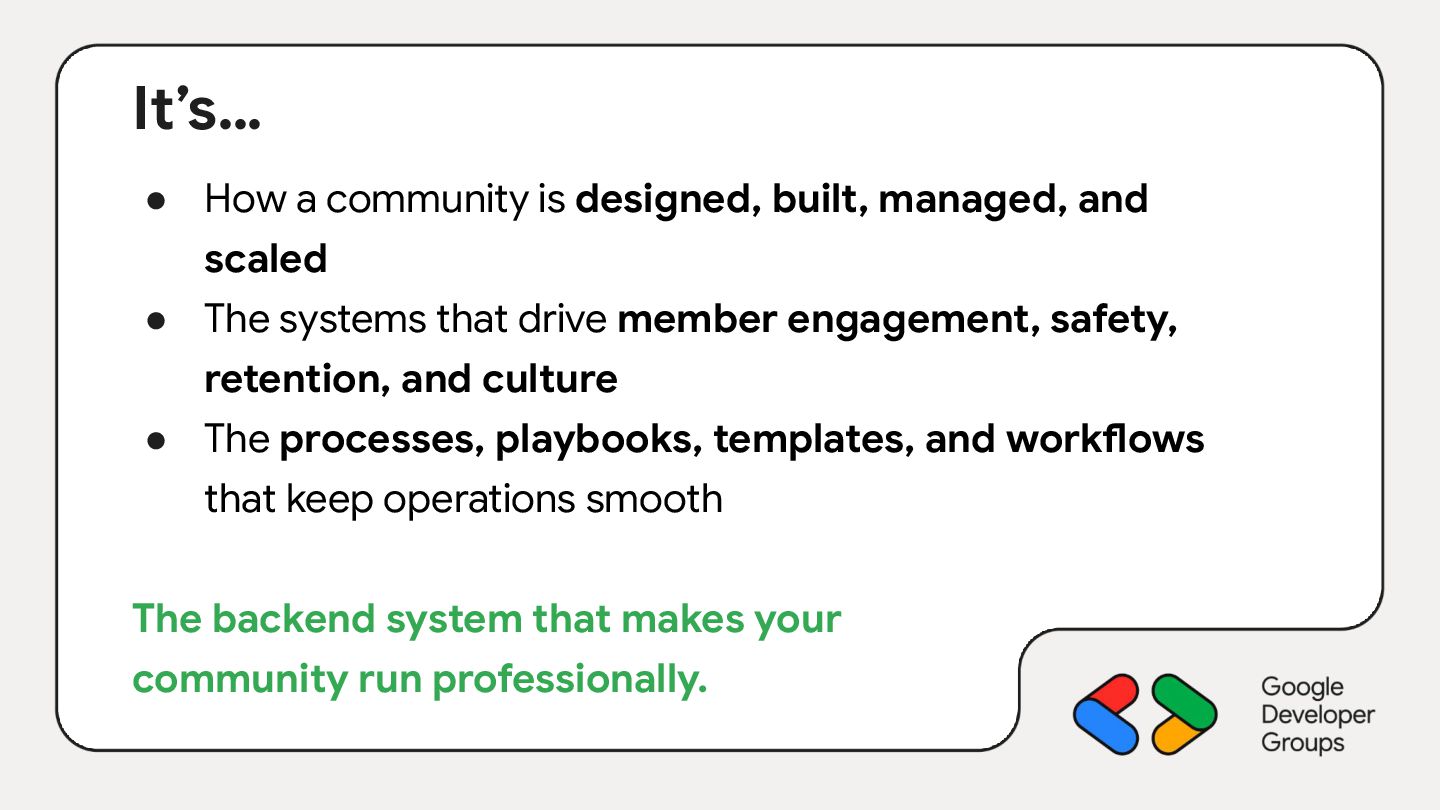
scaled • The systems that drive member engagement, safety, retention, and culture • The processes, playbooks, templates, and workflows that keep operations smooth The backend system that makes your community run professionally.
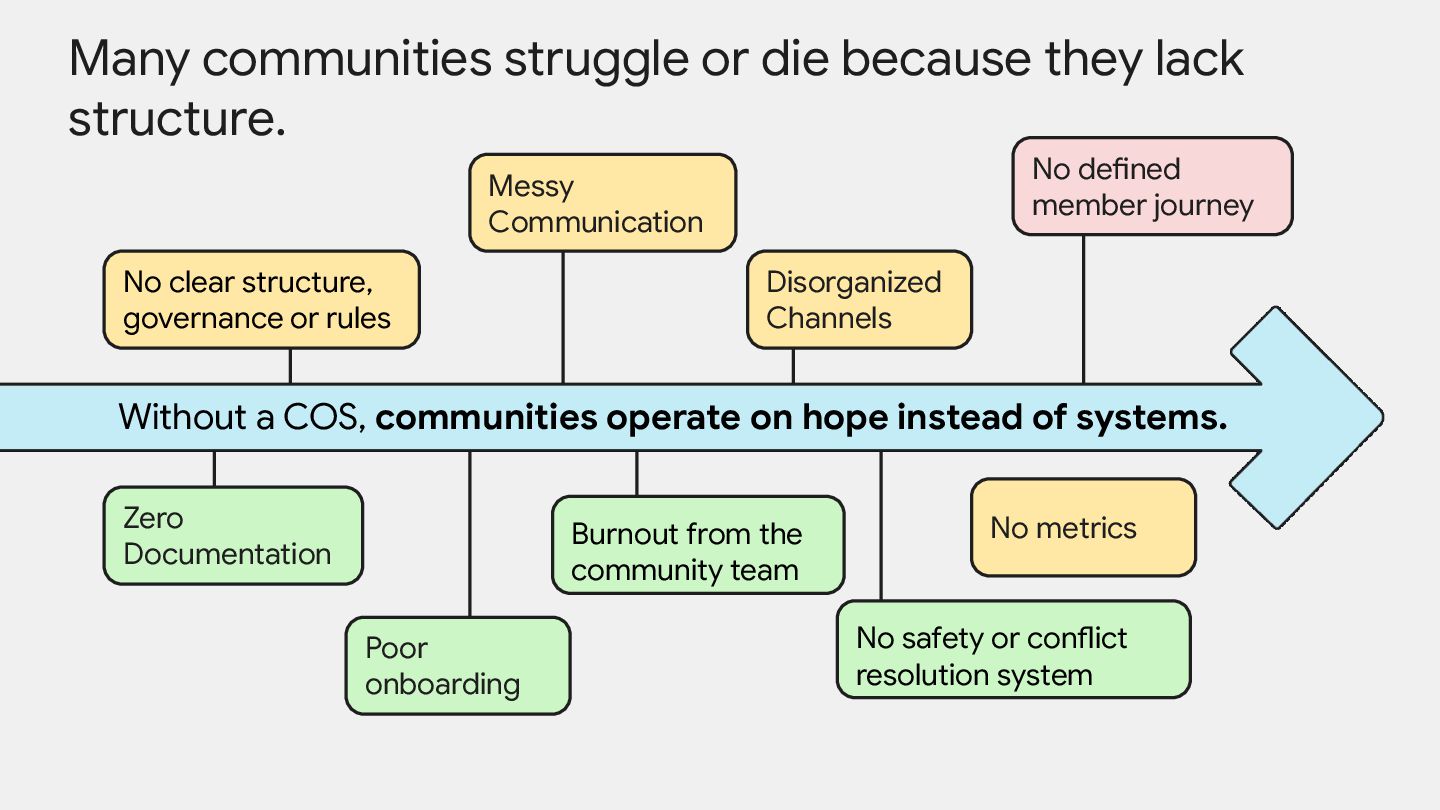
a COS, communities operate on hope instead of systems. Messy Communication No defined member journey No clear structure, governance or rules Disorganized Channels Poor onboarding Zero Documentation Burnout from the community team No safety or conflict resolution system No metrics
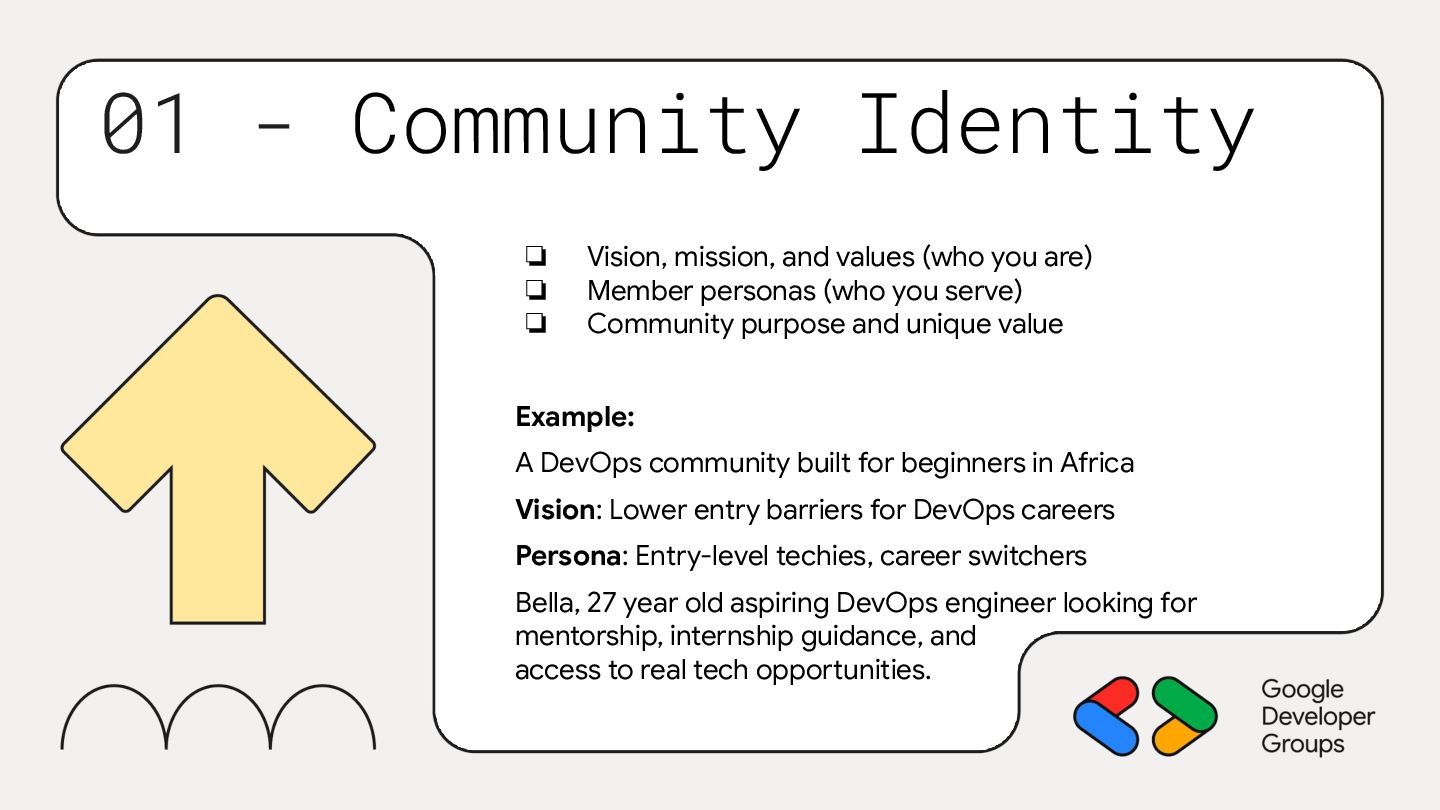
you are) ❏ Member personas (who you serve) ❏ Community purpose and unique value Example: A DevOps community built for beginners in Africa Vision: Lower entry barriers for DevOps careers Persona: Entry-level techies, career switchers Bella, 27 year old aspiring DevOps engineer looking for mentorship, internship guidance, and access to real tech opportunities.
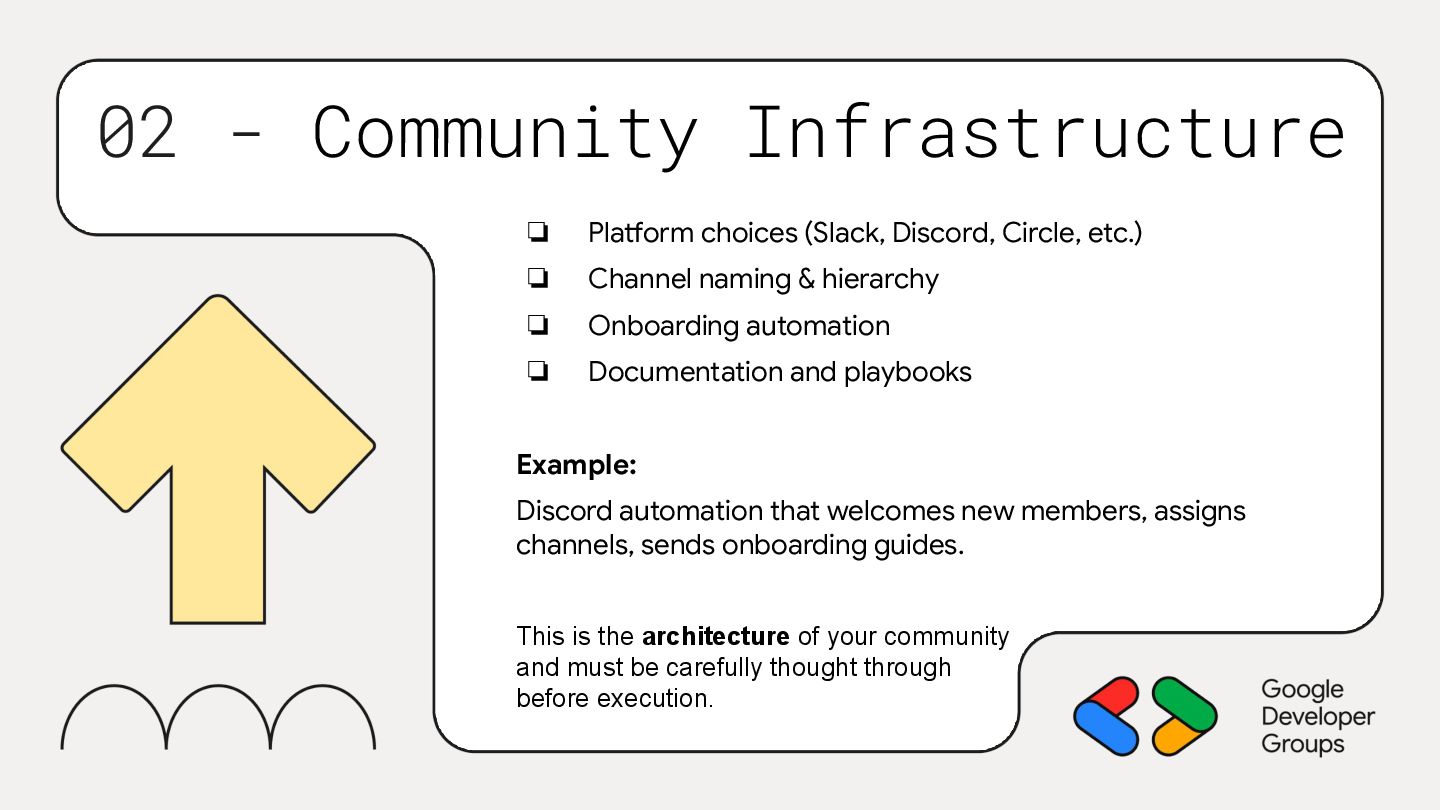
etc.) ❏ Channel naming & hierarchy ❏ Onboarding automation ❏ Documentation and playbooks Example: Discord automation that welcomes new members, assigns channels, sends onboarding guides. This is the architecture of your community and must be carefully thought through before execution.
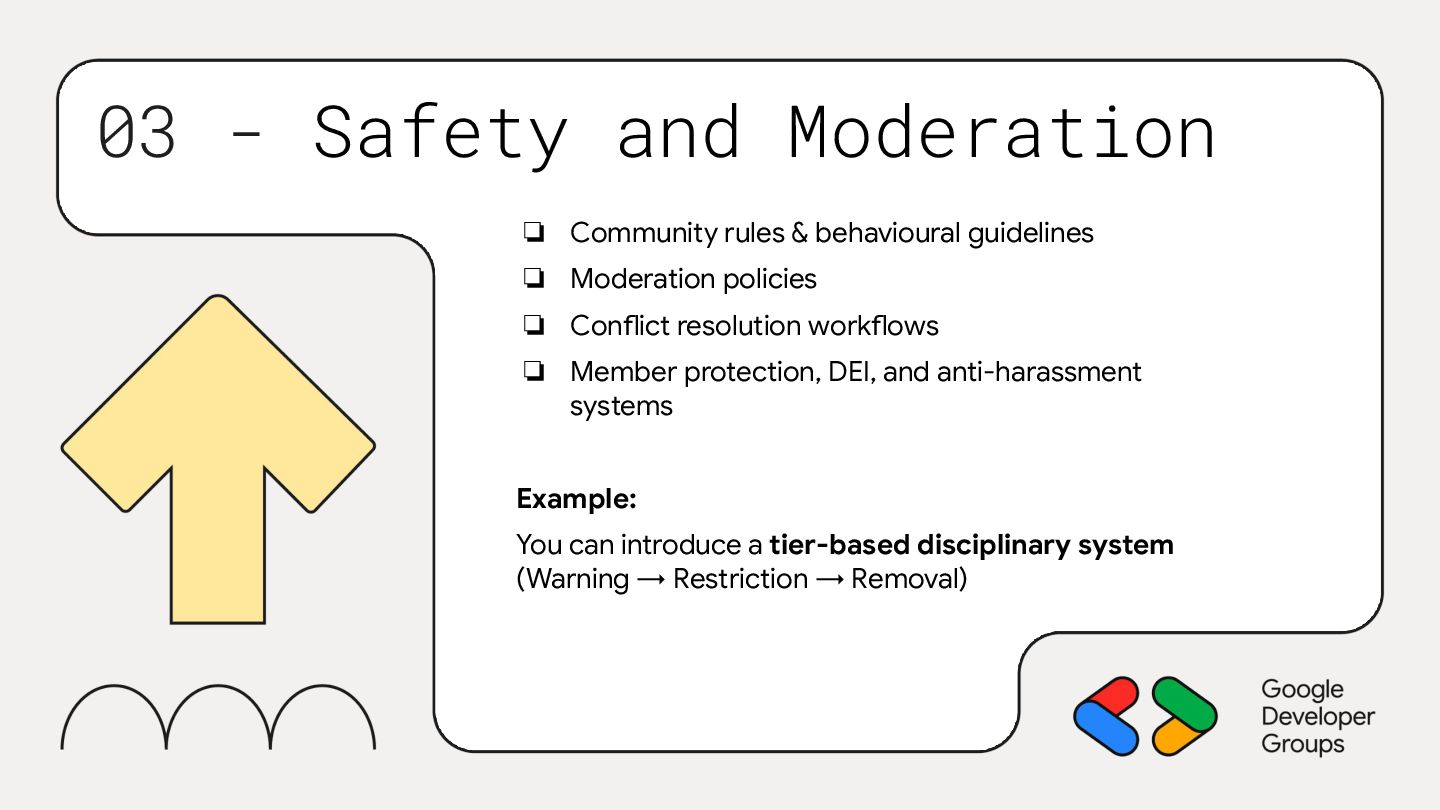
guidelines ❏ Moderation policies ❏ Conflict resolution workflows ❏ Member protection, DEI, and anti-harassment systems Example: You can introduce a tier-based disciplinary system (Warning → Restriction → Removal)
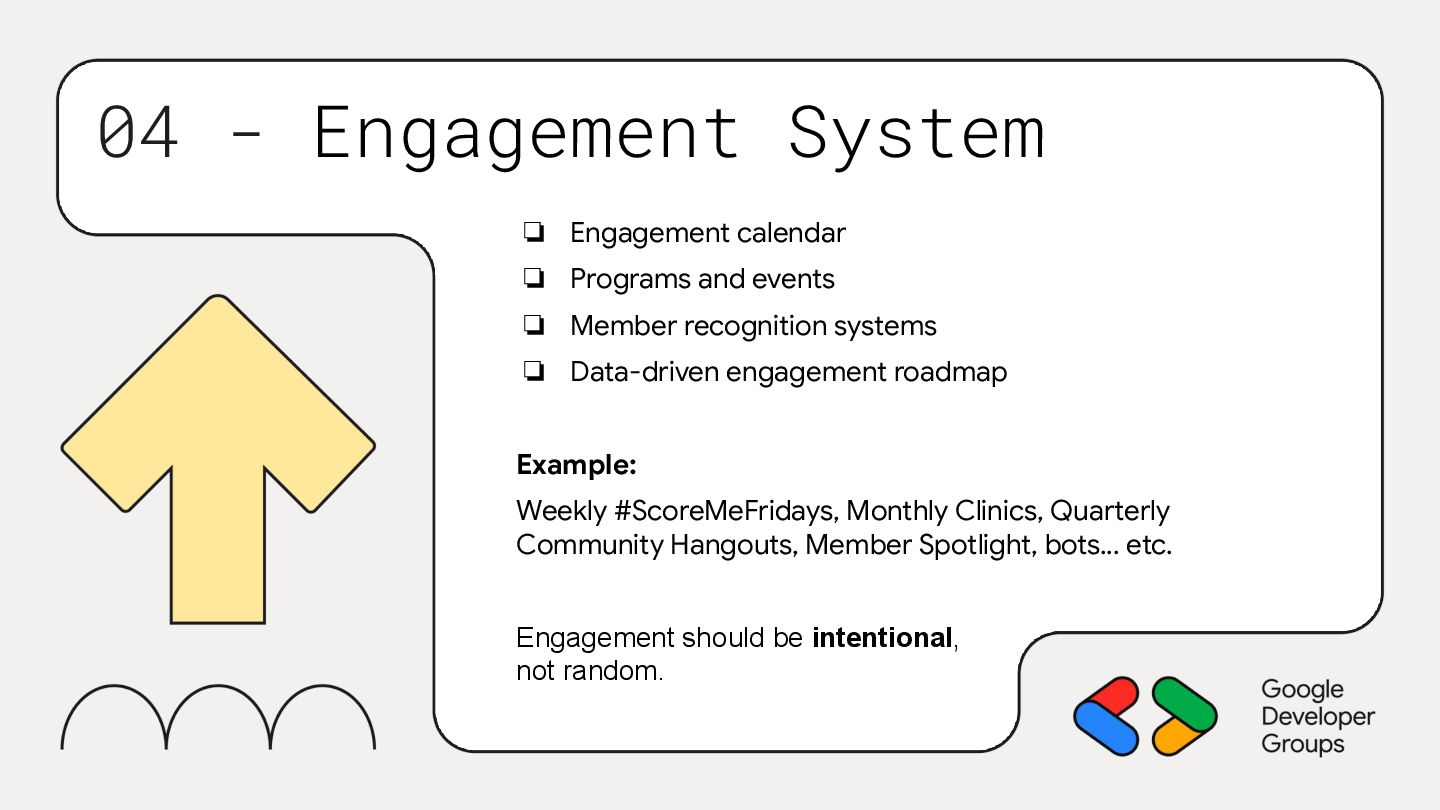
events ❏ Member recognition systems ❏ Data-driven engagement roadmap Example: Weekly #ScoreMeFridays, Monthly Clinics, Quarterly Community Hangouts, Member Spotlight, bots… etc. Engagement should be intentional, not random.
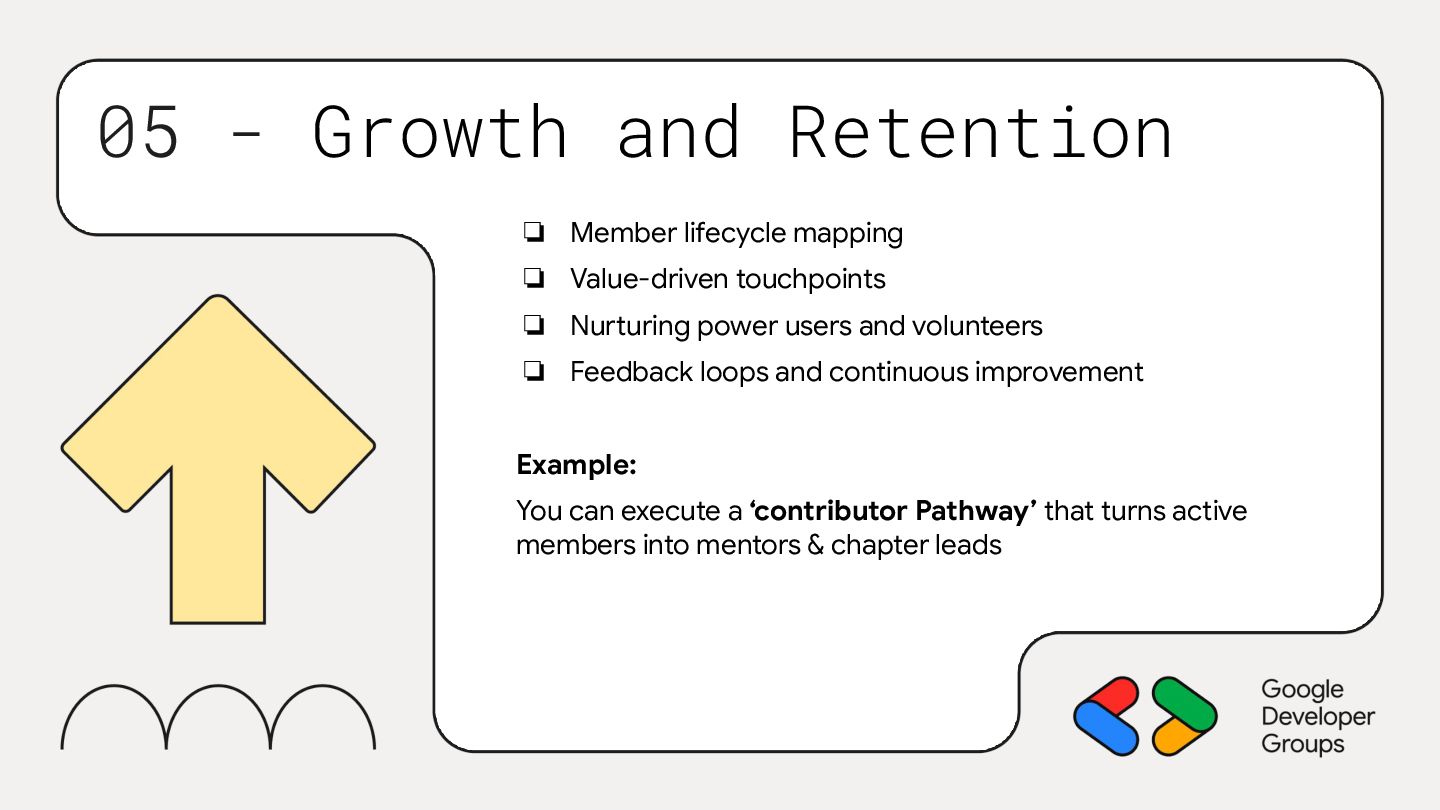
Value-driven touchpoints ❏ Nurturing power users and volunteers ❏ Feedback loops and continuous improvement Example: You can execute a ‘contributor Pathway’ that turns active members into mentors & chapter leads
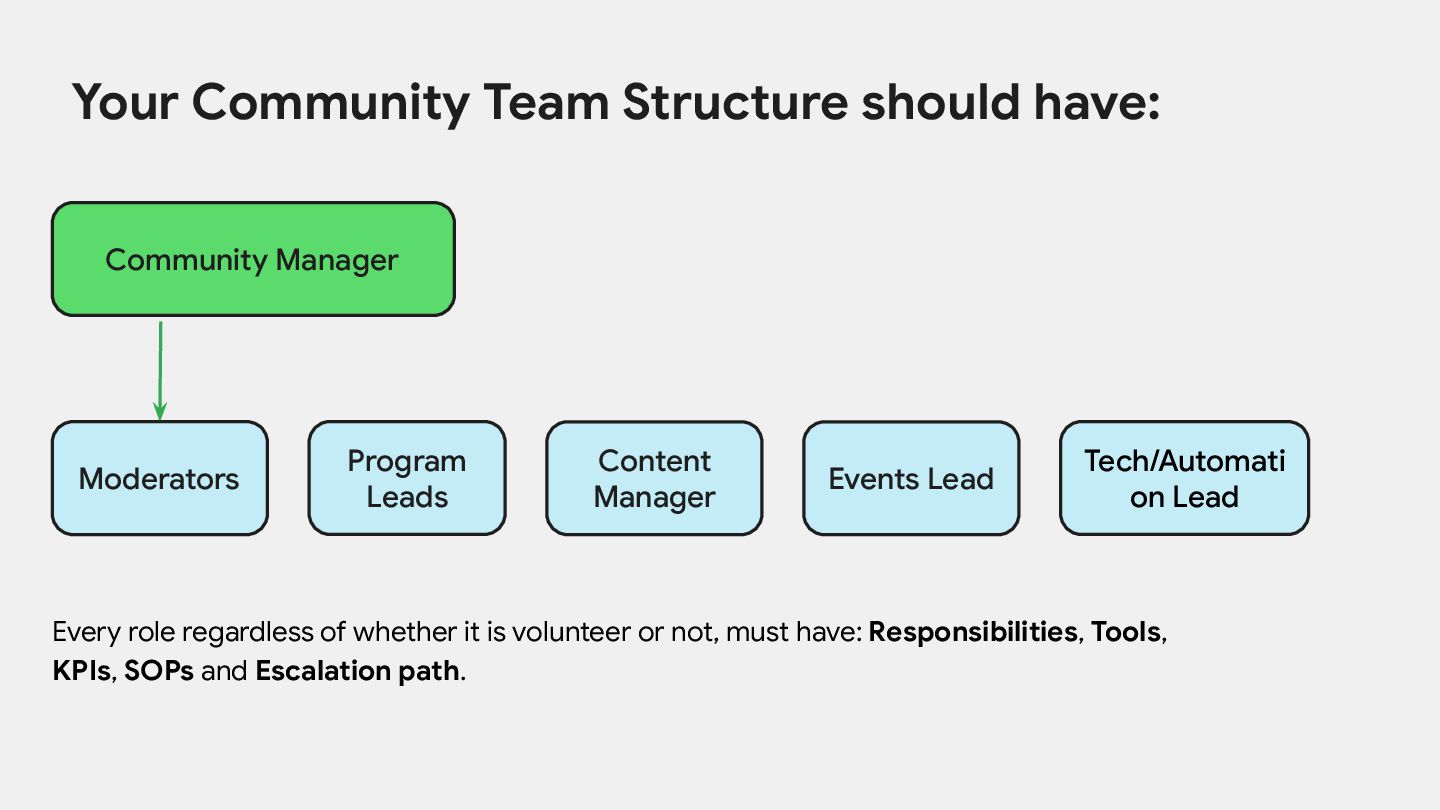
Leads Content Manager Events Lead Tech/Automati on Lead Every role regardless of whether it is volunteer or not, must have: Responsibilities, Tools, KPIs, SOPs and Escalation path.
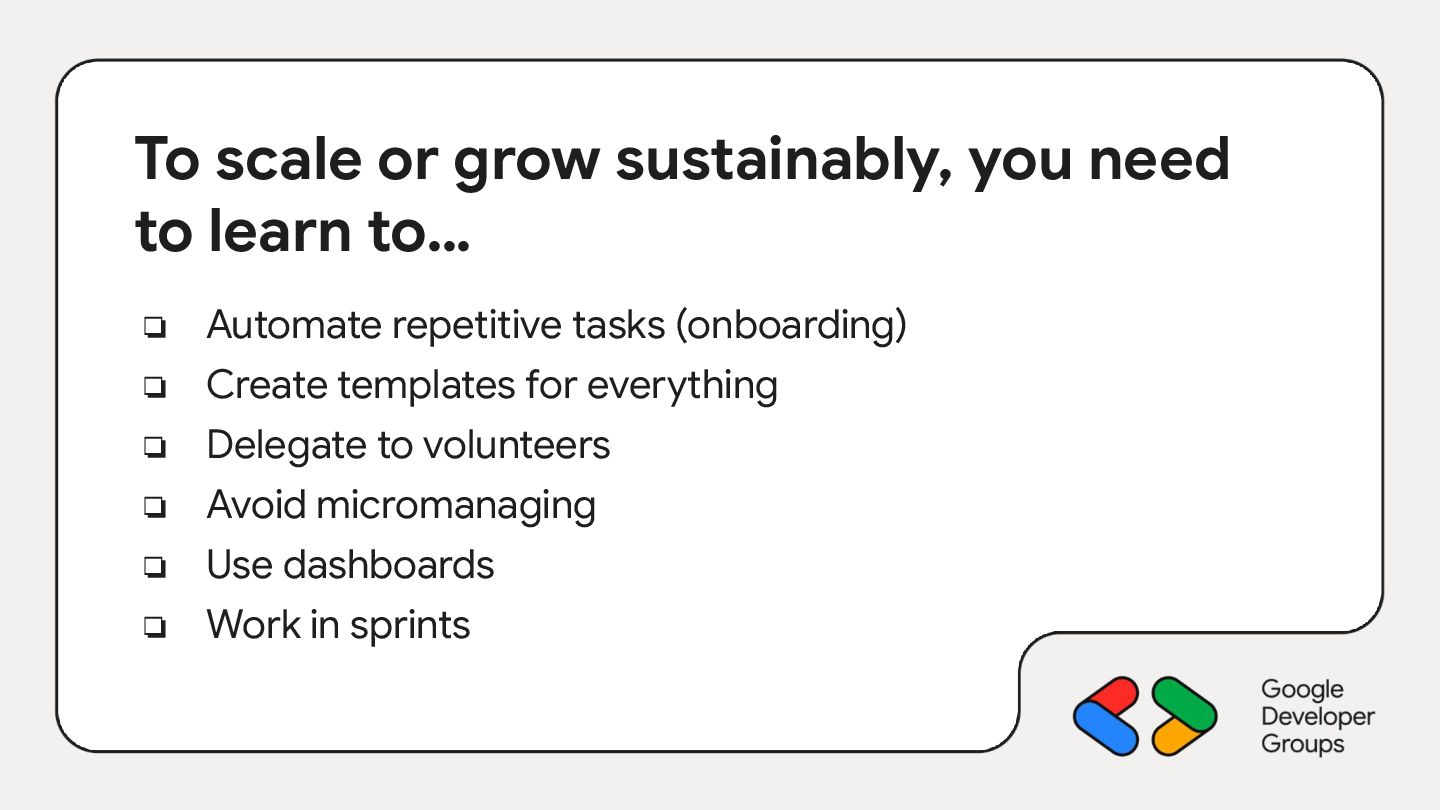
❏ Automate repetitive tasks (onboarding) ❏ Create templates for everything ❏ Delegate to volunteers ❏ Avoid micromanaging ❏ Use dashboards ❏ Work in sprints
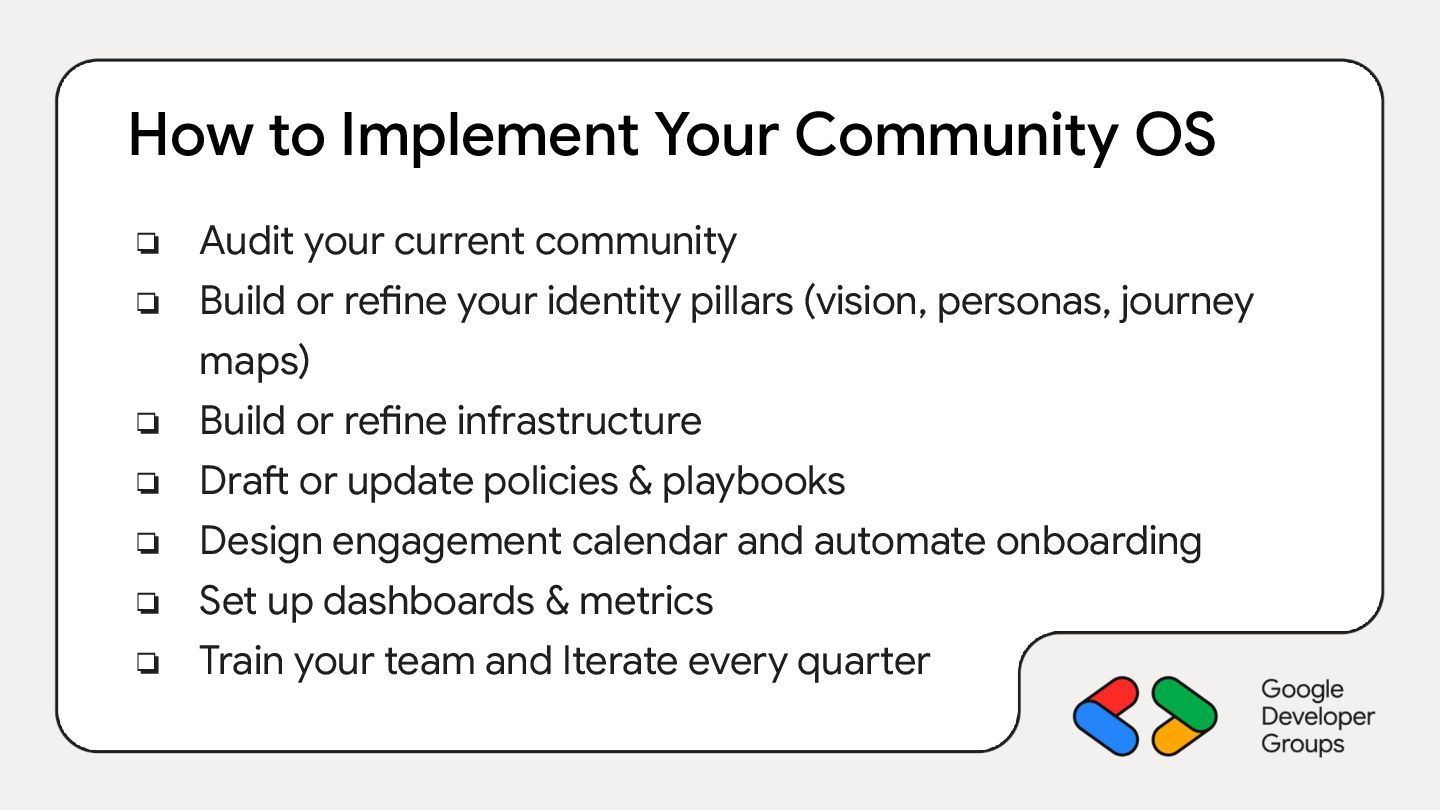
community ❏ Build or refine your identity pillars (vision, personas, journey maps) ❏ Build or refine infrastructure ❏ Draft or update policies & playbooks ❏ Design engagement calendar and automate onboarding ❏ Set up dashboards & metrics ❏ Train your team and Iterate every quarter
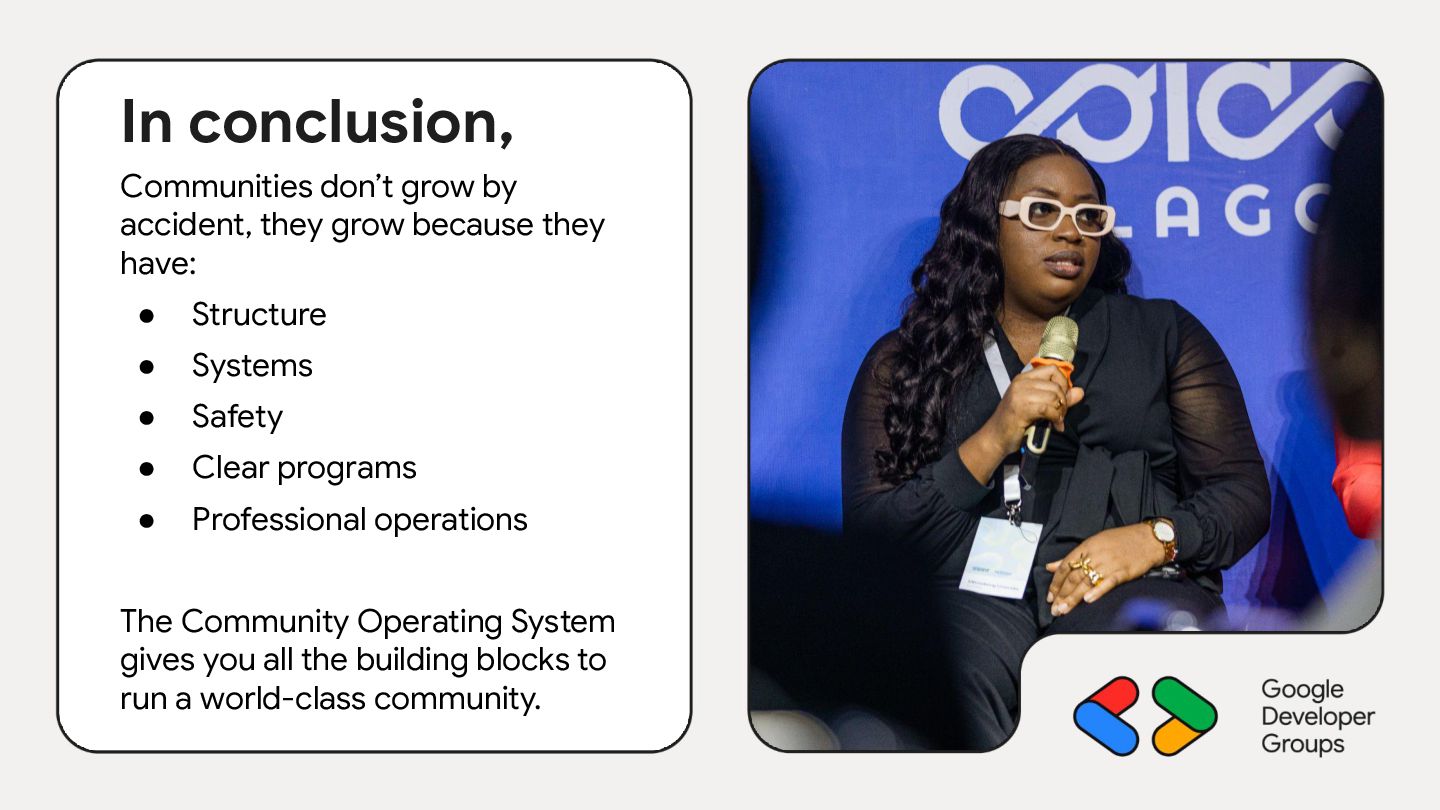
they have: • Structure • Systems • Safety • Clear programs • Professional operations The Community Operating System gives you all the building blocks to run a world-class community.


 mfonobong
 ryanjones
 samlambert
 reverentgeek
 palkan
 addyosmani
 nmsamuel
 kimpetersen
 jnunemaker
 marketingsoph
 aleyda
 frankvandijk