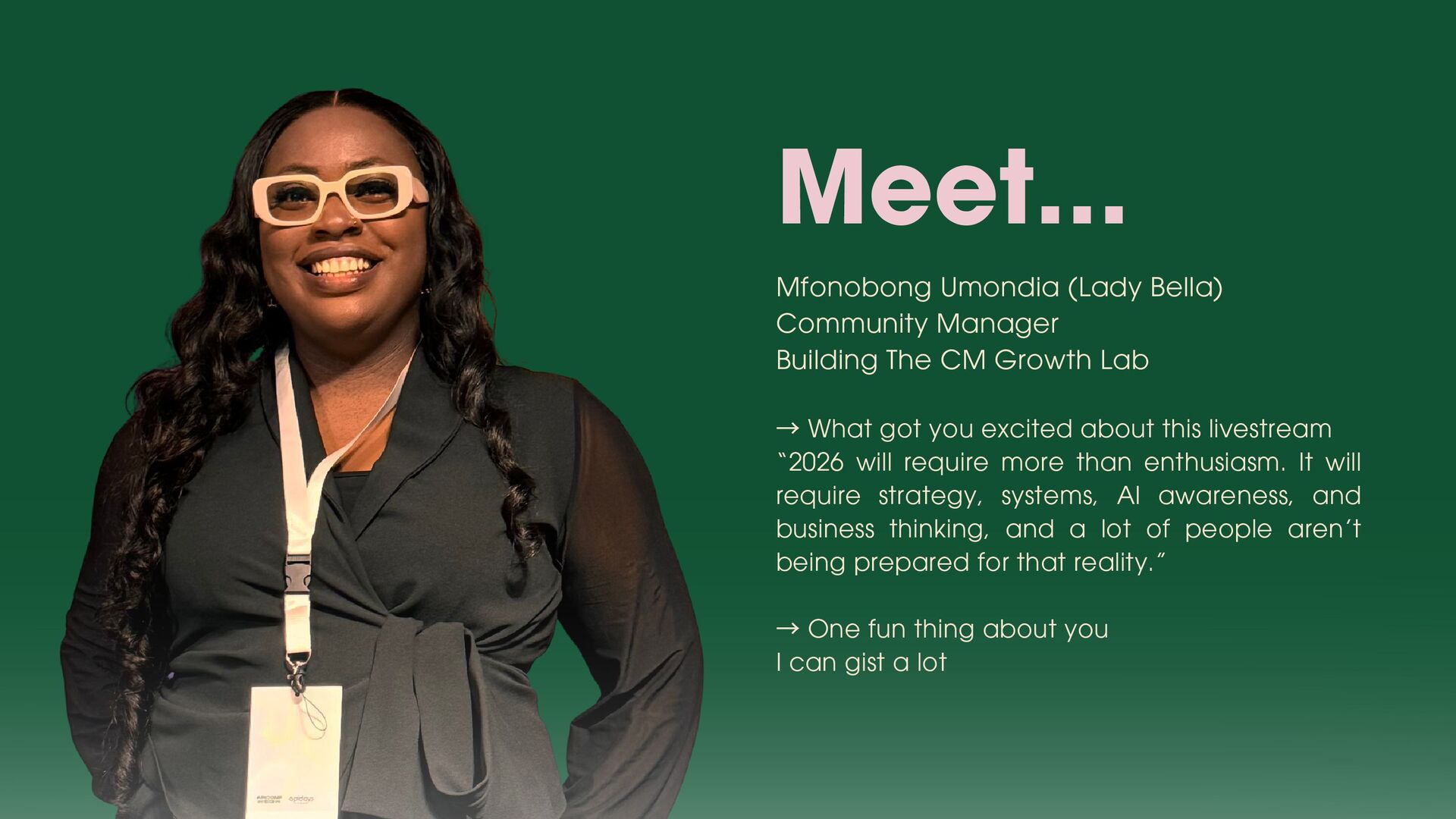
Growth Lab → What got you excited about this livestream “2026 will require more than enthusiasm. It will require strategy, systems, AI awareness, and business thinking, and a lot of people aren’t being prepared for that reality.” → One fun thing about you I can gist a lot
2022 or even 2025 is no longer enough. In 2026, community managers are expected to think like operators, strategists, and business partners, not just people who post updates and reply messages. Today’s live is about what the role is becoming how to break in how to grow sustainably. At the end of the session, I will also be answering community related questions you may have, stay tuned till the end.
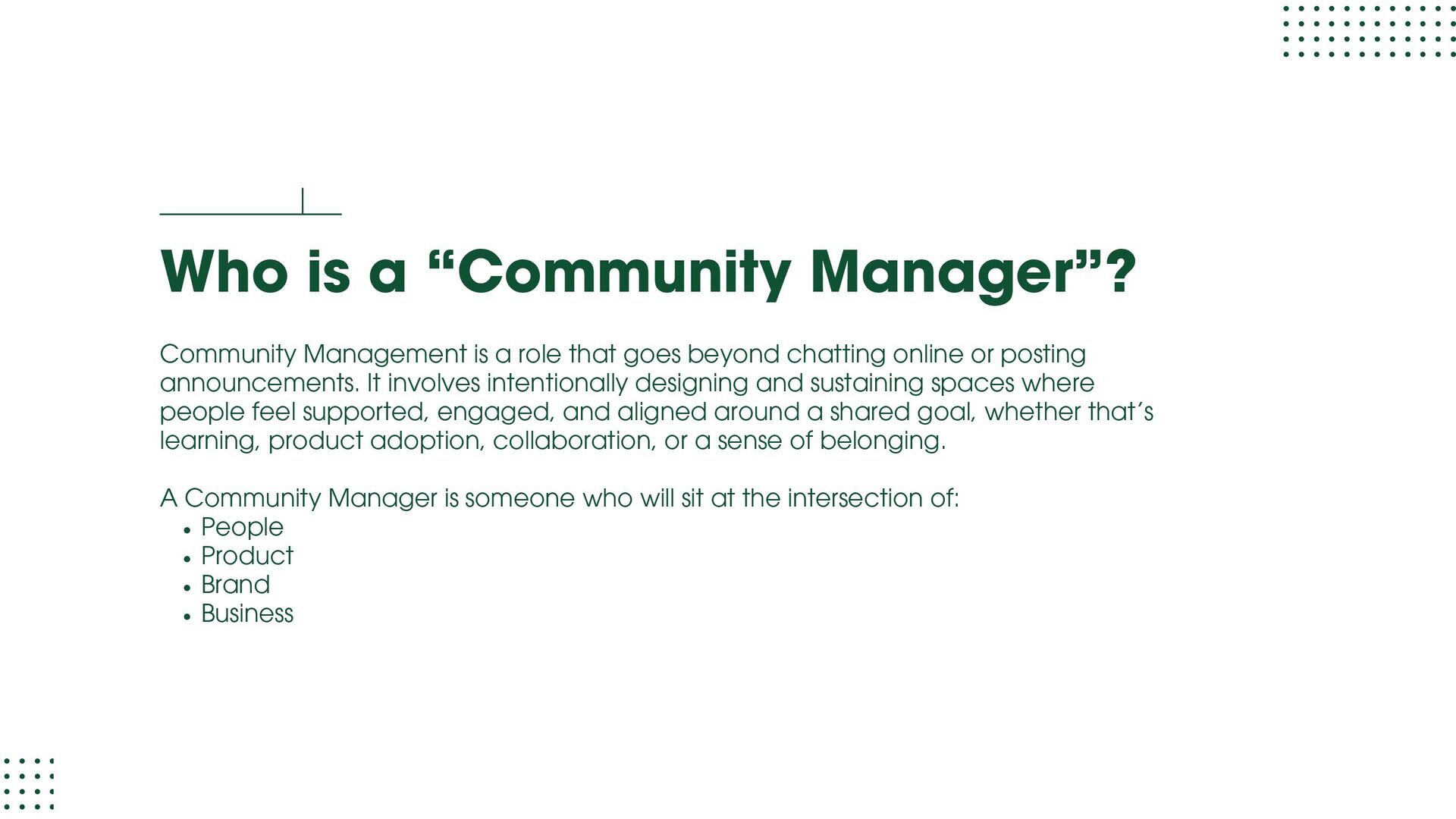
that goes beyond chatting online or posting announcements. It involves intentionally designing and sustaining spaces where people feel supported, engaged, and aligned around a shared goal, whether that’s learning, product adoption, collaboration, or a sense of belonging. A Community Manager is someone who will sit at the intersection of: People Product Brand Business
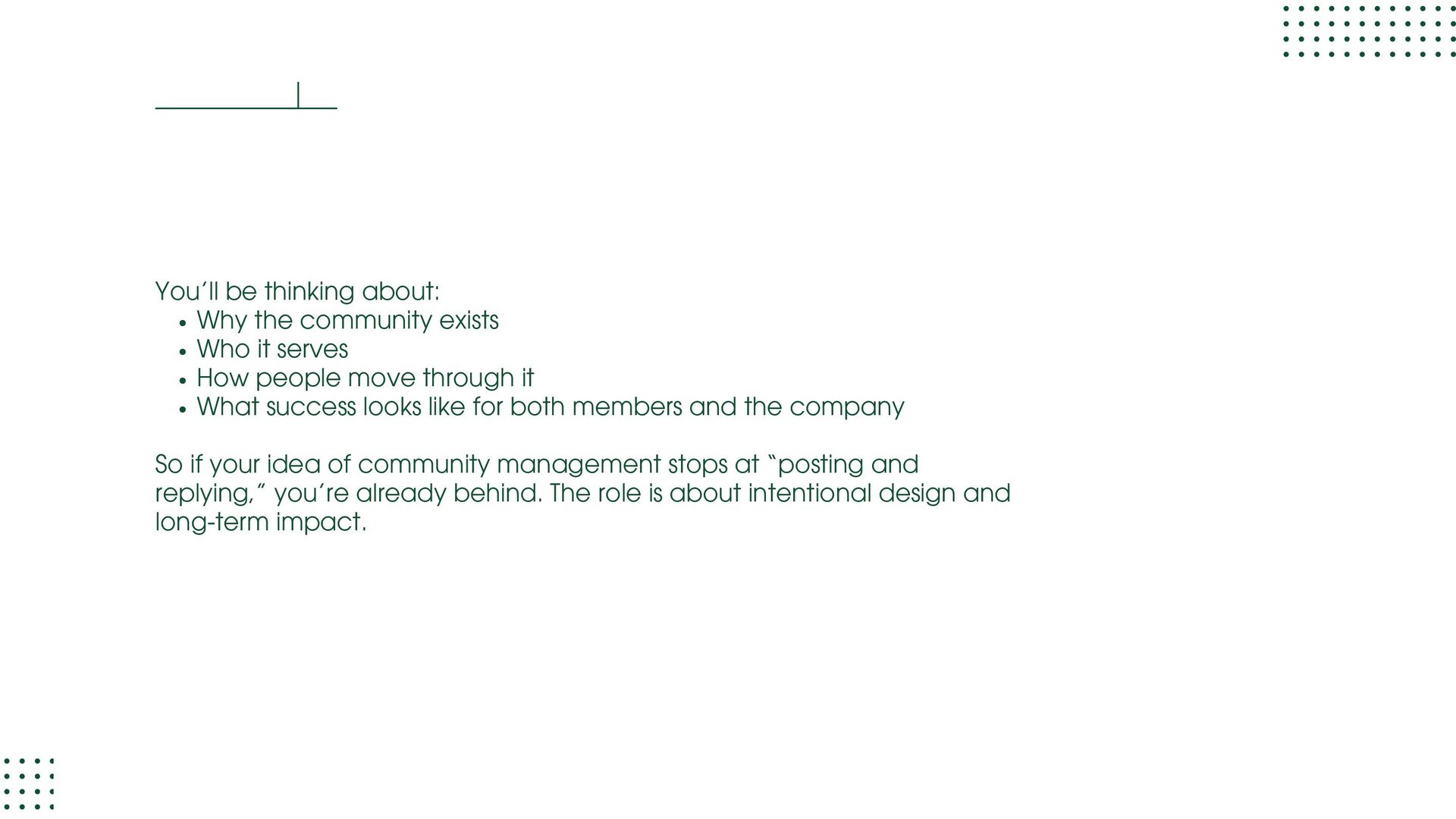
serves How people move through it What success looks like for both members and the company So if your idea of community management stops at “posting and replying,” you’re already behind. The role is about intentional design and long-term impact.
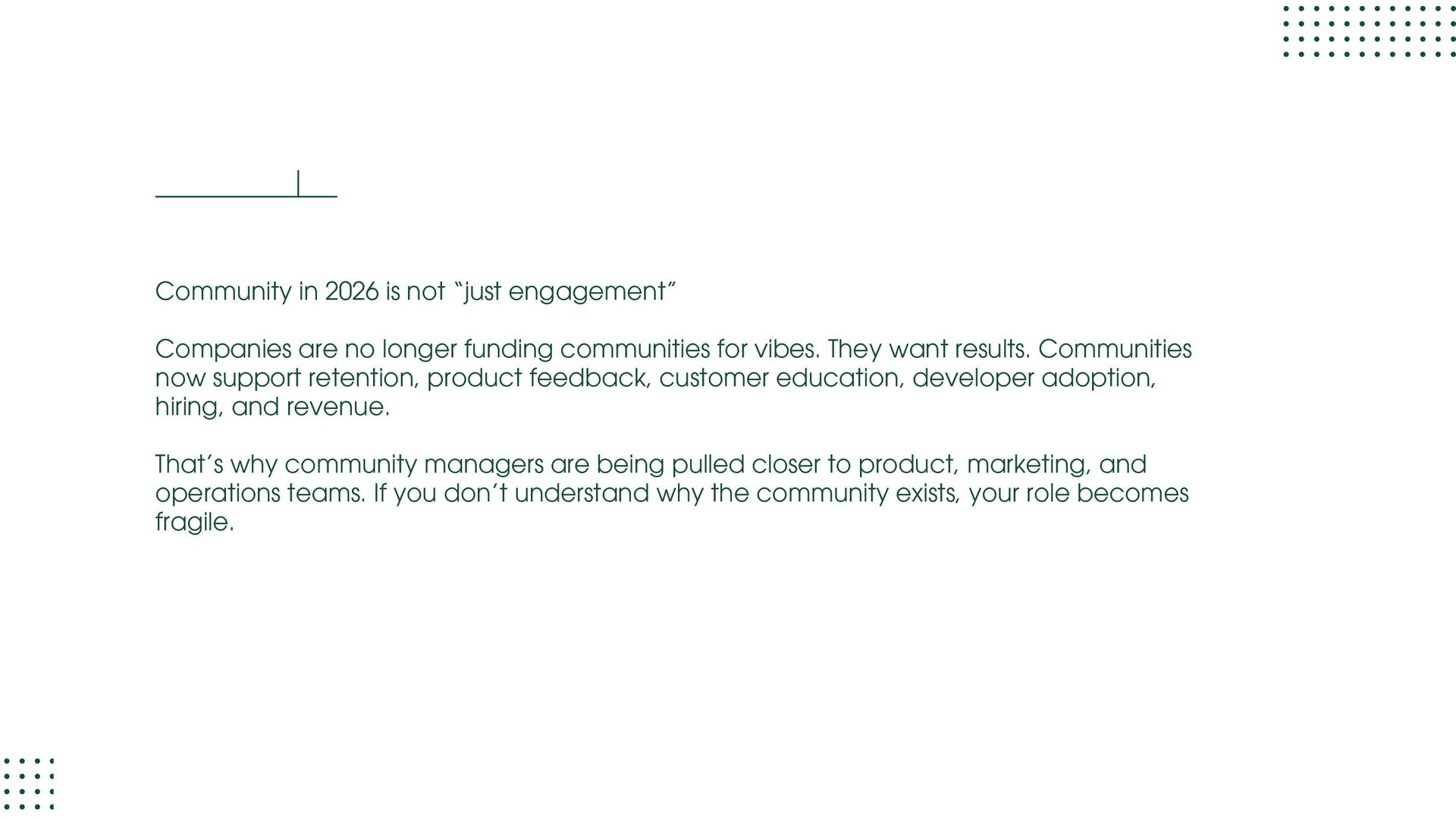
longer funding communities for vibes. They want results. Communities now support retention, product feedback, customer education, developer adoption, hiring, and revenue. That’s why community managers are being pulled closer to product, marketing, and operations teams. If you don’t understand why the community exists, your role becomes fragile.
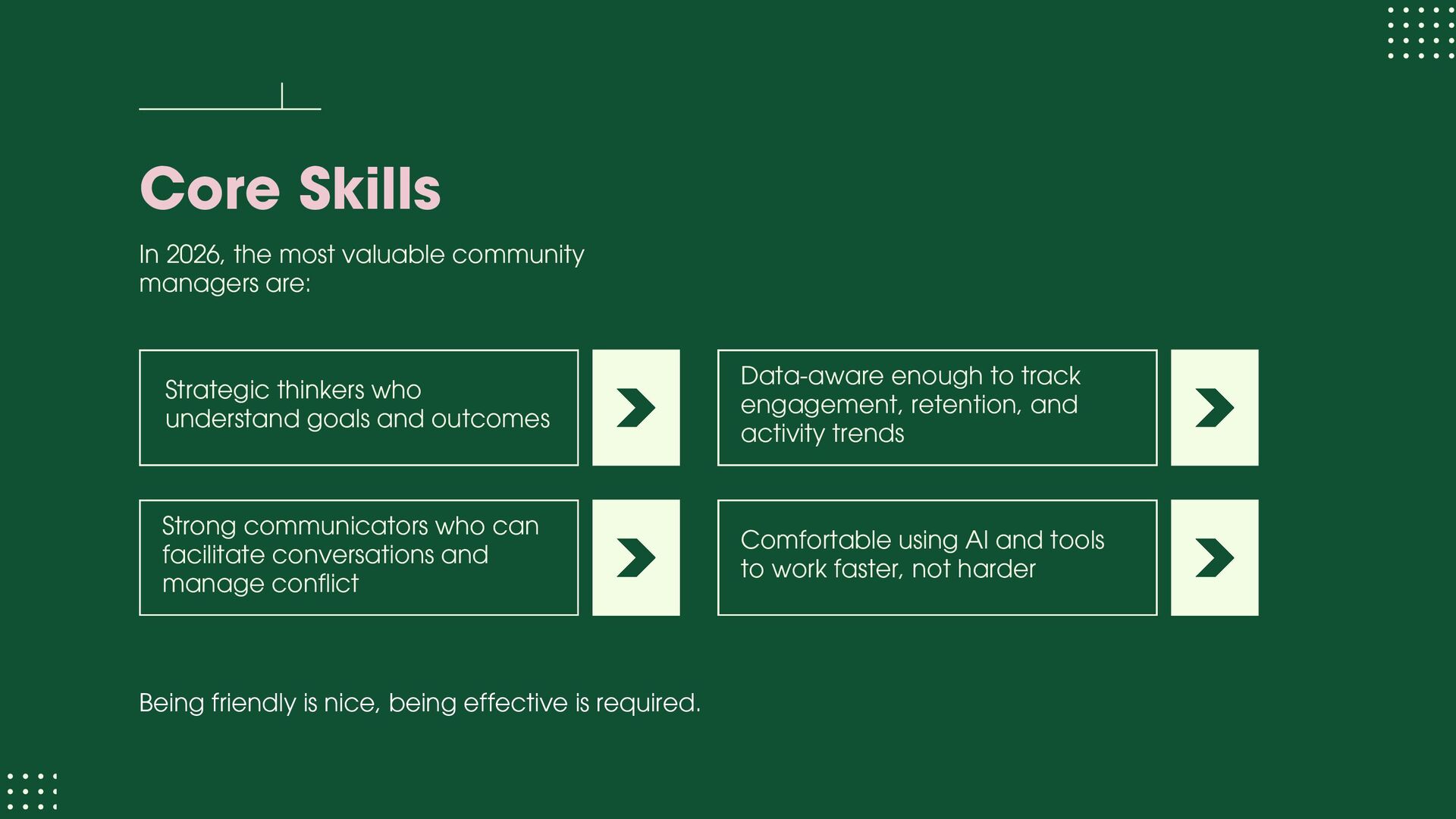
Strategic thinkers who understand goals and outcomes In 2026, the most valuable community managers are: Strong communicators who can facilitate conversations and manage conflict Data-aware enough to track engagement, retention, and activity trends Comfortable using AI and tools to work faster, not harder
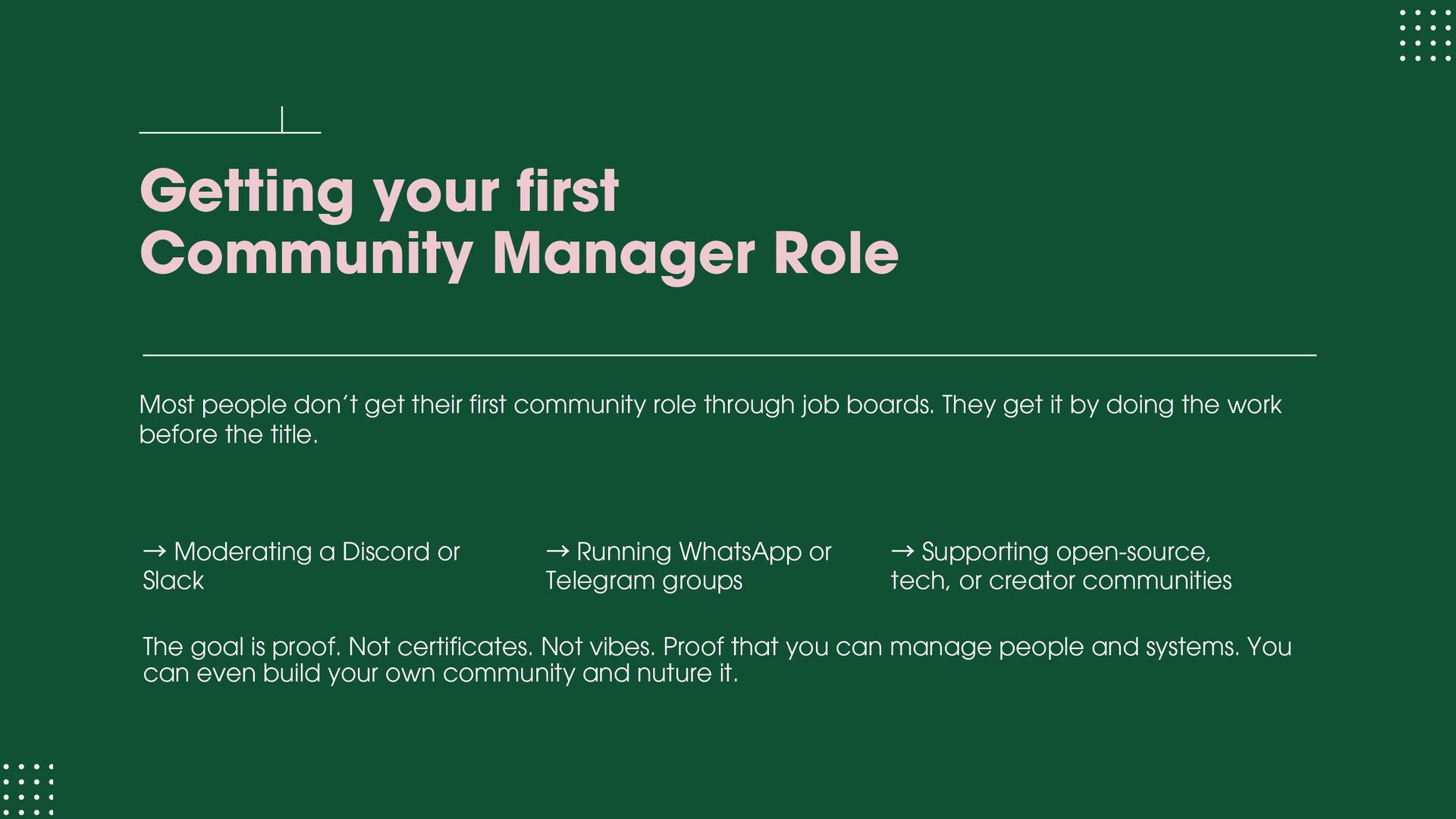
their first community role through job boards. They get it by doing the work before the title. → Moderating a Discord or Slack → Running WhatsApp or Telegram groups → Supporting open-source, tech, or creator communities The goal is proof. Not certificates. Not vibes. Proof that you can manage people and systems. You can even build your own community and nuture it.
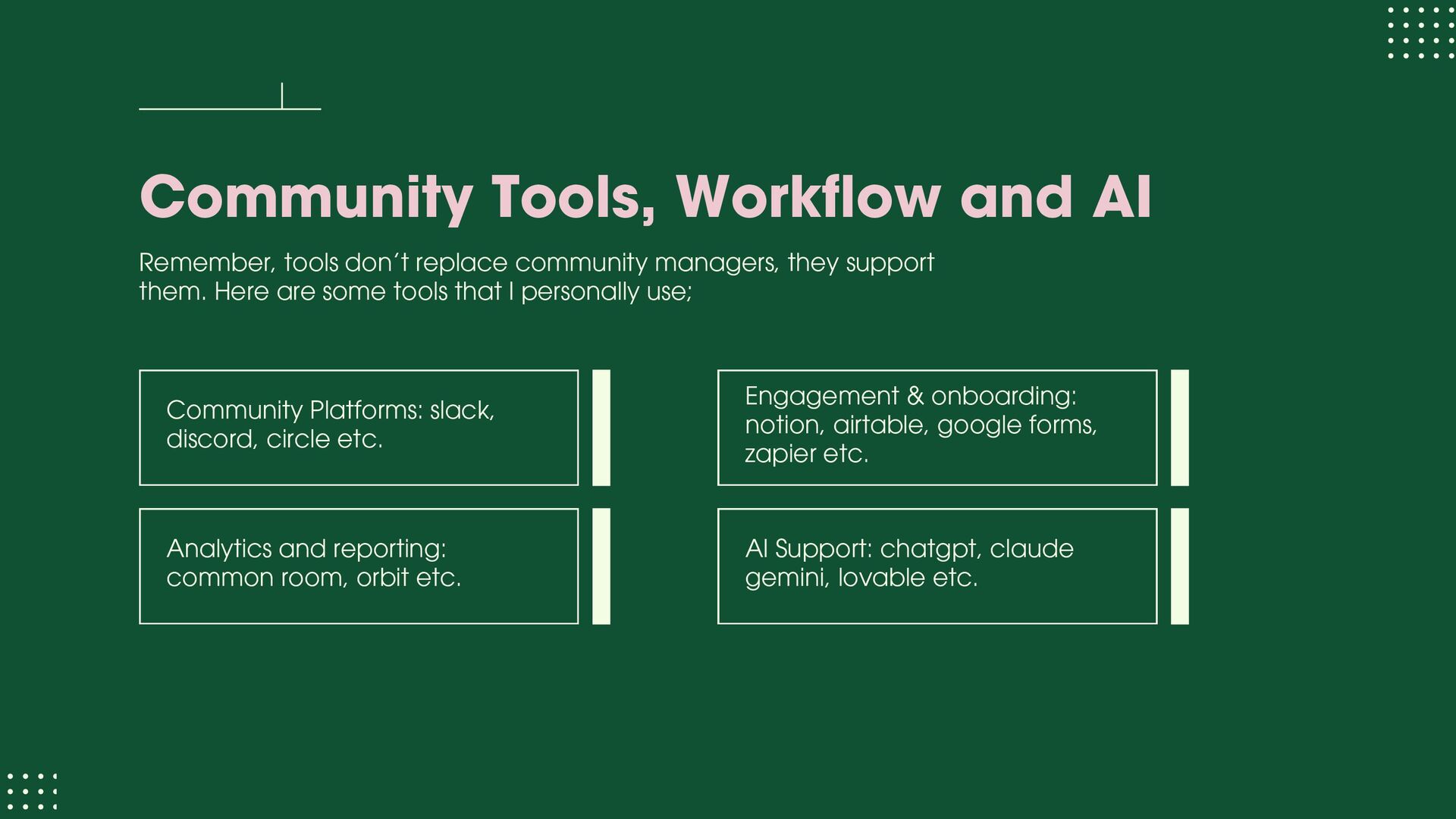
etc. Remember, tools don’t replace community managers, they support them. Here are some tools that I personally use; Analytics and reporting: common room, orbit etc. Engagement & onboarding: notion, airtable, google forms, zapier etc. AI Support: chatgpt, claude gemini, lovable etc.
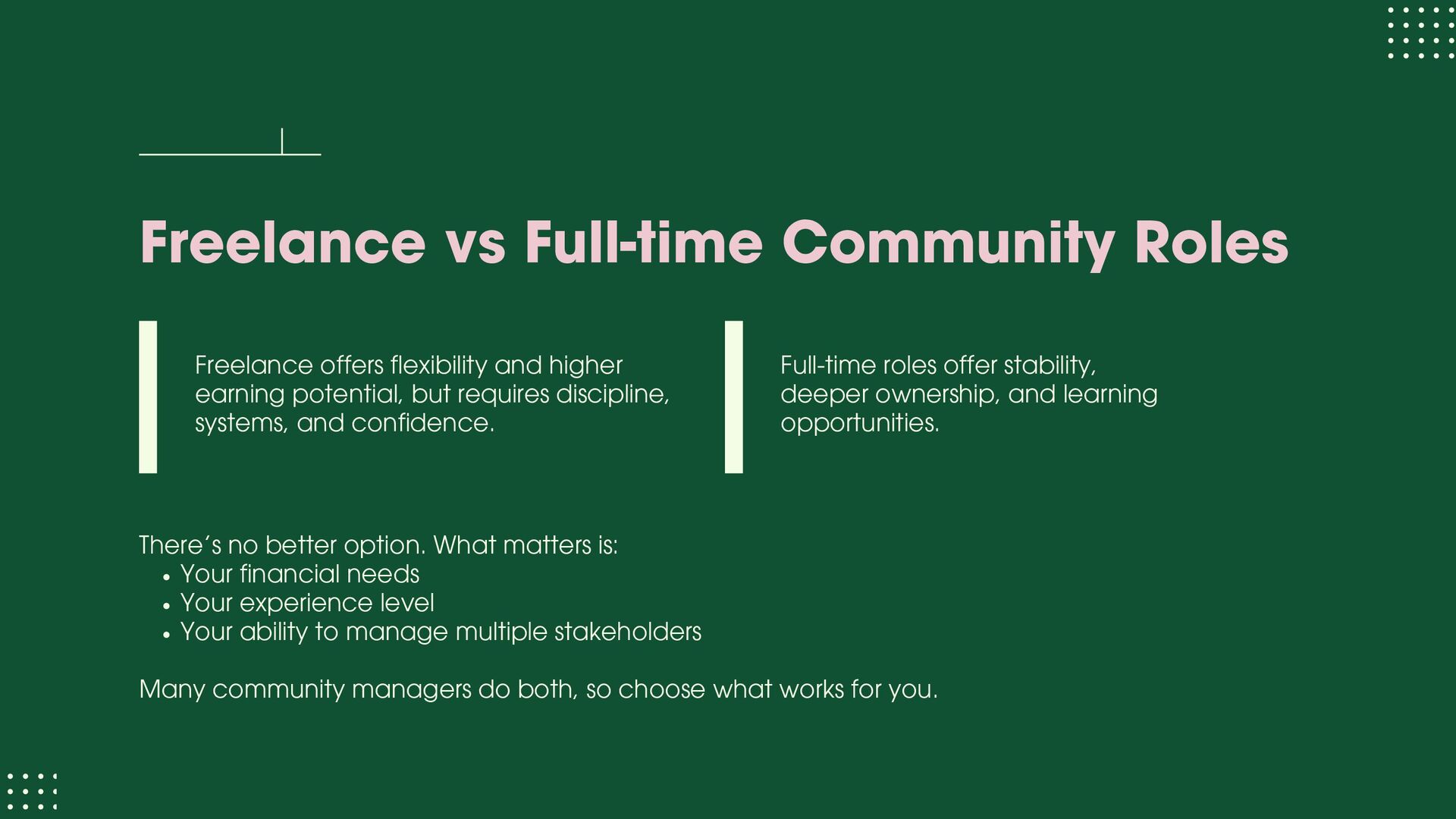
earning potential, but requires discipline, systems, and confidence. There’s no better option. What matters is: Your financial needs Your experience level Your ability to manage multiple stakeholders Many community managers do both, so choose what works for you. Full-time roles offer stability, deeper ownership, and learning opportunities.
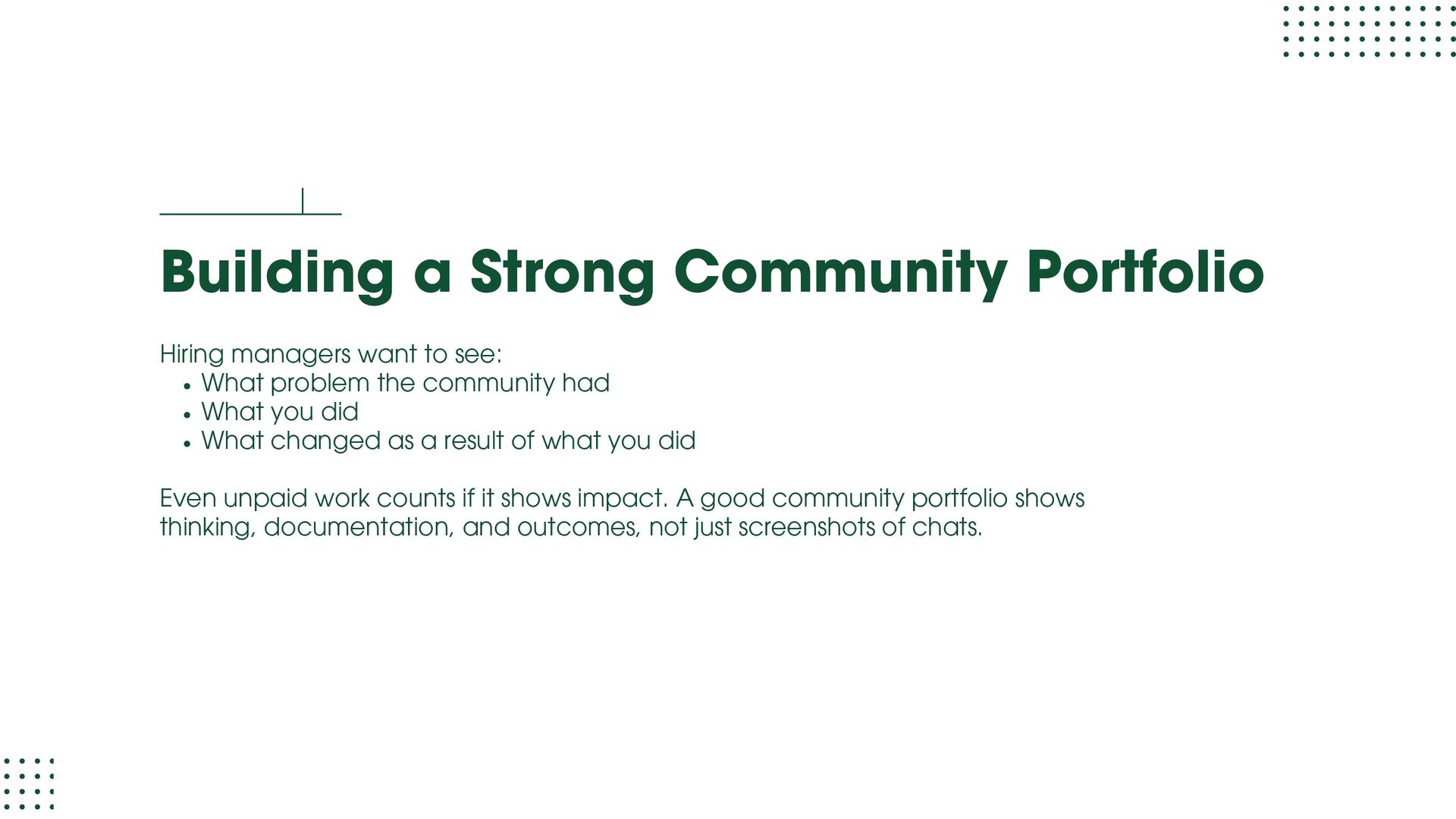
What problem the community had What you did What changed as a result of what you did Even unpaid work counts if it shows impact. A good community portfolio shows thinking, documentation, and outcomes, not just screenshots of chats.
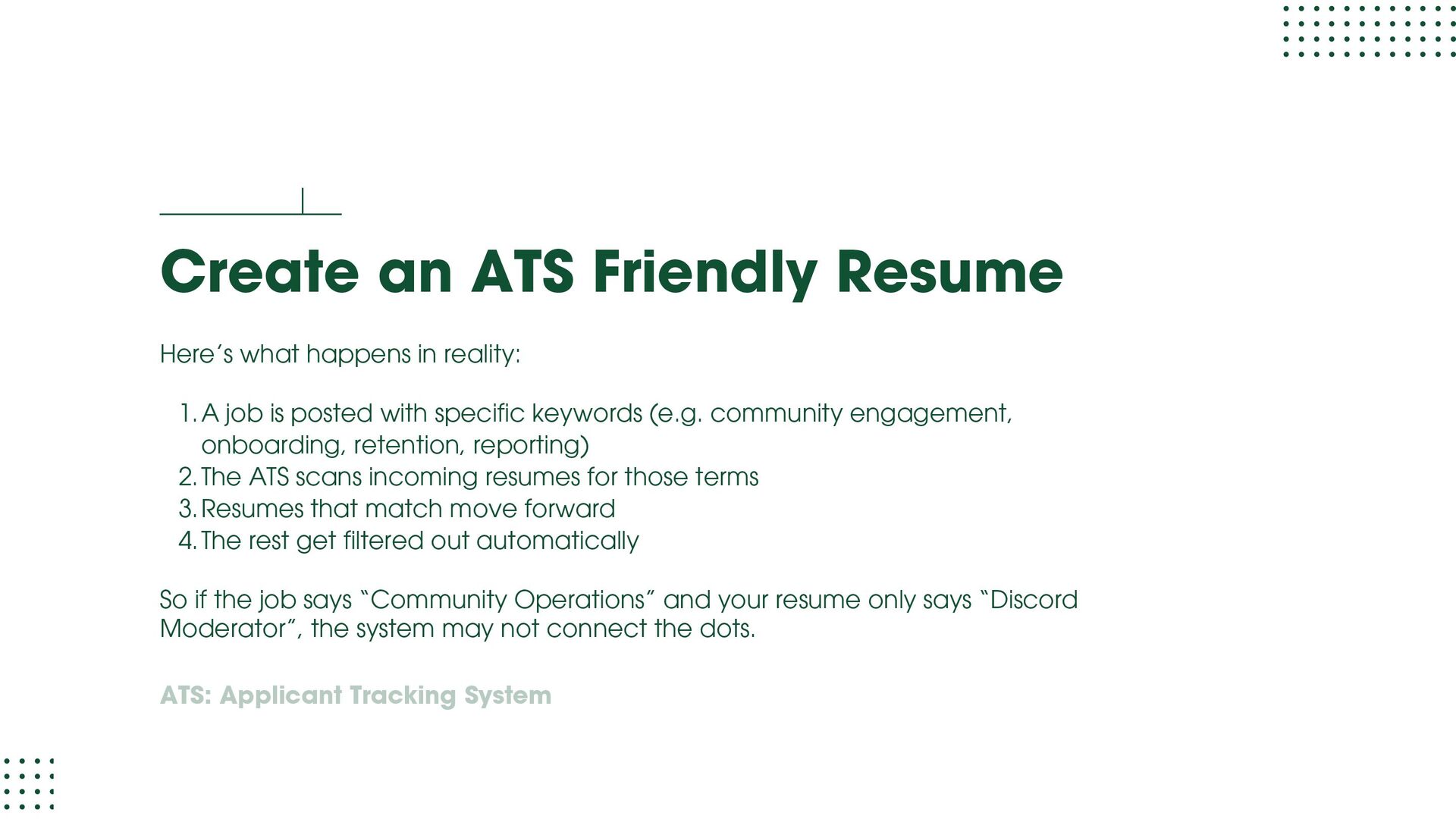
1.A job is posted with specific keywords (e.g. community engagement, onboarding, retention, reporting) 2.The ATS scans incoming resumes for those terms 3.Resumes that match move forward 4.The rest get filtered out automatically So if the job says “Community Operations” and your resume only says “Discord Moderator”, the system may not connect the dots. ATS: Applicant Tracking System
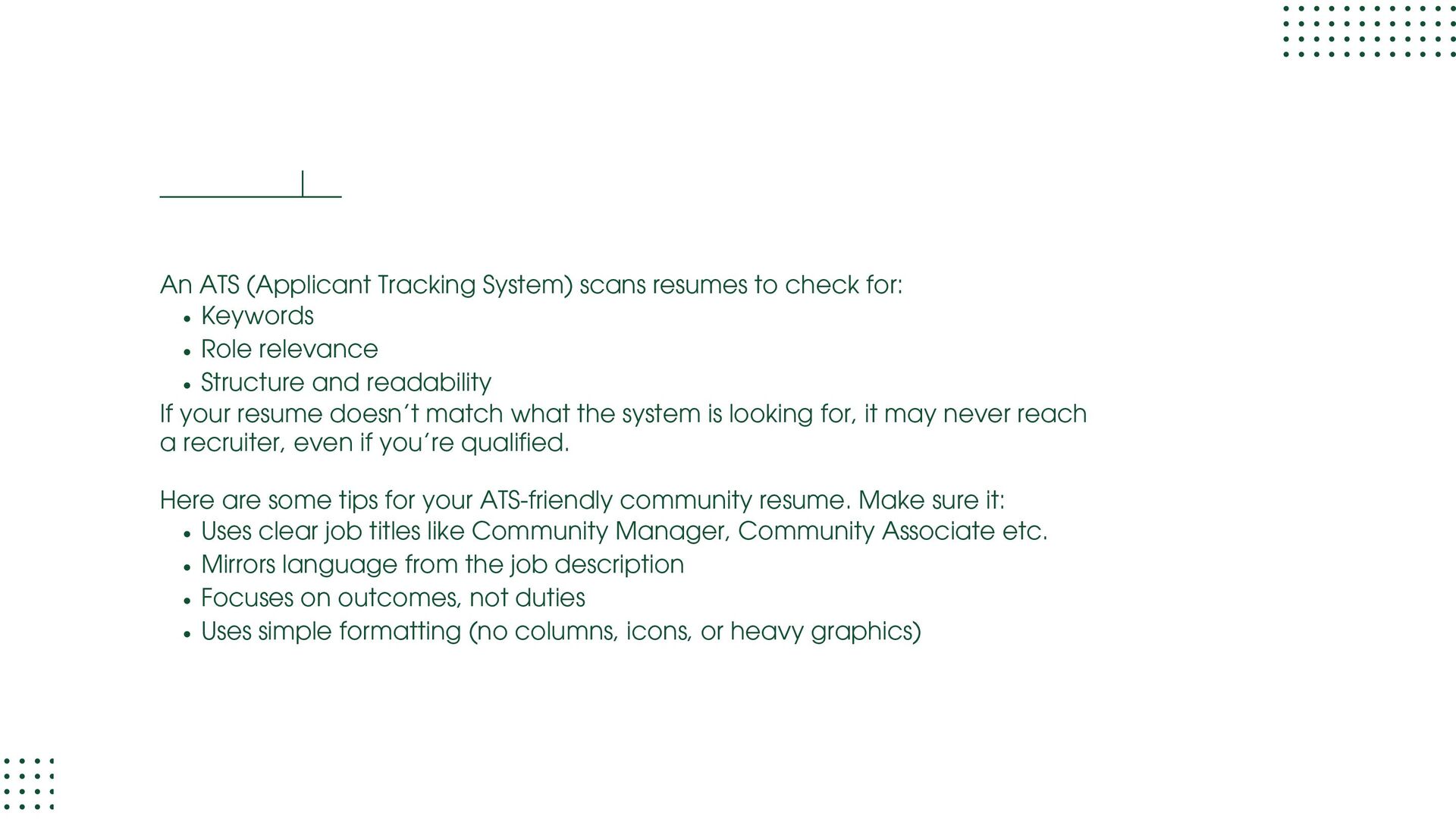
Keywords Role relevance Structure and readability If your resume doesn’t match what the system is looking for, it may never reach a recruiter, even if you’re qualified. Here are some tips for your ATS-friendly community resume. Make sure it: Uses clear job titles like Community Manager, Community Associate etc. Mirrors language from the job description Focuses on outcomes, not duties Uses simple formatting (no columns, icons, or heavy graphics)
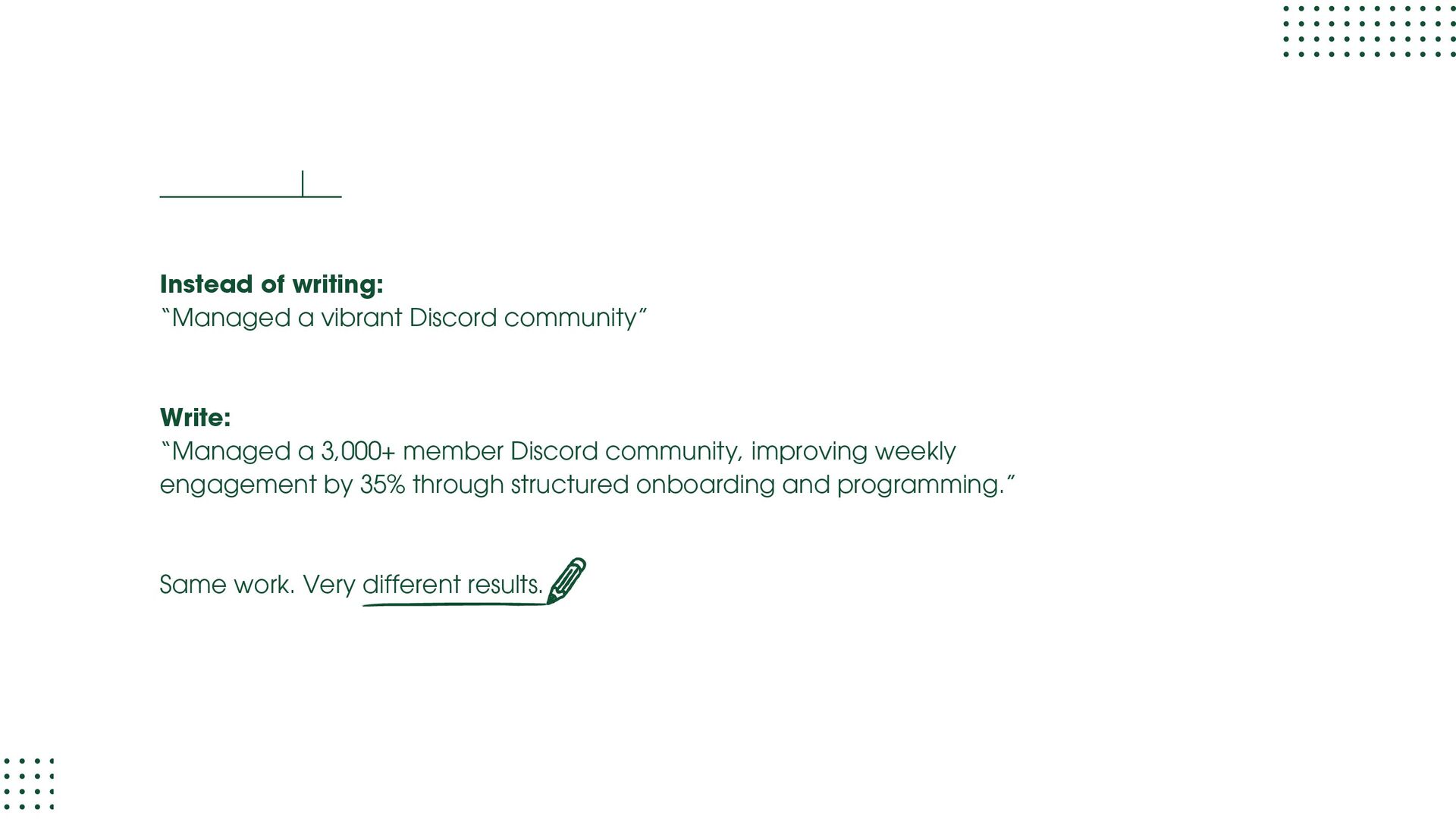
a 3,000+ member Discord community, improving weekly engagement by 35% through structured onboarding and programming.” Same work. Very different results.
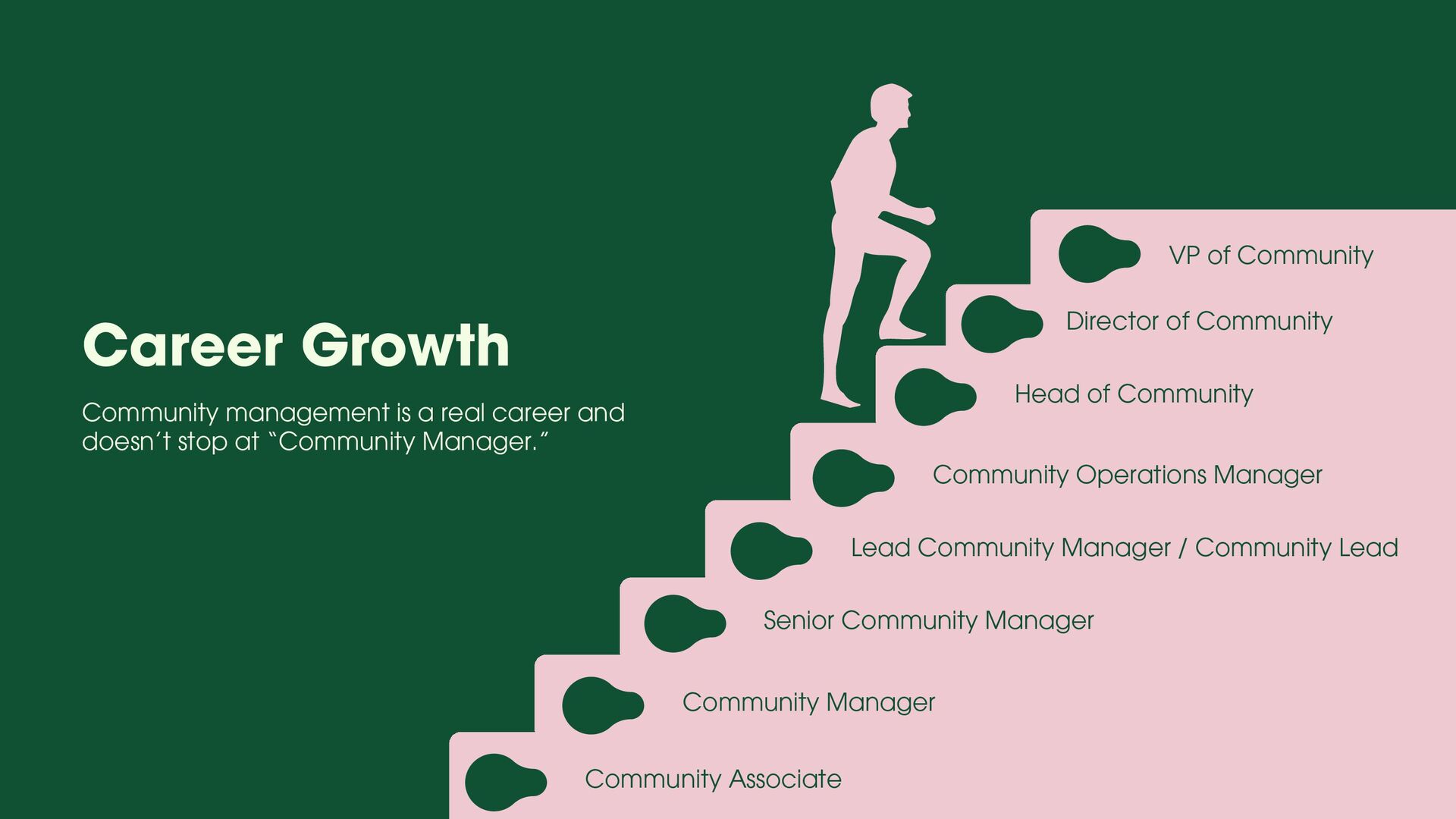
stop at “Community Manager.” Community Associate Community Manager Senior Community Manager Lead Community Manager / Community Lead Community Operations Manager Director of Community Head of Community VP of Community
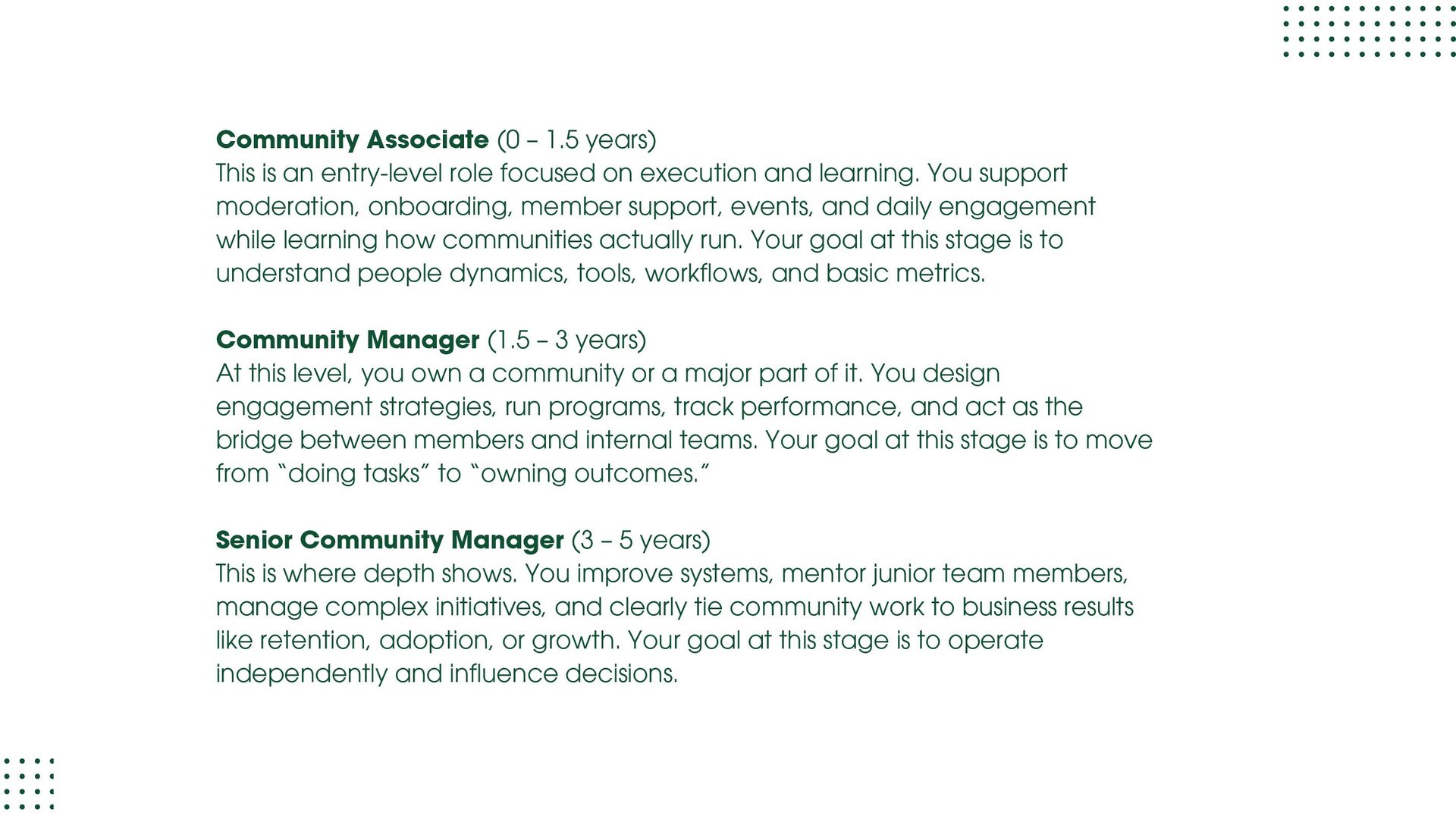
role focused on execution and learning. You support moderation, onboarding, member support, events, and daily engagement while learning how communities actually run. Your goal at this stage is to understand people dynamics, tools, workflows, and basic metrics. Community Manager (1.5 – 3 years) At this level, you own a community or a major part of it. You design engagement strategies, run programs, track performance, and act as the bridge between members and internal teams. Your goal at this stage is to move from “doing tasks” to “owning outcomes.” Senior Community Manager (3 – 5 years) This is where depth shows. You improve systems, mentor junior team members, manage complex initiatives, and clearly tie community work to business results like retention, adoption, or growth. Your goal at this stage is to operate independently and influence decisions.
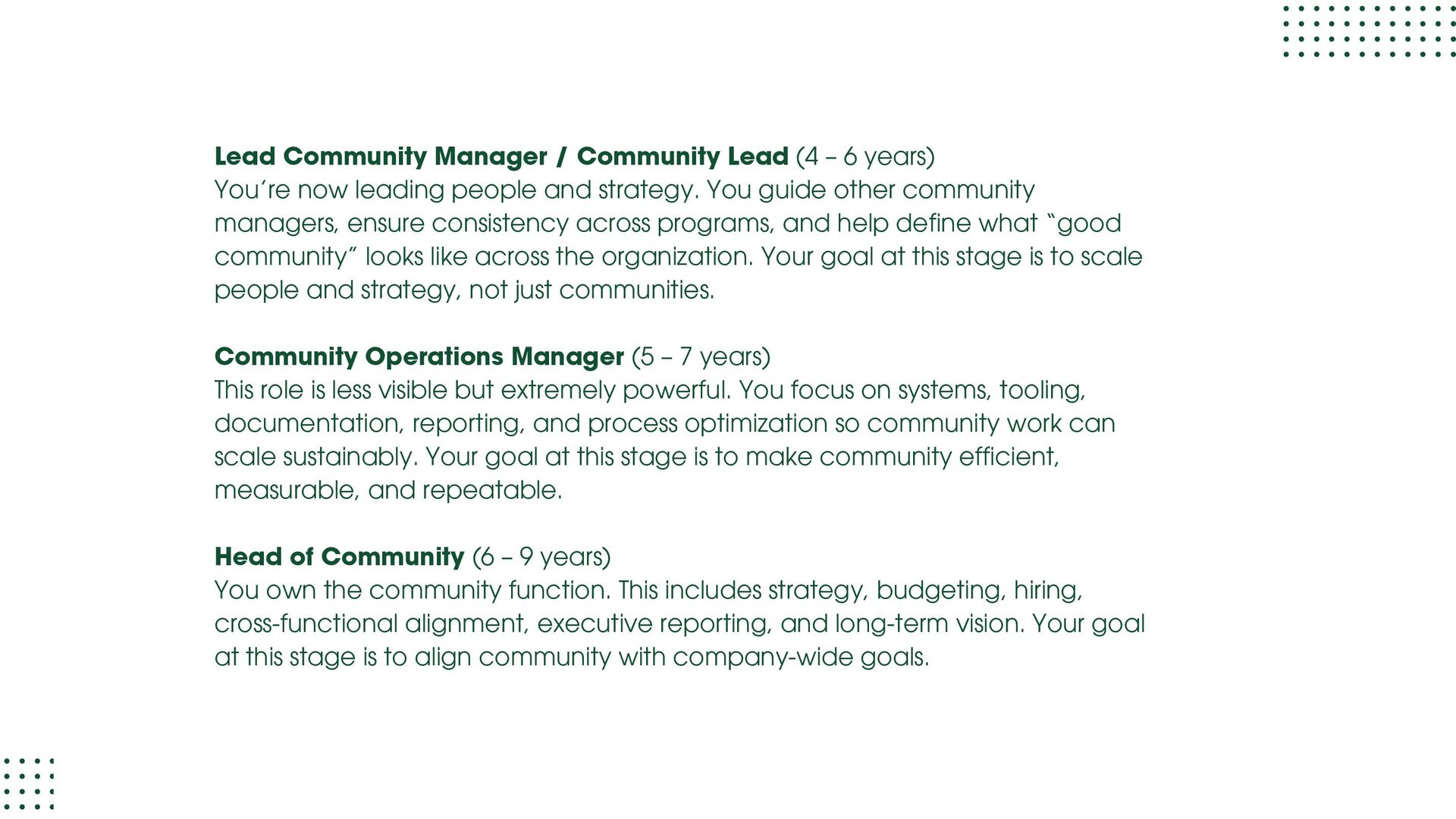
You’re now leading people and strategy. You guide other community managers, ensure consistency across programs, and help define what “good community” looks like across the organization. Your goal at this stage is to scale people and strategy, not just communities. Community Operations Manager (5 – 7 years) This role is less visible but extremely powerful. You focus on systems, tooling, documentation, reporting, and process optimization so community work can scale sustainably. Your goal at this stage is to make community efficient, measurable, and repeatable. Head of Community (6 – 9 years) You own the community function. This includes strategy, budgeting, hiring, cross-functional alignment, executive reporting, and long-term vision. Your goal at this stage is to align community with company-wide goals.
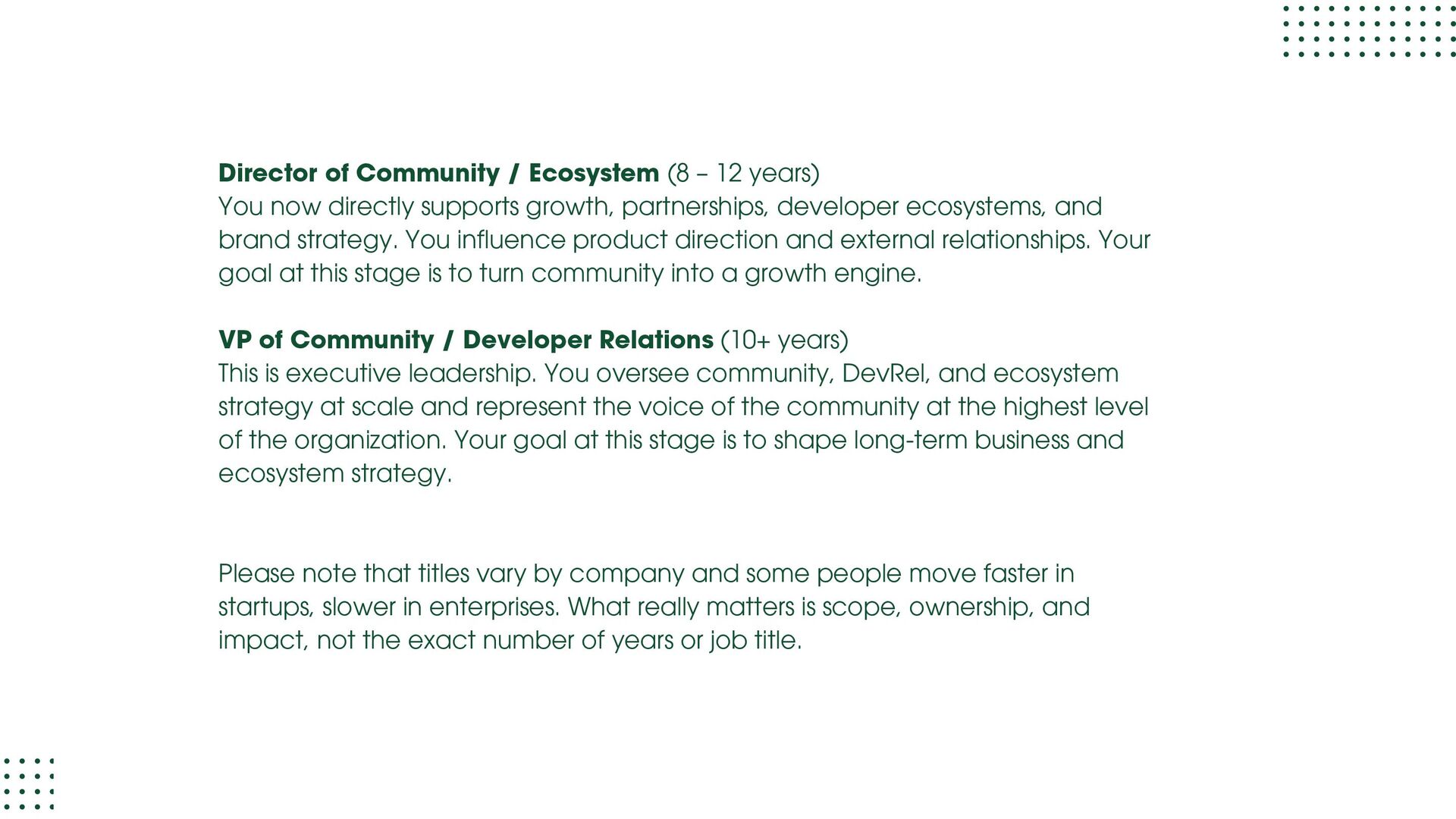
now directly supports growth, partnerships, developer ecosystems, and brand strategy. You influence product direction and external relationships. Your goal at this stage is to turn community into a growth engine. VP of Community / Developer Relations (10+ years) This is executive leadership. You oversee community, DevRel, and ecosystem strategy at scale and represent the voice of the community at the highest level of the organization. Your goal at this stage is to shape long-term business and ecosystem strategy. Please note that titles vary by company and some people move faster in startups, slower in enterprises. What really matters is scope, ownership, and impact, not the exact number of years or job title.
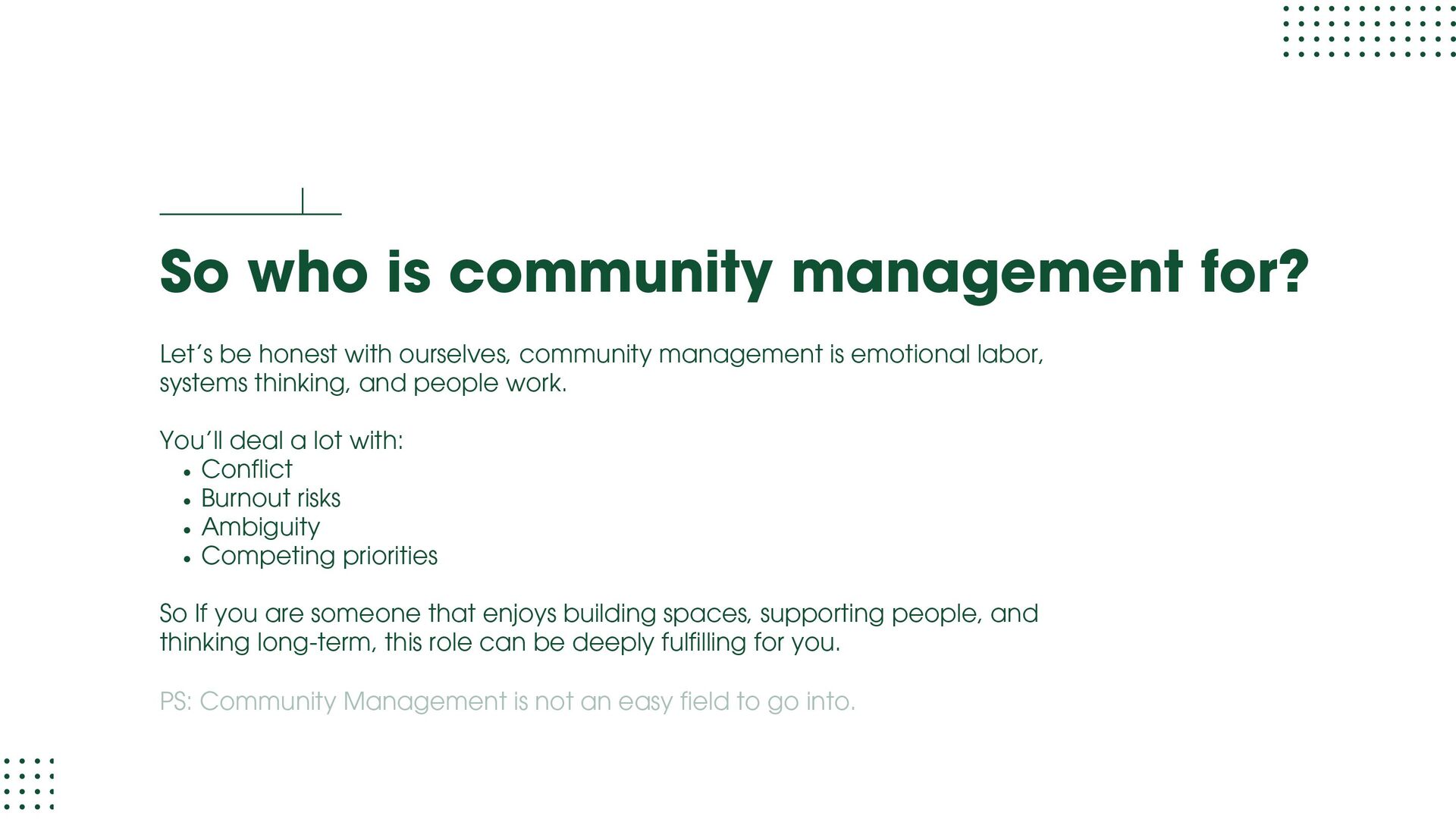
ourselves, community management is emotional labor, systems thinking, and people work. You’ll deal a lot with: Conflict Burnout risks Ambiguity Competing priorities So If you are someone that enjoys building spaces, supporting people, and thinking long-term, this role can be deeply fulfilling for you. PS: Community Management is not an easy field to go into.
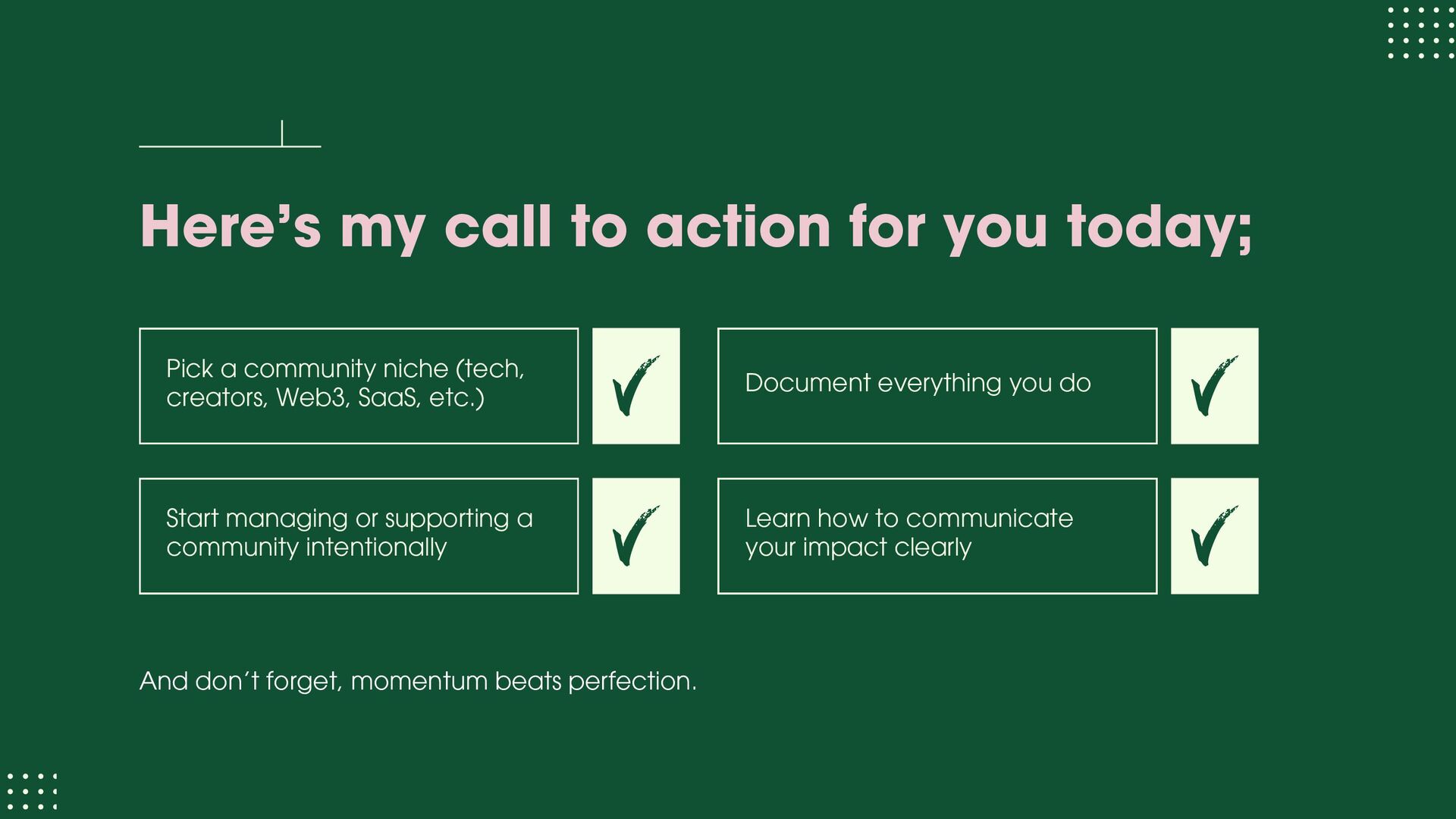
forget, momentum beats perfection. Pick a community niche (tech, creators, Web3, SaaS, etc.) Start managing or supporting a community intentionally Document everything you do Learn how to communicate your impact clearly
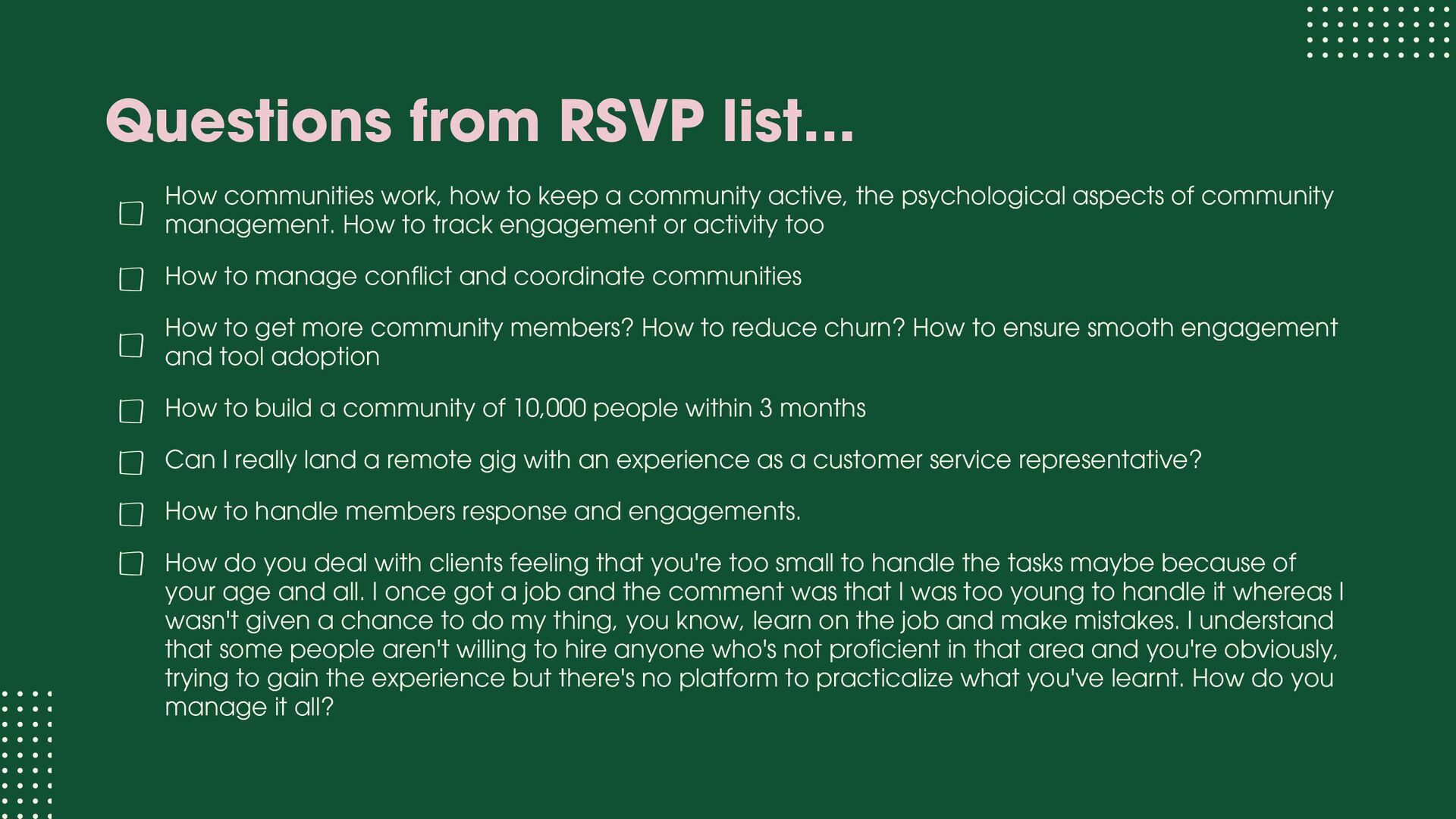
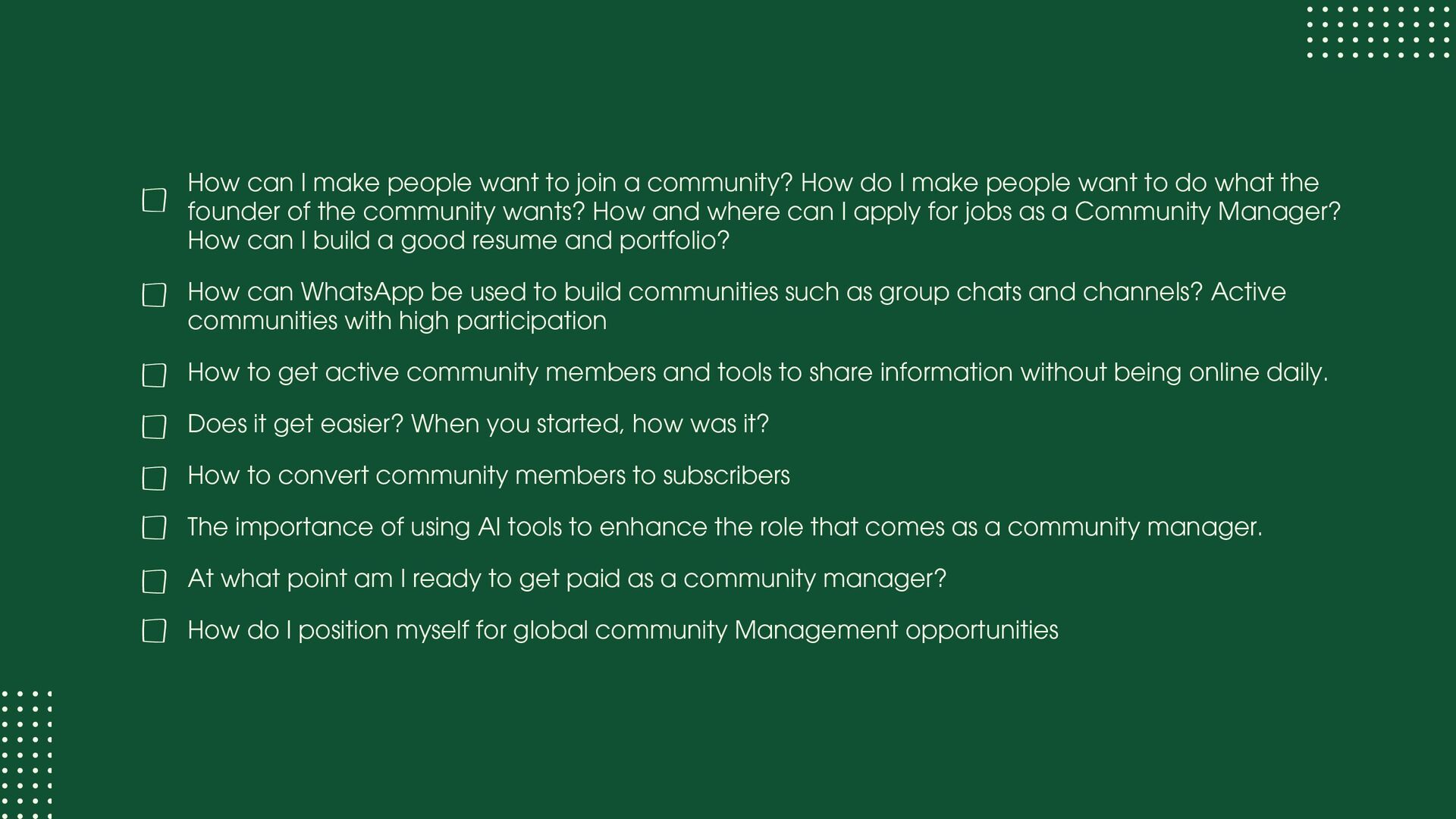
a community active, the psychological aspects of community management. How to track engagement or activity too How to manage conflict and coordinate communities How to get more community members? How to reduce churn? How to ensure smooth engagement and tool adoption How to build a community of 10,000 people within 3 months Can I really land a remote gig with an experience as a customer service representative? How to handle members response and engagements. How do you deal with clients feeling that you're too small to handle the tasks maybe because of your age and all. I once got a job and the comment was that I was too young to handle it whereas I wasn't given a chance to do my thing, you know, learn on the job and make mistakes. I understand that some people aren't willing to hire anyone who's not proficient in that area and you're obviously, trying to gain the experience but there's no platform to practicalize what you've learnt. How do you manage it all?
How do I make people want to do what the founder of the community wants? How and where can I apply for jobs as a Community Manager? How can I build a good resume and portfolio? How to convert community members to subscribers The importance of using AI tools to enhance the role that comes as a community manager. How can WhatsApp be used to build communities such as group chats and channels? Active communities with high participation How to get active community members and tools to share information without being online daily. Does it get easier? When you started, how was it? At what point am I ready to get paid as a community manager? How do I position myself for global community Management opportunities
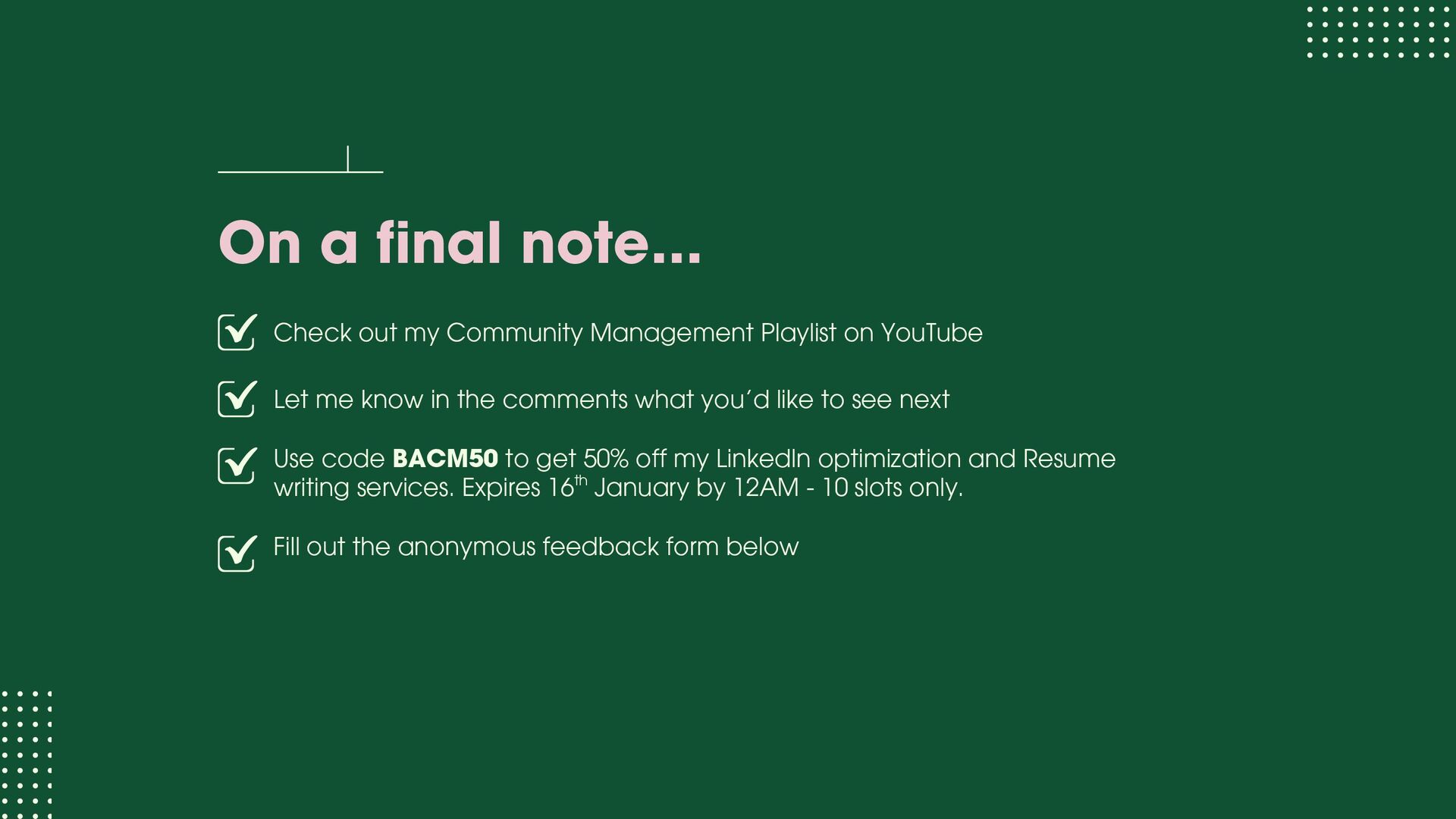
on YouTube Let me know in the comments what you’d like to see next Use code BACM50 to get 50% off my Linkedln optimization and Resume writing services. Expires 16 January by 12AM - 10 slots only. th Fill out the anonymous feedback form below


 mfonobong
 graydotco
 dawnieando
 davetheseo
 badams
 speedyindexteam
 chrisleverseo
 alexgalinos
 decabbit
 liddle
 amanaut
 62gerente
 minecr
 addyosmani
 takai
takai
 lynnandtonic
 ivargrimstad
 keathley
 samtorres
 tmiket
 techseoconnect
 inesmontani
 maltzj