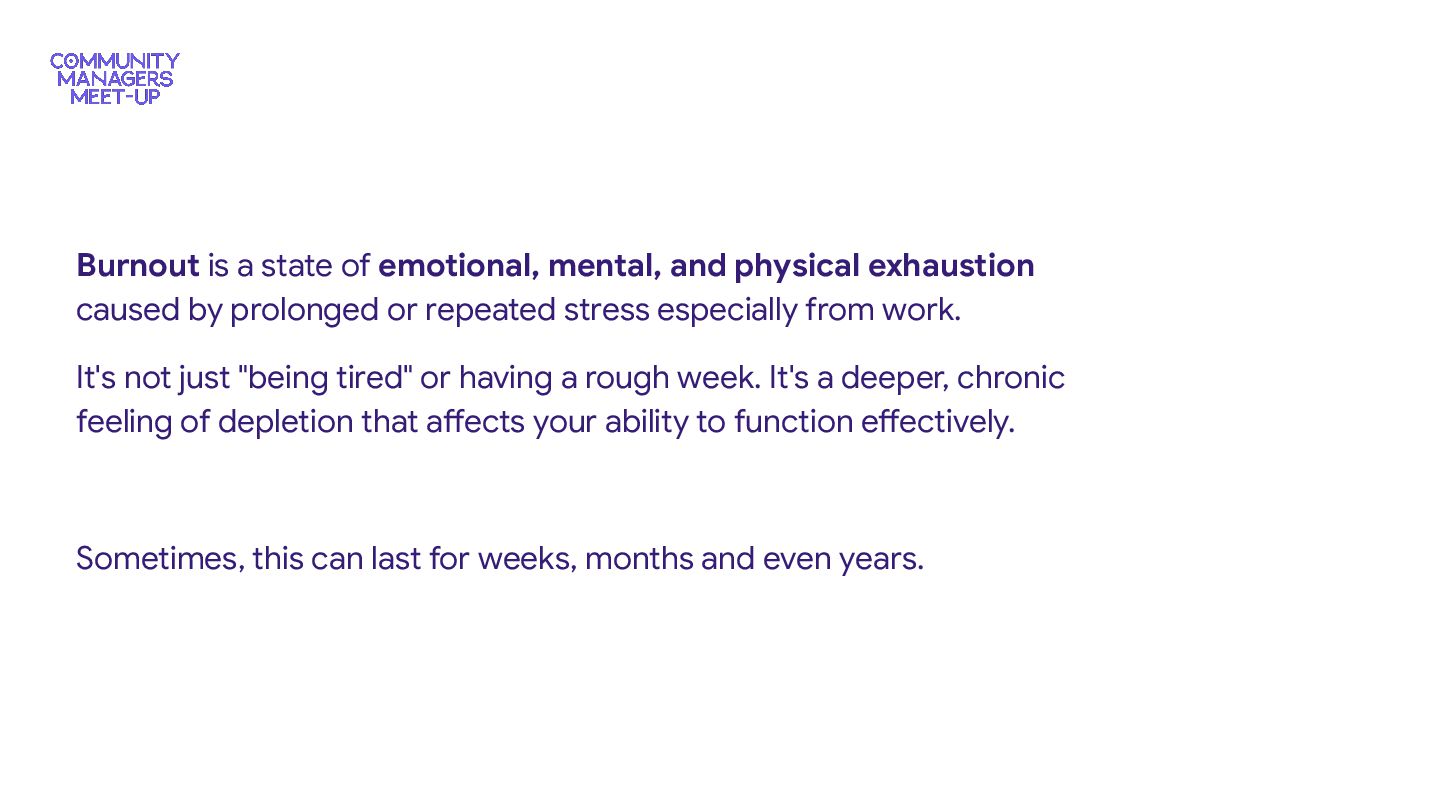
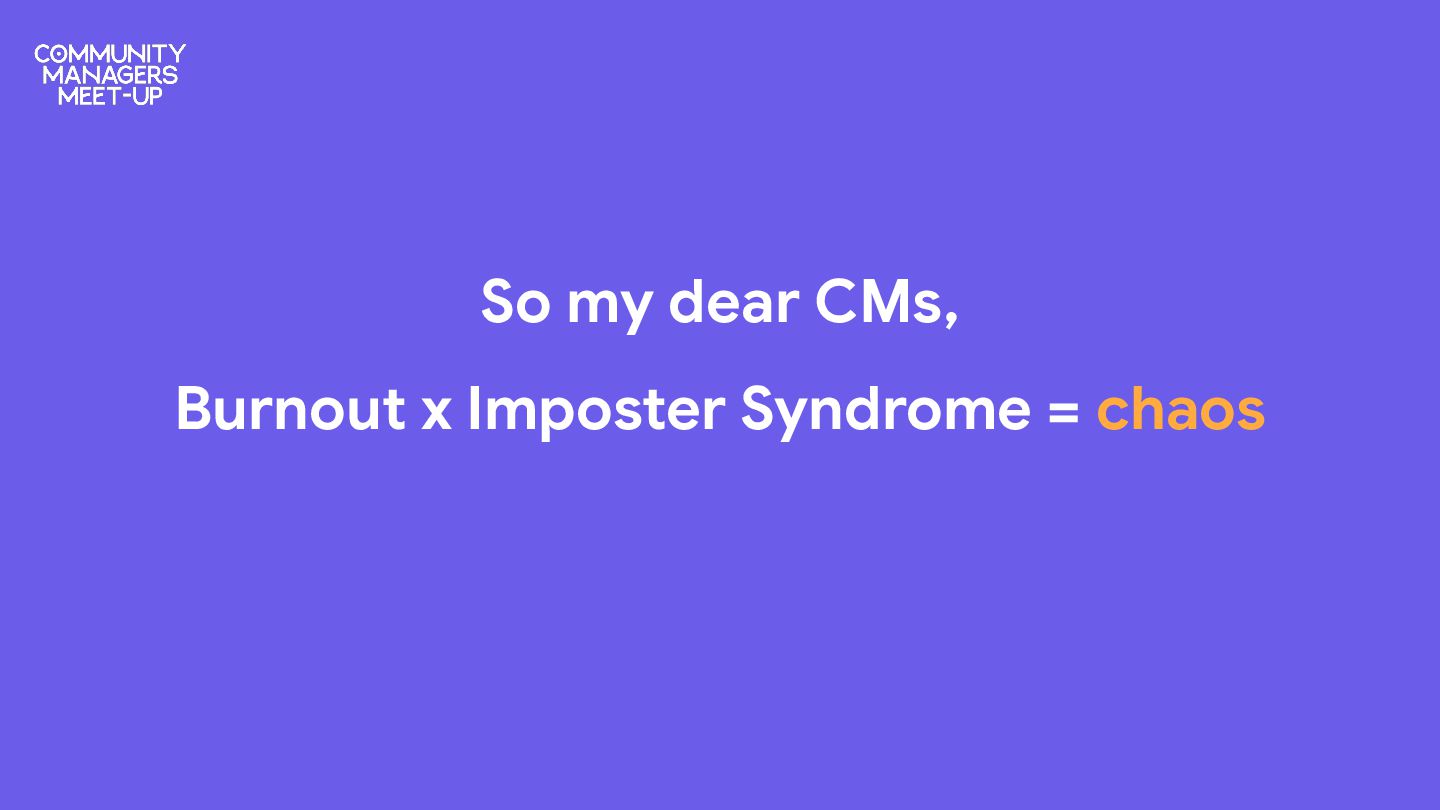
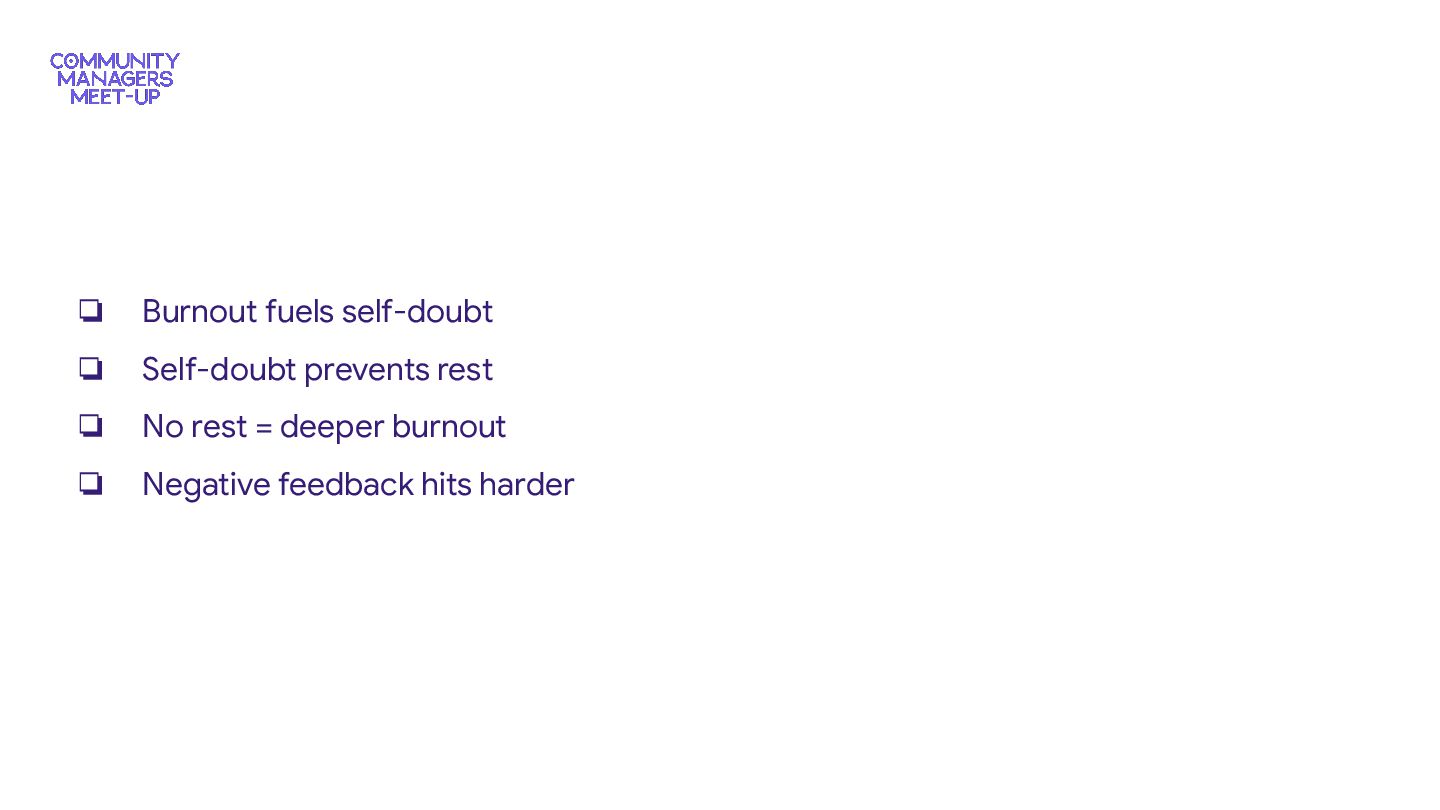
caused by prolonged or repeated stress especially from work. It's not just "being tired" or having a rough week. It's a deeper, chronic feeling of depletion that affects your ability to function effectively. Sometimes, this can last for weeks, months and even years.
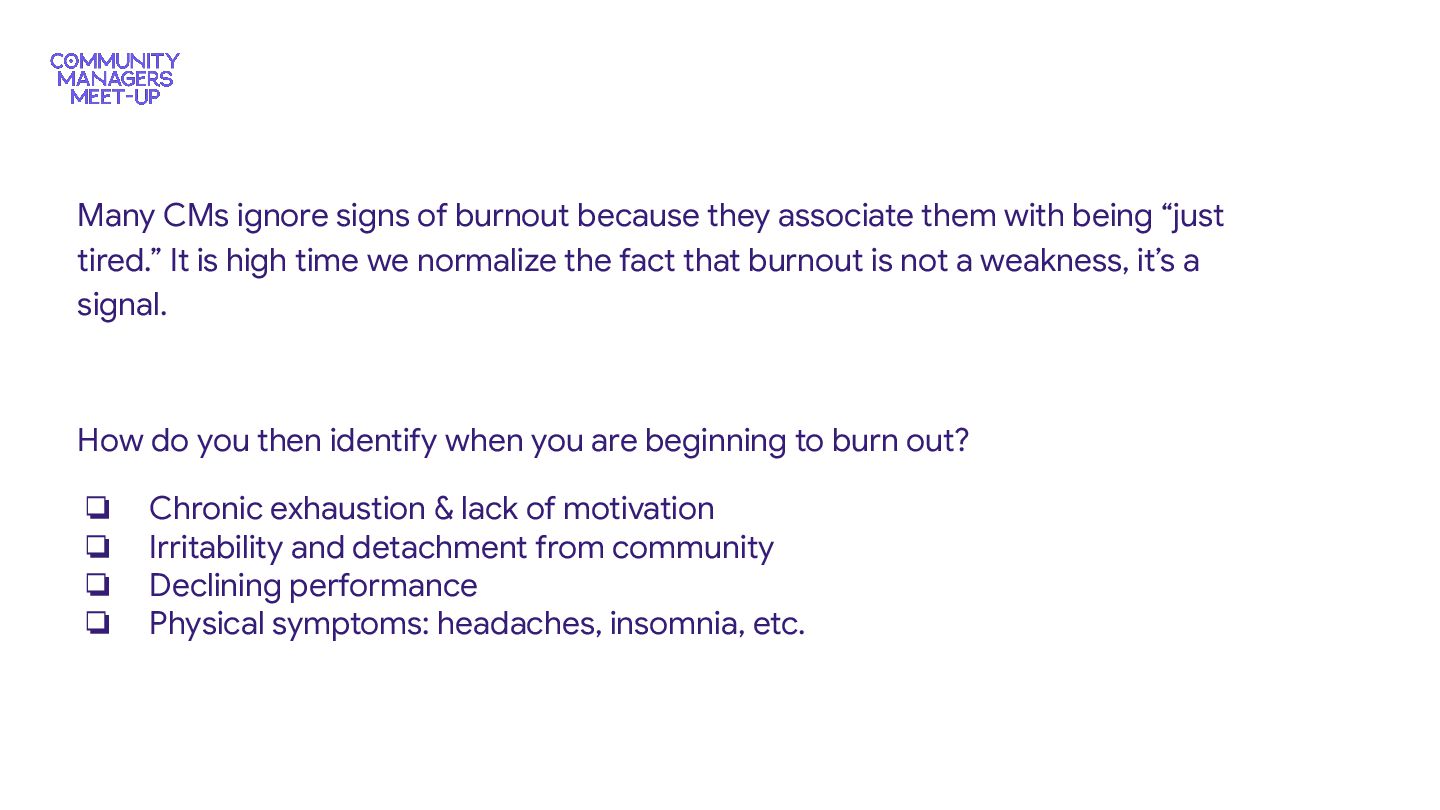
with being “just tired.” It is high time we normalize the fact that burnout is not a weakness, it’s a signal. How do you then identify when you are beginning to burn out? ❏ Chronic exhaustion & lack of motivation ❏ Irritability and detachment from community ❏ Declining performance ❏ Physical symptoms: headaches, insomnia, etc.
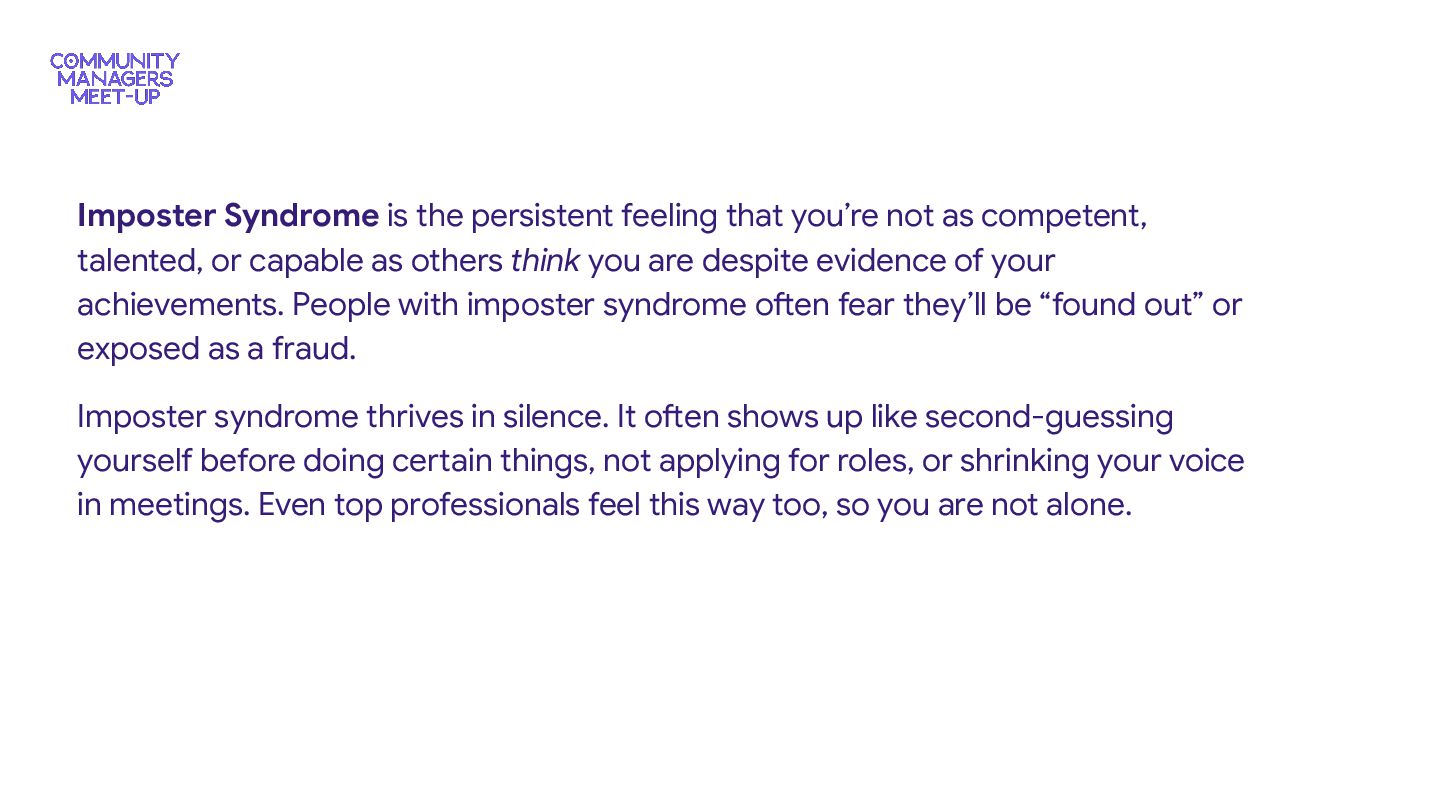
competent, talented, or capable as others think you are despite evidence of your achievements. People with imposter syndrome often fear they’ll be “found out” or exposed as a fraud. Imposter syndrome thrives in silence. It often shows up like second-guessing yourself before doing certain things, not applying for roles, or shrinking your voice in meetings. Even top professionals feel this way too, so you are not alone.
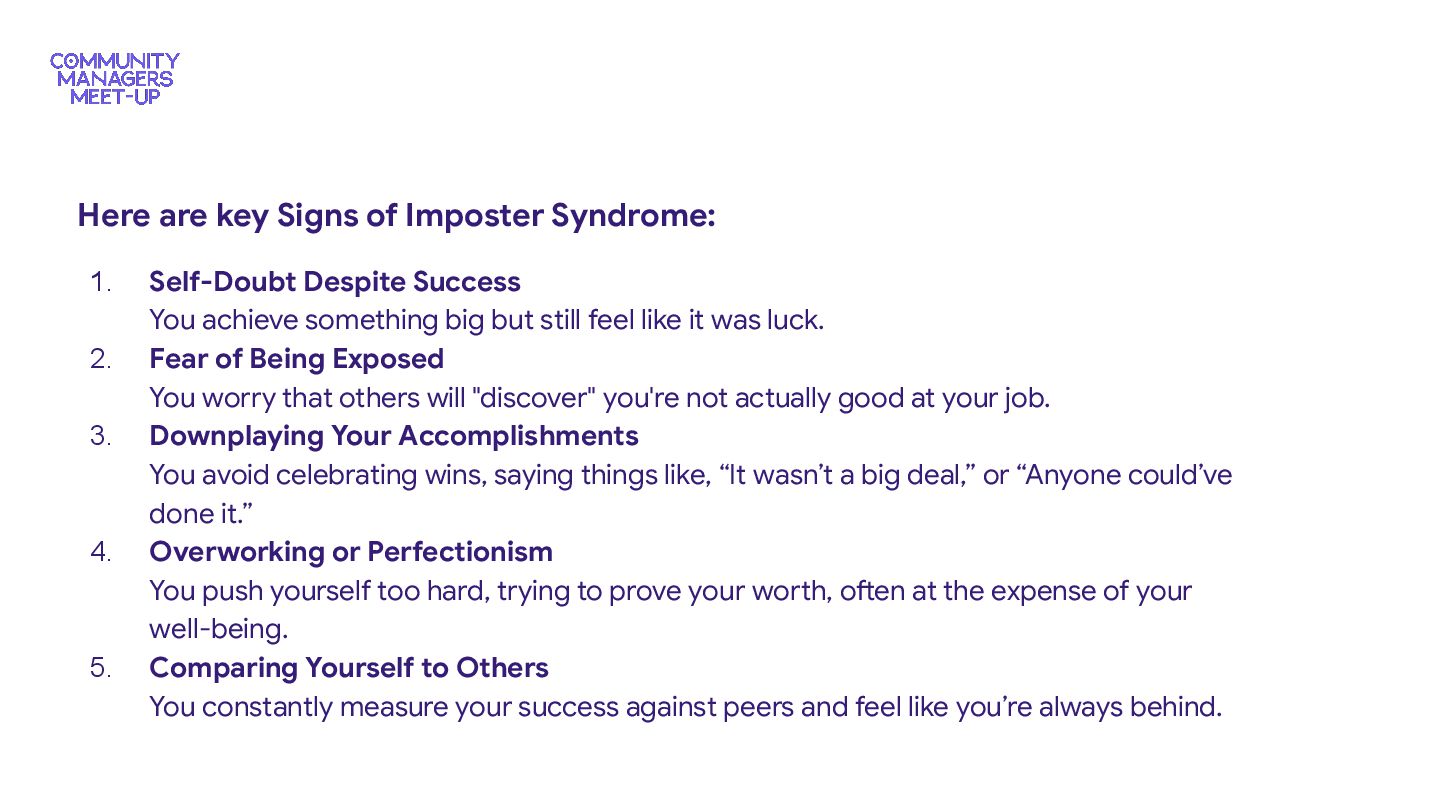
Success You achieve something big but still feel like it was luck. 2. Fear of Being Exposed You worry that others will "discover" you're not actually good at your job. 3. Downplaying Your Accomplishments You avoid celebrating wins, saying things like, “It wasn’t a big deal,” or “Anyone could’ve done it.” 4. Overworking or Perfectionism You push yourself too hard, trying to prove your worth, often at the expense of your well-being. 5. Comparing Yourself to Others You constantly measure your success against peers and feel like you’re always behind.
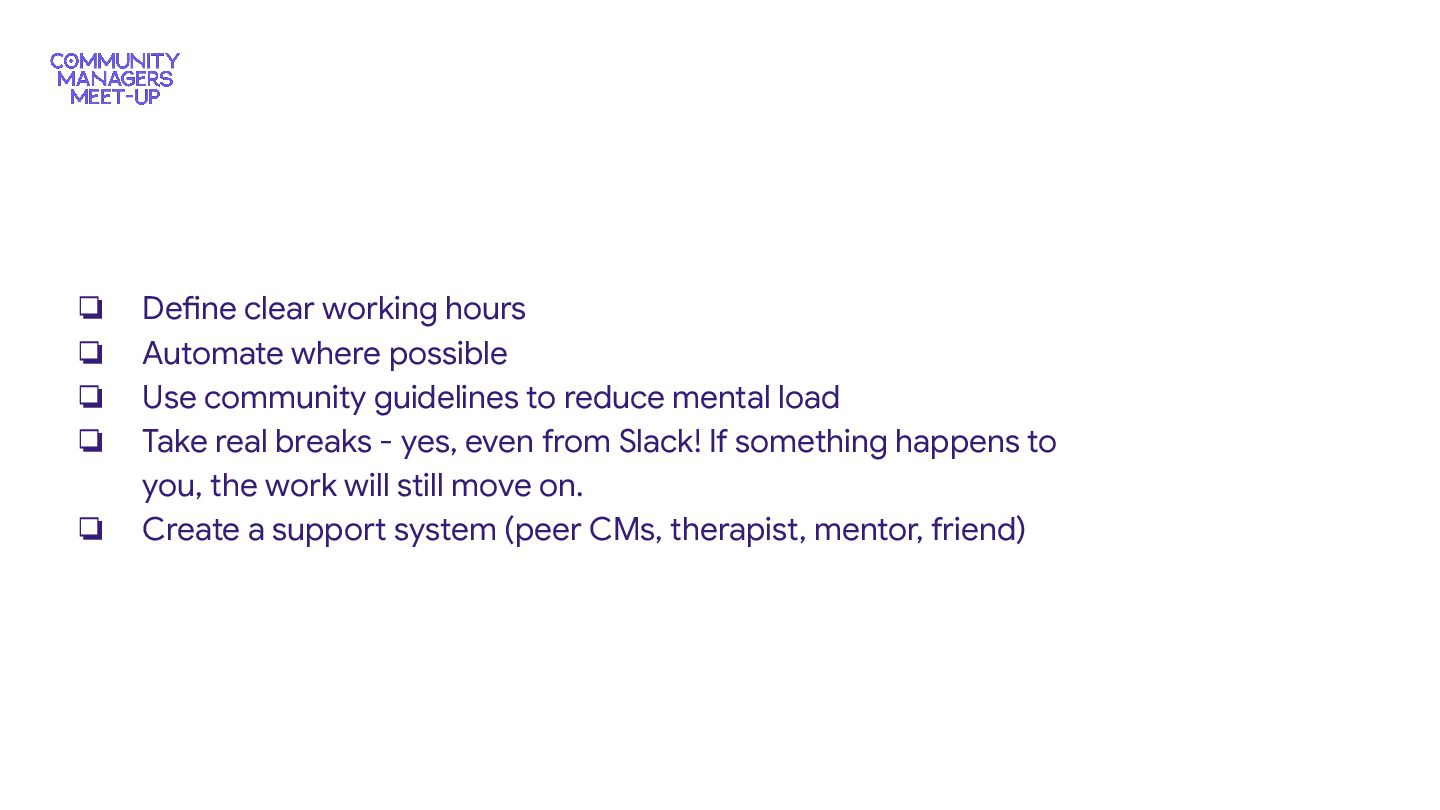
Use community guidelines to reduce mental load ❏ Take real breaks - yes, even from Slack! If something happens to you, the work will still move on. ❏ Create a support system (peer CMs, therapist, mentor, friend)
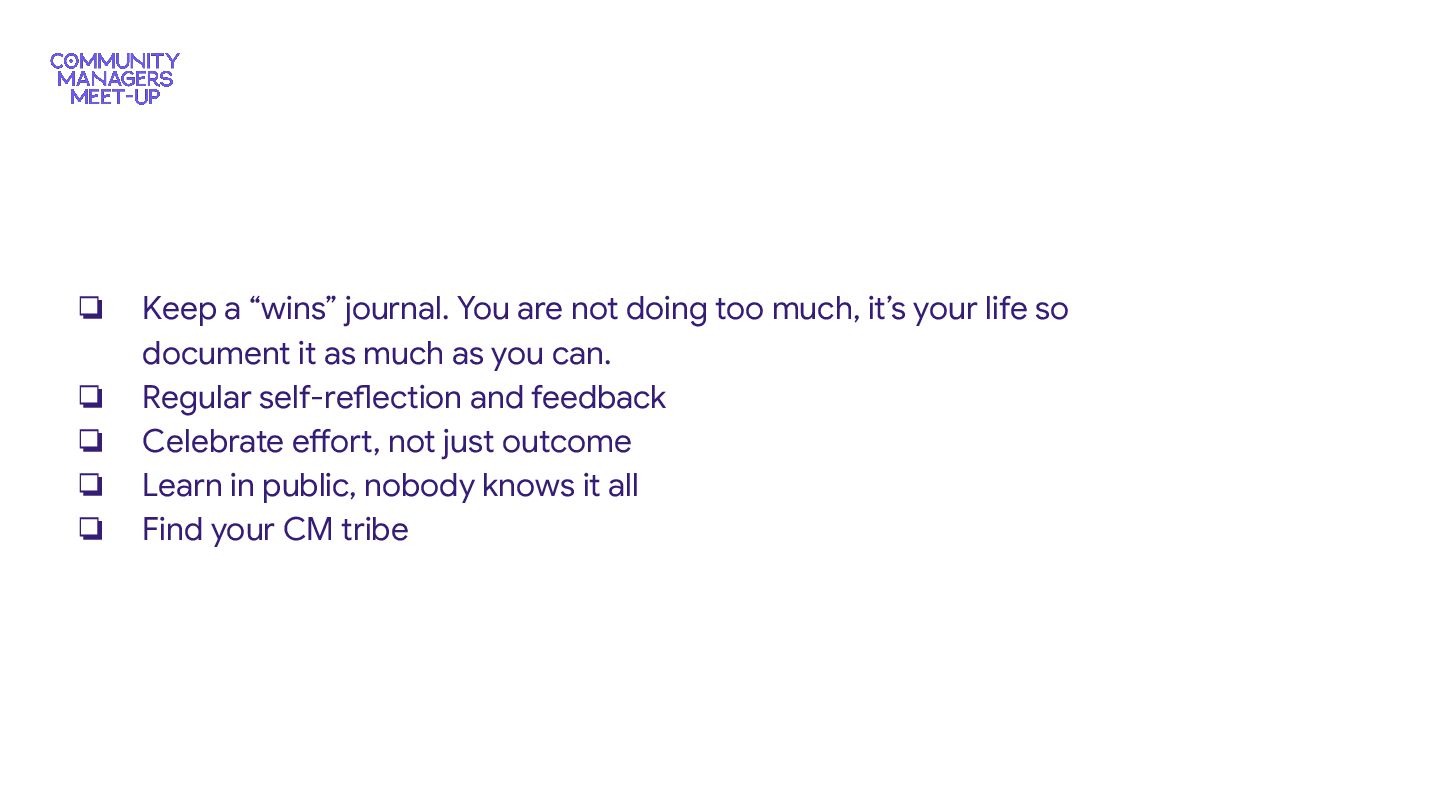
much, it’s your life so document it as much as you can. ❏ Regular self-reflection and feedback ❏ Celebrate effort, not just outcome ❏ Learn in public, nobody knows it all ❏ Find your CM tribe
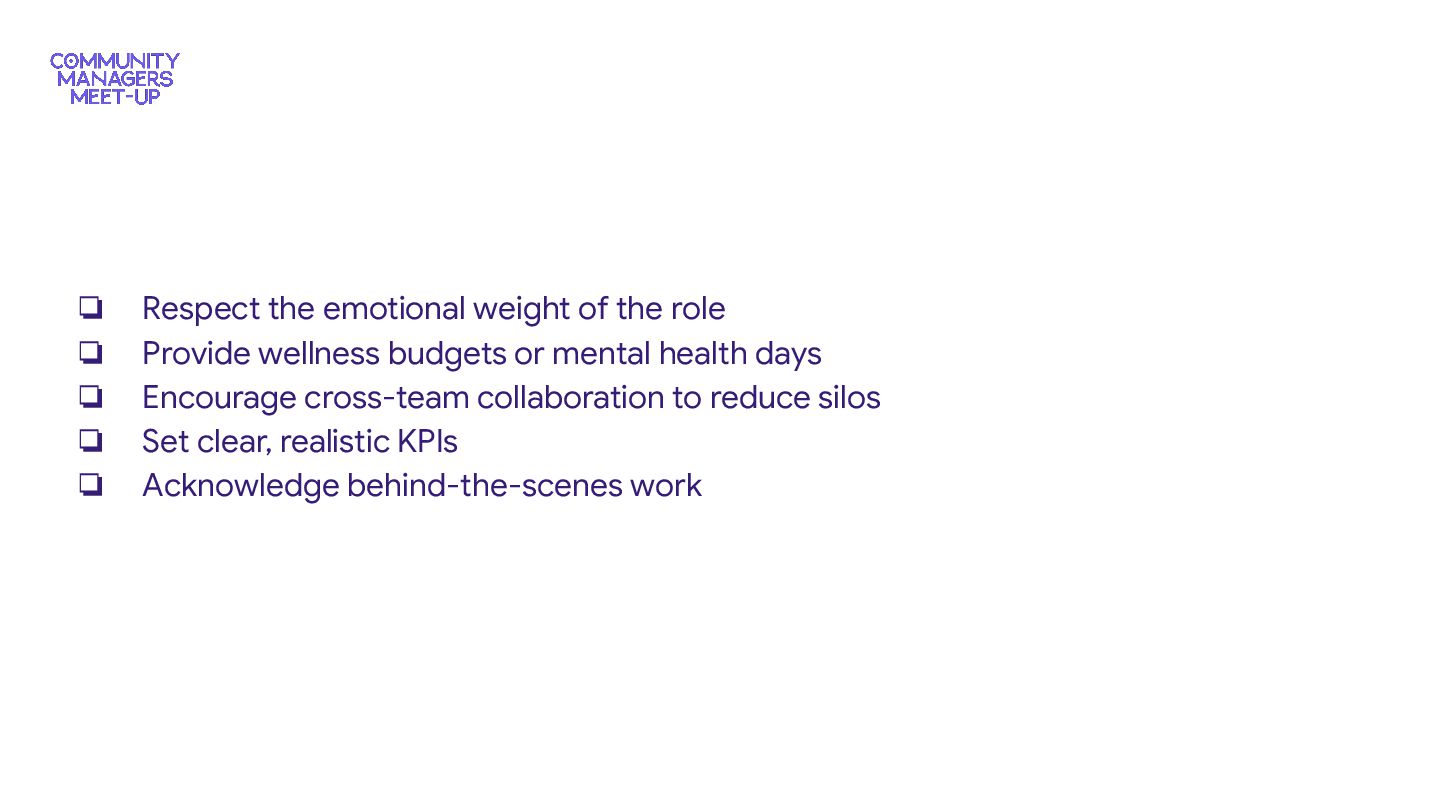
wellness budgets or mental health days ❏ Encourage cross-team collaboration to reduce silos ❏ Set clear, realistic KPIs ❏ Acknowledge behind-the-scenes work


 mfonobong
.jpg) cargoodrich
cargoodrich
 clarasoteras
.png) samanyougarg
samanyougarg
 frankvandijk
 joss1
joss1
 portentint
 novasell
 liddle
 sarosaro
 tasky_ai
 dawnieando
 samtorres
 nwiizo
 marktimemedia
 michielstock
 inesmontani
 hatefulcrawdad
 bermonpainter
 sugarenia
 davetheseo
 reverentgeek
 kevinliebholz
 moore
moore