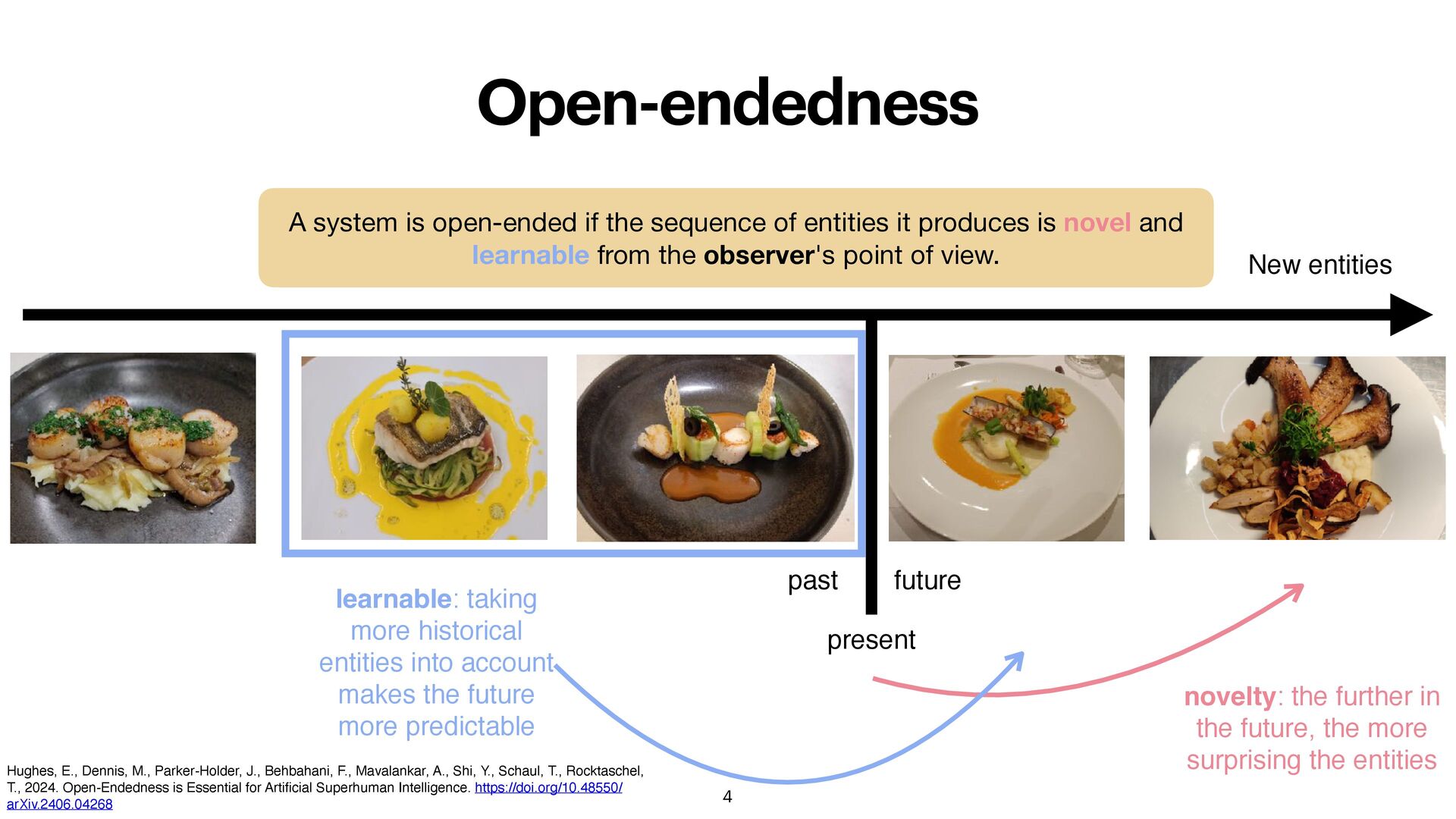
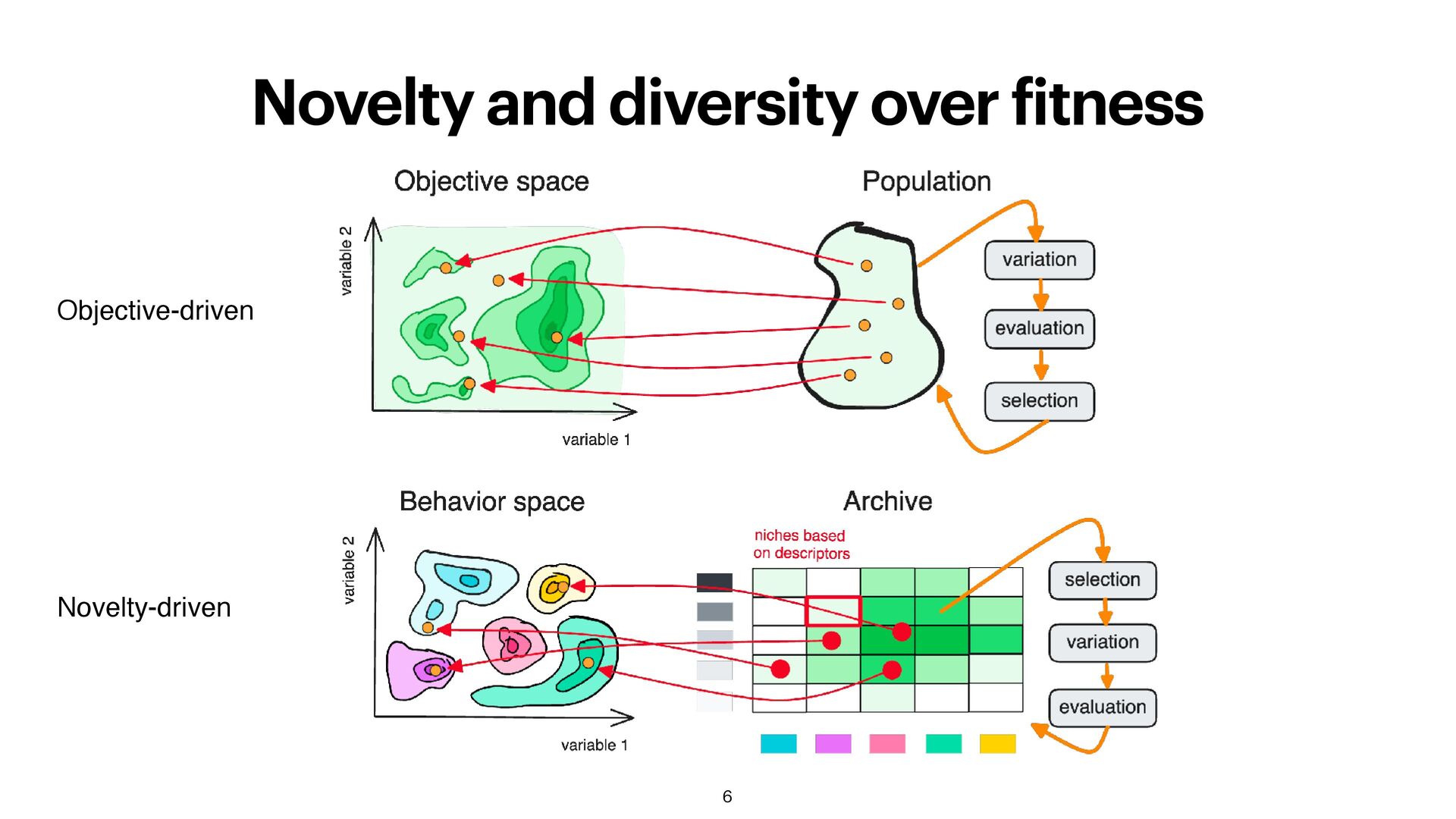
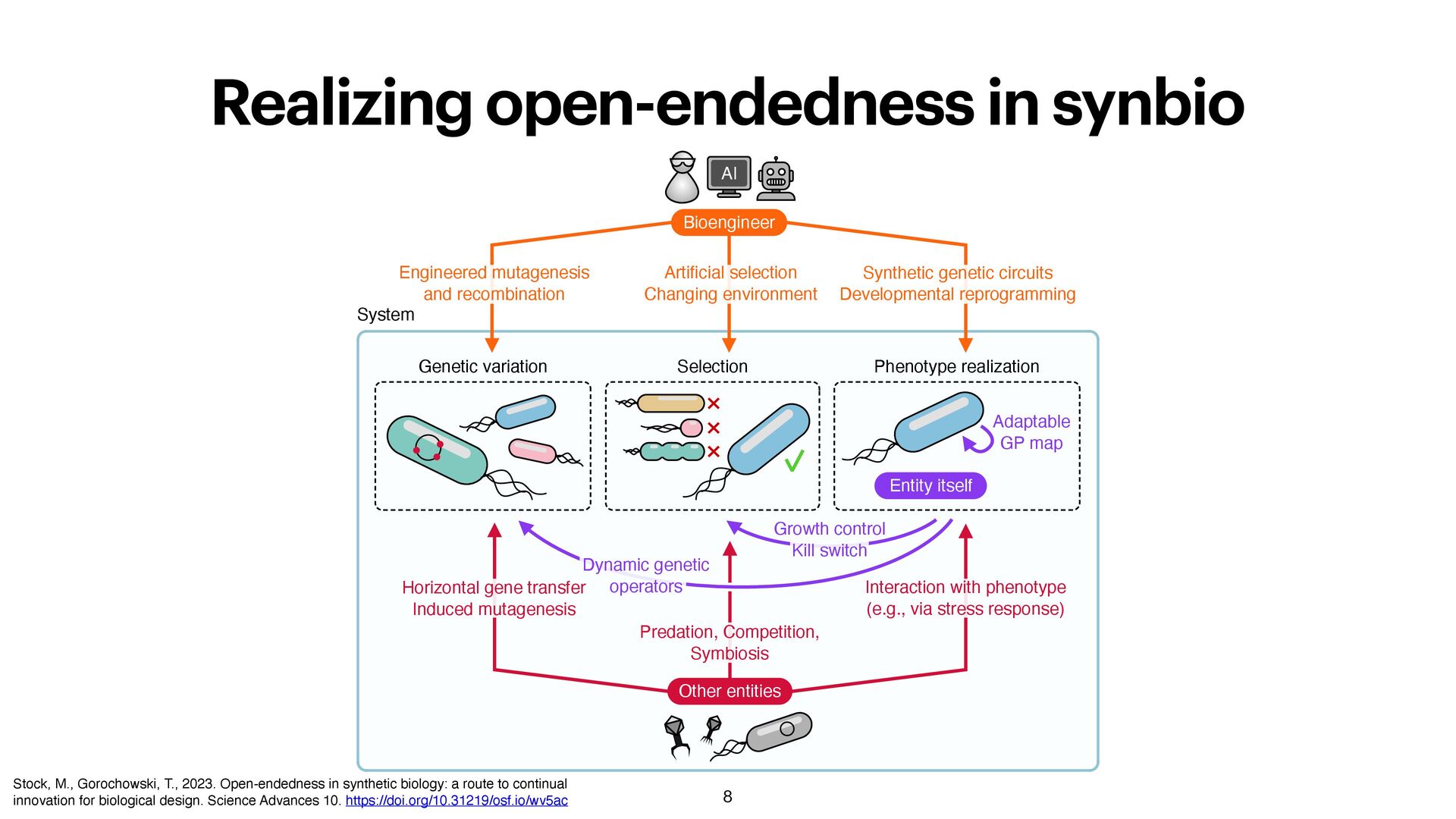
Mavalankar, A., Shi, Y., Schaul, T., Rocktaschel, T., 2024. Open-Endedness is Essential for Arti fi cial Superhuman Intelligence. https://doi.org/10.48550/ arXiv.2406.04268 A system is open-ended if the sequence of entities it produces is novel and learnable from the observer's point of view. New entities past future present novelty: the further in the future, the more surprising the entities learnable: taking more historical entities into account makes the future more predictable
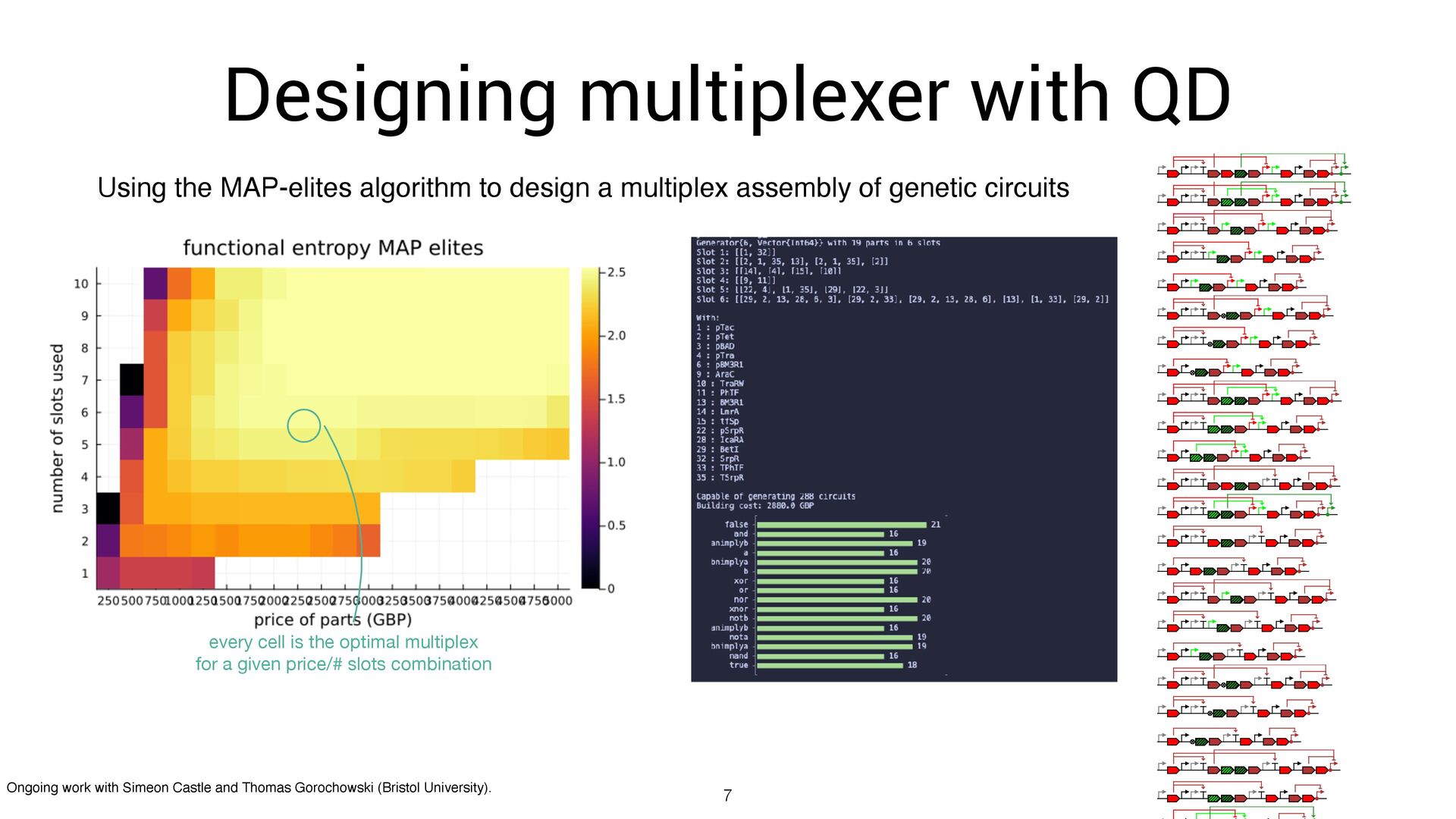
of genetic circuits every cell is the optimal multiplex for a given price/# slots combination Ongoing work with Simeon Castle and Thomas Gorochowski (Bristol University). Designing multiplexer with QD
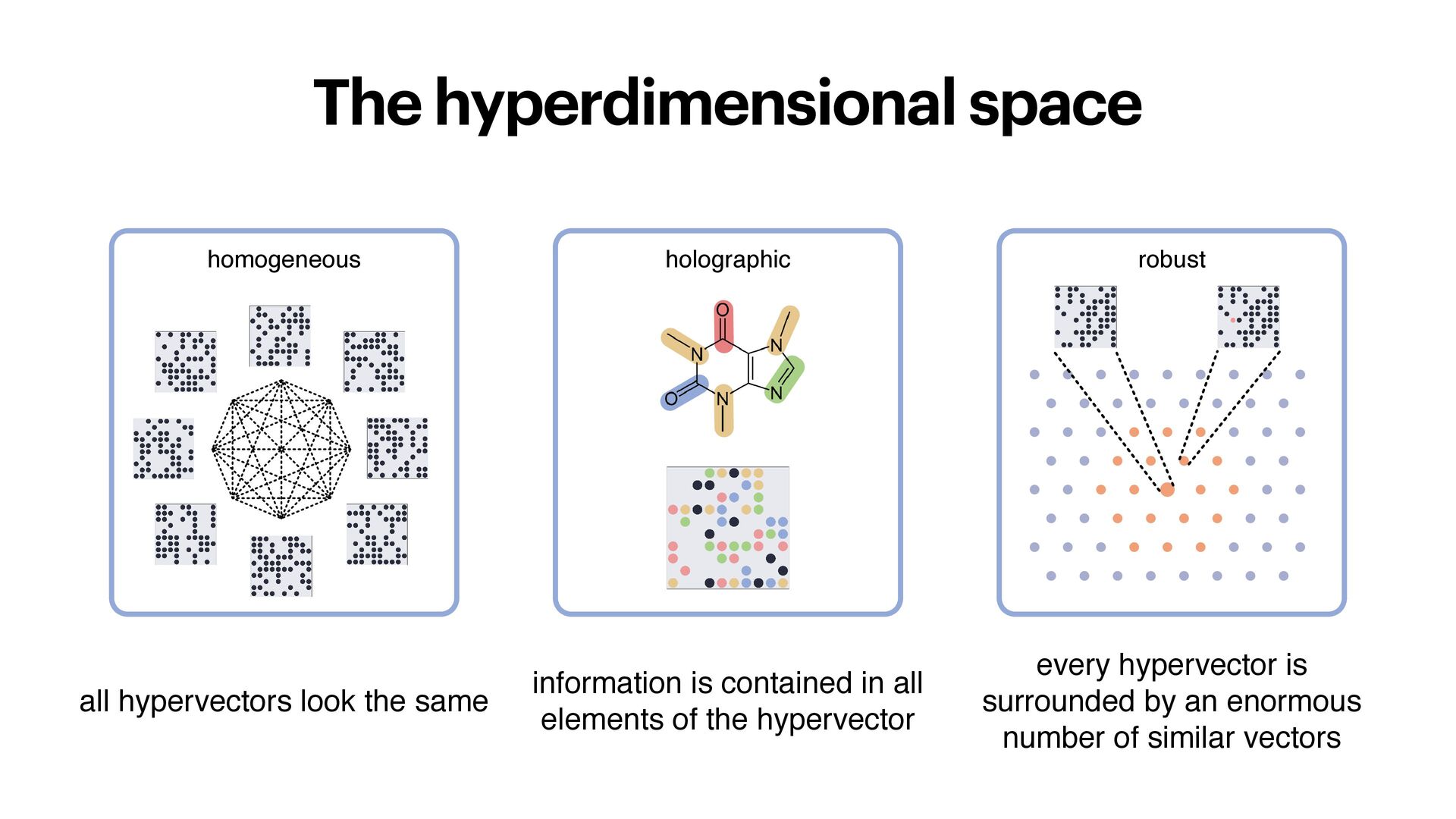
holografisch information is contained in all elements of the hypervector holographic robust every hypervector is surrounded by an enormous number of similar vectors robust
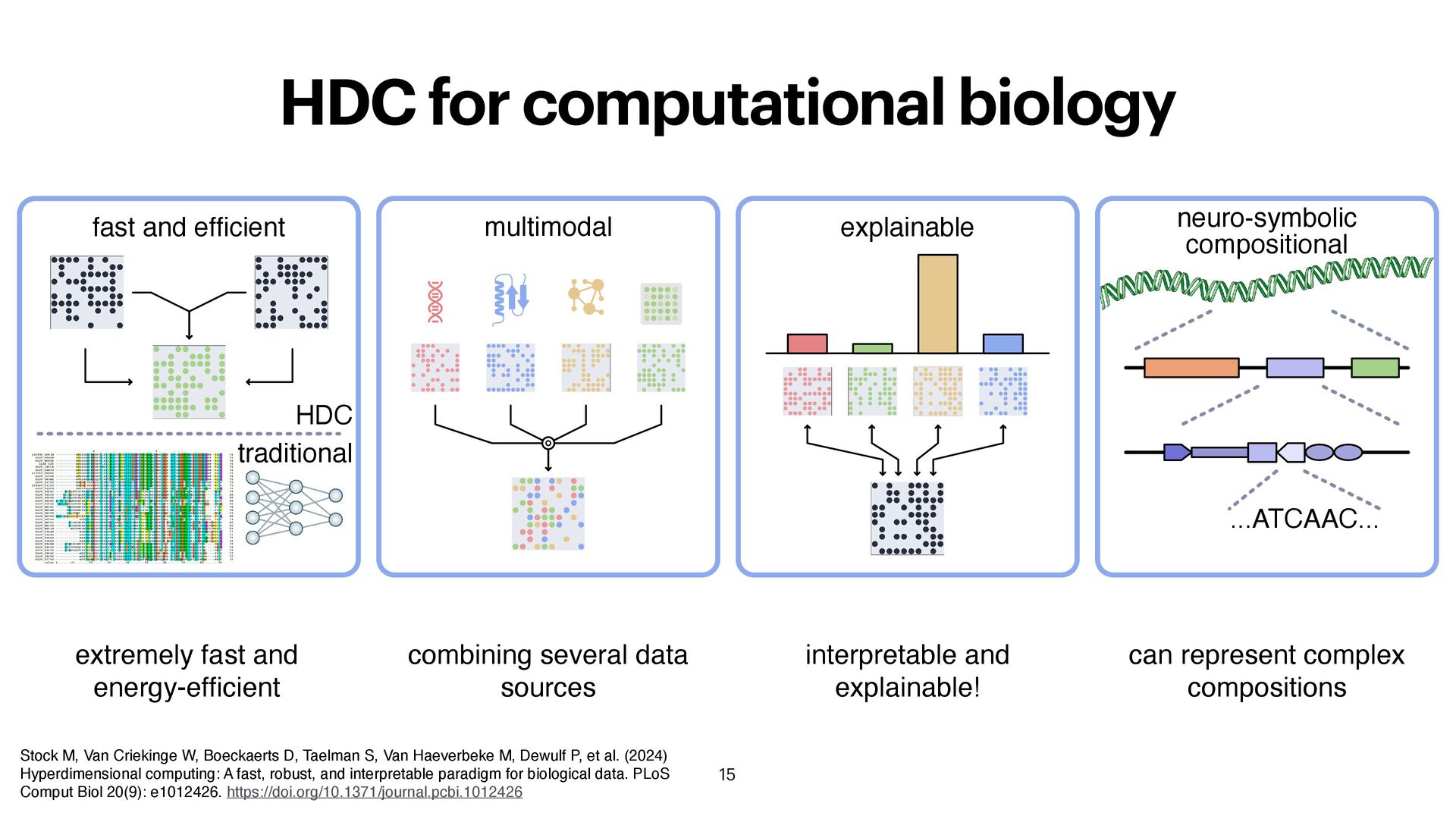
extremely fast and energy-ef fi cient multimodal combining several data sources explainable interpretable and explainable! neuro-symbolic compositional ...ATCAAC... can represent complex compositions Stock M, Van Criekinge W, Boeckaerts D, Taelman S, Van Haeverbeke M, Dewulf P, et al. (2024) Hyperdimensional computing: A fast, robust, and interpretable paradigm for biological data. PLoS Comput Biol 20(9): e1012426. https://doi.org/10.1371/journal.pcbi.1012426
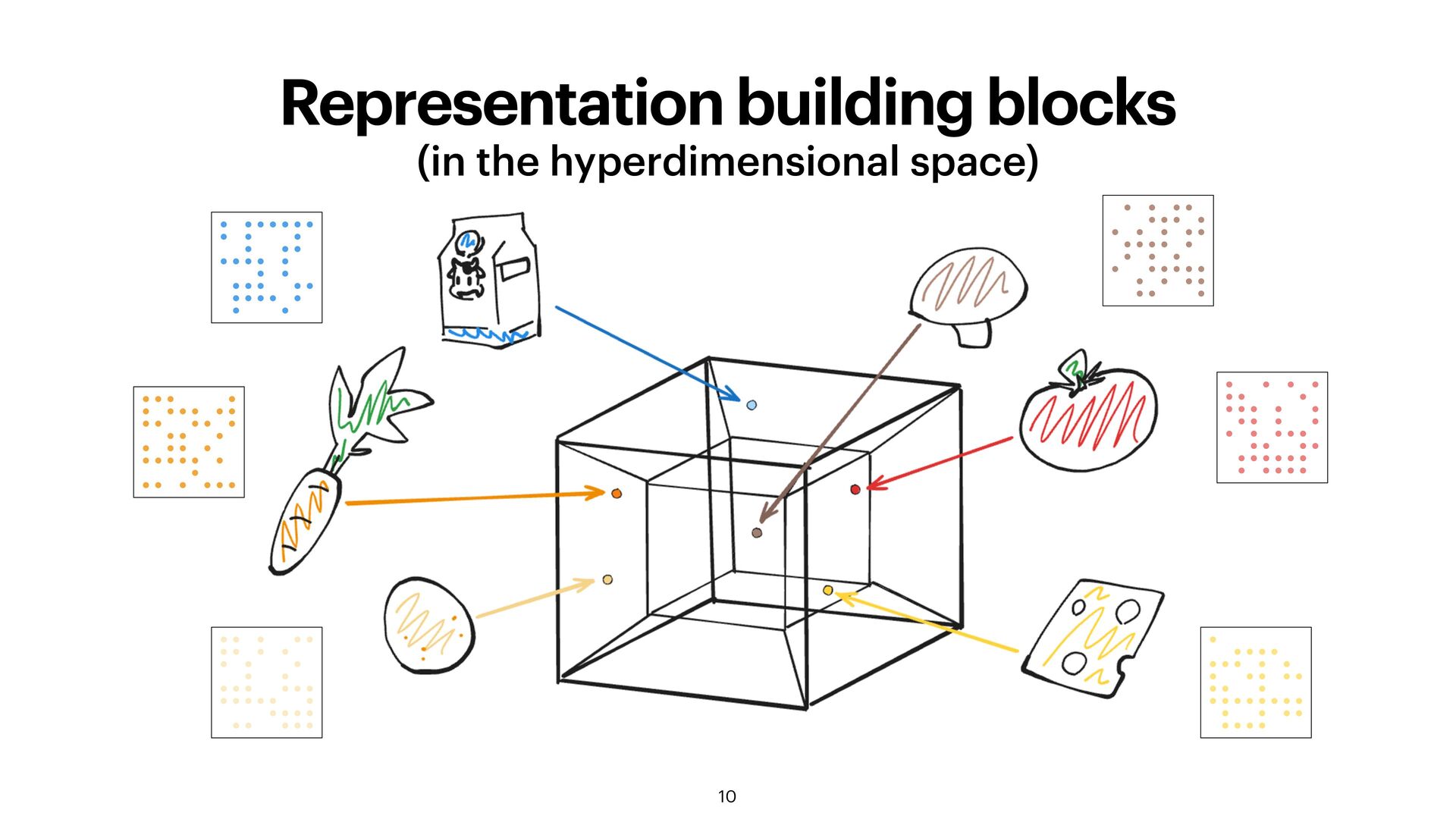
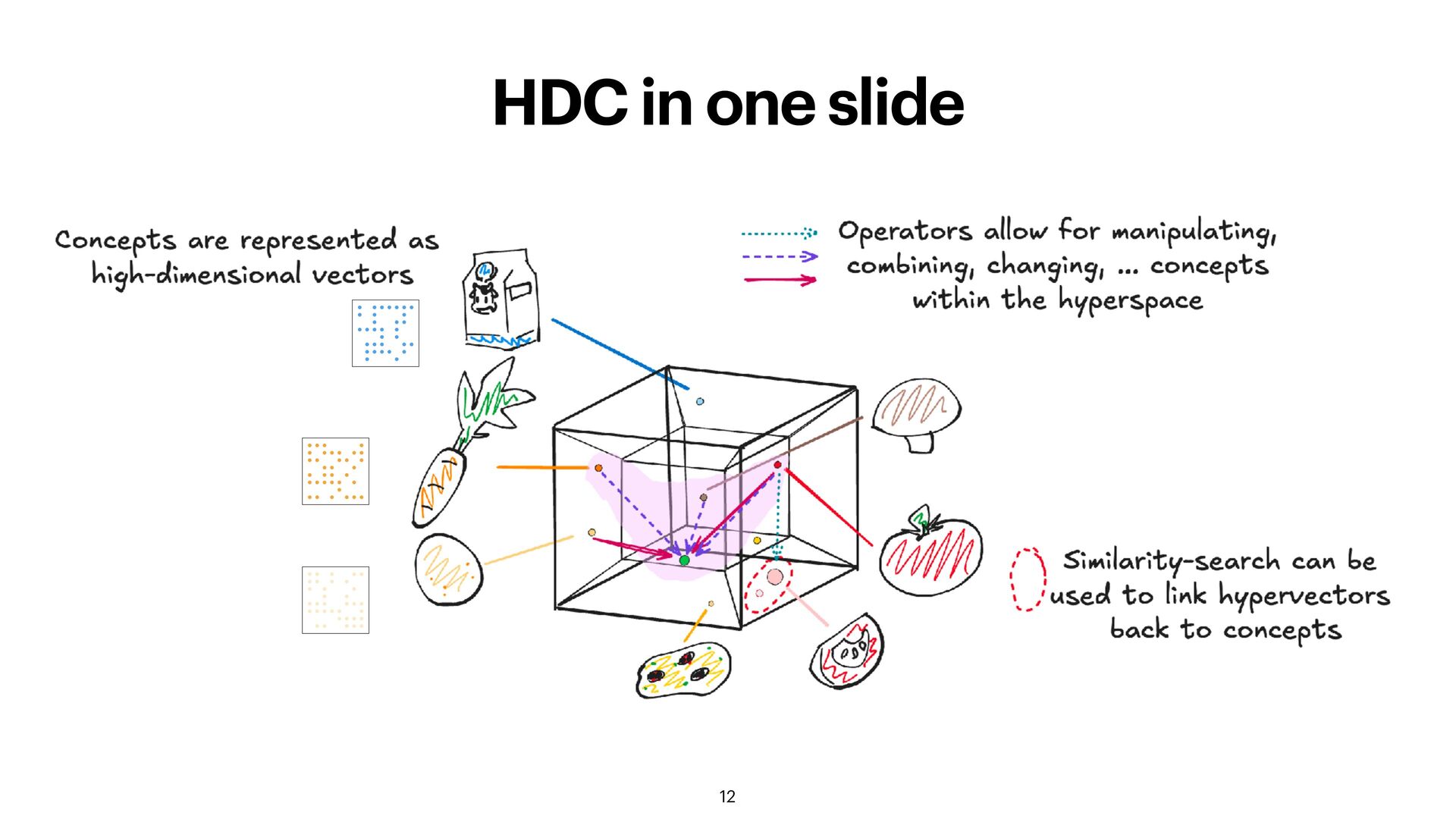
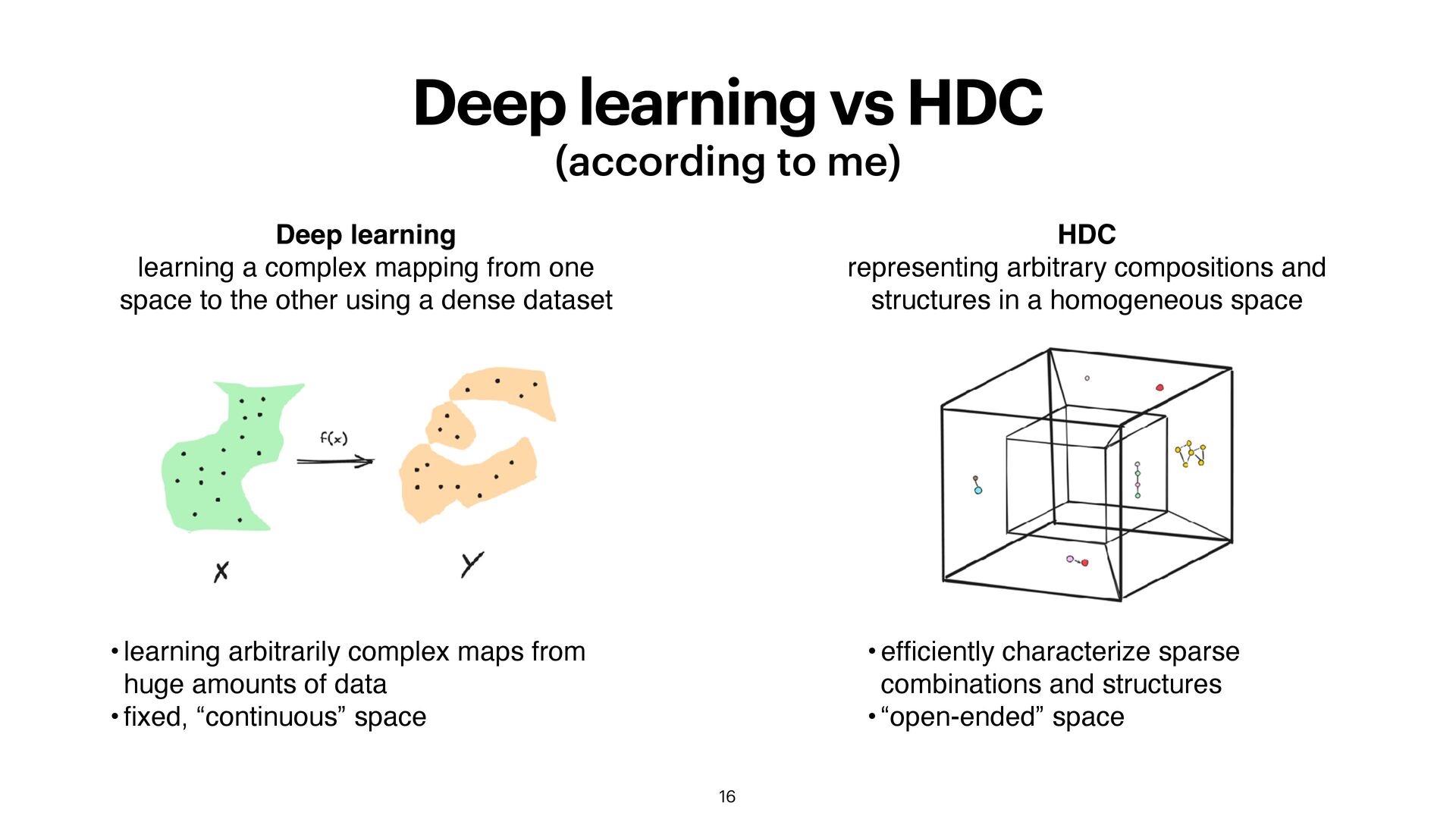
learning a complex mapping from one space to the other using a dense dataset • learning arbitrarily complex maps from huge amounts of data • fi xed, “continuous” space HDC representing arbitrary compositions and structures in a homogeneous space • ef fi ciently characterize sparse combinations and structures • “open-ended” space
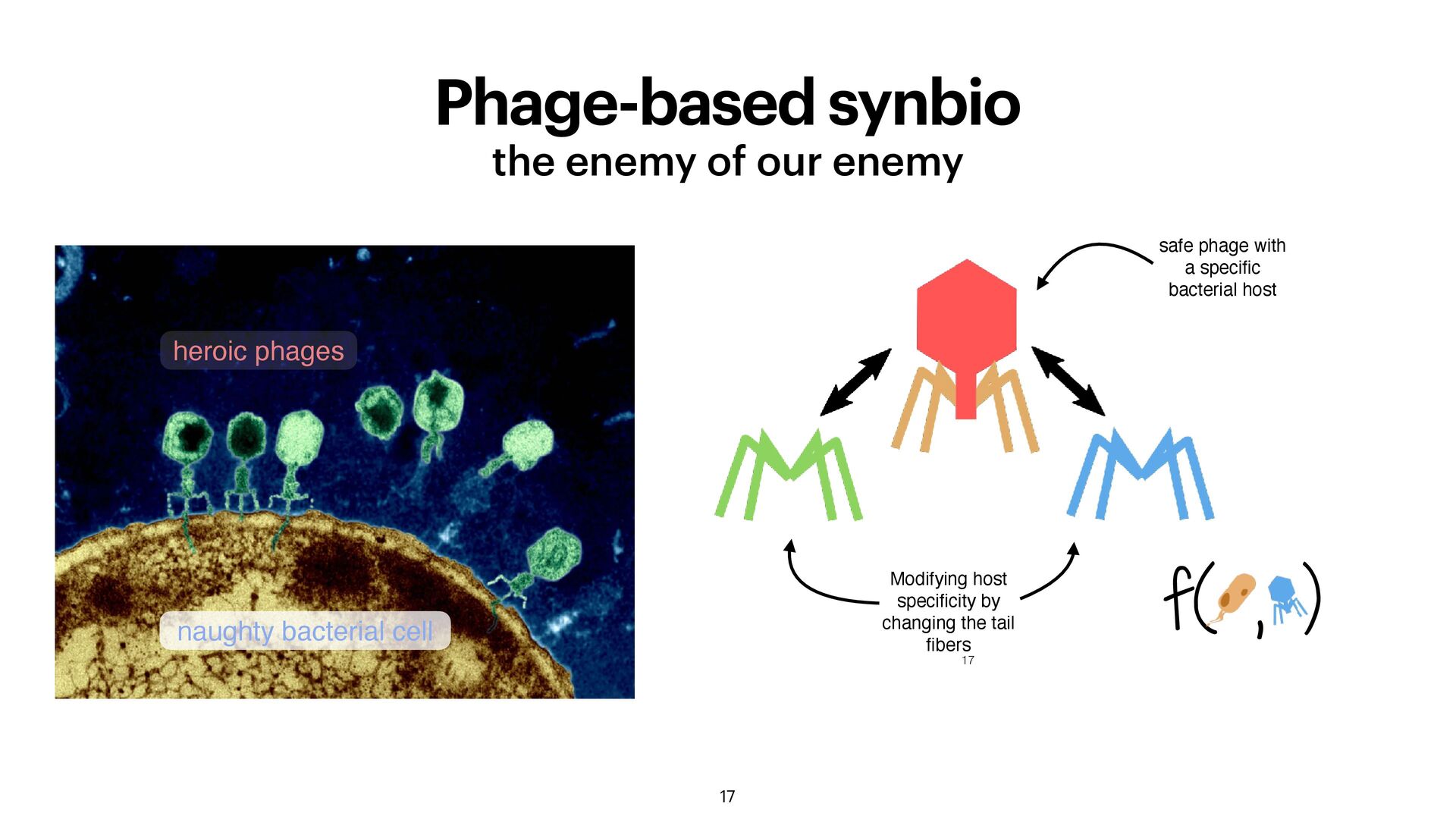
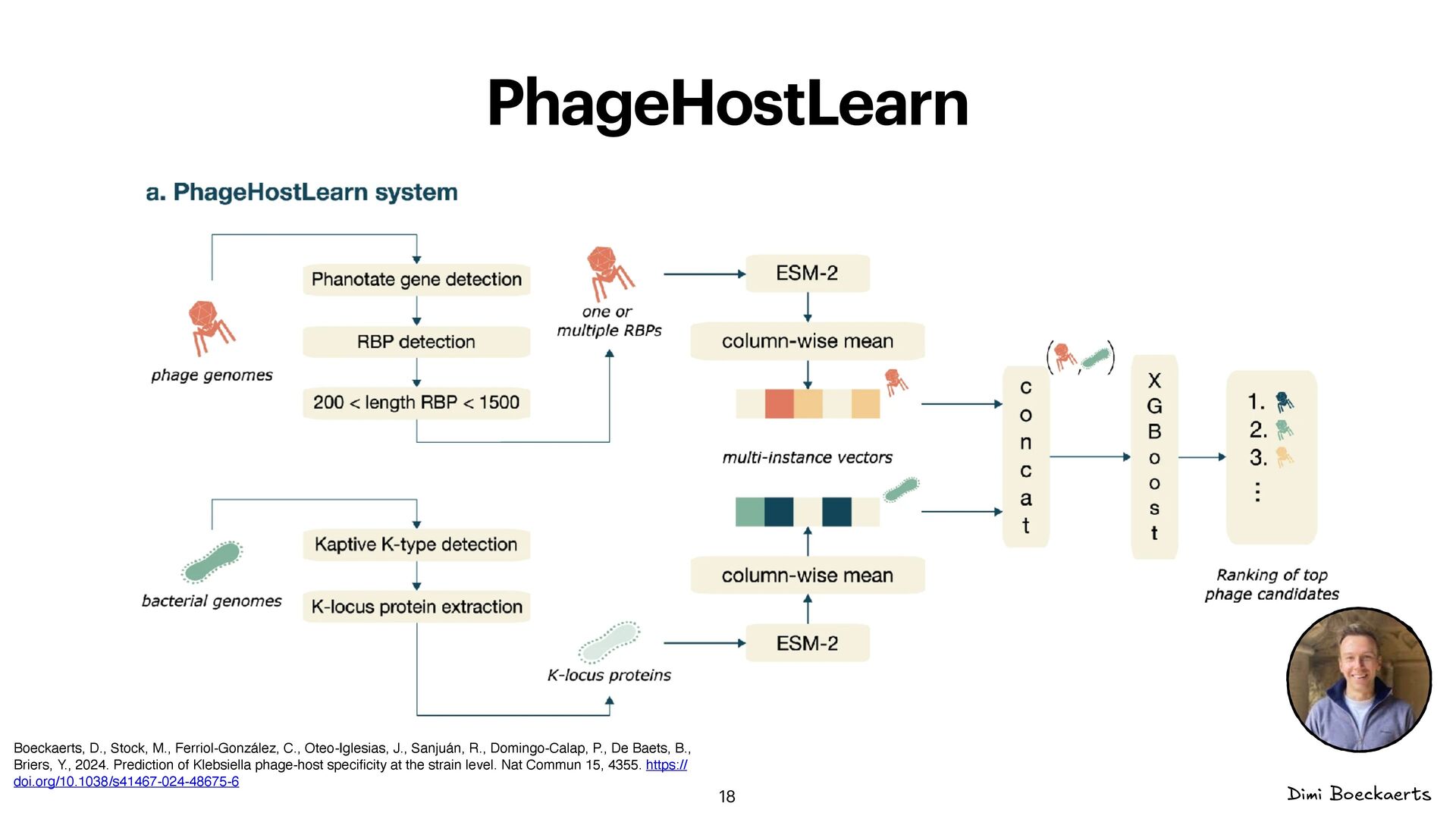
Sanjuán, R., Domingo-Calap, P., De Baets, B., Briers, Y., 2024. Prediction of Klebsiella phage-host speci fi city at the strain level. Nat Commun 15, 4355. https:// doi.org/10.1038/s41467-024-48675-6 Dimi Boeckaerts
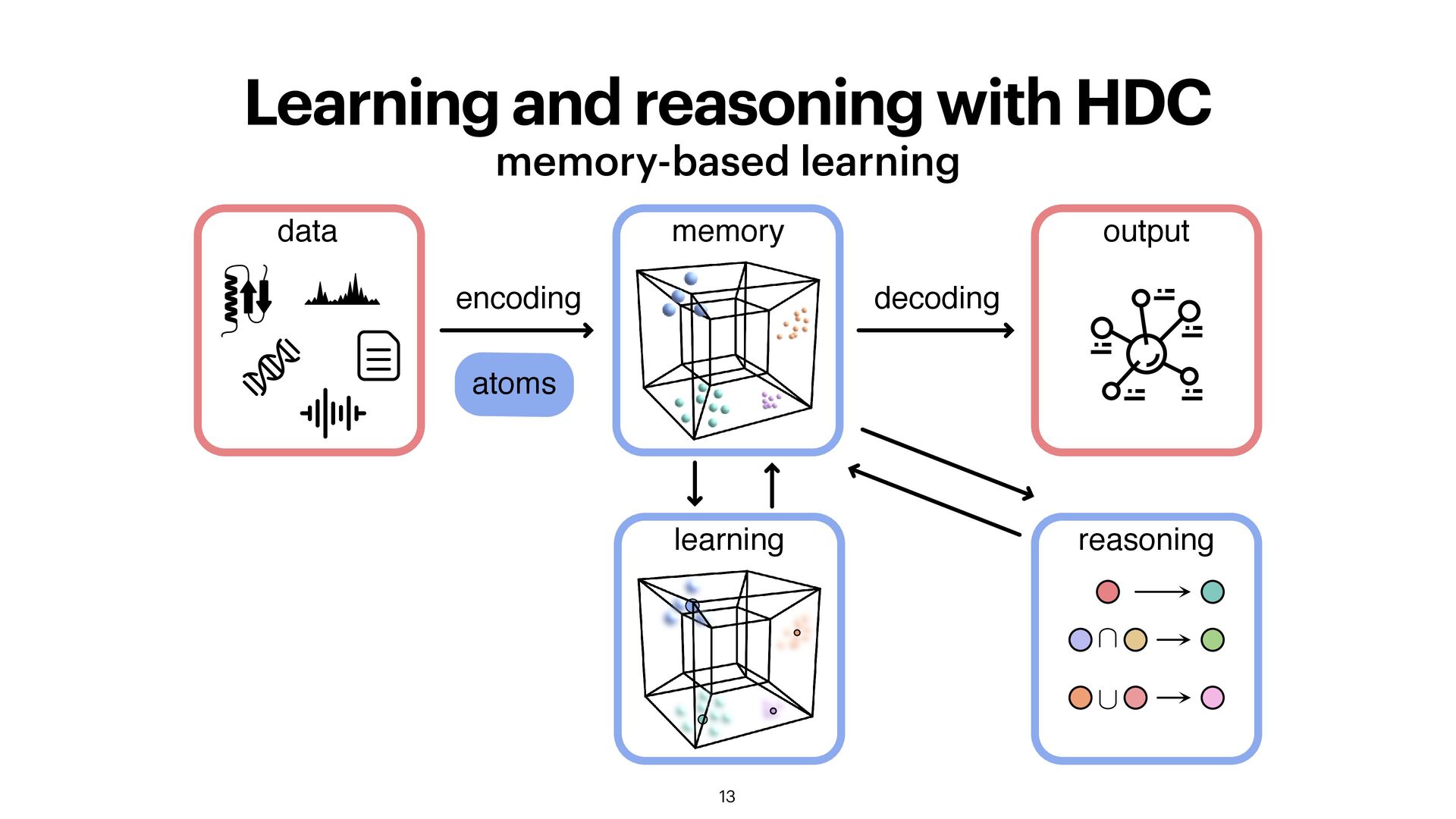
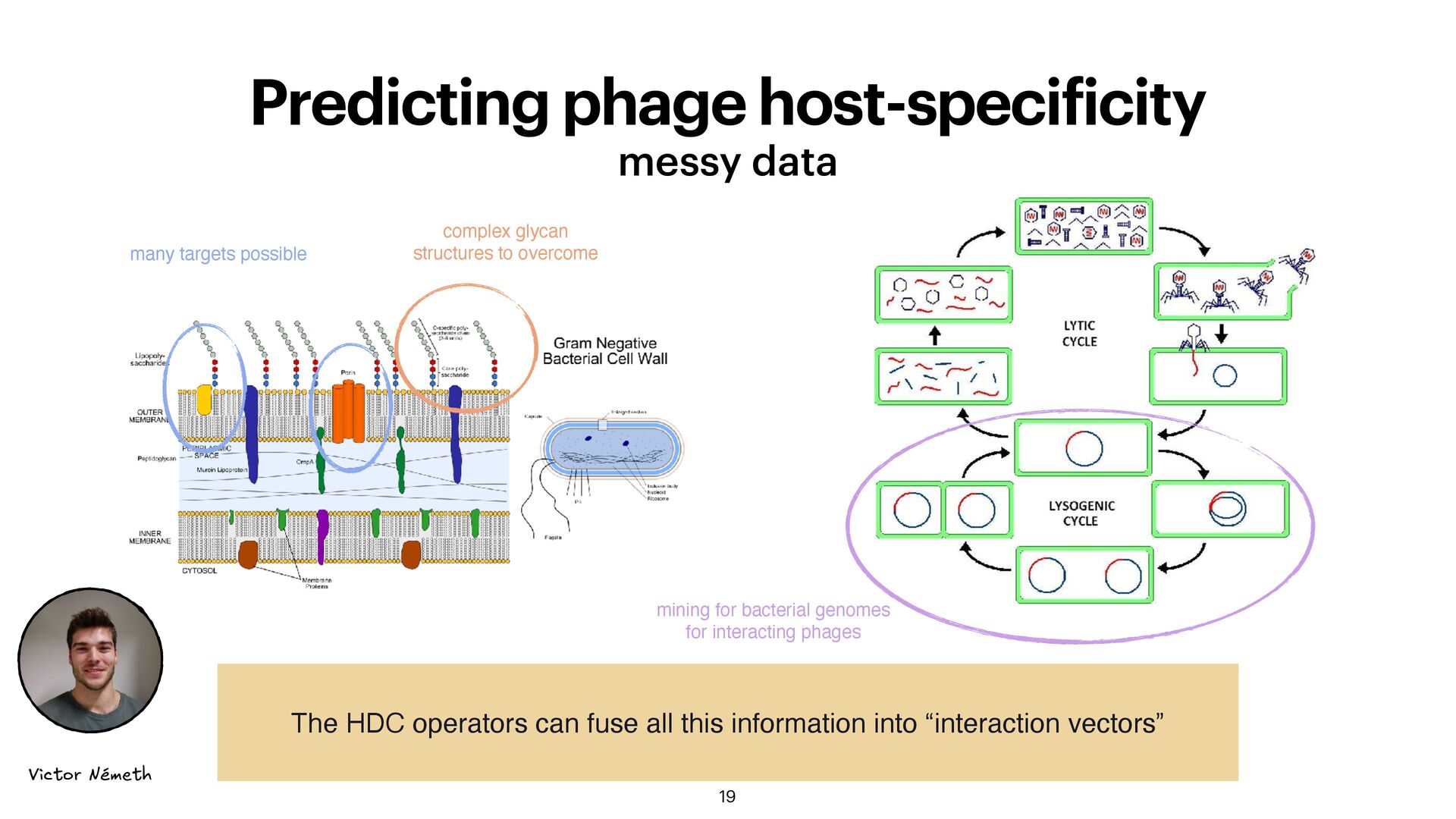
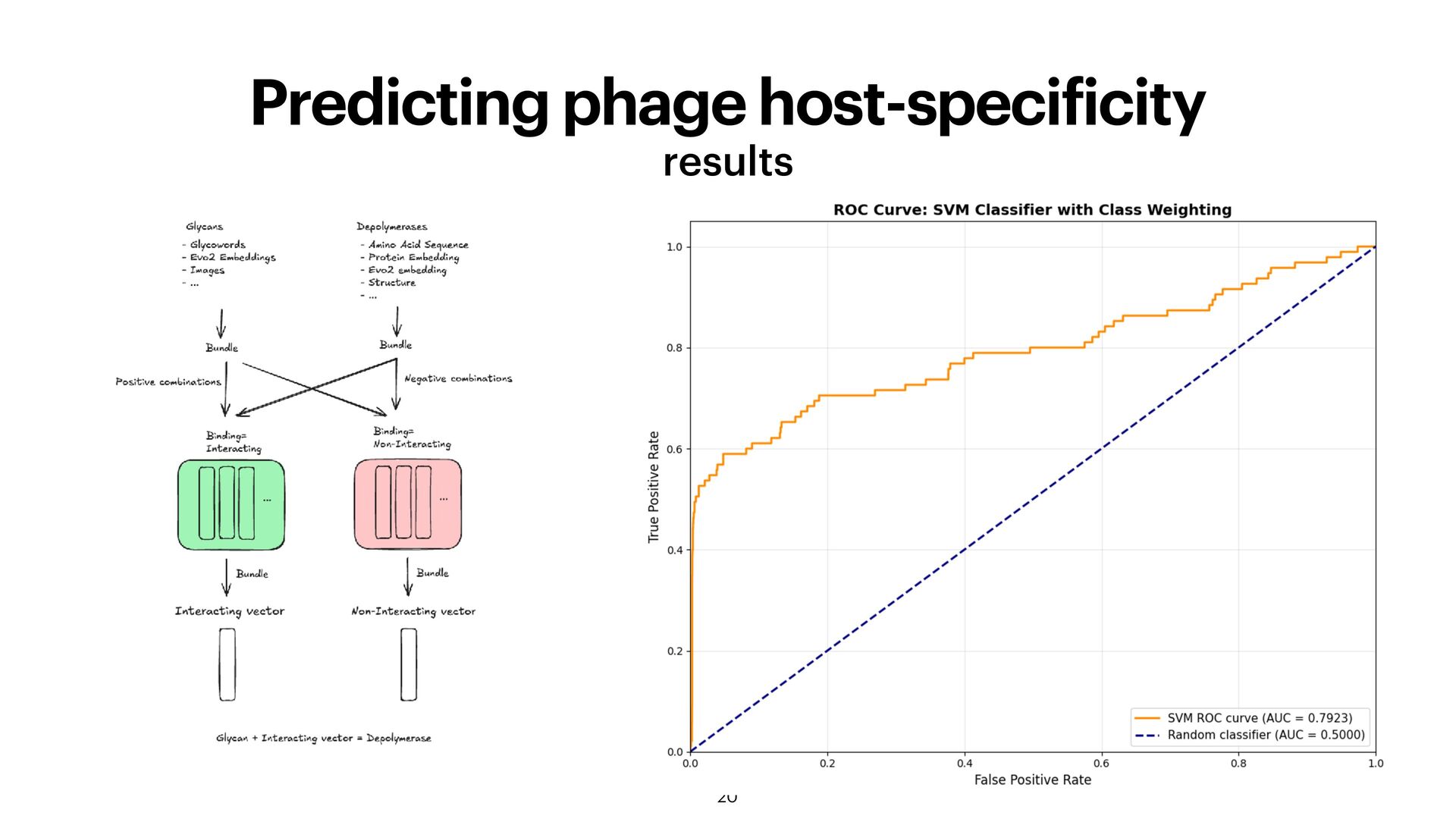
possible complex glycan structures to overcome mining for bacterial genomes for interacting phages The HDC operators can fuse all this information into “interaction vectors” Victor Németh
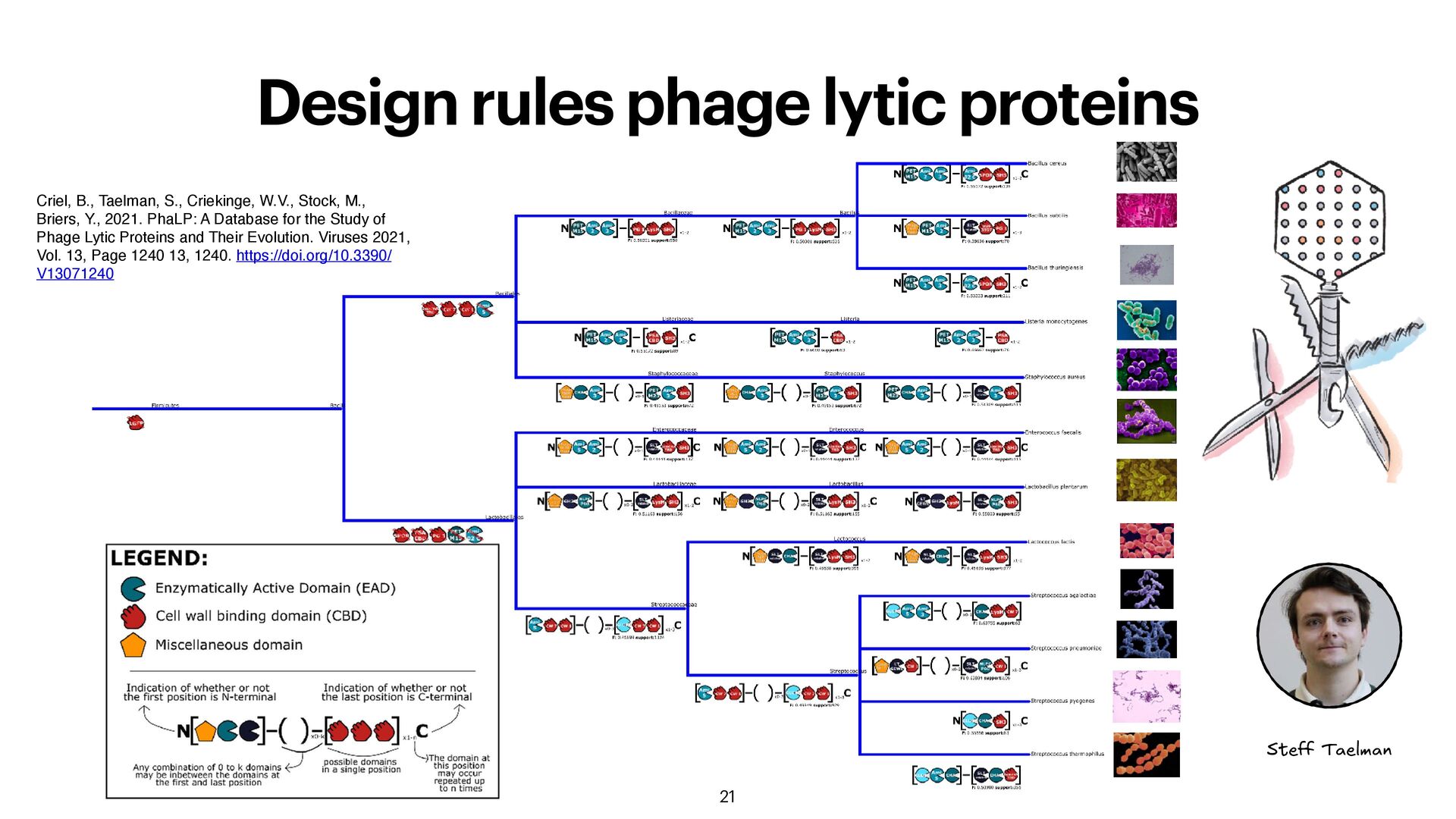
Criekinge, W.V., Stock, M., Briers, Y., 2021. PhaLP: A Database for the Study of Phage Lytic Proteins and Their Evolution. Viruses 2021, Vol. 13, Page 1240 13, 1240. https://doi.org/10.3390/ V13071240 Ste f f Taelman
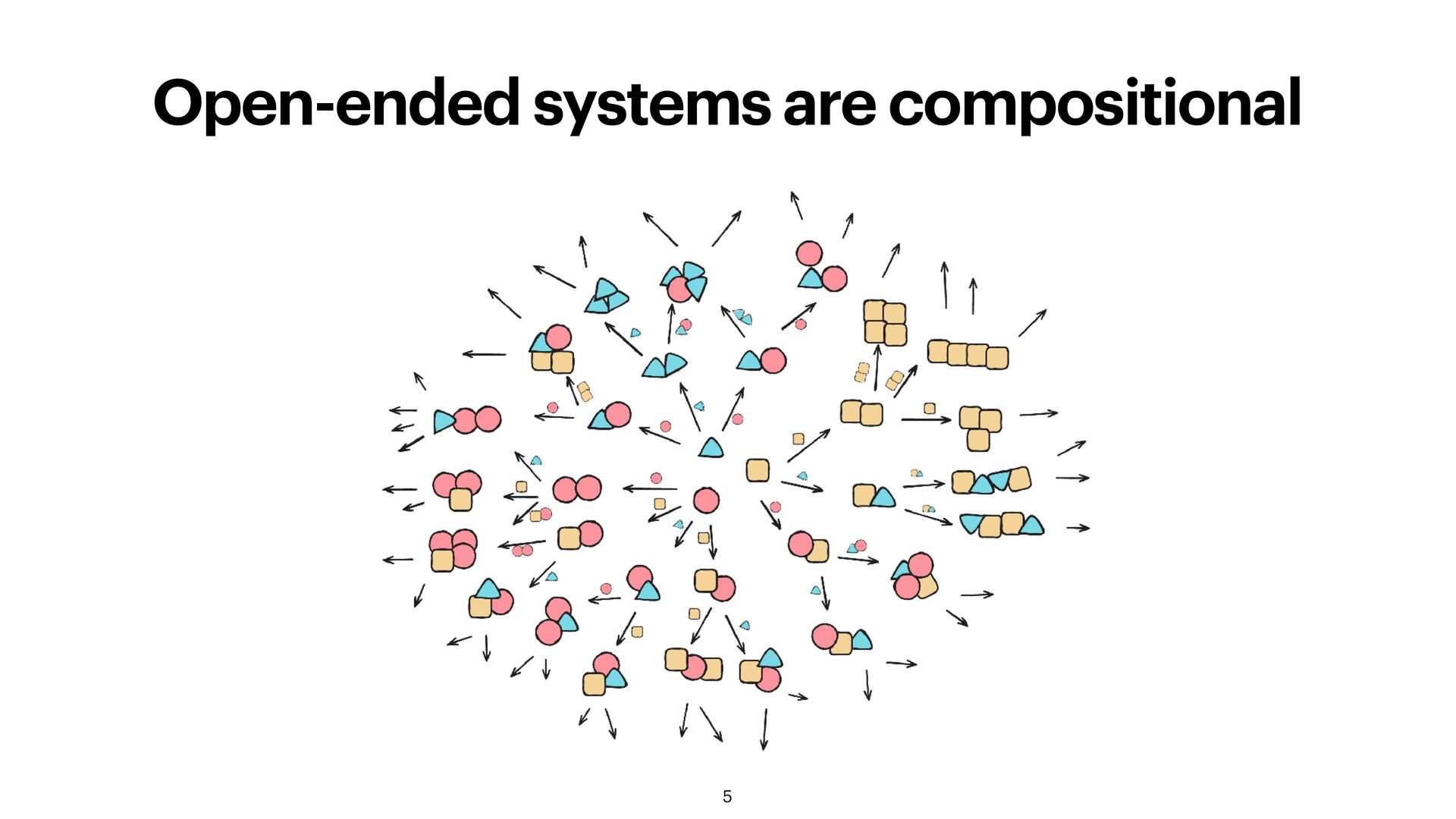
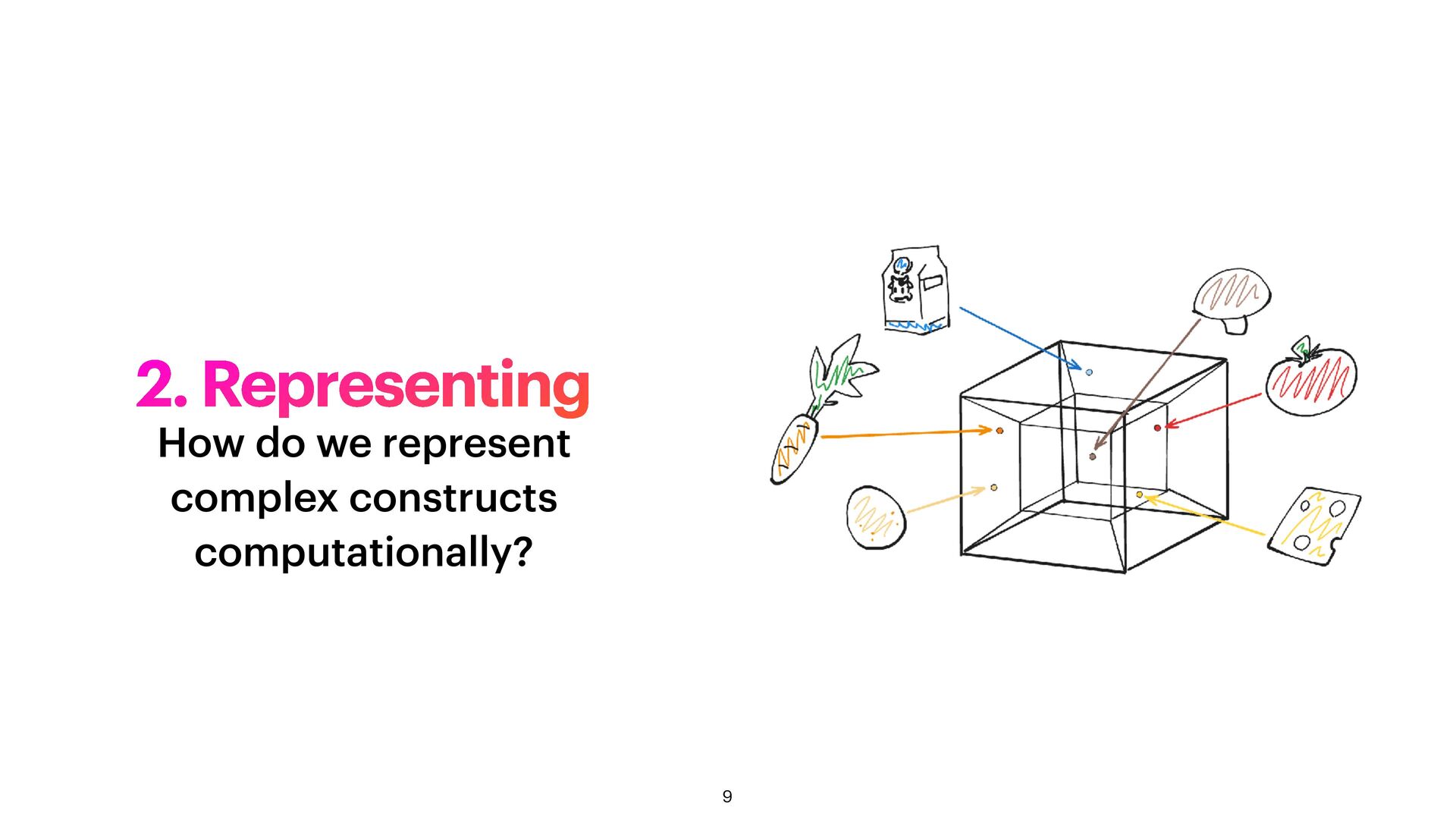
f inite arrangement of building blocks; • focus on novelty and diversity of constructs; • learning requires representations that are highly compositional and f lexible. 22
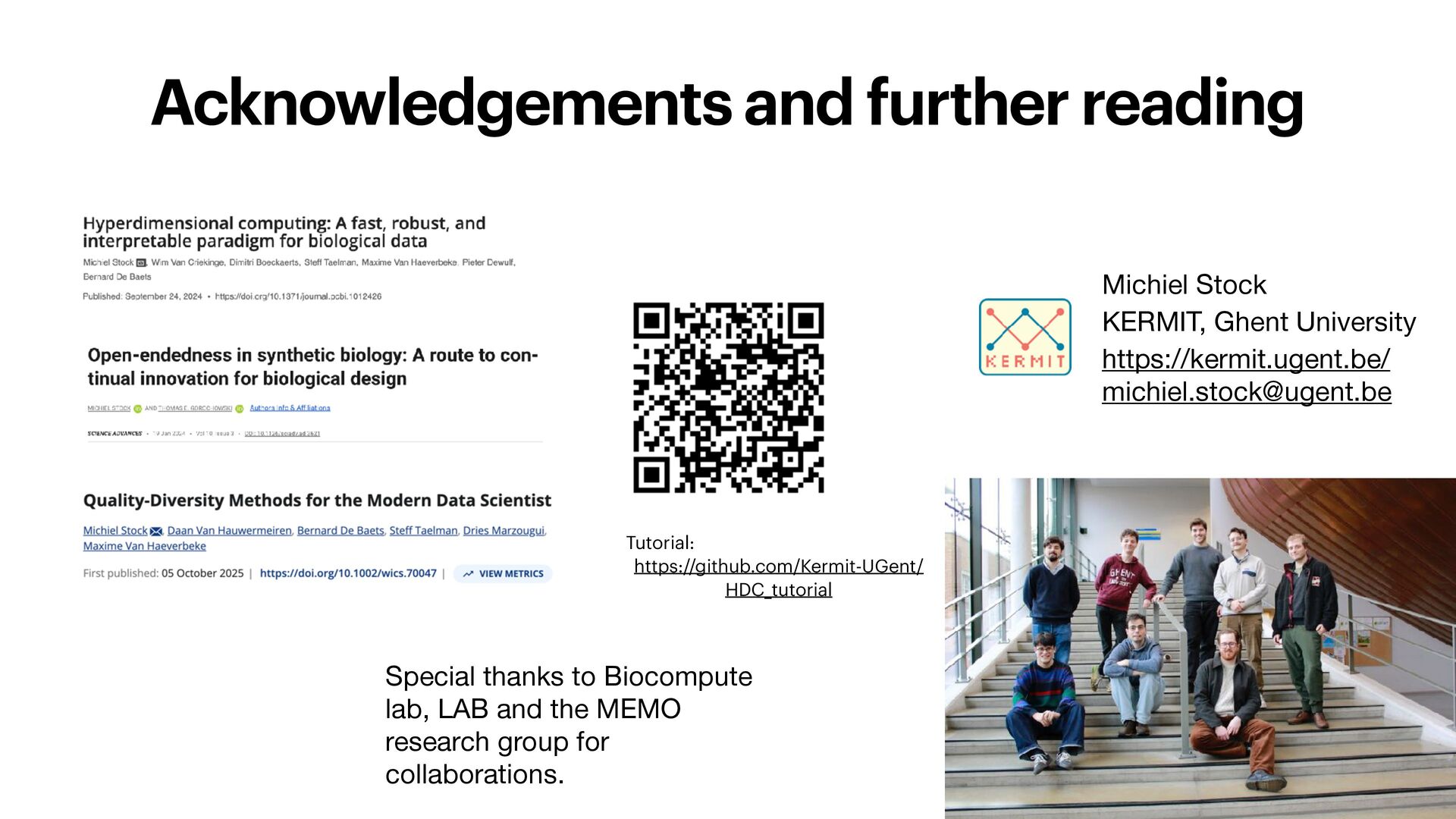
[email protected] Tutorial: https://github.com/Kermit-UGent/ HDC_tutorial Special thanks to Biocompute lab, LAB and the MEMO research group for collaborations.


 michielstock
 cassininazir
 helmedeiros
 skipperchong
 swwweet
 kneath
 asonas
 letsgokoyo
 chrisshort
 marketingsoph
 danielanewman
 thekraken
 reverentgeek
![AI, Engineering Biology & Beyond 15 January 2026 [email protected] A](https://files.speakerdeck.com/presentations/26eeb5000996453cb2f04bc1e02a92c6/slide_0.jpg)