How IELTS Score Is Calculated – Step-by-Step Guide for Test-Takers
Learn how the IELTS score is calculated, including band scores for each section, averaging, and rounding rules. Understand the process to set clear goals and prepare effectively.
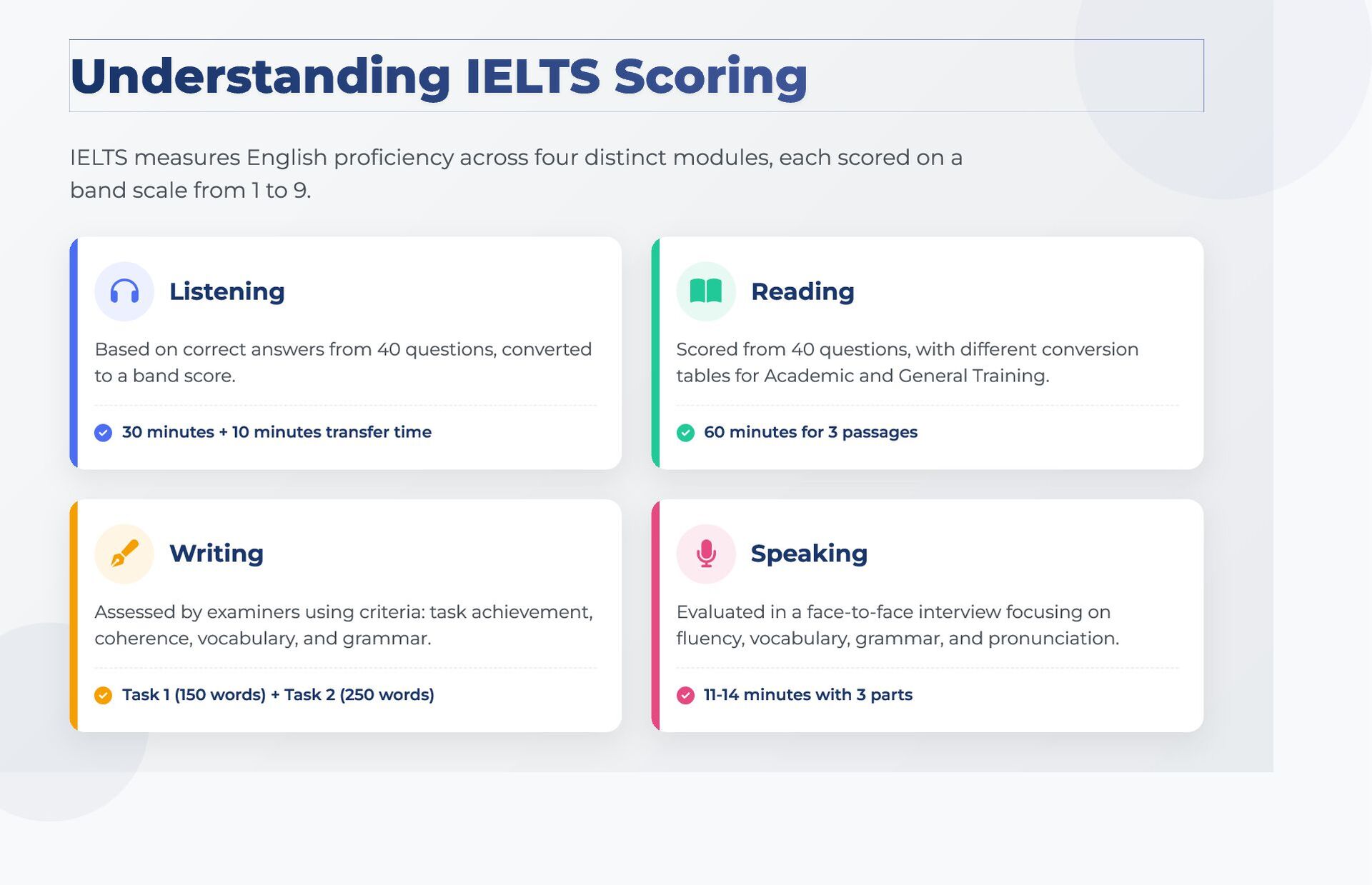
across four distinct modules, each scored on a band scale from 1 to 9. Listening Based on correct answers from 40 questions, converted to a band score. 30 minutes + 10 minutes transfer time Reading Scored from 40 questions, with different conversion tables for Academic and General Training. 60 minutes for 3 passages Writing Assessed by examiners using criteria: task achievement, coherence, vocabulary, and grammar. Task 1 (150 words) + Task 2 (250 words) Speaking Evaluated in a face-to-face interview focusing on fluency, vocabulary, grammar, and pronunciation. 11-14 minutes with 3 parts
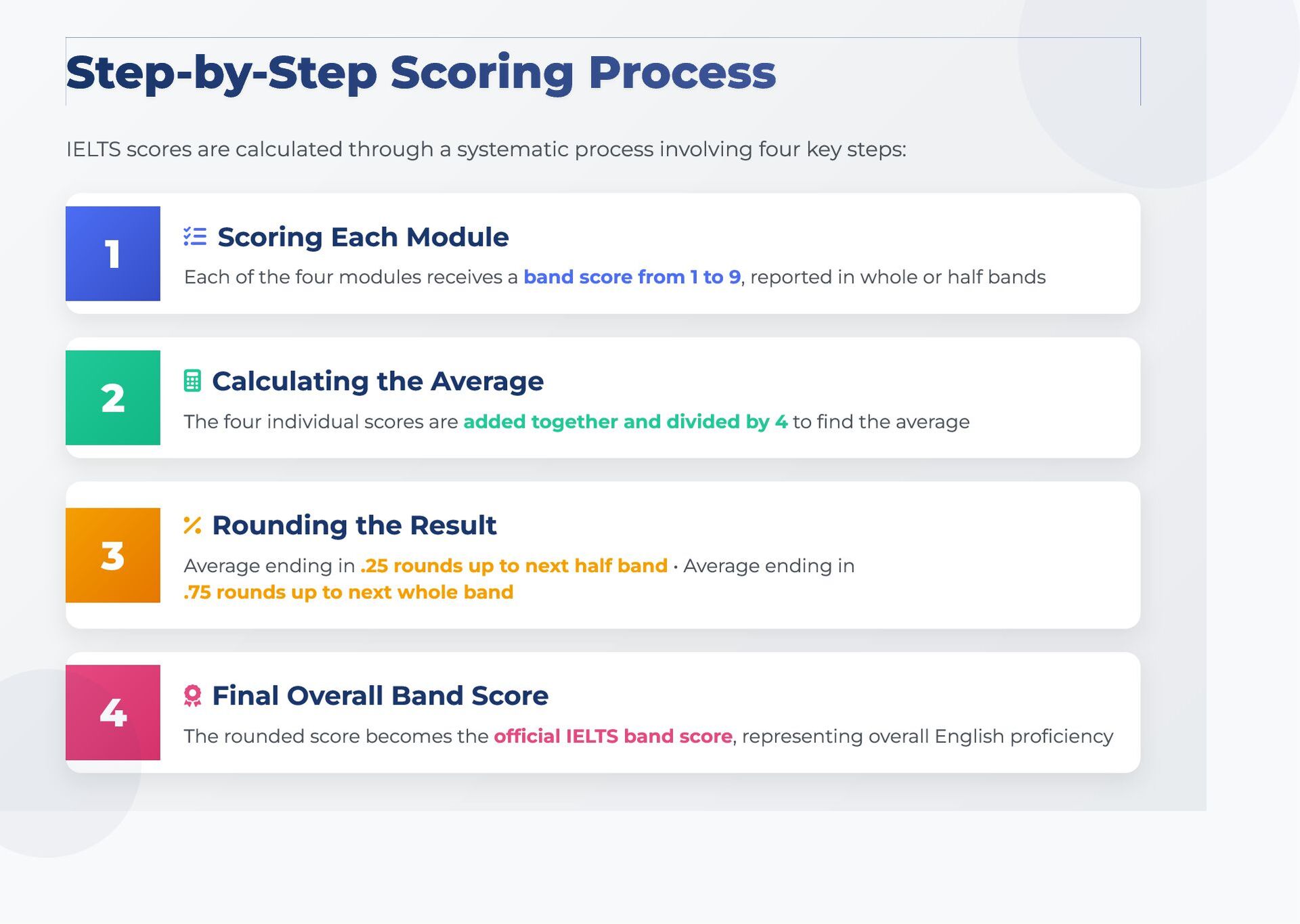
through a systematic process involving four key steps: 1 Scoring Each Module Each of the four modules receives a , reported in whole or half bands 2 Calculating the Average The four individual scores are to find the average 3 % Rounding the Result Average ending in • Average ending in 4 Final Overall Band Score The rounded score becomes the , representing overall English proficiency band score from 1 to 9 added together and divided by 4 .25 rounds up to next half band .75 rounds up to next whole band official IELTS band score
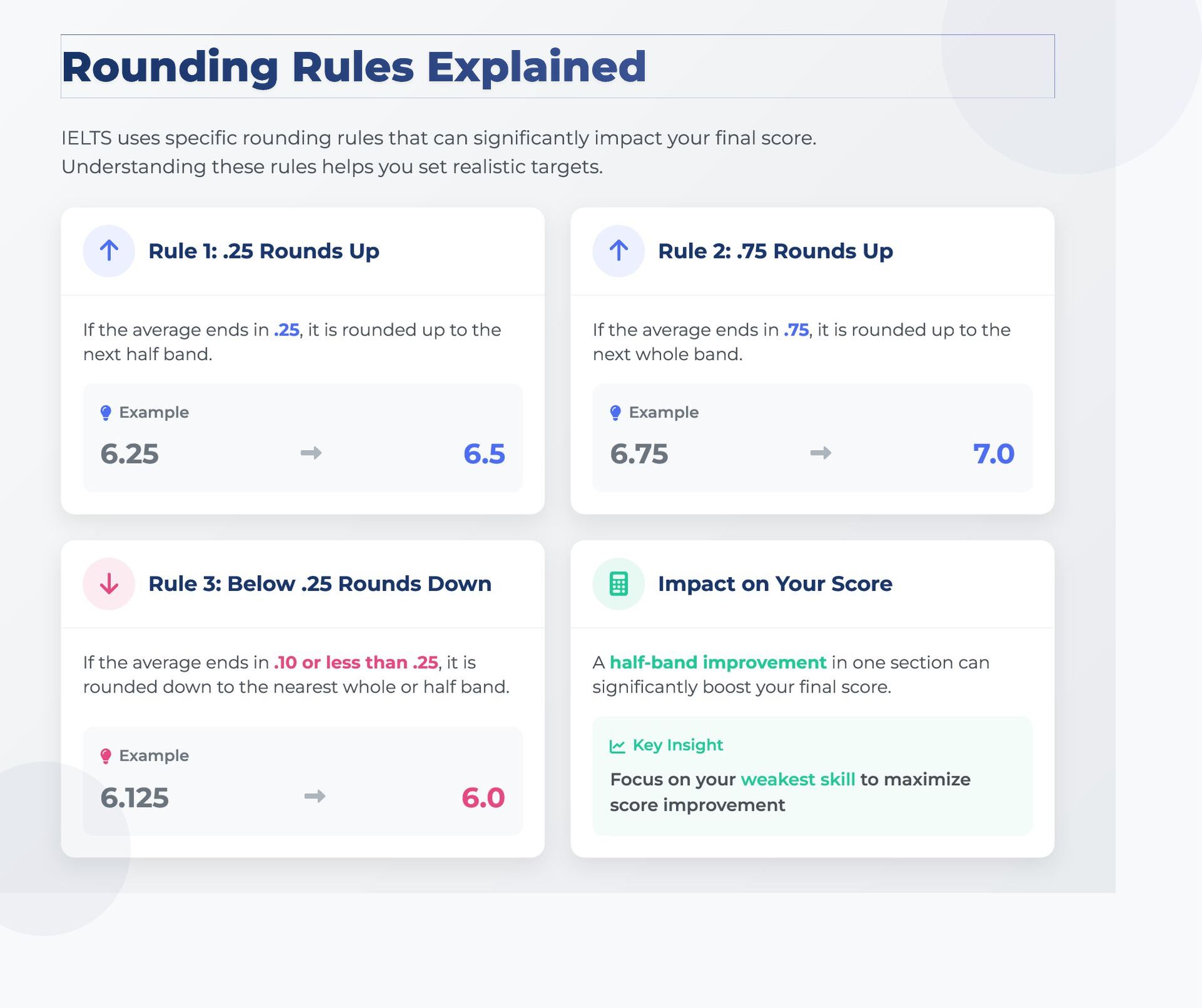
rules that can significantly impact your final score. Understanding these rules helps you set realistic targets. Rule 1: .25 Rounds Up If the average ends in , it is rounded up to the next half band. Example 6.25 6.5 Rule 2: .75 Rounds Up If the average ends in , it is rounded up to the next whole band. Example 6.75 7.0 Rule 3: Below .25 Rounds Down If the average ends in , it is rounded down to the nearest whole or half band. Example 6.125 6.0 Impact on Your Score A in one section can significantly boost your final score. Key Insight Focus on your weakest skill to maximize score improvement .25 .75 .10 or less than .25 half-band improvement
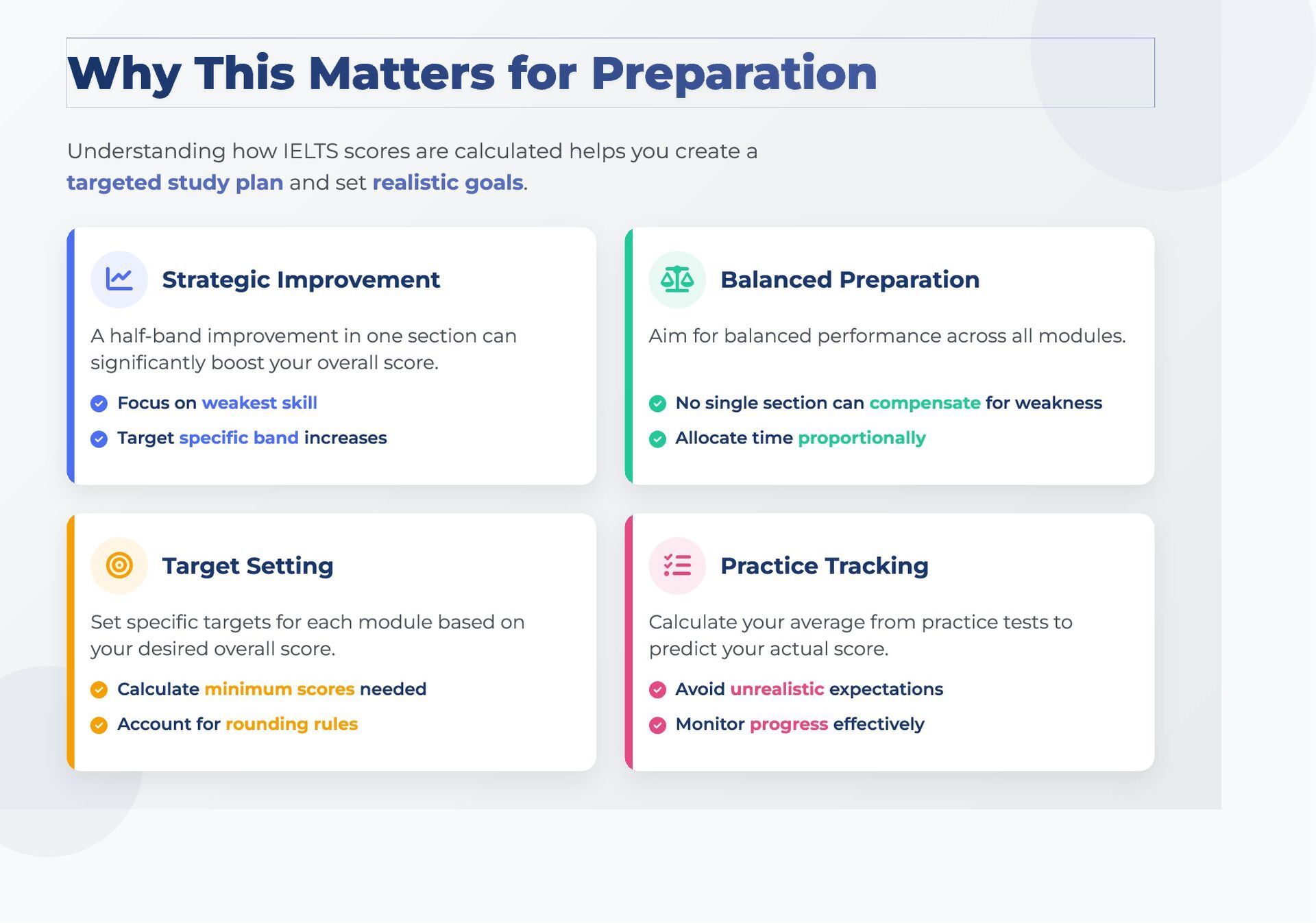
Understanding how IELTS scores are calculated helps you create a and set . targeted study plan realistic goals Strategic Improvement A half-band improvement in one section can significantly boost your overall score. Focus on Target increases weakest skill specific band Balanced Preparation Aim for balanced performance across all modules. No single section can for weakness Allocate time compensate proportionally Target Setting Set specific targets for each module based on your desired overall score. Calculate needed Account for minimum scores rounding rules Practice Tracking Calculate your average from practice tests to predict your actual score. Avoid expectations Monitor effectively unrealistic progress
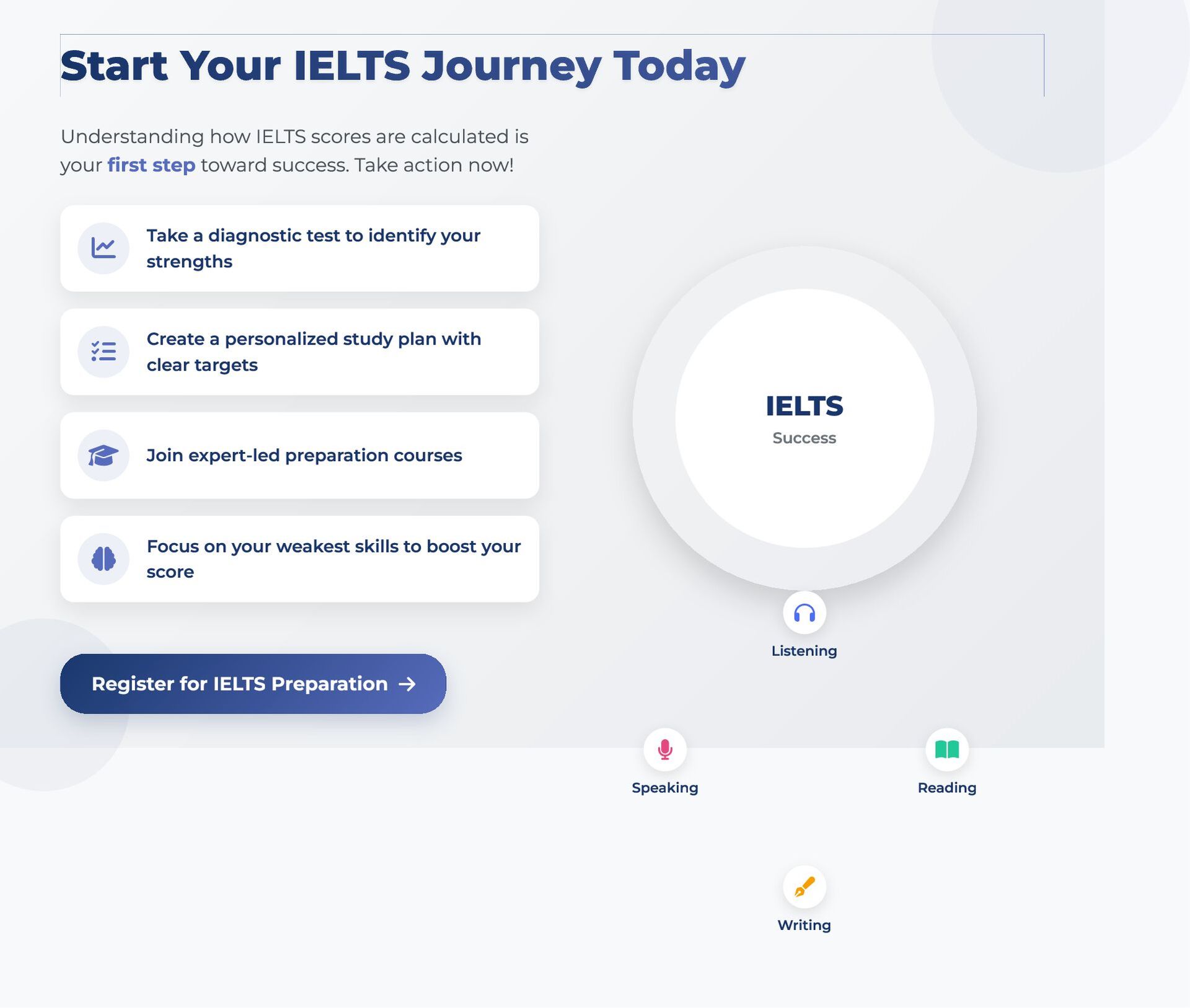
Understanding how IELTS scores are calculated is your toward success. Take action now! Take a diagnostic test to identify your strengths Create a personalized study plan with clear targets Join expert-led preparation courses Focus on your weakest skills to boost your score Register for IELTS Preparation first step IELTS Success Listening Reading Writing Speaking


 mieenglishacademy
 jsaseminar
 signer
 psj59129
 hypebeans
 amarelo_n24
 ihlhealthcareleadership
 hide2kano
 yaginumatti
 takesection
 jonoalderson
.png) shuntatoda
shuntatoda
 moore
moore
 chriscoyier
 tammyeverts
 kneath
 cromwellryan
 marktimemedia
 samlambert
 tmiket
 techseoconnect
 katarinadahlin
 vanstee