Upgrade to Pro — share decks privately, control downloads, hide ads and more …

I just wanted ruby annotations: writing in dead...

I just wanted ruby annotations: writing in dead scripts on the living fediverse

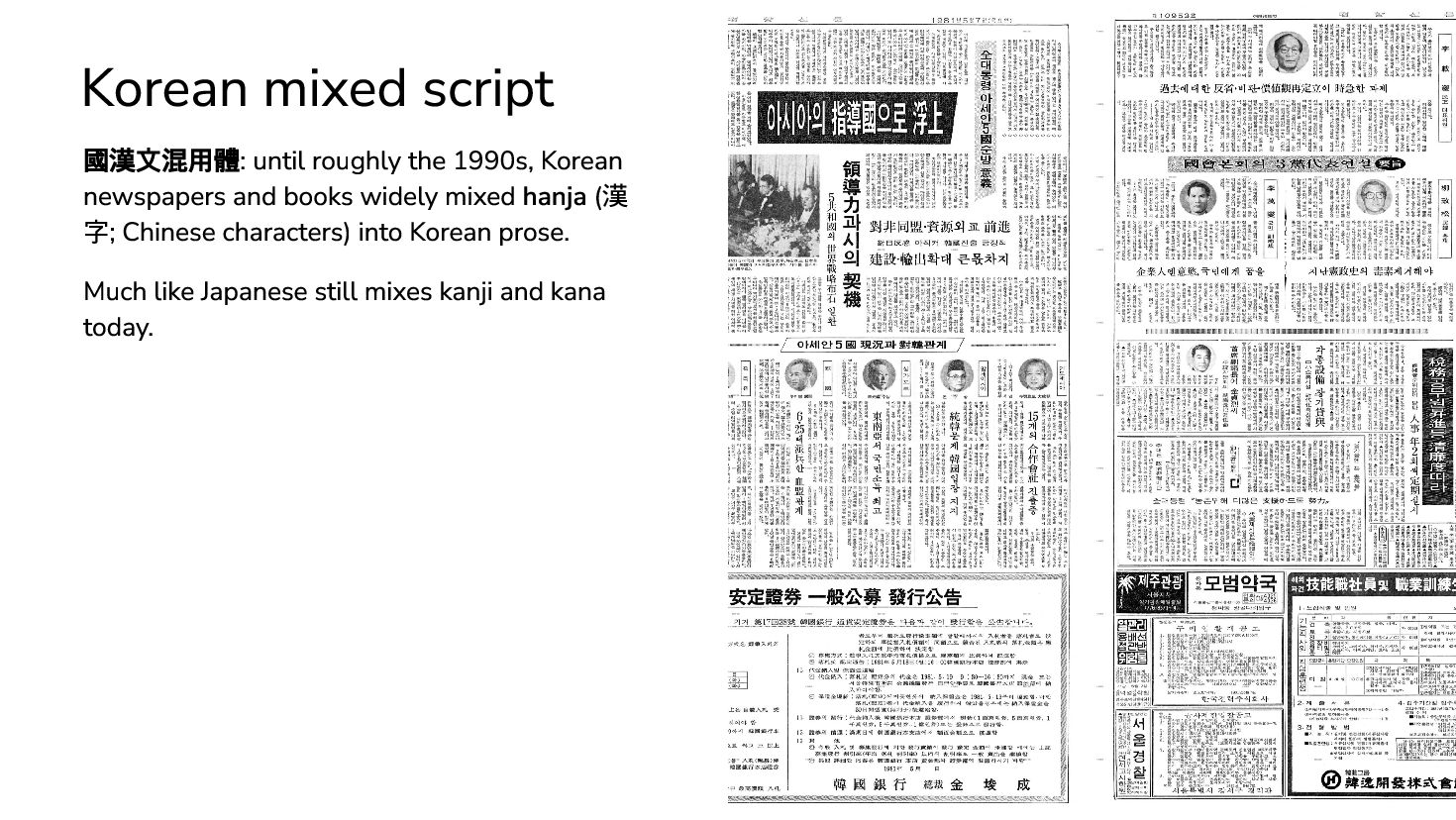
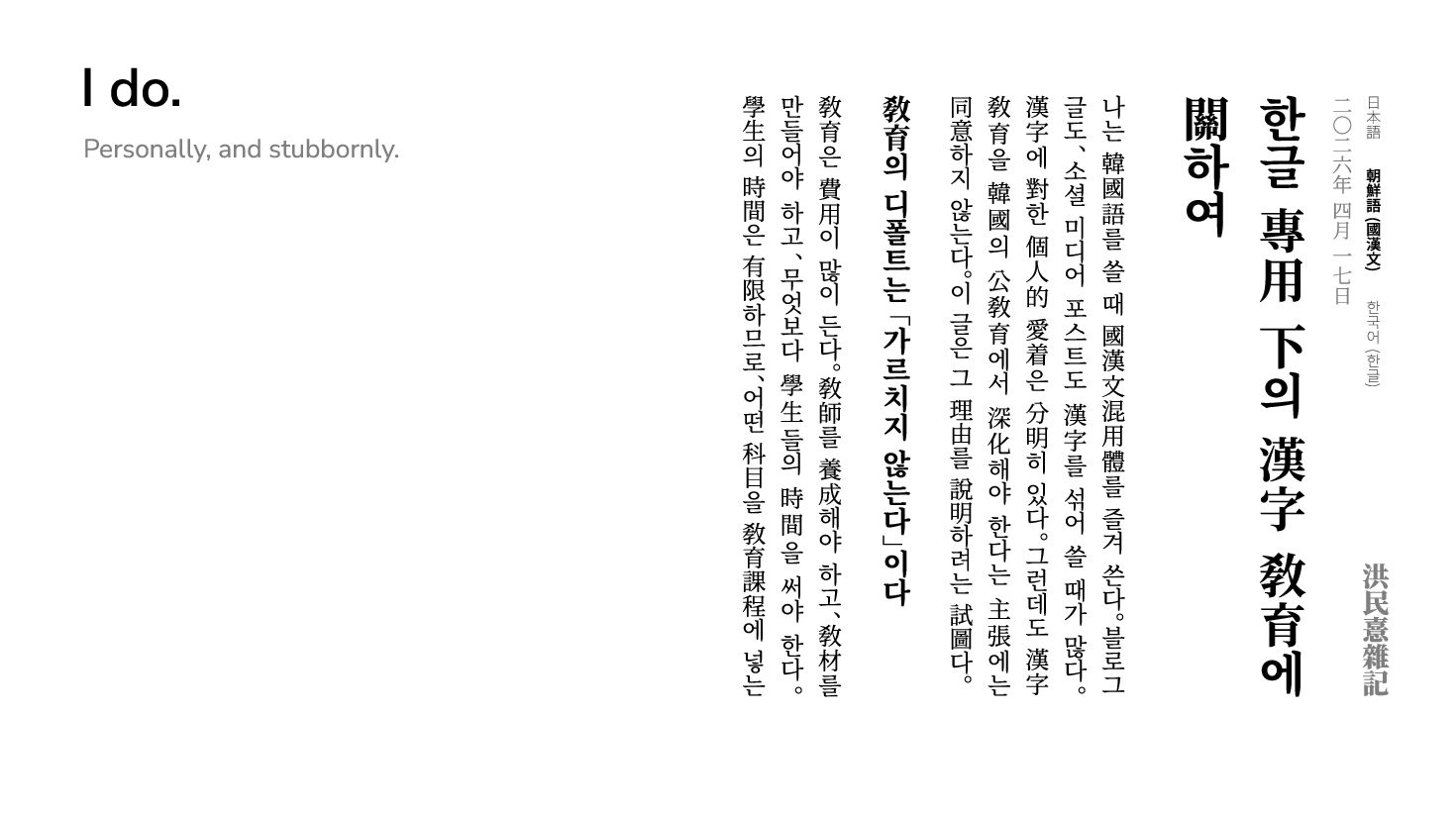
Koreans used to mix hanja (漢字; Chinese characters) into Korean prose, much as Japanese still mixes kanji and kana. The style is called Korean mixed script (國漢文混用體). Almost nobody writes this way anymore. I do.

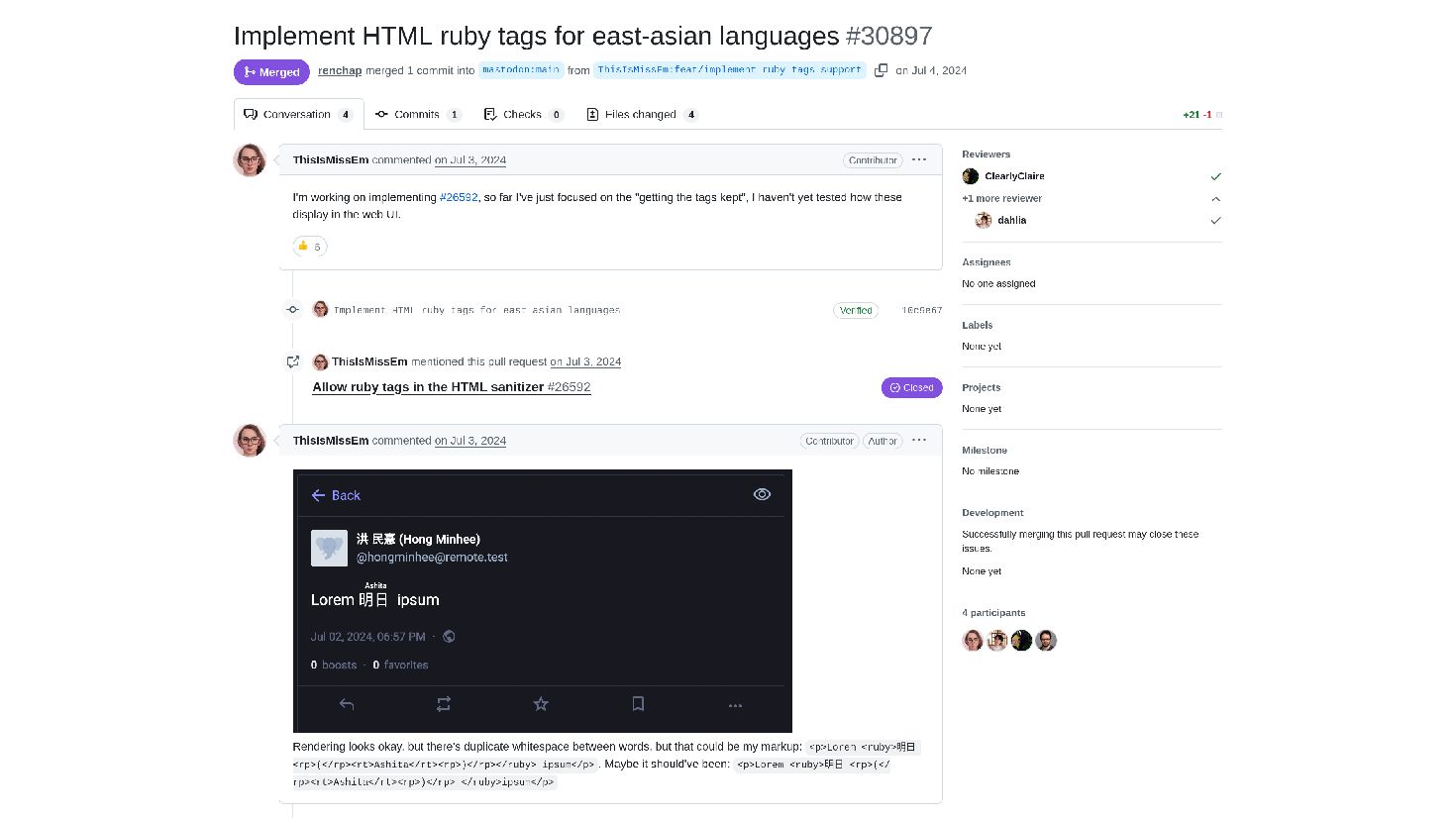
When I wanted to post this way on the fediverse, I ran into a small but stubborn problem: <ruby> annotations, the HTML feature that puts pronunciation guides above or beside characters, were stripped by the major servers I tried. I filed an issue against Mastodon. It sat there for a long time. At some point, “maybe I should run my own server” somehow became “maybe I should implement ActivityPub myself.”

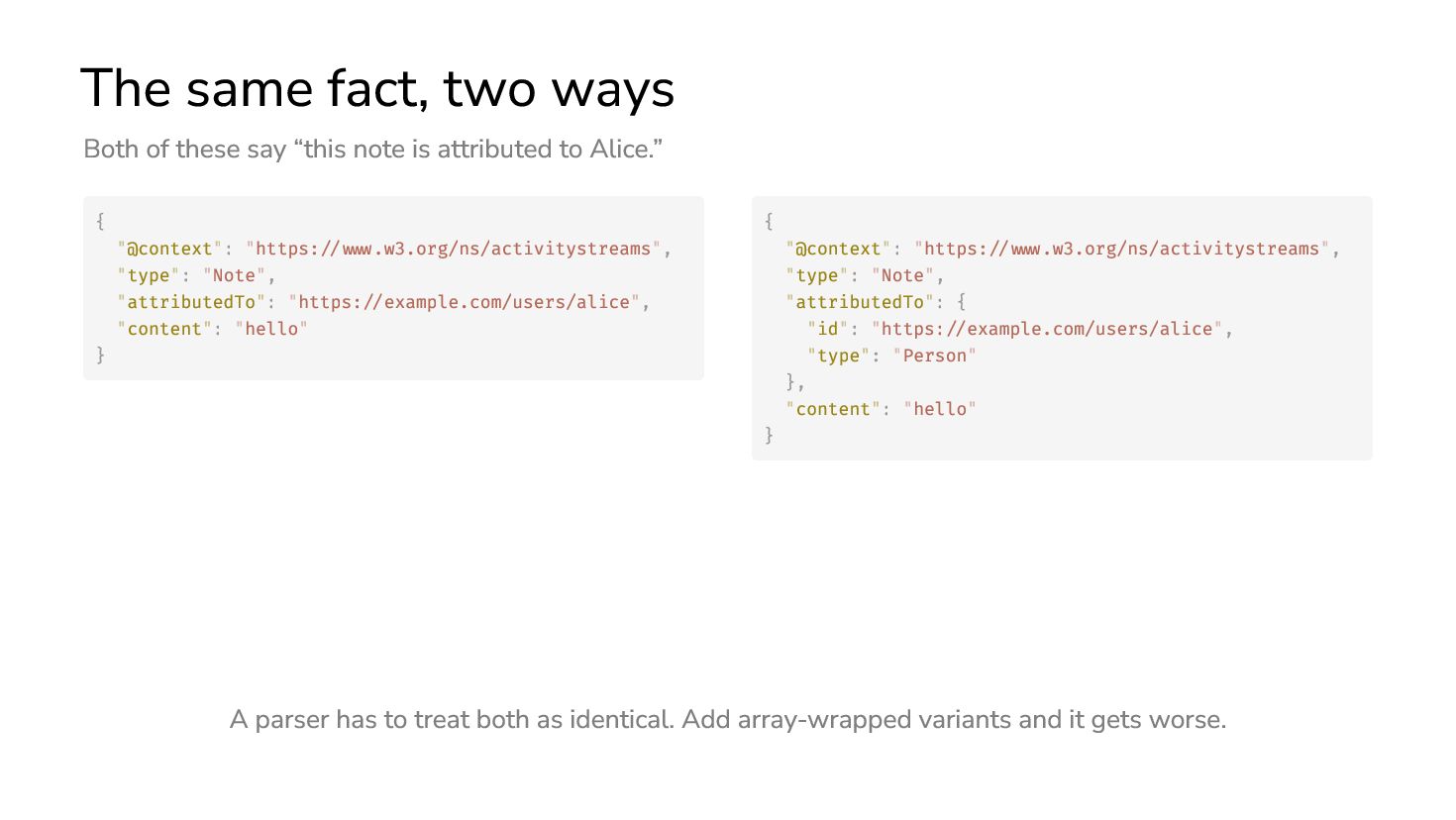
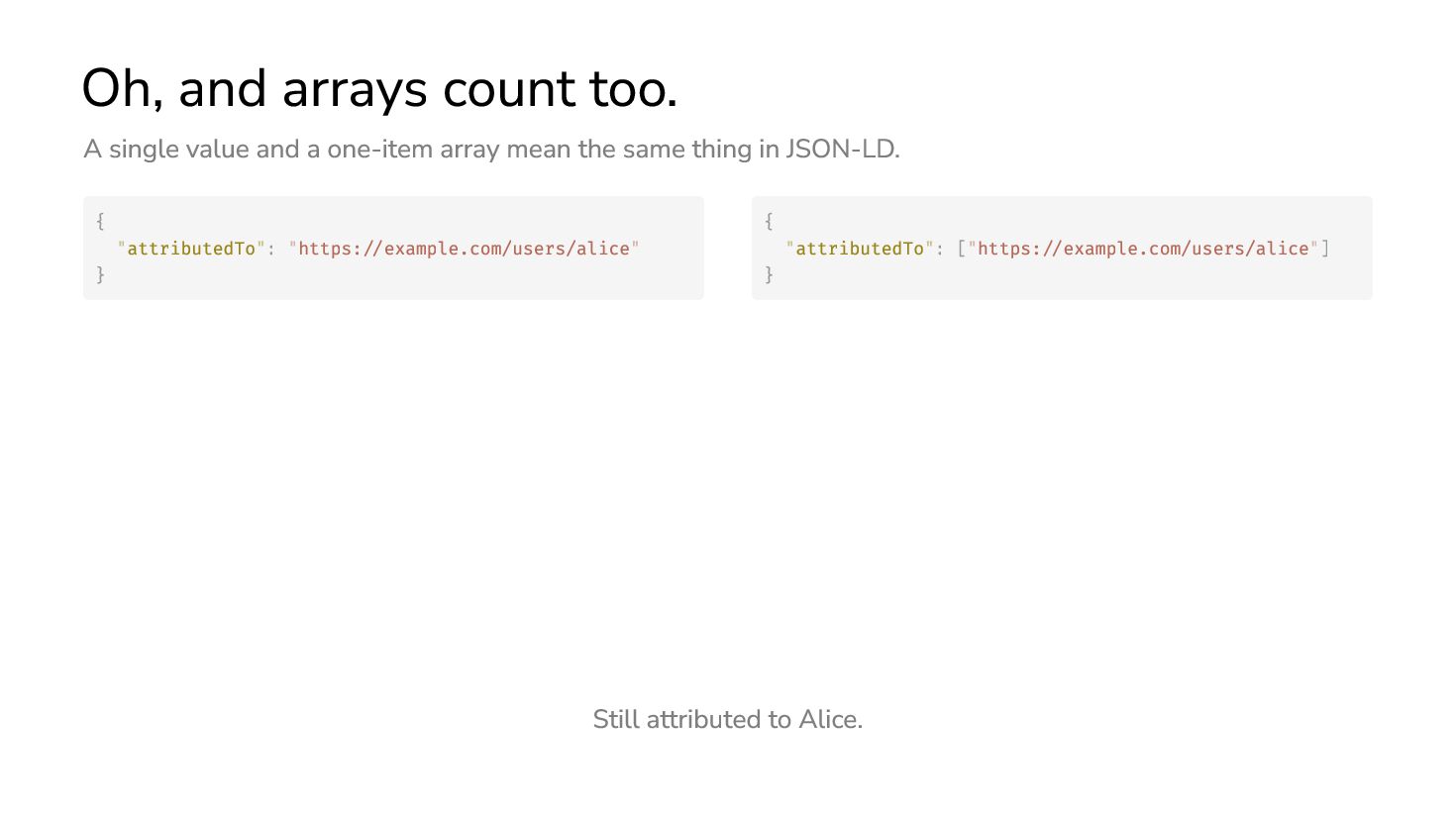
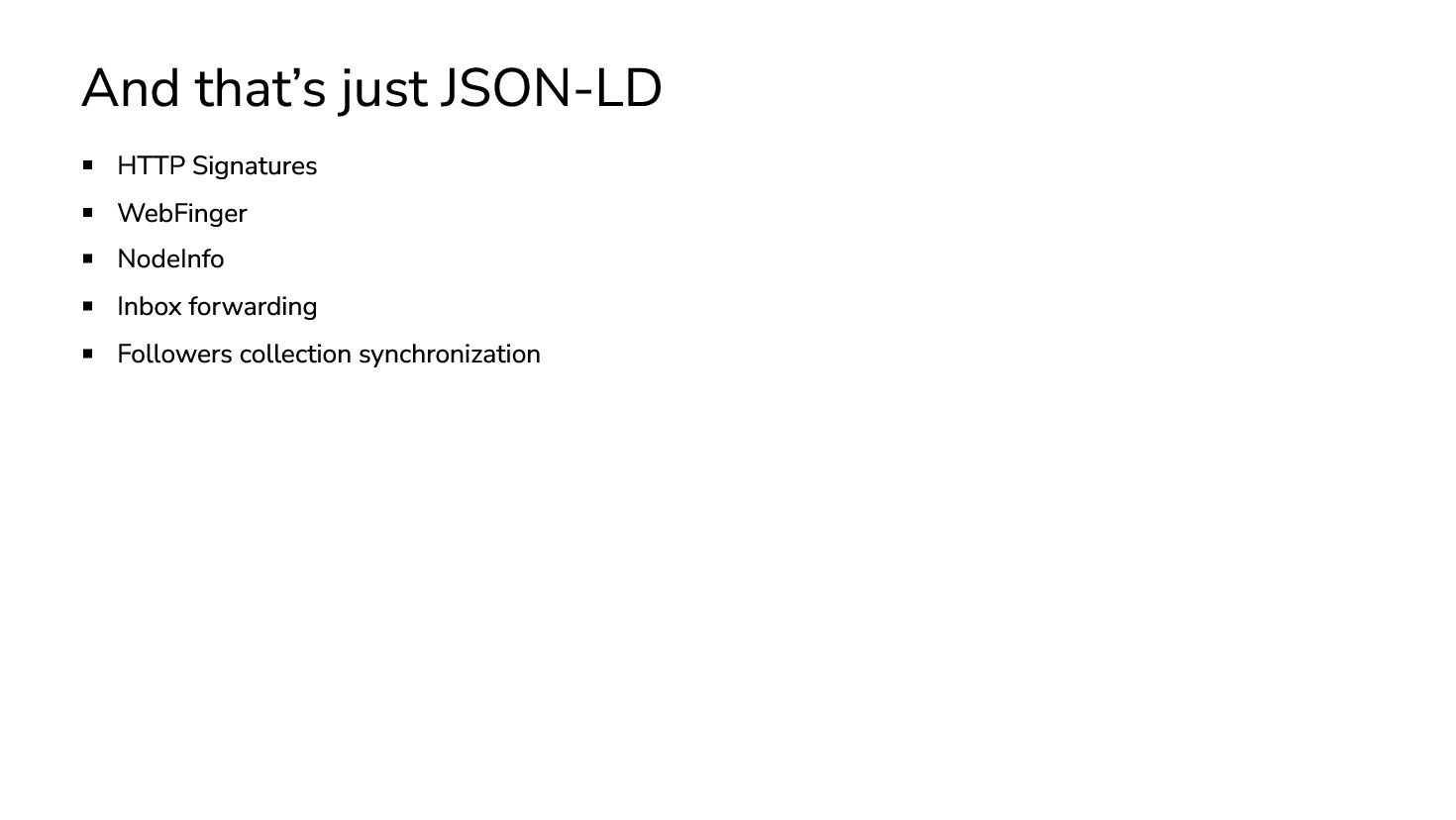
ActivityPub is not simple. JSON-LD alone has several ways to say the same thing. Then come HTTP Signatures, WebFinger, NodeInfo, inbox forwarding, and the small incompatibilities that only become obvious when Mastodon and Misskey disagree. Before building the server I wanted, I built Fedify: a TypeScript framework that keeps most of that protocol plumbing out of application code.

Hollo came next, because I still wanted the original thing: a single-user ActivityPub server where Markdown and <ruby> annotations survived the trip. Hackers’ Pub followed from the same framework, aimed at developers who want short posts and longer articles to federate.

This talk is about how a small typographic itch turned into upstream patches, a framework, and two fediverse servers. I still just wanted ruby annotations.

Hong Minhee (洪 民憙)

August 09, 2026

Transcript

41 slides
  1. I just wanted ruby annotations Writing in dead scripts on

    the living fediverse Hong Minhee 洪 民憙 COSCUP 2026
  2. Hong Minhee 洪 民憙 Who’s giving this talk? Creator of

    Fedify Organizer of Based in Hollo FediDev KR 🇰🇷 Seoul Find me at hongminhee.org BotKit Hackers’ Pub [email protected] dahlia
  3. Korean mixed script 國漢文混用體: until roughly the 1990s, Korean newspapers

    and books widely mixed hanja (漢 字; Chinese characters) into Korean prose. Much like Japanese still mixes kanji and kana today.
  4. 關하 한글 여專 用 下 의 漢 字 洪民 敎

    다 데 試圖 主張 도 가 。블 憙雜 育 많 에漢 로 에 記 。다 는 字 。다 그 日 二 本 〇 語 二 六 年 朝鮮語 四 月 國漢 一 文 七 日한 ( 敎育 同意 敎育 漢字 글도 나는 의 하지 韓을 對에 、소셜 韓國 디폴 않는 國 한 미 語 트는 。다 公의 個人 디어 를쓸 「 이글 敎育 的愛 포스 國때 가르 은 에 着 트 漢 치지 理그 深서 分은 漢도 文混 由를 化 明 字 用 않는 說 해야 히 를 體를 있다 섞 明 다」 하 한다 。 어 즐겨 이다 려는 는 그런 쓸때 쓴 ) Personally, and stubbornly. 學 만들 敎 生어育 의야은 時 費 間은 하 用 고이 有 、무 많 限엇이 하므 보 든 로 學다 。다 、어 敎 떤 生들 師를 科의養 目時成 을間해 敎을야 育 하 課써고 程야、 에한敎 넣는 다 材 。를 국어 한글 ) ( I do.
  5. The problem Younger Korean readers mostly can’t read hanja anymore.

    So mixed-script text needs pronunciation guides to be readable.
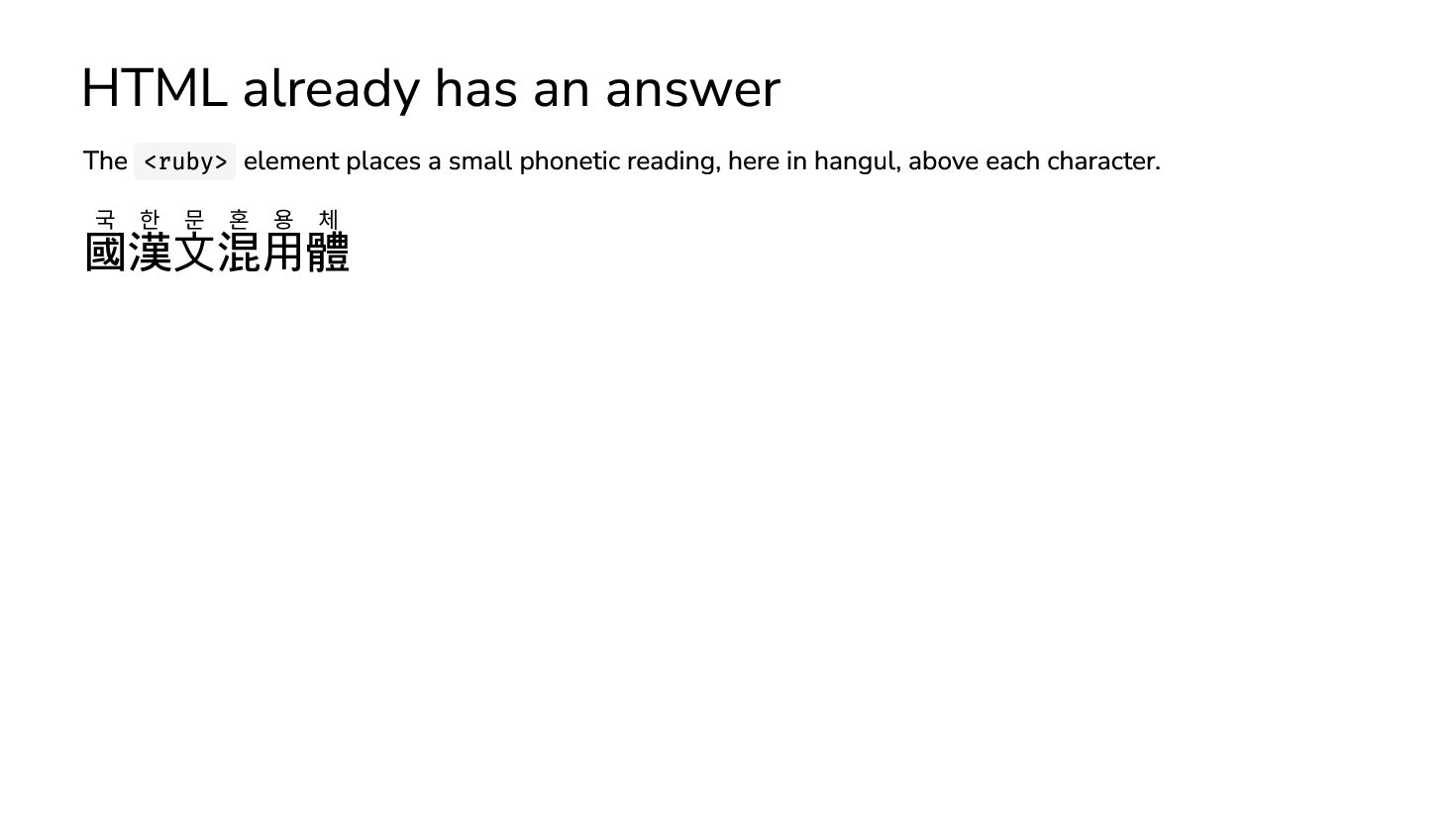
  6. HTML already has an answer The <ruby> element places a

    small phonetic reading, here in hangul, above each character. 국 한 문 혼 용 체 國漢文混用體
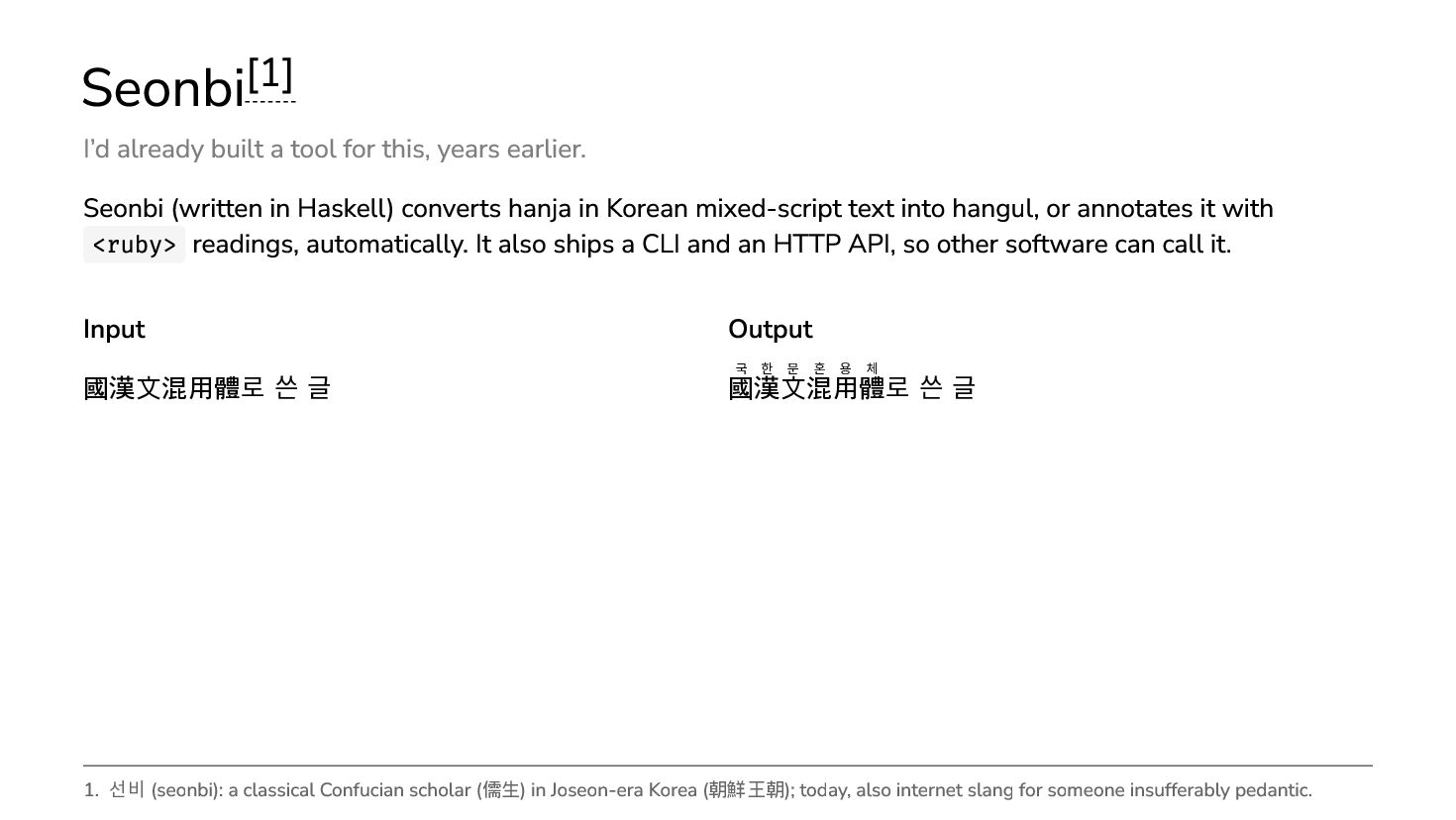
  7. Seonbi[1] I’d already built a tool for this, years earlier.

    Seonbi (written in Haskell) converts hanja in Korean mixed-script text into hangul, or annotates it with <ruby> readings, automatically. It also ships a CLI and an HTTP API, so other software can call it. Input Output 國漢文混用體로 쓴 글 國漢文混用體로 쓴 글 국 한 문 혼 용 체 1. 선비 (seonbi): a classical Confucian scholar (儒生) in Joseon-era Korea (朝鮮王朝); today, also internet slang for someone insufferably pedantic.

  8. I wanted to bring this to the fediverse. Post in

    mixed script. Have Seonbi annotate it automatically on the way out.
  9. Mastodon, first Getting Mastodon to accept <ruby> tags at all

    seemed plausible on its own. (It would, eventually. More on that later.)
  10. But that’s not what I wanted Wire Seonbi into Mastodon’s

    posting pipeline Too personal for upstream. Nobody else needs this A fork? Too much machinery for one person
  11. What I actually wanted was something small. A single-user ActivityPub

    server with Markdown support, and Seonbi wired in from the start.
  12. The same fact, two ways Both of these say “this

    note is attributed to Alice.” { } "@context": "https://www.w3.org/ns/activitystreams", "type": "Note", "attributedTo": "https://example.com/users/alice", "content": "hello" { } "@context": "https://www.w3.org/ns/activitystreams", "type": "Note", "attributedTo": { "id": "https://example.com/users/alice", "type": "Person" }, "content": "hello" A parser has to treat both as identical. Add array-wrapped variants and it gets worse.
  13. Oh, and arrays count too. A single value and a

    one-item array mean the same thing in JSON-LD. { } "attributedTo": "https://example.com/users/alice" { } "attributedTo": ["https://example.com/users/alice"] Still attributed to Alice.
  14. Real servers don’t even agree with each other. Mastodon and

    Misskey quietly disagree on details the spec left open.
  15. I kept hitting the same problem. The same abstraction, over

    and over, while building the server I actually wanted.
  16. Ghost adopted Fedify, and funded the work. For the first

    time, I could work on this full-time.
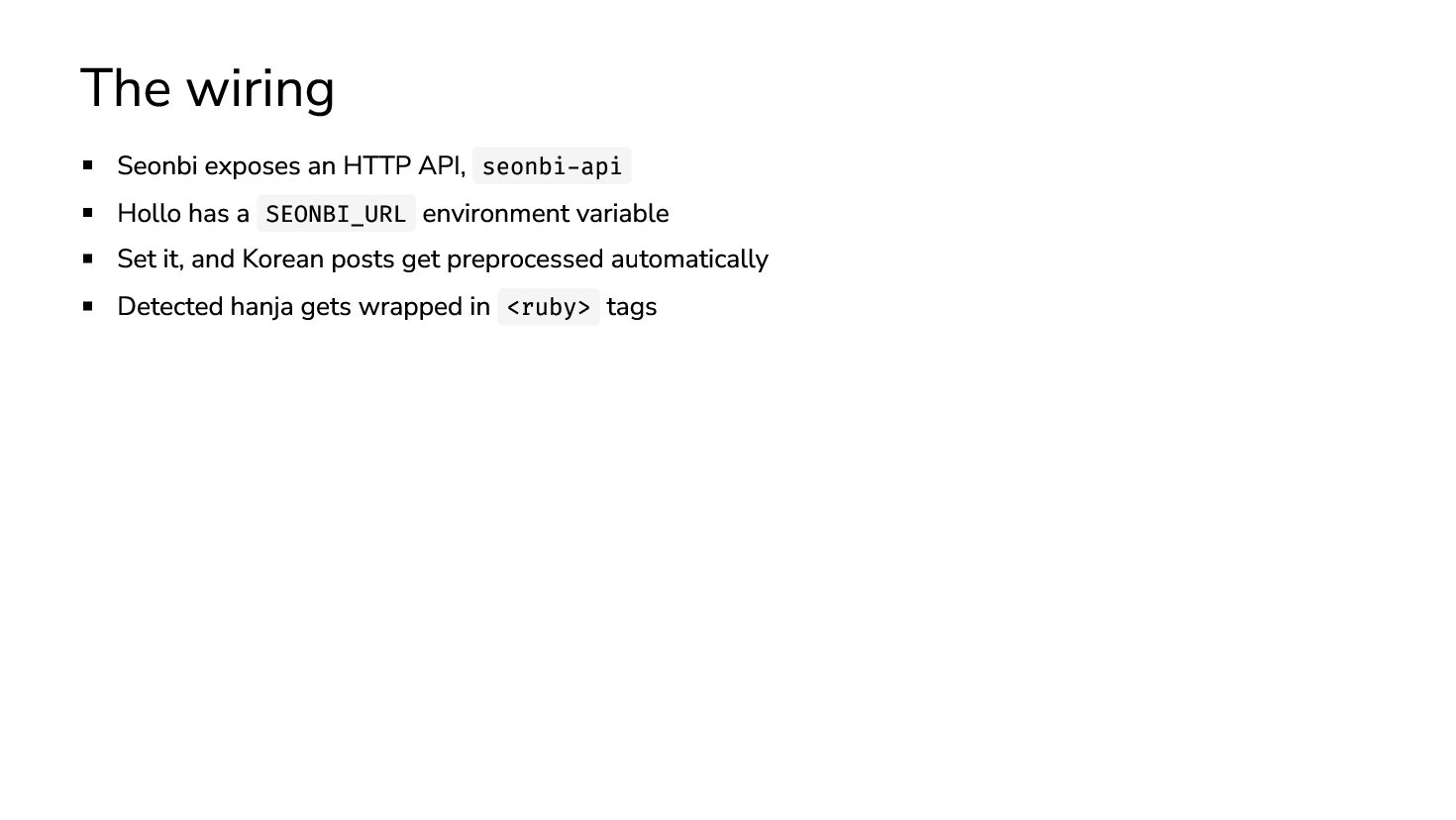
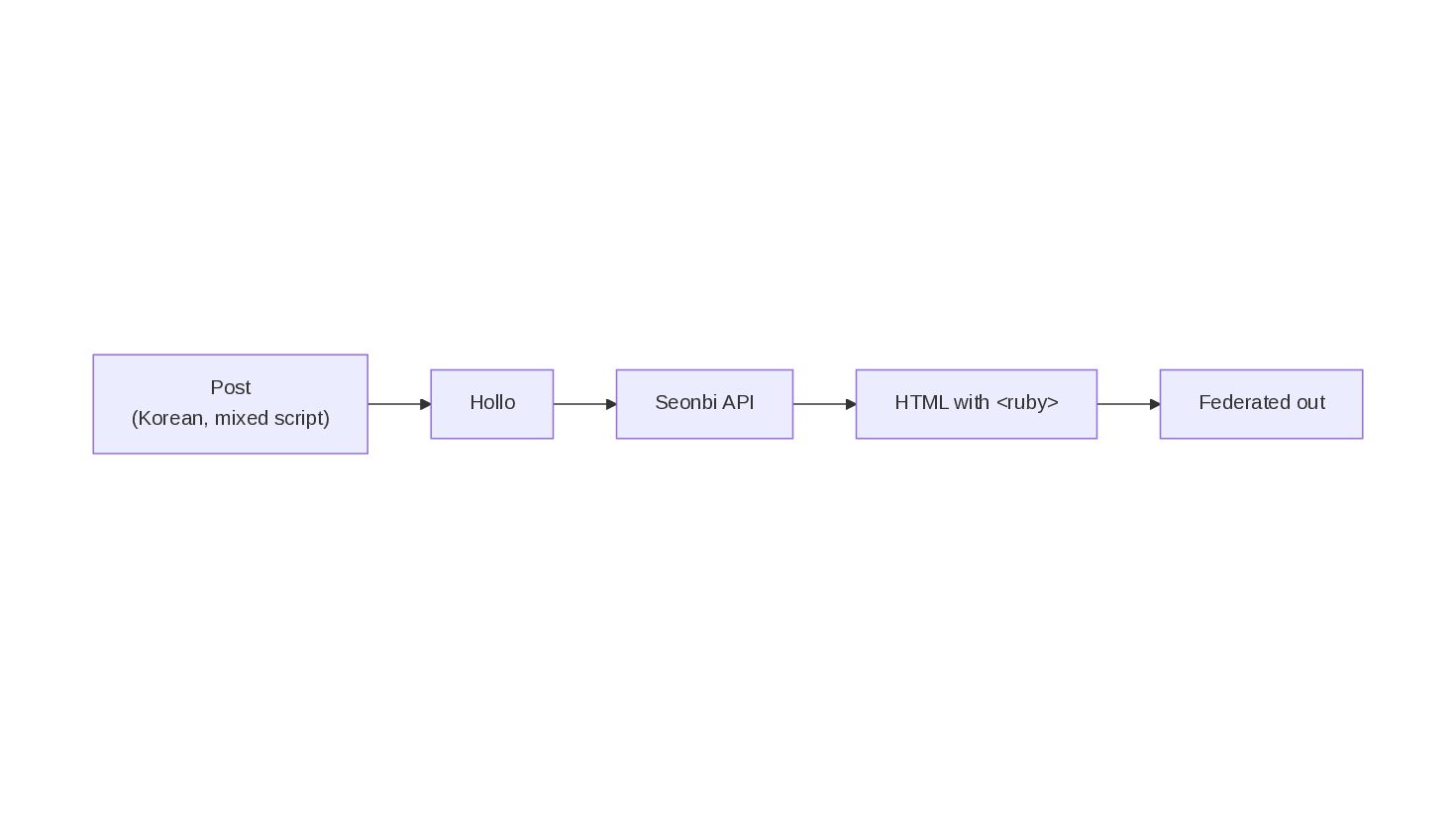
  17. The wiring Seonbi exposes an HTTP API, seonbi-api Hollo has

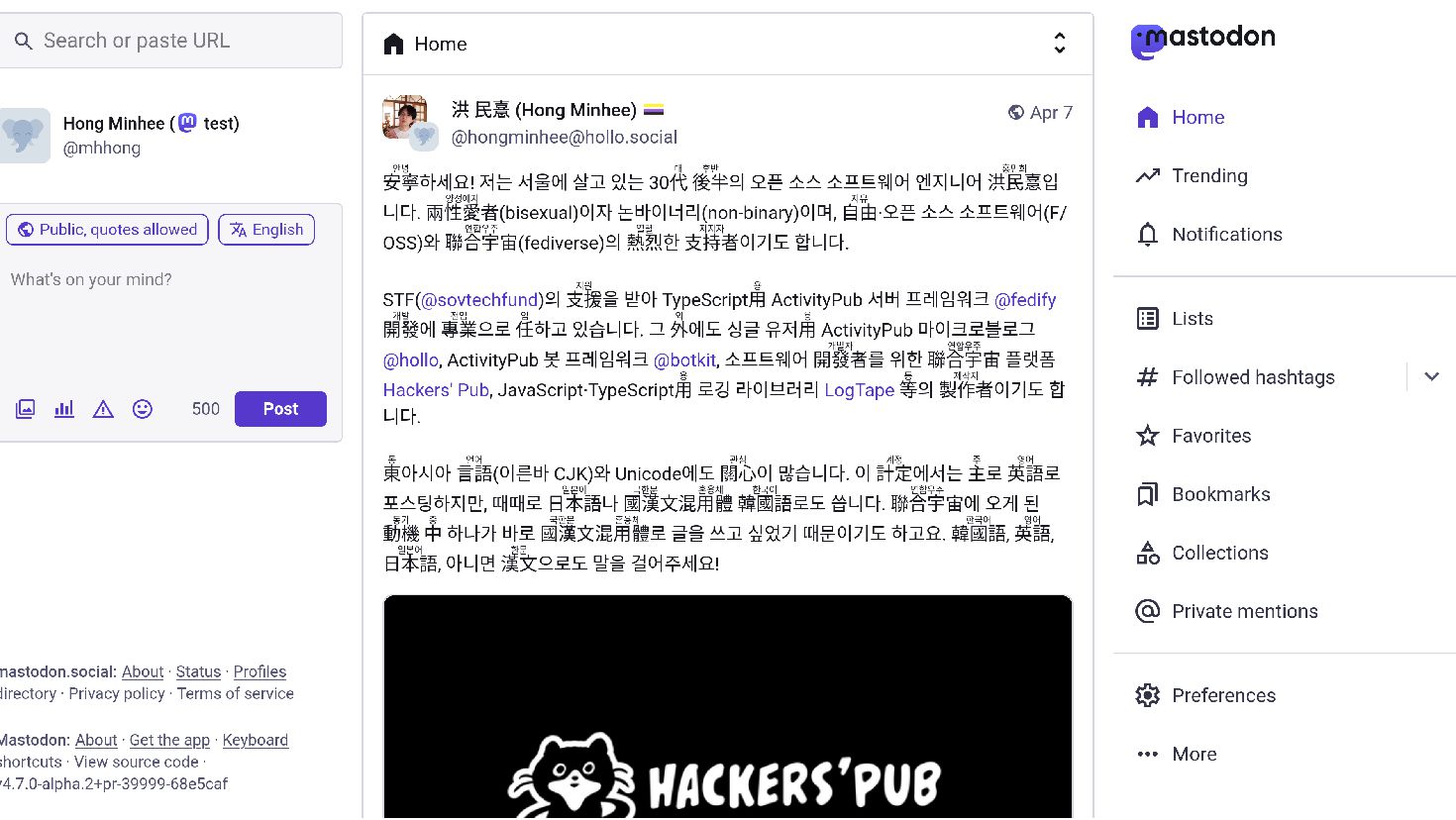
    a SEONBI_URL environment variable Set it, and Korean posts get preprocessed automatically Detected hanja gets wrapped in <ruby> tags
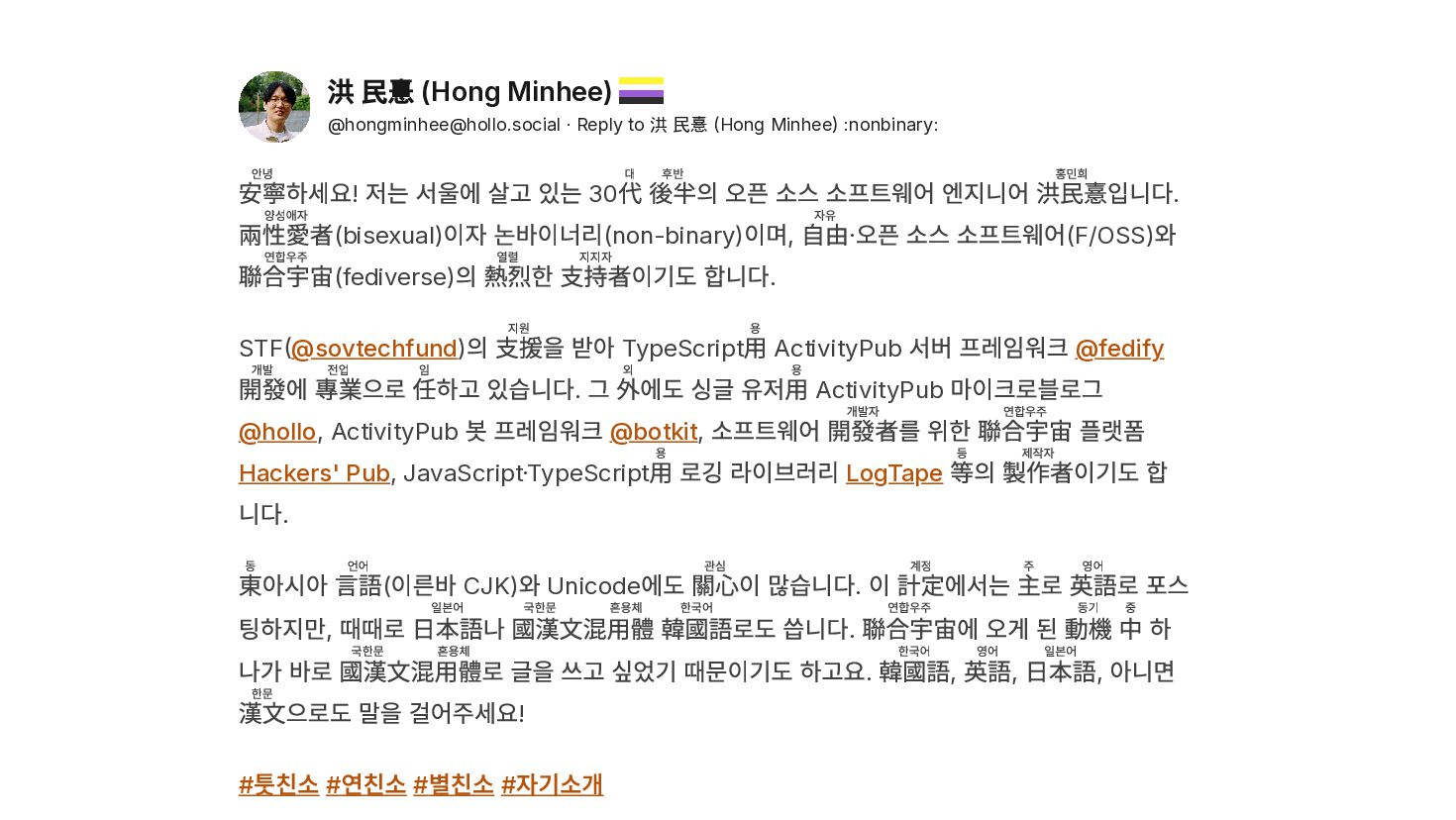
  18. 洪 民憙 (Hong Minhee) @[email protected] · Reply to 洪 民憙

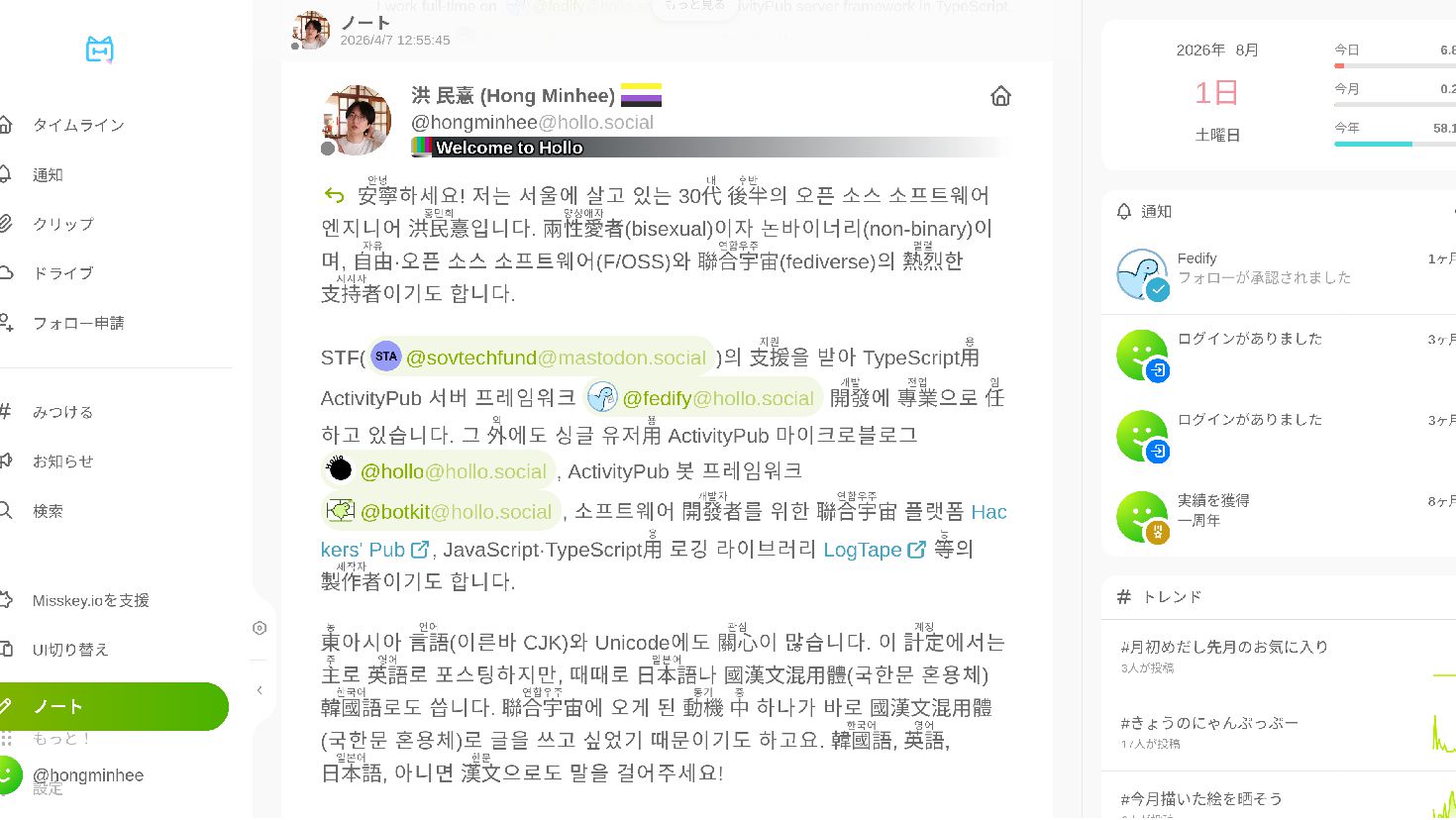
    (Hong Minhee) :nonbinary: 안녕 대 후반 홍민희 安寧하세요 ! 저는 서울에 살고 있는 30代 後半의 오픈 소스 소프트웨어 엔지니어 洪民憙입니다. 양성애자 자유 兩性愛者 (bisexual)이자 논바이너리(non-binary)이며, 自由·오픈 소스 소프트웨어(F/OSS)와 연합우주 열렬 지지자 聯合宇宙 (fediverse)의 熱烈한 支持者이기도 합니다. 지원 용 STF(@sovtechfund)의 支援을 받아 TypeScript用 ActivityPub 서버 프레임워크 @fedify 개발 전업 임 외 開發에 專業으로 任하고 있습니다. 그 外에도 싱글 유저用용 ActivityPub 마이크로블로그 개발자 연합우주 @hollo, ActivityPub 봇 프레임워크 @botkit, 소프트웨어 開發者를 위한 聯合宇宙 플랫폼 용 등 제작자 Hackers' Pub, JavaScript·TypeScript用 로깅 라이브러리 LogTape 等의 製作者이기도 합 니다. 동 언어 관심 계정 주 영어 東아시아 言語 (이른바 CJK)와 Unicode에도 關心이 많습니다. 이 計定에서는 主로 英語로 포스 일본어 국한문 혼용체 한국어 연합우주 동기 중 팅하지만, 때때로 日本語나 國漢文混用體 韓國語로도 씁니다 . 聯合宇宙에 오게 된 動機 中 하 국한문 혼용체 한국어 영어 일본어 나가 바로 國漢文混用體로 글을 쓰고 싶었기 때문이기도 하고요 . 韓國語, 英語, 日本語, 아니면 한문 漢文으로도 말을 걸어주세요! #툿친소 #연친소 #별친소 #자기소개
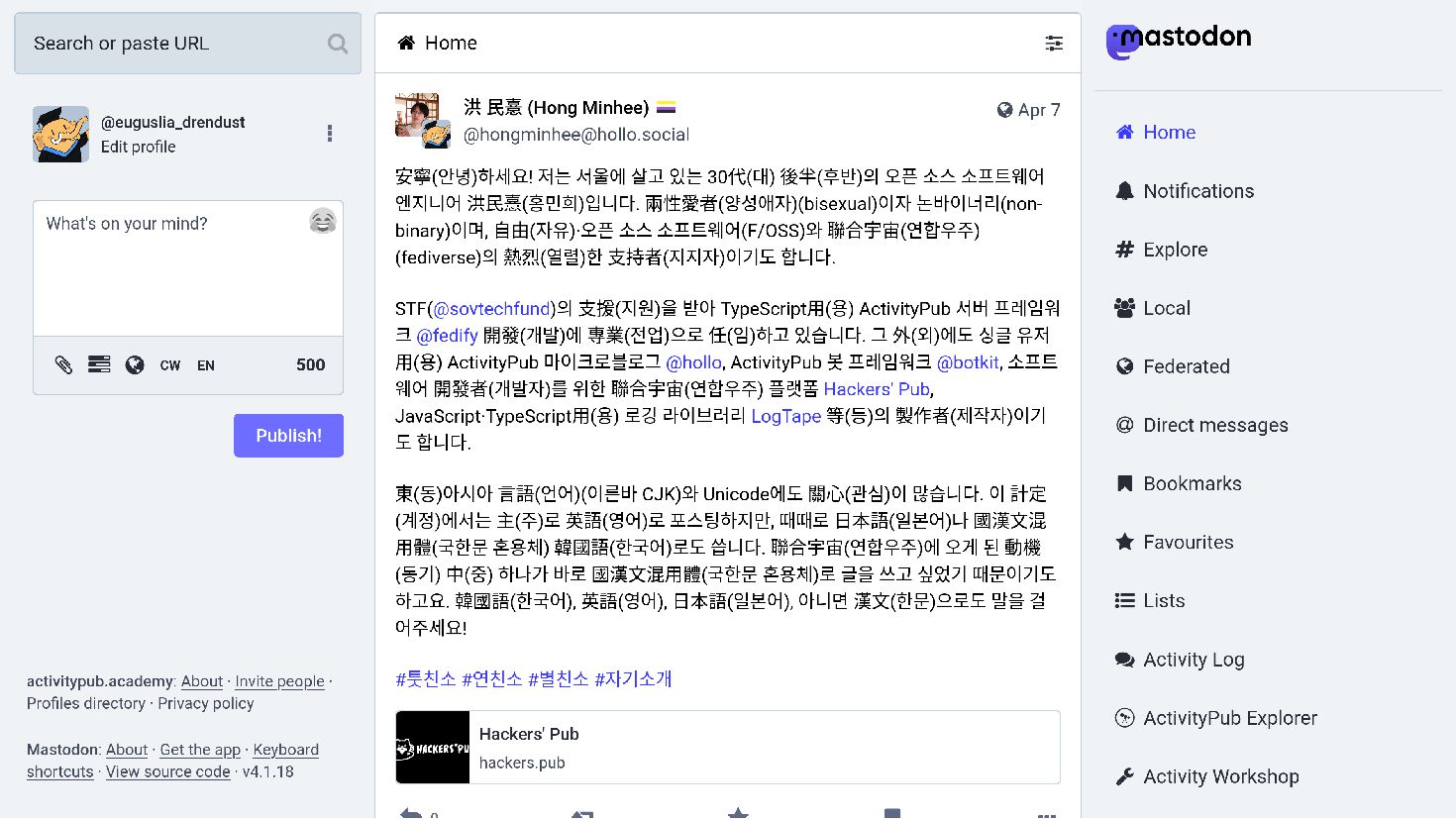
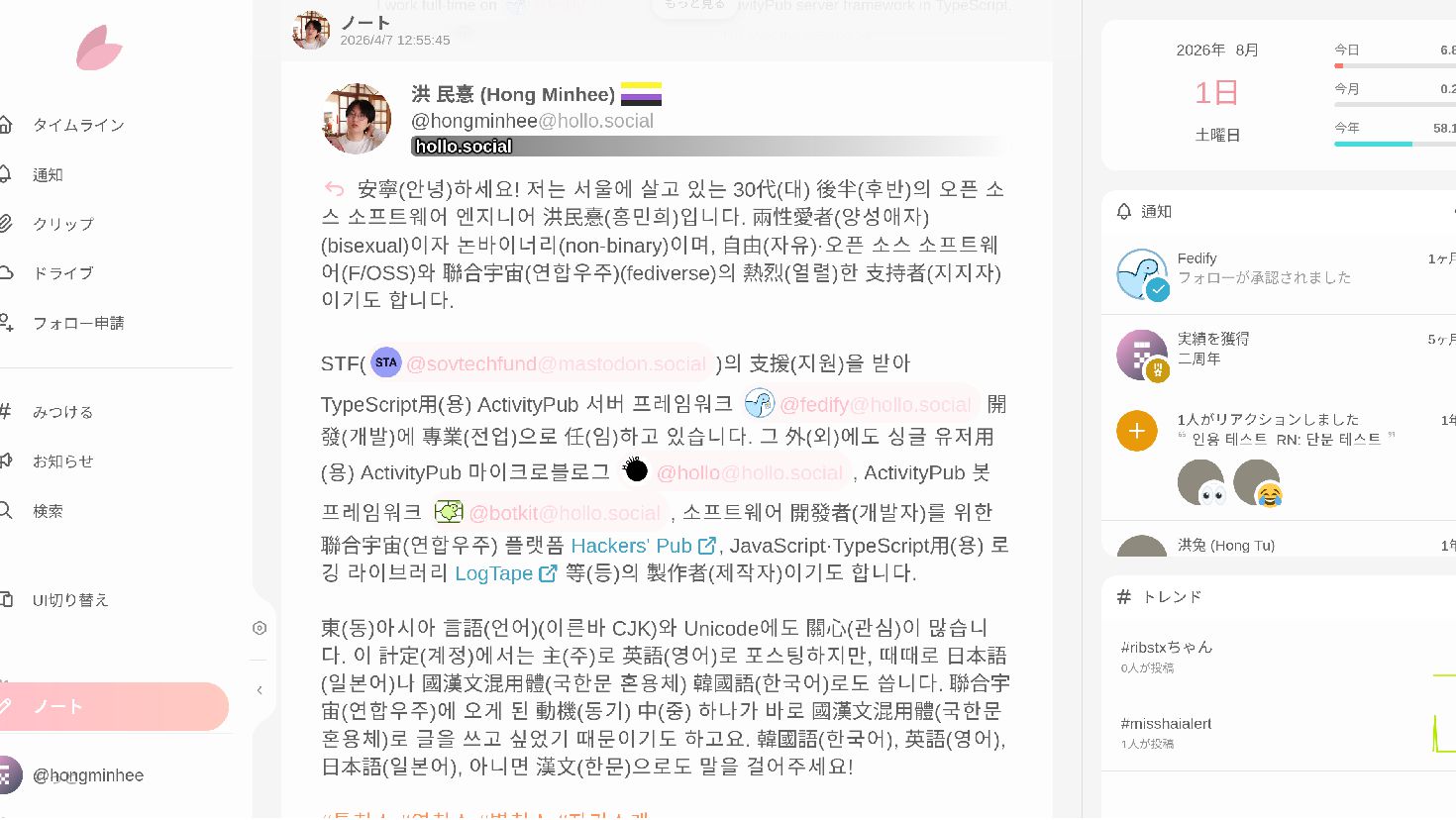
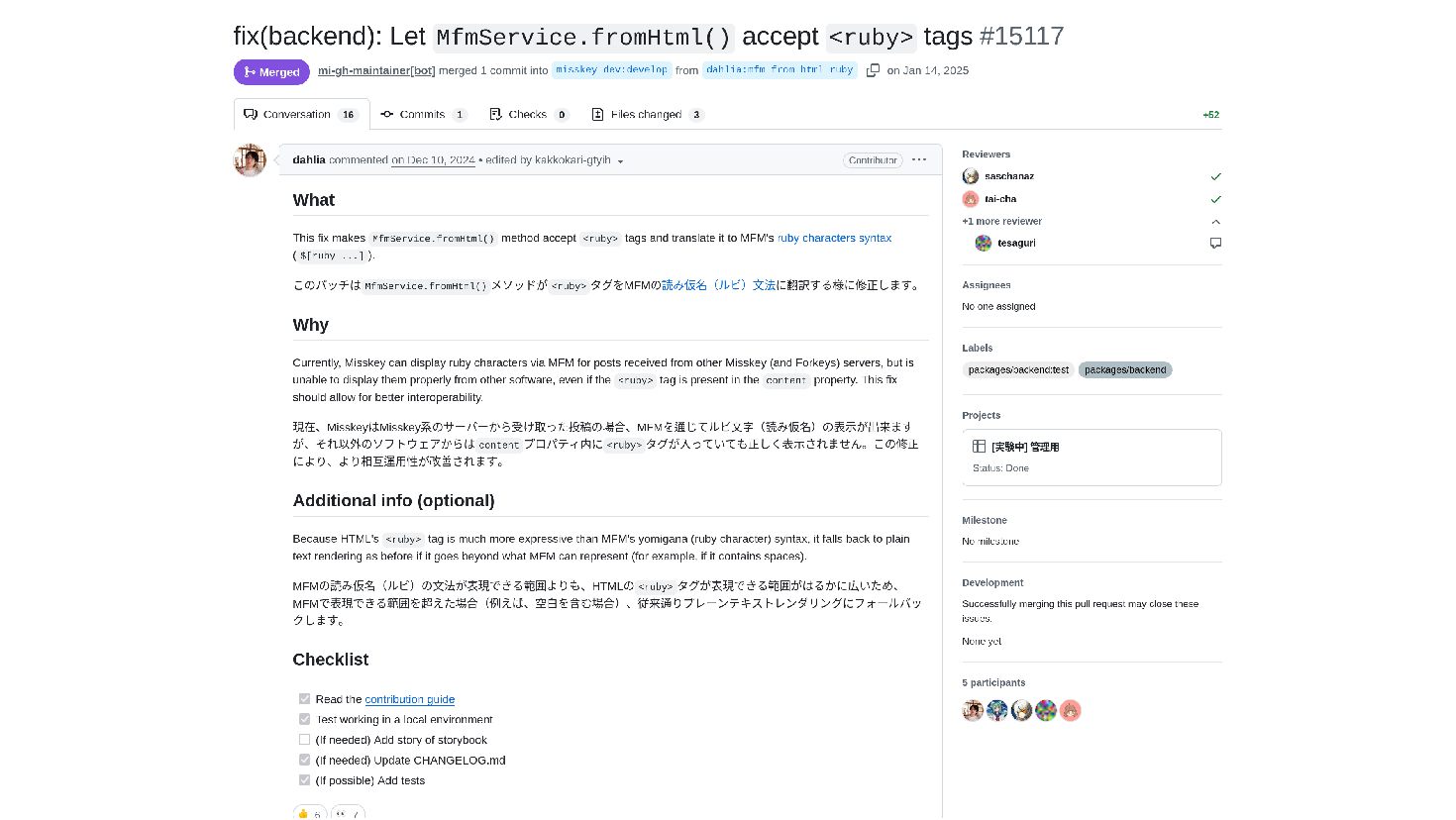
  19. But it didn’t show up everywhere. Federated out, the <ruby>

    tags just vanished on Mastodon and Misskey.
  20. This wasn’t just for me. It helps Chinese and Japanese

    speakers using ruby too, not only Korean.
  21. Not quite finished Seonbi means running a separate HTTP service

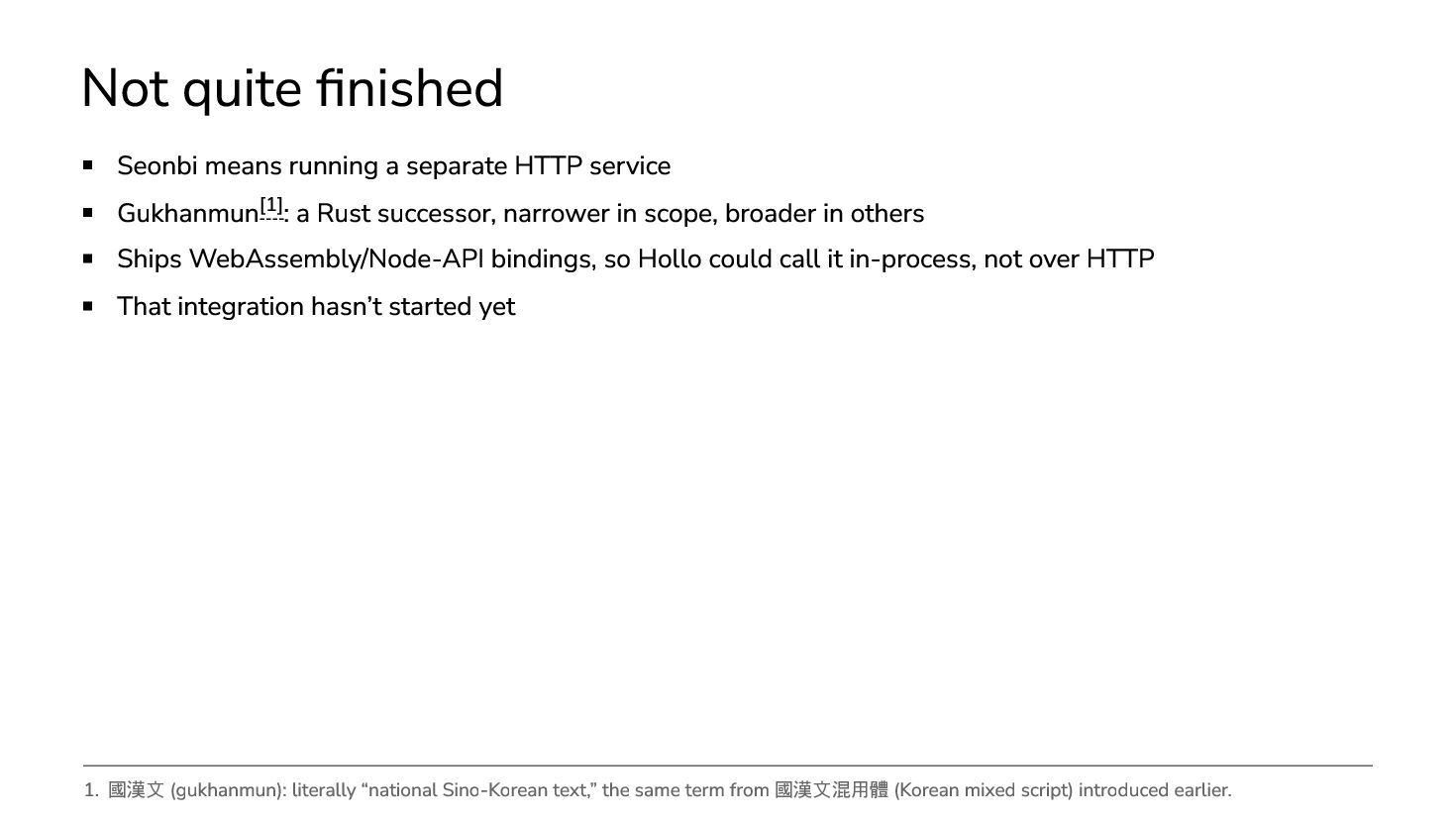
    Gukhanmun[1]: a Rust successor, narrower in scope, broader in others Ships WebAssembly/Node-API bindings, so Hollo could call it in-process, not over HTTP That integration hasn’t started yet 1. 國漢文 (gukhanmun): literally “national Sino-Korean text,” the same term from 國漢文混用體 (Korean mixed script) introduced earlier.

More Decks by Hong Minhee (洪 民憙)

Other Decks in Programming