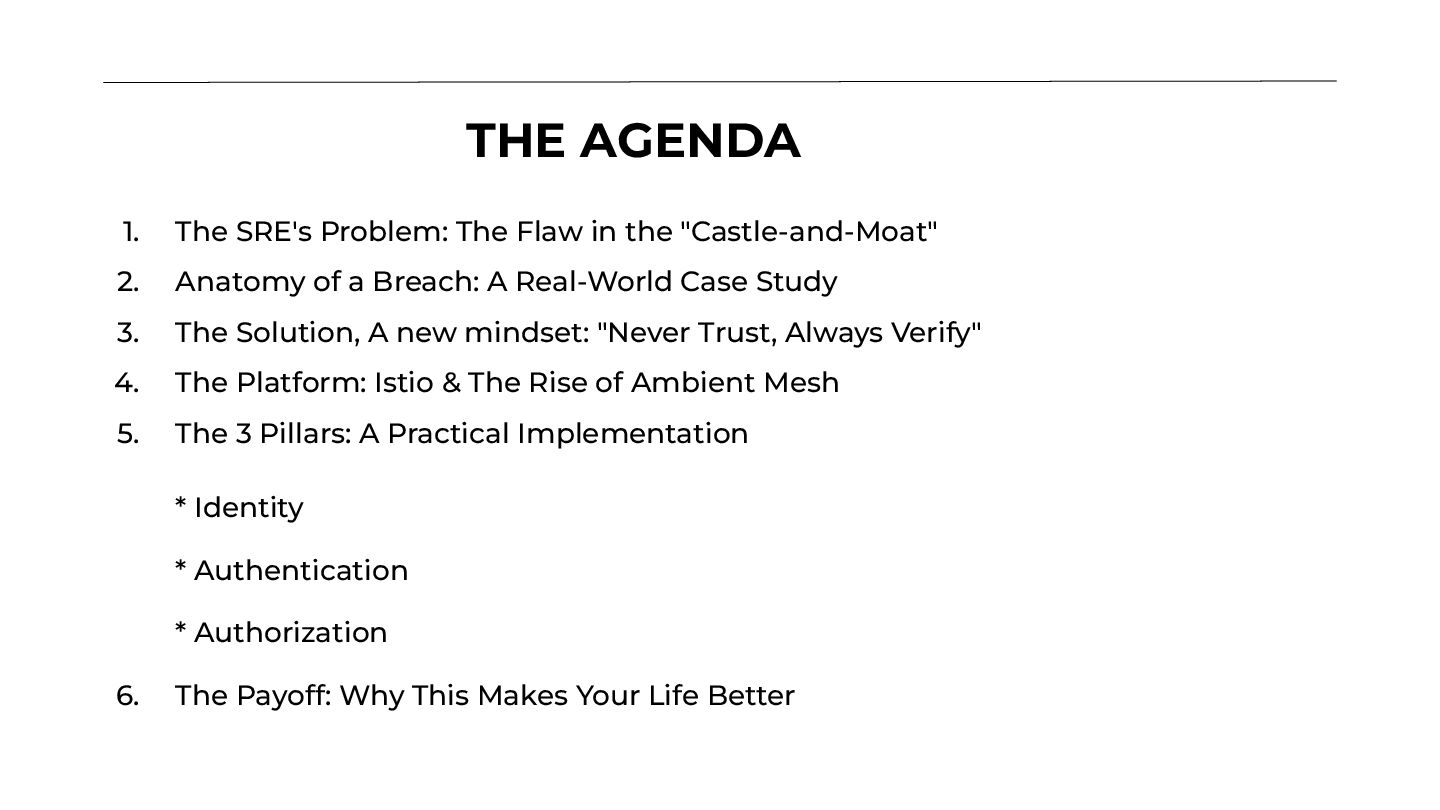
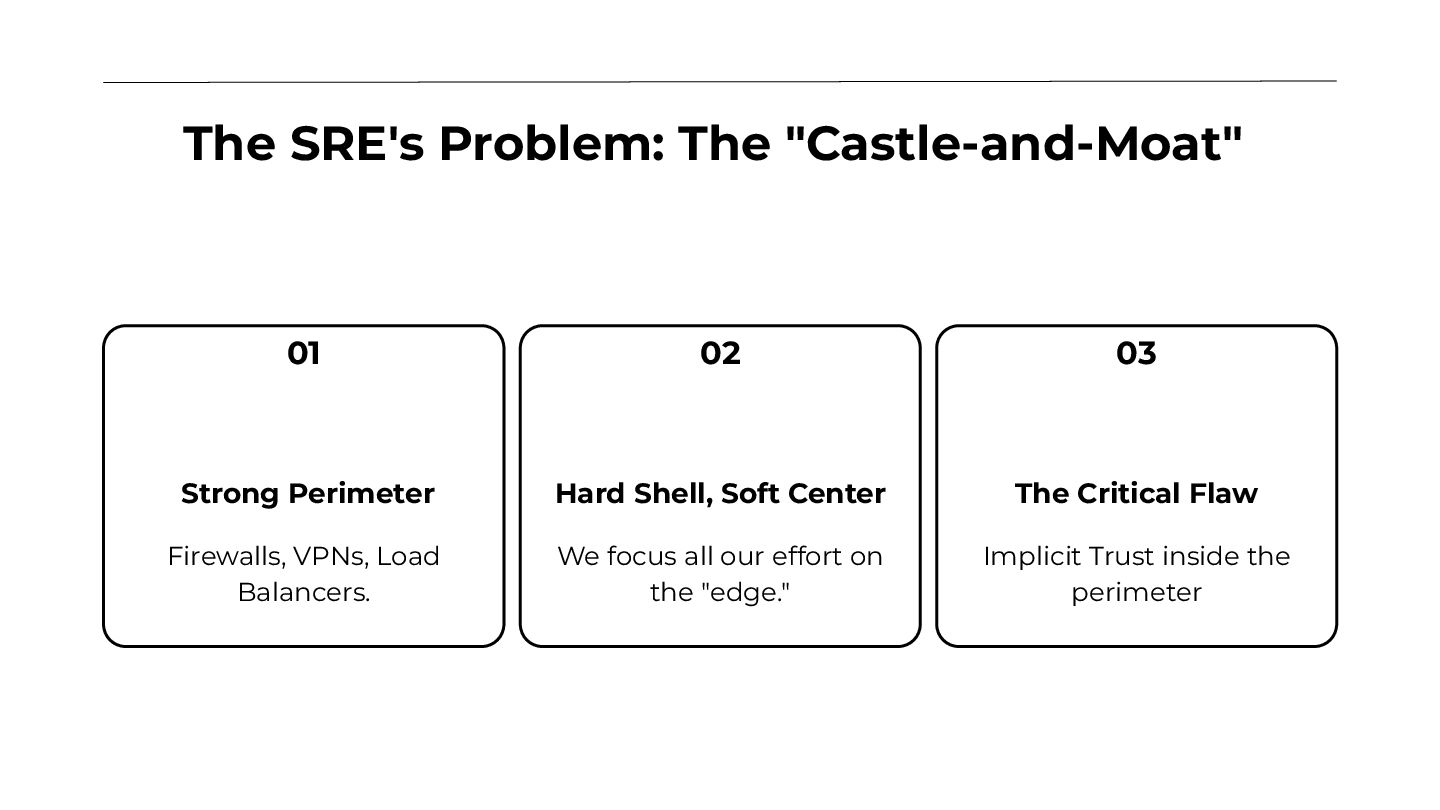
"Castle-and-Moat" 2. Anatomy of a Breach: A Real-World Case Study 3. The Solution, A new mindset: "Never Trust, Always Verify" 4. The Platform: Istio & The Rise of Ambient Mesh 5. The 3 Pillars: A Practical Implementation * Identity * Authentication * Authorization 6. The Payoff: Why This Makes Your Life Better
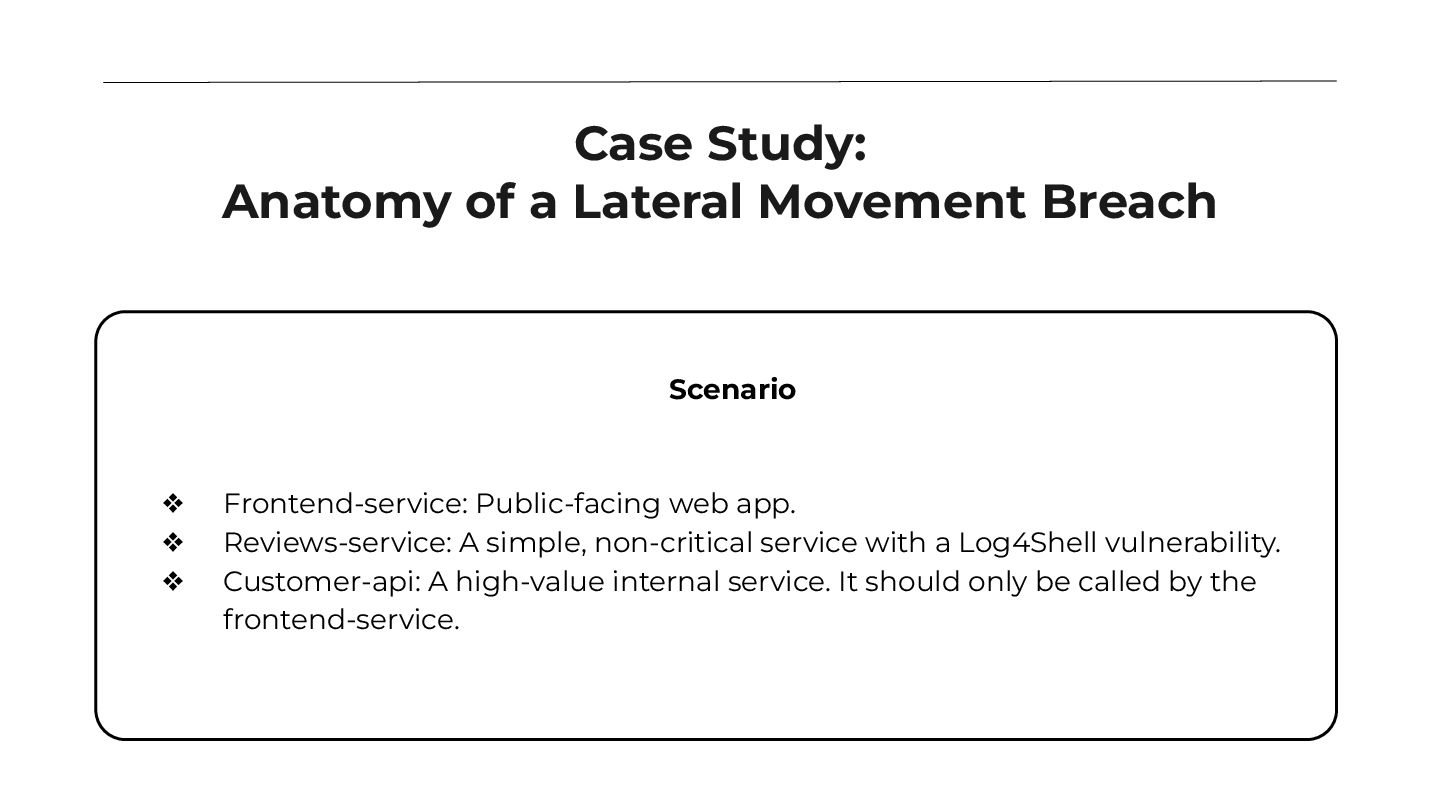
Public-facing web app. ❖ Reviews-service: A simple, non-critical service with a Log4Shell vulnerability. ❖ Customer-api: A high-value internal service. It should only be called by the frontend-service. Scenario
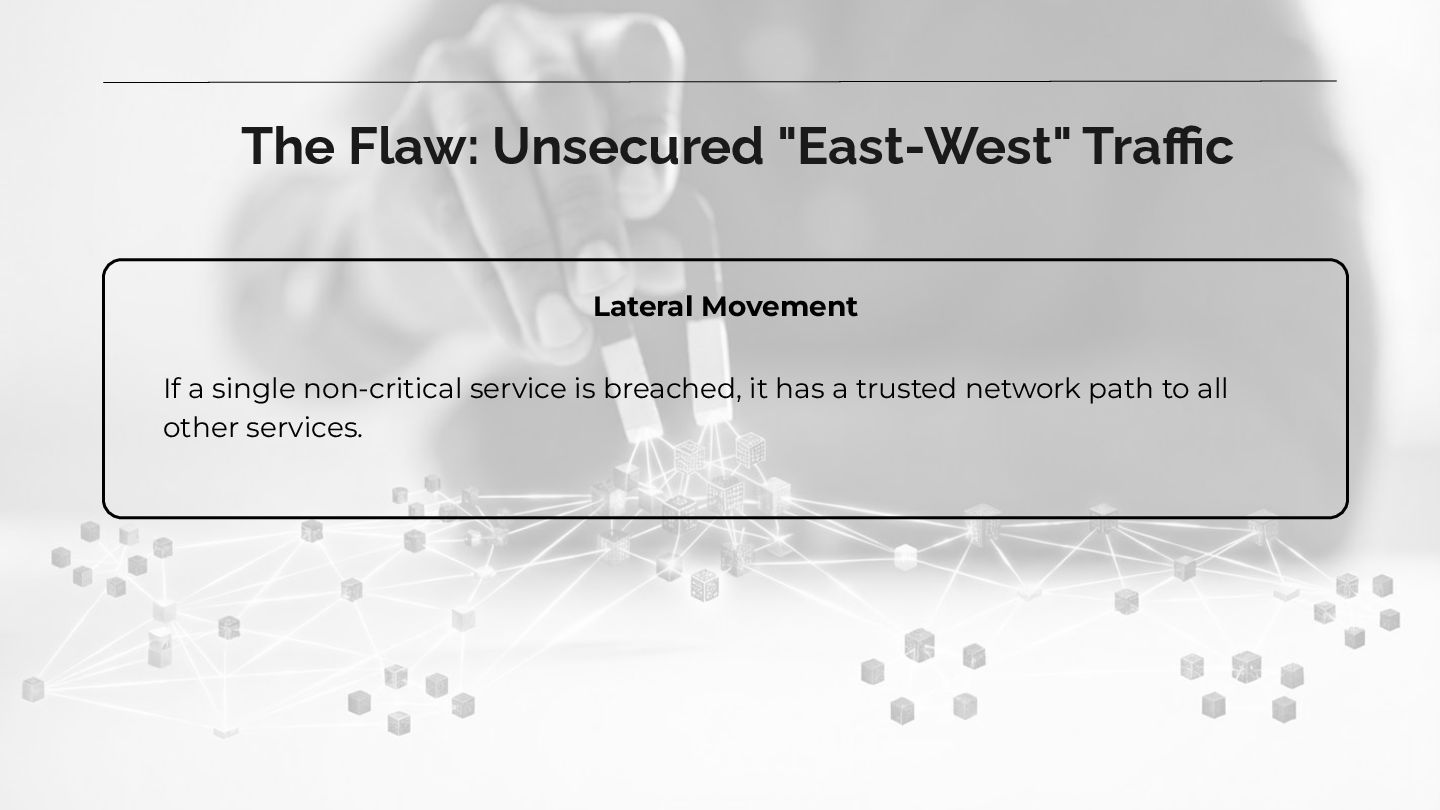
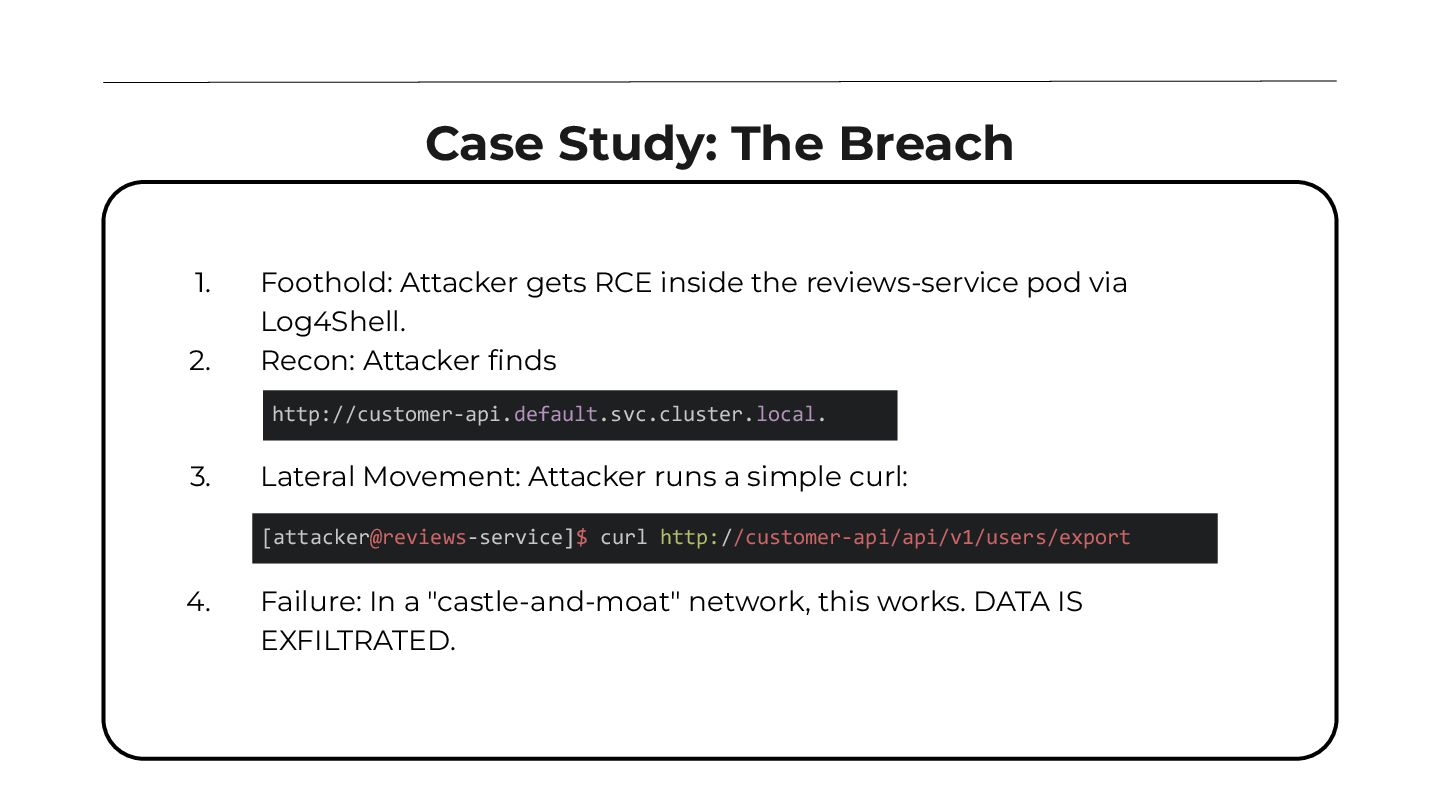
the reviews-service pod via Log4Shell. 2. Recon: Attacker finds 3. Lateral Movement: Attacker runs a simple curl: 4. Failure: In a "castle-and-moat" network, this works. DATA IS EXFILTRATED. http://customer-api.default.svc.cluster.local. [attacker@reviews-service]$ curl http://customer-api/api/v1/users/export
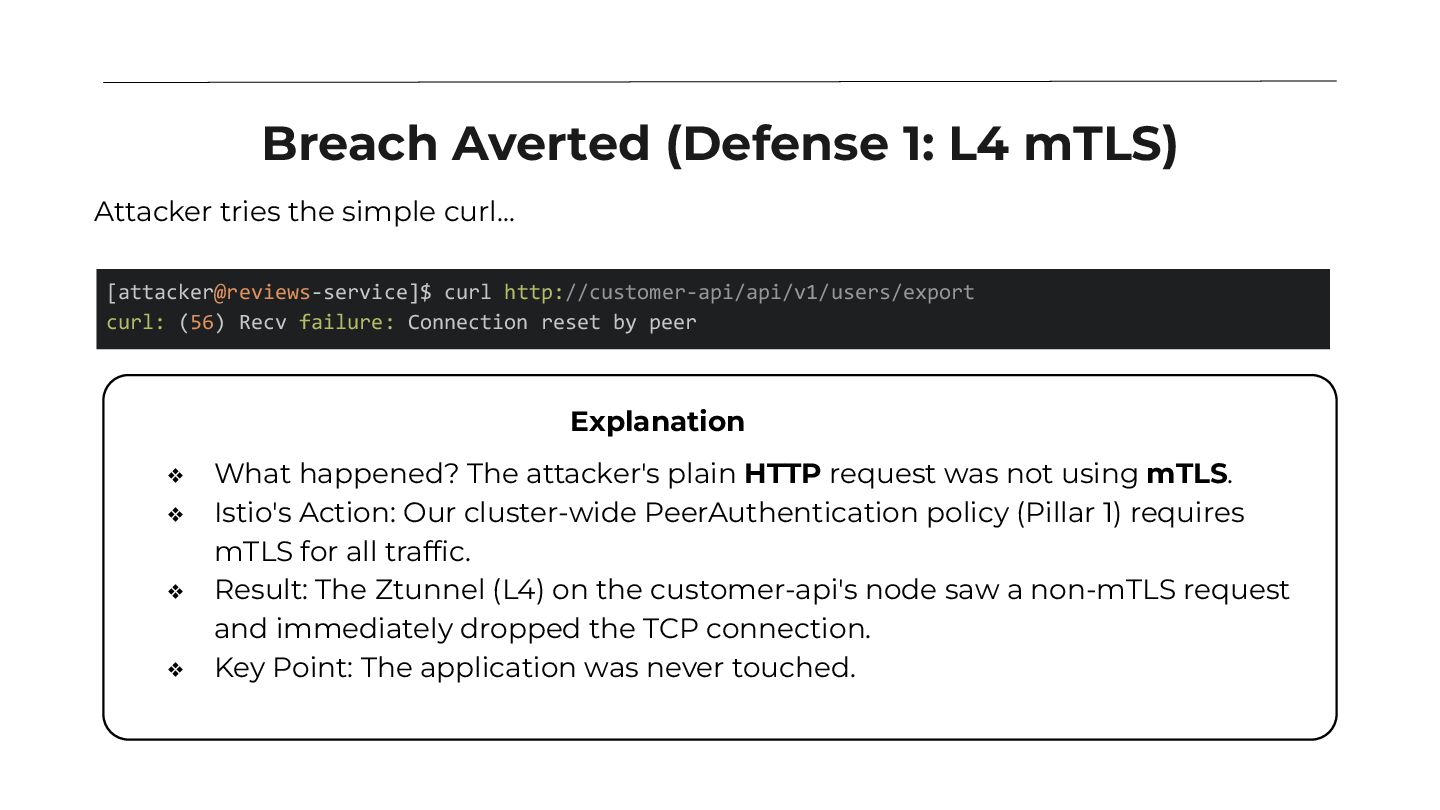
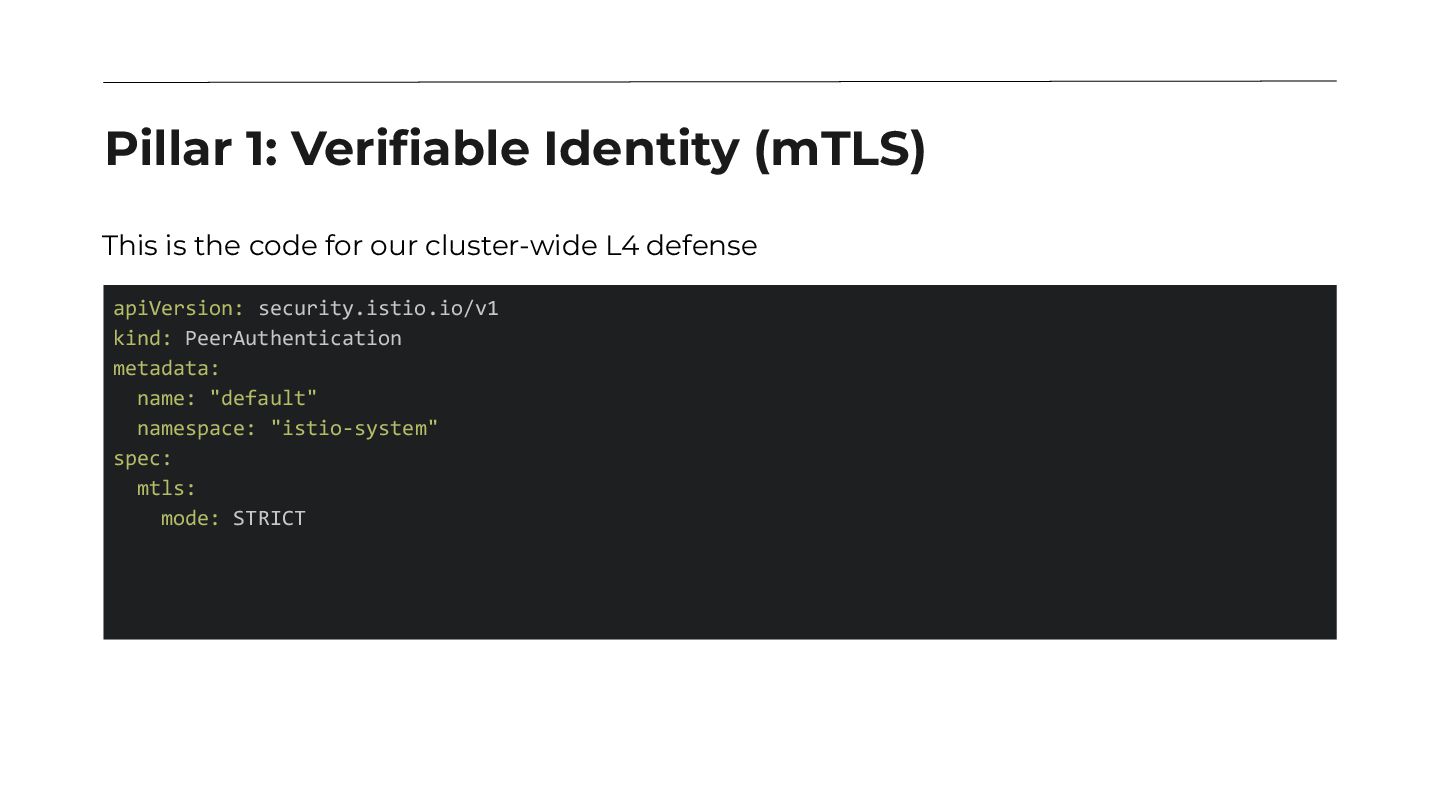
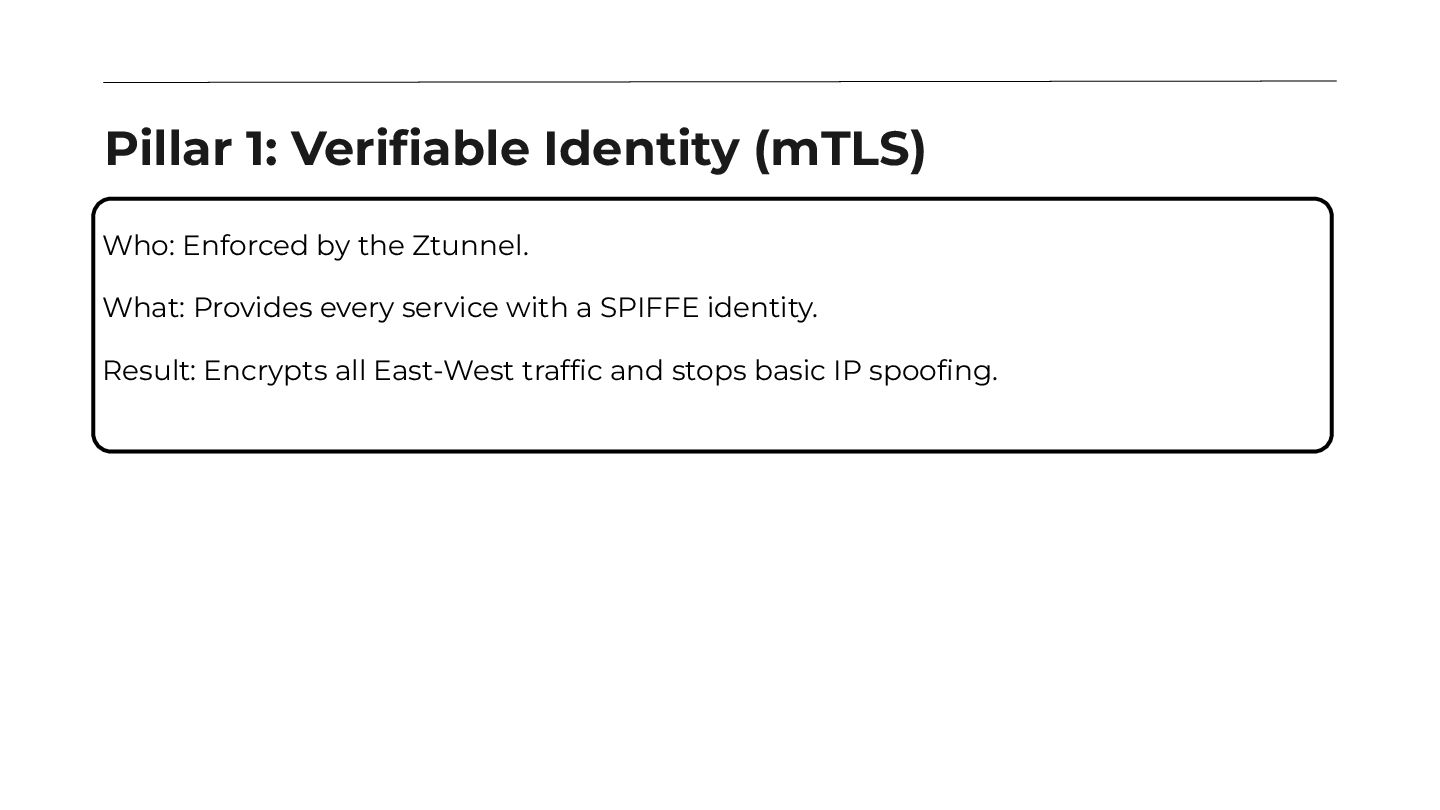
curl... [attacker@reviews-service]$ curl http://customer-api/api/v1/users/export curl: (56) Recv failure: Connection reset by peer ❖ What happened? The attacker's plain HTTP request was not using mTLS. ❖ Istio's Action: Our cluster-wide PeerAuthentication policy (Pillar 1) requires mTLS for all traffic. ❖ Result: The Ztunnel (L4) on the customer-api's node saw a non-mTLS request and immediately dropped the TCP connection. ❖ Key Point: The application was never touched. Explanation
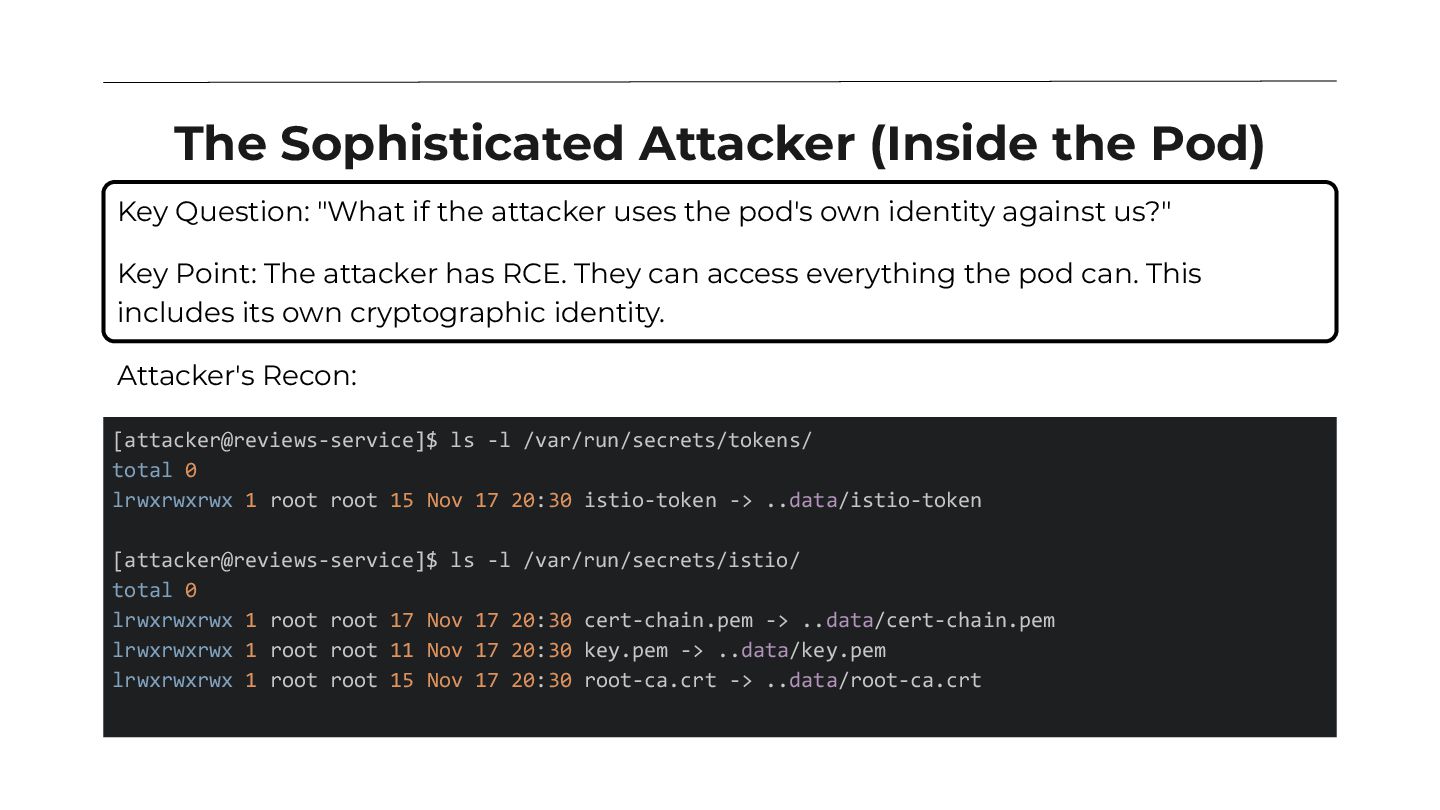
the attacker uses the pod's own identity against us?" Key Point: The attacker has RCE. They can access everything the pod can. This includes its own cryptographic identity. Attacker's Recon: [attacker@reviews-service]$ ls -l /var/run/secrets/tokens/ total 0 lrwxrwxrwx 1 root root 15 Nov 17 20:30 istio-token -> ..data/istio-token [attacker@reviews-service]$ ls -l /var/run/secrets/istio/ total 0 lrwxrwxrwx 1 root root 17 Nov 17 20:30 cert-chain.pem -> ..data/cert-chain.pem lrwxrwxrwx 1 root root 11 Nov 17 20:30 key.pem -> ..data/key.pem lrwxrwxrwx 1 root root 15 Nov 17 20:30 root-ca.crt -> ..data/root-ca.crt
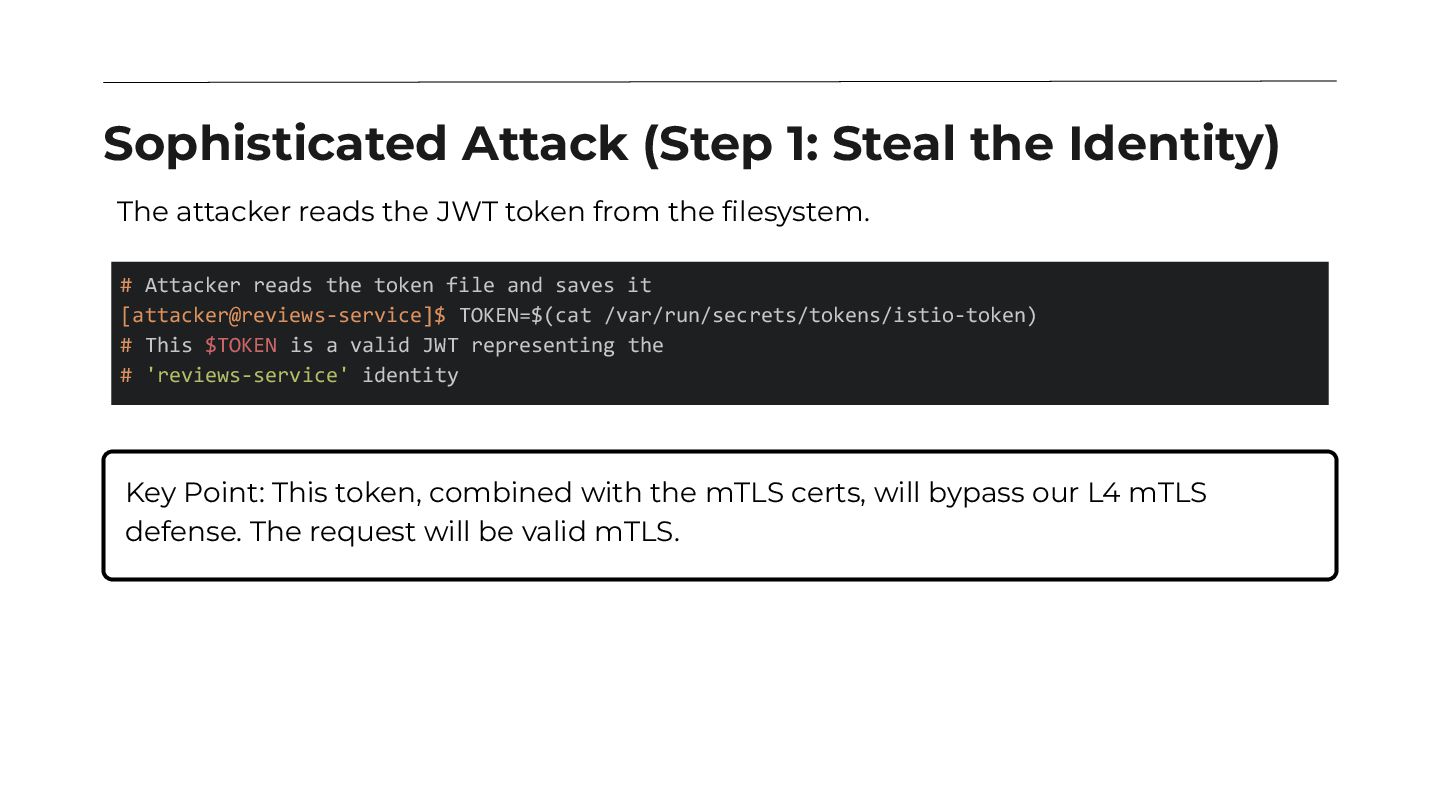
the JWT token from the filesystem. # Attacker reads the token file and saves it [attacker@reviews-service]$ TOKEN=$(cat /var/run/secrets/tokens/istio-token) # This $TOKEN is a valid JWT representing the # 'reviews-service' identity Key Point: This token, combined with the mTLS certs, will bypass our L4 mTLS defense. The request will be valid mTLS.
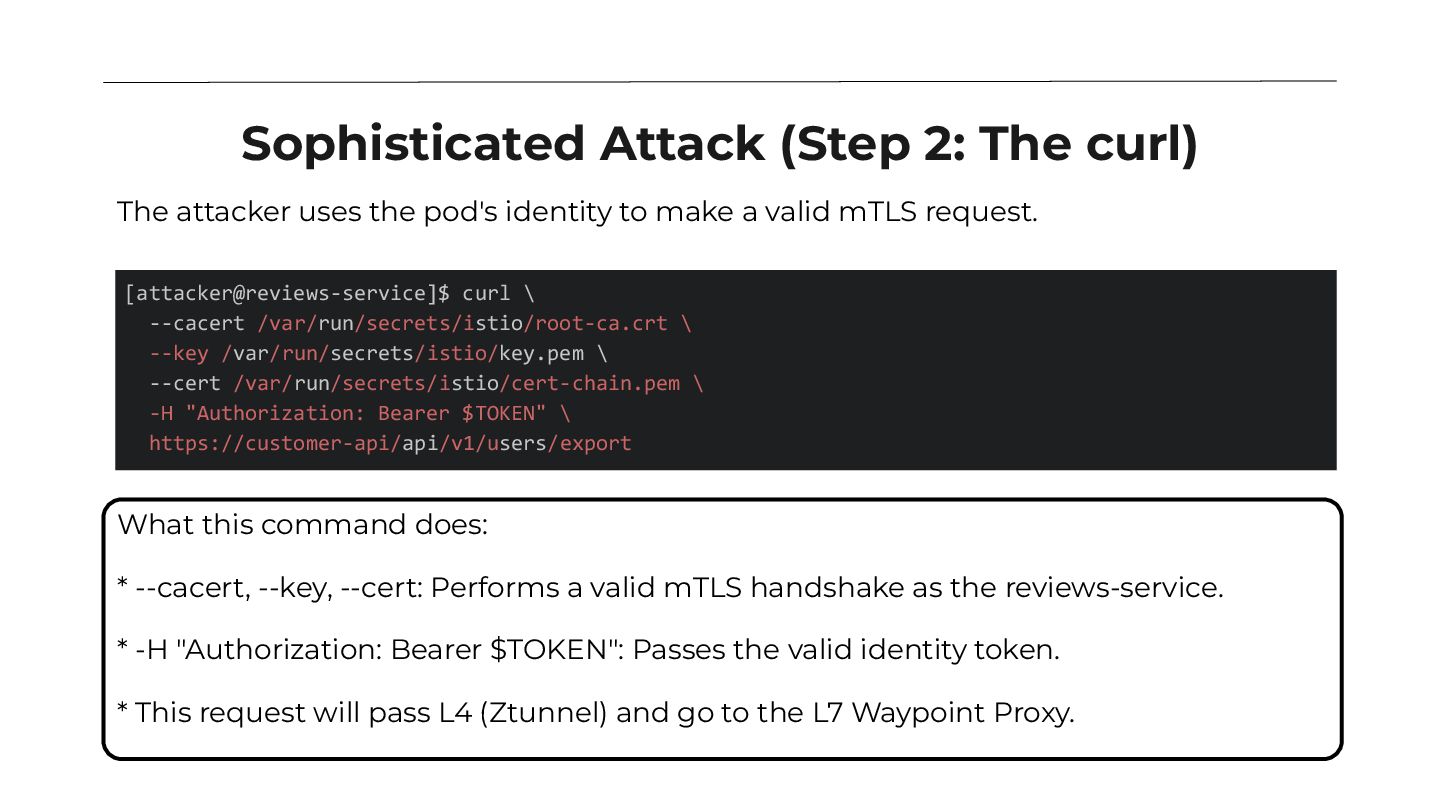
pod's identity to make a valid mTLS request. What this command does: * --cacert, --key, --cert: Performs a valid mTLS handshake as the reviews-service. * -H "Authorization: Bearer $TOKEN": Passes the valid identity token. * This request will pass L4 (Ztunnel) and go to the L7 Waypoint Proxy. [attacker@reviews-service]$ curl \ --cacert /var/run/secrets/istio/root-ca.crt \ --key /var/run/secrets/istio/key.pem \ --cert /var/run/secrets/istio/cert-chain.pem \ -H "Authorization: Bearer $TOKEN" \ https://customer-api/api/v1/users/export
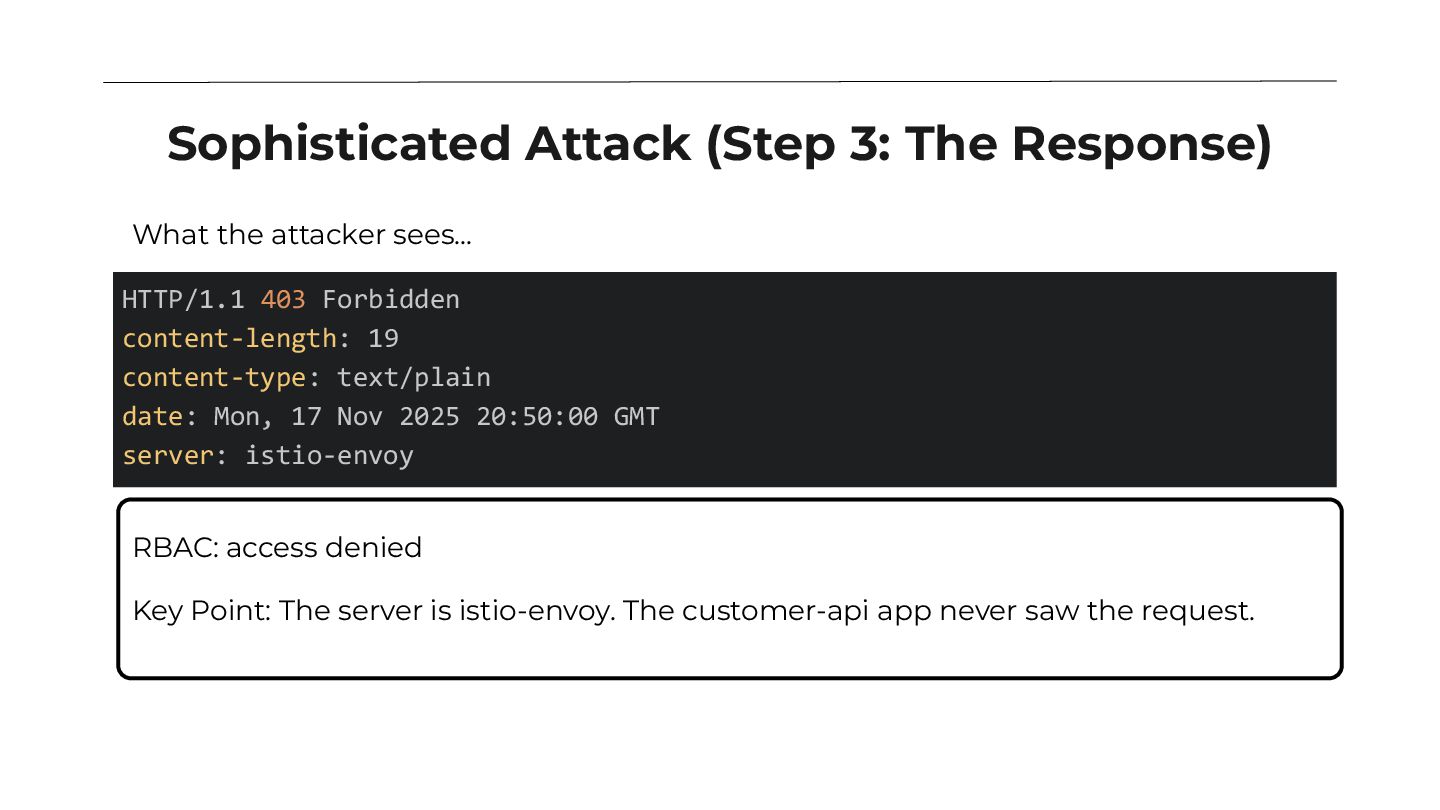
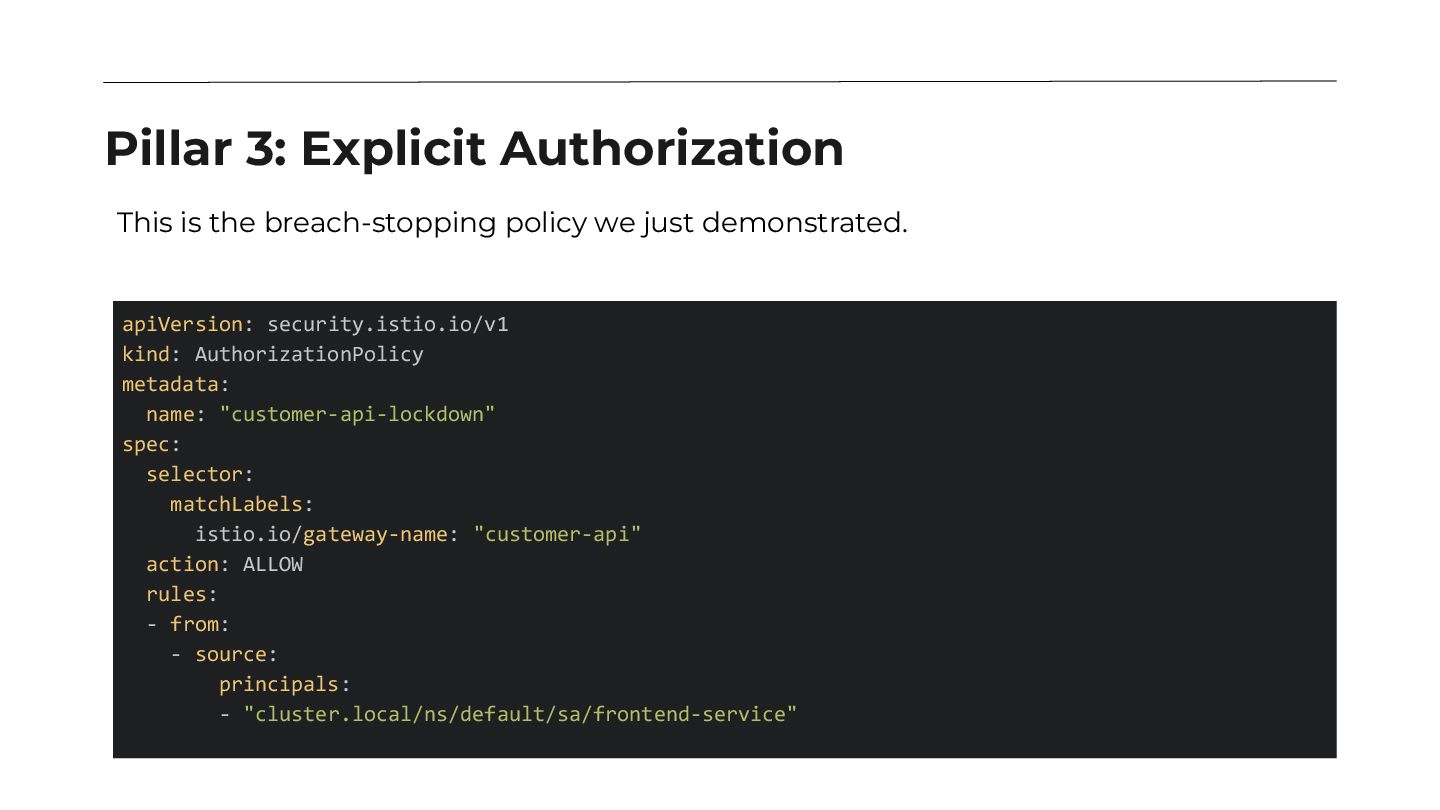
RBAC: access denied Key Point: The server is istio-envoy. The customer-api app never saw the request. HTTP/1.1 403 Forbidden content-length: 19 content-type: text/plain date: Mon, 17 Nov 2025 20:50:00 GMT server: istio-envoy
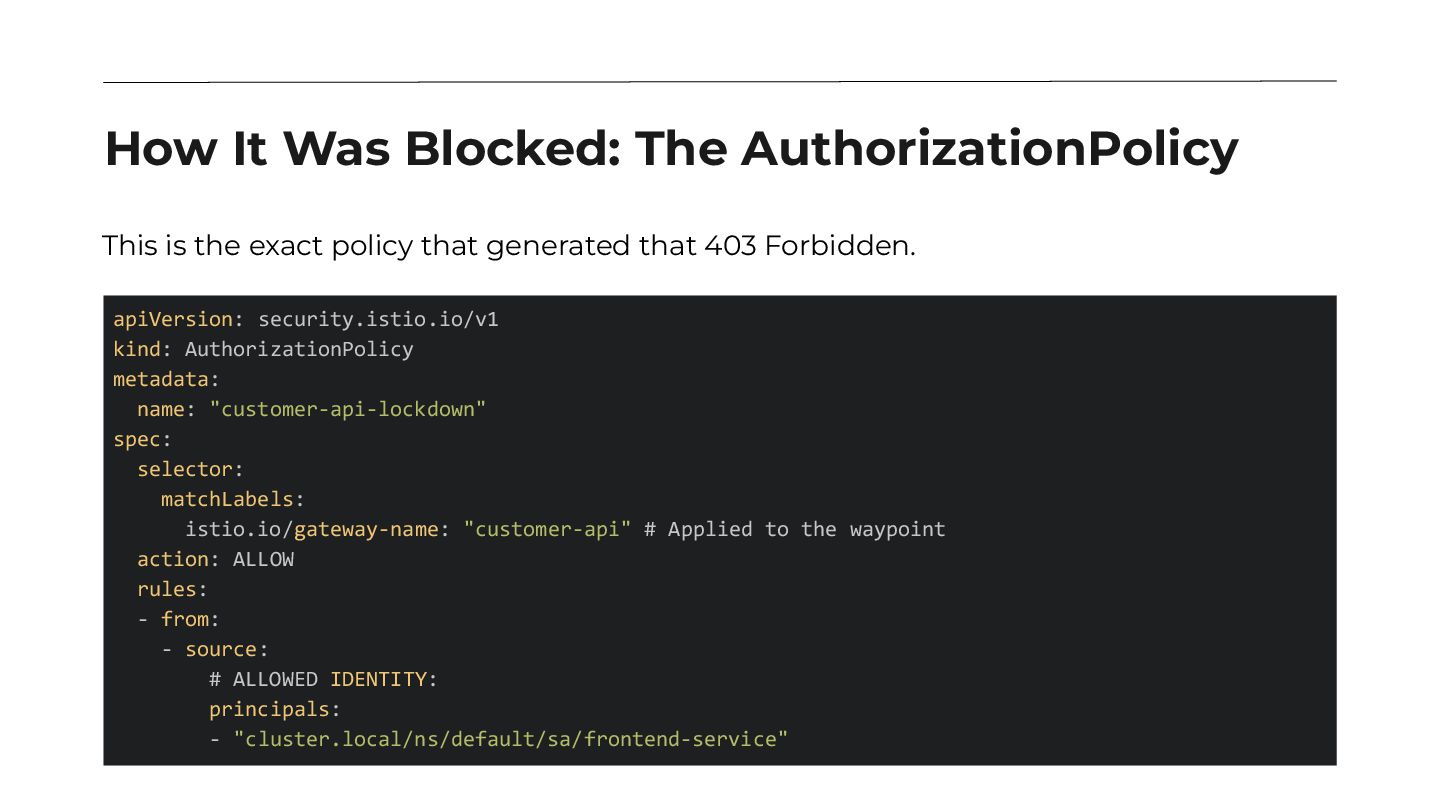
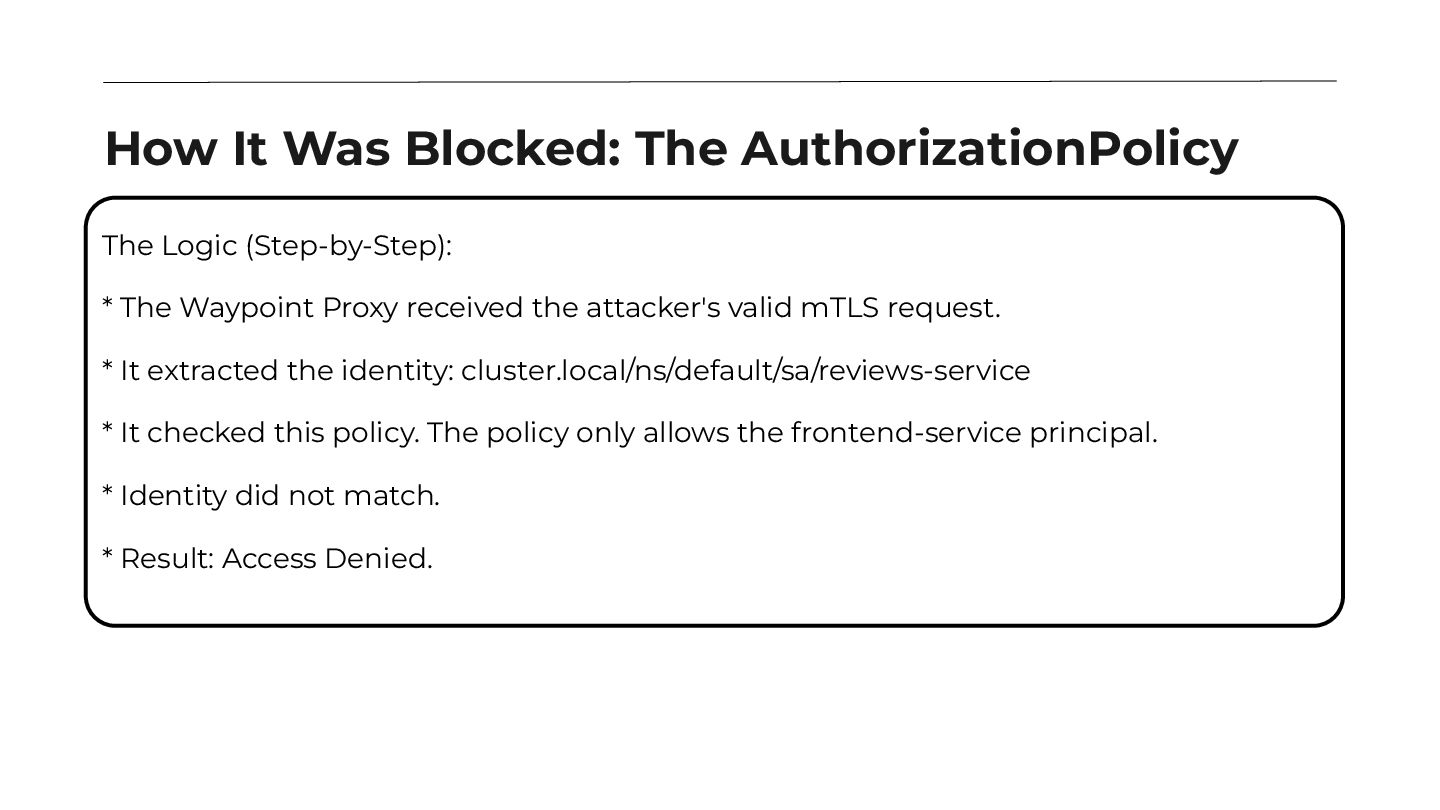
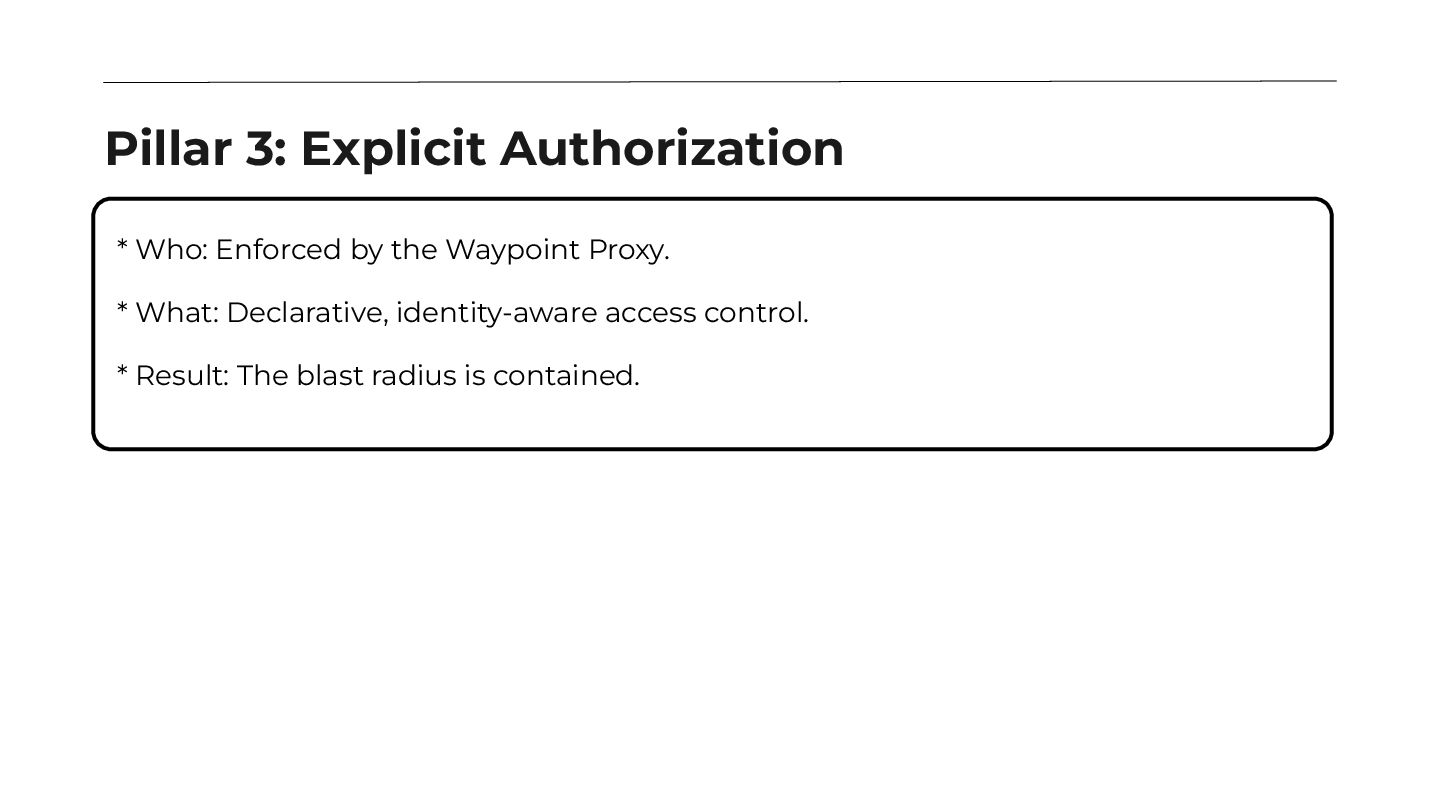
The Waypoint Proxy received the attacker's valid mTLS request. * It extracted the identity: cluster.local/ns/default/sa/reviews-service * It checked this policy. The policy only allows the frontend-service principal. * Identity did not match. * Result: Access Denied.
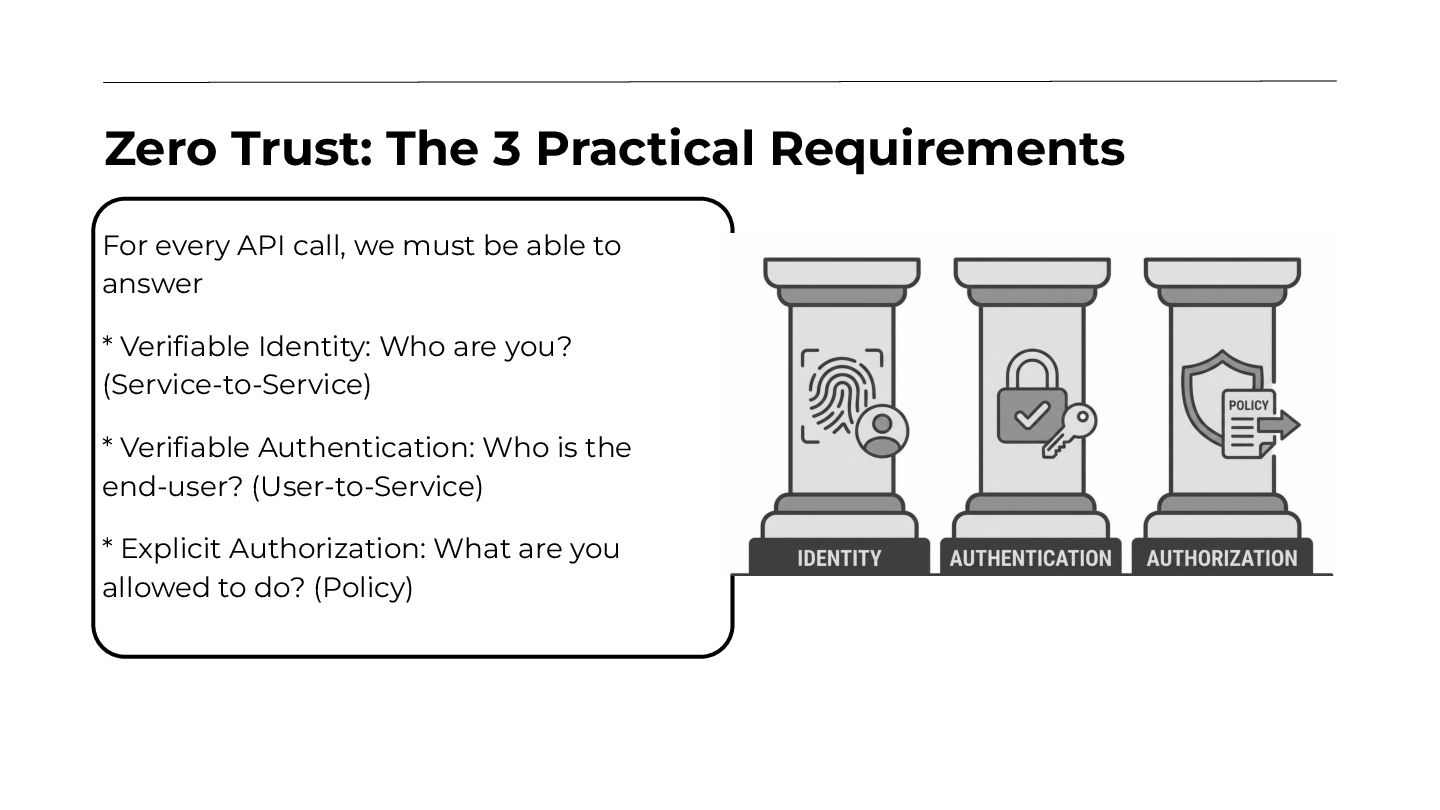
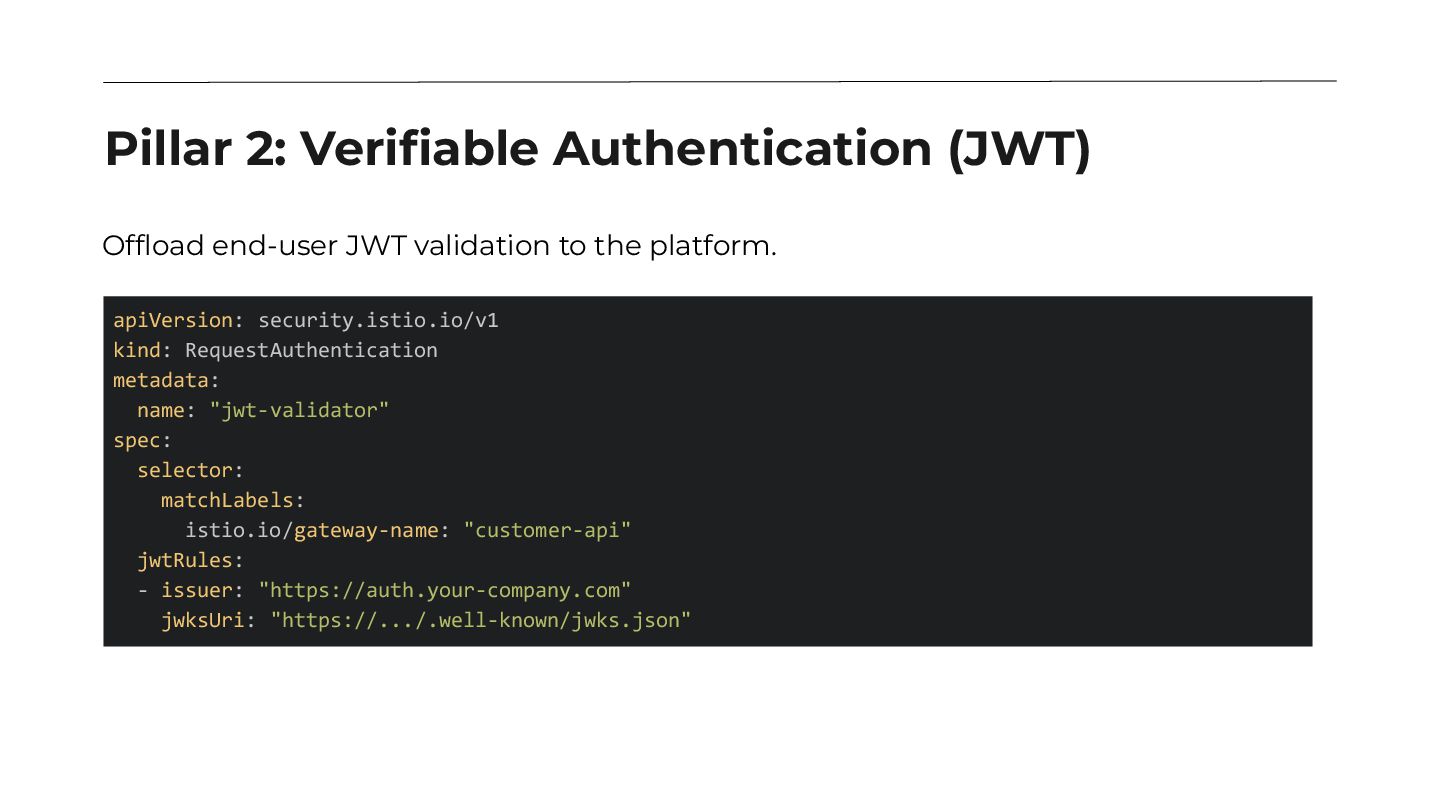
we must be able to answer * Verifiable Identity: Who are you? (Service-to-Service) * Verifiable Authentication: Who is the end-user? (User-to-Service) * Explicit Authorization: What are you allowed to do? (Policy)
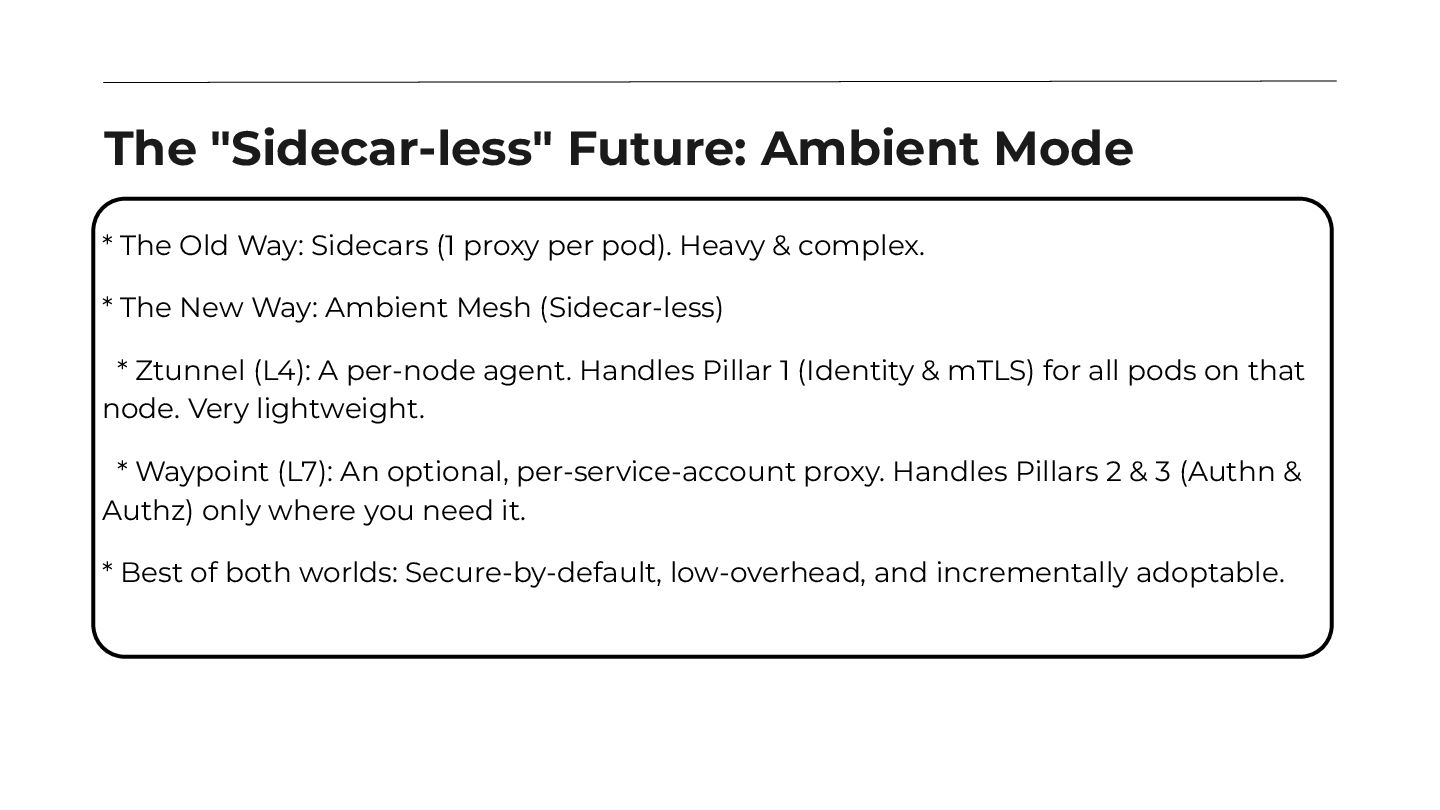
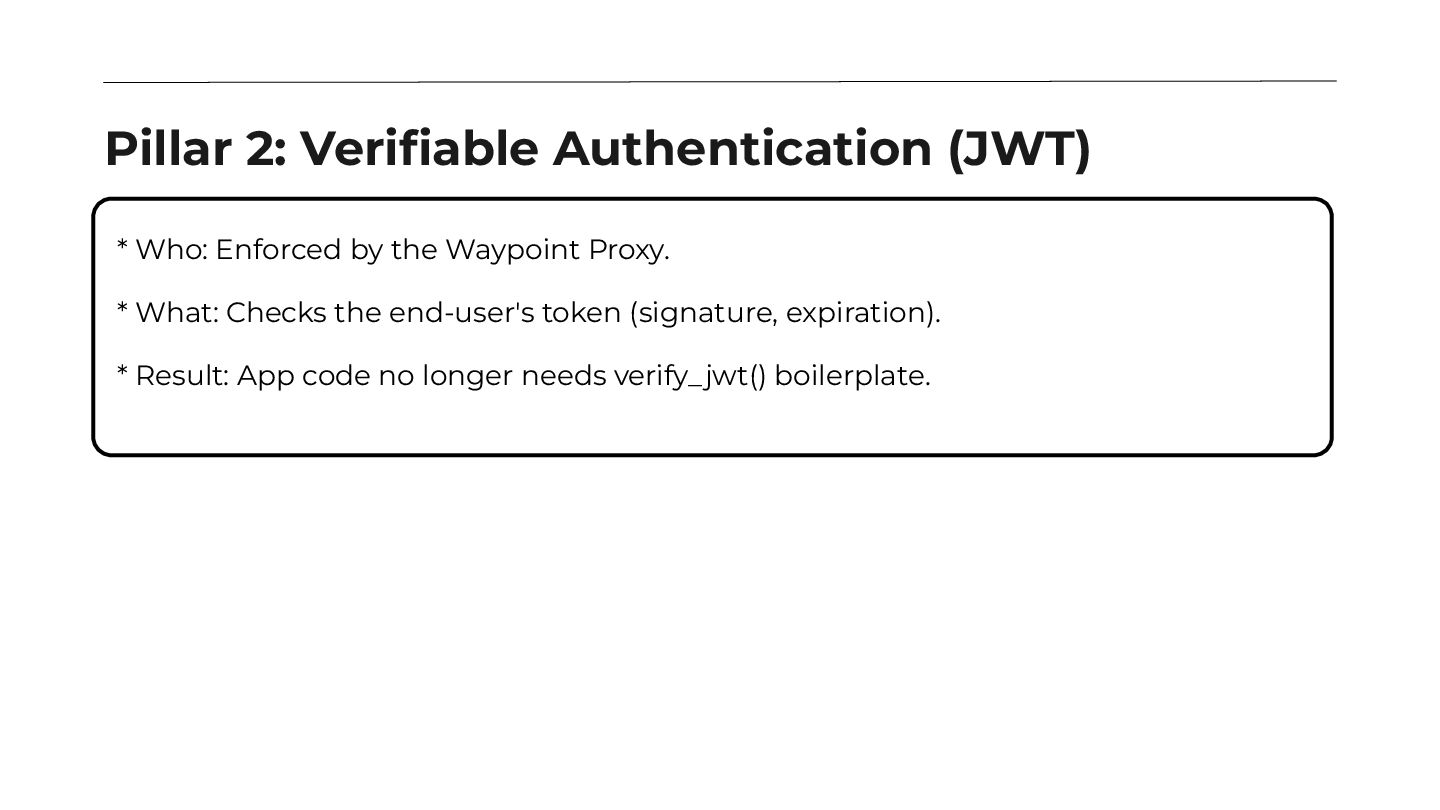
(1 proxy per pod). Heavy & complex. * The New Way: Ambient Mesh (Sidecar-less) * Ztunnel (L4): A per-node agent. Handles Pillar 1 (Identity & mTLS) for all pods on that node. Very lightweight. * Waypoint (L7): An optional, per-service-account proxy. Handles Pillars 2 & 3 (Authn & Authz) only where you need it. * Best of both worlds: Secure-by-default, low-overhead, and incrementally adoptable.
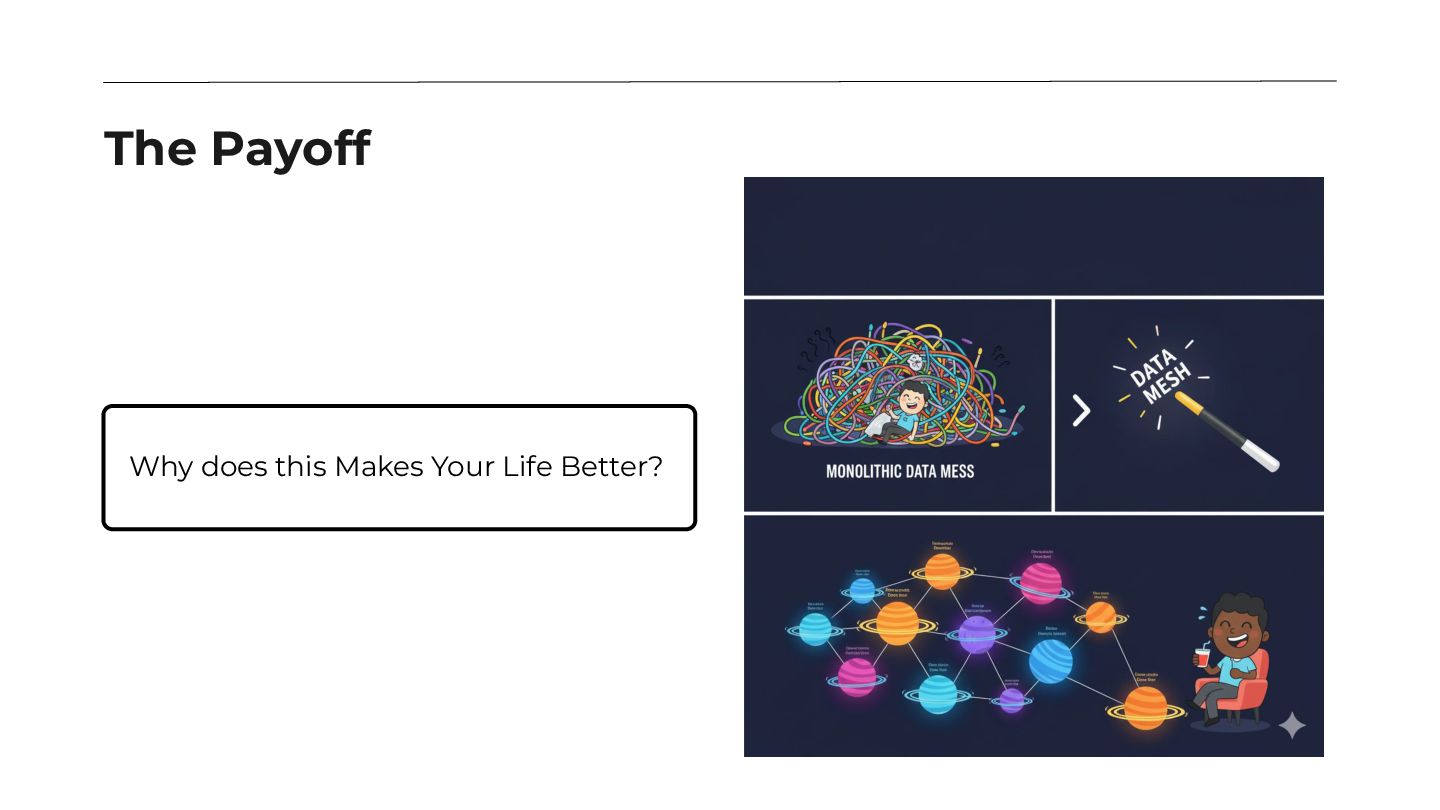
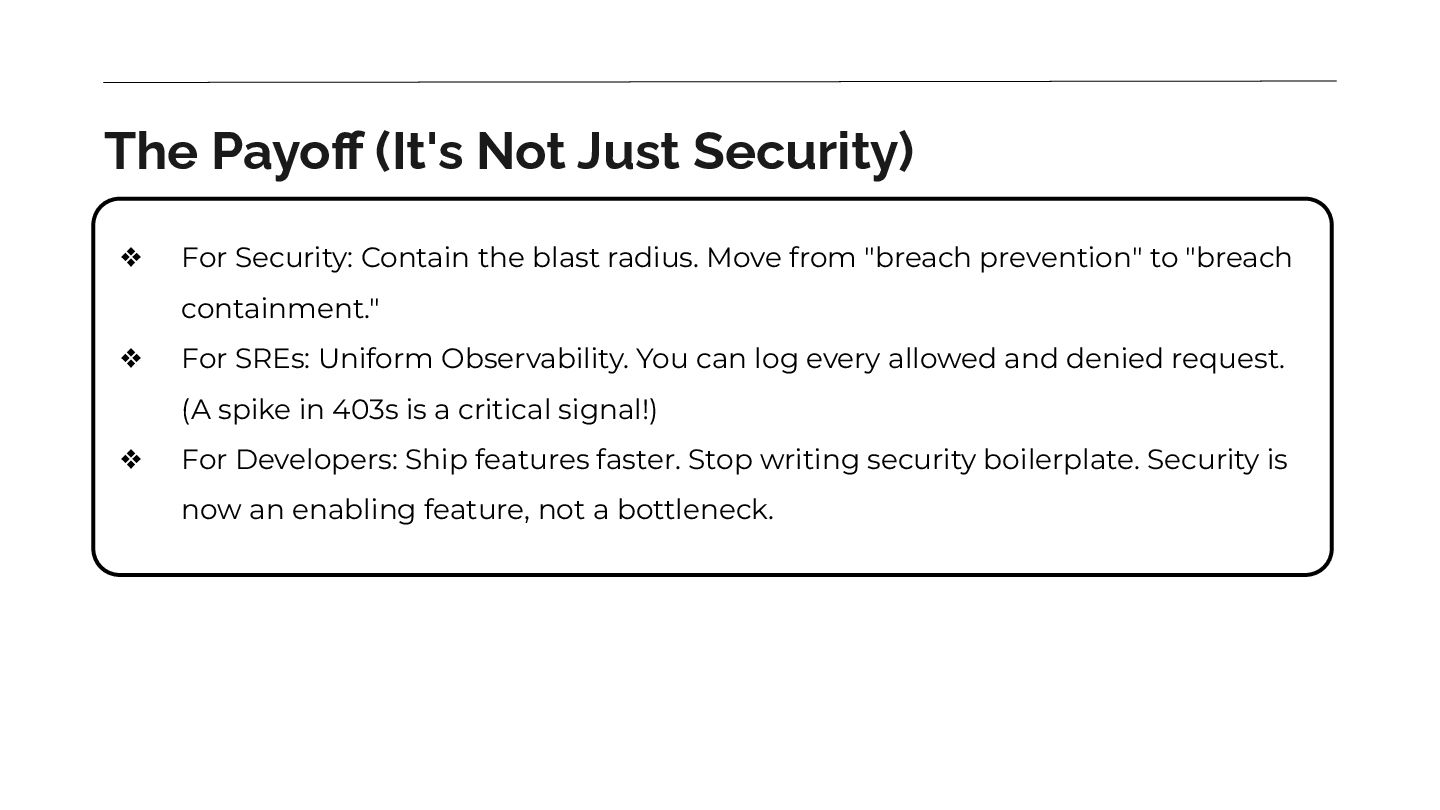
the blast radius. Move from "breach prevention" to "breach containment." ❖ For SREs: Uniform Observability. You can log every allowed and denied request. (A spike in 403s is a critical signal!) ❖ For Developers: Ship features faster. Stop writing security boilerplate. Security is now an enabling feature, not a bottleneck.
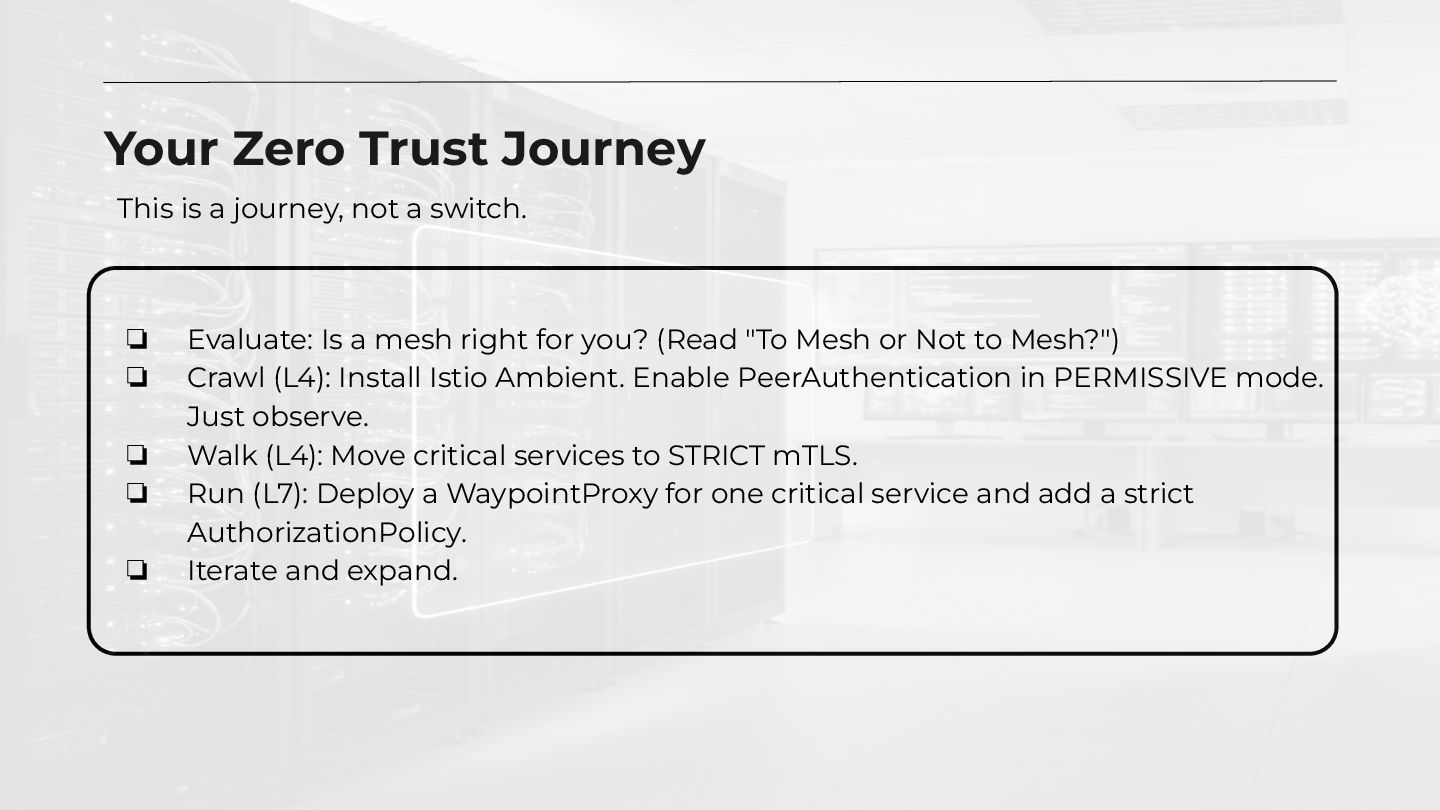
for you? (Read "To Mesh or Not to Mesh?") ❏ Crawl (L4): Install Istio Ambient. Enable PeerAuthentication in PERMISSIVE mode. Just observe. ❏ Walk (L4): Move critical services to STRICT mTLS. ❏ Run (L7): Deploy a WaypointProxy for one critical service and add a strict AuthorizationPolicy. ❏ Iterate and expand. This is a journey, not a switch.


 mofesola
 tomzoh
 masakane55
 ueponx
 athug
athug
 bgpat
bgpat
 kakehashi
 470715
 bcantrill
 htan
htan
 mkdev10
 kawametho
 nayuts
 skoyamalab
 bluesmoon
 jct
jct
 mkilby
 philnash
 lcolladotor
 baasie
 tenderlove
 rakko
rakko
 codingconduct
 takai
takai
 bryan
bryan