Upgrade to Pro — share decks privately, control downloads, hide ads and more …

DRUGS ACTING ON THE PERIPHERAL NERVOUS SYSTEM

DRUGS ACTING ON THE PERIPHERAL NERVOUS SYSTEM

Drugs acting on the **Peripheral Nervous System (PNS)** modify physiological functions by mimicking, enhancing, or blocking the actions of endogenous neurotransmitters outside the brain and spinal cord.

The PNS is anatomically and functionally divided into two primary systems targeted by pharmacology:

1. **Autonomic Nervous System (ANS):** Regulates involuntary visceral functions (cardiac muscle, smooth muscle, and exocrine glands) through the **Parasympathetic** (cholinergic) and **Sympathetic** (adrenergic) divisions.
2. **Somatic Nervous System (SNS):** Controls voluntary skeletal muscle contractions via the neuromuscular junction (NMJ), alongside sensory transmission modifiable by **Local Anesthetics**.

---

## 1. Cholinergic System (Parasympathomimetics & Anticholinergics)

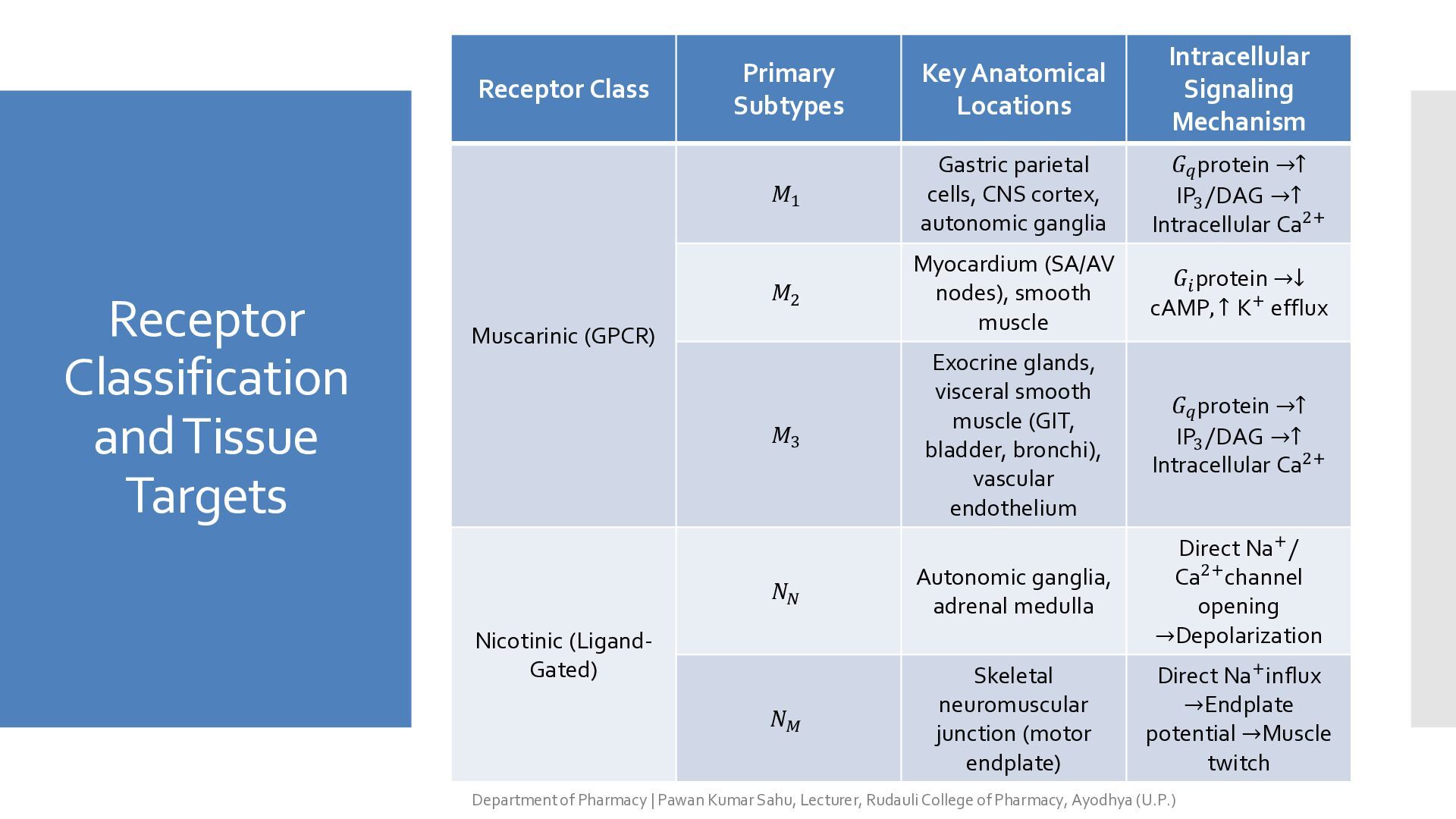
The primary neurotransmitter is **Acetylcholine (ACh)**, acting on **Muscarinic** ($M_1$–$M_5$, G-protein-coupled) and **Nicotinic** ($N_M$, $N_N$, ligand-gated ion channels) receptors.

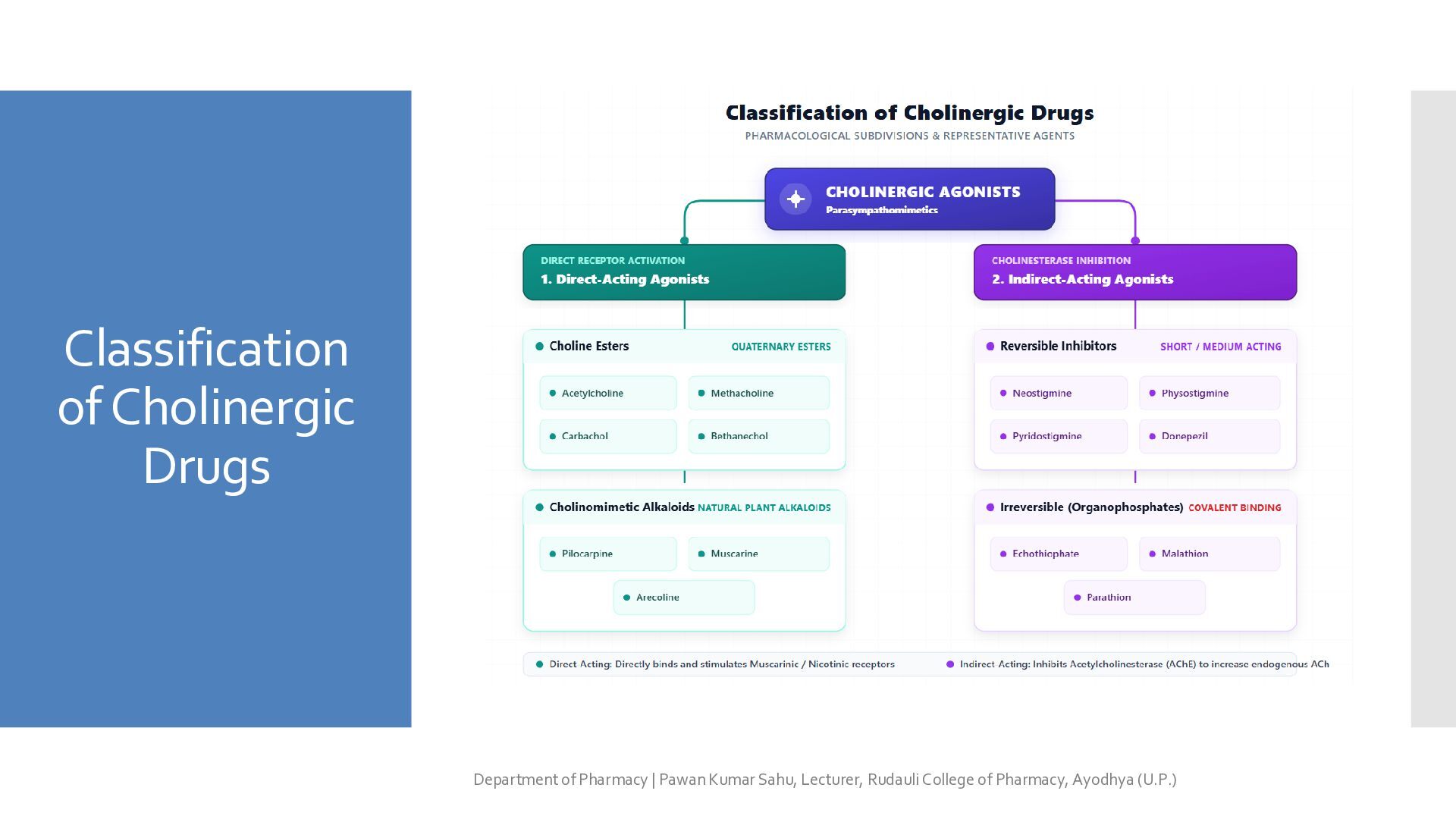
* **Parasympathomimetics (Cholinergic Agonists):**
* *Direct-acting:* Bethanechol (postoperative urinary retention), Pilocarpine (glaucoma, xerostomia).
* *Indirect-acting (Cholinesterase Inhibitors):*
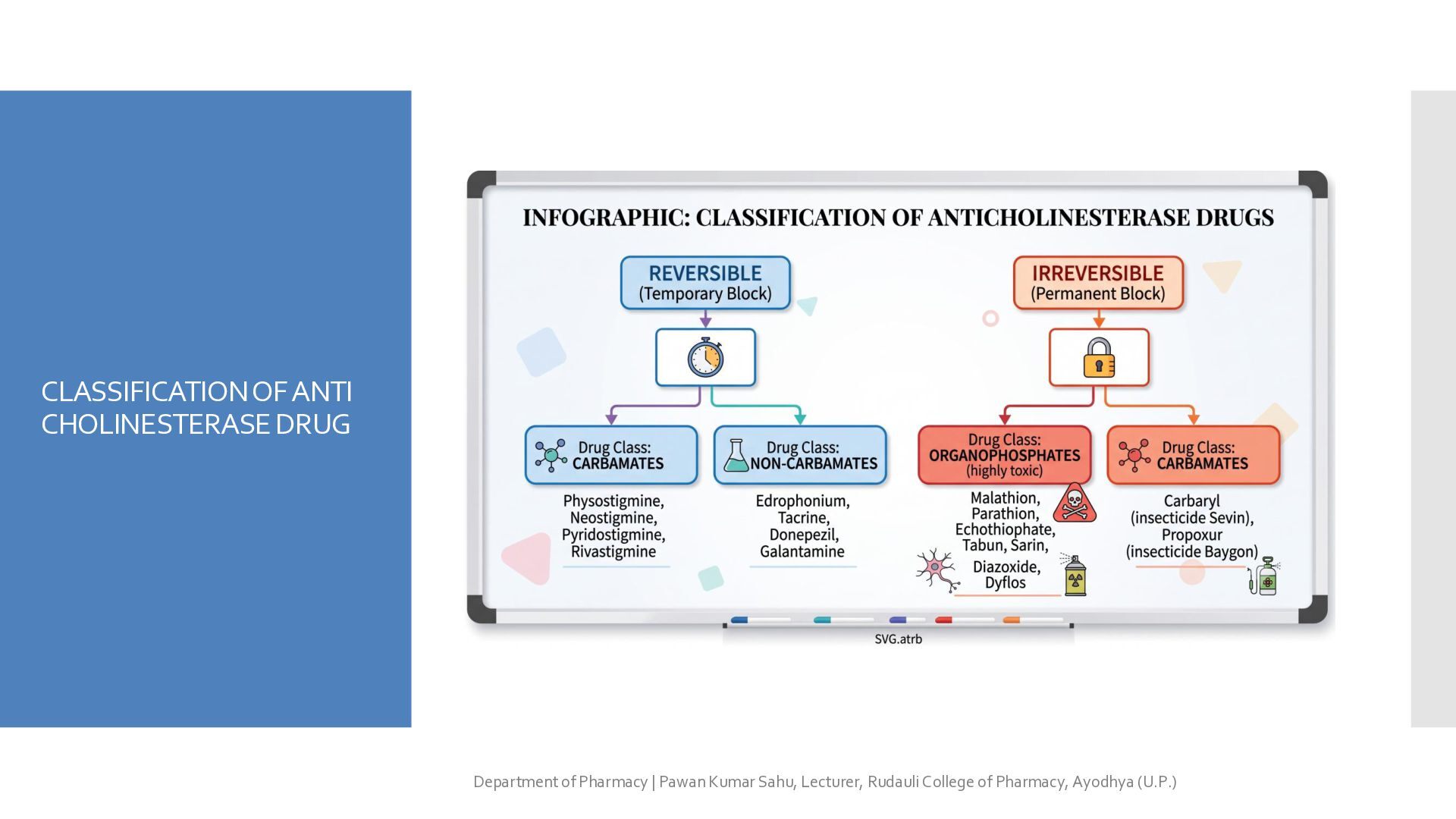
* Reversible: Neostigmine, Pyridostigmine (Myasthenia gravis), Donepezil (Alzheimer's disease), Physostigmine (antidote for atropine toxicity).
* Irreversible: Organophosphates (insecticides, ecothiophate).

* **Parasympatholytics (Anticholinergics / Muscarinic Antagonists):**
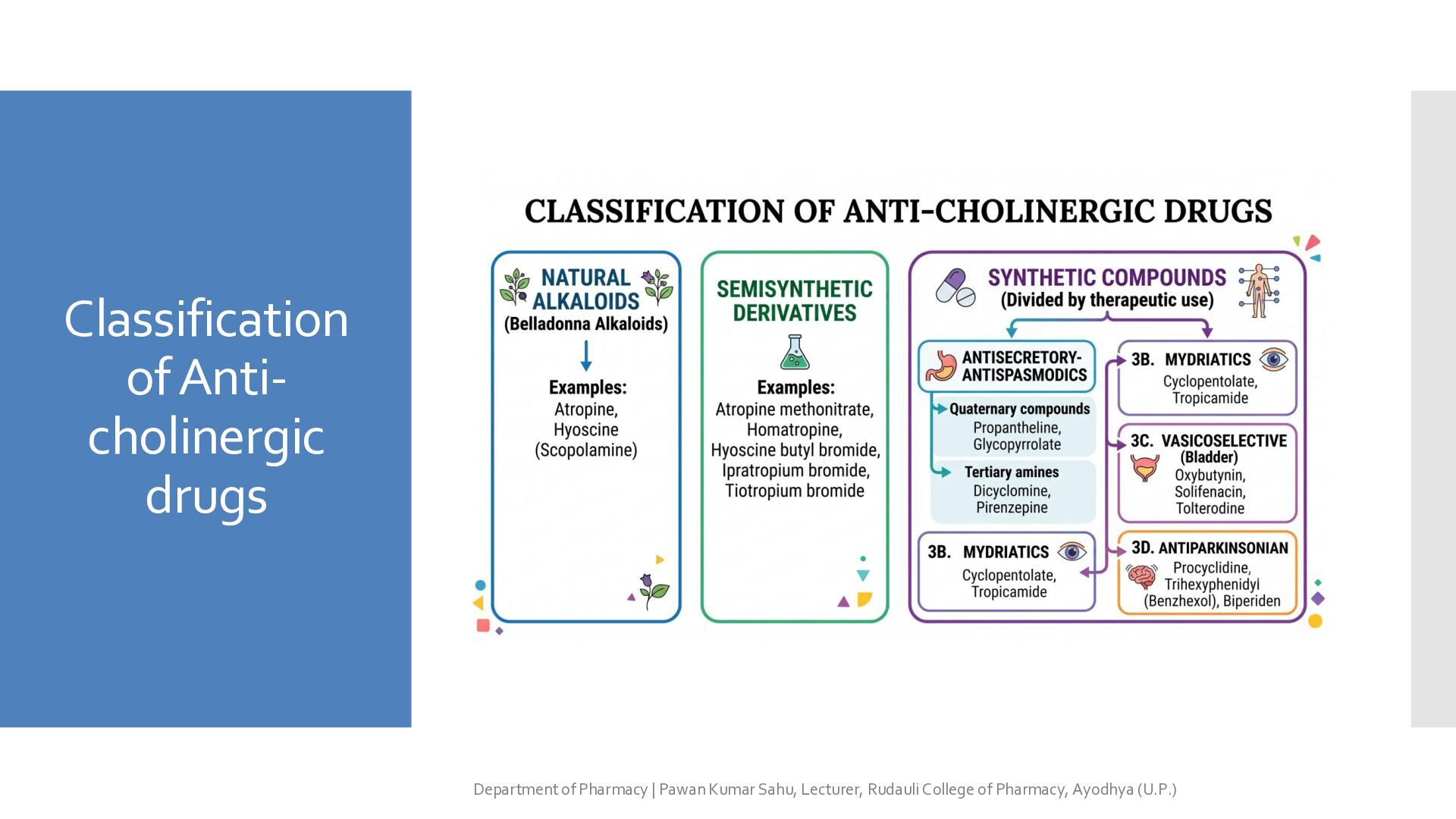
* *Prototype:* Atropine (blocks vagal bradycardia, treats organophosphate poisoning).
* *Other Agents:* Hyoscine/Scopolamine (motion sickness), Ipratropium/Tiotropium (COPD, asthma), Oxybutynin/Tolterodine (overactive bladder), Glycopyrrolate (pre-anesthetic medication to dry secretions).

---

## 2. Adrenergic System (Sympathomimetics & Sympatholytics)

The principal neurotransmitters are **Norepinephrine (NE)**, **Epinephrine (Epi)**, and **Dopamine (DA)**, acting on $\alpha$ ($\alpha_1$, $\alpha_2$) and $\beta$ ($\beta_1$, $\beta_2$, $\beta_3$) adrenergic receptors.

* **Sympathomimetics (Adrenergic Agonists):**
* *Direct Non-selective:* Epinephrine (anaphylaxis, cardiac arrest), Norepinephrine (septic shock).
* *$\alpha_1$-selective:* Phenylephrine (nasal decongestant, vasopressor).
* *$\alpha_2$-selective:* Clonidine, Methyldopa (centrally acting sympatholytics for hypertension).
* *$\beta_1$-selective:* Dobutamine (cardiogenic shock, acute heart failure).
* *$\beta_2$-selective:* Salbutamol/Albuterol, Formoterol (bronchospasm in asthma/COPD).
* *Indirect/Mixed-acting:* Ephedrine, Pseudoephedrine, Amphetamine.

* **Sympatholytics (Adrenergic Blockers):**
* *$\alpha$-blockers:* Prazosin, Tamsulosin ($\alpha_{1A}$-selective for BPH), Phentolamine (pheochromocytoma).
* *$\beta$-blockers:*
* Non-selective ($\beta_1 + \beta_2$): Propranolol, Timolol.
* Cardioselective ($\beta_1$): Atenolol, Metoprolol, Bisoprolol.
* Combined $\alpha + \beta$ blockers: Labetalol, Carvedilol.

---

## 3. Drugs Acting on Somatic Motor Transmission (NMJ)

These agents target nicotinic receptors ($N_M$) at the motor endplate to induce temporary muscle paralysis during surgical procedures and endotracheal intubation.

* **Neuromuscular Blockers (NMBs):**
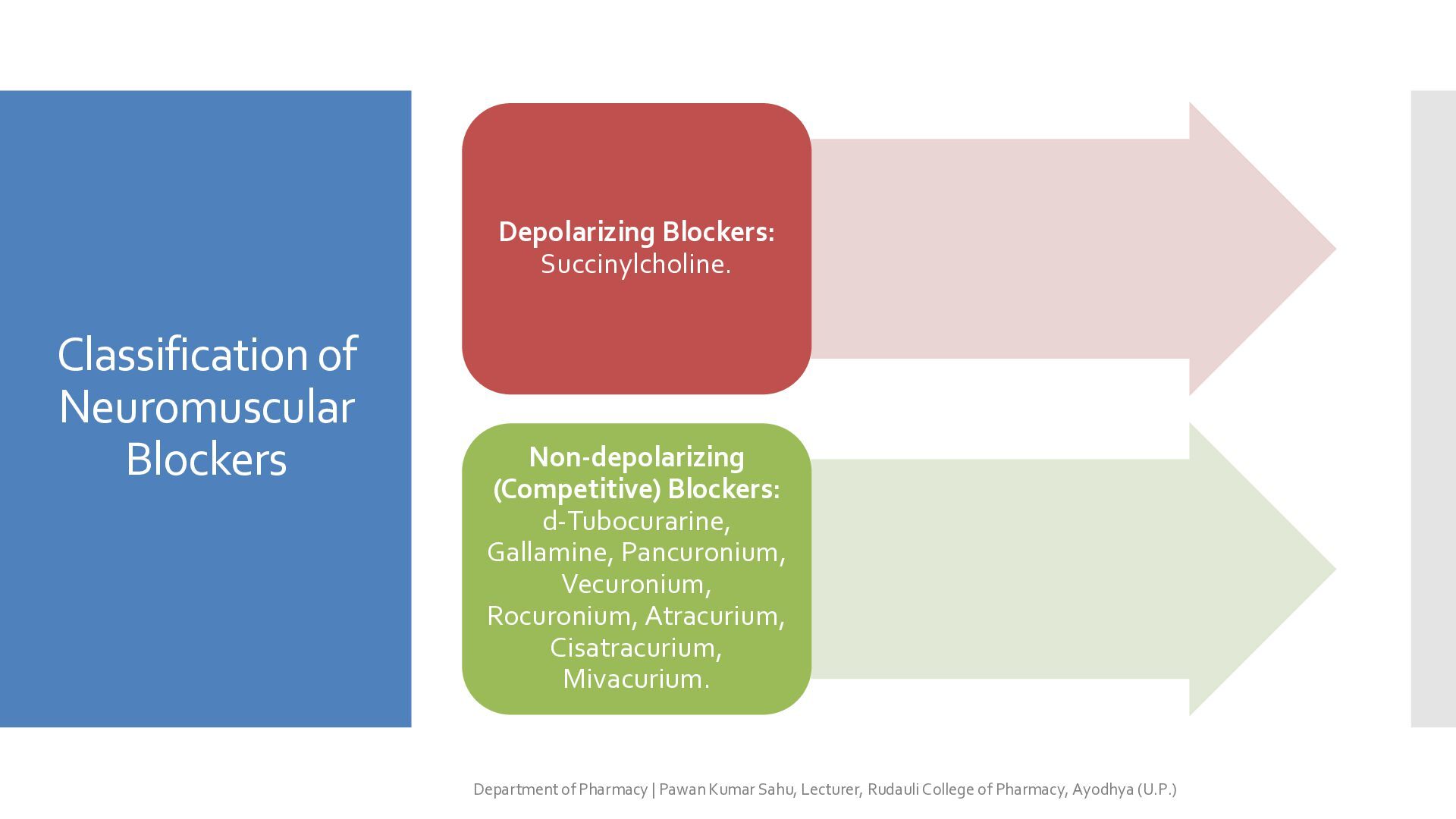
* *Depolarizing:* Succinylcholine (rapid onset, short duration; causes transient fasciculations followed by flaccid paralysis; metabolized by pseudocholinesterase).
* *Non-depolarizing (Competitive Antagonists):* Tubocurarine, Vecuronium, Rocuronium, Atracurium. Reversed by acetylcholinesterase inhibitors (e.g., Neostigmine combined with Glycopyrrolate) or Sugammadex (selective encapsulating agent for rocuronium/vecuronium).

* **Direct-acting Skeletal Muscle Relaxants:**
* *Dantrolene:* Blocks Ryanodine receptor ($RyR_1$) channels, inhibiting calcium release from the sarcoplasmic reticulum (drug of choice for malignant hyperthermia).

---

## 4. Local Anesthetics (LAs)

Local anesthetics block nerve impulse generation and conduction by reversibly blocking voltage-gated sodium channels ($Na_V$) on sensory and motor axons.

| Class | Examples | Characteristics |
| --- | --- | --- |
| **Esters** | Procaine, Benzocaine, Tetracaine, Cocaine | Rapidly hydrolyzed in plasma by pseudocholinesterase; higher risk of allergic reactions via PABA metabolites. |
| **Amides** | Lidocaine, Bupivacaine, Ropivacaine, Mepivacaine | Metabolized by hepatic CYP450 enzymes; lower allergic potential; Bupivacaine carries higher cardiotoxicity risk. |

* **Vasoconstrictor Adjunction:** Frequently formulated with adrenaline (epinephrine 1:100,000 or 1:200,000) to prolong duration, reduce systemic absorption/toxicity, and decrease local bleeding.

Avatar for Pawan Kumar Sahu
Pawan Kumar Sahu

October 05, 2026

More Decks by Pawan Kumar Sahu

Other Decks in Education

Transcript

  1. DRUGS ACTING ON THE PERIPHERAL NERVOUS SYSTEM Department of Pharmacy

    | Pawan Kumar Sahu, Lecturer, Rudauli College of Pharmacy, Ayodhya (U.P.)
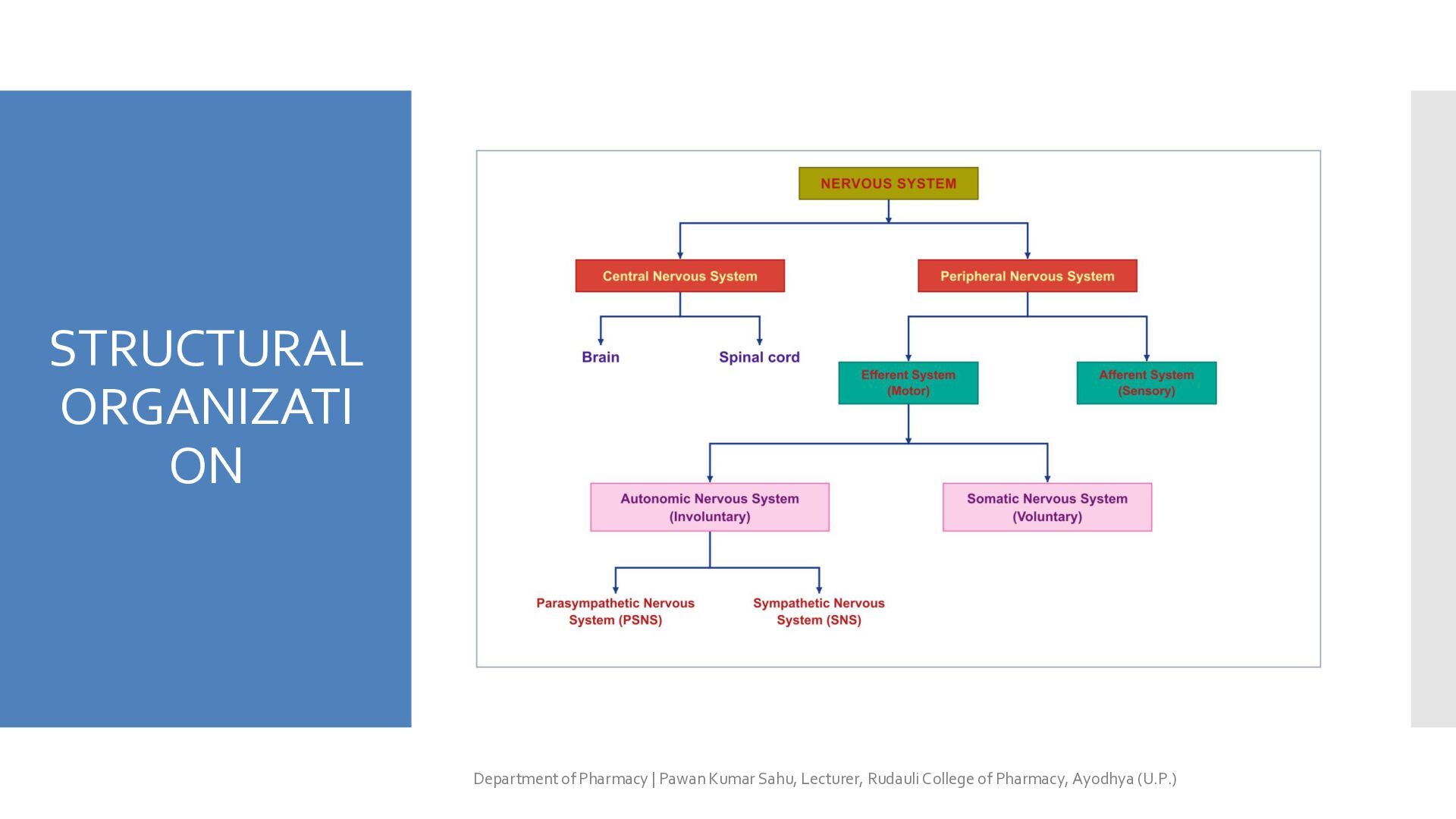
  2. STRUCTURAL ORGANIZATI ON Department of Pharmacy | Pawan Kumar Sahu,

    Lecturer, Rudauli College of Pharmacy, Ayodhya (U.P.)
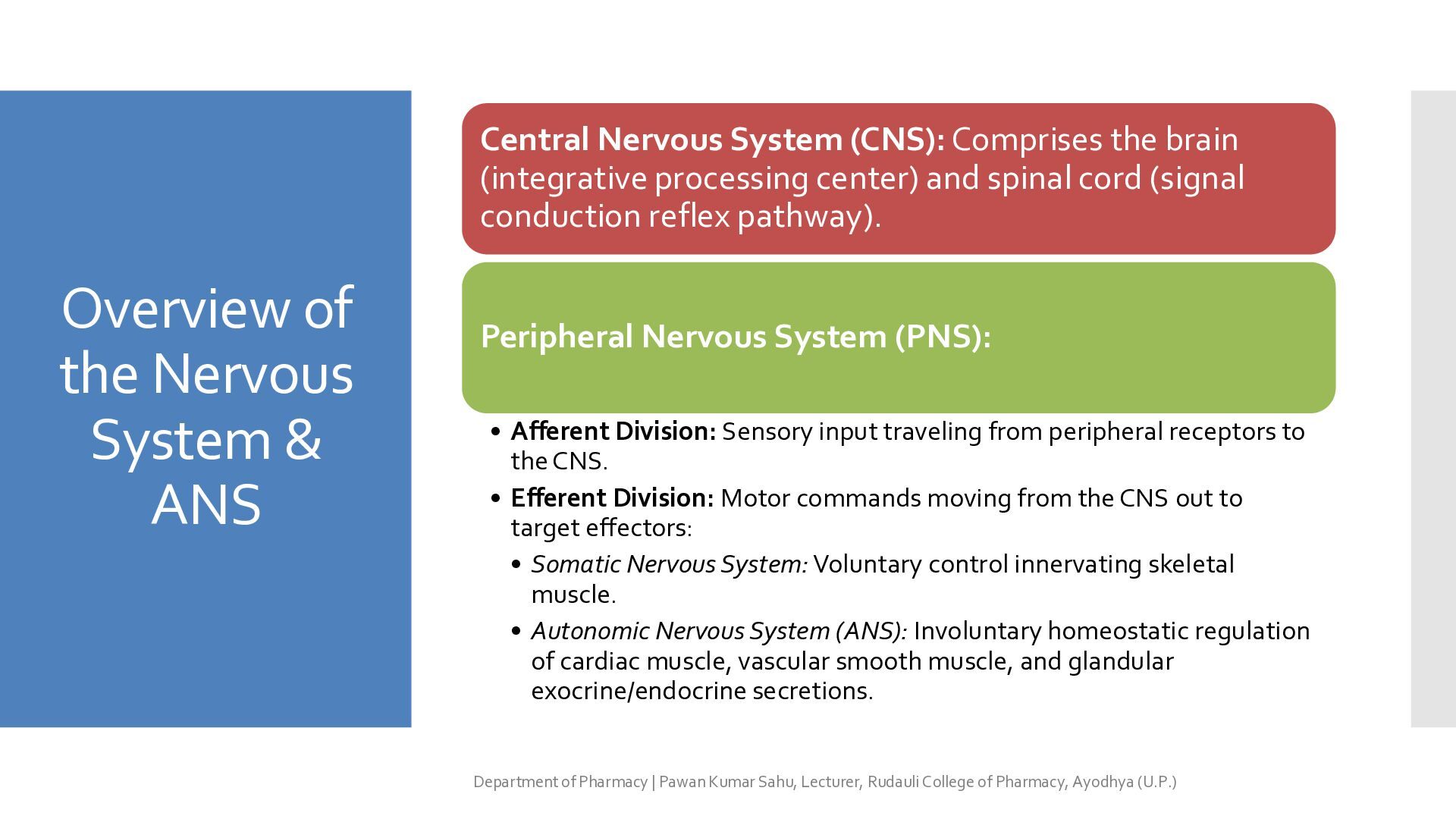
  3. Central Nervous System (CNS): Comprises the brain (integrative processing center)

    and spinal cord (signal conduction reflex pathway). Overview of the Nervous System & ANS Peripheral Nervous System (PNS): • Afferent Division: Sensory input traveling from peripheral receptors to the CNS. • Efferent Division: Motor commands moving from the CNS out to target effectors: • Somatic Nervous System: Voluntary control innervating skeletal muscle. • Autonomic Nervous System (ANS): Involuntary homeostatic regulation of cardiac muscle, vascular smooth muscle, and glandular exocrine/endocrine secretions. Department of Pharmacy | Pawan Kumar Sahu, Lecturer, Rudauli College of Pharmacy, Ayodhya (U.P.)
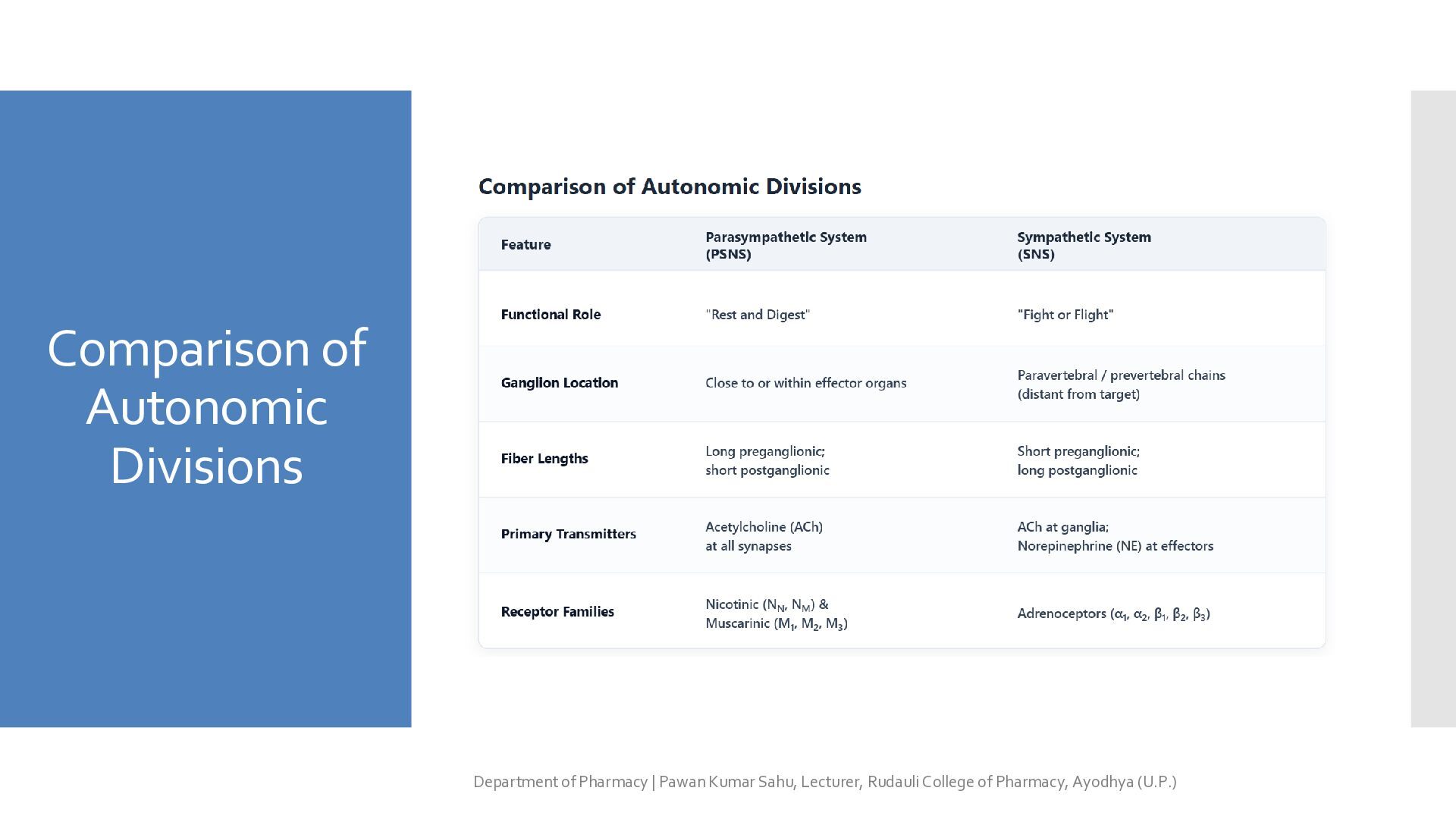
  4. Comparison of Autonomic Divisions Department of Pharmacy | Pawan Kumar

    Sahu, Lecturer, Rudauli College of Pharmacy, Ayodhya (U.P.)
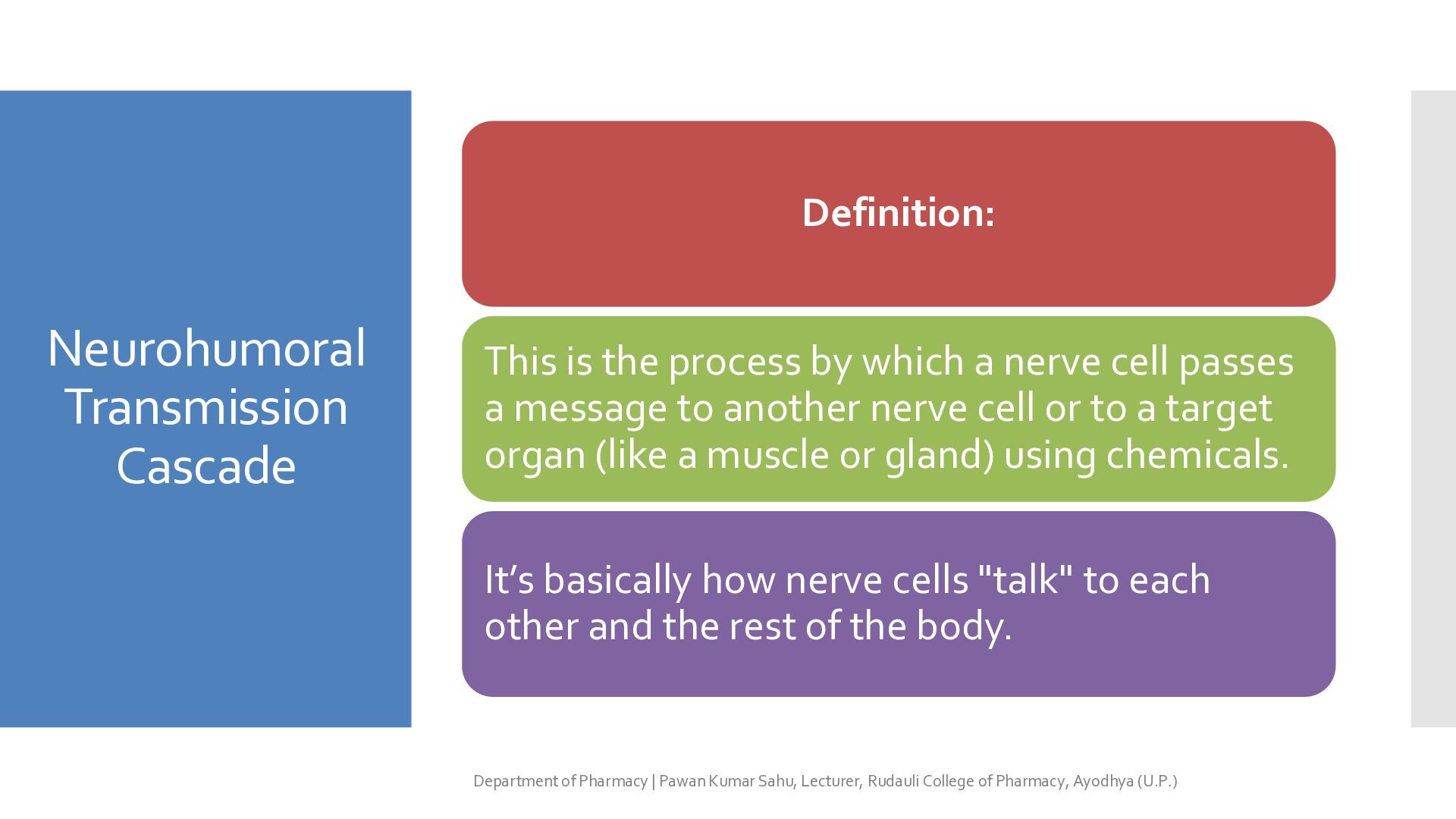
  5. Definition: Neurohumoral Transmission Cascade This is the process by which

    a nerve cell passes a message to another nerve cell or to a target organ (like a muscle or gland) using chemicals. It’s basically how nerve cells "talk" to each other and the rest of the body. Department of Pharmacy | Pawan Kumar Sahu, Lecturer, Rudauli College of Pharmacy, Ayodhya (U.P.)
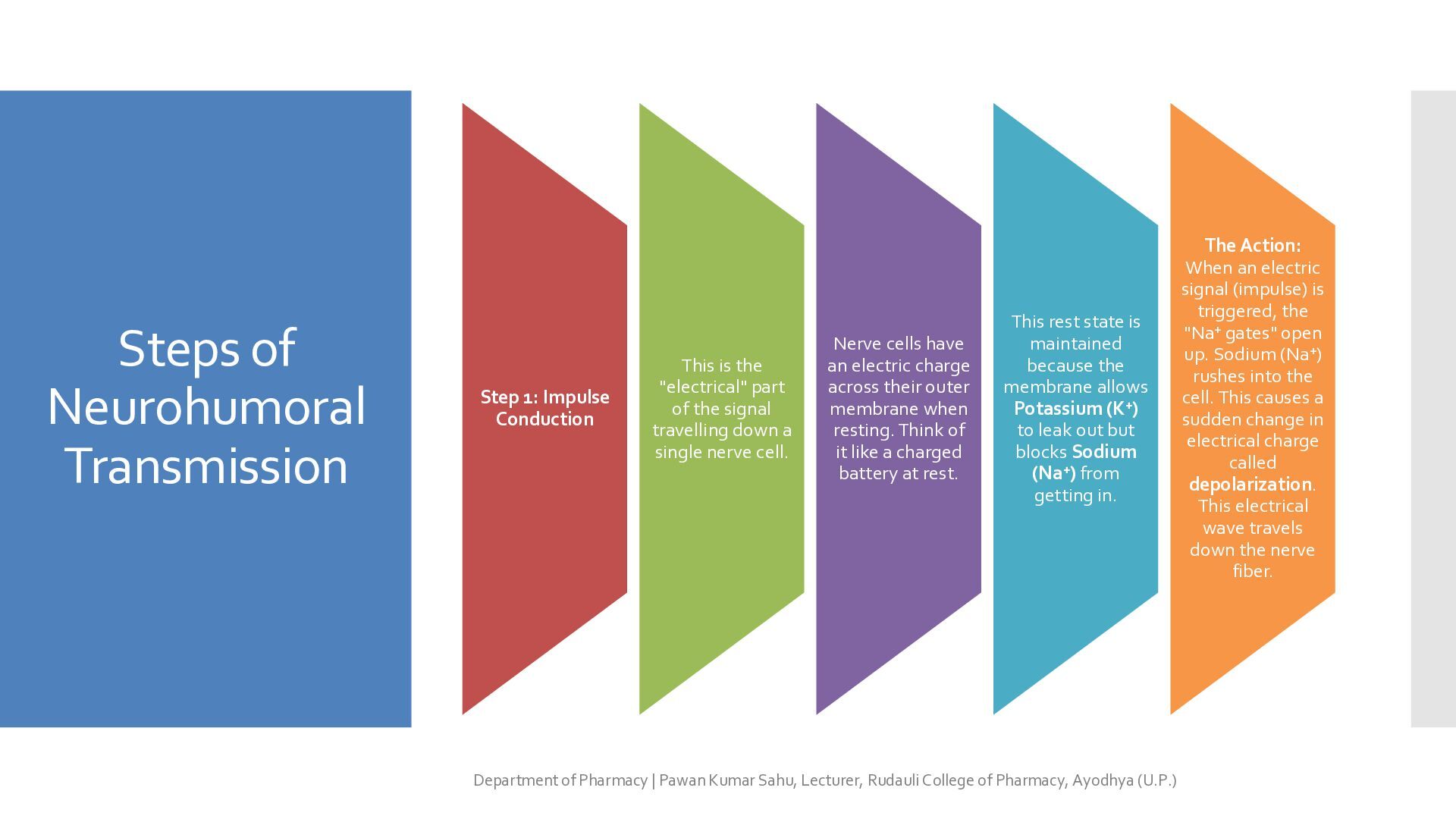
  6. Steps of Neurohumoral Transmission Step 1: Impulse Conduction This is

    the "electrical" part of the signal travelling down a single nerve cell. Nerve cells have an electric charge across their outer membrane when resting. Think of it like a charged battery at rest. This rest state is maintained because the membrane allows Potassium (K⁺) to leak out but blocks Sodium (Na⁺) from getting in. Department of Pharmacy | Pawan Kumar Sahu, Lecturer, Rudauli College of Pharmacy, Ayodhya (U.P.) The Action: When an electric signal (impulse) is triggered, the "Na⁺ gates" open up. Sodium (Na⁺) rushes into the cell. This causes a sudden change in electrical charge called depolarization. This electrical wave travels down the nerve fiber.
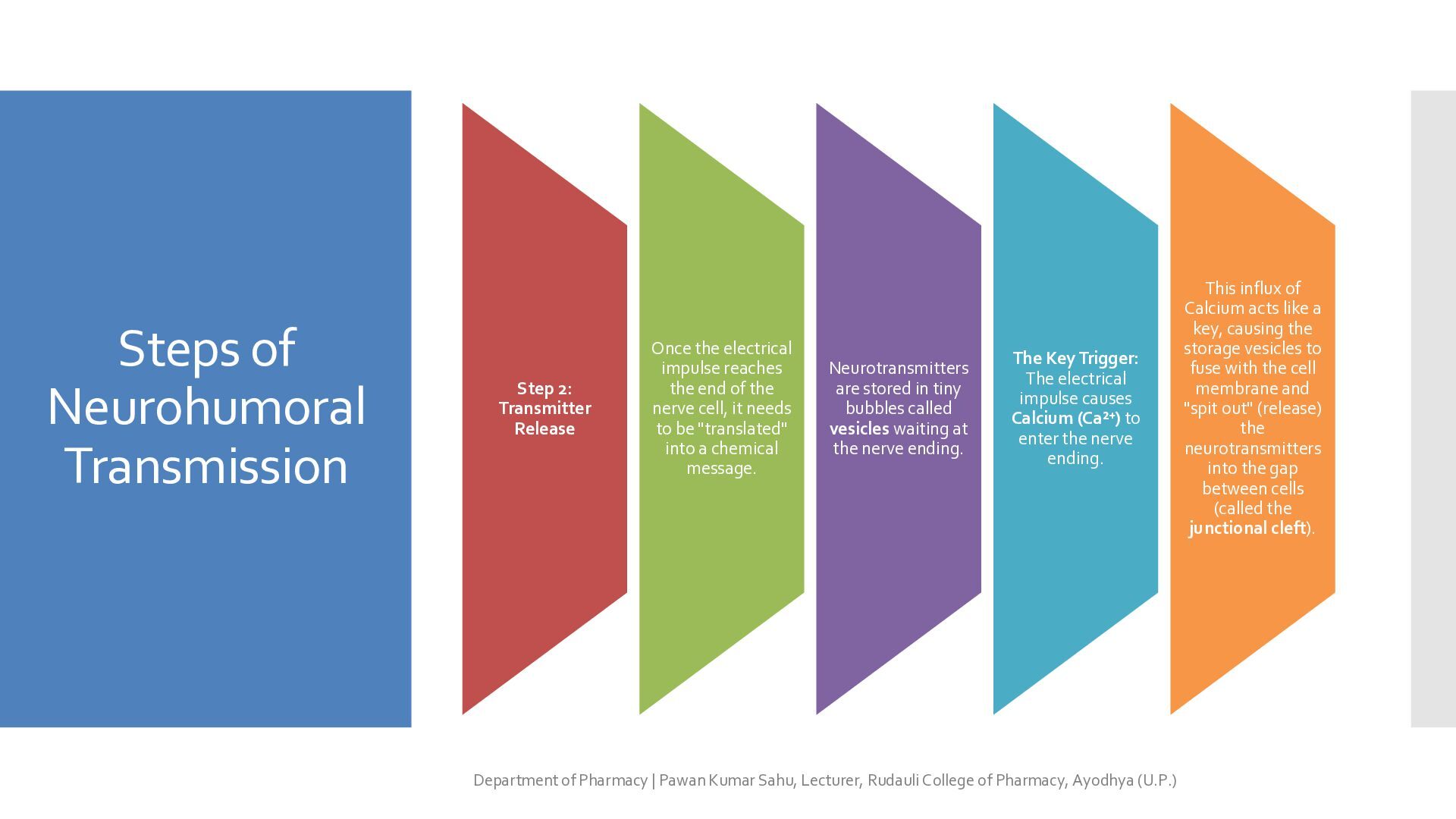
  7. Steps of Neurohumoral Transmission Step 2: Transmitter Release Once the

    electrical impulse reaches the end of the nerve cell, it needs to be "translated" into a chemical message. Neurotransmitters are stored in tiny bubbles called vesicles waiting at the nerve ending. The Key Trigger: The electrical impulse causes Calcium (Ca²⁺) to enter the nerve ending. Department of Pharmacy | Pawan Kumar Sahu, Lecturer, Rudauli College of Pharmacy, Ayodhya (U.P.) This influx of Calcium acts like a key, causing the storage vesicles to fuse with the cell membrane and "spit out" (release) the neurotransmitters into the gap between cells (called the junctional cleft).
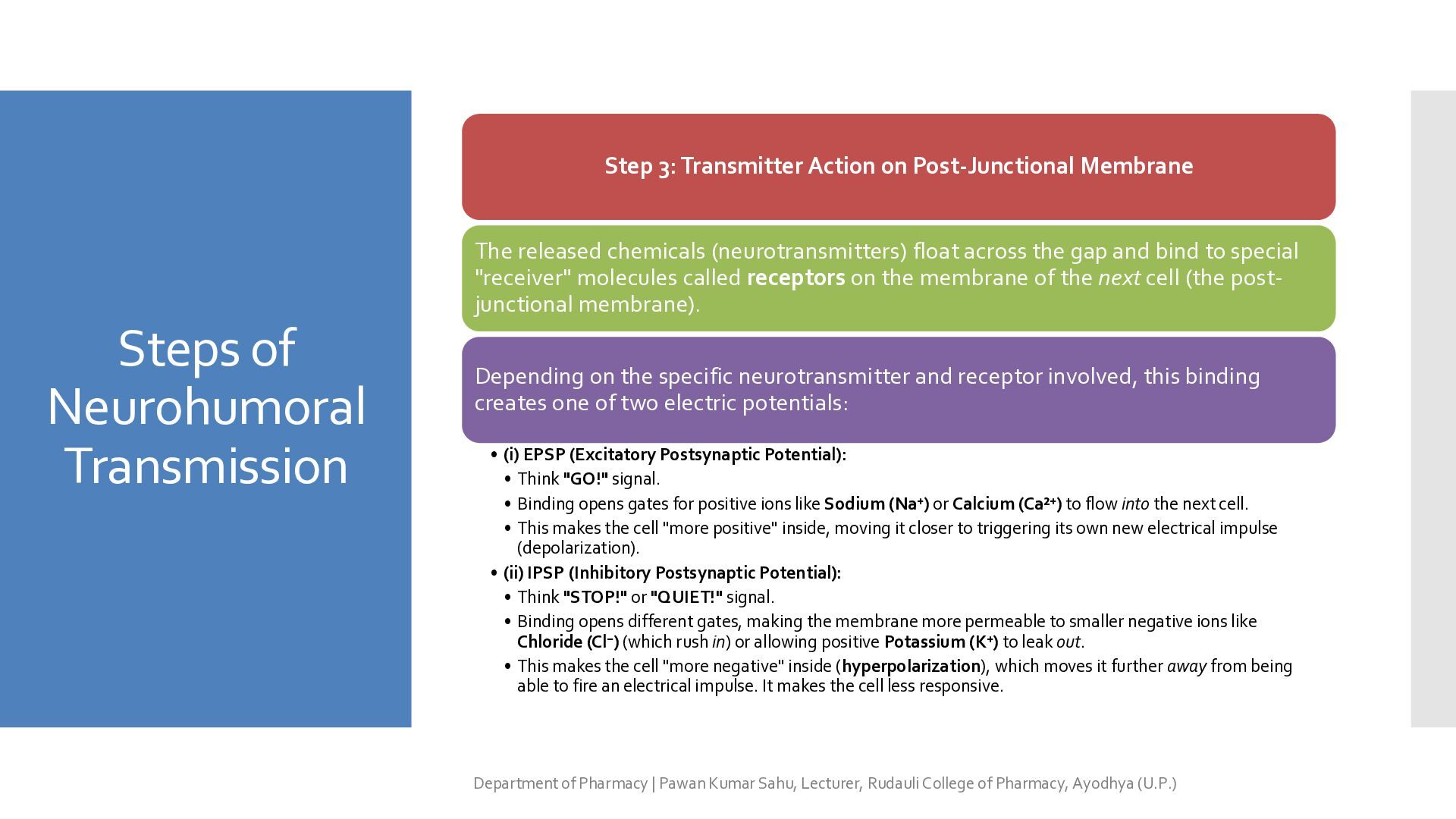
  8. Step 3: Transmitter Action on Post-Junctional Membrane The released chemicals

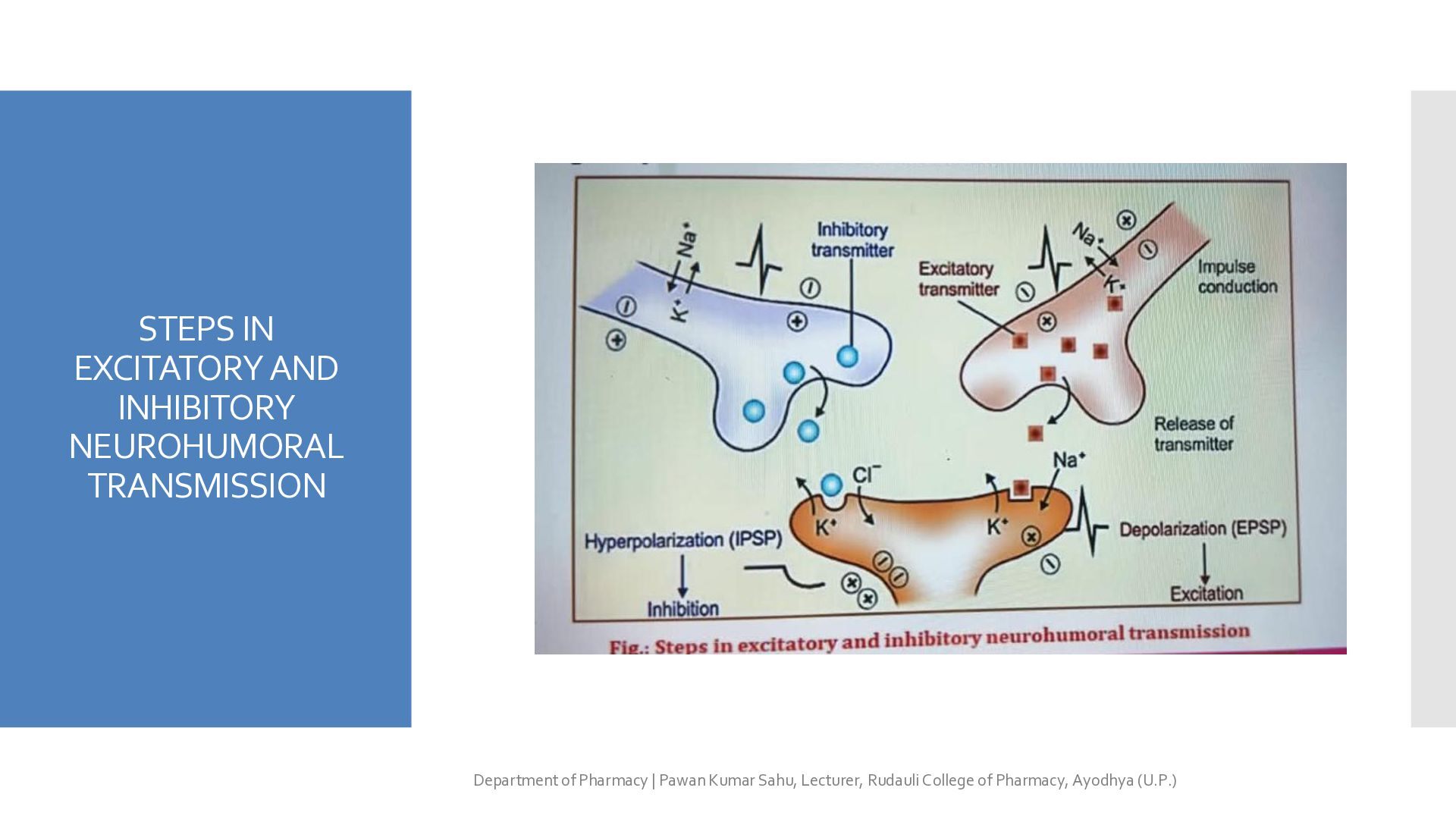
    (neurotransmitters) float across the gap and bind to special "receiver" molecules called receptors on the membrane of the next cell (the postjunctional membrane). Steps of Neurohumoral Transmission Depending on the specific neurotransmitter and receptor involved, this binding creates one of two electric potentials: • (i) EPSP (Excitatory Postsynaptic Potential): • Think "GO!" signal. • Binding opens gates for positive ions like Sodium (Na⁺) or Calcium (Ca²⁺) to flow into the next cell. • This makes the cell "more positive" inside, moving it closer to triggering its own new electrical impulse (depolarization). • (ii) IPSP (Inhibitory Postsynaptic Potential): • Think "STOP!" or "QUIET!" signal. • Binding opens different gates, making the membrane more permeable to smaller negative ions like Chloride (Cl⁻) (which rush in) or allowing positive Potassium (K⁺) to leak out. • This makes the cell "more negative" inside (hyperpolarization), which moves it further away from being able to fire an electrical impulse. It makes the cell less responsive. Department of Pharmacy | Pawan Kumar Sahu, Lecturer, Rudauli College of Pharmacy, Ayodhya (U.P.)
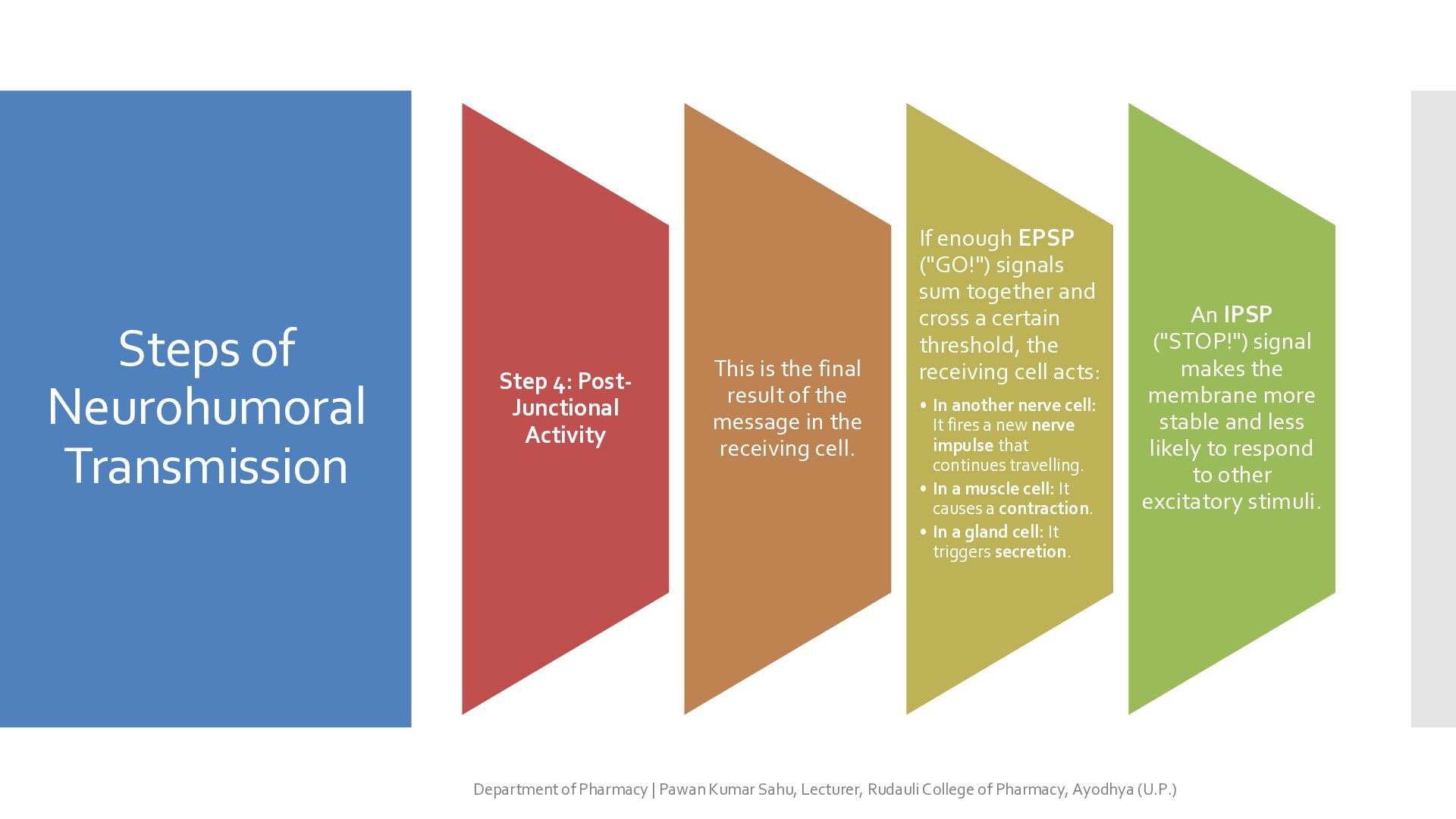
  9. Steps of Neurohumoral Transmission Step 4: PostJunctional Activity This is

    the final result of the message in the receiving cell. If enough EPSP ("GO!") signals sum together and cross a certain threshold, the receiving cell acts: • In another nerve cell: It fires a new nerve impulse that continues travelling. • In a muscle cell: It causes a contraction. • In a gland cell: It triggers secretion. An IPSP ("STOP!") signal makes the membrane more stable and less likely to respond to other excitatory stimuli. Department of Pharmacy | Pawan Kumar Sahu, Lecturer, Rudauli College of Pharmacy, Ayodhya (U.P.)
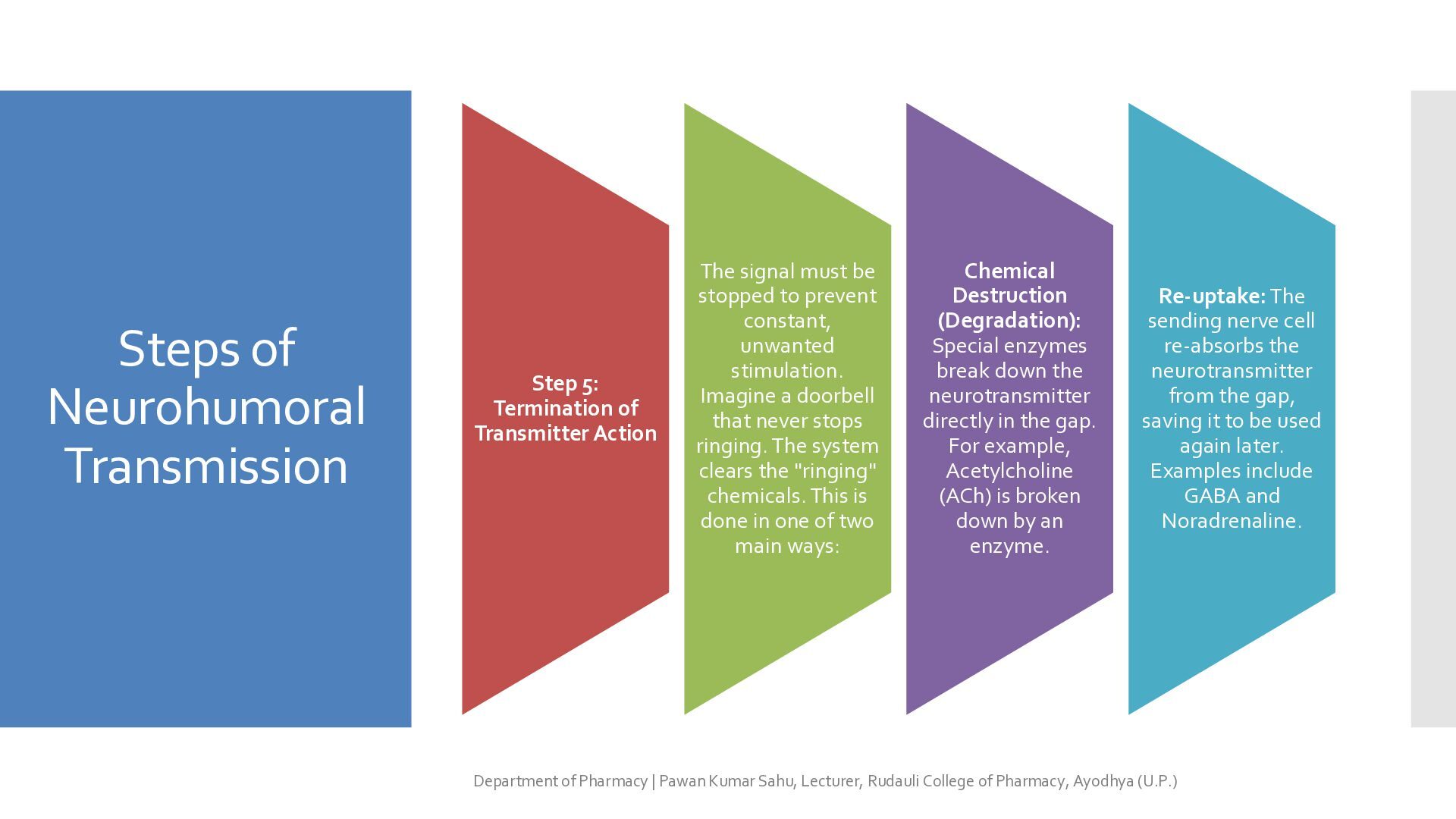
  10. Steps of Neurohumoral Transmission Step 5: Termination of Transmitter Action

    The signal must be stopped to prevent constant, unwanted stimulation. Imagine a doorbell that never stops ringing. The system clears the "ringing" chemicals. This is done in one of two main ways: Chemical Destruction (Degradation): Special enzymes break down the neurotransmitter directly in the gap. For example, Acetylcholine (ACh) is broken down by an enzyme. Re-uptake: The sending nerve cell re-absorbs the neurotransmitter from the gap, saving it to be used again later. Examples include GABA and Noradrenaline. Department of Pharmacy | Pawan Kumar Sahu, Lecturer, Rudauli College of Pharmacy, Ayodhya (U.P.)
  11. STEPS IN EXCITATORY AND INHIBITORY NEUROHUMORAL TRANSMISSION Department of Pharmacy

    | Pawan Kumar Sahu, Lecturer, Rudauli College of Pharmacy, Ayodhya (U.P.)
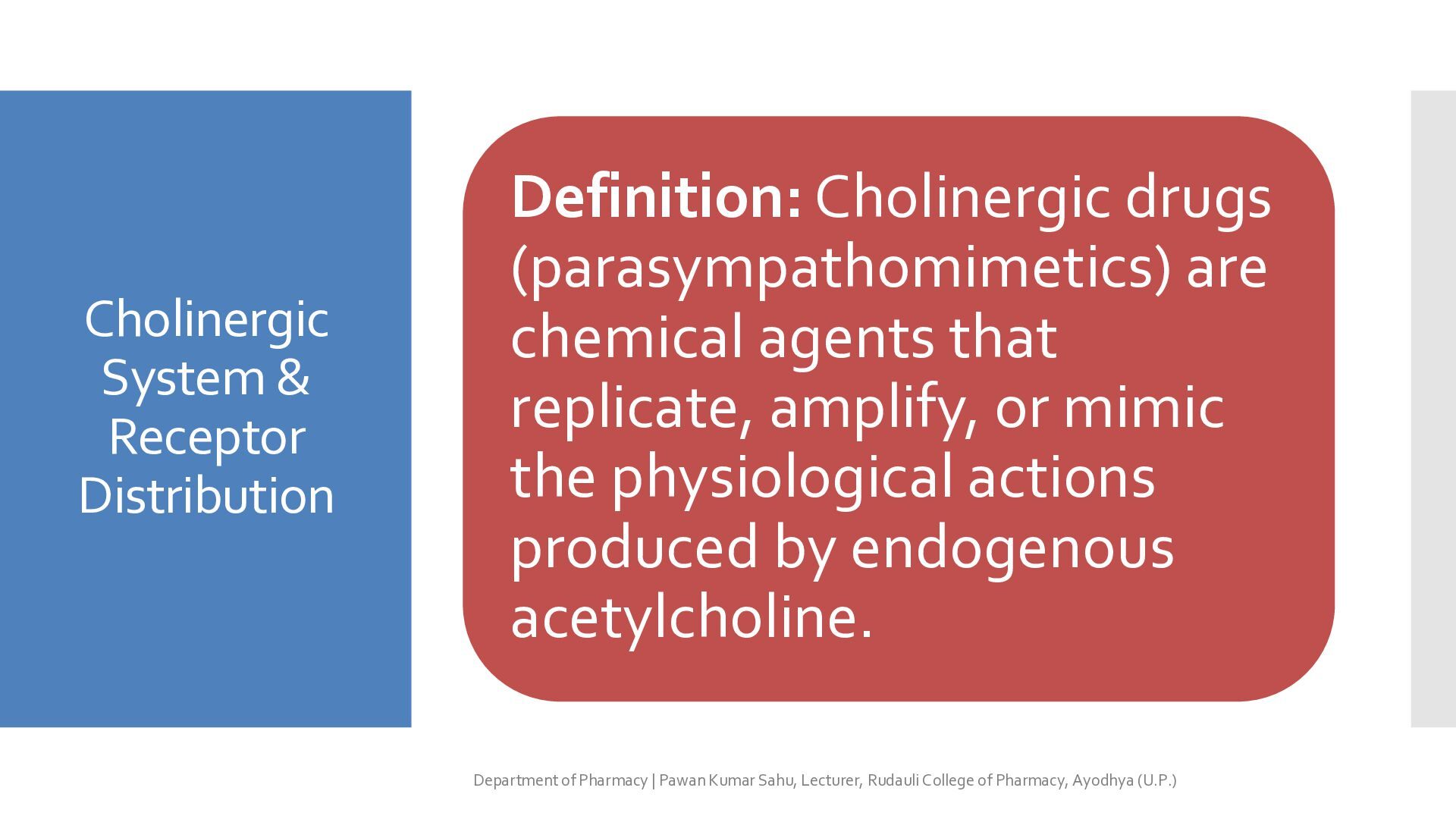
  12. Cholinergic System & Receptor Distribution Definition: Cholinergic drugs (parasympathomimetics) are

    chemical agents that replicate, amplify, or mimic the physiological actions produced by endogenous acetylcholine. Department of Pharmacy | Pawan Kumar Sahu, Lecturer, Rudauli College of Pharmacy, Ayodhya (U.P.)
  13. Receptor Class Receptor Classification and Tissue Targets Primary Subtypes Key

    Anatomical Locations Intracellular Signaling Mechanism 𝑀1 Gastric parietal cells, CNS cortex, autonomic ganglia 𝐺𝑞 protein →↑ IP3 /DAG →↑ Intracellular Ca2+ 𝑀2 Myocardium (SA/AV nodes), smooth muscle 𝐺𝑖 protein →↓ cAMP, ↑ K + efflux 𝑀3 Exocrine glands, visceral smooth muscle (GIT, bladder, bronchi), vascular endothelium 𝐺𝑞 protein →↑ IP3 /DAG →↑ Intracellular Ca2+ 𝑁𝑁 Autonomic ganglia, adrenal medulla Direct Na+ / Ca2+ channel opening →Depolarization 𝑁𝑀 Skeletal neuromuscular junction (motor endplate) Direct Na+ influx →Endplate potential →Muscle twitch Muscarinic (GPCR) Nicotinic (LigandGated) Department of Pharmacy | Pawan Kumar Sahu, Lecturer, Rudauli College of Pharmacy, Ayodhya (U.P.)
  14. Classification of Cholinergic Drugs Department of Pharmacy | Pawan Kumar

    Sahu, Lecturer, Rudauli College of Pharmacy, Ayodhya (U.P.)
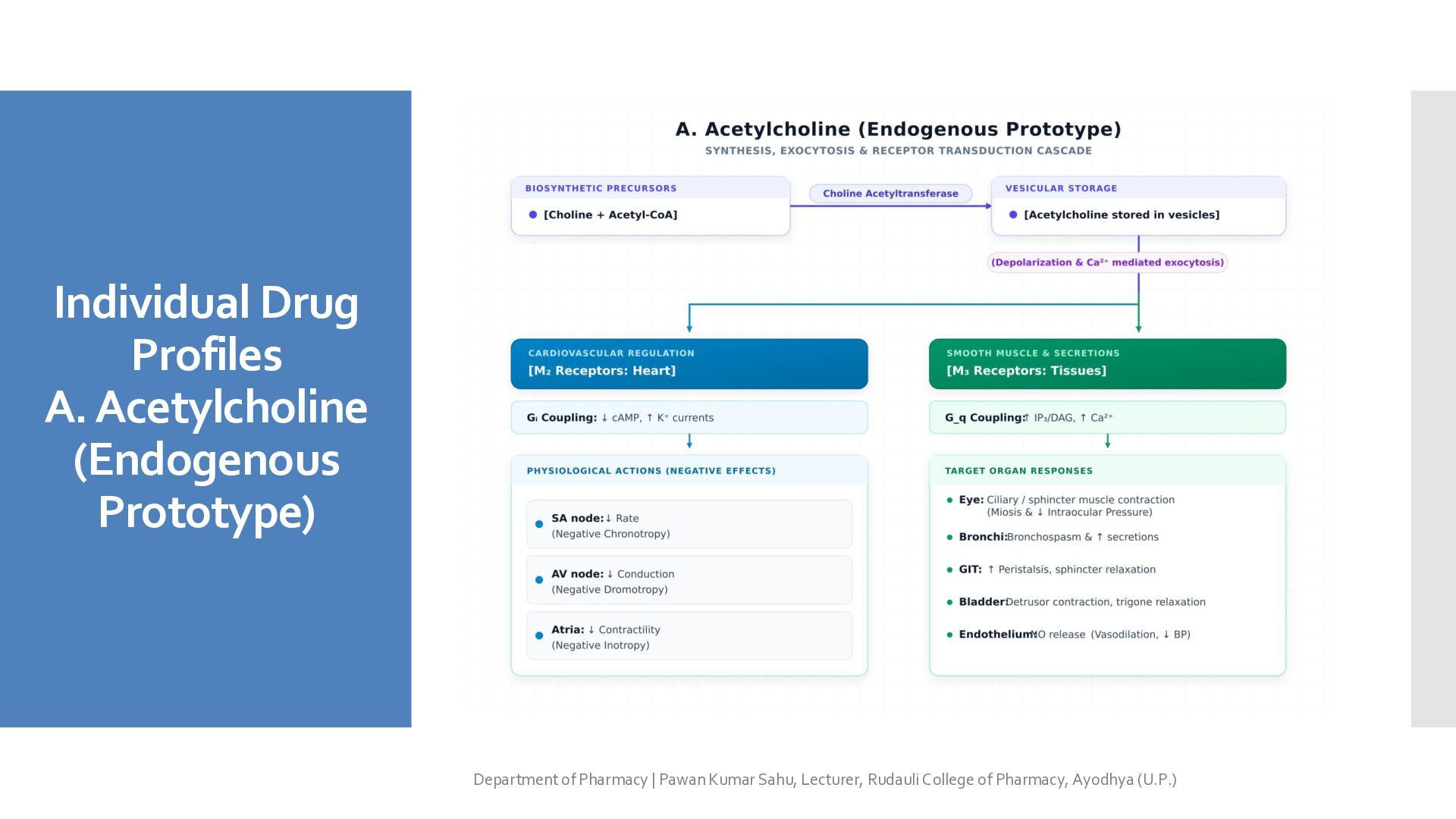
  15. Individual Drug Profiles A. Acetylcholine (Endogenous Prototype) Department of Pharmacy

    | Pawan Kumar Sahu, Lecturer, Rudauli College of Pharmacy, Ayodhya (U.P.)
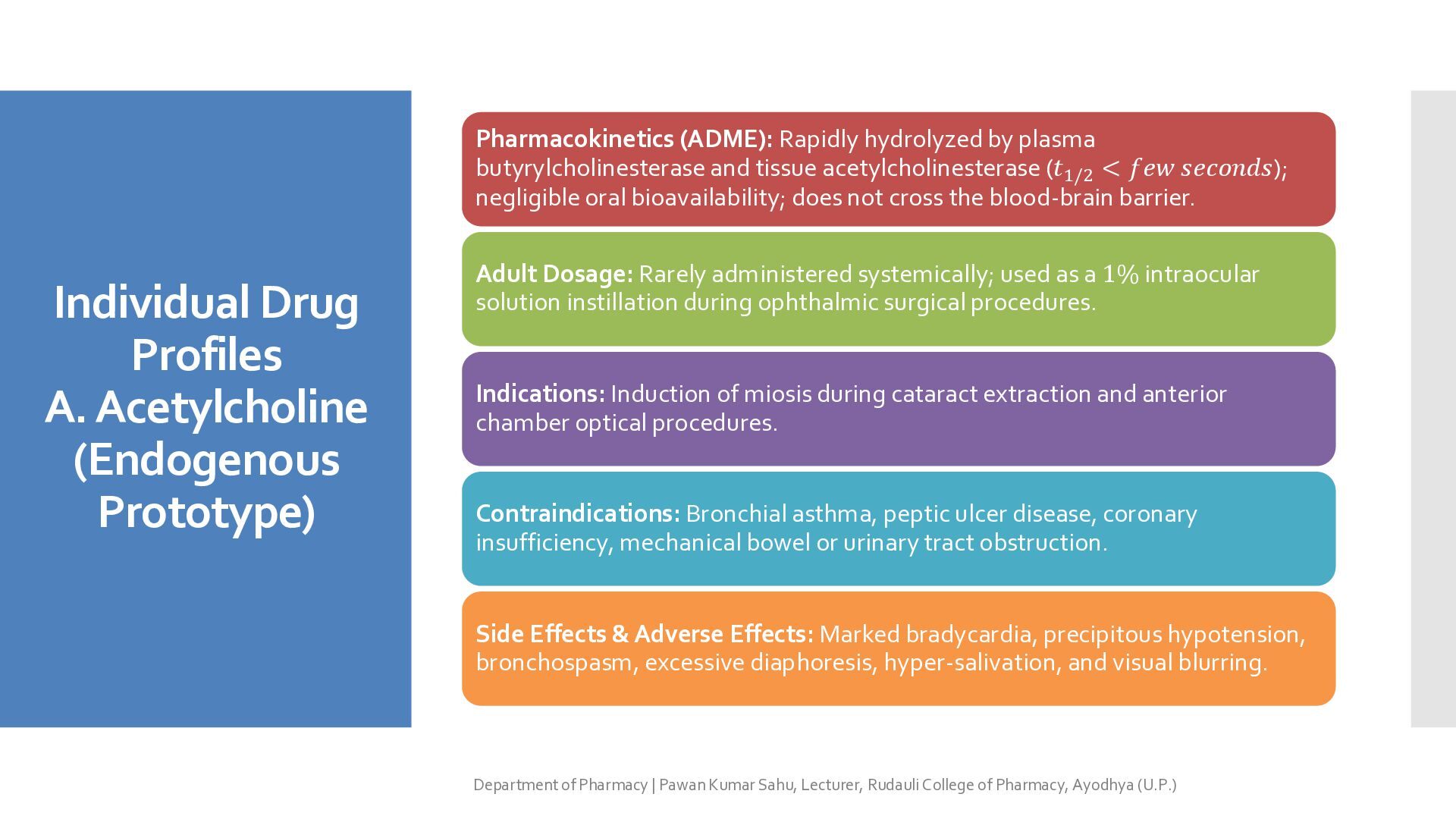
  16. Pharmacokinetics (ADME): Rapidly hydrolyzed by plasma butyrylcholinesterase and tissue acetylcholinesterase

    (𝑡1/2 < 𝑓𝑒𝑤 𝑠𝑒𝑐𝑜𝑛𝑑𝑠); negligible oral bioavailability; does not cross the blood-brain barrier. t sub , 1 over 2 end subscript less than f e w , s e c o n d s 1% Individual Drug Profiles A. Acetylcholine (Endogenous Prototype) Adult Dosage: Rarely administered systemically; used as a 1% intraocular solution instillation during ophthalmic surgical procedures. Indications: Induction of miosis during cataract extraction and anterior chamber optical procedures. Contraindications: Bronchial asthma, peptic ulcer disease, coronary insufficiency, mechanical bowel or urinary tract obstruction. Side Effects & Adverse Effects: Marked bradycardia, precipitous hypotension, bronchospasm, excessive diaphoresis, hyper-salivation, and visual blurring. Department of Pharmacy | Pawan Kumar Sahu, Lecturer, Rudauli College of Pharmacy, Ayodhya (U.P.)
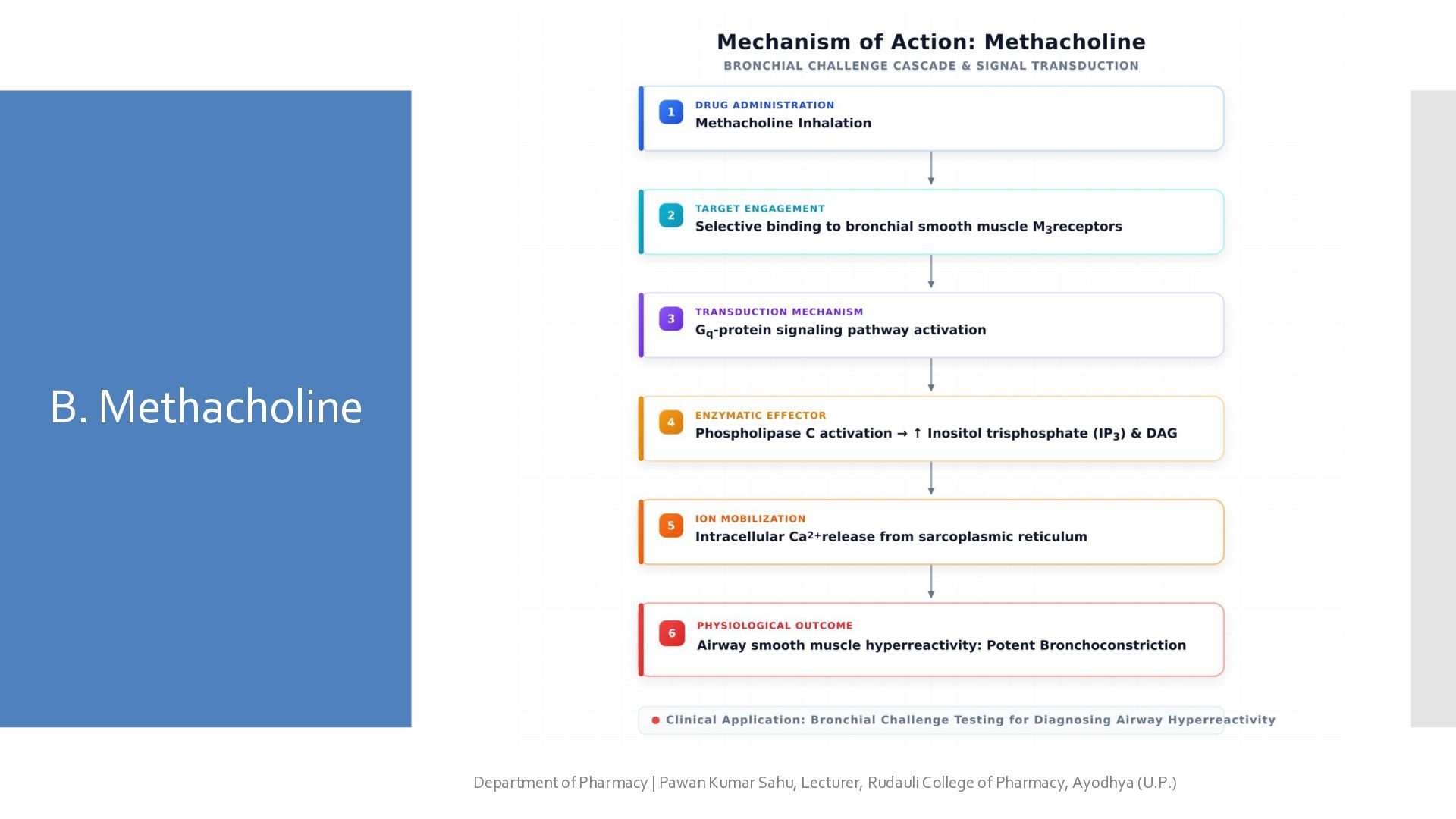
  17. B. Methacholine Department of Pharmacy | Pawan Kumar Sahu, Lecturer,

    Rudauli College of Pharmacy, Ayodhya (U.P.)
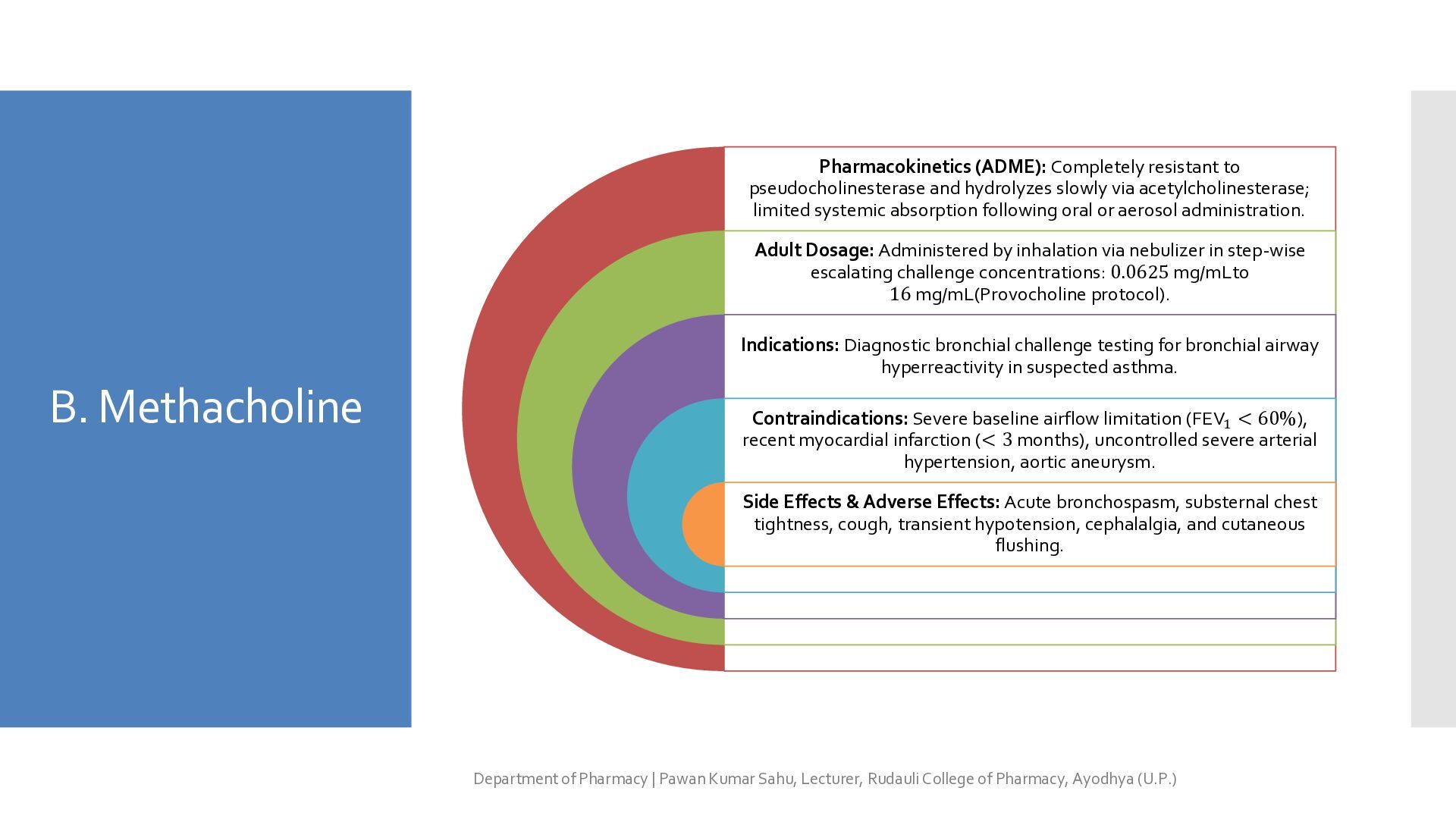
  18. Pharmacokinetics (ADME): Completely resistant to pseudocholinesterase and hydrolyzes slowly via

    acetylcholinesterase; limited systemic absorption following oral or aerosol administration. Adult Dosage: Administered by inhalation via nebulizer in step-wise escalating challenge concentrations: 0.0625 mg/mLto 16 mg/mL(Provocholine protocol). 0.0625 , mg/mL 16 , mg/mL Indications: Diagnostic bronchial challenge testing for bronchial airway hyperreactivity in suspected asthma. B. Methacholine subscript base , FEV , end base , sub 1 less than 60% Contraindications: Severe baseline airflow limitation (FEV1 < 60%), recent myocardial infarction (< 3 months), uncontrolled severe arterial hypertension, aortic aneurysm. less than 3 , months Side Effects & Adverse Effects: Acute bronchospasm, substernal chest tightness, cough, transient hypotension, cephalalgia, and cutaneous flushing. Department of Pharmacy | Pawan Kumar Sahu, Lecturer, Rudauli College of Pharmacy, Ayodhya (U.P.)
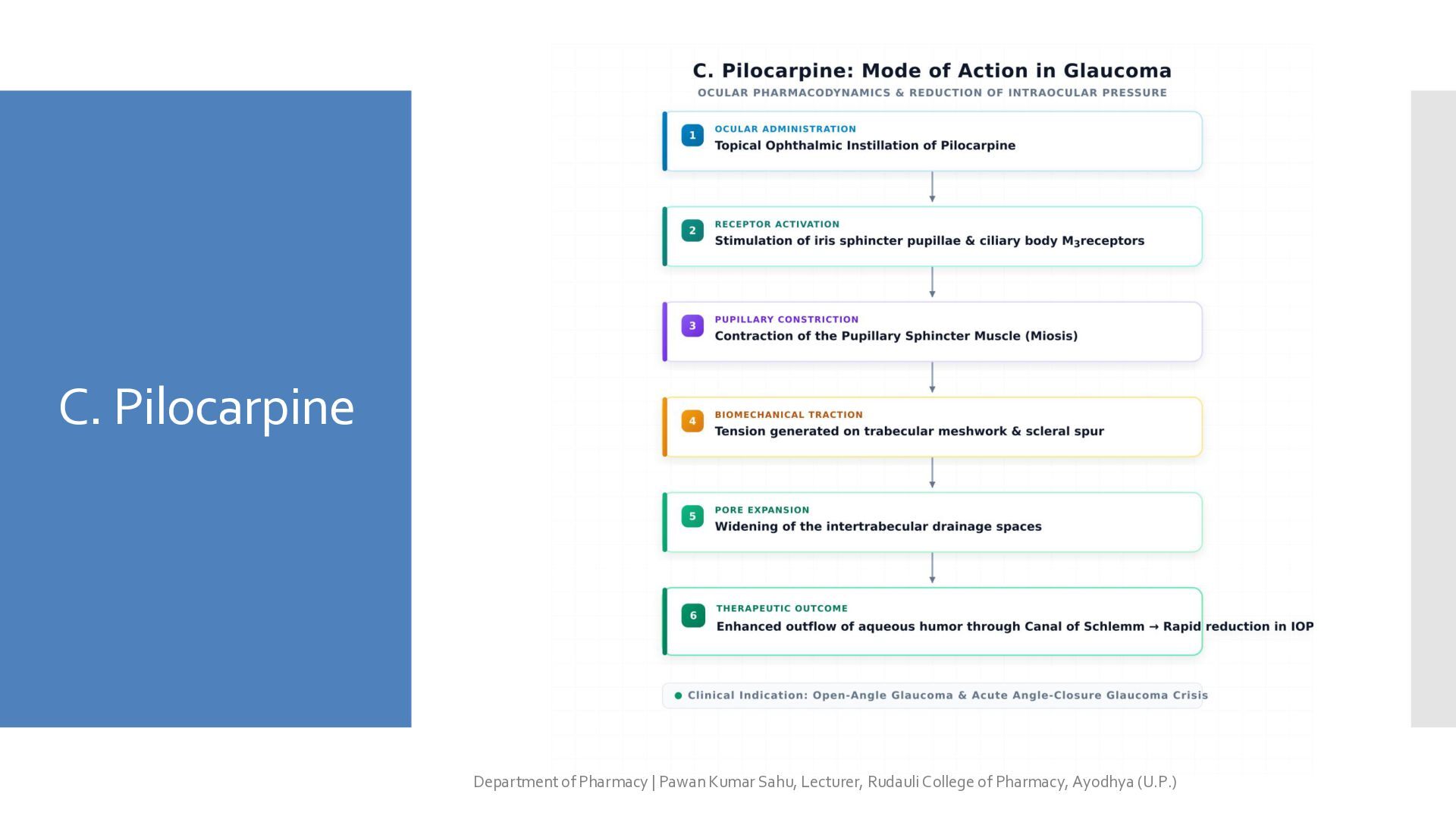
  19. C. Pilocarpine Department of Pharmacy | Pawan Kumar Sahu, Lecturer,

    Rudauli College of Pharmacy, Ayodhya (U.P.)
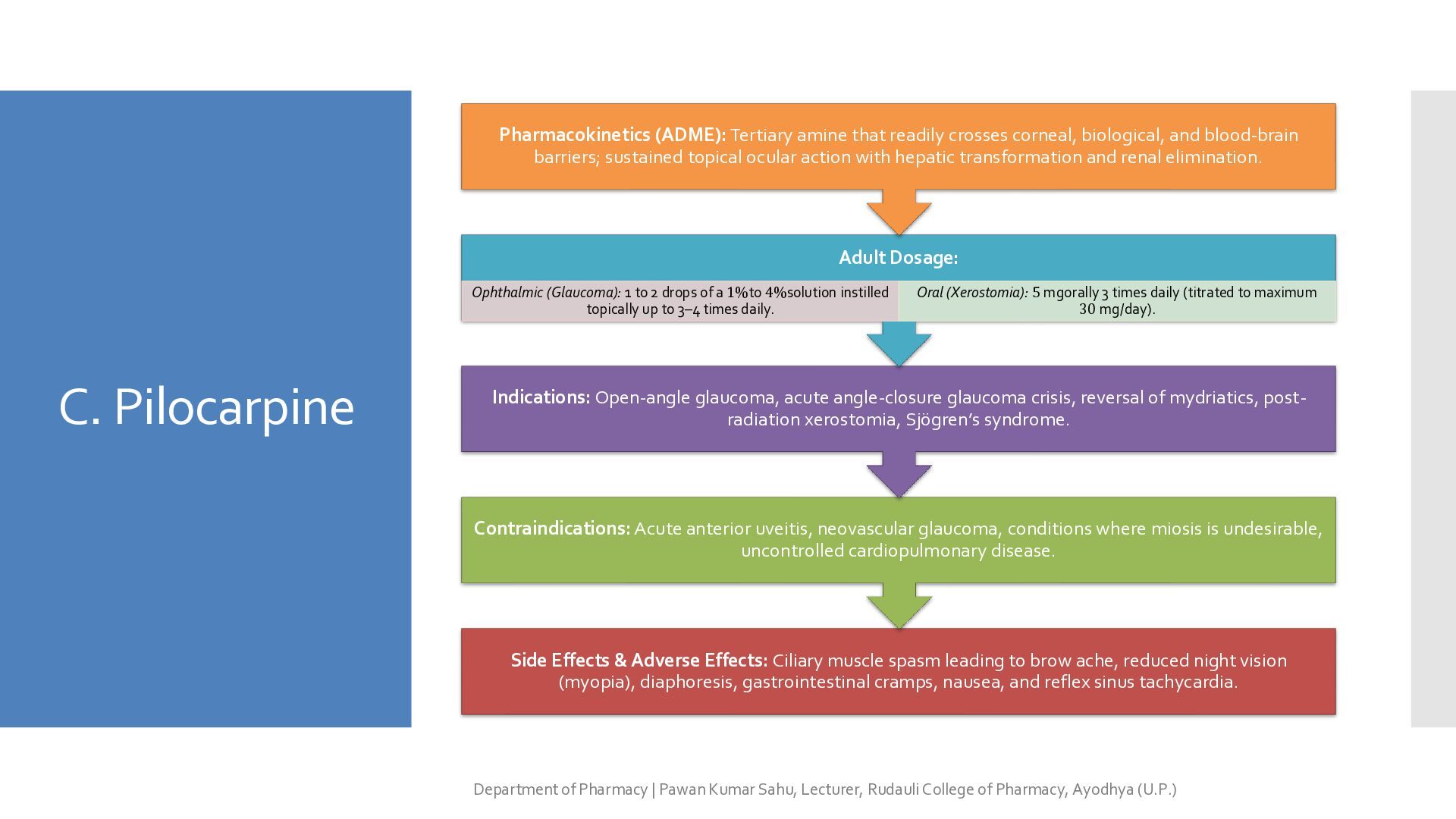
  20. Pharmacokinetics (ADME): Tertiary amine that readily crosses corneal, biological, and

    blood-brain barriers; sustained topical ocular action with hepatic transformation and renal elimination. Adult Dosage: 1% 4% Ophthalmic (Glaucoma): 1 to 2 drops of a 1%to 4%solution instilled topically up to 3–4 times daily. C. Pilocarpine 5 , mg Oral (Xerostomia): 5 mgorally 3 times daily (titrated to maximum 30 mg/day). 30 , mg/day Indications: Open-angle glaucoma, acute angle-closure glaucoma crisis, reversal of mydriatics, postradiation xerostomia, Sjögren’s syndrome. Contraindications: Acute anterior uveitis, neovascular glaucoma, conditions where miosis is undesirable, uncontrolled cardiopulmonary disease. Side Effects & Adverse Effects: Ciliary muscle spasm leading to brow ache, reduced night vision (myopia), diaphoresis, gastrointestinal cramps, nausea, and reflex sinus tachycardia. Department of Pharmacy | Pawan Kumar Sahu, Lecturer, Rudauli College of Pharmacy, Ayodhya (U.P.)
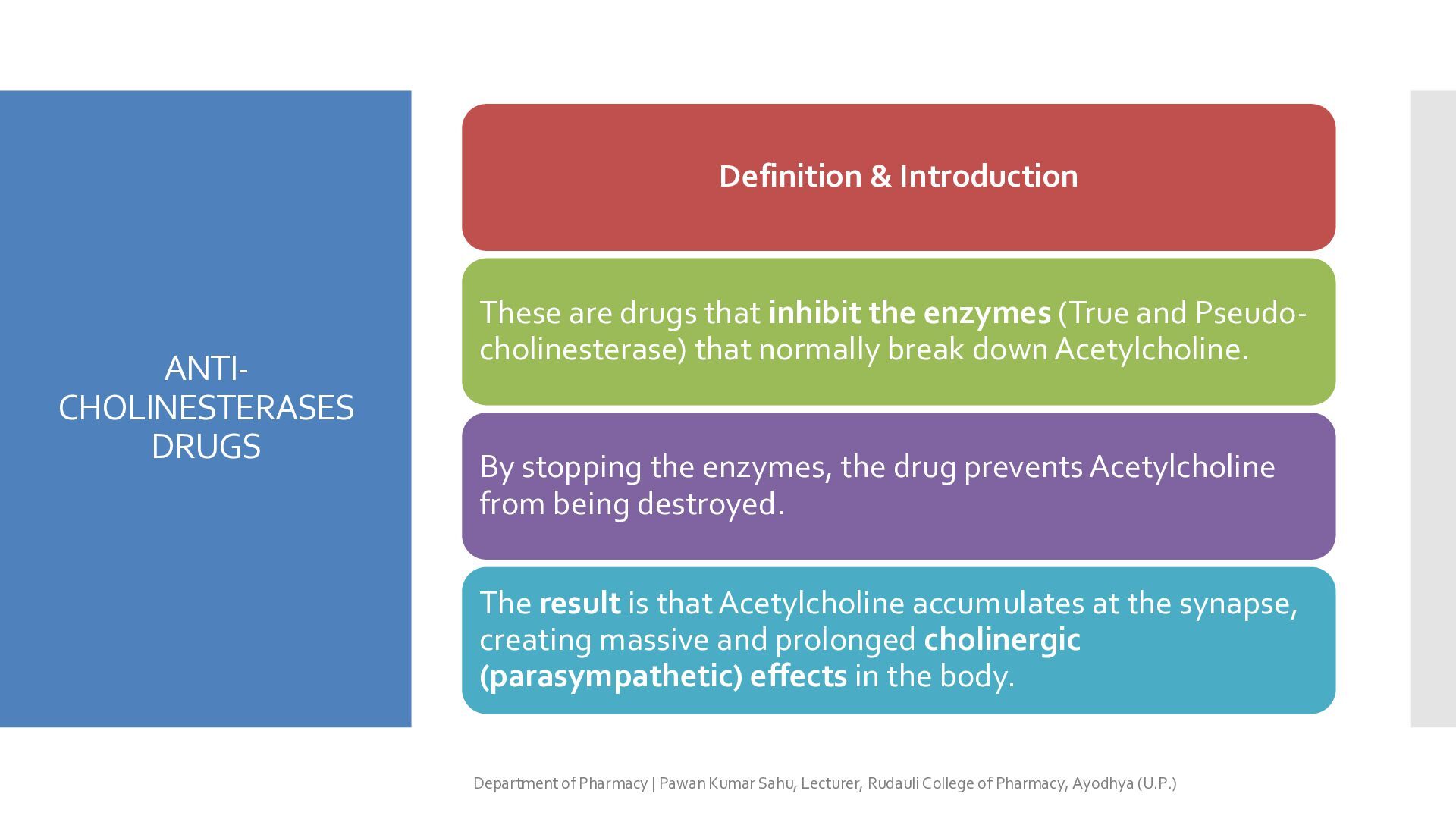
  21. Definition & Introduction ANTICHOLINESTERASES DRUGS These are drugs that inhibit

    the enzymes (True and Pseudocholinesterase) that normally break down Acetylcholine. By stopping the enzymes, the drug prevents Acetylcholine from being destroyed. The result is that Acetylcholine accumulates at the synapse, creating massive and prolonged cholinergic (parasympathetic) effects in the body. Department of Pharmacy | Pawan Kumar Sahu, Lecturer, Rudauli College of Pharmacy, Ayodhya (U.P.)
  22. CLASSIFICATION OF ANTI CHOLINESTERASE DRUG Department of Pharmacy | Pawan

    Kumar Sahu, Lecturer, Rudauli College of Pharmacy, Ayodhya (U.P.)
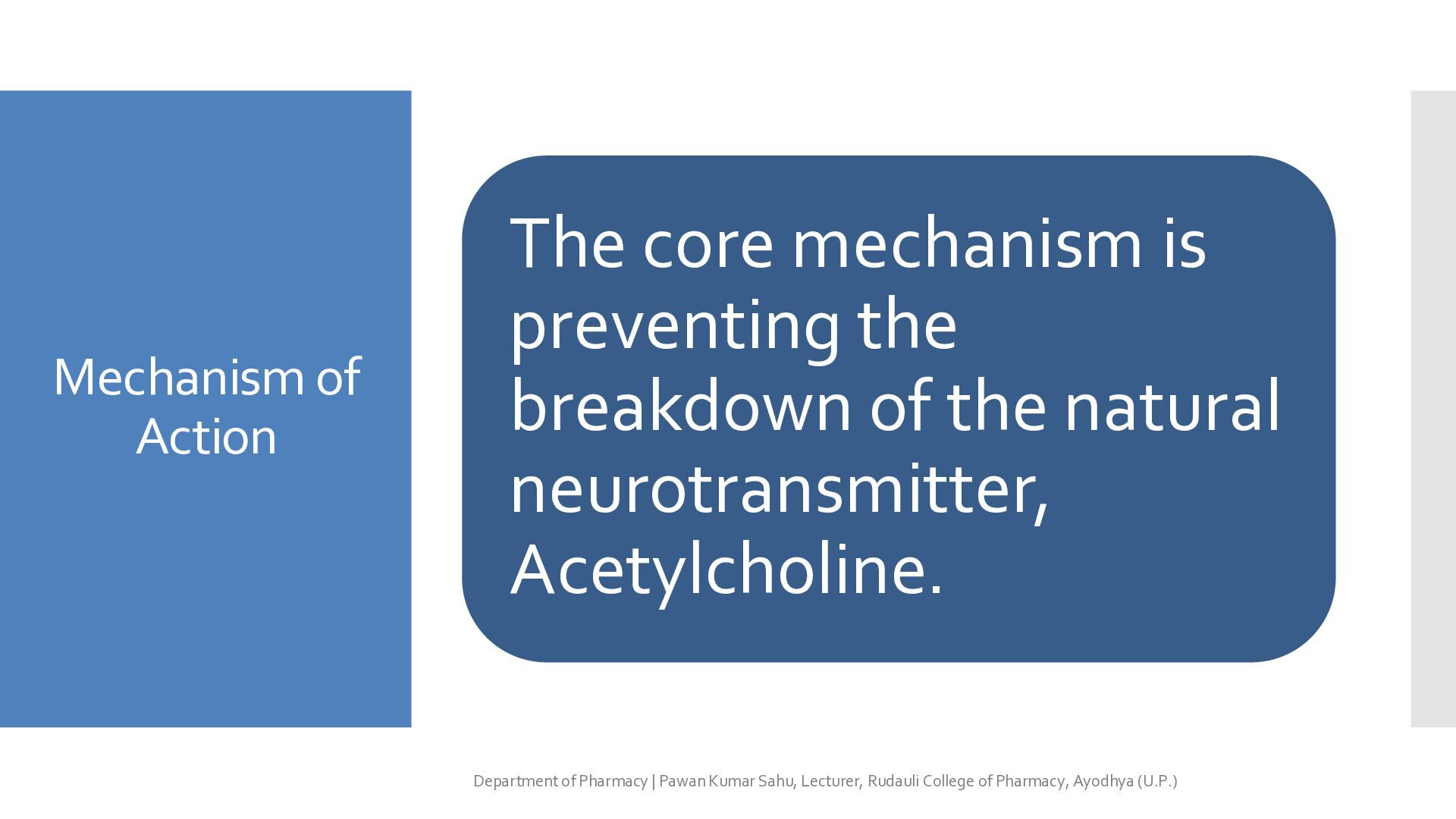
  23. Mechanism of Action The core mechanism is preventing the breakdown

    of the natural neurotransmitter, Acetylcholine. Department of Pharmacy | Pawan Kumar Sahu, Lecturer, Rudauli College of Pharmacy, Ayodhya (U.P.)
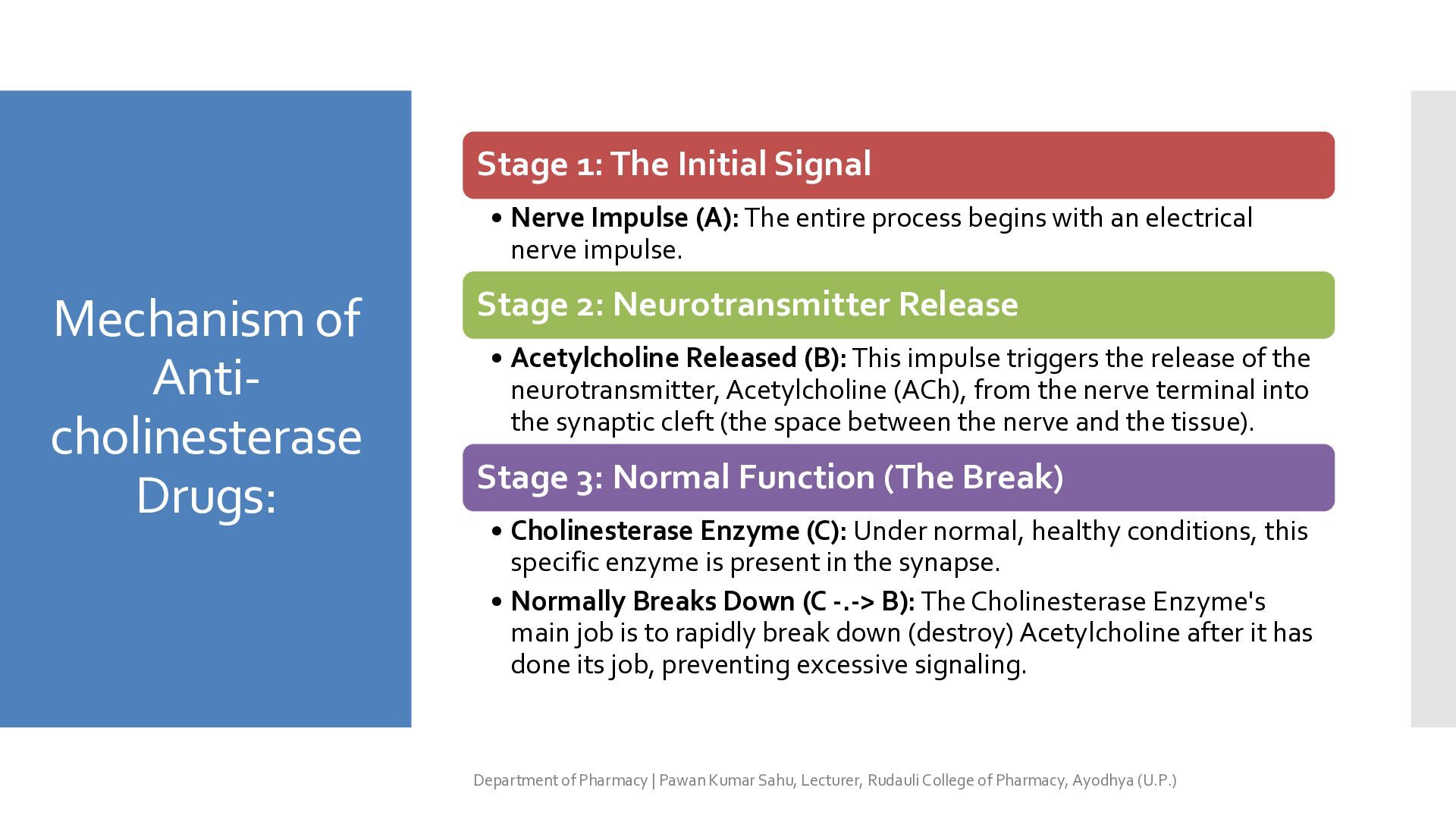
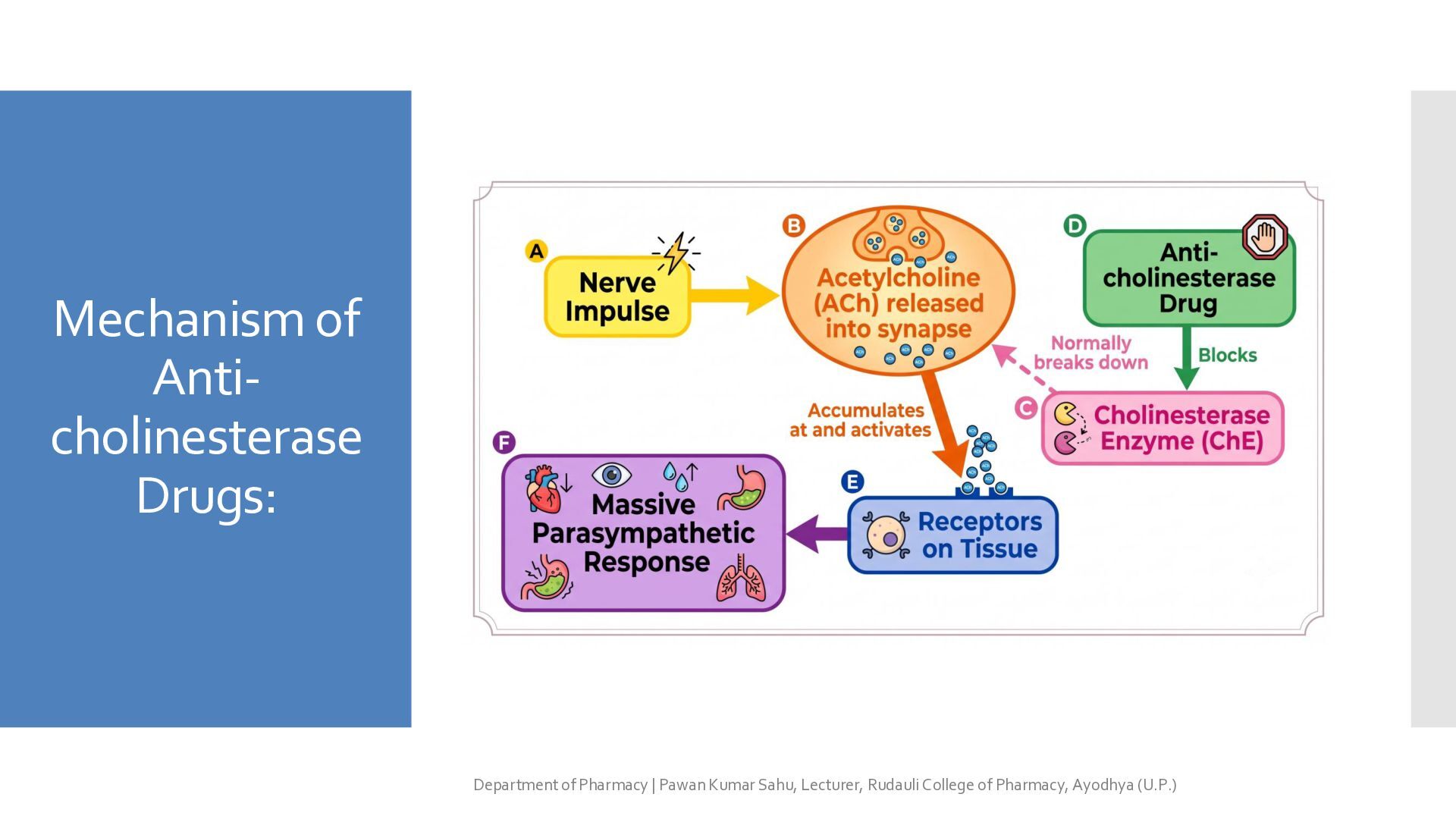
  24. Stage 1: The Initial Signal • Nerve Impulse (A): The

    entire process begins with an electrical nerve impulse. Mechanism of Anticholinesterase Drugs: Stage 2: Neurotransmitter Release • Acetylcholine Released (B): This impulse triggers the release of the neurotransmitter, Acetylcholine (ACh), from the nerve terminal into the synaptic cleft (the space between the nerve and the tissue). Stage 3: Normal Function (The Break) • Cholinesterase Enzyme (C): Under normal, healthy conditions, this specific enzyme is present in the synapse. • Normally Breaks Down (C -.-> B): The Cholinesterase Enzyme's main job is to rapidly break down (destroy) Acetylcholine after it has done its job, preventing excessive signaling. Department of Pharmacy | Pawan Kumar Sahu, Lecturer, Rudauli College of Pharmacy, Ayodhya (U.P.)
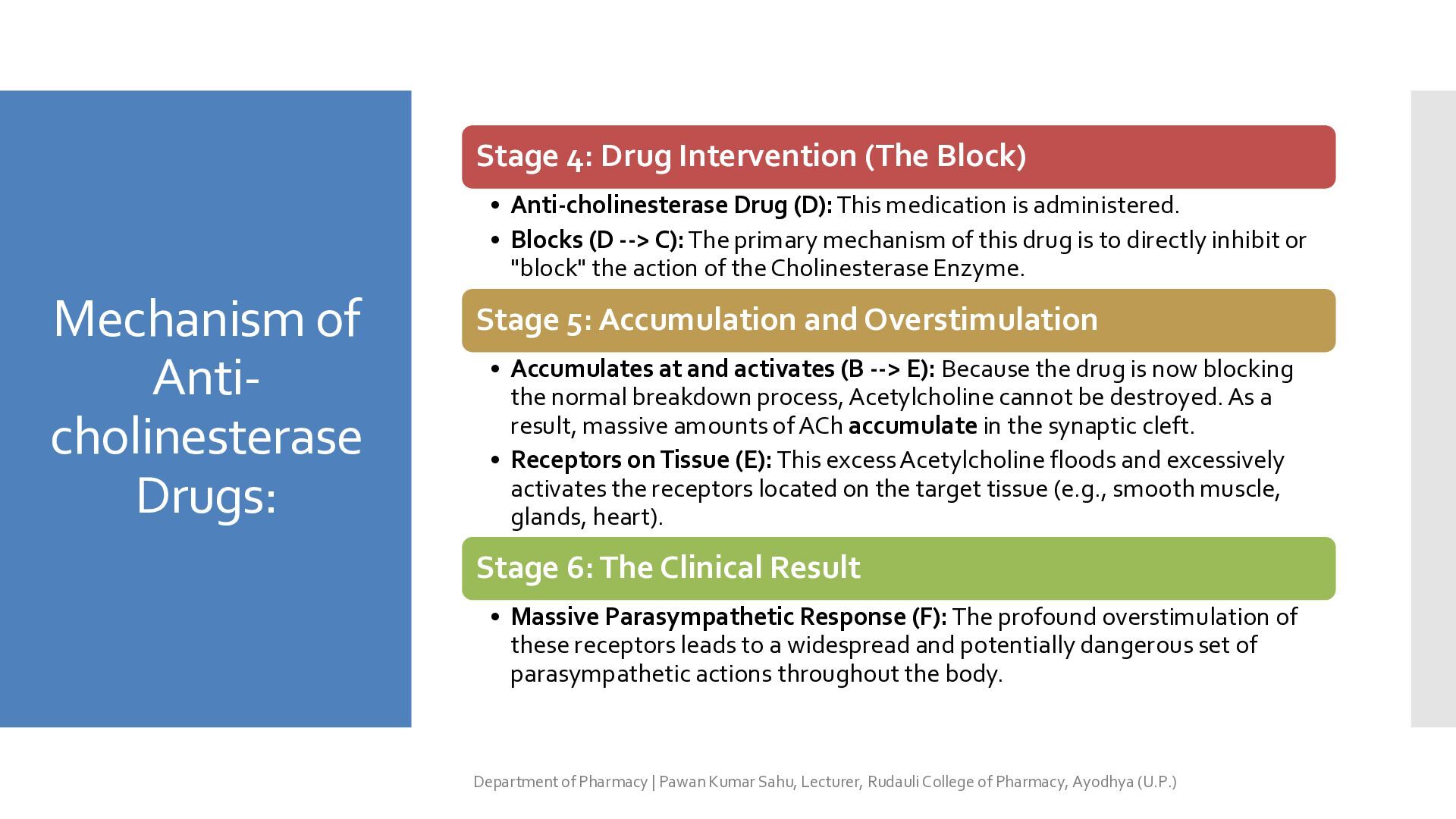
  25. Stage 4: Drug Intervention (The Block) • Anti-cholinesterase Drug (D):

    This medication is administered. • Blocks (D --> C): The primary mechanism of this drug is to directly inhibit or "block" the action of the Cholinesterase Enzyme. Mechanism of Anticholinesterase Drugs: Stage 5: Accumulation and Overstimulation • Accumulates at and activates (B --> E): Because the drug is now blocking the normal breakdown process, Acetylcholine cannot be destroyed. As a result, massive amounts of ACh accumulate in the synaptic cleft. • Receptors on Tissue (E): This excess Acetylcholine floods and excessively activates the receptors located on the target tissue (e.g., smooth muscle, glands, heart). Stage 6: The Clinical Result • Massive Parasympathetic Response (F): The profound overstimulation of these receptors leads to a widespread and potentially dangerous set of parasympathetic actions throughout the body. Department of Pharmacy | Pawan Kumar Sahu, Lecturer, Rudauli College of Pharmacy, Ayodhya (U.P.)
  26. Mechanism of Anticholinesterase Drugs: Department of Pharmacy | Pawan Kumar

    Sahu, Lecturer, Rudauli College of Pharmacy, Ayodhya (U.P.)
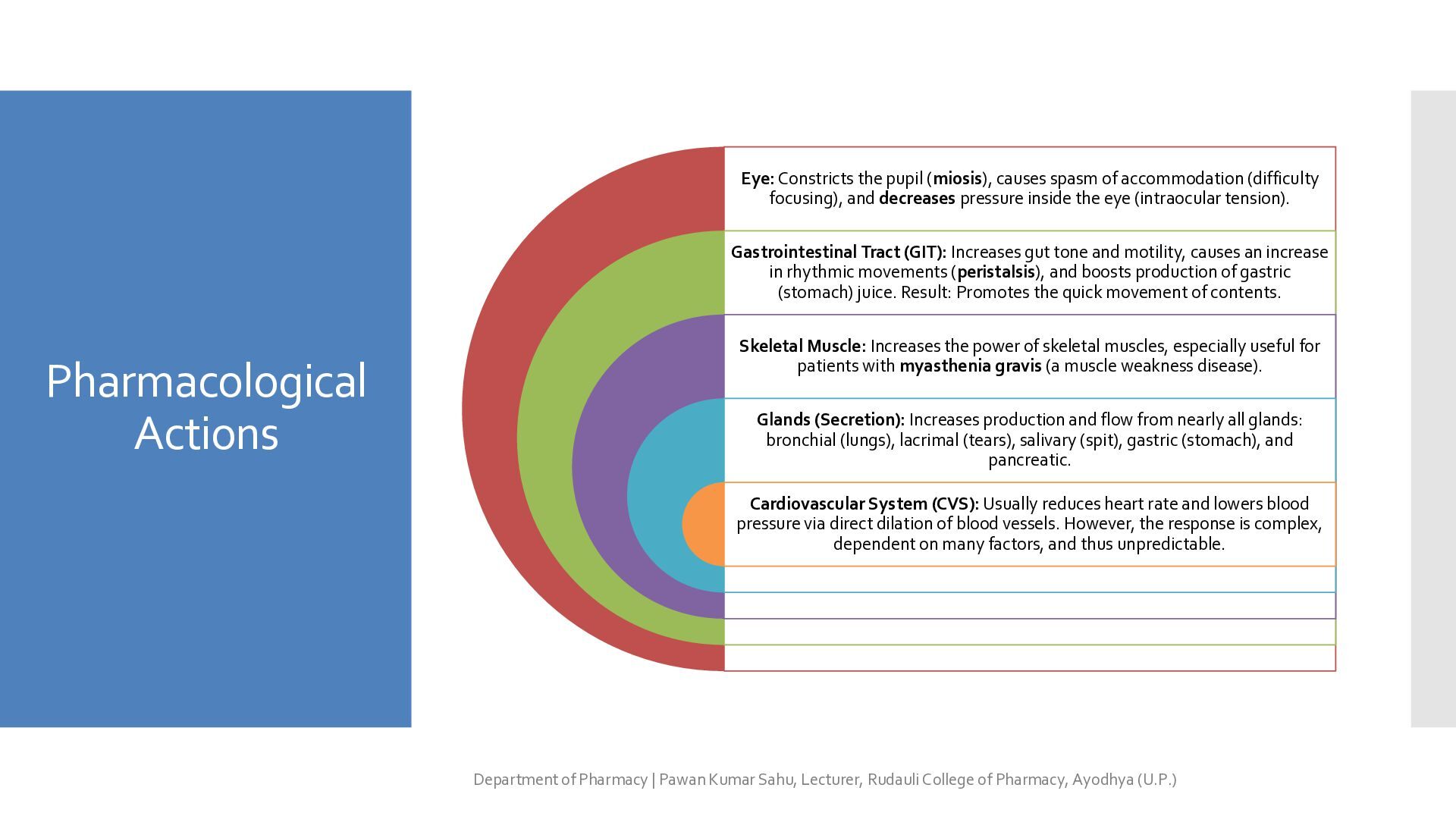
  27. Eye: Constricts the pupil (miosis), causes spasm of accommodation (difficulty

    focusing), and decreases pressure inside the eye (intraocular tension). Gastrointestinal Tract (GIT): Increases gut tone and motility, causes an increase in rhythmic movements (peristalsis), and boosts production of gastric (stomach) juice. Result: Promotes the quick movement of contents. Pharmacological Actions Skeletal Muscle: Increases the power of skeletal muscles, especially useful for patients with myasthenia gravis (a muscle weakness disease). Glands (Secretion): Increases production and flow from nearly all glands: bronchial (lungs), lacrimal (tears), salivary (spit), gastric (stomach), and pancreatic. Cardiovascular System (CVS): Usually reduces heart rate and lowers blood pressure via direct dilation of blood vessels. However, the response is complex, dependent on many factors, and thus unpredictable. Department of Pharmacy | Pawan Kumar Sahu, Lecturer, Rudauli College of Pharmacy, Ayodhya (U.P.)
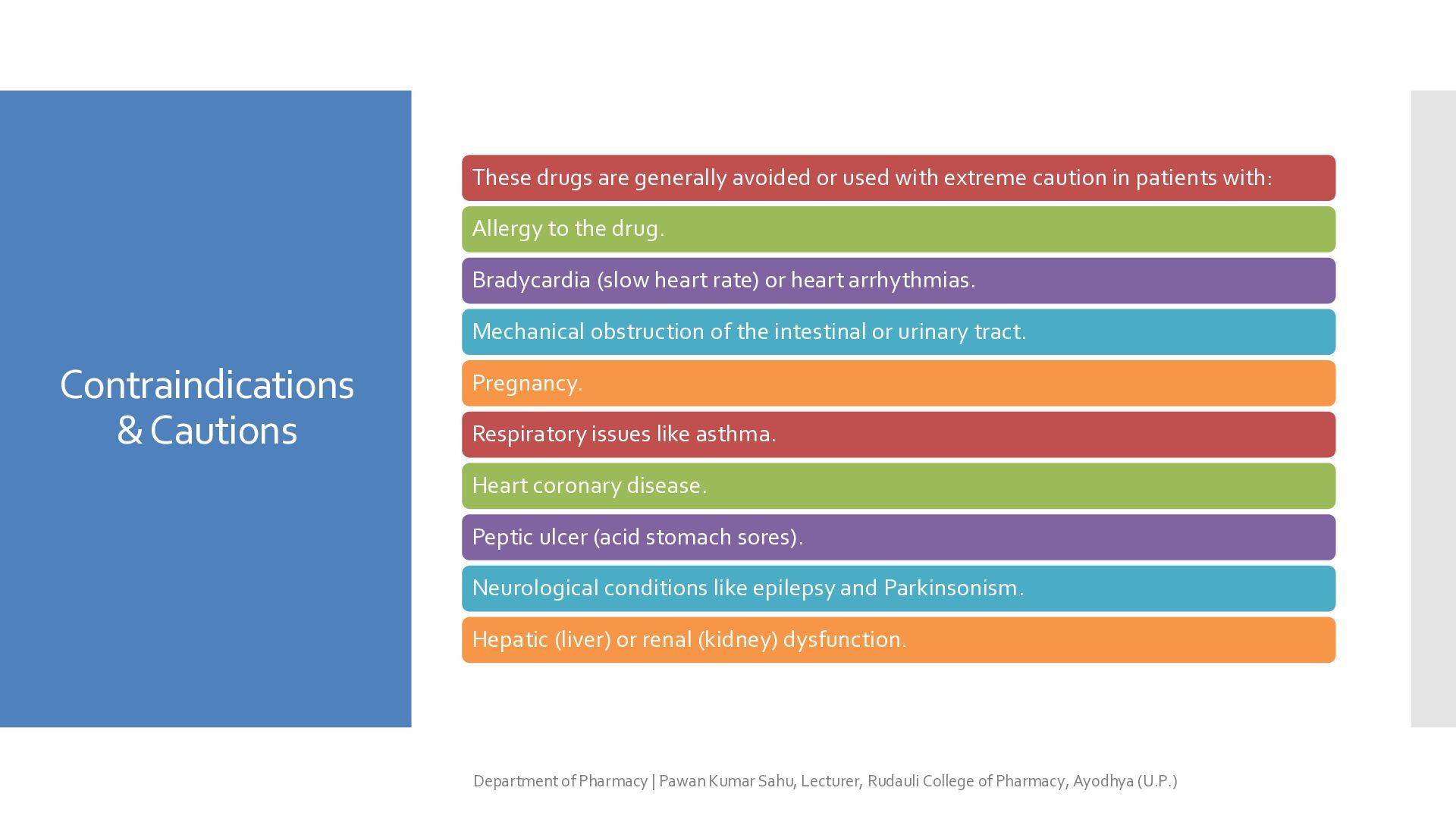
  28. These drugs are generally avoided or used with extreme caution

    in patients with: Allergy to the drug. Bradycardia (slow heart rate) or heart arrhythmias. Mechanical obstruction of the intestinal or urinary tract. Contraindications & Cautions Pregnancy. Respiratory issues like asthma. Heart coronary disease. Peptic ulcer (acid stomach sores). Neurological conditions like epilepsy and Parkinsonism. Hepatic (liver) or renal (kidney) dysfunction. Department of Pharmacy | Pawan Kumar Sahu, Lecturer, Rudauli College of Pharmacy, Ayodhya (U.P.)
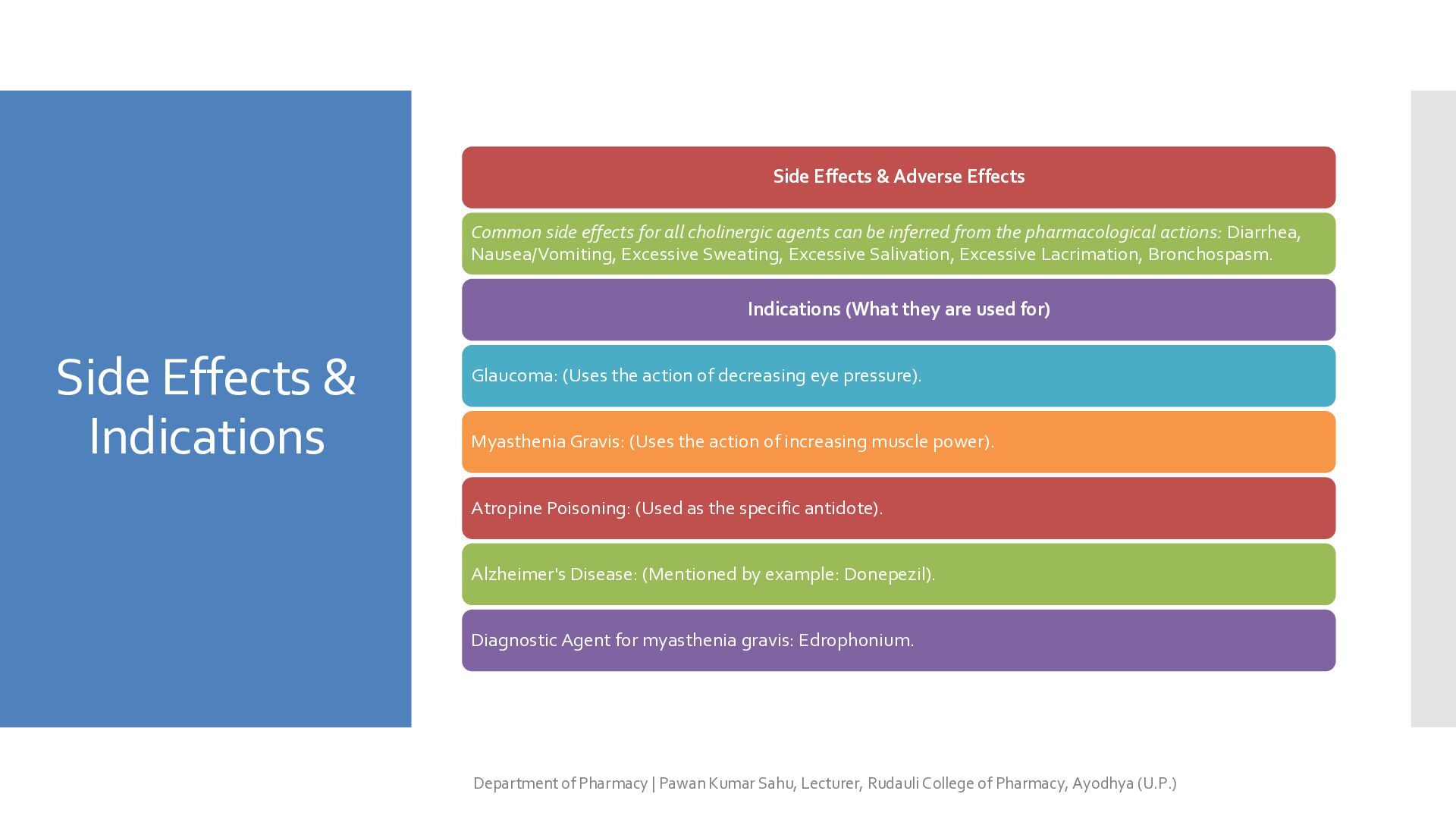
  29. Side Effects & Adverse Effects Common side effects for all

    cholinergic agents can be inferred from the pharmacological actions: Diarrhea, Nausea/Vomiting, Excessive Sweating, Excessive Salivation, Excessive Lacrimation, Bronchospasm. Indications (What they are used for) Side Effects & Indications Glaucoma: (Uses the action of decreasing eye pressure). Myasthenia Gravis: (Uses the action of increasing muscle power). Atropine Poisoning: (Used as the specific antidote). Alzheimer's Disease: (Mentioned by example: Donepezil). Diagnostic Agent for myasthenia gravis: Edrophonium. Department of Pharmacy | Pawan Kumar Sahu, Lecturer, Rudauli College of Pharmacy, Ayodhya (U.P.)
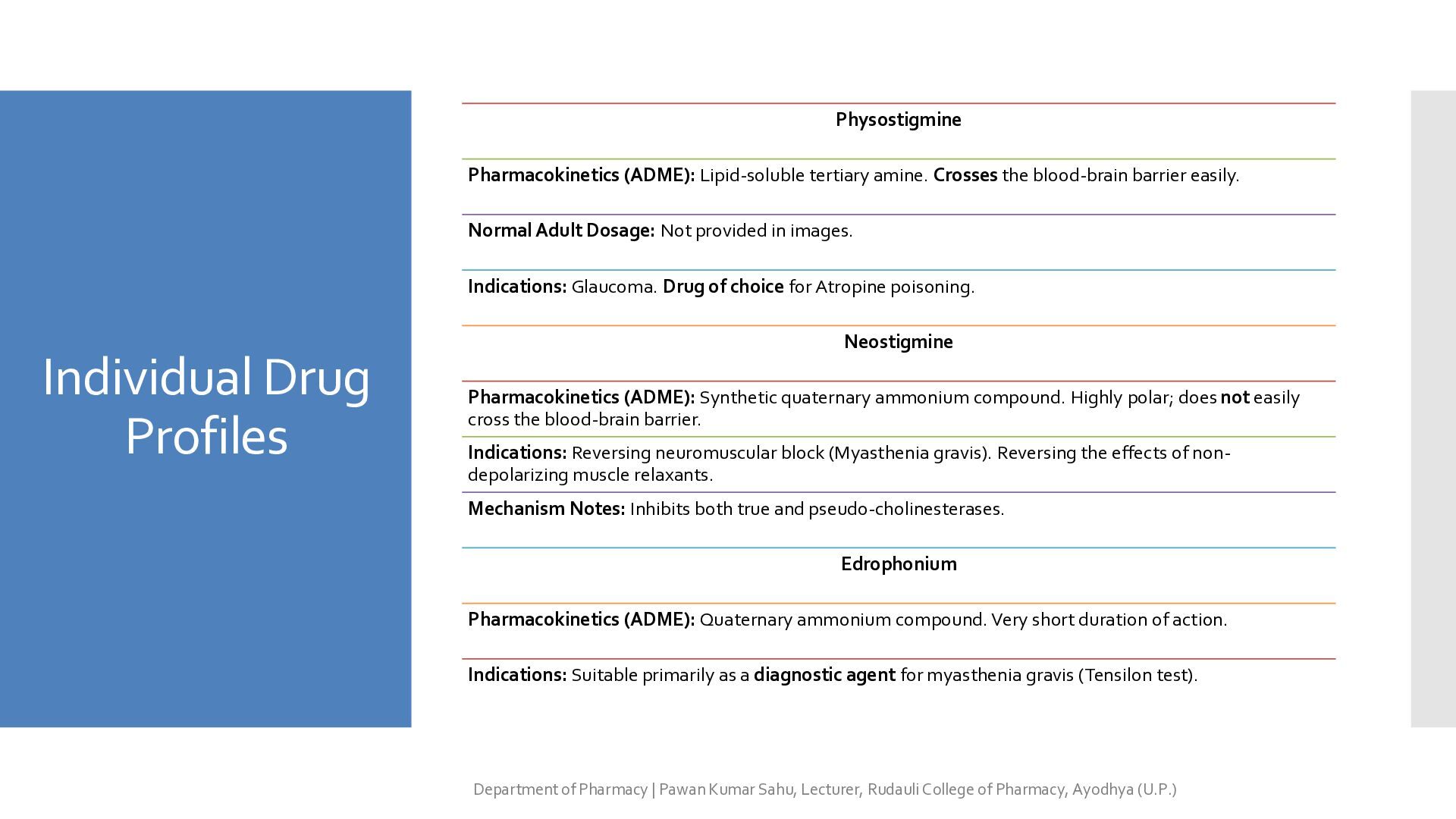
  30. Physostigmine Pharmacokinetics (ADME): Lipid-soluble tertiary amine. Crosses the blood-brain barrier

    easily. Normal Adult Dosage: Not provided in images. Indications: Glaucoma. Drug of choice for Atropine poisoning. Neostigmine Individual Drug Profiles Pharmacokinetics (ADME): Synthetic quaternary ammonium compound. Highly polar; does not easily cross the blood-brain barrier. Indications: Reversing neuromuscular block (Myasthenia gravis). Reversing the effects of nondepolarizing muscle relaxants. Mechanism Notes: Inhibits both true and pseudo-cholinesterases. Edrophonium Pharmacokinetics (ADME): Quaternary ammonium compound. Very short duration of action. Indications: Suitable primarily as a diagnostic agent for myasthenia gravis (Tensilon test). Department of Pharmacy | Pawan Kumar Sahu, Lecturer, Rudauli College of Pharmacy, Ayodhya (U.P.)
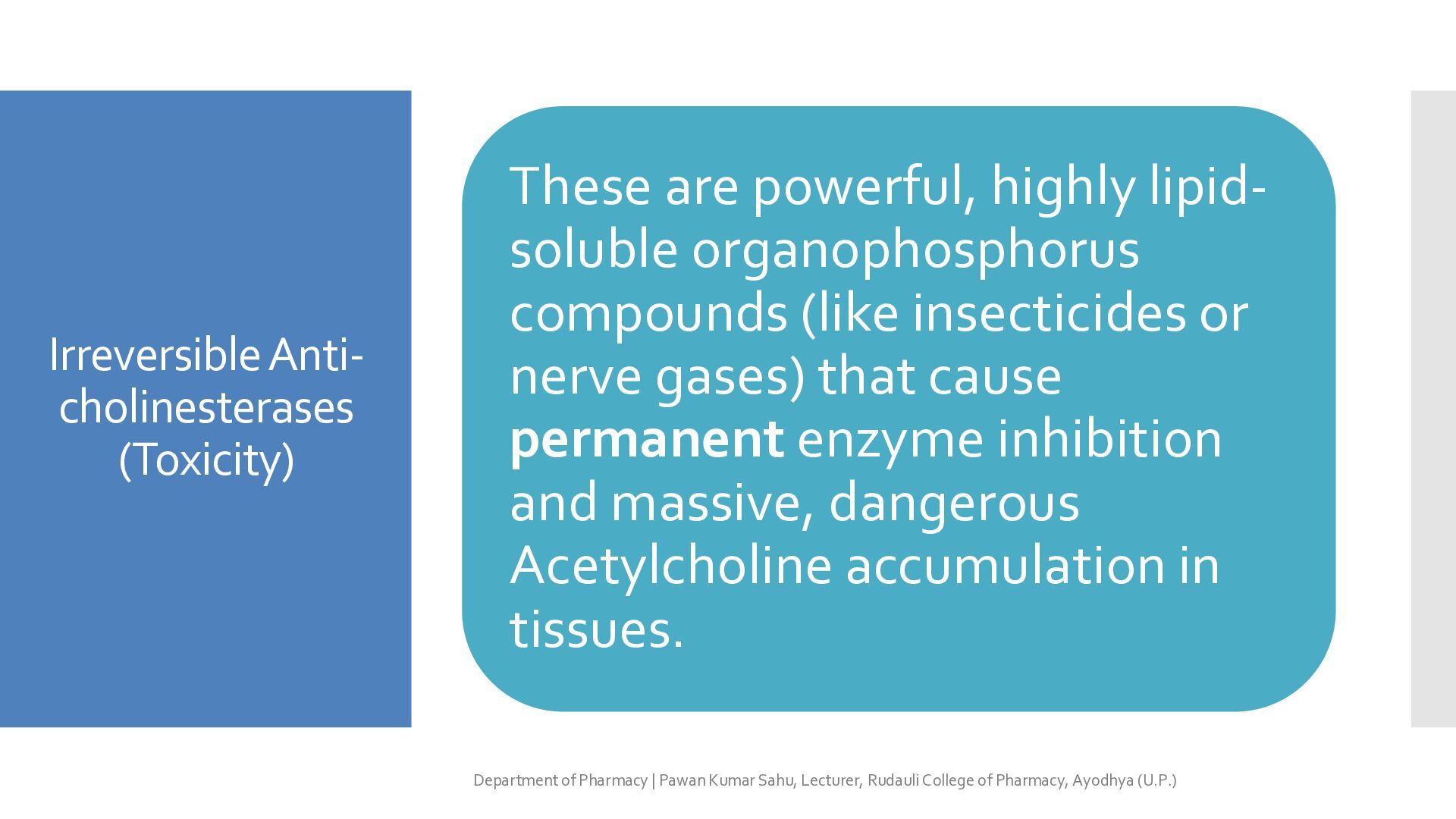
  31. Irreversible Anticholinesterases (Toxicity) These are powerful, highly lipidsoluble organophosphorus compounds

    (like insecticides or nerve gases) that cause permanent enzyme inhibition and massive, dangerous Acetylcholine accumulation in tissues. Department of Pharmacy | Pawan Kumar Sahu, Lecturer, Rudauli College of Pharmacy, Ayodhya (U.P.)
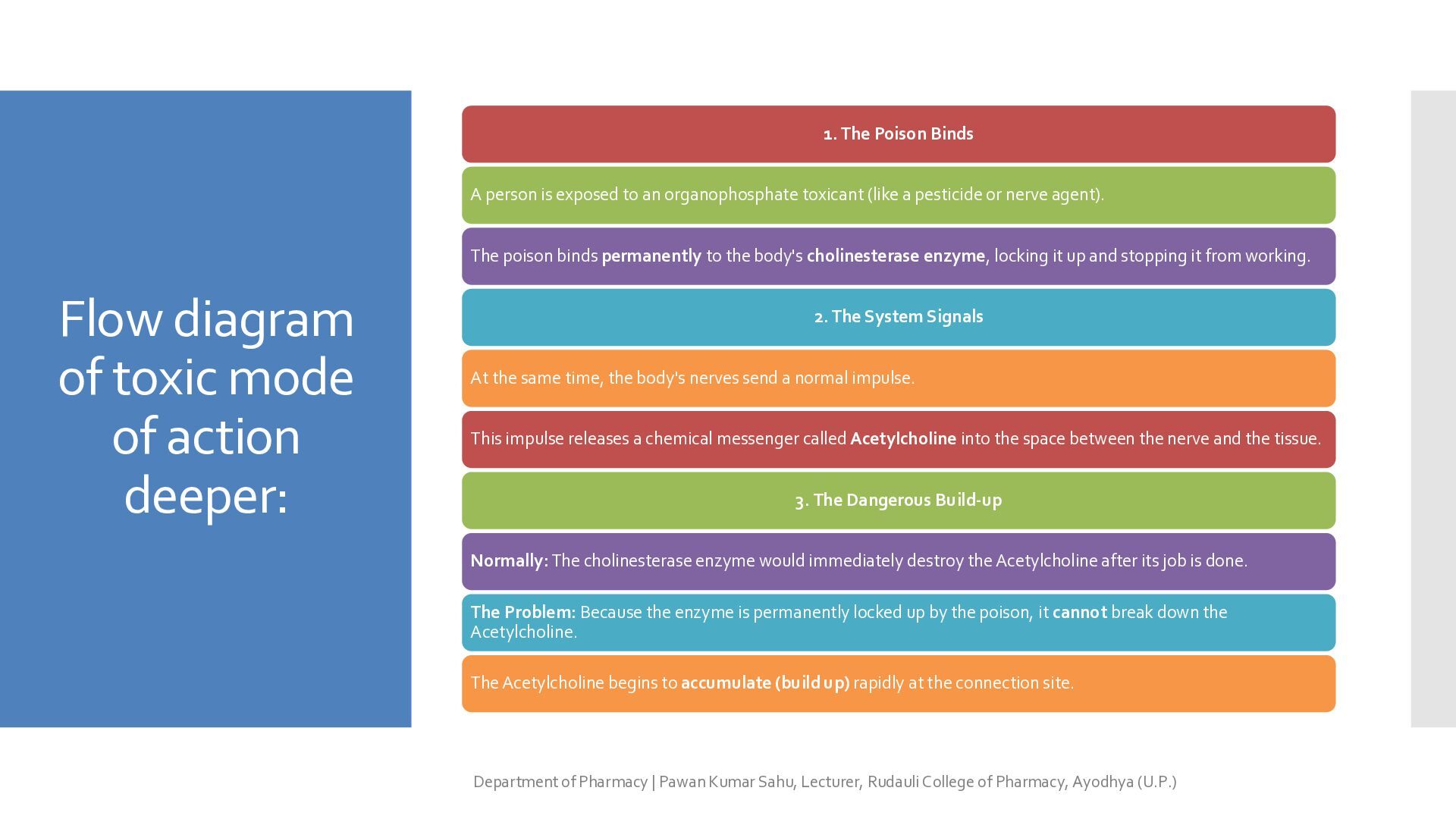
  32. 1. The Poison Binds A person is exposed to an

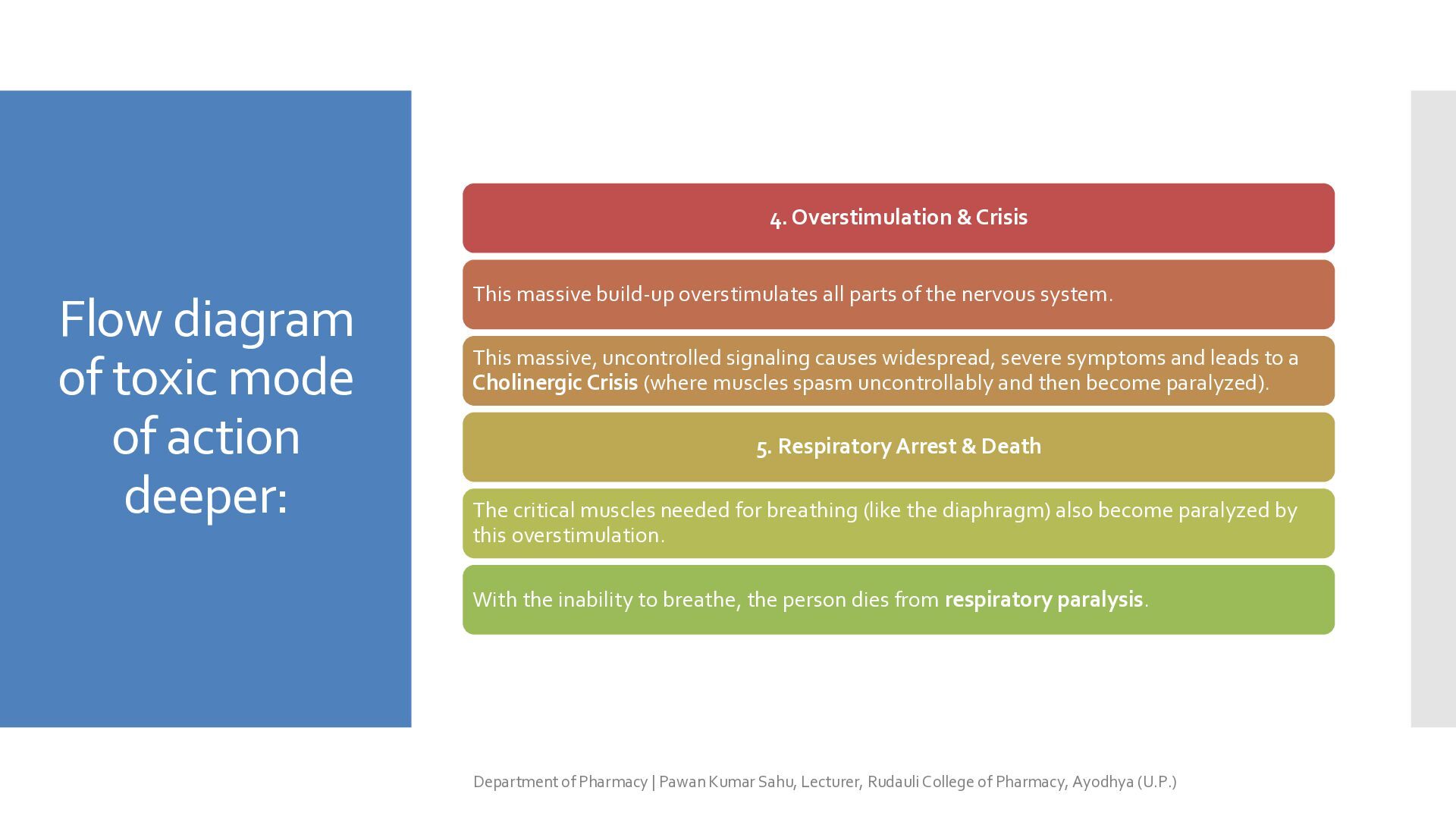
    organophosphate toxicant (like a pesticide or nerve agent). The poison binds permanently to the body's cholinesterase enzyme, locking it up and stopping it from working. Flow diagram of toxic mode of action deeper: 2. The System Signals At the same time, the body's nerves send a normal impulse. This impulse releases a chemical messenger called Acetylcholine into the space between the nerve and the tissue. 3. The Dangerous Build-up Normally: The cholinesterase enzyme would immediately destroy the Acetylcholine after its job is done. The Problem: Because the enzyme is permanently locked up by the poison, it cannot break down the Acetylcholine. The Acetylcholine begins to accumulate (build up) rapidly at the connection site. Department of Pharmacy | Pawan Kumar Sahu, Lecturer, Rudauli College of Pharmacy, Ayodhya (U.P.)
  33. 4. Overstimulation & Crisis Flow diagram of toxic mode of

    action deeper: This massive build-up overstimulates all parts of the nervous system. This massive, uncontrolled signaling causes widespread, severe symptoms and leads to a Cholinergic Crisis (where muscles spasm uncontrollably and then become paralyzed). 5. Respiratory Arrest & Death The critical muscles needed for breathing (like the diaphragm) also become paralyzed by this overstimulation. With the inability to breathe, the person dies from respiratory paralysis. Department of Pharmacy | Pawan Kumar Sahu, Lecturer, Rudauli College of Pharmacy, Ayodhya (U.P.)
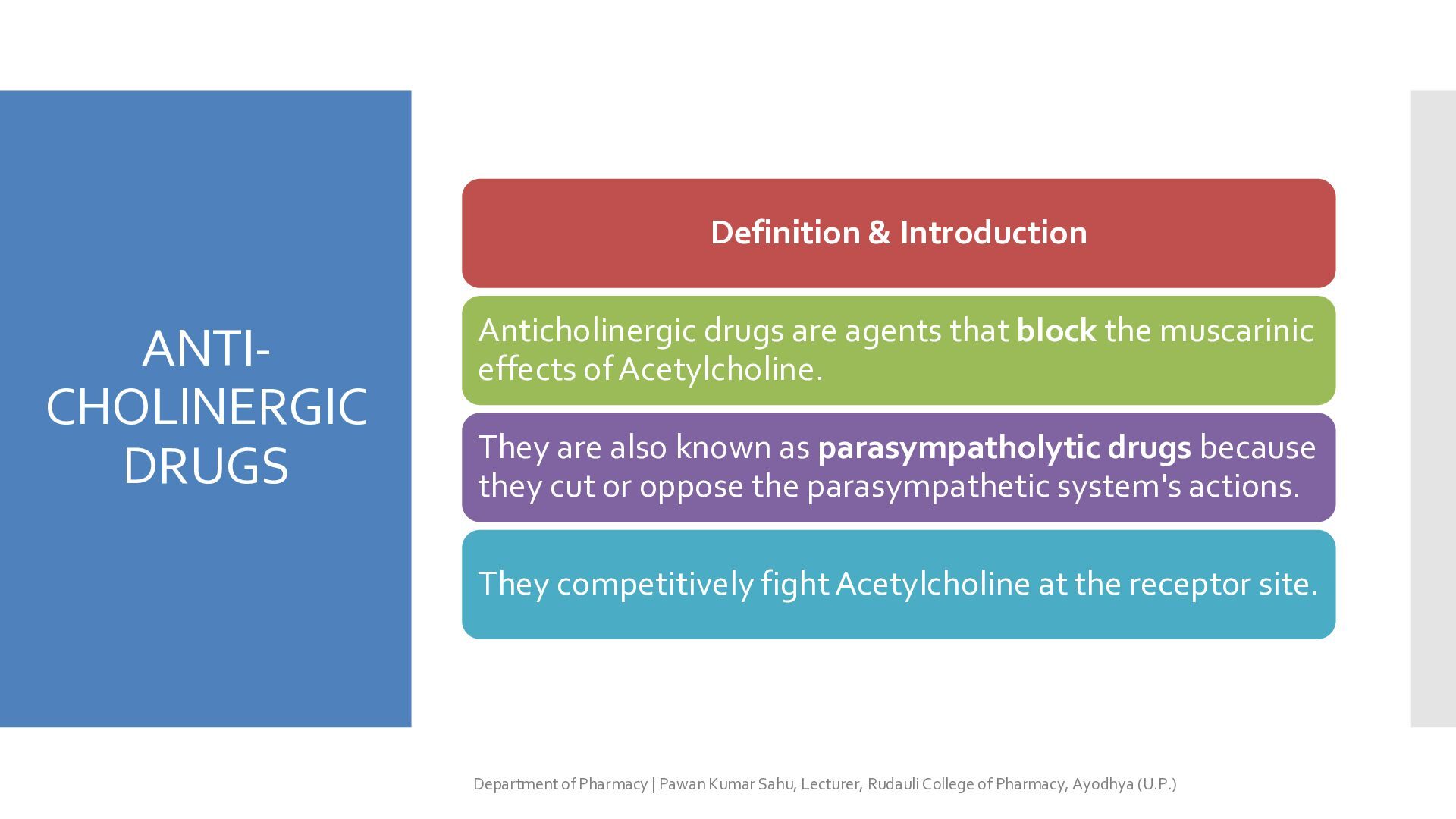
  34. Definition & Introduction ANTICHOLINERGIC DRUGS Anticholinergic drugs are agents that

    block the muscarinic effects of Acetylcholine. They are also known as parasympatholytic drugs because they cut or oppose the parasympathetic system's actions. They competitively fight Acetylcholine at the receptor site. Department of Pharmacy | Pawan Kumar Sahu, Lecturer, Rudauli College of Pharmacy, Ayodhya (U.P.)
  35. Classification of Anticholinergic drugs Department of Pharmacy | Pawan Kumar

    Sahu, Lecturer, Rudauli College of Pharmacy, Ayodhya (U.P.)
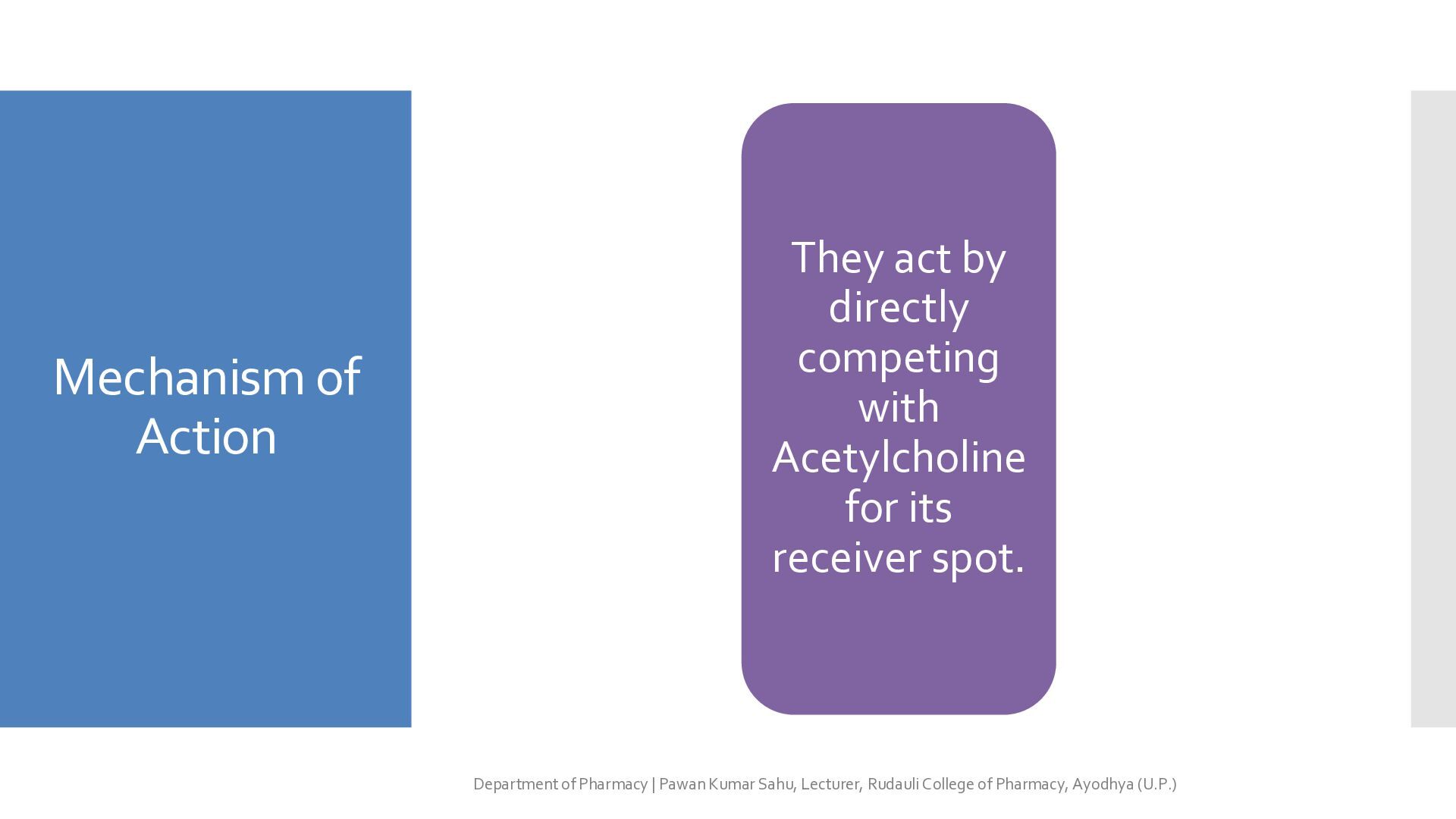
  36. Mechanism of Action They act by directly competing with Acetylcholine

    for its receiver spot. Department of Pharmacy | Pawan Kumar Sahu, Lecturer, Rudauli College of Pharmacy, Ayodhya (U.P.)
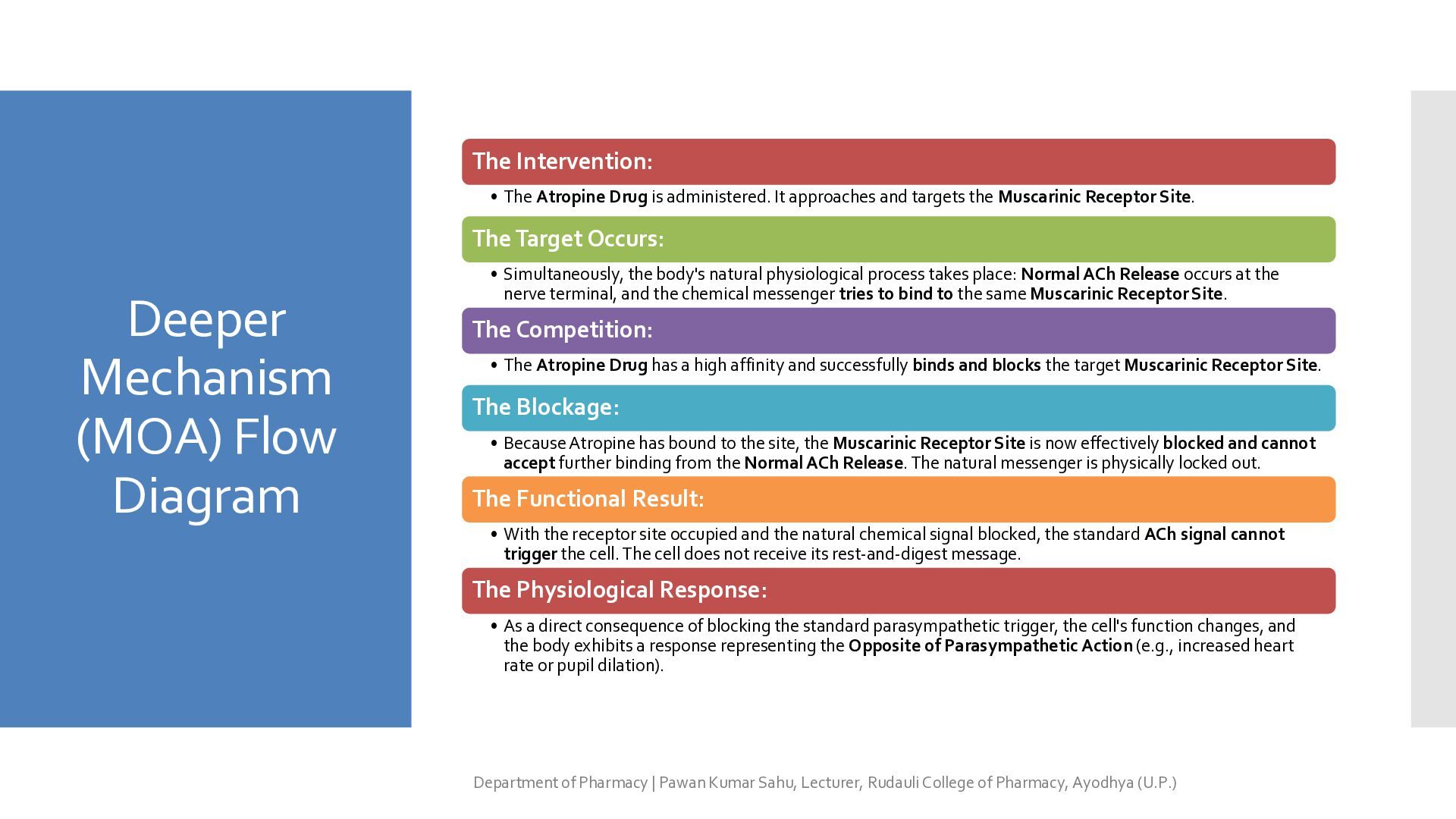
  37. The Intervention: • The Atropine Drug is administered. It approaches

    and targets the Muscarinic Receptor Site. The Target Occurs: Deeper Mechanism (MOA) Flow Diagram • Simultaneously, the body's natural physiological process takes place: Normal ACh Release occurs at the nerve terminal, and the chemical messenger tries to bind to the same Muscarinic Receptor Site. The Competition: • The Atropine Drug has a high affinity and successfully binds and blocks the target Muscarinic Receptor Site. The Blockage: • Because Atropine has bound to the site, the Muscarinic Receptor Site is now effectively blocked and cannot accept further binding from the Normal ACh Release. The natural messenger is physically locked out. The Functional Result: • With the receptor site occupied and the natural chemical signal blocked, the standard ACh signal cannot trigger the cell. The cell does not receive its rest-and-digest message. The Physiological Response: • As a direct consequence of blocking the standard parasympathetic trigger, the cell's function changes, and the body exhibits a response representing the Opposite of Parasympathetic Action (e.g., increased heart rate or pupil dilation). Department of Pharmacy | Pawan Kumar Sahu, Lecturer, Rudauli College of Pharmacy, Ayodhya (U.P.)
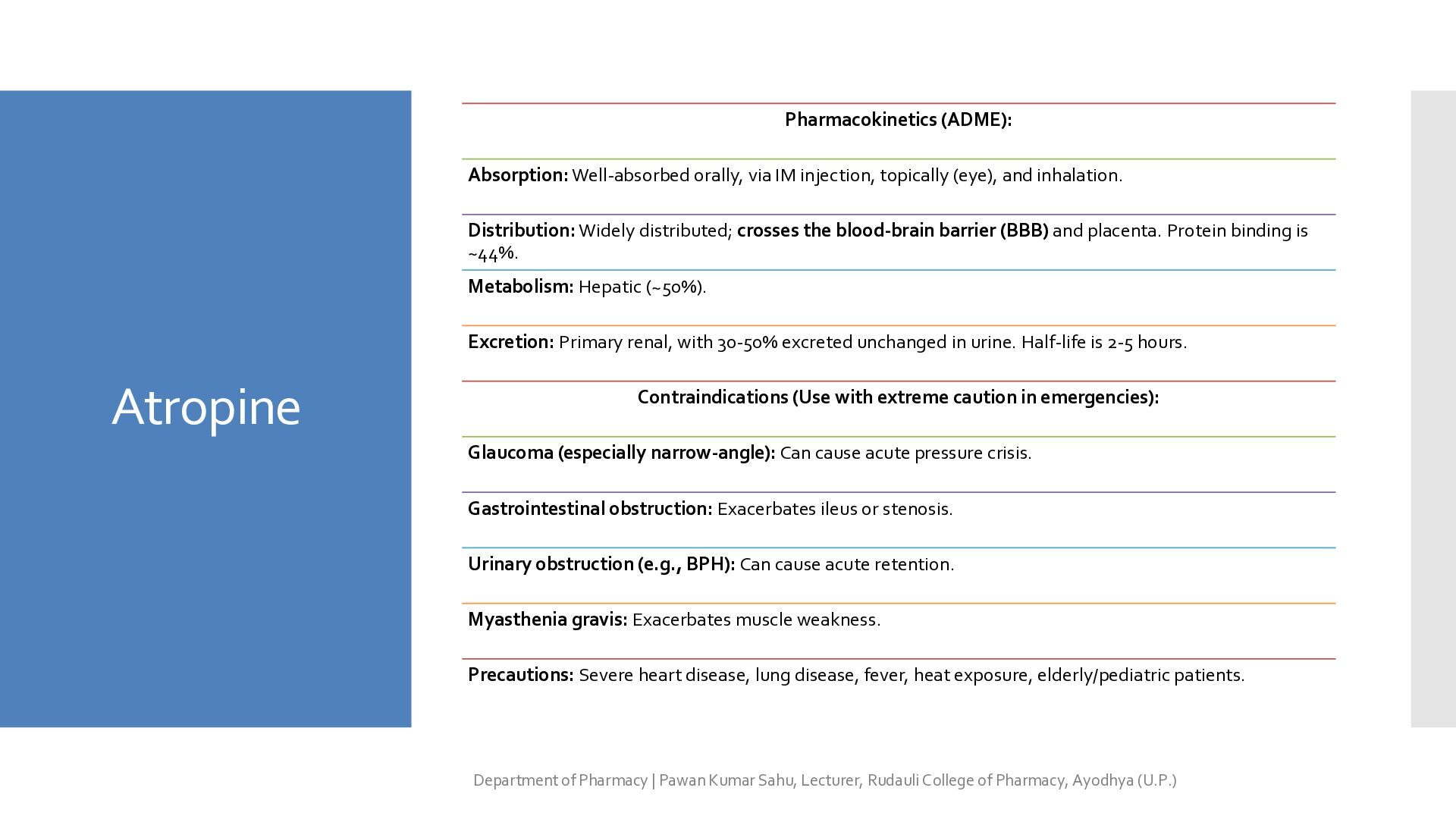
  38. Pharmacokinetics (ADME): Absorption: Well-absorbed orally, via IM injection, topically (eye),

    and inhalation. Distribution: Widely distributed; crosses the blood-brain barrier (BBB) and placenta. Protein binding is ~44%. Metabolism: Hepatic (~50%). Excretion: Primary renal, with 30-50% excreted unchanged in urine. Half-life is 2-5 hours. Atropine Contraindications (Use with extreme caution in emergencies): Glaucoma (especially narrow-angle): Can cause acute pressure crisis. Gastrointestinal obstruction: Exacerbates ileus or stenosis. Urinary obstruction (e.g., BPH): Can cause acute retention. Myasthenia gravis: Exacerbates muscle weakness. Precautions: Severe heart disease, lung disease, fever, heat exposure, elderly/pediatric patients. Department of Pharmacy | Pawan Kumar Sahu, Lecturer, Rudauli College of Pharmacy, Ayodhya (U.P.)
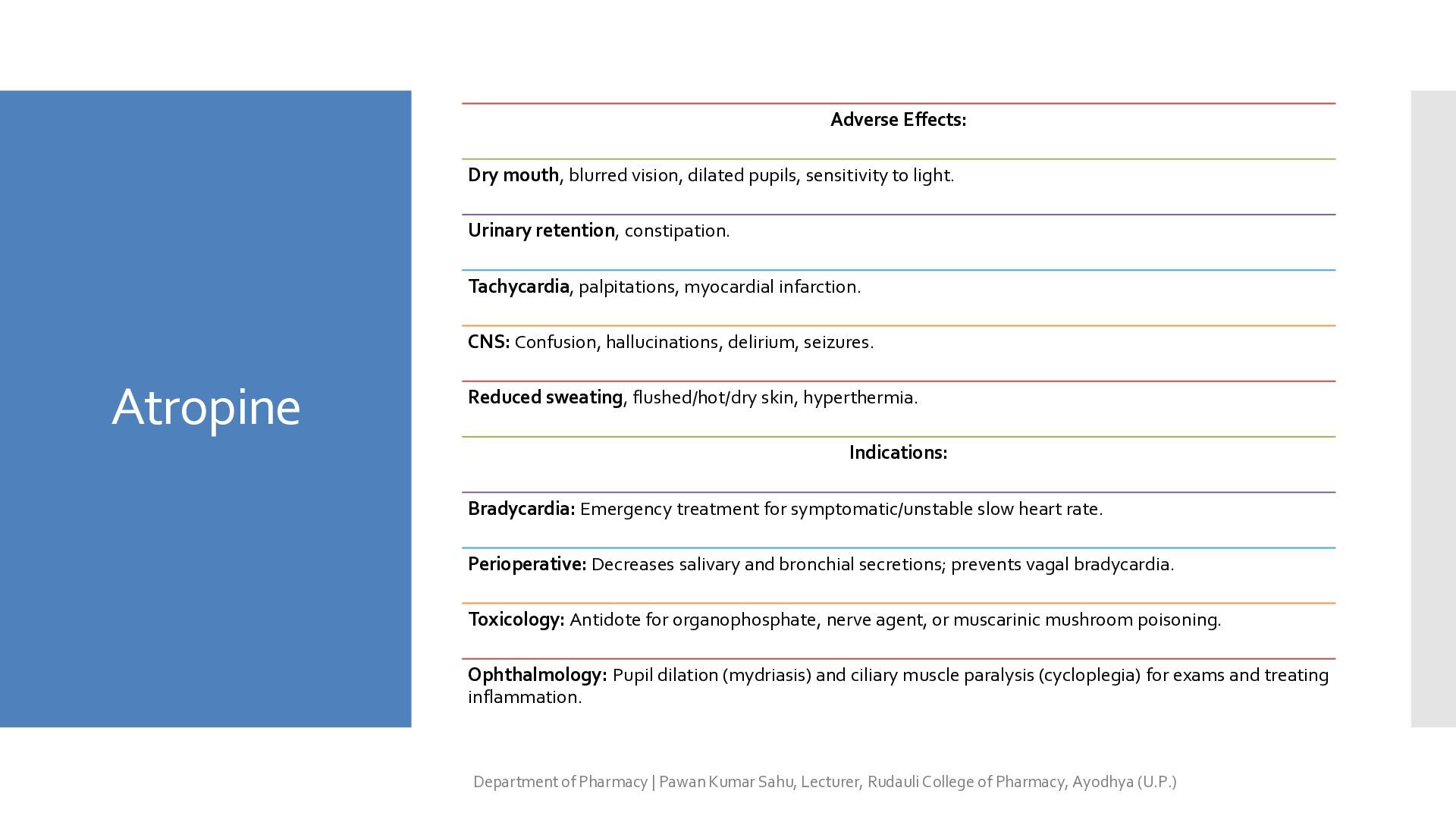
  39. Adverse Effects: Dry mouth, blurred vision, dilated pupils, sensitivity to

    light. Urinary retention, constipation. Tachycardia, palpitations, myocardial infarction. CNS: Confusion, hallucinations, delirium, seizures. Atropine Reduced sweating, flushed/hot/dry skin, hyperthermia. Indications: Bradycardia: Emergency treatment for symptomatic/unstable slow heart rate. Perioperative: Decreases salivary and bronchial secretions; prevents vagal bradycardia. Toxicology: Antidote for organophosphate, nerve agent, or muscarinic mushroom poisoning. Ophthalmology: Pupil dilation (mydriasis) and ciliary muscle paralysis (cycloplegia) for exams and treating inflammation. Department of Pharmacy | Pawan Kumar Sahu, Lecturer, Rudauli College of Pharmacy, Ayodhya (U.P.)
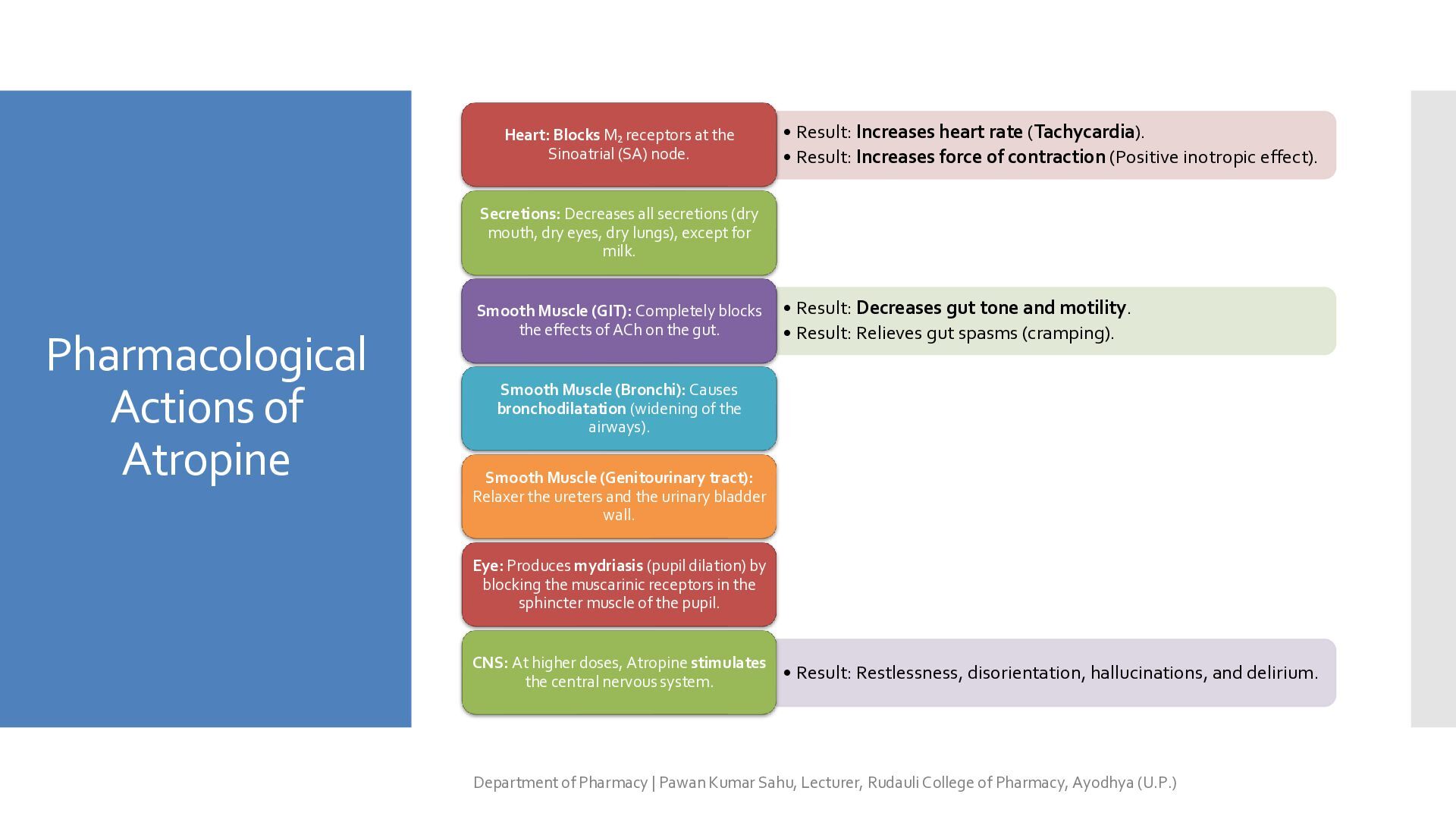
  40. Heart: Blocks M₂ receptors at the Sinoatrial (SA) node. •

    Result: Increases heart rate (Tachycardia). • Result: Increases force of contraction (Positive inotropic effect). Secretions: Decreases all secretions (dry mouth, dry eyes, dry lungs), except for milk. Pharmacological Actions of Atropine Smooth Muscle (GIT): Completely blocks the effects of ACh on the gut. • Result: Decreases gut tone and motility. • Result: Relieves gut spasms (cramping). Smooth Muscle (Bronchi): Causes bronchodilatation (widening of the airways). Smooth Muscle (Genitourinary tract): Relaxer the ureters and the urinary bladder wall. Eye: Produces mydriasis (pupil dilation) by blocking the muscarinic receptors in the sphincter muscle of the pupil. CNS: At higher doses, Atropine stimulates • Result: Restlessness, disorientation, hallucinations, and delirium. the central nervous system. Department of Pharmacy | Pawan Kumar Sahu, Lecturer, Rudauli College of Pharmacy, Ayodhya (U.P.)
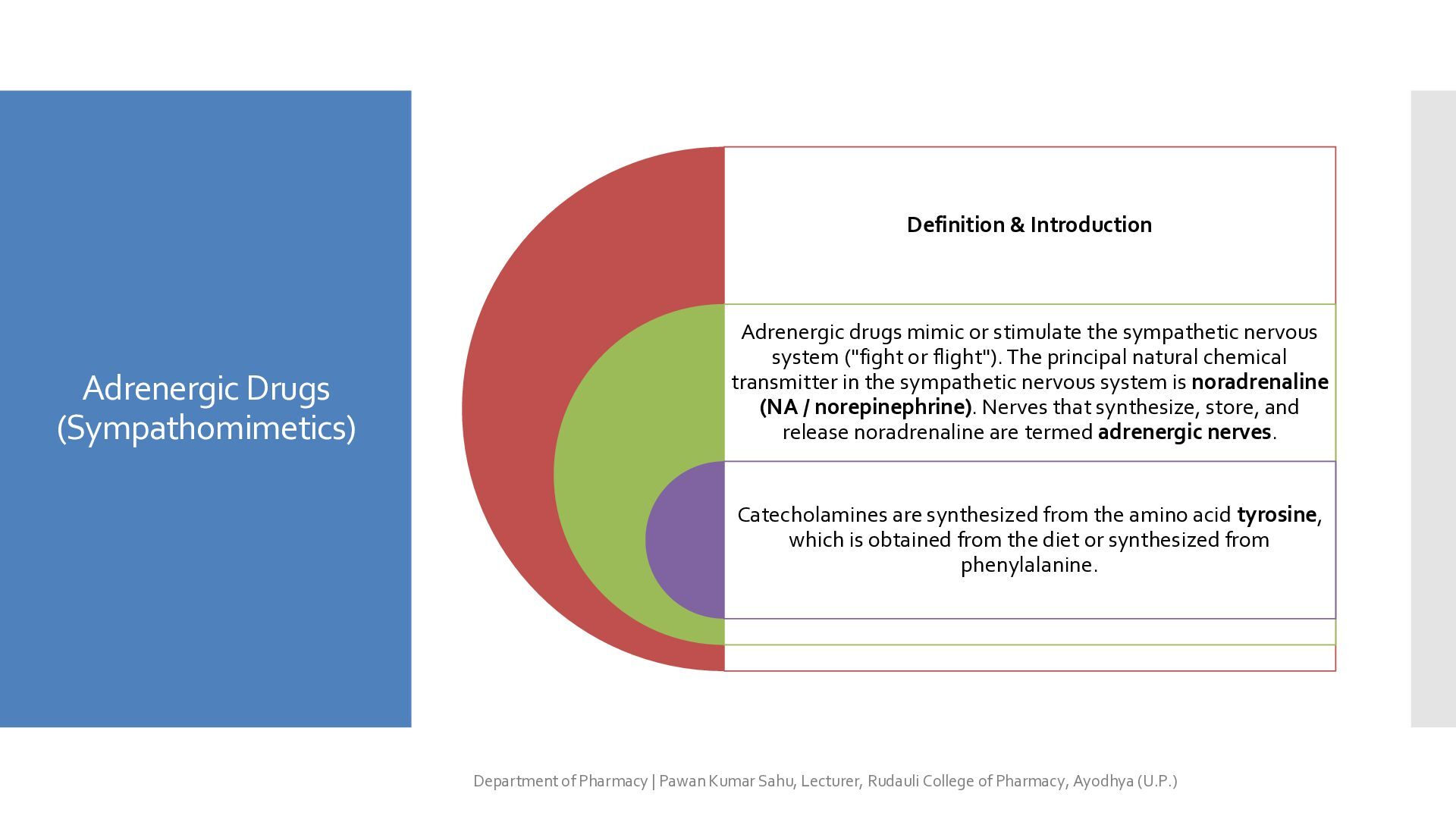
  41. Definition & Introduction Adrenergic Drugs (Sympathomimetics) Adrenergic drugs mimic or

    stimulate the sympathetic nervous system ("fight or flight"). The principal natural chemical transmitter in the sympathetic nervous system is noradrenaline (NA / norepinephrine). Nerves that synthesize, store, and release noradrenaline are termed adrenergic nerves. Catecholamines are synthesized from the amino acid tyrosine, which is obtained from the diet or synthesized from phenylalanine. Department of Pharmacy | Pawan Kumar Sahu, Lecturer, Rudauli College of Pharmacy, Ayodhya (U.P.)
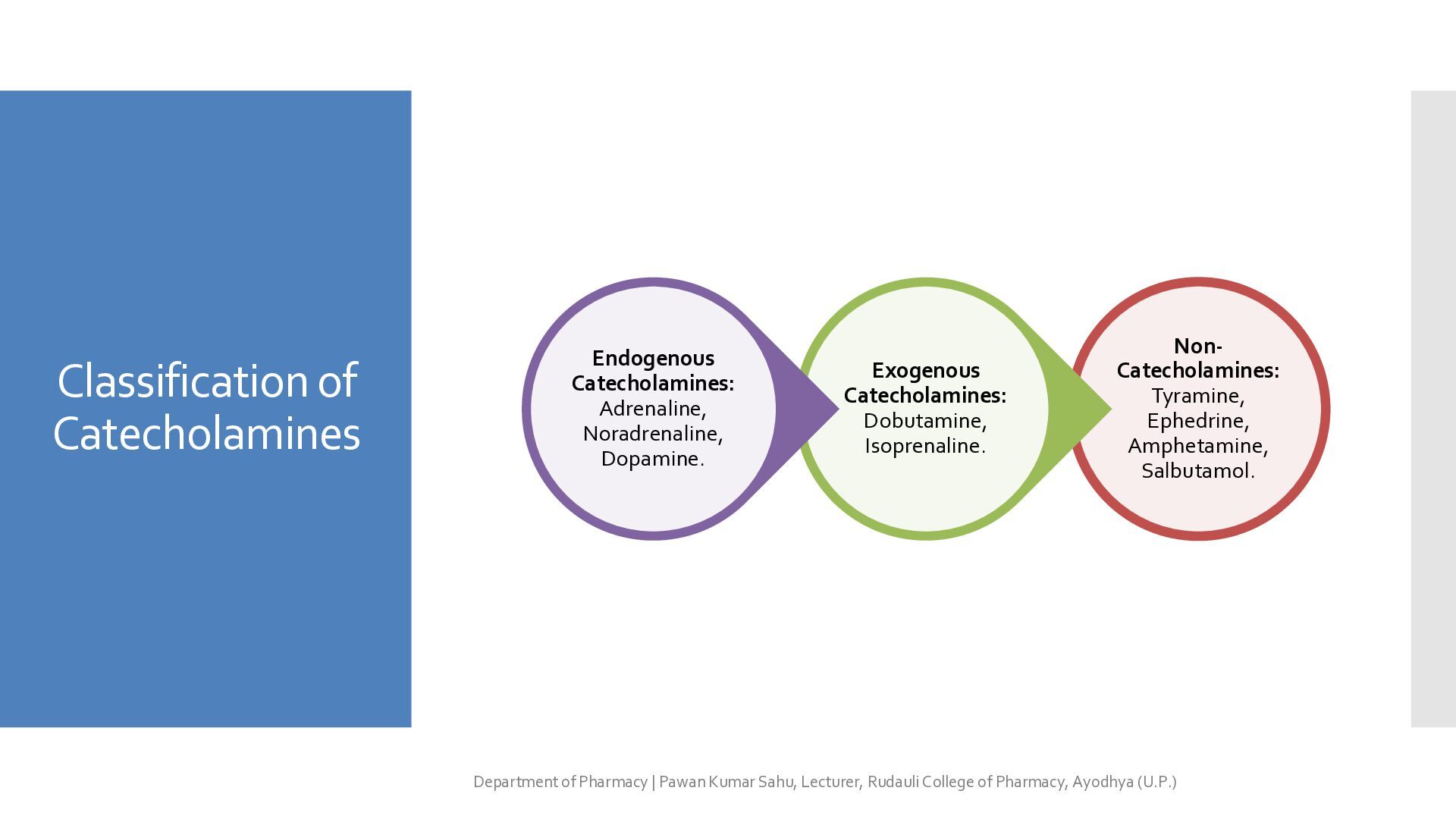
  42. Classification of Catecholamines Endogenous Catecholamines: Adrenaline, Noradrenaline, Dopamine. Exogenous Catecholamines:

    Dobutamine, Isoprenaline. NonCatecholamines: Tyramine, Ephedrine, Amphetamine, Salbutamol. Department of Pharmacy | Pawan Kumar Sahu, Lecturer, Rudauli College of Pharmacy, Ayodhya (U.P.)
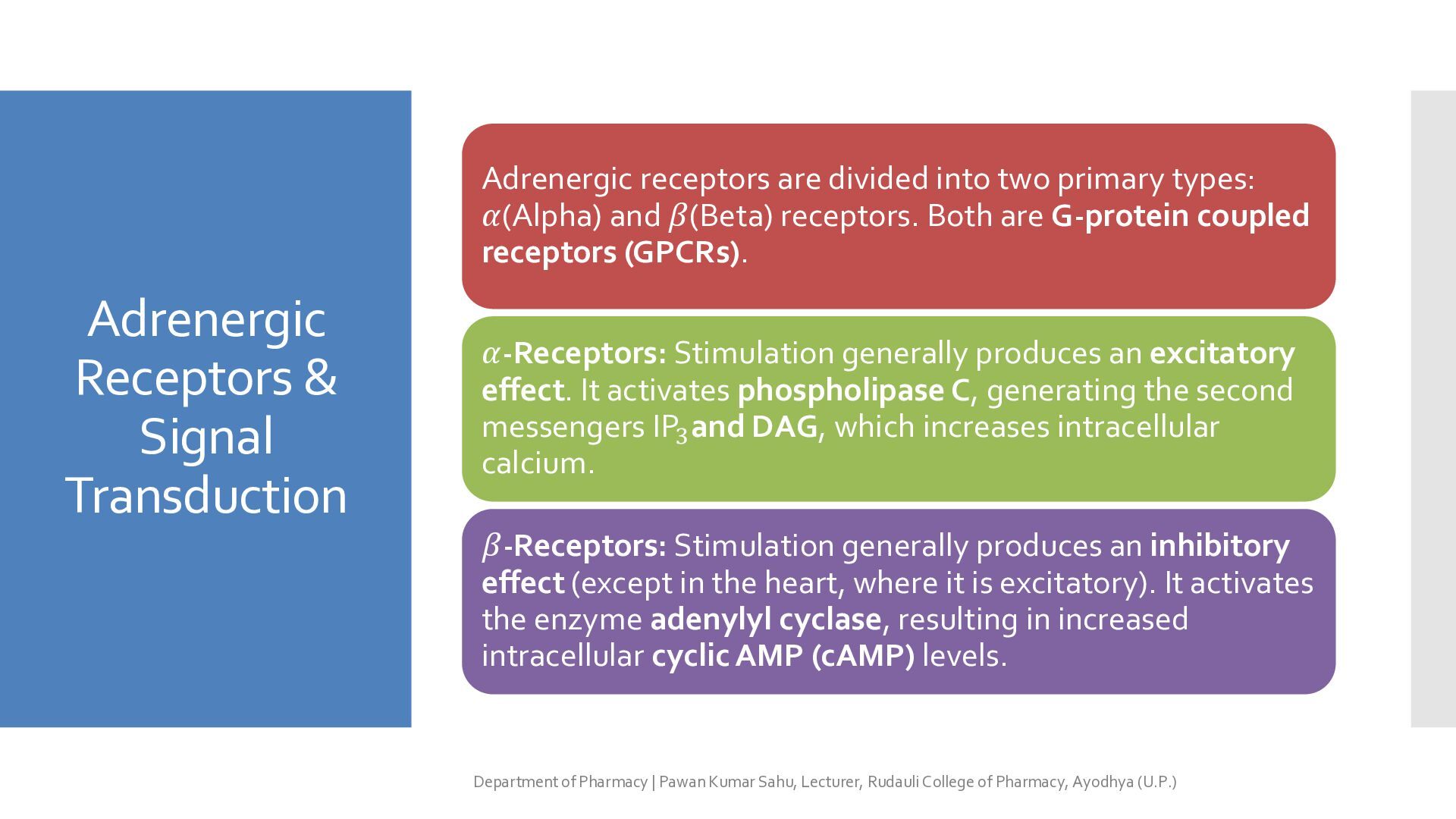
  43. Adrenergic receptors are divided into two primary types: 𝛼(Alpha) and

    𝛽(Beta) receptors. Both are G-protein coupled receptors (GPCRs). start equation alpha Adrenergic Receptors & Signal Transduction start equation beta start equation alpha 𝛼-Receptors: Stimulation generally produces an excitatory effect. It activates phospholipase C, generating the second messengers IP3 and DAG, which increases intracellular calcium. subscript base , IP , end base , sub 3 start equation beta 𝛽-Receptors: Stimulation generally produces an inhibitory effect (except in the heart, where it is excitatory). It activates the enzyme adenylyl cyclase, resulting in increased intracellular cyclic AMP (cAMP) levels. Department of Pharmacy | Pawan Kumar Sahu, Lecturer, Rudauli College of Pharmacy, Ayodhya (U.P.)
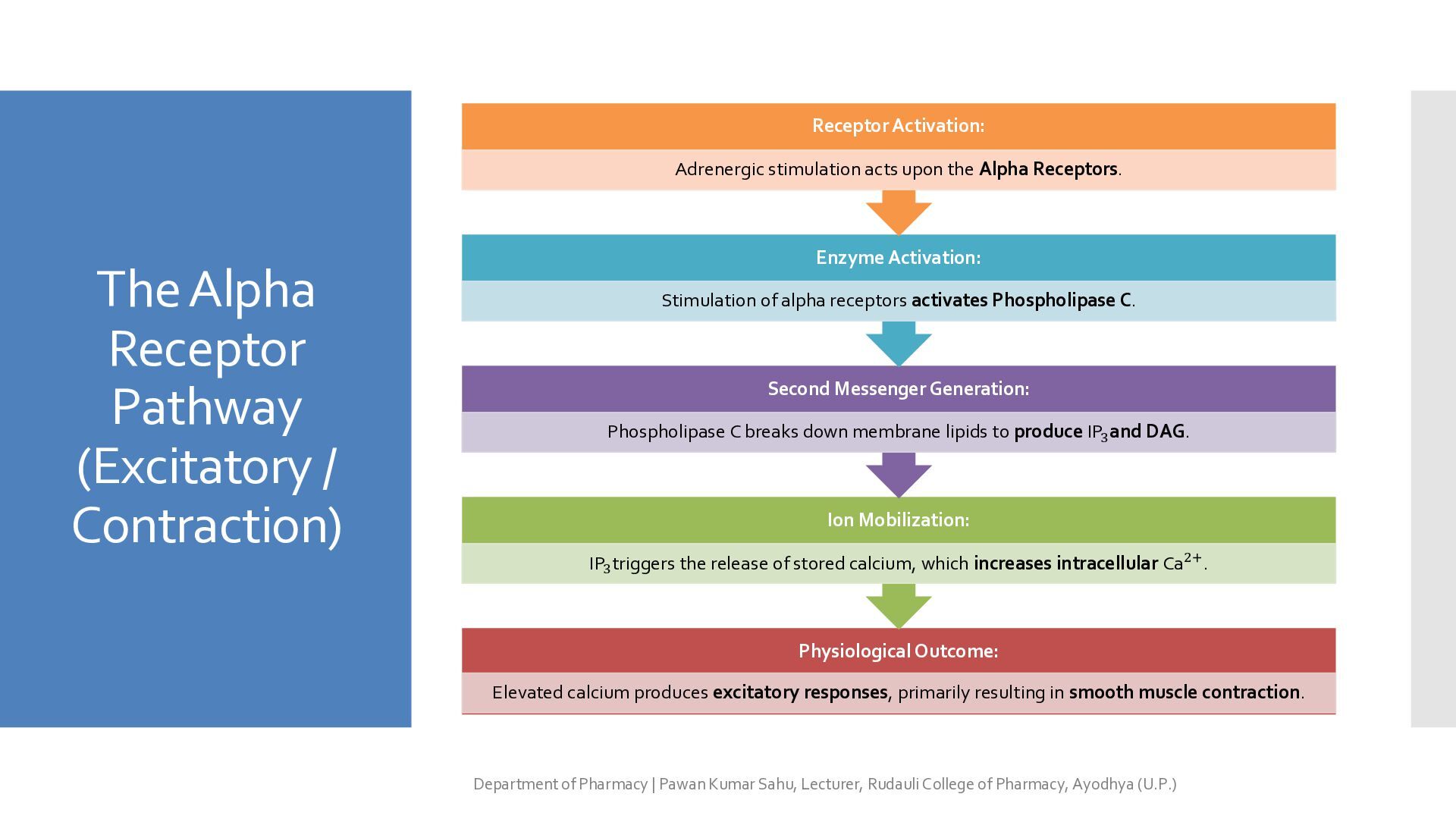
  44. Receptor Activation: Adrenergic stimulation acts upon the Alpha Receptors. The

    Alpha Receptor Pathway (Excitatory / Contraction) Enzyme Activation: Stimulation of alpha receptors activates Phospholipase C. Second Messenger Generation: subscript base , IP , end base , sub 3 Phospholipase C breaks down membrane lipids to produce IP3 and DAG. Ion Mobilization: IP3 triggers the release of stored calcium, which increases intracellular Ca2+ . subscript base , IP , end base , sub 3 superscript base , Ca , end base , to the , 2 plus end superscript Physiological Outcome: Elevated calcium produces excitatory responses, primarily resulting in smooth muscle contraction. Department of Pharmacy | Pawan Kumar Sahu, Lecturer, Rudauli College of Pharmacy, Ayodhya (U.P.)
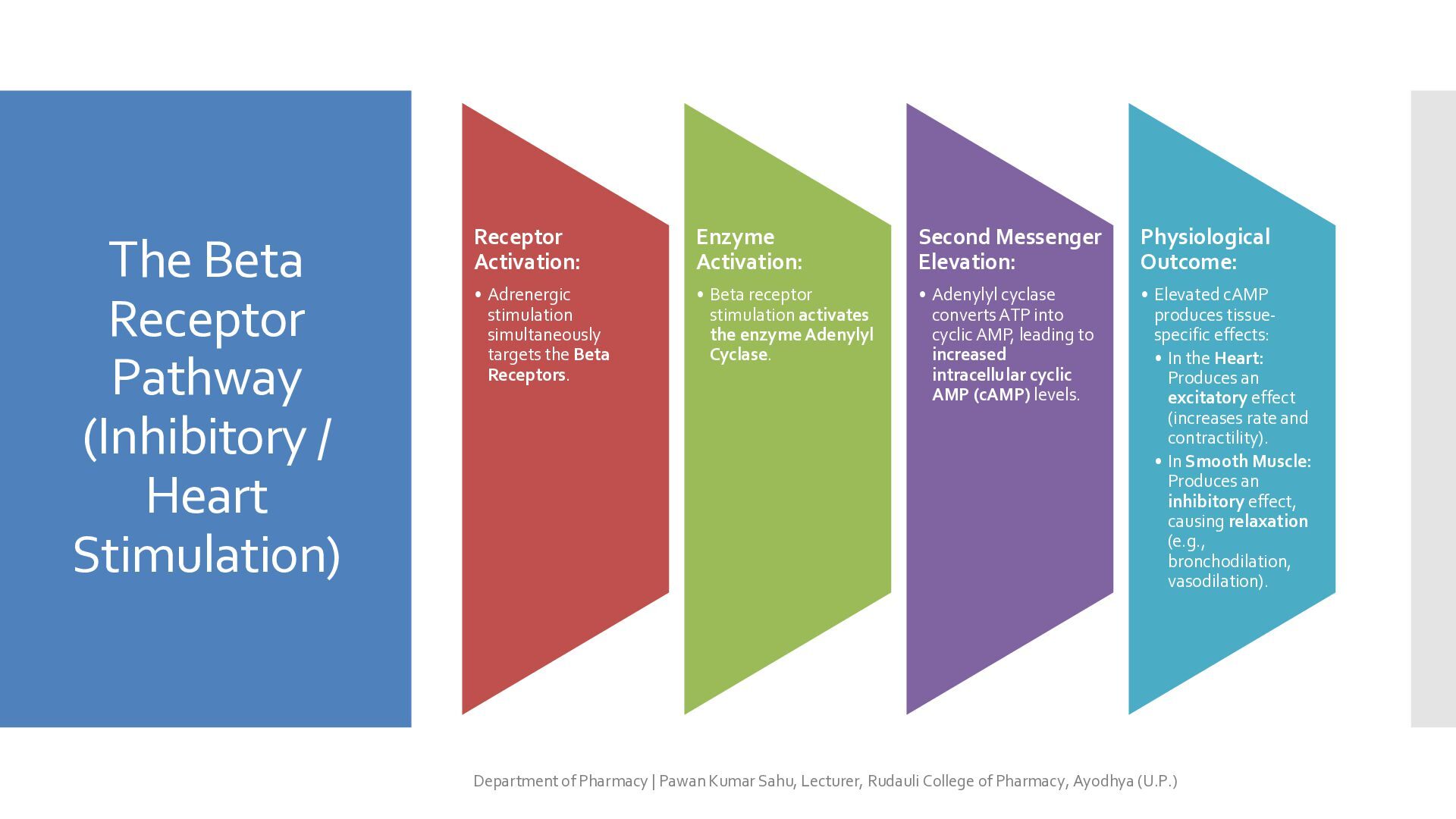
  45. The Beta Receptor Pathway (Inhibitory / Heart Stimulation) Receptor Activation:

    Enzyme Activation: Second Messenger Elevation: Physiological Outcome: • Adrenergic stimulation simultaneously targets the Beta Receptors. • Beta receptor stimulation activates the enzyme Adenylyl Cyclase. • Adenylyl cyclase converts ATP into cyclic AMP, leading to increased intracellular cyclic AMP (cAMP) levels. • Elevated cAMP produces tissuespecific effects: • In the Heart: Produces an excitatory effect (increases rate and contractility). • In Smooth Muscle: Produces an inhibitory effect, causing relaxation (e.g., bronchodilation, vasodilation). Department of Pharmacy | Pawan Kumar Sahu, Lecturer, Rudauli College of Pharmacy, Ayodhya (U.P.)
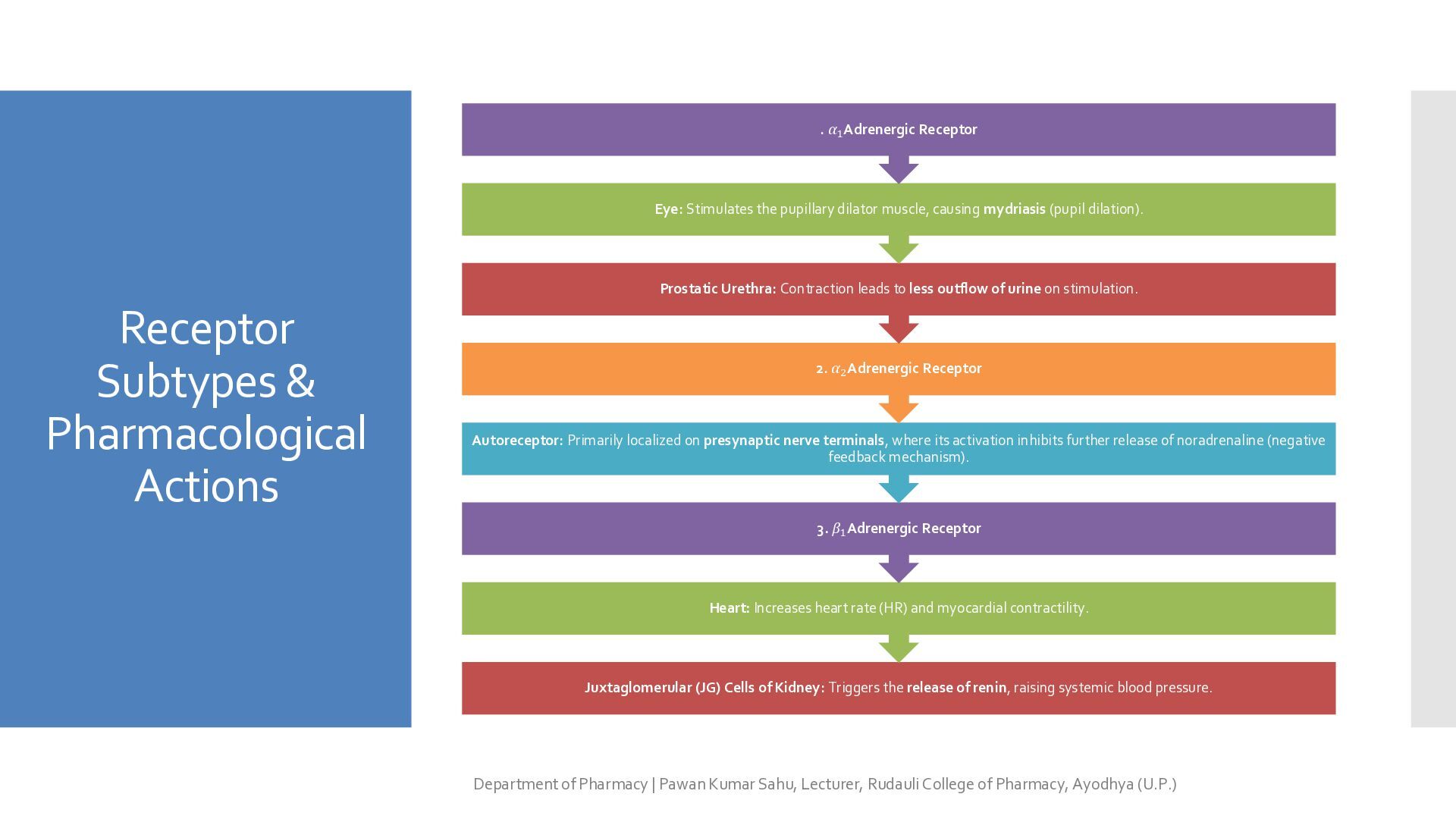
  46. alpha sub 1 . 𝛼1 Adrenergic Receptor Eye: Stimulates the

    pupillary dilator muscle, causing mydriasis (pupil dilation). Prostatic Urethra: Contraction leads to less outflow of urine on stimulation. Receptor Subtypes & Pharmacological Actions alpha sub 2 2. 𝛼2 Adrenergic Receptor Autoreceptor: Primarily localized on presynaptic nerve terminals, where its activation inhibits further release of noradrenaline (negative feedback mechanism). beta sub 1 3. 𝛽1 Adrenergic Receptor Heart: Increases heart rate (HR) and myocardial contractility. Juxtaglomerular (JG) Cells of Kidney: Triggers the release of renin, raising systemic blood pressure. Department of Pharmacy | Pawan Kumar Sahu, Lecturer, Rudauli College of Pharmacy, Ayodhya (U.P.)
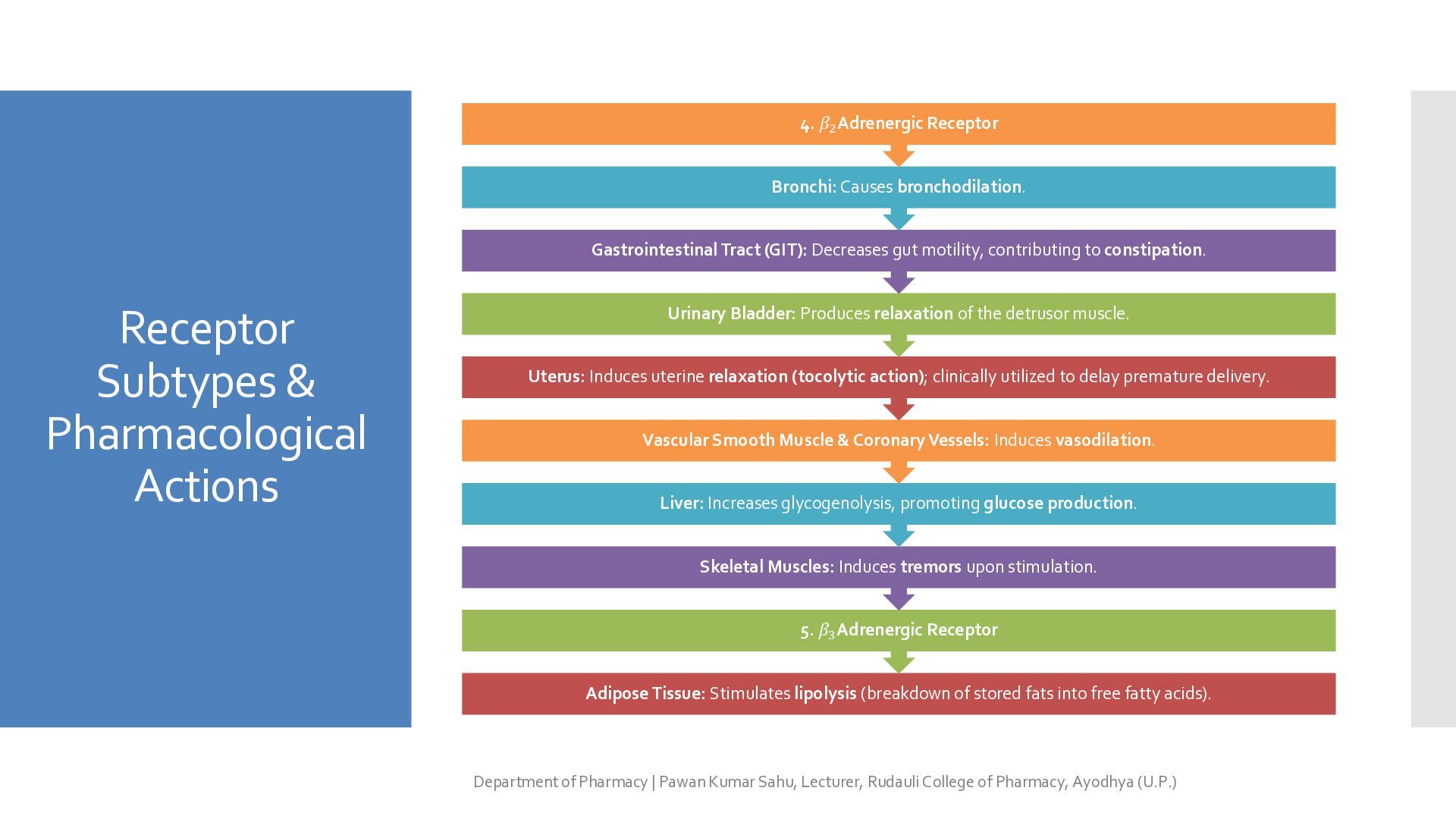
  47. beta sub 2 4. 𝛽2 Adrenergic Receptor Bronchi: Causes bronchodilation.

    Gastrointestinal Tract (GIT): Decreases gut motility, contributing to constipation. Receptor Subtypes & Pharmacological Actions Urinary Bladder: Produces relaxation of the detrusor muscle. Uterus: Induces uterine relaxation (tocolytic action); clinically utilized to delay premature delivery. Vascular Smooth Muscle & Coronary Vessels: Induces vasodilation. Liver: Increases glycogenolysis, promoting glucose production. Skeletal Muscles: Induces tremors upon stimulation. beta sub 3 5. 𝛽3 Adrenergic Receptor Adipose Tissue: Stimulates lipolysis (breakdown of stored fats into free fatty acids). Department of Pharmacy | Pawan Kumar Sahu, Lecturer, Rudauli College of Pharmacy, Ayodhya (U.P.)
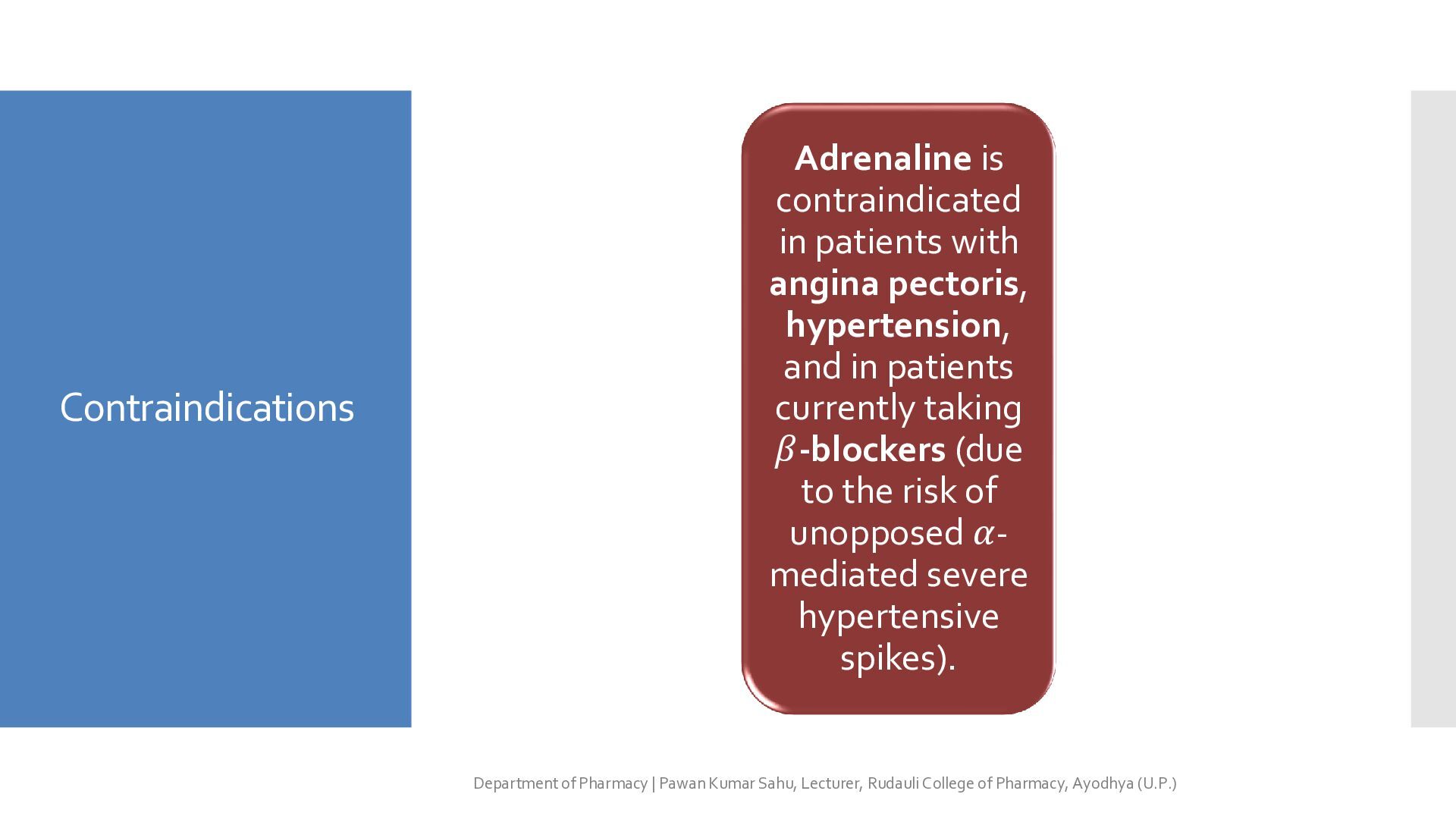
  48. Contraindications Adrenaline is contraindicated in patients with angina pectoris, hypertension,

    and in patients currently taking 𝛽-blockers (due to the risk of unopposed 𝛼mediated severe hypertensive spikes). start equation beta start equation alpha Department of Pharmacy | Pawan Kumar Sahu, Lecturer, Rudauli College of Pharmacy, Ayodhya (U.P.)
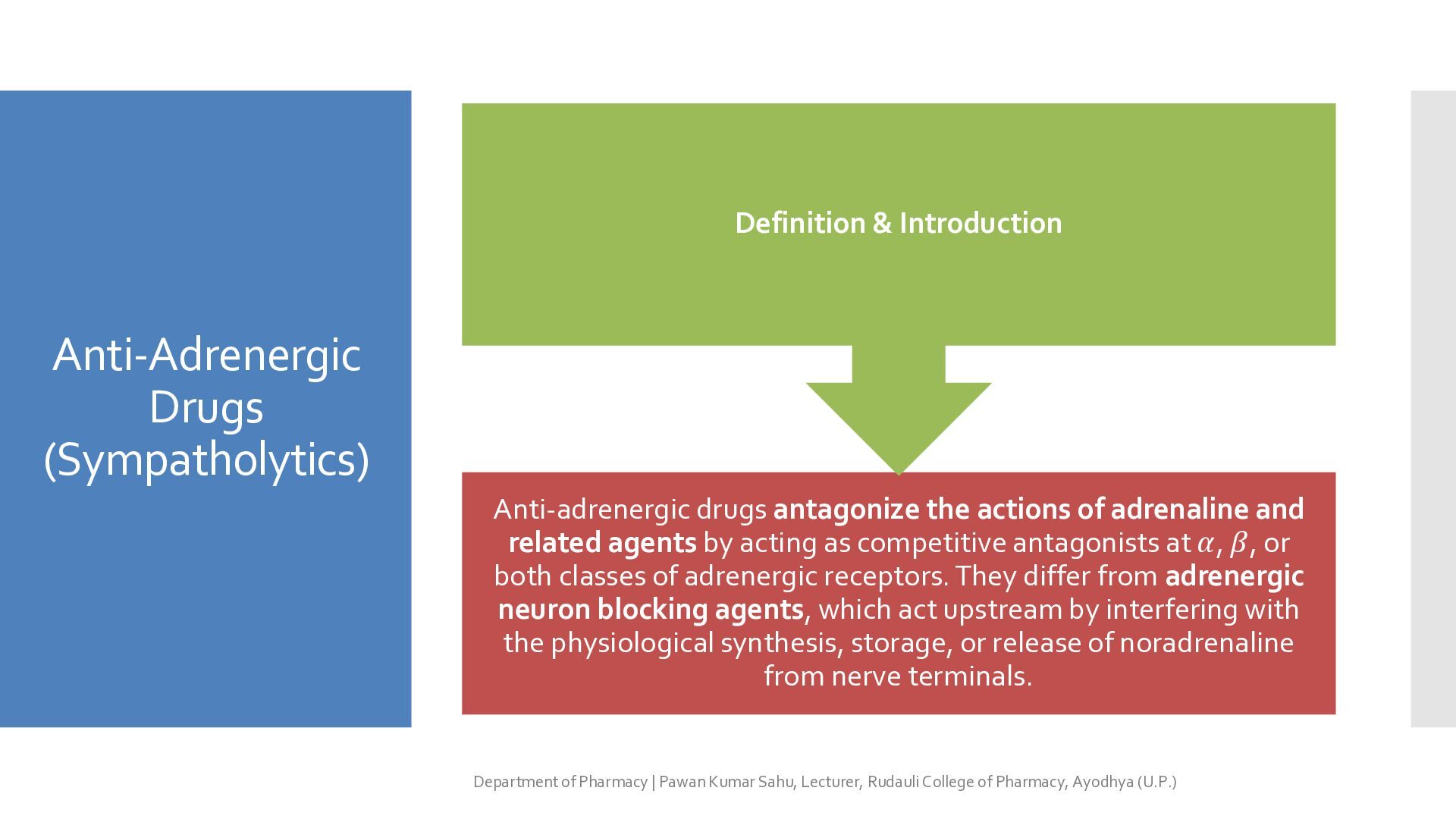
  49. Definition & Introduction Anti-Adrenergic Drugs (Sympatholytics) Anti-adrenergic drugs antagonize the

    actions of adrenaline and related agents by acting as competitive antagonists at 𝛼, 𝛽, or both classes of adrenergic receptors. They differ from adrenergic neuron blocking agents, which act upstream by interfering with the physiological synthesis, storage, or release of noradrenaline from nerve terminals. start equation alpha Department of Pharmacy | Pawan Kumar Sahu, Lecturer, Rudauli College of Pharmacy, Ayodhya (U.P.) start equation beta
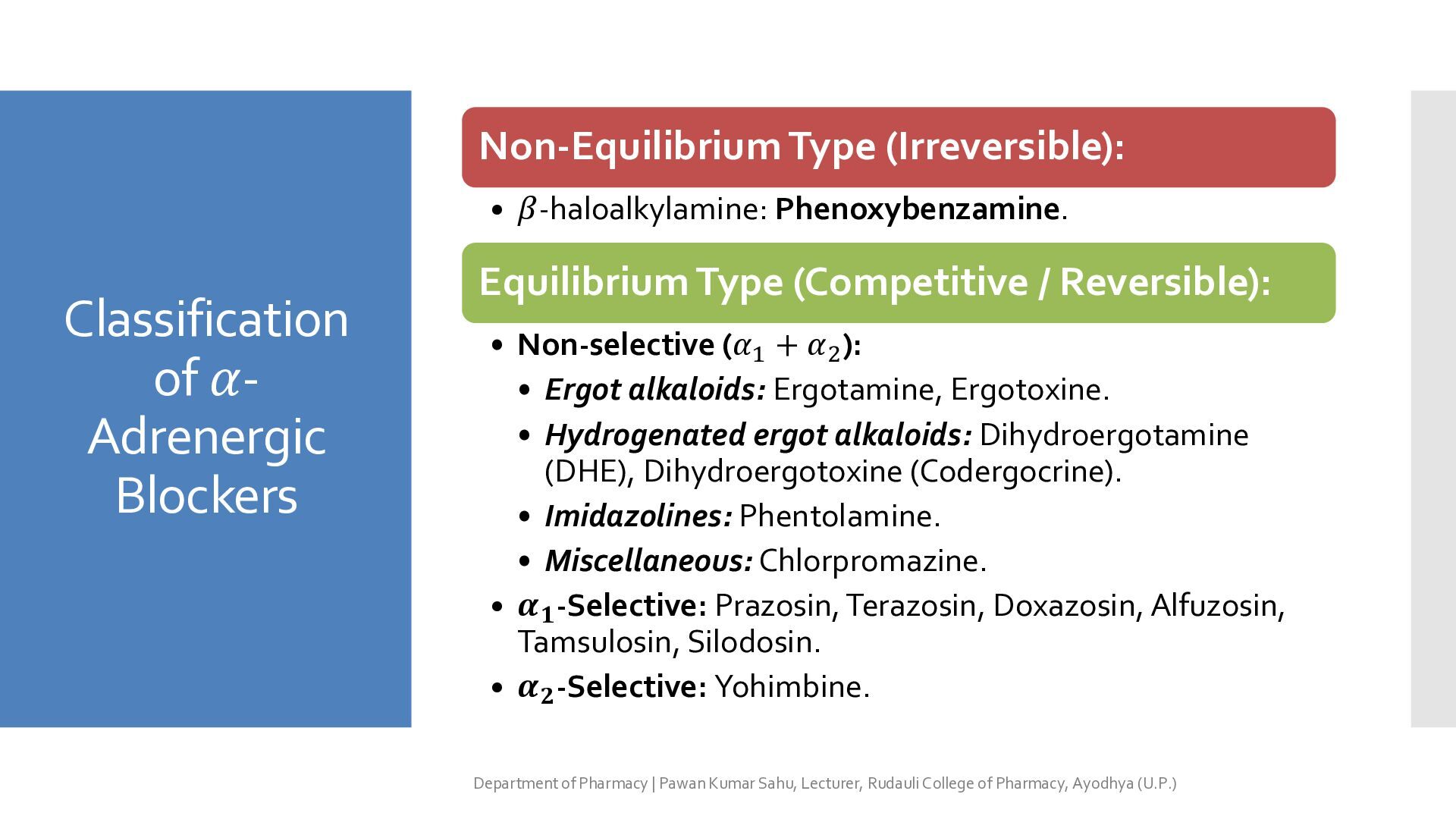
  50. Non-Equilibrium Type (Irreversible): start equation beta • 𝛽-haloalkylamine: Phenoxybenzamine. Classification

    of 𝛼Adrenergic Blockers Equilibrium Type (Competitive / Reversible): alpha sub 1 plus alpha sub 2 • Non-selective (𝛼1 + 𝛼2 ): • Ergot alkaloids: Ergotamine, Ergotoxine. • Hydrogenated ergot alkaloids: Dihydroergotamine (DHE), Dihydroergotoxine (Codergocrine). • Imidazolines: Phentolamine. • Miscellaneous: Chlorpromazine. • 𝜶𝟏 -Selective: Prazosin, Terazosin, Doxazosin, Alfuzosin, Tamsulosin, Silodosin. • 𝜶𝟐 -Selective: Yohimbine. bold italic alpha sub bold 1 bold italic alpha sub bold 2 Department of Pharmacy | Pawan Kumar Sahu, Lecturer, Rudauli College of Pharmacy, Ayodhya (U.P.)
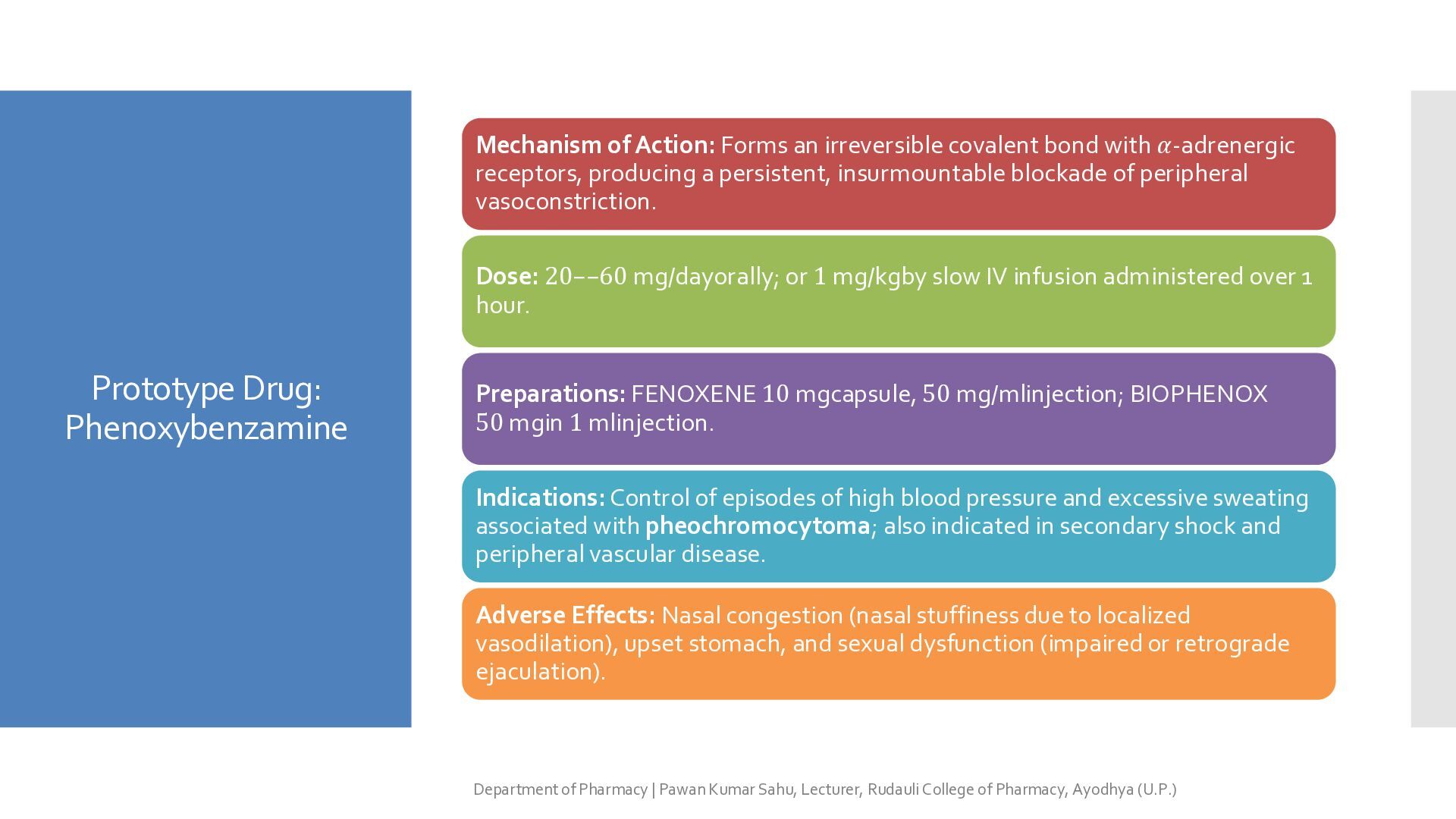
  51. start equation alpha Mechanism of Action: Forms an irreversible covalent

    bond with 𝛼-adrenergic receptors, producing a persistent, insurmountable blockade of peripheral vasoconstriction. 20 −−60 mg/day 1 mg/kg Dose: 20−−60 mg/dayorally; or 1 mg/kgby slow IV infusion administered over 1 hour. Prototype Drug: Phenoxybenzamine 10 mg 50 mg/ml Preparations: FENOXENE 10 mgcapsule, 50 mg/mlinjection; BIOPHENOX 50 mgin 1 mlinjection. 50 mg 1 ml Indications: Control of episodes of high blood pressure and excessive sweating associated with pheochromocytoma; also indicated in secondary shock and peripheral vascular disease. Adverse Effects: Nasal congestion (nasal stuffiness due to localized vasodilation), upset stomach, and sexual dysfunction (impaired or retrograde ejaculation). Department of Pharmacy | Pawan Kumar Sahu, Lecturer, Rudauli College of Pharmacy, Ayodhya (U.P.)
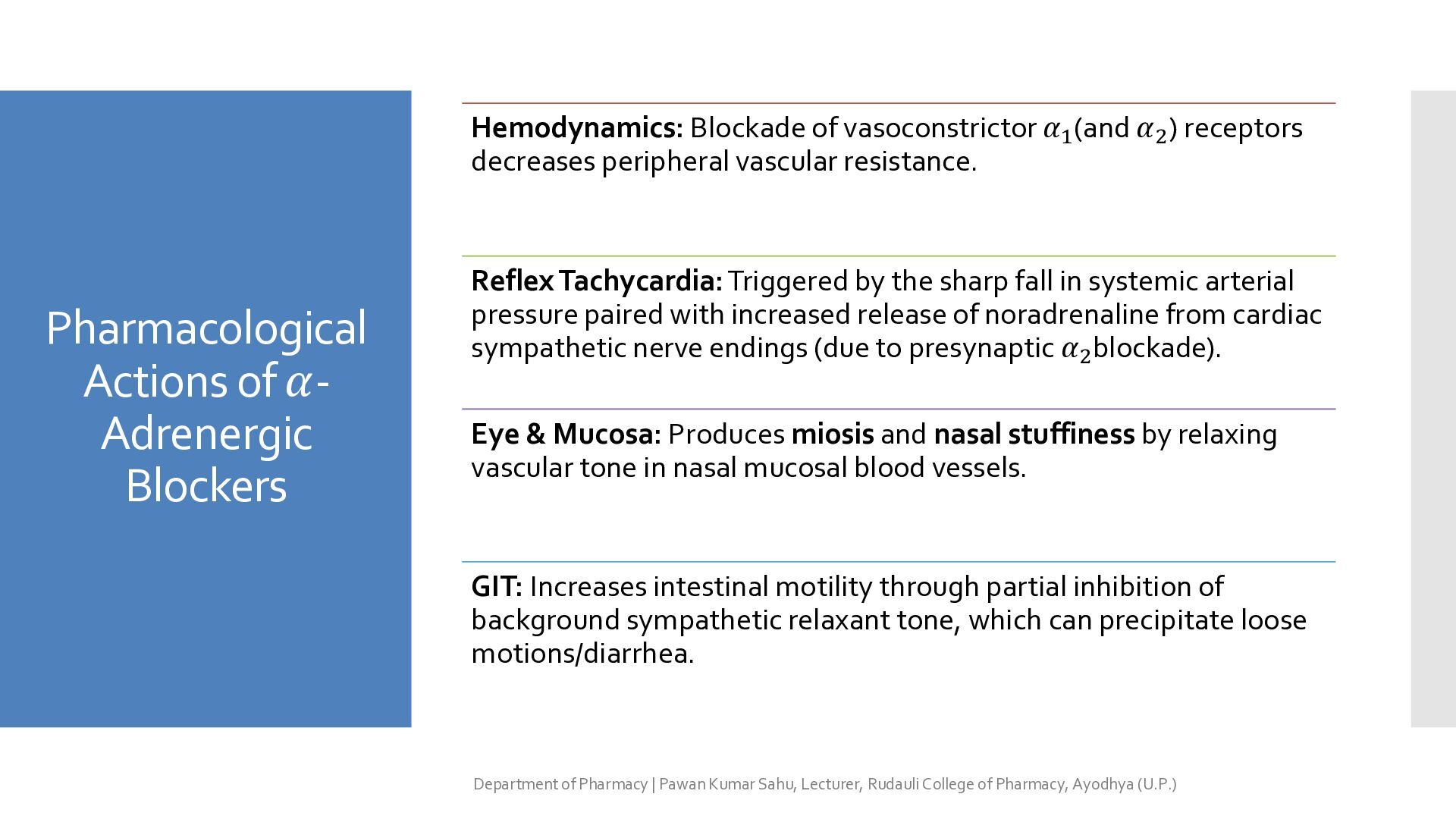
  52. alpha sub 1 alpha sub 2 Hemodynamics: Blockade of vasoconstrictor

    𝛼1 (and 𝛼2 ) receptors decreases peripheral vascular resistance. Pharmacological Actions of 𝛼Adrenergic Blockers Reflex Tachycardia: Triggered by the sharp fall in systemic arterial pressure paired with increased release of noradrenaline from cardiac sympathetic nerve endings (due to presynaptic 𝛼2 blockade). alpha sub 2 Eye & Mucosa: Produces miosis and nasal stuffiness by relaxing vascular tone in nasal mucosal blood vessels. GIT: Increases intestinal motility through partial inhibition of background sympathetic relaxant tone, which can precipitate loose motions/diarrhea. Department of Pharmacy | Pawan Kumar Sahu, Lecturer, Rudauli College of Pharmacy, Ayodhya (U.P.)
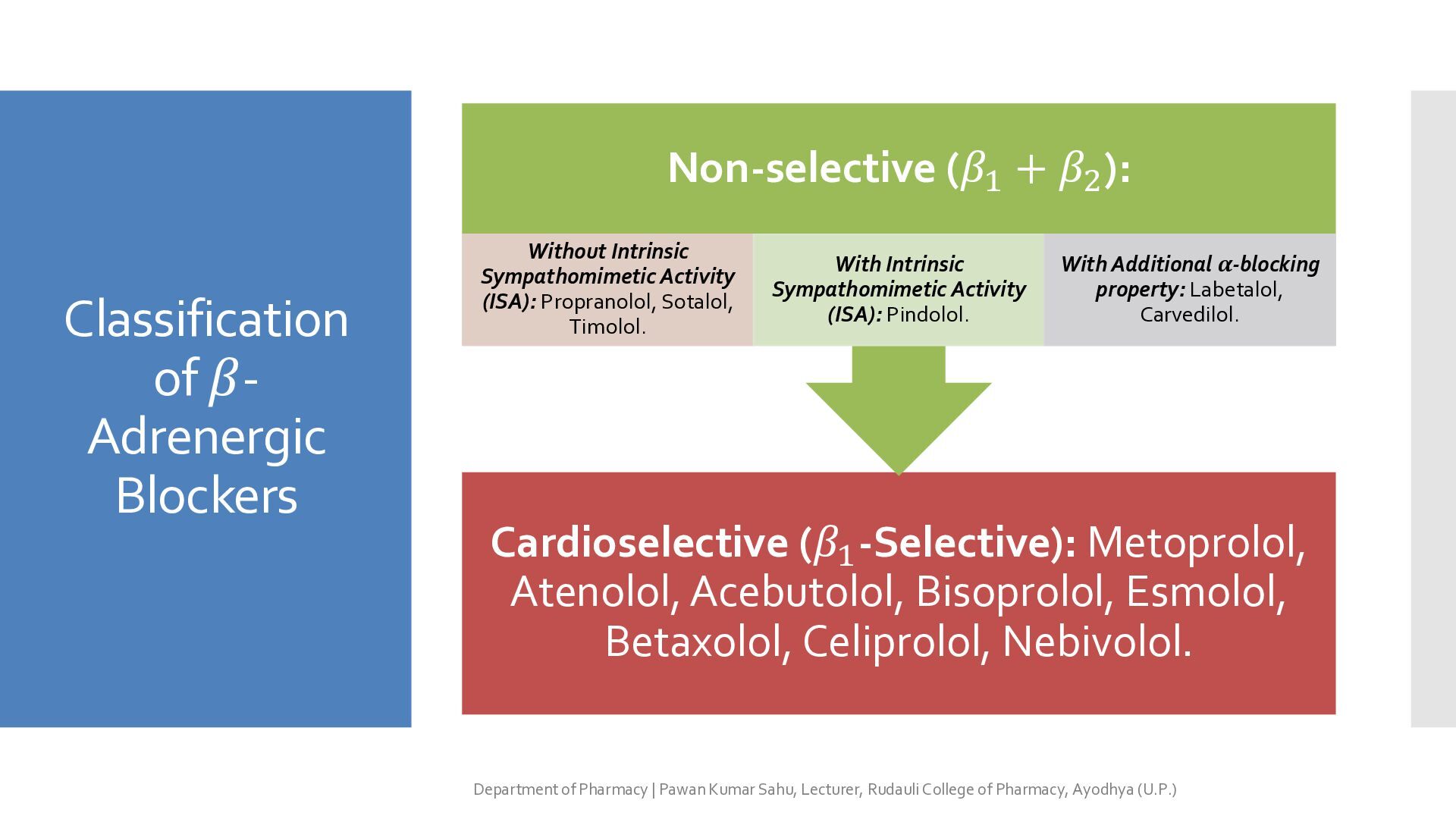
  53. beta sub 1 plus beta sub 2 Non-selective (𝛽1 +

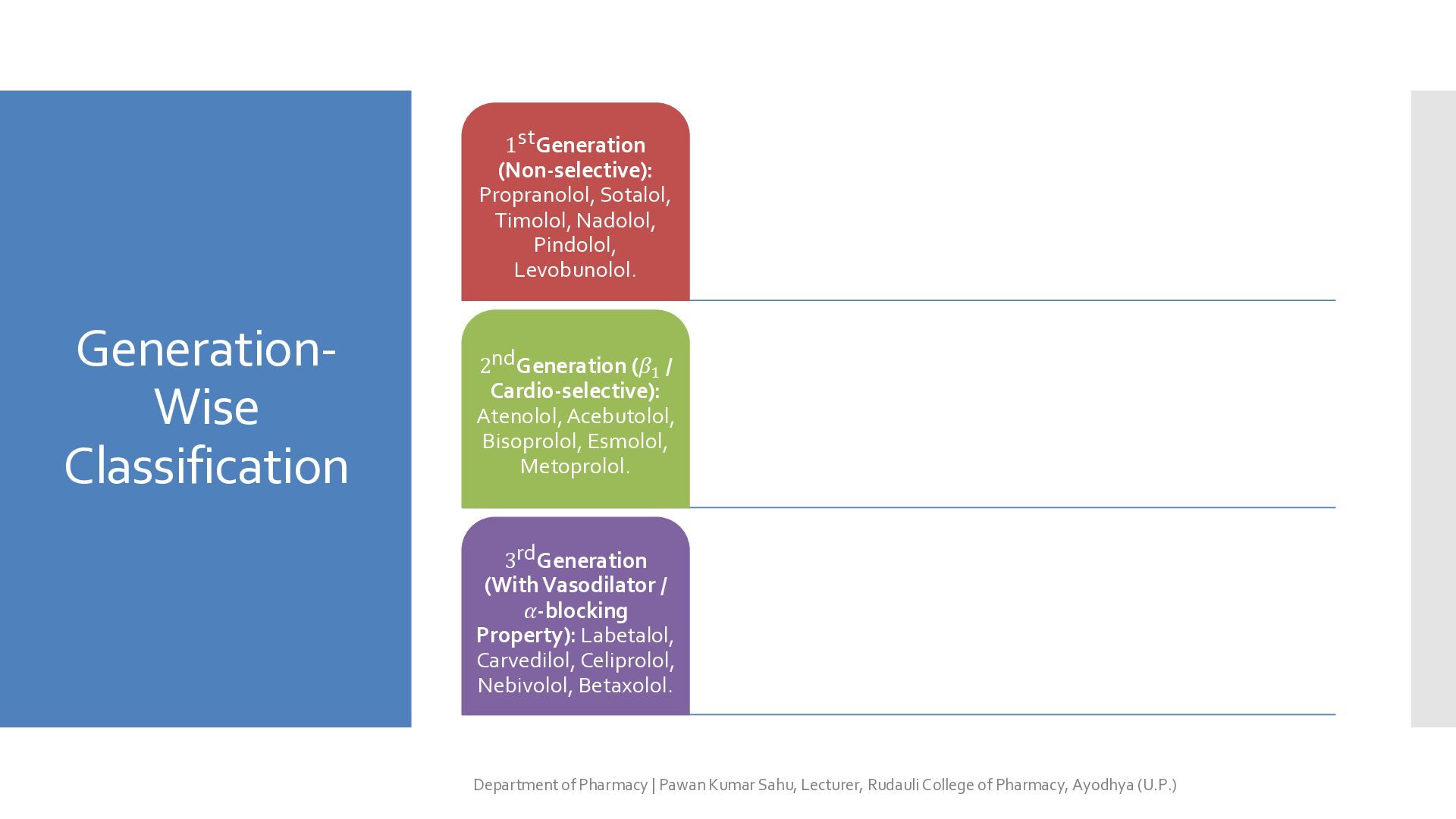
    𝛽2 ): Classification of 𝛽Adrenergic Blockers Without Intrinsic Sympathomimetic Activity (ISA): Propranolol, Sotalol, Timolol. With Intrinsic Sympathomimetic Activity (ISA): Pindolol. start equation bold italic alpha With Additional 𝜶-blocking property: Labetalol, Carvedilol. beta sub 1 Cardioselective (𝛽1 -Selective): Metoprolol, Atenolol, Acebutolol, Bisoprolol, Esmolol, Betaxolol, Celiprolol, Nebivolol. Department of Pharmacy | Pawan Kumar Sahu, Lecturer, Rudauli College of Pharmacy, Ayodhya (U.P.)
  54. 1st Generation (Non-selective): Propranolol, Sotalol, Timolol, Nadolol, Pindolol, Levobunolol. 1

    to the st GenerationWise Classification 2nd Generation (𝛽1 / Cardio-selective): Atenolol, Acebutolol, Bisoprolol, Esmolol, Metoprolol. 2 to the nd beta sub 1 3rd Generation (With Vasodilator / 𝛼-blocking Property): Labetalol, Carvedilol, Celiprolol, Nebivolol, Betaxolol. 3 to the rd start equation alpha Department of Pharmacy | Pawan Kumar Sahu, Lecturer, Rudauli College of Pharmacy, Ayodhya (U.P.)
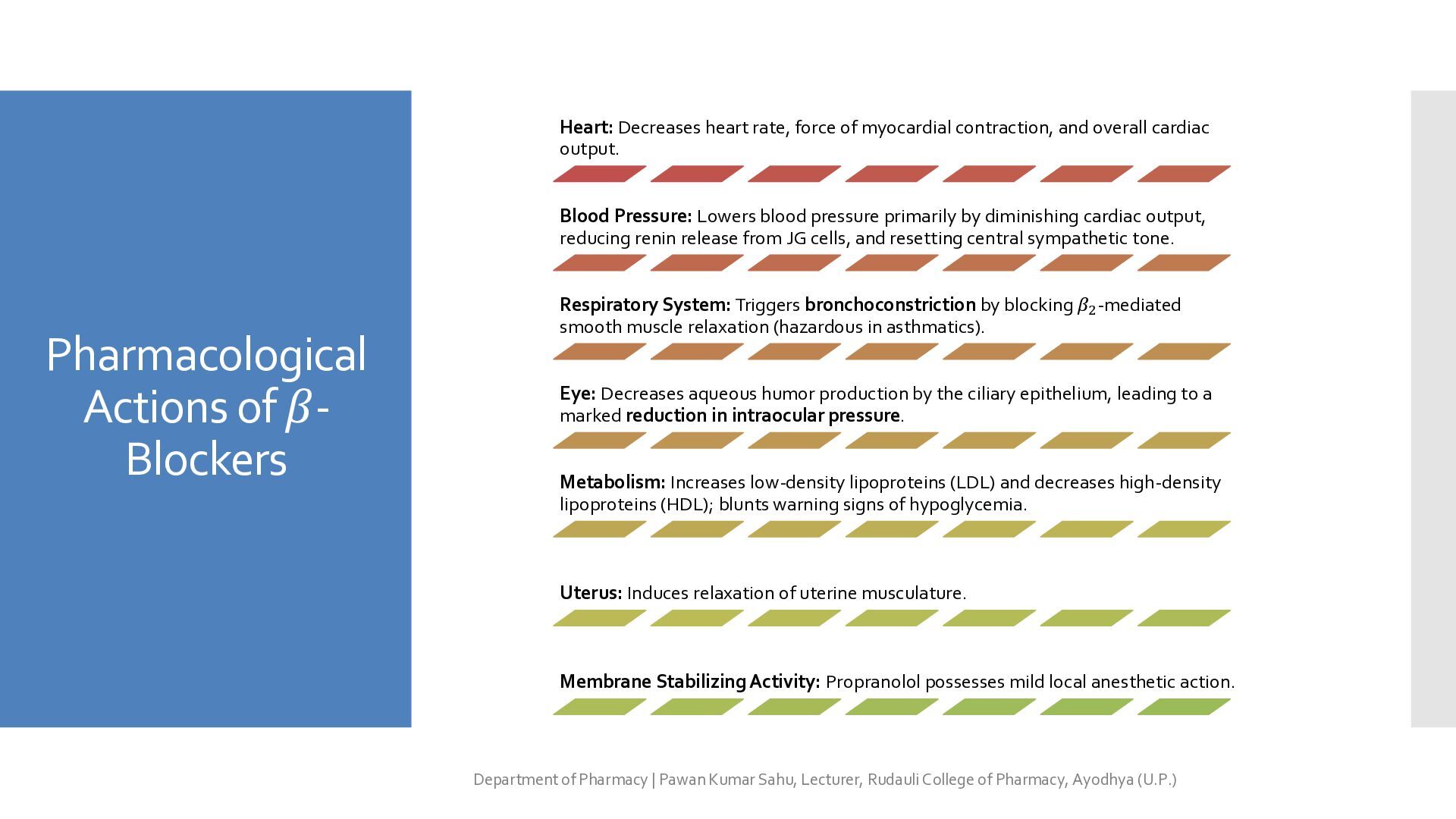
  55. Heart: Decreases heart rate, force of myocardial contraction, and overall

    cardiac output. Blood Pressure: Lowers blood pressure primarily by diminishing cardiac output, reducing renin release from JG cells, and resetting central sympathetic tone. beta sub 2 Pharmacological Actions of 𝛽Blockers Respiratory System: Triggers bronchoconstriction by blocking 𝛽2 -mediated smooth muscle relaxation (hazardous in asthmatics). Eye: Decreases aqueous humor production by the ciliary epithelium, leading to a marked reduction in intraocular pressure. Metabolism: Increases low-density lipoproteins (LDL) and decreases high-density lipoproteins (HDL); blunts warning signs of hypoglycemia. Uterus: Induces relaxation of uterine musculature. Membrane Stabilizing Activity: Propranolol possesses mild local anesthetic action. Department of Pharmacy | Pawan Kumar Sahu, Lecturer, Rudauli College of Pharmacy, Ayodhya (U.P.)
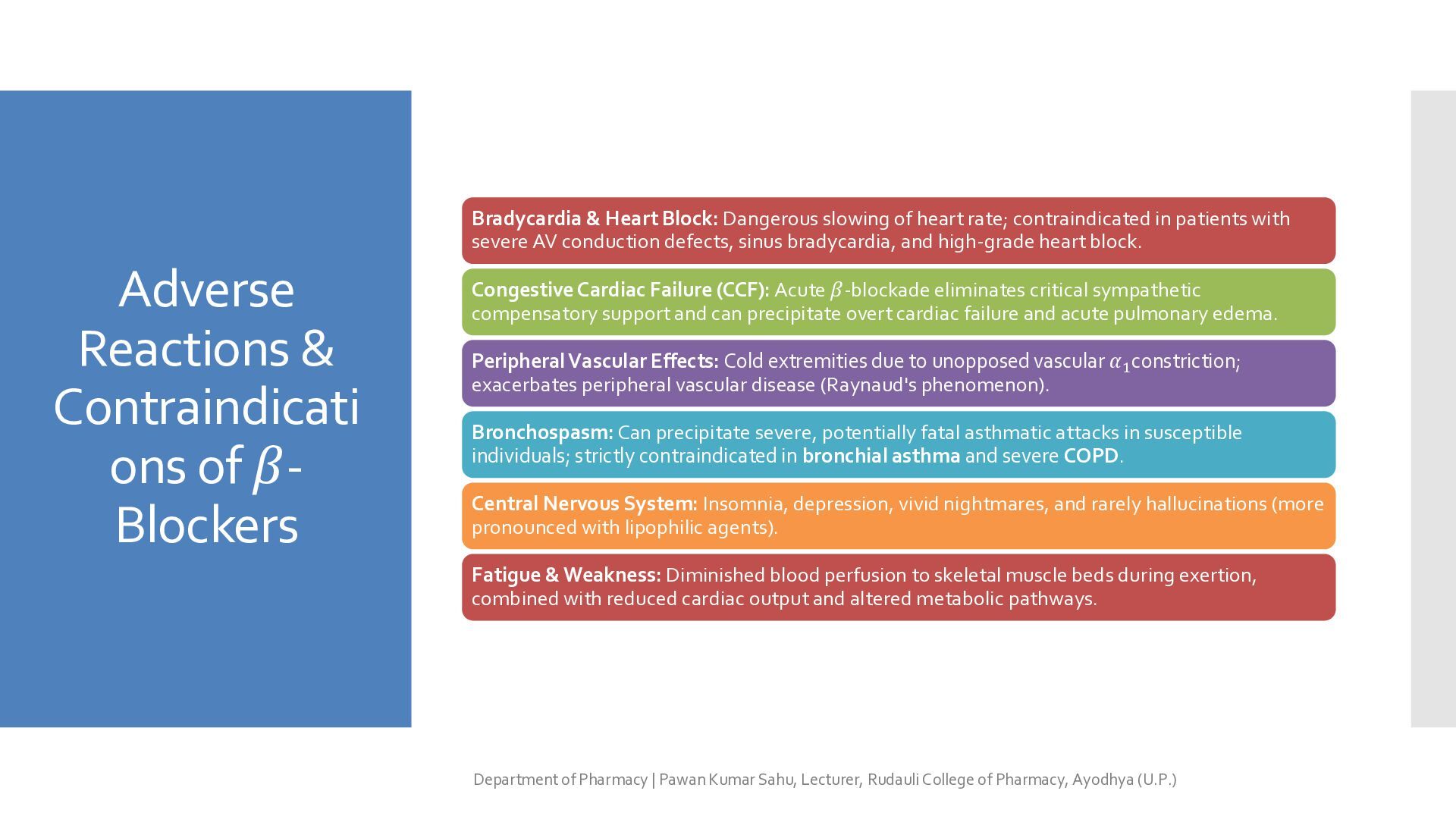
  56. Bradycardia & Heart Block: Dangerous slowing of heart rate; contraindicated

    in patients with severe AV conduction defects, sinus bradycardia, and high-grade heart block. Adverse Reactions & Contraindicati ons of 𝛽Blockers start equation beta Congestive Cardiac Failure (CCF): Acute 𝛽-blockade eliminates critical sympathetic compensatory support and can precipitate overt cardiac failure and acute pulmonary edema. alpha sub 1 Peripheral Vascular Effects: Cold extremities due to unopposed vascular 𝛼1 constriction; exacerbates peripheral vascular disease (Raynaud's phenomenon). Bronchospasm: Can precipitate severe, potentially fatal asthmatic attacks in susceptible individuals; strictly contraindicated in bronchial asthma and severe COPD. Central Nervous System: Insomnia, depression, vivid nightmares, and rarely hallucinations (more pronounced with lipophilic agents). Fatigue & Weakness: Diminished blood perfusion to skeletal muscle beds during exertion, combined with reduced cardiac output and altered metabolic pathways. Department of Pharmacy | Pawan Kumar Sahu, Lecturer, Rudauli College of Pharmacy, Ayodhya (U.P.)
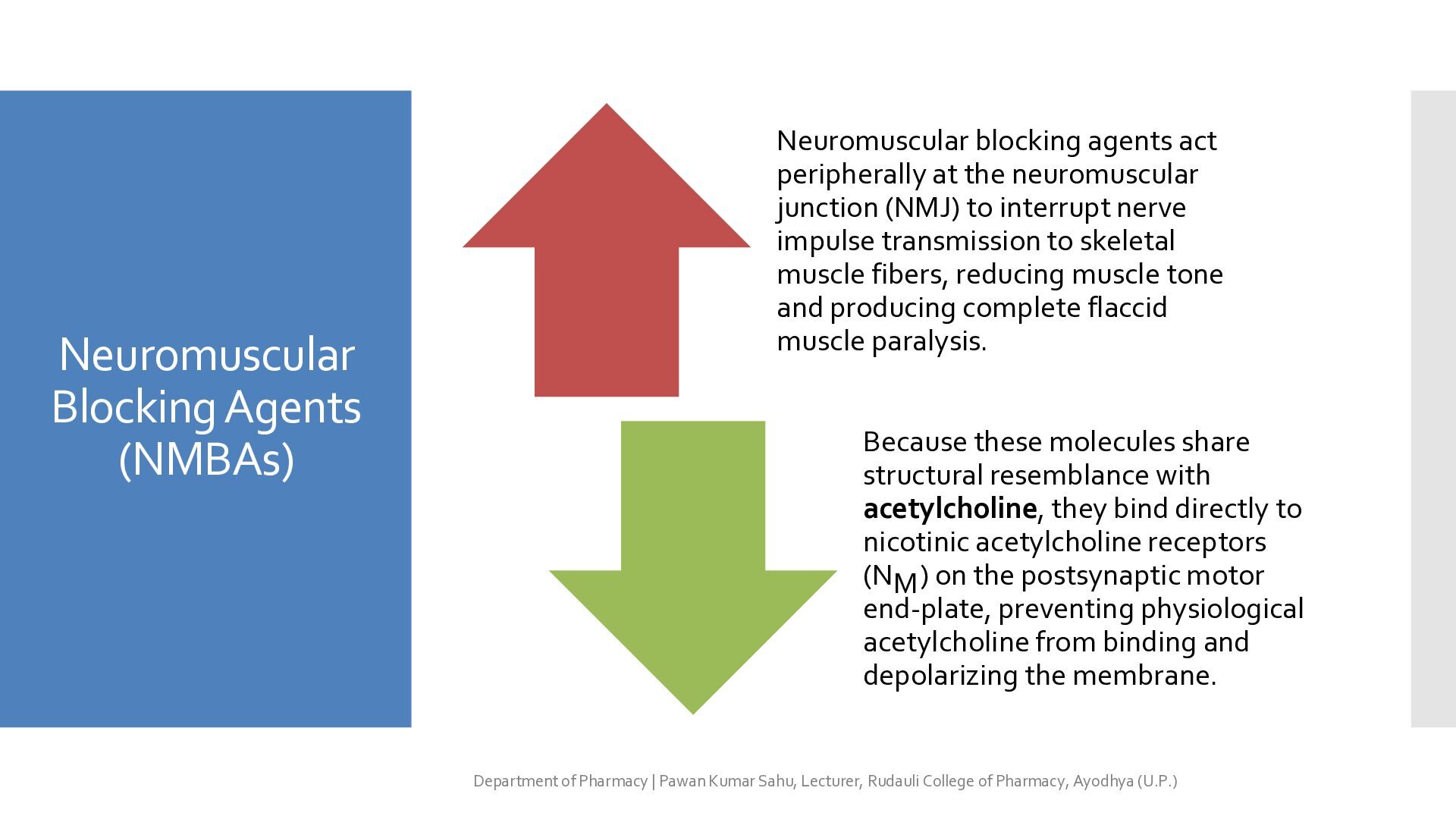
  57. Neuromuscular Blocking Agents (NMBAs) Neuromuscular blocking agents act peripherally at

    the neuromuscular junction (NMJ) to interrupt nerve impulse transmission to skeletal muscle fibers, reducing muscle tone and producing complete flaccid muscle paralysis. Because these molecules share structural resemblance with acetylcholine, they bind directly to nicotinic acetylcholine receptors (NM ) on the postsynaptic motor end-plate, preventing physiological acetylcholine from binding and depolarizing the membrane. N sub M Department of Pharmacy | Pawan Kumar Sahu, Lecturer, Rudauli College of Pharmacy, Ayodhya (U.P.)
  58. Depolarizing Blockers: Succinylcholine. Classification of Neuromuscular Blockers Non-depolarizing (Competitive) Blockers:

    d-Tubocurarine, Gallamine, Pancuronium, Vecuronium, Rocuronium, Atracurium, Cisatracurium, Mivacurium. Department of Pharmacy | Pawan Kumar Sahu, Lecturer, Rudauli College of Pharmacy, Ayodhya (U.P.)
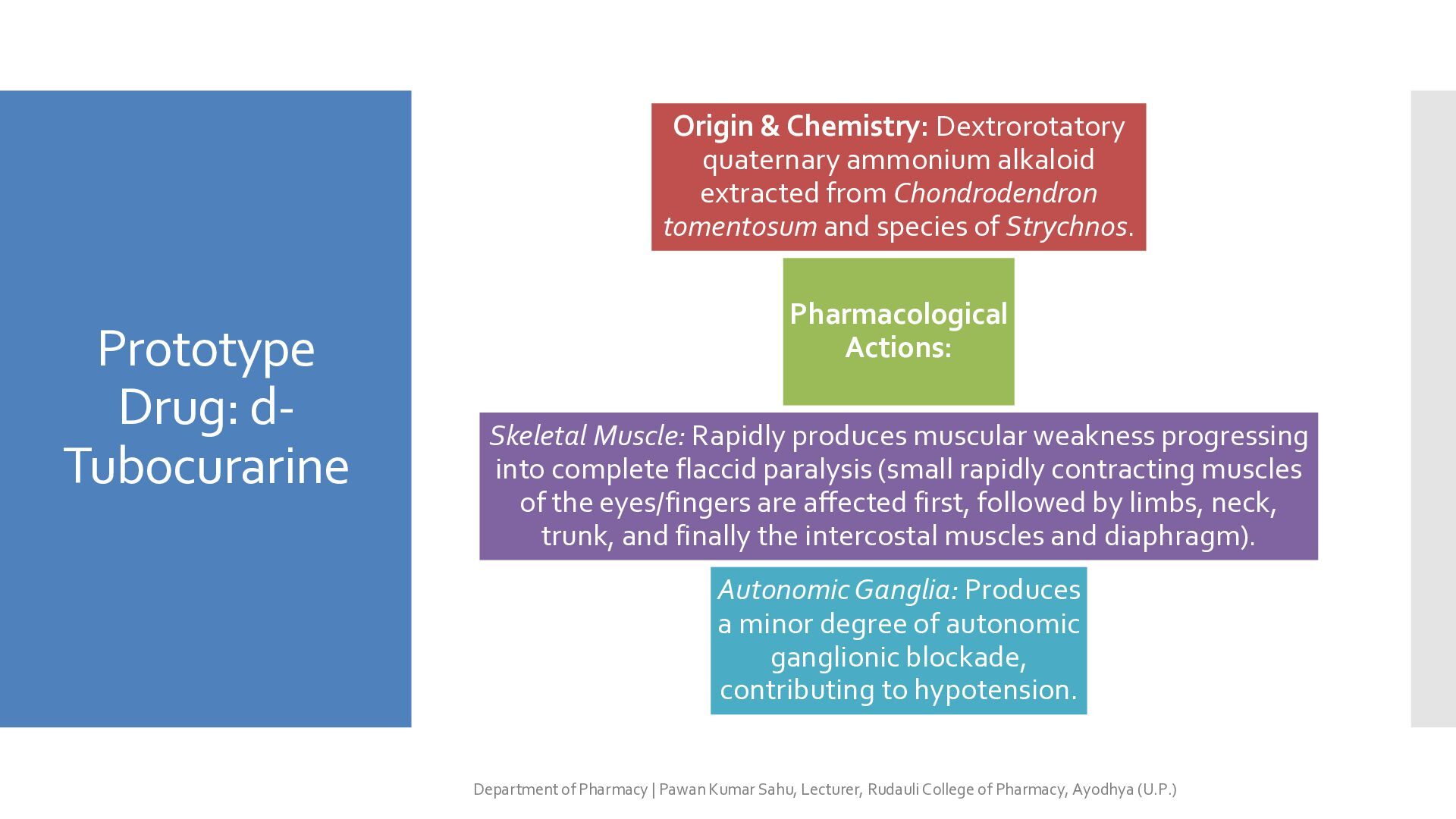
  59. Origin & Chemistry: Dextrorotatory quaternary ammonium alkaloid extracted from Chondrodendron

    tomentosum and species of Strychnos. Prototype Drug: dTubocurarine Pharmacological Actions: Skeletal Muscle: Rapidly produces muscular weakness progressing into complete flaccid paralysis (small rapidly contracting muscles of the eyes/fingers are affected first, followed by limbs, neck, trunk, and finally the intercostal muscles and diaphragm). Autonomic Ganglia: Produces a minor degree of autonomic ganglionic blockade, contributing to hypotension. Department of Pharmacy | Pawan Kumar Sahu, Lecturer, Rudauli College of Pharmacy, Ayodhya (U.P.)
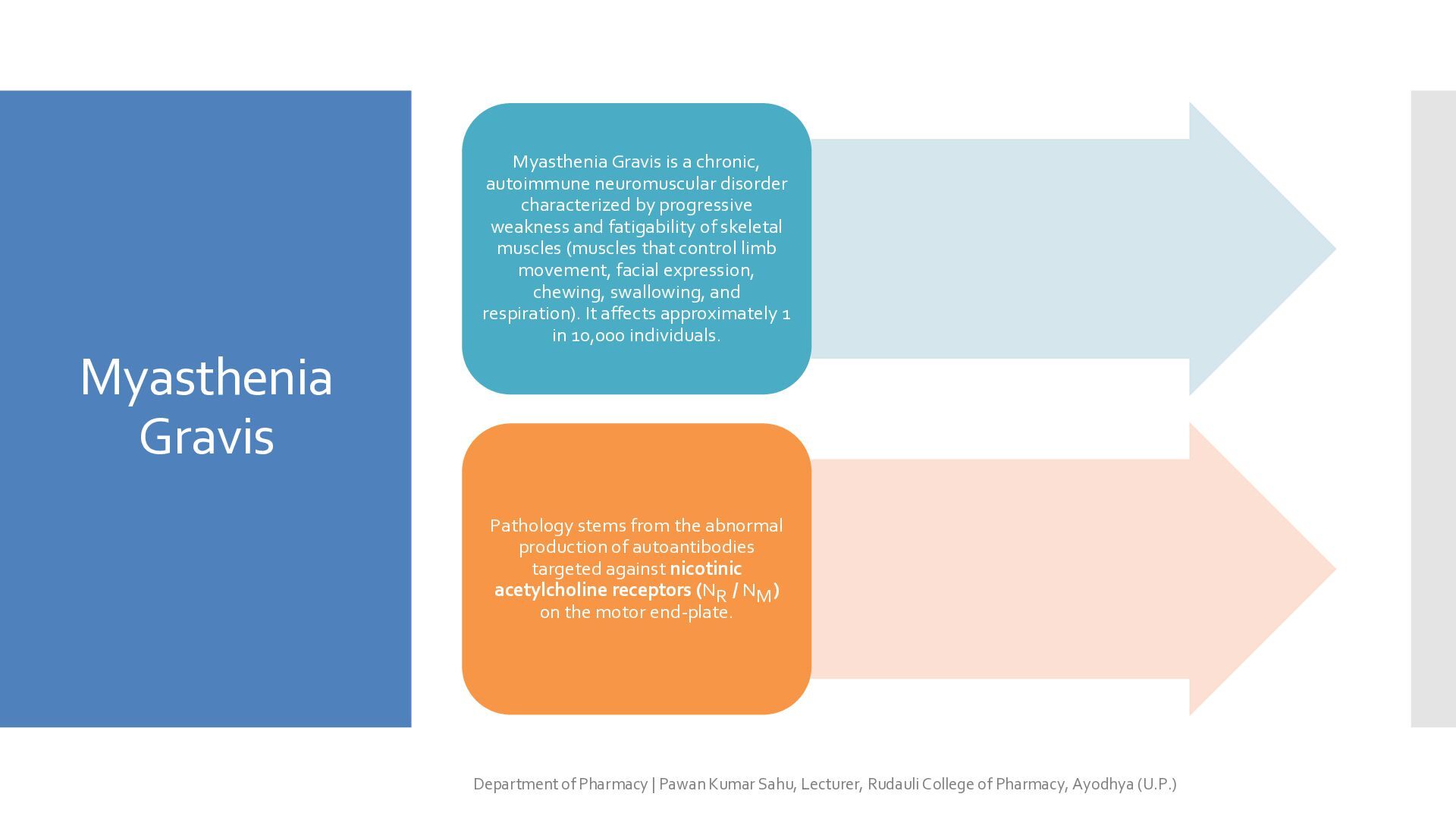
  60. Myasthenia Gravis is a chronic, autoimmune neuromuscular disorder characterized by

    progressive weakness and fatigability of skeletal muscles (muscles that control limb movement, facial expression, chewing, swallowing, and respiration). It affects approximately 1 in 10,000 individuals. Myasthenia Gravis Pathology stems from the abnormal production of autoantibodies targeted against nicotinic acetylcholine receptors (NR / NM ) on the motor end-plate. N sub R N sub M Department of Pharmacy | Pawan Kumar Sahu, Lecturer, Rudauli College of Pharmacy, Ayodhya (U.P.)
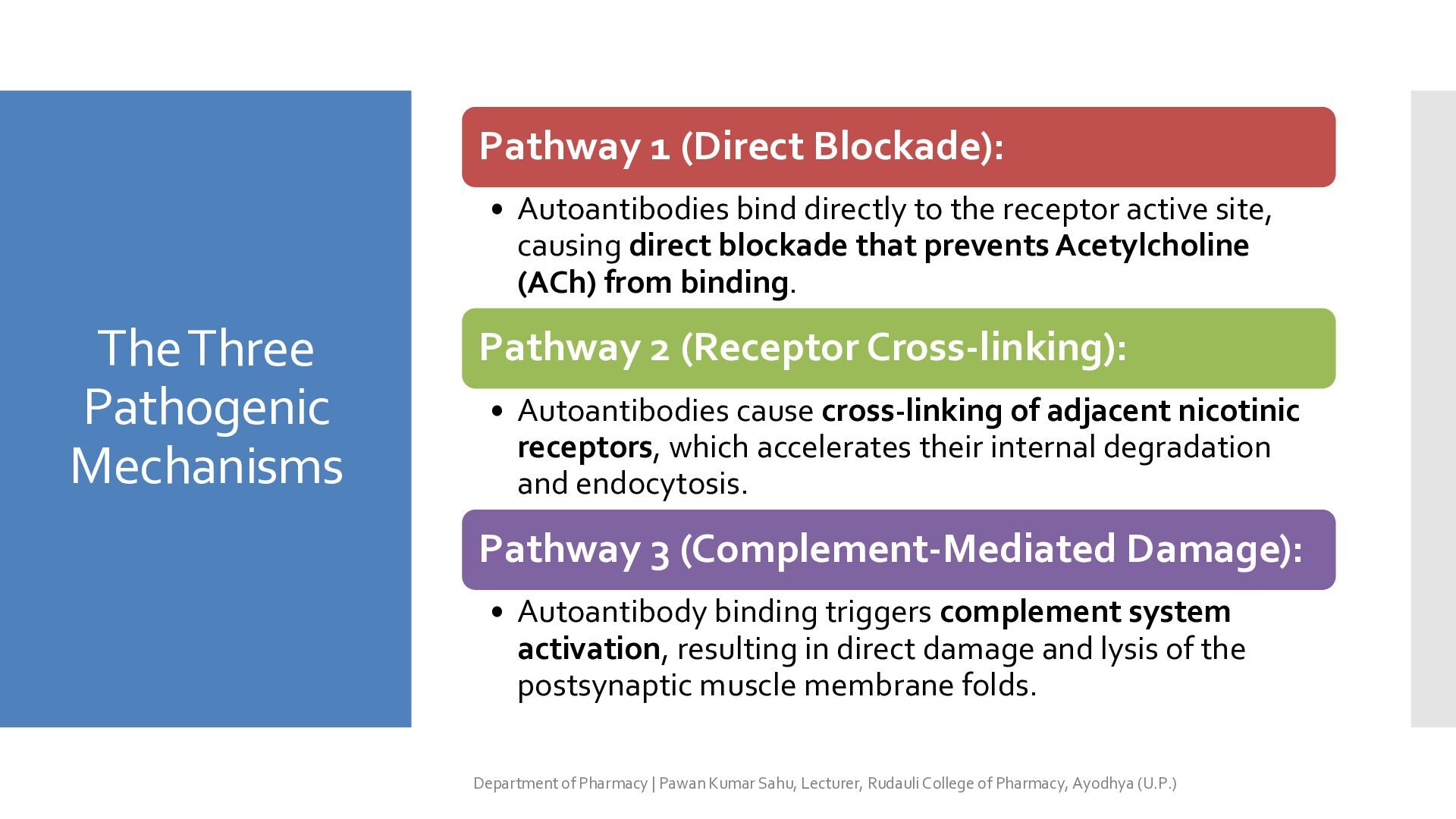
  61. Pathway 1 (Direct Blockade): • Autoantibodies bind directly to the

    receptor active site, causing direct blockade that prevents Acetylcholine (ACh) from binding. The Three Pathogenic Mechanisms Pathway 2 (Receptor Cross-linking): • Autoantibodies cause cross-linking of adjacent nicotinic receptors, which accelerates their internal degradation and endocytosis. Pathway 3 (Complement-Mediated Damage): • Autoantibody binding triggers complement system activation, resulting in direct damage and lysis of the postsynaptic muscle membrane folds. Department of Pharmacy | Pawan Kumar Sahu, Lecturer, Rudauli College of Pharmacy, Ayodhya (U.P.)
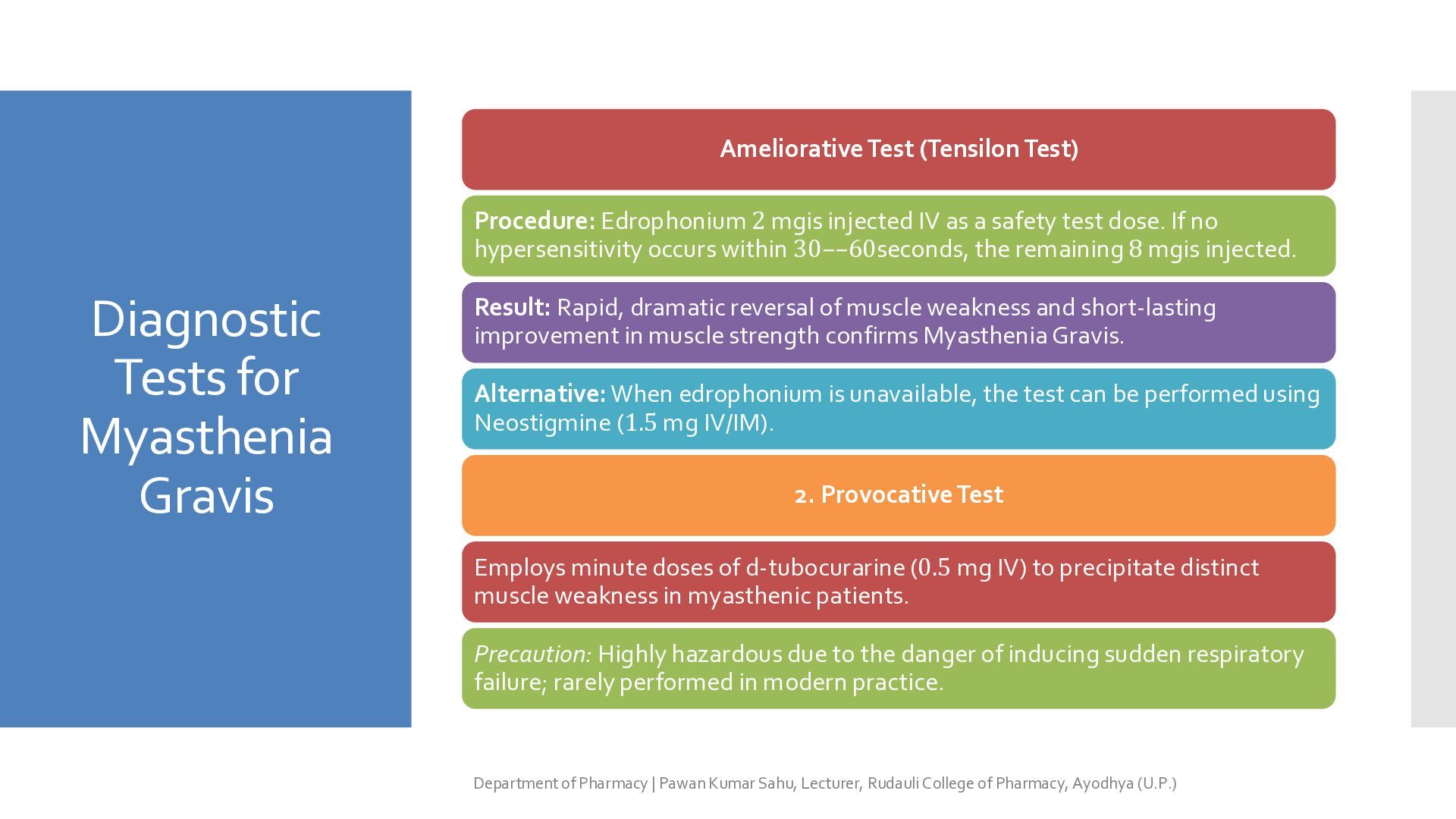
  62. Ameliorative Test (Tensilon Test) 2 mg Procedure: Edrophonium 2 mgis

    injected IV as a safety test dose. If no hypersensitivity occurs within 30−−60seconds, the remaining 8 mgis injected. 30 −−60 Diagnostic Tests for Myasthenia Gravis 8 mg Result: Rapid, dramatic reversal of muscle weakness and short-lasting improvement in muscle strength confirms Myasthenia Gravis. Alternative: When edrophonium is unavailable, the test can be performed using Neostigmine (1.5 mg IV/IM). 1.5 mg 2. Provocative Test 0.5 mg Employs minute doses of d-tubocurarine (0.5 mg IV) to precipitate distinct muscle weakness in myasthenic patients. Precaution: Highly hazardous due to the danger of inducing sudden respiratory failure; rarely performed in modern practice. Department of Pharmacy | Pawan Kumar Sahu, Lecturer, Rudauli College of Pharmacy, Ayodhya (U.P.)
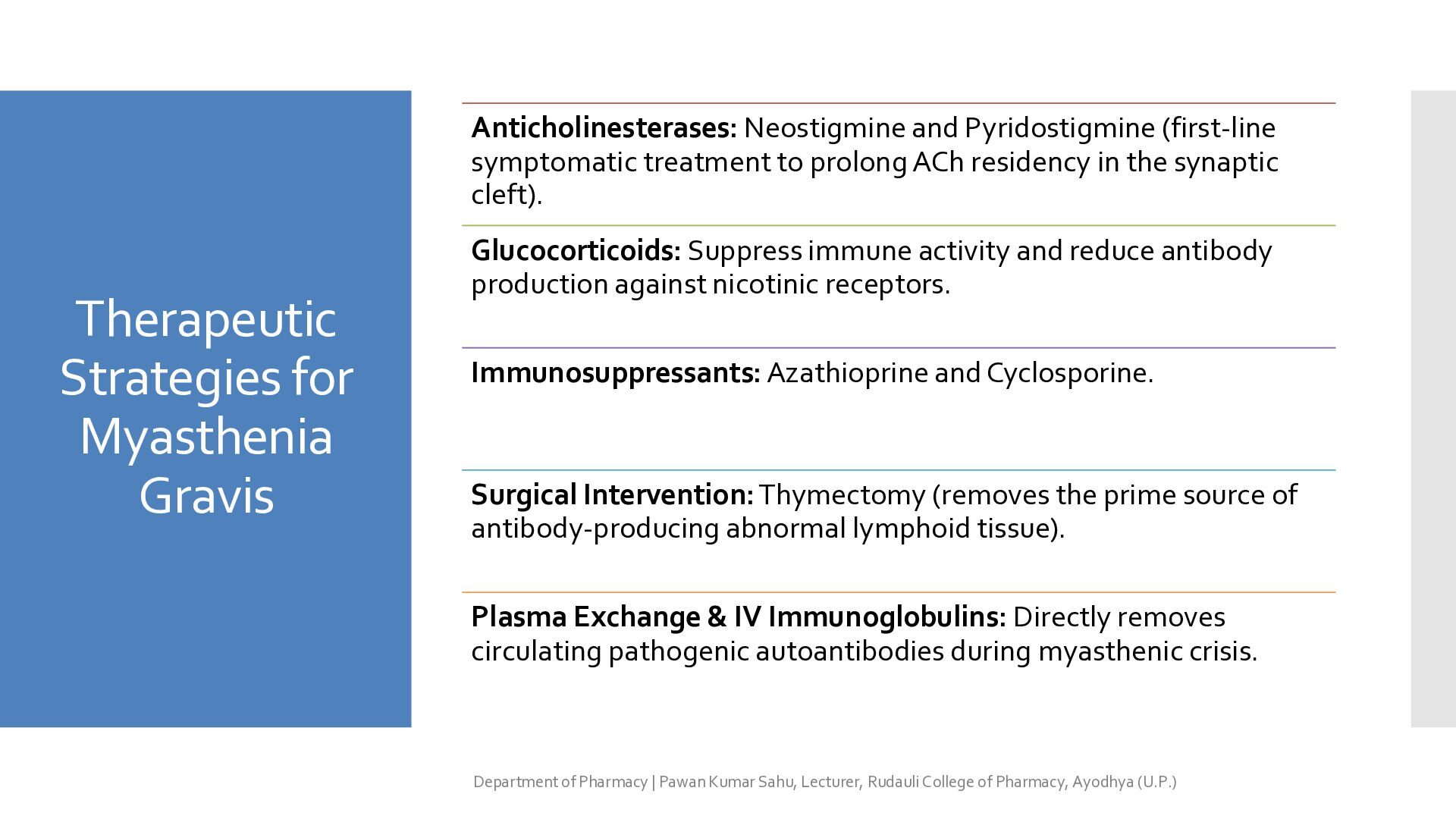
  63. Anticholinesterases: Neostigmine and Pyridostigmine (first-line symptomatic treatment to prolong ACh

    residency in the synaptic cleft). Therapeutic Strategies for Myasthenia Gravis Glucocorticoids: Suppress immune activity and reduce antibody production against nicotinic receptors. Immunosuppressants: Azathioprine and Cyclosporine. Surgical Intervention: Thymectomy (removes the prime source of antibody-producing abnormal lymphoid tissue). Plasma Exchange & IV Immunoglobulins: Directly removes circulating pathogenic autoantibodies during myasthenic crisis. Department of Pharmacy | Pawan Kumar Sahu, Lecturer, Rudauli College of Pharmacy, Ayodhya (U.P.)
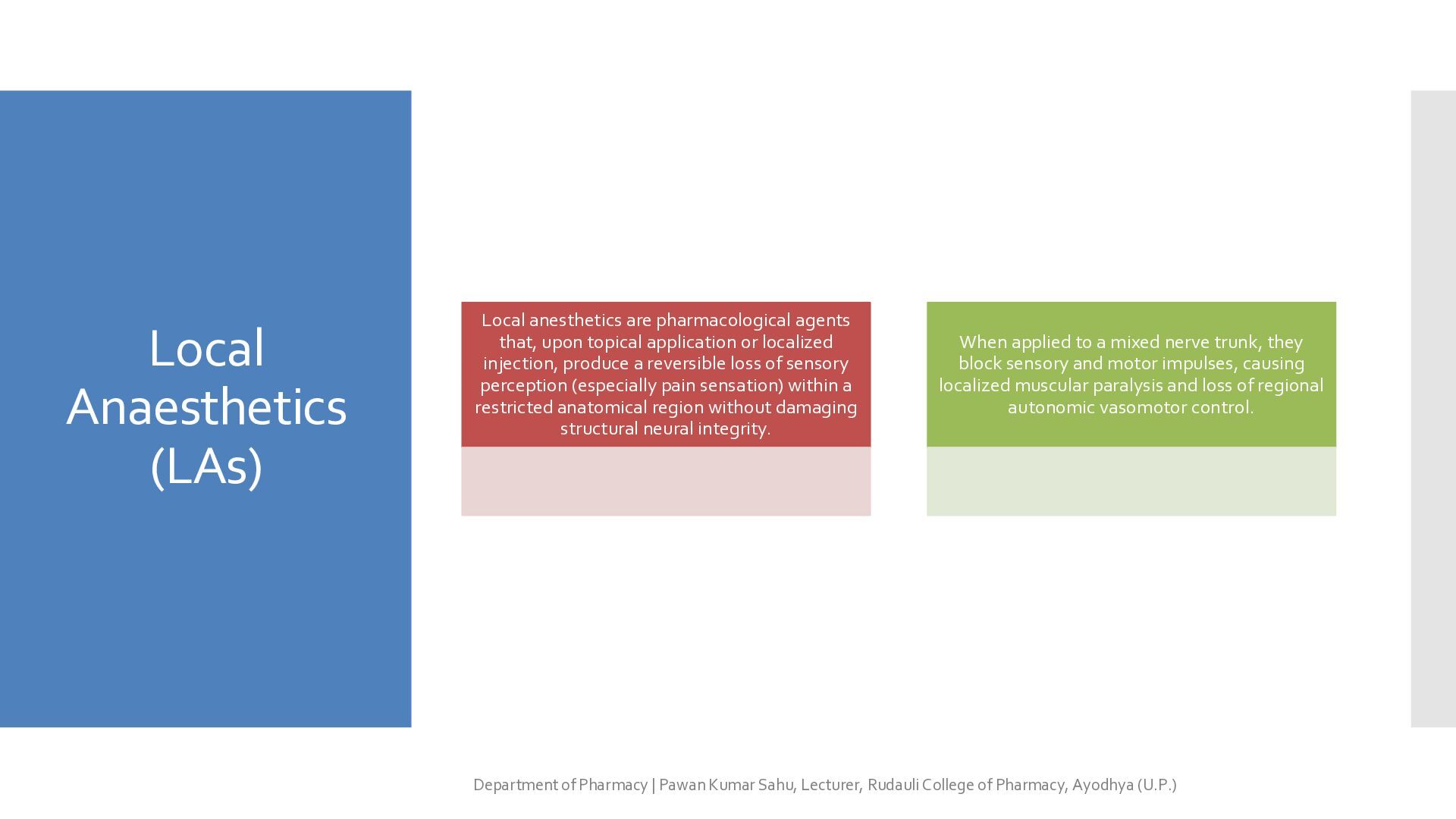
  64. Local Anaesthetics (LAs) Local anesthetics are pharmacological agents that, upon

    topical application or localized injection, produce a reversible loss of sensory perception (especially pain sensation) within a restricted anatomical region without damaging structural neural integrity. When applied to a mixed nerve trunk, they block sensory and motor impulses, causing localized muscular paralysis and loss of regional autonomic vasomotor control. Department of Pharmacy | Pawan Kumar Sahu, Lecturer, Rudauli College of Pharmacy, Ayodhya (U.P.)
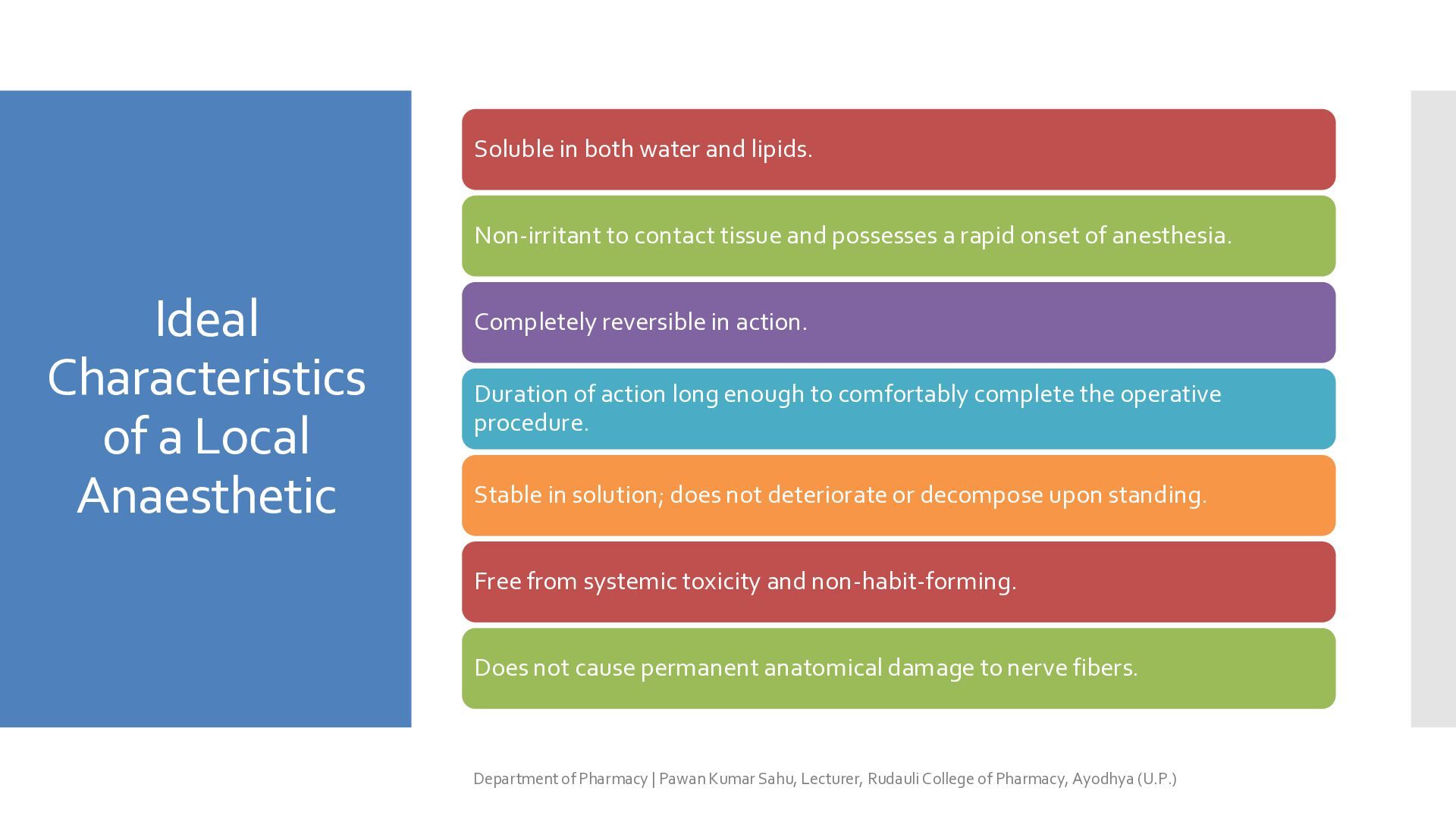
  65. Soluble in both water and lipids. Non-irritant to contact tissue

    and possesses a rapid onset of anesthesia. Ideal Characteristics of a Local Anaesthetic Completely reversible in action. Duration of action long enough to comfortably complete the operative procedure. Stable in solution; does not deteriorate or decompose upon standing. Free from systemic toxicity and non-habit-forming. Does not cause permanent anatomical damage to nerve fibers. Department of Pharmacy | Pawan Kumar Sahu, Lecturer, Rudauli College of Pharmacy, Ayodhya (U.P.)
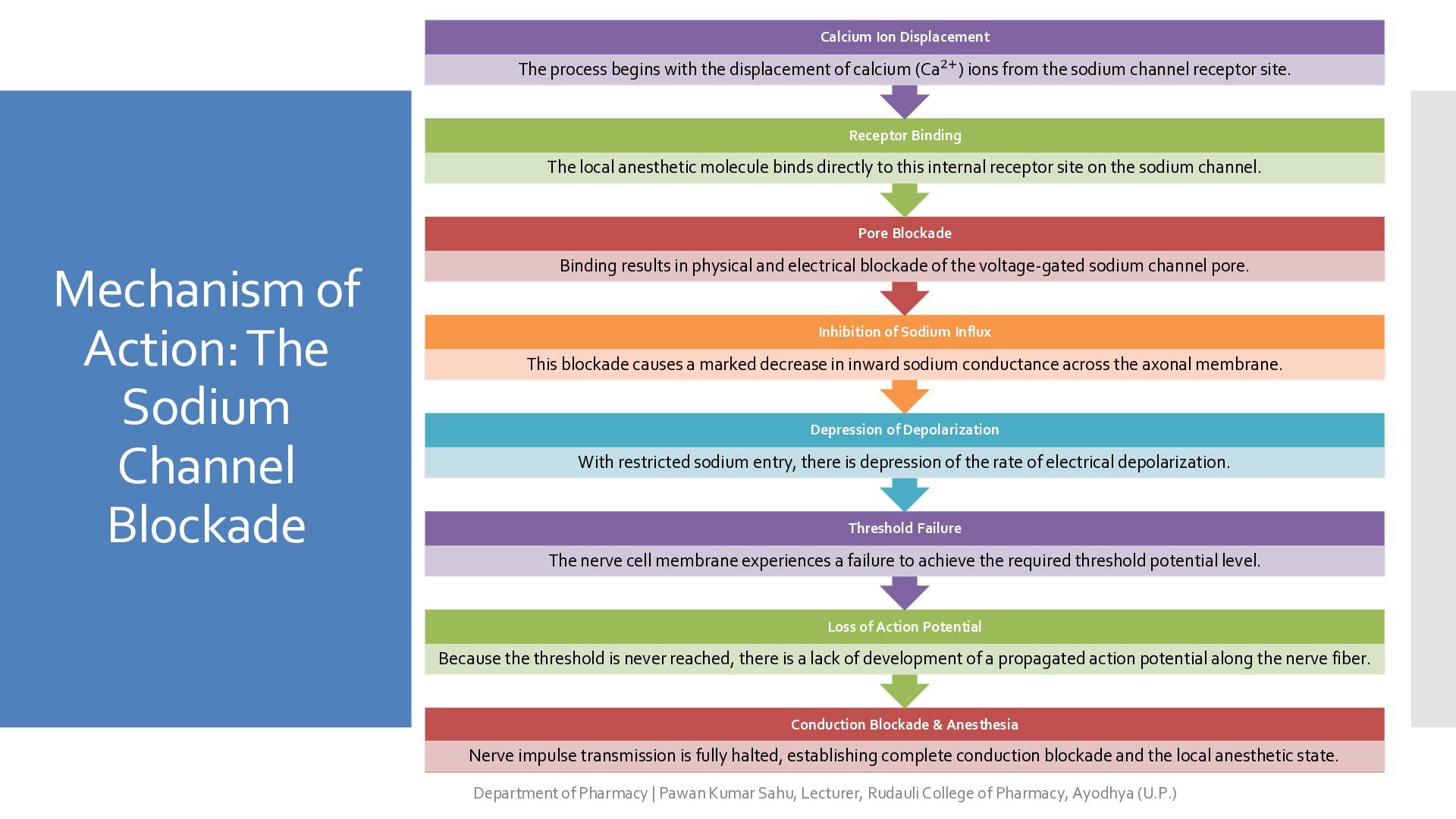
  66. Calcium Ion Displacement The process begins with the displacement of

    calcium (Ca2+ ) ions from the sodium channel receptor site. superscript base , Ca , end base , to the , 2 plus end superscript Receptor Binding The local anesthetic molecule binds directly to this internal receptor site on the sodium channel. Pore Blockade Mechanism of Action: The Sodium Channel Blockade Binding results in physical and electrical blockade of the voltage-gated sodium channel pore. Inhibition of Sodium Influx This blockade causes a marked decrease in inward sodium conductance across the axonal membrane. Depression of Depolarization With restricted sodium entry, there is depression of the rate of electrical depolarization. Threshold Failure The nerve cell membrane experiences a failure to achieve the required threshold potential level. Loss of Action Potential Because the threshold is never reached, there is a lack of development of a propagated action potential along the nerve fiber. Conduction Blockade & Anesthesia Nerve impulse transmission is fully halted, establishing complete conduction blockade and the local anesthetic state. Department of Pharmacy | Pawan Kumar Sahu, Lecturer, Rudauli College of Pharmacy, Ayodhya (U.P.)
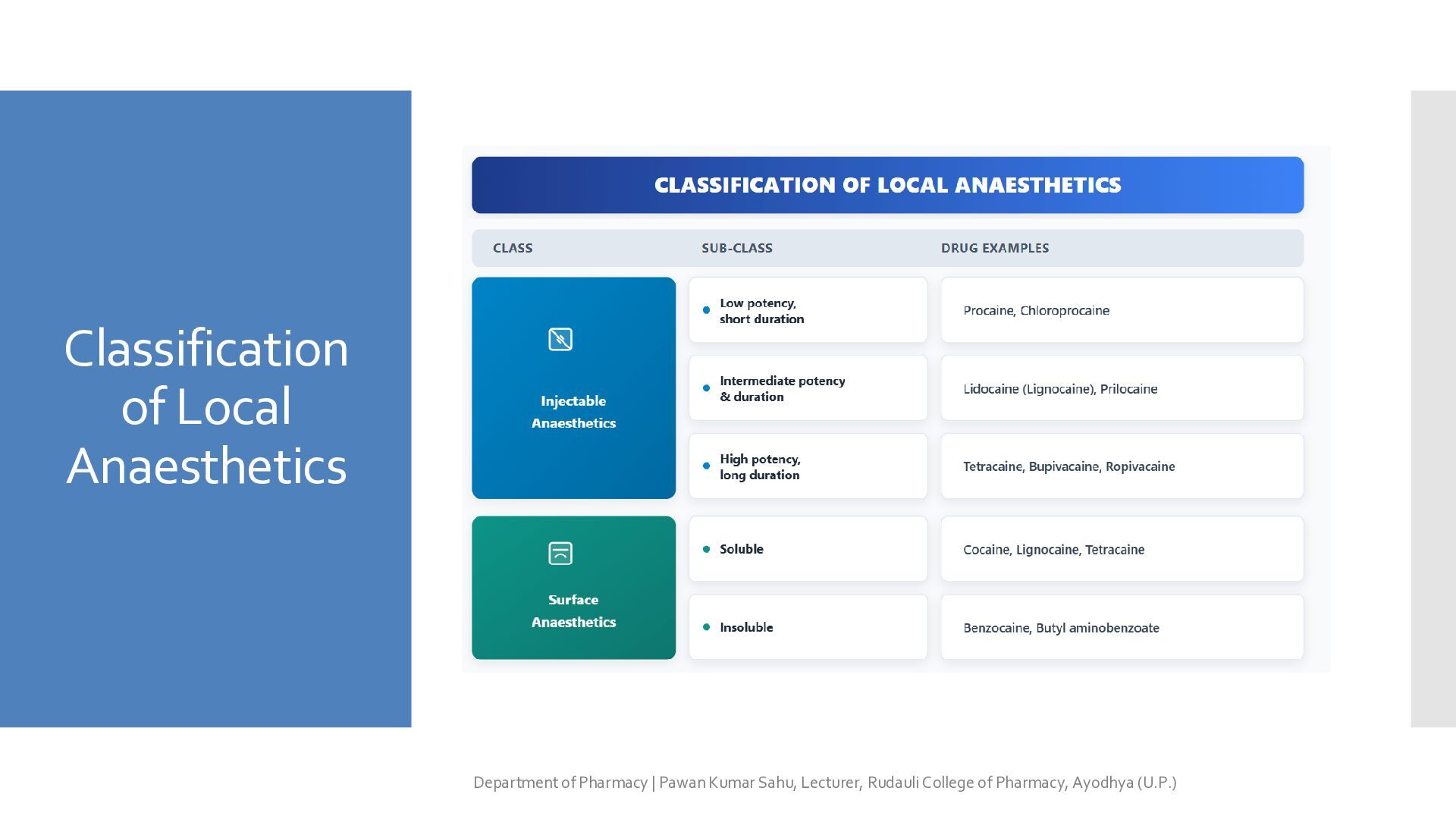
  67. Classification of Local Anaesthetics Department of Pharmacy | Pawan Kumar

    Sahu, Lecturer, Rudauli College of Pharmacy, Ayodhya (U.P.)
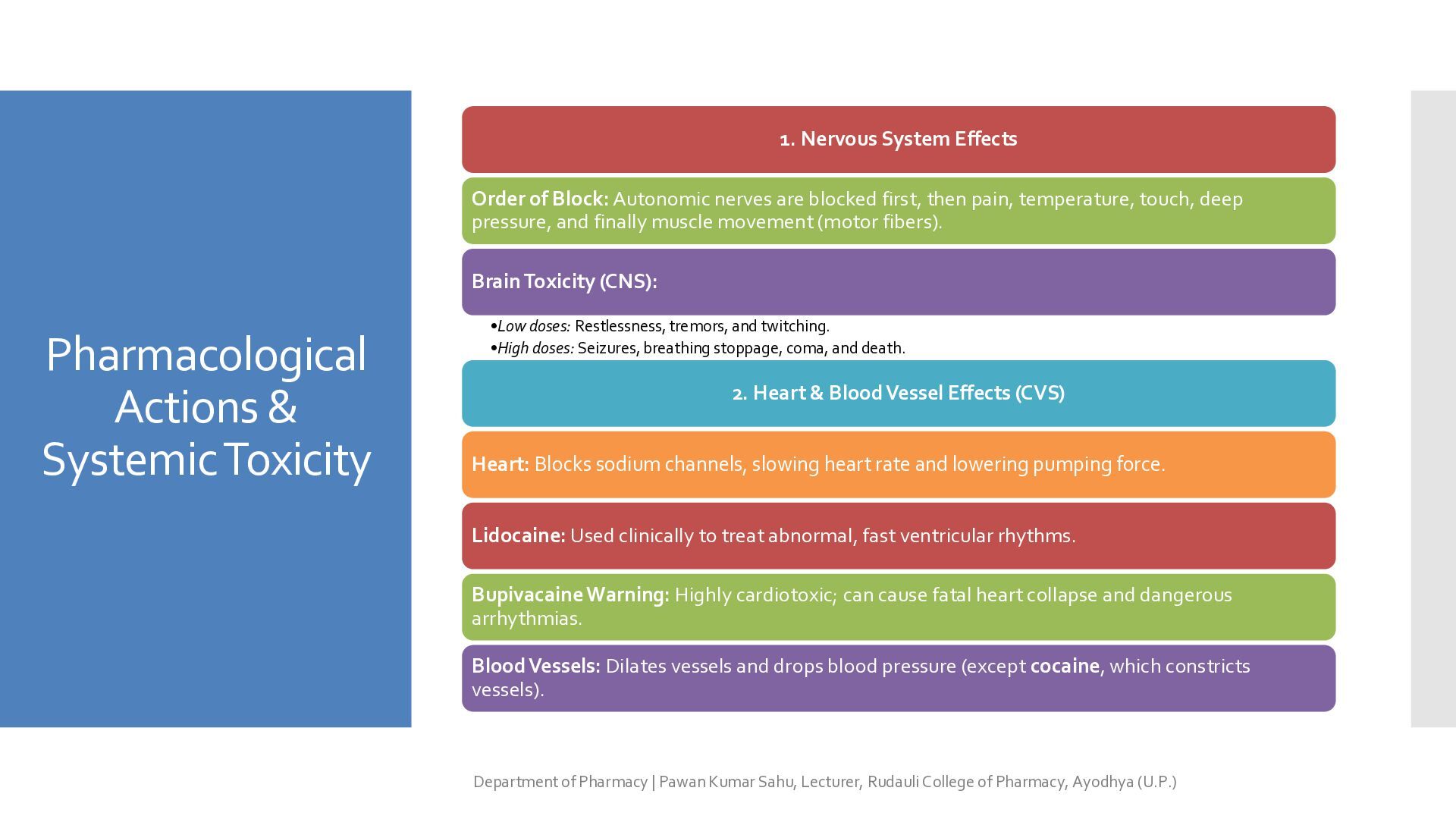
  68. 1. Nervous System Effects Order of Block: Autonomic nerves are

    blocked first, then pain, temperature, touch, deep pressure, and finally muscle movement (motor fibers). Brain Toxicity (CNS): Pharmacological Actions & Systemic Toxicity •Low doses: Restlessness, tremors, and twitching. •High doses: Seizures, breathing stoppage, coma, and death. 2. Heart & Blood Vessel Effects (CVS) Heart: Blocks sodium channels, slowing heart rate and lowering pumping force. Lidocaine: Used clinically to treat abnormal, fast ventricular rhythms. Bupivacaine Warning: Highly cardiotoxic; can cause fatal heart collapse and dangerous arrhythmias. Blood Vessels: Dilates vessels and drops blood pressure (except cocaine, which constricts vessels). Department of Pharmacy | Pawan Kumar Sahu, Lecturer, Rudauli College of Pharmacy, Ayodhya (U.P.)
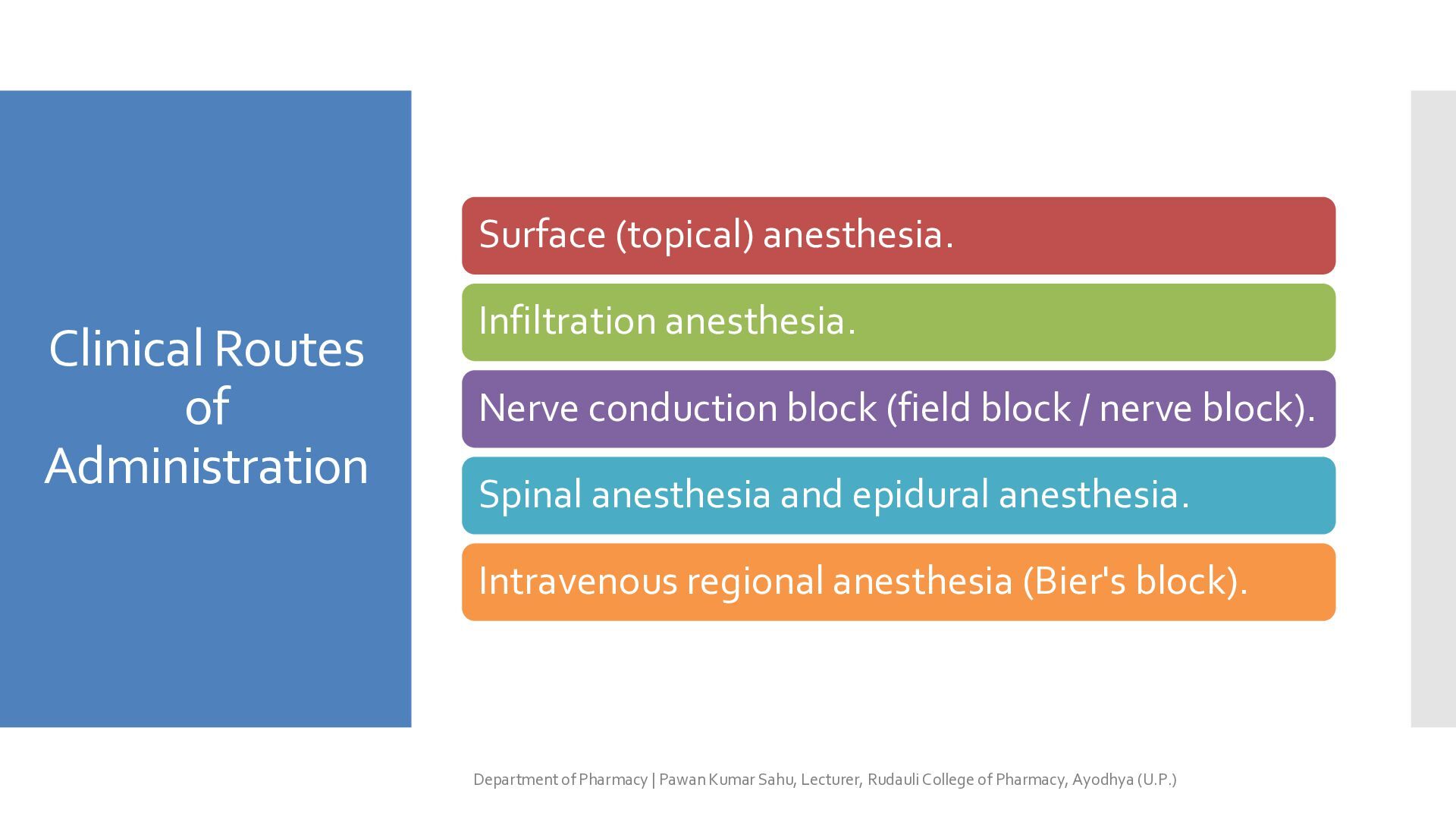
  69. Surface (topical) anesthesia. Clinical Routes of Administration Infiltration anesthesia. Nerve

    conduction block (field block / nerve block). Spinal anesthesia and epidural anesthesia. Intravenous regional anesthesia (Bier's block). Department of Pharmacy | Pawan Kumar Sahu, Lecturer, Rudauli College of Pharmacy, Ayodhya (U.P.)
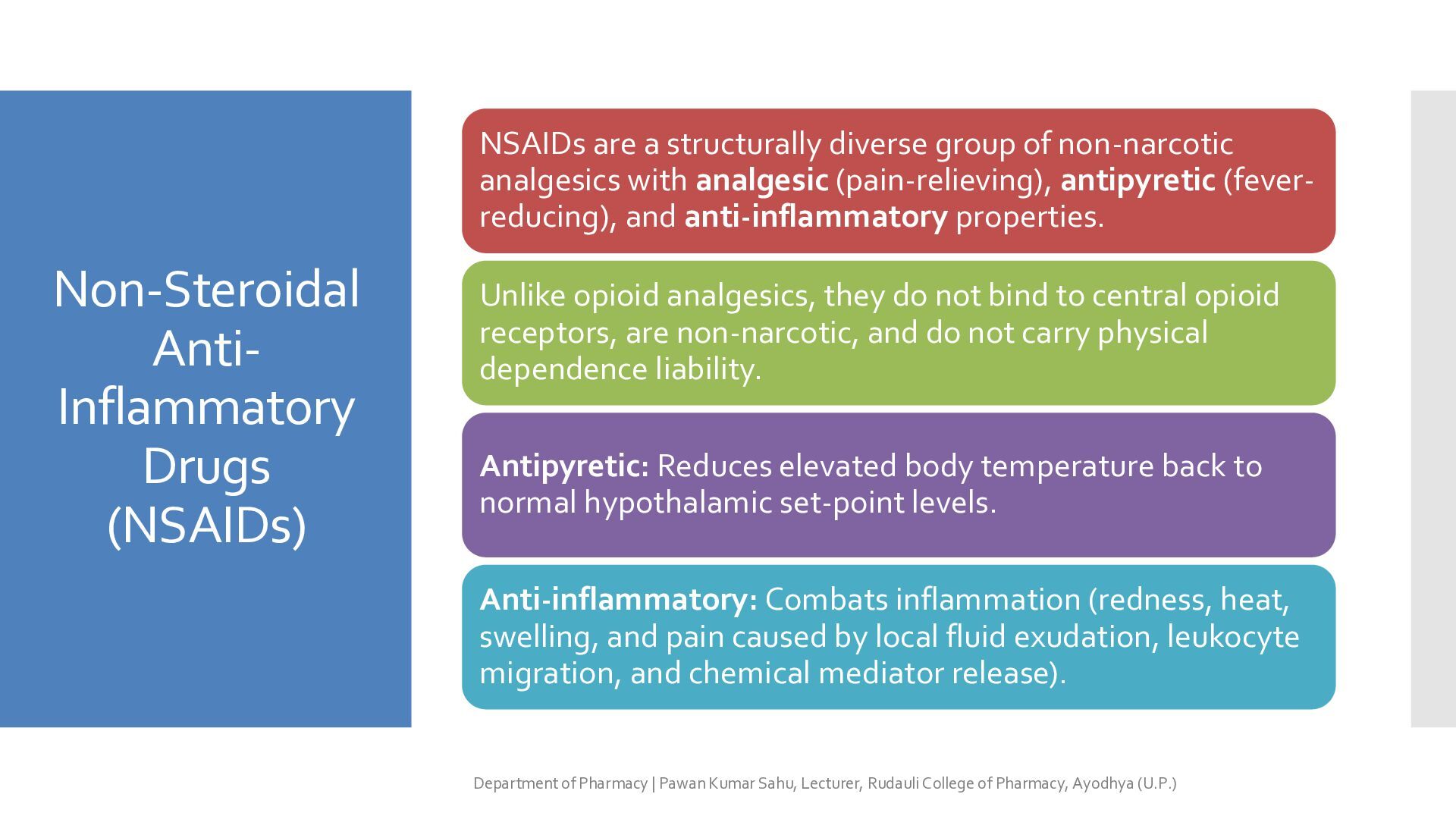
  70. NSAIDs are a structurally diverse group of non-narcotic analgesics with

    analgesic (pain-relieving), antipyretic (feverreducing), and anti-inflammatory properties. Non-Steroidal AntiInflammatory Drugs (NSAIDs) Unlike opioid analgesics, they do not bind to central opioid receptors, are non-narcotic, and do not carry physical dependence liability. Antipyretic: Reduces elevated body temperature back to normal hypothalamic set-point levels. Anti-inflammatory: Combats inflammation (redness, heat, swelling, and pain caused by local fluid exudation, leukocyte migration, and chemical mediator release). Department of Pharmacy | Pawan Kumar Sahu, Lecturer, Rudauli College of Pharmacy, Ayodhya (U.P.)
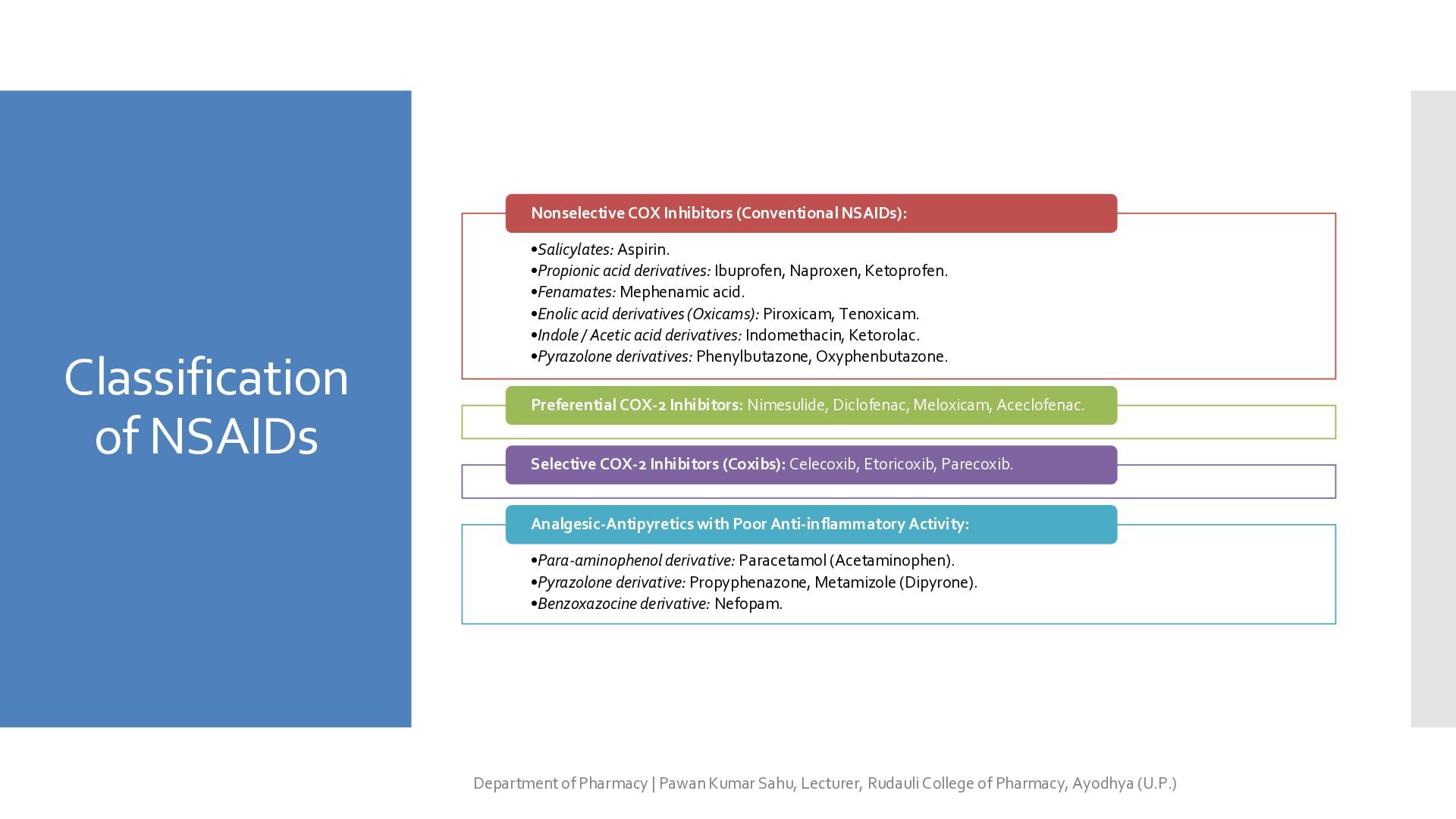
  71. Nonselective COX Inhibitors (Conventional NSAIDs): Classification of NSAIDs •Salicylates: Aspirin.

    •Propionic acid derivatives: Ibuprofen, Naproxen, Ketoprofen. •Fenamates: Mephenamic acid. •Enolic acid derivatives (Oxicams): Piroxicam, Tenoxicam. •Indole / Acetic acid derivatives: Indomethacin, Ketorolac. •Pyrazolone derivatives: Phenylbutazone, Oxyphenbutazone. Preferential COX-2 Inhibitors: Nimesulide, Diclofenac, Meloxicam, Aceclofenac. Selective COX-2 Inhibitors (Coxibs): Celecoxib, Etoricoxib, Parecoxib. Analgesic-Antipyretics with Poor Anti-inflammatory Activity: •Para-aminophenol derivative: Paracetamol (Acetaminophen). •Pyrazolone derivative: Propyphenazone, Metamizole (Dipyrone). •Benzoxazocine derivative: Nefopam. Department of Pharmacy | Pawan Kumar Sahu, Lecturer, Rudauli College of Pharmacy, Ayodhya (U.P.)
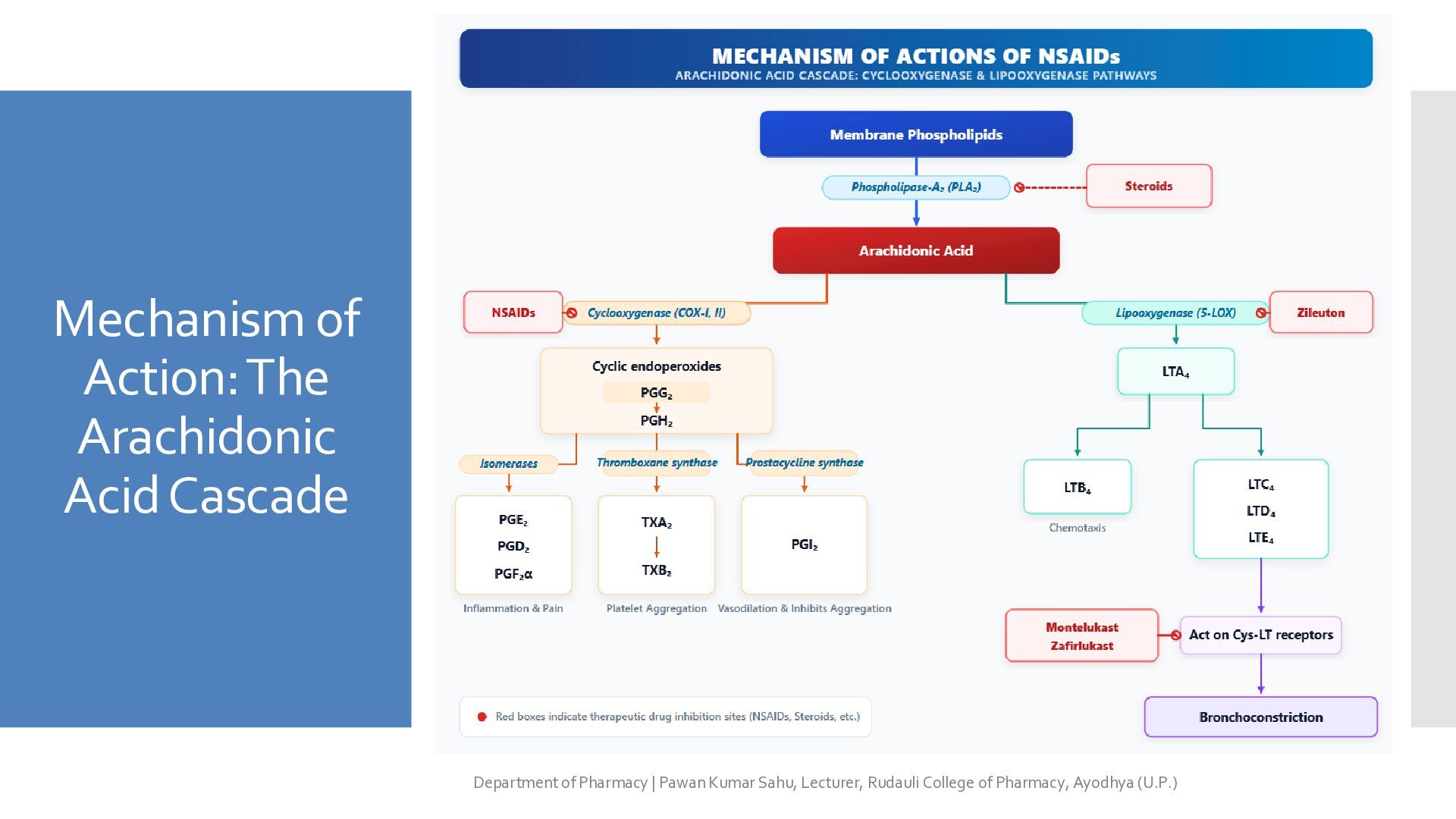
  72. Mechanism of Action: The Arachidonic Acid Cascade Department of Pharmacy

    | Pawan Kumar Sahu, Lecturer, Rudauli College of Pharmacy, Ayodhya (U.P.)
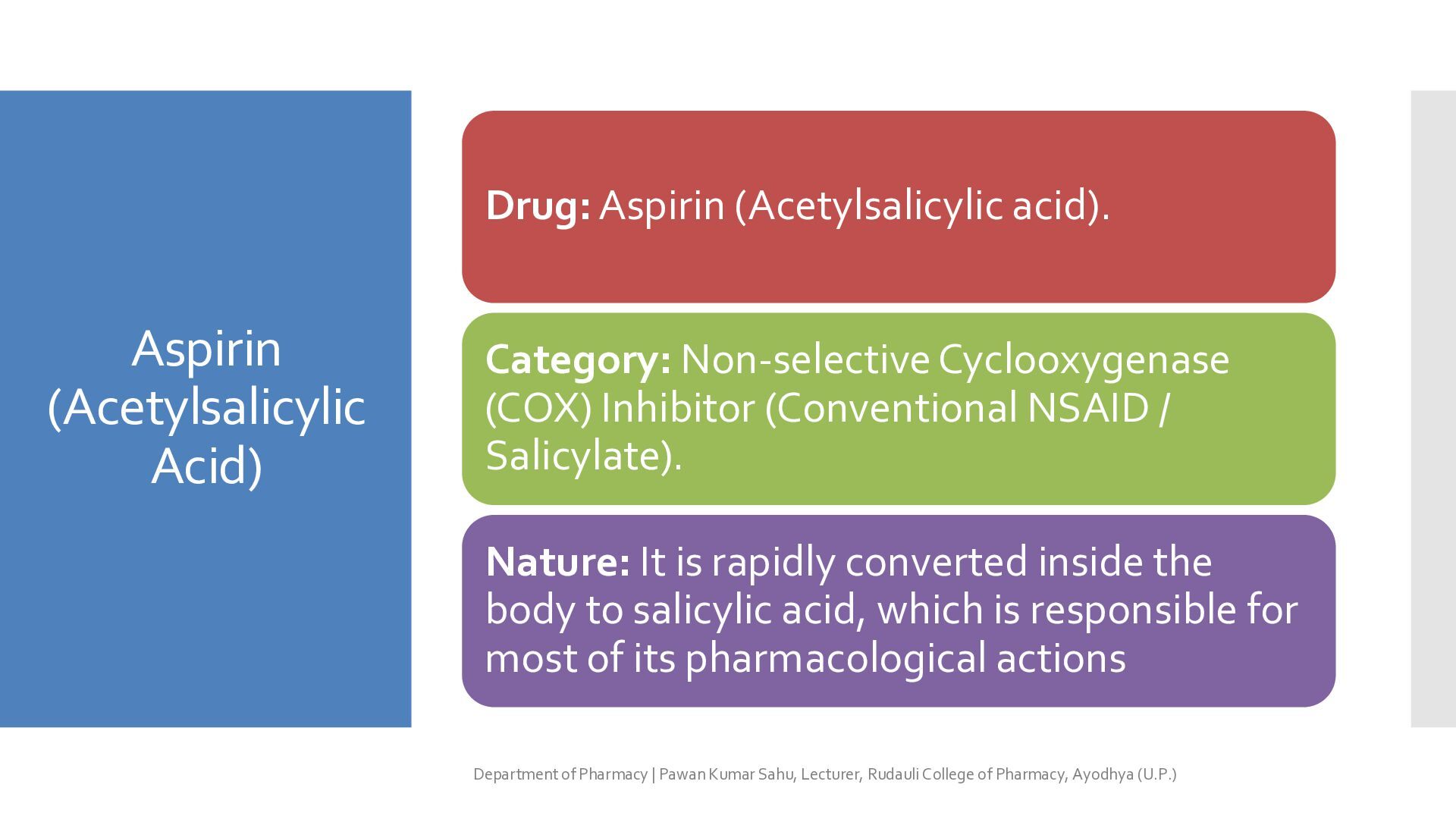
  73. Drug: Aspirin (Acetylsalicylic acid). Aspirin (Acetylsalicylic Acid) Category: Non-selective Cyclooxygenase

    (COX) Inhibitor (Conventional NSAID / Salicylate). Nature: It is rapidly converted inside the body to salicylic acid, which is responsible for most of its pharmacological actions Department of Pharmacy | Pawan Kumar Sahu, Lecturer, Rudauli College of Pharmacy, Ayodhya (U.P.)
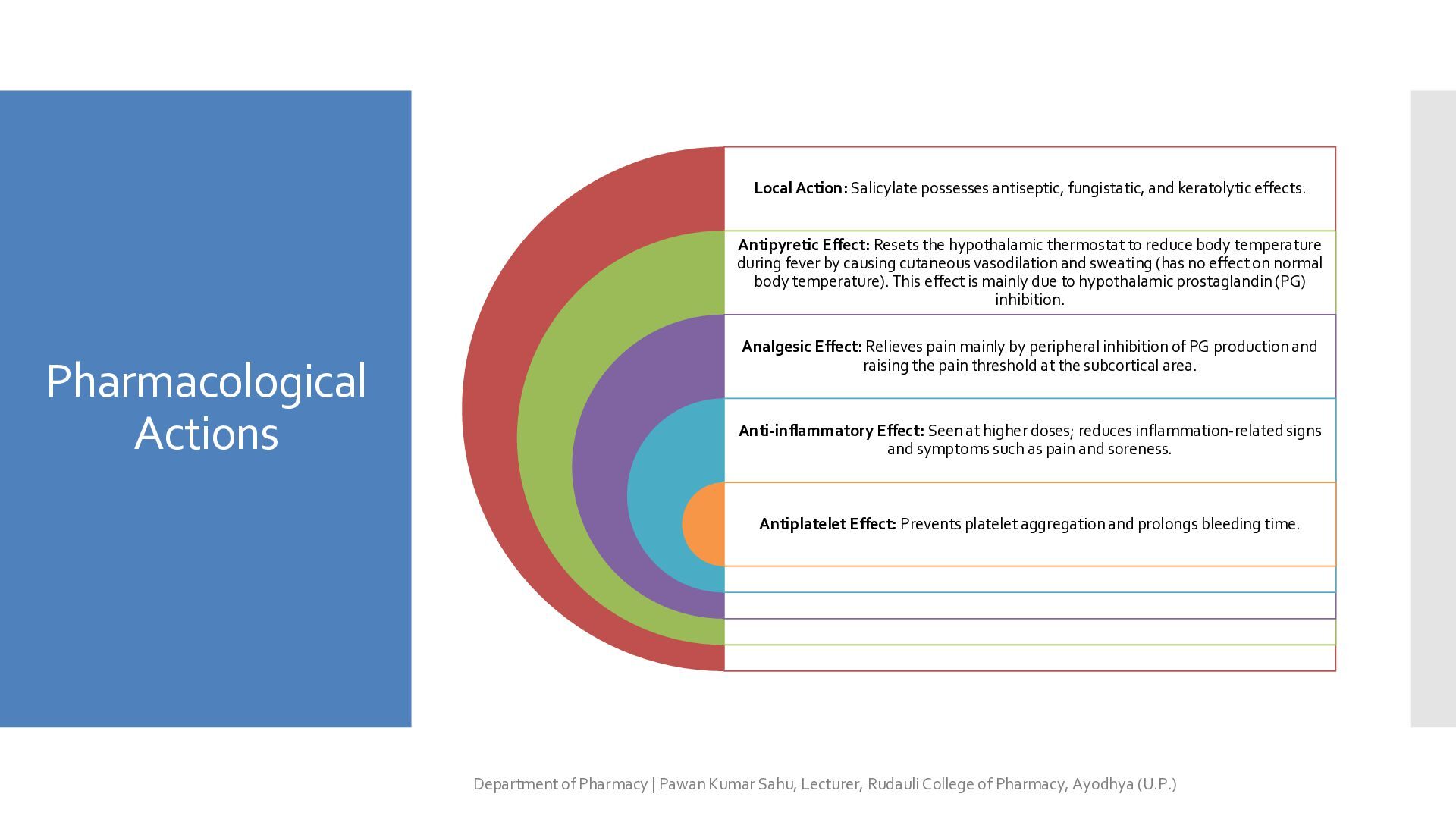
  74. Local Action: Salicylate possesses antiseptic, fungistatic, and keratolytic effects. Antipyretic

    Effect: Resets the hypothalamic thermostat to reduce body temperature during fever by causing cutaneous vasodilation and sweating (has no effect on normal body temperature). This effect is mainly due to hypothalamic prostaglandin (PG) inhibition. Pharmacological Actions Analgesic Effect: Relieves pain mainly by peripheral inhibition of PG production and raising the pain threshold at the subcortical area. Anti-inflammatory Effect: Seen at higher doses; reduces inflammation-related signs and symptoms such as pain and soreness. Antiplatelet Effect: Prevents platelet aggregation and prolongs bleeding time. Department of Pharmacy | Pawan Kumar Sahu, Lecturer, Rudauli College of Pharmacy, Ayodhya (U.P.)
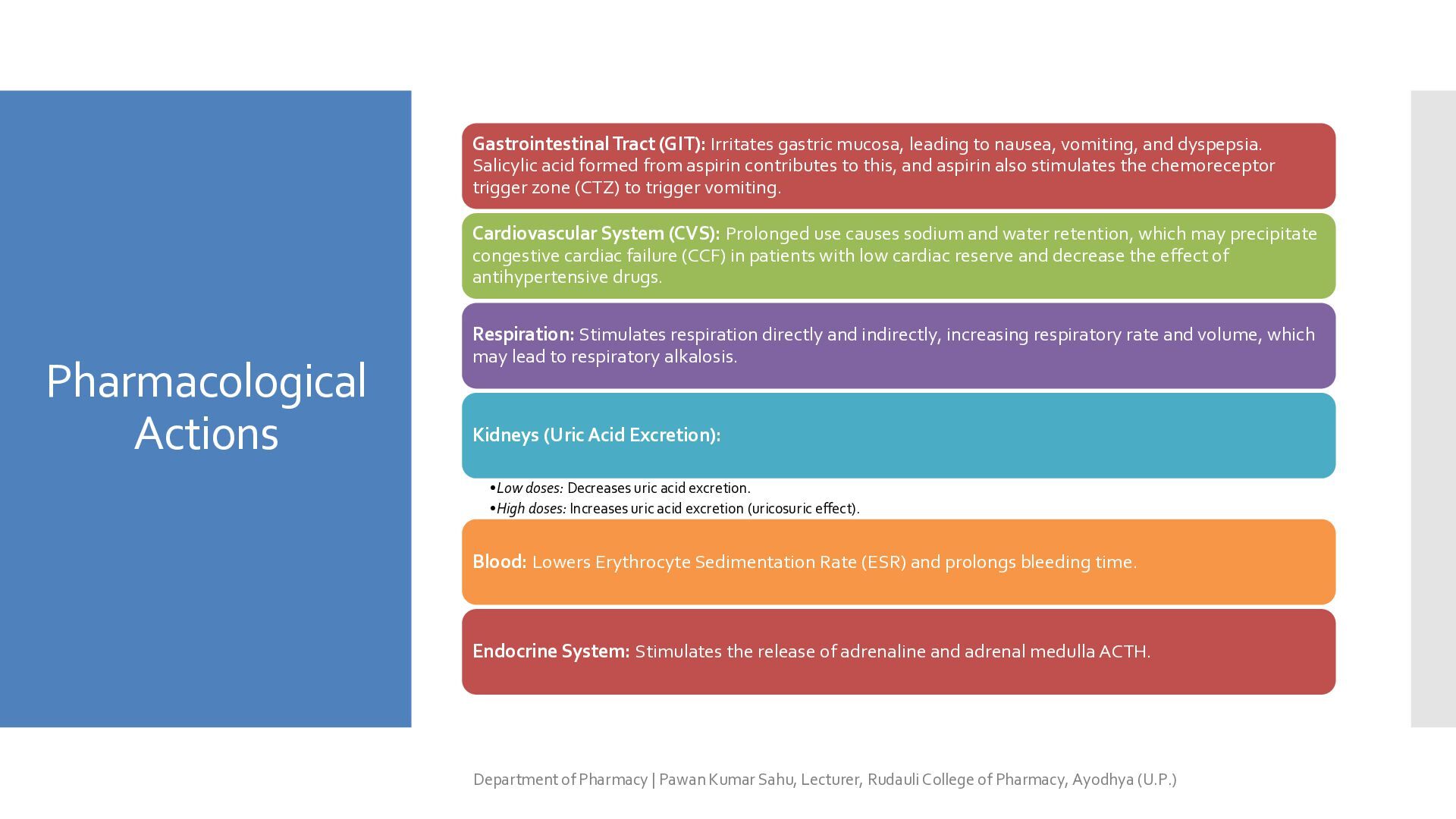
  75. Gastrointestinal Tract (GIT): Irritates gastric mucosa, leading to nausea, vomiting,

    and dyspepsia. Salicylic acid formed from aspirin contributes to this, and aspirin also stimulates the chemoreceptor trigger zone (CTZ) to trigger vomiting. Cardiovascular System (CVS): Prolonged use causes sodium and water retention, which may precipitate congestive cardiac failure (CCF) in patients with low cardiac reserve and decrease the effect of antihypertensive drugs. Pharmacological Actions Respiration: Stimulates respiration directly and indirectly, increasing respiratory rate and volume, which may lead to respiratory alkalosis. Kidneys (Uric Acid Excretion): •Low doses: Decreases uric acid excretion. •High doses: Increases uric acid excretion (uricosuric effect). Blood: Lowers Erythrocyte Sedimentation Rate (ESR) and prolongs bleeding time. Endocrine System: Stimulates the release of adrenaline and adrenal medulla ACTH. Department of Pharmacy | Pawan Kumar Sahu, Lecturer, Rudauli College of Pharmacy, Ayodhya (U.P.)
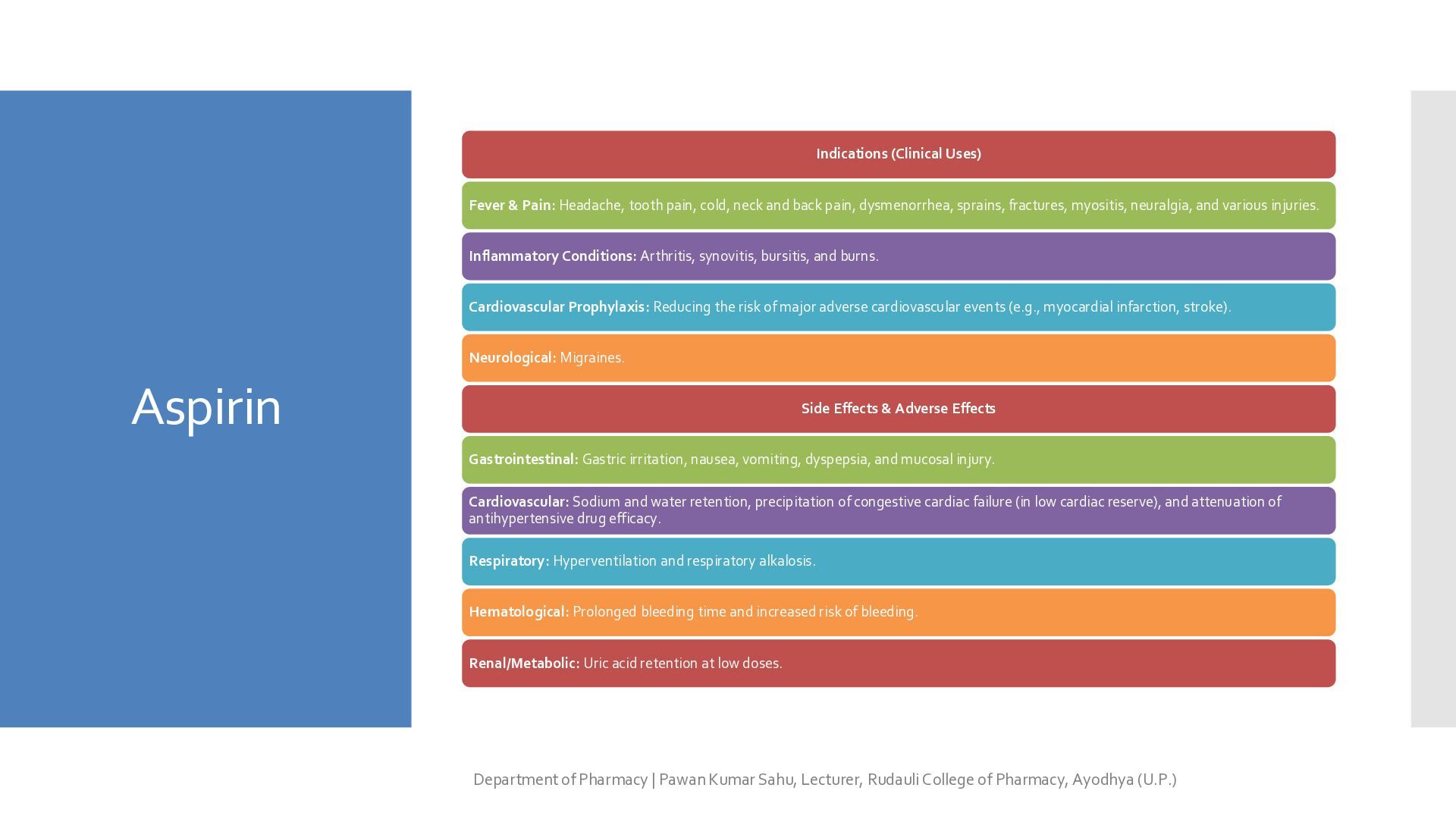
  76. Indications (Clinical Uses) Fever & Pain: Headache, tooth pain, cold,

    neck and back pain, dysmenorrhea, sprains, fractures, myositis, neuralgia, and various injuries. Inflammatory Conditions: Arthritis, synovitis, bursitis, and burns. Cardiovascular Prophylaxis: Reducing the risk of major adverse cardiovascular events (e.g., myocardial infarction, stroke). Neurological: Migraines. Aspirin Side Effects & Adverse Effects Gastrointestinal: Gastric irritation, nausea, vomiting, dyspepsia, and mucosal injury. Cardiovascular: Sodium and water retention, precipitation of congestive cardiac failure (in low cardiac reserve), and attenuation of antihypertensive drug efficacy. Respiratory: Hyperventilation and respiratory alkalosis. Hematological: Prolonged bleeding time and increased risk of bleeding. Renal/Metabolic: Uric acid retention at low doses. Department of Pharmacy | Pawan Kumar Sahu, Lecturer, Rudauli College of Pharmacy, Ayodhya (U.P.)
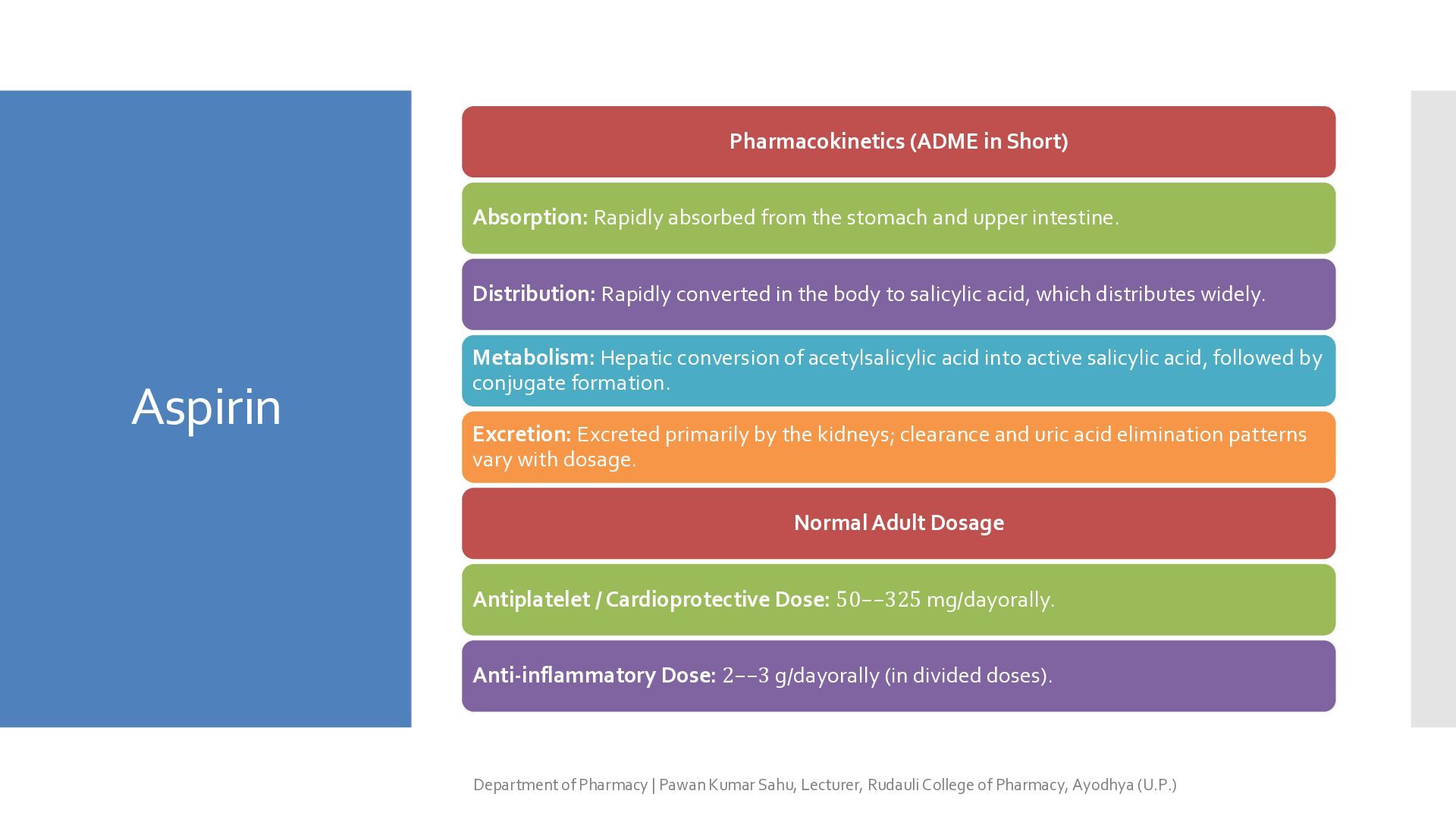
  77. Pharmacokinetics (ADME in Short) Absorption: Rapidly absorbed from the stomach

    and upper intestine. Distribution: Rapidly converted in the body to salicylic acid, which distributes widely. Aspirin Metabolism: Hepatic conversion of acetylsalicylic acid into active salicylic acid, followed by conjugate formation. Excretion: Excreted primarily by the kidneys; clearance and uric acid elimination patterns vary with dosage. Normal Adult Dosage 50 −−325 mg/day Antiplatelet / Cardioprotective Dose: 50−−325 mg/dayorally. 2 −−3 g/day Anti-inflammatory Dose: 2−−3 g/dayorally (in divided doses). Department of Pharmacy | Pawan Kumar Sahu, Lecturer, Rudauli College of Pharmacy, Ayodhya (U.P.)
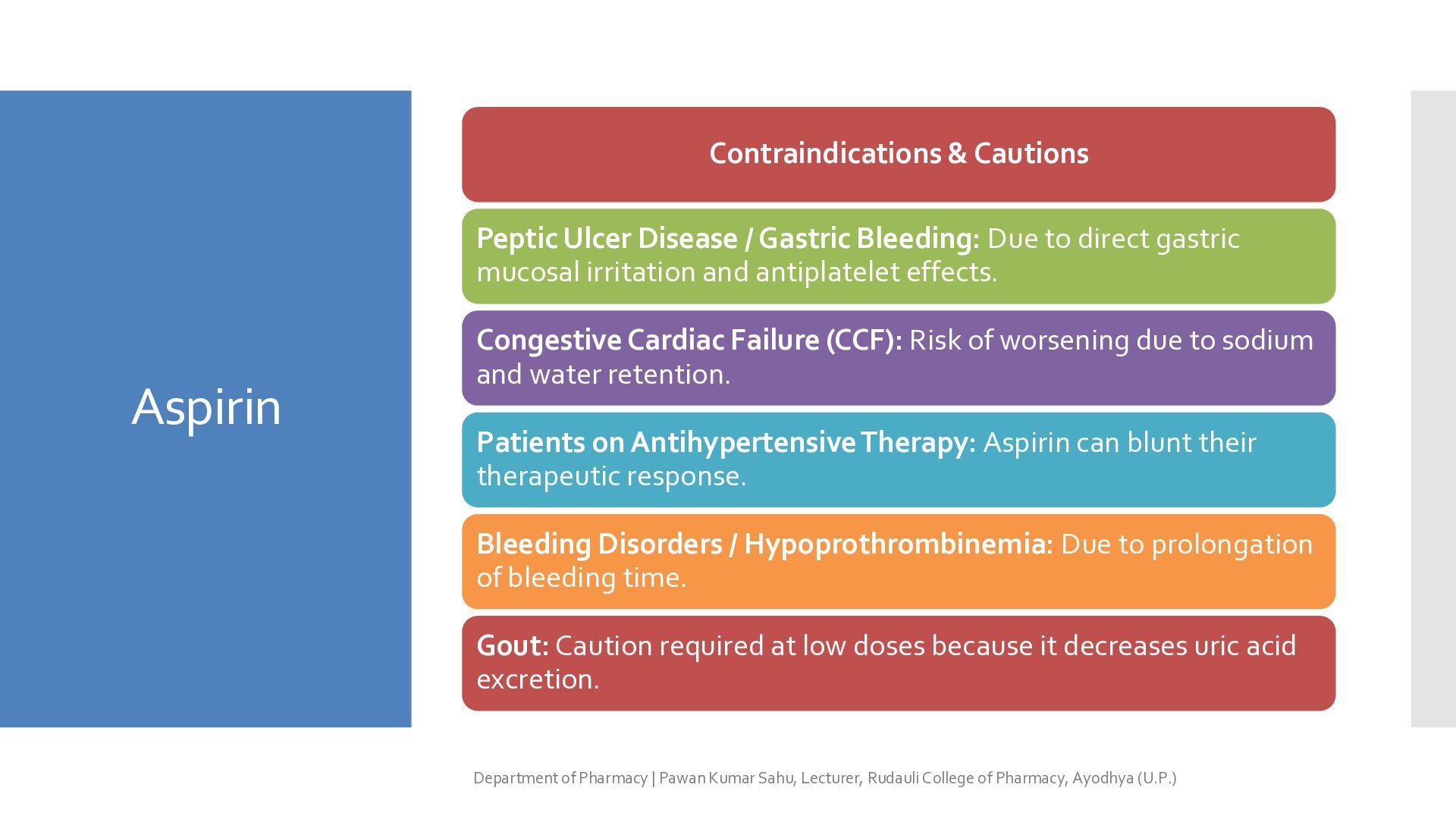
  78. Contraindications & Cautions Peptic Ulcer Disease / Gastric Bleeding: Due

    to direct gastric mucosal irritation and antiplatelet effects. Aspirin Congestive Cardiac Failure (CCF): Risk of worsening due to sodium and water retention. Patients on Antihypertensive Therapy: Aspirin can blunt their therapeutic response. Bleeding Disorders / Hypoprothrombinemia: Due to prolongation of bleeding time. Gout: Caution required at low doses because it decreases uric acid excretion. Department of Pharmacy | Pawan Kumar Sahu, Lecturer, Rudauli College of Pharmacy, Ayodhya (U.P.)
  79. THANK YOU Department of Pharmacy | Pawan Kumar Sahu, Lecturer,

    Rudauli College of Pharmacy, Ayodhya (U.P.)