Upgrade to Pro — share decks privately, control downloads, hide ads and more …

cloud computing training in Chandigarh

cloud computing training in Chandigarh

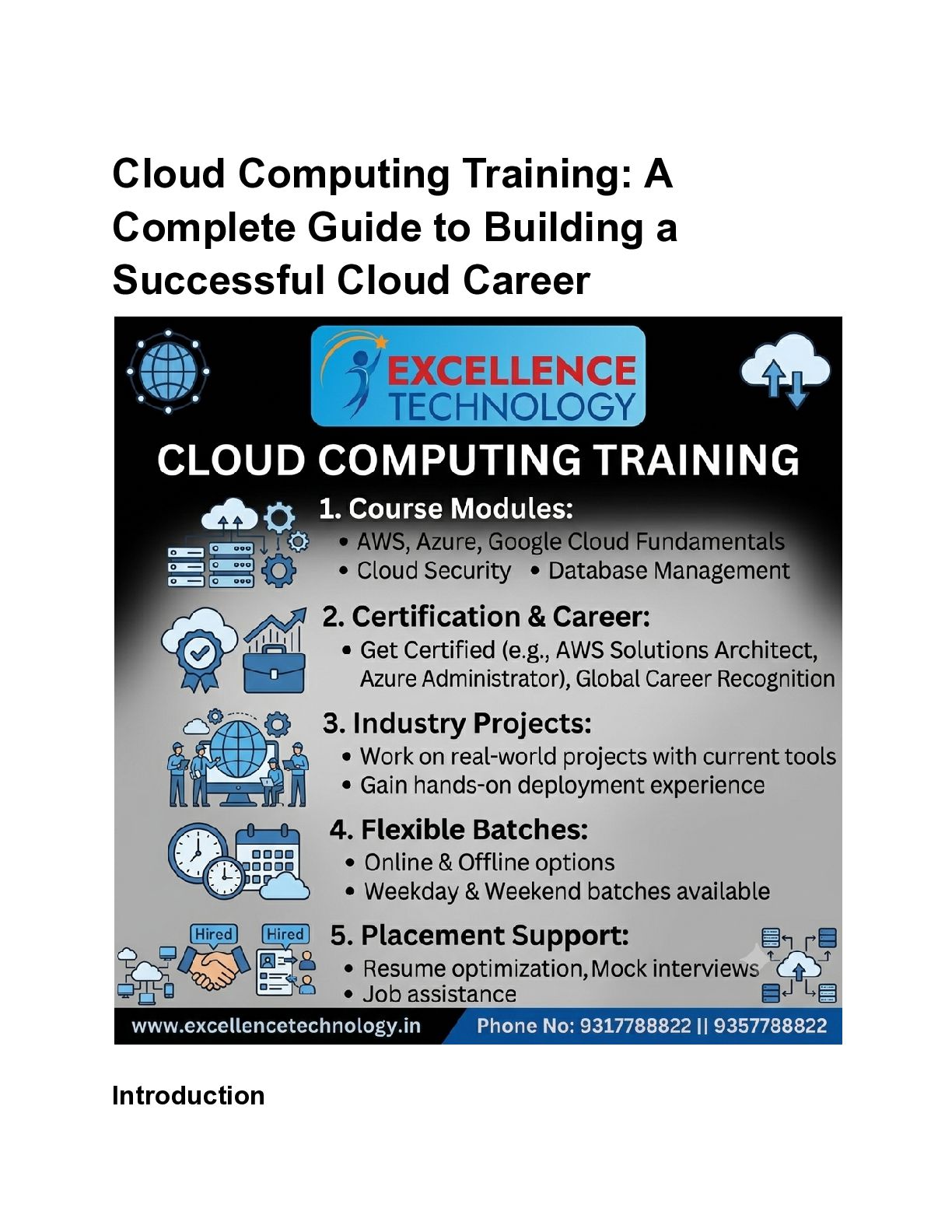
Join our Hands-On Cloud Computing Course in Chandigarh and master AWS, Azure, and GCP. Gain practical skills through real-world projects and live labs. Learn cloud architecture, deployment, and management from industry experts. Boost your career with cloud certifications and high-demand job opportunities. Enroll now to become a certified cloud professional in Chandigarh

Avatar for Nitin Rauthan

Nitin Rauthan

June 17, 2026

Other Decks in Education

Transcript

  1. Technology is changing very fast in today's digital world. Businesses

    are moving their data, applications, and services to the cloud. This shift has increased the demand for skilled cloud professionals across industries. As a result, cloud computing training has become one of the most valuable learning programs for students and working professionals. Cloud platforms help organizations reduce costs, improve security, and increase flexibility. Companies need experts who can manage cloud infrastructure and services. Therefore, cloud computing training helps learners gain the skills required to work in modern IT environments. This guide explains everything about cloud computing training, its benefits, career opportunities, skills covered, and how to choose the right training program. What is Cloud Computing? Cloud computing is the delivery of computing services over the internet. These services include servers, storage, databases, networking, software, and analytics. Instead of owning physical hardware, businesses can access resources from cloud providers whenever needed. This model improves efficiency and reduces infrastructure costs. Cloud computing offers three main service models: Infrastructure as a Service (IaaS) IaaS provides virtual servers, storage, and networking resources. Users can manage operating systems and applications while the provider manages hardware. Platform as a Service (PaaS) PaaS provides a platform for developers to build, test, and deploy applications. It removes the need to manage infrastructure. Software as a Service (SaaS) SaaS delivers software applications through the internet. Users can access applications using a web browser without installation. Understanding these concepts is the first step in cloud computing training. What is Cloud Computing Training? Cloud computing training is a structured learning program that teaches cloud technologies, services, tools, and best practices.
  2. The goal of cloud computing training is to prepare learners

    for cloud-related job roles. Training programs cover theoretical knowledge and practical implementation. Students learn how to deploy applications, manage cloud infrastructure, secure data, and optimize cloud resources. Most cloud computing training courses include hands-on projects and real-world case studies. This approach helps learners gain practical experience. Why is Cloud Computing Training Important? Cloud adoption is increasing across industries. Organizations need professionals who understand cloud environments. Here are some reasons why cloud computing training is important: High Industry Demand Businesses are moving workloads to cloud platforms. This creates a strong demand for cloud experts. Better Career Opportunities Cloud professionals often receive competitive salaries and attractive job benefits. Future-Proof Skills Cloud technology continues to grow. Learning cloud skills helps professionals stay relevant in the market. Global Career Options Cloud skills are recognized worldwide. Trained professionals can explore opportunities in different countries. Business Transformation Organizations use cloud solutions to improve efficiency and innovation. Skilled professionals help companies achieve these goals. Because of these benefits, cloud computing training has become a popular career choice. Key Topics Covered in Cloud Computing Training
  3. A comprehensive cloud computing training program covers several important topics.

    Cloud Fundamentals Learners understand cloud concepts, deployment models, and service models. Cloud Architecture Students learn how cloud systems are designed and managed. Virtualization Virtualization is the foundation of cloud computing. It allows multiple virtual machines to run on one physical server. Cloud Networking This topic covers network design, security groups, load balancers, and virtual networks. Cloud Storage Students learn about object storage, file storage, and block storage solutions. Cloud Security Security is a major focus of cloud computing training. Learners study identity management, encryption, and compliance. Disaster Recovery This module teaches backup strategies and business continuity planning. Monitoring and Optimization Students learn how to monitor cloud resources and improve performance. DevOps and Automation Many cloud computing training programs include automation tools and DevOps practices. Popular Cloud Platforms Covered in Training Different cloud providers dominate the global market. Most cloud computing training courses focus on these platforms.
  4. Amazon Web Services (AWS) AWS is one of the largest

    cloud service providers. It offers a wide range of cloud solutions. Microsoft Azure Azure is popular among enterprises and organizations using Microsoft technologies. Google Cloud Platform (GCP) GCP provides advanced analytics, machine learning, and cloud infrastructure services. Oracle Cloud Oracle Cloud supports database management and enterprise applications. IBM Cloud IBM Cloud offers cloud services for business applications and hybrid environments. Cloud computing training often includes one or more of these platforms. Benefits of Cloud Computing Training Learning cloud technologies provides several professional advantages. Increased Employability Employers prefer candidates with cloud skills and certifications. Practical Knowledge Hands-on projects improve technical understanding and confidence. Better Salary Potential Cloud professionals often earn higher salaries than traditional IT roles. Career Growth Cloud skills support advancement into leadership and specialized technical roles. Industry Recognition
  5. Completing cloud computing training demonstrates commitment to professional development. Who

    Should Enroll in Cloud Computing Training? Cloud computing training is suitable for many individuals. Students Students can build technical skills before entering the workforce. IT Professionals Experienced professionals can upgrade their skills and improve career prospects. System Administrators Administrators can learn cloud infrastructure management techniques. Software Developers Developers benefit from understanding cloud-native application development. Network Engineers Network professionals can expand their expertise into cloud networking. Career Changers Individuals from other fields can enter the technology sector through cloud computing training. Skills Developed Through Cloud Computing Training Cloud computing training helps learners develop both technical and professional skills. Technical Skills •​ Cloud architecture •​ Virtualization •​ Networking •​ Security management •​ Automation •​ Storage management •​ Monitoring tools
  6. Soft Skills •​ Problem-solving •​ Communication •​ Team collaboration •​

    Critical thinking •​ Project management These skills increase professional value and workplace effectiveness. Cloud Computing Certifications Certifications validate cloud knowledge and improve job opportunities. AWS Certifications AWS certifications demonstrate expertise in cloud architecture and administration. Microsoft Azure Certifications Azure certifications focus on cloud solutions and enterprise services. Google Cloud Certifications These certifications validate skills in cloud infrastructure and operations. Professional-Level Certifications Advanced certifications target experienced cloud professionals. Many cloud computing training programs prepare students for certification exams. Career Opportunities After Cloud Computing Training The demand for cloud professionals continues to increase. Completing cloud computing training opens doors to many career paths. Cloud Engineer Cloud engineers manage cloud infrastructure and deployments. Cloud Architect
  7. Cloud architects design scalable and secure cloud solutions. Cloud Administrator

    Administrators maintain cloud systems and monitor performance. DevOps Engineer DevOps engineers automate deployment and operational processes. Cloud Security Specialist Security specialists protect cloud environments from threats. Solutions Architect Solutions architects create technical strategies for business needs. Site Reliability Engineer These professionals ensure system reliability and performance. Cloud computing training provides the foundation for these roles. How to Choose the Right Cloud Computing Training Program Selecting the right course is important for success. Check Course Content Review the curriculum carefully. Ensure it covers modern cloud technologies. Look for Practical Projects Hands-on learning improves understanding and job readiness. Verify Instructor Experience Experienced trainers provide valuable industry insights. Certification Support
  8. Choose programs that help prepare for certification exams. Flexible Learning

    Options Many learners prefer online classes that fit their schedules. Student Reviews Reading feedback helps evaluate course quality and effectiveness. A good cloud computing training program combines theory and practical learning. Challenges in Learning Cloud Computing Although cloud computing training offers many benefits, learners may face some challenges. Technical Complexity Cloud environments include many services and configurations. Continuous Learning Cloud technologies evolve regularly. Professionals must stay updated. Security Requirements Understanding cloud security requires attention to detail. Platform Differences Each cloud provider has unique features and services. Consistent practice helps overcome these challenges. Future of Cloud Computing Training The future of cloud technology looks promising. Organizations continue investing in cloud infrastructure and digital transformation. Emerging technologies are creating new opportunities, including: Artificial Intelligence Integration Cloud platforms support advanced AI and machine learning applications.
  9. Edge Computing Edge computing processes data closer to users and

    devices. Hybrid Cloud Solutions Many organizations use a combination of public and private cloud environments. Automation and DevOps Automation tools improve operational efficiency and deployment speed. As technology evolves, cloud computing training will remain highly valuable. Tips for Success in Cloud Computing Training Follow these tips to maximize learning outcomes: •​ Practice cloud services regularly. •​ Build real-world projects. •​ Join cloud communities and forums. •​ Prepare for certification exams. •​ Stay updated with industry trends. •​ Learn automation and scripting tools. •​ Develop strong security knowledge. These habits help learners become confident cloud professionals. Conclusion Cloud technology has transformed the way businesses operate. Organizations need skilled professionals who can manage cloud infrastructure, security, and applications. This demand makes cloud computing training an excellent investment for career growth. Whether you are a student, IT professional, developer, or career changer, cloud computing training provides valuable skills and opportunities. The training helps learners understand cloud platforms, gain practical experience, and prepare for industry certifications. As cloud adoption continues to grow, professionals with cloud expertise will remain in high demand. By enrolling in cloud computing training, you can build a strong foundation for a successful and future-ready technology career. Most ask questions
  10. 1. What is cloud computing training? Cloud computing training teaches

    how to manage, deploy, and maintain cloud-based services and infrastructure. 2. Who can join cloud computing training? Students, graduates, IT professionals, and beginners can join cloud computing training. 3. Is coding required for cloud computing? Basic coding knowledge is helpful but not mandatory for beginners. 4. What topics are covered in cloud computing training? The training covers cloud fundamentals, virtualization, networking, security, storage, and cloud platforms. 5. Which cloud platforms are taught in cloud computing training? Popular platforms include Amazon Web Services (AWS), Microsoft Azure, and Google Cloud Platform (GCP). 6. How long does cloud computing training take? Most cloud computing training programs take 2 to 6 months to complete. 7. What are the career opportunities after cloud computing training? You can become a Cloud Engineer, Cloud Administrator, Cloud Architect, or DevOps Engineer. 8. What is the average salary after cloud computing training? Salary depends on skills, certifications, experience, and job location. 9. Is cloud computing a good career choice? Yes, cloud computing is one of the fastest-growing fields in the IT industry. 10. Can I get a job after completing cloud computing training? Yes, practical skills, projects, and certifications can improve job opportunities.