A quick presentation I threw together for a specific organization last year which could easily apply to the needs of many organizations. A few bits have been censored for anonymity.
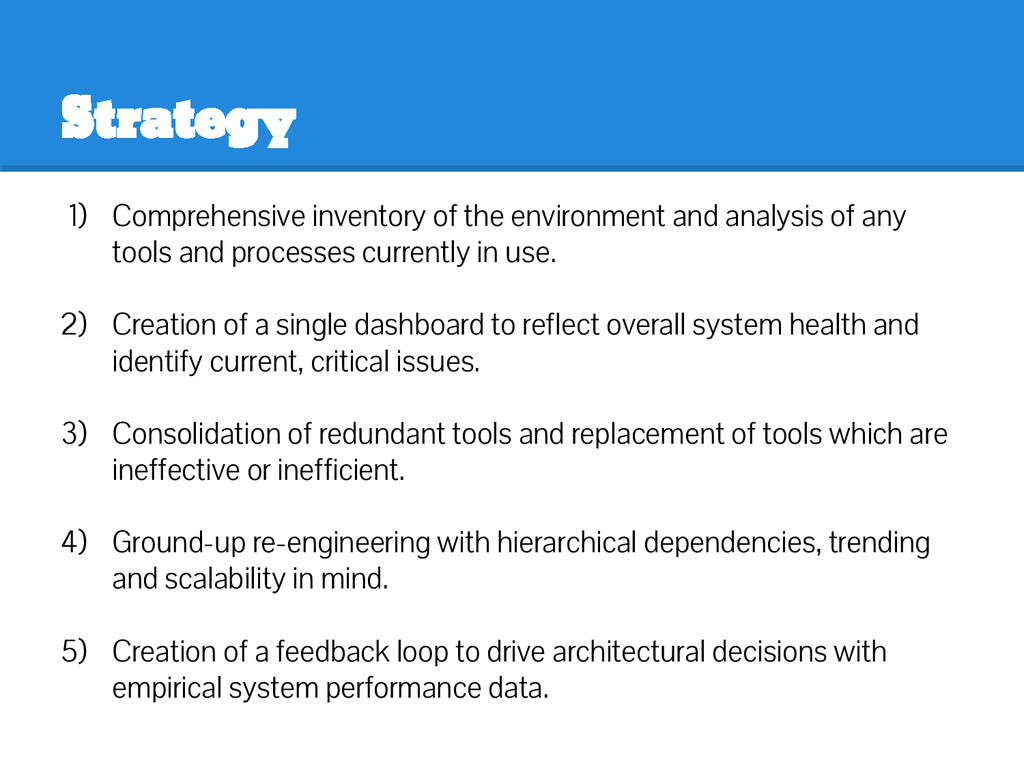
any tools and processes currently in use. 2) Creation of a single dashboard to reflect overall system health and identify current, critical issues. 3) Consolidation of redundant tools and replacement of tools which are ineffective or inefficient. 4) Ground-up re-engineering with hierarchical dependencies, trending and scalability in mind. 5) Creation of a feedback loop to drive architectural decisions with empirical system performance data.
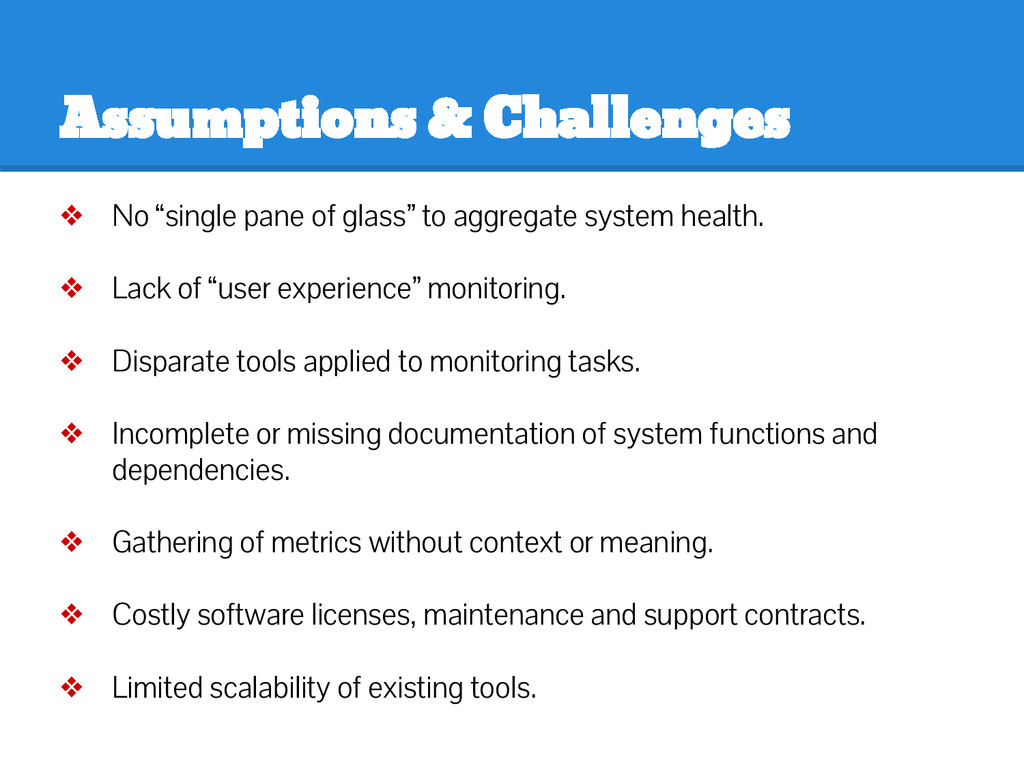
❖ Lack of “user experience” monitoring. ❖ Disparate tools applied to monitoring tasks. ❖ Incomplete or missing documentation of system functions and dependencies. ❖ Gathering of metrics without context or meaning. ❖ Costly software licenses, maintenance and support contracts. ❖ Limited scalability of existing tools. Assumptions & Challenges
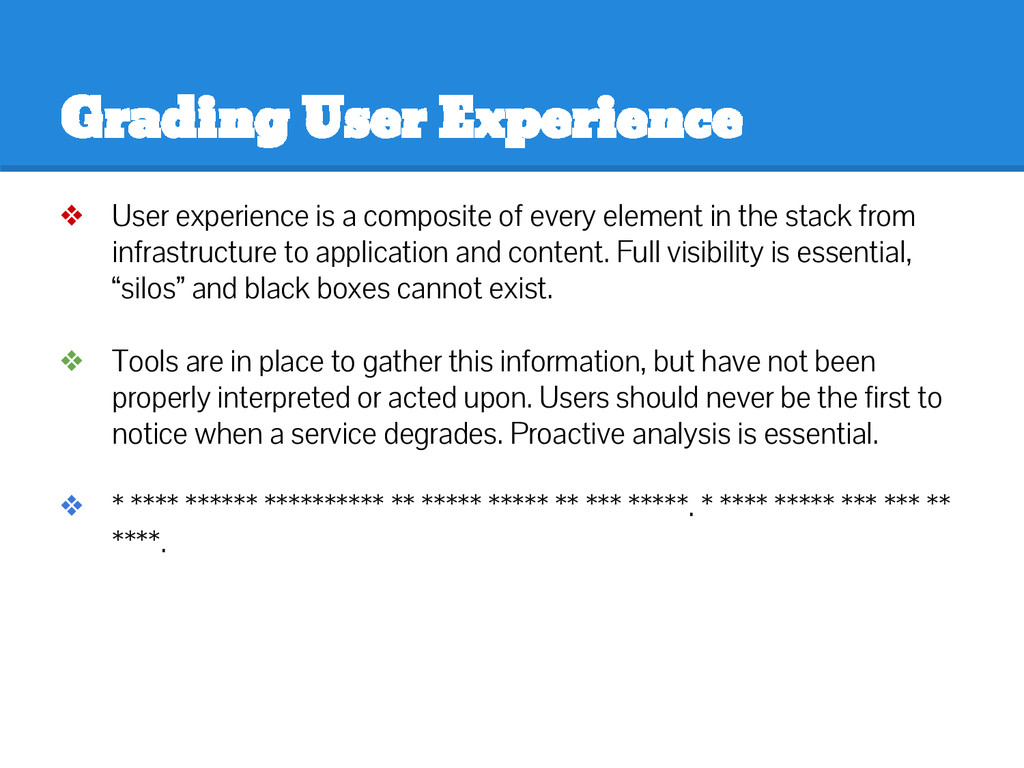
every element in the stack from infrastructure to application and content. Full visibility is essential, “silos” and black boxes cannot exist. ❖ Tools are in place to gather this information, but have not been properly interpreted or acted upon. Users should never be the first to notice when a service degrades. Proactive analysis is essential. ❖ * **** ****** ********** ** ***** ***** ** *** *****. * **** ***** *** *** ** ****.
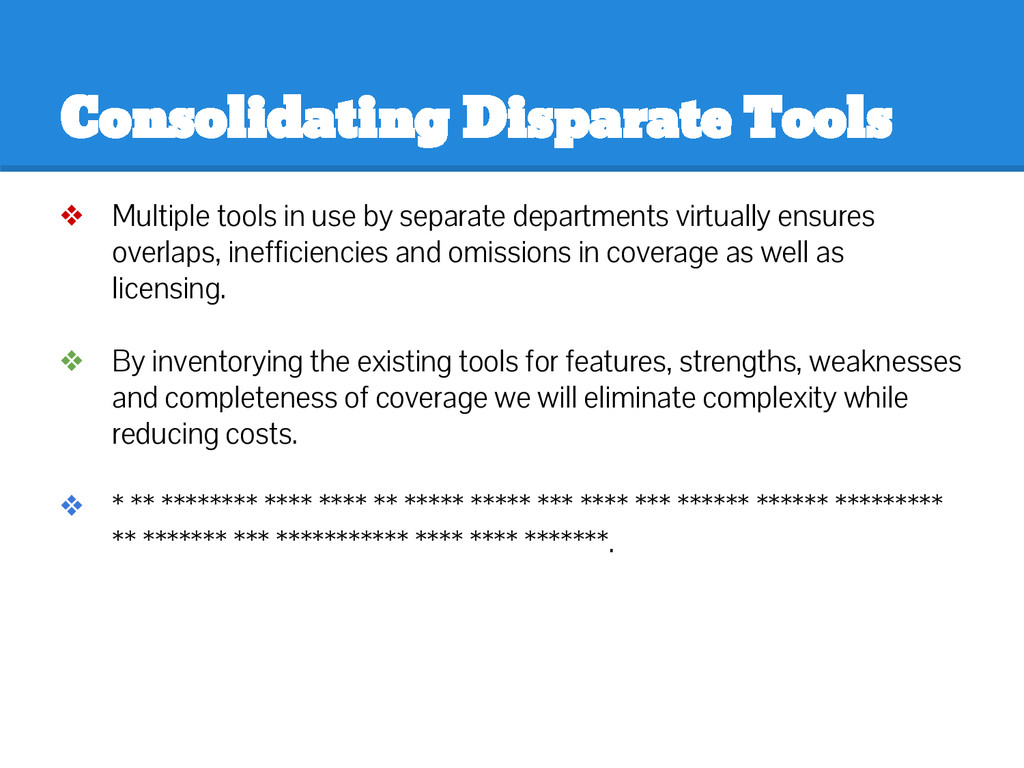
departments virtually ensures overlaps, inefficiencies and omissions in coverage as well as licensing. ❖ By inventorying the existing tools for features, strengths, weaknesses and completeness of coverage we will eliminate complexity while reducing costs. ❖ * ** ******** **** **** ** ***** ***** *** **** *** ****** ****** ********* ** ******* *** *********** **** **** *******.
and users of systems and absence of baseline performance stats ensure that every exercise in troubleshooting must reinvent the wheel. This issue is bigger than monitoring, ** *** ********* ** ******* ***** ******** **** ** *** *** **********. ❖ Documentation is essential, it must be created, derived from existing systems if necessary. ❖ * **** *** ************ ********** *** *********** ** ****** **** *******.
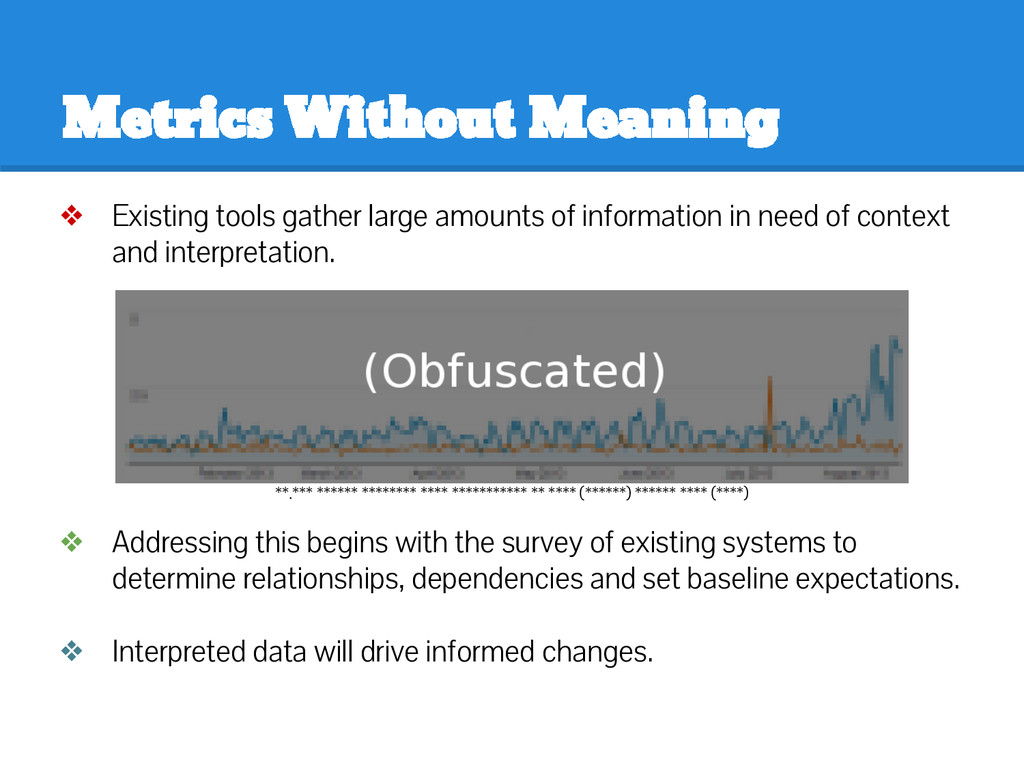
information in need of context and interpretation. **.*** ****** ******** **** *********** ** **** (******) ****** **** (****) ❖ Addressing this begins with the survey of existing systems to determine relationships, dependencies and set baseline expectations. ❖ Interpreted data will drive informed changes.
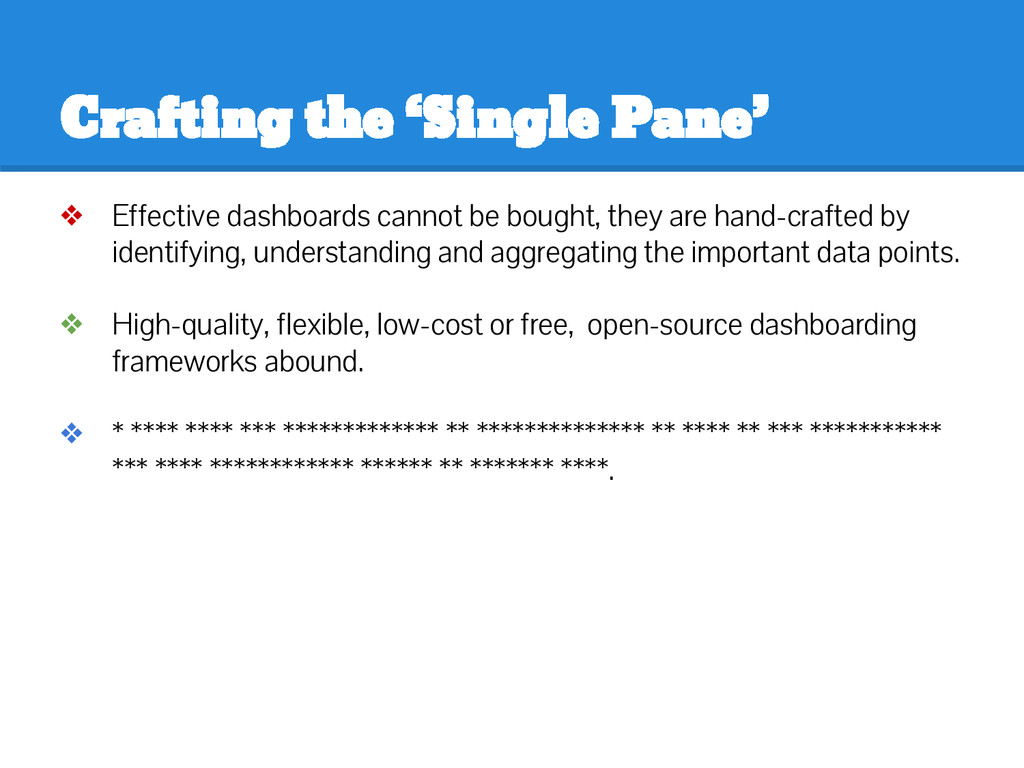
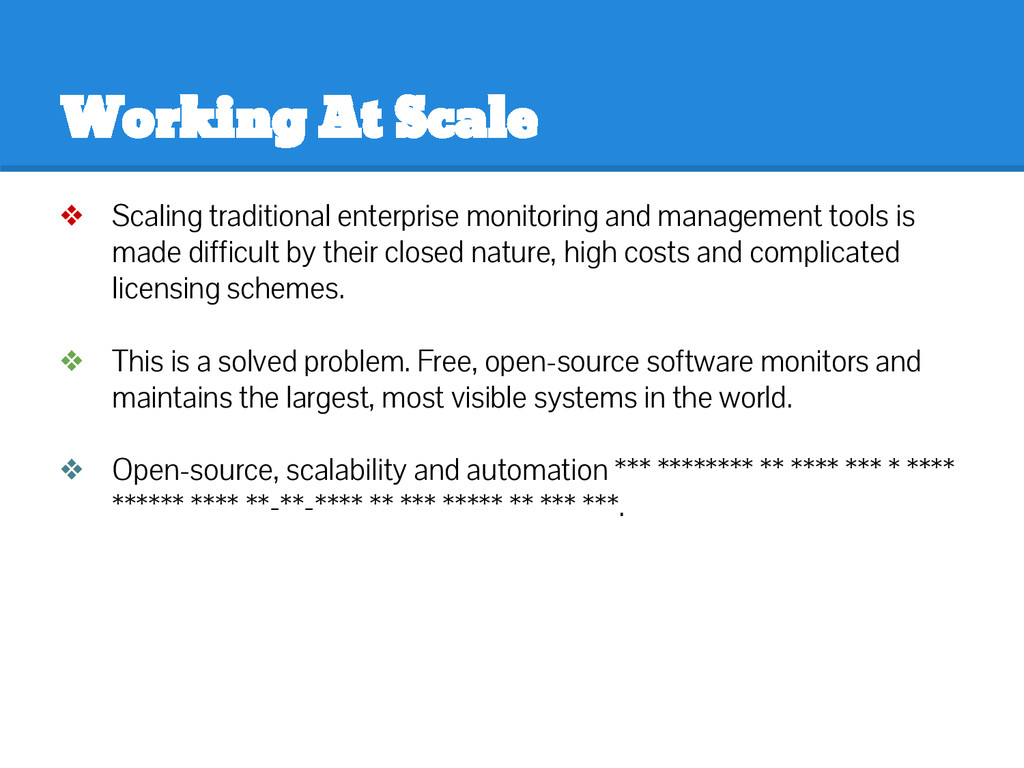
tools is made difficult by their closed nature, high costs and complicated licensing schemes. ❖ This is a solved problem. Free, open-source software monitors and maintains the largest, most visible systems in the world. ❖ Open-source, scalability and automation *** ******** ** **** *** * **** ****** **** **-**-**** ** *** ***** ** *** ***.


 teamlab
 prog893
 willnet
 syuchimu
 makocchi
 pfn
 onk
 carta_engineering
 masakiokuda
 ykanoh
 greenmidori
 lynnandtonic
 erikaheidi
 brettharned
 pedronauck
 scottboms
 katarinadahlin
 tonyrice
 davetheseo
 eileencodes
 destraynor
 keithpitt
 soudai