Upgrade to Pro — share decks privately, control downloads, hide ads and more …

It (only) start with a container

Sponsored · SiteGround - Reliable hosting with speed, security, and support you can count on.

It (only) start with a container

So you've got your application bundled up in the container, great! The fun is not over though, getting it to production is where more choices and complexity are waiting! Should I use Helm? ArgoCD? Terraform? Anything else?

This talk explores the deployment abstraction spectrum from handcrafted YAML and Helm templates, over GitOps and Infrastructure as Code approaches up to developer portals. Each of those give different levels of control and development comfort and we'll compare those to give you a pros and cons and help you choose the right deployment approach for your needs.

See the companion source code at https://github.com/pdudits/talk-containers

Avatar for Patrik Duditš

Patrik Duditš

April 23, 2026

More Decks by Patrik Duditš

Other Decks in Programming

Transcript

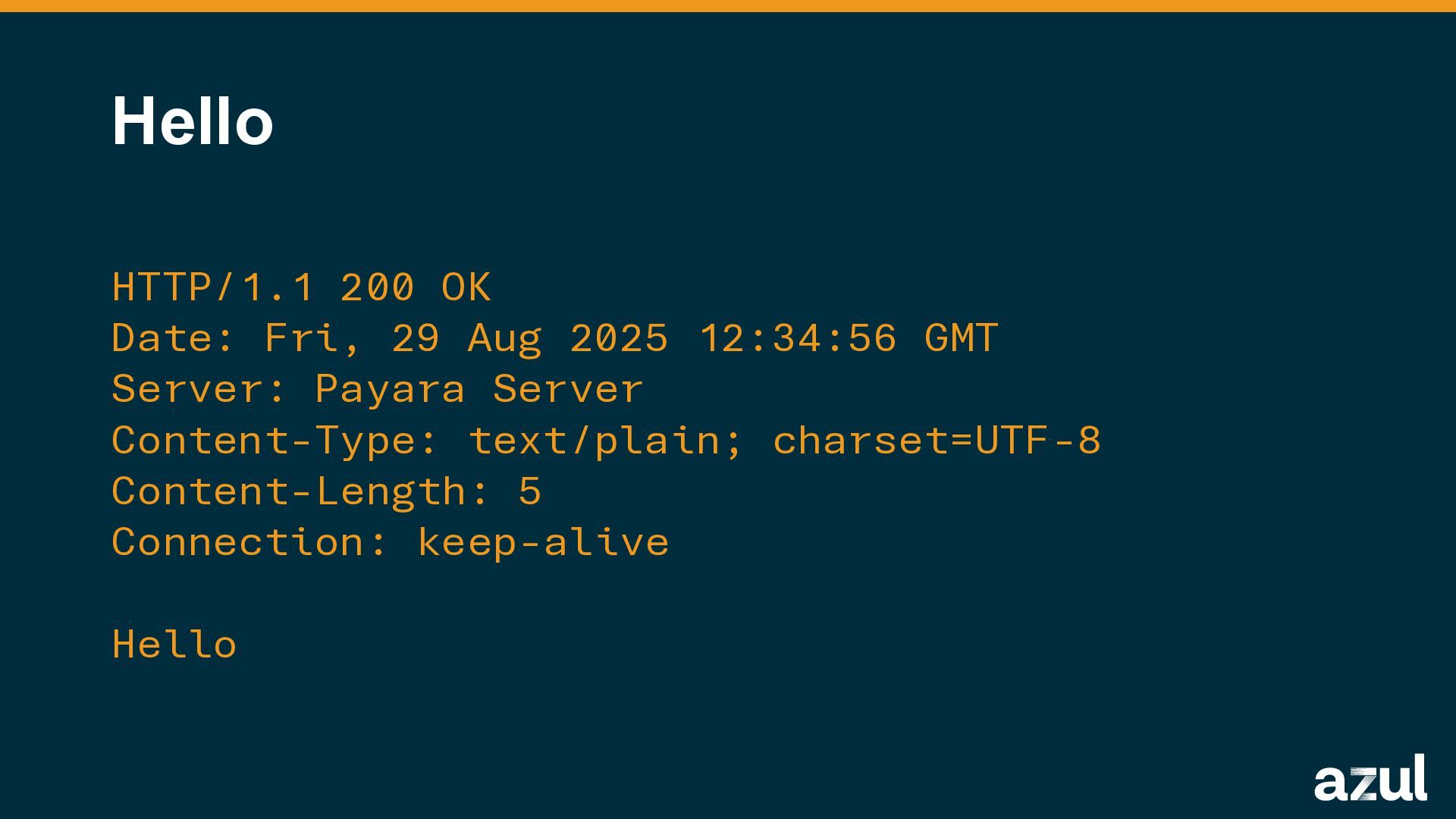
  1. Hello HTTP/1.1 200 OK Date: Fri, 29 Aug 2025 12:34:56

    GMT Server: Payara Server Content-Type: text/plain; charset=UTF-8 Content-Length: 5 Connection: keep-alive Hello
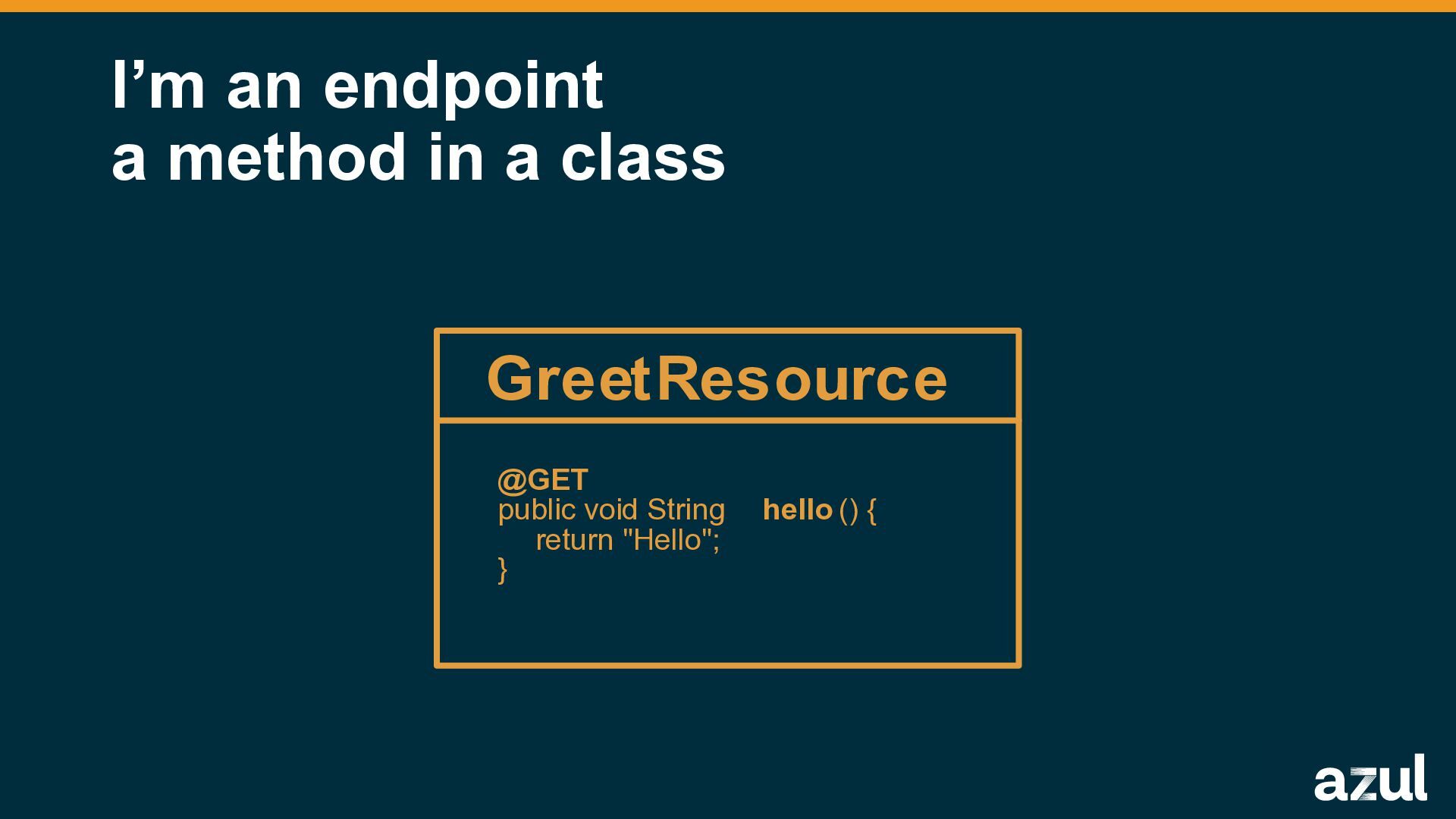
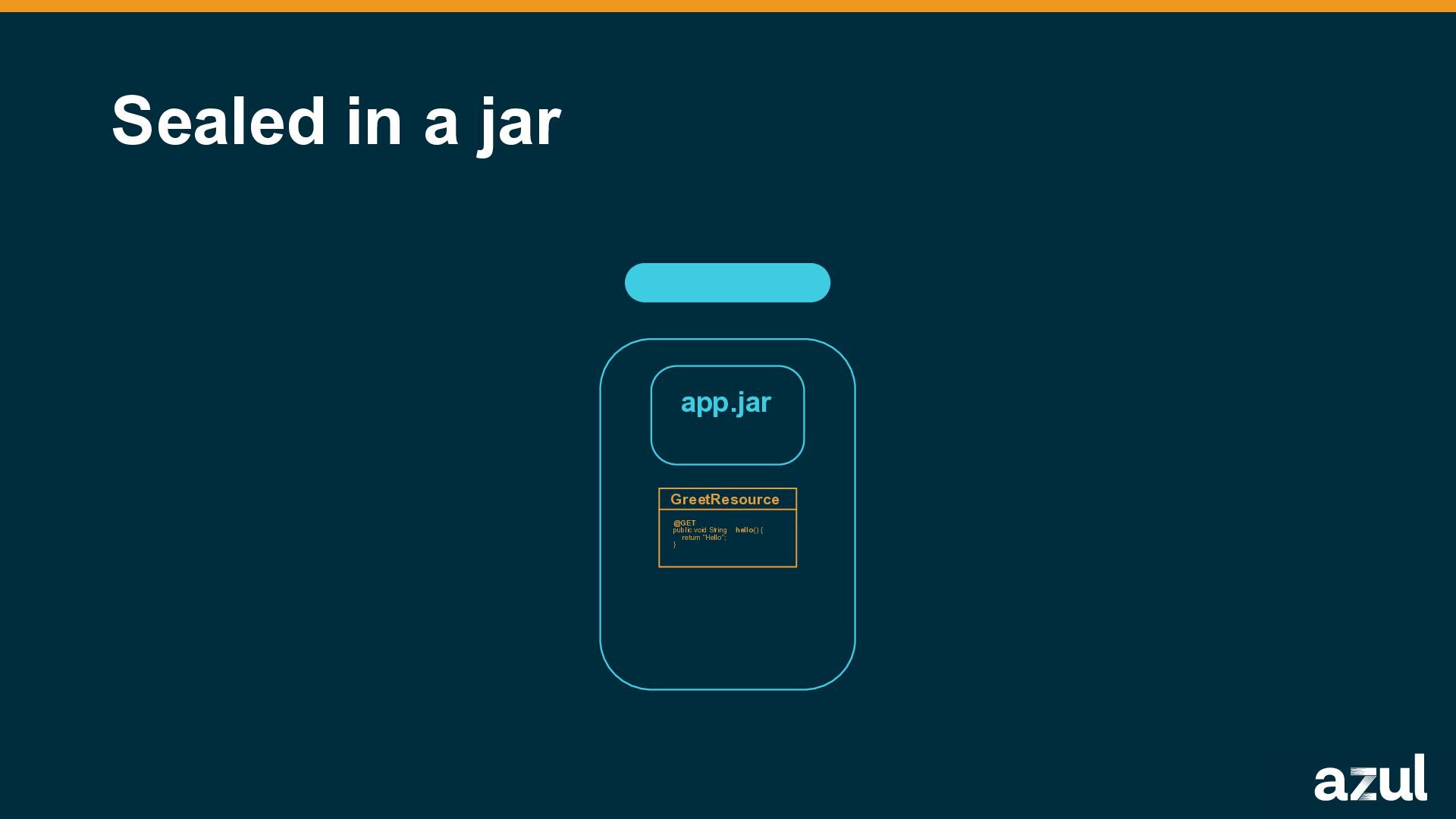
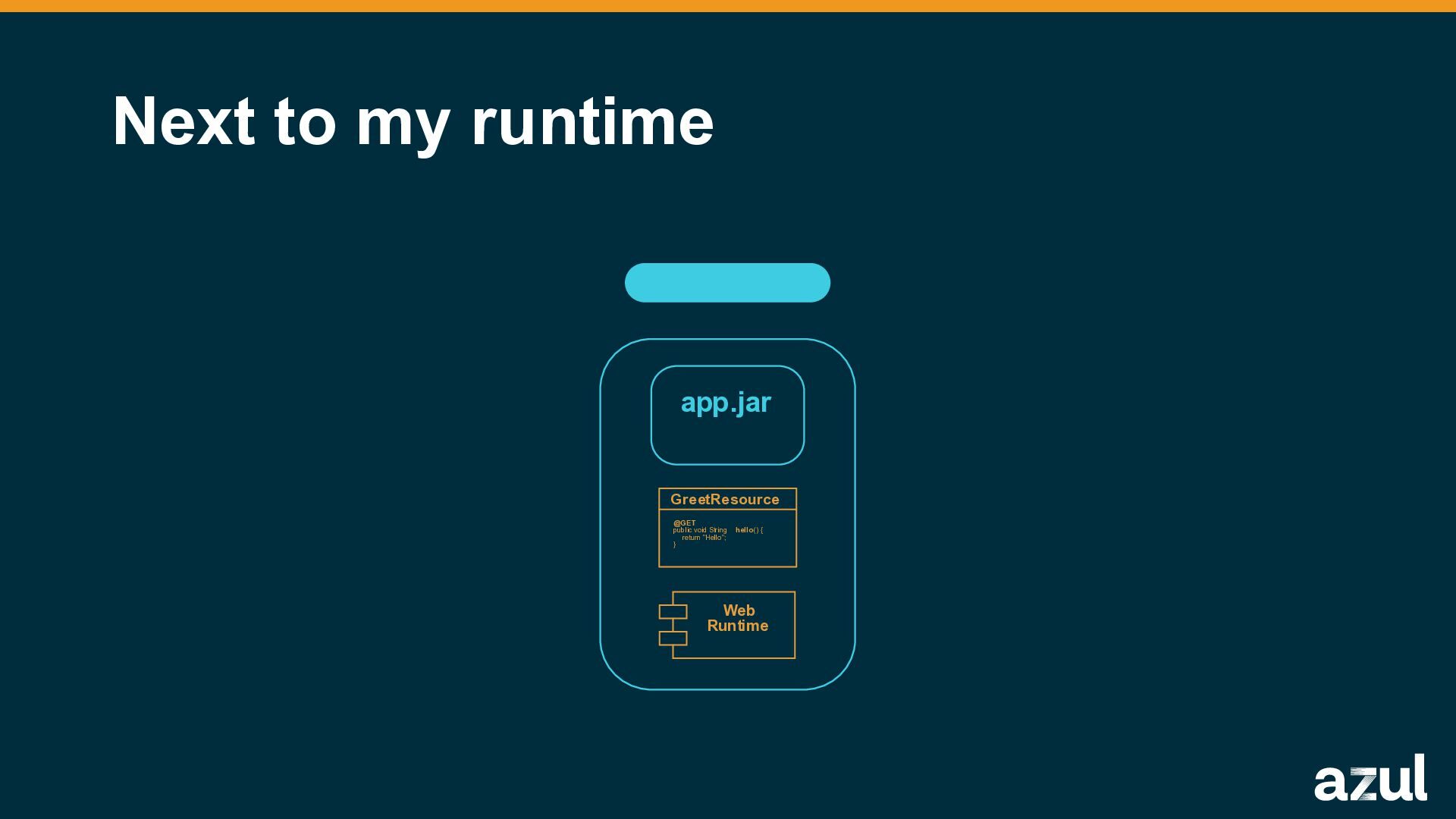
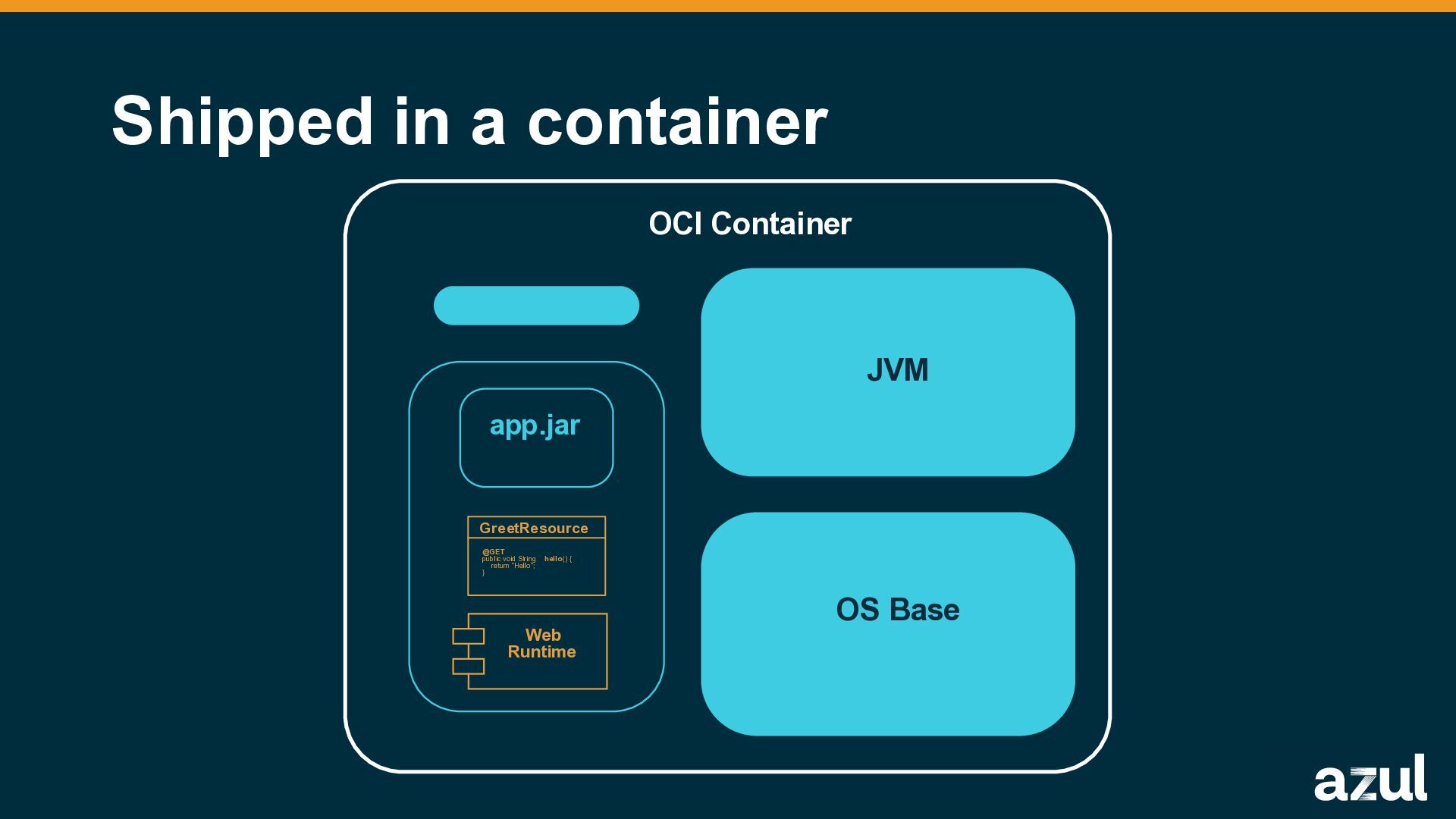
  2. The journey starts Hello. I’m an endpoint. A method in

    a class. Sealed in a jar next to my runtime; Shipped in a container.
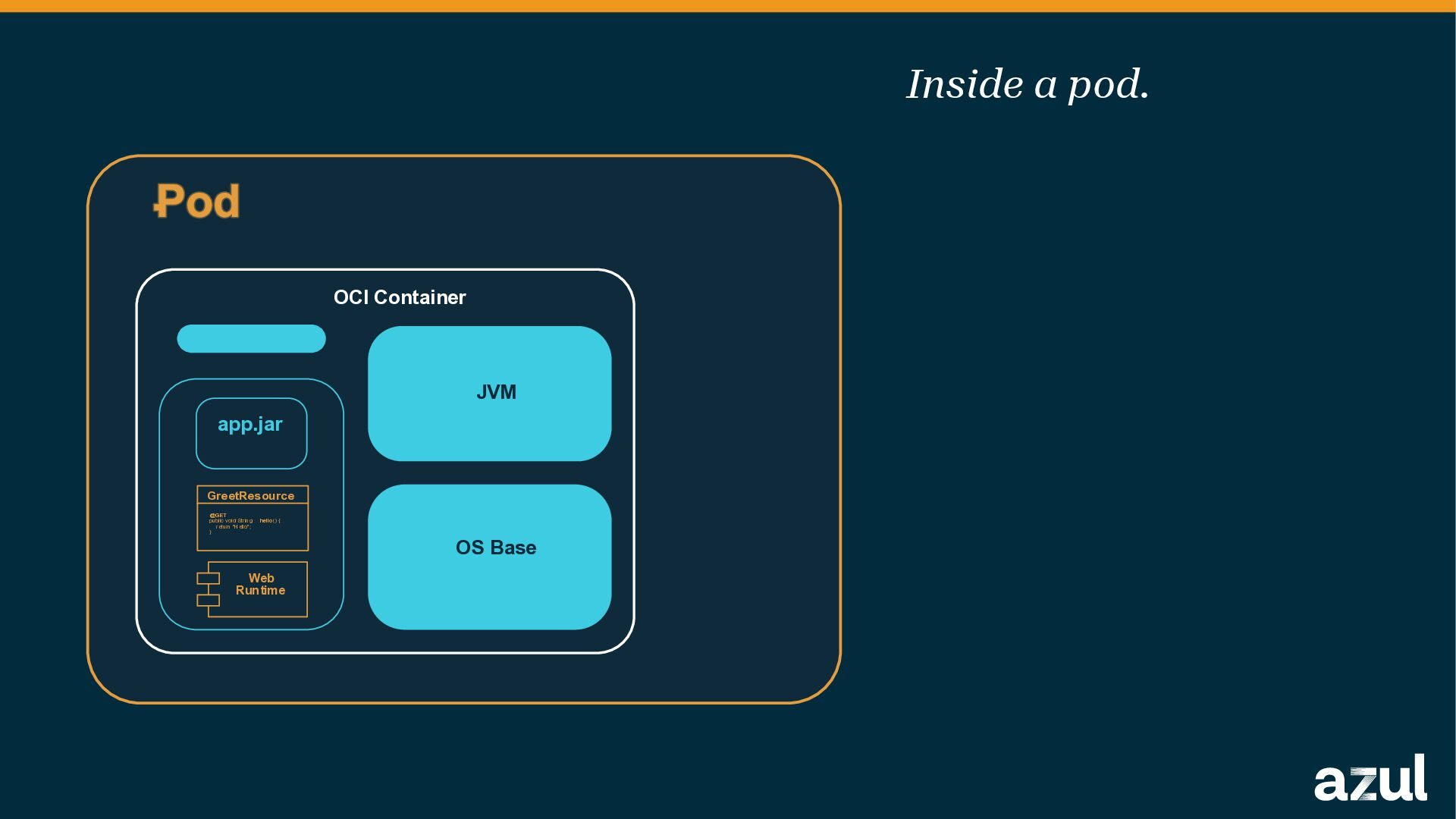
  3. Inside a pod. e o reet e our e e

    untime app ar a e I ontainer
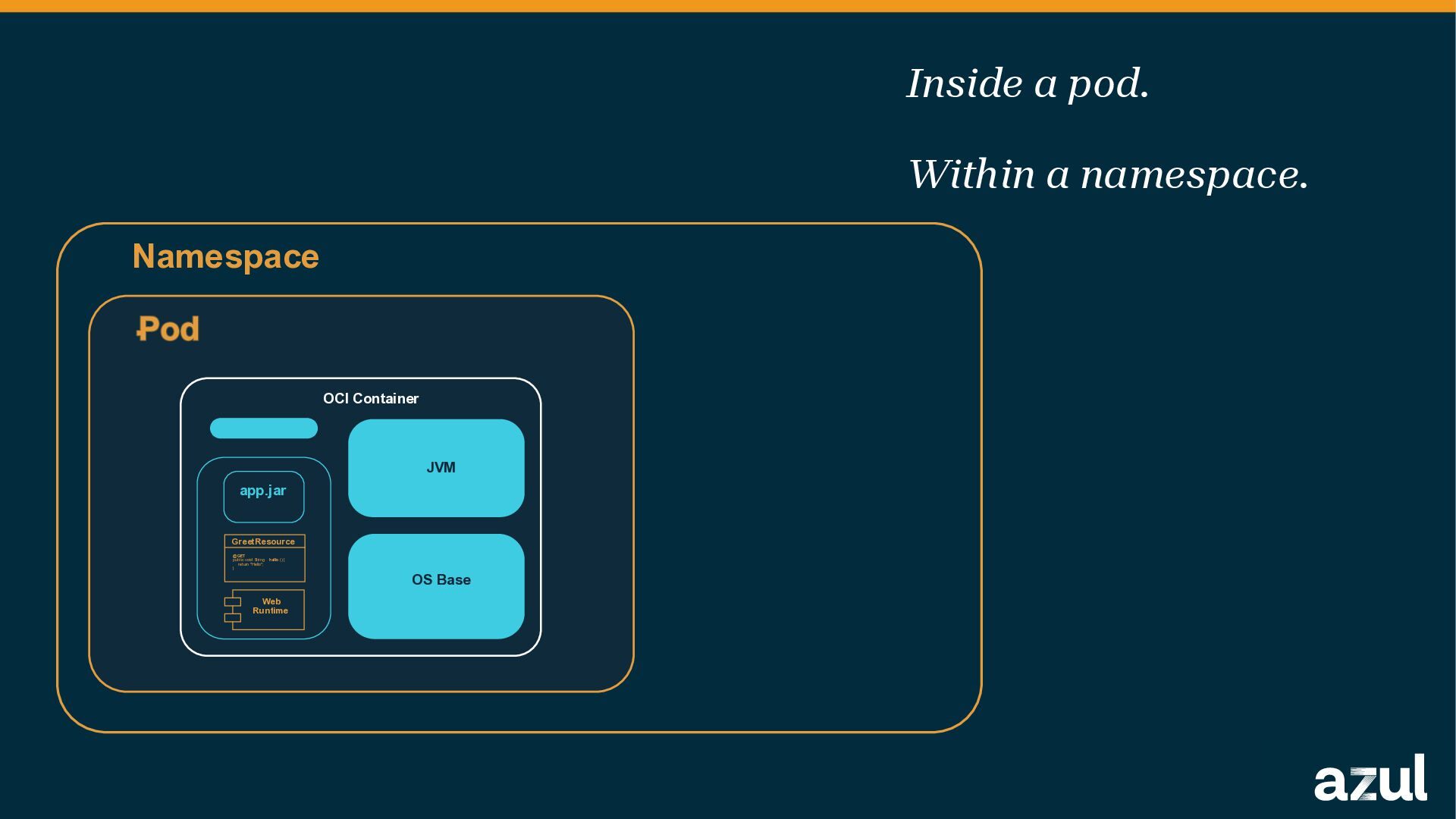
  4. ame pa e Inside a pod. Within a namespace. e

    o reet e our e e untime app ar a e I ontainer
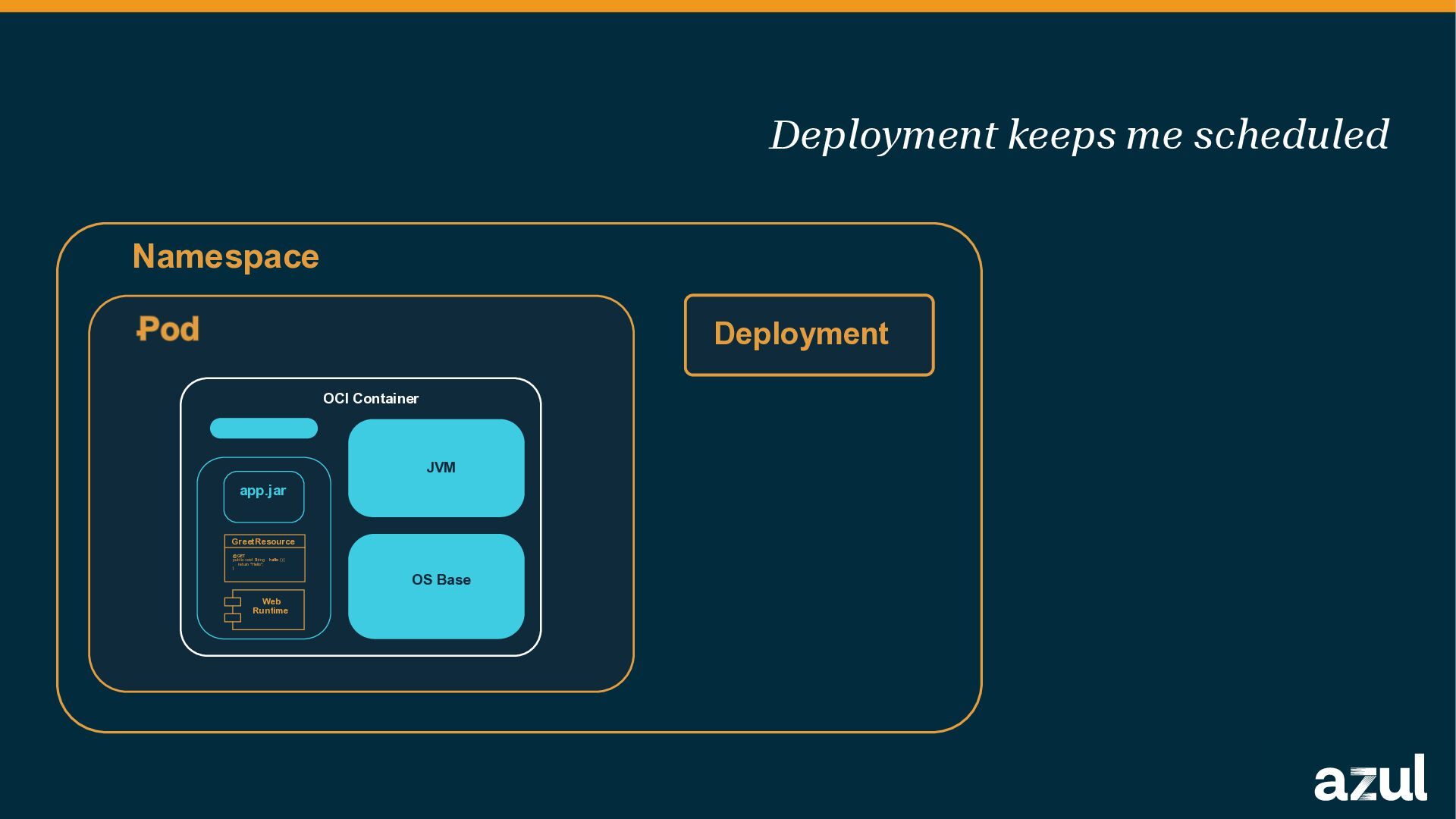
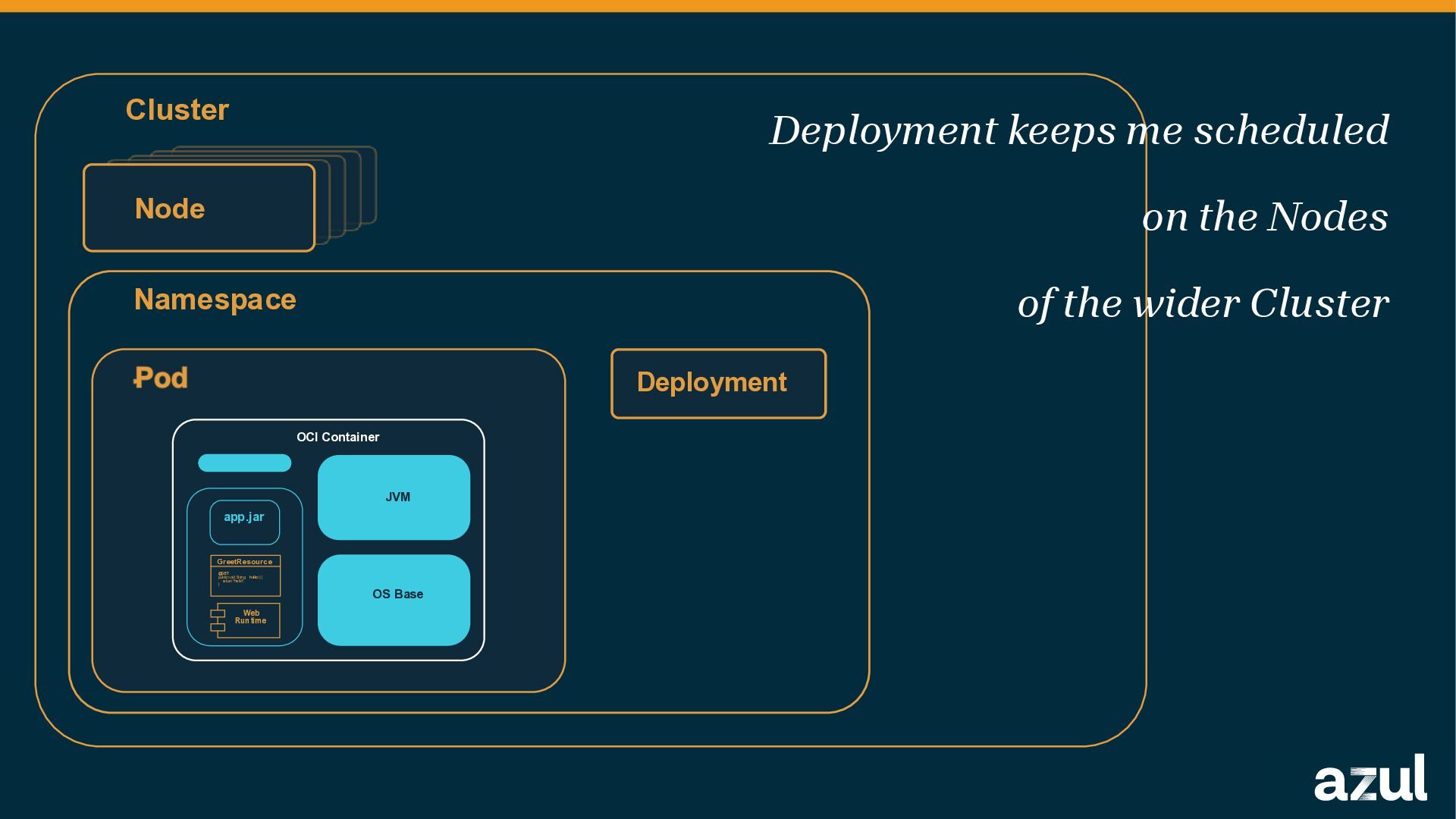
  5. Deployment keeps me scheduled ame pa e e o reet

    e our e e untime app ar a e I ontainer Dep o ment
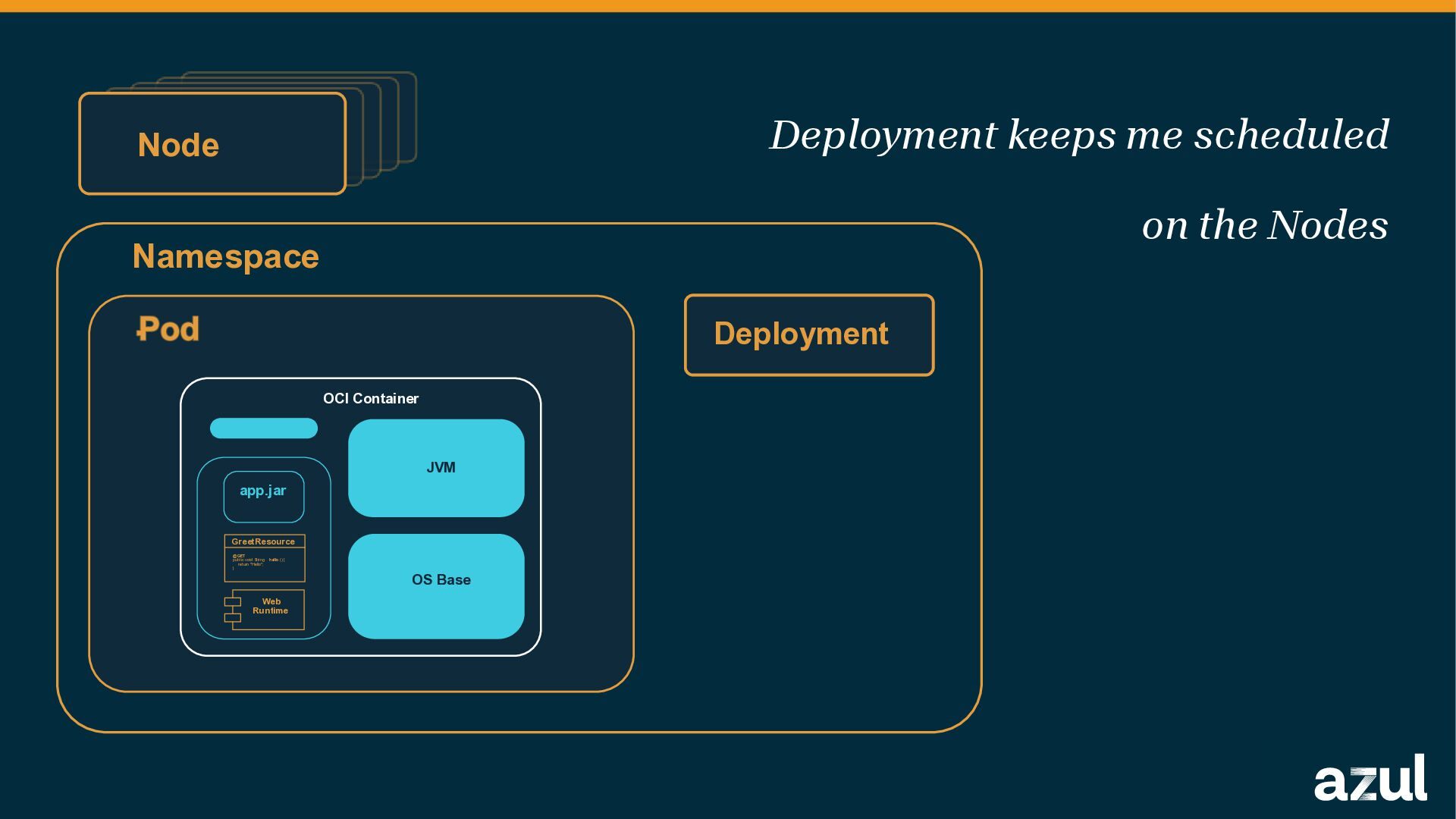
  6. Deployment keeps me scheduled on the Nodes ame pa e
    e o reet e our e e untime app ar a e I ontainer Dep o ment ode
  7. u ter Deployment keeps me scheduled on the Nodes of
    the wider Cluster ame pa e e o reet e our e e untime app ar a e I ontainer Dep o ment ode
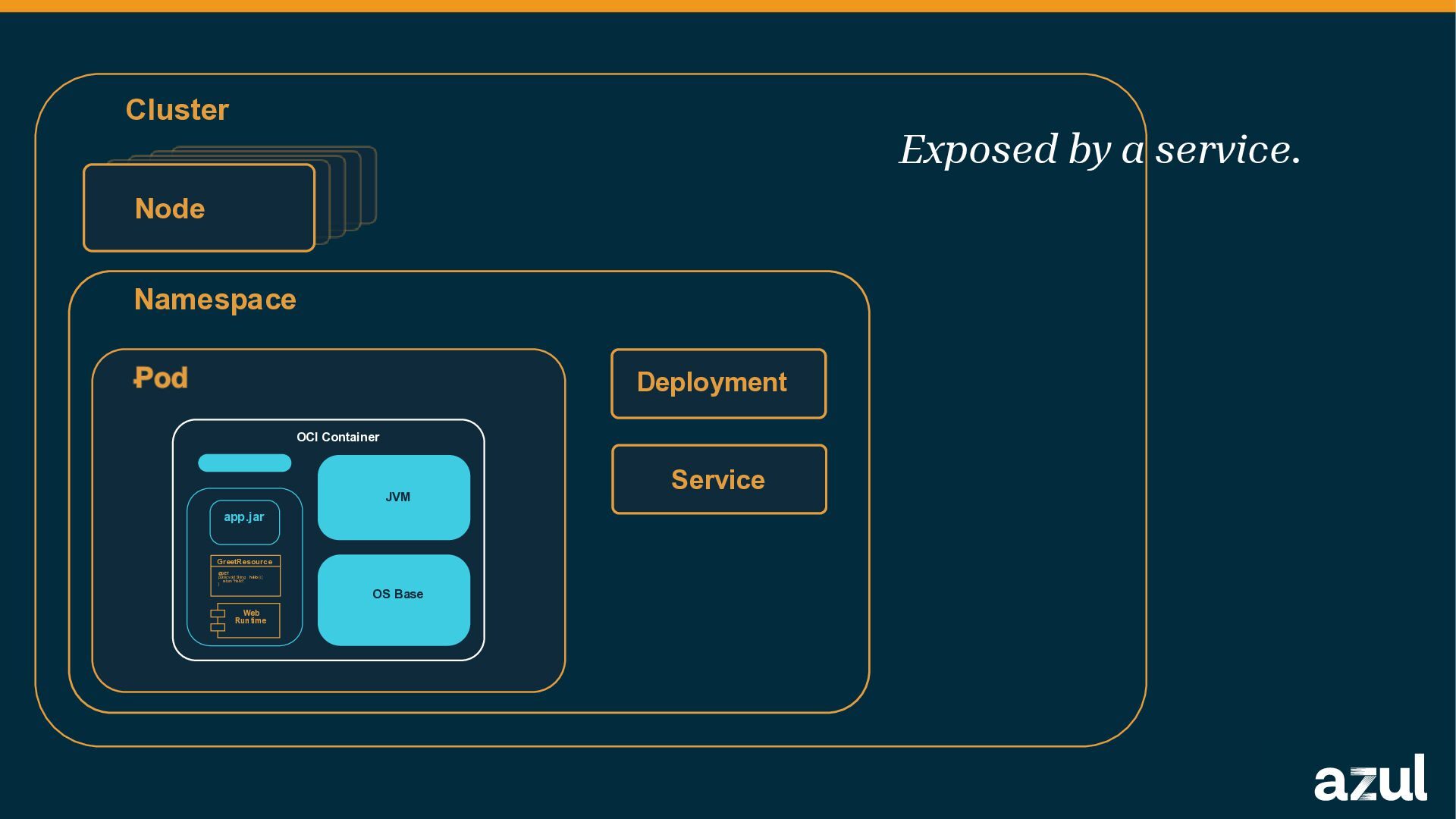
  8. Exposed by a service. u ter ame pa e e

    o reet e our e e untime app ar a e I ontainer Dep o ment ode er i e
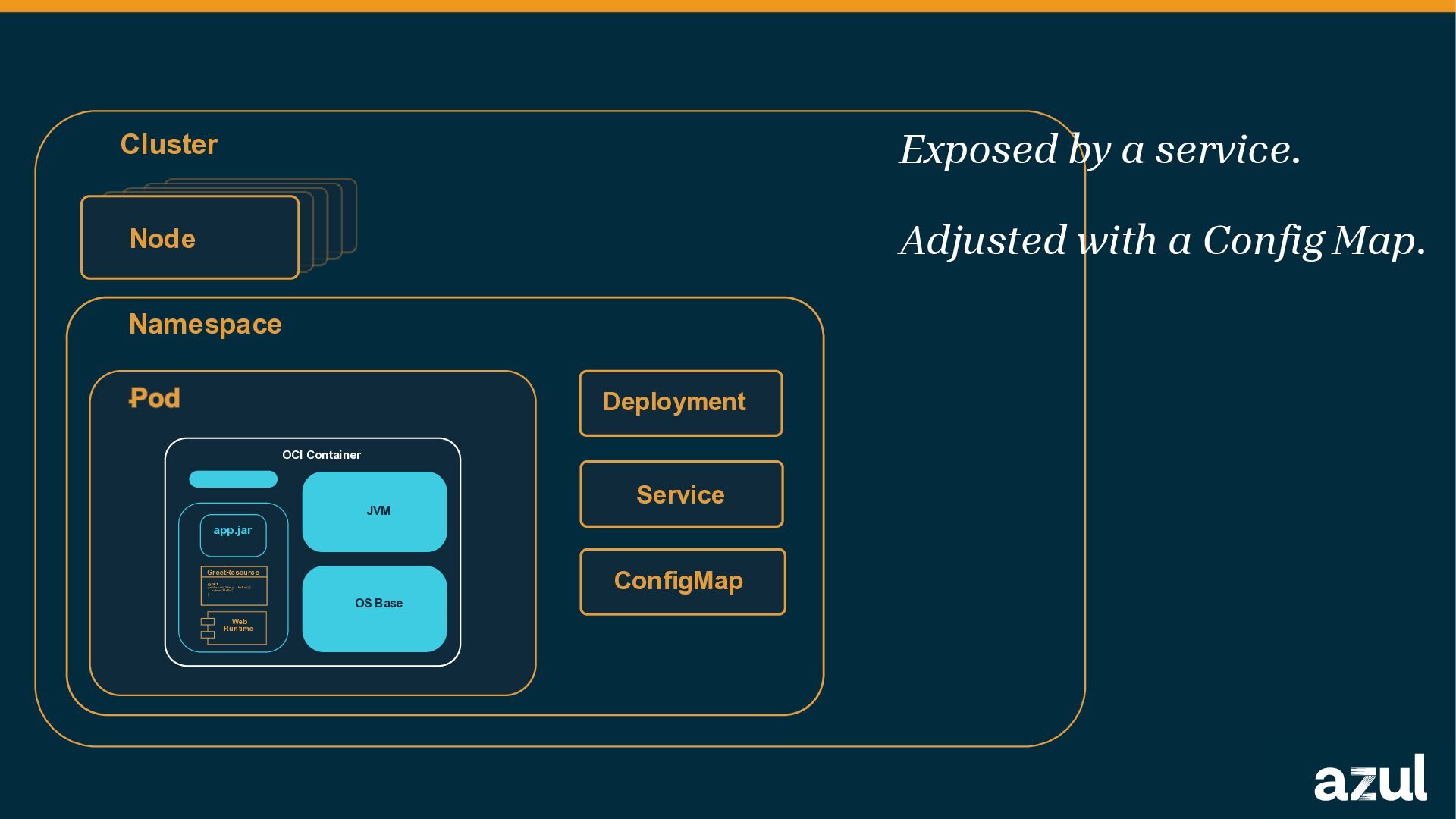
  9. u ter ame pa e e o reet e our

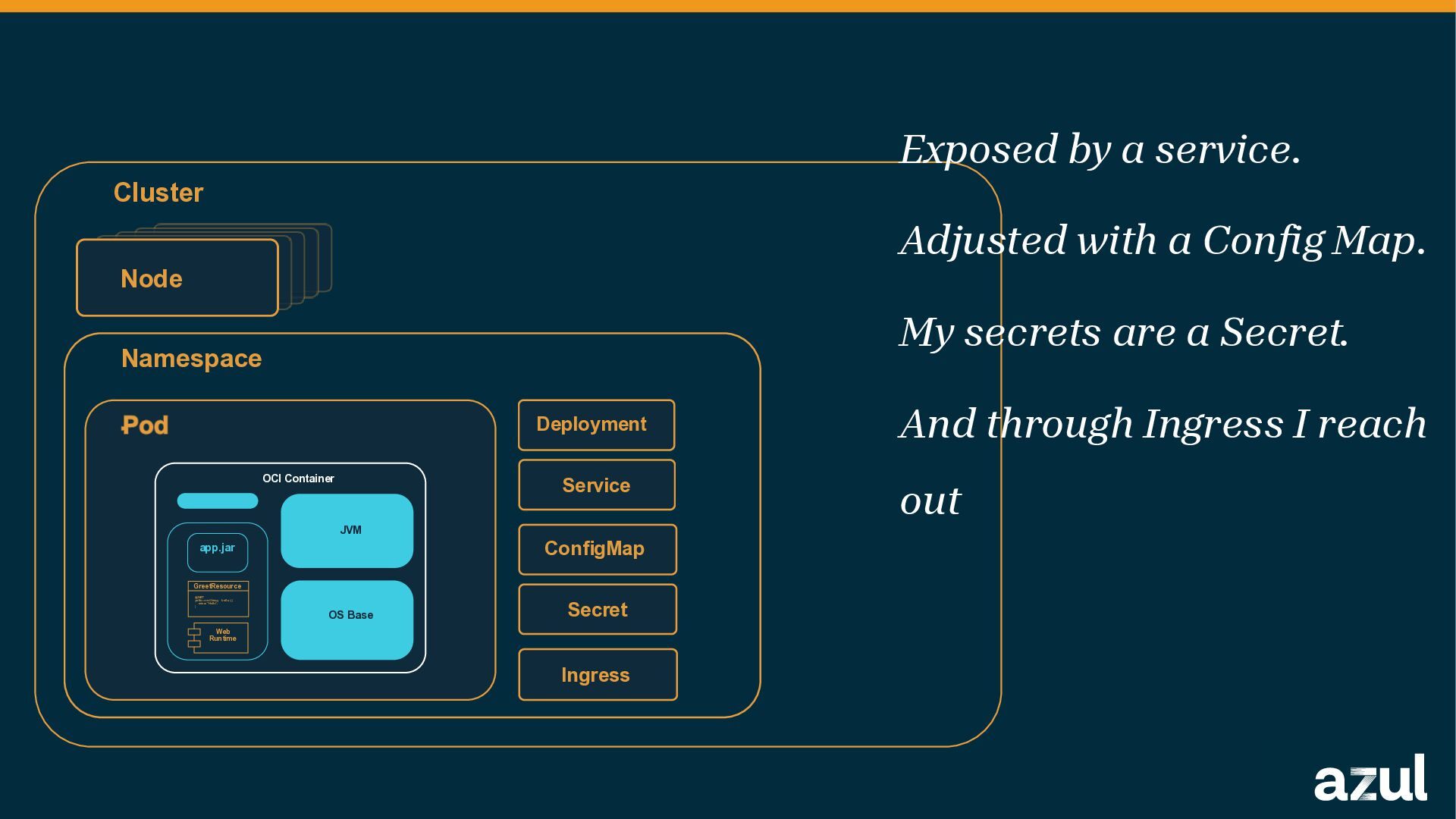
    e e untime app ar a e I ontainer Dep o ment ode er i e on ap Exposed by a service. Adjusted with a Config Map.
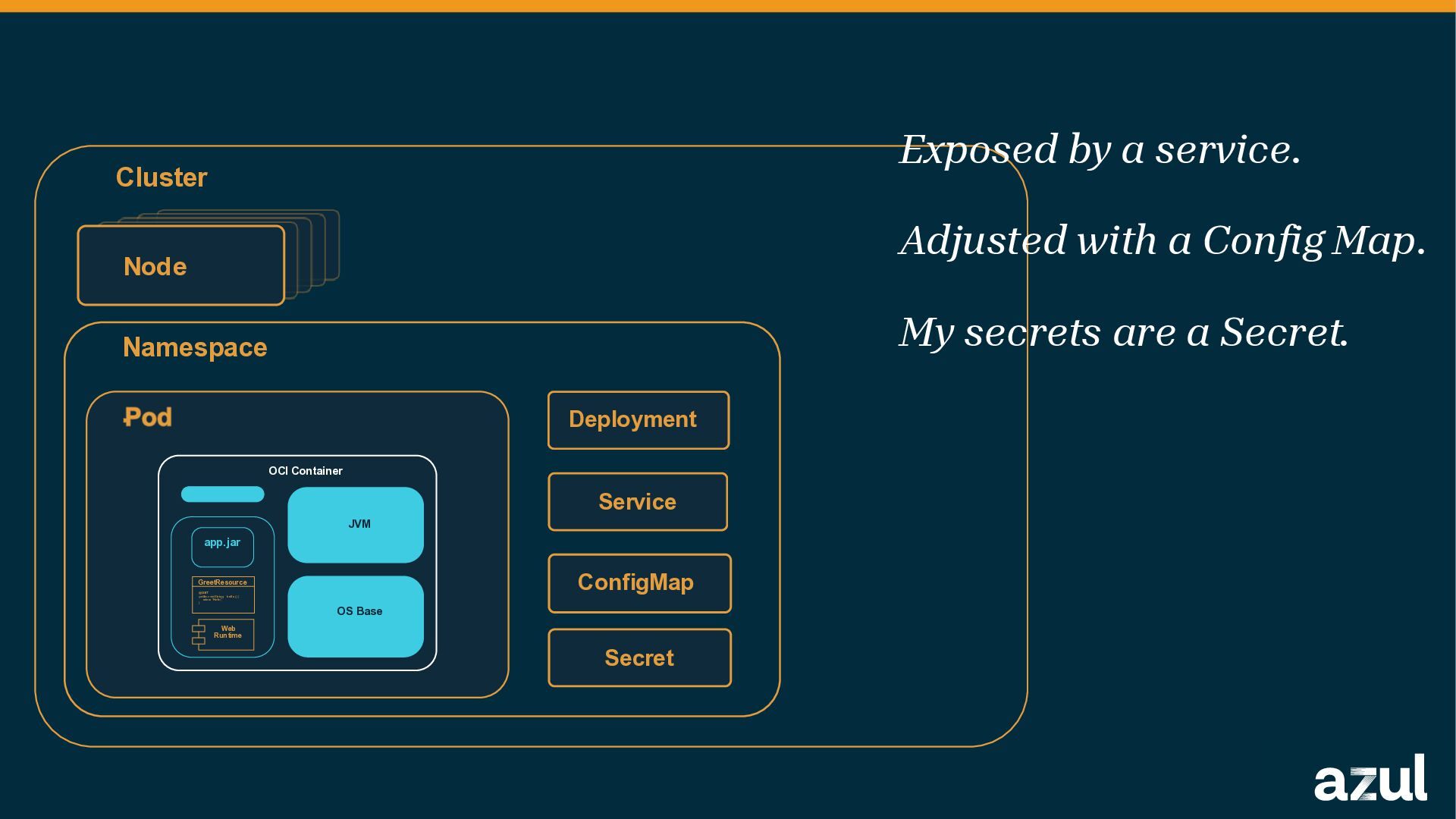
  10. u ter ame pa e e o reet e our

    e e untime app ar a e I ontainer Dep o ment ode er i e on ap e ret Exposed by a service. Adjusted with a Config Map. My secrets are a Secret.
  11. u ter ame pa e e o reet e our

    e e untime app ar a e I ontainer Dep o ment ode er i e on ap e ret In re Exposed by a service. Adjusted with a Config Map. My secrets are a Secret. And through Ingress I reach out
  12. u ter ame pa e e o reet e our

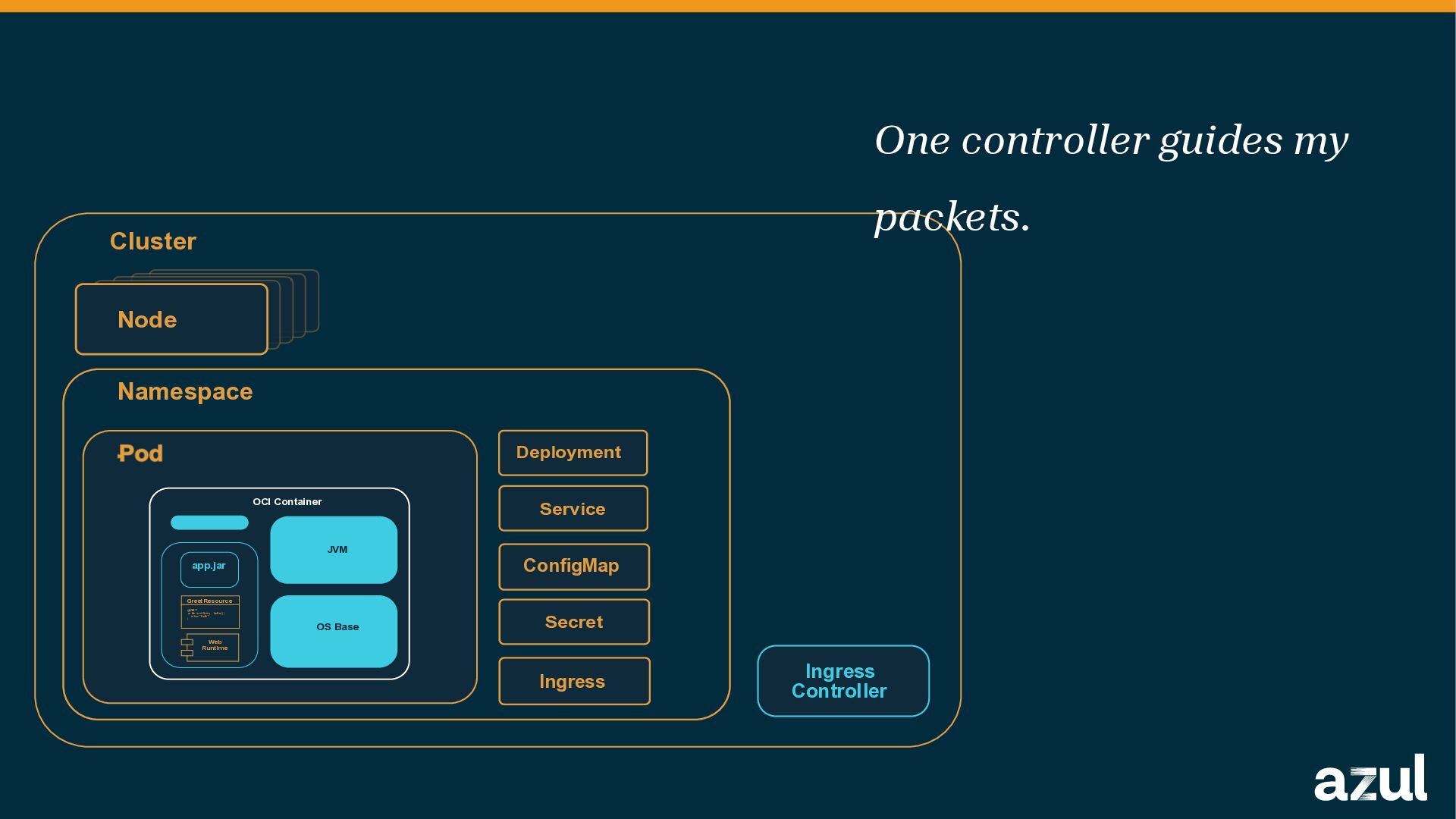
    e e untime app ar a e I ontainer Dep o ment ode er i e on ap e ret In re In re ontro er One controller guides my packets.
  13. u ter ame pa e e o reet e our

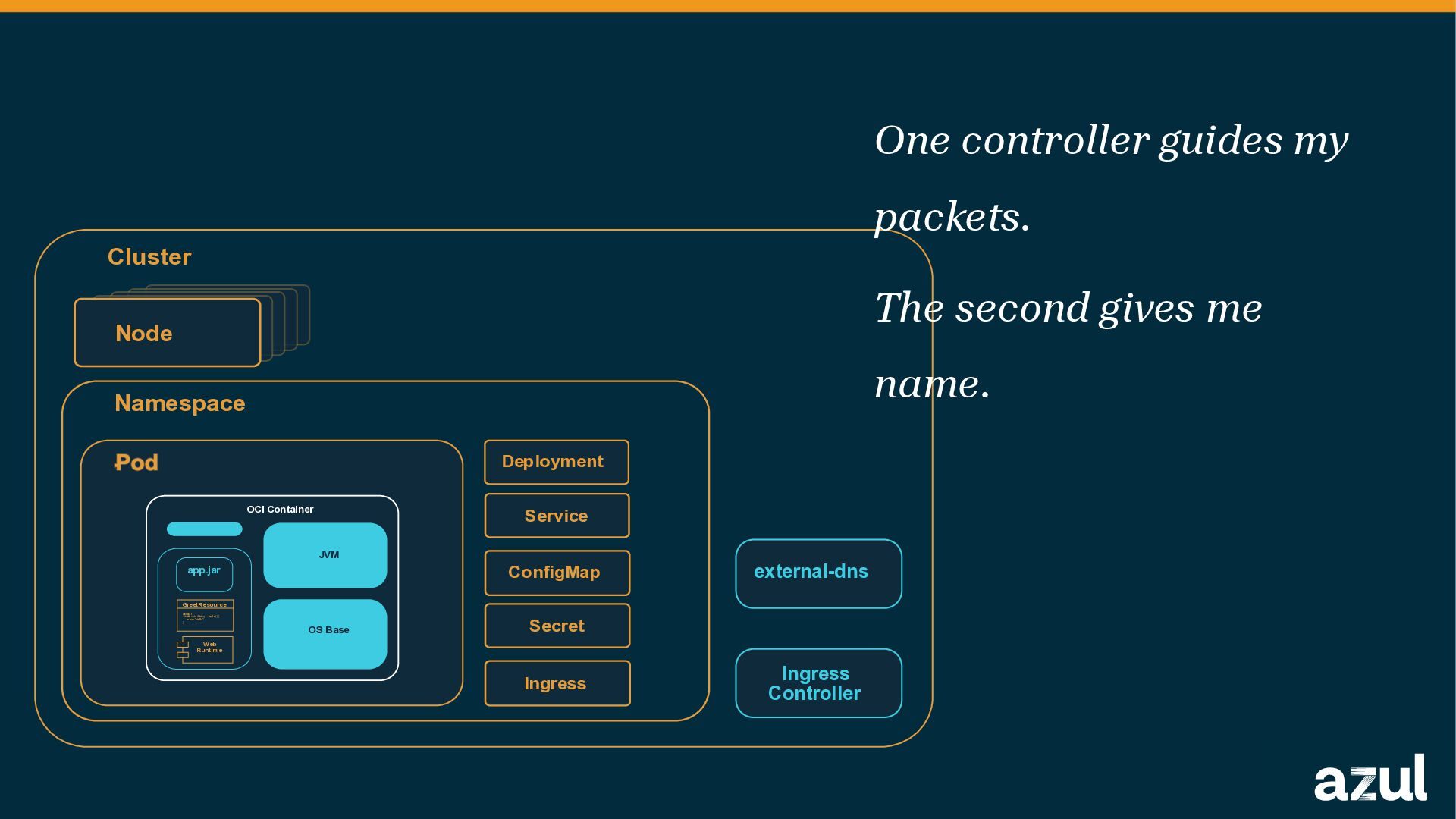
    e e untime app ar a e I ontainer Dep o ment ode er i e on ap e ret In re In re ontro er e terna dn One controller guides my packets. The second gives me name.
  14. u ter ame pa e e o reet e our

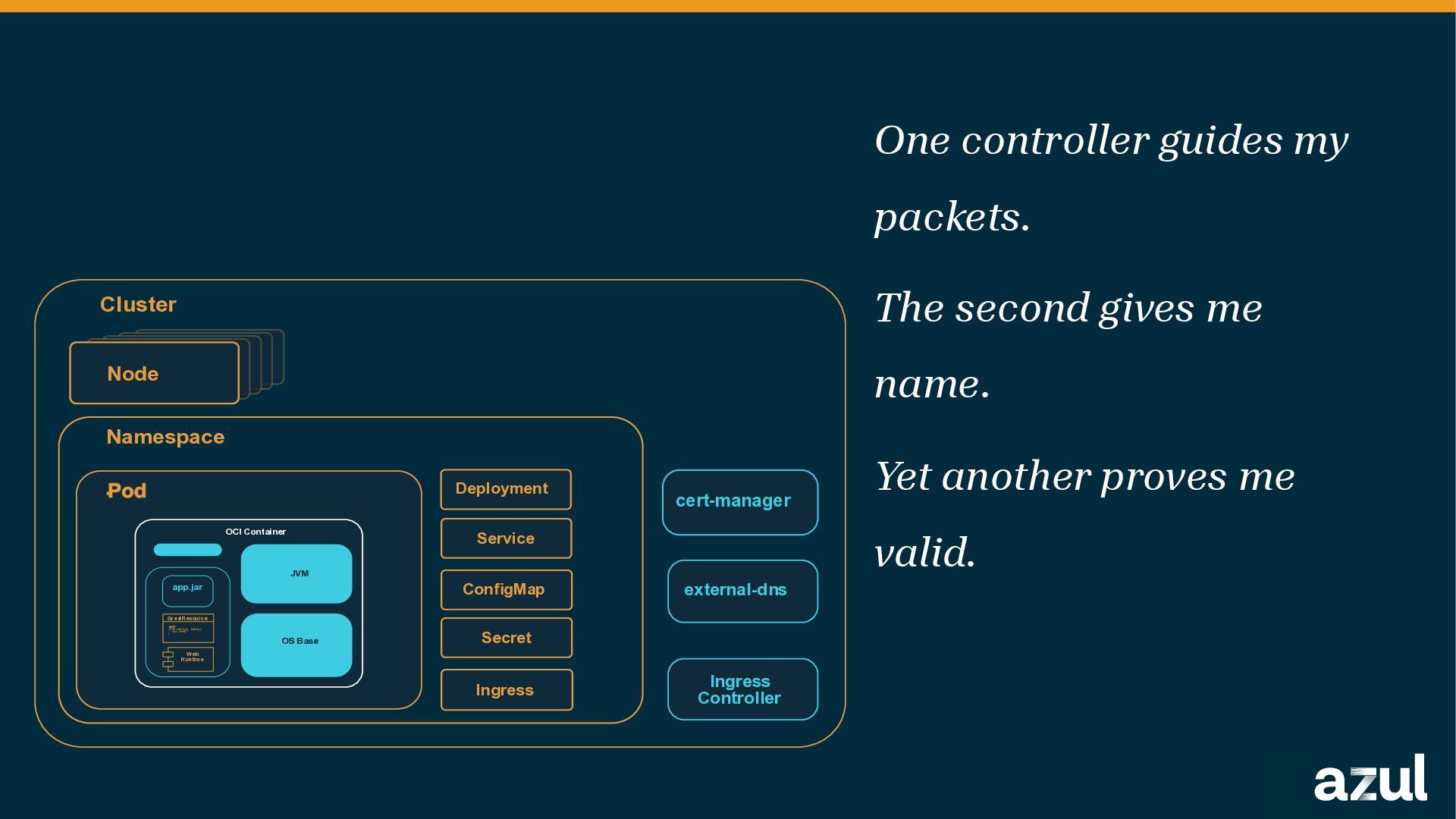
    e e untime app ar a e I ontainer Dep o ment ode er i e on ap e ret In re In re ontro er e terna dn ert mana er One controller guides my packets. The second gives me name. Yet another proves me valid.
  15. u ter ame pa e e o reet e our

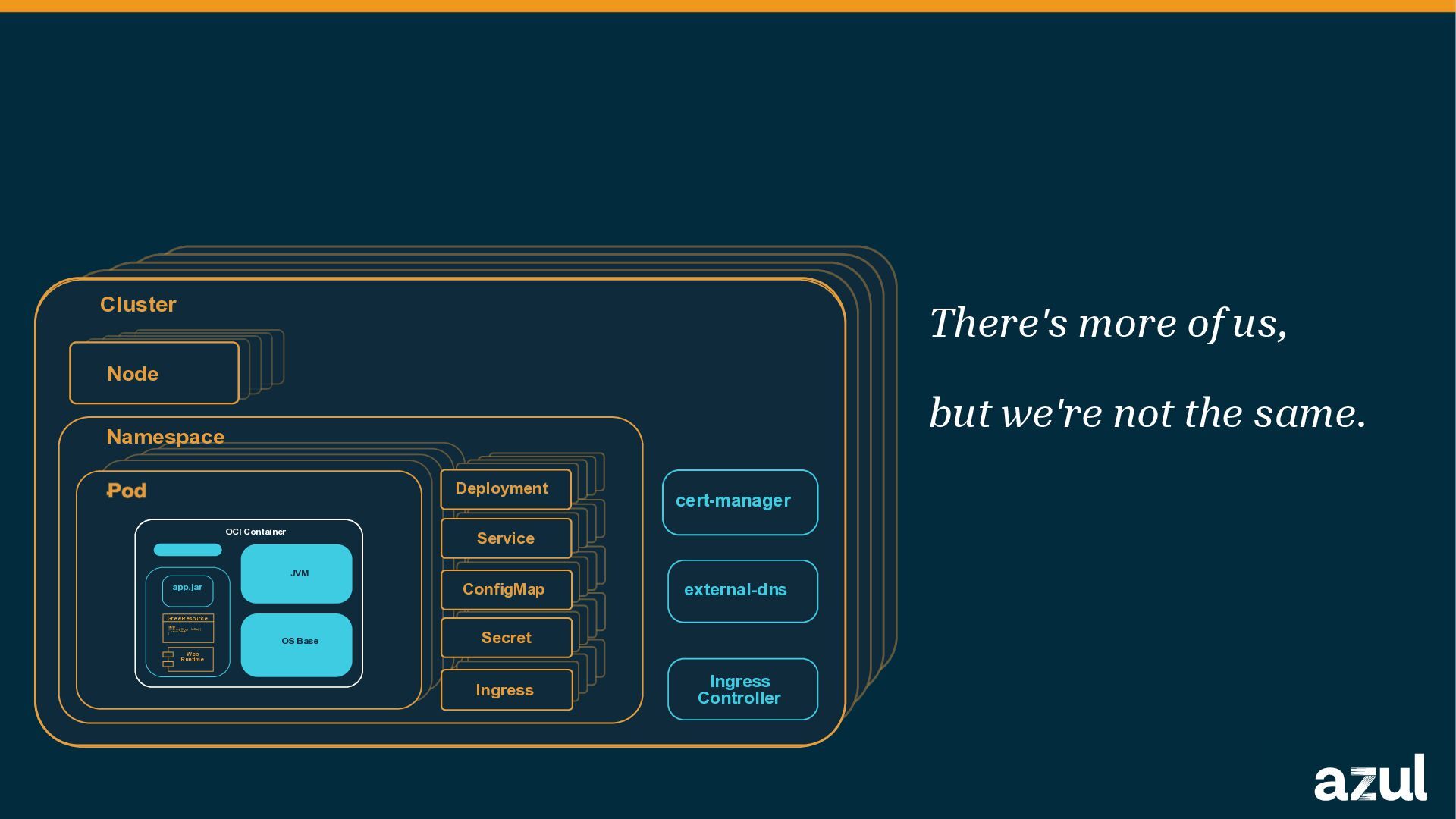
    e e untime app ar a e I ontainer Dep o ment ode er i e on ap e ret In re In re ontro er e terna dn ert mana er There's more of us, but we're not the same.
  16. u ter ame pa e e o reet e our

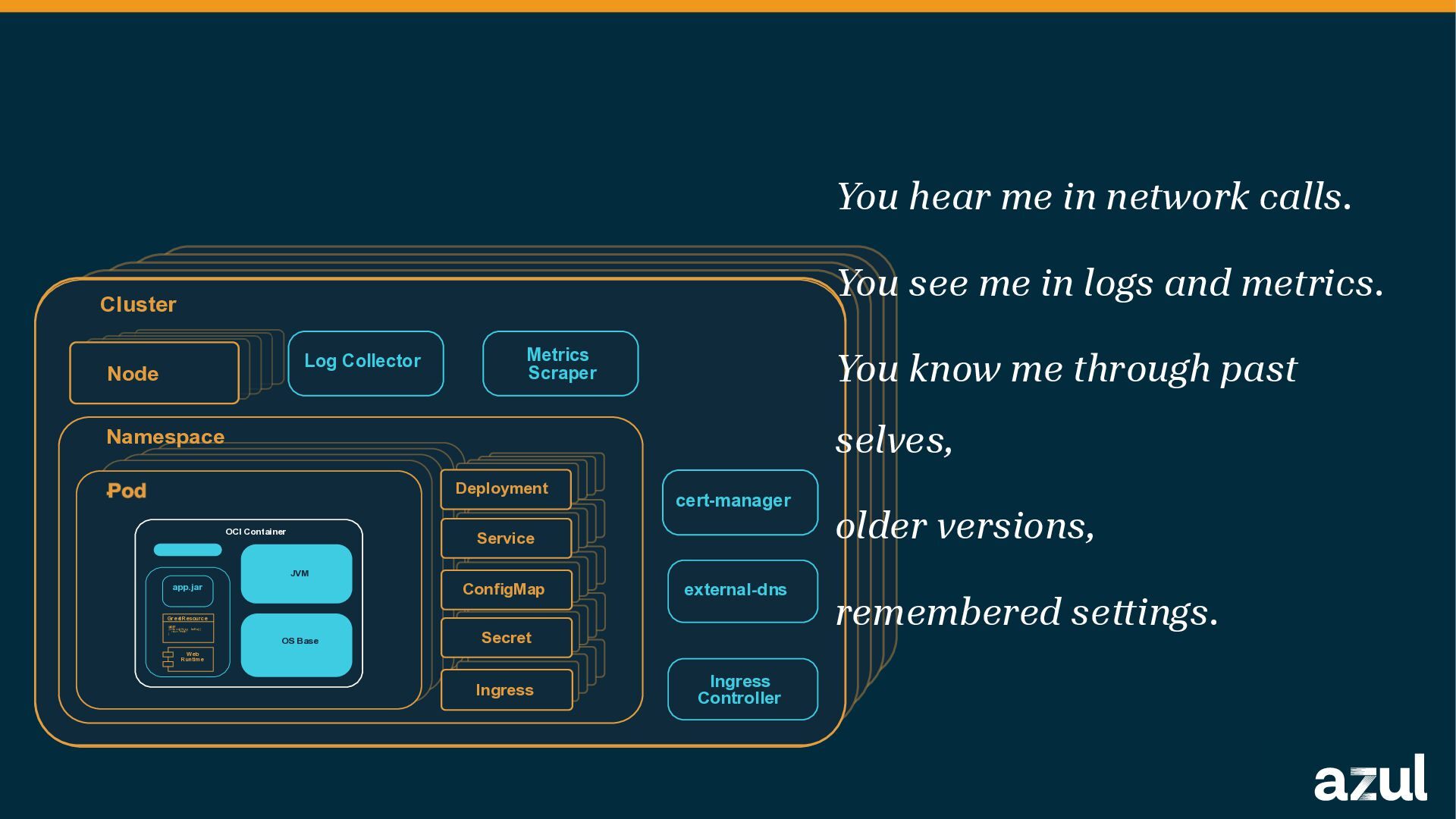
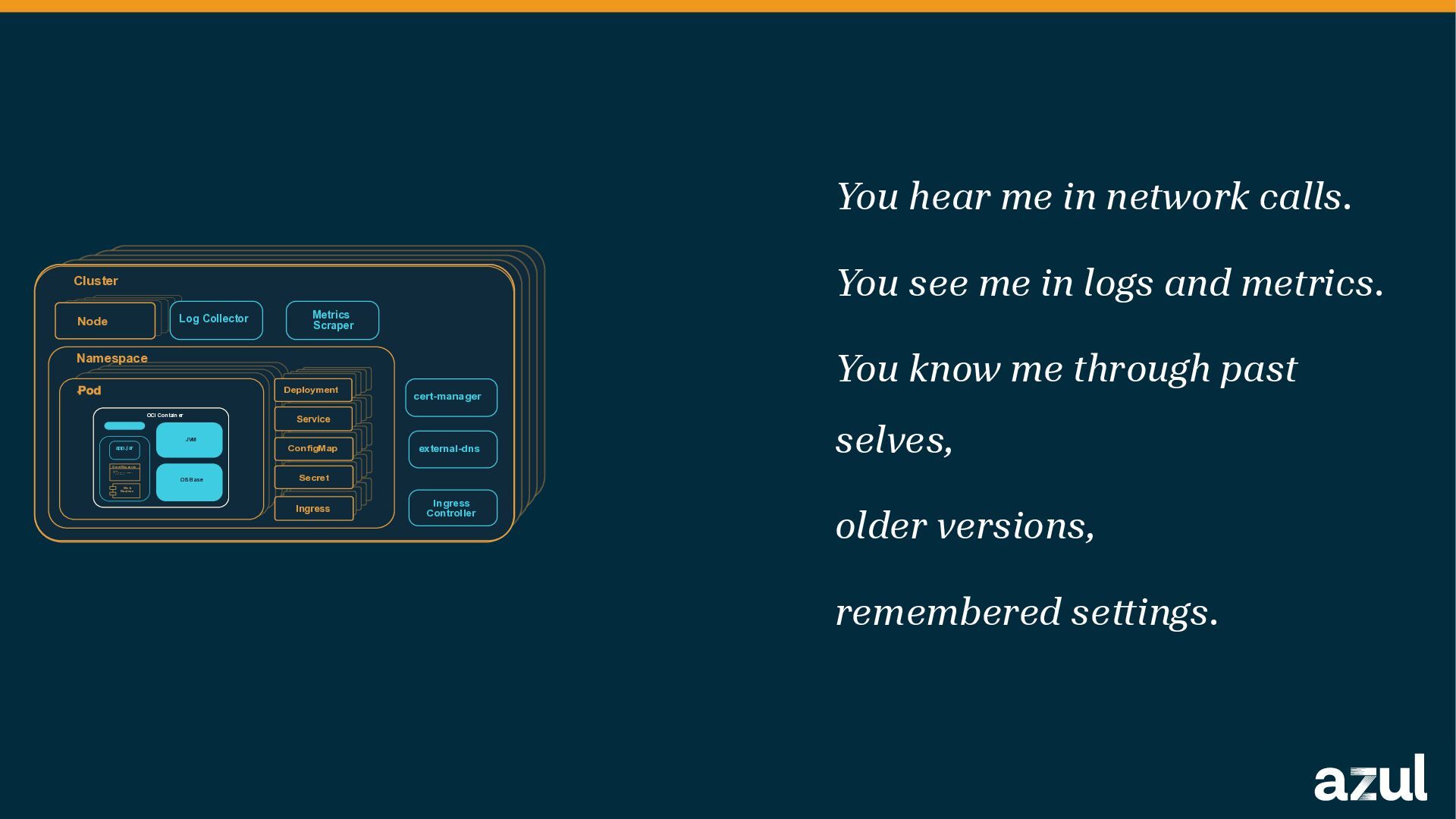
    e e untime app ar a e I ontainer Dep o ment ode er i e on ap e ret In re In re ontro er e terna dn ert mana er oad a an er D Pro ider ert ut orit o o e tor etri raper an e ana ement a in ontro er You hear me in network calls. You see me in logs and metrics. You know me through past selves, older versions, remembered settings.
  17. u ter ame pa e e o reet e our

    e e untime app ar a e I ontainer Dep o ment ode er i e on ap e ret In re In re ontro er e terna dn ert mana er oad a an er D Pro ider ert ut orit o o e tor etri raper an e ana ement a in ontro er You hear me in network calls. You see me in logs and metrics. You know me through past selves, older versions, remembered settings.
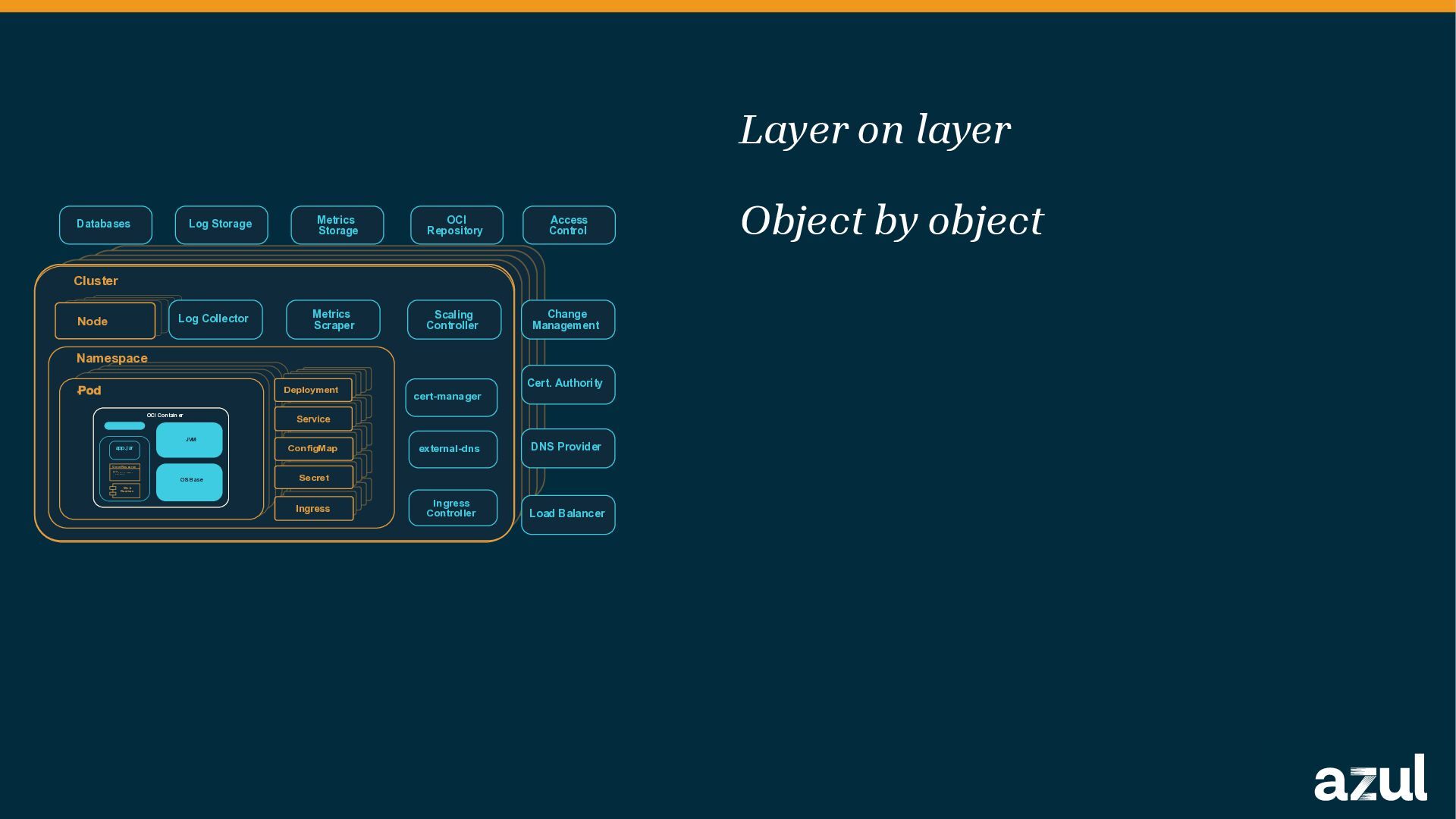
  18. Layer on layer u ter ame pa e e o

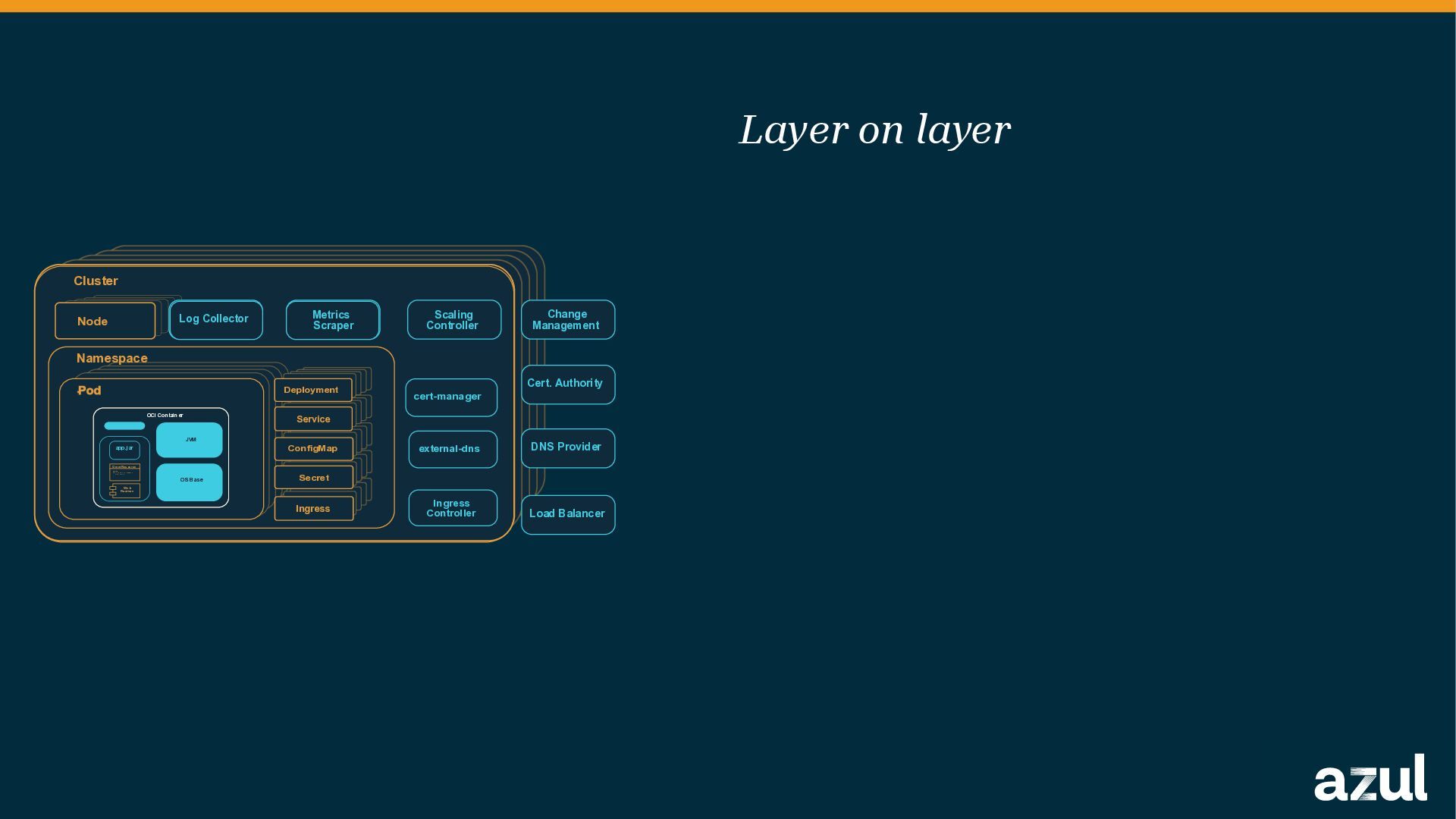
    reet e our e e untime app ar a e I ontainer Dep o ment ode er i e on ap e ret In re In re ontro er e terna dn ert mana er oad a an er D Pro ider ert ut orit o o e tor etri raper an e ana ement a in ontro er oad a an er D Pro ider ert ut orit o o e tor etri raper an e ana ement a in ontro er
  19. Layer on layer Object by object u ter ame pa

    e e o reet e our e e untime app ar a e I ontainer Dep o ment ode er i e on ap e ret In re In re ontro er e terna dn ert mana er oad a an er D Pro ider ert ut orit o o e tor etri raper an e ana ement a in ontro er etri tora e I epo itor e ontro Data a e o tora e
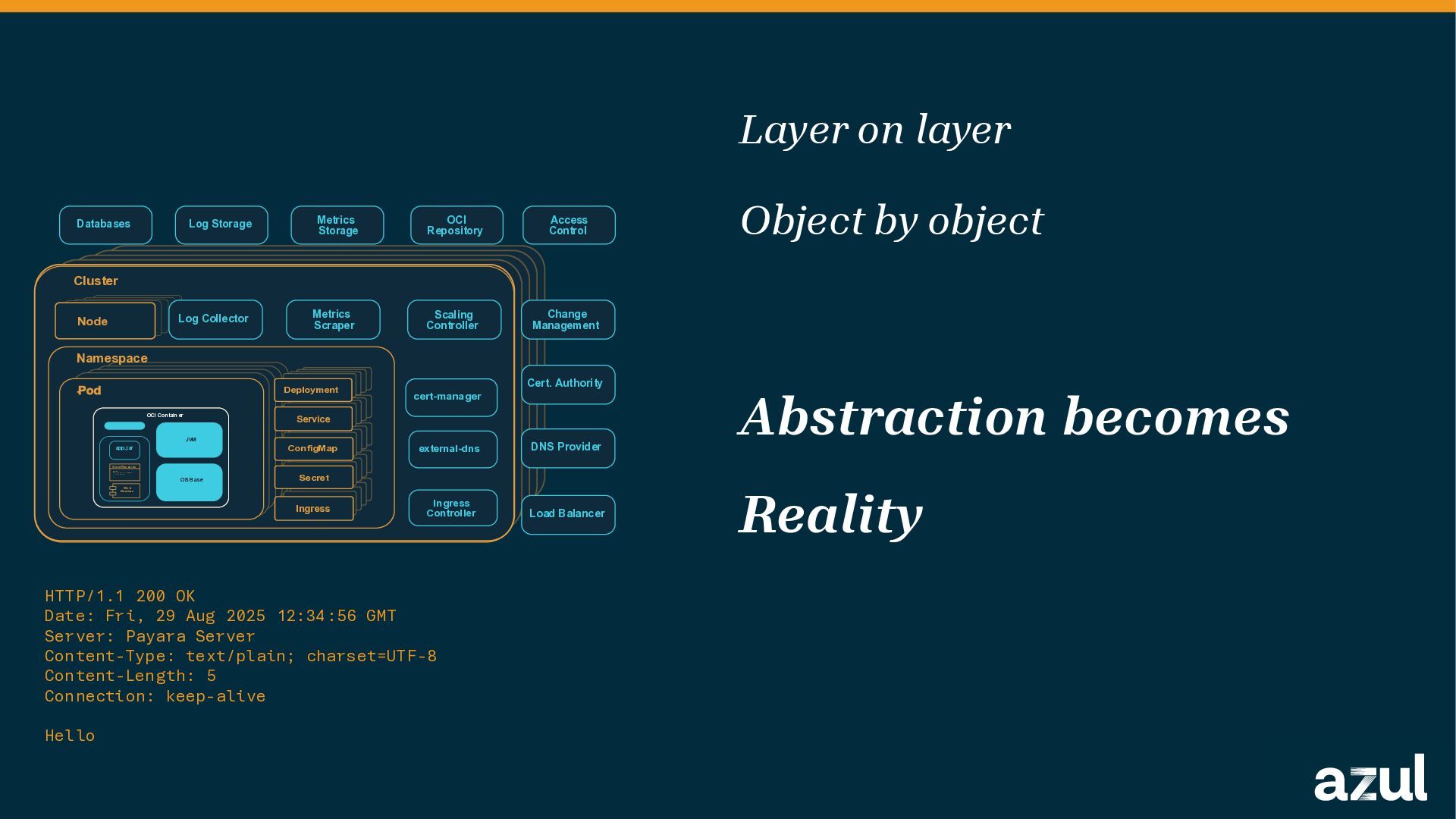
  20. Layer on layer Object by object Abstraction becomes Reality u

    ter ame pa e e o reet e our e e untime app ar a e I ontainer Dep o ment ode er i e on ap e ret In re In re ontro er e terna dn ert mana er oad a an er D Pro ider ert ut orit o o e tor etri raper an e ana ement a in ontro er etri tora e I epo itor e ontro Data a e o tora e HTTP/1.1 200 OK Date: Fri, 29 Aug 2025 12:34:56 GMT Server: Payara Server Content-Type: text/plain; charset=UTF-8 Content-Length: 5 Connection: keep-alive Hello
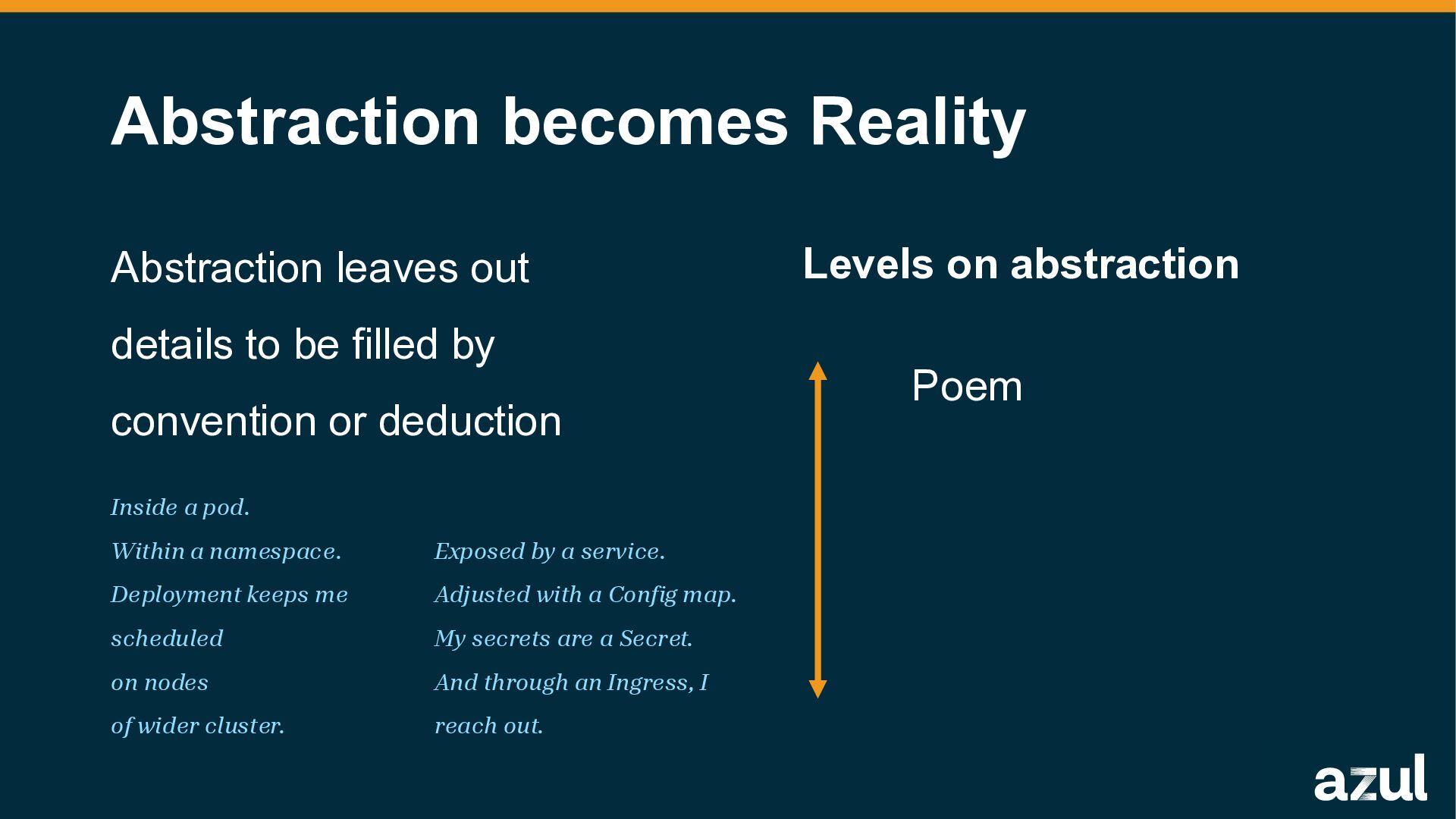
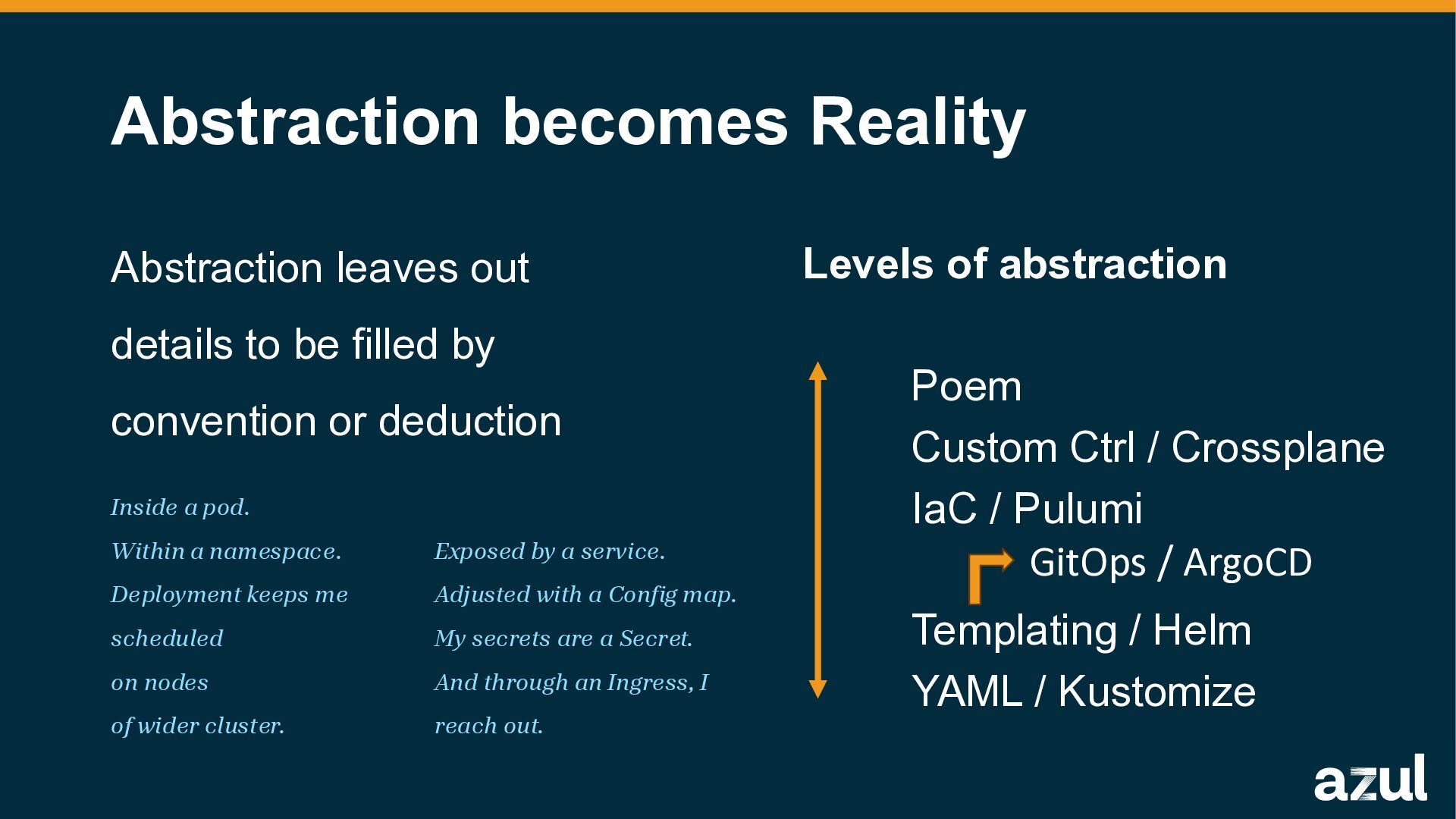
  21. Abstraction becomes Reality Abstraction leaves out details to be filled

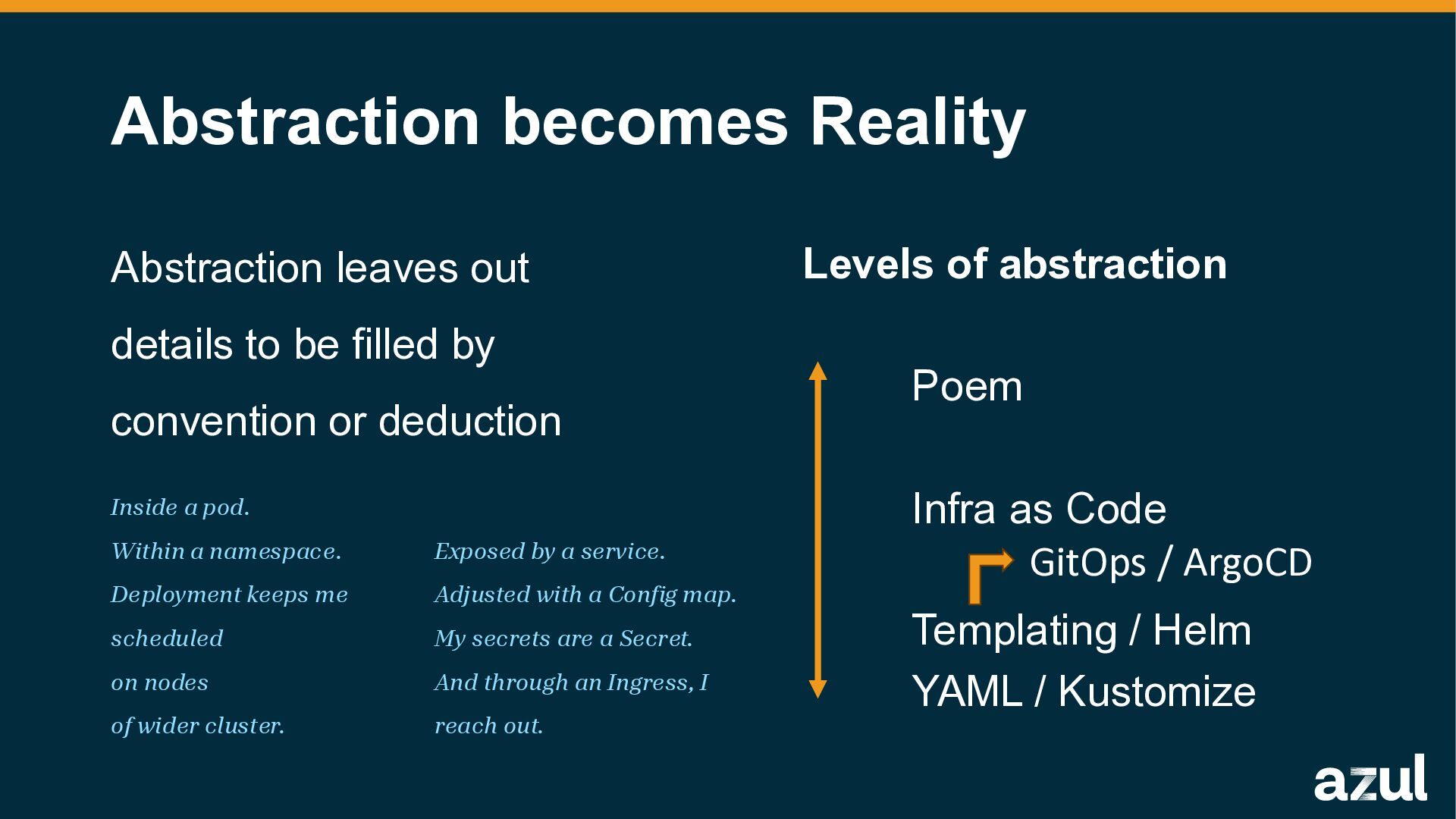
    by convention or deduction Levels on abstraction Poem Inside a pod. Within a namespace. Deployment keeps me scheduled on nodes of wider cluster. Exposed by a service. Adjusted with a Config map. My secrets are a Secret. And through an Ingress, I reach out.
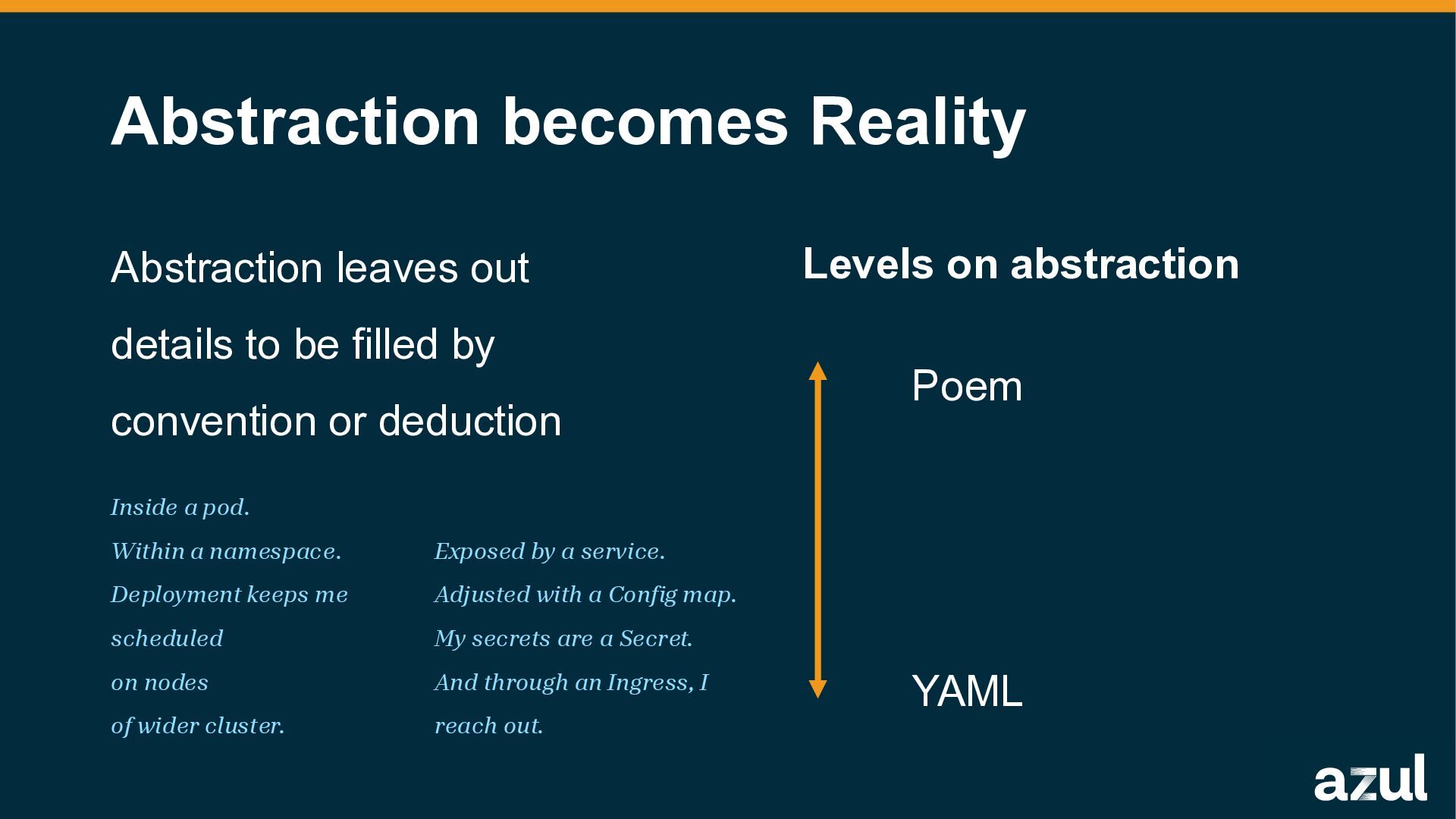
  22. Abstraction becomes Reality Abstraction leaves out details to be filled

    by convention or deduction Levels on abstraction Poem YAML Inside a pod. Within a namespace. Deployment keeps me scheduled on nodes of wider cluster. Exposed by a service. Adjusted with a Config map. My secrets are a Secret. And through an Ingress, I reach out.
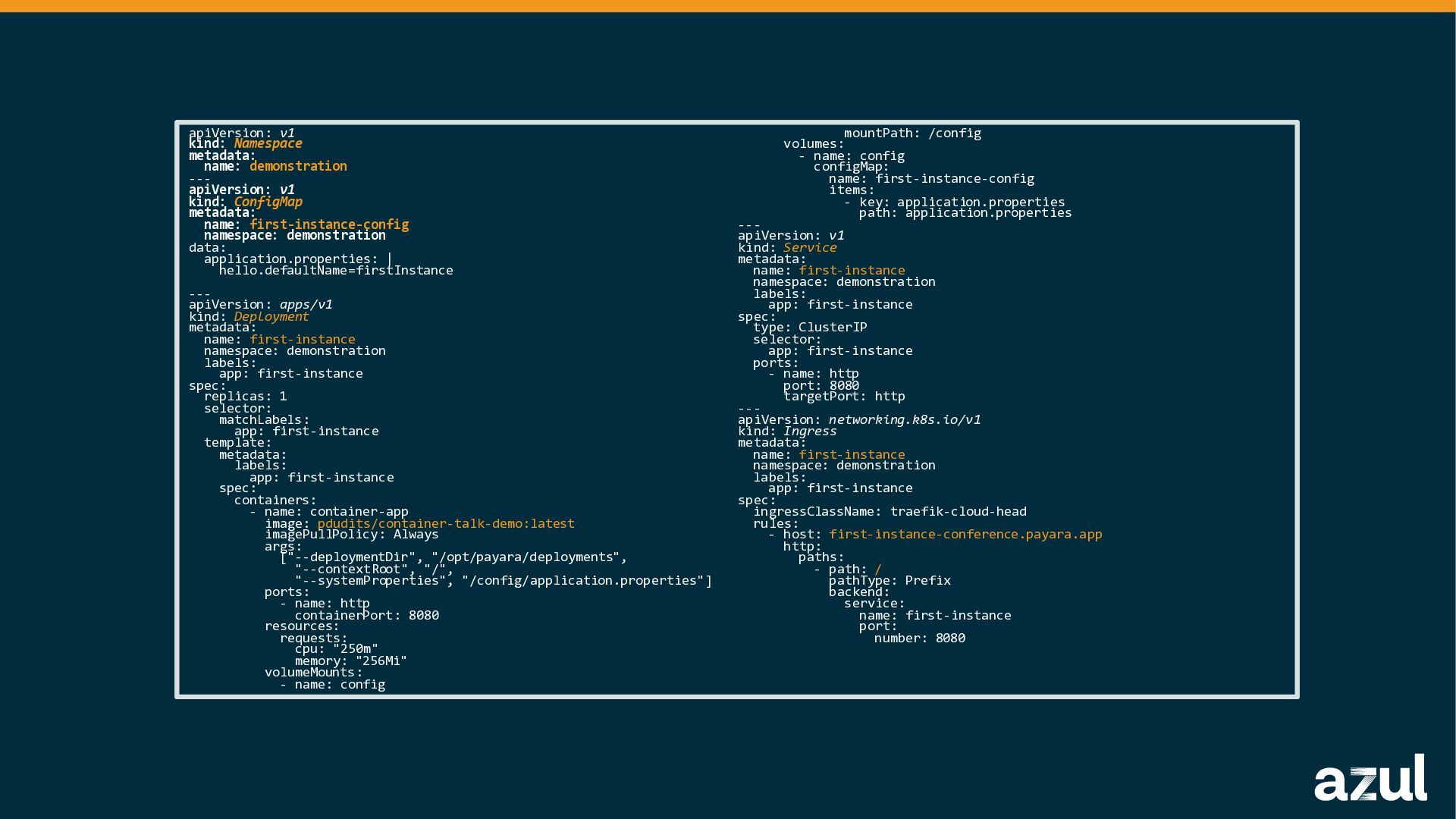
  23. apiVersion: v1 kind: Namespace metadata: name: demonstration --- apiVersion: v1

    kind: ConfigMap metadata: name: first-instance-config namespace: demonstration data: application.properties: | hello.defaultName=firstInstance --- apiVersion: apps/v1 kind: Deployment metadata: name: first-instance namespace: demonstration labels: app: first-instance spec: replicas: 1 selector: matchLabels: app: first-instance template: metadata: labels: app: first-instance spec: containers: - name: container-app image: pdudits/container-talk-demo:latest imagePullPolicy: Always args: ["--deploymentDir", "/opt/payara/deployments", "--contextRoot", "/", "--systemProperties", "/config/application.properties"] ports: - name: http containerPort: 8080 resources: requests: cpu: "250m" memory: "256Mi" volumeMounts: - name: config mountPath: /config volumes: - name: config configMap: name: first-instance-config items: - key: application.properties path: application.properties --- apiVersion: v1 kind: Service metadata: name: first-instance namespace: demonstration labels: app: first-instance spec: type: ClusterIP selector: app: first-instance ports: - name: http port: 8080 targetPort: http --- apiVersion: networking.k8s.io/v1 kind: Ingress metadata: name: first-instance namespace: demonstration labels: app: first-instance spec: ingressClassName: traefik-cloud-head rules: - host: first-instance-conference.payara.app http: paths: - path: / pathType: Prefix backend: service: name: first-instance port: number: 8080 apiVersion: v1 kind: Namespace metadata: name: demonstration --- apiVersion: v1 kind: ConfigMap metadata: name: first-instance-config namespace: demonstration data: application.properties: | hello.defaultName=firstInstance --- apiVersion: apps/v1 kind: Deployment metadata: name: first-instance namespace: demonstration labels: app: first-instance spec: replicas: 1 selector: matchLabels: app: first-instance template: metadata: labels: app: first-instance spec: containers: - name: container-app image: pdudits/container-talk-demo:latest imagePullPolicy: Always args: ["--deploymentDir", "/opt/payara/deployments", "--contextRoot", "/", "--systemProperties", "/config/application.properties"] ports: - name: http containerPort: 8080 resources: requests: cpu: "250m" memory: "256Mi" volumeMounts: - name: config mountPath: /config volumes: - name: config configMap: name: first-instance-config items: - key: application.properties path: application.properties --- apiVersion: v1 kind: Service metadata: name: first-instance namespace: demonstration labels: app: first-instance spec: type: ClusterIP selector: app: first-instance ports: - name: http port: 8080 targetPort: http --- apiVersion: networking.k8s.io/v1 kind: Ingress metadata: name: first-instance namespace: demonstration labels: app: first-instance spec: ingressClassName: traefik-cloud-head rules: - host: first-instance-conference.payara.app http: paths: - path: / pathType: Prefix backend: service: name: first-instance port: number: 8080
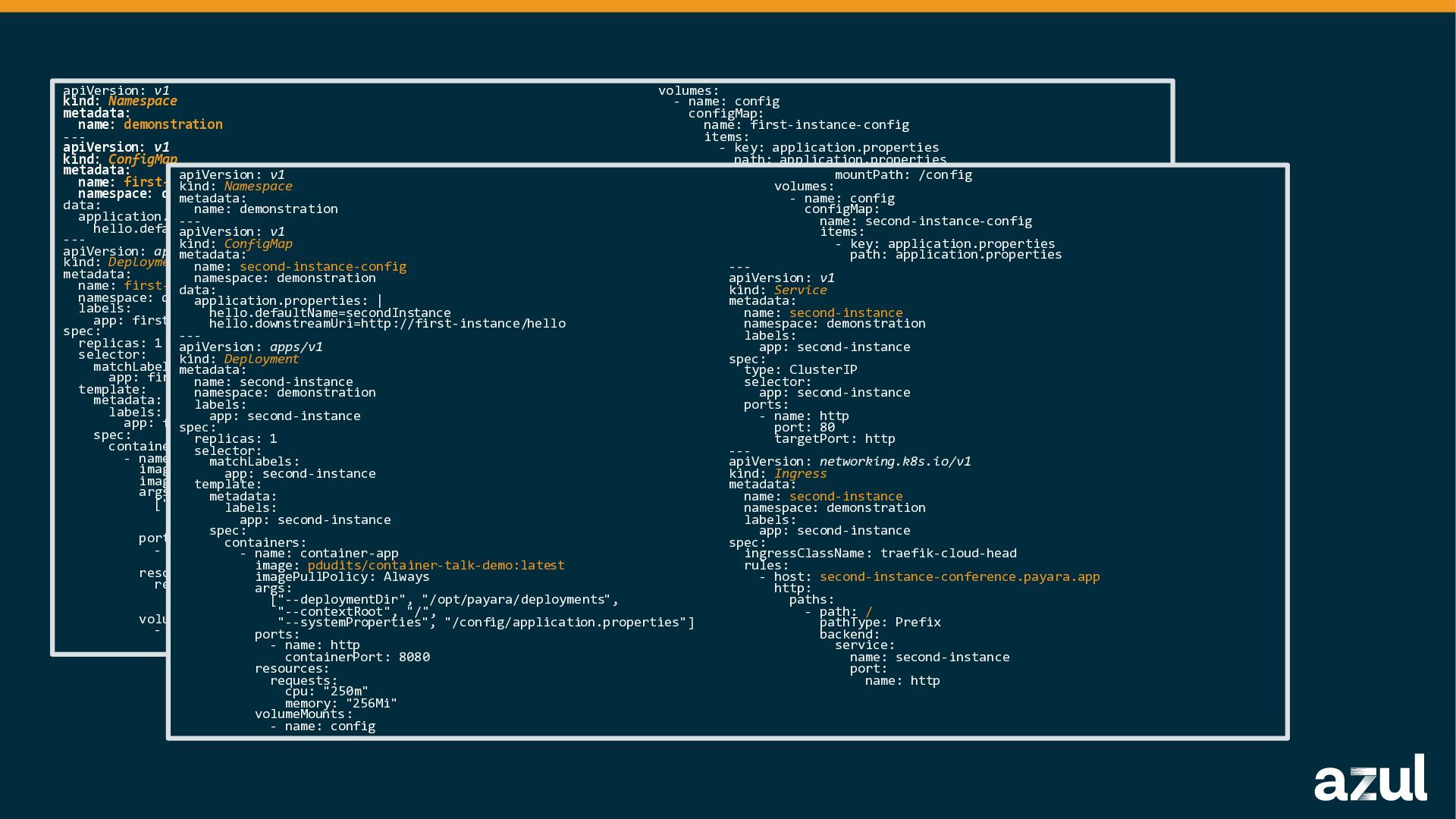
  24. apiVersion: v1 kind: Namespace metadata: name: demonstration --- apiVersion: v1

    kind: ConfigMap metadata: name: first-instance-config namespace: demonstration data: application.properties: | hello.defaultName=firstInstance --- apiVersion: apps/v1 kind: Deployment metadata: name: first-instance namespace: demonstration labels: app: first-instance spec: replicas: 1 selector: matchLabels: app: first-instance template: metadata: labels: app: first-instance spec: containers: - name: container-app image: pdudits/container-talk-demo:latest imagePullPolicy: Always args: ["--deploymentDir", "/opt/payara/deployments", "--contextRoot", "/", "--systemProperties", "/config/application.properties"] ports: - name: http containerPort: 8080 resources: requests: cpu: "250m" memory: "256Mi" volumeMounts: - name: config mountPath: /config volumes: - name: config configMap: name: first-instance-config items: - key: application.properties path: application.properties --- apiVersion: v1 kind: Service metadata: name: first-instance namespace: demonstration labels: app: first-instance spec: type: ClusterIP selector: app: first-instance ports: - name: http port: 8080 targetPort: http --- apiVersion: networking.k8s.io/v1 kind: Ingress metadata: name: first-instance namespace: demonstration labels: app: first-instance spec: ingressClassName: traefik-cloud-head rules: - host: first-instance-conference.payara.app http: paths: - path: / pathType: Prefix backend: service: name: first-instance port: number: 8080 apiVersion: v1 kind: Namespace metadata: name: demonstration --- apiVersion: v1 kind: ConfigMap metadata: name: second-instance-config namespace: demonstration data: application.properties: | hello.defaultName=secondInstance hello.downstreamUri=http://first-instance/hello --- apiVersion: apps/v1 kind: Deployment metadata: name: second-instance namespace: demonstration labels: app: second-instance spec: replicas: 1 selector: matchLabels: app: second-instance template: metadata: labels: app: second-instance spec: containers: - name: container-app image: pdudits/container-talk-demo:latest imagePullPolicy: Always args: ["--deploymentDir", "/opt/payara/deployments", "--contextRoot", "/", "--systemProperties", "/config/application.properties"] ports: - name: http containerPort: 8080 resources: requests: cpu: "250m" memory: "256Mi" volumeMounts: - name: config mountPath: /config volumes: - name: config configMap: name: second-instance-config items: - key: application.properties path: application.properties --- apiVersion: v1 kind: Service metadata: name: second-instance namespace: demonstration labels: app: second-instance spec: type: ClusterIP selector: app: second-instance ports: - name: http port: 80 targetPort: http --- apiVersion: networking.k8s.io/v1 kind: Ingress metadata: name: second-instance namespace: demonstration labels: app: second-instance spec: ingressClassName: traefik-cloud-head rules: - host: second-instance-conference.payara.app http: paths: - path: / pathType: Prefix backend: service: name: second-instance port: name: http
  25. apiVersion: v1 kind: Namespace metadata: name: demonstration --- apiVersion: v1

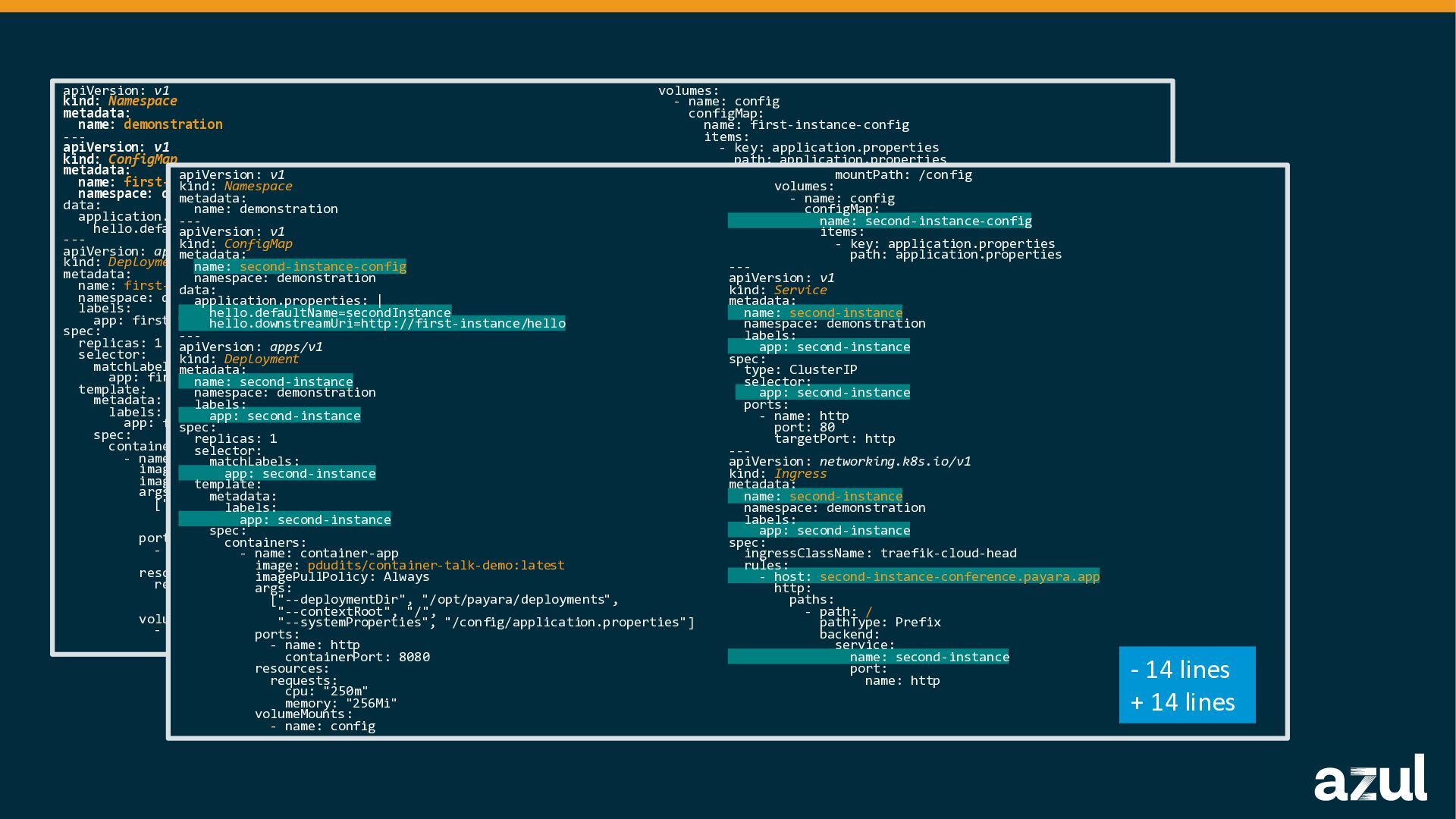
    kind: ConfigMap metadata: name: first-instance-config namespace: demonstration data: application.properties: | hello.defaultName=firstInstance --- apiVersion: apps/v1 kind: Deployment metadata: name: first-instance namespace: demonstration labels: app: first-instance spec: replicas: 1 selector: matchLabels: app: first-instance template: metadata: labels: app: first-instance spec: containers: - name: container-app image: pdudits/container-talk-demo:latest imagePullPolicy: Always args: ["--deploymentDir", "/opt/payara/deployments", "--contextRoot", "/", "--systemProperties", "/config/application.properties"] ports: - name: http containerPort: 8080 resources: requests: cpu: "250m" memory: "256Mi" volumeMounts: - name: config mountPath: /config volumes: - name: config configMap: name: first-instance-config items: - key: application.properties path: application.properties --- apiVersion: v1 kind: Service metadata: name: first-instance namespace: demonstration labels: app: first-instance spec: type: ClusterIP selector: app: first-instance ports: - name: http port: 8080 targetPort: http --- apiVersion: networking.k8s.io/v1 kind: Ingress metadata: name: first-instance namespace: demonstration labels: app: first-instance spec: ingressClassName: traefik-cloud-head rules: - host: first-instance-conference.payara.app http: paths: - path: / pathType: Prefix backend: service: name: first-instance port: number: 8080 apiVersion: v1 kind: Namespace metadata: name: demonstration --- apiVersion: v1 kind: ConfigMap metadata: name: second-instance-config namespace: demonstration data: application.properties: | hello.defaultName=secondInstance hello.downstreamUri=http://first-instance/hello --- apiVersion: apps/v1 kind: Deployment metadata: name: second-instance namespace: demonstration labels: app: second-instance spec: replicas: 1 selector: matchLabels: app: second-instance template: metadata: labels: app: second-instance spec: containers: - name: container-app image: pdudits/container-talk-demo:latest imagePullPolicy: Always args: ["--deploymentDir", "/opt/payara/deployments", "--contextRoot", "/", "--systemProperties", "/config/application.properties"] ports: - name: http containerPort: 8080 resources: requests: cpu: "250m" memory: "256Mi" volumeMounts: - name: config mountPath: /config volumes: - name: config configMap: name: second-instance-config items: - key: application.properties path: application.properties --- apiVersion: v1 kind: Service metadata: name: second-instance namespace: demonstration labels: app: second-instance spec: type: ClusterIP selector: app: second-instance ports: - name: http port: 80 targetPort: http --- apiVersion: networking.k8s.io/v1 kind: Ingress metadata: name: second-instance namespace: demonstration labels: app: second-instance spec: ingressClassName: traefik-cloud-head rules: - host: second-instance-conference.payara.app http: paths: - path: / pathType: Prefix backend: service: name: second-instance port: name: http - 14 lines + 14 lines
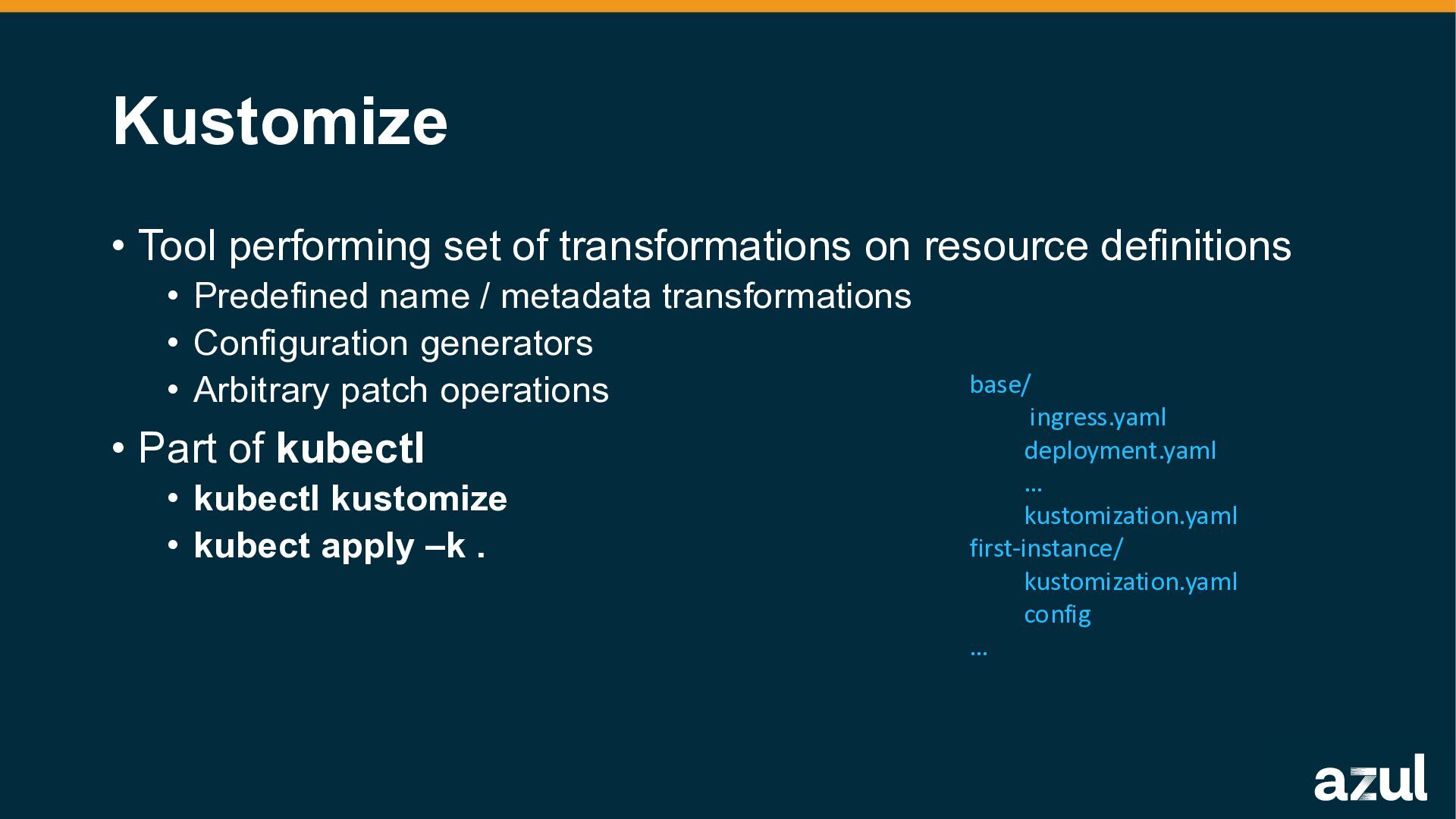
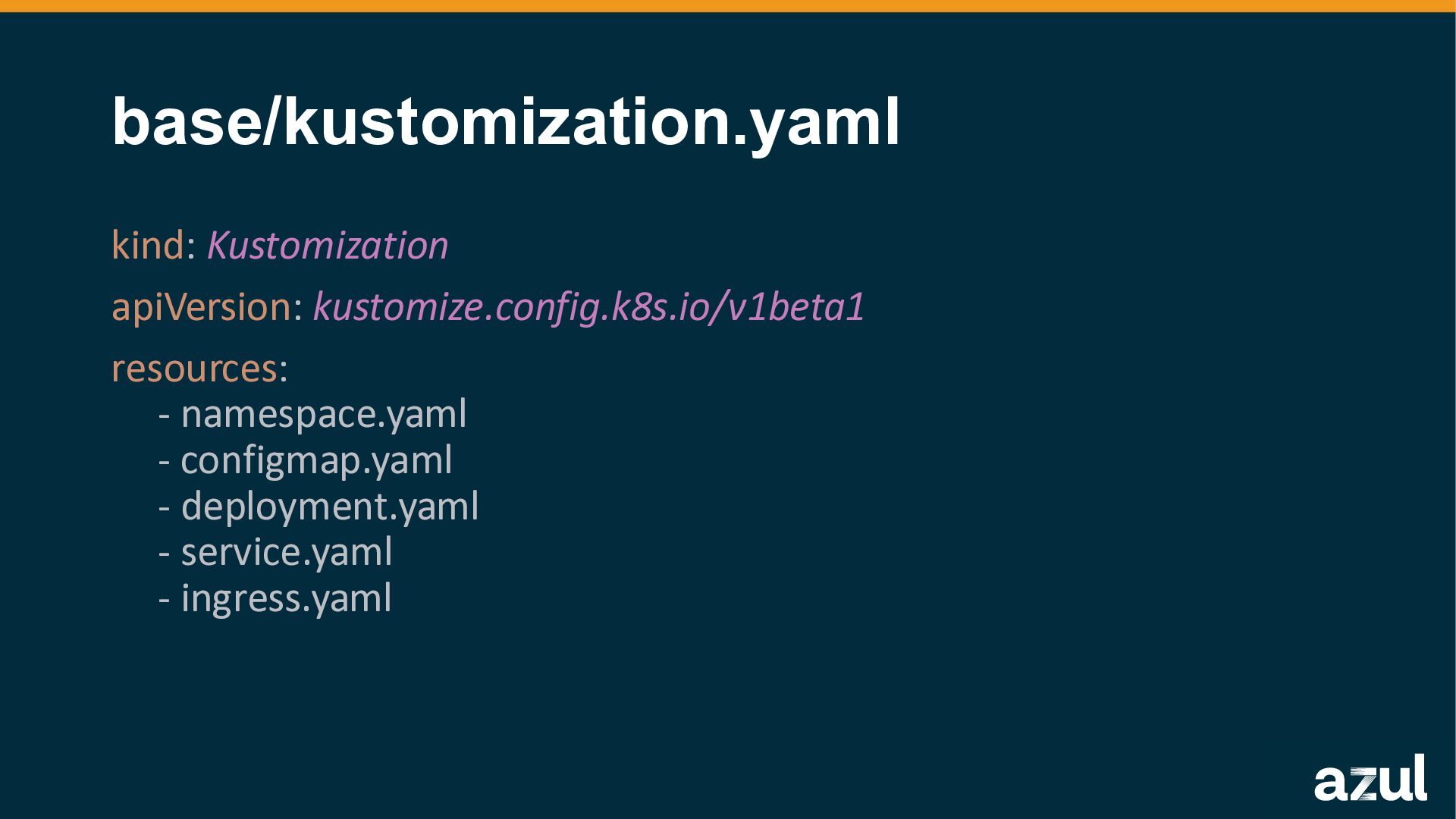
  26. Kustomize • Tool performing set of transformations on resource definitions

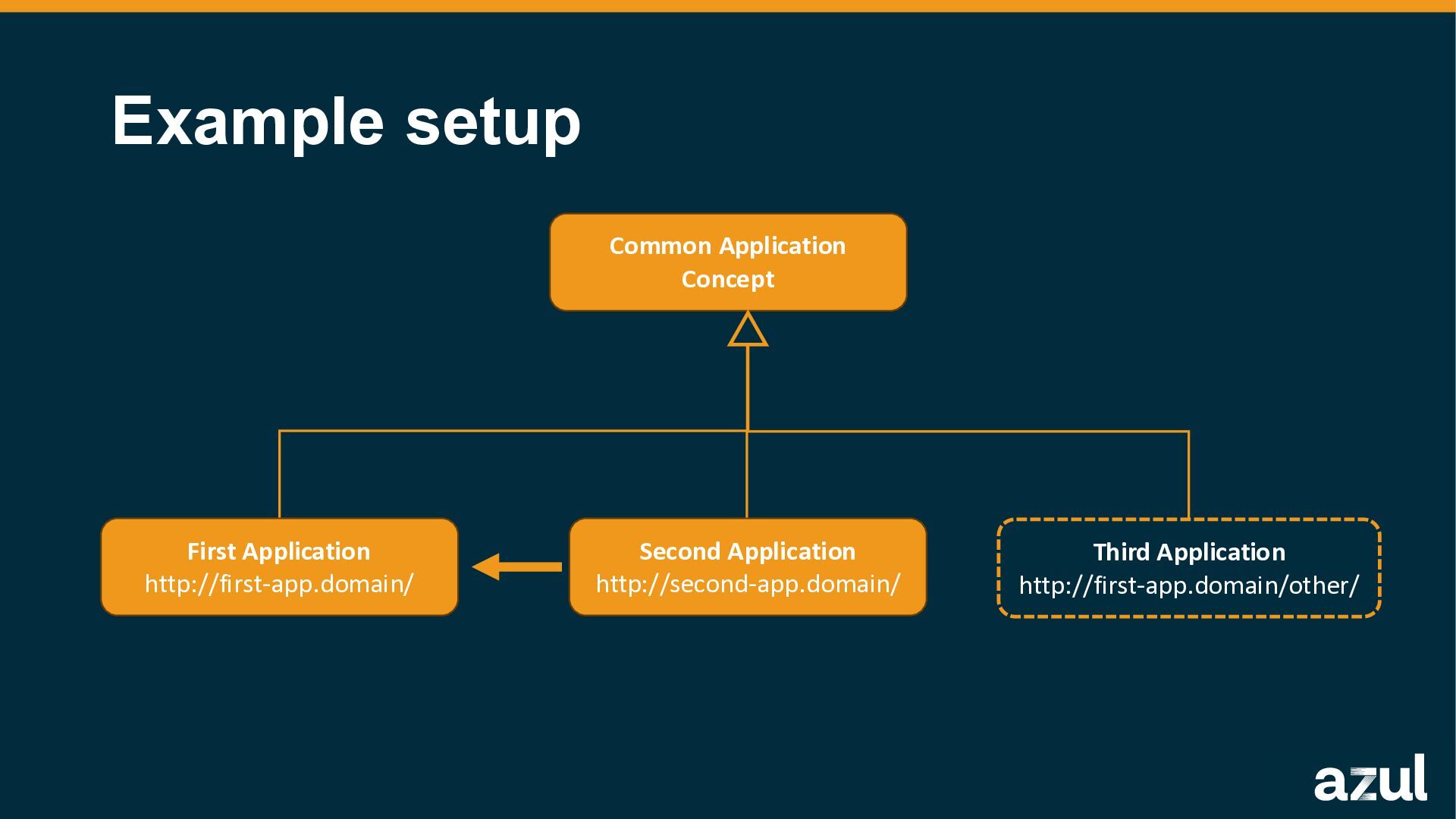
    • Predefined name / metadata transformations • Configuration generators • Arbitrary patch operations • Part of kubectl • kubectl kustomize • kubect apply –k . base/ ingress.yaml deployment.yaml … kustomization.yaml first-instance/ kustomization.yaml config …
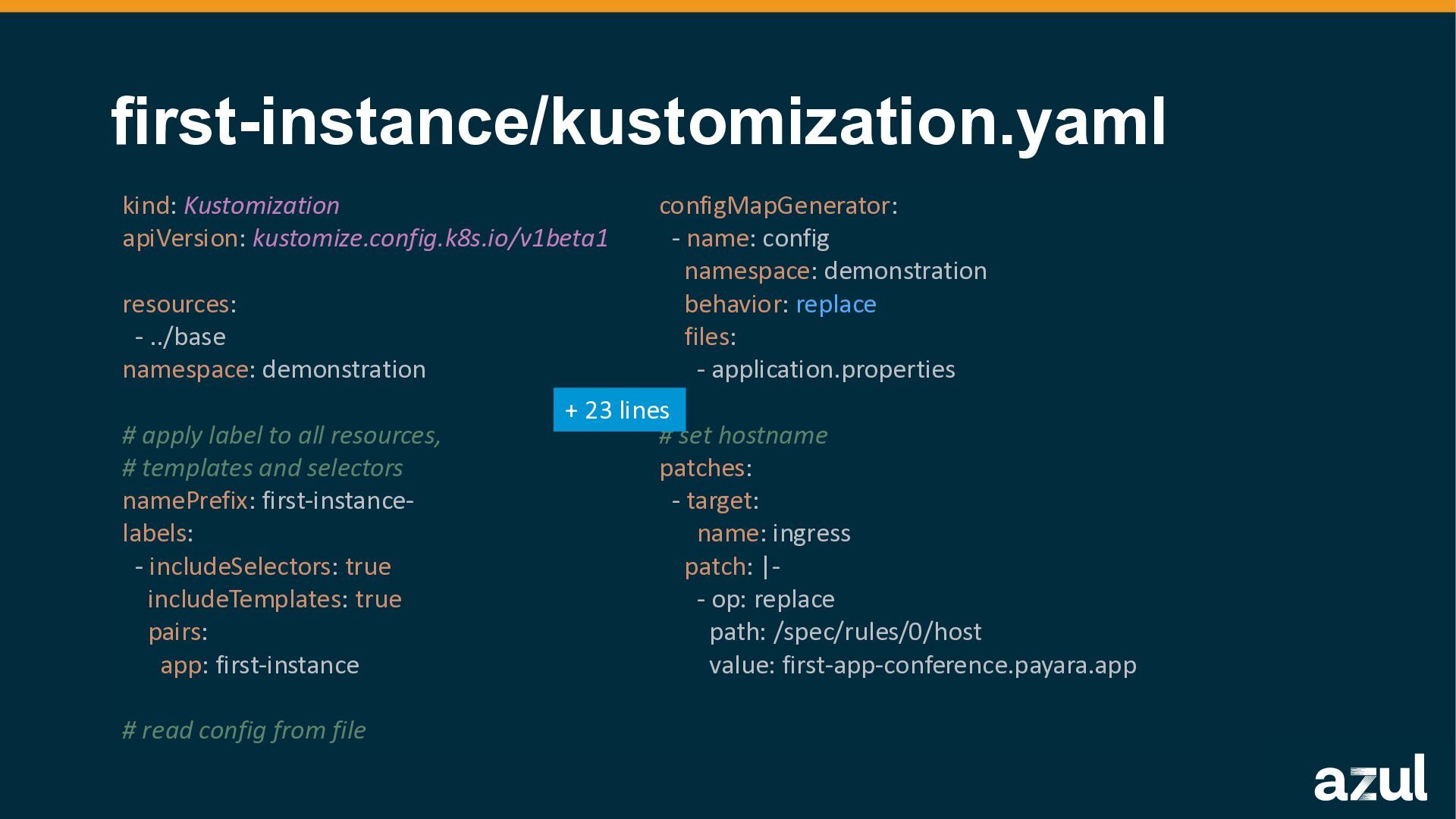
  27. first-instance/kustomization.yaml kind: Kustomization apiVersion: kustomize.config.k8s.io/v1beta1 resources: - ../base namespace: demonstration

    # apply label to all resources, # templates and selectors namePrefix: first-instance- labels: - includeSelectors: true includeTemplates: true pairs: app: first-instance # read config from file configMapGenerator: - name: config namespace: demonstration behavior: replace files: - application.properties # set hostname patches: - target: name: ingress patch: |- - op: replace path: /spec/rules/0/host value: first-app-conference.payara.app + 23 lines
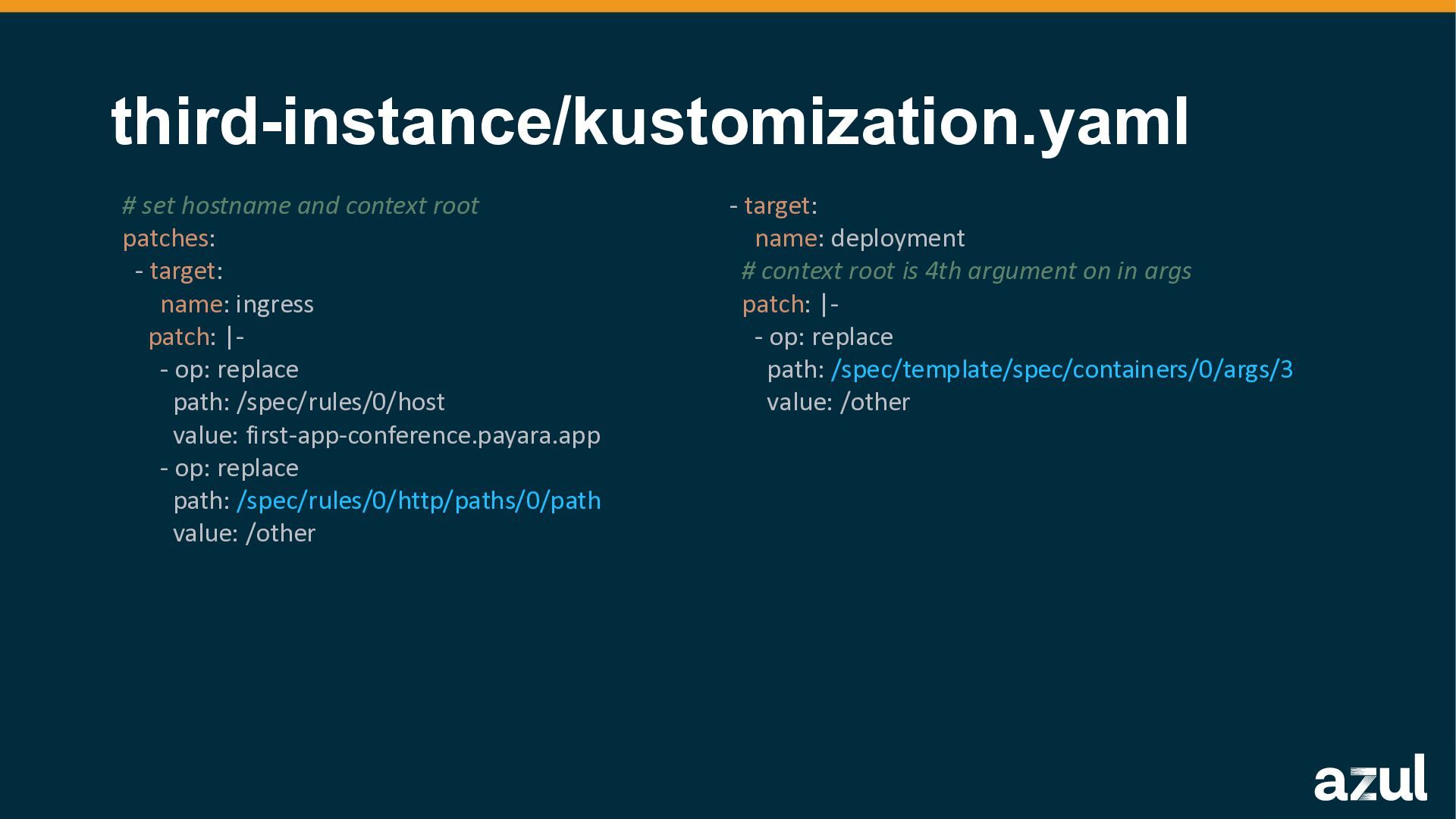
  28. third-instance/kustomization.yaml # set hostname and context root patches: - target:

    name: ingress patch: |- - op: replace path: /spec/rules/0/host value: first-app-conference.payara.app - op: replace path: /spec/rules/0/http/paths/0/path value: /other - target: name: deployment # context root is 4th argument on in args patch: |- - op: replace path: /spec/template/spec/containers/0/args/3 value: /other
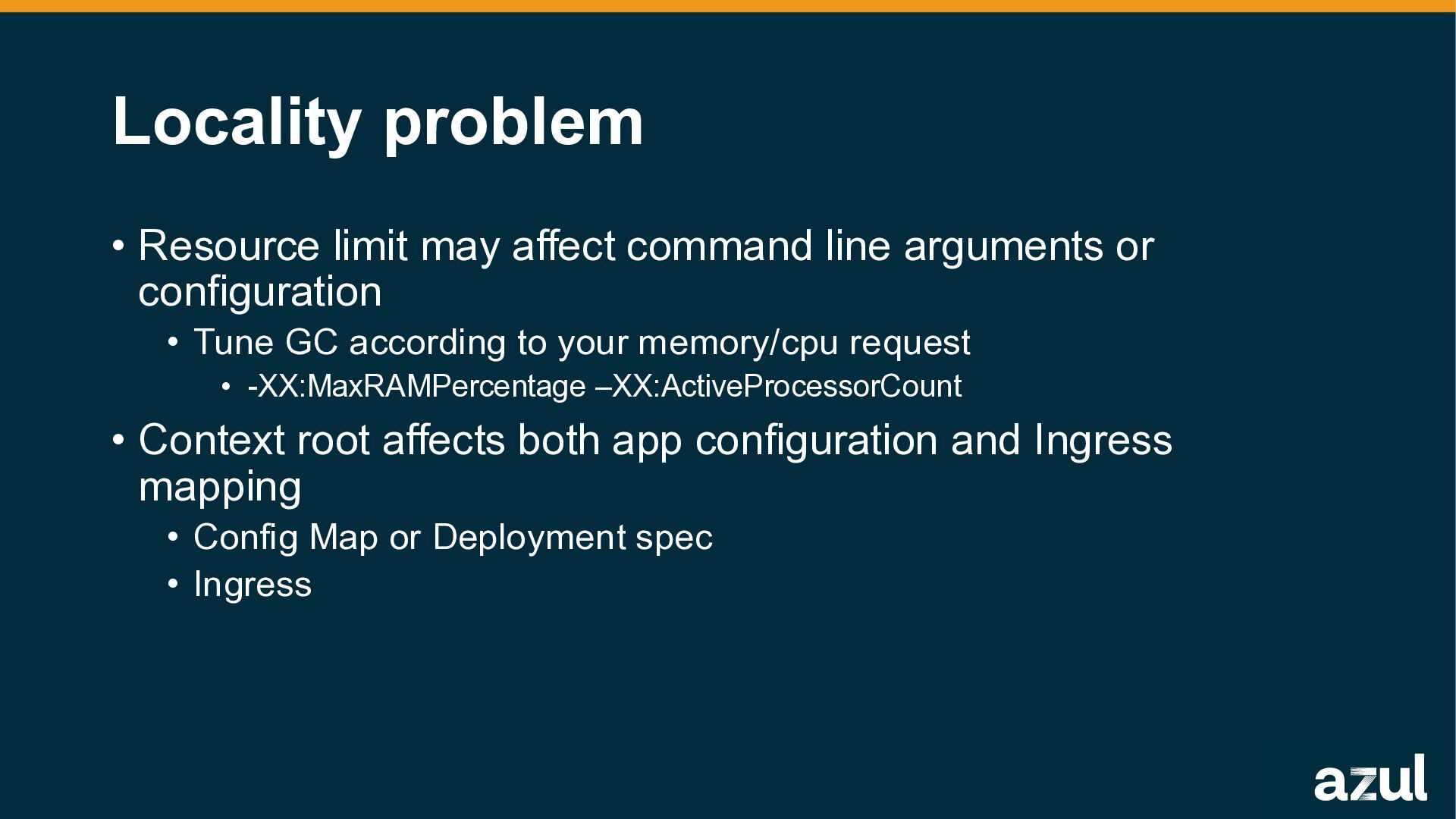
  29. Locality problem • Resource limit may affect command line arguments

    or configuration • Tune GC according to your memory/cpu request • -XX:MaxRAMPercentage –XX:ActiveProcessorCount • Context root affects both app configuration and Ingress mapping • Config Map or Deployment spec • Ingress
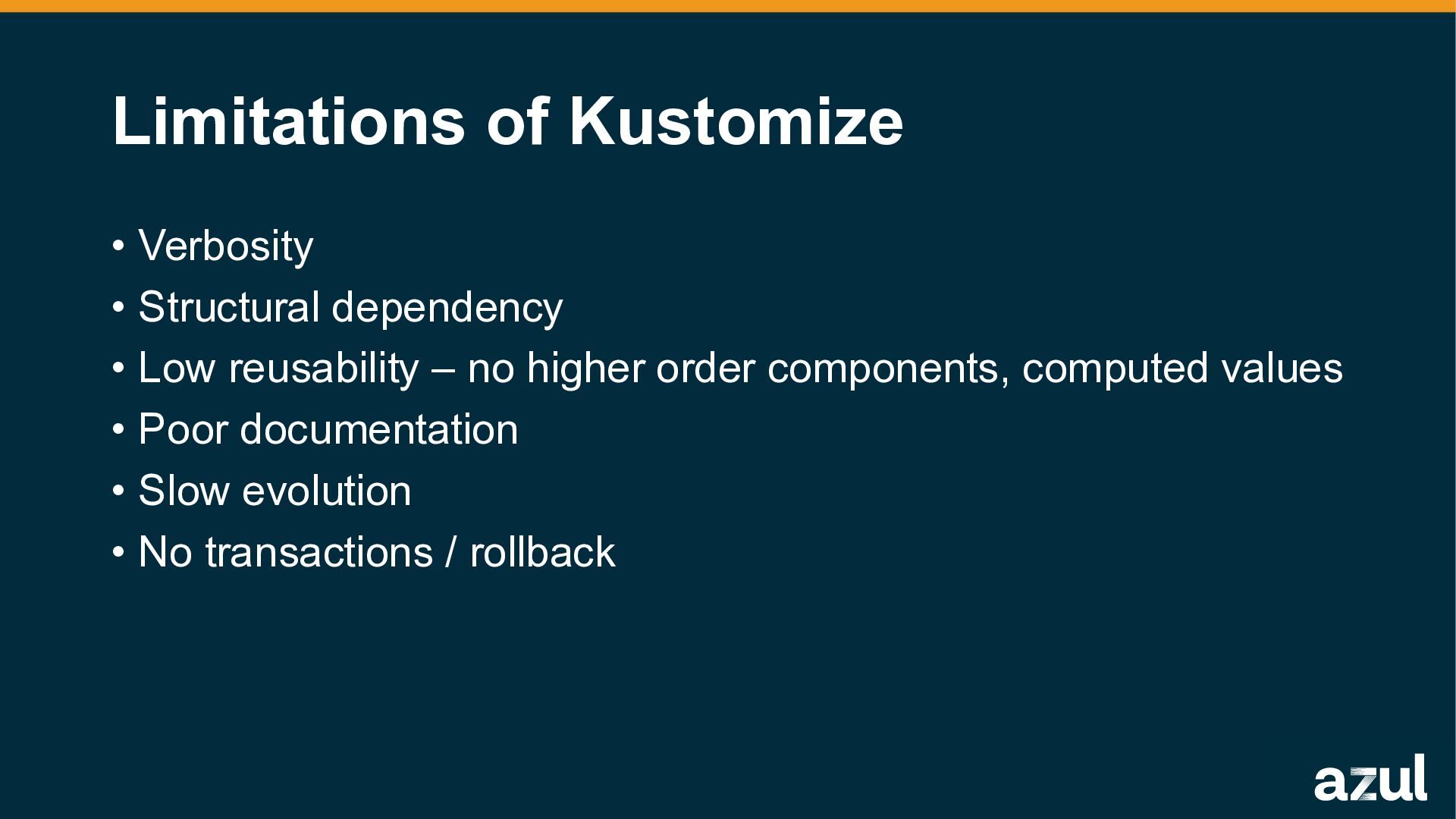
  30. Limitations of Kustomize • Verbosity • Structural dependency • Low

    reusability – no higher order components, computed values • Poor documentation • Slow evolution • No transactions / rollback
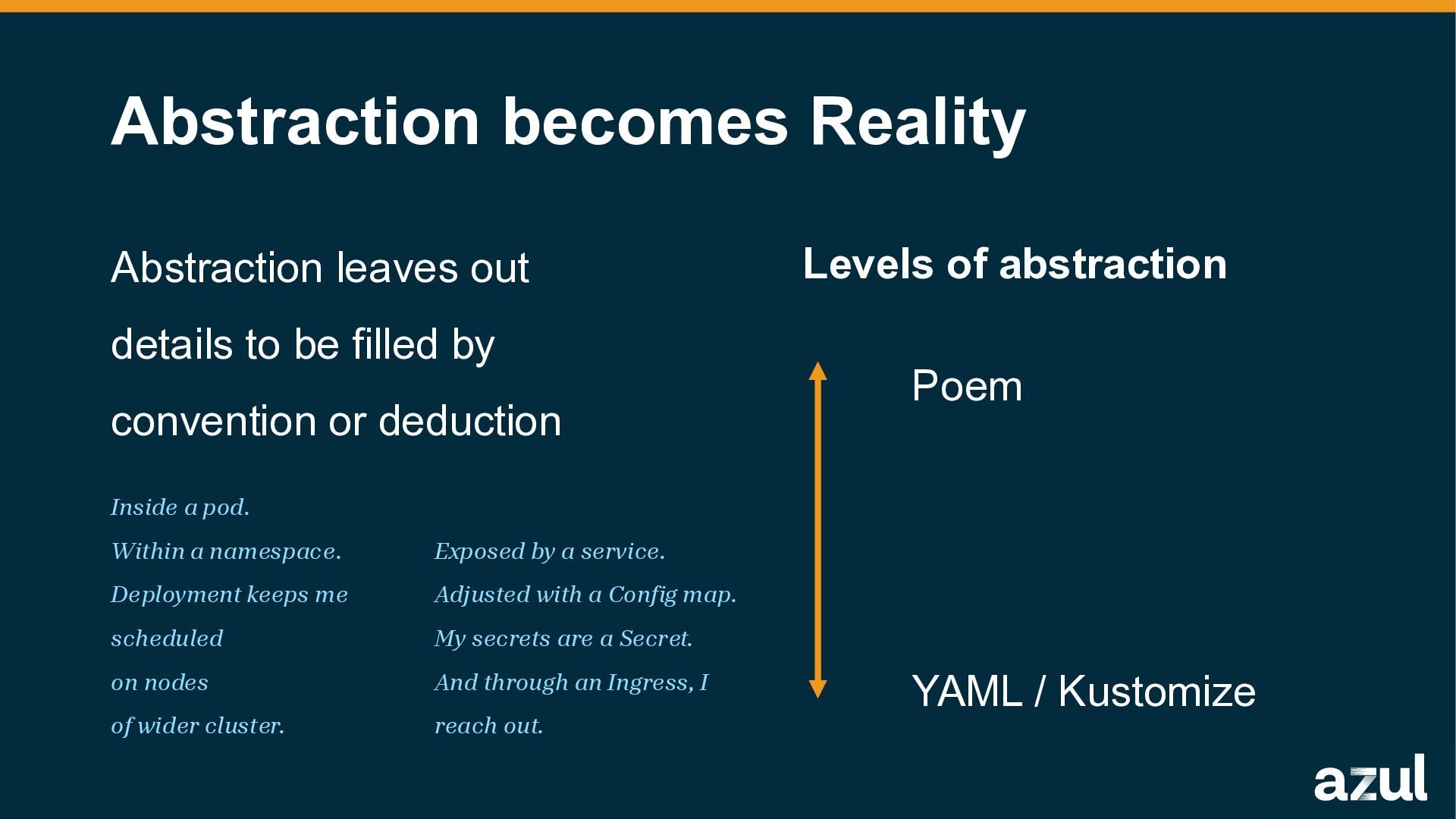
  31. Abstraction becomes Reality Abstraction leaves out details to be filled

    by convention or deduction Levels of abstraction Poem YAML / Kustomize Inside a pod. Within a namespace. Deployment keeps me scheduled on nodes of wider cluster. Exposed by a service. Adjusted with a Config map. My secrets are a Secret. And through an Ingress, I reach out.
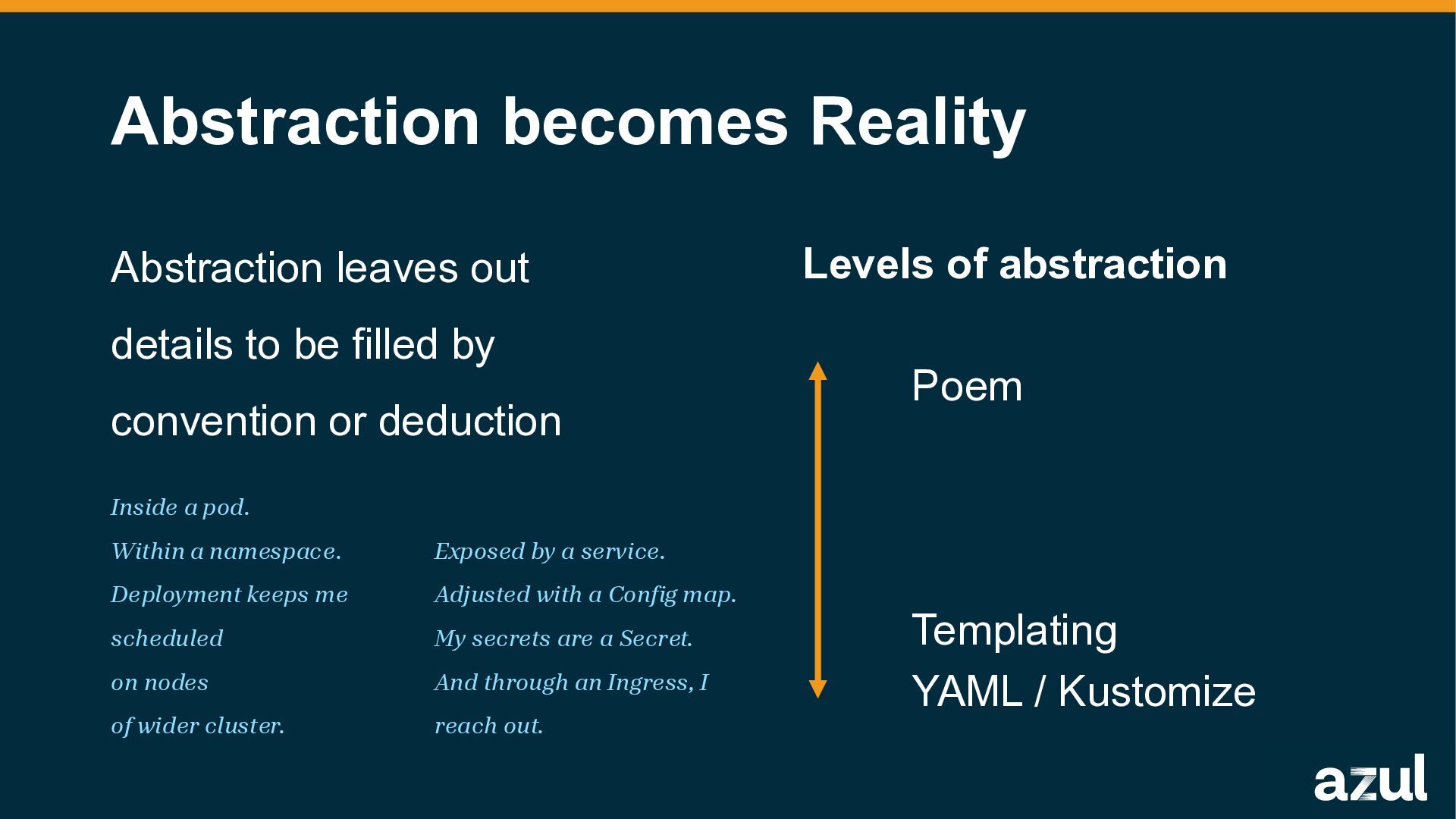
  32. Abstraction becomes Reality Abstraction leaves out details to be filled

    by convention or deduction Levels of abstraction Poem Templating YAML / Kustomize Inside a pod. Within a namespace. Deployment keeps me scheduled on nodes of wider cluster. Exposed by a service. Adjusted with a Config map. My secrets are a Secret. And through an Ingress, I reach out.
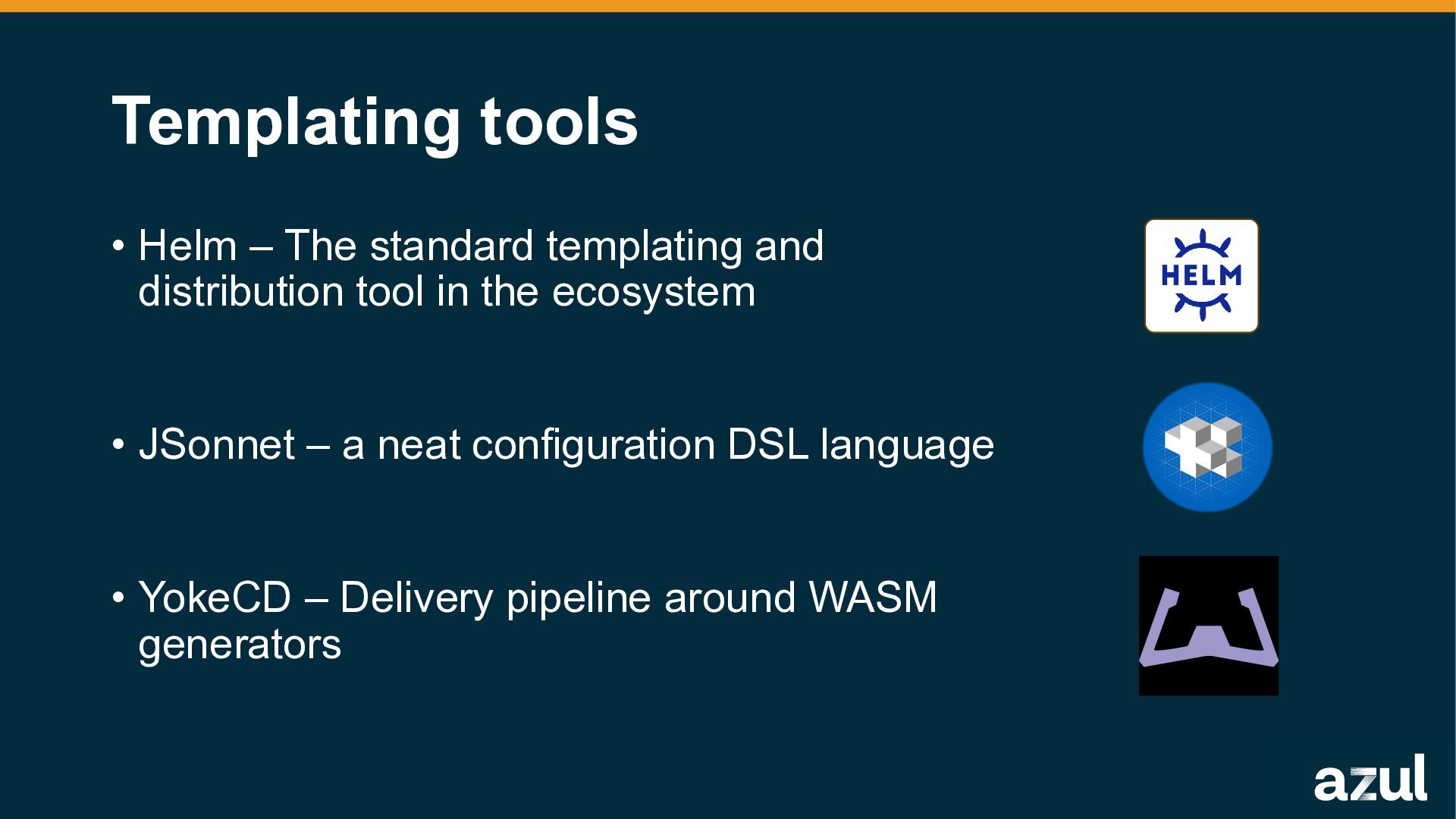
  33. Templating tools • Helm – The standard templating and distribution

    tool in the ecosystem • JSonnet – a neat configuration DSL language • YokeCD – Delivery pipeline around WASM generators
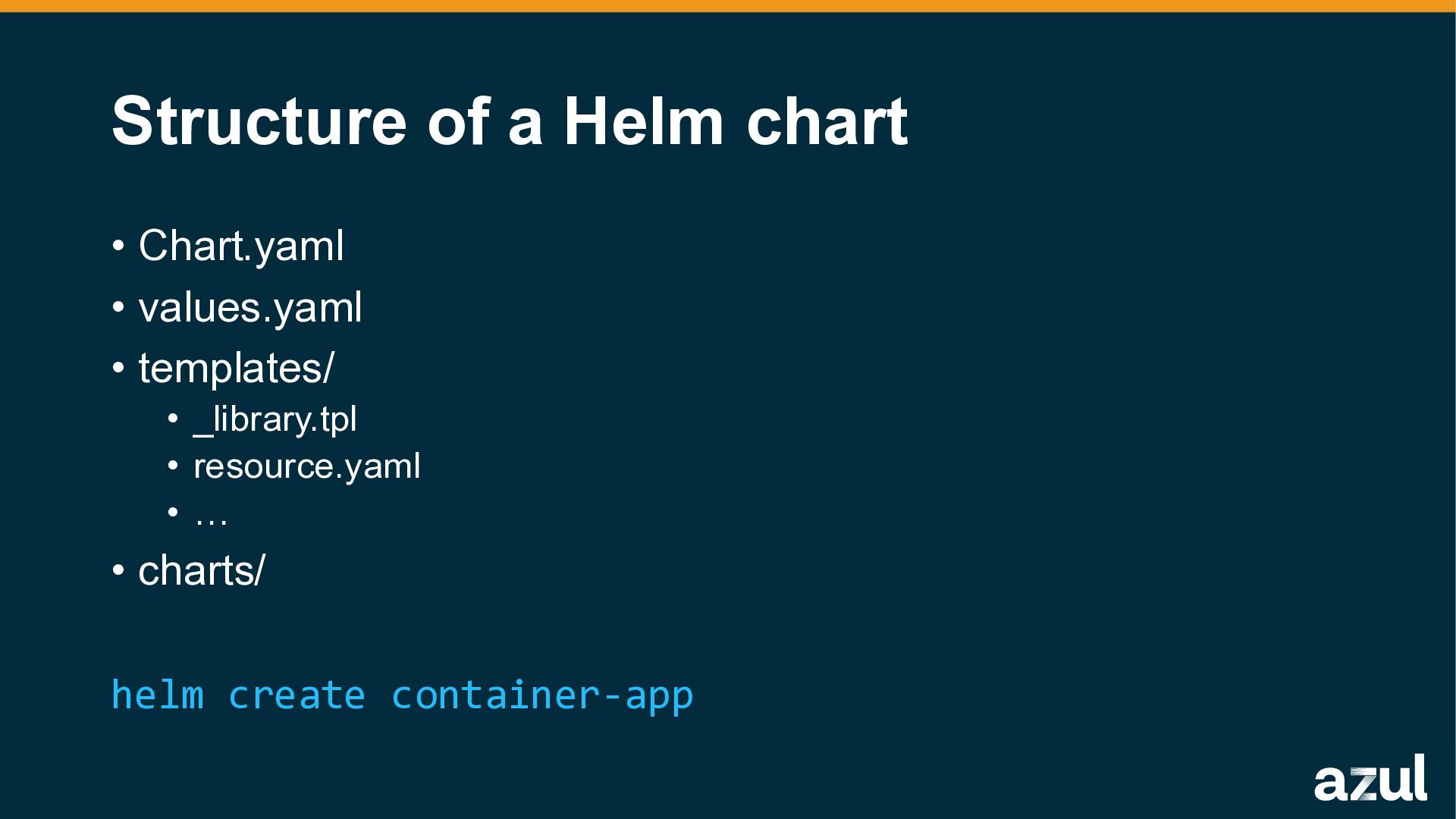
  34. Structure of a Helm chart • Chart.yaml • values.yaml •

    templates/ • _library.tpl • resource.yaml • … • charts/ helm create container-app
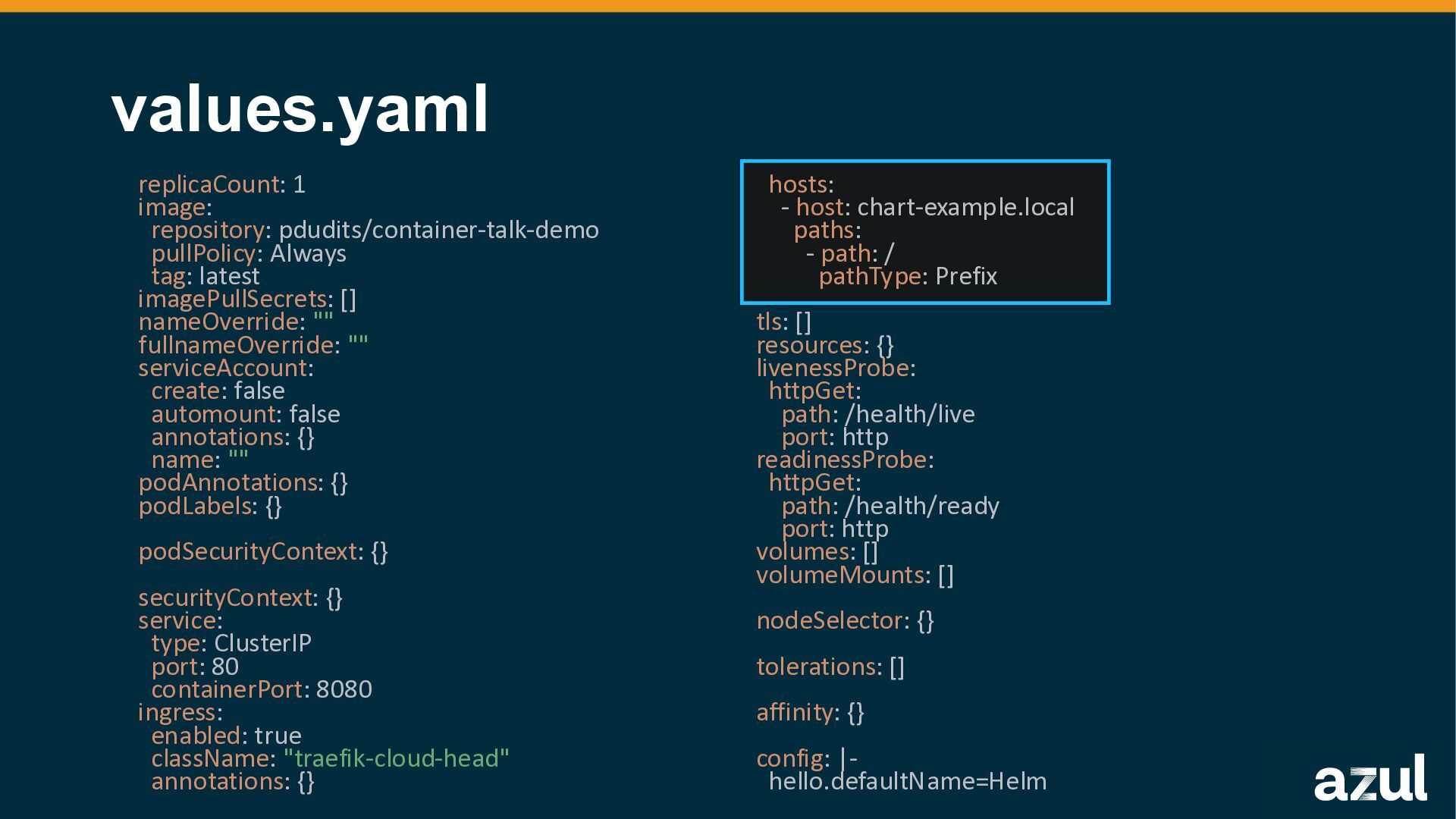
  35. replicaCount: 1 image: repository: pdudits/container-talk-demo pullPolicy: Always tag: latest imagePullSecrets:

    [] nameOverride: "" fullnameOverride: "" serviceAccount: create: false automount: false annotations: {} name: "" podAnnotations: {} podLabels: {} podSecurityContext: {} securityContext: {} service: type: ClusterIP port: 80 containerPort: 8080 ingress: enabled: true className: "traefik-cloud-head" annotations: {} hosts: - host: chart-example.local paths: - path: / pathType: Prefix tls: [] resources: {} livenessProbe: httpGet: path: /health/live port: http readinessProbe: httpGet: path: /health/ready port: http volumes: [] volumeMounts: [] nodeSelector: {} tolerations: [] affinity: {} config: |- hello.defaultName=Helm values.yaml
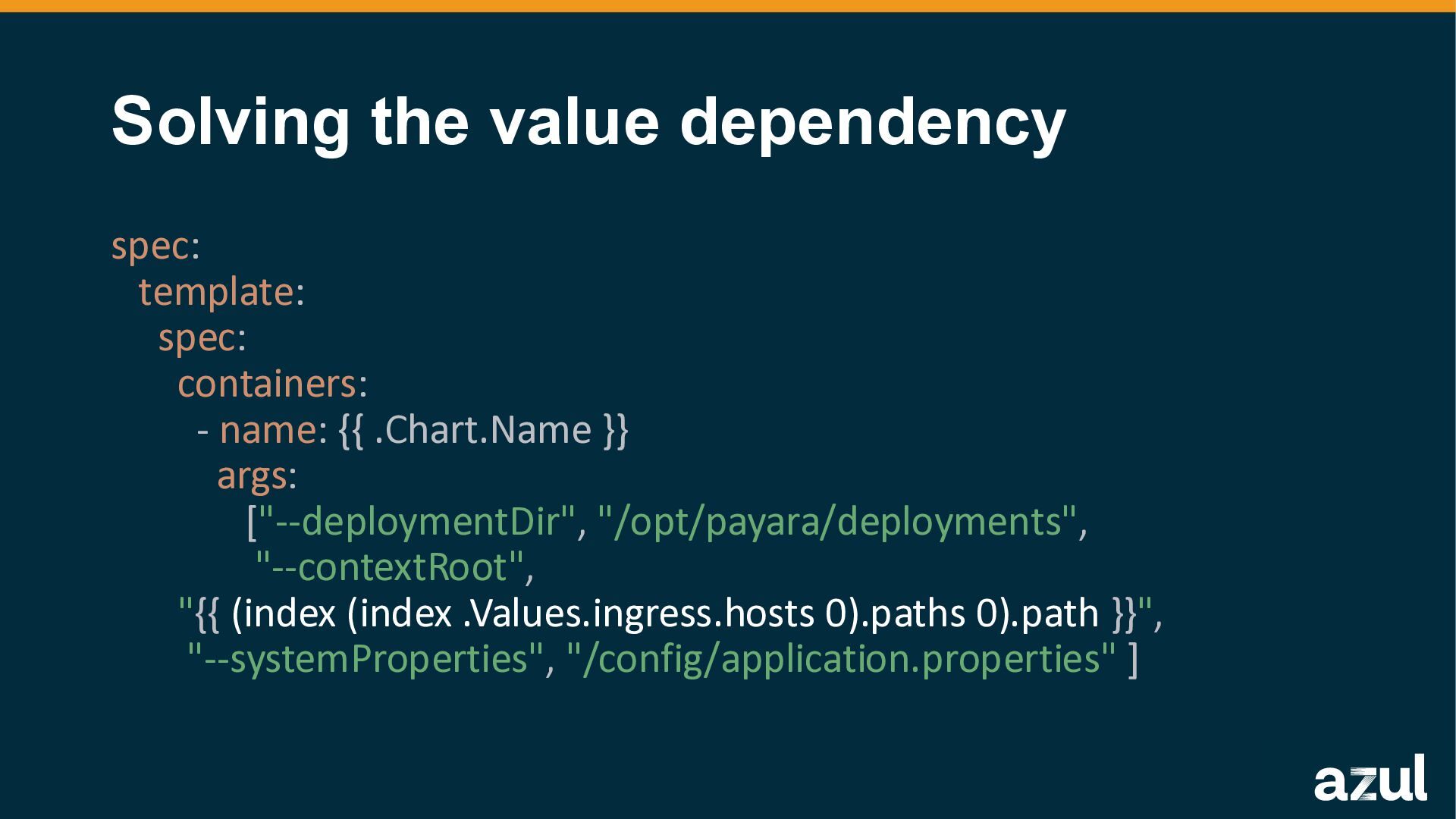
  36. Solving the value dependency spec: template: spec: containers: - name:

    {{ .Chart.Name }} args: ["--deploymentDir", "/opt/payara/deployments", "--contextRoot", "{{ (index (index .Values.ingress.hosts 0).paths 0).path }}", "--systemProperties", "/config/application.properties" ]
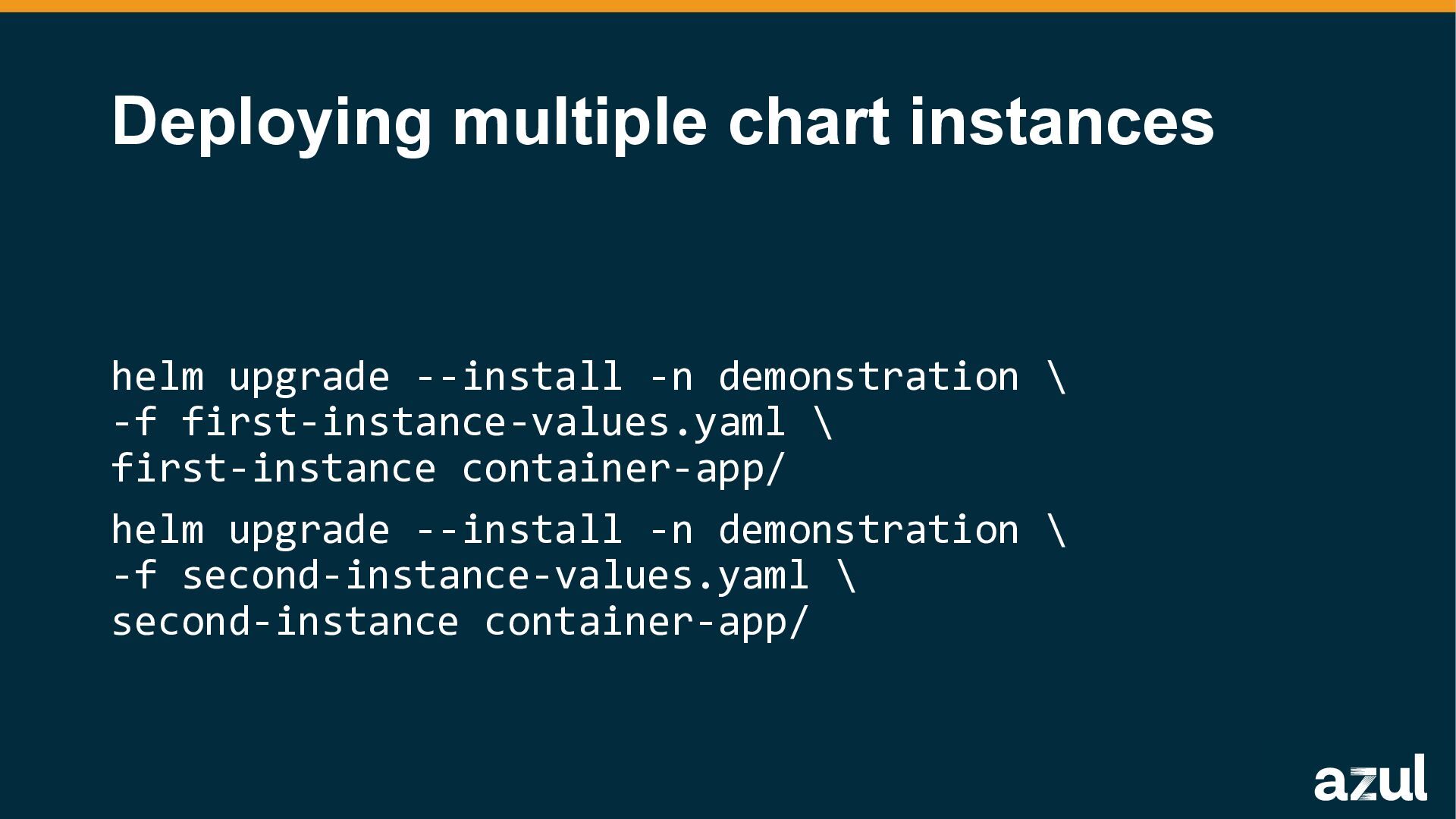
  37. Deploying multiple chart instances helm upgrade --install -n demonstration \

    -f first-instance-values.yaml \ first-instance container-app/ helm upgrade --install -n demonstration \ -f second-instance-values.yaml \ second-instance container-app/
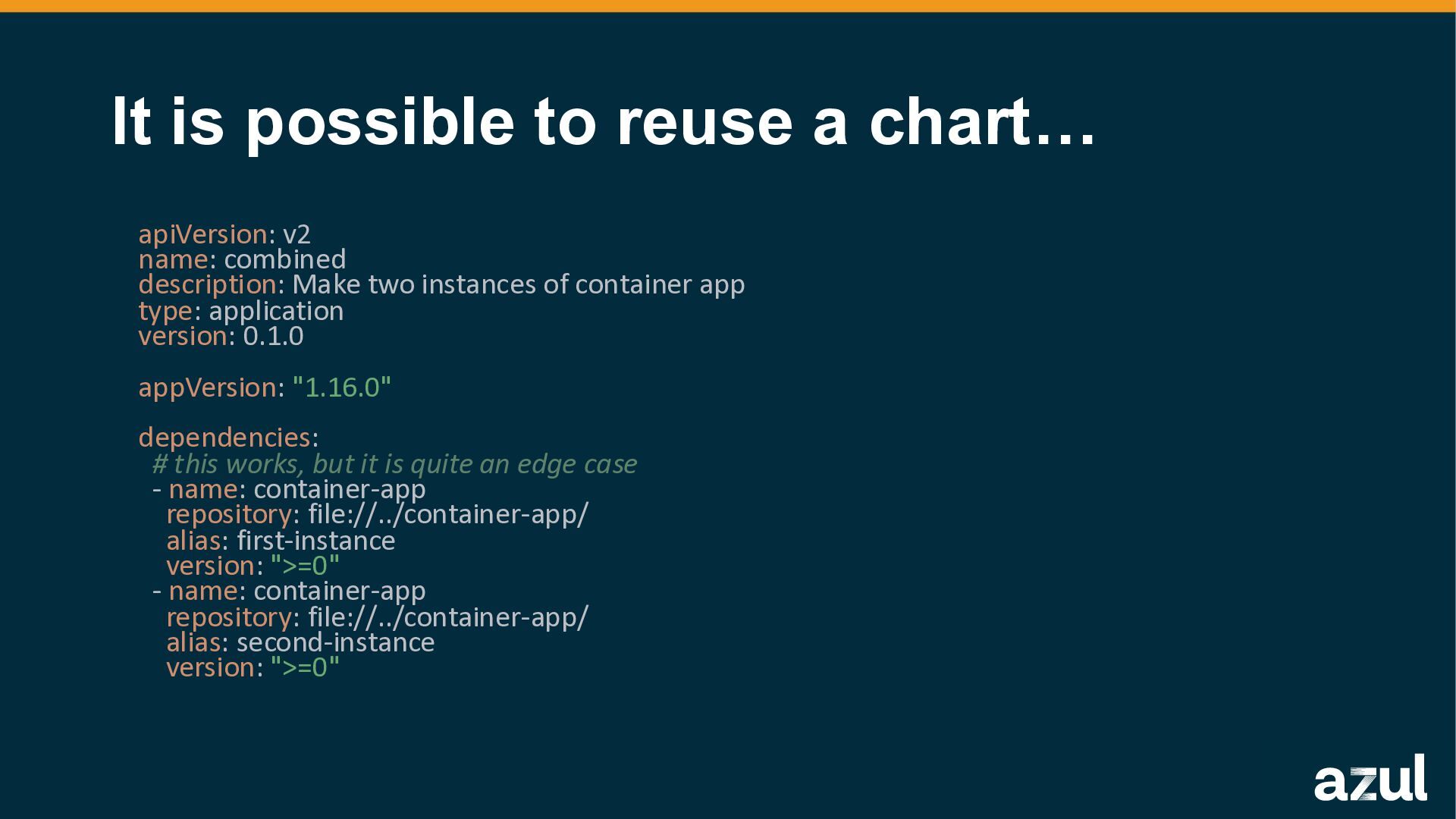
  38. It i po i e to reu e a art…

    apiVersion: v2 name: combined description: Make two instances of container app type: application version: 0.1.0 appVersion: "1.16.0" dependencies: # this works, but it is quite an edge case - name: container-app repository: file://../container-app/ alias: first-instance version: ">=0" - name: container-app repository: file://../container-app/ alias: second-instance version: ">=0"
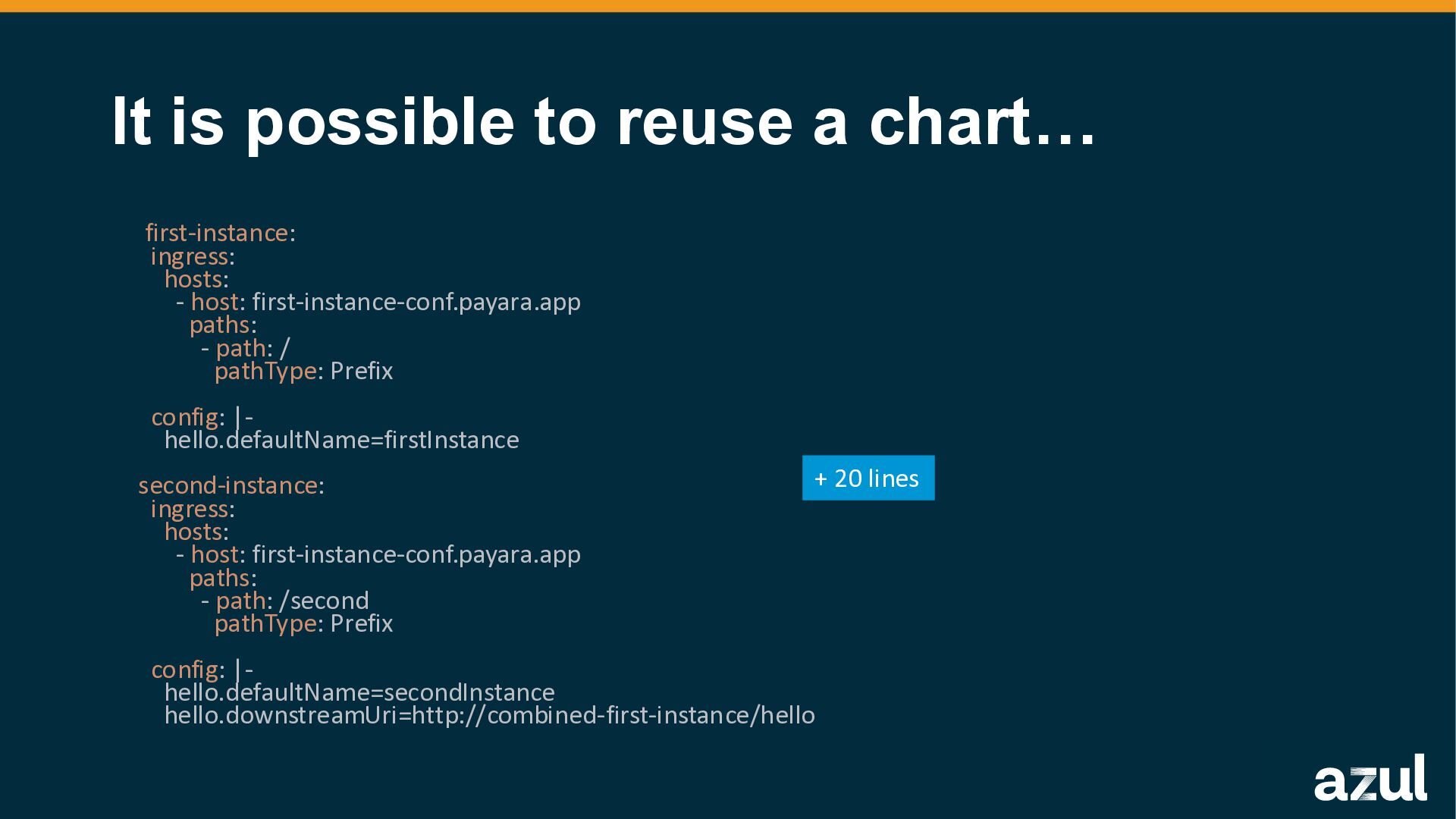
  39. It i po i e to reu e a art…

    first-instance: ingress: hosts: - host: first-instance-conf.payara.app paths: - path: / pathType: Prefix config: |- hello.defaultName=firstInstance second-instance: ingress: hosts: - host: first-instance-conf.payara.app paths: - path: /second pathType: Prefix config: |- hello.defaultName=secondInstance hello.downstreamUri=http://combined-first-instance/hello + 20 lines
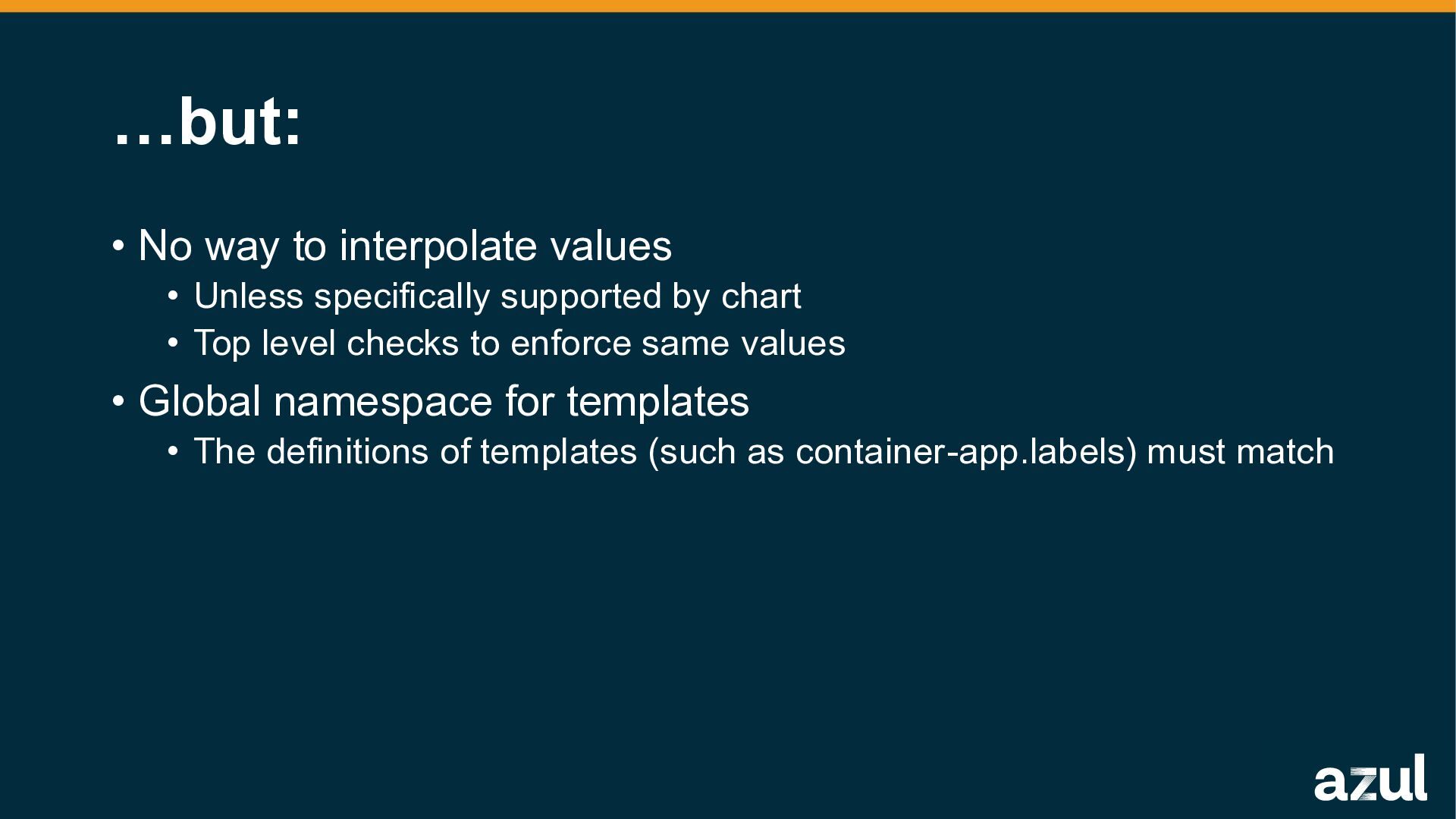
  40. … ut: • No way to interpolate values • Unless

    specifically supported by chart • Top level checks to enforce same values • Global namespace for templates • The definitions of templates (such as container-app.labels) must match
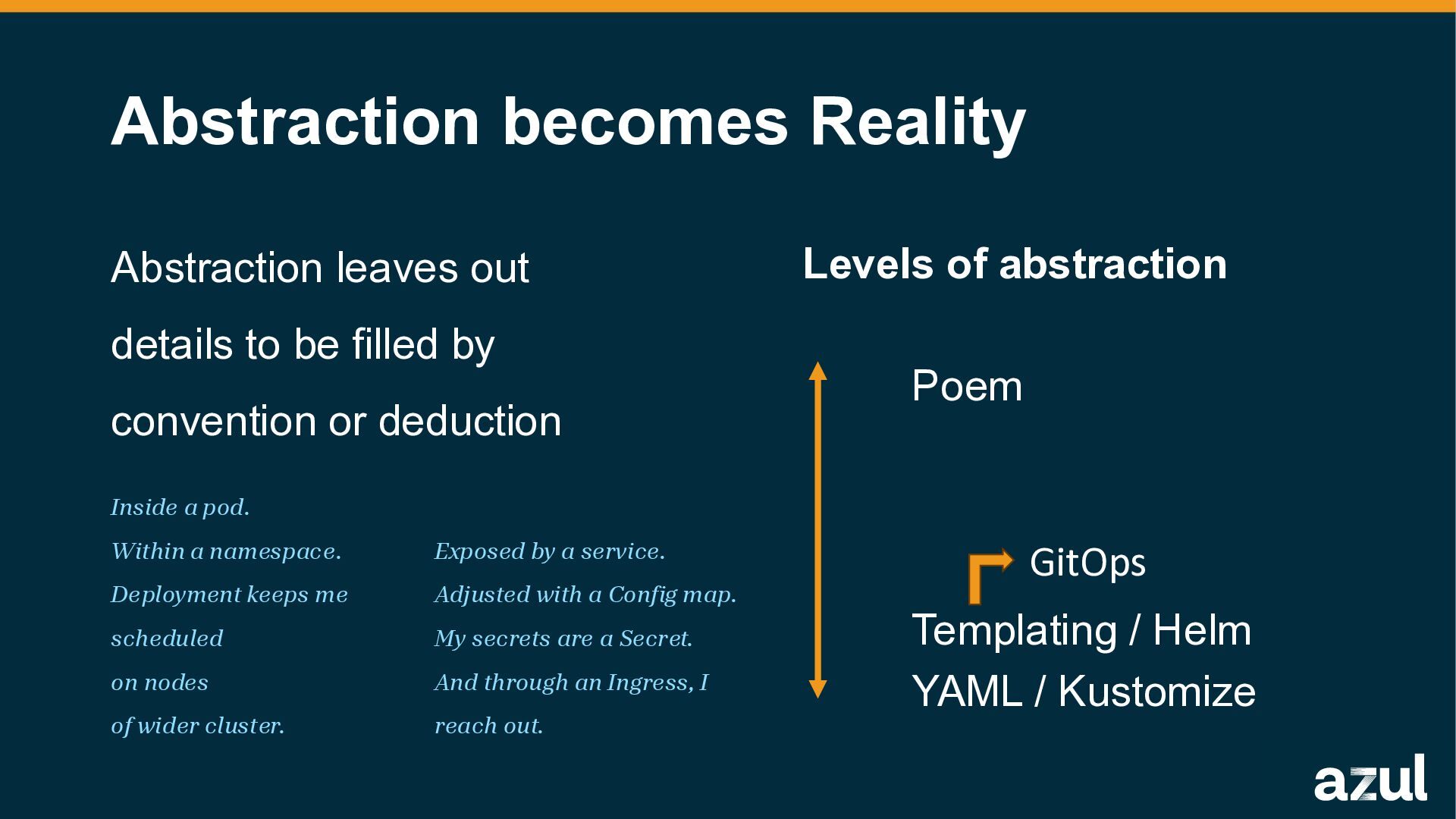
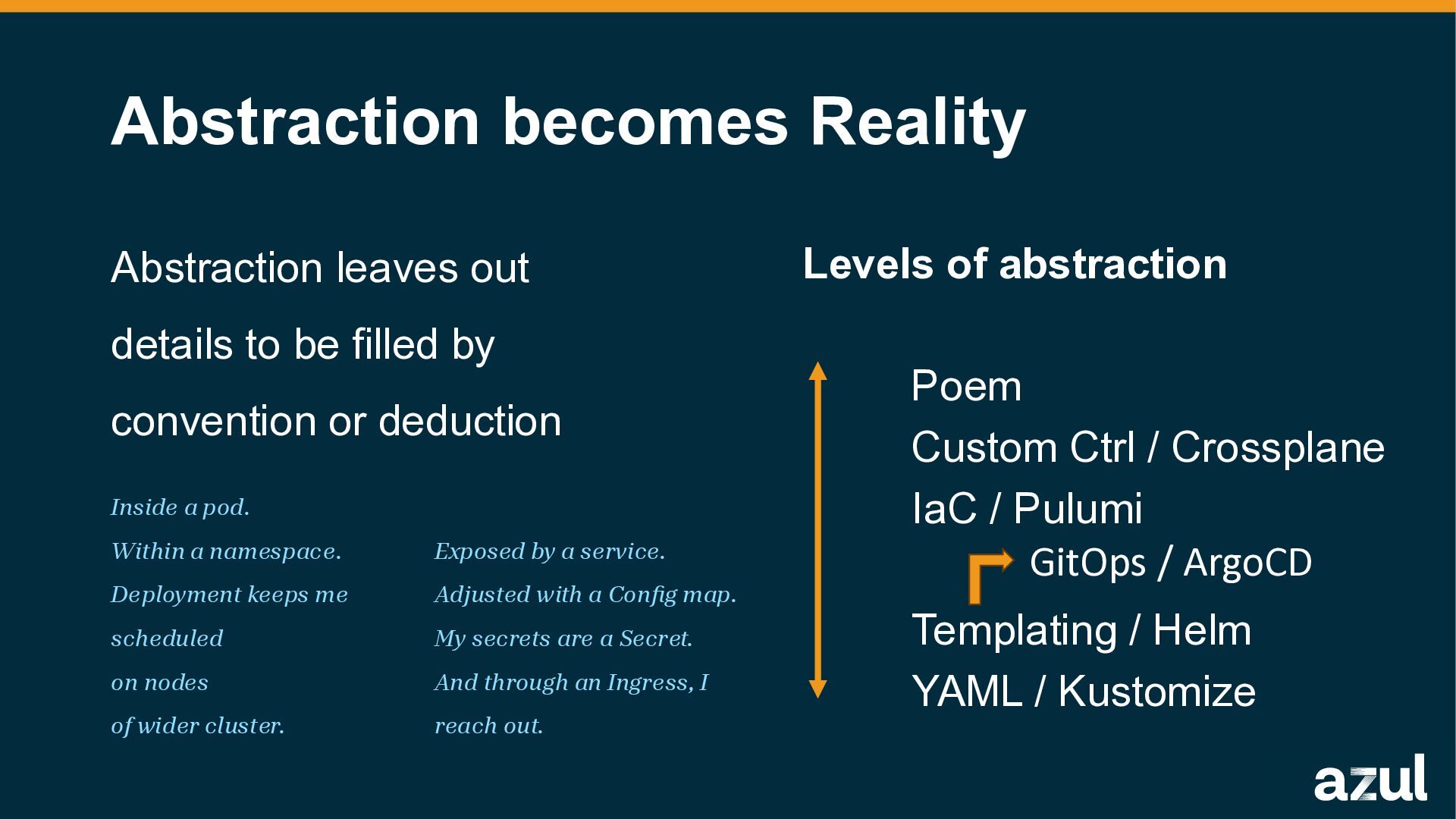
  41. Abstraction becomes Reality Abstraction leaves out details to be filled

    by convention or deduction Levels of abstraction Poem Templating / Helm YAML / Kustomize Inside a pod. Within a namespace. Deployment keeps me scheduled on nodes of wider cluster. Exposed by a service. Adjusted with a Config map. My secrets are a Secret. And through an Ingress, I reach out. GitOps
  42. Abstraction becomes Reality Abstraction leaves out details to be filled

    by convention or deduction Levels of abstraction Poem Infra as Code Templating / Helm YAML / Kustomize Inside a pod. Within a namespace. Deployment keeps me scheduled on nodes of wider cluster. Exposed by a service. Adjusted with a Config map. My secrets are a Secret. And through an Ingress, I reach out. GitOps / ArgoCD
  43. Infrastructure as Code • Define your desired Kubernetes state in

    a program • Also your additional infrastructure • Terraform / OpenTofu • Pulumi
  44. Pulumi • Executes arbitrary program (in TypeScript, Ja a, Py

    h ,… • Construction of Pulumi Resources builds up state • Reconcile the state with Providers • Native as well as Terraform providers
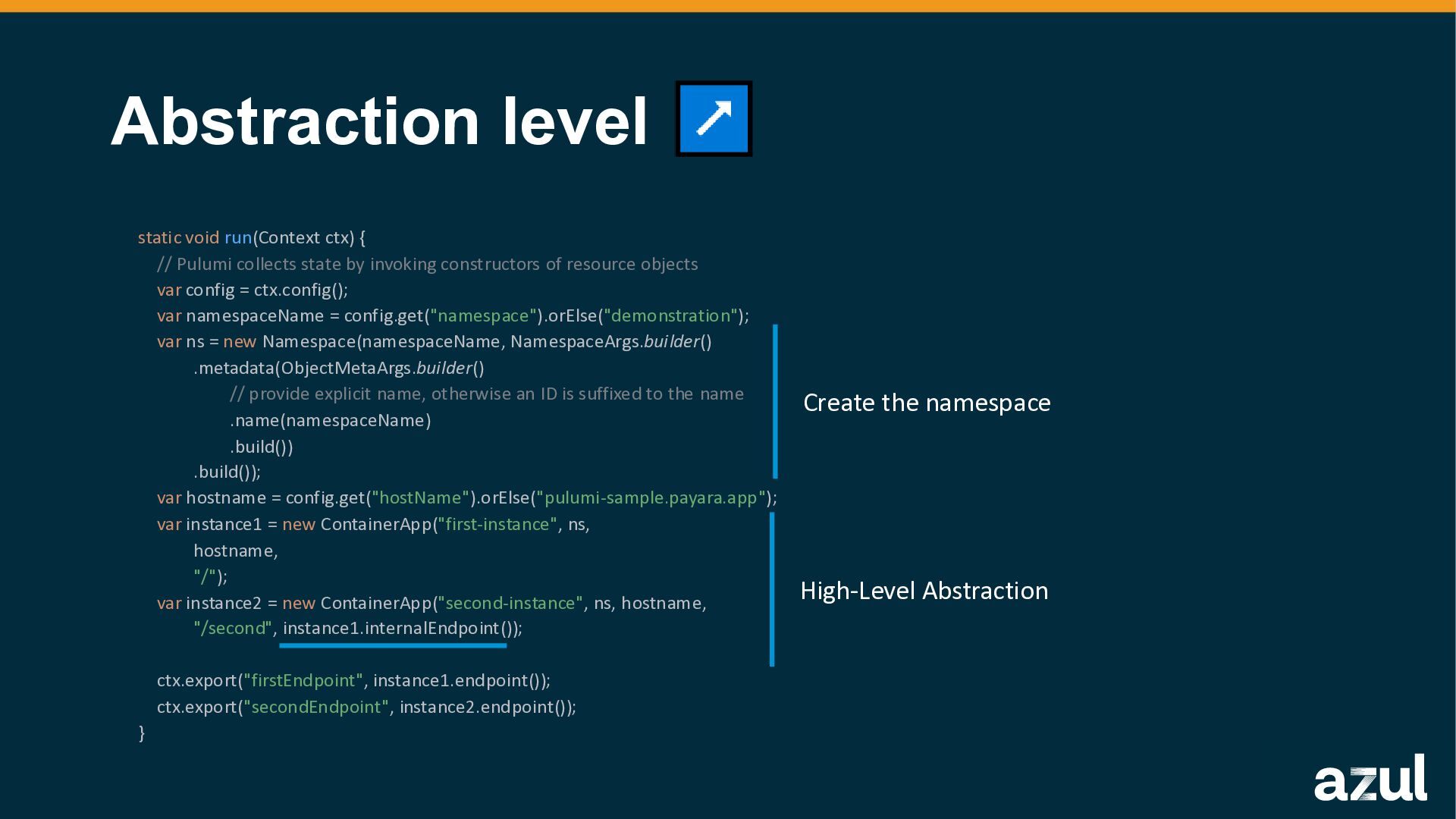
  45. tra tion e e static void run(Context ctx) { //

    Pulumi collects state by invoking constructors of resource objects var config = ctx.config(); var namespaceName = config.get("namespace").orElse("demonstration"); var ns = new Namespace(namespaceName, NamespaceArgs.builder() .metadata(ObjectMetaArgs.builder() // provide explicit name, otherwise an ID is suffixed to the name .name(namespaceName) .build()) .build()); var hostname = config.get("hostName").orElse("pulumi-sample.payara.app"); var instance1 = new ContainerApp("first-instance", ns, hostname, "/"); var instance2 = new ContainerApp("second-instance", ns, hostname, "/second", instance1.internalEndpoint()); ctx.export("firstEndpoint", instance1.endpoint()); ctx.export("secondEndpoint", instance2.endpoint()); } Create the namespace High-Level Abstraction
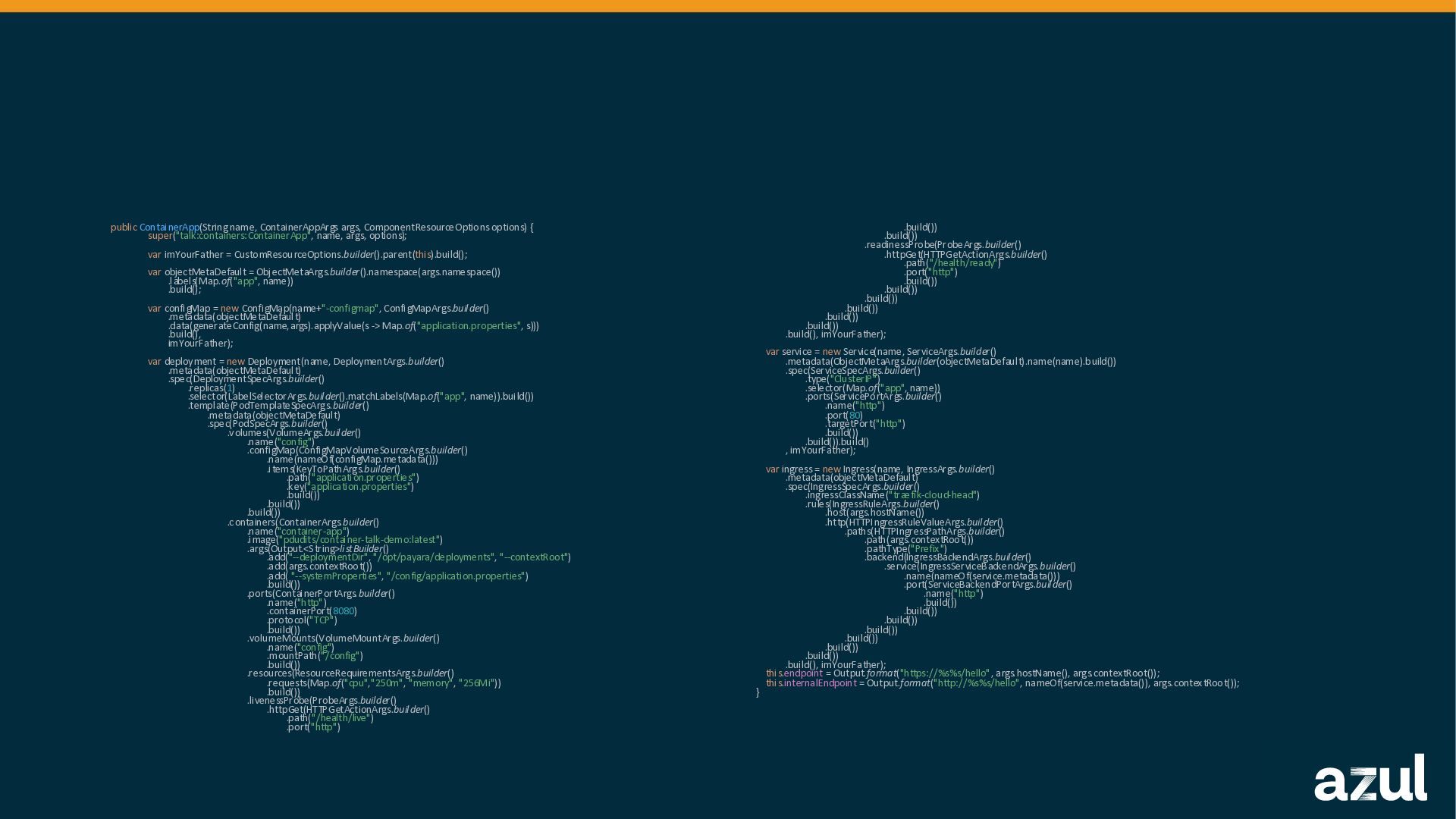
  46. public ContainerApp(String name, ContainerAppArgs args, ComponentResourceOptions options) { super("talk:containers:ContainerApp", name,

    args, options); var imYourFather = CustomResourceOptions.builder().parent(this).build(); var objectMetaDefault = ObjectMetaArgs.builder().namespace(args.namespace()) .labels(Map.of("app", name)) .build(); var configMap = new ConfigMap(name+"-configmap", ConfigMapArgs.builder() .metadata(objectMetaDefault) .data(generateConfig(name,args).applyValue(s -> Map.of("application.properties", s))) .build(), imYourFather); var deployment = new Deployment(name, DeploymentArgs.builder() .metadata(objectMetaDefault) .spec(DeploymentSpecArgs.builder() .replicas(1) .selector(LabelSelectorArgs.builder().matchLabels(Map.of("app", name)).build()) .template(PodTemplateSpecArgs.builder() .metadata(objectMetaDefault) .spec(PodSpecArgs.builder() .volumes(VolumeArgs.builder() .name("config") .configMap(ConfigMapVolumeSourceArgs.builder() .name(nameOf(configMap.metadata())) .items(KeyToPathArgs.builder() .path("application.properties") .key("application.properties") .build()) .build()) .build()) .containers(ContainerArgs.builder() .name("container-app") .image("pdudits/container-talk-demo:latest") .args(Output.<String>listBuilder() .add("--deploymentDir", "/opt/payara/deployments", "--contextRoot") .add(args.contextRoot()) .add( "--systemProperties", "/config/application.properties") .build()) .ports(ContainerPortArgs.builder() .name("http") .containerPort(8080) .protocol("TCP") .build()) .volumeMounts(VolumeMountArgs.builder() .name("config") .mountPath("/config") .build()) .resources(ResourceRequirementsArgs.builder() .requests(Map.of("cpu","250m", "memory", "256Mi")) .build()) .livenessProbe(ProbeArgs.builder() .httpGet(HTTPGetActionArgs.builder() .path("/health/live") .port("http") .build()) .build()) .readinessProbe(ProbeArgs.builder() .httpGet(HTTPGetActionArgs.builder() .path("/health/ready") .port("http") .build()) .build()) .build()) .build()) .build()) .build()) .build(), imYourFather); var service = new Service(name, ServiceArgs.builder() .metadata(ObjectMetaArgs.builder(objectMetaDefault).name(name).build()) .spec(ServiceSpecArgs.builder() .type("ClusterIP") .selector(Map.of("app", name)) .ports(ServicePortArgs.builder() .name("http") .port(80) .targetPort("http") .build()) .build()).build() , imYourFather); var ingress = new Ingress(name, IngressArgs.builder() .metadata(objectMetaDefault) .spec(IngressSpecArgs.builder() .ingressClassName("traefik-cloud-head") .rules(IngressRuleArgs.builder() .host(args.hostName()) .http(HTTPIngressRuleValueArgs.builder() .paths(HTTPIngressPathArgs.builder() .path(args.contextRoot()) .pathType("Prefix") .backend(IngressBackendArgs.builder() .service(IngressServiceBackendArgs.builder() .name(nameOf(service.metadata())) .port(ServiceBackendPortArgs.builder() .name("http") .build()) .build()) .build()) .build()) .build()) .build()) .build()) .build(), imYourFather); this.endpoint = Output.format("https://%s%s/hello", args.hostName(), args.contextRoot()); this.internalEndpoint = Output.format("http://%s%s/hello", nameOf(service.metadata()), args.contextRoot()); }
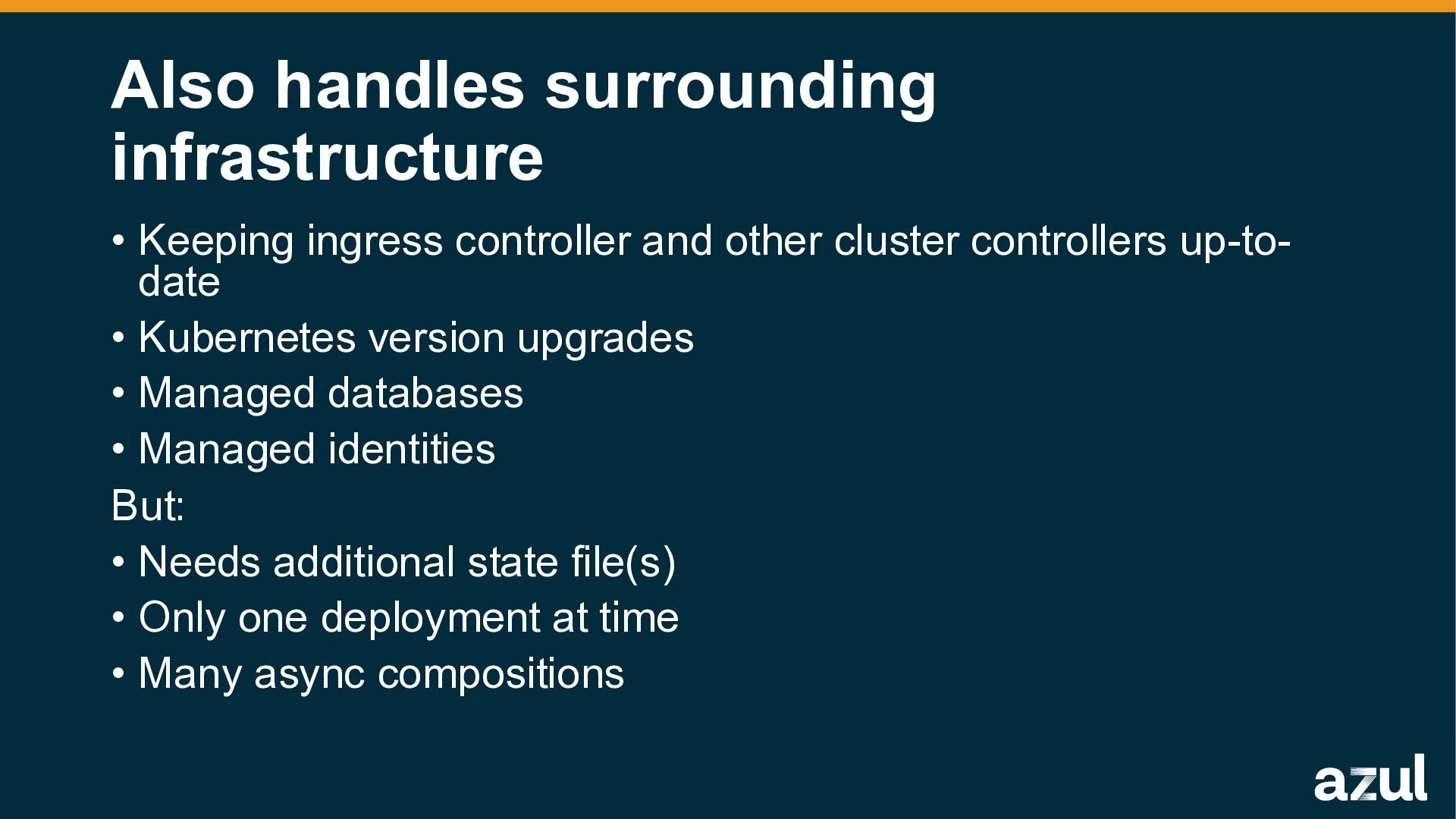
  47. Also handles surrounding infrastructure • Keeping ingress controller and other

    cluster controllers up-to- date • Kubernetes version upgrades • Managed databases • Managed identities But: • Needs additional state file(s) • Only one deployment at time • Many async compositions
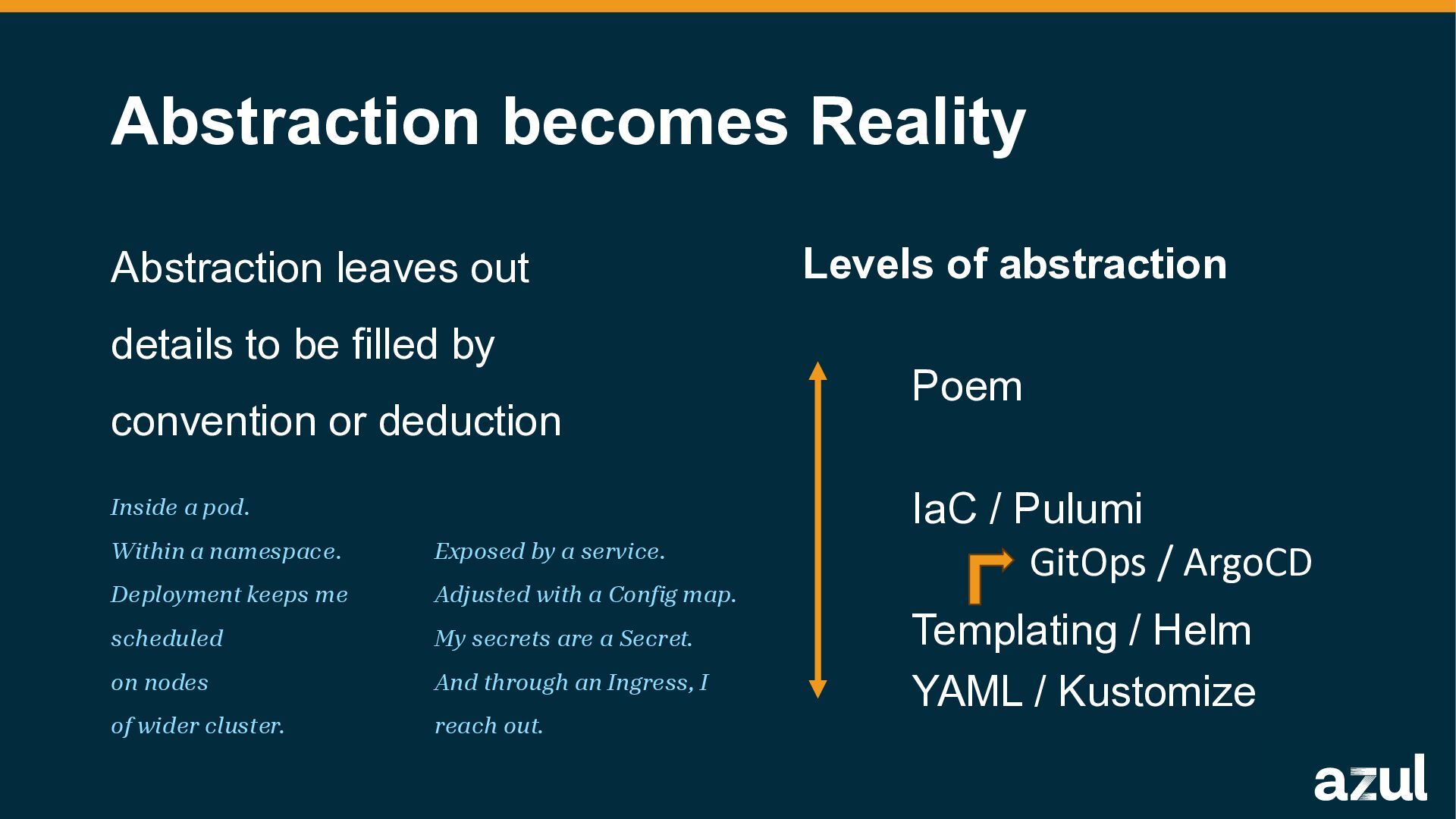
  48. tra tion e ome ea it Abstraction leaves out details

    to be filled by convention or deduction Levels of abstraction Poem IaC / Pulumi Templating / Helm YAML / Kustomize Inside a pod. Within a namespace. Deployment keeps me scheduled on nodes of wider cluster. Exposed by a service. Adjusted with a Config map. My secrets are a Secret. And through an Ingress, I reach out. GitOps / ArgoCD
  49. Abstraction becomes Reality Abstraction leaves out details to be filled

    by convention or deduction Levels of abstraction Poem Custom Ctrl / Crossplane IaC / Pulumi Templating / Helm YAML / Kustomize Inside a pod. Within a namespace. Deployment keeps me scheduled on nodes of wider cluster. Exposed by a service. Adjusted with a Config map. My secrets are a Secret. And through an Ingress, I reach out. GitOps / ArgoCD
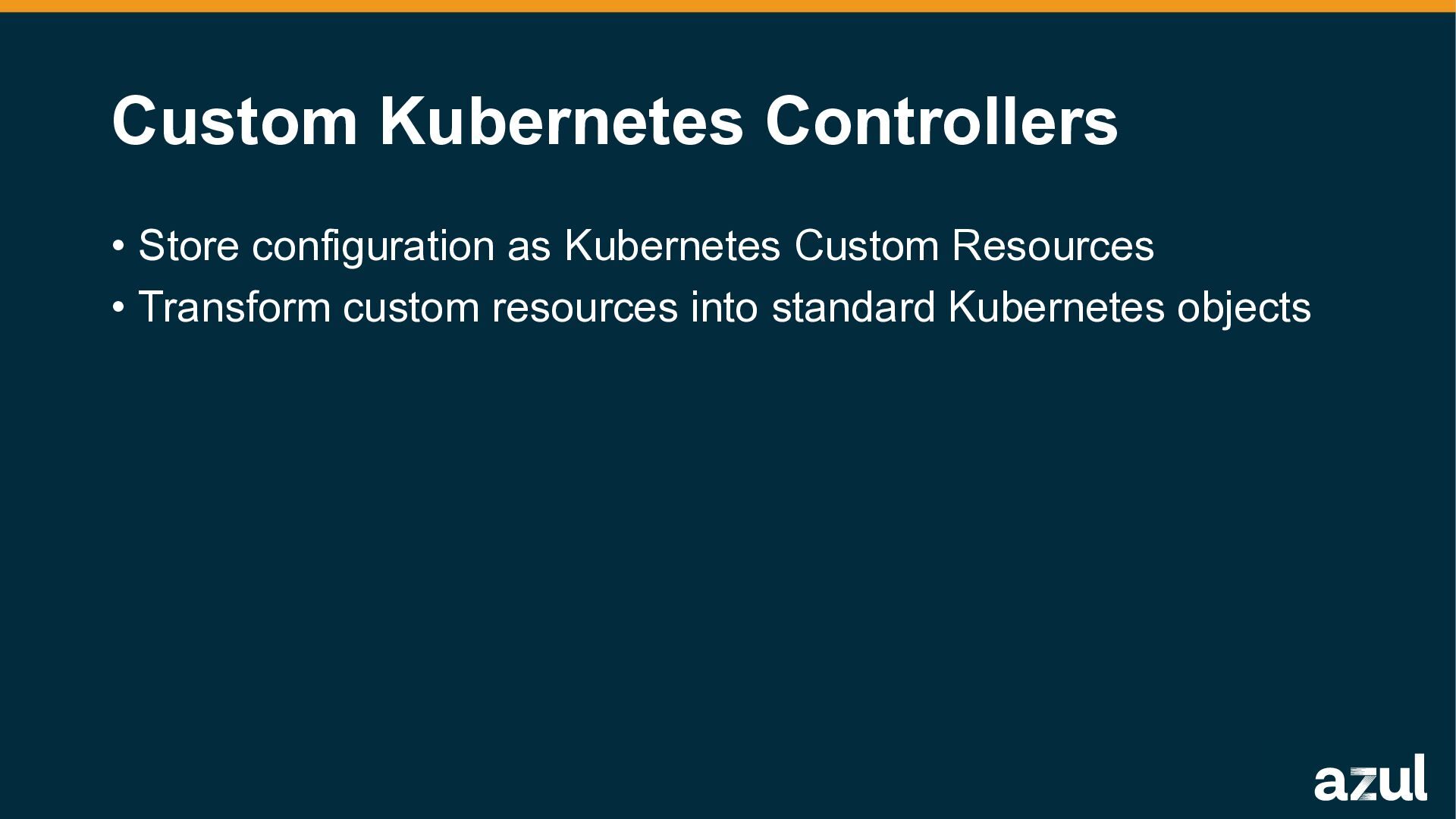
  50. Custom Kubernetes Controllers • Store configuration as Kubernetes Custom Resources

    • Transform custom resources into standard Kubernetes objects
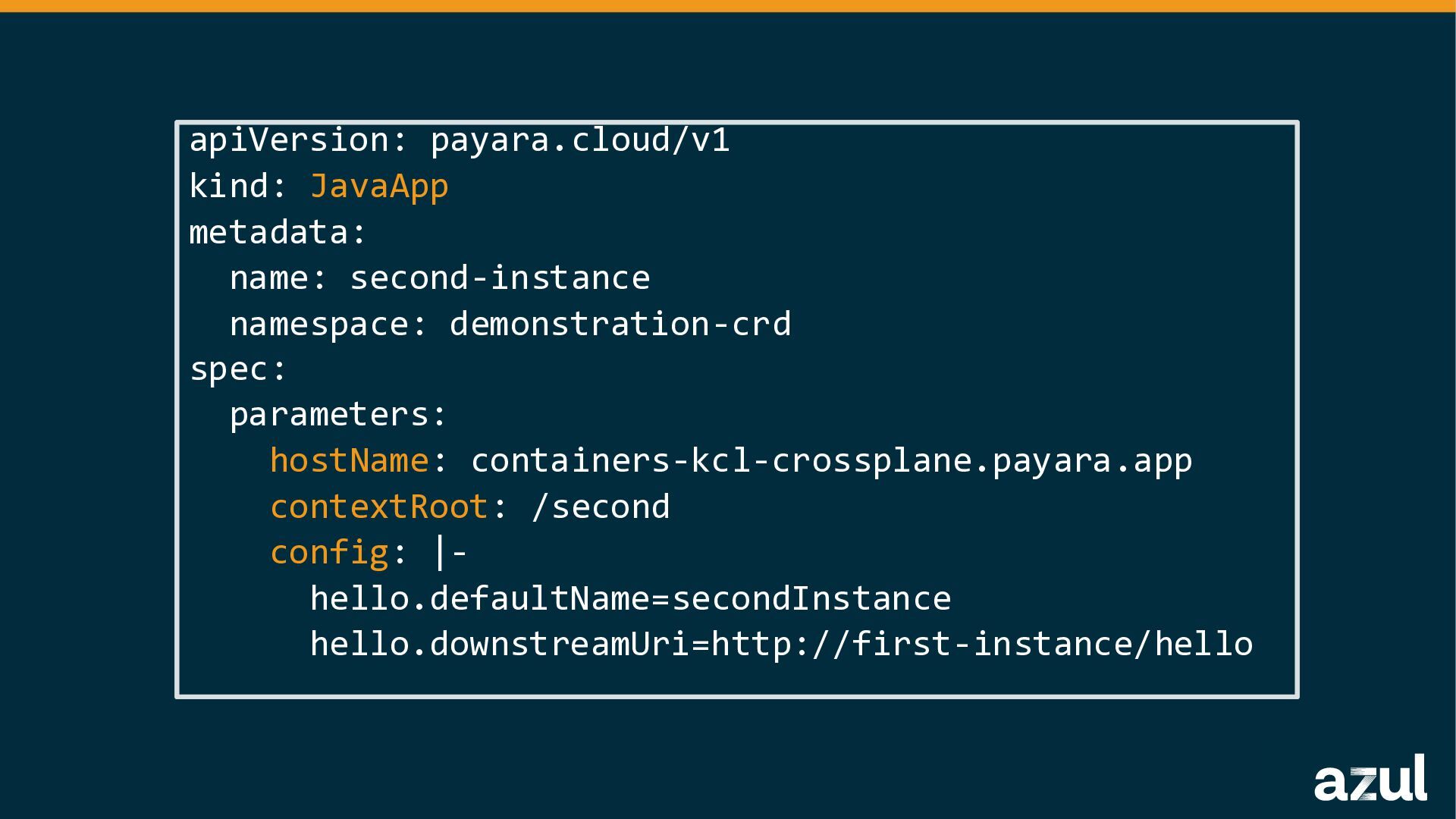
  51. apiVersion: v1 kind: Namespace metadata: name: demonstration --- apiVersion: v1

    kind: ConfigMap metadata: name: first-instance-config namespace: demonstration data: application.properties: | hello.defaultName=firstInstance --- apiVersion: apps/v1 kind: Deployment metadata: name: first-instance namespace: demonstration labels: app: first-instance spec: replicas: 1 selector: matchLabels: app: first-instance template: metadata: labels: app: first-instance spec: containers: - name: container-app image: pdudits/container-talk-demo:latest imagePullPolicy: Always args: ["--deploymentDir", "/opt/payara/deployments", "--contextRoot", "/", "--systemProperties", "/config/application.properties"] ports: - name: http containerPort: 8080 resources: requests: cpu: "250m" memory: "256Mi" volumeMounts: - name: config mountPath: /config volumes: - name: config configMap: name: first-instance-config items: - key: application.properties path: application.properties --- apiVersion: v1 kind: Service metadata: name: first-instance namespace: demonstration labels: app: first-instance spec: type: ClusterIP selector: app: first-instance ports: - name: http port: 8080 targetPort: http --- apiVersion: networking.k8s.io/v1 kind: Ingress metadata: name: first-instance namespace: demonstration labels: app: first-instance spec: ingressClassName: traefik-cloud-head rules: - host: first-instance-conference.payara.app http: paths: - path: / pathType: Prefix backend: service: name: first-instance port: number: 8080 apiVersion: payara.cloud/v1 kind: JavaApp metadata: name: second-instance namespace: demonstration-crd spec: parameters: hostName: containers-kcl-crossplane.payara.app contextRoot: /second config: |- hello.defaultName=secondInstance hello.downstreamUri=http://first-instance/hello
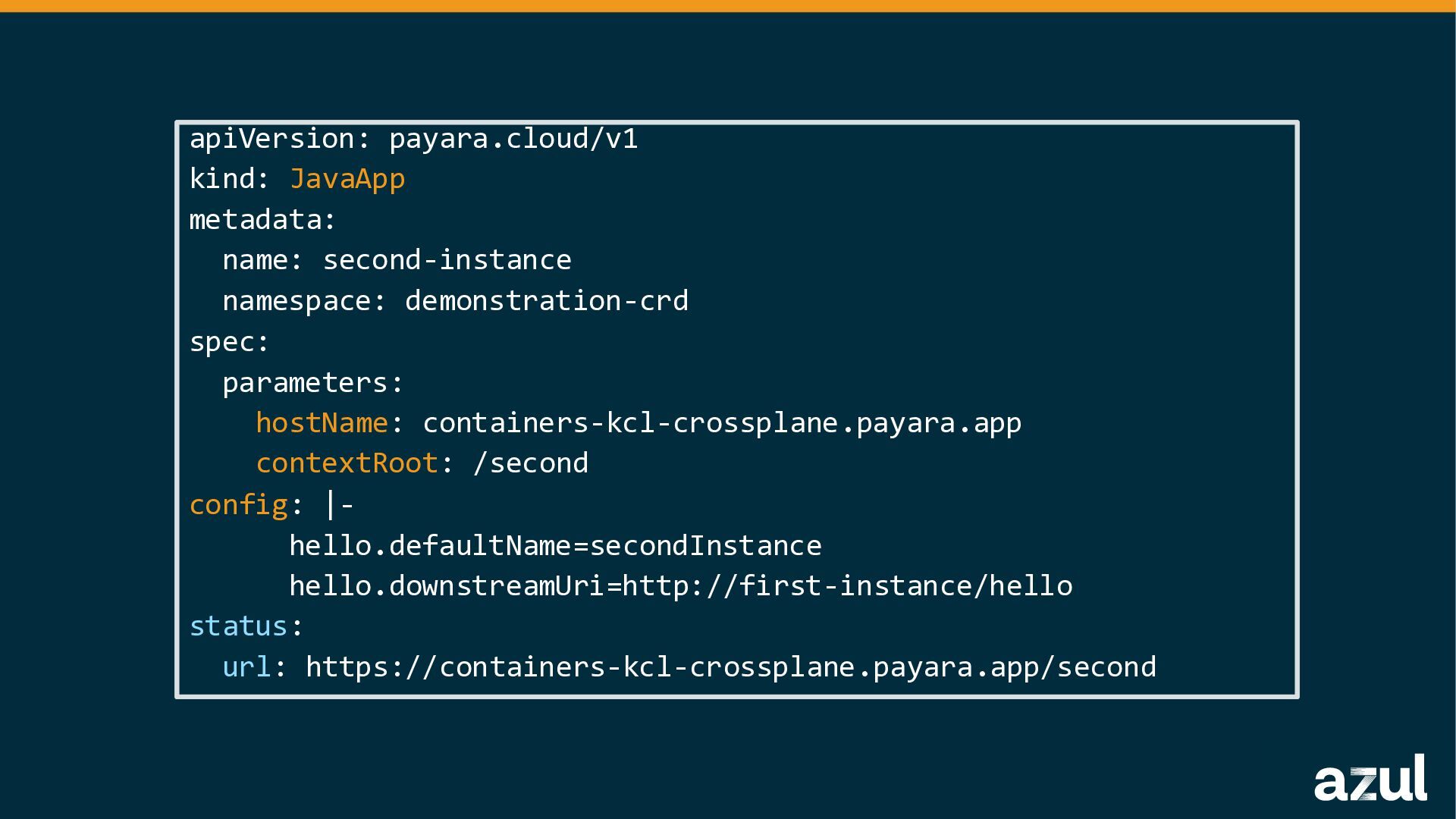
  52. apiVersion: v1 kind: Namespace metadata: name: demonstration --- apiVersion: v1

    kind: ConfigMap metadata: name: first-instance-config namespace: demonstration data: application.properties: | hello.defaultName=firstInstance --- apiVersion: apps/v1 kind: Deployment metadata: name: first-instance namespace: demonstration labels: app: first-instance spec: replicas: 1 selector: matchLabels: app: first-instance template: metadata: labels: app: first-instance spec: containers: - name: container-app image: pdudits/container-talk-demo:latest imagePullPolicy: Always args: ["--deploymentDir", "/opt/payara/deployments", "--contextRoot", "/", "--systemProperties", "/config/application.properties"] ports: - name: http containerPort: 8080 resources: requests: cpu: "250m" memory: "256Mi" volumeMounts: - name: config mountPath: /config volumes: - name: config configMap: name: first-instance-config items: - key: application.properties path: application.properties --- apiVersion: v1 kind: Service metadata: name: first-instance namespace: demonstration labels: app: first-instance spec: type: ClusterIP selector: app: first-instance ports: - name: http port: 8080 targetPort: http --- apiVersion: networking.k8s.io/v1 kind: Ingress metadata: name: first-instance namespace: demonstration labels: app: first-instance spec: ingressClassName: traefik-cloud-head rules: - host: first-instance-conference.payara.app http: paths: - path: / pathType: Prefix backend: service: name: first-instance port: number: 8080 apiVersion: payara.cloud/v1 kind: JavaApp metadata: name: second-instance namespace: demonstration-crd spec: parameters: hostName: containers-kcl-crossplane.payara.app contextRoot: /second config: |- hello.defaultName=secondInstance hello.downstreamUri=http://first-instance/hello status: url: https://containers-kcl-crossplane.payara.app/second
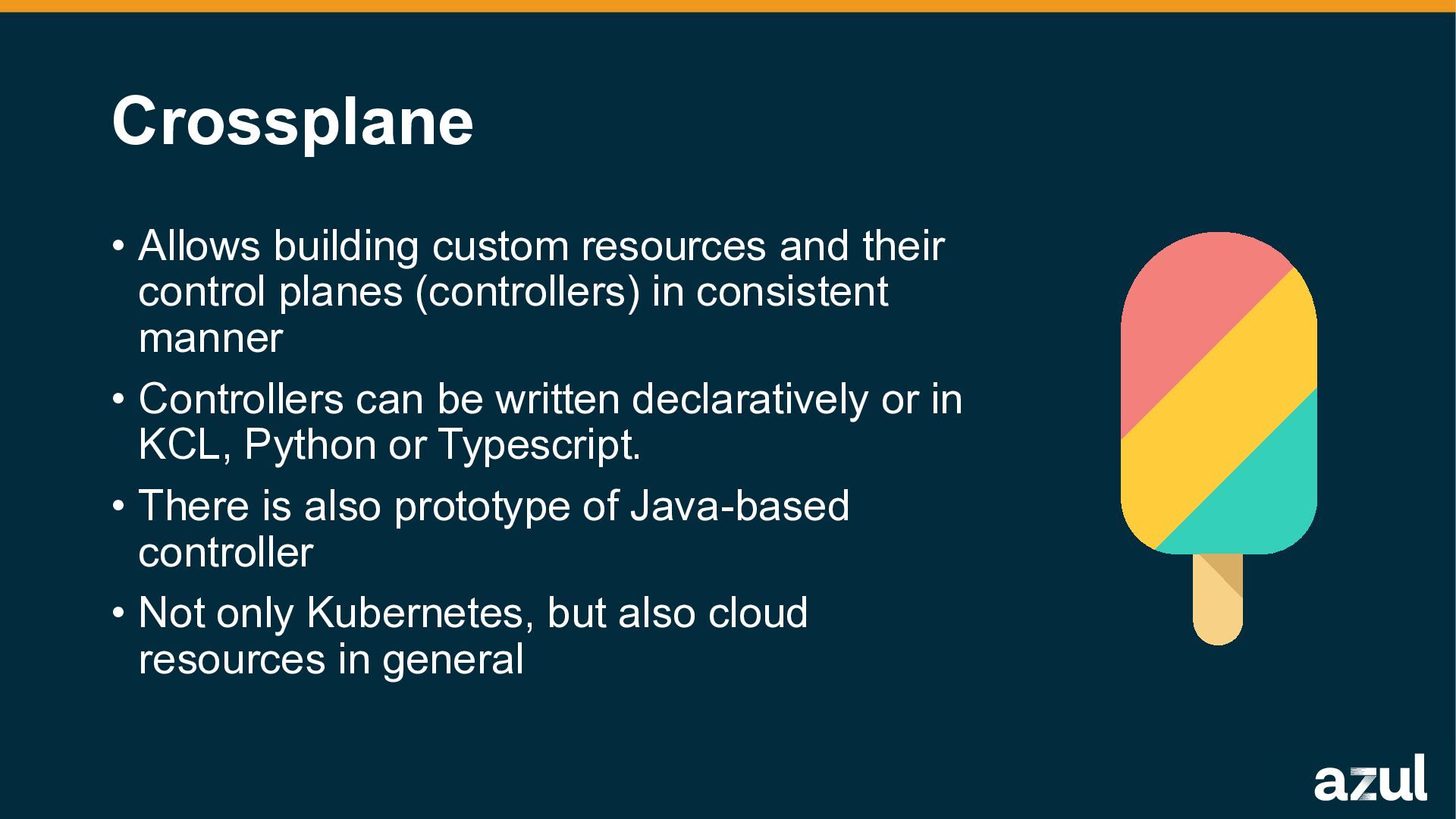
  53. ro p ane • Allows building custom resources and their

    control planes (controllers) in consistent manner • Controllers can be written declaratively or in KCL, Python or Typescript. • There is also prototype of Java-based controller • Not only Kubernetes, but also cloud resources in general
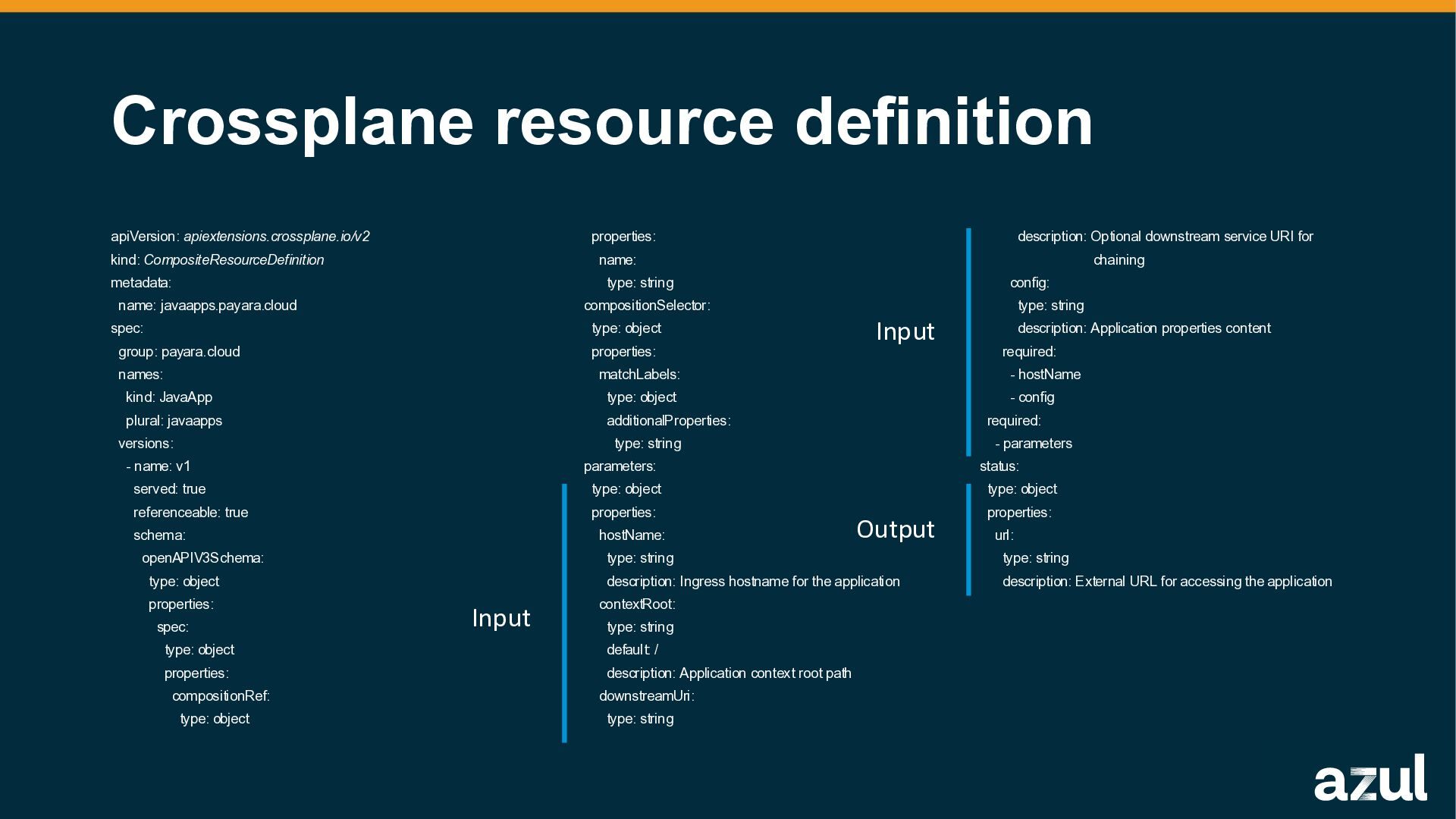
  54. Crossplane resource definition apiVersion: apiextensions.crossplane.io/v2 kind: CompositeResourceDefinition metadata: name: javaapps.payara.cloud

    spec: group: payara.cloud names: kind: JavaApp plural: javaapps versions: - name: v1 served: true referenceable: true schema: openAPIV3Schema: type: object properties: spec: type: object properties: compositionRef: type: object properties: name: type: string compositionSelector: type: object properties: matchLabels: type: object additionalProperties: type: string parameters: type: object properties: hostName: type: string description: Ingress hostname for the application contextRoot: type: string default: / description: Application context root path downstreamUri: type: string description: Optional downstream service URI for chaining config: type: string description: Application properties content required: - hostName - config required: - parameters status: type: object properties: url: type: string description: External URL for accessing the application Input Output Input
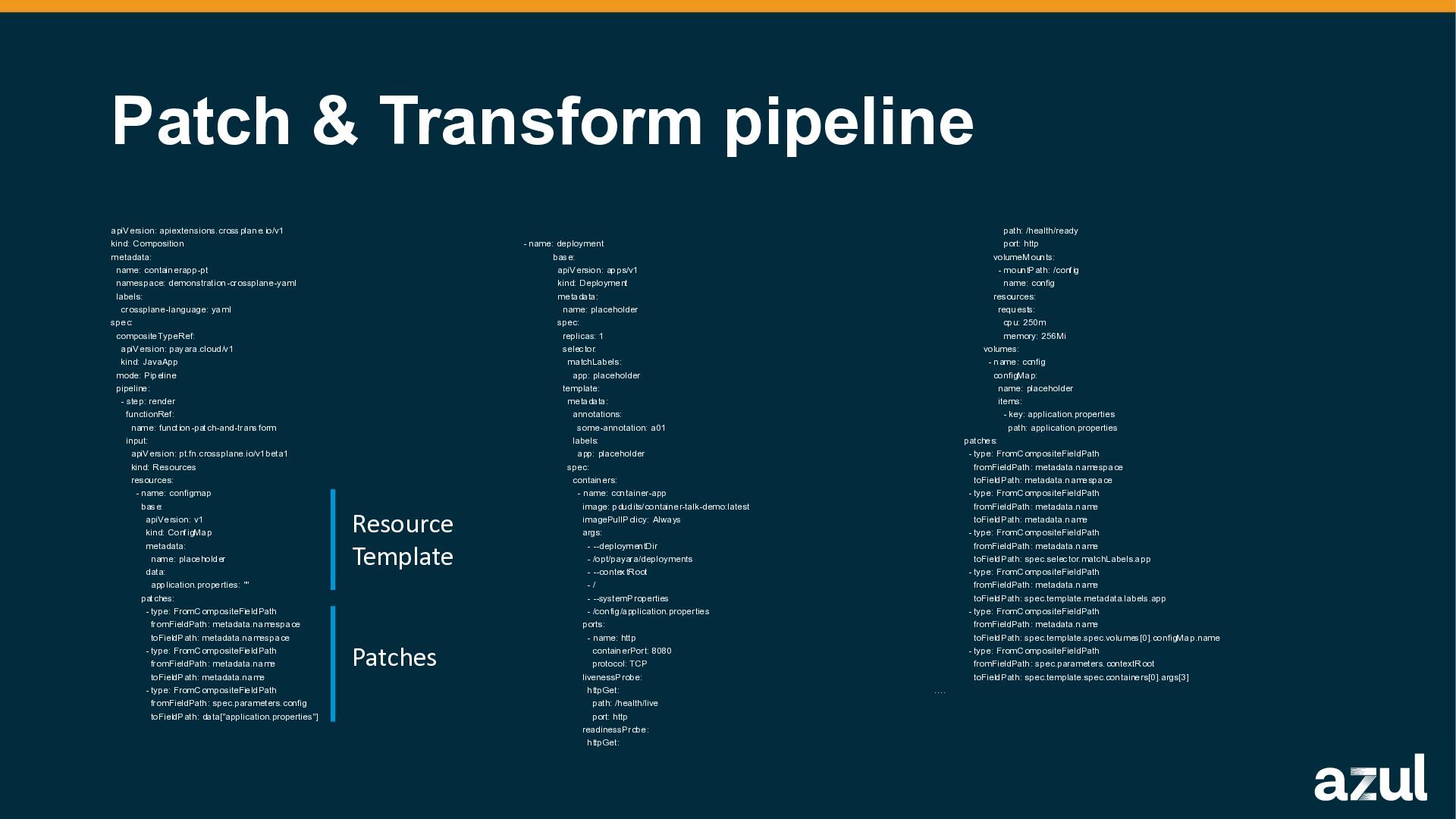
  55. Patch & Transform pipeline a V s : a x

    s s. ss a . / 1 k : C m s m a a a: am : a a - am s a : m s a - ss a -yam a s: ss a - a a : yam s : m s Ty R f: a V s : aya a. / 1 k : Ja aA m : P : - s : f R f: am : f - a h-a - a sf m : a V s : .f . ss a . / 1 a1 k : R s s s s: - am : f ma as : a V s : 1 k : C f Ma m a a a: am : a h a a: a a . s: a h s: - y : F mC m s F Pa h f mF Pa h: m a a a. am s a F Pa h: m a a a. am s a - y : F mC m s F Pa h f mF Pa h: m a a a. am F Pa h: m a a a. am - y : F mC m s F Pa h f mF Pa h: s . a am s. f F Pa h: a a[ a a . s ] - am : ym as : a V s : a s/ 1 k : D ym m a a a: am : a h s : as: 1 s : ma hLa s: a : a h m a : m a a a: a a s: s m -a a : a01 a s: a : a h s : a s: - am : a -a ma : s/ a - a k- m : a s ma P P y: A ways a s: - -- ym D - / / aya a/ ym s - -- x R - / - --sys mP s - / f /a a . s s: - am : h a P : 8080 : TCP ssP : h G : a h: /h a h/ : h a ssP : h G : a h: /h a h/ a y : h m M s: - m Pa h: / f am : f s s: q s s: : 250m m m y: 256M m s: - am : f f Ma : am : a h ms: - k y: a a . s a h: a a . s a h s: - y : F mC m s F Pa h f mF Pa h: m a a a. am s a F Pa h: m a a a. am s a - y : F mC m s F Pa h f mF Pa h: m a a a. am F Pa h: m a a a. am - y : F mC m s F Pa h f mF Pa h: m a a a. am F Pa h: s .s .ma hLa s.a - y : F mC m s F Pa h f mF Pa h: m a a a. am F Pa h: s . m a .m a a a. a s.a - y : F mC m s F Pa h f mF Pa h: m a a a. am F Pa h: s . m a .s . m s[0]. f Ma . am - y : F mC m s F Pa h f mF Pa h: s . a am s. x R F Pa h: s . m a .s . a s[0].a s[3] …. Resource Template Patches
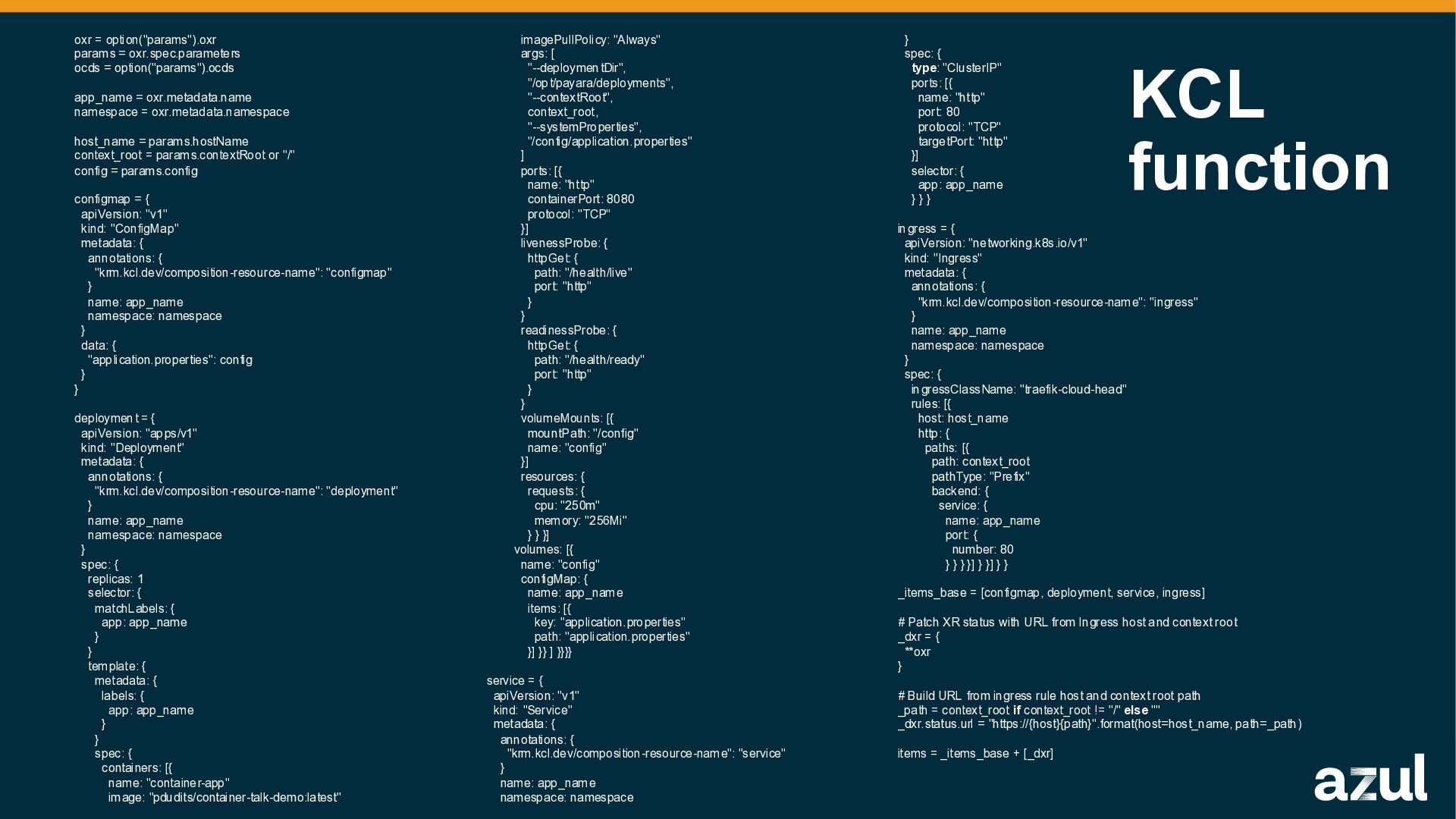
  56. oxr = option("params").oxr params = oxr.spec.parameters ocds = option("params").ocds app_name

    = oxr.metadata.name namespace = oxr.metadata.namespace host_name = params.hostName context_root = params.contextRoot or "/" config = params.config configmap = { apiVersion: "v1" kind: "ConfigMap" metadata: { annotations: { "krm.kcl.dev/composition-resource-name": "configmap" } name: app_name namespace: namespace } data: { "application.properties": config } } deployment = { apiVersion: "apps/v1" kind: "Deployment" metadata: { annotations: { "krm.kcl.dev/composition-resource-name": "deployment" } name: app_name namespace: namespace } spec: { replicas: 1 selector: { matchLabels: { app: app_name } } template: { metadata: { labels: { app: app_name } } spec: { containers: [{ name: "container-app" image: "pdudits/container-talk-demo:latest" imagePullPolicy: "Always" args: [ "--deploymentDir", "/opt/payara/deployments", "--contextRoot", context_root, "--systemProperties", "/config/application.properties" ] ports: [{ name: "http" containerPort: 8080 protocol: "TCP" }] livenessProbe: { httpGet: { path: "/health/live" port: "http" } } readinessProbe: { httpGet: { path: "/health/ready" port: "http" } } volumeMounts: [{ mountPath: "/config" name: "config" }] resources: { requests: { cpu: "250m" memory: "256Mi" } } }] volumes: [{ name: "config" configMap: { name: app_name items: [{ key: "application.properties" path: "application.properties" }] }} ] }}}} service = { apiVersion: "v1" kind: "Service" metadata: { annotations: { "krm.kcl.dev/composition-resource-name": "service" } name: app_name namespace: namespace } spec: { type: "ClusterIP" ports: [{ name: "http" port: 80 protocol: "TCP" targetPort: "http" }] selector: { app: app_name } } } ingress = { apiVersion: "networking.k8s.io/v1" kind: "Ingress" metadata: { annotations: { "krm.kcl.dev/composition-resource-name": "ingress" } name: app_name namespace: namespace } spec: { ingressClassName: "traefik-cloud-head" rules: [{ host: host_name http: { paths: [{ path: context_root pathType: "Prefix" backend: { service: { name: app_name port: { number: 80 } } } }] } }] } } _items_base = [configmap, deployment, service, ingress] # Patch XR status with URL from Ingress host and context root _dxr = { **oxr } # Build URL from ingress rule host and context root path _path = context_root if context_root != "/" else "" _dxr.status.url = "https://{host}{path}".format(host=host_name, path=_path) items = _items_base + [_dxr] KCL function
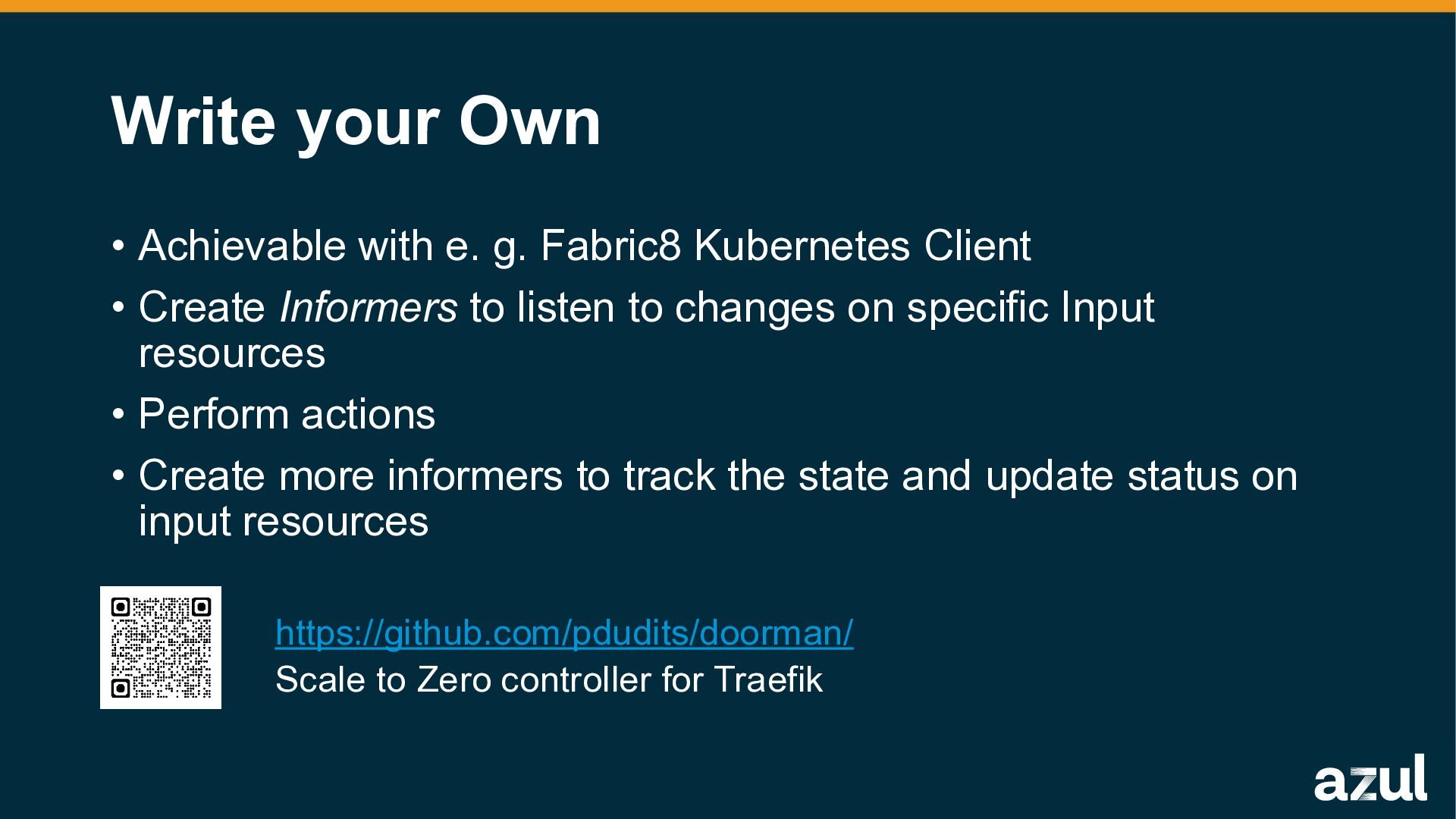
  57. Write your Own • Achievable with e. g. Fabric8 Kubernetes

    Client • Create Informers to listen to changes on specific Input resources • Perform actions • Create more informers to track the state and update status on input resources https://github.com/pdudits/doorman/ Scale to Zero controller for Traefik
  58. Abstraction becomes Reality A s a a s a s

    f y Levels of abstraction Poem Custom Ctrl / Crossplane IaC / Pulumi Templating / Helm YAML / Kustomize Inside a pod. Within a namespace. Deployment keeps me scheduled on nodes of wider cluster. Exposed by a service. Adjusted with a Config map. My secrets are a Secret. And through an Ingress, I reach out. GitOps / ArgoCD
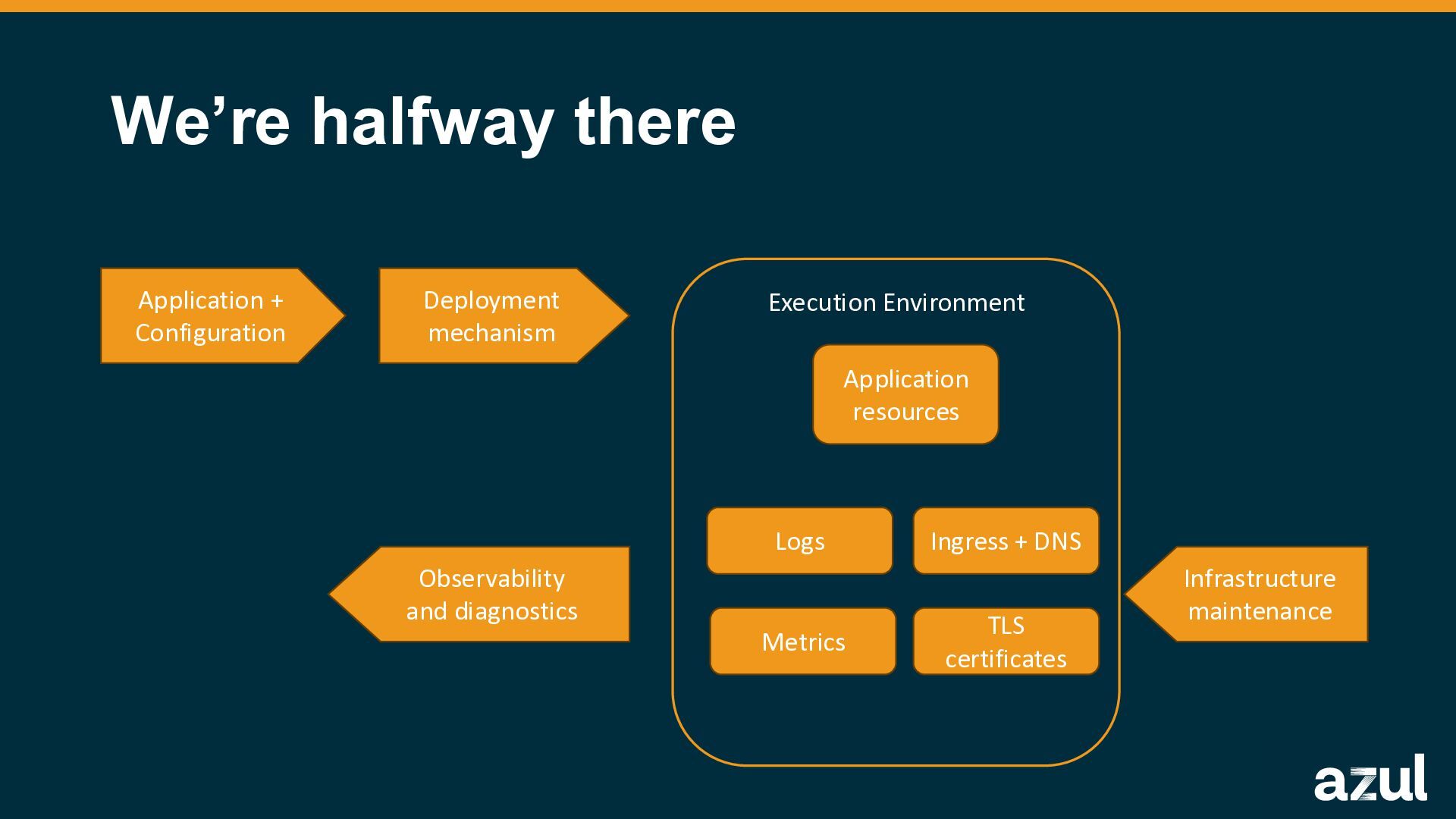
  59. e’re a fwa t ere Application + Configuration Deployment mechanism

    Execution Environment Observability and diagnostics Application resources Logs Ingress + DNS TLS certificates Metrics Infrastructure maintenance
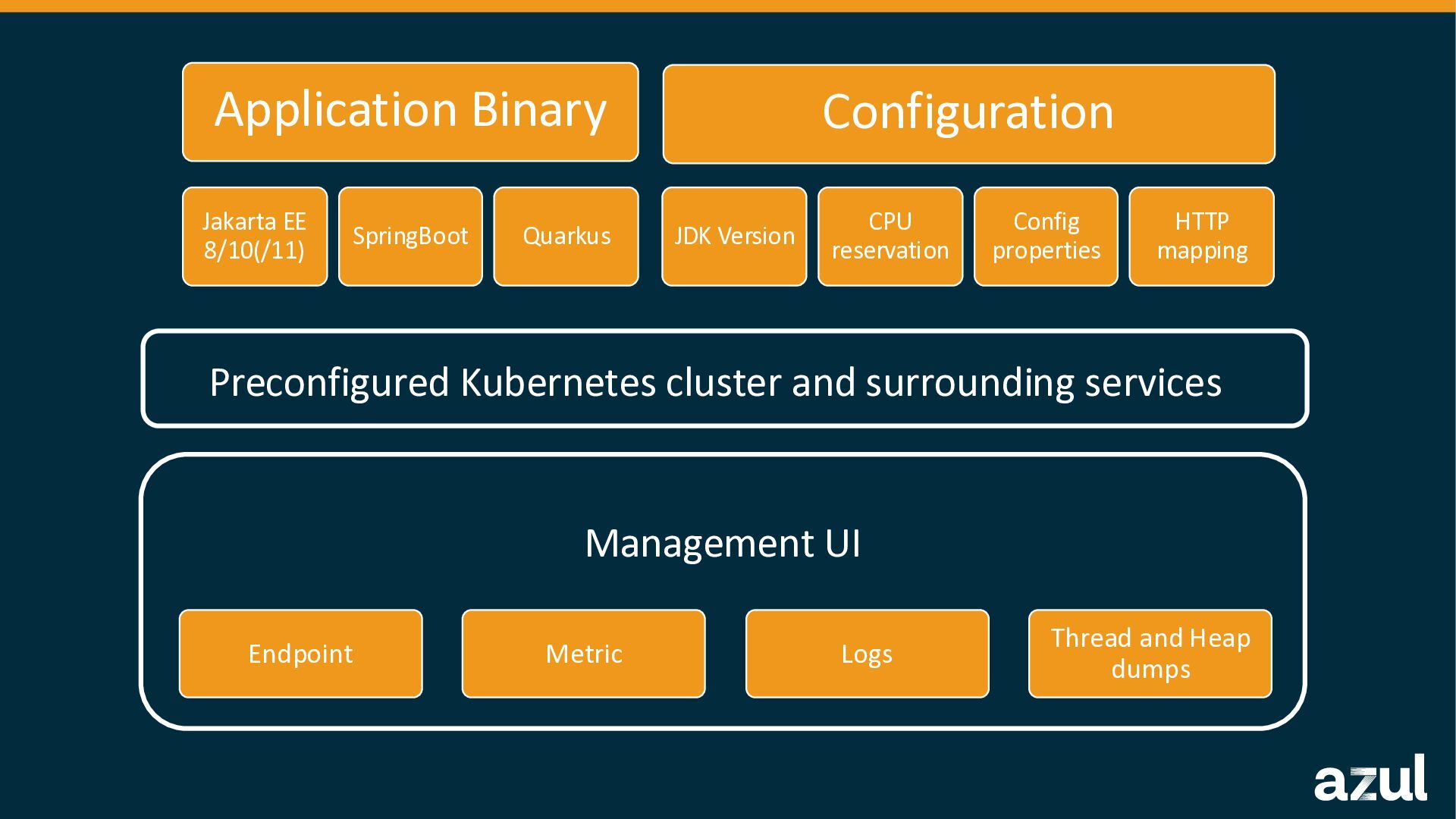
  60. Application Binary Jakarta EE 8/10(/11) SpringBoot Quarkus Configuration JDK Version

    CPU reservation Config properties HTTP mapping Endpoint Metric Logs Thread and Heap dumps Preconfigured Kubernetes cluster and surrounding services Management UI
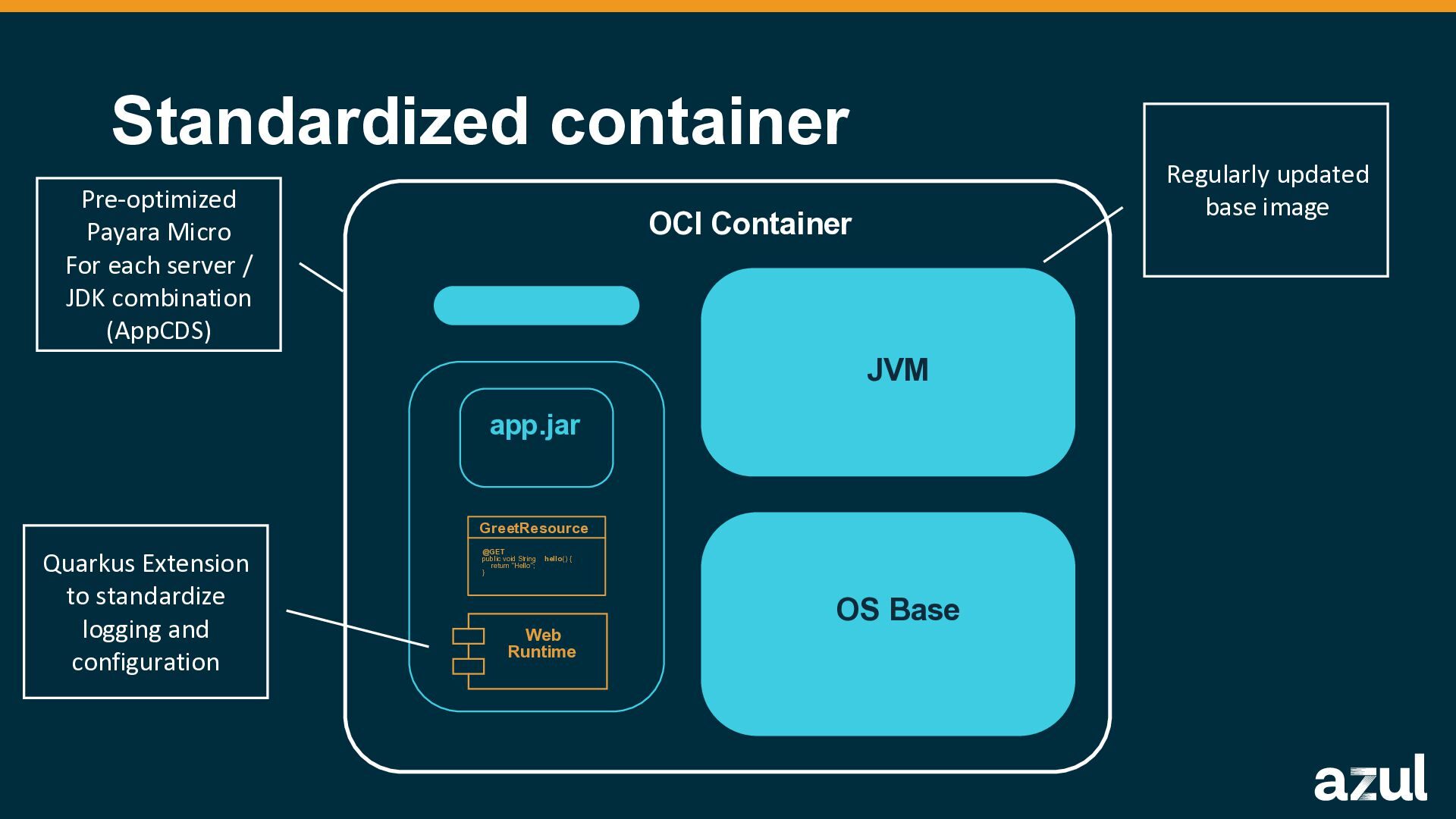
  61. Standardized container a e I ontainer app ar e o

    reet e our e e untime Pre-optimized Payara Micro For each server / JDK combination (AppCDS) Quarkus Extension to standardize logging and configuration Regularly updated base image
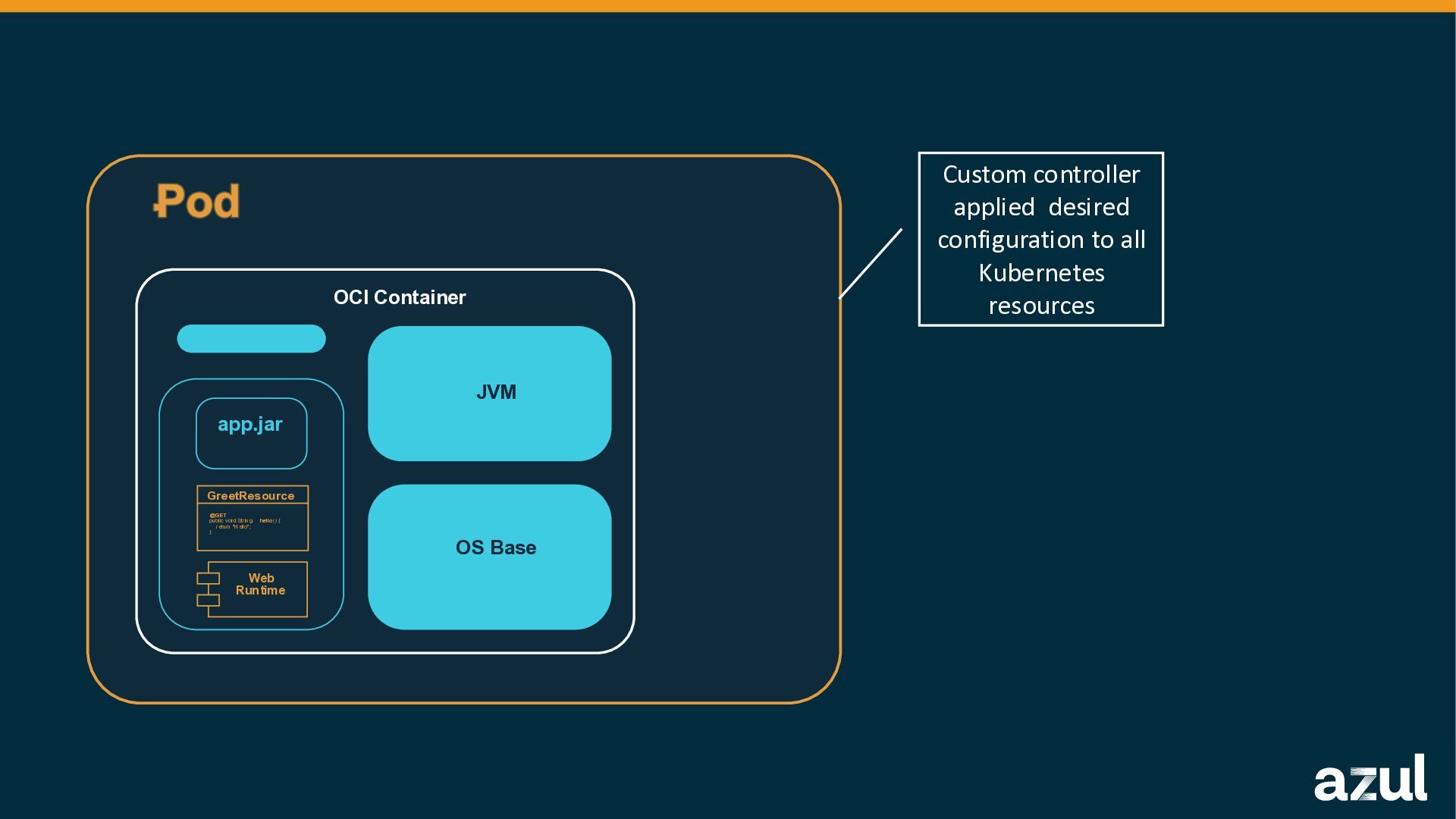
  62. e o reet e our e e untime app ar

    a e I ontainer Custom controller applied desired configuration to all Kubernetes resources
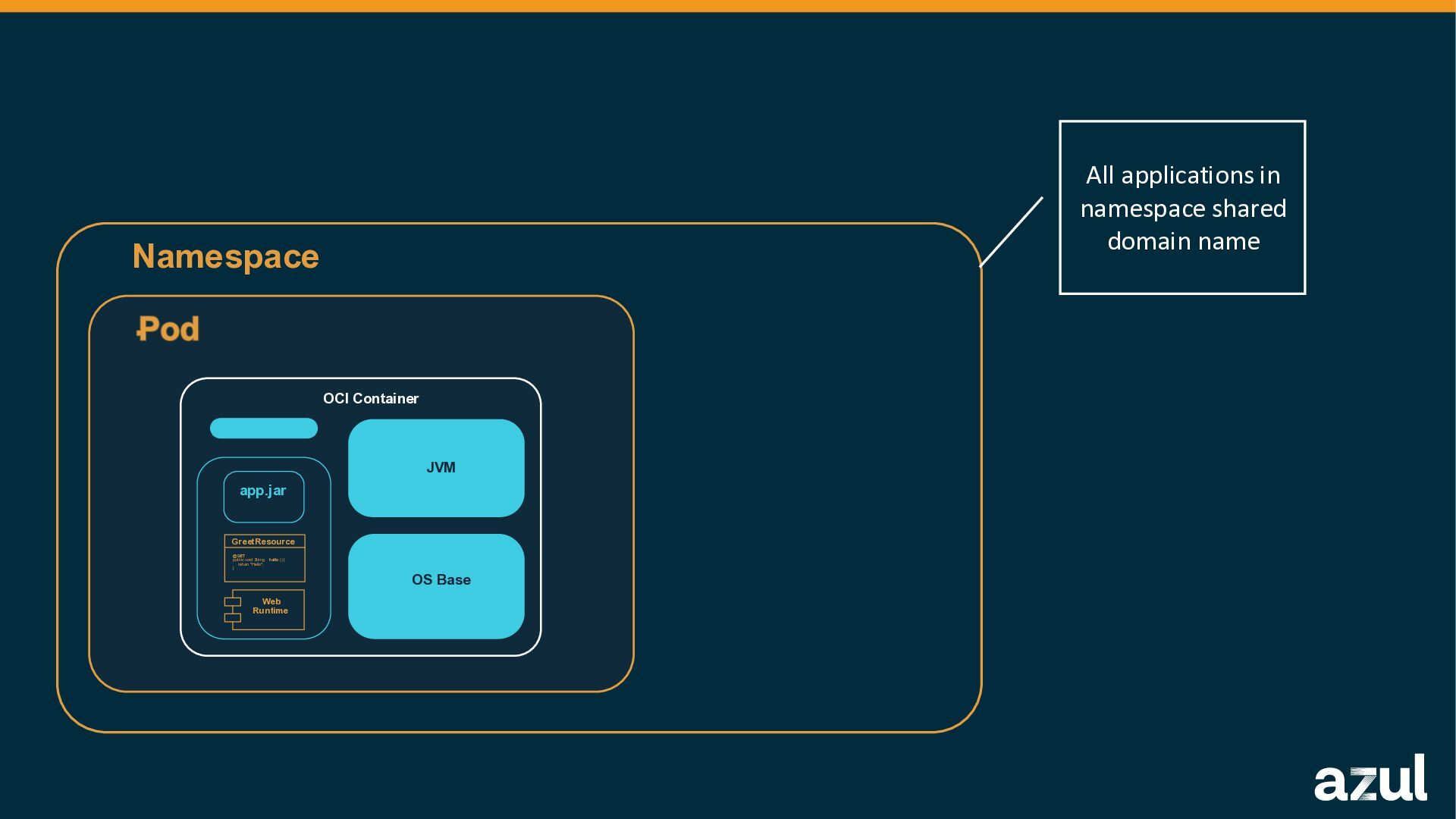
  63. ame pa e e o reet e our e e

    untime app ar a e I ontainer All applications in namespace shared domain name
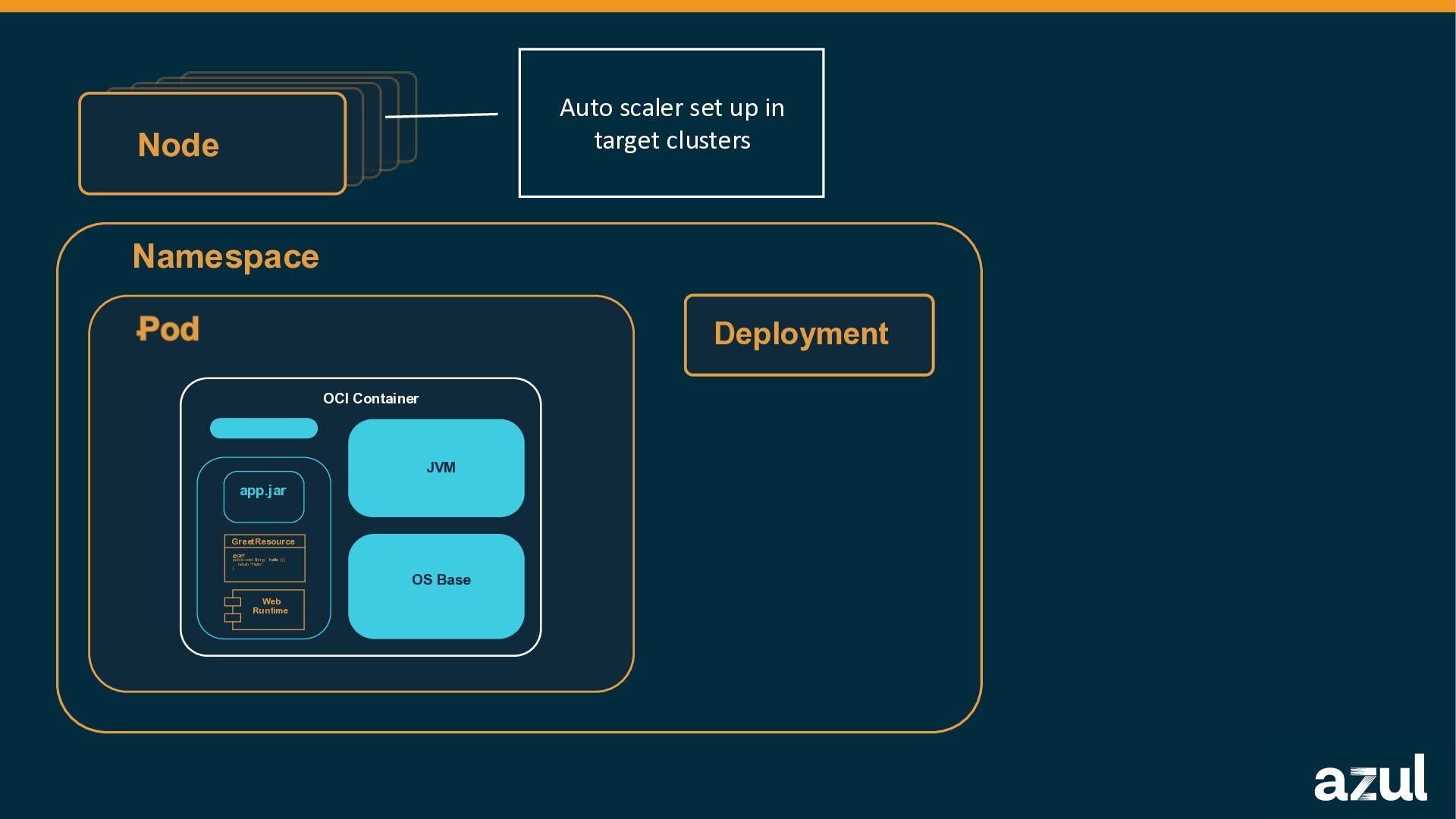
  64. ame pa e e o reet e our e e

    untime app ar a e I ontainer Dep o ment ode Auto scaler set up in target clusters
  65. u ter ame pa e e o reet e our

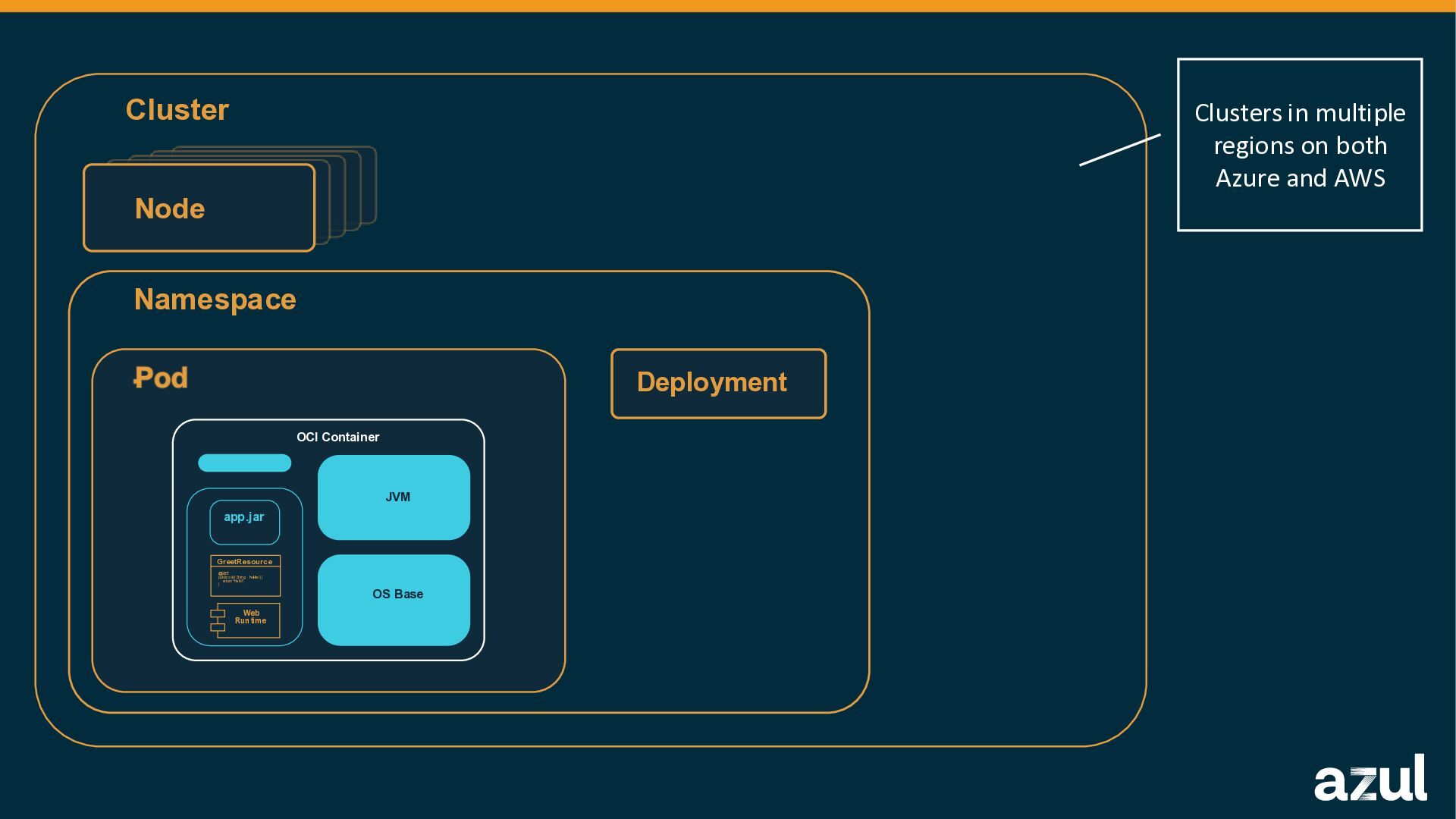
    e e untime app ar a e I ontainer Dep o ment ode Clusters in multiple regions on both Azure and AWS
  66. u ter ame pa e e o reet e our

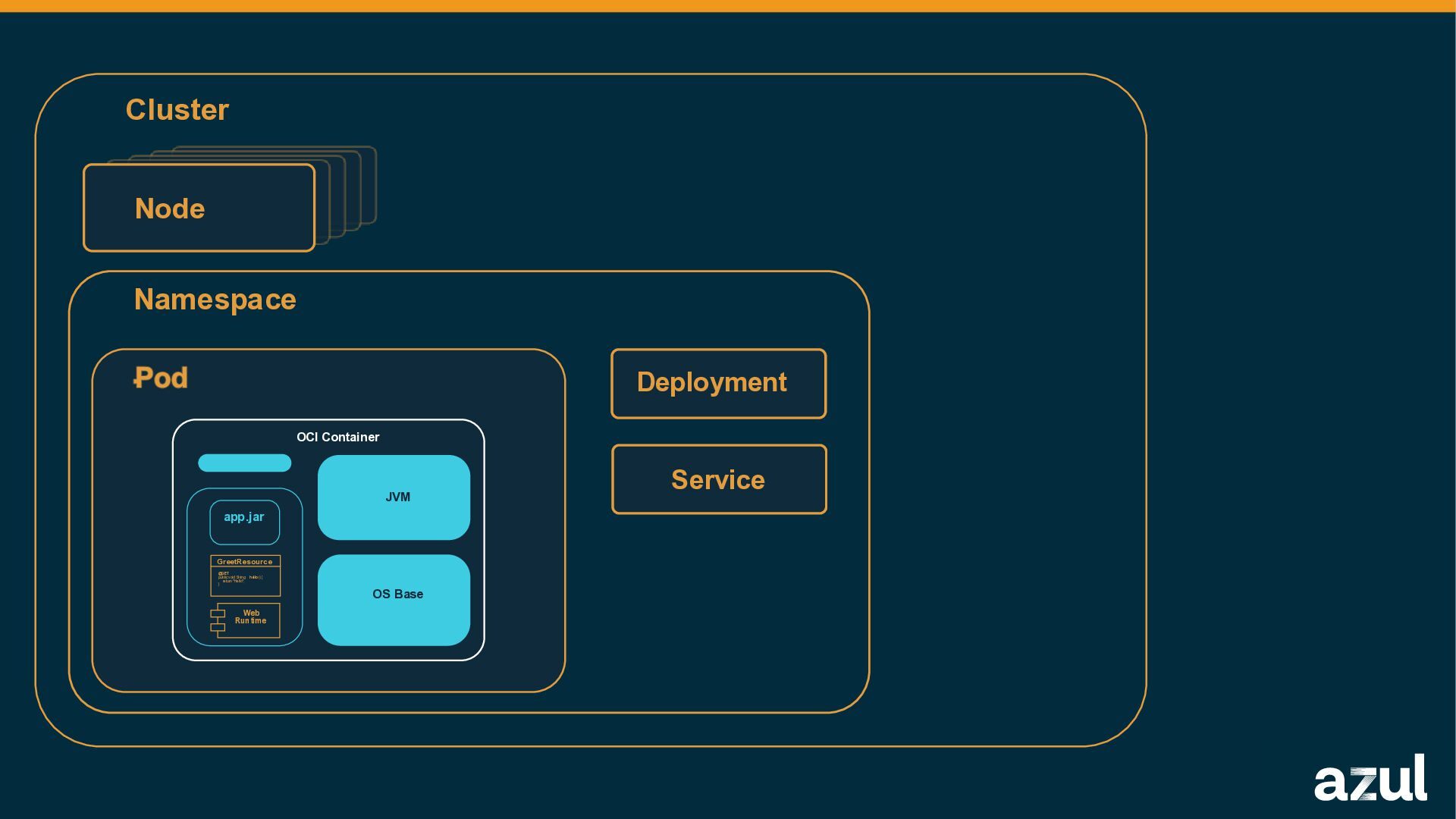
    e e untime app ar a e I ontainer Dep o ment ode er i e
  67. u ter ame pa e e o reet e our

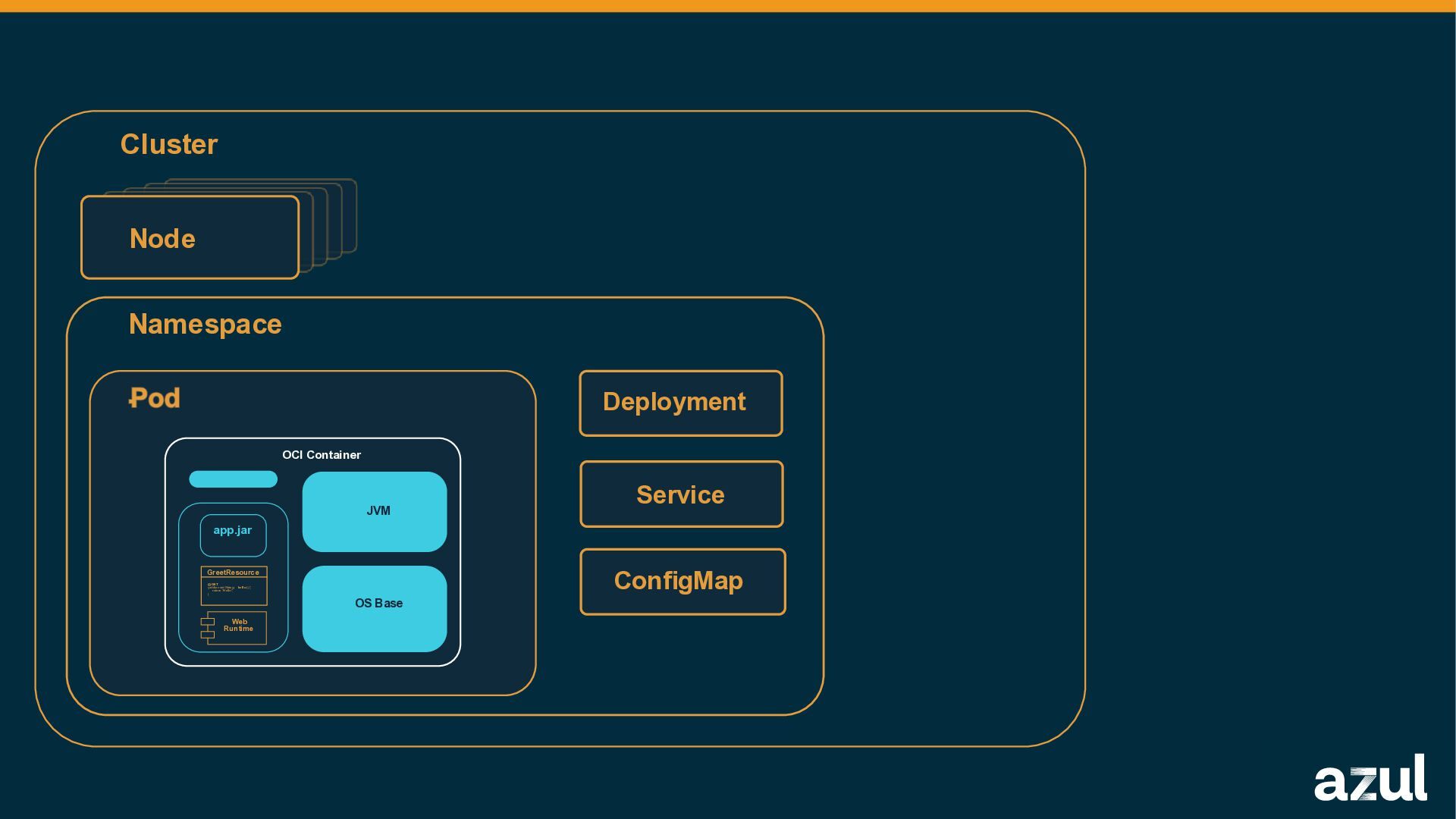
    e e untime app ar a e I ontainer Dep o ment ode er i e on ap
  68. u ter ame pa e e o reet e our

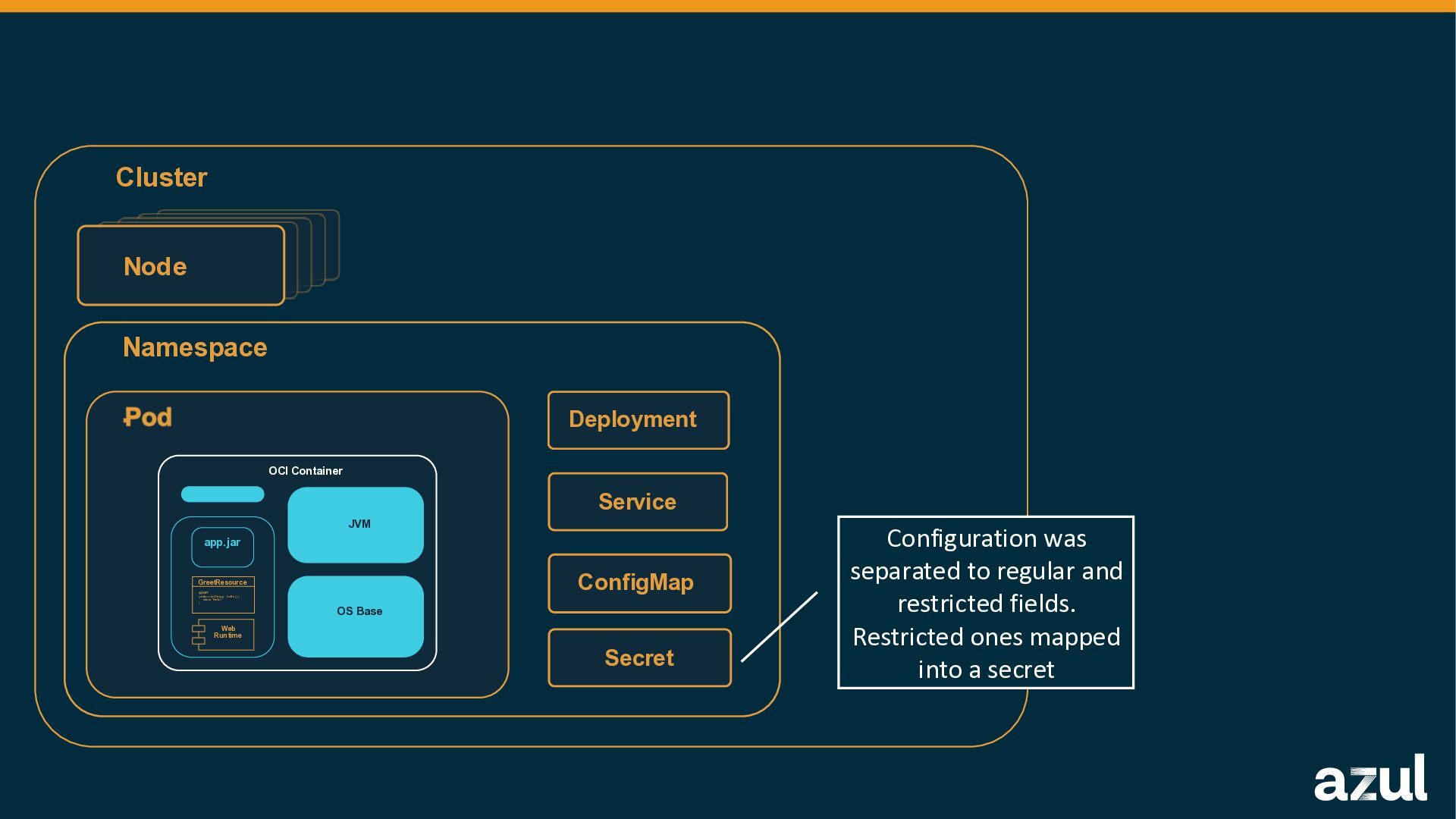
    e e untime app ar a e I ontainer Dep o ment ode er i e on ap e ret Configuration was separated to regular and restricted fields. Restricted ones mapped into a secret
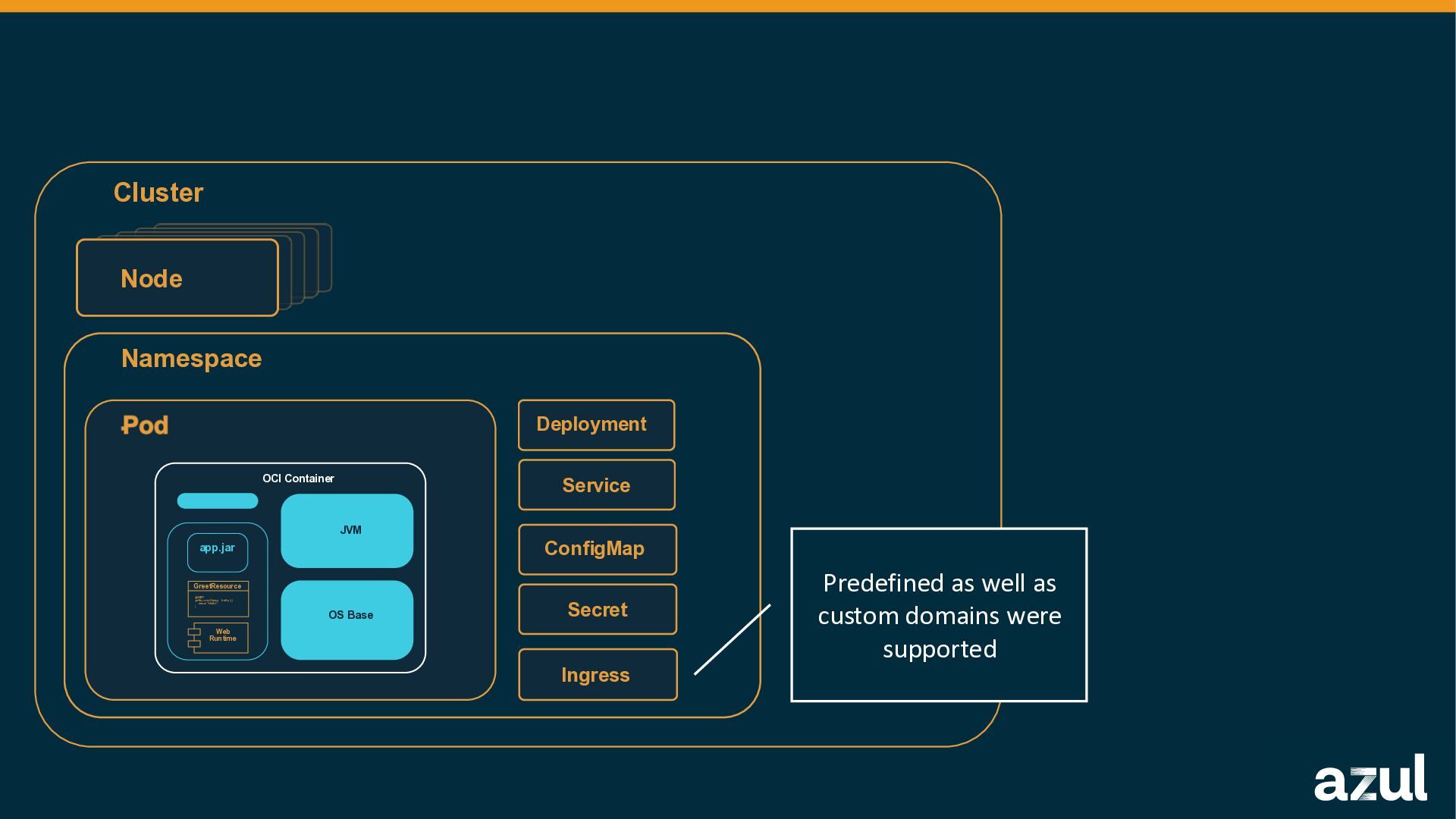
  69. u ter ame pa e e o reet e our

    e e untime app ar a e I ontainer Dep o ment ode er i e on ap e ret In re Predefined as well as custom domains were supported
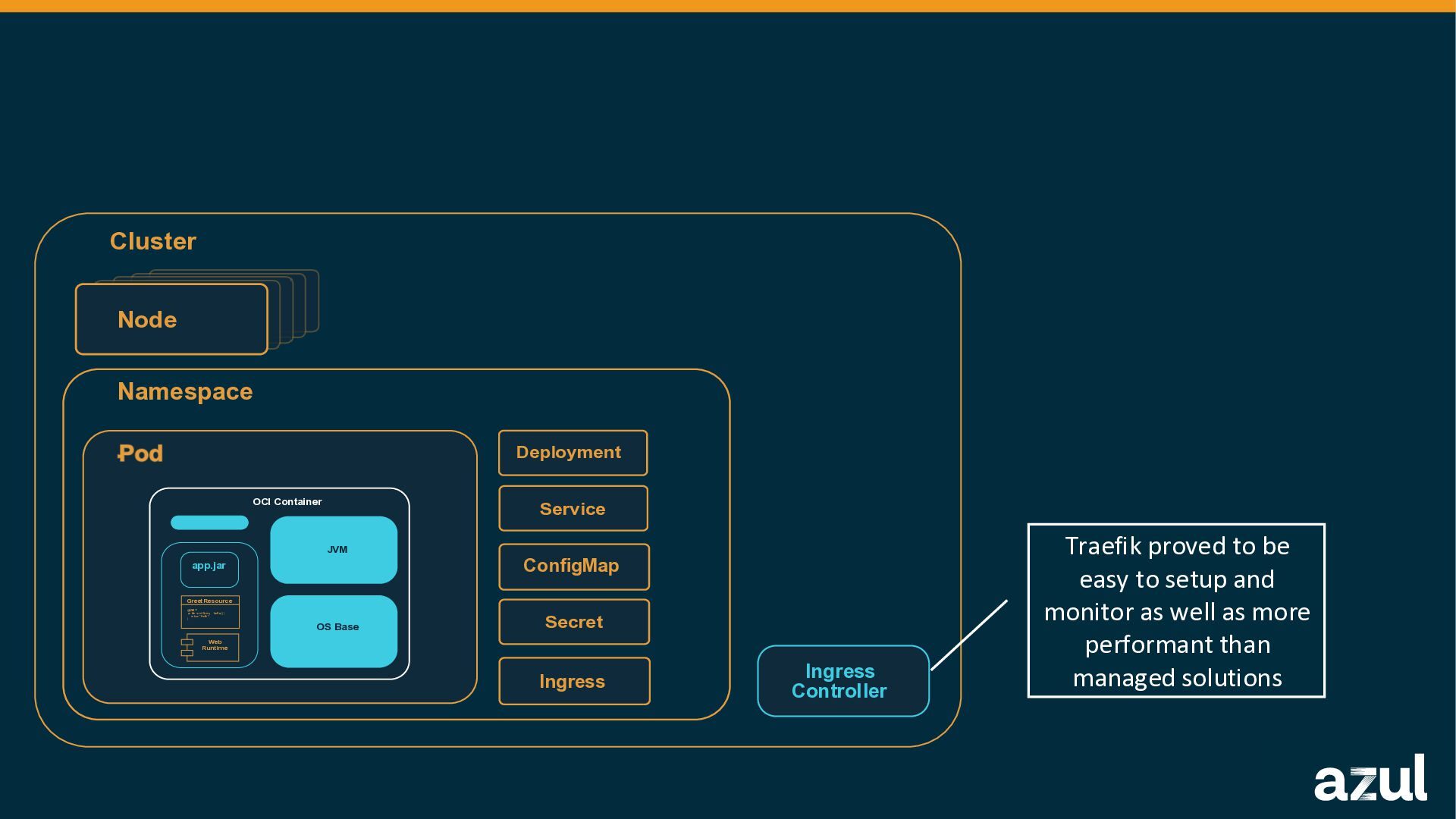
  70. u ter ame pa e e o reet e our

    e e untime app ar a e I ontainer Dep o ment ode er i e on ap e ret In re In re ontro er Traefik proved to be easy to setup and monitor as well as more performant than managed solutions
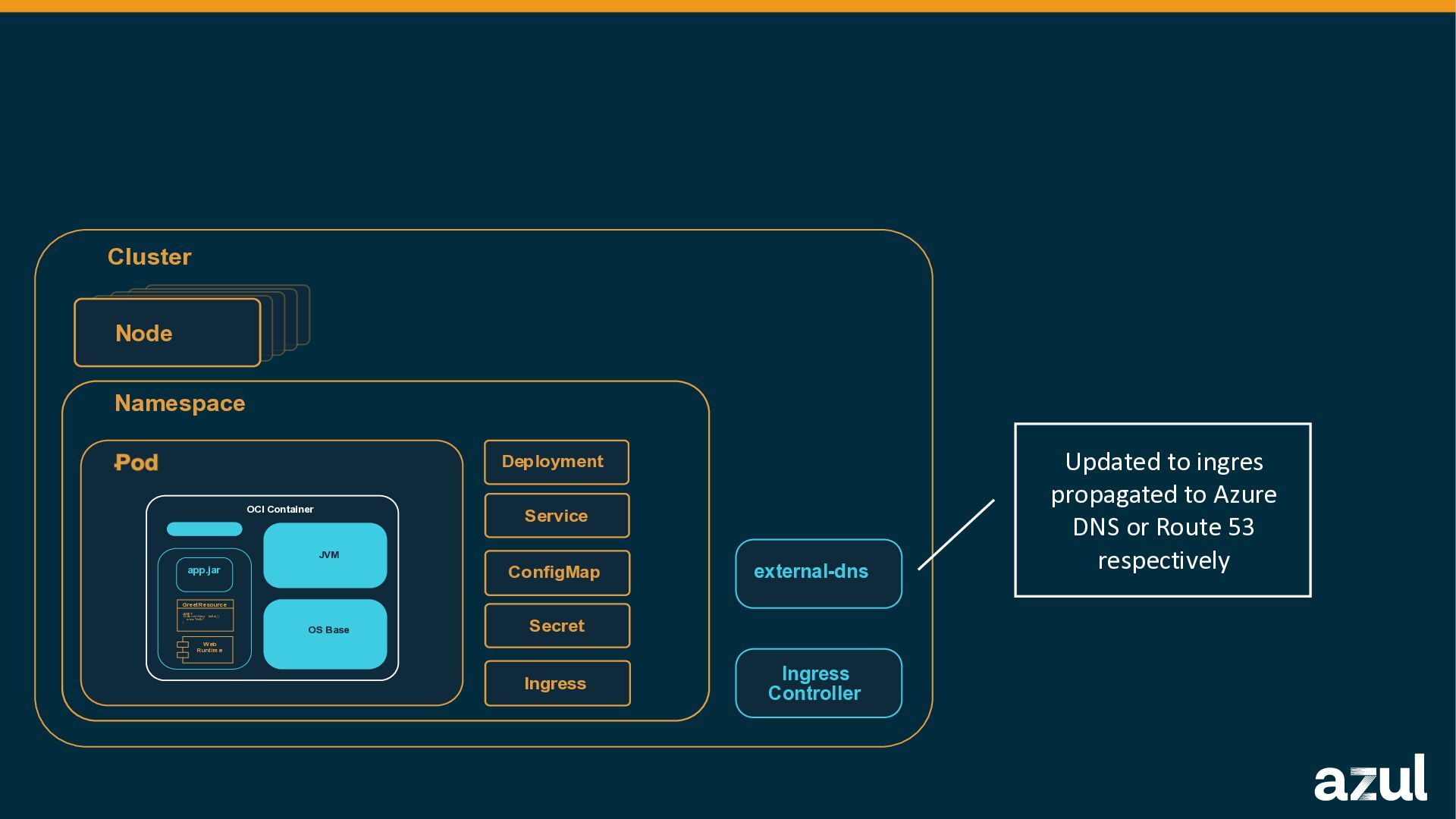
  71. u ter ame pa e e o reet e our

    e e untime app ar a e I ontainer Dep o ment ode er i e on ap e ret In re In re ontro er e terna dn Updated to ingres propagated to Azure DNS or Route 53 respectively
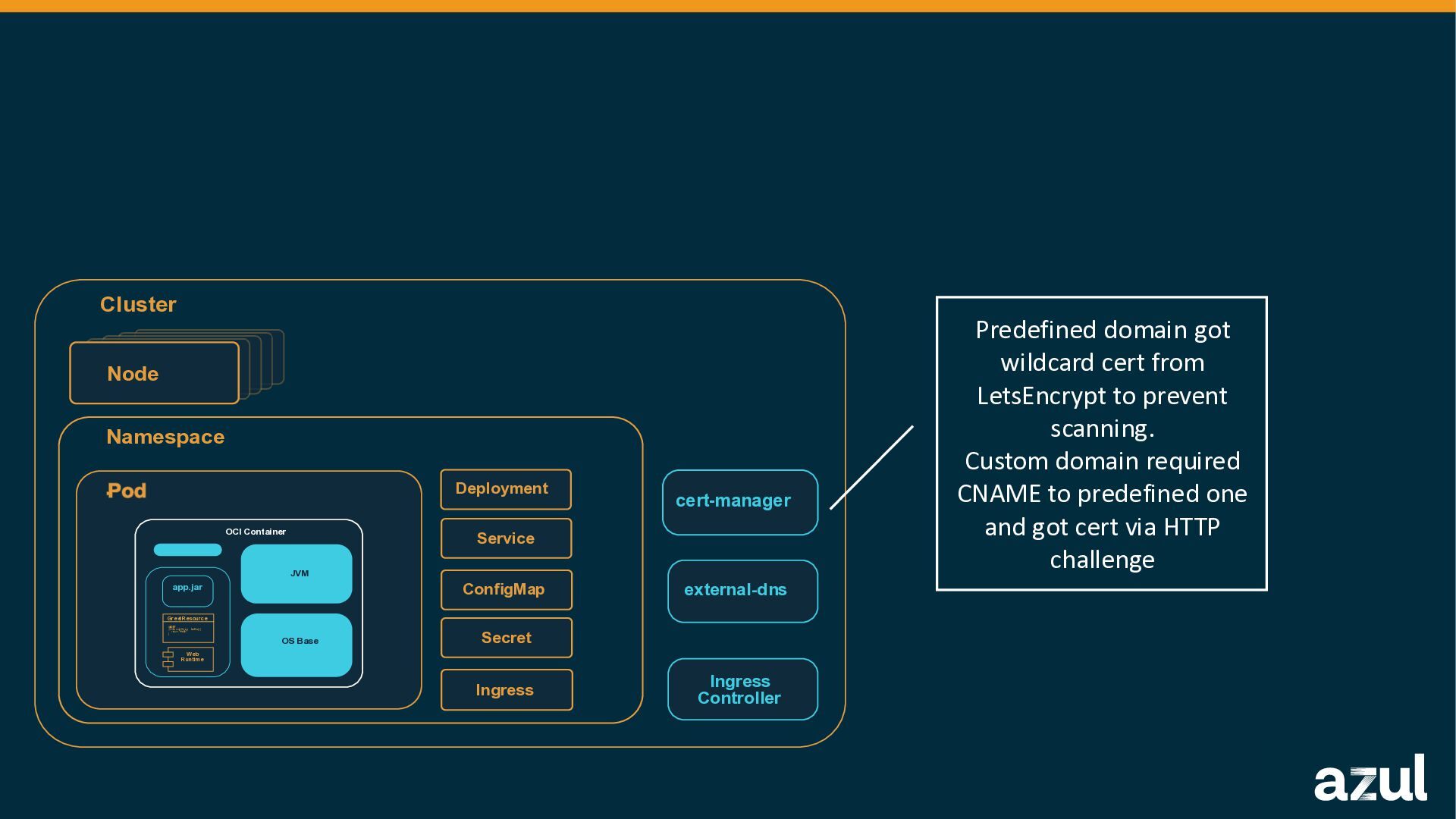
  72. u ter ame pa e e o reet e our

    e e untime app ar a e I ontainer Dep o ment ode er i e on ap e ret In re In re ontro er e terna dn ert mana er Predefined domain got wildcard cert from LetsEncrypt to prevent scanning. Custom domain required CNAME to predefined one and got cert via HTTP challenge
  73. u ter ame pa e e o reet e our

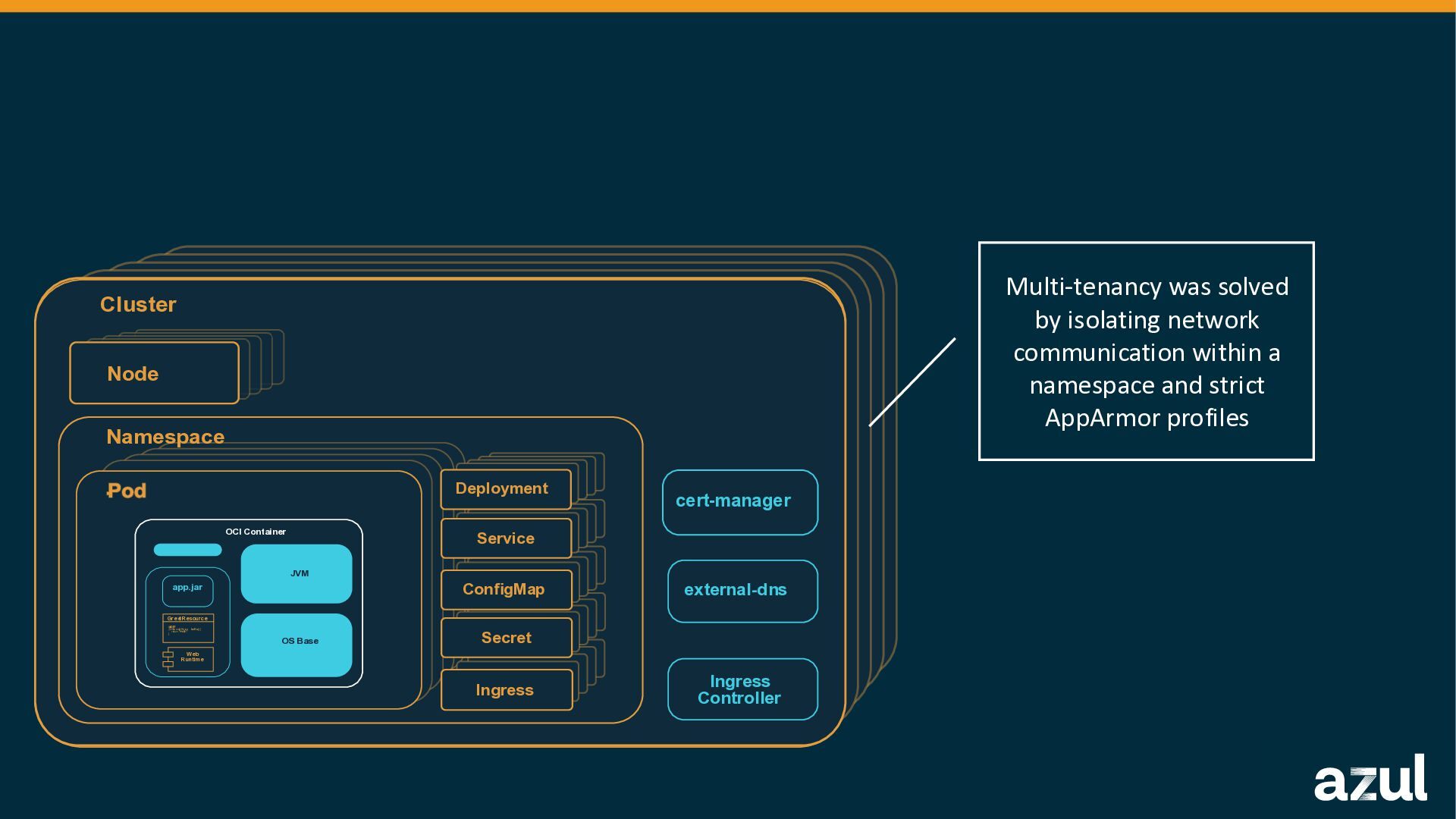
    e e untime app ar a e I ontainer Dep o ment ode er i e on ap e ret In re In re ontro er e terna dn ert mana er Multi-tenancy was solved by isolating network communication within a namespace and strict AppArmor profiles
  74. u ter ame pa e e o reet e our

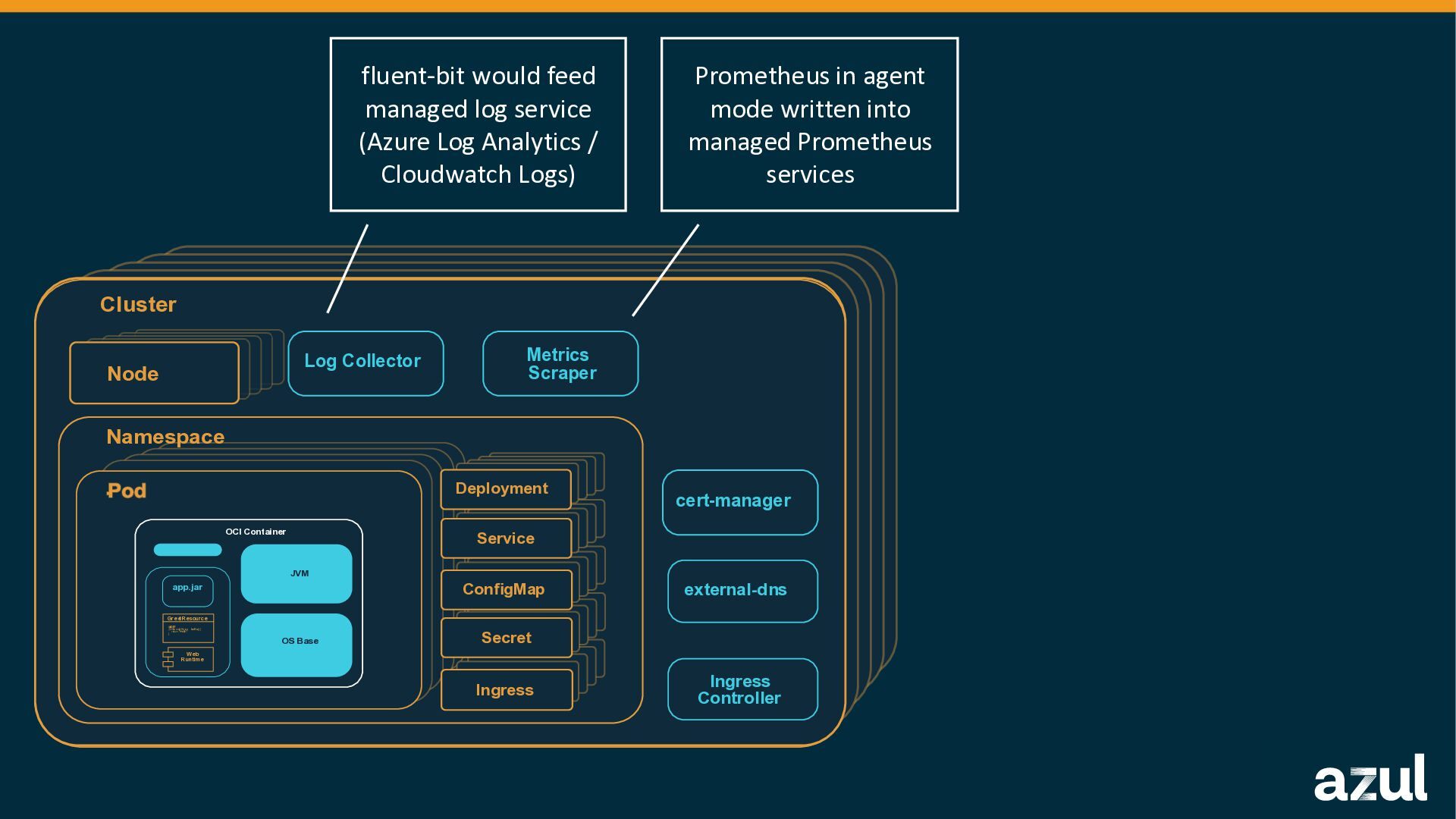
    e e untime app ar a e I ontainer Dep o ment ode er i e on ap e ret In re In re ontro er e terna dn ert mana er oad a an er D Pro ider ert ut orit o o e tor etri raper an e ana ement a in ontro er fluent-bit would feed managed log service (Azure Log Analytics / Cloudwatch Logs) Prometheus in agent mode written into managed Prometheus services
  75. u ter ame pa e e o reet e our

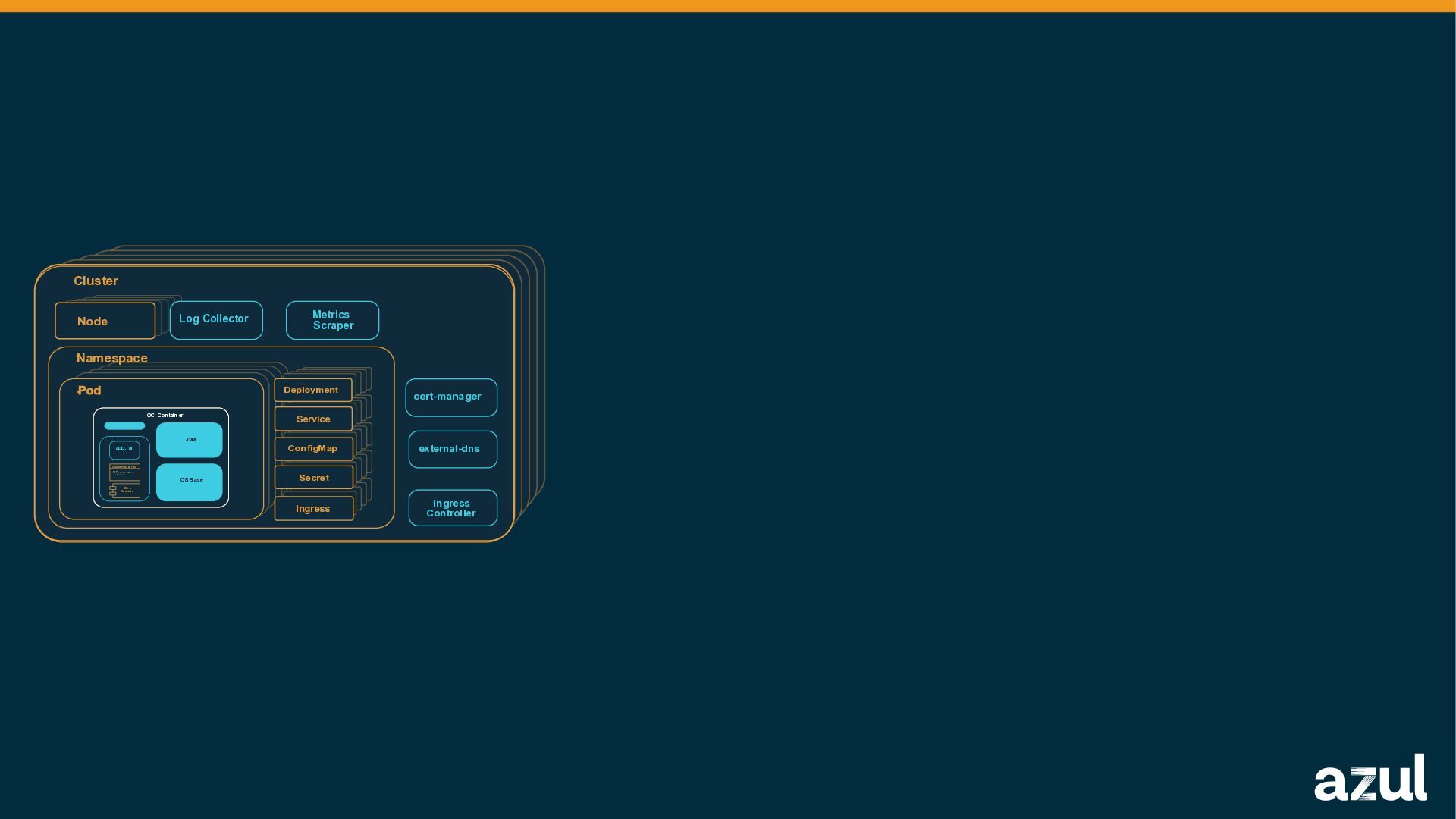
    e e untime app ar a e I ontainer Dep o ment ode er i e on ap e ret In re In re ontro er e terna dn ert mana er oad a an er D Pro ider ert ut orit o o e tor etri raper an e ana ement a in ontro er
  76. u ter ame pa e e o reet e our

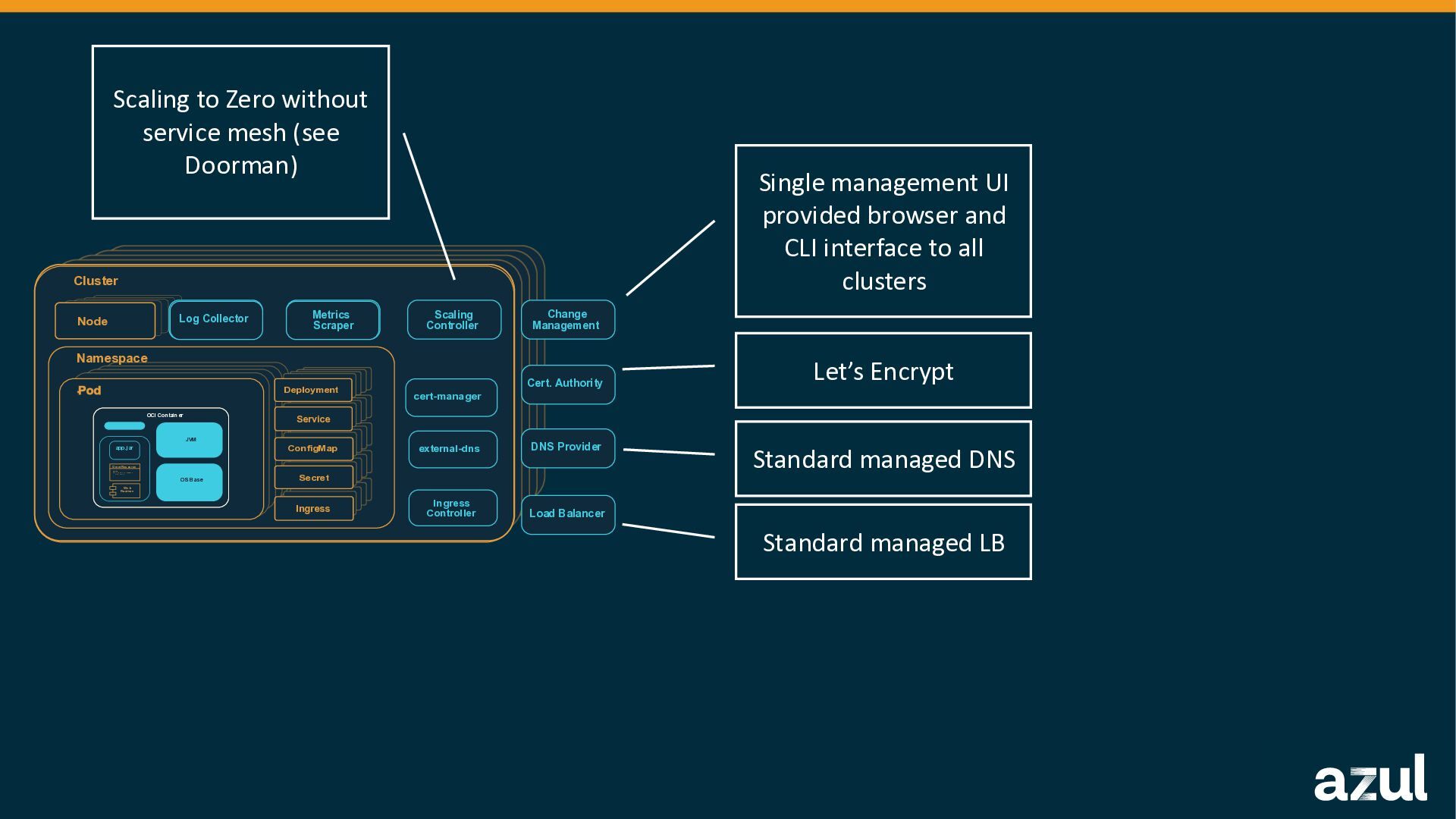
    e e untime app ar a e I ontainer Dep o ment ode er i e on ap e ret In re In re ontro er e terna dn ert mana er oad a an er D Pro ider ert ut orit o o e tor etri raper an e ana ement a in ontro er oad a an er D Pro ider ert ut orit o o e tor etri raper an e ana ement a in ontro er Single management UI provided browser and CLI interface to all clusters Let’s Encrypt Standard managed LB Standard managed DNS Scaling to Zero without service mesh (see Doorman)
  77. u ter ame pa e e o reet e our

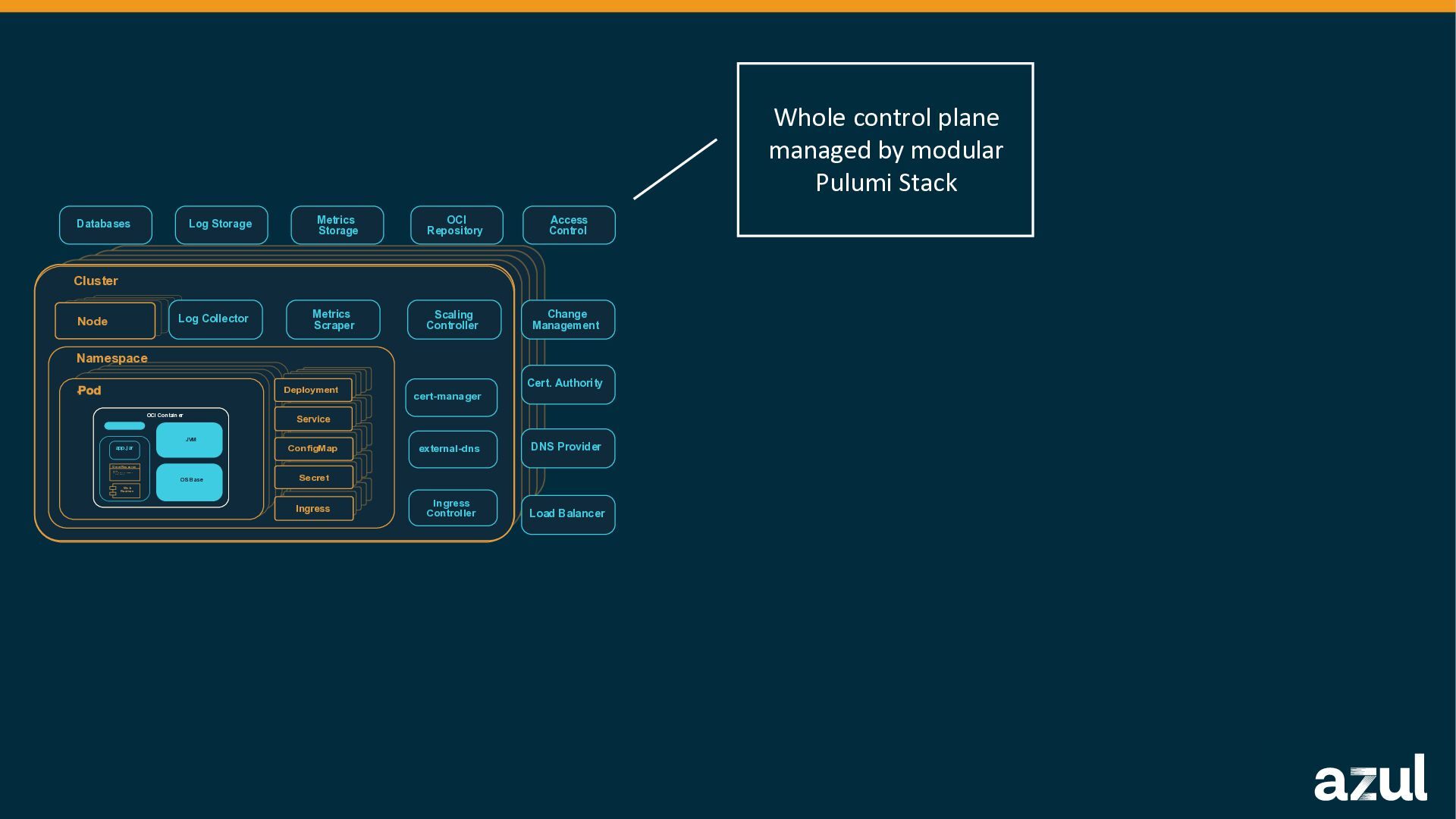
    e e untime app ar a e I ontainer Dep o ment ode er i e on ap e ret In re In re ontro er e terna dn ert mana er oad a an er D Pro ider ert ut orit o o e tor etri raper an e ana ement a in ontro er etri tora e I epo itor e ontro Data a e o tora e Whole control plane managed by modular Pulumi Stack
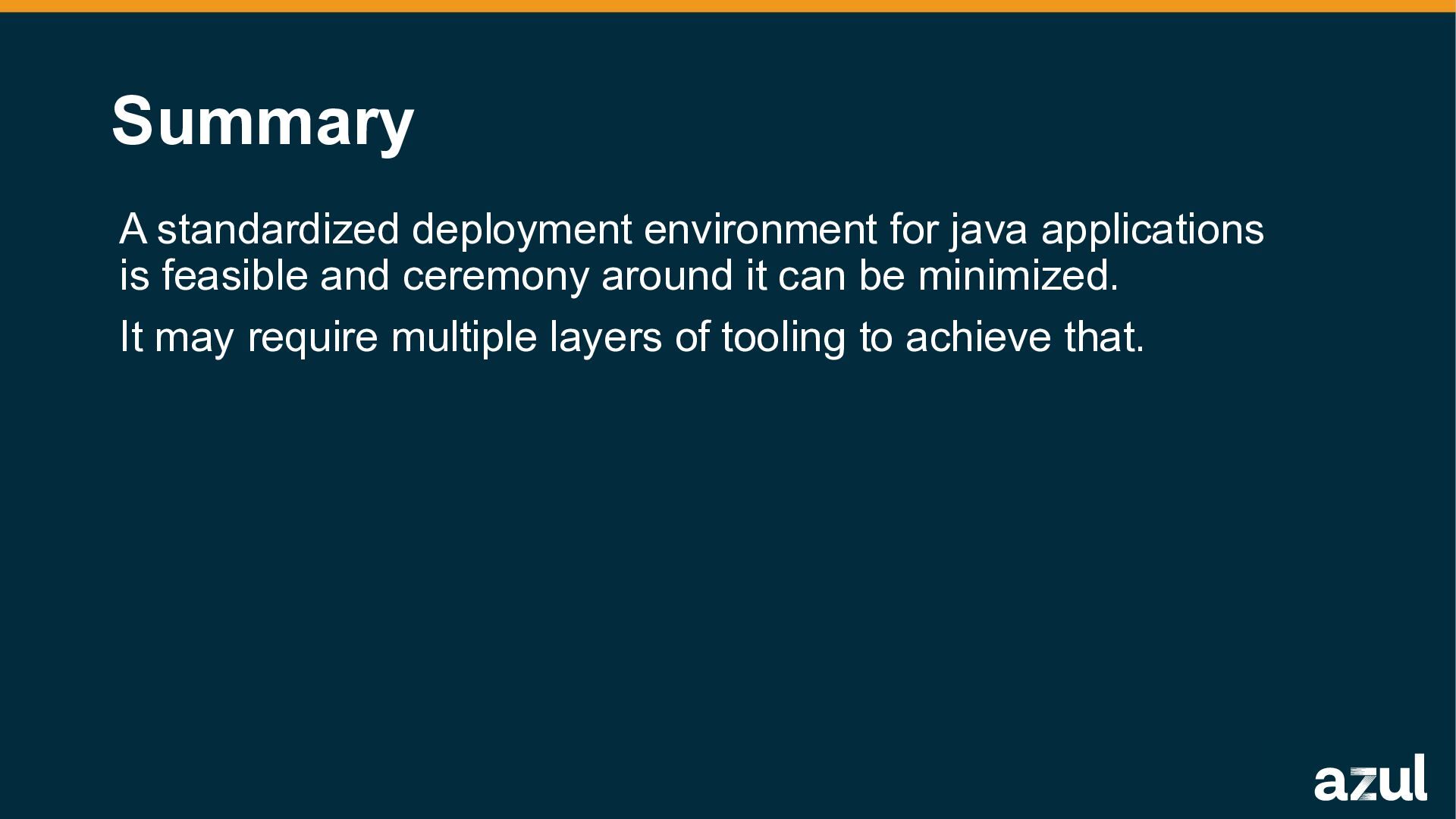
  78. Summary A standardized deployment environment for java applications is feasible

    and ceremony around it can be minimized. It may require multiple layers of tooling to achieve that.
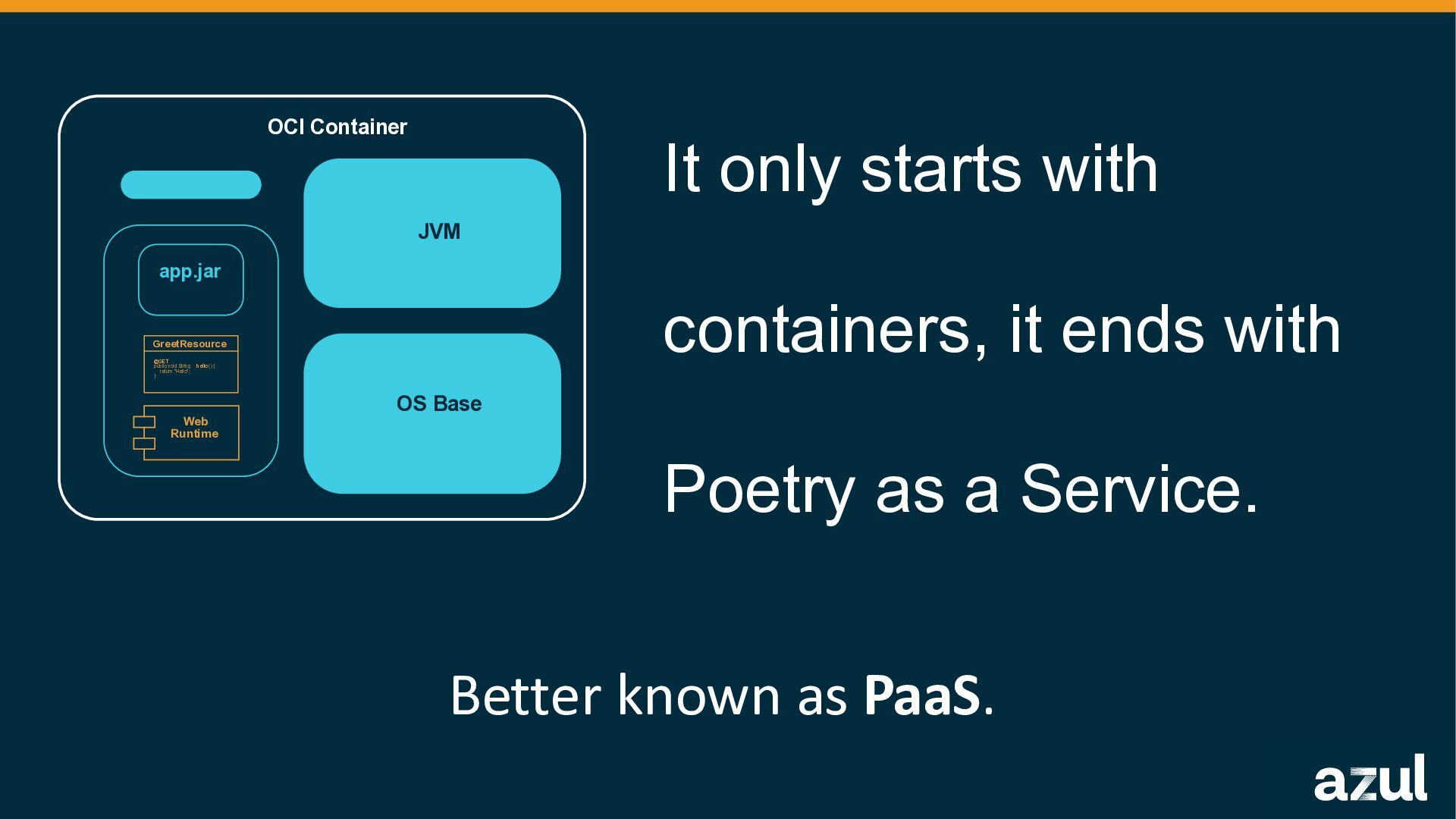
  79. It only starts with containers, it ends with Poetry as

    a Service. a e I ontainer app ar e o reet e our e e untime Better known as PaaS.