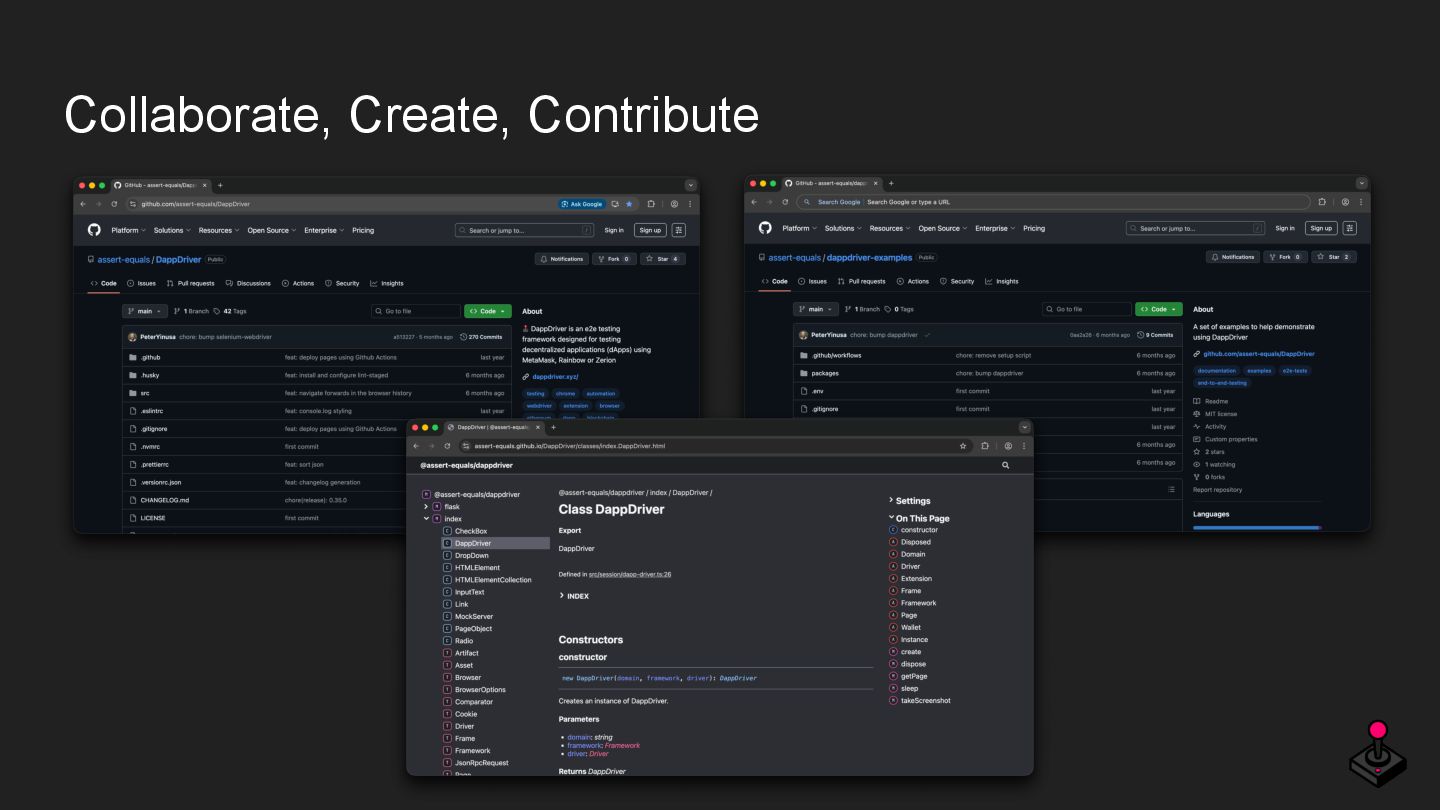
testing, discussing its development and contributions remains taboo. Many benefit from its innovations yet fail to acknowledge or support the community-driven effort behind it openly.
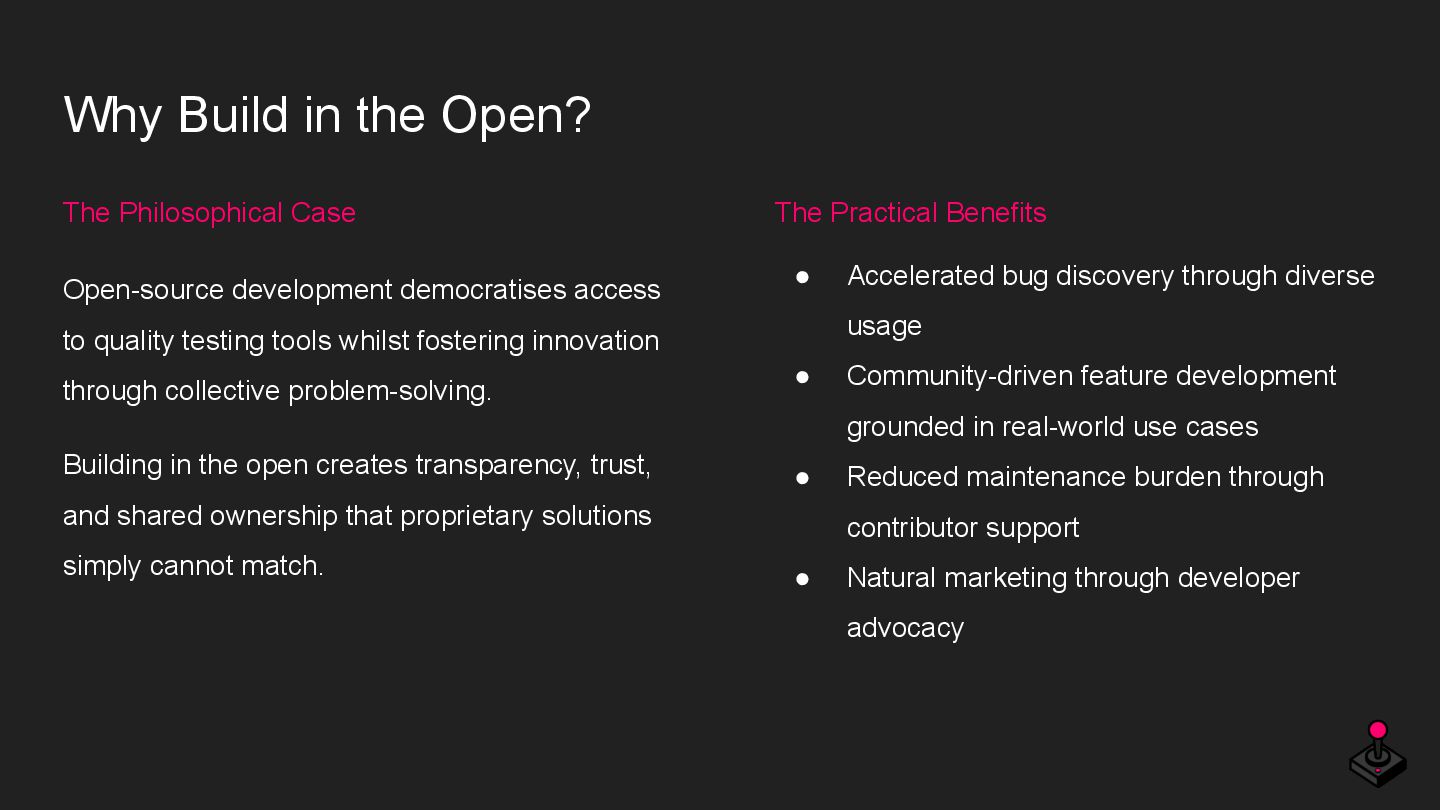
tools whilst fostering innovation through collective problem-solving. Building in the open creates transparency, trust, and shared ownership that proprietary solutions simply cannot match. The Practical Benefits • Accelerated bug discovery through diverse usage • Community-driven feature development grounded in real-world use cases • Reduced maintenance burden through contributor support • Natural marketing through developer advocacy Why Build in the Open?
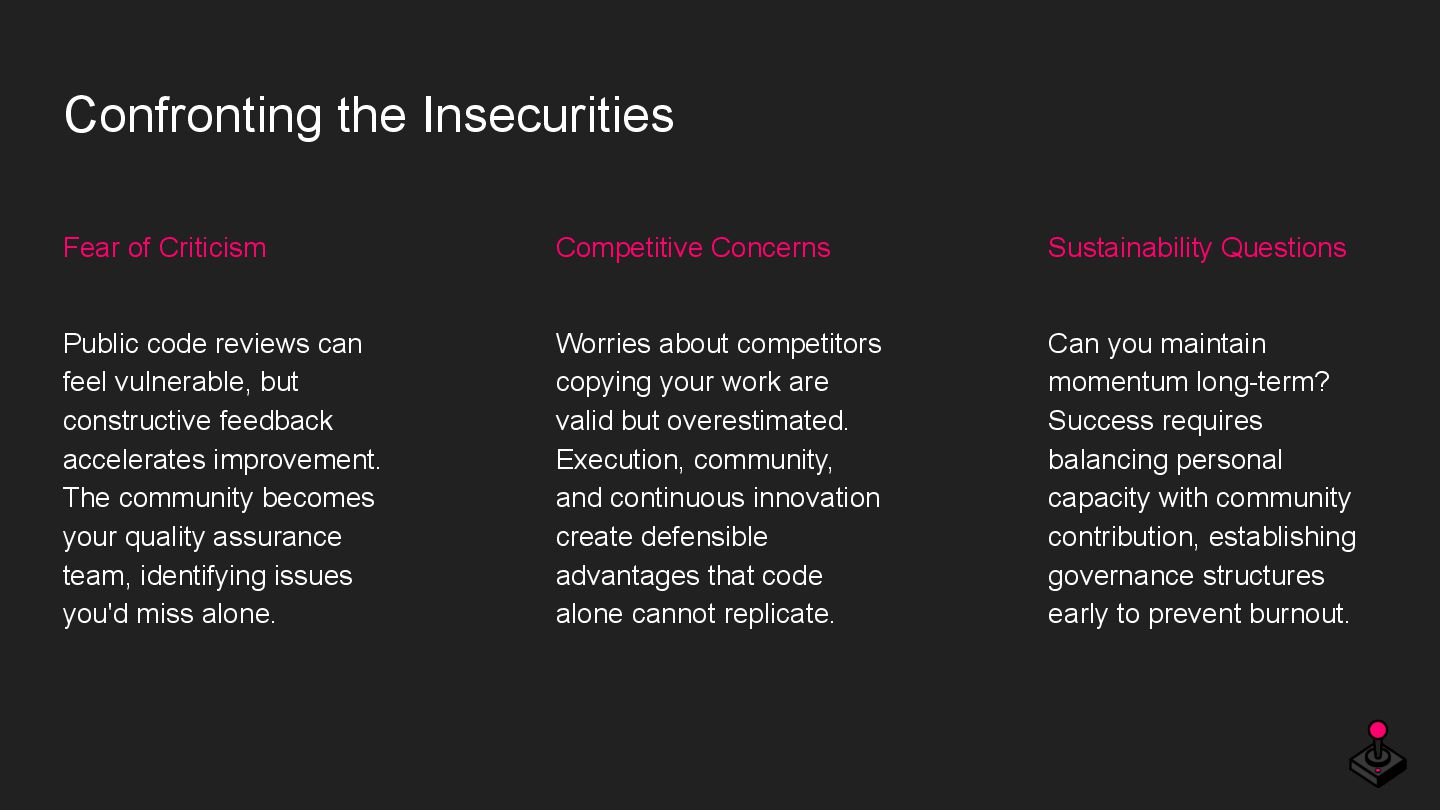
constructive feedback accelerates improvement. The community becomes your quality assurance team, identifying issues you'd miss alone. Sustainability Questions Can you maintain momentum long-term? Success requires balancing personal capacity with community contribution, establishing governance structures early to prevent burnout. Competitive Concerns Worries about competitors copying your work are valid but overestimated. Execution, community, and continuous innovation create defensible advantages that code alone cannot replicate. Confronting the Insecurities
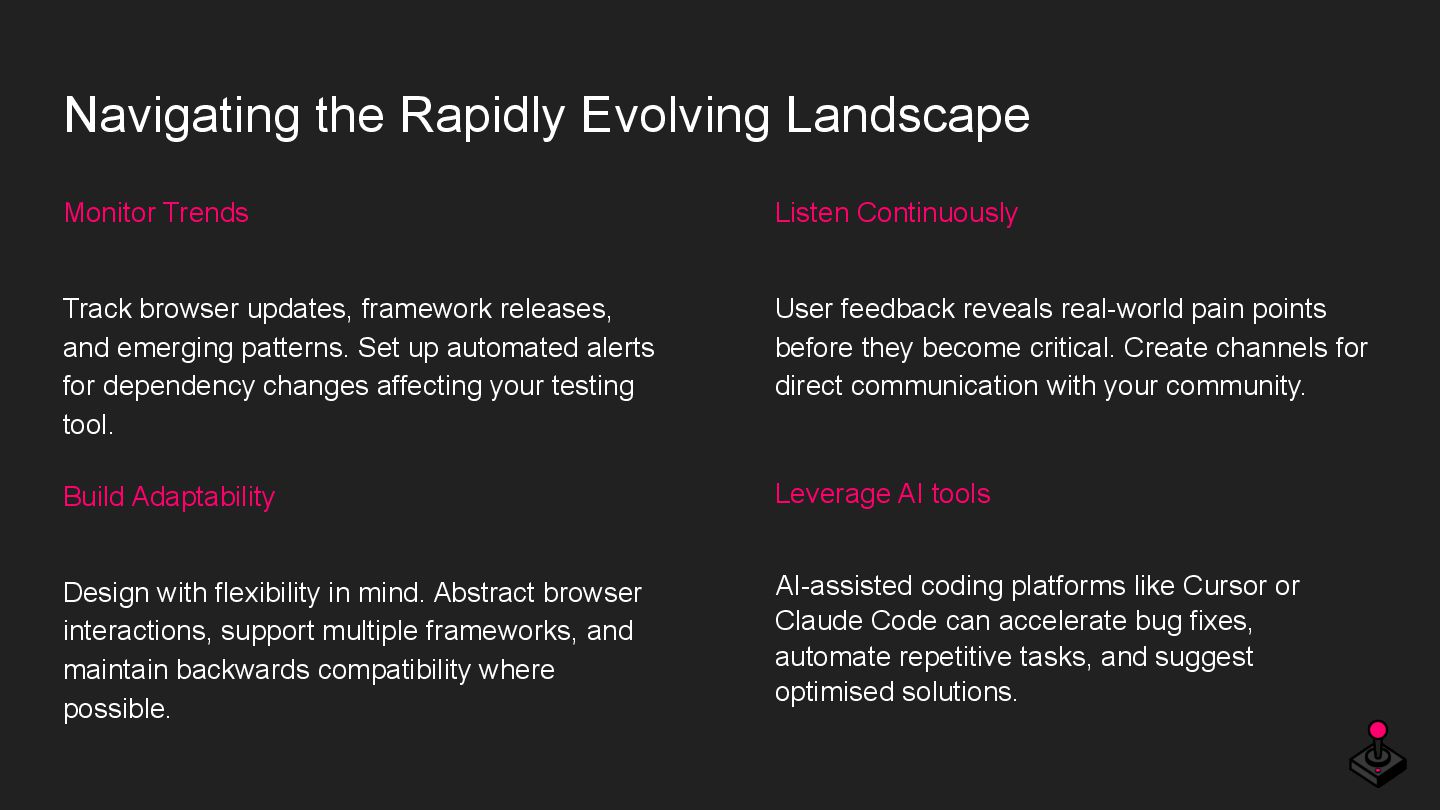
Set up automated alerts for dependency changes affecting your testing tool. Listen Continuously User feedback reveals real-world pain points before they become critical. Create channels for direct communication with your community. Build Adaptability Design with flexibility in mind. Abstract browser interactions, support multiple frameworks, and maintain backwards compatibility where possible. Navigating the Rapidly Evolving Landscape Leverage AI tools AI-assisted coding platforms like Cursor or Claude Code can accelerate bug fixes, automate repetitive tasks, and suggest optimised solutions.
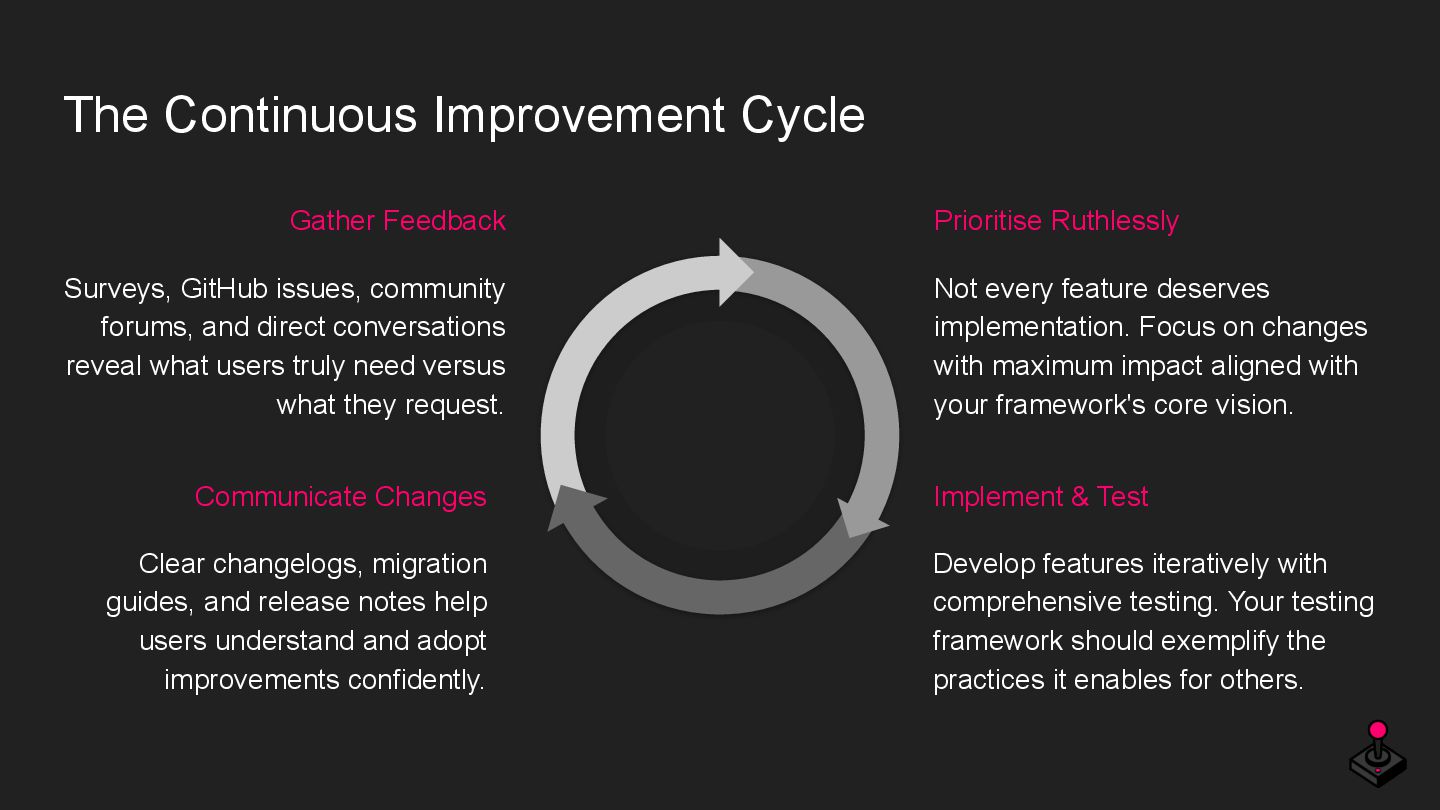
with maximum impact aligned with your framework's core vision. Communicate Changes Clear changelogs, migration guides, and release notes help users understand and adopt improvements confidently. Implement & Test Develop features iteratively with comprehensive testing. Your testing framework should exemplify the practices it enables for others. The Continuous Improvement Cycle Gather Feedback Surveys, GitHub issues, community forums, and direct conversations reveal what users truly need versus what they request.
a compelling README, and clear value propositions. Optimise your repository for search with relevant keywords and topics. Strategic marketing channels: • Developer conferences and meetup presentations • Technical blog posts demonstrating real solutions • Social media presence on developer platforms • Package registry optimisation (npm etc.) • Comparison articles addressing tool selection criteria
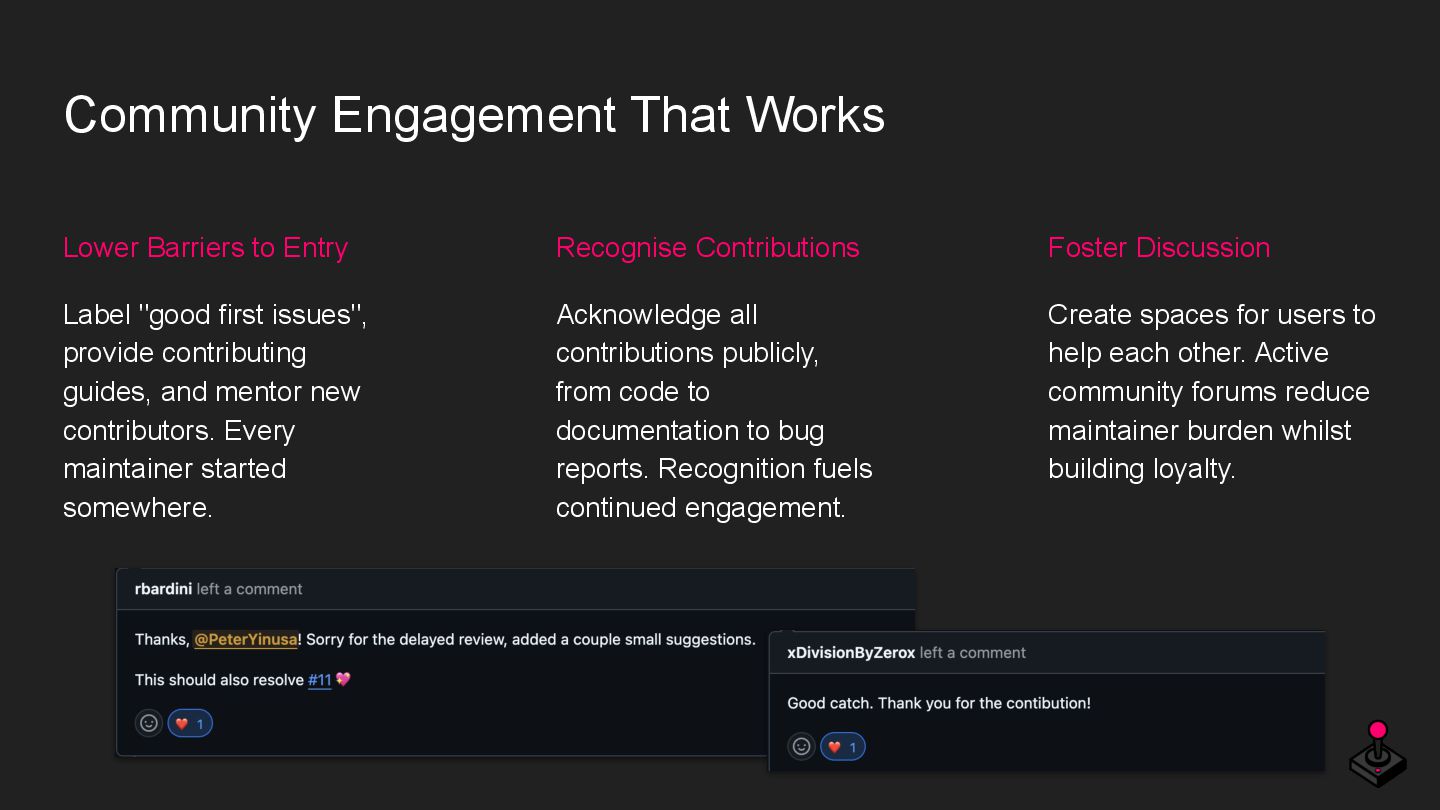
guides, and mentor new contributors. Every maintainer started somewhere. Foster Discussion Create spaces for users to help each other. Active community forums reduce maintainer burden whilst building loyalty. Recognise Contributions Acknowledge all contributions publicly, from code to documentation to bug reports. Recognition fuels continued engagement. Community Engagement That Works
Include API references, common patterns, and troubleshooting sections. Documentation is your 24/7 support team. 2. Interactive Tutorials Provide hands-on examples users can run immediately. Interactive sandboxes and starter templates reduce time-to-value and increase confidence. 3. Video Content Create screencasts demonstrating complex workflows. Visual learning complements written documentation and reaches different learning styles effectively. 4. Community Support Channels Establish Discord servers, Slack workspaces, or discussion forums. Enable users to learn from each other whilst building community connections. Educating Your Users Effectively
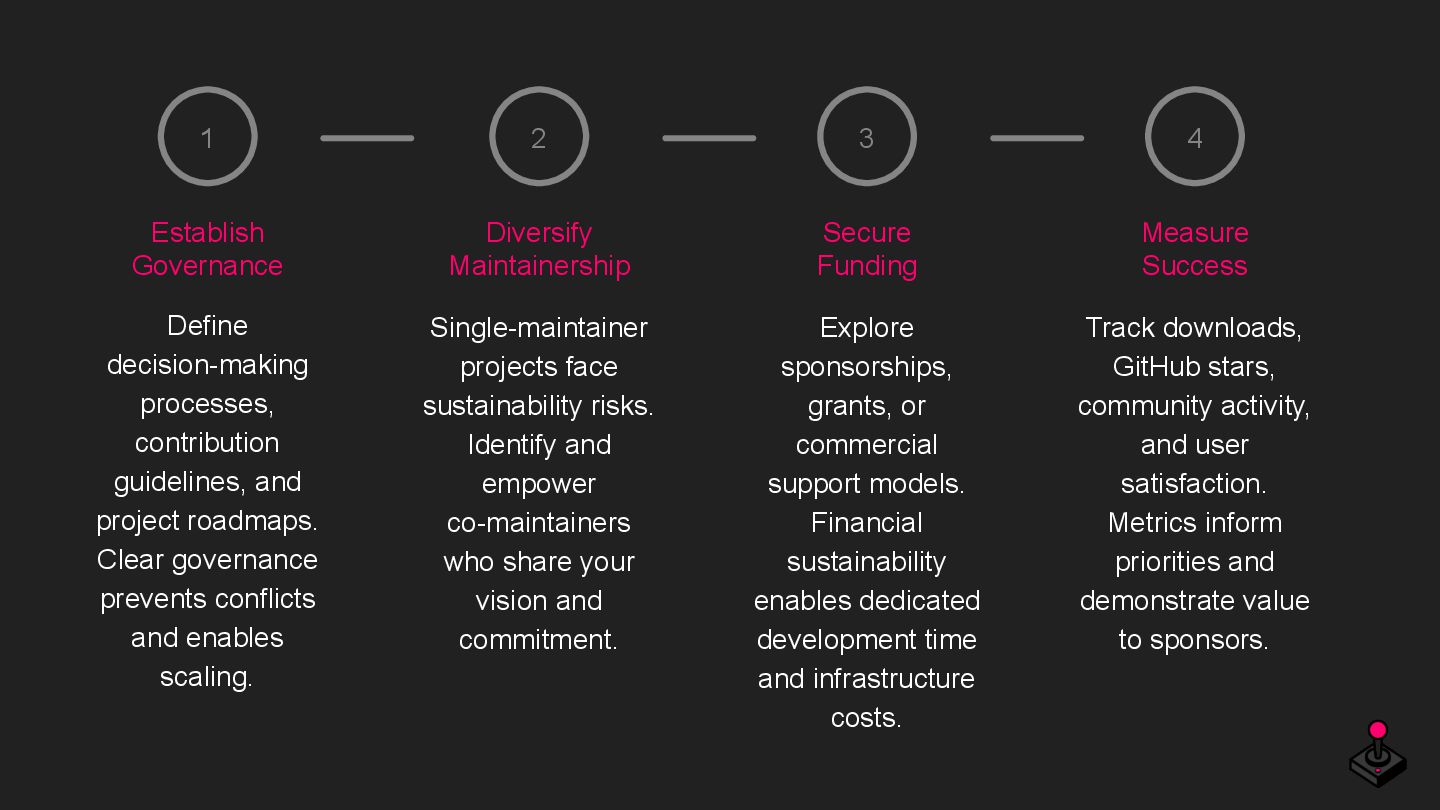
roadmaps. Clear governance prevents conflicts and enables scaling. Diversify Maintainership Single-maintainer projects face sustainability risks. Identify and empower co-maintainers who share your vision and commitment. 2 Secure Funding Explore sponsorships, grants, or commercial support models. Financial sustainability enables dedicated development time and infrastructure costs. 3 Measure Success Track downloads, GitHub stars, community activity, and user satisfaction. Metrics inform priorities and demonstrate value to sponsors. 4
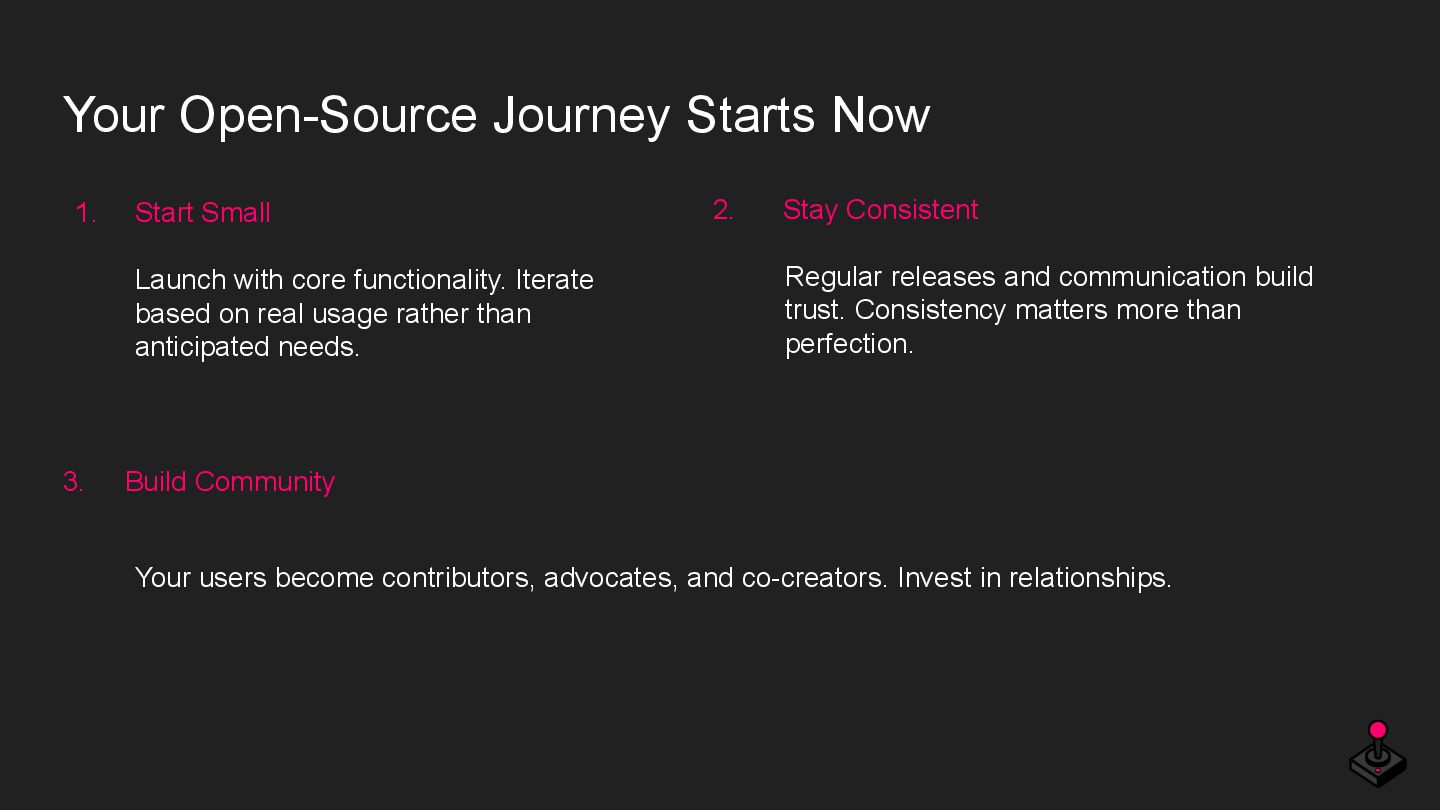
real usage rather than anticipated needs. 2. Stay Consistent Regular releases and communication build trust. Consistency matters more than perfection. 3. Build Community Your users become contributors, advocates, and co-creators. Invest in relationships. Your Open-Source Journey Starts Now


 peter_yinusa
 mohab1
 kworkdev
 kairim0
 ezaki
ezaki
 jtakeda
 bitkey
 yazm
yazm
 takuroabe
 takonda
 akhino
 takahashim
 shumei_ito
 swwweet
 sergeychernyshev
 stuffmc
 aleyda
 malarkey
 dugsong
 panda_program
 letsgokoyo
 mclloyd
 honzajavorek
 codingconduct
 badams