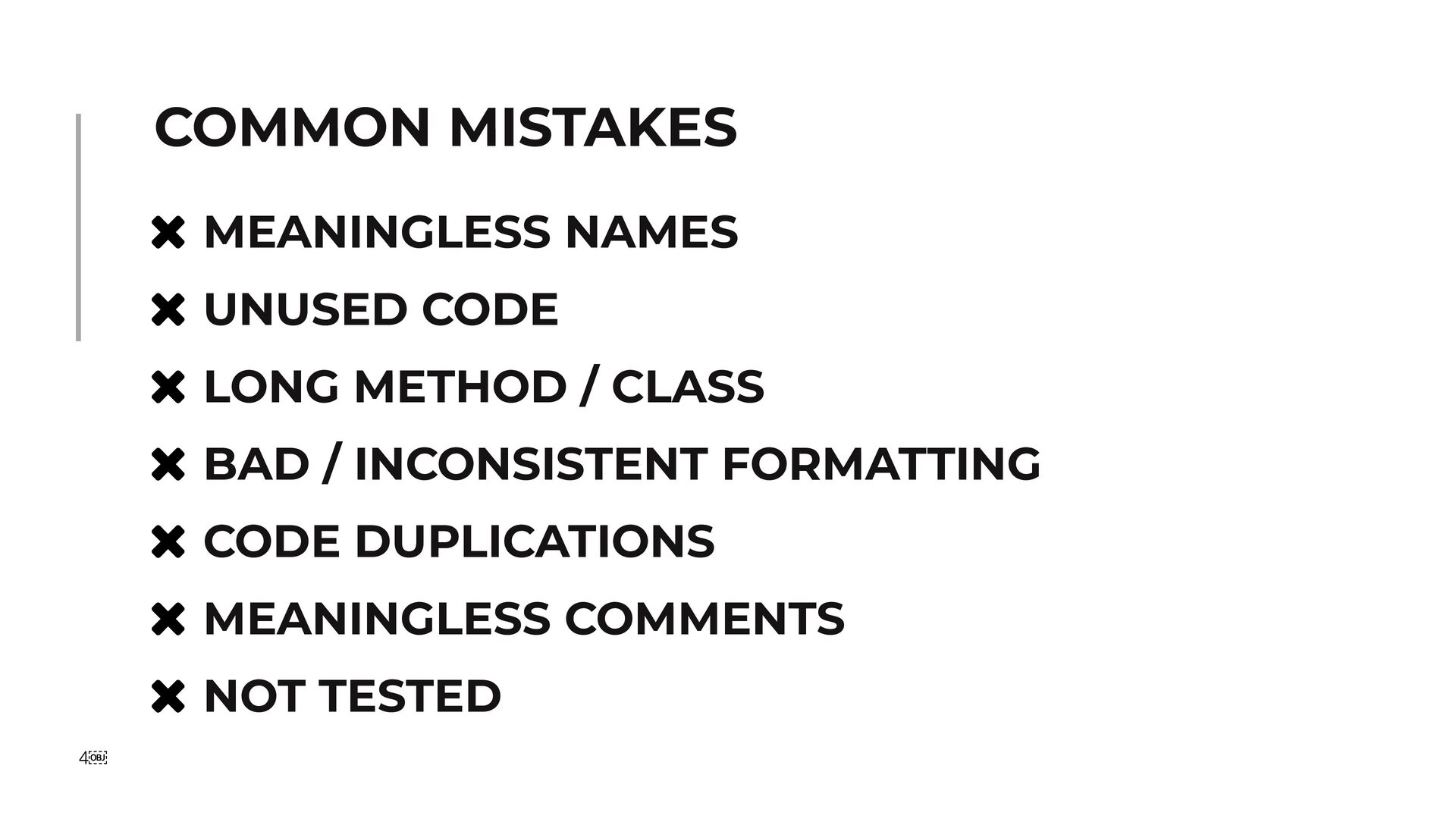
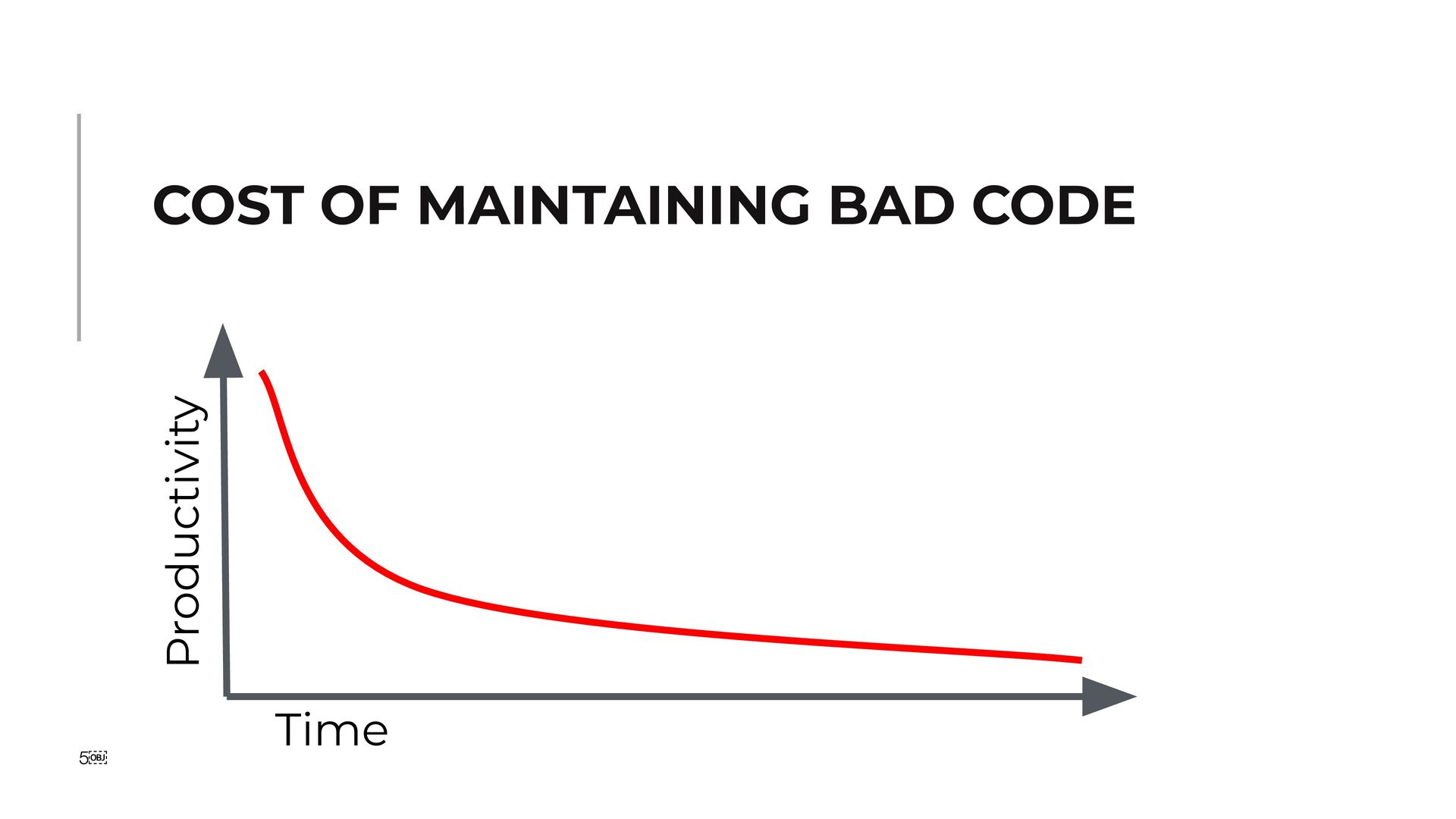
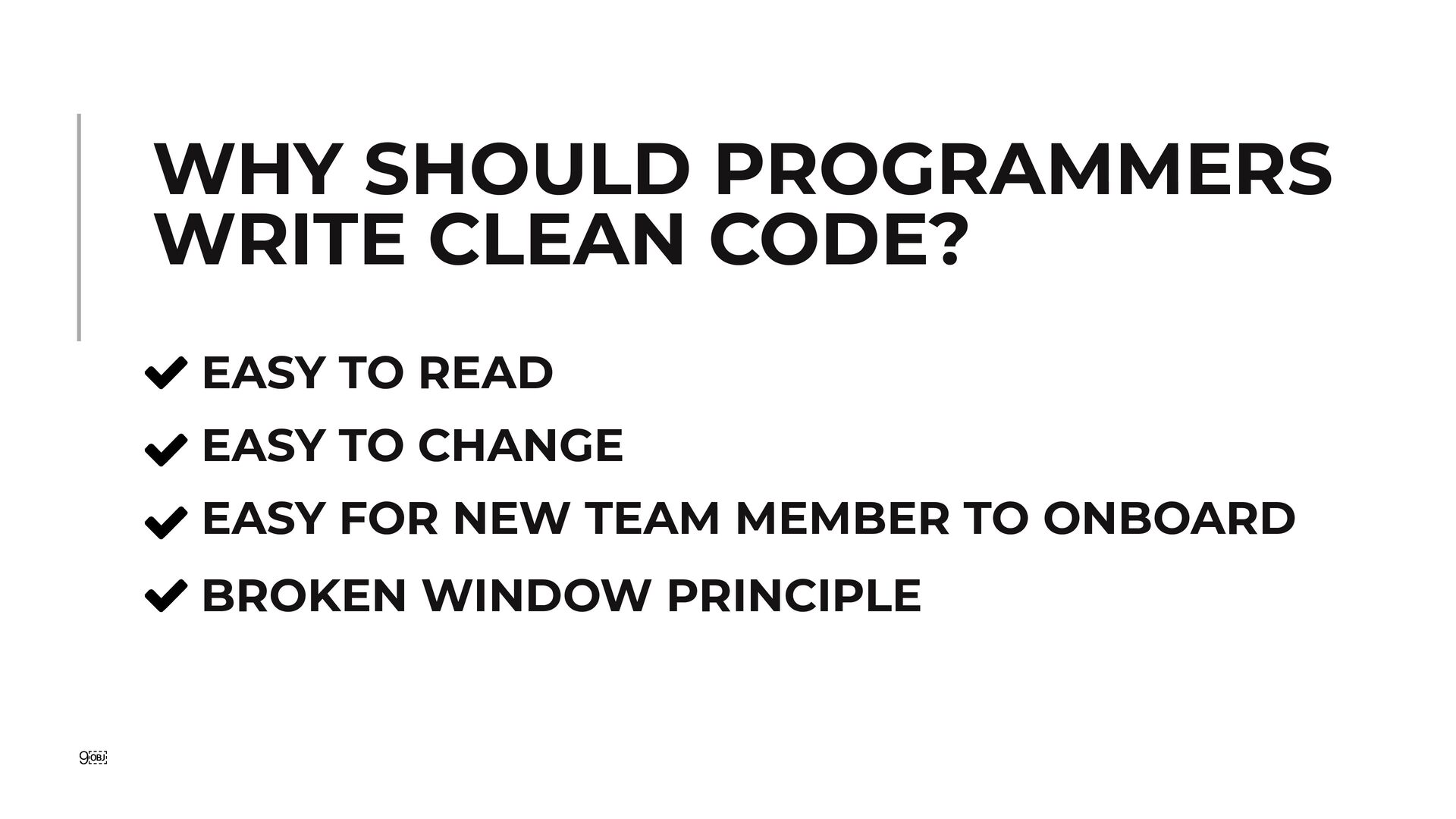
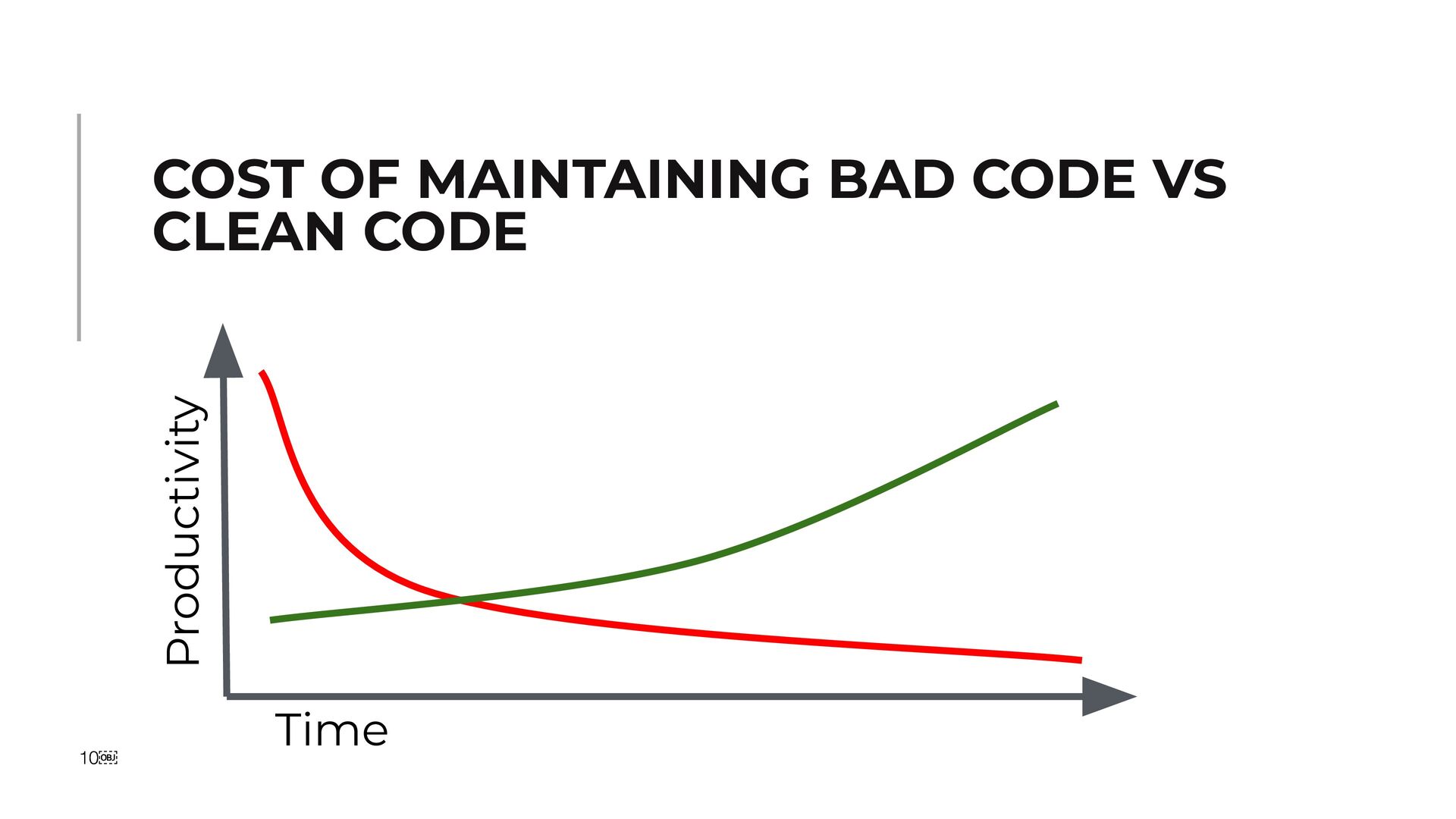
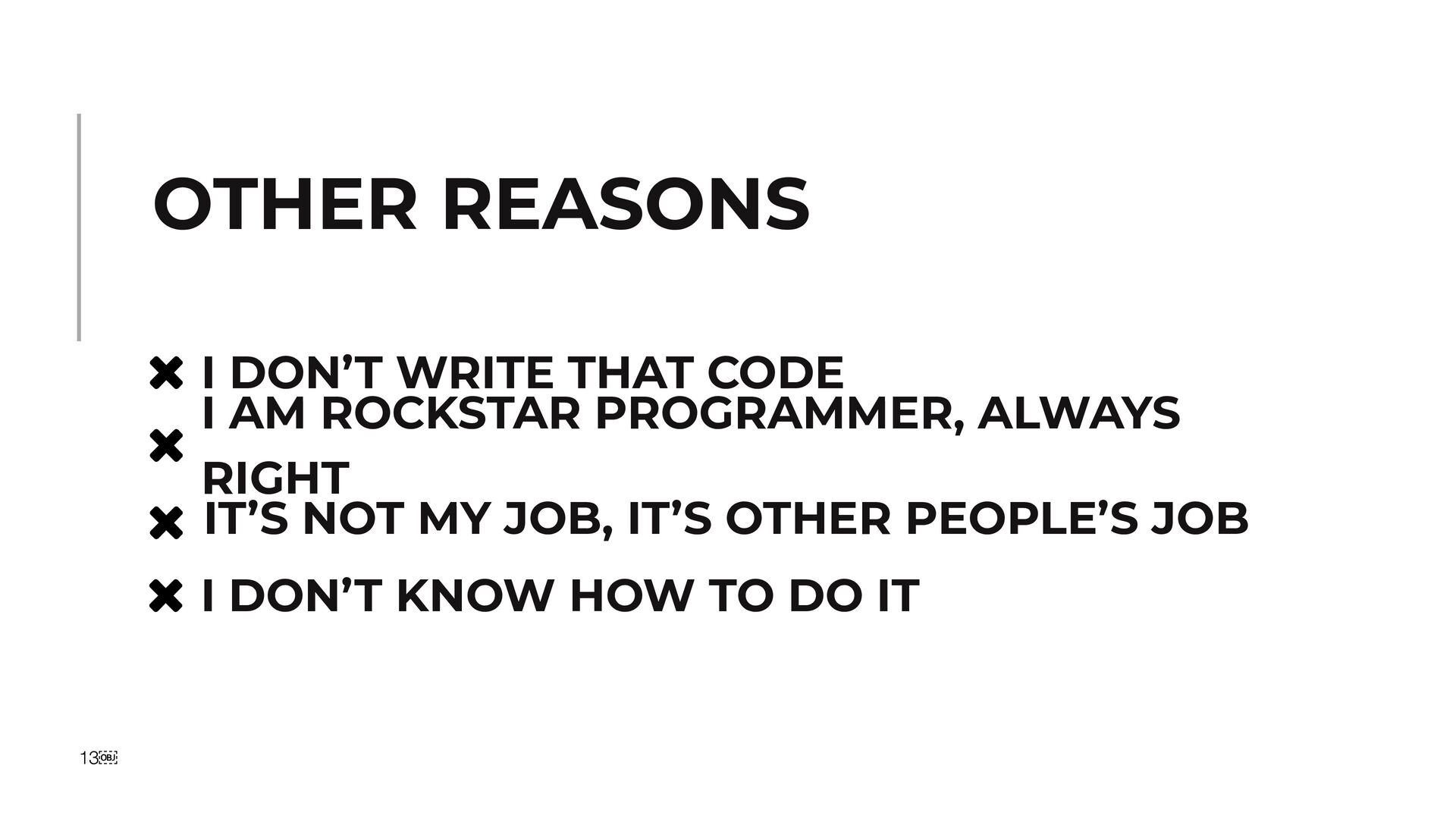
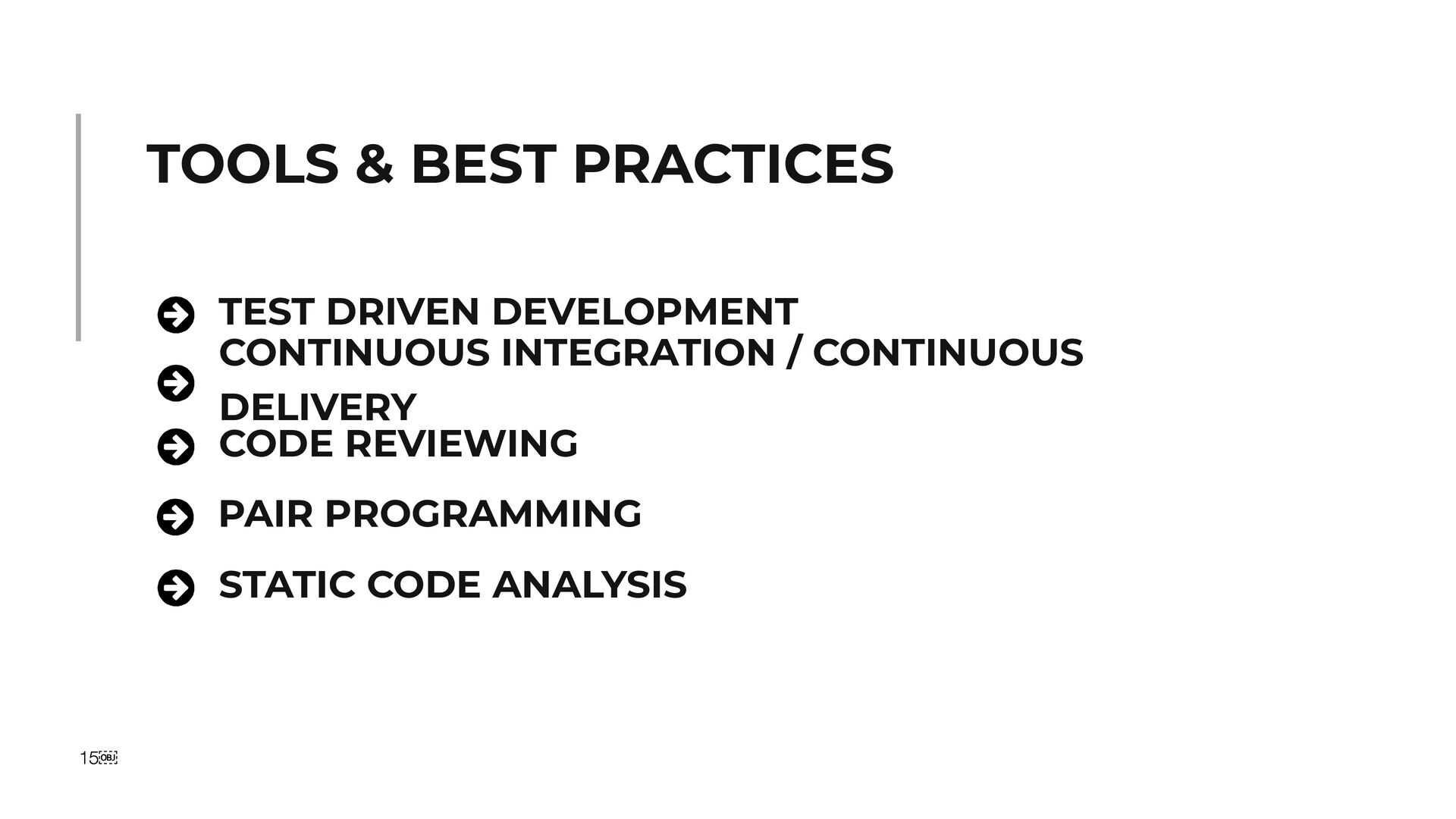
A 2017 talk delivered at Tech In Asia Jakarta while serving as CTO of UrbanIndo.com. The talk explores the difference between bad and clean code, breaking down common mistakes (meaningless names, unused code, bloated methods/classes, inconsistent formatting, duplication, untested code) and the compounding productivity cost they create over time. It also examines why developers avoid writing clean code despite knowing better — from time pressure to ego to unclear ownership — before walking through practical tools and practices: TDD, code review, static analysis, pair programming, and CI/CD.
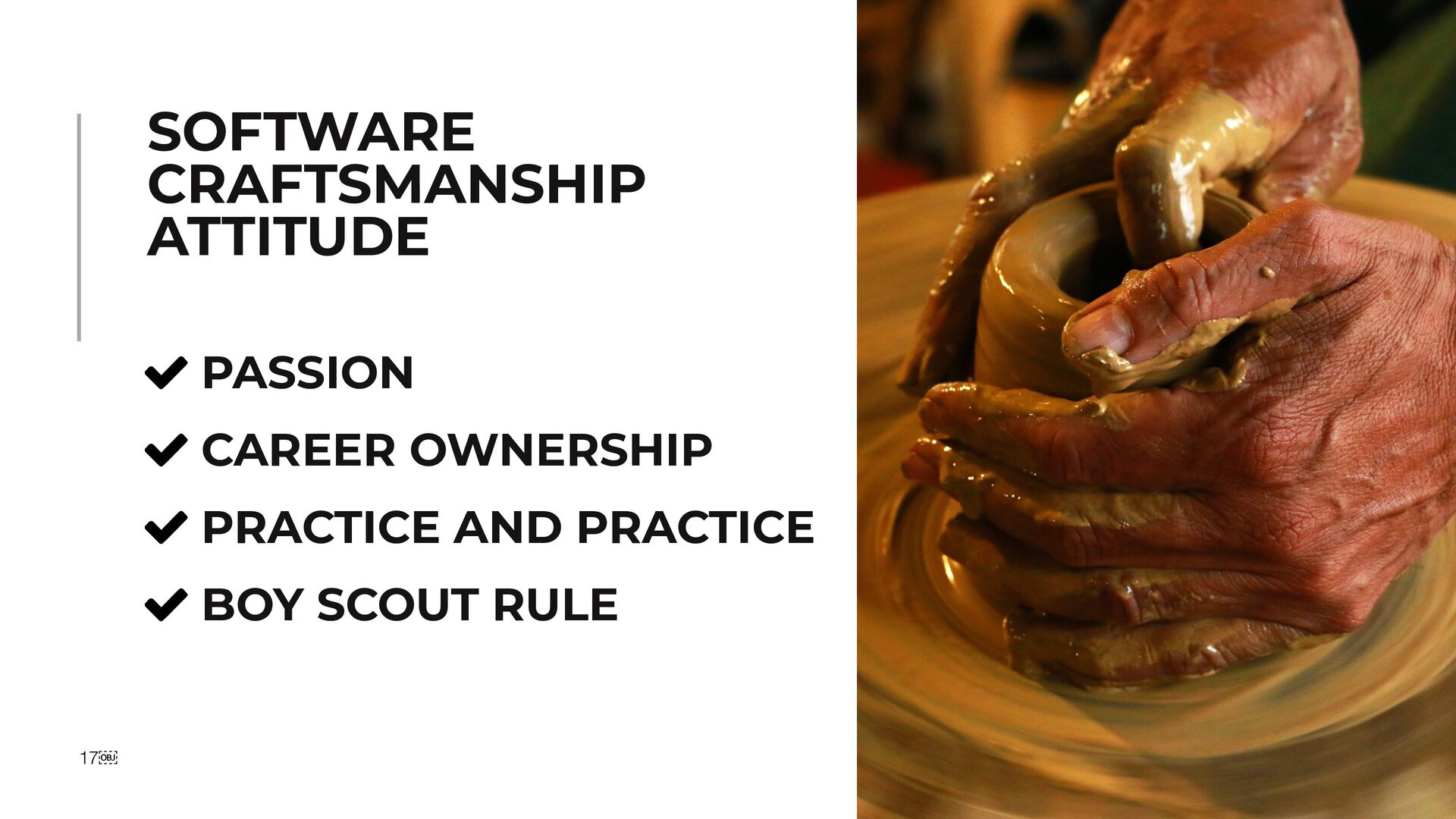
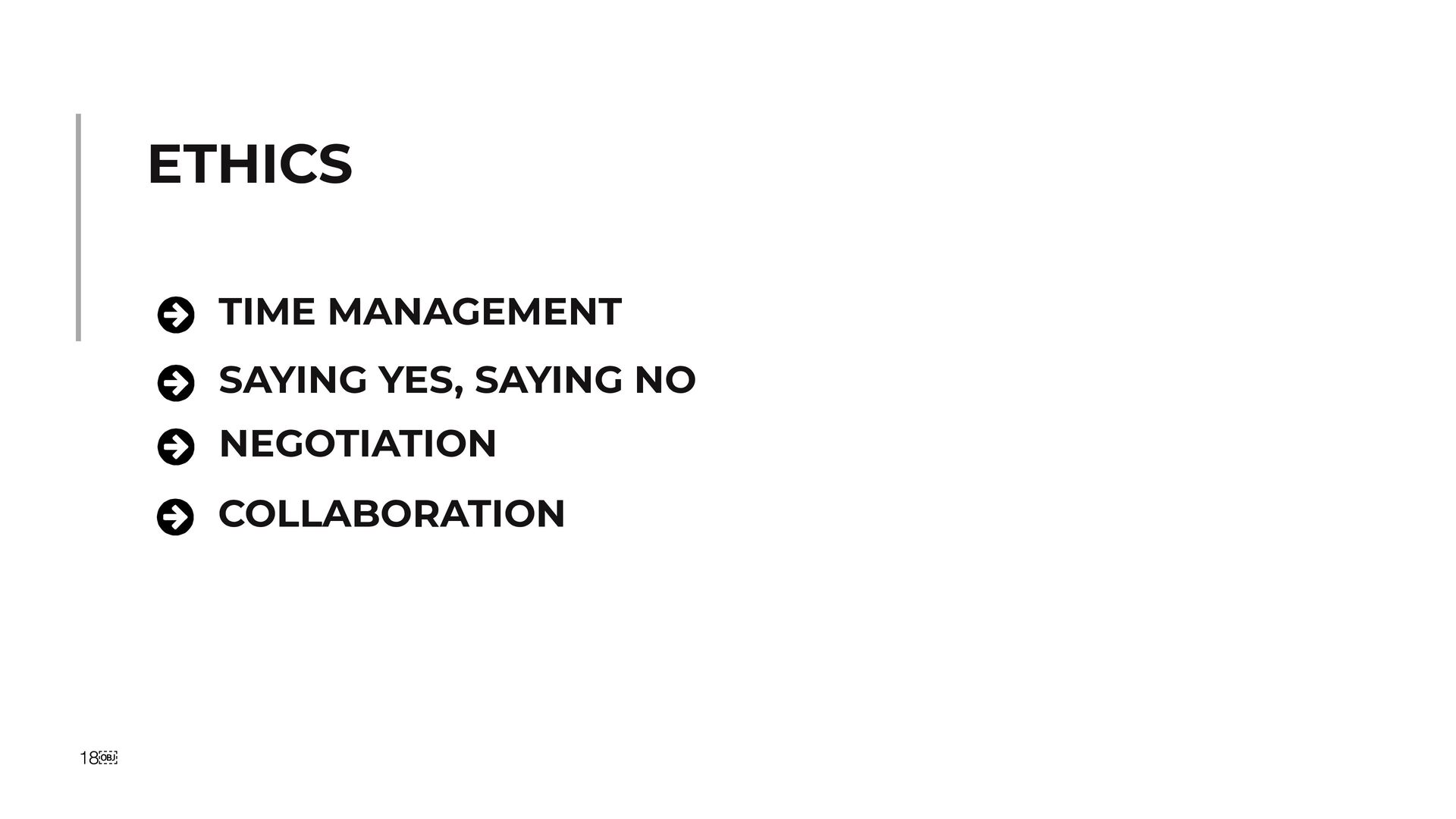
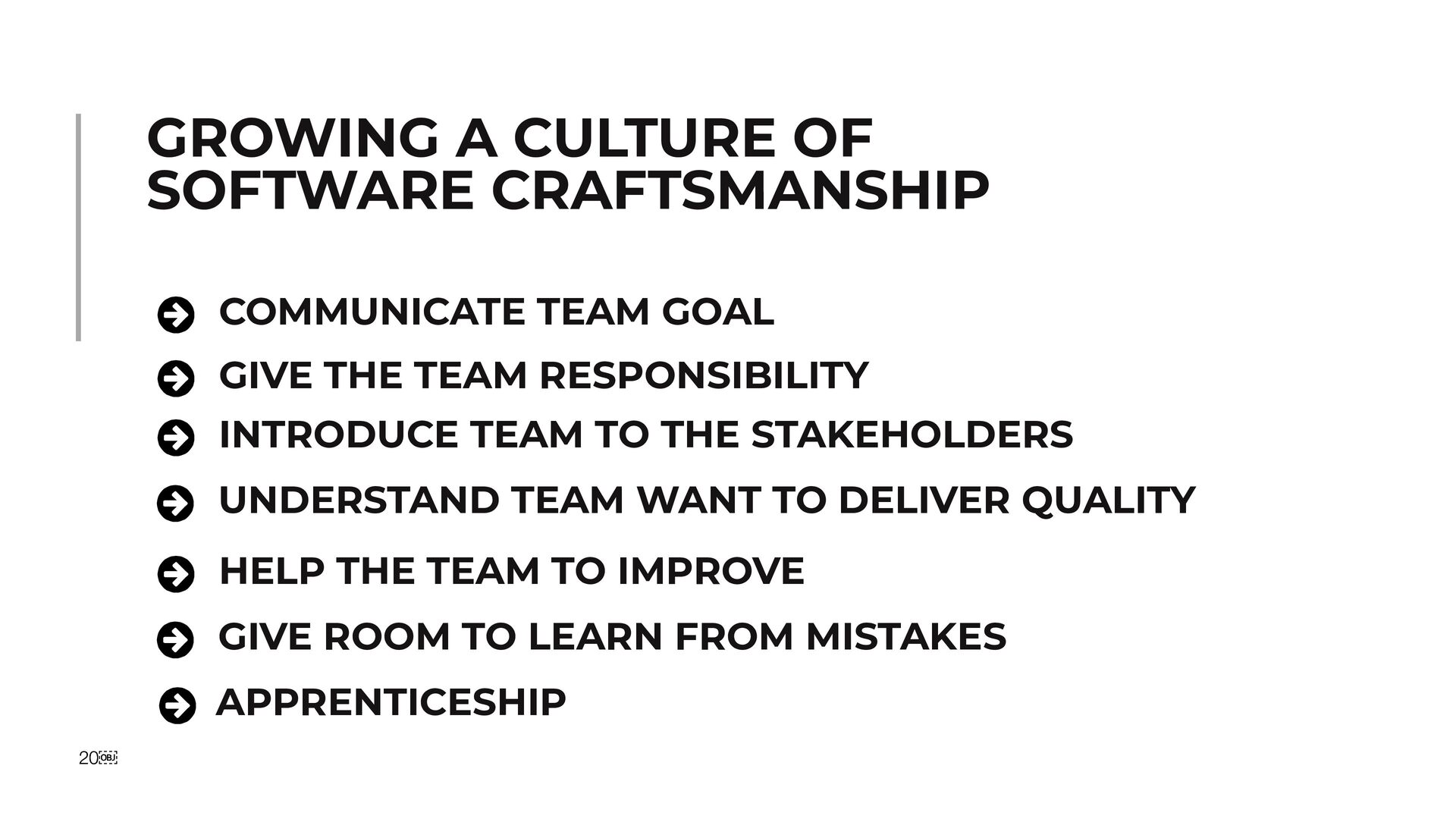
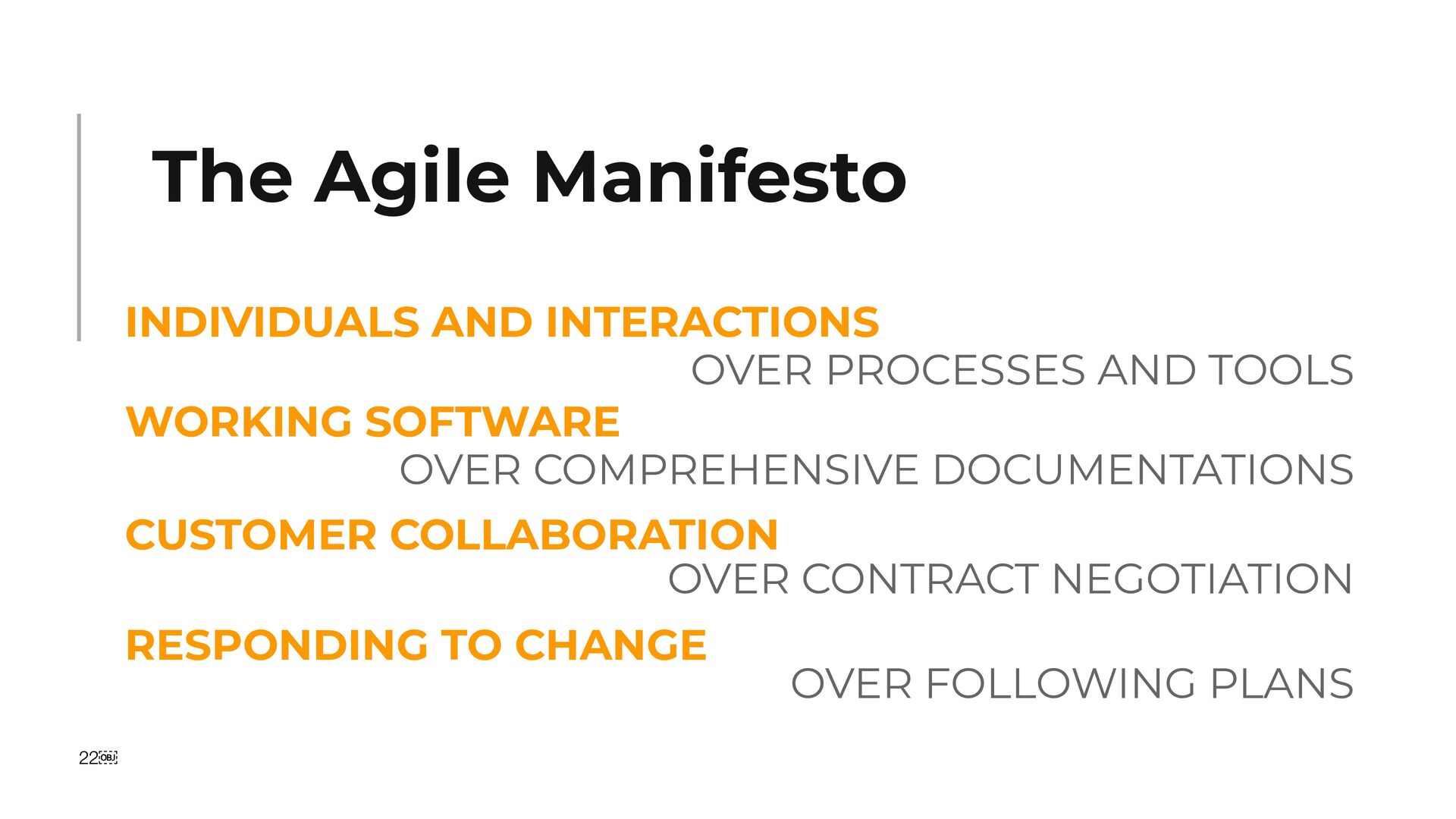
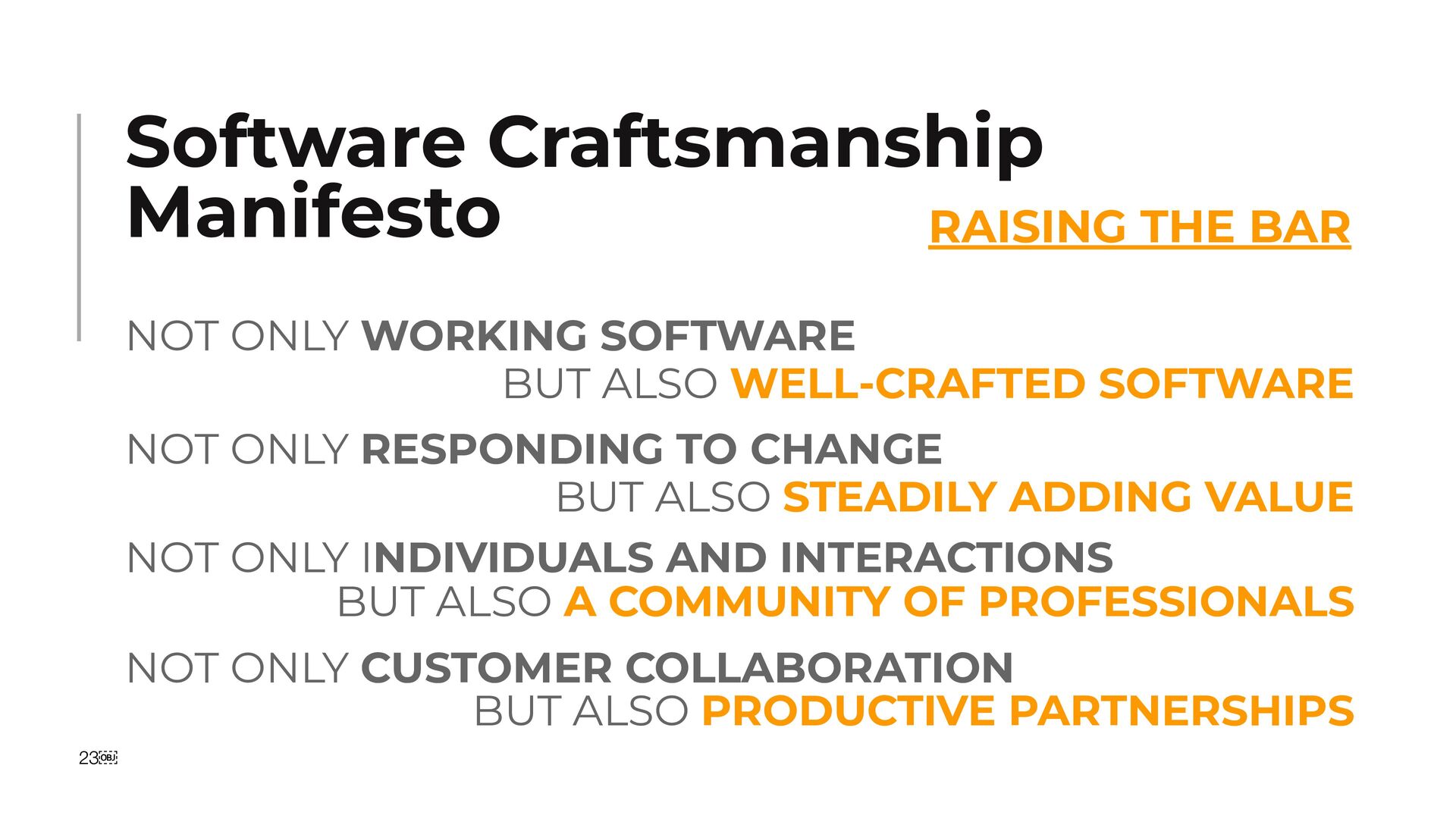
The second half shifts from code to craft, framing "being a clean coder" as software craftsmanship: passion, career ownership, deliberate practice, and the Boy Scout Rule, alongside the ethics of time management, negotiation, and collaboration. It closes by connecting Software Craftsmanship to the Agile Manifesto, presenting craftsmanship as "raising the bar" beyond Agile's four values — well-crafted software, steadily added value, a community of professionals, and productive partnerships.
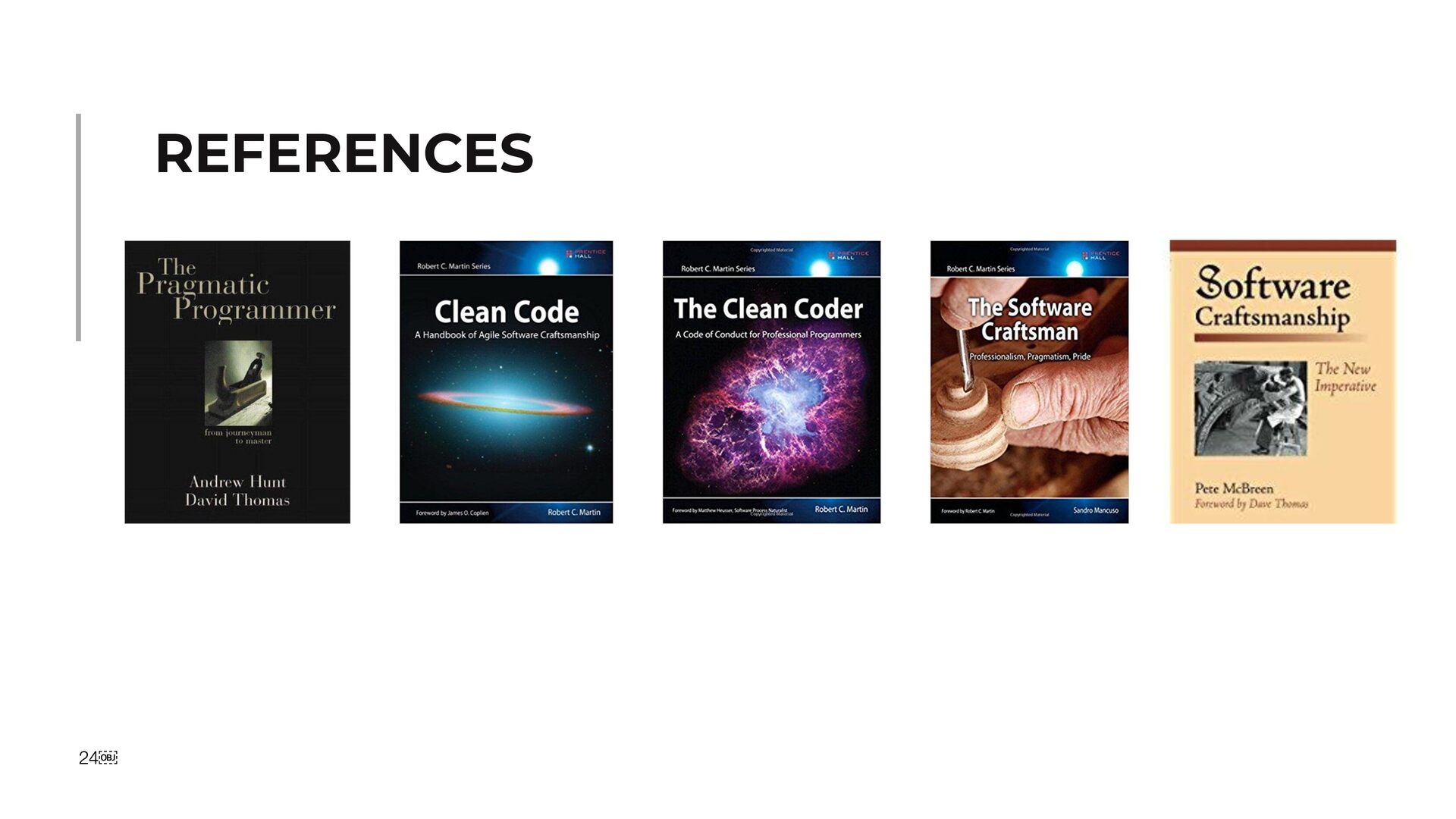
📚 References include: The Pragmatic Programmer, Clean Code, The Clean Coder, and The Software Craftsman by Robert C. Martin and others.


 petrabarus
 ichiki1023
 masakane55
 kitagawaz
 aoto
aoto
 kakehashi
 masakiokuda
 slsops
 tatamiya
 sansantech
 dada4386
 ishiirikie
 yakumo
 marcduiker
 geoffreycrofte
 mayunak
 jct
jct
 katiecoart
 nonsquared
 szymonslowik
 dougneiner
 morganepeng
 jonoalderson
 jnunemaker
 tammyeverts