Premday #3 - Toolbox for product lifecycle investigation
Criteo & Fastly present their toolbox for product lifecycle and performance investigation including hwbench, bbench, Phoronix Test Suite, Spirent, Yokogawa
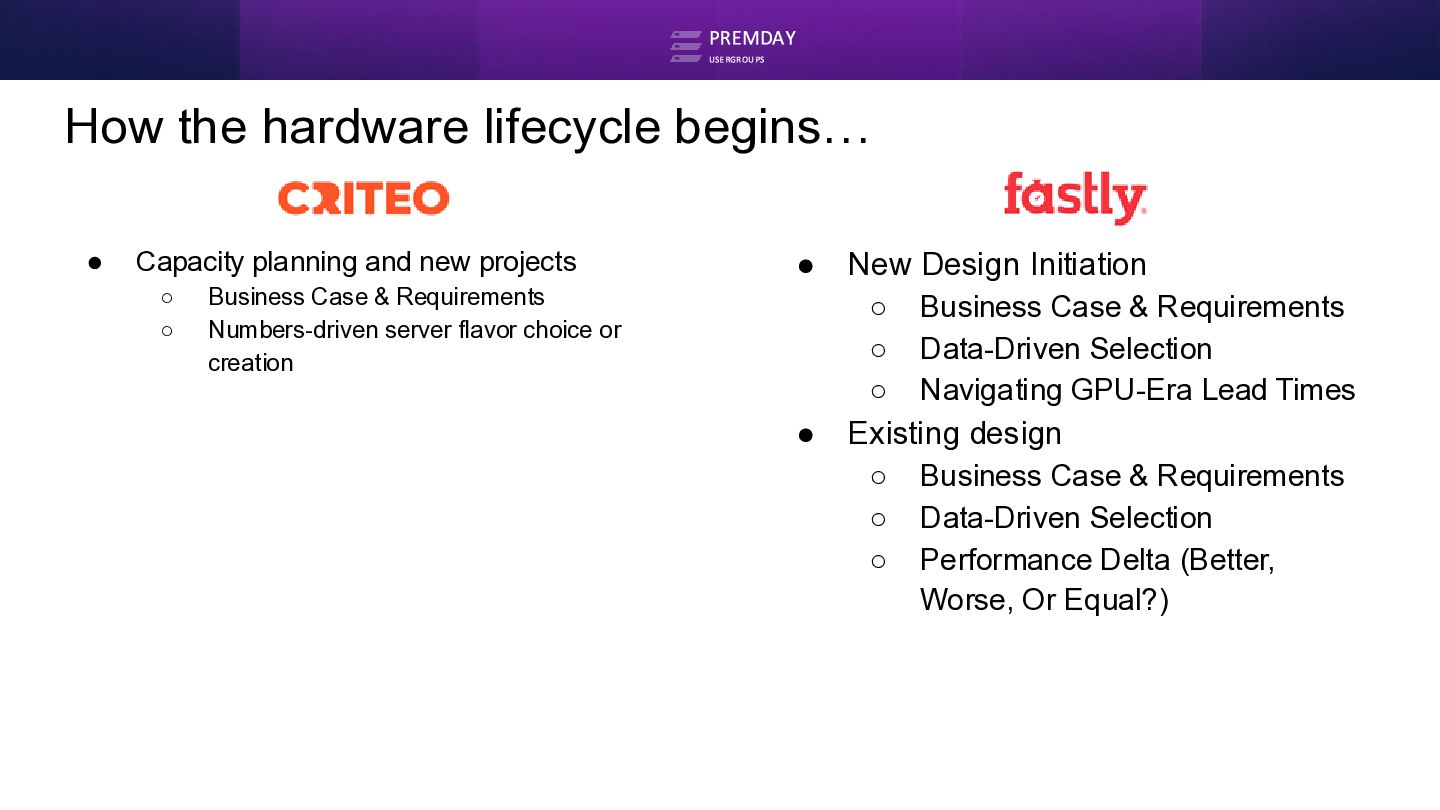
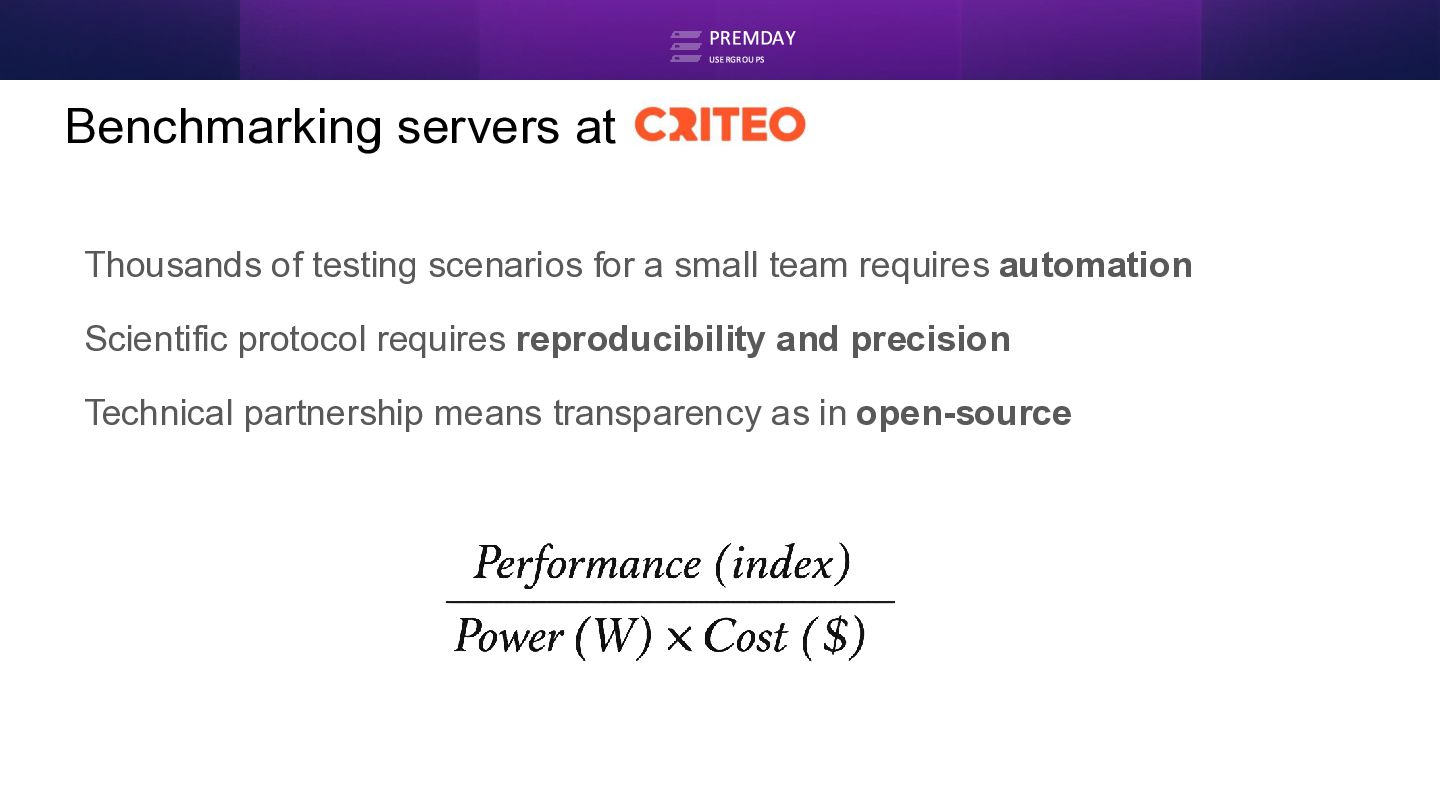
Requirements ◦ Numbers-driven server flavor choice or creation • New Design Initiation ◦ Business Case & Requirements ◦ Data-Driven Selection ◦ Navigating GPU-Era Lead Times • Existing design ◦ Business Case & Requirements ◦ Data-Driven Selection ◦ Performance Delta (Better, Worse, Or Equal?) How the hardware lifecycle begins…
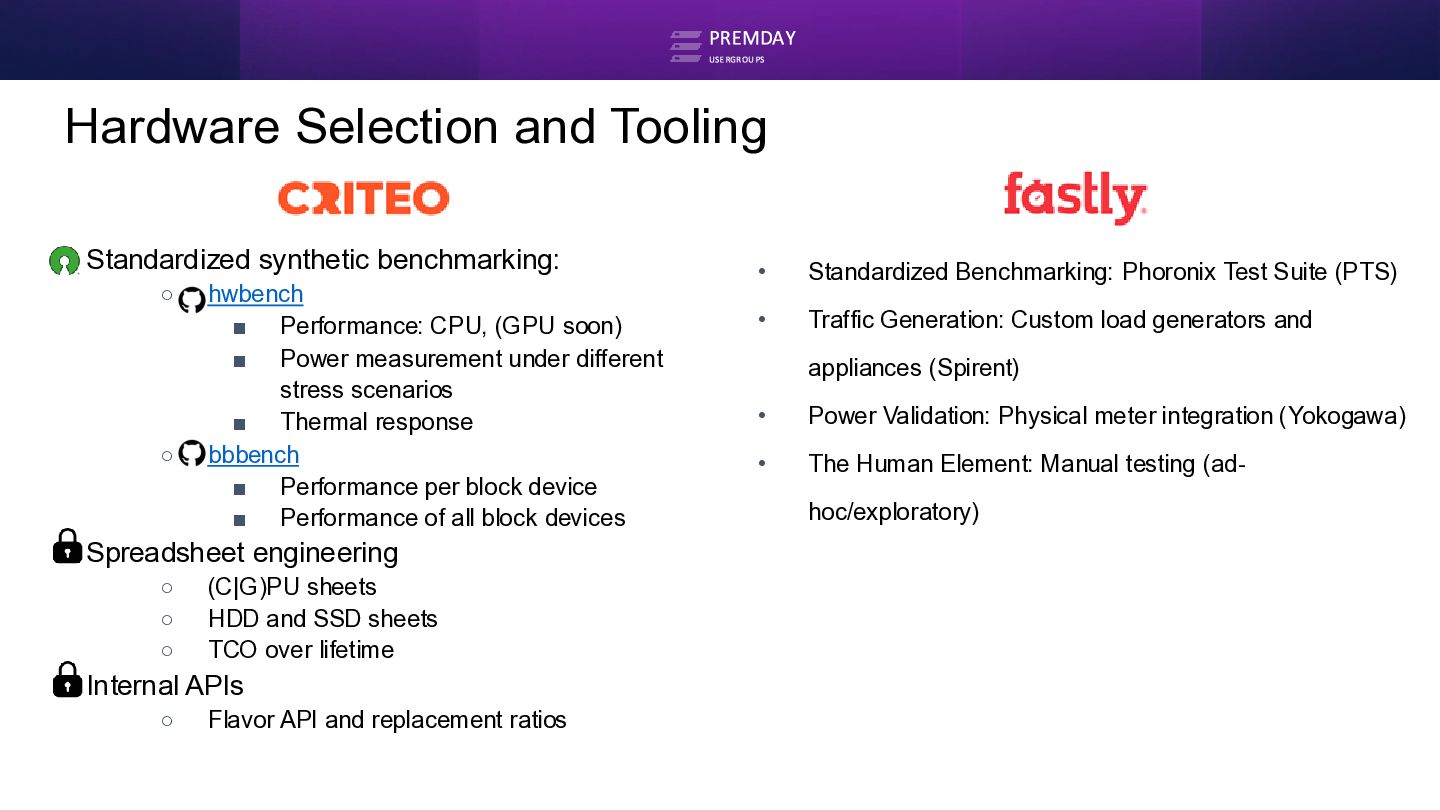
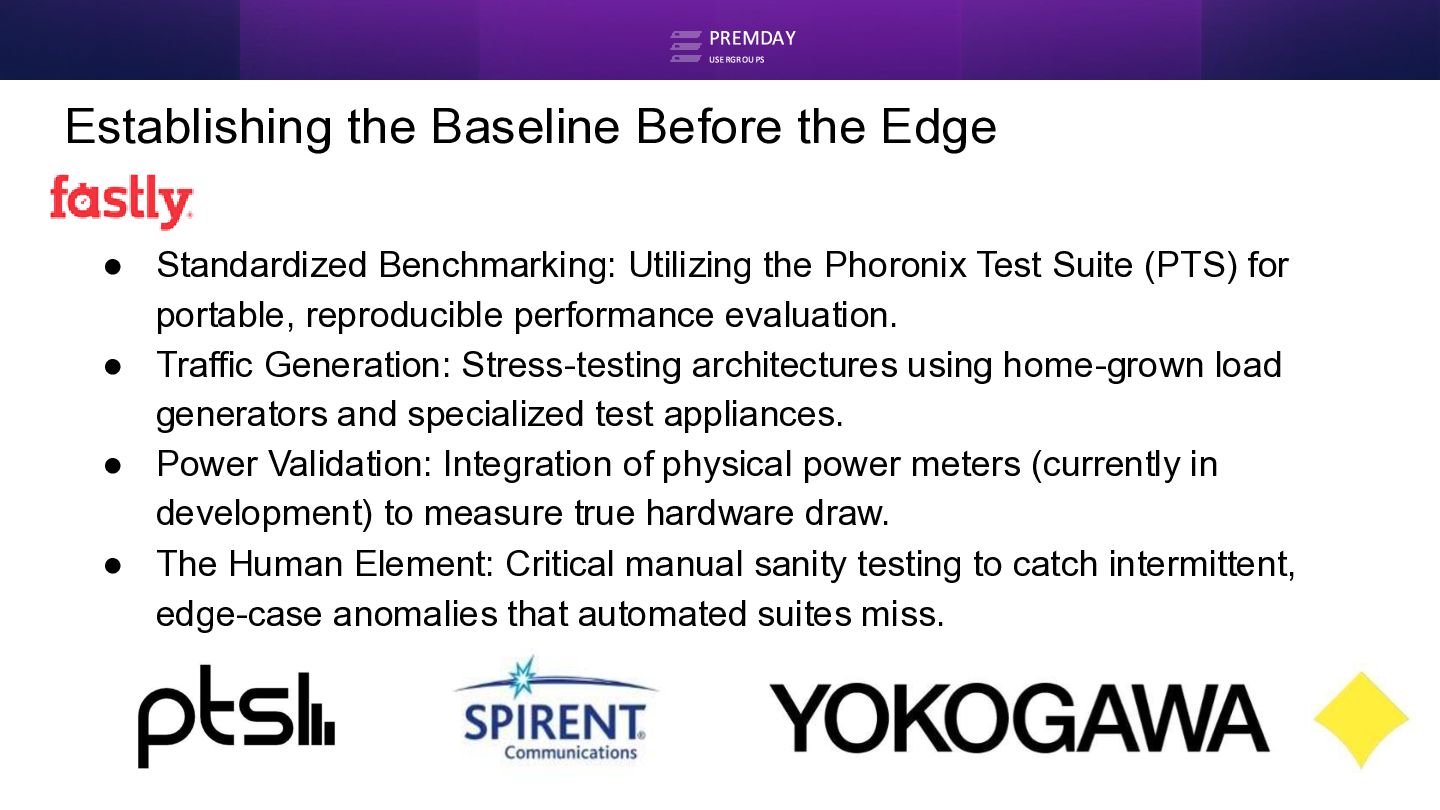
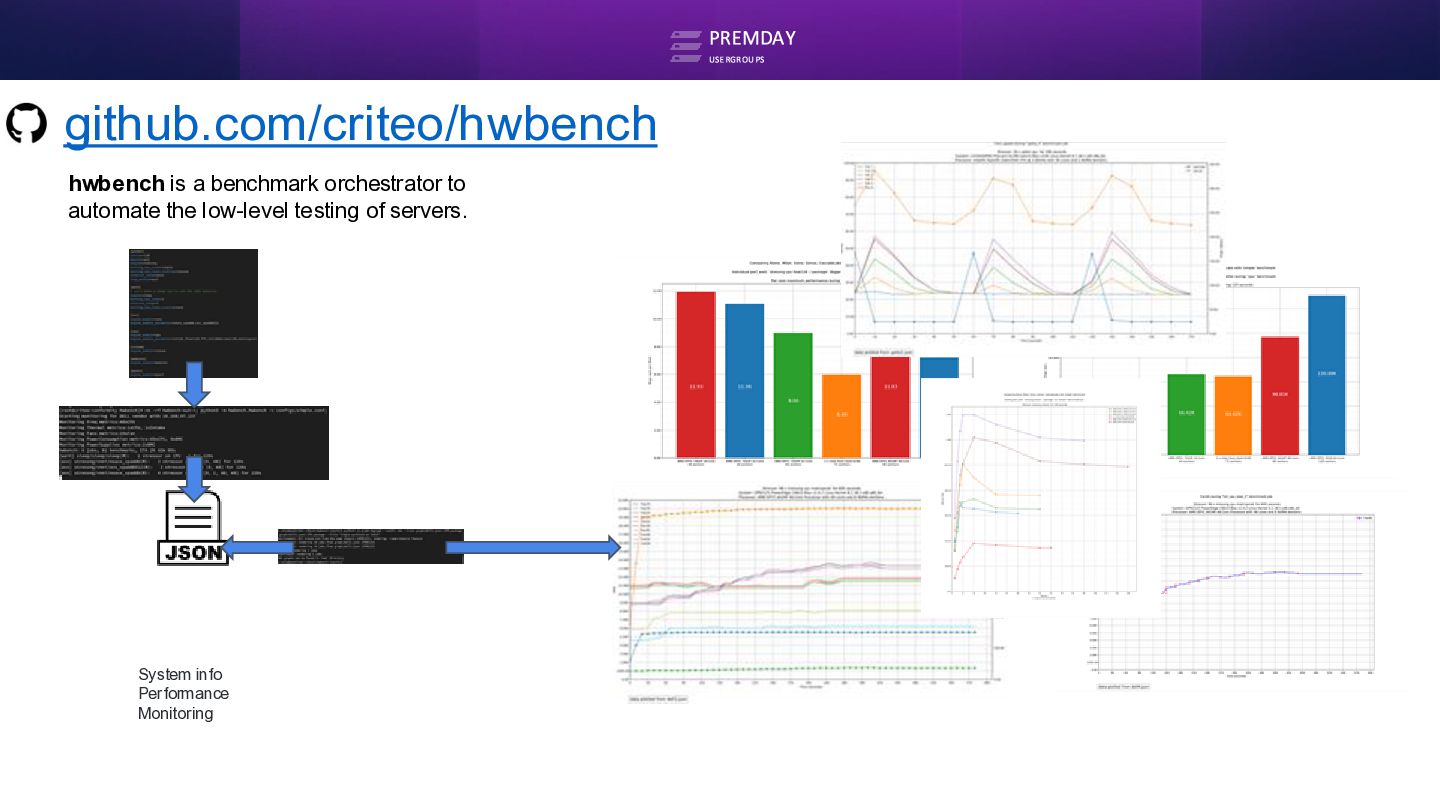
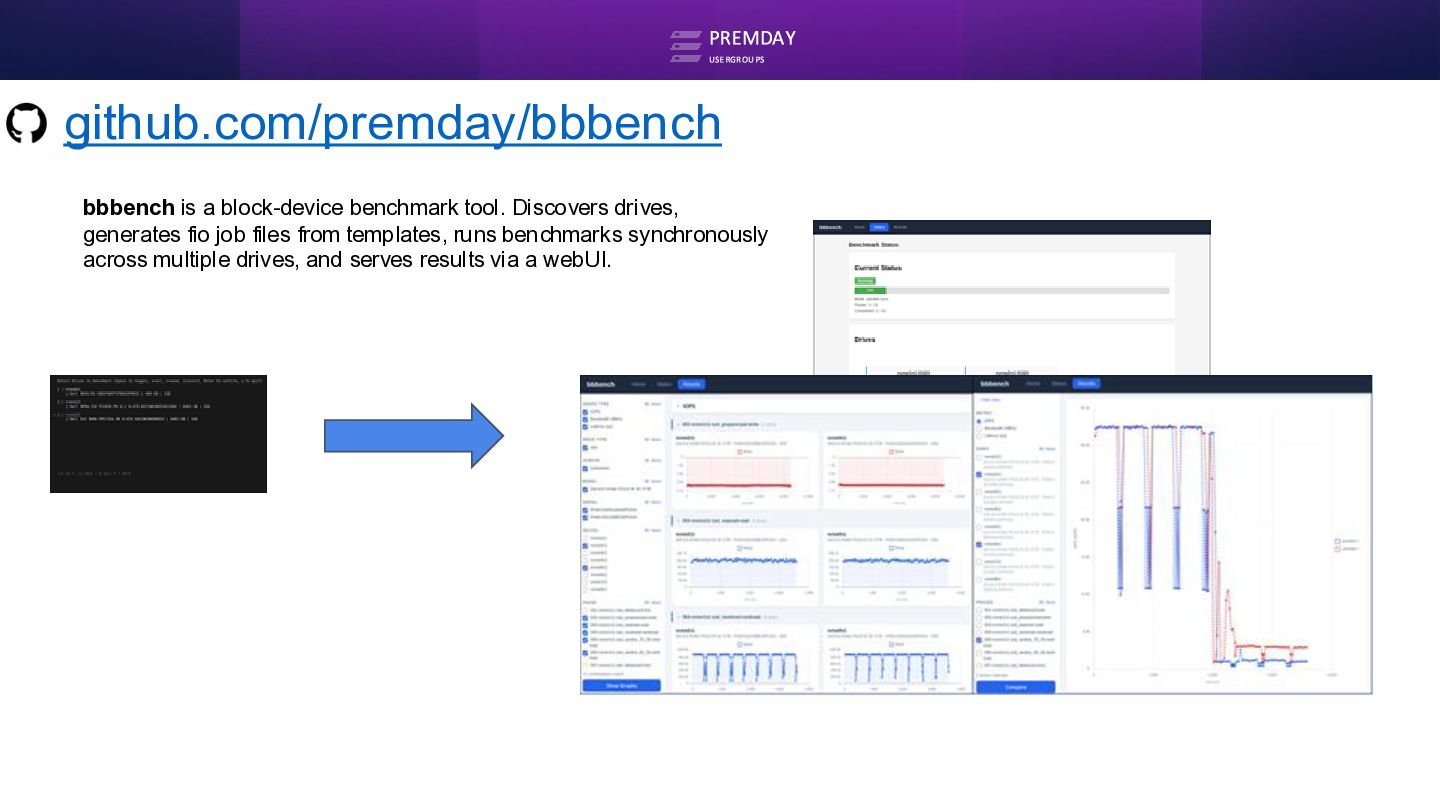
Custom load generators and appliances (Spirent) • Power Validation: Physical meter integration (Yokogawa) • The Human Element: Manual testing (ad- hoc/exploratory) Hardware Selection and Tooling Standardized synthetic benchmarking: ◦ hwbench ▪ Performance: CPU, (GPU soon) ▪ Power measurement under different stress scenarios ▪ Thermal response ◦ bbbench ▪ Performance per block device ▪ Performance of all block devices Spreadsheet engineering ◦ (C|G)PU sheets ◦ HDD and SSD sheets ◦ TCO over lifetime Internal APIs ◦ Flavor API and replacement ratios
the Phoronix Test Suite (PTS) for portable, reproducible performance evaluation. • Traffic Generation: Stress-testing architectures using home-grown load generators and specialized test appliances. • Power Validation: Integration of physical power meters (currently in development) to measure true hardware draw. • The Human Element: Critical manual sanity testing to catch intermittent, edge-case anomalies that automated suites miss.
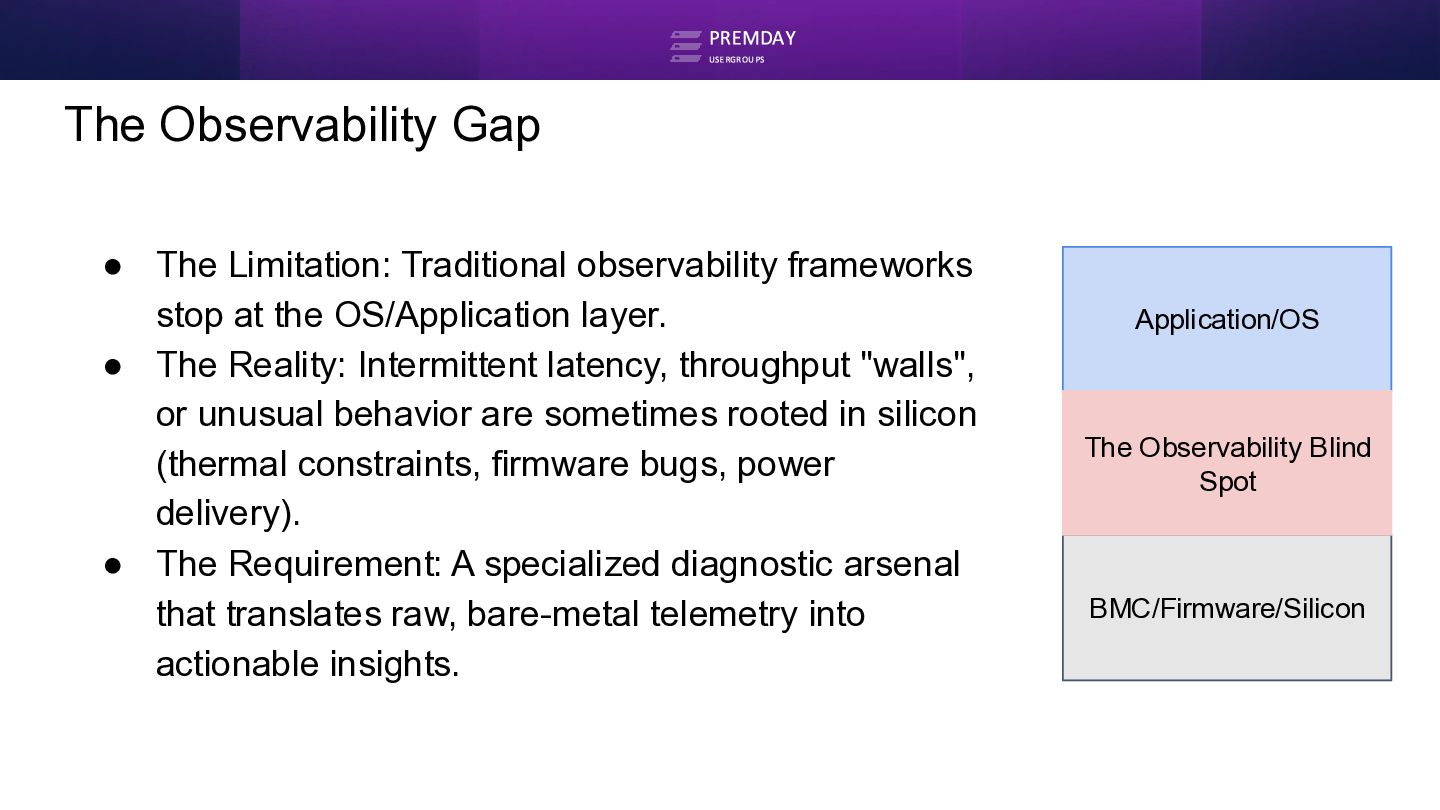
at the OS/Application layer. • The Reality: Intermittent latency, throughput "walls", or unusual behavior are sometimes rooted in silicon (thermal constraints, firmware bugs, power delivery). • The Requirement: A specialized diagnostic arsenal that translates raw, bare-metal telemetry into actionable insights. Application/OS BMC/Firmware/Silicon The Observability Blind Spot
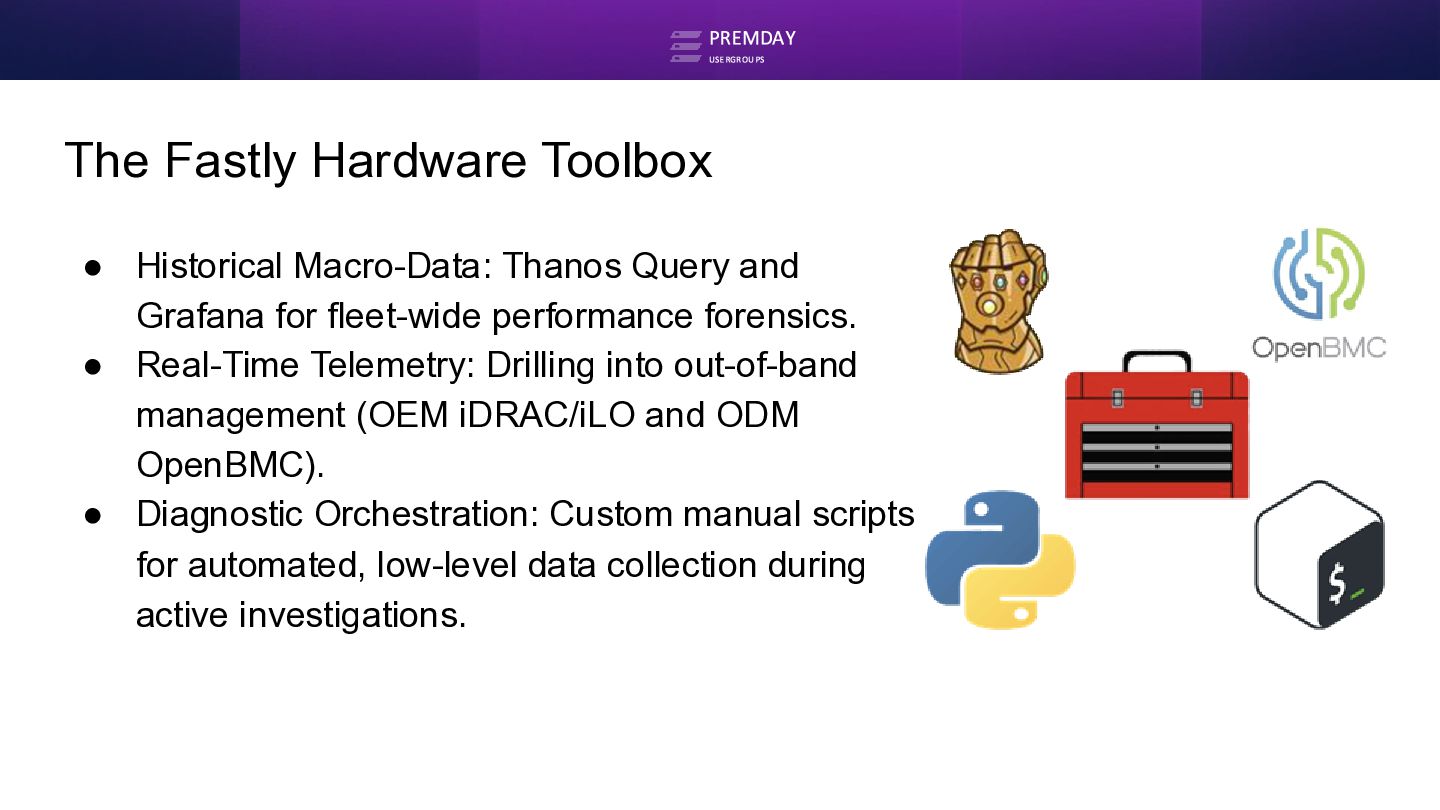
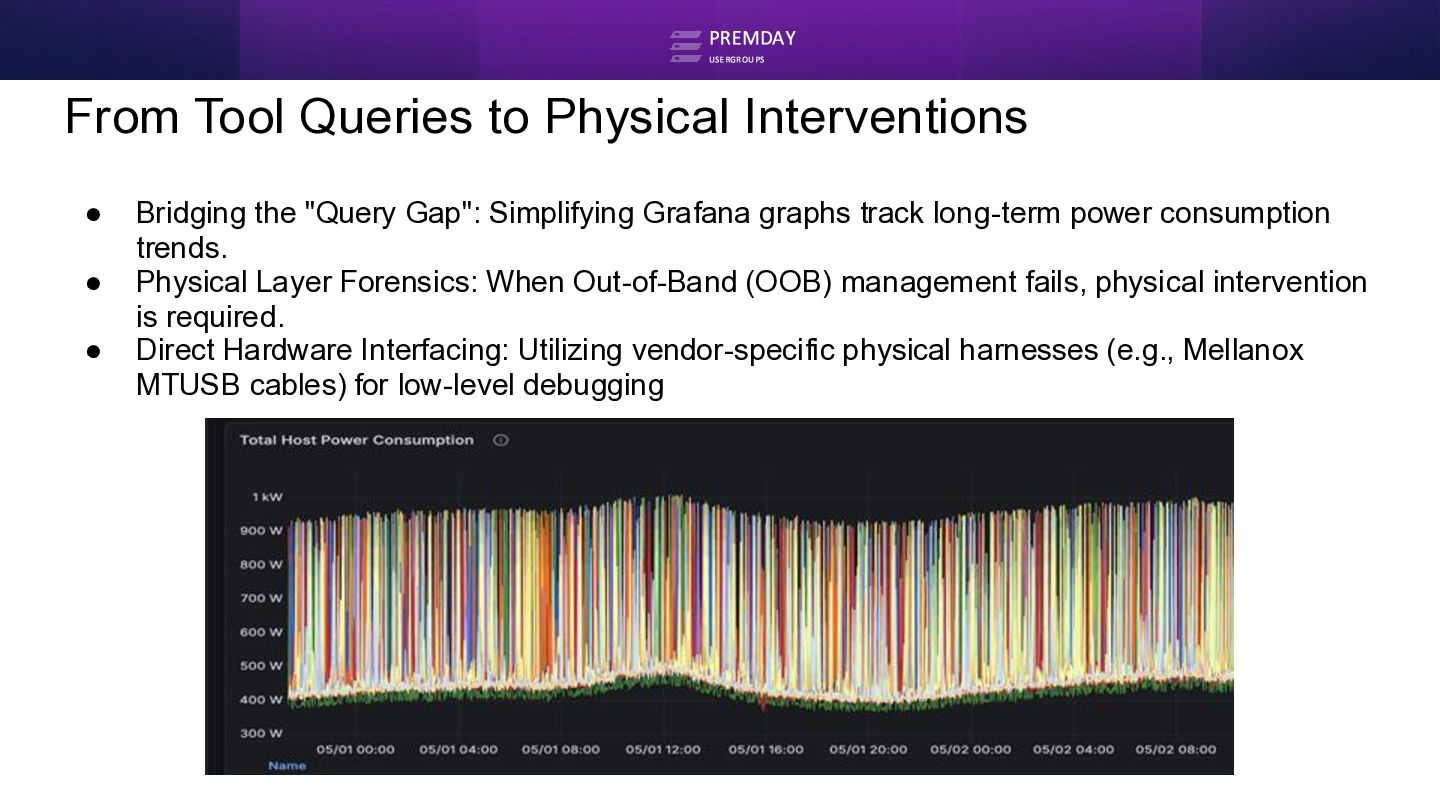
Grafana for fleet-wide performance forensics. • Real-Time Telemetry: Drilling into out-of-band management (OEM iDRAC/iLO and ODM OpenBMC). • Diagnostic Orchestration: Custom manual scripts for automated, low-level data collection during active investigations.
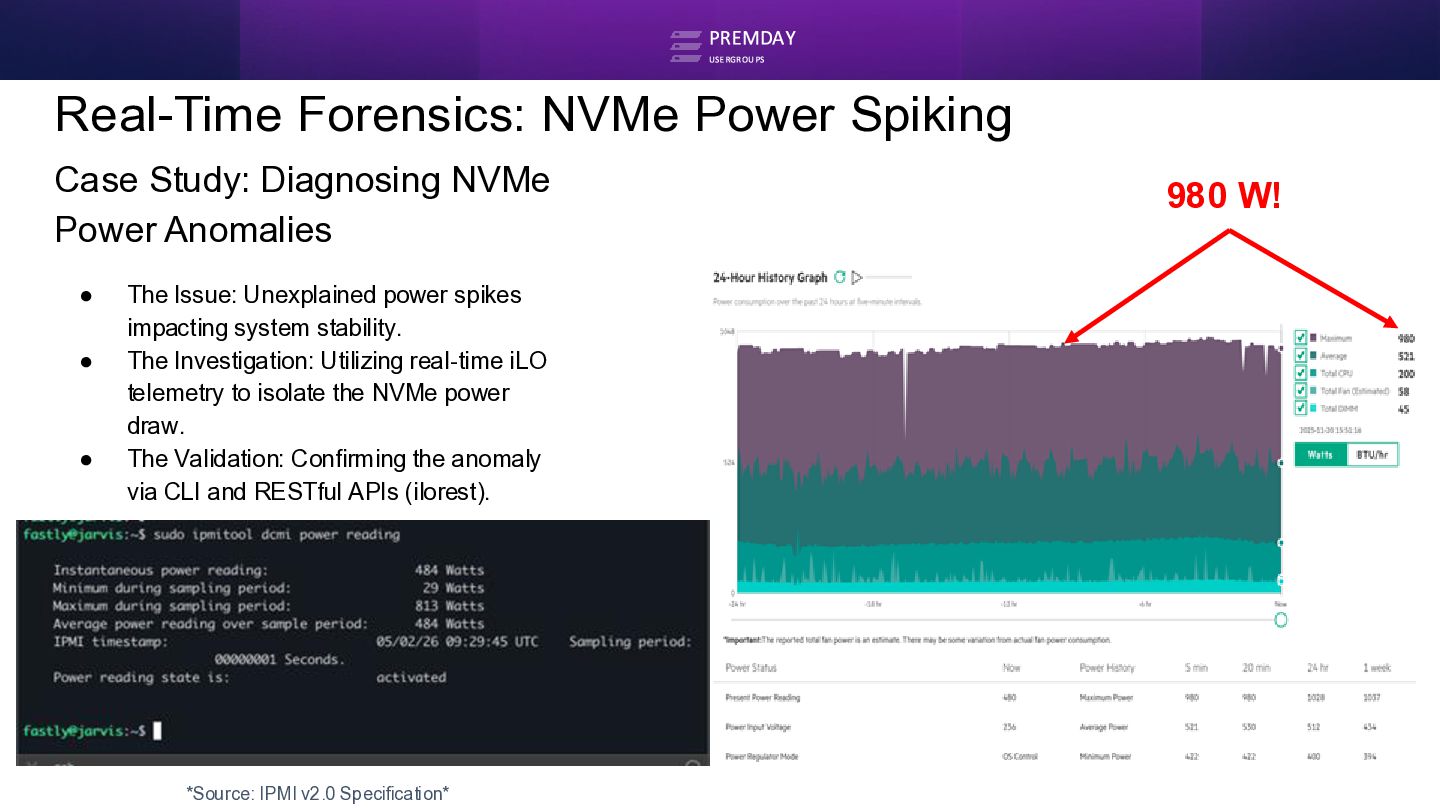
Anomalies • The Issue: Unexplained power spikes impacting system stability. • The Investigation: Utilizing real-time iLO telemetry to isolate the NVMe power draw. • The Validation: Confirming the anomaly via CLI and RESTful APIs (ilorest). 980 W! *Source: IPMI v2.0 Specification*
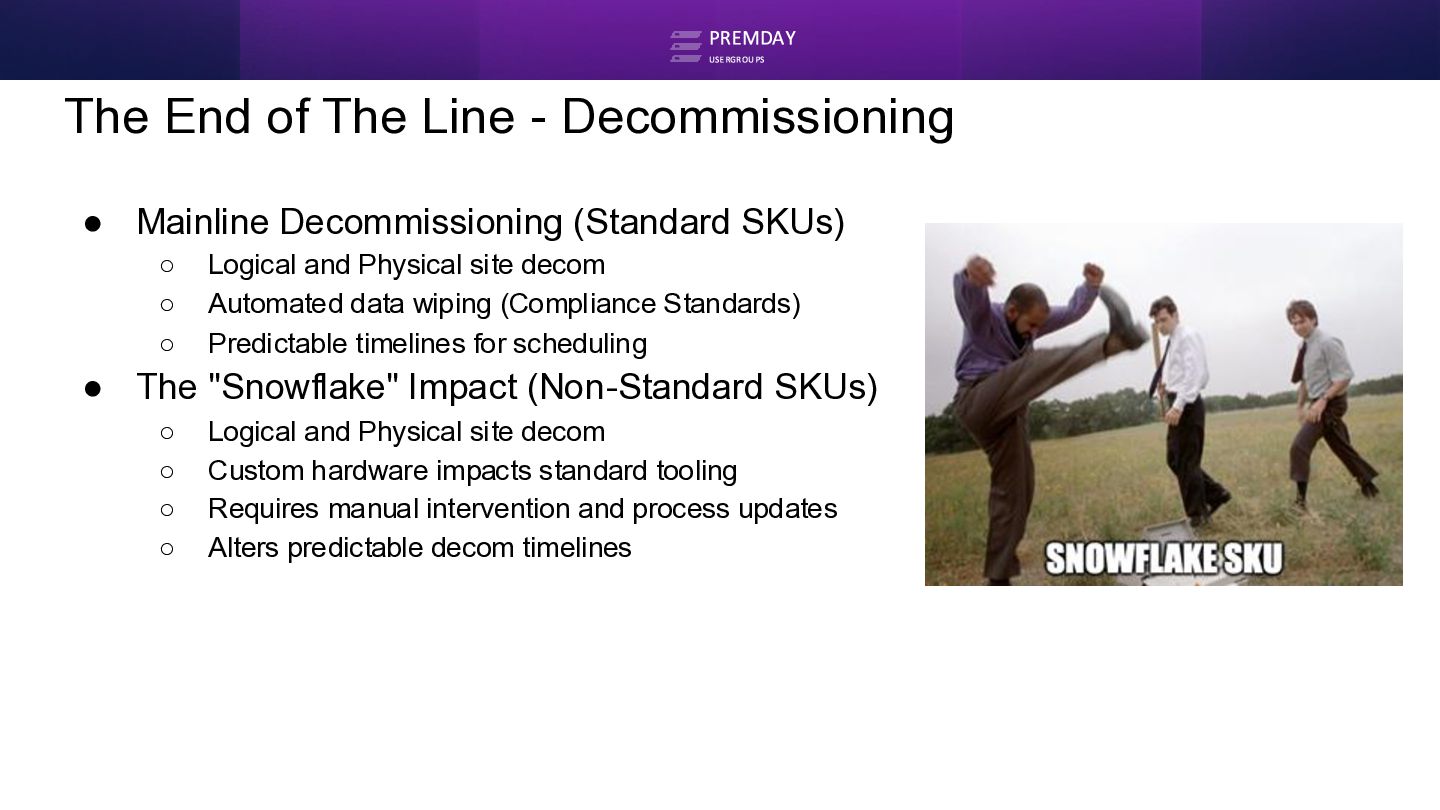
(Standard SKUs) ◦ Logical and Physical site decom ◦ Automated data wiping (Compliance Standards) ◦ Predictable timelines for scheduling • The "Snowflake" Impact (Non-Standard SKUs) ◦ Logical and Physical site decom ◦ Custom hardware impacts standard tooling ◦ Requires manual intervention and process updates ◦ Alters predictable decom timelines
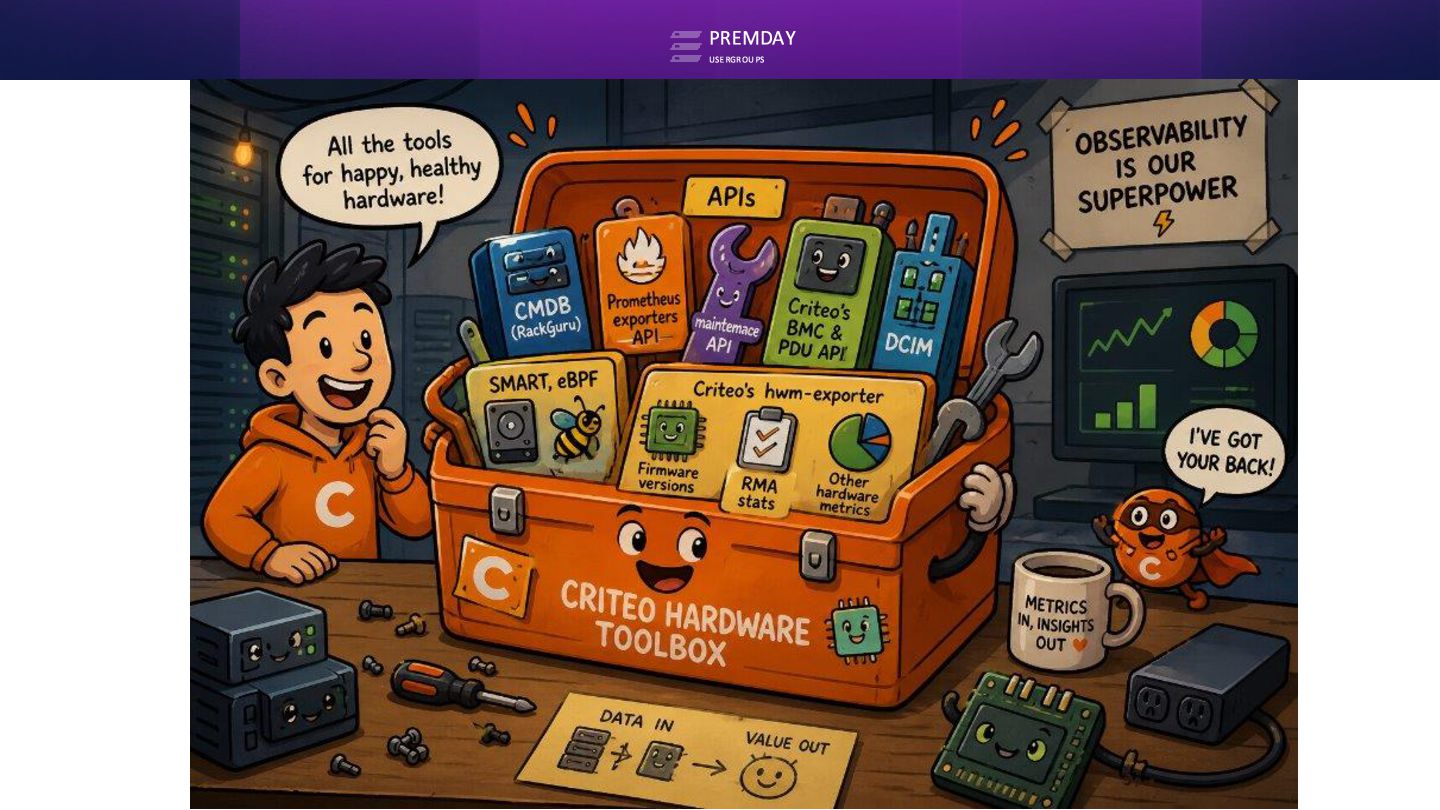
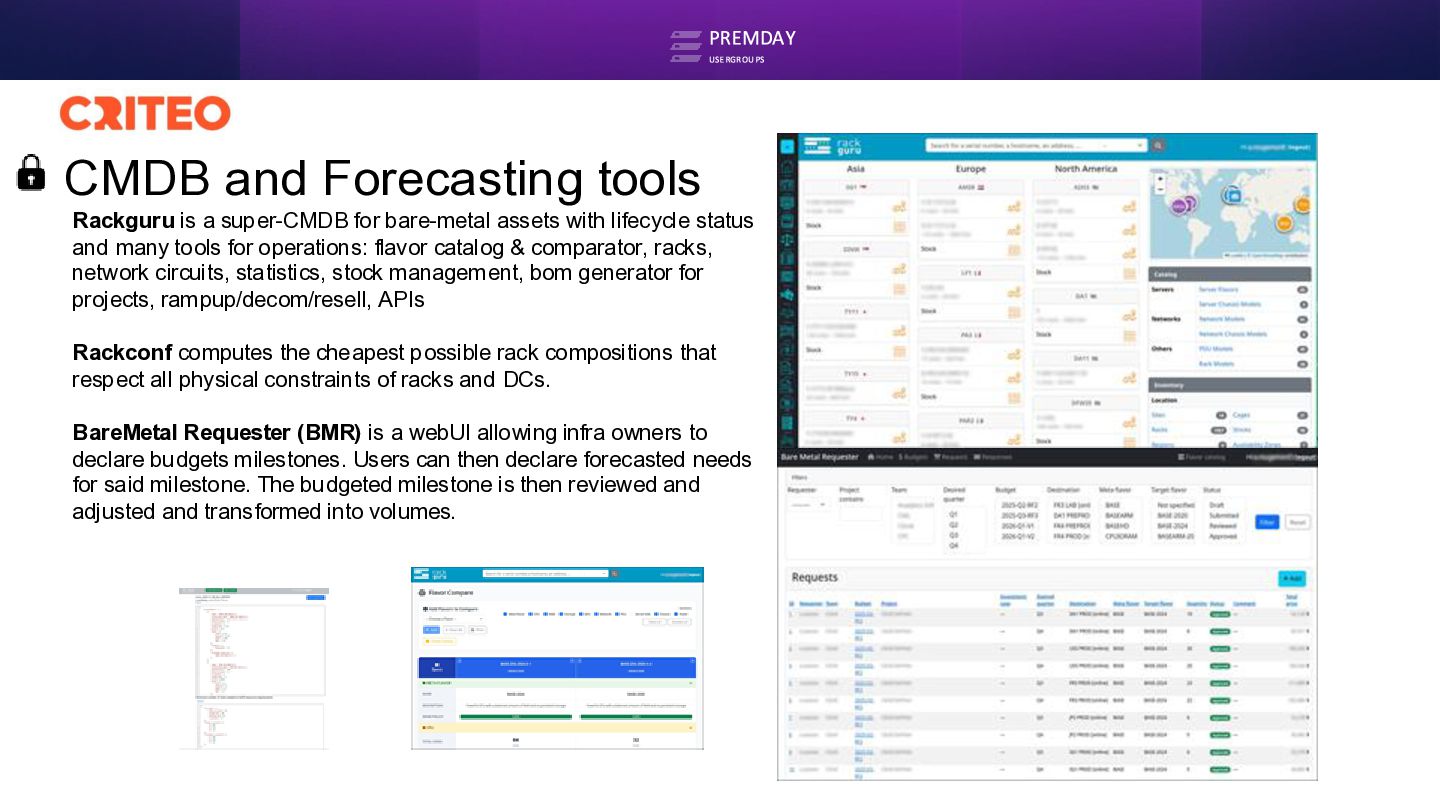
assets with lifecycle status and many tools for operations: flavor catalog & comparator, racks, network circuits, statistics, stock management, bom generator for projects, rampup/decom/resell, APIs Rackconf computes the cheapest possible rack compositions that respect all physical constraints of racks and DCs. BareMetal Requester (BMR) is a webUI allowing infra owners to declare budgets milestones. Users can then declare forecasted needs for said milestone. The budgeted milestone is then reviewed and adjusted and transformed into volumes.


 premday
 sudoakiy
 yokawasa
 bgpat
bgpat
 hiracky16
 hlum
hlum
 ufried
 athug
athug
 tsuchikazu
 chack411
 soudai
 kaminashi
 ueponx
 cassininazir
 aki_iinuma
 tammyeverts
 gurzu
gurzu
 oripsolob
 samanthasiow
 bluesmoon
 eileencodes
 nwiizo
 holman
 palkan