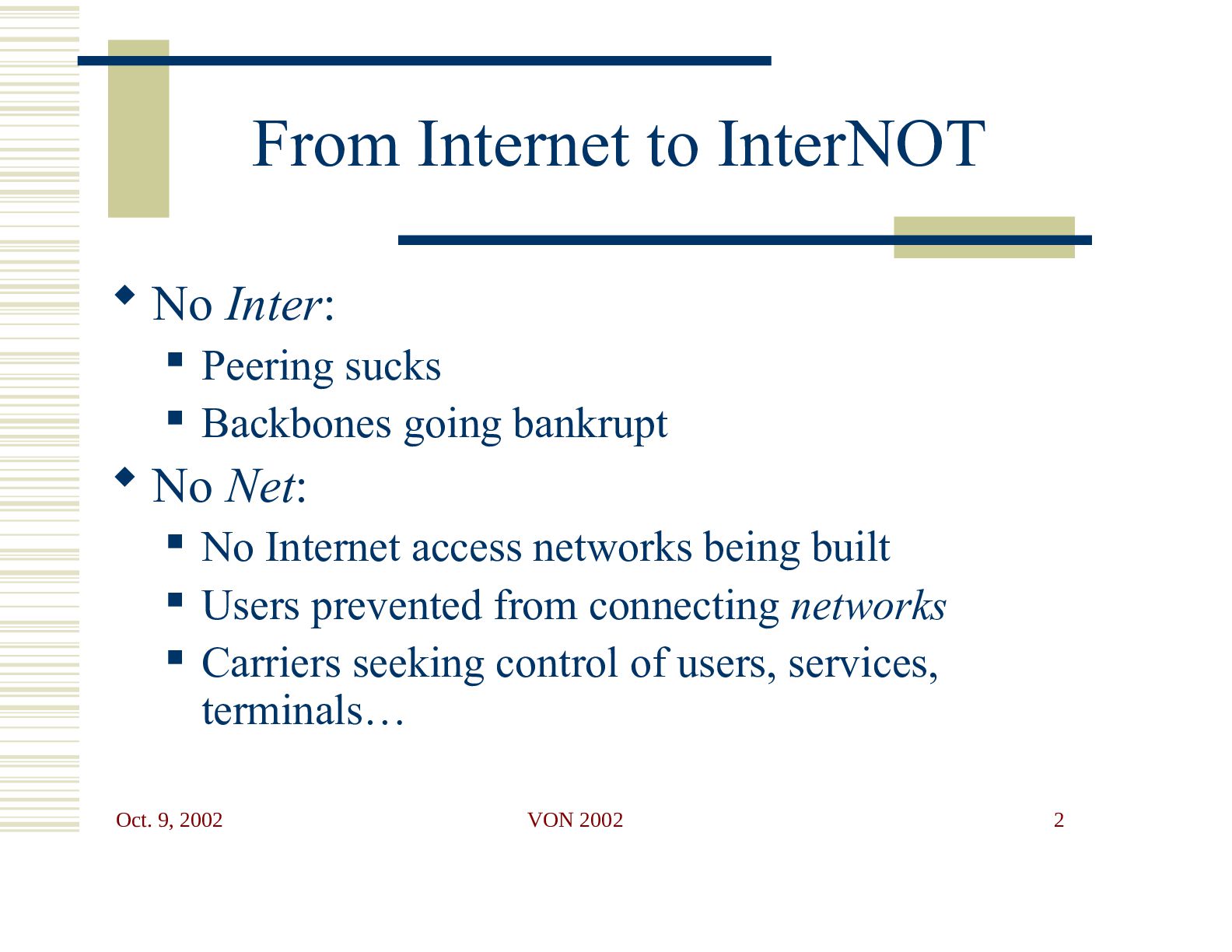
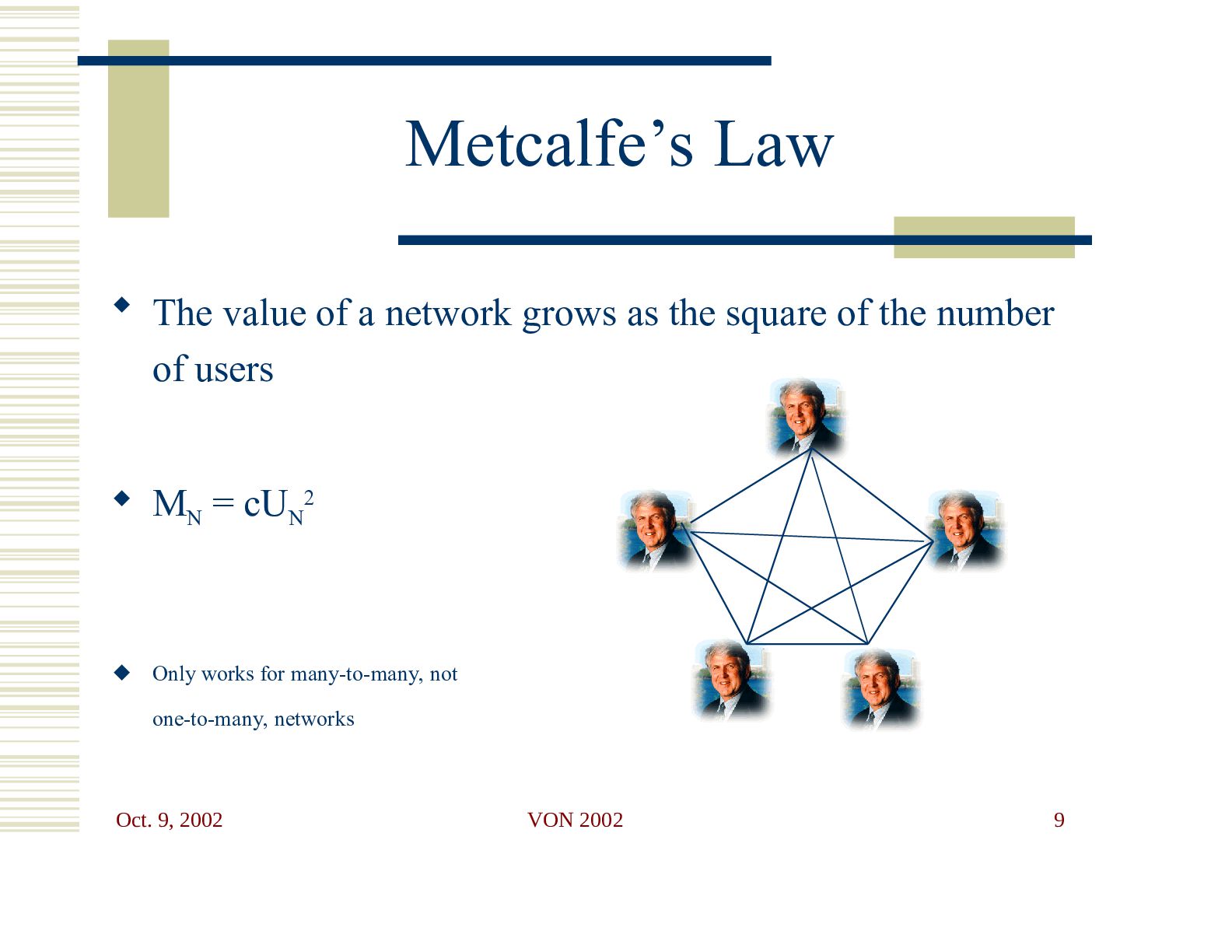
No Inter: Peering sucks Backbones going bankrupt No Net: No Internet access networks being built Users prevented from connecting networks Carriers seeking control of users, services, terminals…
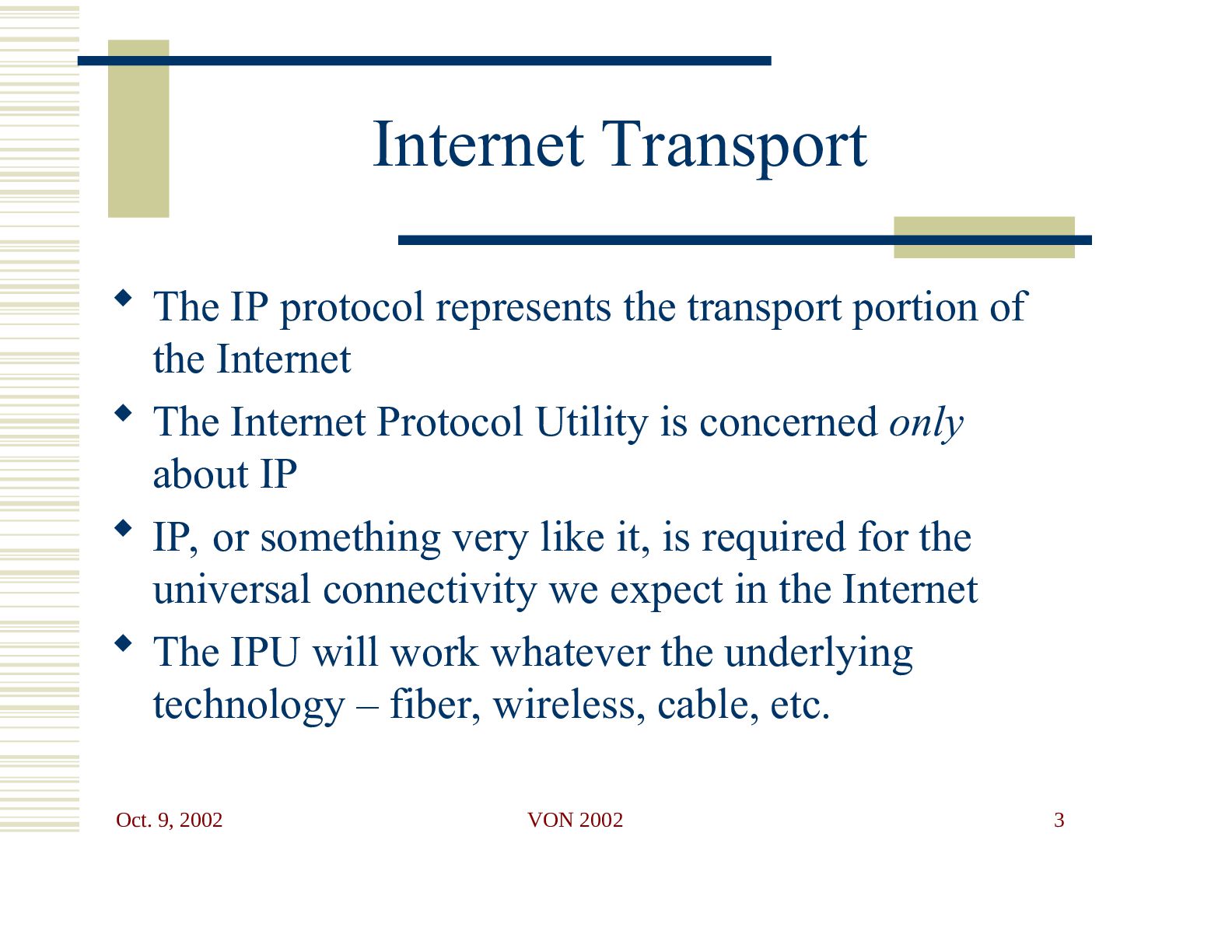
IP protocol represents the transport portion of the Internet The Internet Protocol Utility is concerned only about IP IP, or something very like it, is required for the universal connectivity we expect in the Internet The IPU will work whatever the underlying technology – fiber, wireless, cable, etc.
of the network is very high Marginal cost of the traffic is very low The product is a simple commodity Coverage/Universality benefits all Unforeseen benefits for new industries Public Networks == Utility Usually highly regulated Built either by public support or monopoly patent position
are funded by their users; often with subsidies to “share the pain” Competition (for users) is very rare Interconnection eases costs and increases capacity Users can become providers – water, electricity, mail rooms, …
Bell System National P.T.T.s Highly regulated: “Universal” (voice) Service Common Carriage No bundled services “One Bell System – It Worked”
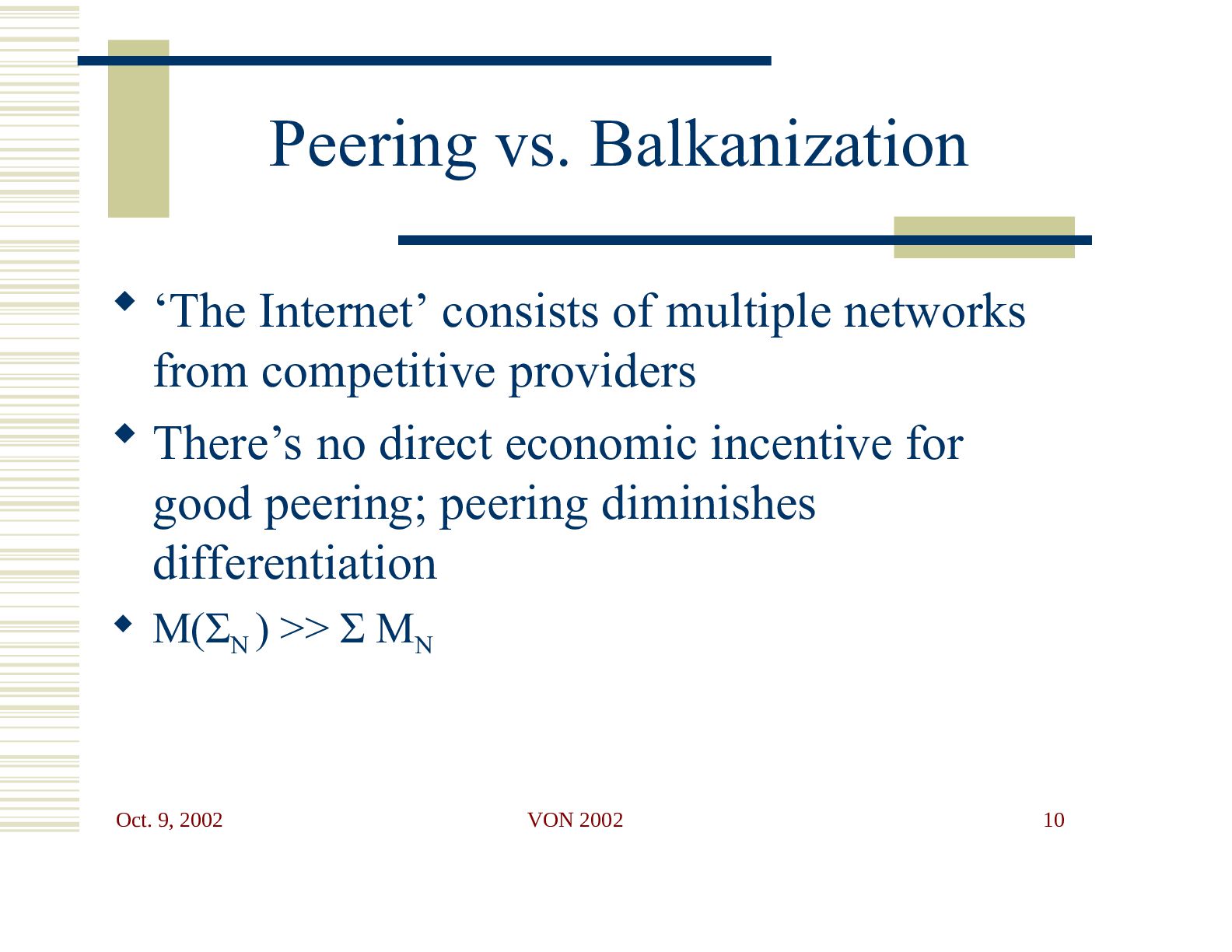
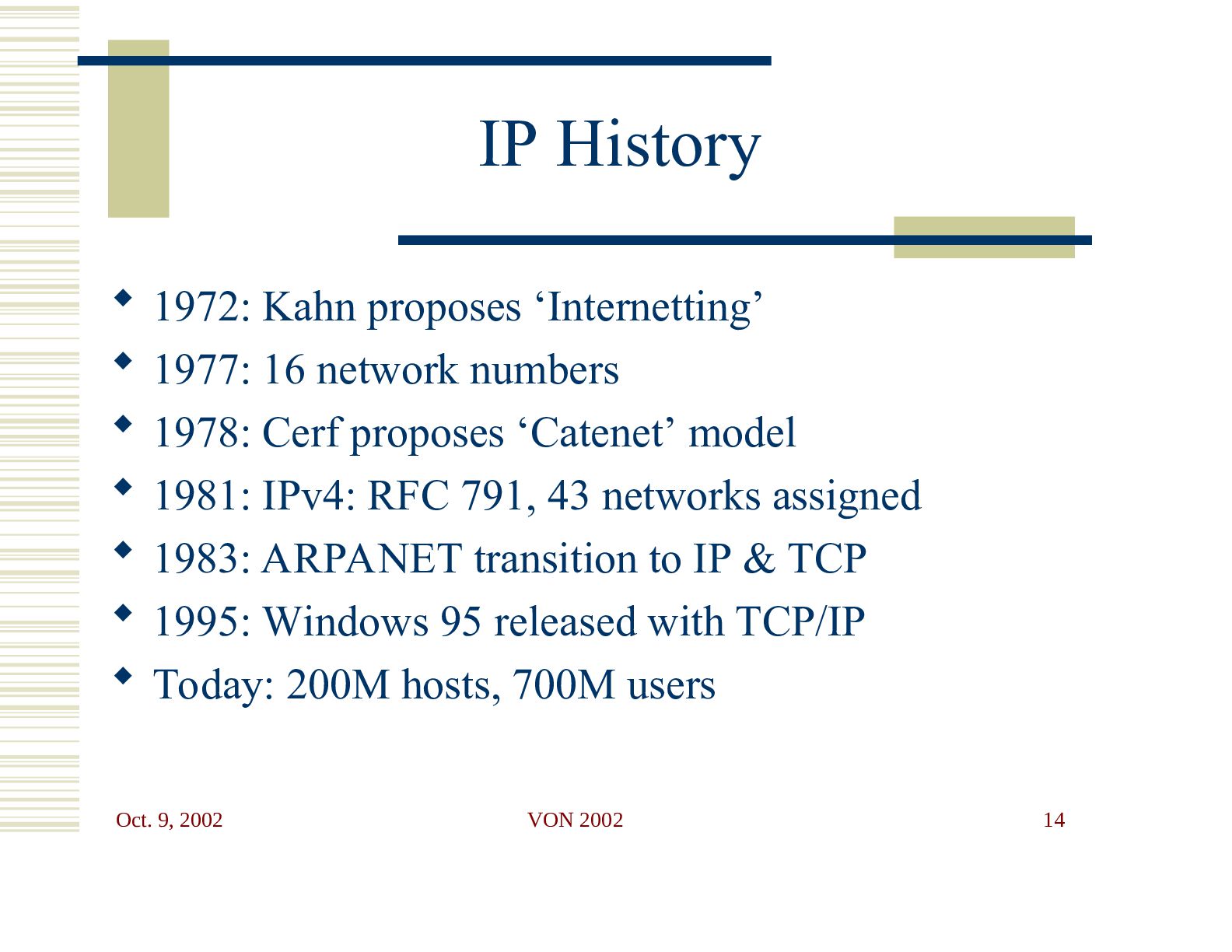
‘The Internet’ consists of multiple networks from competitive providers There’s no direct economic incentive for good peering; peering diminishes differentiation M(Σ N ) >> Σ M N
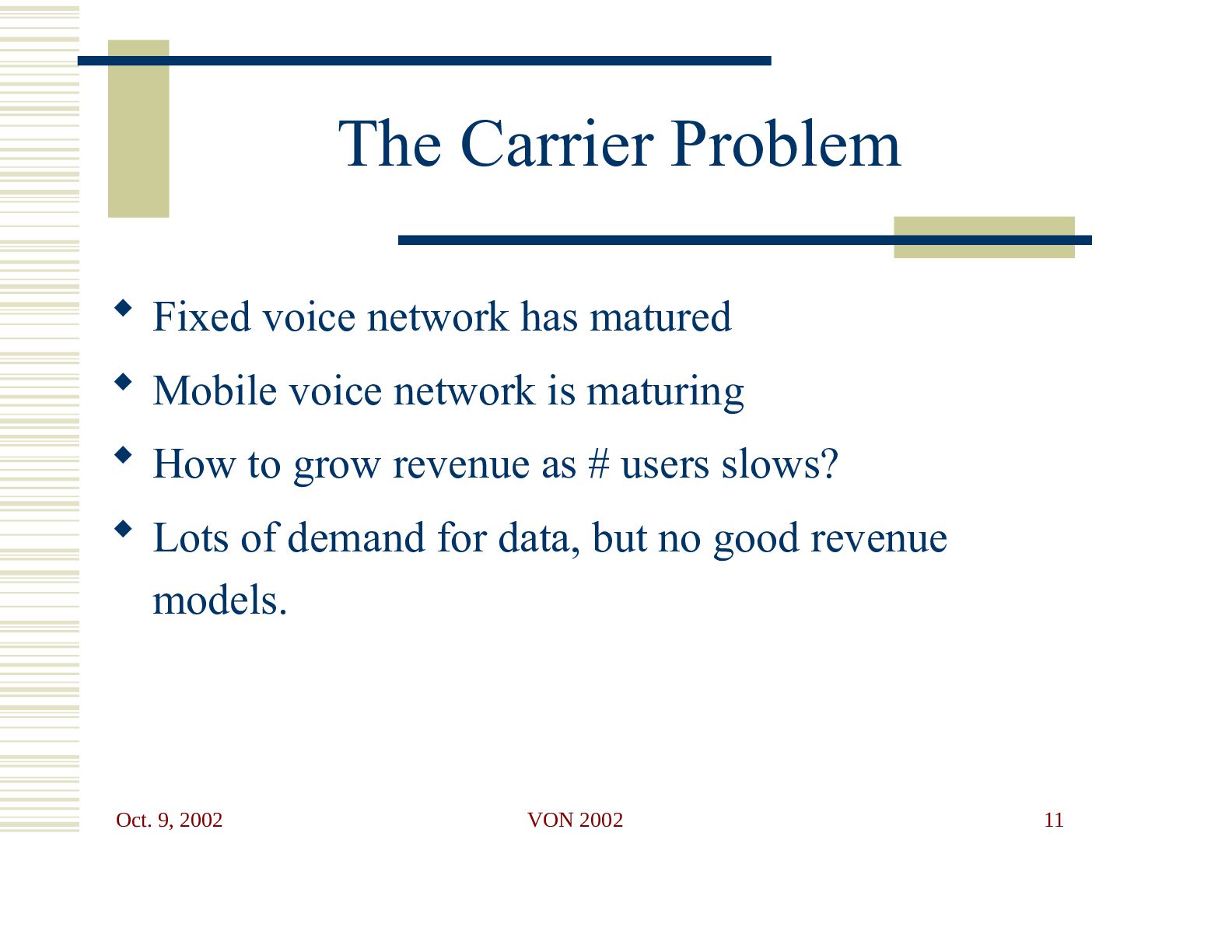
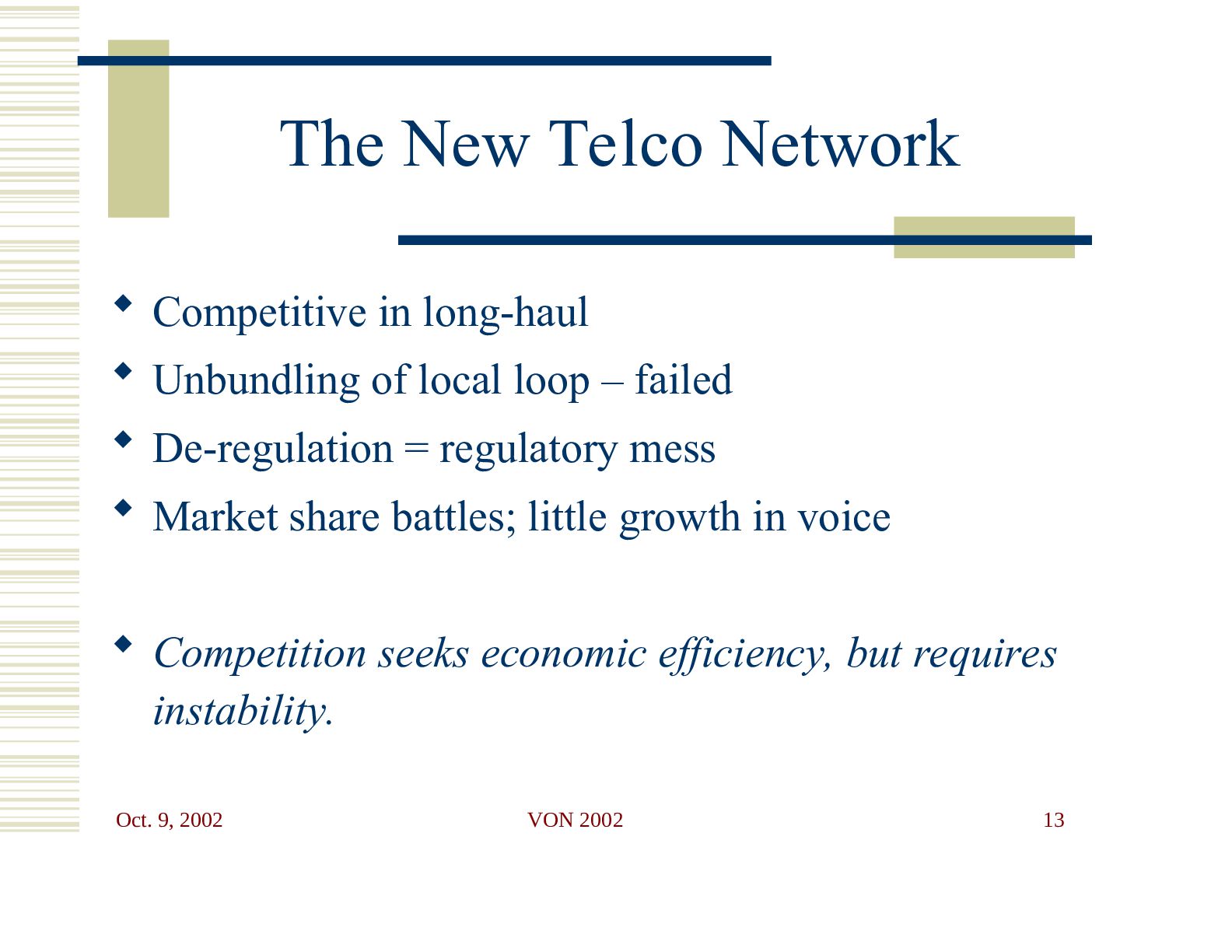
Fixed voice network has matured Mobile voice network is maturing How to grow revenue as # users slows? Lots of demand for data, but no good revenue models.
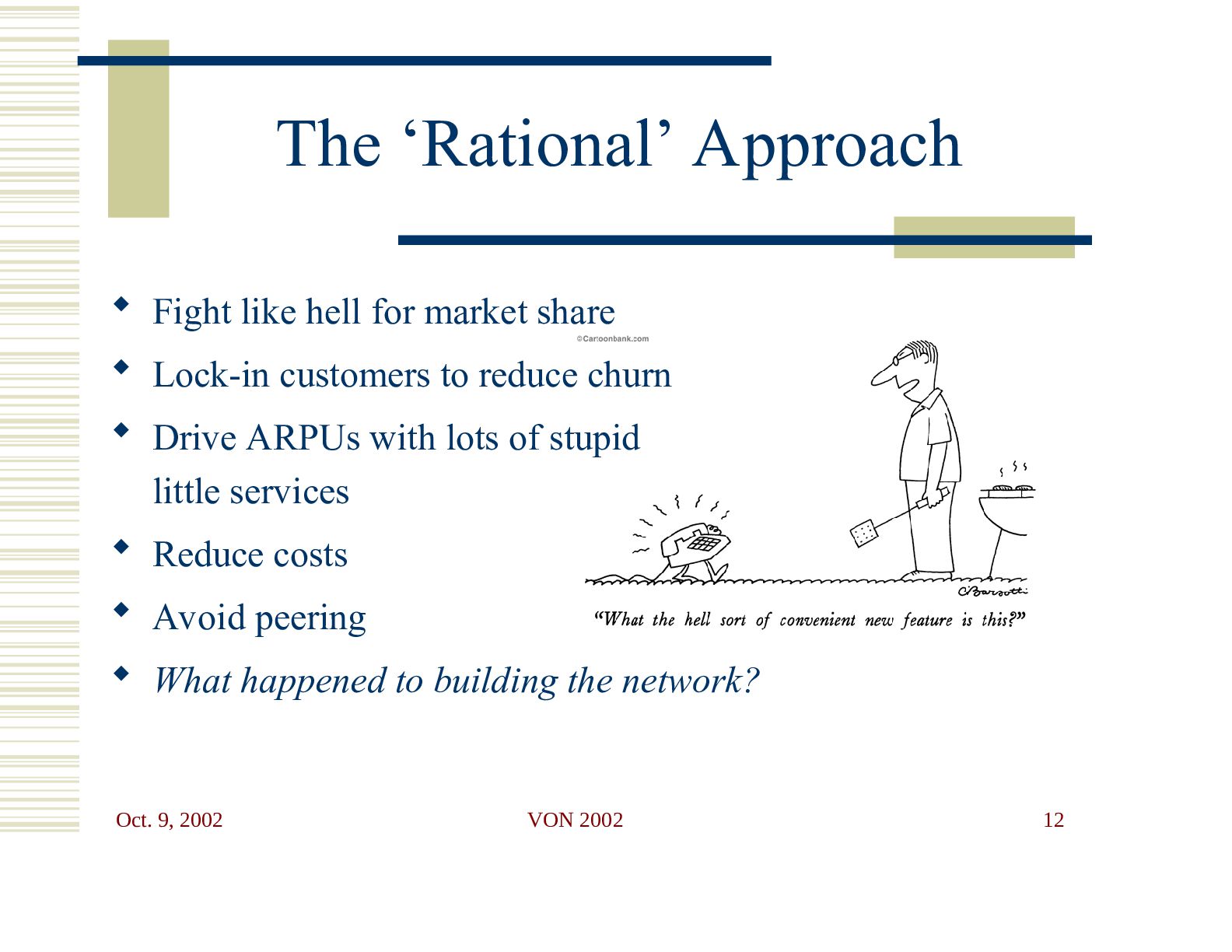
Fight like hell for market share Lock-in customers to reduce churn Drive ARPUs with lots of stupid little services Reduce costs Avoid peering What happened to building the network?
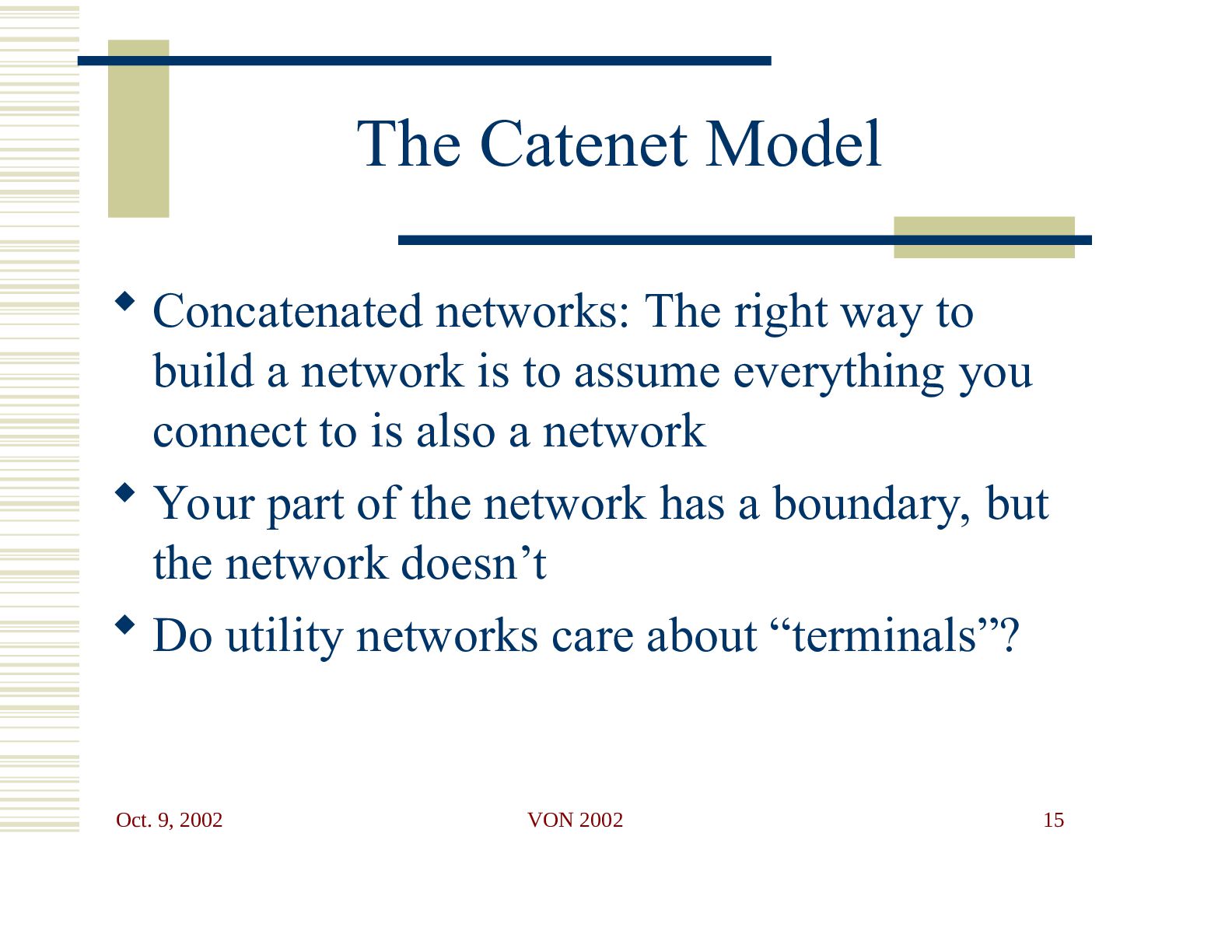
Concatenated networks: The right way to build a network is to assume everything you connect to is also a network Your part of the network has a boundary, but the network doesn’t Do utility networks care about “terminals”?
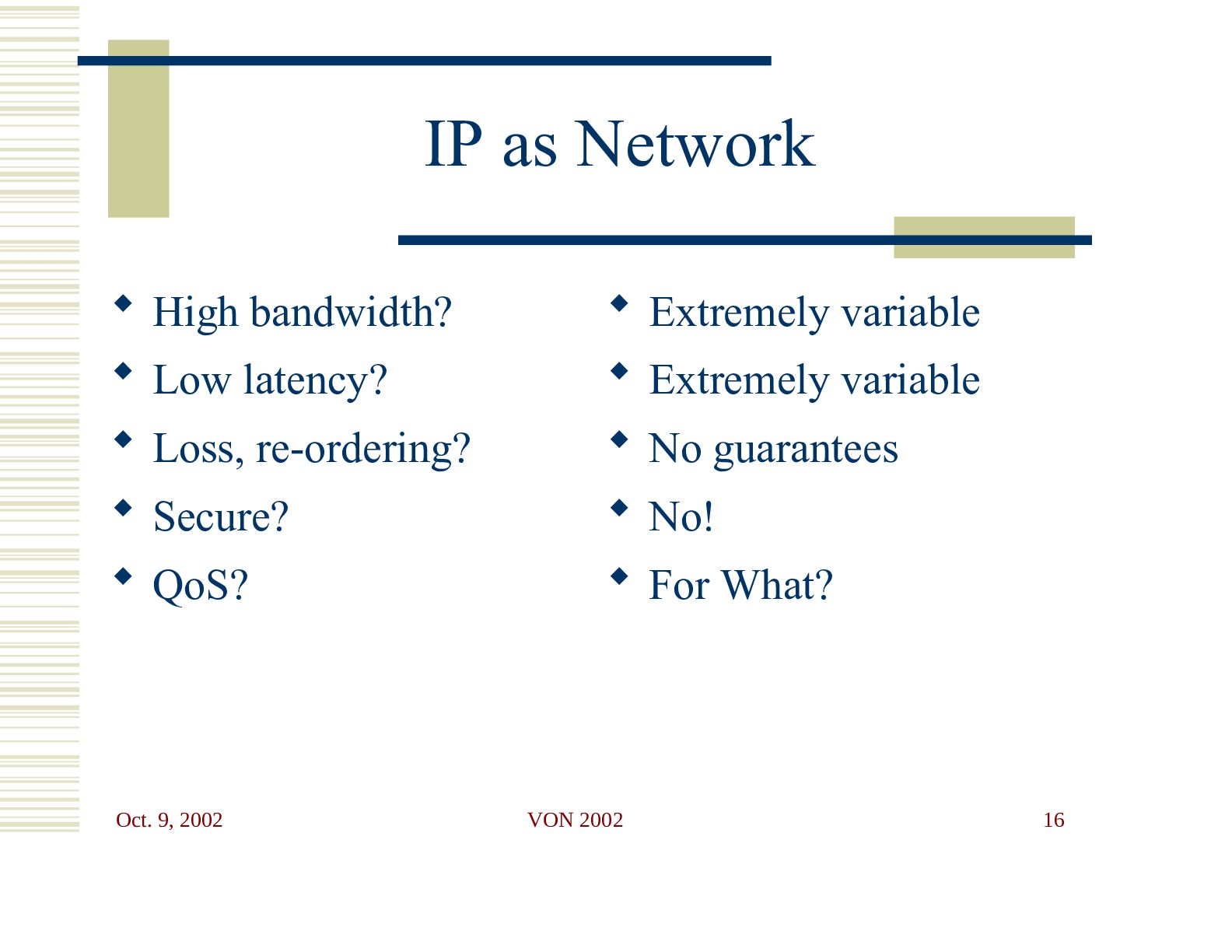
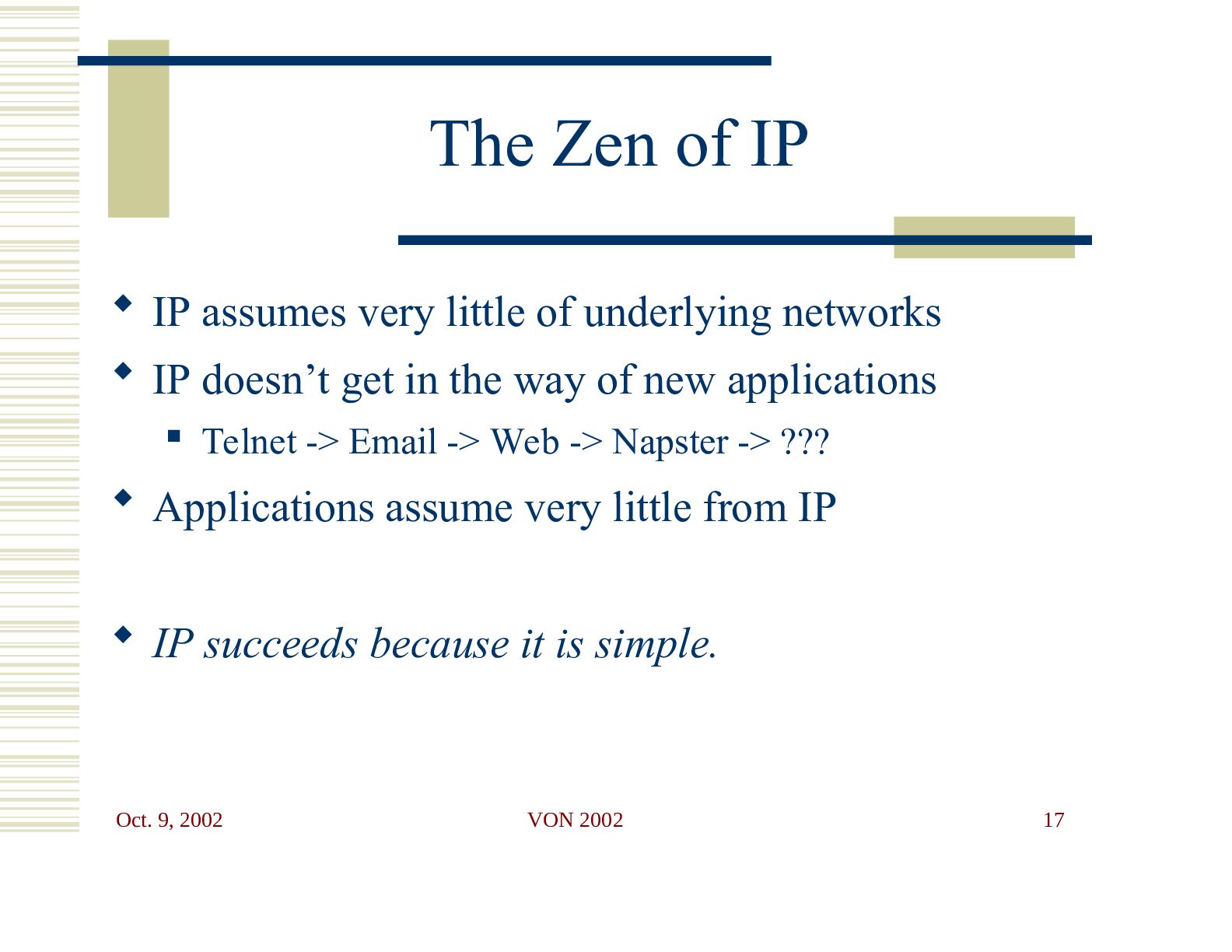
IP assumes very little of underlying networks IP doesn’t get in the way of new applications Telnet -> Email -> Web -> Napster -> ??? Applications assume very little from IP IP succeeds because it is simple.
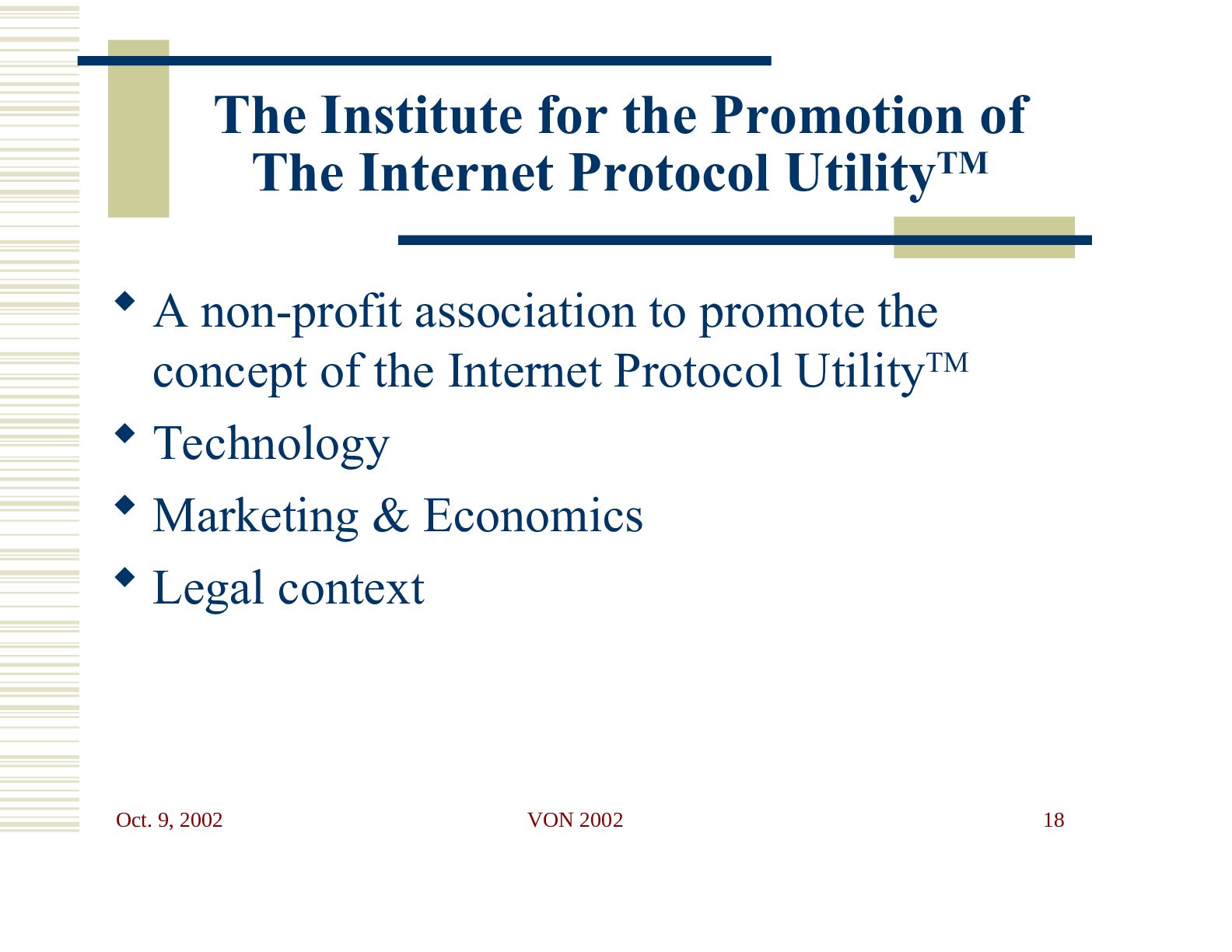
Promotion of The Internet Protocol UtilityTM A non-profit association to promote the concept of the Internet Protocol UtilityTM Technology Marketing & Economics Legal context
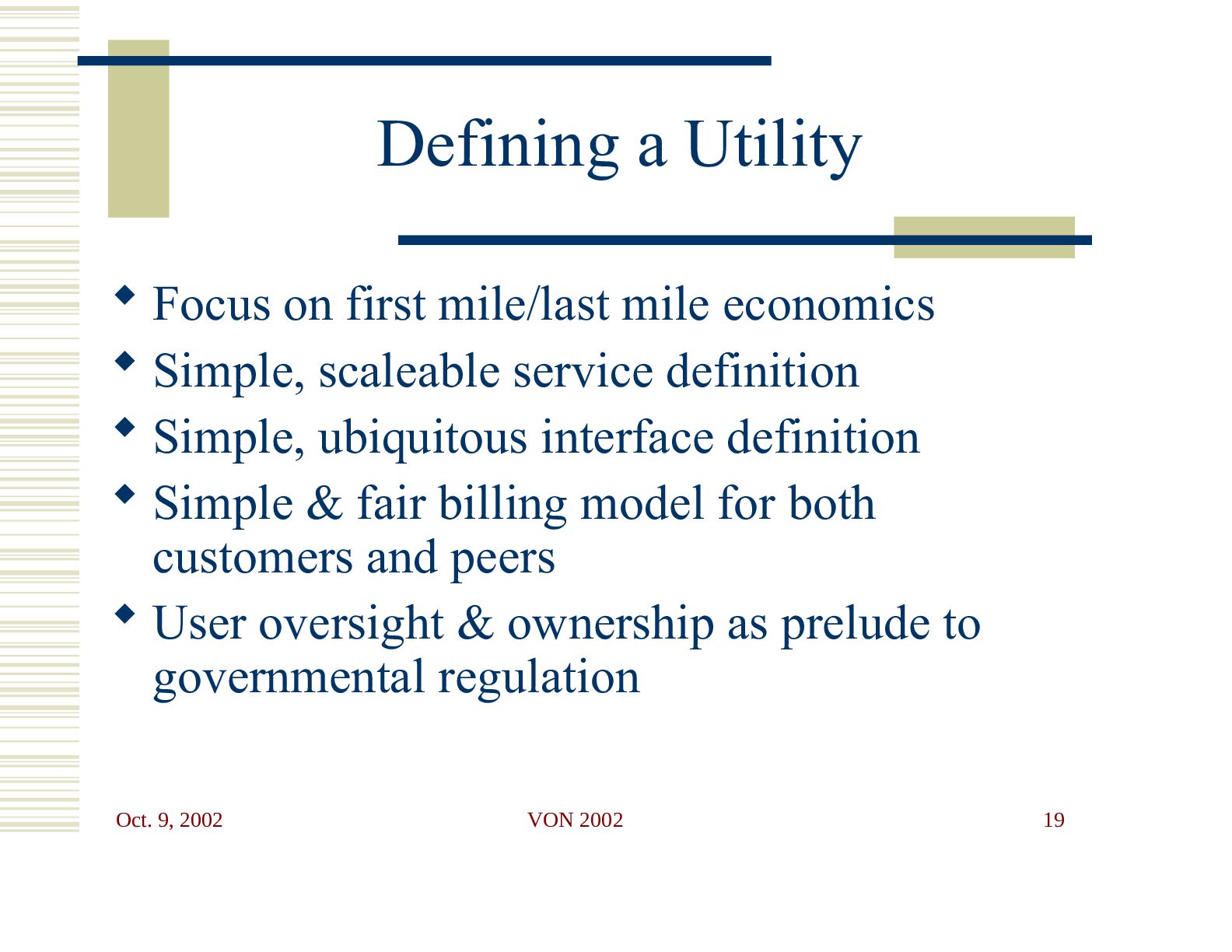
Focus on first mile/last mile economics Simple, scaleable service definition Simple, ubiquitous interface definition Simple & fair billing model for both customers and peers User oversight & ownership as prelude to governmental regulation
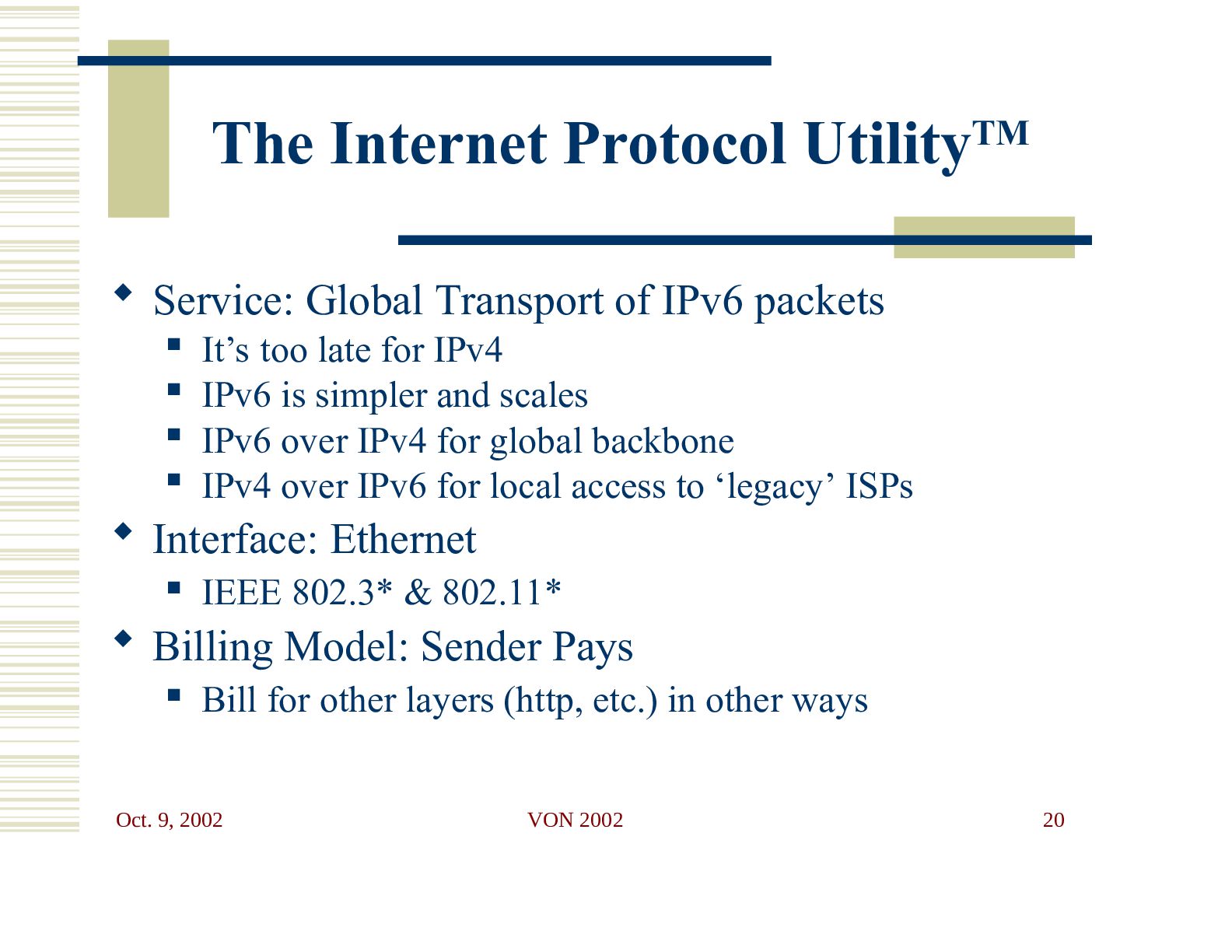
Service: Global Transport of IPv6 packets It’s too late for IPv4 IPv6 is simpler and scales IPv6 over IPv4 for global backbone IPv4 over IPv6 for local access to ‘legacy’ ISPs Interface: Ethernet IEEE 802.3* & 802.11* Billing Model: Sender Pays Bill for other layers (http, etc.) in other ways
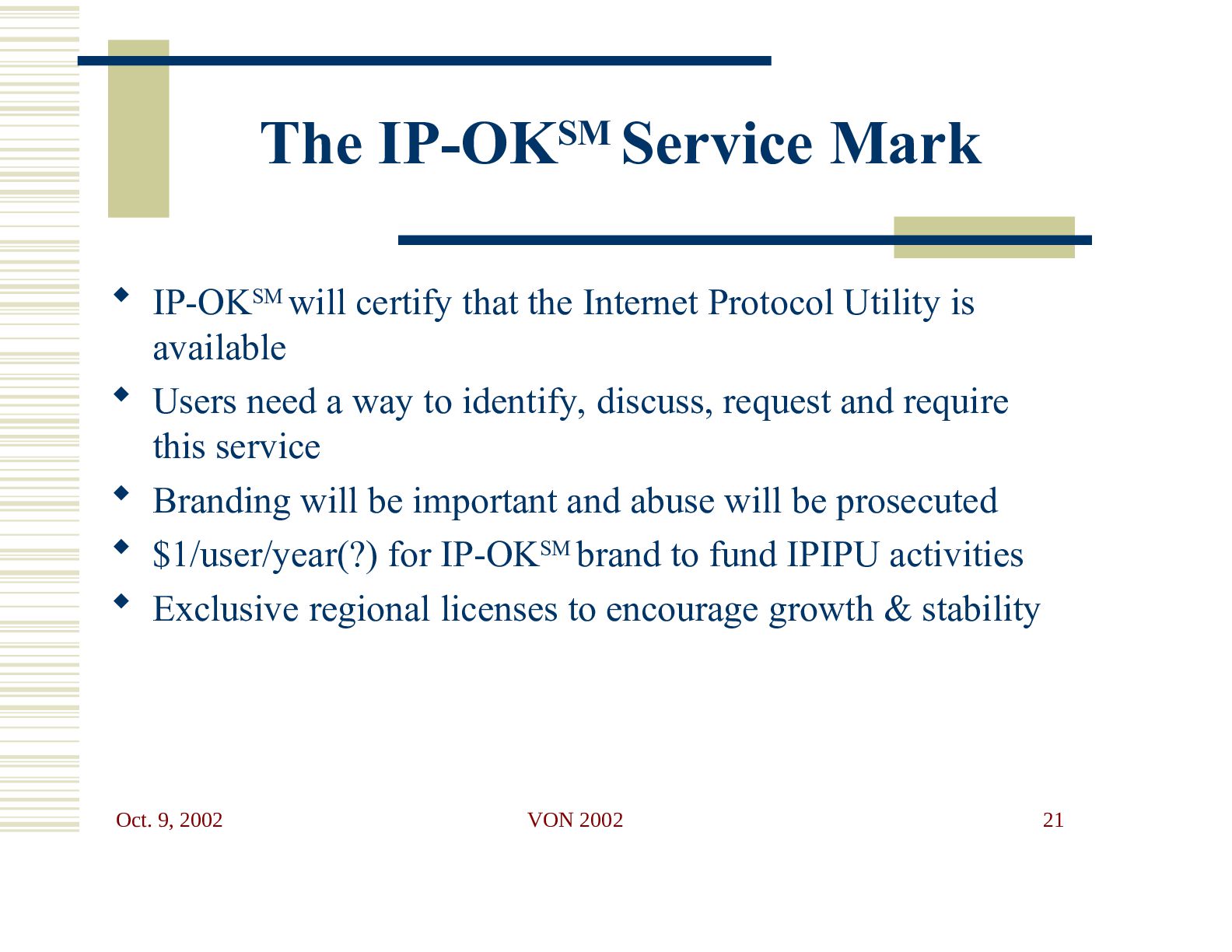
IP-OKSM will certify that the Internet Protocol Utility is available Users need a way to identify, discuss, request and require this service Branding will be important and abuse will be prosecuted $1/user/year(?) for IP-OKSM brand to fund IPIPU activities Exclusive regional licenses to encourage growth & stability
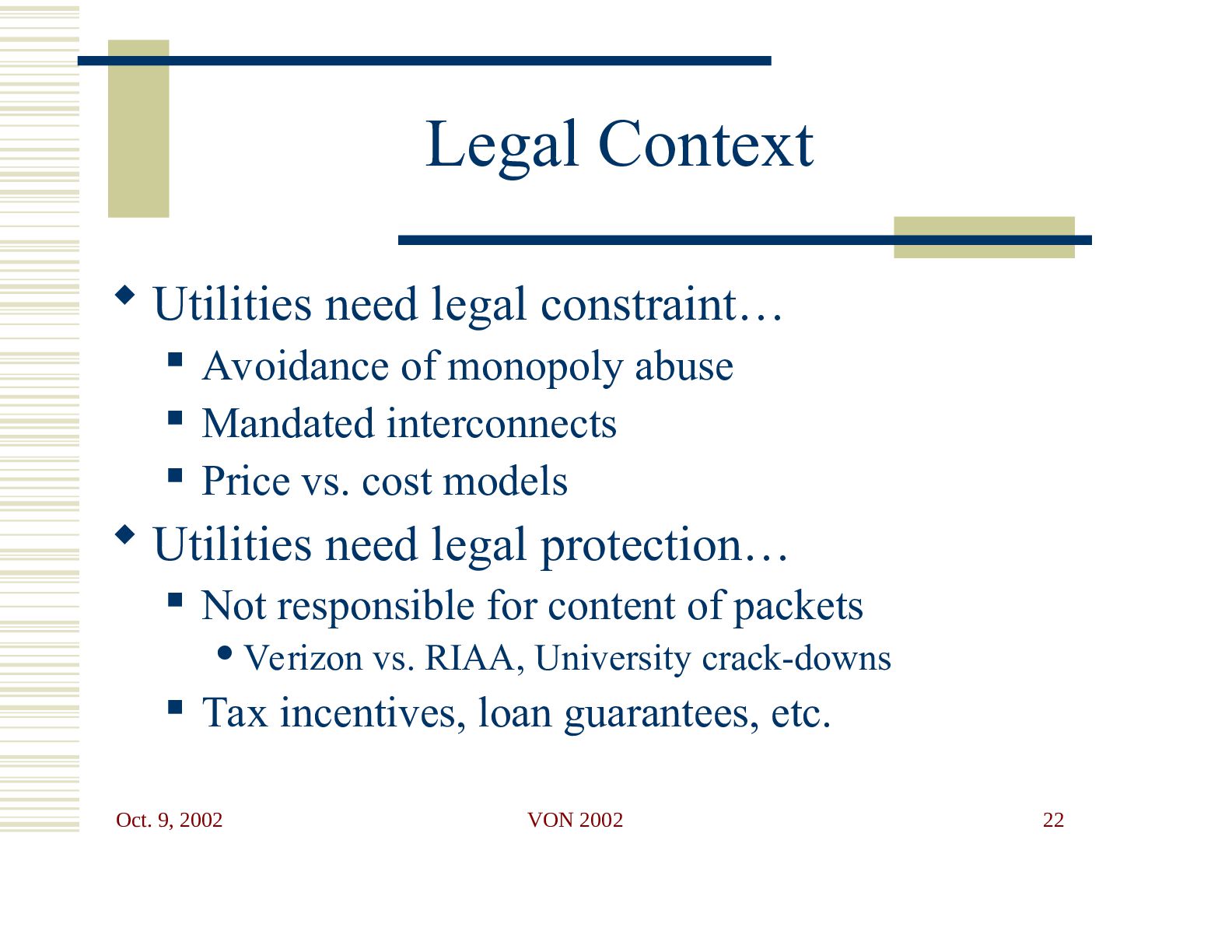
need legal constraint… Avoidance of monopoly abuse Mandated interconnects Price vs. cost models Utilities need legal protection… Not responsible for content of packets Verizon vs. RIAA, University crack-downs Tax incentives, loan guarantees, etc.
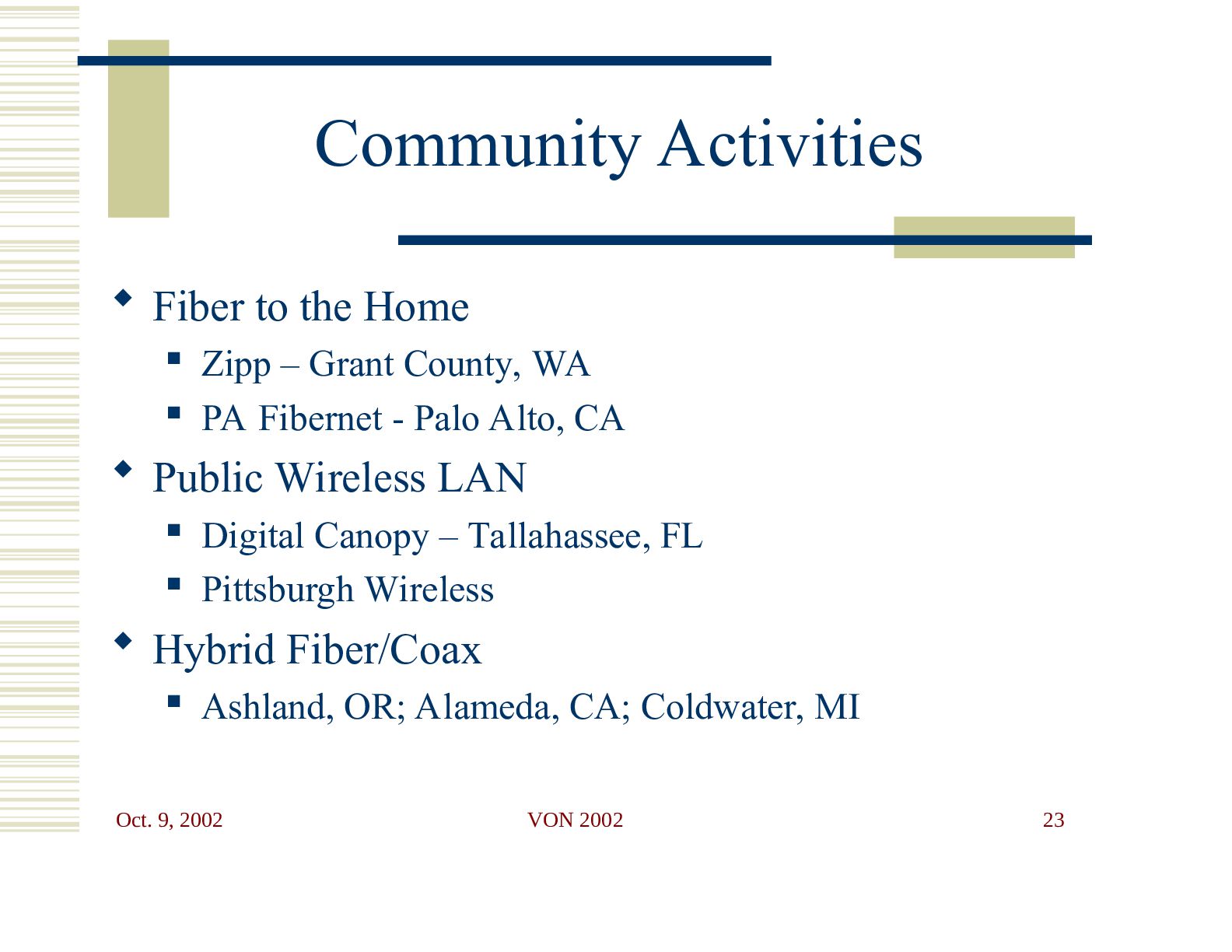
to the Home Zipp – Grant County, WA PA Fibernet - Palo Alto, CA Public Wireless LAN Digital Canopy – Tallahassee, FL Pittsburgh Wireless Hybrid Fiber/Coax Ashland, OR; Alameda, CA; Coldwater, MI
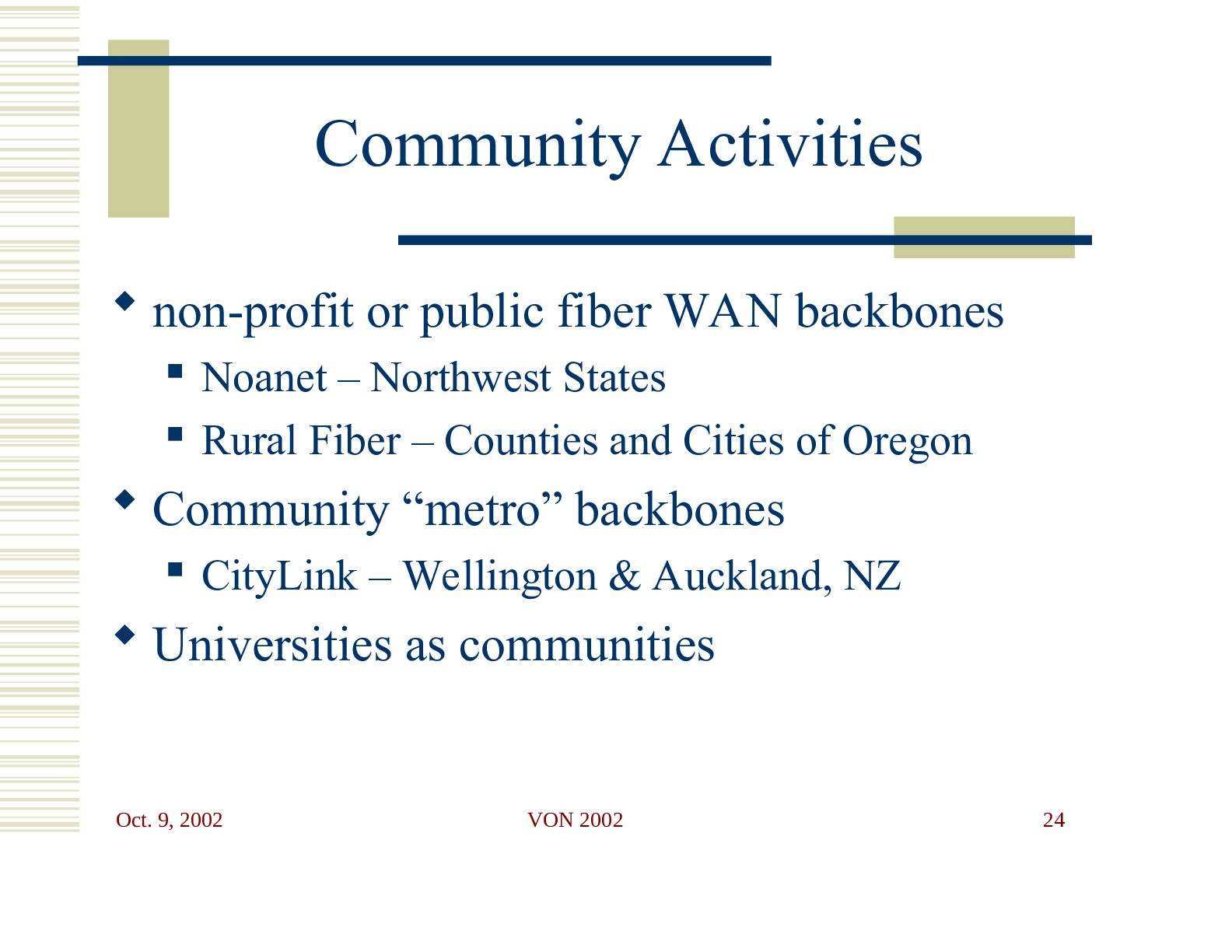
or public fiber WAN backbones Noanet – Northwest States Rural Fiber – Counties and Cities of Oregon Community “metro” backbones CityLink – Wellington & Auckland, NZ Universities as communities
competition don’t mix One IP network is what the Internet needs Communities have the need and the power to serve themselves IPIPU will help the communities to interconnect and aggregate


 pugs
pugs
 ysuzuki
 chack411
 taka_aki
 uya116
 dvrv_tknrszk
 tatamiya
 judau
judau
 kazukun0716
 yama3133
 masahirokawahara
 kazuho
 mtpooh
 tamaranovitovic
 lauravandoore
 akademiya2063
 orderedlist
 tessaabrams
 konakalab
 geoffreycrofte
 mfonobong
 addyosmani
 mraible
 inesmontani
 axbom
axbom