Slides presented at the 76th Annual Conference of the International Communication Association (ICA), in Cape Town (South Africa), 6 June 2026.
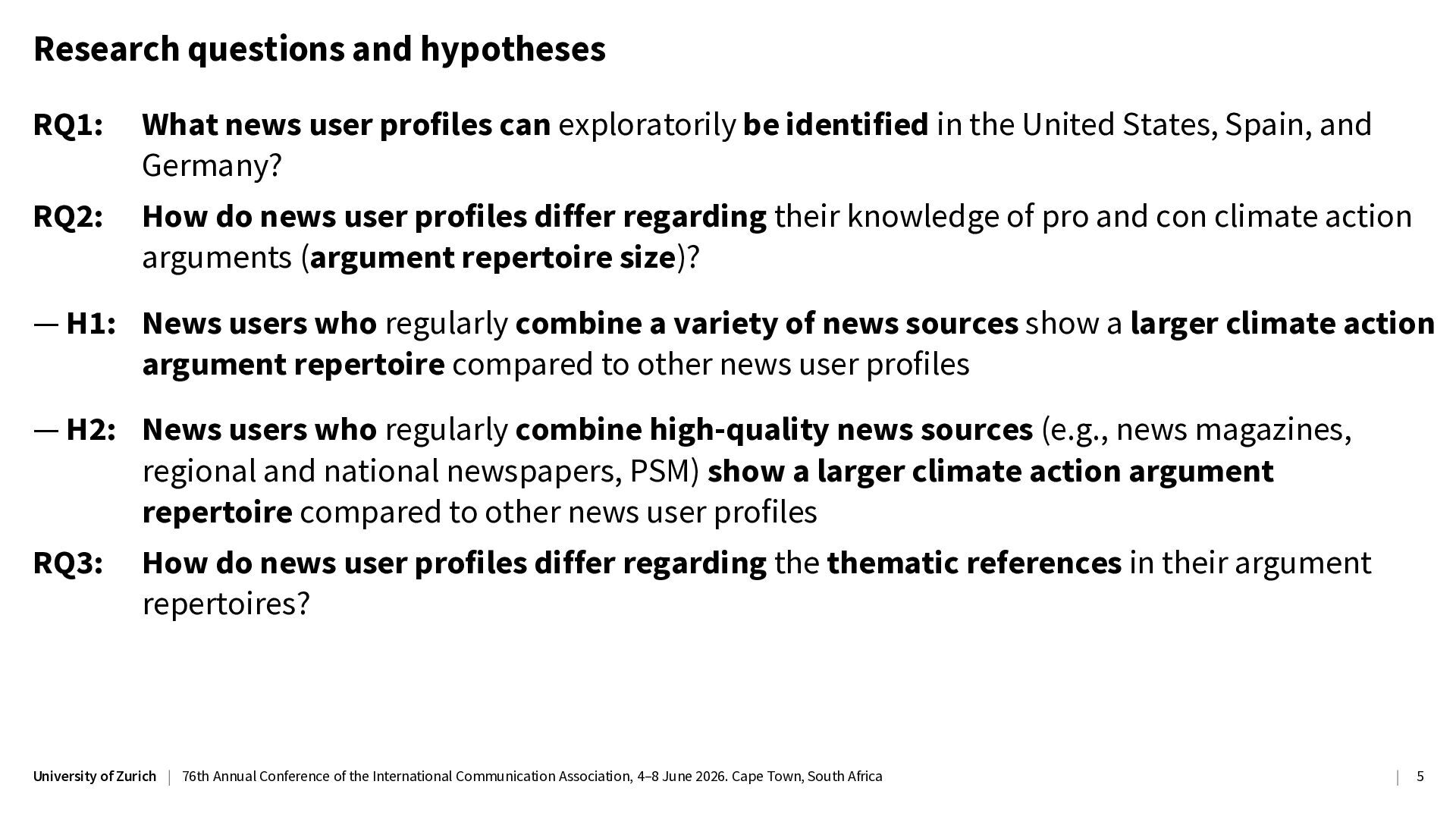
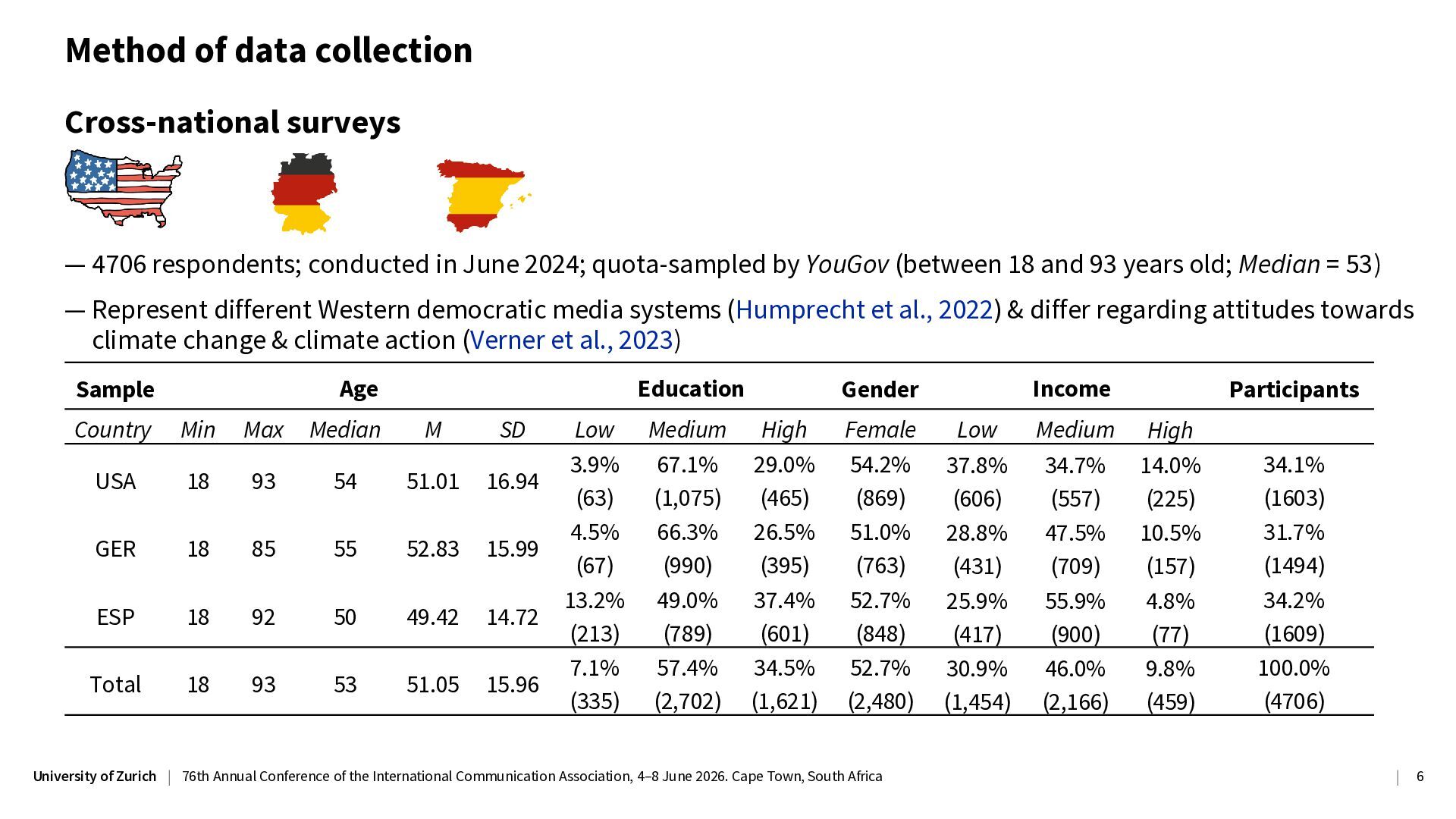
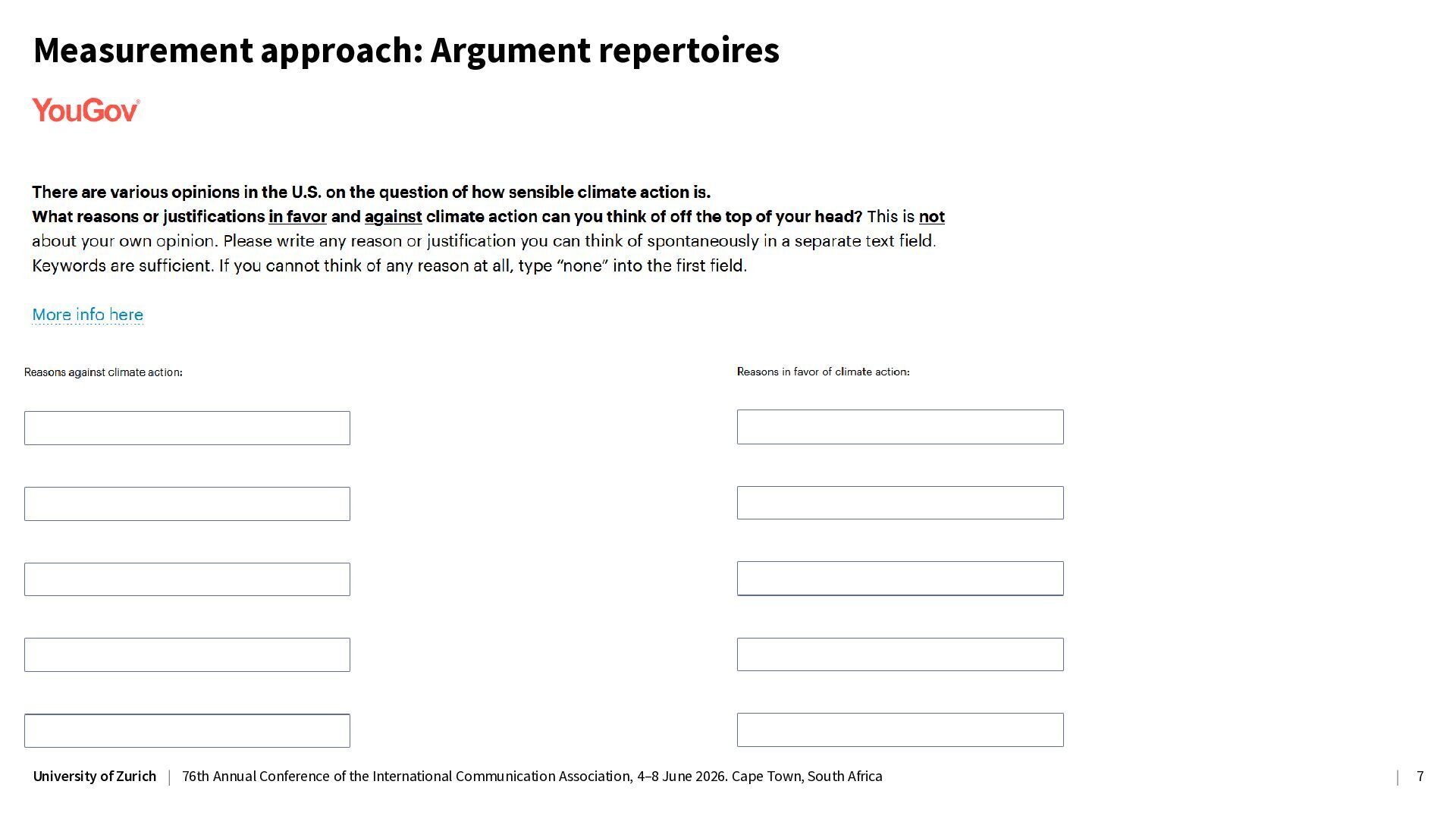
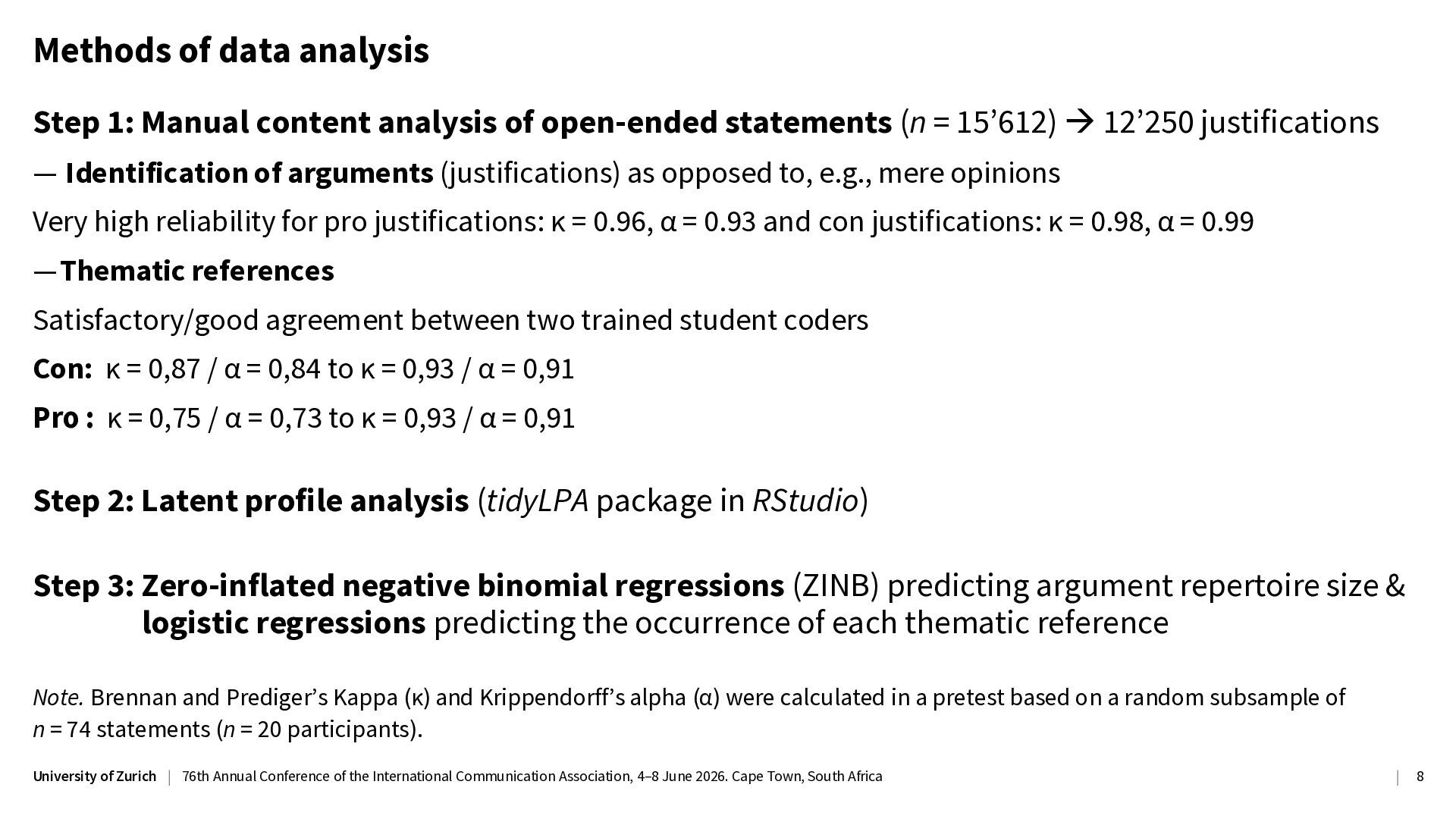
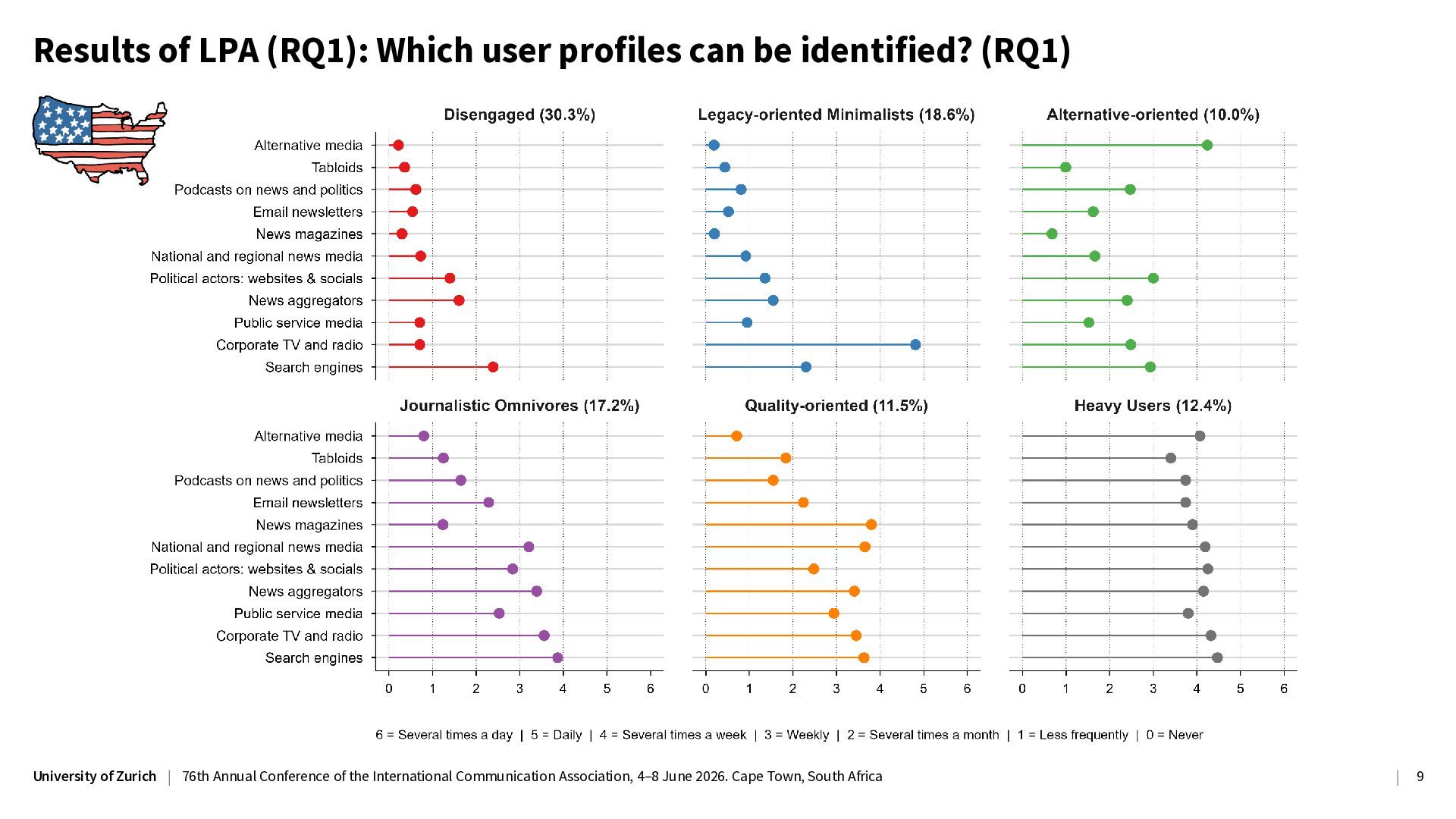
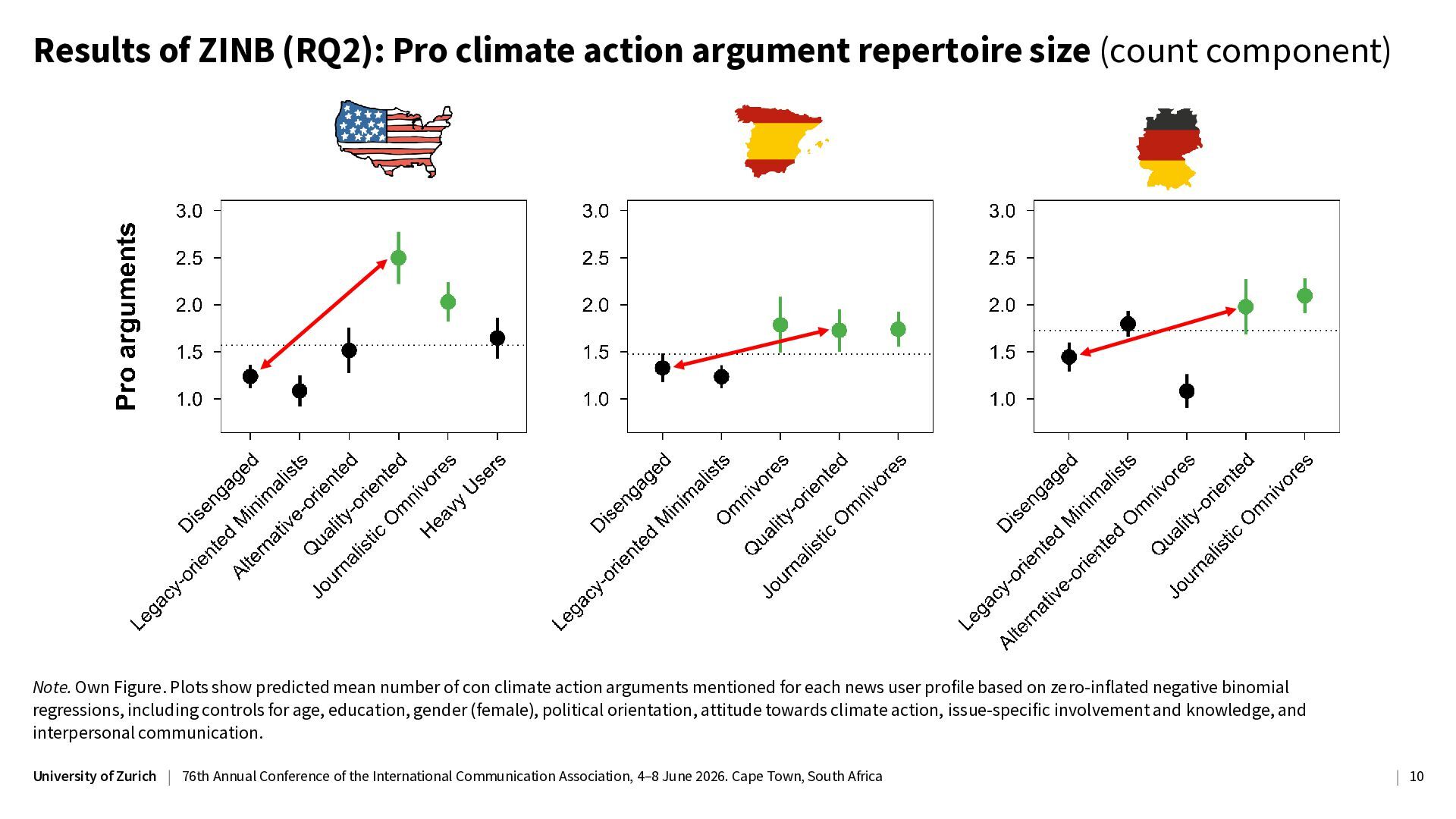
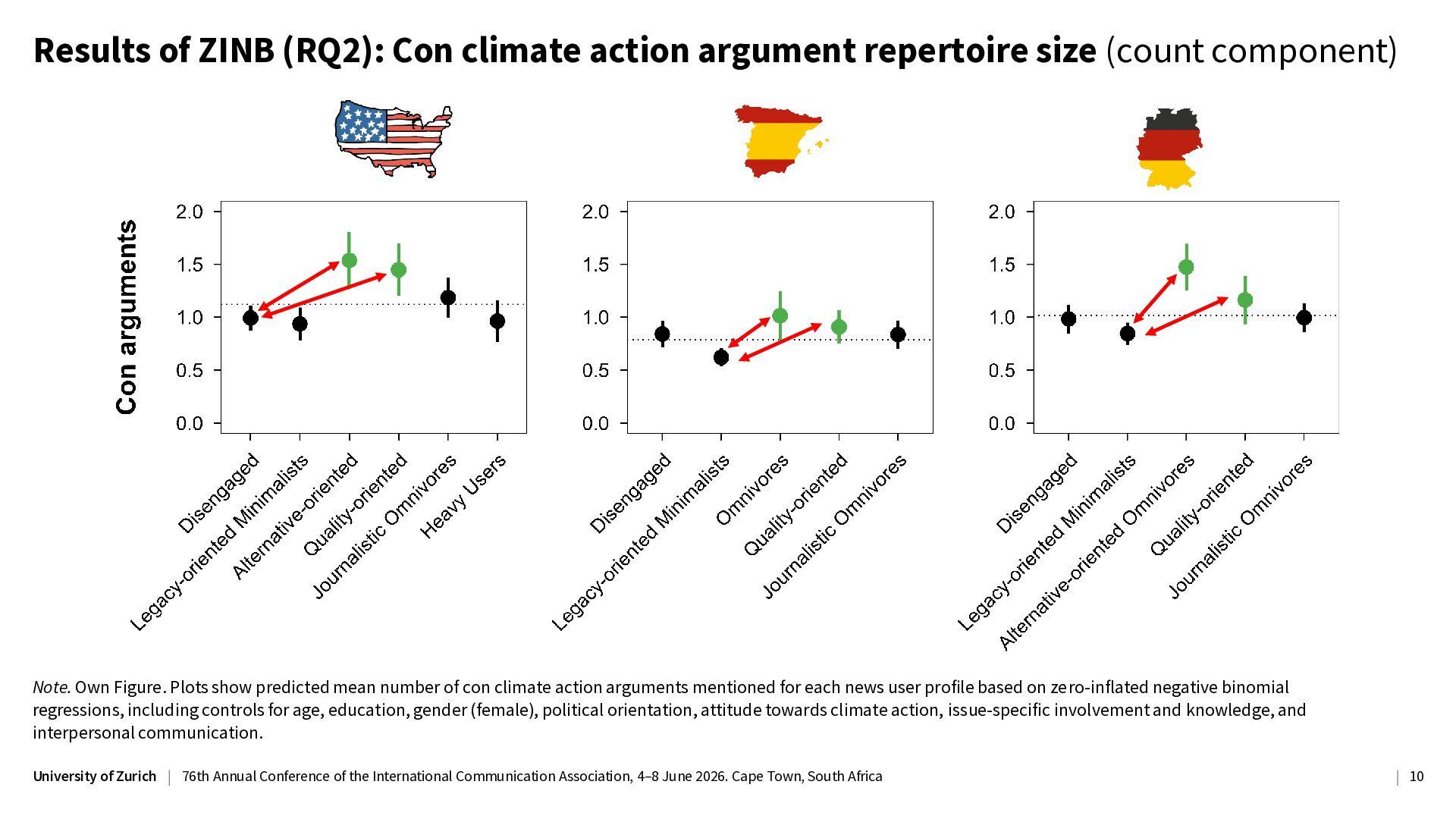
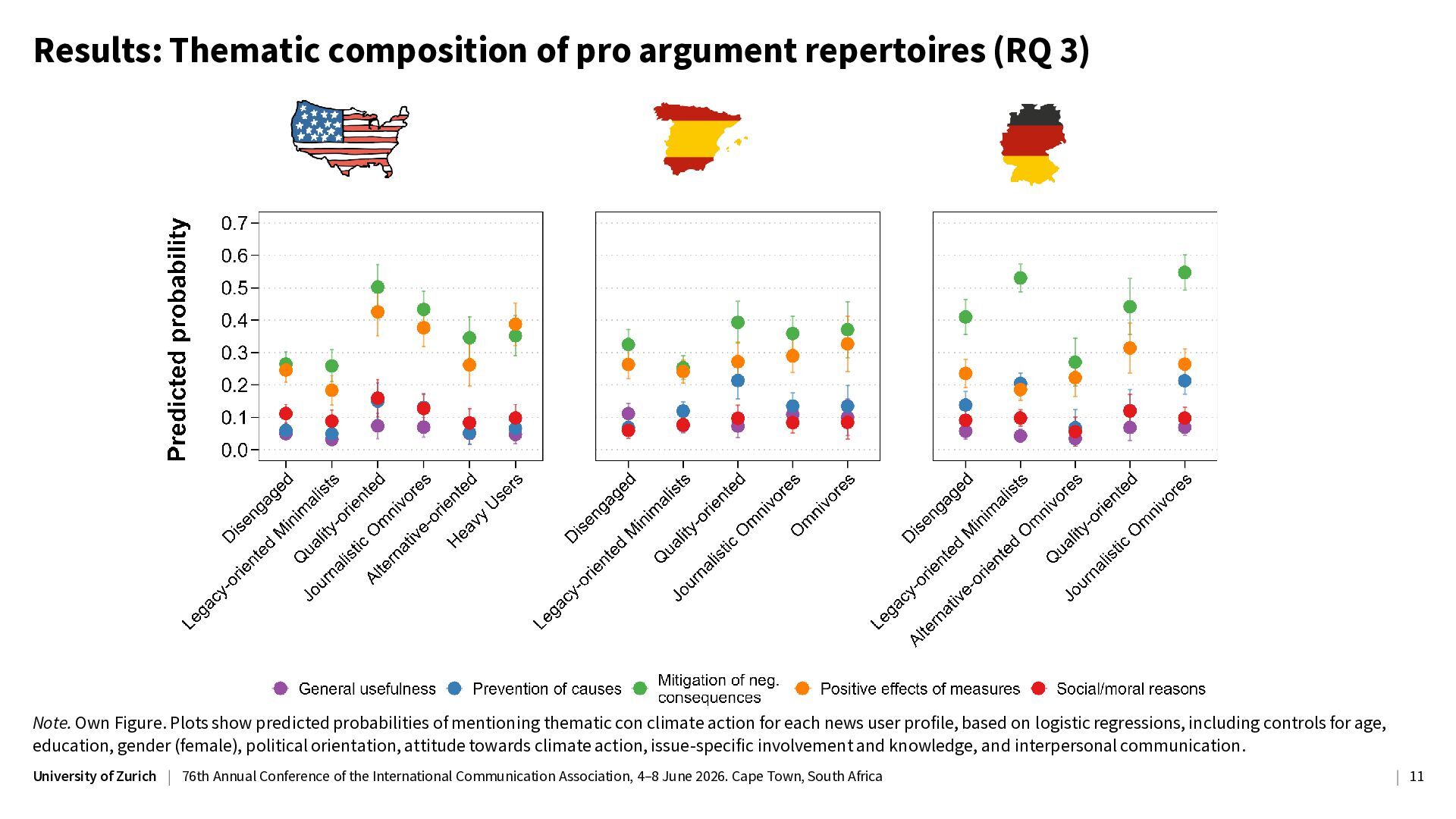
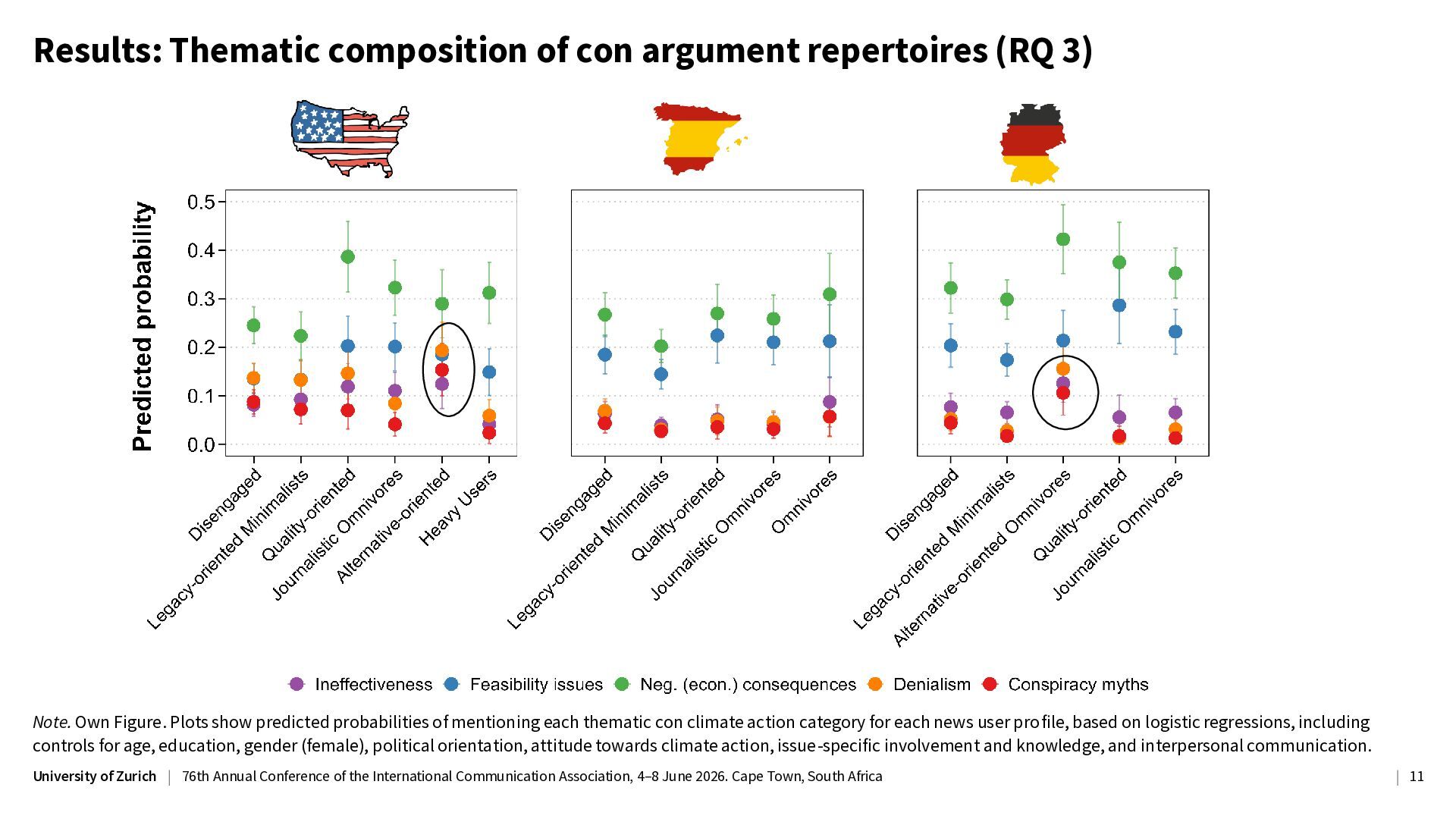
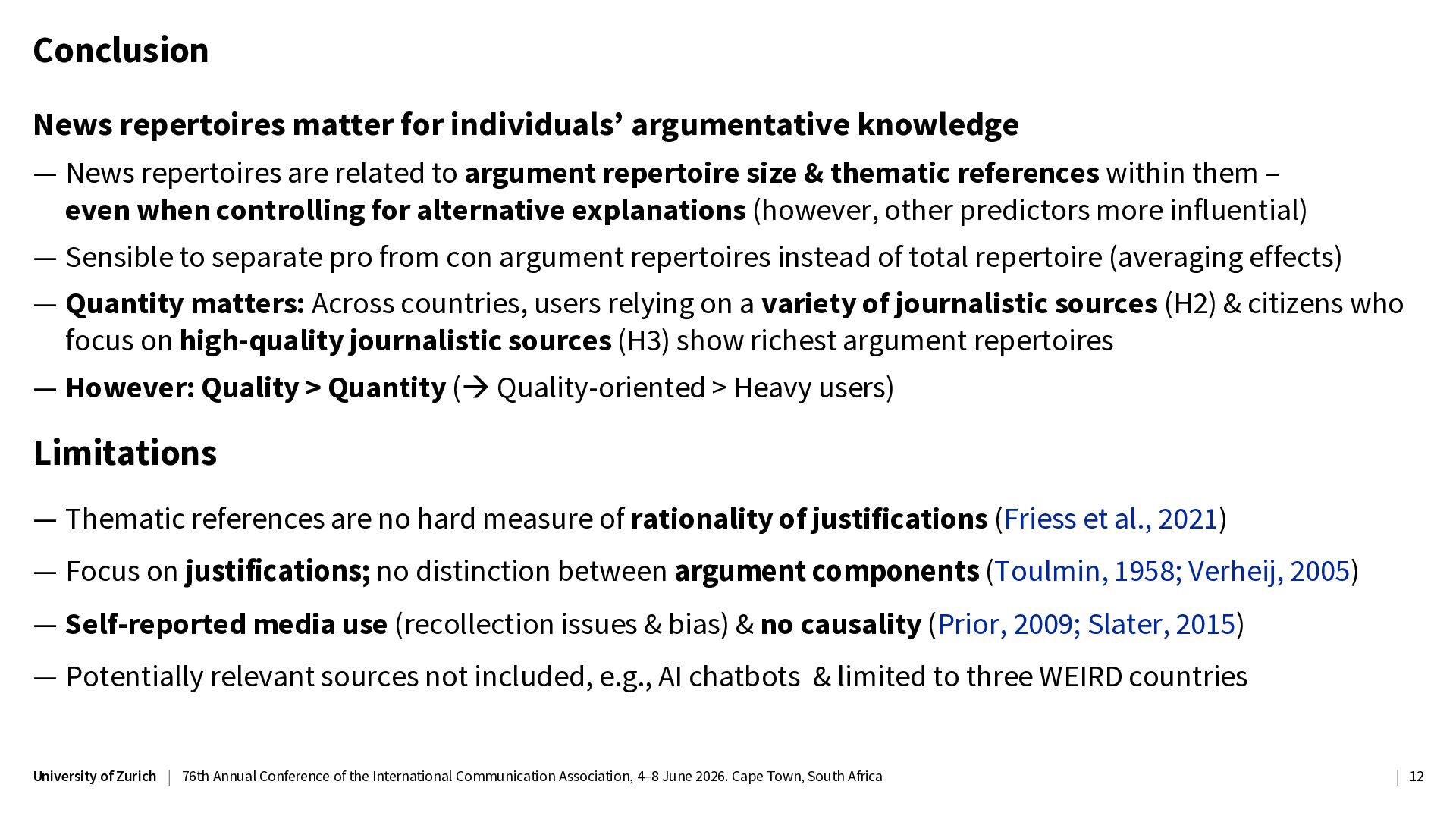
In this study, we examined how citizens' news use patterns relate to the size and thematic composition of their climate action argument repertoires (i.e., their ability to spontaneously provide reasons for and against climate action). Data collection took place through an online survey in the United States, Germany, and Spain in June 2024, quota-sampled by age, gender, region, and education level to resemble the adult populations of each country. We then conducted a manual content analysis of open-ended statements (n = 15,612) with two trained coders to identify 12,250 justifications for and against climate action, which were then coded for thematic references (e.g., social/moral reasons, negative economic consequences, feasibility issues, conspiracies, denialism). We used latent profile analysis (LPA) to exploratorily identify distinct news user profiles based on the self-reported frequency of use of 11 news sources (public service media, tabloids, podcasts on news and politics, email newsletters, news magazines, national and regional news media, political actors' websites & socials, news aggregators, corporate TV and radio, search engines, and alternative media). Using zero-inflated negative binomial (ZINB) and logistic regression models, we tested how these profiles relate to argument repertoire size and thematic composition, respectively. The results showed that citizens combining a variety of news sources, and especially those relying on high-quality journalistic sources, reported larger argument repertoires than other user profiles. However, quality outweighed quantity: quality-oriented users showed richer repertoires than heavy users who consumed many sources indiscriminately. This suggests that "the more, the better" does not hold when it comes to news use: it is not the sheer amount or absolute frequency of news use, but rather the quality of news sources consumed, that matters most for citizens' argumentative knowledge.


 qrino
qrino
 pawan_pharm
 cbtlibrary
 bvr7352
 signer
 dragon2
 hiola
hiola
 3l4l5
3l4l5
 kekekenta
 wayneb77
 swwweet
 ks91
ks91
 rasagy
 bethany
 addyosmani
 ipullrank
 codingconduct
 tammyeverts
 jct
jct
 stephaniewalter
 helmedeiros