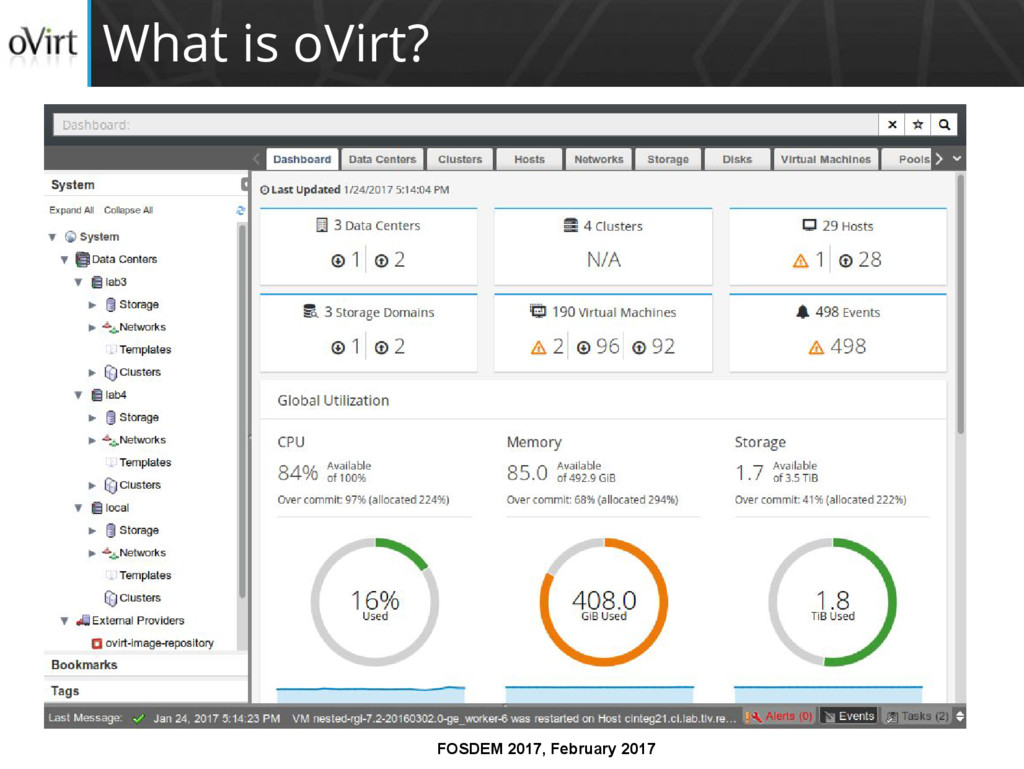
machines, storage and virtualized networks. oVirt is a virtualization platform with an easy-to-use web interface. oVirt is powered by the Open Source you know - KVM on Linux.
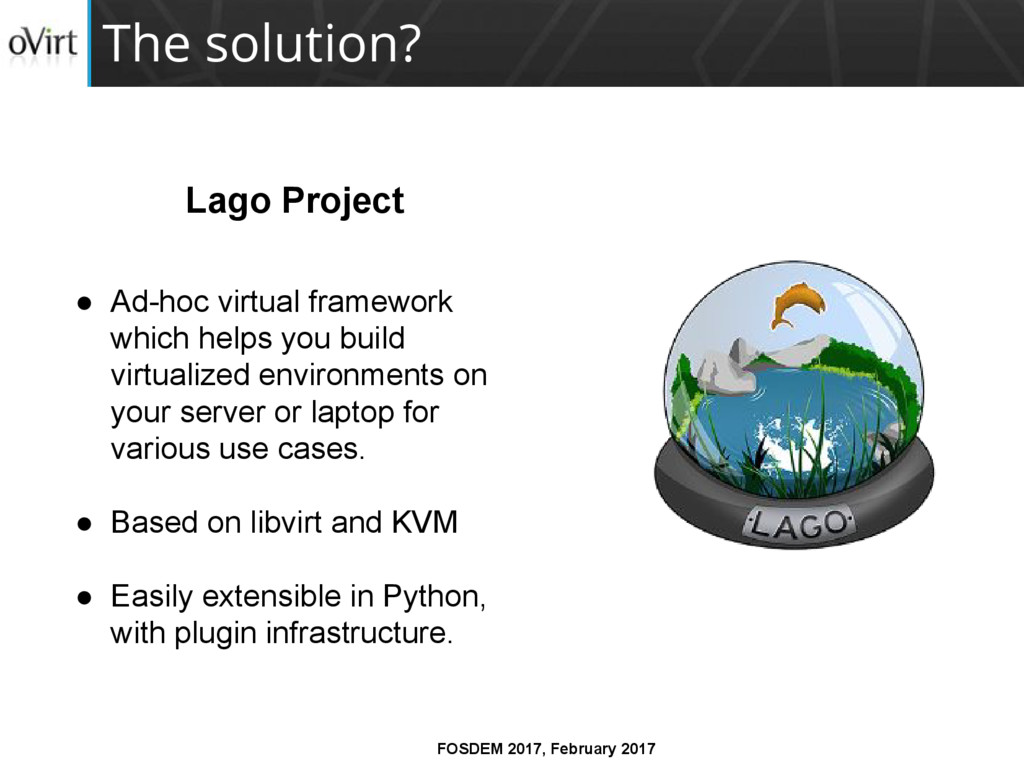
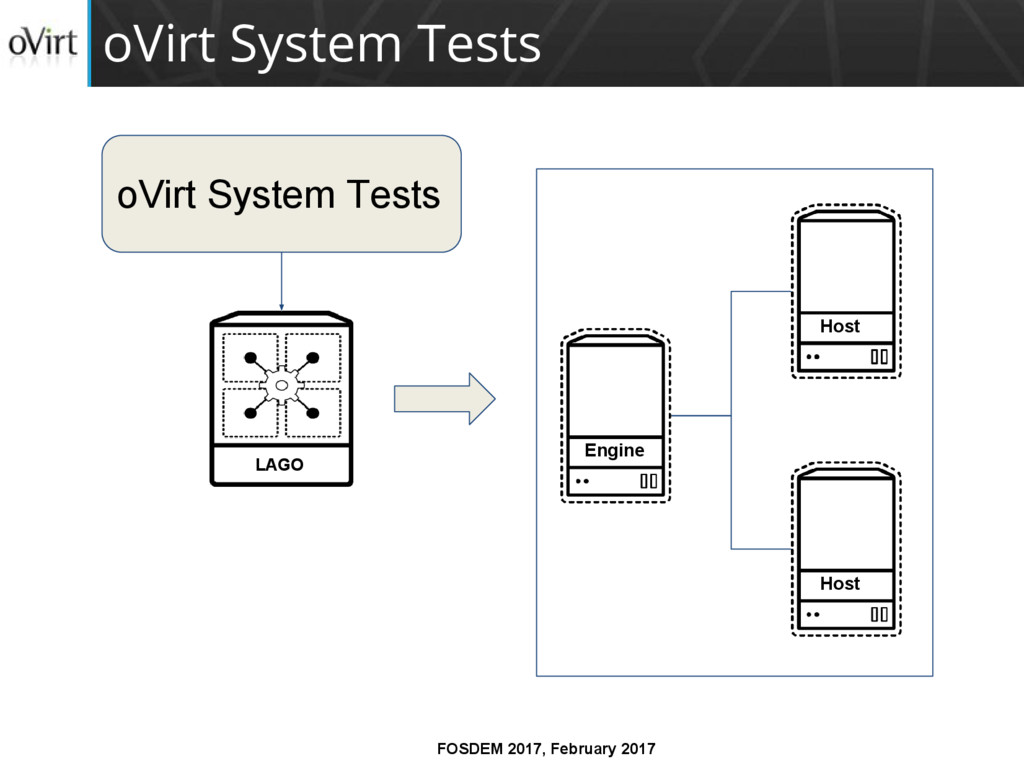
virtual framework which helps you build virtualized environments on your server or laptop for various use cases. • Based on libvirt and KVM • Easily extensible in Python, with plugin infrastructure.
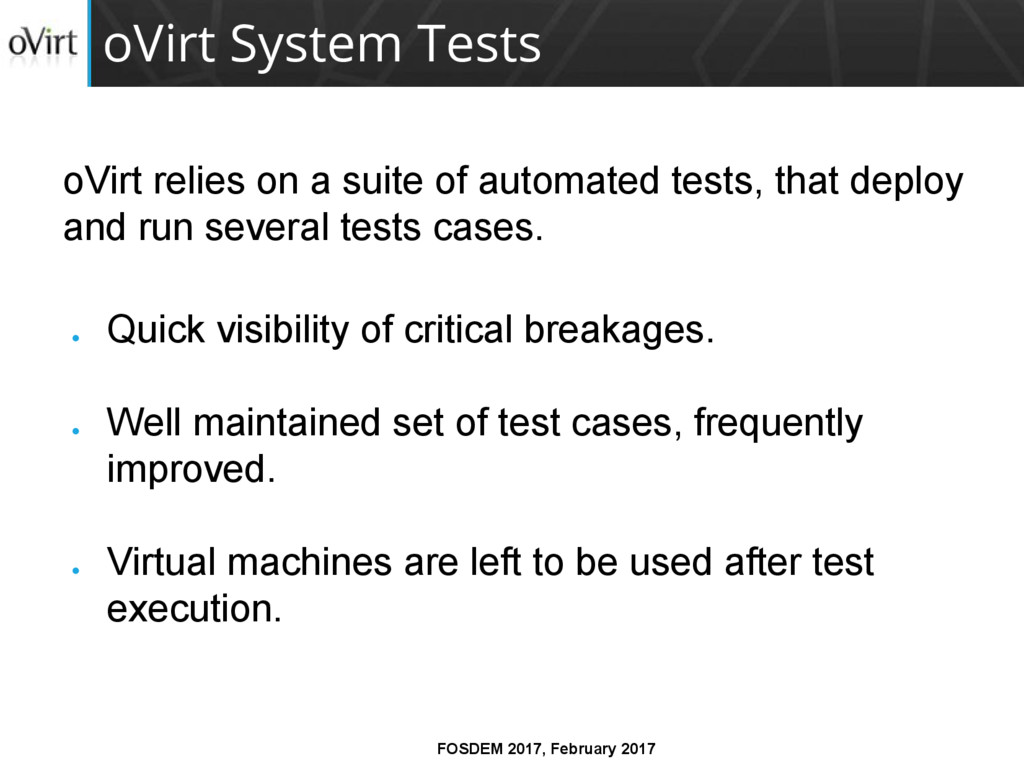
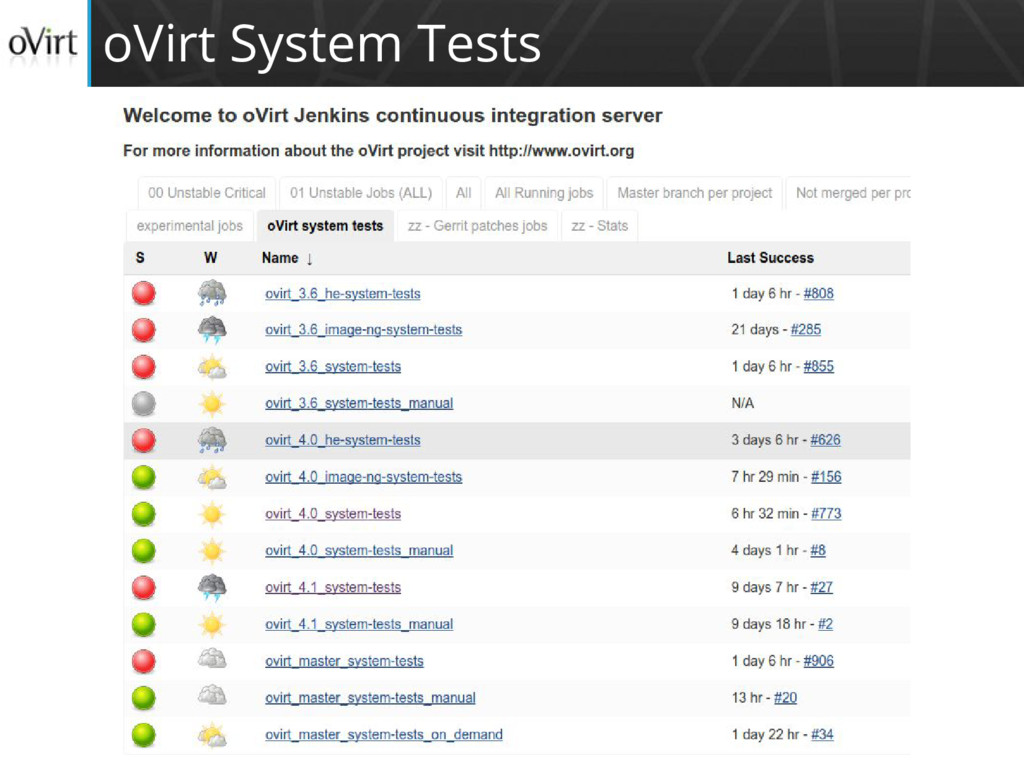
a suite of automated tests, that deploy and run several tests cases. • Quick visibility of critical breakages. • Well maintained set of test cases, frequently improved. • Virtual machines are left to be used after test execution.
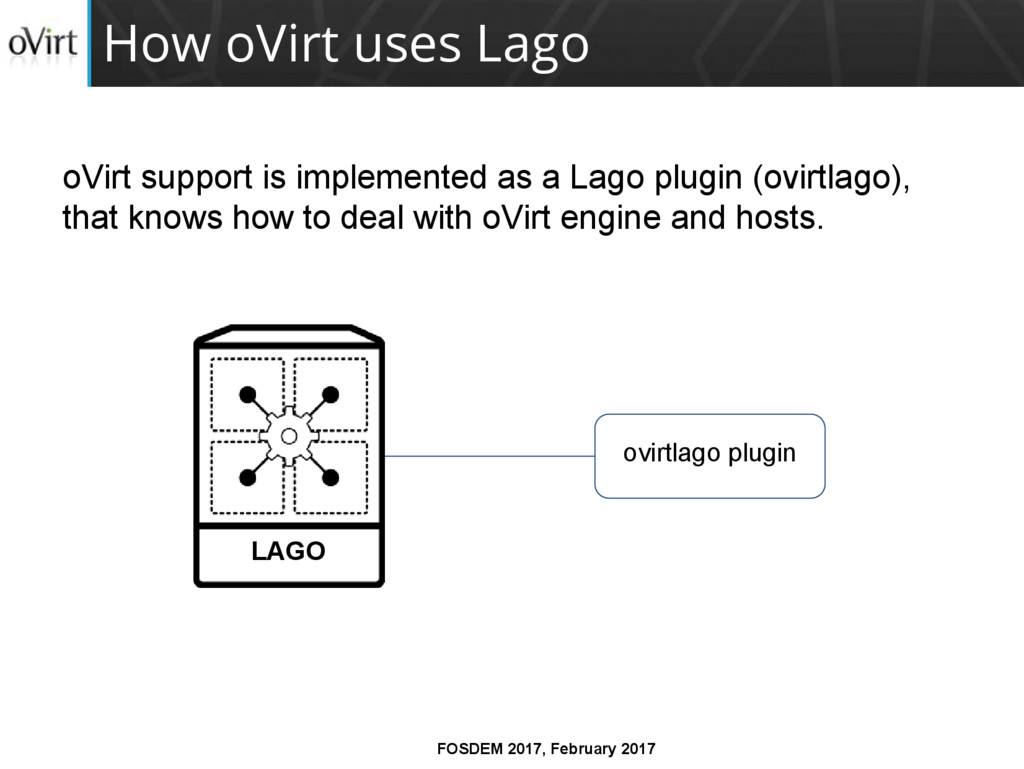
Tests relies on the “ovirtlago” plugin, that supports installation of custom RPM packages. • oVirt project provides Jenkins jobs to build RPM packages from Gerrit patches. • A developer can build RPMs on his laptop! • Simple patches can be verified by running the full test suite with a custom RPM.
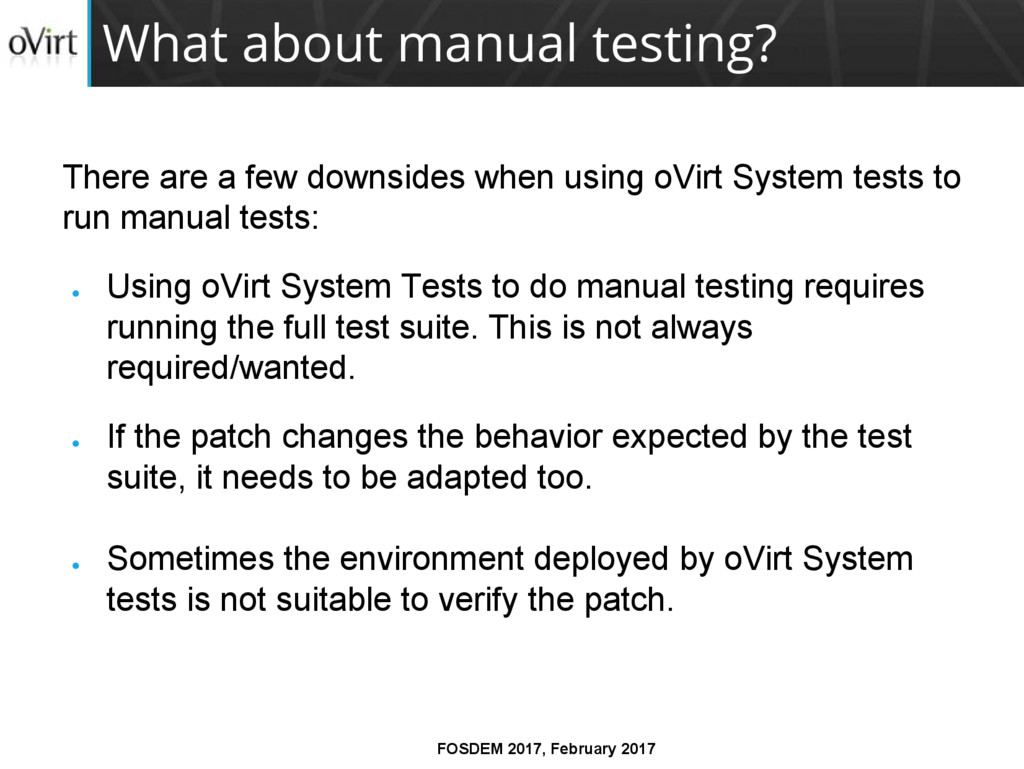
a few downsides when using oVirt System tests to run manual tests: • Using oVirt System Tests to do manual testing requires running the full test suite. This is not always required/wanted. • If the patch changes the behavior expected by the test suite, it needs to be adapted too. • Sometimes the environment deployed by oVirt System tests is not suitable to verify the patch.
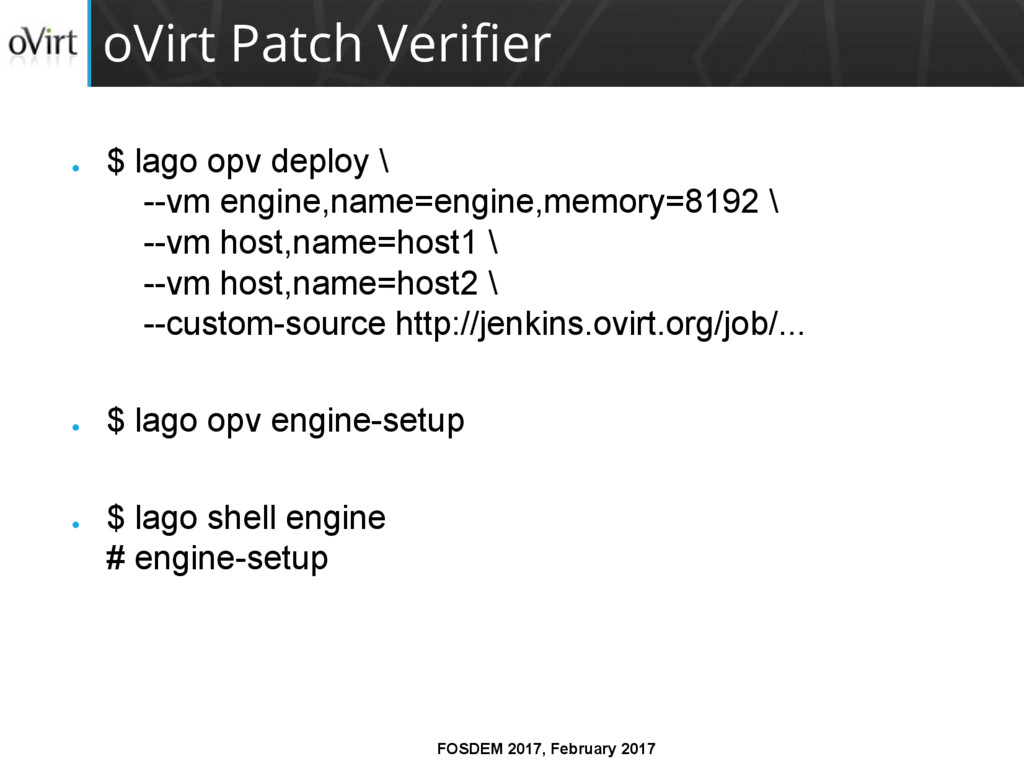
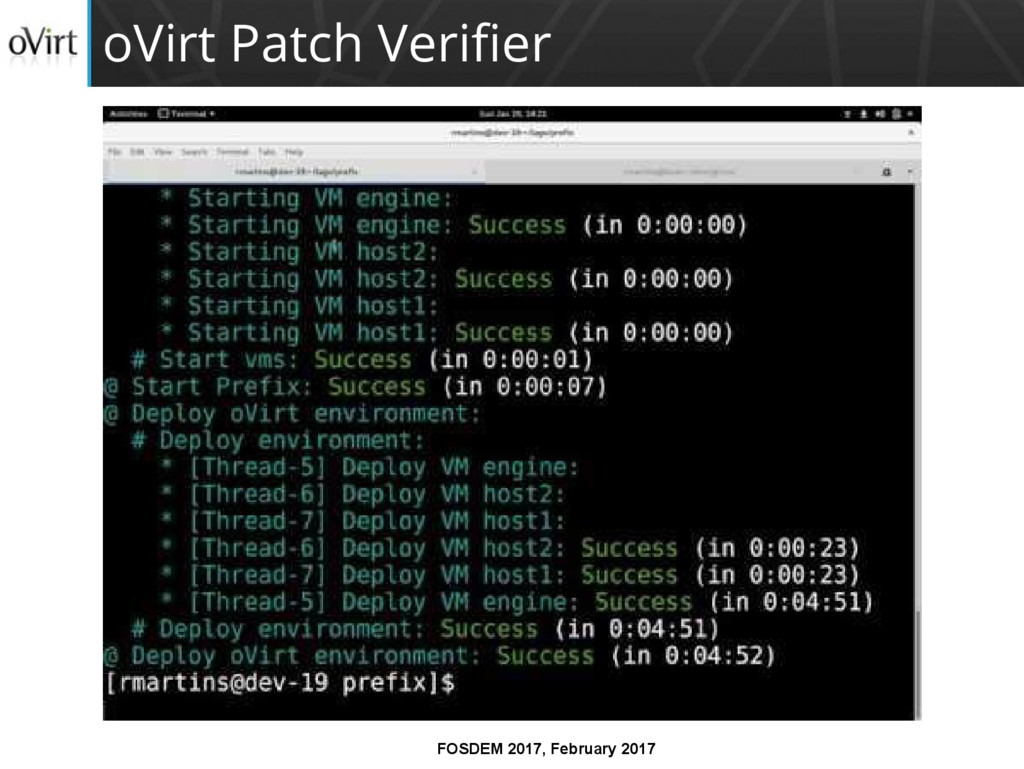
and the ovirtlago plugin to create test environments that are targeted to manual testing. • Environment is defined easily on command line, when calling the plugin to deploy. • No need to run automated test suites to get oVirt engine and hosts running. • Can create as many oVirt hosts as wanted, and attach them to the oVirt engine automatically.
some downsides on this approach: • Fully automated, requires caching of a lot of unneeded RPMs for the internal repository, or download of dependencies for each VM. • Can’t deploy more than one oVirt engine simultaneously.
tied to oVirt, so it means that it is possible to write plugins to test other projects. • Test virtualization managers • Test appliances • Build virtualization environment


 rafaelmartins
 ichirokano2
 kmars0605
 sorah
 marcoroth
 sylph01
 oku053
 drumath2237
 nabondance
 n_takehata
 chobishiba
 oniak3ibm
 jame2408
 helenjbeal
 soysaucechin
 csswizardry
 mlcsv
 palkan
 jct
 aleyda
 morganepeng
 eileencodes
 ivargrimstad
 retrage