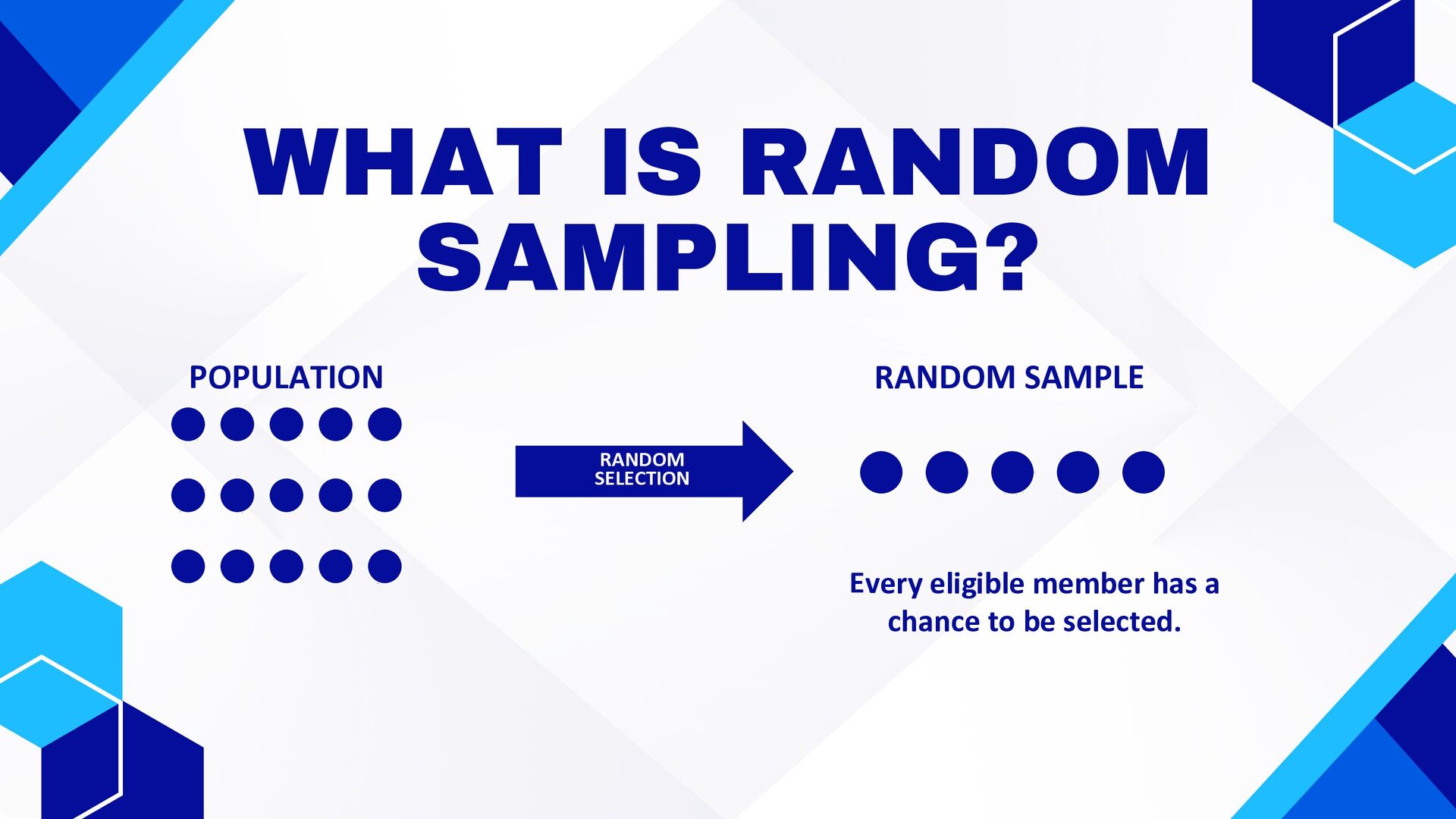
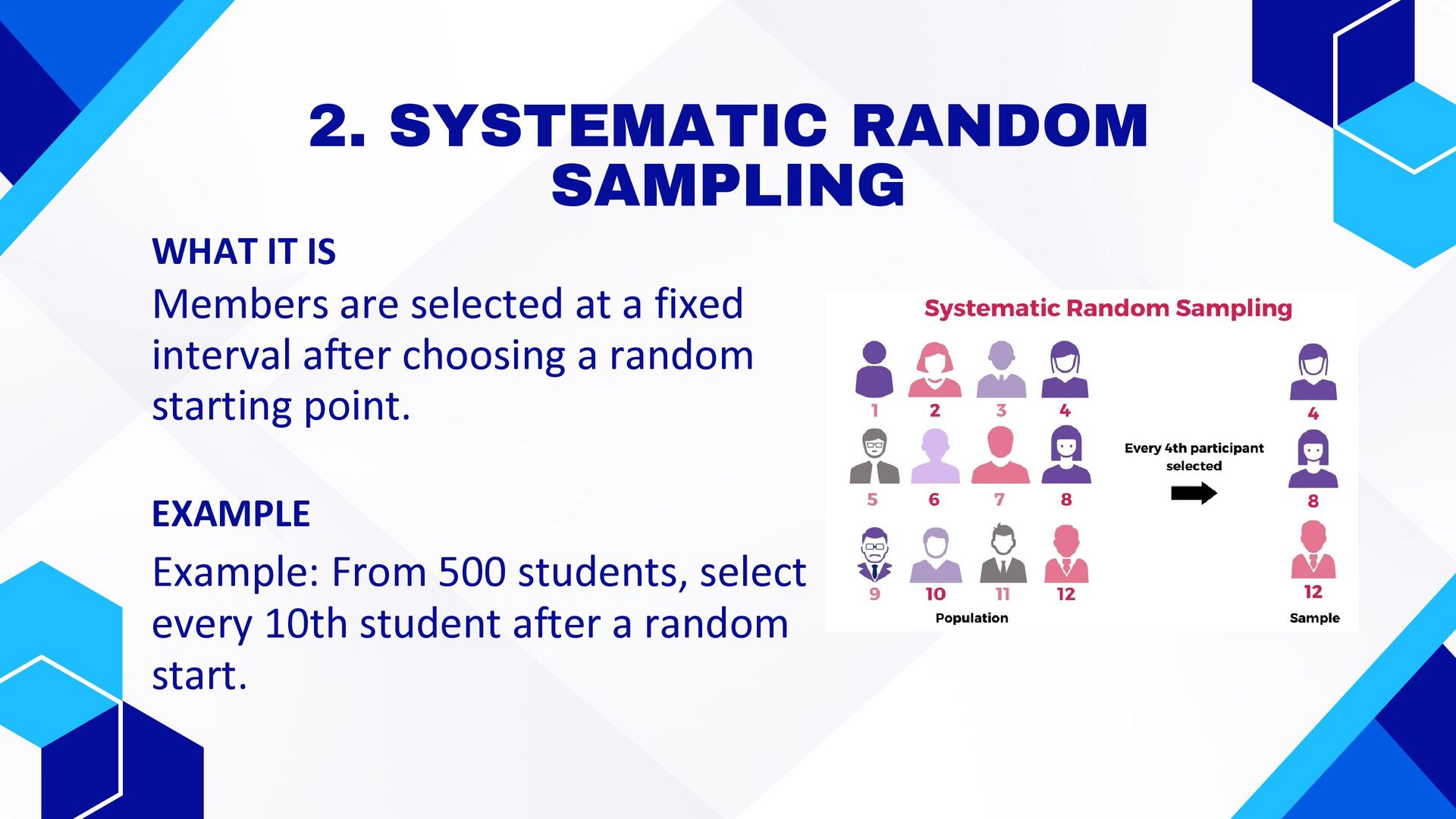
research. It gives members of a population a known chance of being selected. It helps researchers obtain a sample that can represent the wider population. It also reduces personal choice and selection bias in the sampling process.
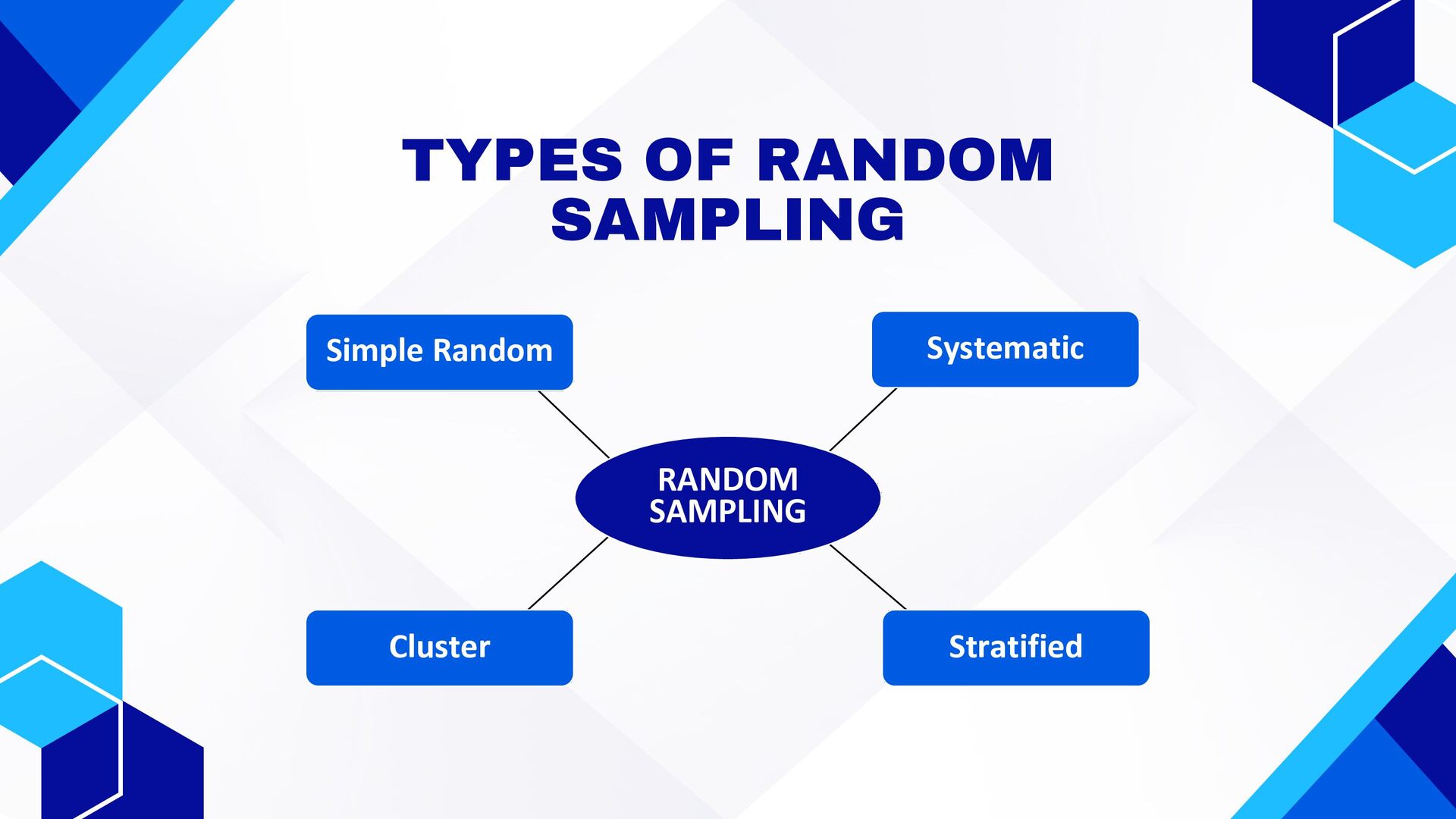
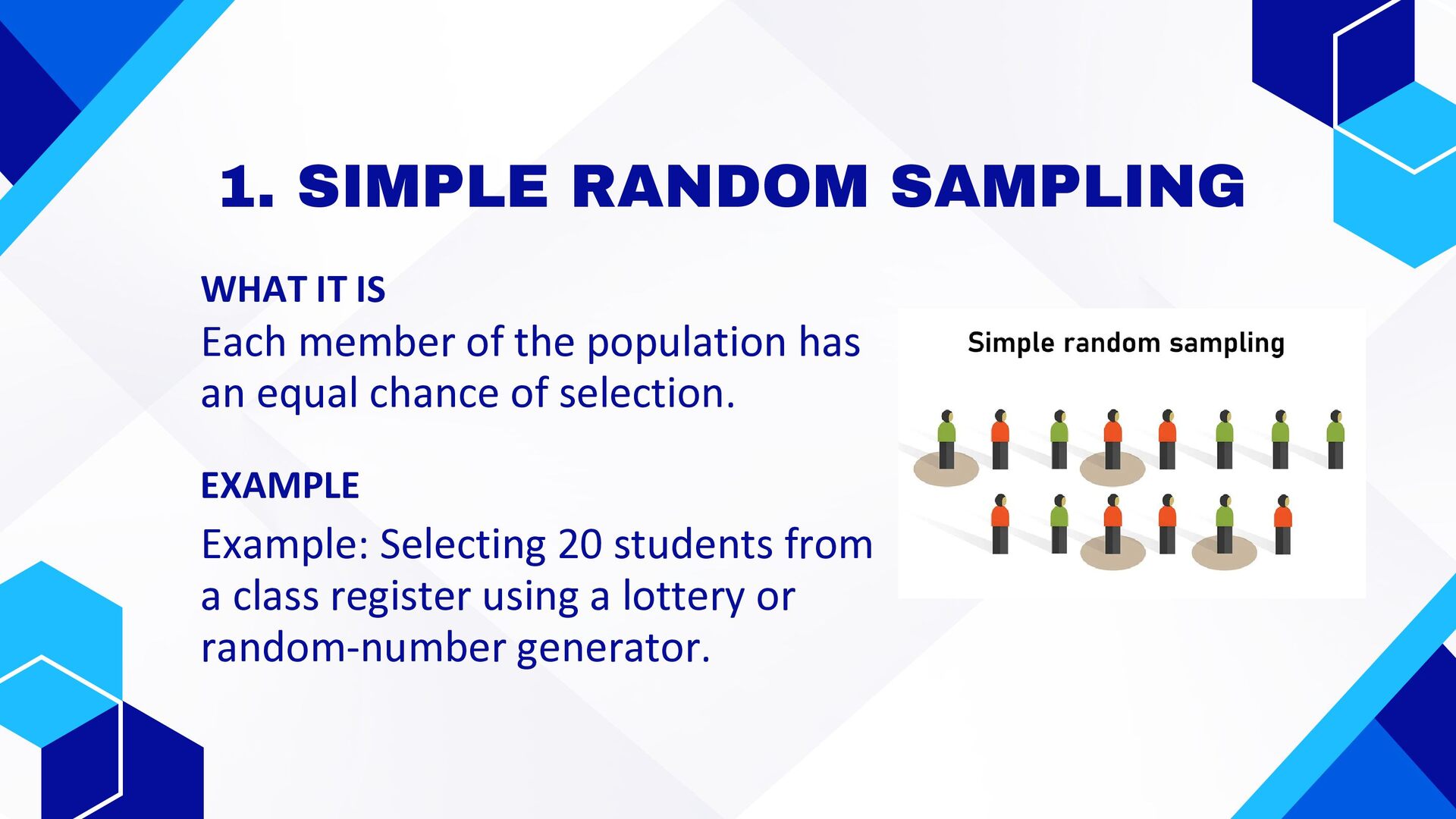
the population has an equal chance of selection. EXAMPLE Example: Selecting 20 students from a class register using a lottery or random-number generator.
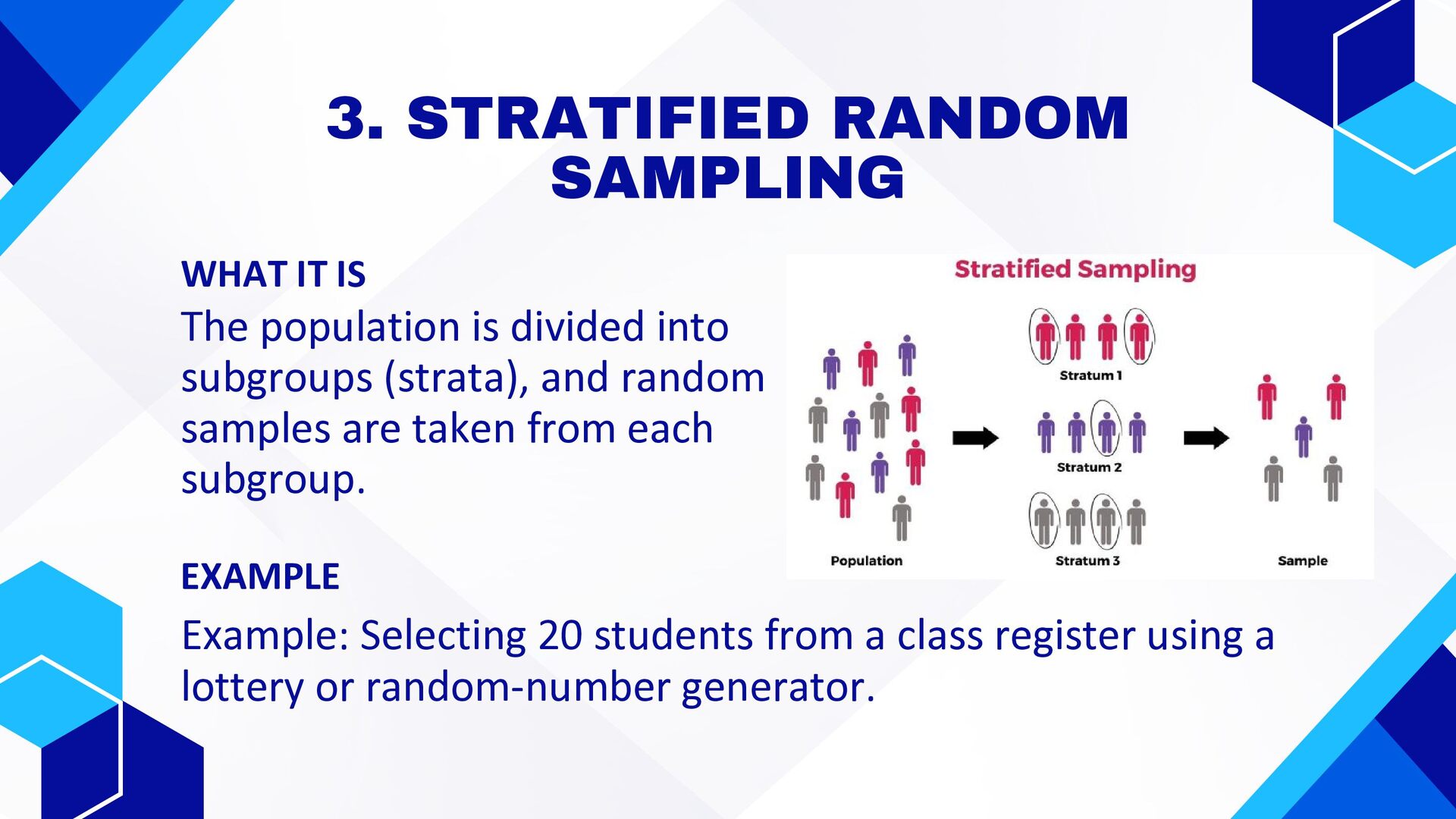
divided into subgroups (strata), and random samples are taken from each subgroup. EXAMPLE Example: Selecting 20 students from a class register using a lottery or random-number generator.
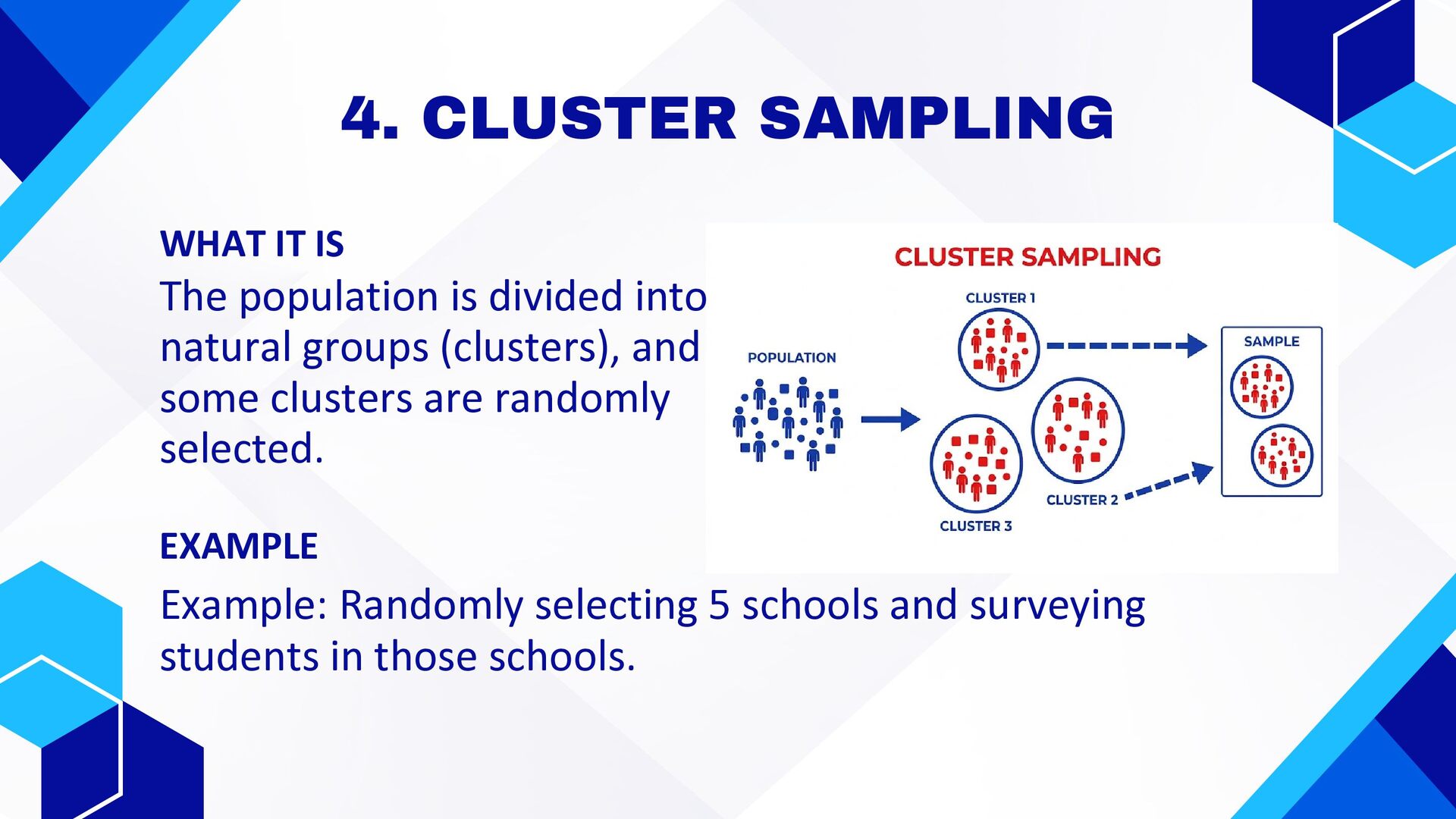
into natural groups (clusters), and some clusters are randomly selected. EXAMPLE Example: Randomly selecting 5 schools and surveying students in those schools.
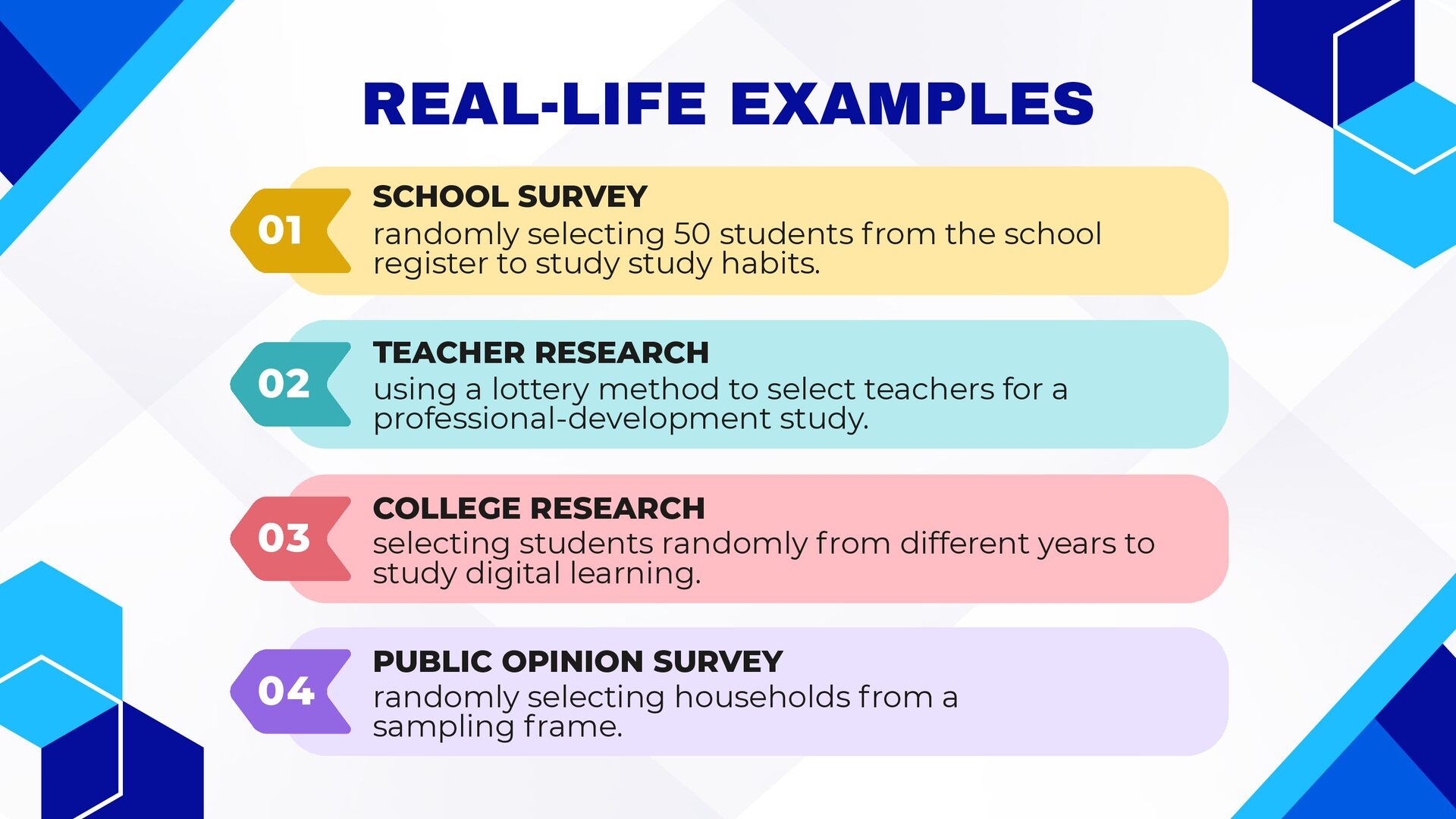
the school register to study study habits. 02 TEACHER RESEARCH using a lottery method to select teachers for a professional-development study. 03 COLLEGE RESEARCH selecting students randomly from different years to study digital learning. 04 PUBLIC OPINION SURVEY randomly selecting households from a sampling frame.
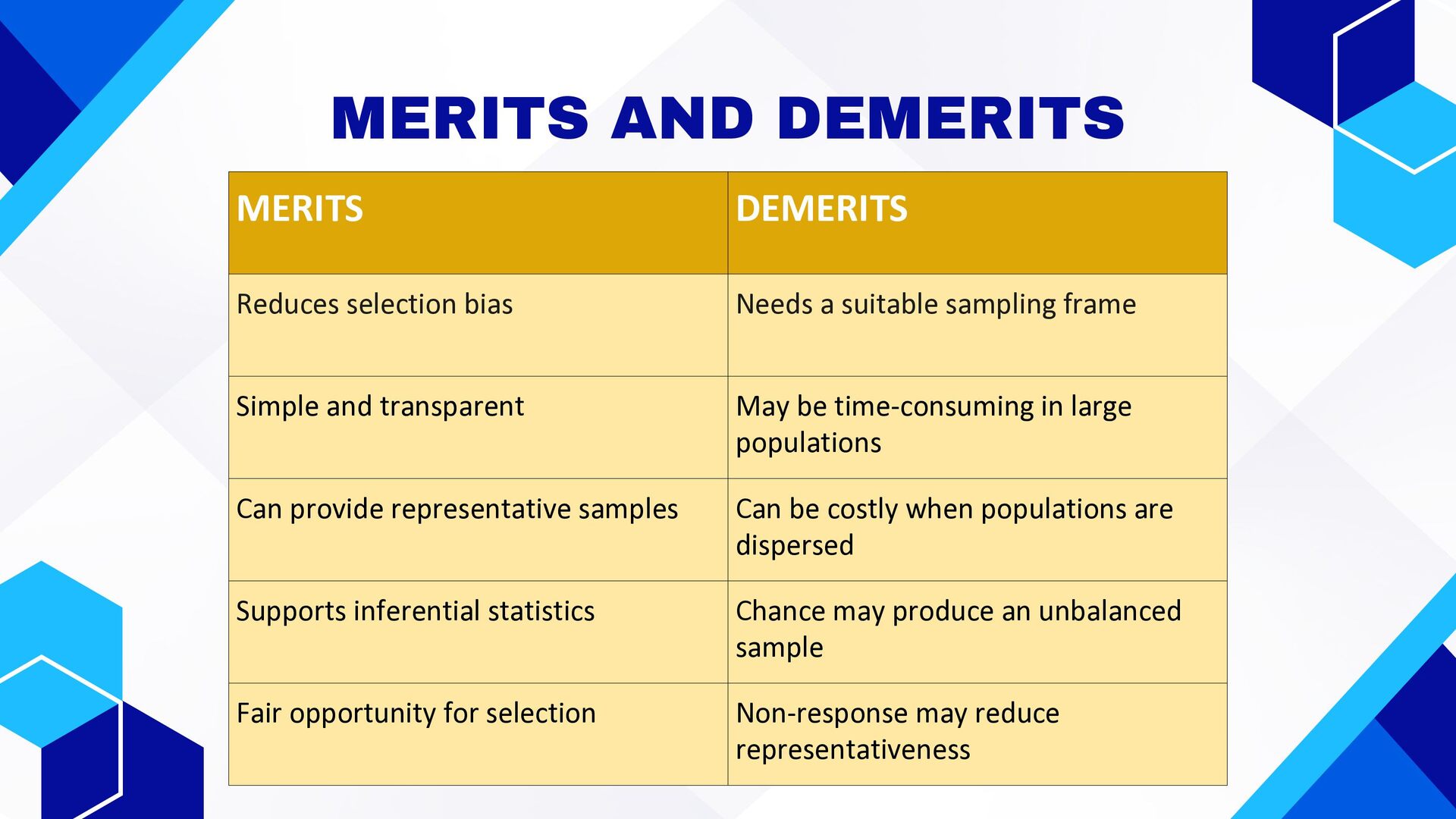
suitable sampling frame Simple and transparent May be time-consuming in large populations Can provide representative samples Can be costly when populations are dispersed Supports inferential statistics Chance may produce an unbalanced sample Fair opportunity for selection Non-response may reduce representativeness
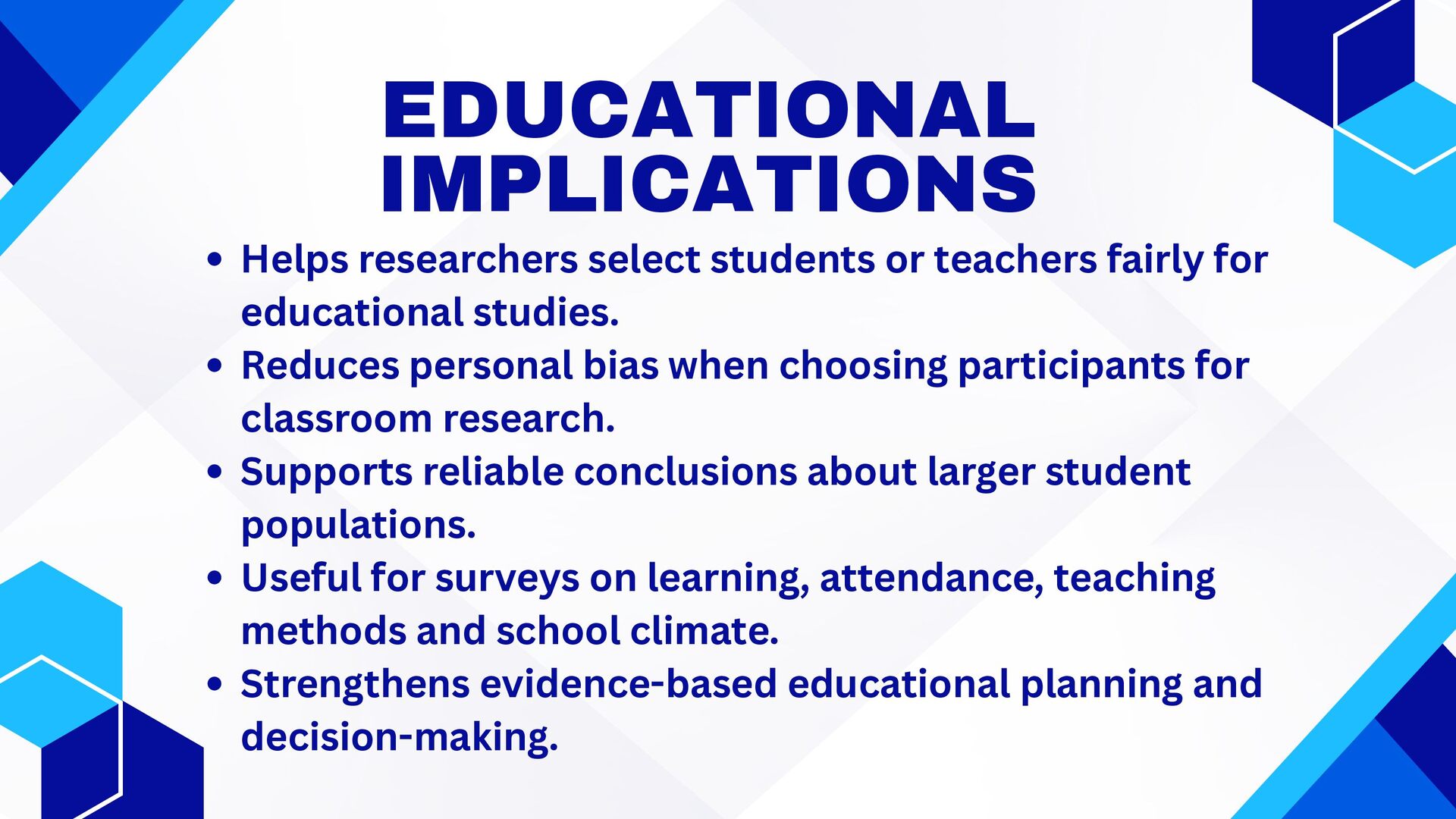
educational studies. Reduces personal bias when choosing participants for classroom research. Supports reliable conclusions about larger student populations. Useful for surveys on learning, attendance, teaching methods and school climate. Strengthens evidence-based educational planning and decision-making.
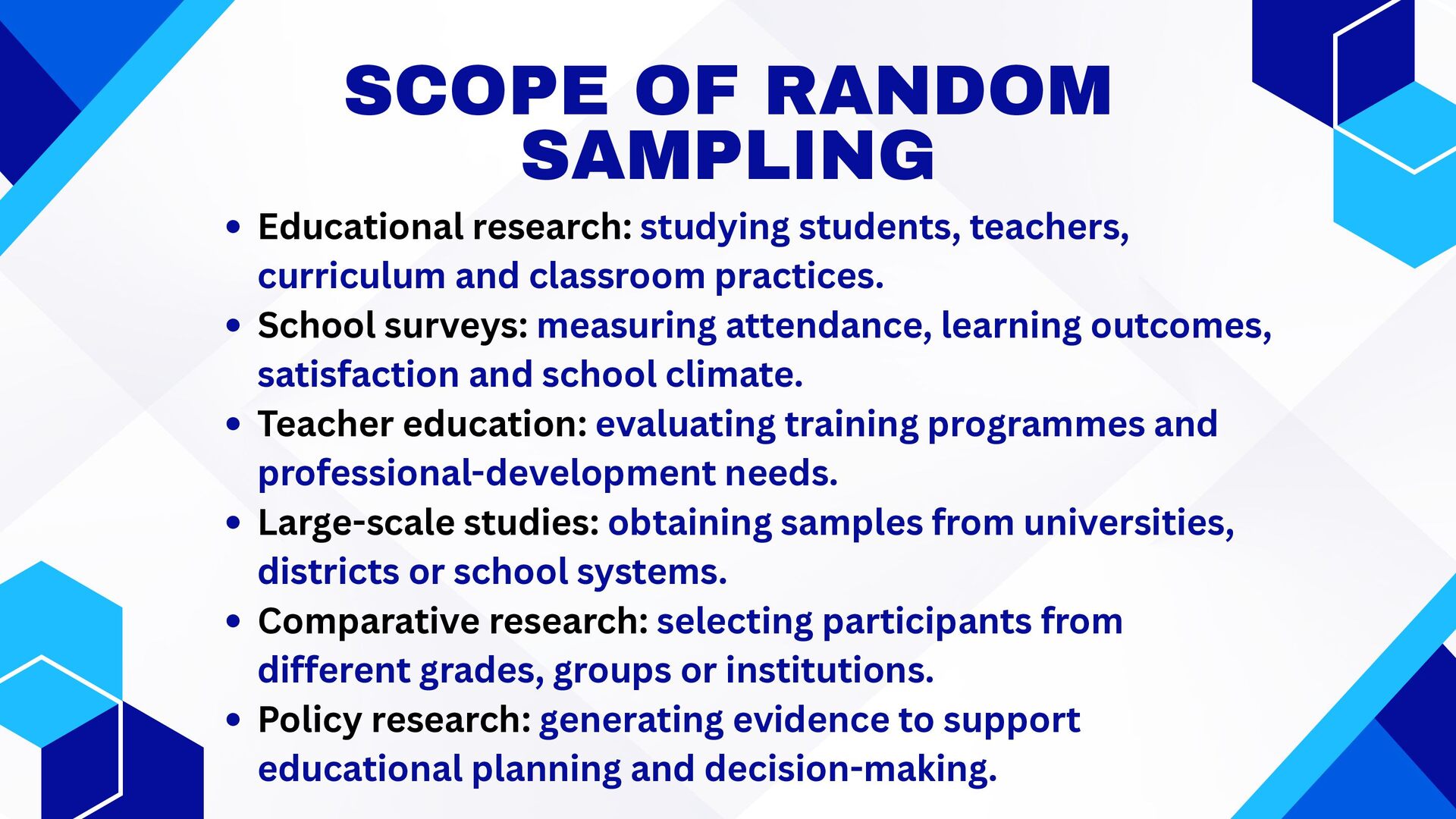
and classroom practices. School surveys: measuring attendance, learning outcomes, satisfaction and school climate. Teacher education: evaluating training programmes and professional-development needs. Large-scale studies: obtaining samples from universities, districts or school systems. Comparative research: selecting participants from different grades, groups or institutions. Policy research: generating evidence to support educational planning and decision-making.
Methods and Techniques. New Age International. Creswell, J. W., & Creswell, J. D. (2018). Research Design. SAGE Publications. Fraenkel, J. R., Wallen, N. E., & Hyun, H. H. (2012). How to Design and Evaluate Research in Education. McGraw-Hill. Best, J. W., & Kahn, J. V. (2006). Research in Education. Pearson.
select participants from a population.It reduces selection bias and can improve the representativeness of a sample. Different types are suited to different research situations and population structures. Therefore, careful planning and appropriate selection of the sampling method are essential for meaningful educational research.


 rasmi1999
 bvr7352
 cbtlibrary
 signer
 fmarot
 soudai
 pawan_pharm
 naochim2026
 ainischool
 kekekenta
 juanmartin2026
 pwiseman
 sabderemane
 samtorres
 inesmontani
 samanthasiow
 marketingsoph
 jonrohan
 mlcsv
 keathley
 productmarketing
 skipperchong
 frankvandijk