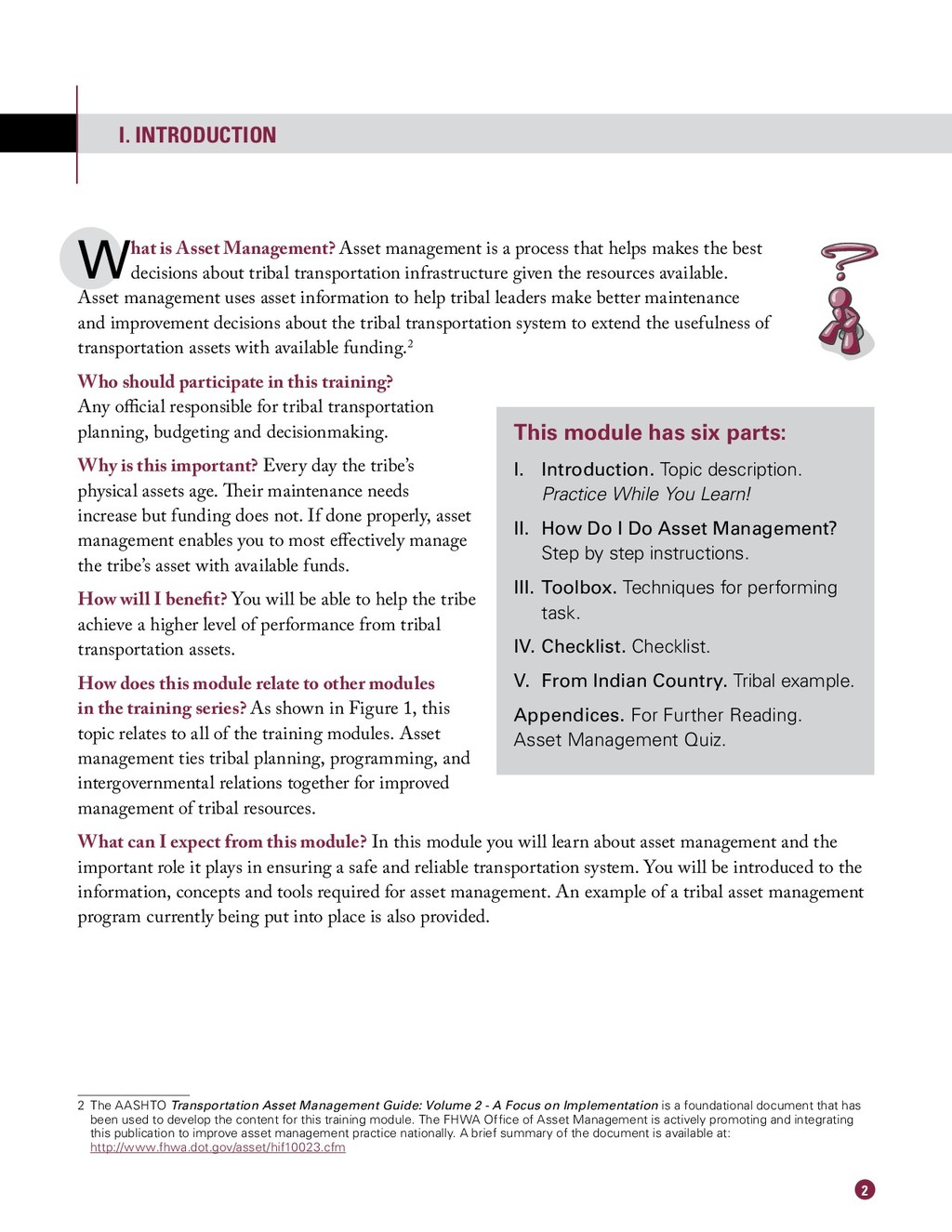
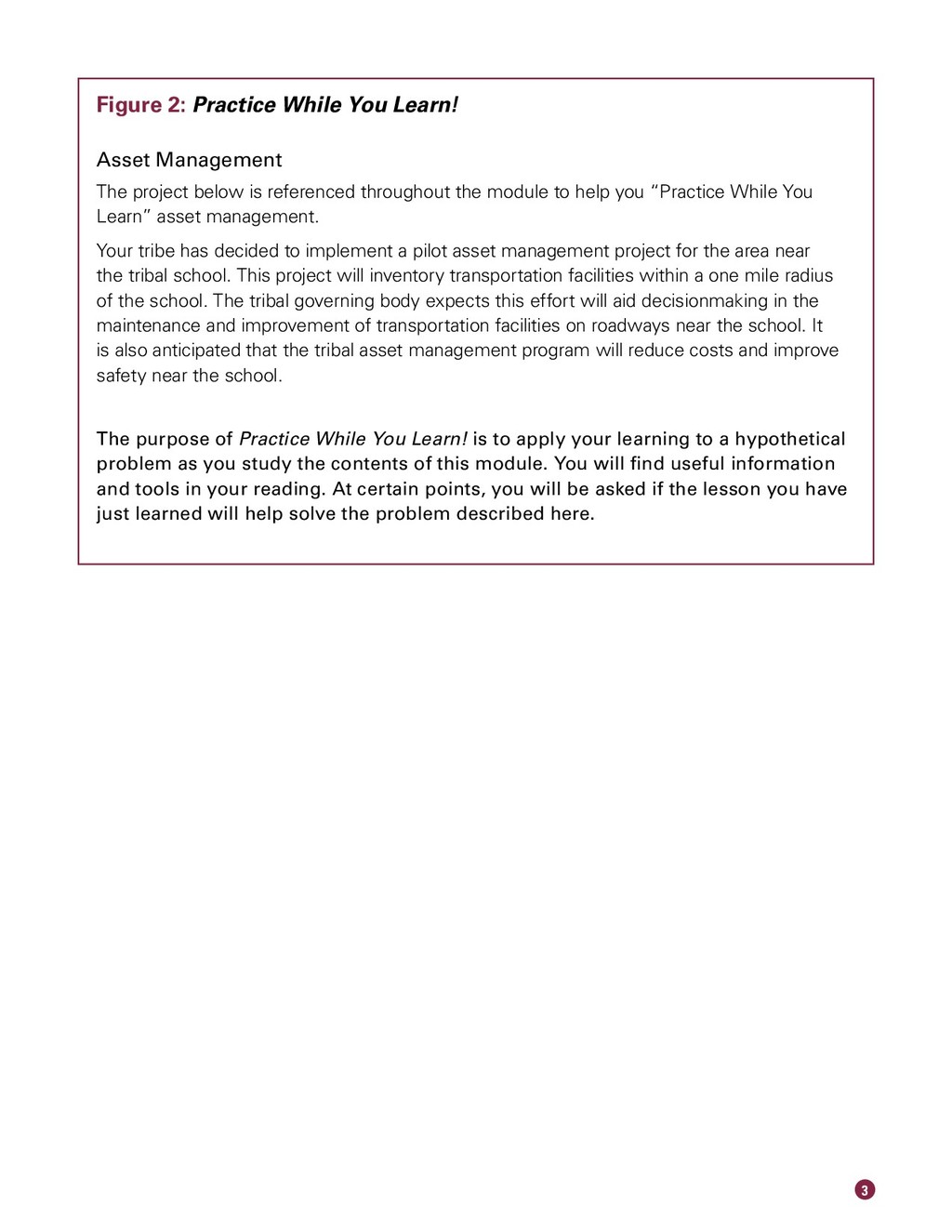
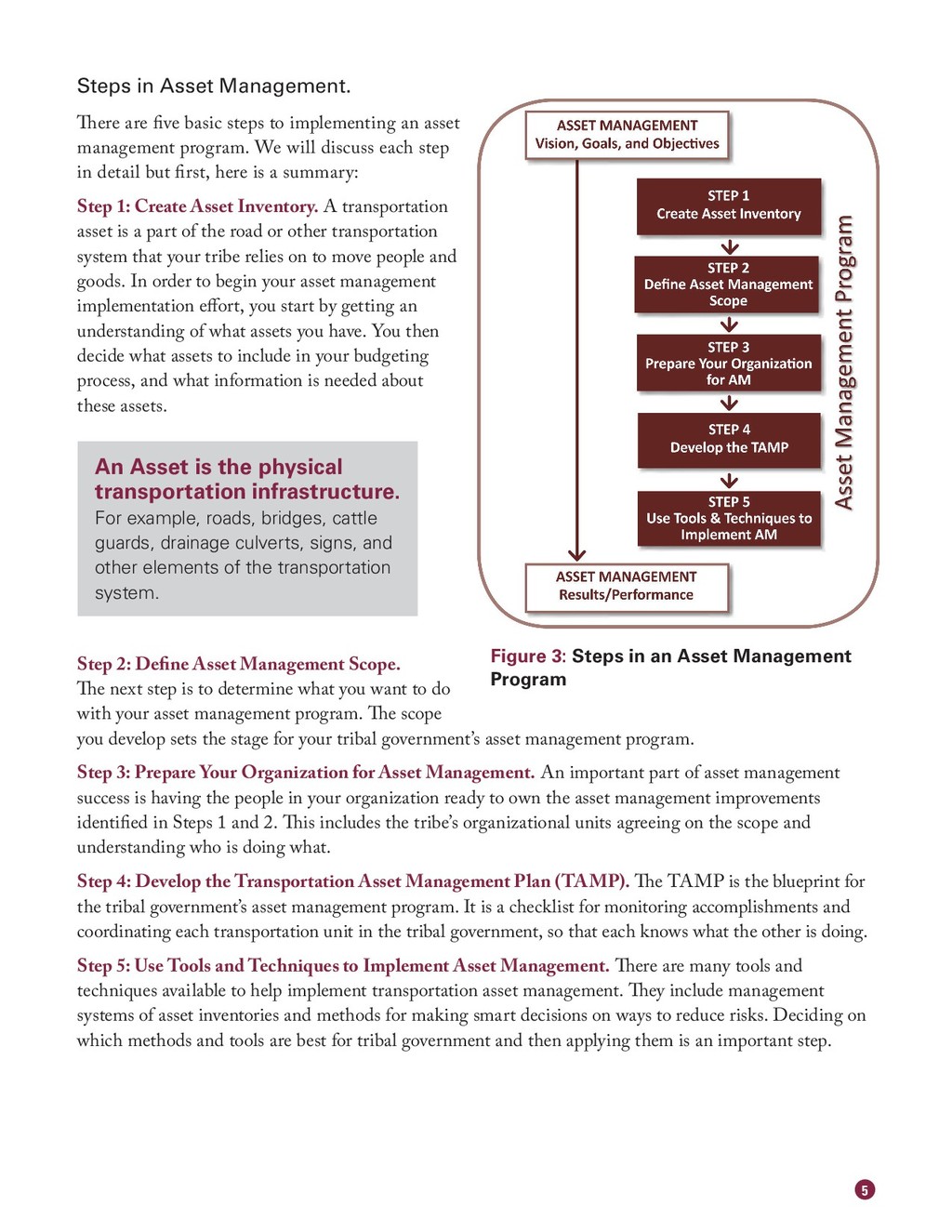
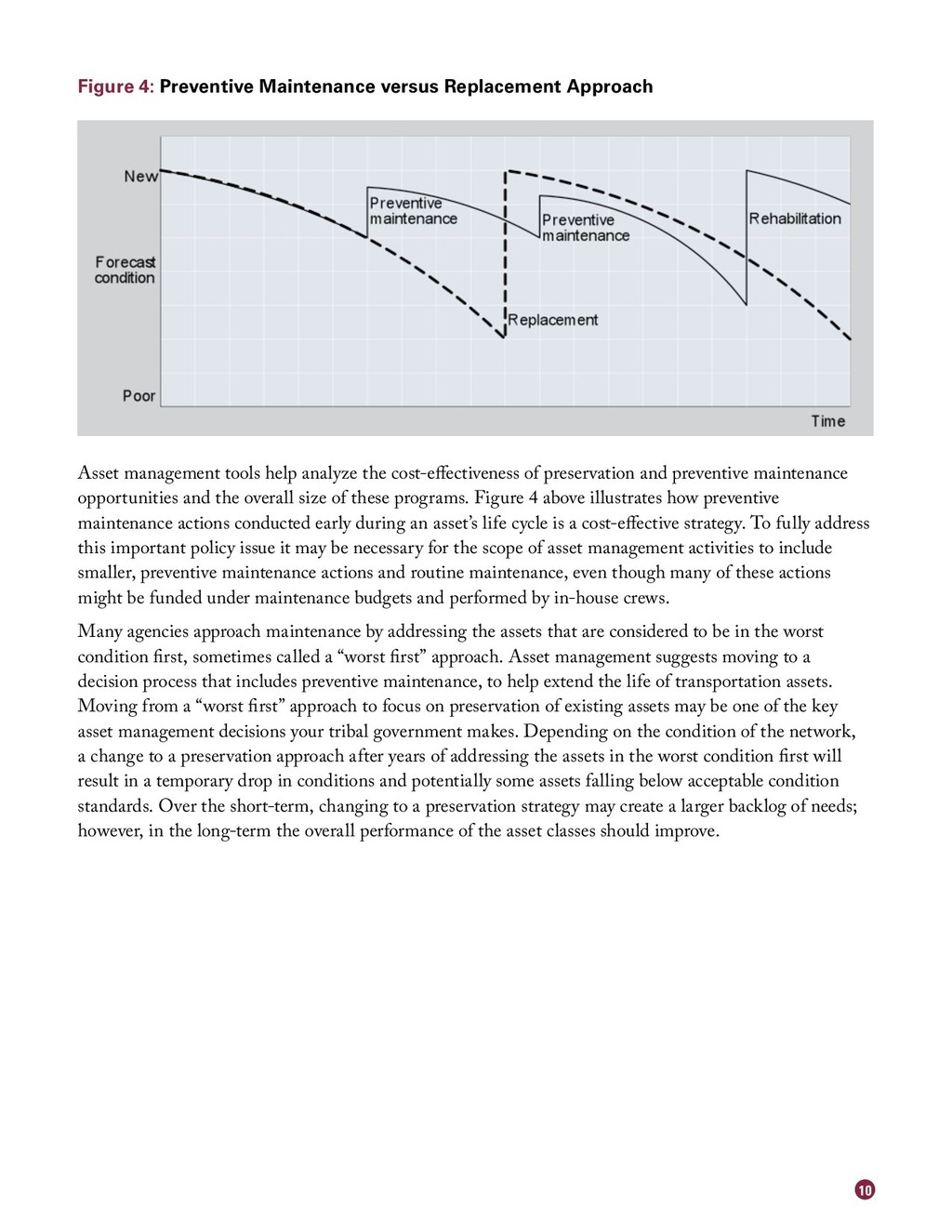
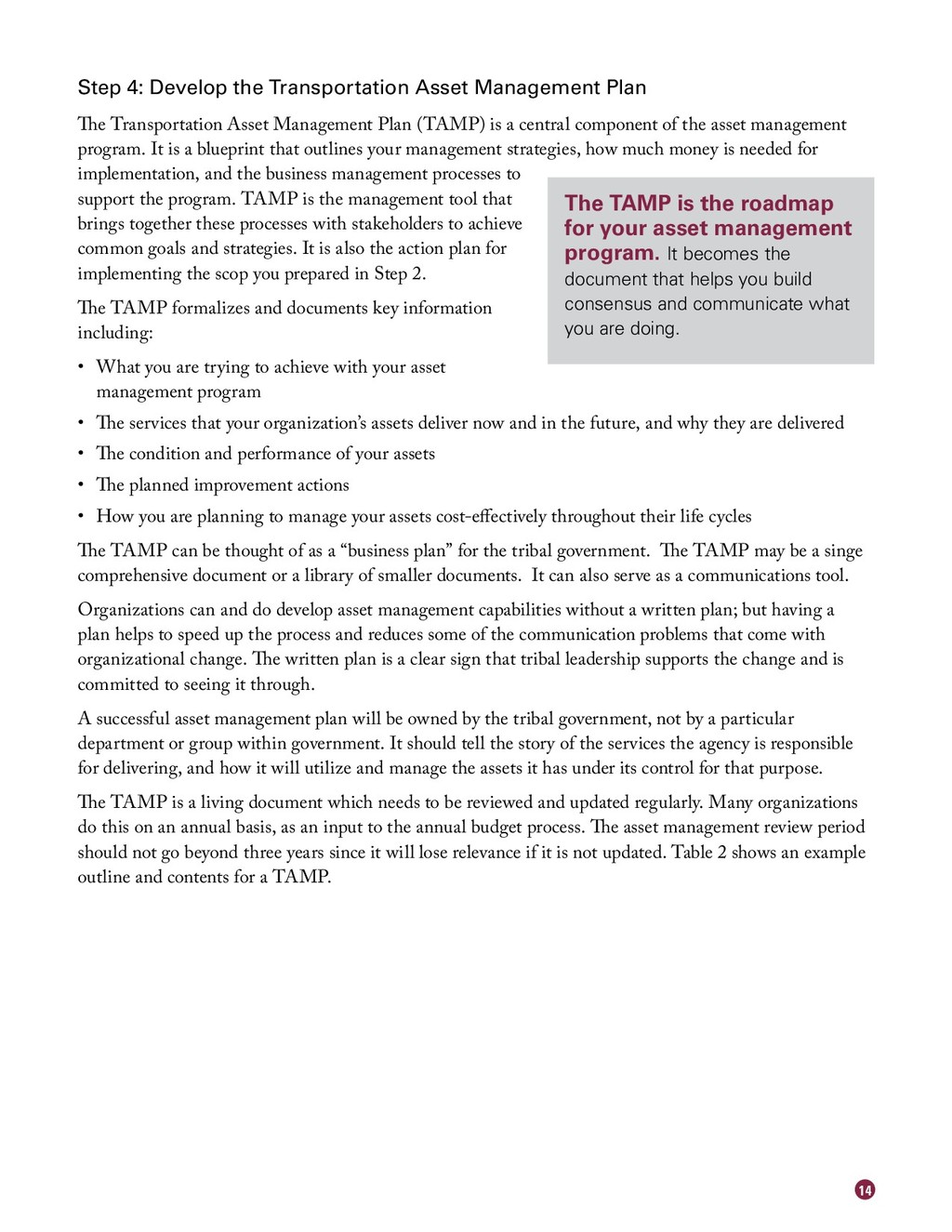
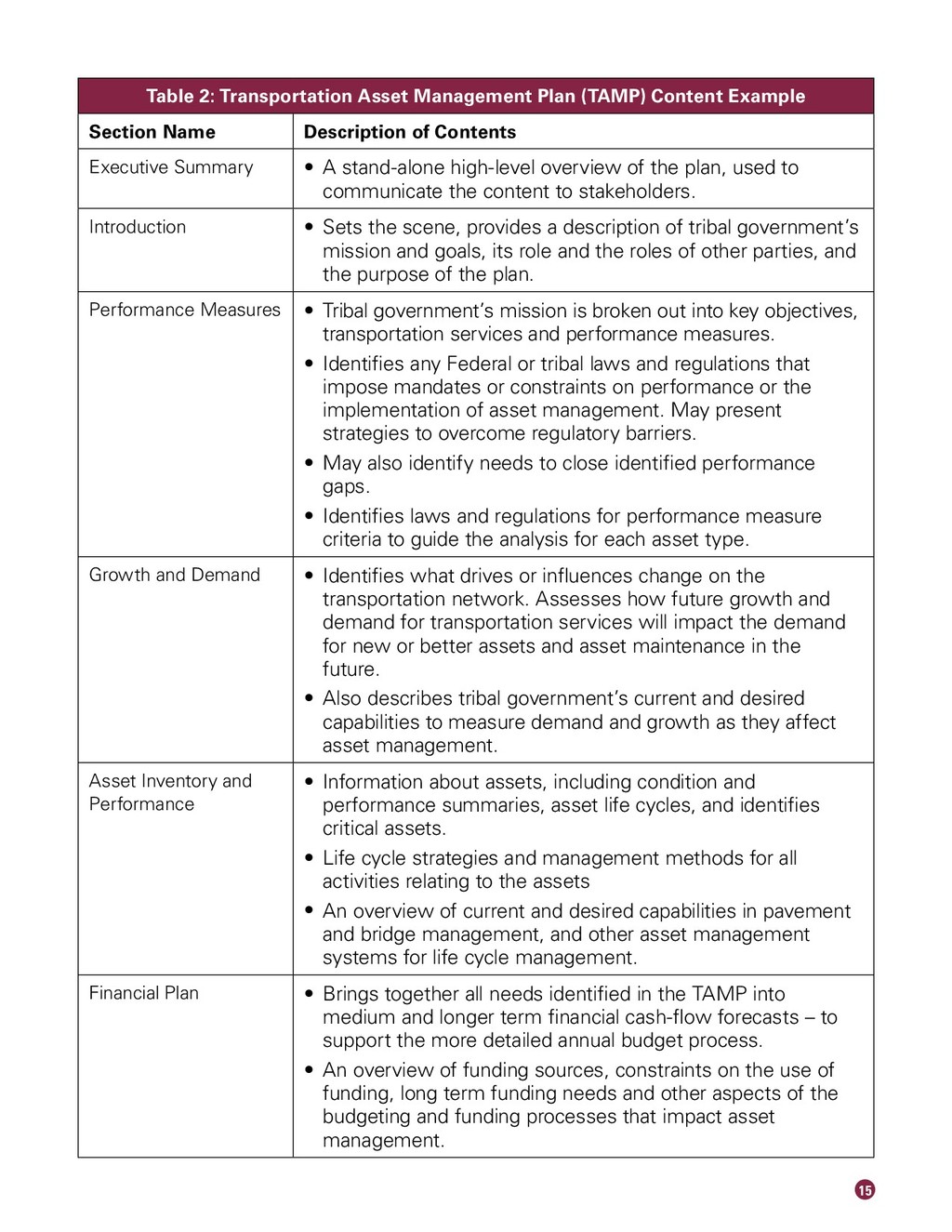
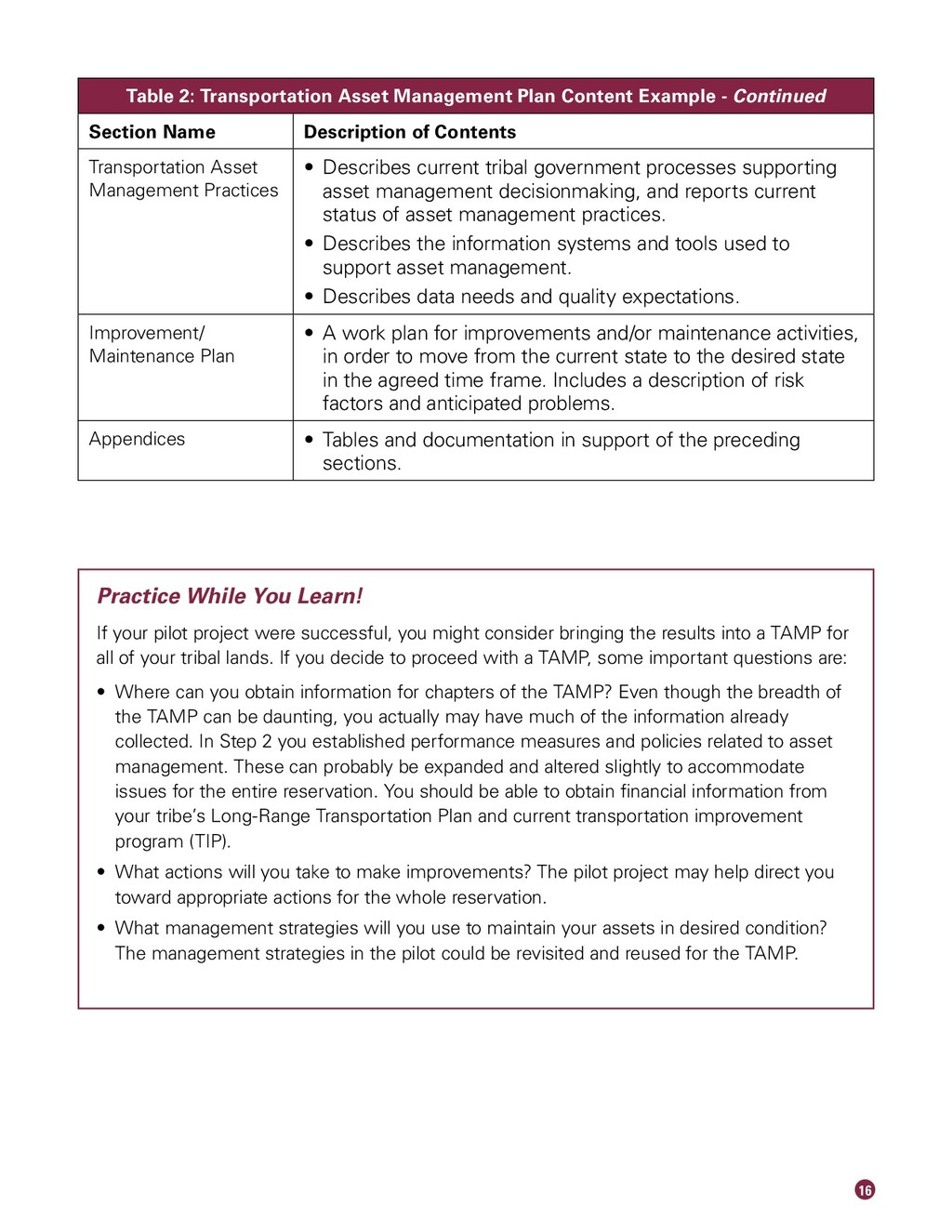
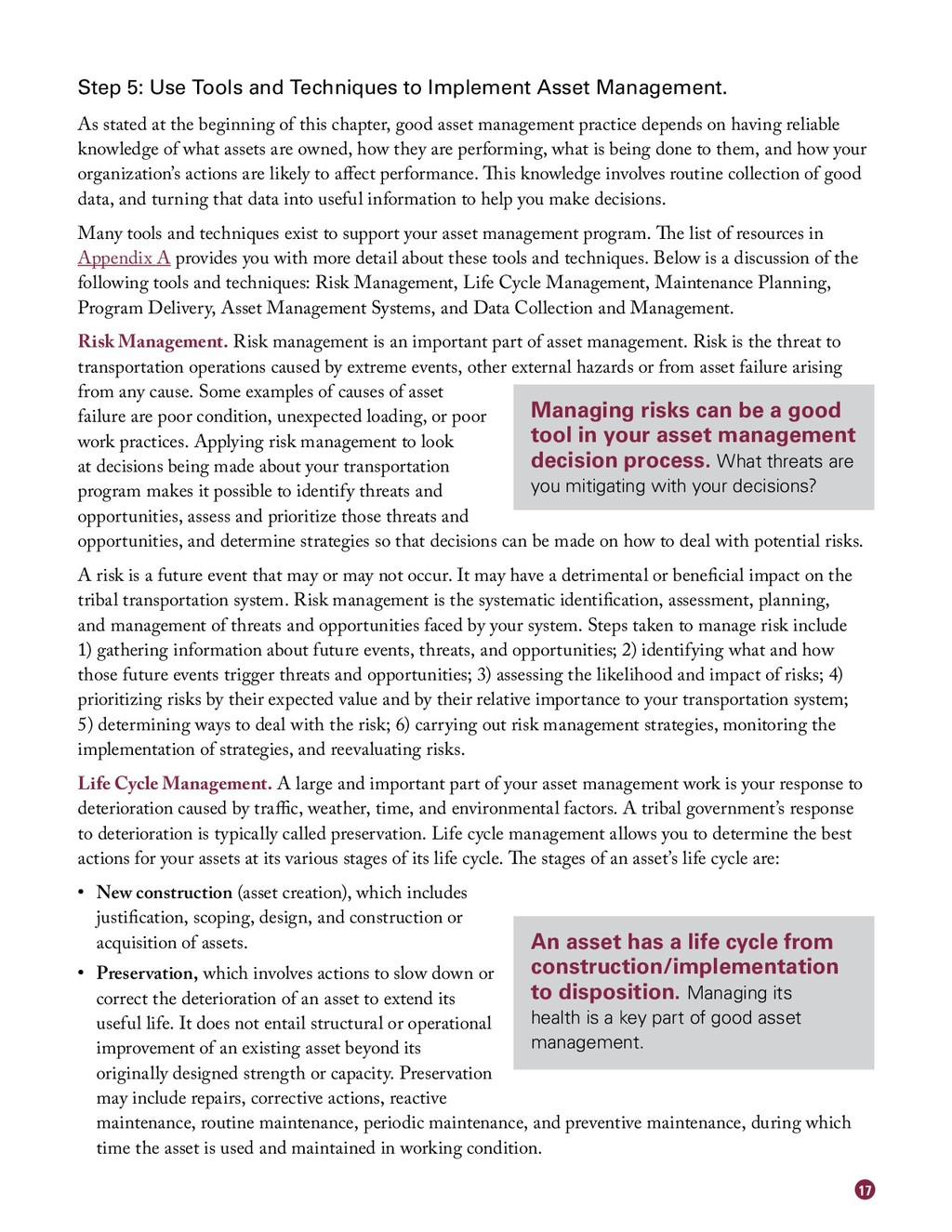
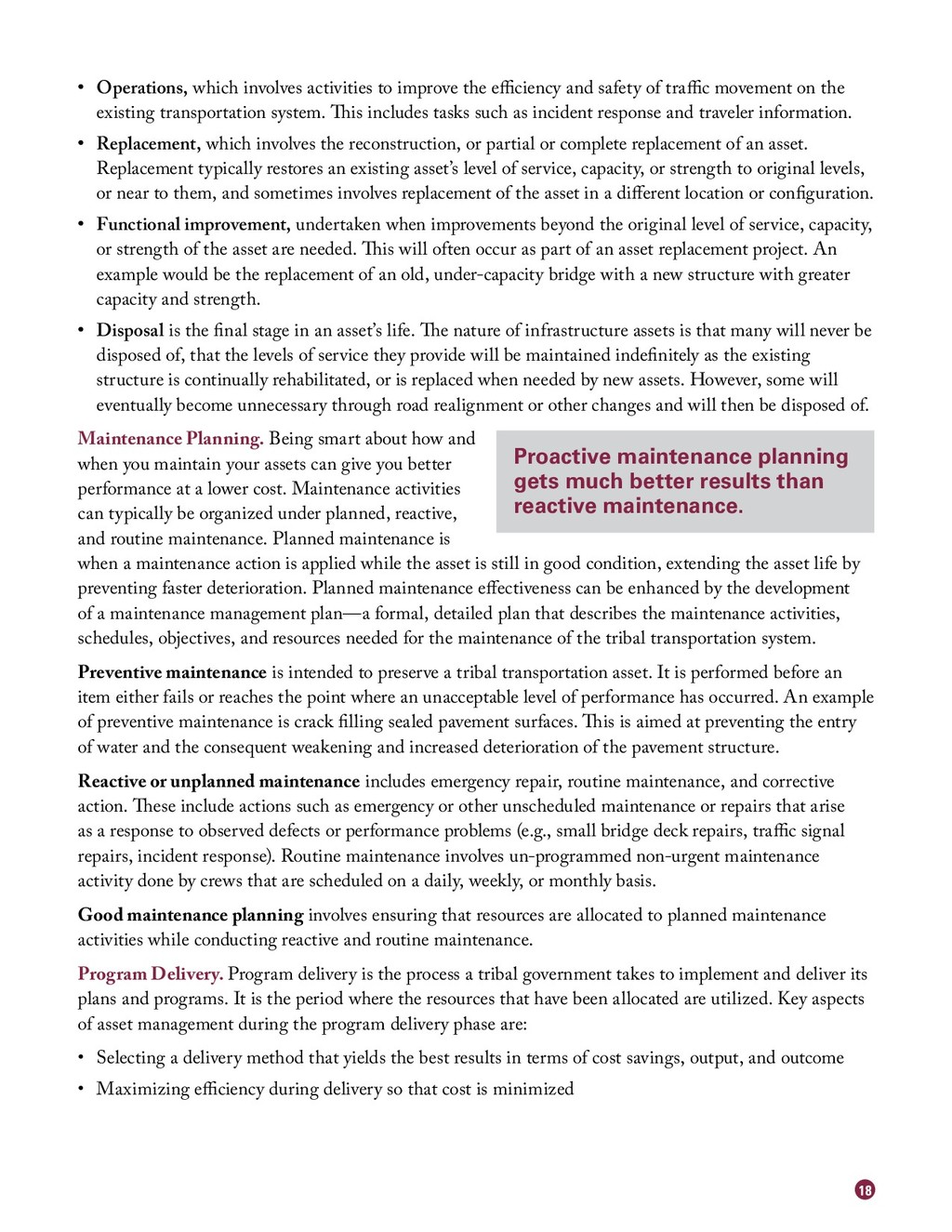
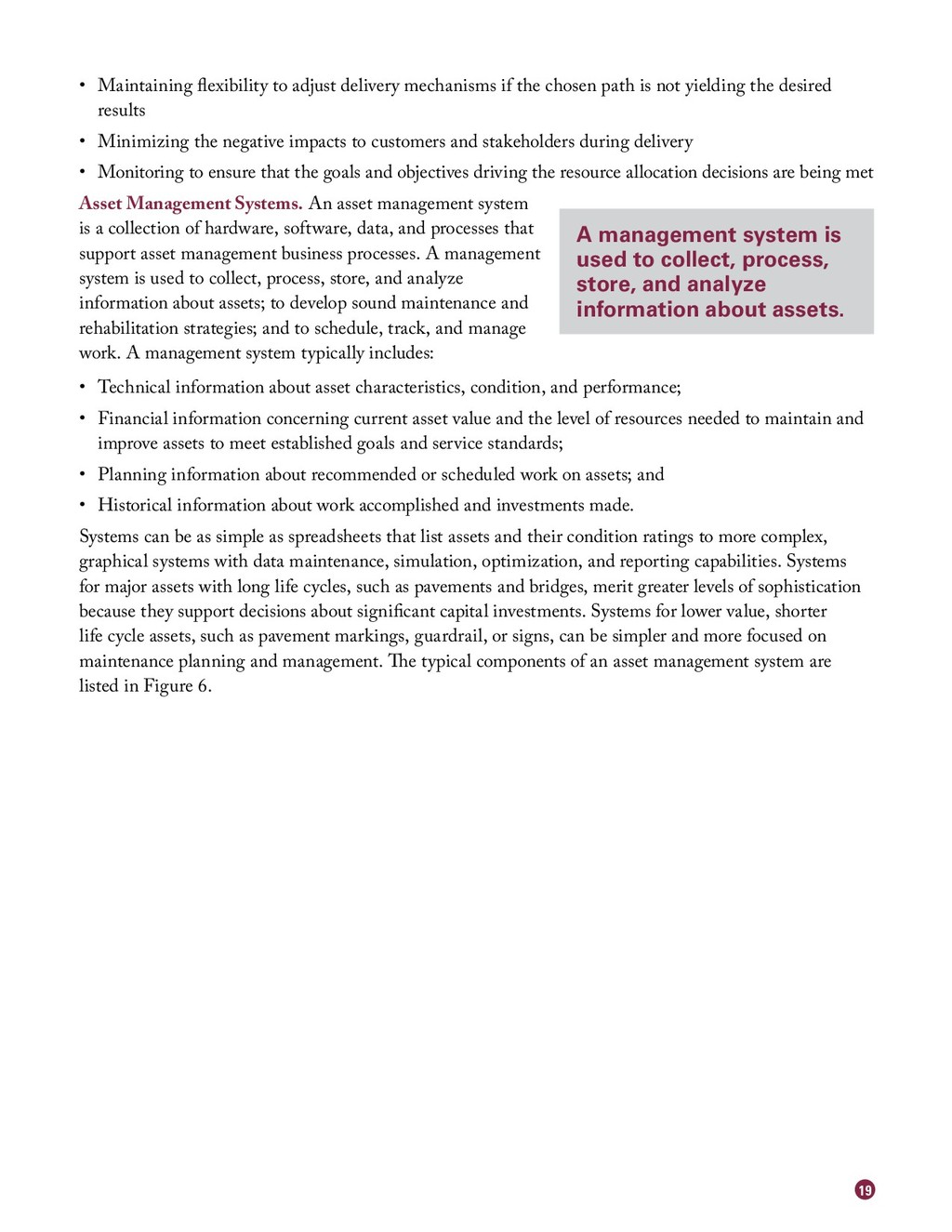
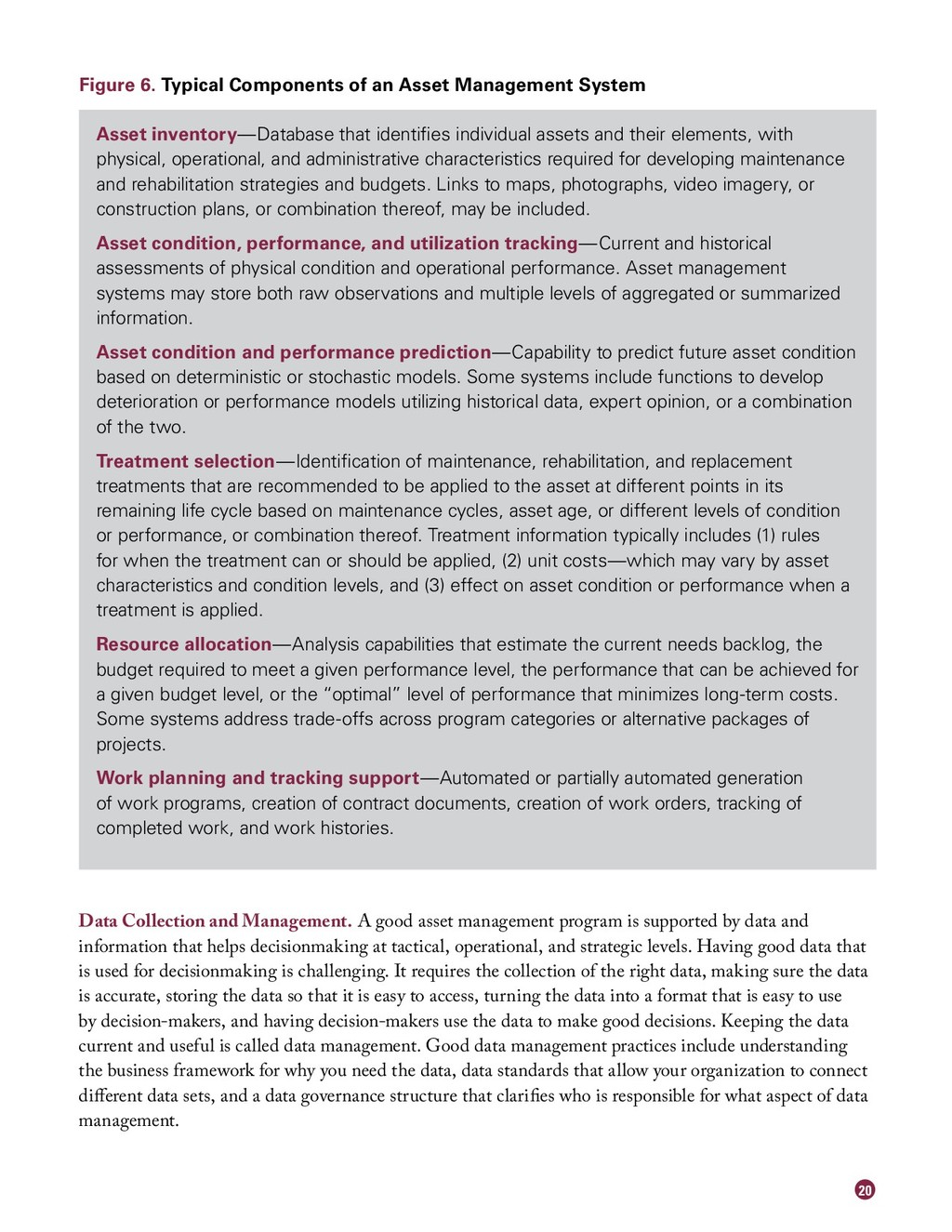
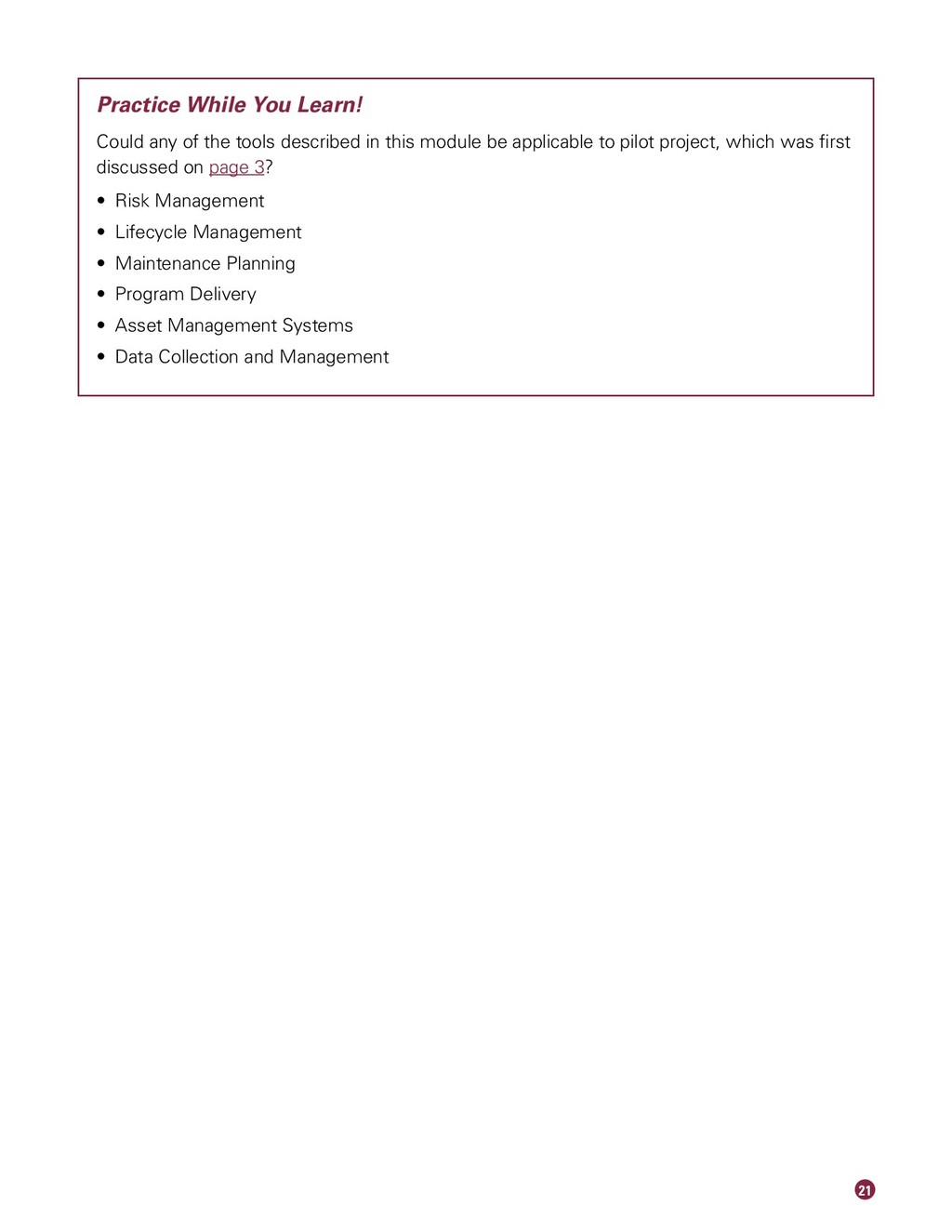
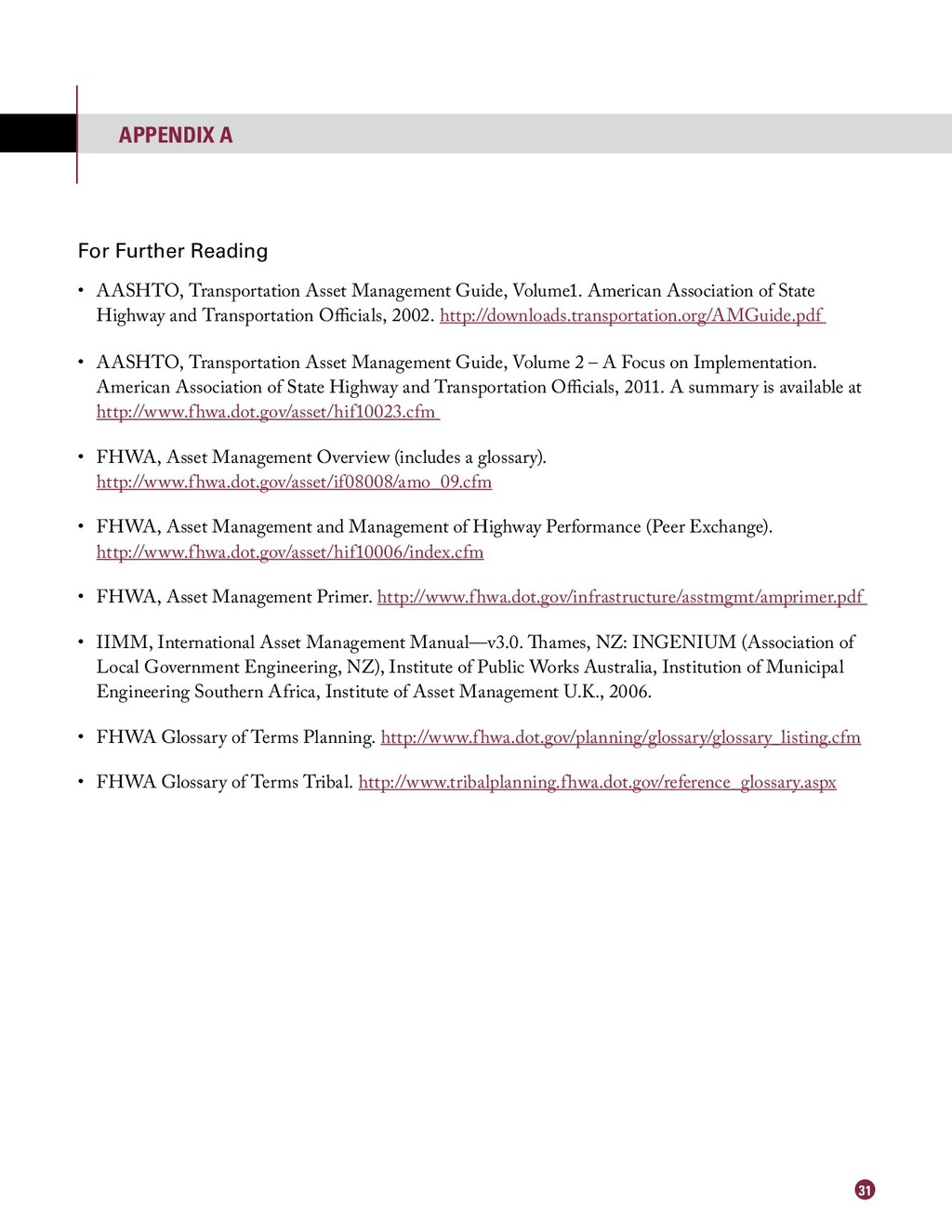
As stated at the beginning of this chapter, good asset management practice depends on having reliable knowledge of what assets are owned, how they are performing, what is being done to them, and how your organization’s actions are likely to affect performance. This knowledge involves routine collection of good data, and turning that data into useful information to help you make decisions. Many tools and techniques exist to support your asset management program. The list of resources in Appendix A provides you with more detail about these tools and techniques. Below is a discussion of the following tools and techniques: Risk Management, Life Cycle Management, Maintenance Planning, Program Delivery, Asset Management Systems, and Data Collection and Management. Managing risks can be a good tool in your asset management decision process. What threats are you mitigating with your decisions? Risk Management. Risk management is an important part of asset management. Risk is the threat to transportation operations caused by extreme events, other external hazards or from asset failure arising from any cause. Some examples of causes of asset failure are poor condition, unexpected loading, or poor work practices. Applying risk management to look at decisions being made about your transportation program makes it possible to identify threats and opportunities, assess and prioritize those threats and opportunities, and determine strategies so that decisions can be made on how to deal with potential risks. A risk is a future event that may or may not occur. It may have a detrimental or beneficial impact on the tribal transportation system. Risk management is the systematic identification, assessment, planning, and management of threats and opportunities faced by your system. Steps taken to manage risk include 1) gathering information about future events, threats, and opportunities; 2) identifying what and how those future events trigger threats and opportunities; 3) assessing the likelihood and impact of risks; 4) prioritizing risks by their expected value and by their relative importance to your transportation system; 5) determining ways to deal with the risk; 6) carrying out risk management strategies, monitoring the implementation of strategies, and reevaluating risks. Life Cycle Management. A large and important part of your asset management work is your response to deterioration caused by traffic, weather, time, and environmental factors. A tribal government’s response to deterioration is typically called preservation. Life cycle management allows you to determine the best actions for your assets at its various stages of its life cycle. The stages of an asset’s life cycle are: • • New construction (asset creation), which includes justification, scoping, design, and construction or acquisition of assets. Preservation, which involves actions to slow down or correct the deterioration of an asset to extend its useful life. It does not entail structural or operational improvement of an existing asset beyond its originally designed strength or capacity. Preservation may include repairs, corrective actions, reactive maintenance, routine maintenance, periodic maintenance, and preventive maintenance, during which time the asset is used and maintained in working condition. 17 An asset has a life cycle from construction/implementation to disposition. Managing its health is a key part of good asset management.


 rezsheepie
 techtekt
 occhi
 akhino
 shogo4131
 ymotongpoo
 satomasahiro2005
 onk
 sansan33
 finengine
 teamlab
 colopl
 sansantech
 marcoroth
 baasie
 tammyeverts
 techseoconnect
 uxyall
 jdejongh
 irinanazarova
 axbom
 sferik
 deanohume
 addyosmani
 hatefulcrawdad