Upgrade to Pro — share decks privately, control downloads, hide ads and more …

Gutter and Flashing on a Residential Roof

Avatar for Karl Thompson Karl Thompson
September 14, 2026

Gutter and Flashing on a Residential Roof

Fascia, gutter and flashing are essential parts of a residential roofing system, helping manage rainwater and protect the home from moisture damage. Correct installation supports proper drainage, reduces the risk of leaks and helps prevent issues such as fascia rot, overflowing gutters and water entering the roof cavity. This guide explains how fascia boards, gutters and roof flashing work together, common installation steps, warning signs of damage, and when professional roof and gutter repairs may be needed.

Avatar for Karl Thompson

Karl Thompson

September 14, 2026

Other Decks in Business

Transcript

  1. How to Install Fascia, Gutter and Flashing on a Residential

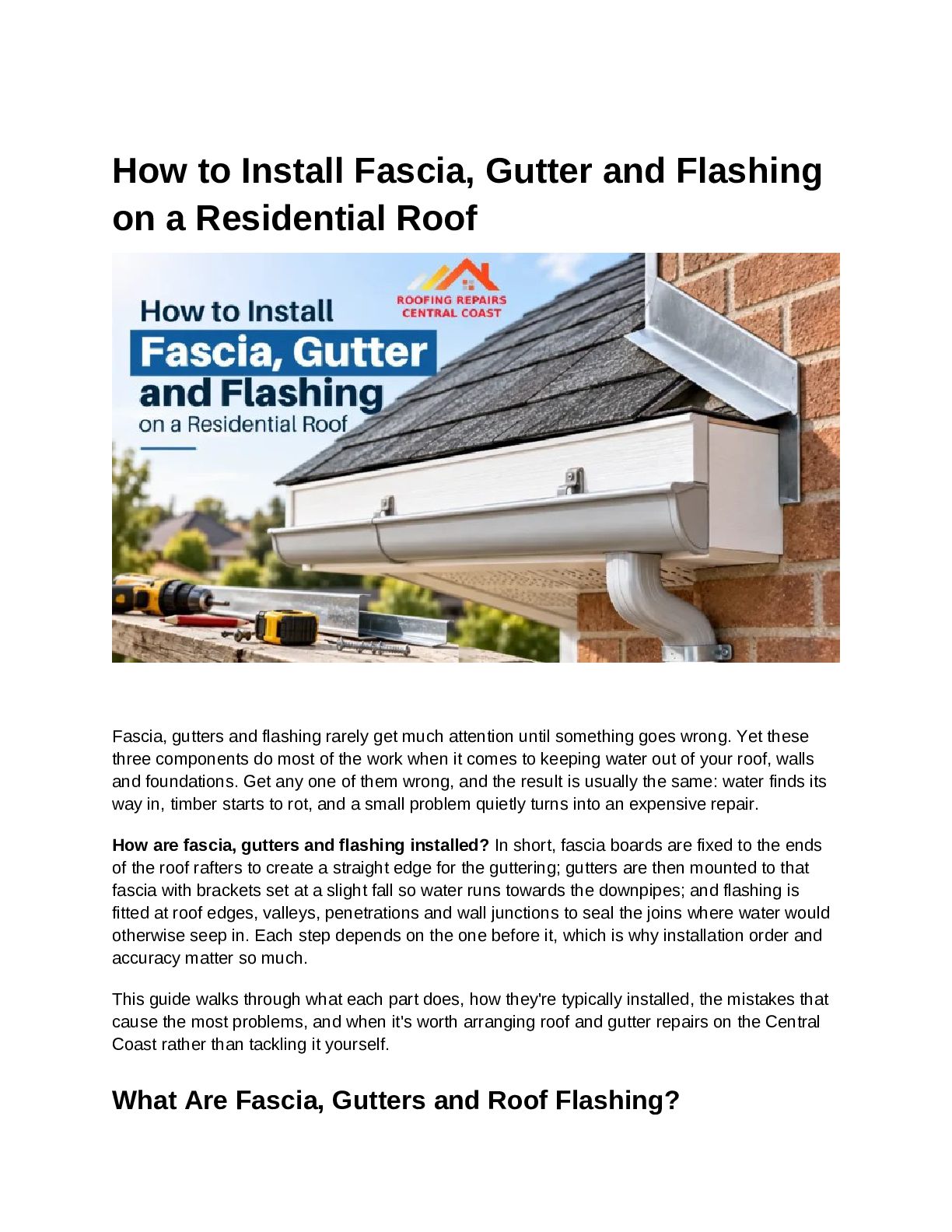
    Roof Fascia, gutters and flashing rarely get much attention until something goes wrong. Yet these three components do most of the work when it comes to keeping water out of your roof, walls and foundations. Get any one of them wrong, and the result is usually the same: water finds its way in, timber starts to rot, and a small problem quietly turns into an expensive repair. How are fascia, gutters and flashing installed? In short, fascia boards are fixed to the ends of the roof rafters to create a straight edge for the guttering; gutters are then mounted to that fascia with brackets set at a slight fall so water runs towards the downpipes; and flashing is fitted at roof edges, valleys, penetrations and wall junctions to seal the joins where water would otherwise seep in. Each step depends on the one before it, which is why installation order and accuracy matter so much. This guide walks through what each part does, how they're typically installed, the mistakes that cause the most problems, and when it's worth arranging roof and gutter repairs on the Central Coast rather than tackling it yourself. What Are Fascia, Gutters and Roof Flashing?
  2. Fascia is the horizontal board that runs along the lower

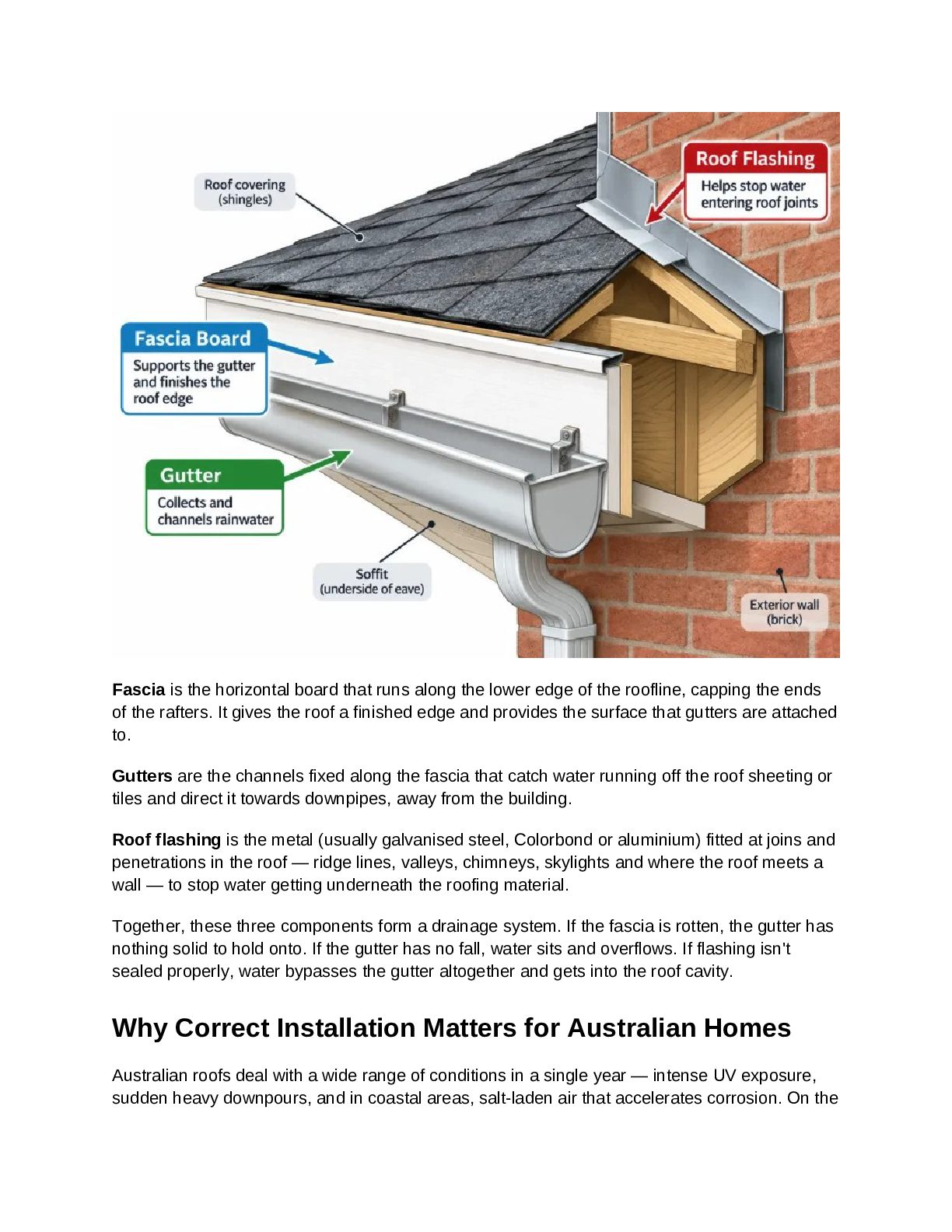
    edge of the roofline, capping the ends of the rafters. It gives the roof a finished edge and provides the surface that gutters are attached to. Gutters are the channels fixed along the fascia that catch water running off the roof sheeting or tiles and direct it towards downpipes, away from the building. Roof flashing is the metal (usually galvanised steel, Colorbond or aluminium) fitted at joins and penetrations in the roof — ridge lines, valleys, chimneys, skylights and where the roof meets a wall — to stop water getting underneath the roofing material. Together, these three components form a drainage system. If the fascia is rotten, the gutter has nothing solid to hold onto. If the gutter has no fall, water sits and overflows. If flashing isn't sealed properly, water bypasses the gutter altogether and gets into the roof cavity. Why Correct Installation Matters for Australian Homes Australian roofs deal with a wide range of conditions in a single year — intense UV exposure, sudden heavy downpours, and in coastal areas, salt-laden air that accelerates corrosion. On the
  3. Central Coast of NSW, homes are often exposed to a

    mix of coastal humidity and storm activity, which puts extra demand on gutters and flashing to perform without gaps or weak points. When these elements are installed correctly, water is shed quickly and predictably. When they're not, even a moderate rain event can overwhelm a gutter with the wrong fall, or force water past a flashing join that wasn't lapped correctly. Over time, this leads to fascia rot, ceiling stains, mould growth and, in some cases, damage to wall framing that's far more costly to fix than the original installation would have been. Tools and Materials Typically Required A typical fascia, gutter and flashing installation involves: • • • • • • • • Fascia boards (timber or pre-primed composite/metal) Guttering (Colorbond steel or aluminium, in a profile to match the home) Gutter brackets, screws and rivets Downpipes and outlets Flashing material cut to suit valleys, ridges and penetrations Roofing sealant designed for exterior metal use A spirit level or laser level to check fall Ladders, roof access equipment and fall-protection gear This list gives a sense of what's involved rather than a step-by-step DIY manual — working at height with roofing materials carries real risk, which is worth keeping in mind before deciding how much of the job to take on yourself. How Fascia Is Installed on a Residential Roof Fascia installation generally follows this sequence: 1. 2. 3. 4. Old or damaged fascia is removed and the rafter ends are checked for rot or movement. New fascia boards are measured, cut and fixed to the rafters with a consistent, level line. Joins between boards are sealed to stop water tracking behind the fascia. The fascia is checked for straightness before gutter brackets are attached, since any dip will show up in the gutter line above it. Getting this stage right matters more than it might seem — a fascia that's slightly out of level will throw off the fall of the entire gutter run.
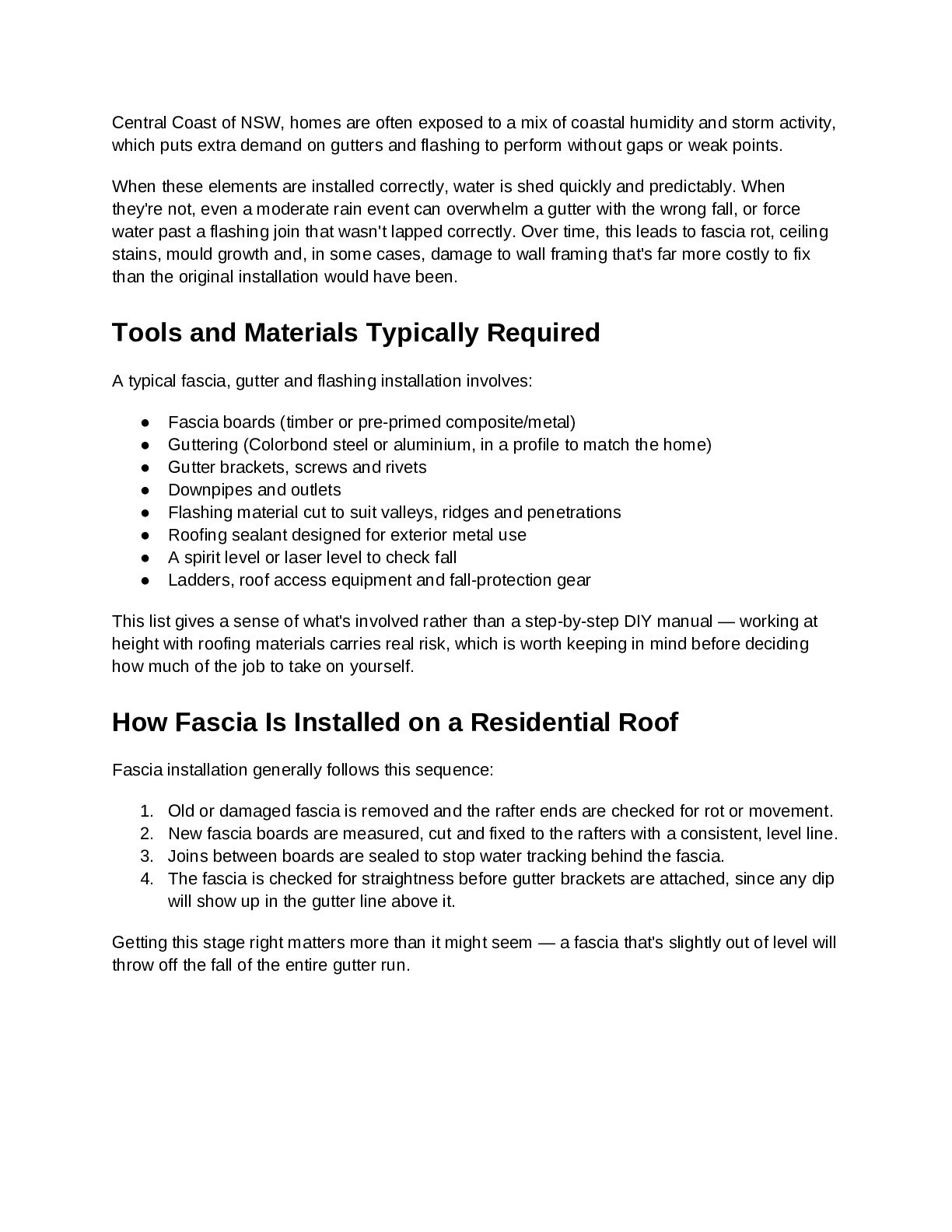
  4. How Roof Gutters Are Installed Steps Gutter installation depends on

    getting three things right: positioning, fall and secure fixing. • • • • Positioning: Gutters sit under the roof's drip edge so water lands inside the gutter, not behind it. Fall: Gutters need a slight slope towards the downpipe outlets — generally a minimum fall of around 1:500, though this can vary with gutter length and local conditions. Brackets: Spaced at regular intervals (commonly every 600–900mm) to support the weight of water without sagging. Outlets and downpipes: Positioned to handle the expected water volume and connected securely so joins don't leak under pressure. Sagging, leaking or overflowing gutters are usually a sign that one of these elements wasn't right in the first place — insufficient fall, brackets spaced too far apart, or outlets undersized for the roof area. If you're noticing water pooling in sections or gutters pulling away from the fascia, that's typically when a gutter repair on the Central Coast becomes worth arranging before the next heavy rain event.
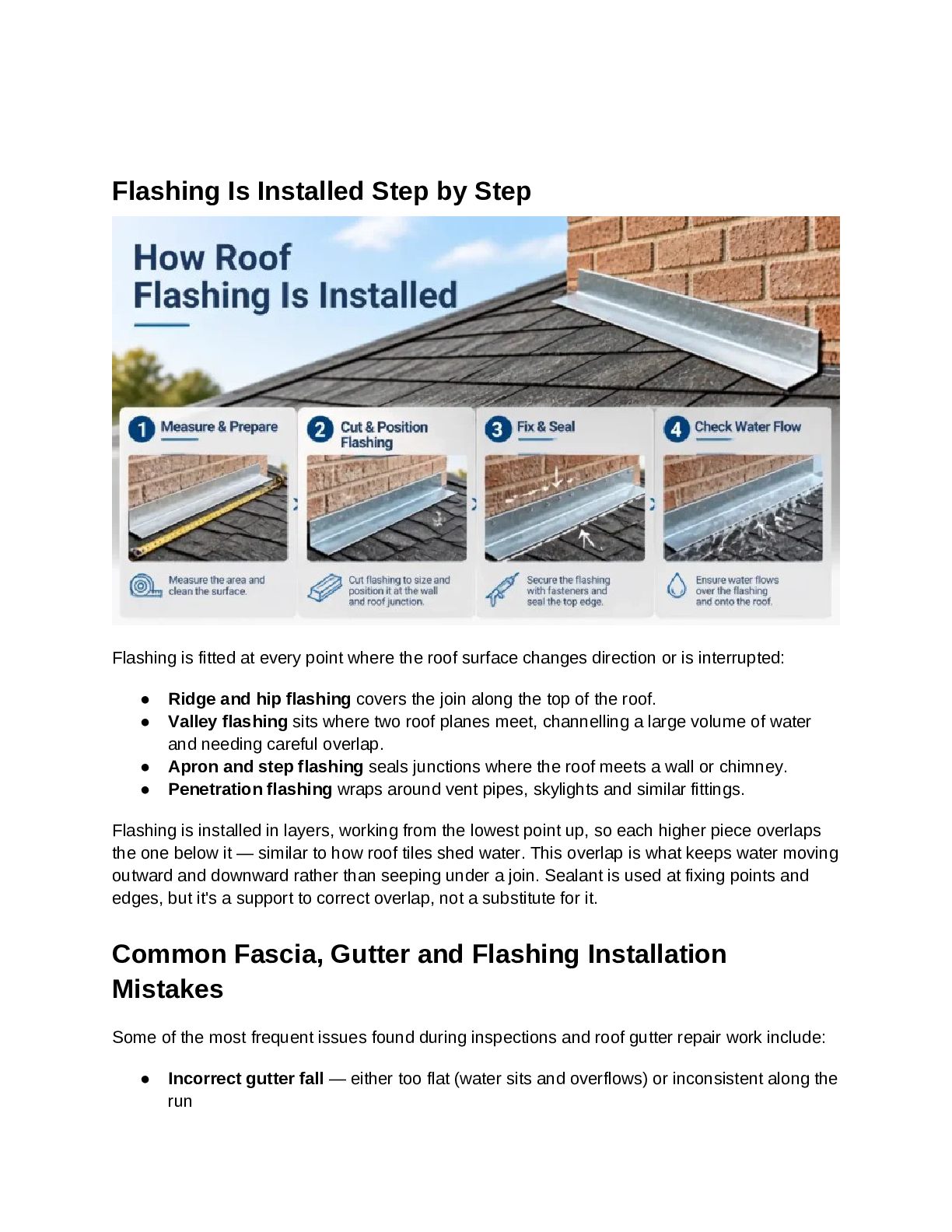
  5. Flashing Is Installed Step by Step Flashing is fitted at

    every point where the roof surface changes direction or is interrupted: • • • • Ridge and hip flashing covers the join along the top of the roof. Valley flashing sits where two roof planes meet, channelling a large volume of water and needing careful overlap. Apron and step flashing seals junctions where the roof meets a wall or chimney. Penetration flashing wraps around vent pipes, skylights and similar fittings. Flashing is installed in layers, working from the lowest point up, so each higher piece overlaps the one below it — similar to how roof tiles shed water. This overlap is what keeps water moving outward and downward rather than seeping under a join. Sealant is used at fixing points and edges, but it's a support to correct overlap, not a substitute for it. Common Fascia, Gutter and Flashing Installation Mistakes Some of the most frequent issues found during inspections and roof gutter repair work include: • Incorrect gutter fall — either too flat (water sits and overflows) or inconsistent along the run
  6. • • • • • • • Poor bracket spacing

    — leading to sagging sections over time Improper flashing overlap — allowing water to track backward under a join Incorrect or missing sealant — particularly at flashing edges and gutter joins Rust or corrosion — often from dissimilar metals in contact, or coastal salt exposure Water flowing behind the gutter — usually caused by incorrect gutter positioning under the roofline Damaged or rotten fascia boards — undermining the gutter's fixing points Poor downpipe connections — causing water to escape before reaching the stormwater system Most of these problems develop gradually, which is why they're often missed until a heavier storm exposes them. Signs Your Roof or Gutters May Need Repair How do you know if your roof or gutters need attention? Look for these practical warning signs: • • • • • • Water overflowing from gutters during moderate rain, not just downpours Visible sagging or pulling away from the fascia Rust spots or streaking down the gutter or wall Peeling paint or stained ceilings inside the home Fascia boards that look swollen, soft or discoloured Water pooling near the foundations after rain If any of these sound familiar, it's a reasonable time to look into roof and gutter repairs on the Central Coast rather than waiting for the next storm season to make the issue worse.
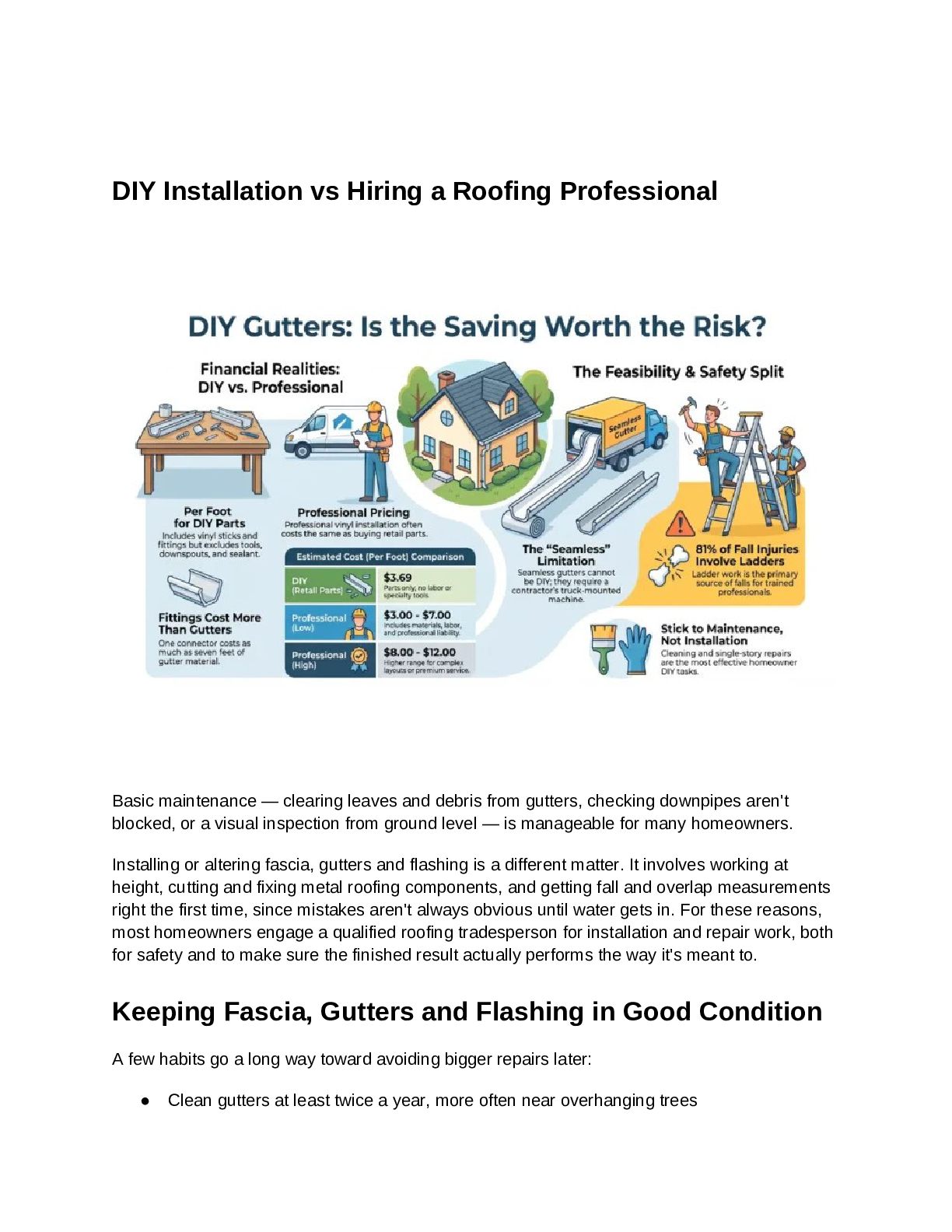
  7. DIY Installation vs Hiring a Roofing Professional Basic maintenance —

    clearing leaves and debris from gutters, checking downpipes aren't blocked, or a visual inspection from ground level — is manageable for many homeowners. Installing or altering fascia, gutters and flashing is a different matter. It involves working at height, cutting and fixing metal roofing components, and getting fall and overlap measurements right the first time, since mistakes aren't always obvious until water gets in. For these reasons, most homeowners engage a qualified roofing tradesperson for installation and repair work, both for safety and to make sure the finished result actually performs the way it's meant to. Keeping Fascia, Gutters and Flashing in Good Condition A few habits go a long way toward avoiding bigger repairs later: • Clean gutters at least twice a year, more often near overhanging trees
  8. • • • • Check for rust spots or corrosion,

    especially at joins and fixings Inspect flashing and sealant for cracking or lifting, particularly after storms Look at fascia boards for soft spots or peeling paint Arrange repairs early — small leaks are far cheaper to fix than water damage Need Help With Roof and Gutter Problems on the Central Coast? If you've noticed sagging gutters, water marks, rusted flashing or damaged fascia on your home, it's worth getting it looked at before the next round of wet weather. Roofing Repair Central Coast helps local homeowners with gutter repairs, fascia replacement and flashing issues, working through what's causing the problem and what needs fixing to stop it recurring. If you'd like an assessment of your roof, gutters or flashing, you can get in touch with Roofing Repair Central Coast or visit roofingrepairscentralcoast.com.au for more information. Frequently Asked Questions What is the difference between fascia and guttering? Fascia is the board fixed to the roofline that the gutter is mounted onto. Guttering is the separate channel attached to the fascia that actually catches and carries water to the downpipes. How much fall should a roof gutter have? As a general guide, gutters need a minimum fall of around 1:500 towards the outlets, though the exact fall can vary depending on gutter length, profile and roof design. How do I know if roof flashing is damaged? Signs include visible gaps or lifting at roof joins, rust staining below valleys or chimneys, cracked sealant, and water stains on ceilings near roof penetrations or wall junctions. Can damaged fascia cause gutter problems? Yes. If fascia boards are rotten or soft, they can no longer hold gutter brackets securely, which leads to sagging, incorrect fall and gutters pulling away from the roofline. When should I arrange roof and gutter repairs on the Central Coast? It's worth arranging an inspection as soon as you notice overflowing gutters, rust, sagging sections or water stains, rather than waiting for storm season to reveal how serious the issue has become.