Upgrade to Pro
— share decks privately, control downloads, hide ads and more …
Speaker Deck
Sign up for free
Menu
Search
Features
All features
Private URLs
Password Protection
Custom URLS
Scheduled publishing
Remove Branding
Restrict embedding
Deck Collections
Notes
Features
All features
Private URLs
Password Protection
Custom URLS
Scheduled publishing
Remove Branding
Restrict embedding
Deck Collections
Notes
Explore
Featured decks
Featured speakers
Programming
Technology
Storyboards
Explore
Featured decks
Featured speakers
Programming
Technology
Storyboards
Pricing
Search
Sign in
Sign up for free
Bulutta Yüksek Performanslı ve Verimli Sistem T...
Search
Serkan ÖZAL
May 18, 2020
Programming
64
0
Share
Embed
Copy iframe code
Copy JS code
Copy link
Start on current slide
Bulutta Yüksek Performanslı ve Verimli Sistem Tasarlama
Serkan ÖZAL
May 18, 2020
Other Decks in Programming
See All in Programming
npm との違いを手がかりにGo の依存管理を理解したい
optim
0
770
SalesForceを内製化!? ~ HR事業を支える顧客管理基盤のインフラを大公開 ~
oku053
0
180
Optunaを作ったときにやりたかったこと、その後 (2026/10/16, Optuna Meetup #3)
iwiwi
1
440
AI時代のコードレビューは人に向けるな、仕組みに向けろ
texmeijin
5
3.7k
ジョジョの世界をXRで再現する
mofurune
0
170
iOS 27でニュースアプリはどう変わる!? 〜日経電子版の新機能対応と、開発事例から〜
lynnswap
7
13k
ハーネス設計入門 〜 基礎知識の整理から実務へのステップアップ 〜
kinopeee
28
33k
GemmaをJevのように使ってみる / Use Gemma like Jev
kishida
5
800
contenteditable と日本語入力に向き合う
colorful12
0
200
Jetpack Compose Mechanisms
skydoves
3
820
Unity6 URPによる海底をテーマにしたVJシステムの解説 | Unity Shader 完全に理解した 勉強会
gam0022
0
370
Findy - エンジニア向け会社紹介/Findy Company Deck
findyinc
6
400k
Featured
See All Featured
Large-scale JavaScript Application Architecture
addyosmani
516
110k
Design and Strategy: How to Deal with People Who Don’t "Get" Design
morganepeng
133
20k
Helping Users Find Their Own Way: Creating Modern Search Experiences
danielanewman
31
3.4k
Skip the Path - Find Your Career Trail
mkilby
1
260
Making Projects Easy
brettharned
120
6.8k
The Mindset for Success: Future Career Progression
greggifford
PRO
0
540
Bootstrapping a Software Product
garrettdimon
PRO
306
120k
The Invisible Side of Design
smashingmag
301
52k
My Coaching Mixtape
mlcsv
0
360
AI Search: Where Are We & What Can We Do About It?
aleyda
0
8.1k
Ruling the World: When Life Gets Gamed
codingconduct
0
400
Why Your Marketing Sucks and What You Can Do About It - Sophie Logan
marketingsoph
0
430
Transcript
May 18, 2020 Bulutta Yüksek Performanslı ve Verimli Sistem Tasarlama
Serkan ÖZAL
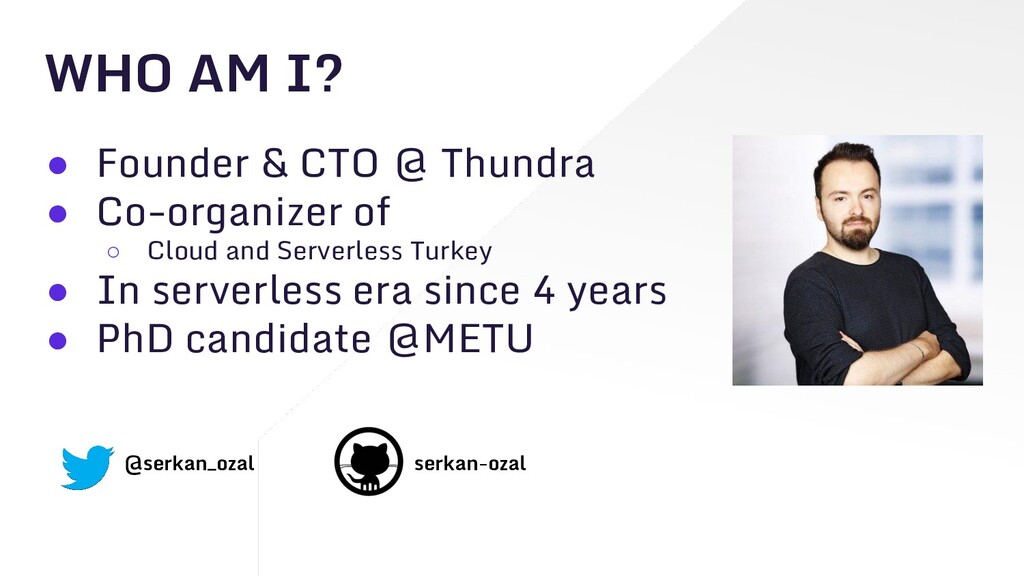
WHO AM I? • Founder & CTO @ Thundra •
Co-organizer of ◦ Cloud and Serverless Turkey • In serverless era since 4 years • PhD candidate @METU @serkan_ozal serkan-ozal
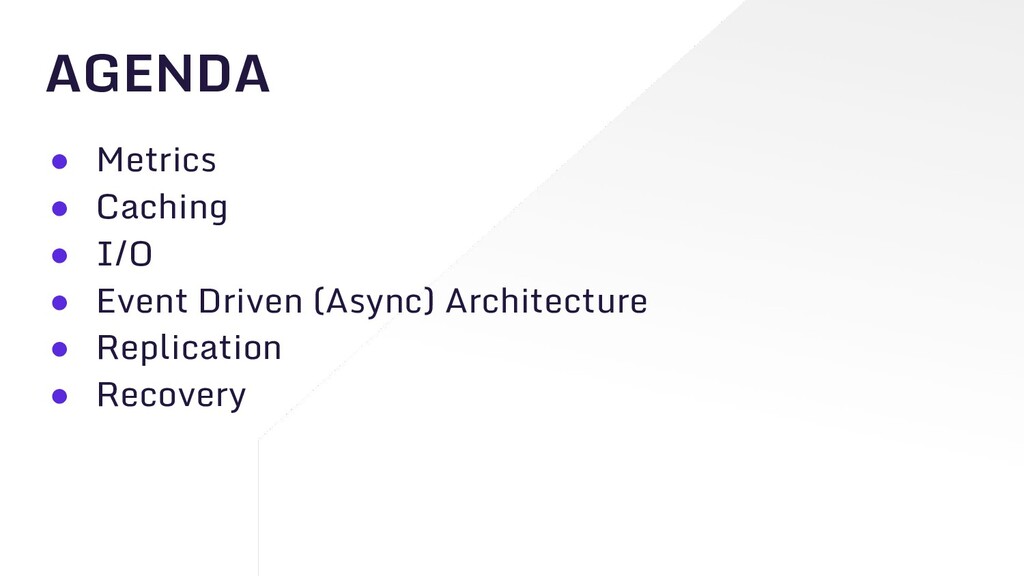
AGENDA • Metrics • Caching • I/O • Event Driven
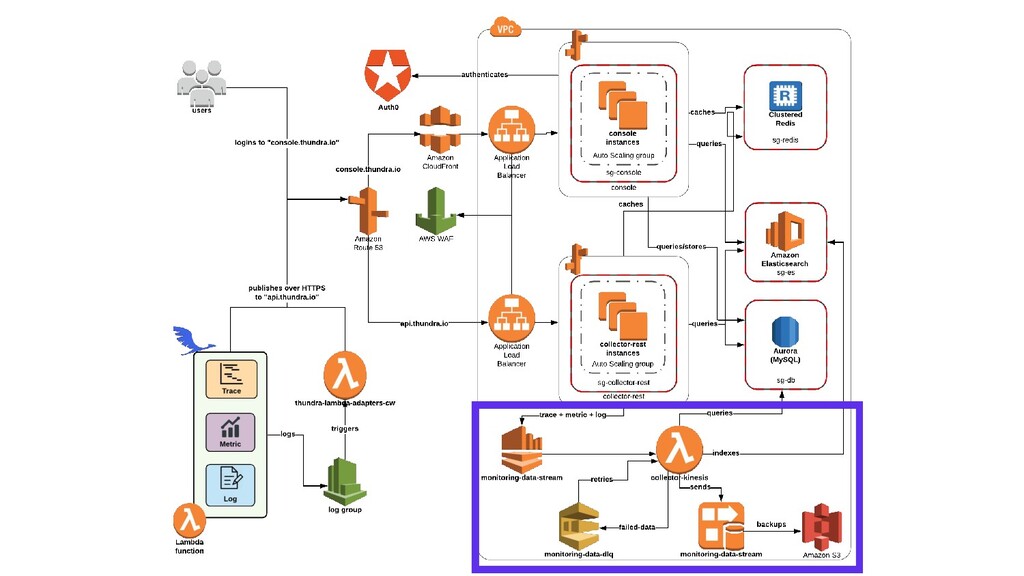
(Async) Architecture • Replication • Recovery
METRICS
Metrics to Keep an Eye on [1] - Latency (avg,
p50, p90, p99, max) - Errors (HTTP 4XX, 5XX) - CPU - Memory - IO
Metrics to Keep an Eye on [2] - AWS Lambda
(Errors, Throttles, Conc. Exec, Iterator age) - AWS SQS (# Msg Visible, Age Of Oldest Msg) - AWS Kinesis (R/W Provisioned Throughput Exceeded, Iterator age) - AWS DynamoDB (Throttled Reqs, Consumed RW Capacity Units) - Redis (# Connections, Hit/Miss ratio, # Evictions, CPU, Memory)
CACHING
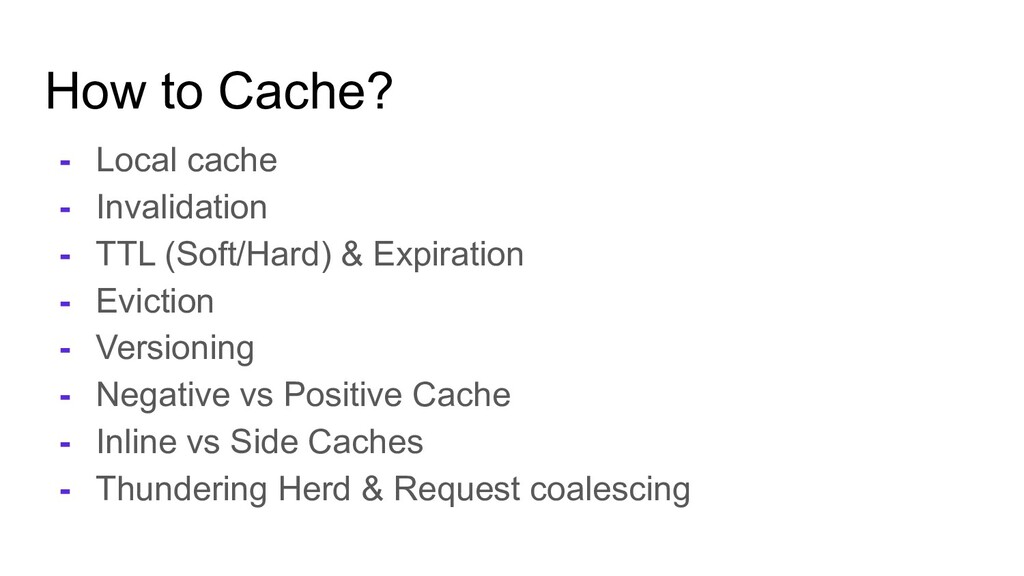
How to Cache? - Local cache - Invalidation - TTL
(Soft/Hard) & Expiration - Eviction - Versioning - Negative vs Positive Cache - Inline vs Side Caches - Thundering Herd & Request coalescing
I/O
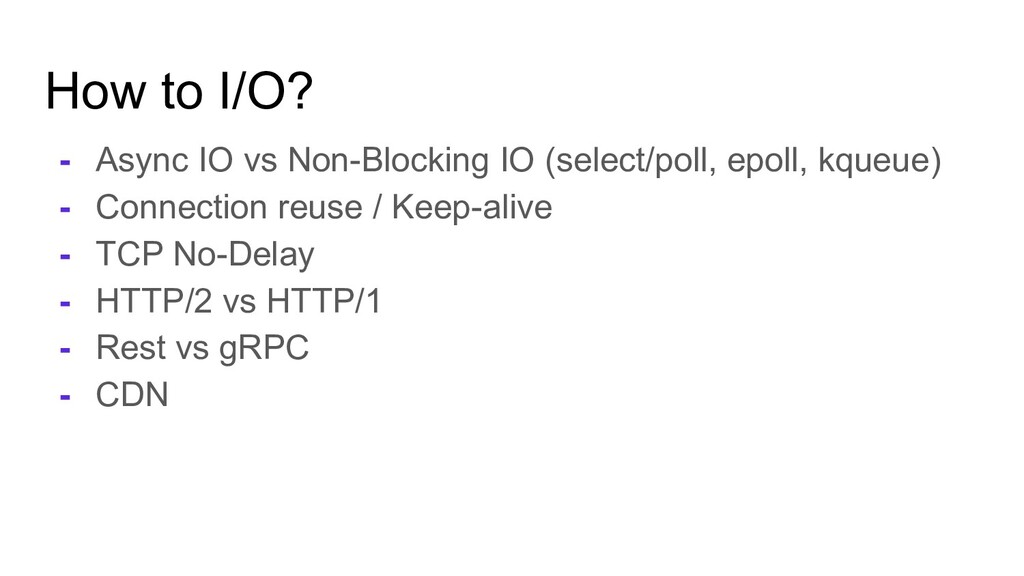
How to I/O? - Async IO vs Non-Blocking IO (select/poll,
epoll, kqueue) - Connection reuse / Keep-alive - TCP No-Delay - HTTP/2 vs HTTP/1 - Rest vs gRPC - CDN
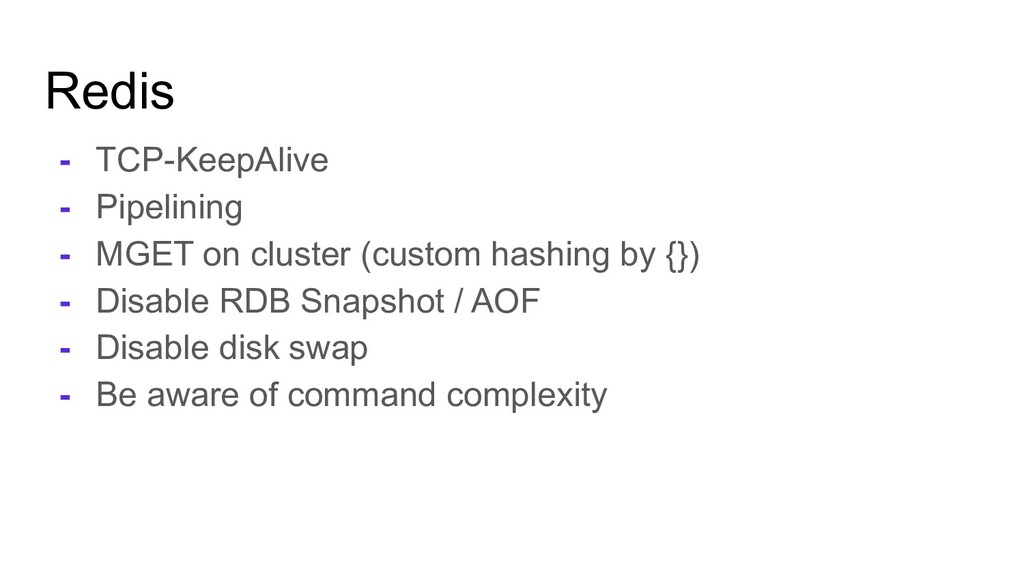
Redis - TCP-KeepAlive - Pipelining - MGET on cluster (custom
hashing by {}) - Disable RDB Snapshot / AOF - Disable disk swap - Be aware of command complexity
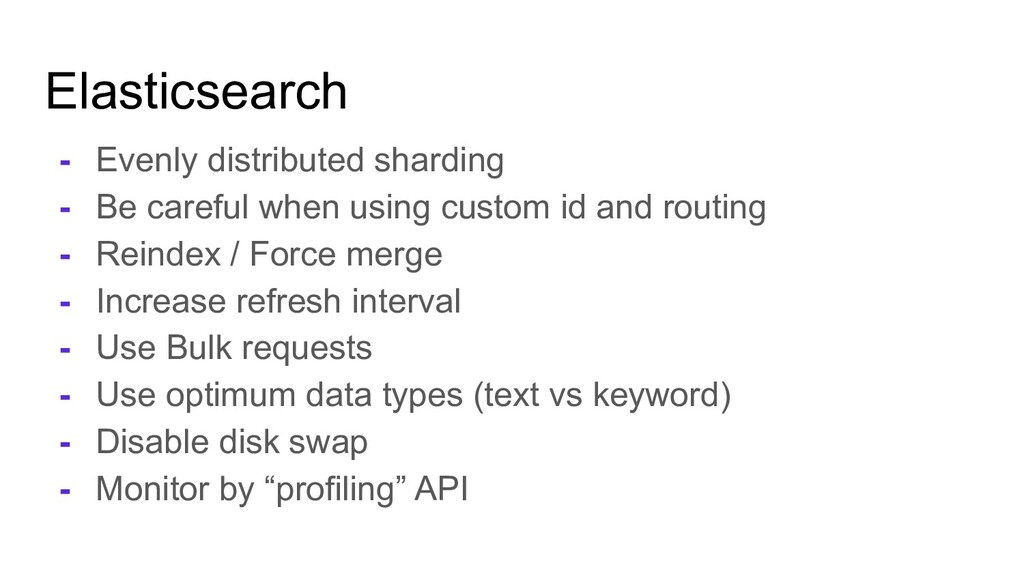
Elasticsearch - Evenly distributed sharding - Be careful when using
custom id and routing - Reindex / Force merge - Increase refresh interval - Use Bulk requests - Use optimum data types (text vs keyword) - Disable disk swap - Monitor by “profiling” API
EVENT DRIVEN ARCHITECTURE
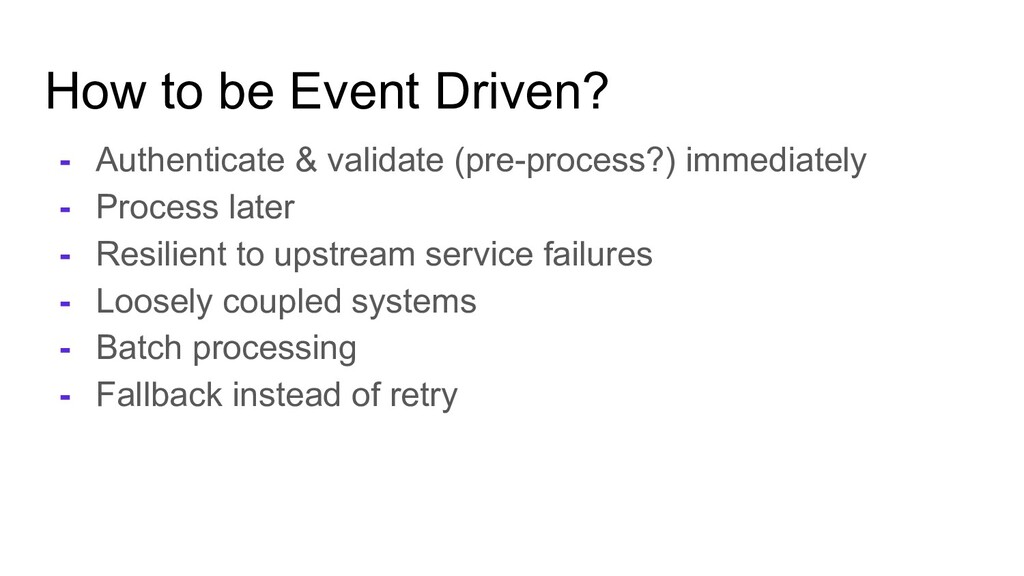
How to be Event Driven? - Authenticate & validate (pre-process?)
immediately - Process later - Resilient to upstream service failures - Loosely coupled systems - Batch processing - Fallback instead of retry
None
REPLICATION
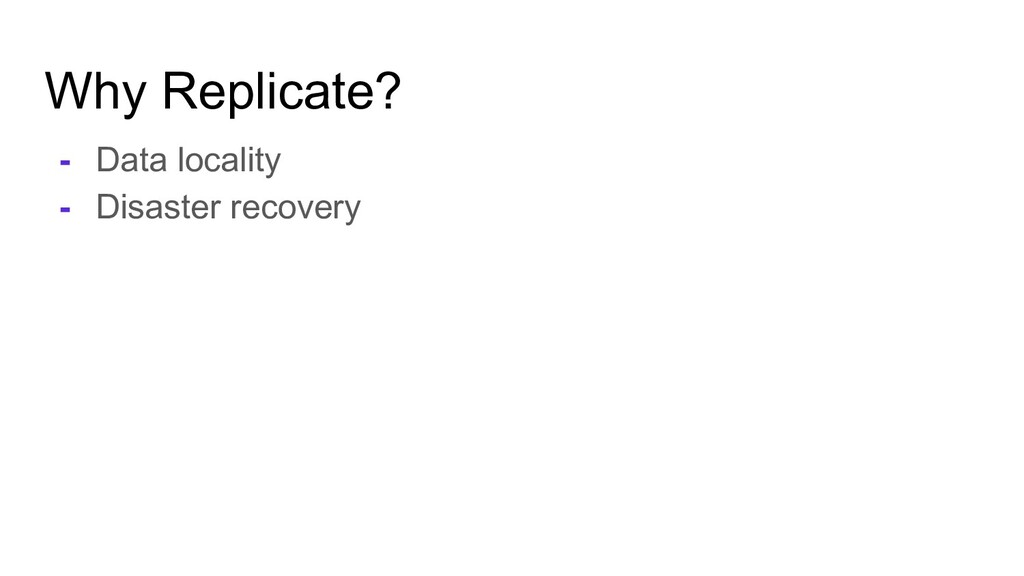
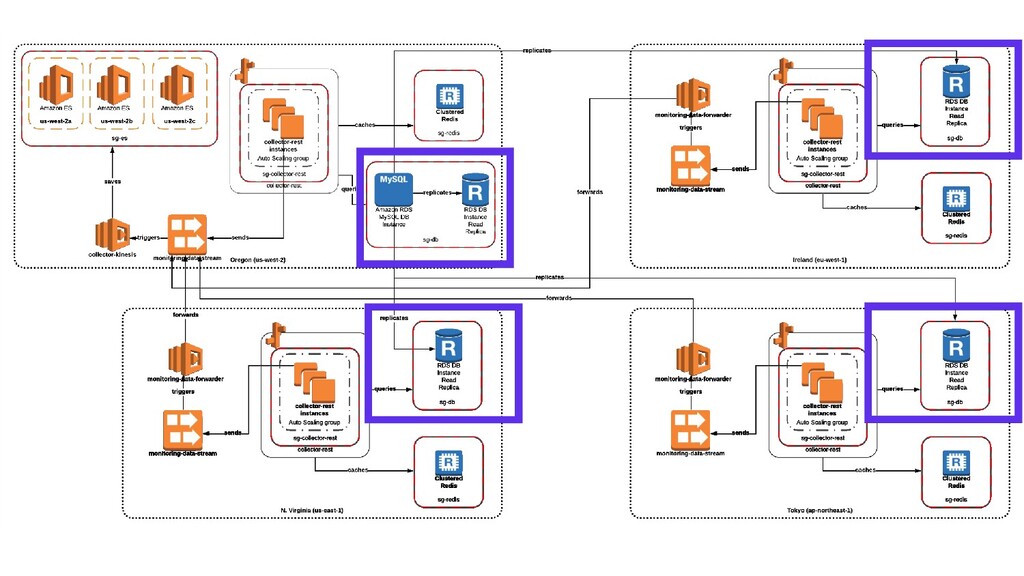
Why Replicate? - Data locality - Disaster recovery
None
RECOVERY
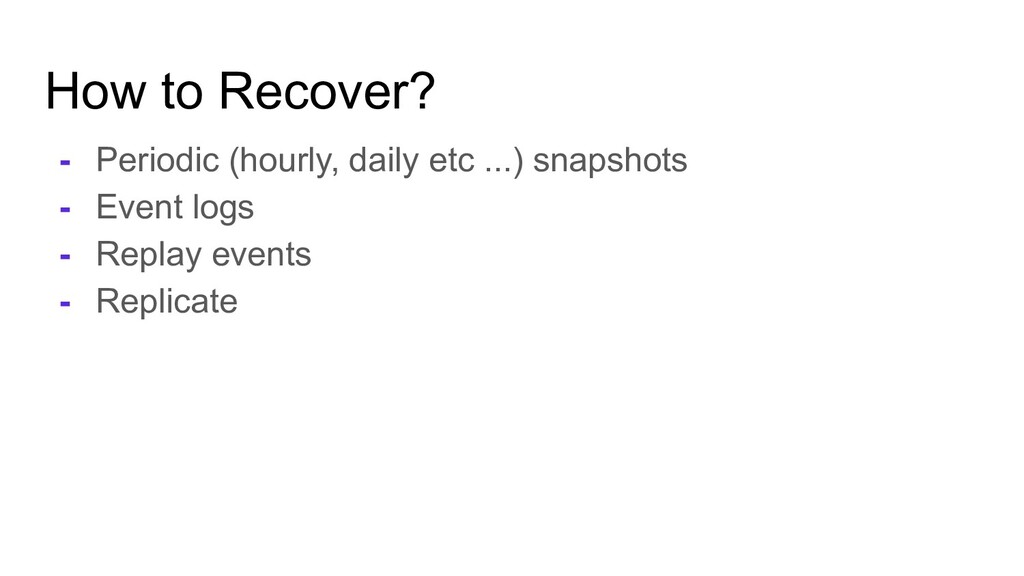
How to Recover? - Periodic (hourly, daily etc ...) snapshots
- Event logs - Replay events - Replicate
None
Thank you !


 optim
optim
 oku053
 iwiwi
iwiwi
 texmeijin
 mofurune
 lynnswap
 kinopeee
 kishida
 colorful12
 skydoves
 gam0022
 findyinc
 addyosmani
 morganepeng
 danielanewman
 mkilby
 brettharned
 greggifford
 garrettdimon
 smashingmag
 mlcsv
mlcsv
 aleyda
 codingconduct
 marketingsoph
![Metrics to Keep an Eye on [1] - Latency (avg,](https://files.speakerdeck.com/presentations/58e72245199a480c9a78774b499209bb/slide_4.jpg)
![Metrics to Keep an Eye on [2] - AWS Lambda](https://files.speakerdeck.com/presentations/58e72245199a480c9a78774b499209bb/slide_5.jpg)