Upgrade to Pro — share decks privately, control downloads, hide ads and more …

angular6

Sponsored · Your Podcast. Everywhere. Effortlessly. Share. Educate. Inspire. Entertain. You do you. We'll handle the rest.

 angular6

Avatar for Danila Marchenkov

Danila Marchenkov

September 11, 2017
Tweet

More Decks by Danila Marchenkov

Other Decks in Education

Transcript

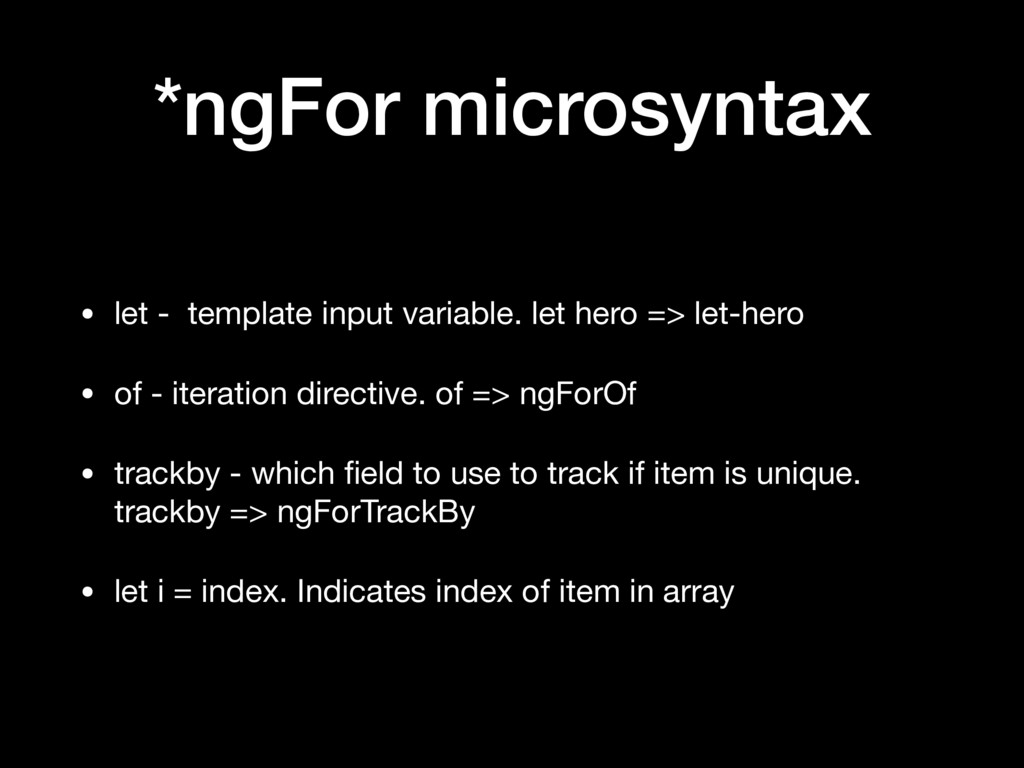
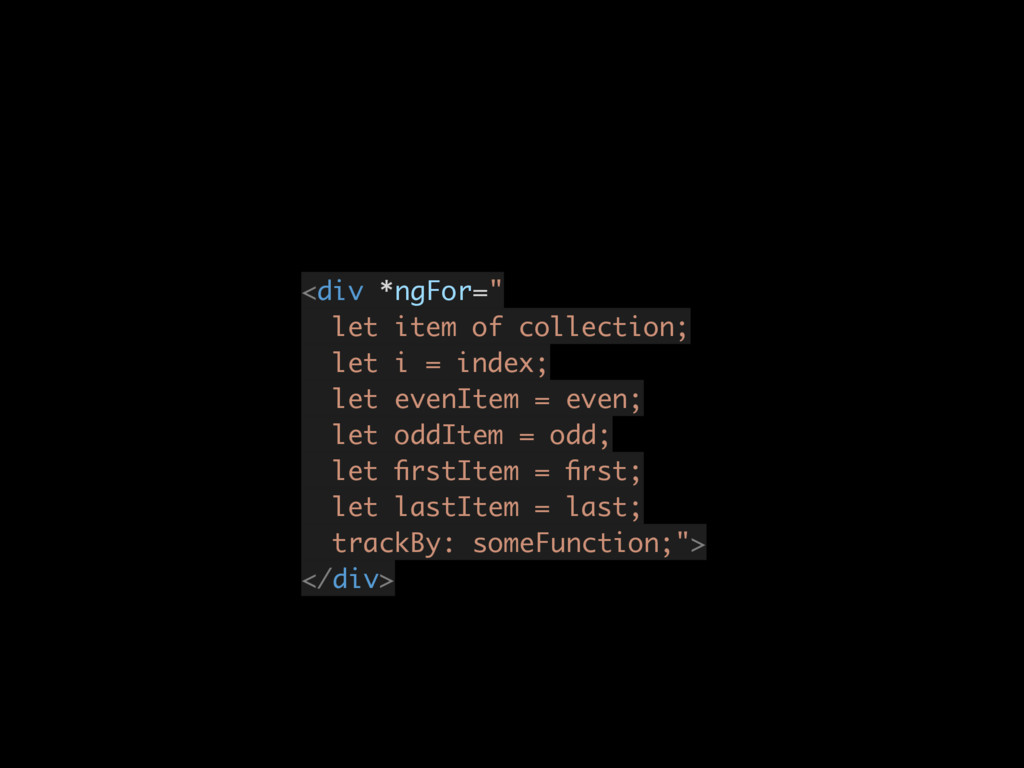
  1. *ngFor microsyntax • let - template input variable. let hero

    => let-hero • of - iteration directive. of => ngForOf • trackby - which field to use to track if item is unique. trackby => ngForTrackBy • let i = index. Indicates index of item in array
  2. <div *ngFor=" let item of collection; let i = index;

    let evenItem = even; let oddItem = odd; let firstItem = first; let lastItem = last; trackBy: someFunction;"> </div>
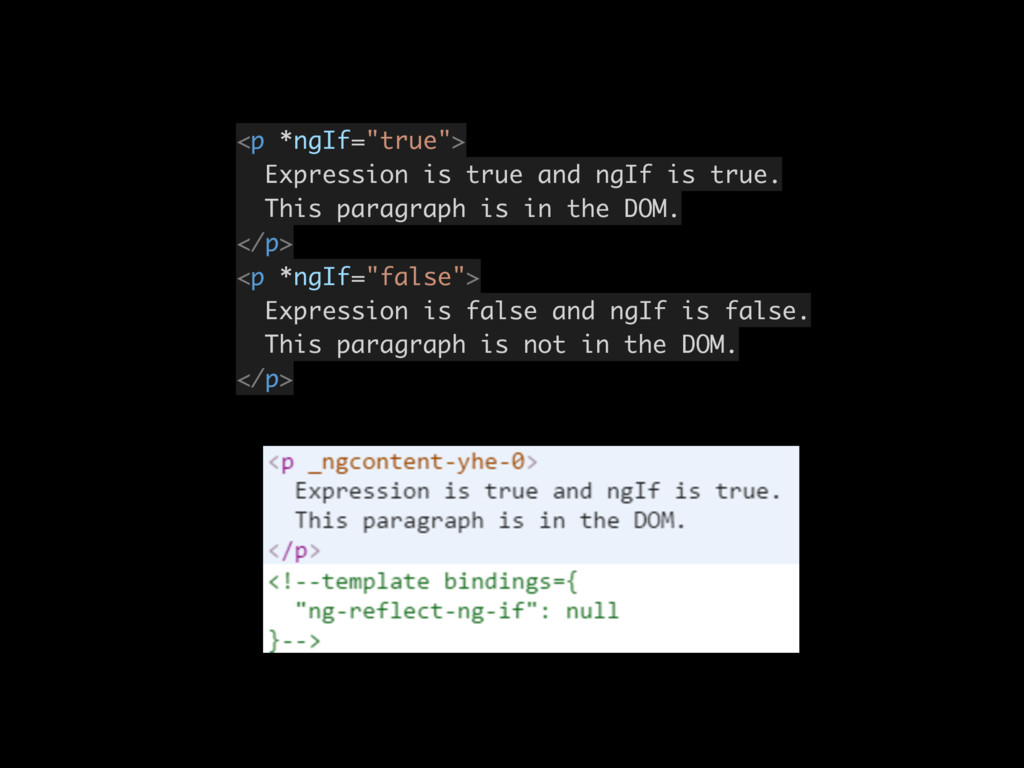
  3. <p *ngIf="true"> Expression is true and ngIf is true. This

    paragraph is in the DOM. </p> <p *ngIf="false"> Expression is false and ngIf is false. This paragraph is not in the DOM. </p>
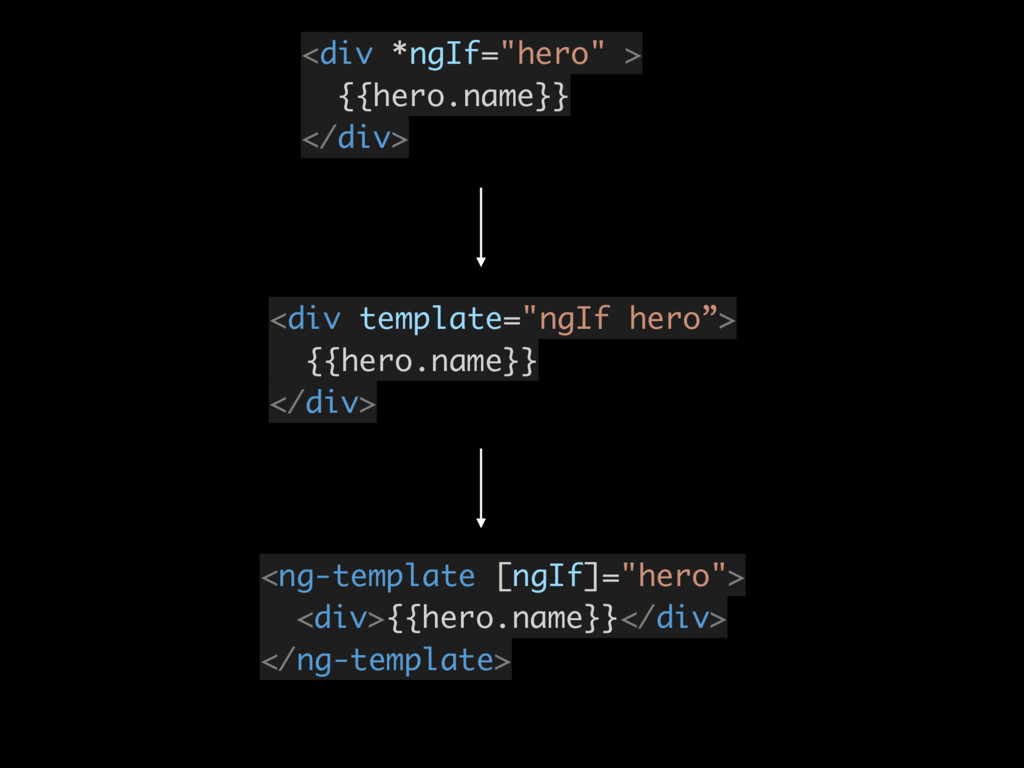
  4. <div *ngIf="hero" > {{hero.name}} </div> <div template="ngIf hero”> {{hero.name}} </div>

    <ng-template [ngIf]="hero"> <div>{{hero.name}}</div> </ng-template>
  5. import {Directive, Input, TemplateRef, ViewContainerRef} from '@angular/core'; @Directive({selector: '[ngIf]'}) export

    class NgIf { private _hasView = false; constructor(private _viewContainer: ViewContainerRef, private _template: TemplateRef<Object>) {} @Input() set ngIf(condition: any) { if (condition && !this._hasView) { this._hasView = true; this._viewContainer.createEmbeddedView(this._template); } else if (!condition && this._hasView) { this._hasView = false; this._viewContainer.clear(); } } }
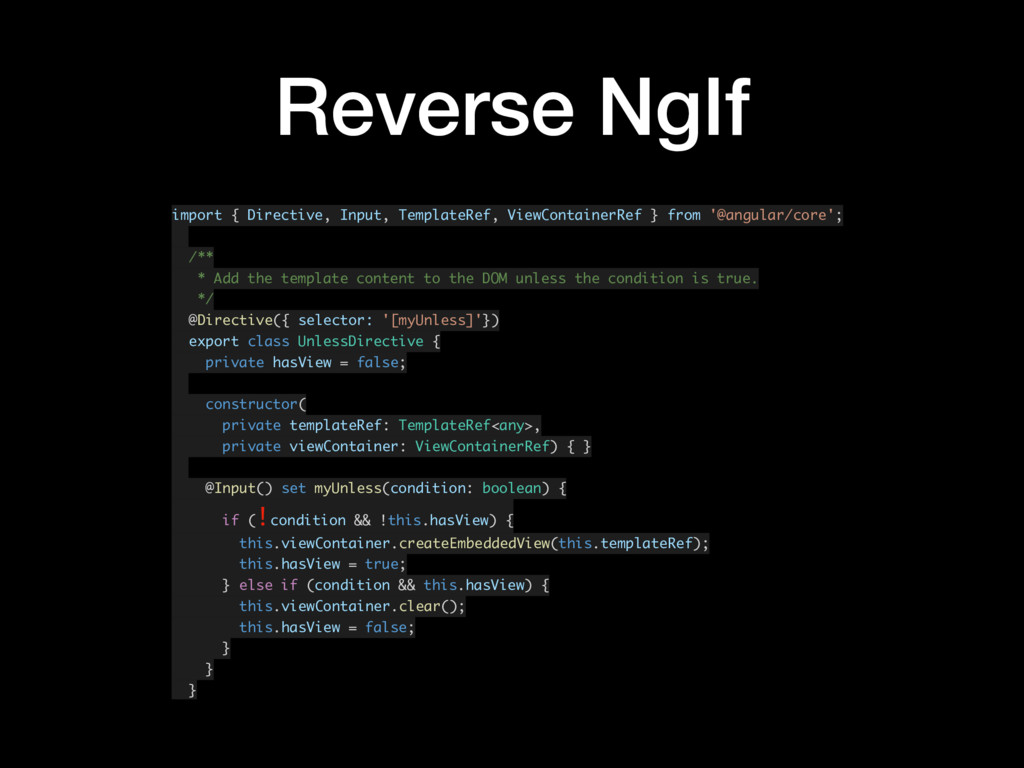
  6. Reverse NgIf import { Directive, Input, TemplateRef, ViewContainerRef } from

    '@angular/core'; /** * Add the template content to the DOM unless the condition is true. */ @Directive({ selector: '[myUnless]'}) export class UnlessDirective { private hasView = false; constructor( private templateRef: TemplateRef<any>, private viewContainer: ViewContainerRef) { } @Input() set myUnless(condition: boolean) { if ( !condition && !this.hasView) { this.viewContainer.createEmbeddedView(this.templateRef); this.hasView = true; } else if (condition && this.hasView) { this.viewContainer.clear(); this.hasView = false; } } }
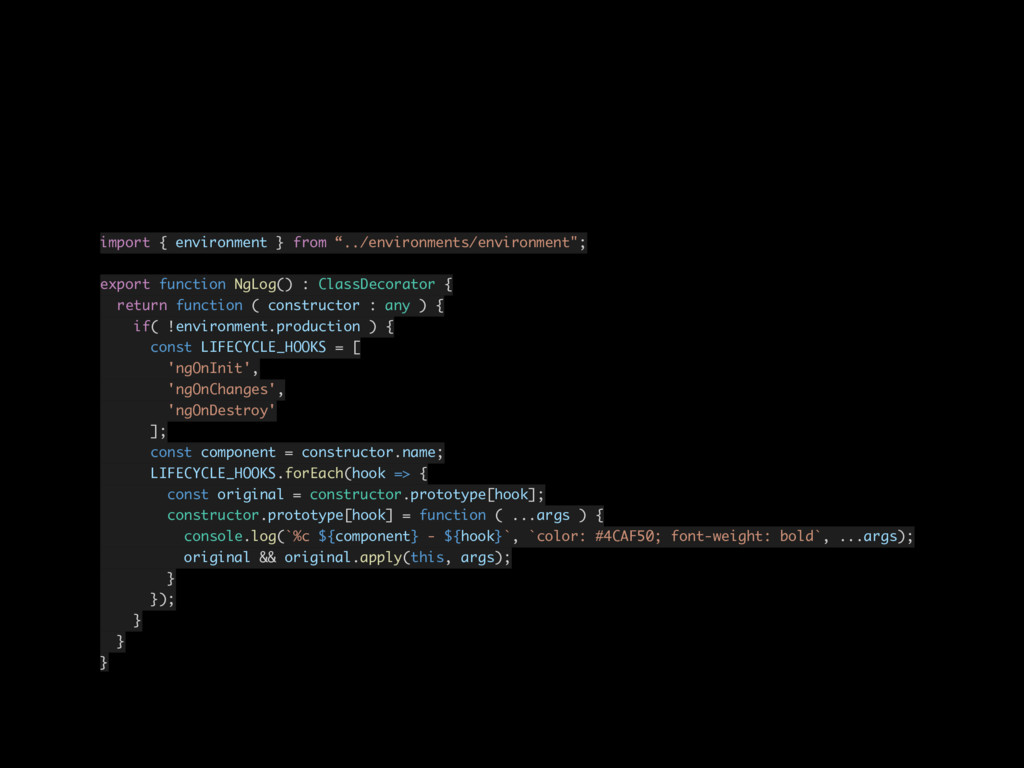
  7. import { environment } from “../environments/environment"; export function NgLog() :

    ClassDecorator { return function ( constructor : any ) { if( !environment.production ) { const LIFECYCLE_HOOKS = [ 'ngOnInit', 'ngOnChanges', 'ngOnDestroy' ]; const component = constructor.name; LIFECYCLE_HOOKS.forEach(hook => { const original = constructor.prototype[hook]; constructor.prototype[hook] = function ( ...args ) { console.log(`%c ${component} - ${hook}`, `color: #4CAF50; font-weight: bold`, ...args); original && original.apply(this, args); } }); } } }
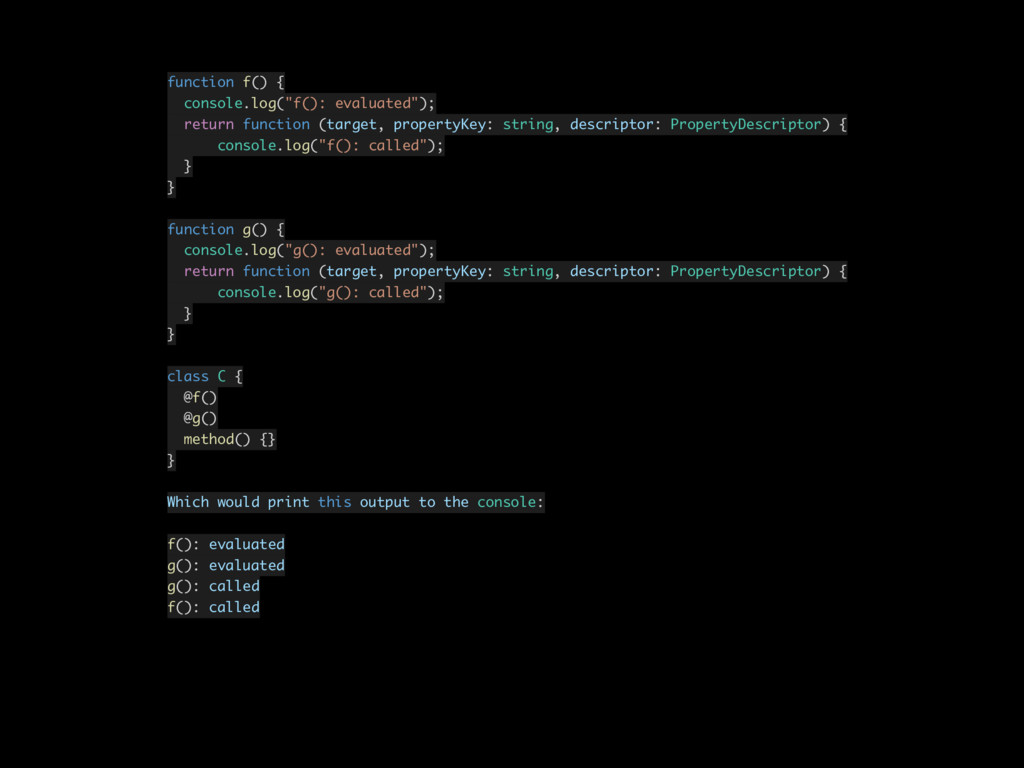
  8. function f() { console.log("f(): evaluated"); return function (target, propertyKey: string,

    descriptor: PropertyDescriptor) { console.log("f(): called"); } } function g() { console.log("g(): evaluated"); return function (target, propertyKey: string, descriptor: PropertyDescriptor) { console.log("g(): called"); } } class C { @f() @g() method() {} } Which would print this output to the console: f(): evaluated g(): evaluated g(): called f(): called
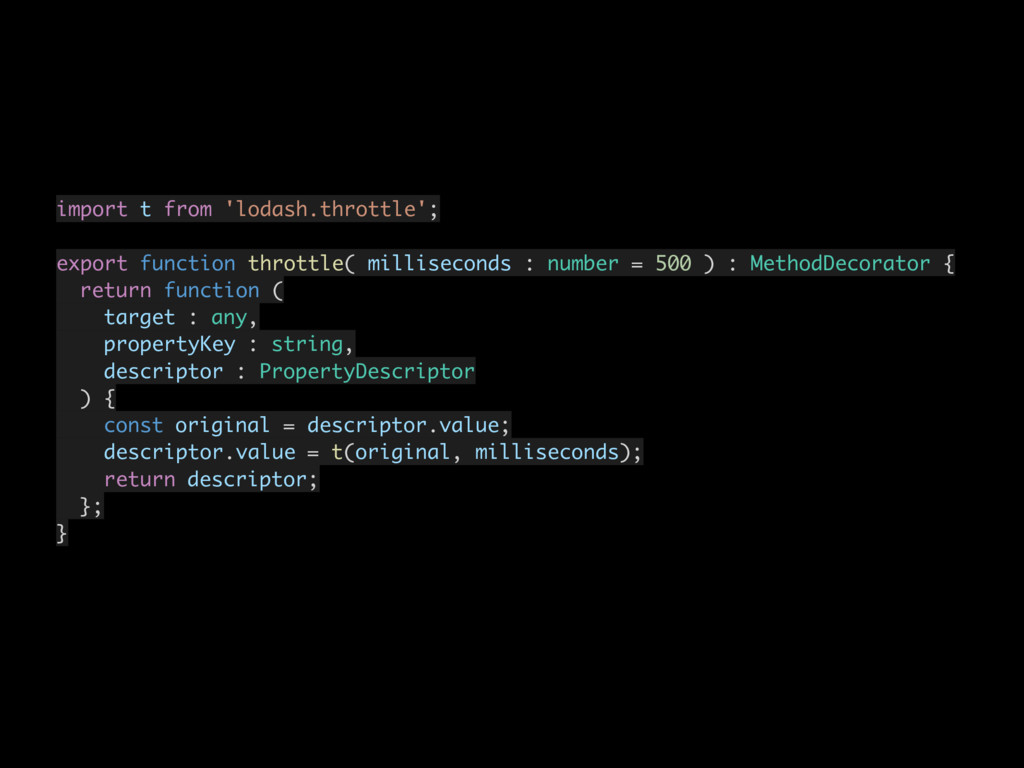
  9. import t from 'lodash.throttle'; export function throttle( milliseconds : number

    = 500 ) : MethodDecorator { return function ( target : any, propertyKey : string, descriptor : PropertyDescriptor ) { const original = descriptor.value; descriptor.value = t(original, milliseconds); return descriptor; }; }
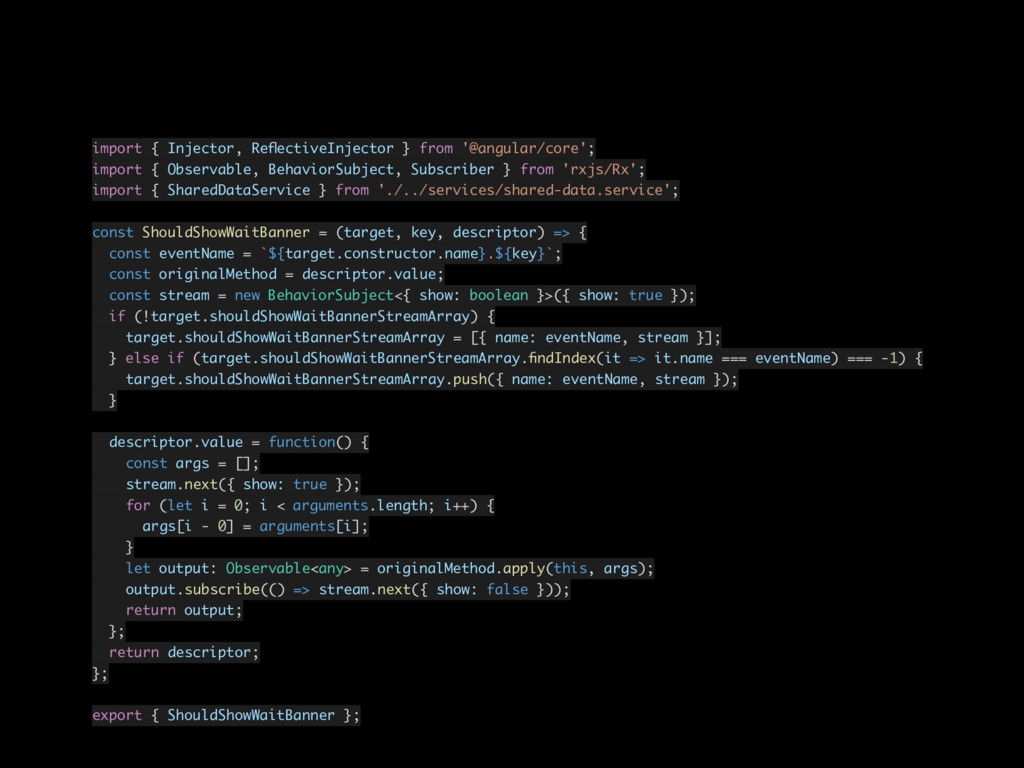
  10. import { Injector, ReflectiveInjector } from '@angular/core'; import { Observable,

    BehaviorSubject, Subscriber } from 'rxjs/Rx'; import { SharedDataService } from './../services/shared-data.service'; const ShouldShowWaitBanner = (target, key, descriptor) => { const eventName = `${target.constructor.name}.${key}`; const originalMethod = descriptor.value; const stream = new BehaviorSubject<{ show: boolean }>({ show: true }); if (!target.shouldShowWaitBannerStreamArray) { target.shouldShowWaitBannerStreamArray = [{ name: eventName, stream }]; } else if (target.shouldShowWaitBannerStreamArray.findIndex(it => it.name === eventName) === -1) { target.shouldShowWaitBannerStreamArray.push({ name: eventName, stream }); } descriptor.value = function() { const args = []; stream.next({ show: true }); for (let i = 0; i < arguments.length; i++) { args[i - 0] = arguments[i]; } let output: Observable<any> = originalMethod.apply(this, args); output.subscribe(() => stream.next({ show: false })); return output; }; return descriptor; }; export { ShouldShowWaitBanner };
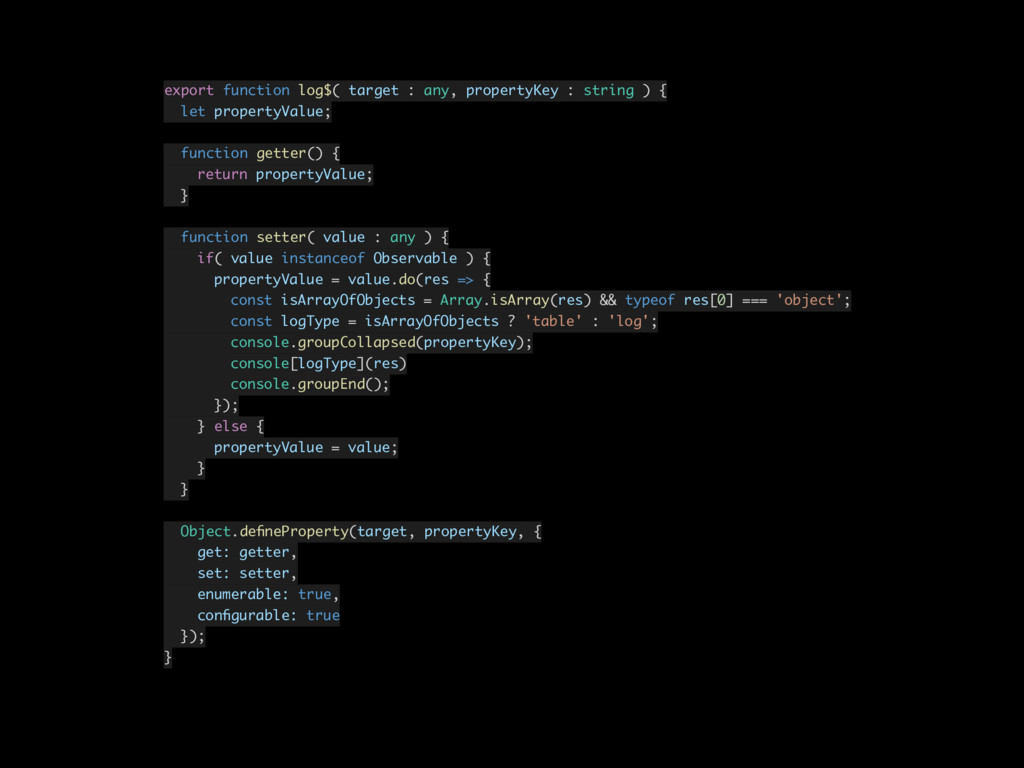
  11. export function log$( target : any, propertyKey : string )

    { let propertyValue; function getter() { return propertyValue; } function setter( value : any ) { if( value instanceof Observable ) { propertyValue = value.do(res => { const isArrayOfObjects = Array.isArray(res) && typeof res[0] === 'object'; const logType = isArrayOfObjects ? 'table' : 'log'; console.groupCollapsed(propertyKey); console[logType](res) console.groupEnd(); }); } else { propertyValue = value; } } Object.defineProperty(target, propertyKey, { get: getter, set: setter, enumerable: true, configurable: true }); }
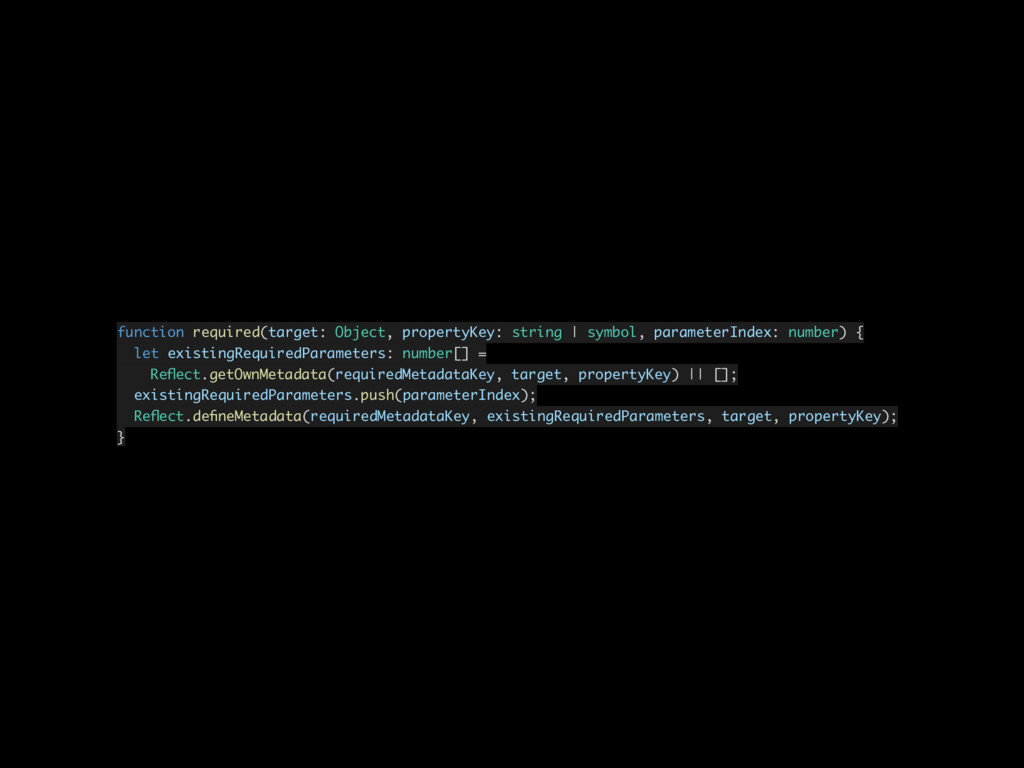
  12. function required(target: Object, propertyKey: string | symbol, parameterIndex: number) {

    let existingRequiredParameters: number[] = Reflect.getOwnMetadata(requiredMetadataKey, target, propertyKey) || []; existingRequiredParameters.push(parameterIndex); Reflect.defineMetadata(requiredMetadataKey, existingRequiredParameters, target, propertyKey); }