with AI-based methodology Y-h. Taguchi Department of Physics, Chuo University (will stay here till the end of March, 2027. Room 220B) BIC seminar 2026.10.1 1
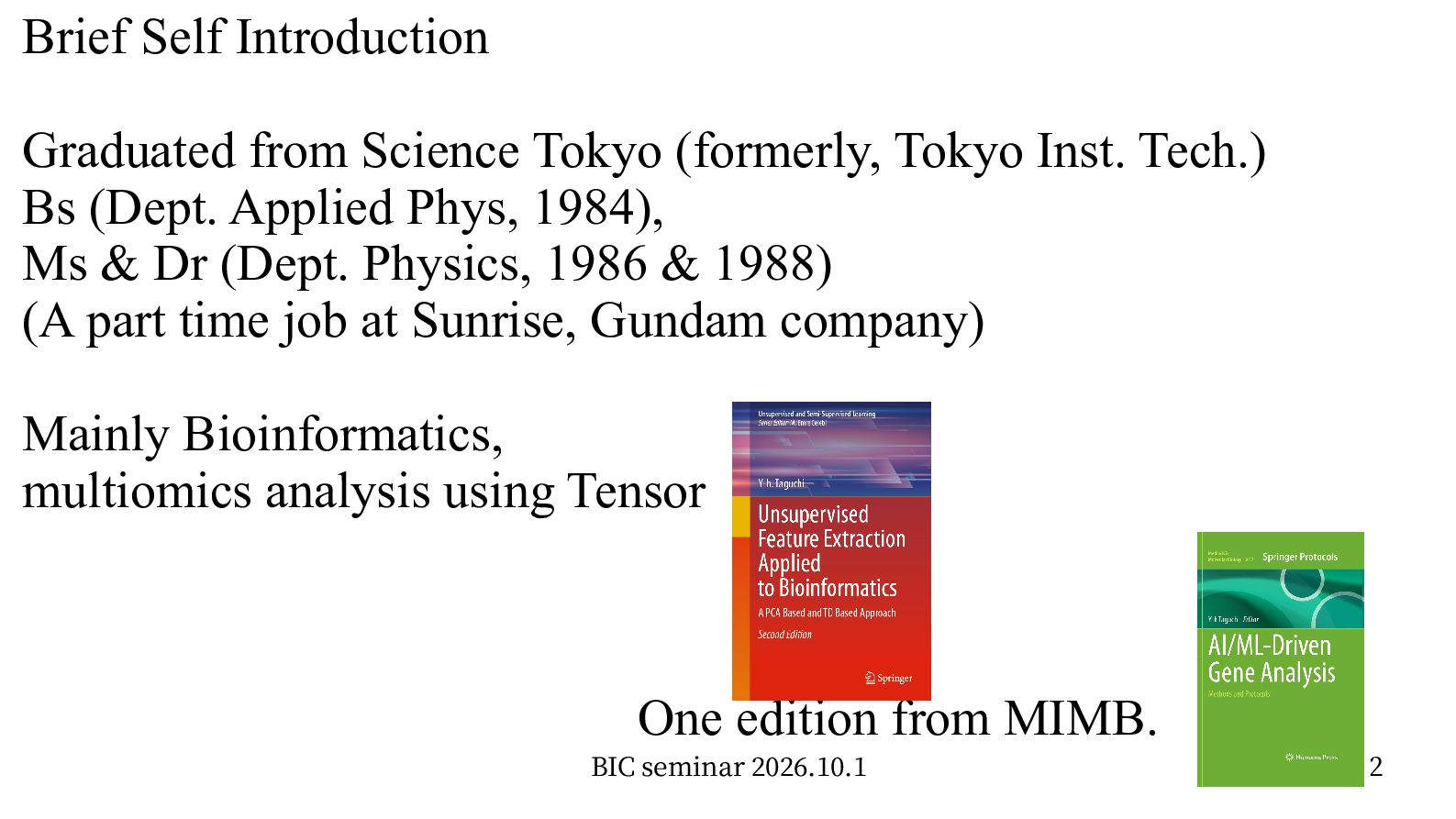
Tech.) Bs (Dept. Applied Phys, 1984), Ms & Dr (Dept. Physics, 1986 & 1988) (A part time job at Sunrise, Gundam company) Mainly Bioinformatics, multiomics analysis using Tensor One edition from MIMB. BIC seminar 2026.10.1 2
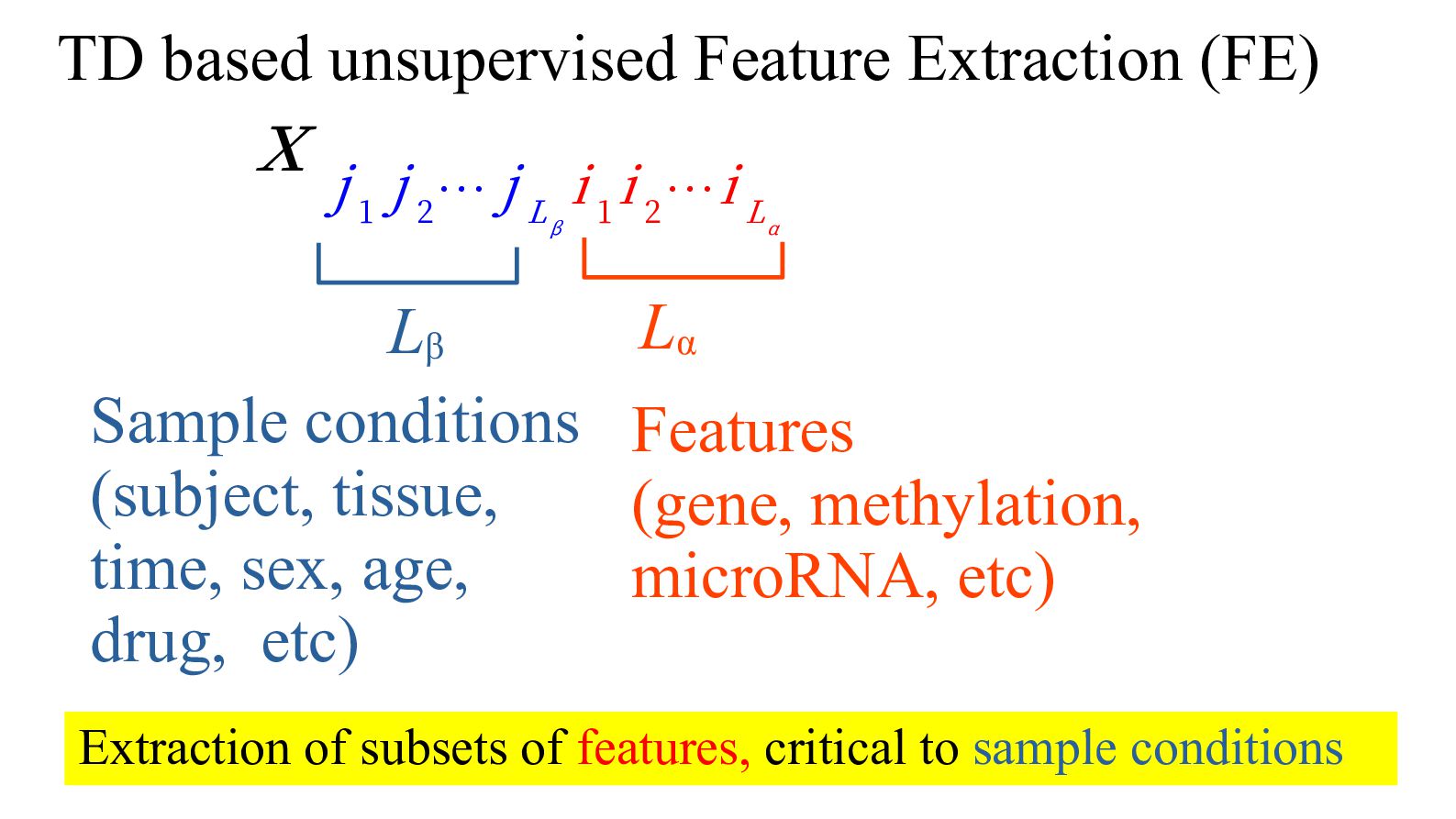
2 ⋯j L i β Lβ Sample conditions (subject, tissue, time, sex, age, drug, etc) 1 i 2 ⋯i L α Lα Features (gene, methylation, microRNA, etc) Extraction of subsets of features, critical to sample conditions BIC seminar 2026.10.1 10
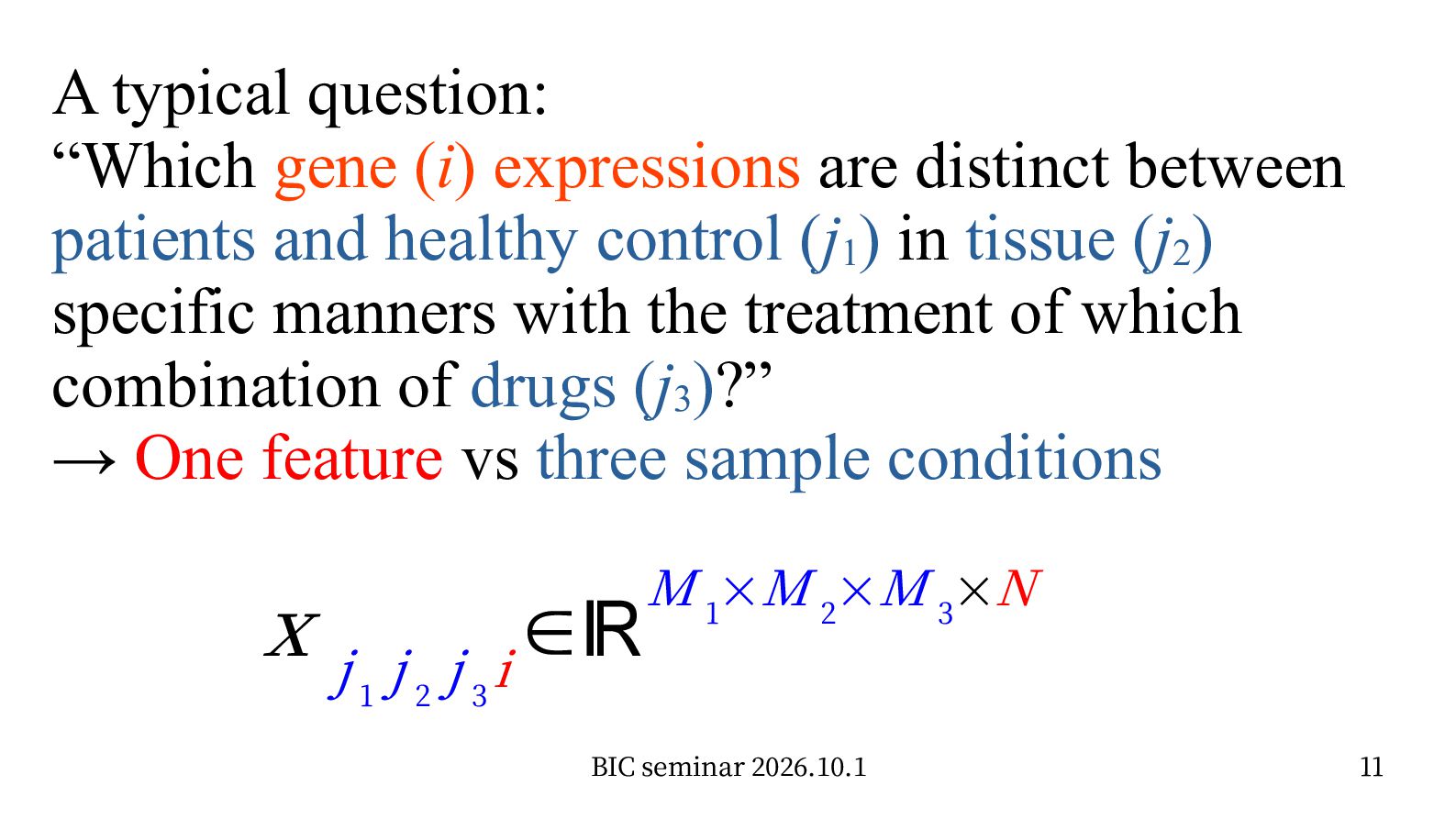
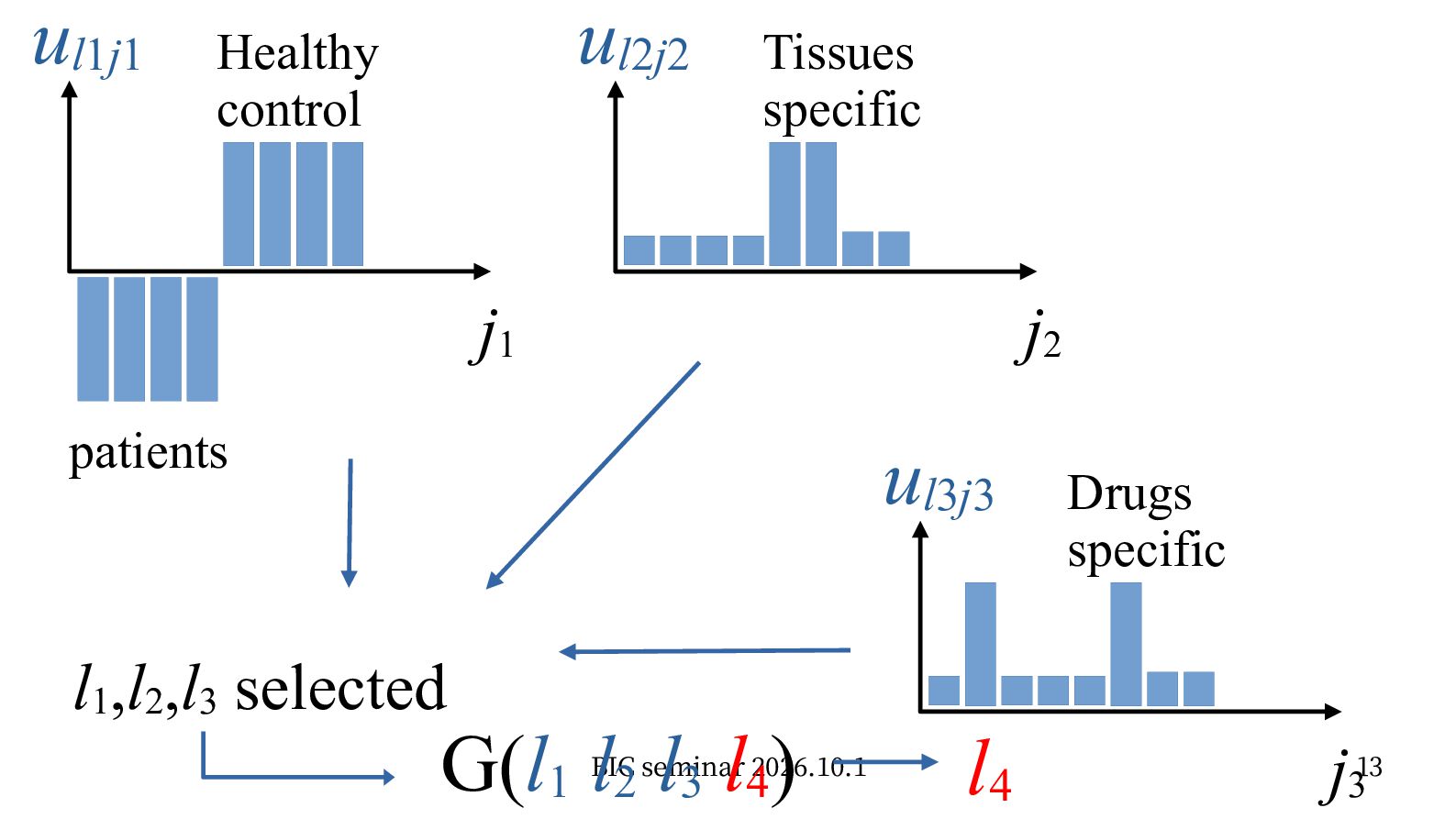
patients and healthy control (j1) in tissue (j2) specific manners with the treatment of which combination of drugs (j3)?” → One feature vs three sample conditions x j 1 j 2 j 3 i ∈ℝ M 1 ×M ×M ×N 2 BIC seminar 2026.10.1 3 11
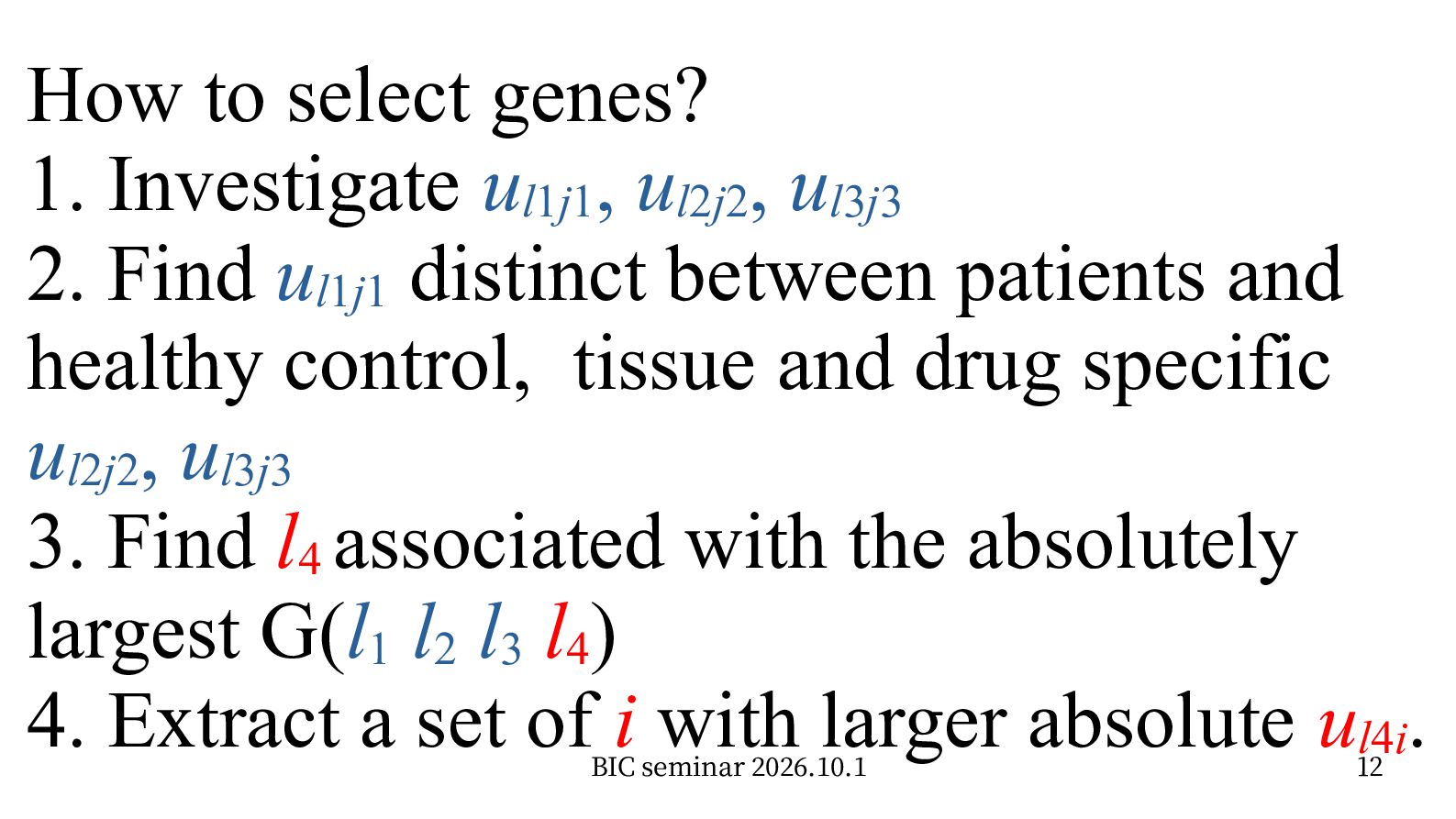
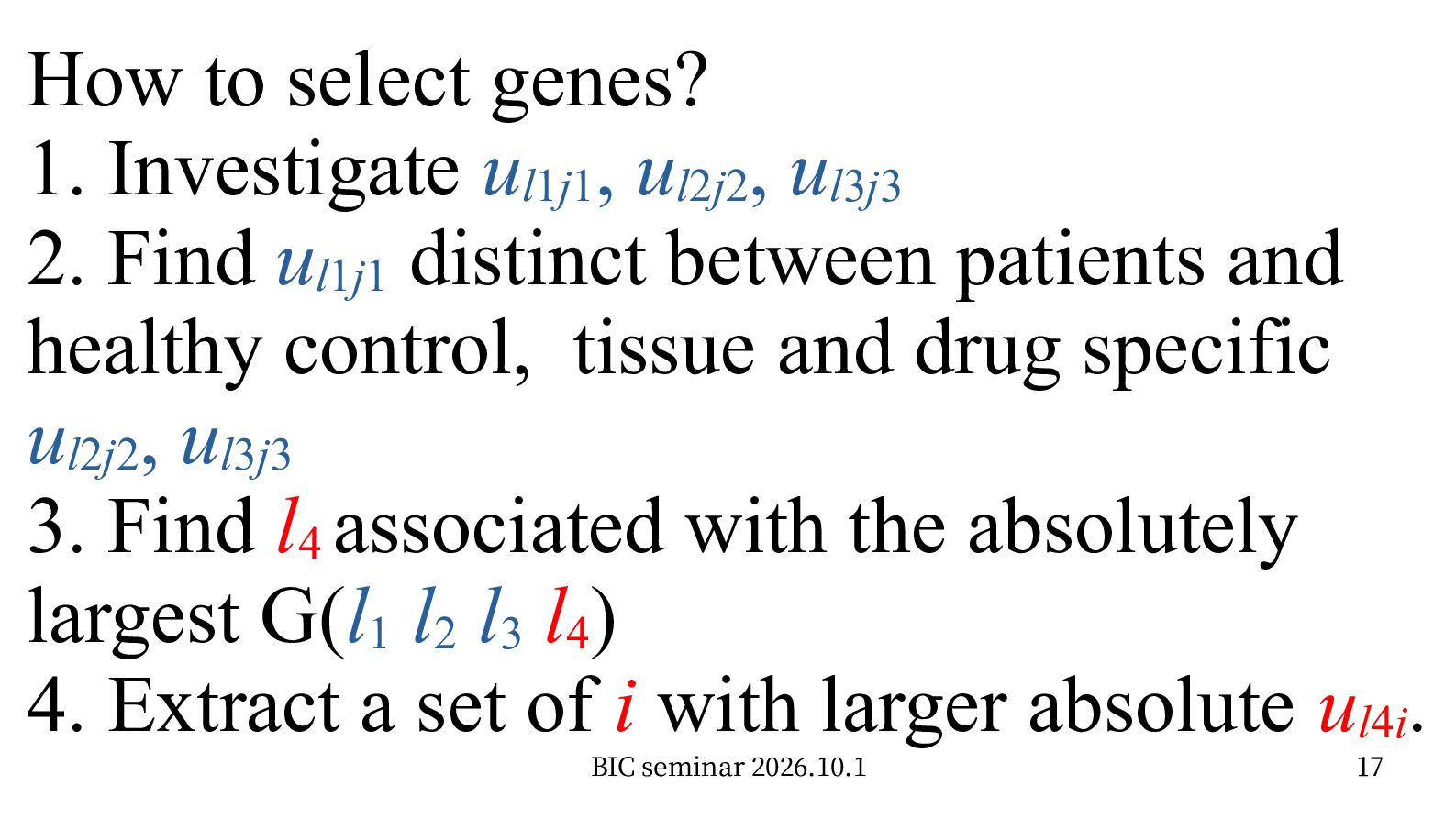
Find ul1j1 distinct between patients and healthy control, tissue and drug specific ul2j2, ul3j3 3. Find l4 associated with the absolutely largest G(l1 l2 l3 l4) 4. Extract a set of i with larger absolute ul4i. BIC seminar 2026.10.1 12
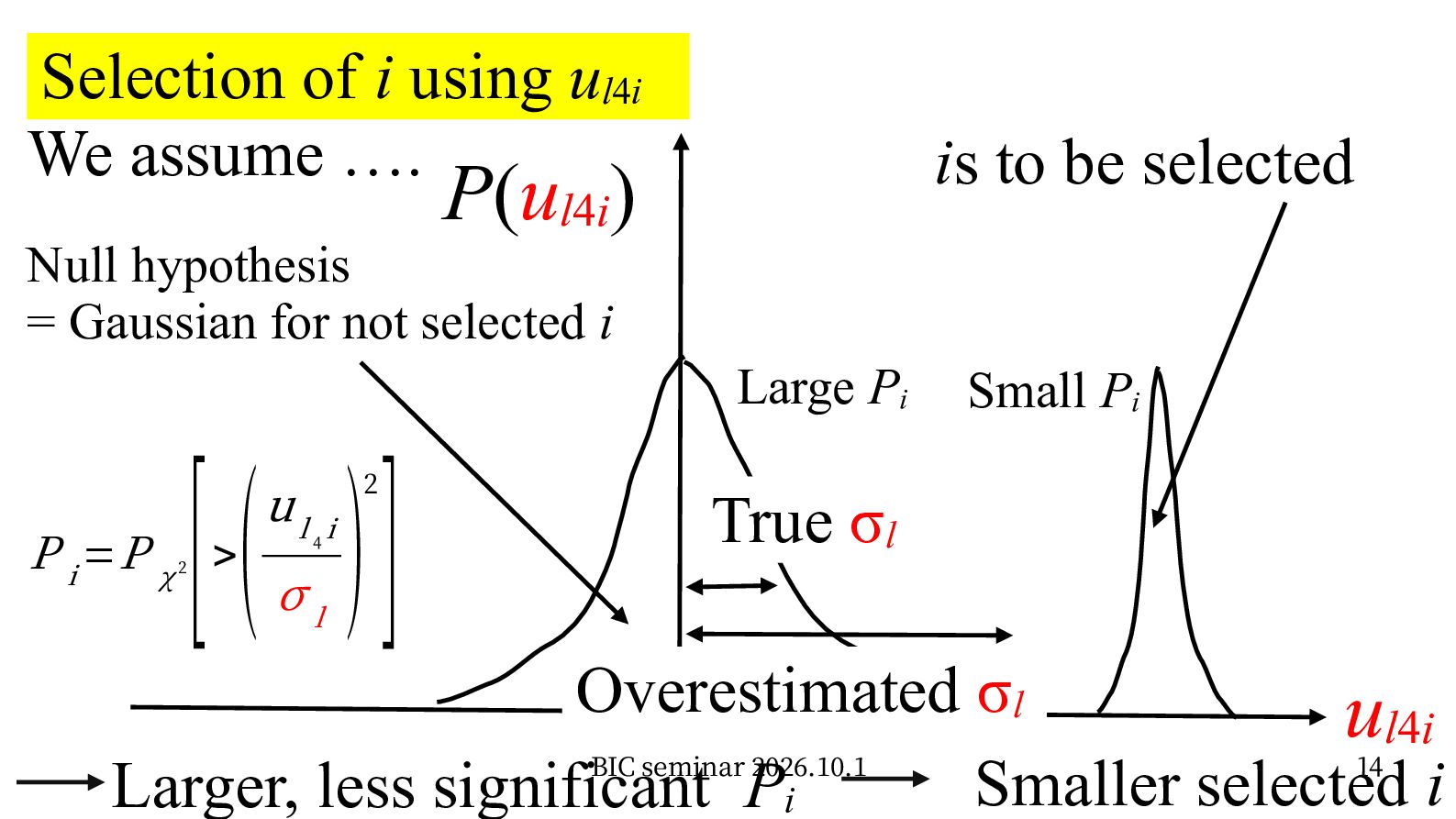
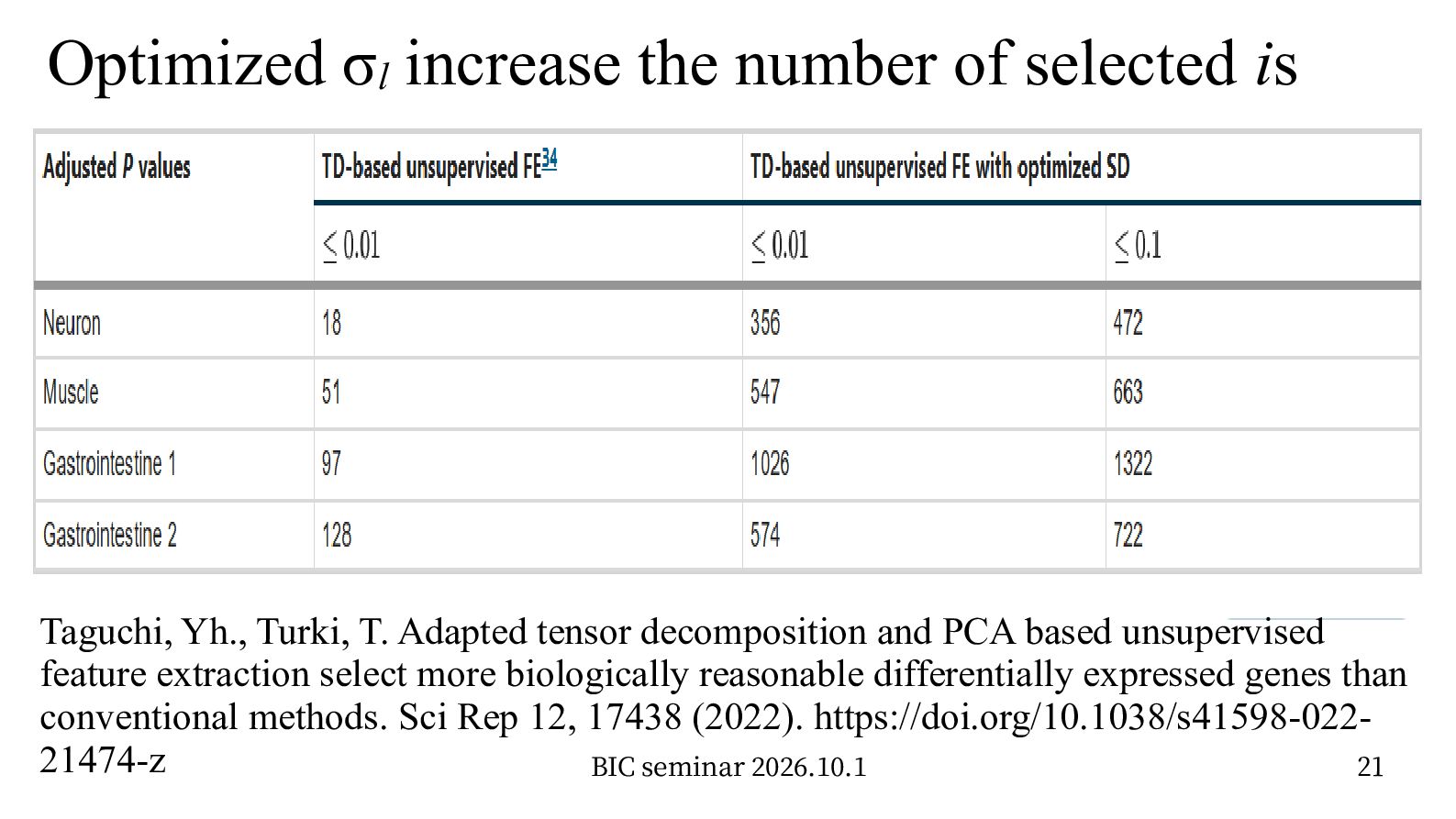
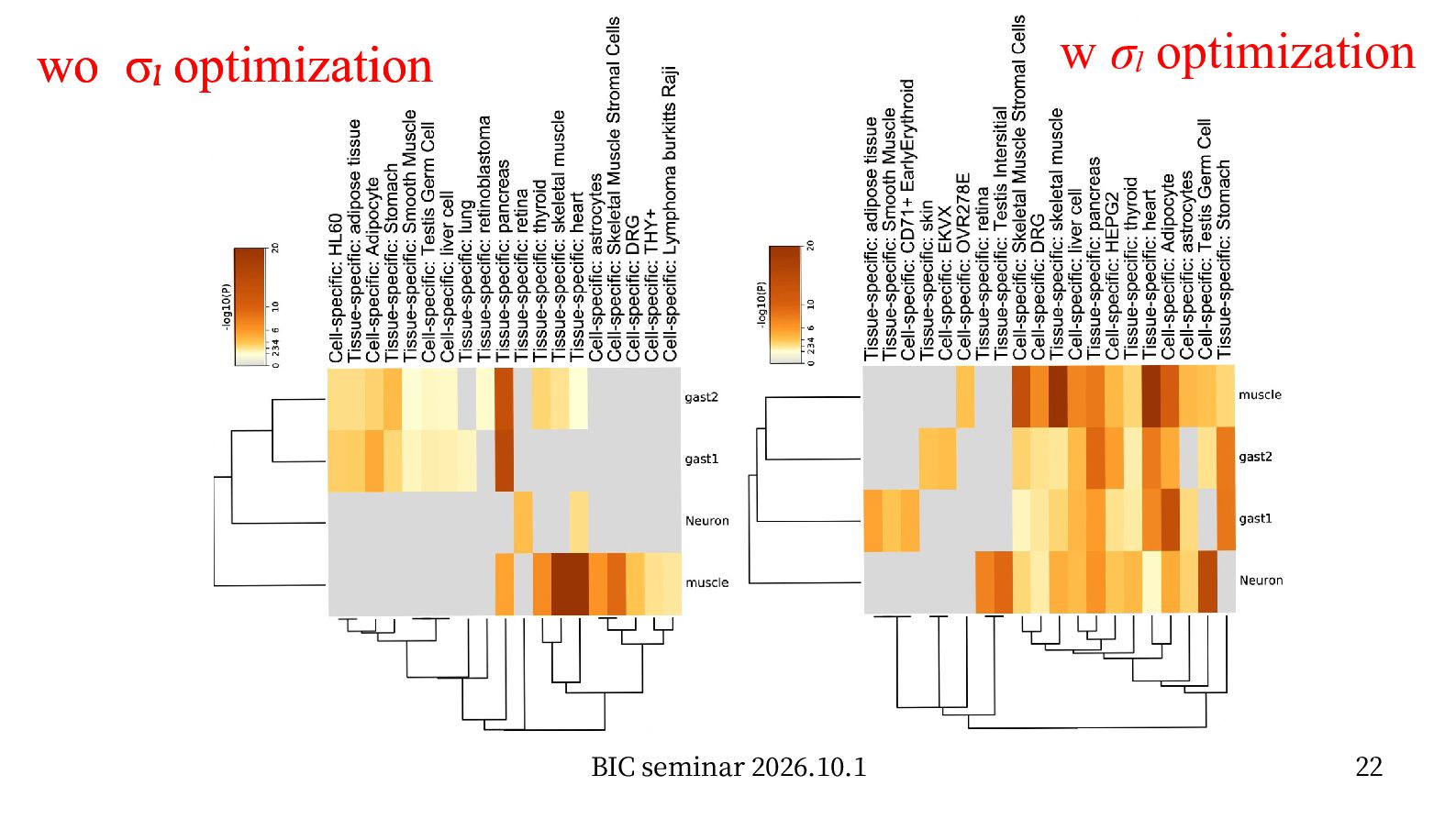
be selected P(ul4i) Null hypothesis = Gaussian for not selected i Large Pi P i =P χ 2 [ ( )] > u 2 l σ 4 i Small Pi True σl l Overestimated σl ul4i Smaller selected i Larger, less significant Pi BIC seminar 2026.10.1 14
Find ul1j1 distinct between patients and healthy control, tissue and drug specific ul2j2, ul3j3 3. Find l4 associated with the absolutely largest G(l1 l2 l3 l4) 4. Extract a set of i with larger absolute ul4i. BIC seminar 2026.10.1 17
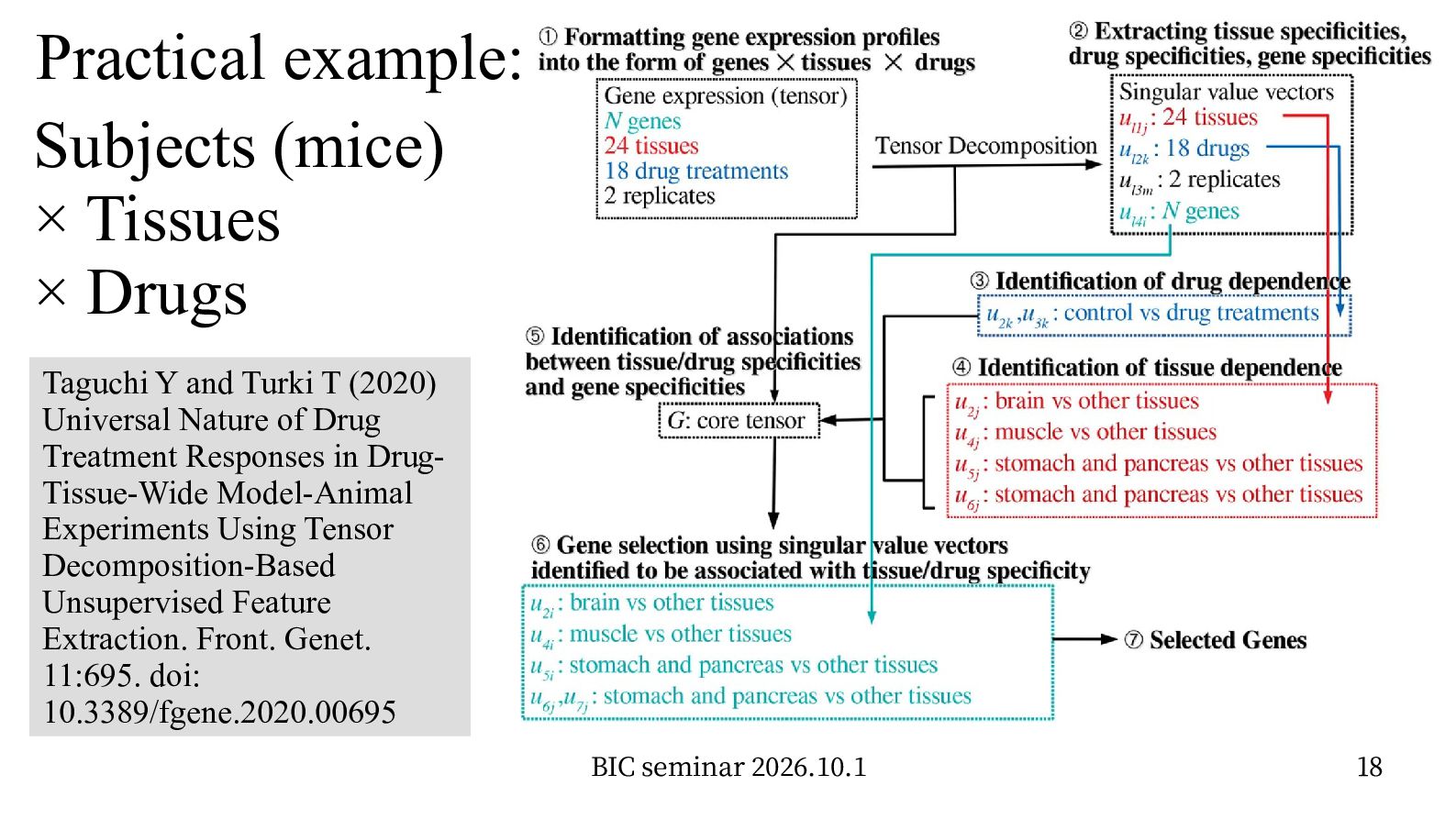
and Turki T (2020) Universal Nature of Drug Treatment Responses in DrugTissue-Wide Model-Animal Experiments Using Tensor Decomposition-Based Unsupervised Feature Extraction. Front. Genet. 11:695. doi: 10.3389/fgene.2020.00695 BIC seminar 2026.10.1 18
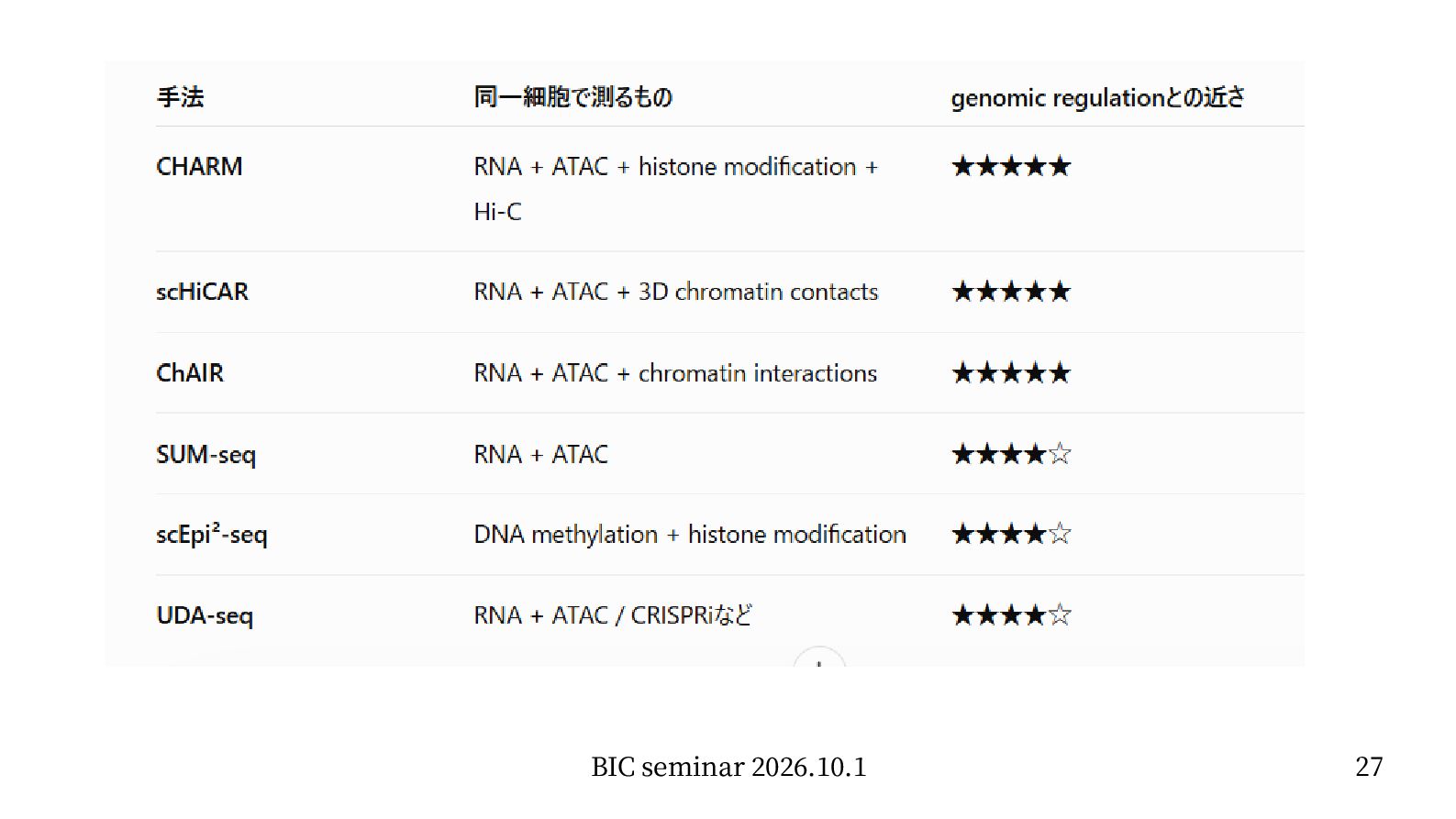
there any new single-cell-based multi-omics approaches related to genomic regulation? ) ” Here after only English translation is presented. BIC seminar 2026.10.1 26
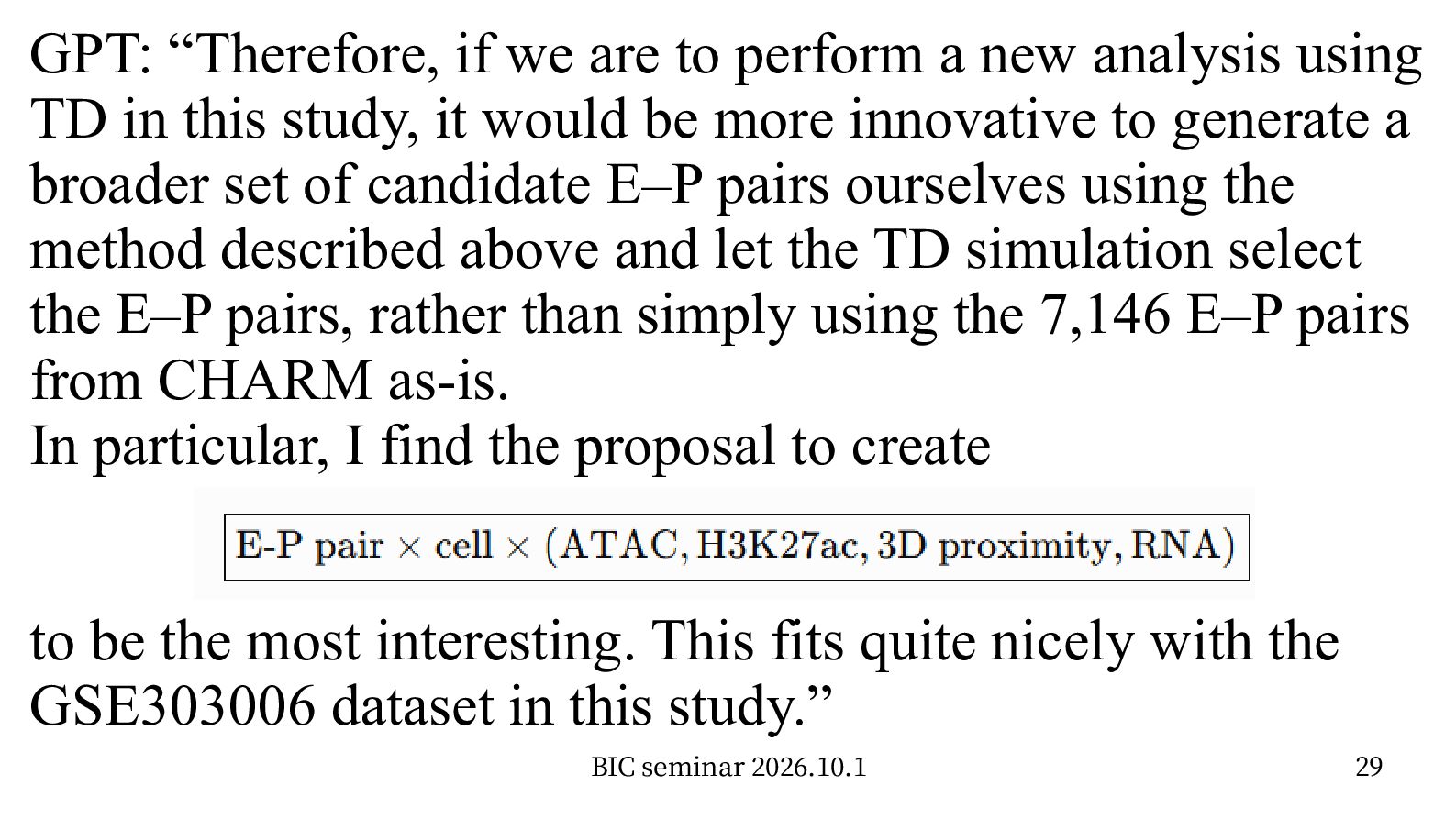
using TD in this study, it would be more innovative to generate a broader set of candidate E–P pairs ourselves using the method described above and let the TD simulation select the E–P pairs, rather than simply using the 7,146 E–P pairs from CHARM as-is. In particular, I find the proposal to create to be the most interesting. This fits quite nicely with the GSE303006 dataset in this study.” BIC seminar 2026.10.1 29
confusing, I will not replicate all the conversation with GPT-6.sol, but I proposed almost nothing although I have sometimes commented about something wrong. Since I have published numerous papers (with open access) often with Github-deposited R-code, GPT-6.sol could learn almost everything there and made suitable decisions. BIC seminar 2026.10.1 30
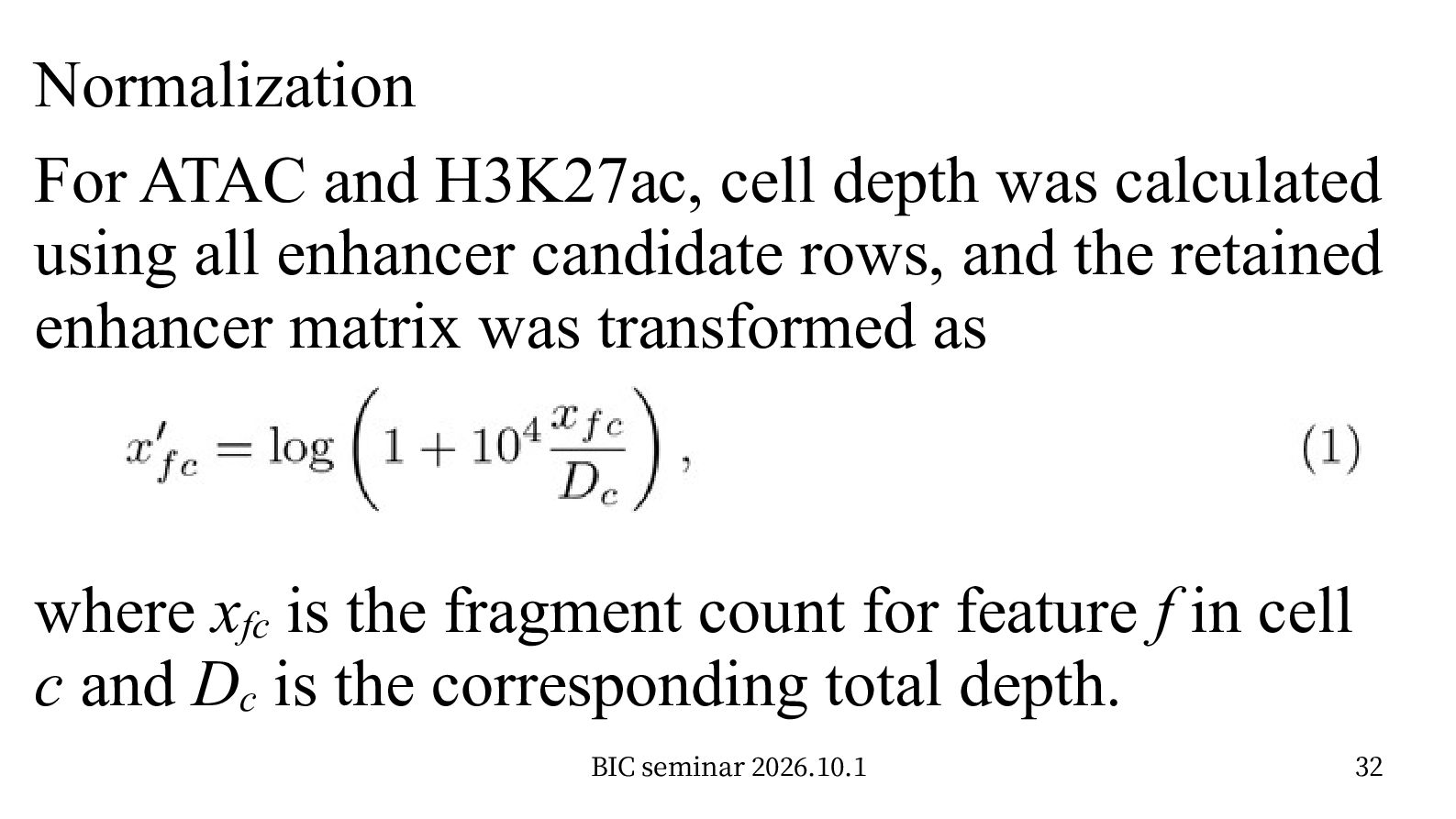
all enhancer candidate rows, and the retained enhancer matrix was transformed as where xfc is the fragment count for feature f in cell c and Dc is the corresponding total depth. BIC seminar 2026.10.1 32
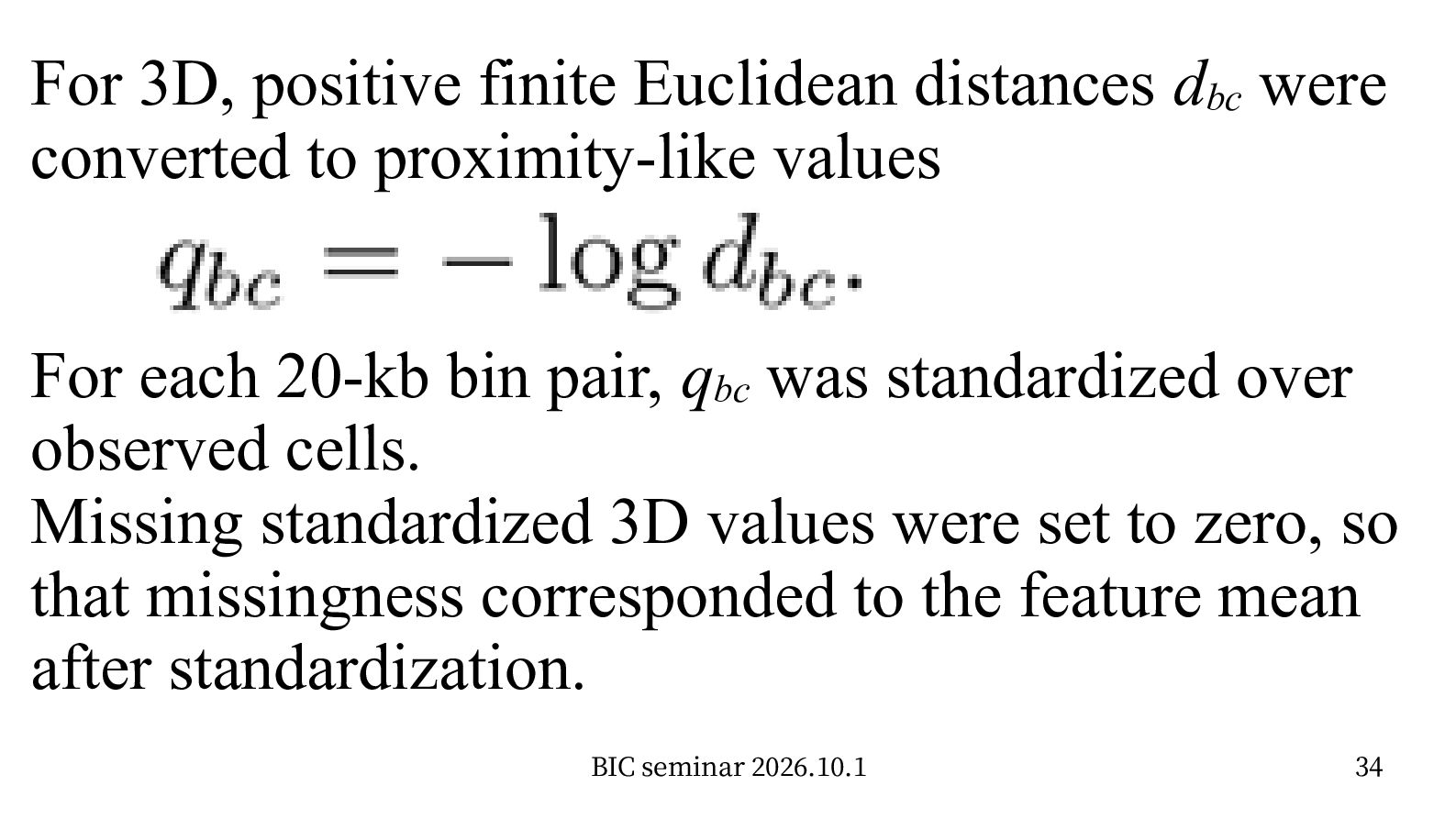
proximity-like values For each 20-kb bin pair, qbc was standardized over observed cells. Missing standardized 3D values were set to zero, so that missingness corresponded to the feature mean after standardization. BIC seminar 2026.10.1 34
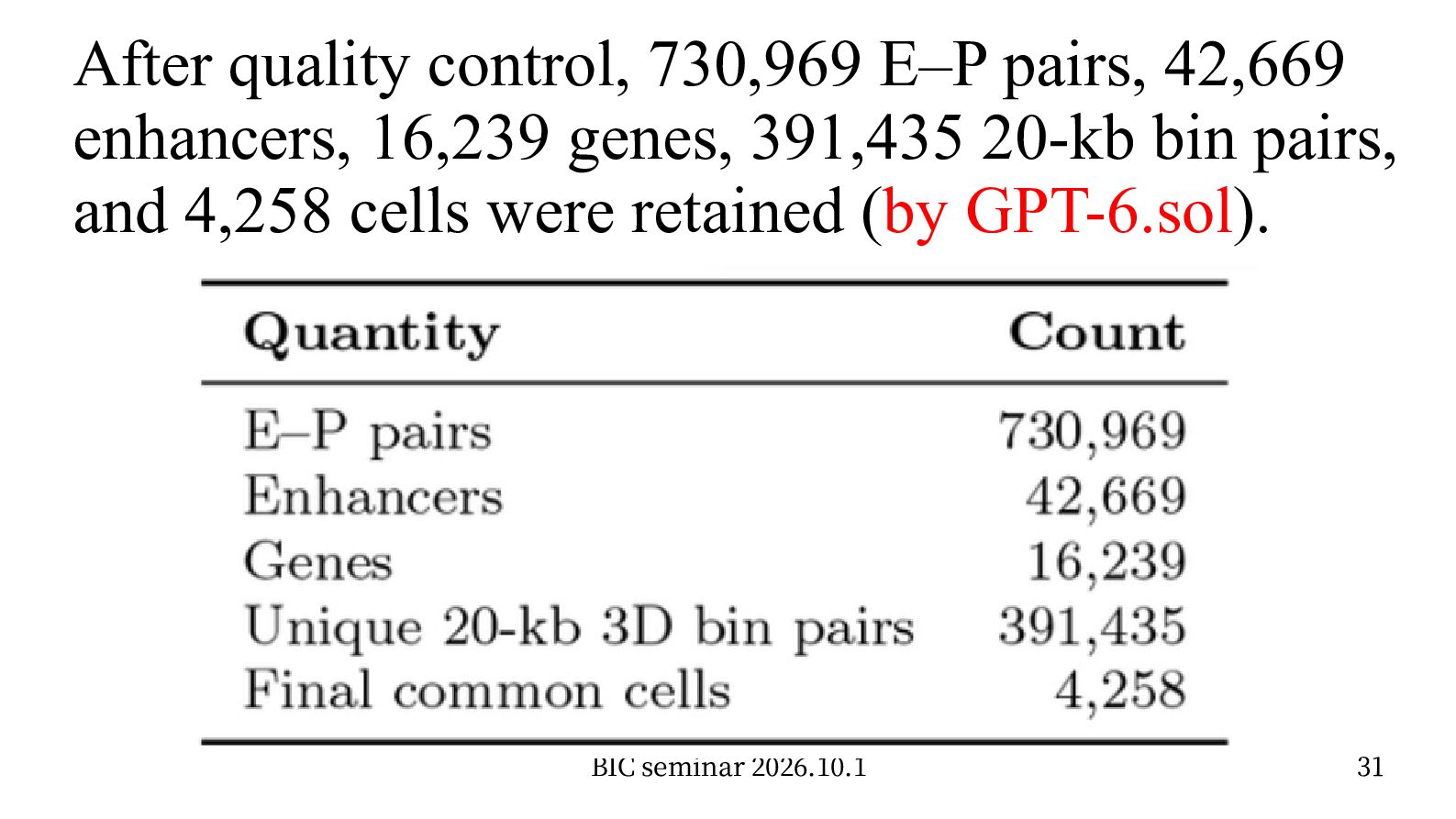
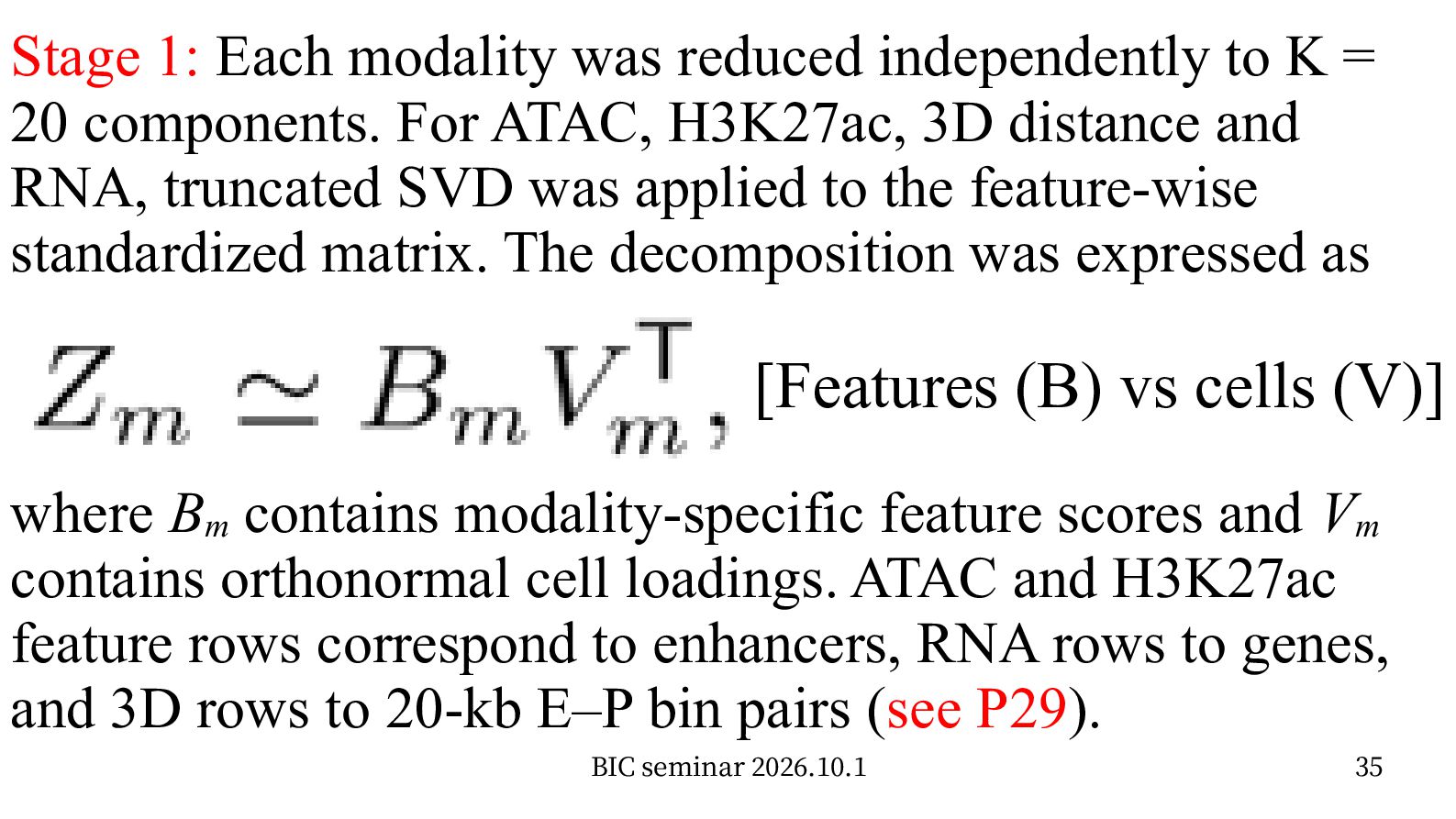
20 components. For ATAC, H3K27ac, 3D distance and RNA, truncated SVD was applied to the feature-wise standardized matrix. The decomposition was expressed as [Features (B) vs cells (V)] where Bm contains modality-specific feature scores and Vm contains orthonormal cell loadings. ATAC and H3K27ac feature rows correspond to enhancers, RNA rows to genes, and 3D rows to 20-kb E–P bin pairs (see P29). BIC seminar 2026.10.1 35
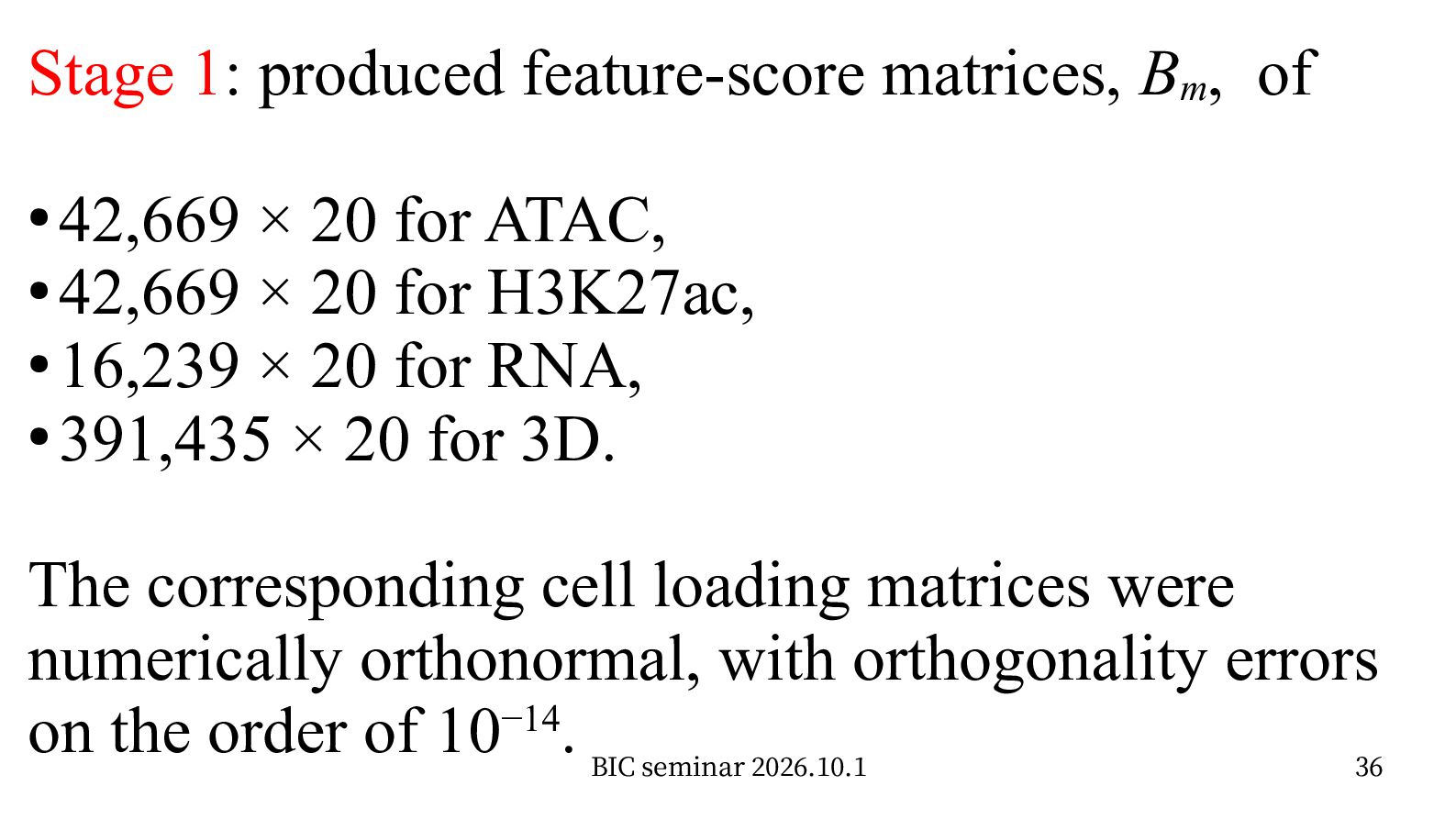
for ATAC, • 42,669 × 20 for H3K27ac, • 16,239 × 20 for RNA, • 391,435 × 20 for 3D. • The corresponding cell loading matrices were numerically orthonormal, with orthogonality errors on the order of 10−14. BIC seminar 2026.10.1 36
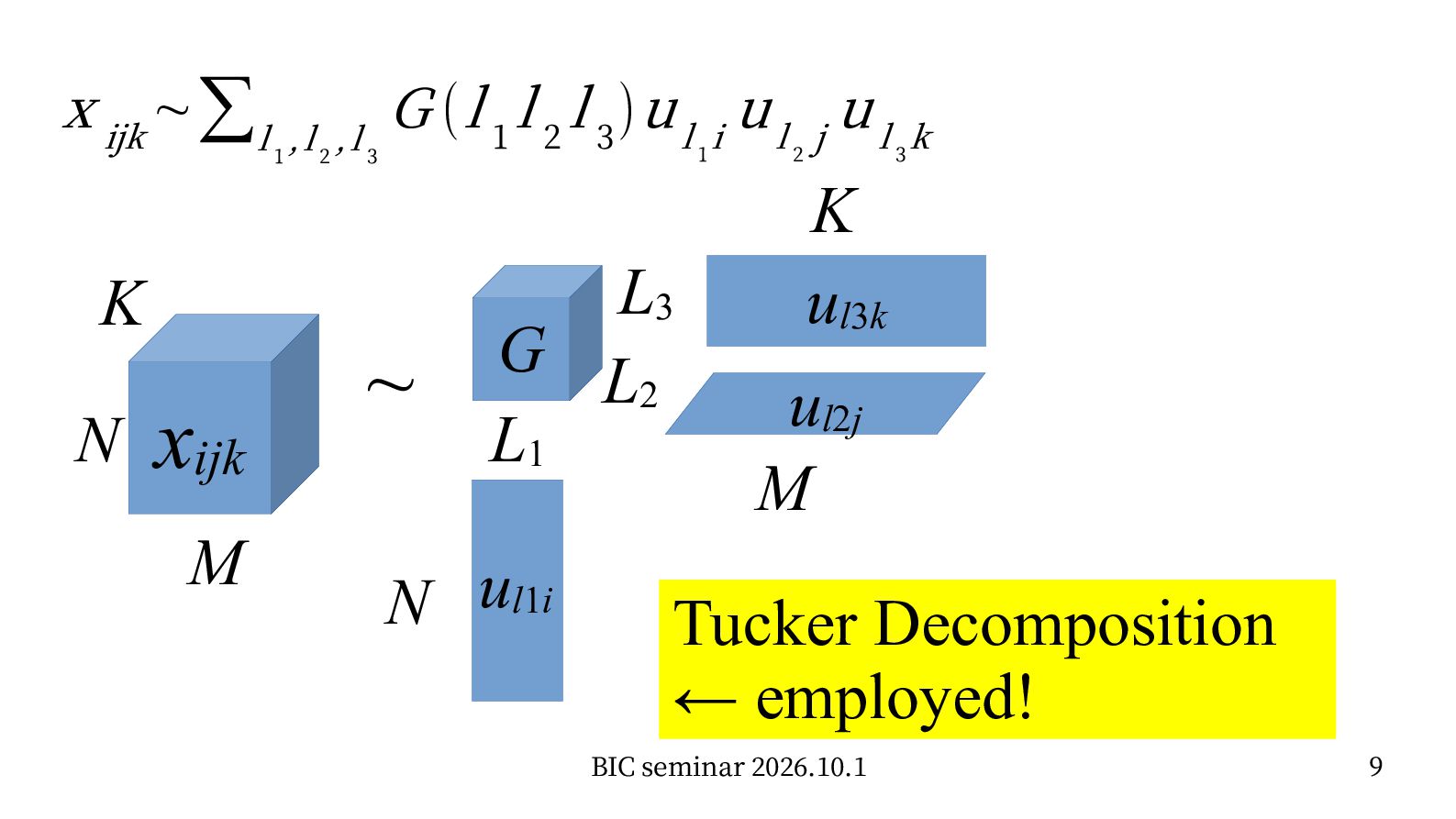
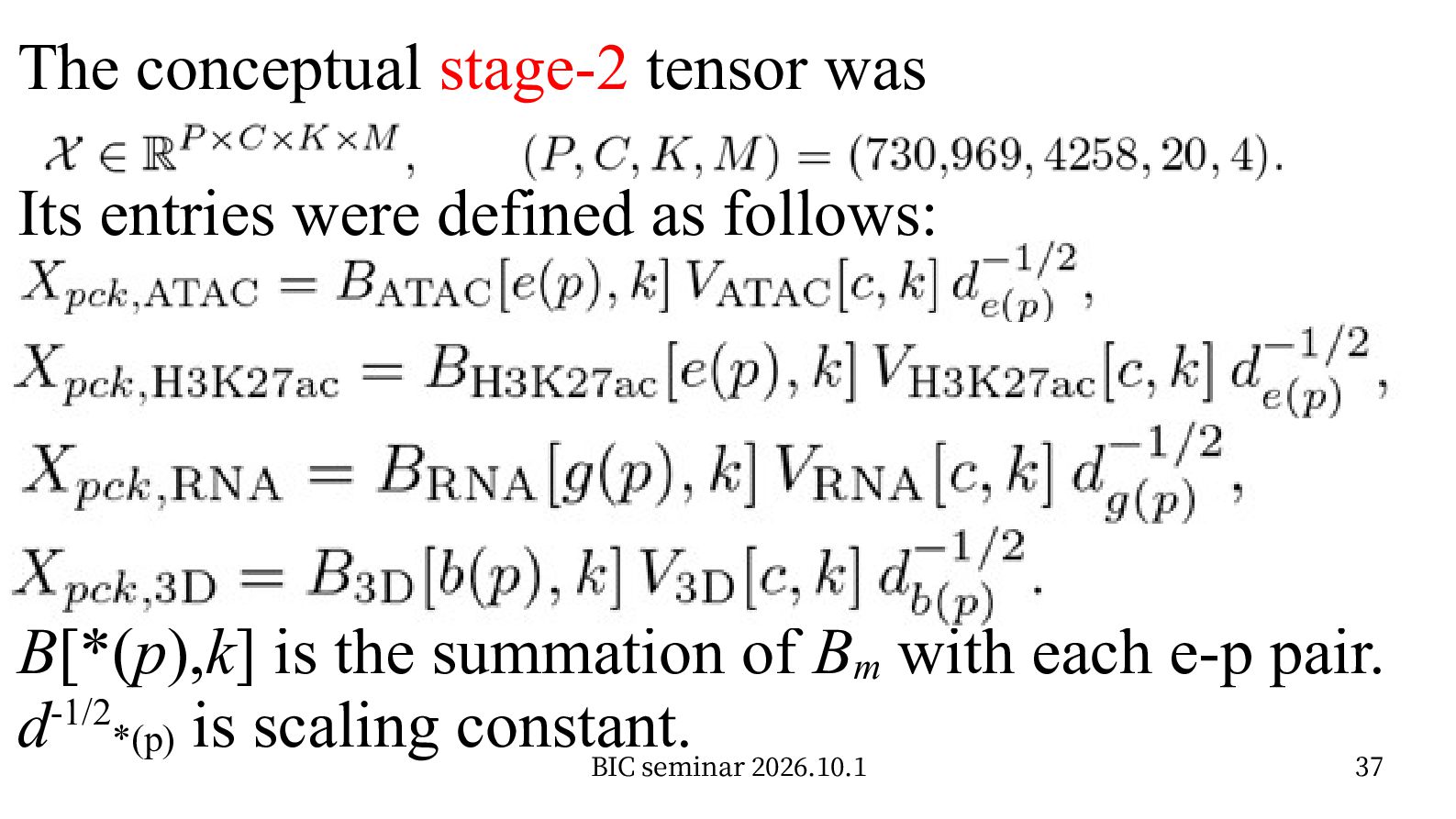
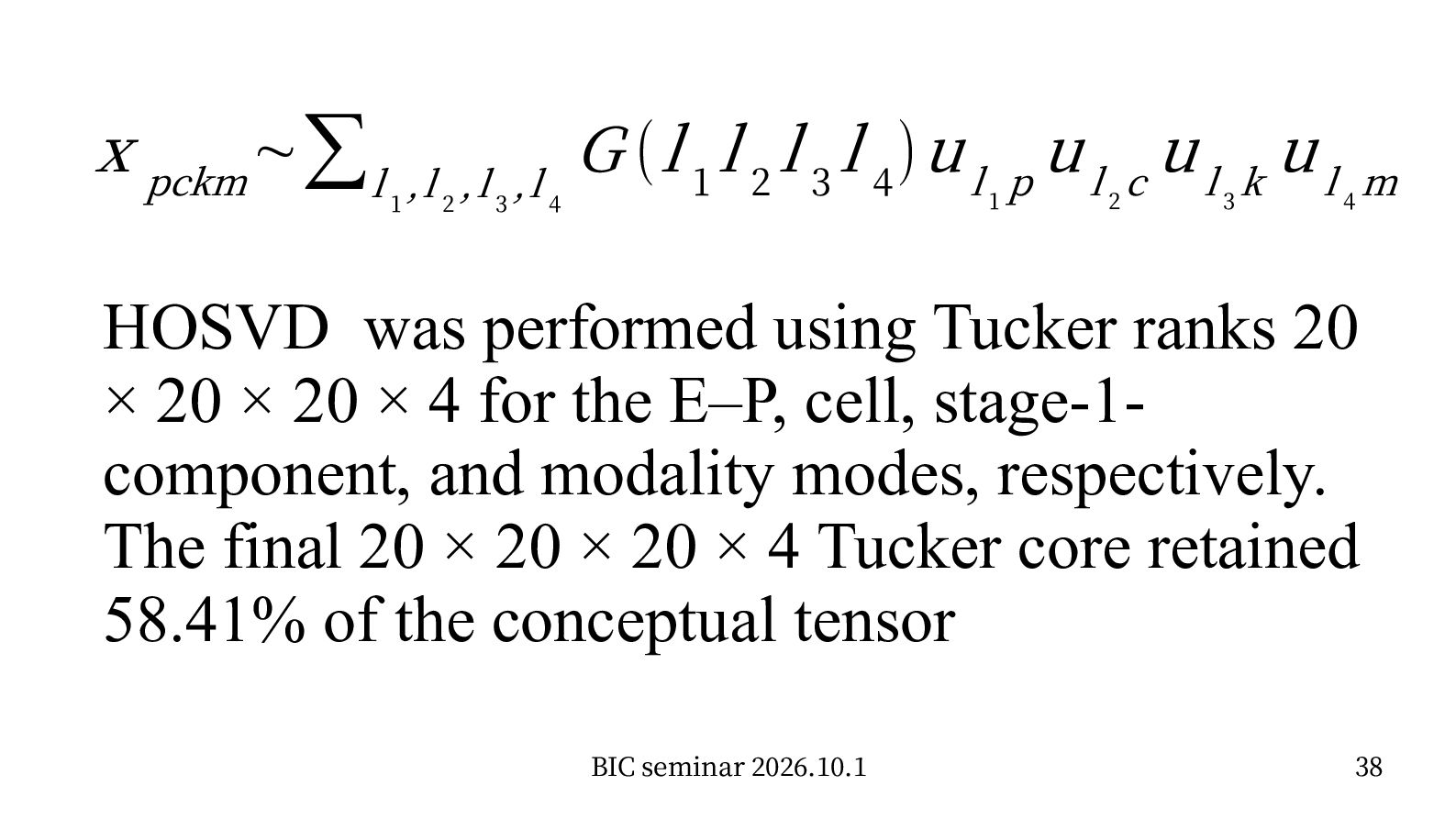
G 4 (l l l l )u 1 2 3 4 l 1 p u l 2 c u l 3 k u l 4 m HOSVD was performed using Tucker ranks 20 × 20 × 20 × 4 for the E–P, cell, stage-1component, and modality modes, respectively. The final 20 × 20 × 20 × 4 Tucker core retained 58.41% of the conceptual tensor BIC seminar 2026.10.1 38
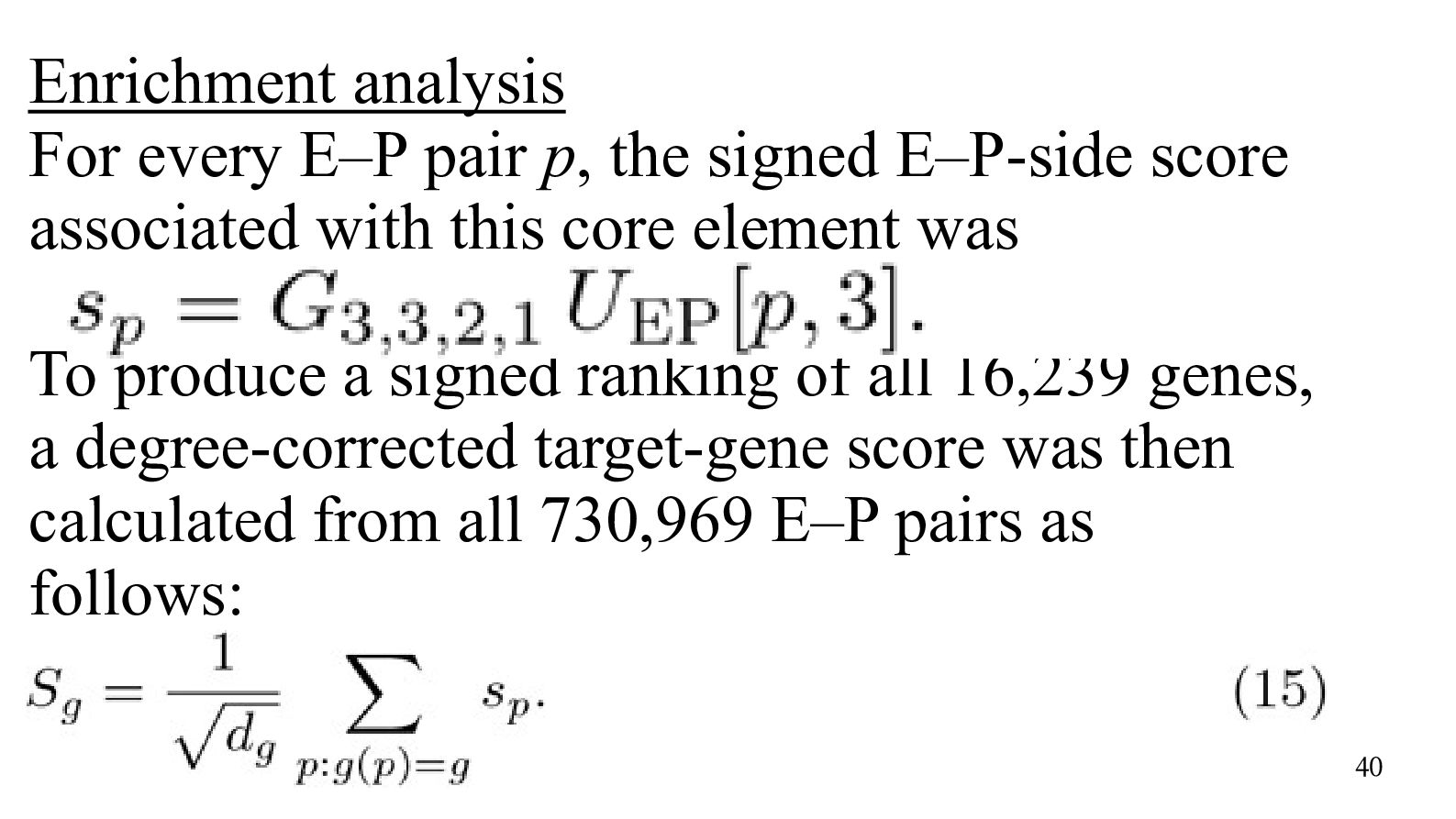
score associated with this core element was To produce a signed ranking of all 16,239 genes, a degree-corrected target-gene score was then calculated from all 730,969 E–P pairs as follows: BIC seminar 2026.10.1 40
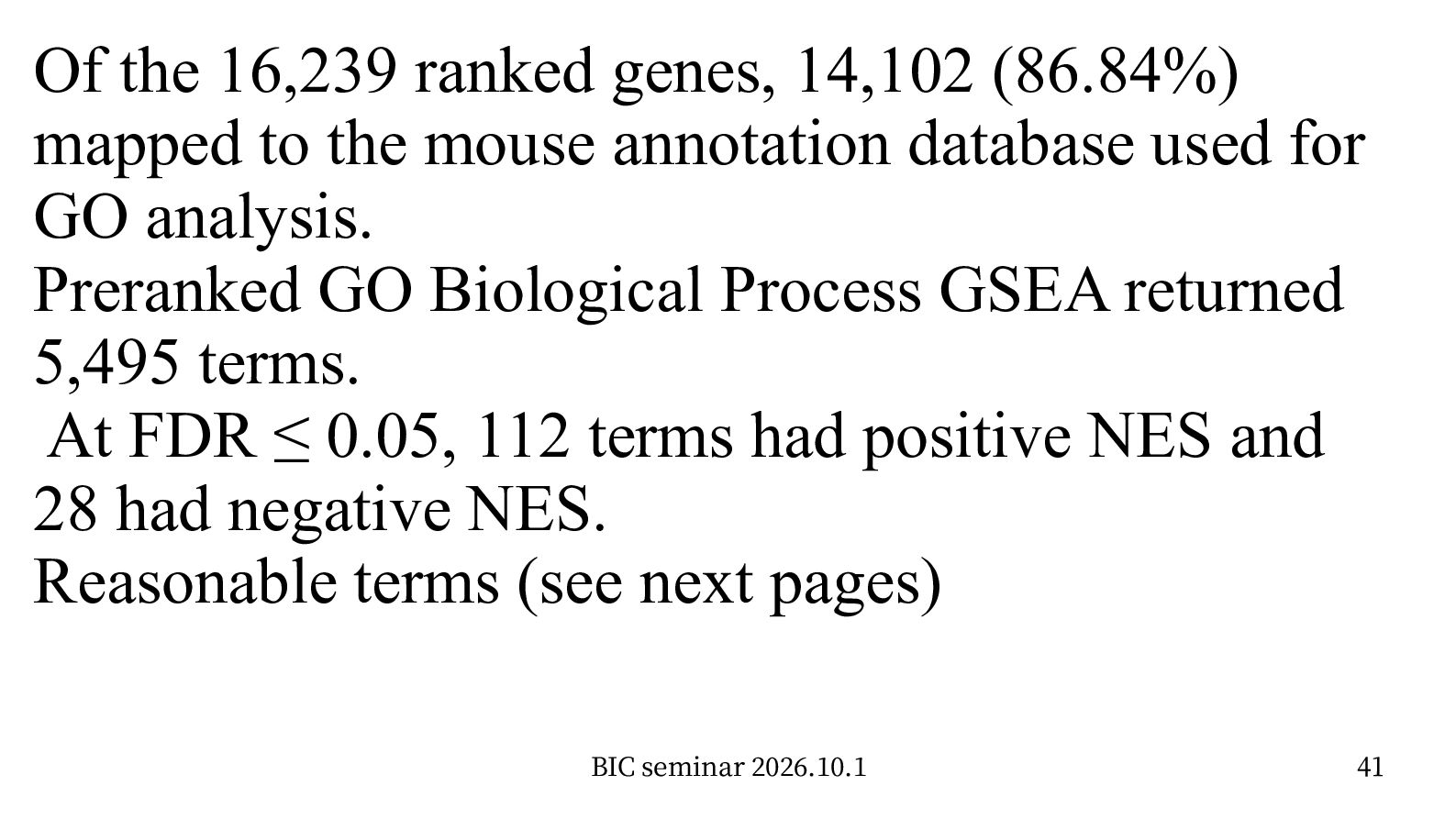
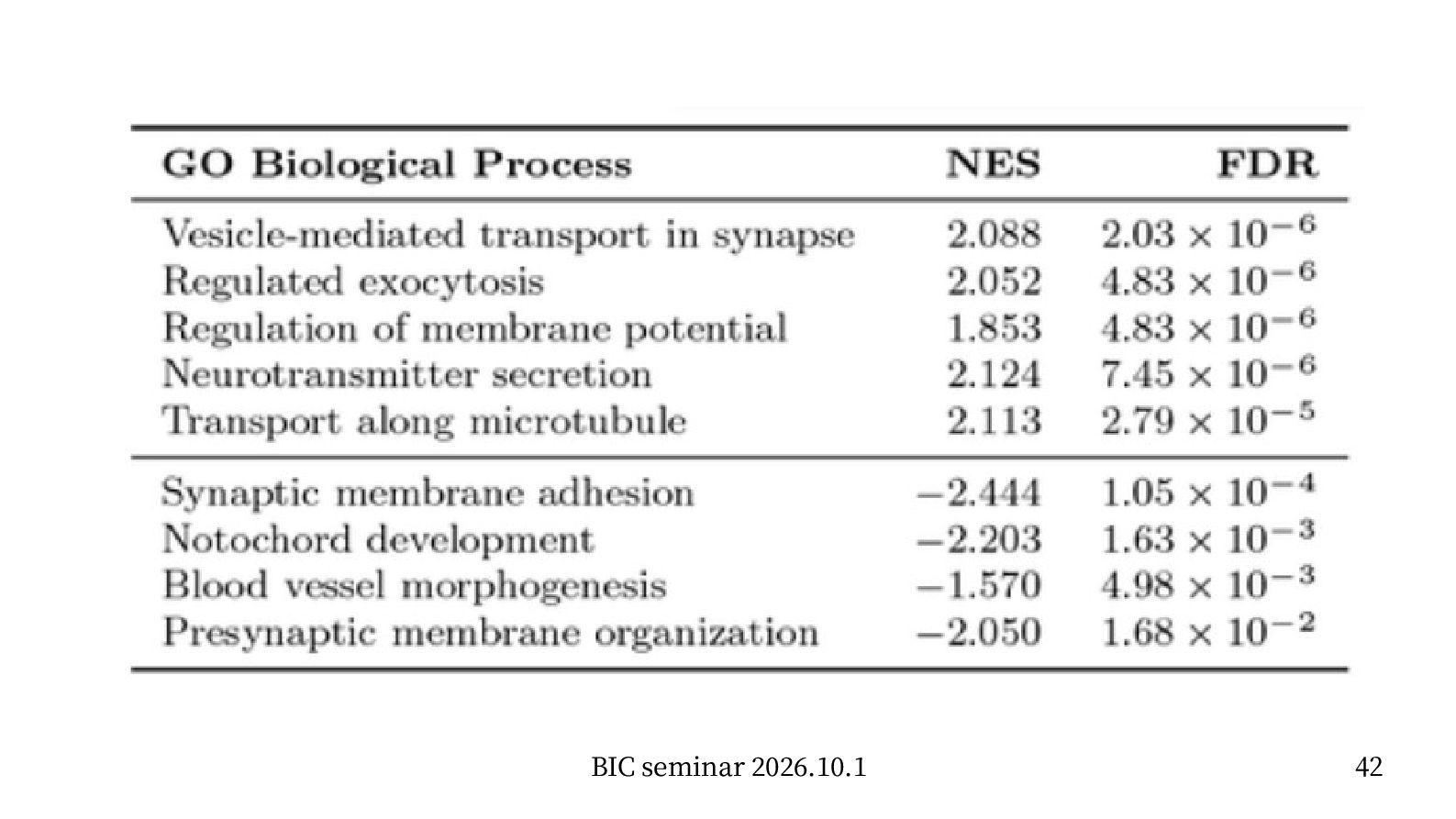
mouse annotation database used for GO analysis. Preranked GO Biological Process GSEA returned 5,495 terms. At FDR ≤ 0.05, 112 terms had positive NES and 28 had negative NES. Reasonable terms (see next pages) BIC seminar 2026.10.1 41
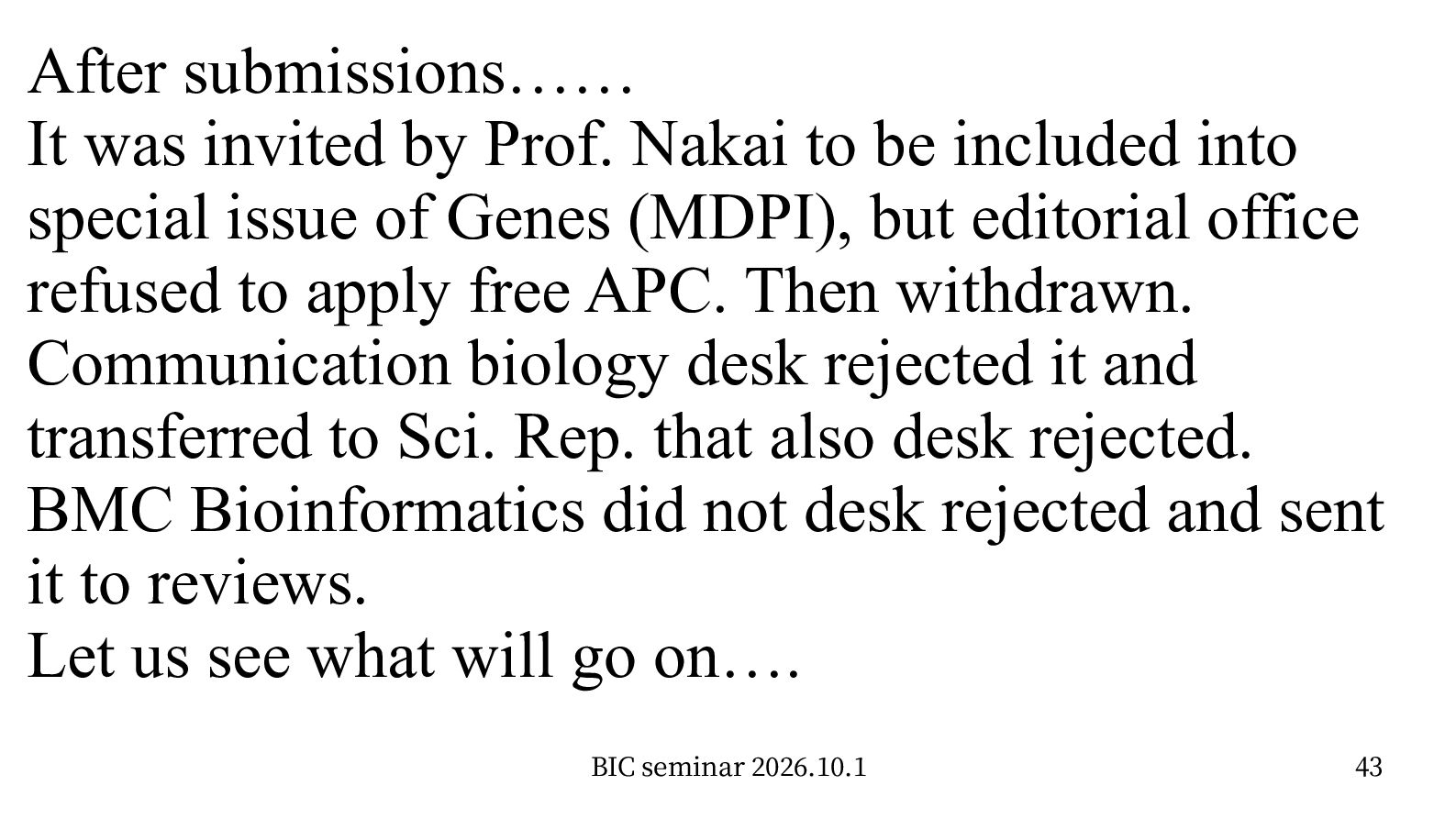
included into special issue of Genes (MDPI), but editorial office refused to apply free APC. Then withdrawn. Communication biology desk rejected it and transferred to Sci. Rep. that also desk rejected. BMC Bioinformatics did not desk rejected and sent it to reviews. Let us see what will go on…. BIC seminar 2026.10.1 43
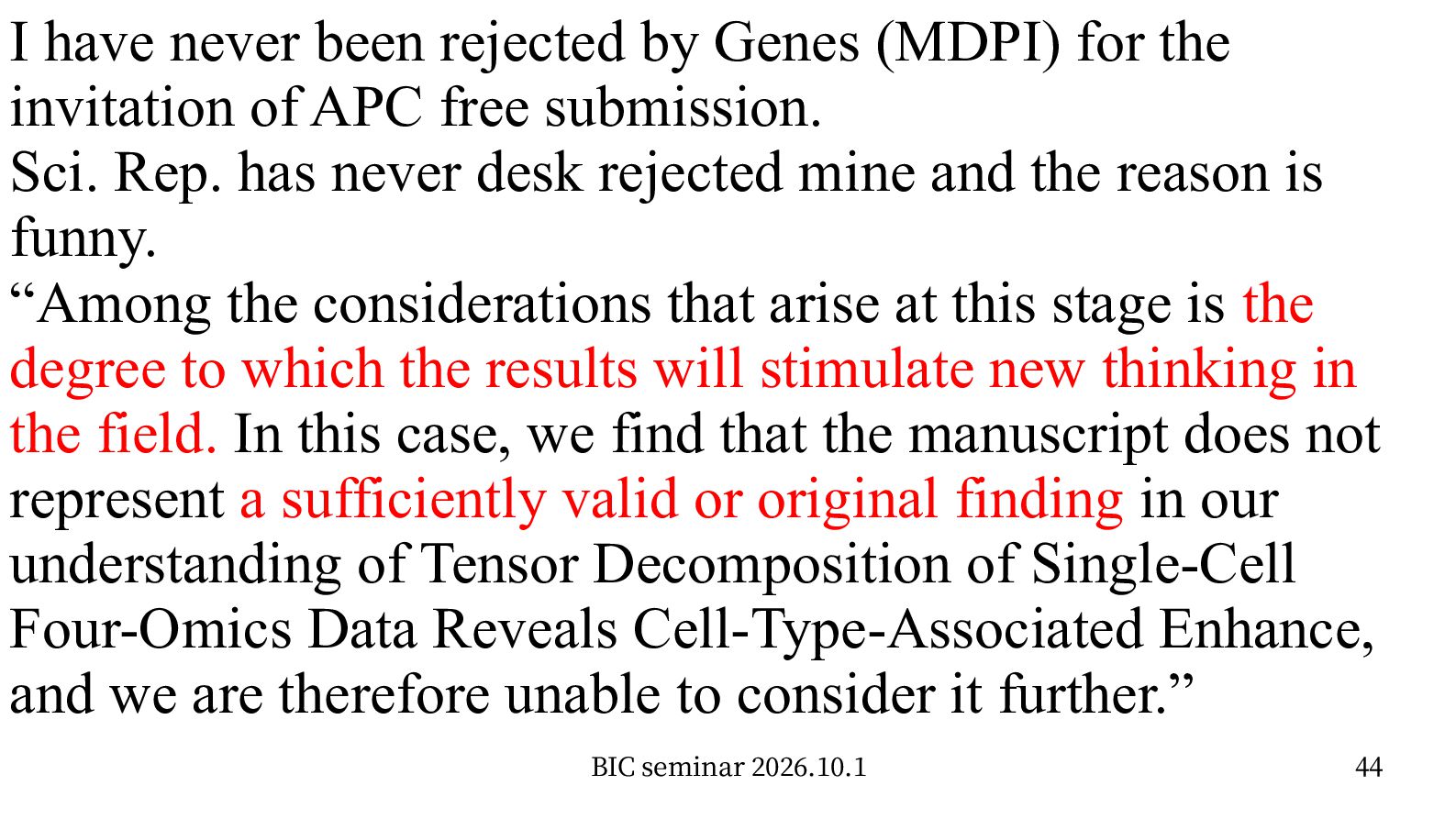
invitation of APC free submission. Sci. Rep. has never desk rejected mine and the reason is funny. “Among the considerations that arise at this stage is the degree to which the results will stimulate new thinking in the field. In this case, we find that the manuscript does not represent a sufficiently valid or original finding in our understanding of Tensor Decomposition of Single-Cell Four-Omics Data Reveals Cell-Type-Associated Enhance, and we are therefore unable to consider it further.” BIC seminar 2026.10.1 44
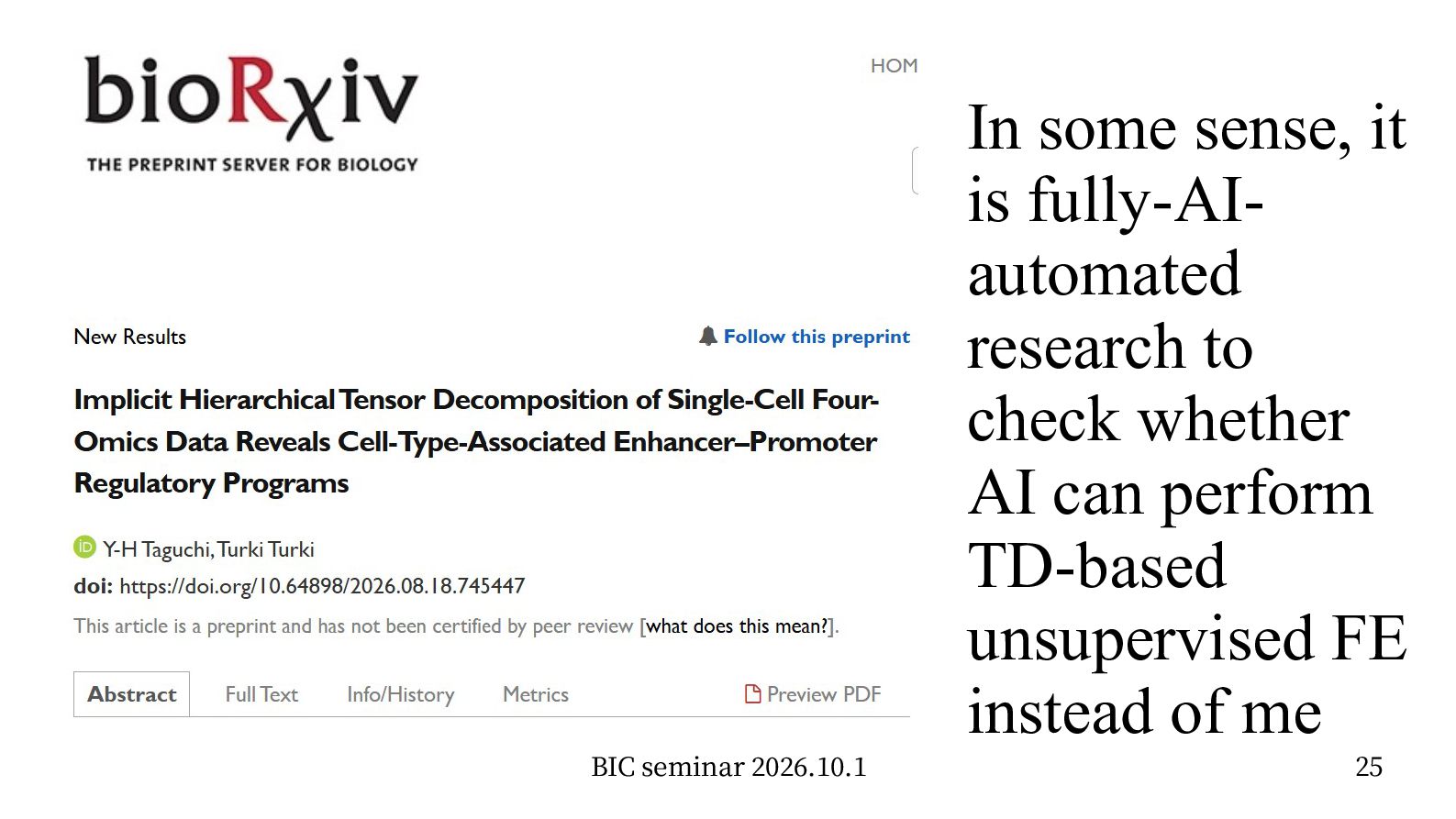
many bioinformatics problems. AI can now perform TD based unsupervised FE, but possibly because of that, the research might not be valid enough to be accepted? BIC seminar 2026.10.1 45


 tagtag
 i2tsuki
 institutdelelevage
 rajeshrinet
 syuchimu
 akasan
 mickey_0226
 masakiokuda
 tomoaki0705
 trycycle
 aikinohara
 techseoconnect
 cassininazir
 honnibal
 kimpetersen
 sstephenson
 reverentgeek
 akihiro_kokubo
 baasie
 colly
colly
 nonsquared
 jacobtomlinson
 gr2m
gr2m